
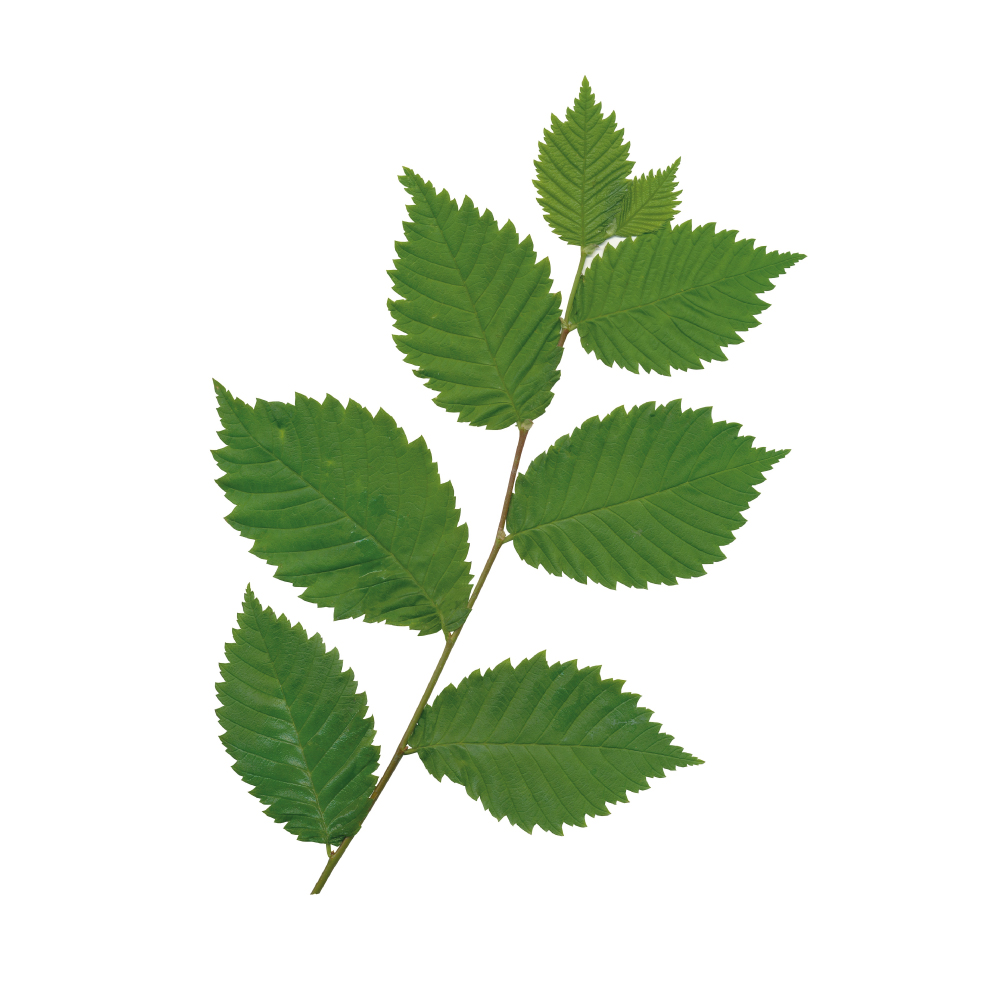
Materia Medica
Slippery Elm
Ulmus rubra
Slippery elm (Ulmus rubra) — a soothing demulcent bark for digestive irritation, reflux, IBD and, topically, damaged skin.
What Is Slippery Elm?
Slippery elm (Ulmus rubra; the older synonym U. fulva is still widely seen) is a North American tree whose mucilage-rich inner bark is one of the classic herbal demulcents — a soothing, coating remedy for irritated mucous membranes. The dried inner bark is powdered and taken as a gruel, added to shakes, or swallowed in capsules, and applied topically as a poultice.
Almost everything slippery elm does rests on a single physical property: the inner bark is roughly 7% mucilage, a hydrophilic polysaccharide that swells in water into a viscous gel and coats mucosal surfaces 1,14Reference 1ReviewHerbal Medicines (3rd ed.) — reference monographReference 14Slippery elm, its biochemistry, and use as a complementary and alternative treatment for laryngeal irritationView study →. That gel is the source of the herb’s traditional reputation for calming the digestive tract, throat and irritated skin. It is worth being clear about the limits of the evidence, though — no controlled trial has ever tested slippery elm on its own, so its long-standing billing as a leading digestive demulcent is a traditional and mechanistic judgement, not a demonstration of clinical superiority.
A practical preparation note follows from the chemistry: the mucilage does not dissolve in alcohol, so a tincture is a poor delivery form for this herb. The powder, gruel or water decoction is the rational preparation.
Traditional & Modern Uses
Slippery elm inner bark was long an official demulcent, emollient and antitussive in the older pharmacopoeias 1,16Reference 1ReviewHerbal Medicines (3rd ed.) — reference monographReference 16A Modern Herbal — “Elm, Slippery” (historical source)View study →. It was a popular Native American remedy that European settlers quickly adopted; during the American Civil War it was widely used as a wound dressing among soldiers, and the powdered inner bark was regarded as one of the best poultices for wounds, boils and inflamed surfaces 15,16Reference 15Herbs & Natural Supplements: An Evidence-Based Guide (VolReference 16A Modern Herbal — “Elm, Slippery” (historical source)View study →.
Internally, slippery elm has traditionally been used across the same territory it is used for today — inflammatory and irritated conditions of the digestive tract such as colitis, gastritis, peptic and duodenal ulcers, diarrhoea and inflammatory bowel disease. It has also been applied to vaginitis, mouth inflammation, haemorrhoids, anal fissures, varicose ulcers, abscesses, carbuncles and various skin conditions 15,17Reference 15Herbs & Natural Supplements: An Evidence-Based Guide (VolReference 17Medical Herbalism: The Science and Practice of Herbal Medicine. Topically it is used for inflamed or irritated skin, burns, boils, abscesses and wounds.
Because the bark is nutritious and easy to digest, the gruel was historically fed to infants, invalids and the convalescent as a nourishing food as much as a medicine 16Reference 16A Modern Herbal — “Elm, Slippery” (historical source)View study →.
Botany & Varieties
Slippery elm belongs to the Ulmaceae (elm family), whose members characteristically carry mucilaginous bark and leaves. The accepted botanical name is Ulmus rubra Muhl.; U. fulva Michx. is an older synonym that persists in commerce and on many labels. Common names — red elm, grey elm, soft elm, moose elm, Indian elm and sweet elm — reflect the reddish inner bark and its slippery, mucilaginous texture 20Reference 20Trees & Shrubs Hardy in the British Isles (8th ed., p.
Habitat & Distribution
Ulmus rubra is native to the eastern portions of North America. It prefers dry to intermediate soils and is a tree of moist, rich woodlands and slopes rather than wetlands 18Reference 18Ulmus rubra — Fire Effects Information SystemView study →.
Harvesting & Preparation
Traditional sources recommend using bark from mature trees — around ten years old — for the best-quality mucilage 16Reference 16A Modern Herbal — “Elm, Slippery” (historical source)View study →. Only the inner bark is used. Because the mucilage swells in water but cannot be extracted by alcohol, water-based preparations are the sensible forms 16Reference 16A Modern Herbal — “Elm, Slippery” (historical source)View study →.
The most common way to take slippery elm for nutritive purposes is as a gruel with a texture similar to oatmeal: about 5 mL of the powder is mixed with cold water to a paste, then boiling water is added to the desired consistency and it can be flavoured with honey or spices such as cinnamon or nutmeg. Historically this preparation was valued as a gentle food for infants and the convalescent 16Reference 16A Modern Herbal — “Elm, Slippery” (historical source)View study →. Older texts also record enema and poultice recipes; these are historical practices rather than current clinical guidance 16Reference 16A Modern Herbal — “Elm, Slippery” (historical source)View study →.
Phytochemistry
Slippery elm is, in practical terms, a one-compound herb: its demulcent activity rests almost entirely on the mucilage of the inner bark, which makes up roughly 7% of the dried bark 1Reference 1ReviewHerbal Medicines (3rd ed.) — reference monograph. This is a highly branched, hydrophilic polysaccharide built mainly from D-galactose, L-rhamnose and D-galacturonic acid together with the unusual sugar 3-O-methyl-D-galactose, which is a relatively distinctive marker of elm mucilage 5,6Reference 5Constitution of the mucilage from the bark of Ulmus fulva (slippery elm mucilage) — chemistryView study →Reference 6Some structural features of the mucilage from the bark of Ulmus fulva — chemistryView study →. Because the chains trap water and swell into a viscous gel — rather than dissolving — the bark coats and soothes mucosal surfaces, which is why it is taken as a gruel and applied as a poultice 1,14Reference 1ReviewHerbal Medicines (3rd ed.) — reference monographReference 14Slippery elm, its biochemistry, and use as a complementary and alternative treatment for laryngeal irritationView study →.
Beyond the mucilage, the bark carries only minor secondary constituents: astringent tannins, the phytosterol β-sitosterol and calcium oxalate, none of which is present in pharmacologically dominant amounts 19Reference 19Duke, J. A. (2016). Dr. Duke’s Phytochemical and Ethnobotanical Databases — Ulmus rubra. USDA. https://phytochem.nal.usda.gov/View study →.
Constituent Summary
Figure is share of dried inner bark; the mucilage cannot be extracted by alcohol and only swells in water. Browse a class to see related compounds, or any compound for its full profile.
Mucilage1 compound1 with data
Sugar1 compound1 with data
Tannin1 compoundno data
Sterol1 compoundno data
Mineral1 compoundno data
Pharmacology & Research
Slippery elm (Ulmus rubra, syn. U. fulva) is a heavily used but lightly studied herb: its reputation rests on centuries of traditional and pharmacopoeial demulcent use rather than on modern trials, and no randomised controlled trial has ever tested the isolated bark. Almost the entire mechanistic story is a physical one — the inner bark is roughly 7% mucilage, a hydrophilic polysaccharide that swells into a viscous gel and coats mucosal surfaces 1,14Reference 1ReviewHerbal Medicines (3rd ed.) — reference monographReference 14Slippery elm, its biochemistry, and use as a complementary and alternative treatment for laryngeal irritationView study →. The small human literature that exists (for irritable bowel and general GI symptoms) comes from open-label, uncontrolled trials of multi-herb formulas in which slippery elm is only one ingredient 2,3Reference 2Effects of two natural medicine formulations on irritable bowel syndrome symptoms: a pilot studyView study →Reference 3Herbal formula improves upper and lower gastrointestinal symptoms and gut health in Australian adults with digestive disordersView study →, so effects cannot be attributed to the herb alone. Antioxidant and anti-inflammatory signals are real but confined to cell-free and ex-vivo systems 4Reference 4In vitroAntioxidant effects of herbal therapies used by patients with inflammatory bowel disease: an in vitro studyView study →, and the “anticancer” claim belongs to the four-herb Essiac tea, not to slippery elm as such, with mixed-to-null preclinical results and a terminated clinical trial 7,8,9,10,11Reference 7In vitroEssiac tea: scavenging of reactive oxygen species and effects on DNA damage — in vitroView study →Reference 8In vitroAntioxidant and anti-inflammatory properties of ESSIAC and Flor-Essence — in vitroView study →Reference 9In vitroInhibition of prostate cancer-cell proliferation by Essiac — in vitroView study →Reference 10In vitroEvaluation of the antiproliferative effects of Essiac on in vitro and in vivo (mouse) models of prostate cancer compared to paclitaxelView study →Reference 11ReviewThe chemistry and biological activity of herbs used in Flor-Essence herbal tonic and Essiac — reviewView study →. A key preparation caveat runs through everything below: the active mucilage does not dissolve in alcohol, so results from powders, gruels, and decoctions do not transfer to alcoholic tinctures.
- Best-supported: demulcent soothing of irritated GI (and throat) mucosa — well-characterised mucilage mechanism plus long pharmacopoeial use, though human data are combination-formula only 1,2,3,14Reference 1ReviewHerbal Medicines (3rd ed.) — reference monographReference 2Effects of two natural medicine formulations on irritable bowel syndrome symptoms: a pilot studyView study →Reference 3Herbal formula improves upper and lower gastrointestinal symptoms and gut health in Australian adults with digestive disordersView study →Reference 14Slippery elm, its biochemistry, and use as a complementary and alternative treatment for laryngeal irritationView study →.
- Emerging, worth watching: free-radical scavenging and reduced oxidant release from inflamed colonic tissue, seen in vitro 4Reference 4In vitroAntioxidant effects of herbal therapies used by patients with inflammatory bowel disease: an in vitro studyView study →.
- Mechanistically thin: topical wound healing (traditional plus related-Ulmus animal data, none in slippery elm) and anticancer activity (an Essiac-formula, constituent-level inference).
- The caveat: no trial of slippery elm alone; the mucilage does not extract into alcohol, so tincture data are not comparable to the powder/gruel actually used.
1. Digestive & GI soothing
This is slippery elm’s core use and its best-documented one, though “best” is relative. The mechanism is physical and well characterised: the inner bark is about 7% mucilage — a highly branched polysaccharide built mainly from D-galactose, L-rhamnose, and D-galacturonic acid with the unusual sugar 3-O-methyl-D-galactose — that hydrates into a viscous gel rather than dissolving, coating and protecting mucosal surfaces 1,14Reference 1ReviewHerbal Medicines (3rd ed.) — reference monographReference 14Slippery elm, its biochemistry, and use as a complementary and alternative treatment for laryngeal irritationView study →. Direct human evidence is limited to uncontrolled combination trials: an open-label pilot in IBS found a slippery-elm-containing formula improved bowel habit and symptoms in constipation-predominant IBS (though the diarrhoea/mixed formula did not improve bowel habit) 2Reference 2Effects of two natural medicine formulations on irritable bowel syndrome symptoms: a pilot studyView study →, and a 16-week pre-post study of a multi-herb “gut relief” formula reported large improvements in reflux and lower-GI symptoms alongside reduced intestinal permeability 3Reference 3Herbal formula improves upper and lower gastrointestinal symptoms and gut health in Australian adults with digestive disordersView study →. Because slippery elm was one of several ingredients in both, the benefit cannot be assigned to the herb itself.
Gap: no controlled trial, and no trial of slippery elm on its own — the human signal is confounded by co-administered herbs.
2. Antioxidant
In a cell-free and ex-vivo study of herbal remedies used by IBD patients, slippery elm scavenged superoxide and peroxyl radicals dose-dependently and reduced oxygen-radical release from inflamed ulcerative-colitis biopsies, performing comparably to 5-aminosalicylic acid 4Reference 4In vitroAntioxidant effects of herbal therapies used by patients with inflammatory bowel disease: an in vitro studyView study →. This is the one antioxidant study on the bark itself. The remaining antioxidant data belong to Essiac tea, in which slippery elm is one of four herbs: Essiac scavenged hydroxyl and superoxide radicals and protected DNA from oxidative damage in cell-free systems 7Reference 7In vitroEssiac tea: scavenging of reactive oxygen species and effects on DNA damage — in vitroView study →, and showed antioxidant capacity in a separate assay 8Reference 8In vitroAntioxidant and anti-inflammatory properties of ESSIAC and Flor-Essence — in vitroView study →. All of this is in vitro.
Gap: no animal or human antioxidant data for slippery elm, and the Essiac results cannot be attributed to the elm component.
3. Anti-inflammatory
The anti-inflammatory case overlaps with the antioxidant one. The most relevant finding is that slippery elm reduced reactive-oxygen-species generation by inflamed colonic mucosa in vitro, a plausible route to calming inflamed gut tissue 4Reference 4In vitroAntioxidant effects of herbal therapies used by patients with inflammatory bowel disease: an in vitro studyView study →. Essiac-formula work is mixed: one study found the tea modulated nitric oxide and pro-inflammatory mediator expression in macrophages, but effects varied with concentration and were not straightforwardly anti-inflammatory 8Reference 8In vitroAntioxidant and anti-inflammatory properties of ESSIAC and Flor-Essence — in vitroView study →. There is no in-vivo confirmation for slippery elm.
Gap: evidence is confined to cell and tissue models; no whole-animal or human anti-inflammatory data exist for the herb.
4. Throat & respiratory soothing
Slippery elm is an official demulcent, emollient, and antitussive with a long history of use for sore throat, cough, and laryngeal irritation, and it remains a common lozenge ingredient. A biochemistry review laid out how the mucilage could physically coat and soothe the laryngeal mucosa, providing a mechanistic rationale for the traditional use 14Reference 14Slippery elm, its biochemistry, and use as a complementary and alternative treatment for laryngeal irritationView study →, and slippery elm appears among popular esophageal-symptom remedies whose plausibility rests on this coating action rather than on trial data 13Reference 13ReviewPopular remedies for esophageal symptoms: a critical appraisal — reviewView study →. No clinical study has tested it for cough, throat, or voice complaints.
Gap: the respiratory/throat use is entirely mechanism-and-tradition; no controlled or observational clinical data.
5. Wound healing (topical)
Slippery elm bark powder has been a classic poultice for wounds, boils, and inflamed skin, and the rationale is the same mucilage that soothes the gut: a hydrated gel forms a moist protective barrier over damaged tissue. Direct experimental wound-healing evidence, however, comes from related elm species — for example U. parvifolia and U. davidiana root bark accelerated wound closure in mouse models — and these findings do not automatically transfer to U. rubra, which has not itself been tested. The topical case therefore rests on mechanism and traditional use, not on studies of slippery elm.
Gap: no wound-healing study has used slippery elm; the supporting animal data are from other Ulmus species with different bark chemistry.
6. Anticancer (Essiac formula)
Slippery elm is one of four herbs in Essiac (with burdock, sheep sorrel, and rhubarb), a tea long promoted for cancer. The evidence is preclinical and inconsistent: one in-vitro study reported Essiac inhibited prostate cancer-cell proliferation 9Reference 9In vitroInhibition of prostate cancer-cell proliferation by Essiac — in vitroView study →, while a more rigorous evaluation found no antiproliferative effect in prostate cancer cells or in mouse xenografts 10Reference 10In vitroEvaluation of the antiproliferative effects of Essiac on in vitro and in vivo (mouse) models of prostate cancer compared to paclitaxelView study →. A review concluded that anticancer claims rested on anecdote with no published clinical trials 11Reference 11ReviewThe chemistry and biological activity of herbs used in Flor-Essence herbal tonic and Essiac — reviewView study →, and the one registered clinical trial — Essiac versus placebo for quality of life in women with breast or ovarian cancer — was terminated (NCT00287482). Attributing any effect specifically to slippery elm is constituent-level inference.
Gap: the claim is for a four-herb formula, not slippery elm; preclinical results are mixed-to-null and the only human trial was terminated.
Mechanisms
| Mechanism | Drives | Key compounds |
|---|---|---|
| Mucilage hydration → viscous gel coating mucosa | digestive & throat soothingtopical wound protection | mucilage polysaccharide |
| Superoxide / peroxyl radical scavenging | antioxidantanti-inflammatory | tannins, mucilage |
| Reduced oxidant release from inflamed mucosa | anti-inflammatory | tannins |
Clinical trials
No trial has tested slippery elm on its own; the completed human studies are of multi-herb formulas that contain it, and the single registered cancer trial of the Essiac formula was terminated.
| Completed | Planned | Terminated | Preclinical |
|---|---|---|---|
| 3(combination formulas) | 2(combination formulas) | 1(Essiac) | ~10 |
Last checked: July 2026.
Dosage
Slippery elm has no clinically established dose. The only human studies gave it inside multi-herb formulas that did not report its individual amount, so a slippery-elm-specific research dose cannot be back-calculated — the figures below are the formula doses, not the herb’s own.
| Indication | Preparation | Dose | Est. dried-herb equivalent | Source |
|---|---|---|---|---|
| Digestive (IBS, constipation-predominant) | Dried powdered bark in a multi-herb formula | Formula dose (slippery elm proportion not isolated) | — (co-formulated; cannot back-convert) | 2Reference 2Effects of two natural medicine formulations on irritable bowel syndrome symptoms: a pilot studyView study → |
| Digestive (reflux / lower-GI) | Multi-herb “gut relief” formula (powder) | 5 g/day then 10 g/day of total formula | — (slippery elm is one of ~7 ingredients) | 3Reference 3Herbal formula improves upper and lower gastrointestinal symptoms and gut health in Australian adults with digestive disordersView study → |
Neither trial reported slippery elm’s individual dose, so no marker-to-whole-herb ratio can be stated; the dried-herb equivalent is left blank rather than invented.
Traditional Dosage
Traditional use is of the whole inner bark as a water-based powder, gruel or decoction. The alcoholic liquid-extract figure is retained from the sidebar for reference, but note that the demulcent mucilage does not extract into alcohol, so the powder or decoction is the more rational form.
| System | Preparation | Dose |
|---|---|---|
| Western herbal | Dried inner-bark powder (gruel) — ~5 mL powder mixed to a paste, then hot water | 1–3× daily as needed |
| Western herbal | Decoction of inner bark | ~4–16 g dried bark daily |
| Western herbal | Liquid extract 1:2 (note: mucilage is not alcohol-soluble) | 30–140 mL/week |
Safety & Pregnancy
Slippery elm is food-safe with no significant toxicity reported for the inner bark; its one practical caution is mechanical — the mucilage coats the gut and can slow the absorption of medicines taken at the same time.
- Food-safe. No significant toxicity reported for the inner bark; used as a food-grade demulcent.
- Slows drug absorption. The coating mucilage can reduce uptake of co-taken medicines — separate oral drugs by 1–2 hours (a physical, not CYP450, effect).
- Allergy possible. Uncommon, but cross-reactivity with elm pollen is plausible in sensitised individuals.
- Not formally studied. No controlled human safety, interaction or reproductive-toxicity trials of the isolated herb.
Full safety & interactions detail
Slippery elm is generally regarded as safe and is used as a food-grade demulcent, with no significant toxicity reported for the inner bark. Its main practical caution is mechanical rather than toxic: the mucilage forms a coating gel that may reduce the absorption of other medicines, herbs, and nutrients taken at the same time, so oral drugs should be separated from slippery elm by at least an hour or two. This is a physical (mucilage-coating) effect, not an enzymatic (CYP450) interaction. Allergic reactions are uncommon but possible, and cross-reactivity with elm pollen is plausible in sensitised individuals. No controlled human safety, drug-interaction, or reproductive-toxicity studies of the isolated herb have been conducted, so the safety picture rests on food use and traditional experience rather than formal testing 1,14Reference 1ReviewHerbal Medicines (3rd ed.) — reference monographReference 14Slippery elm, its biochemistry, and use as a complementary and alternative treatment for laryngeal irritationView study →.
Not specifically researched. There are no controlled studies of slippery elm inner bark in pregnancy or lactation. The bark itself is widely regarded as benign, and historically the gruel was even given to infants and convalescents; a much-cited concern that the powder was used to procure abortion refers to the practice of inserting moistened bark as a mechanical cervical dilator, not to ingestion of the herb. A 1954 case report noted bladder calculi associated with slippery elm use in pregnancy 12Reference 12Case reportTwo cases of slippery elm bladder calculus in pregnancy — case reportView study →. In the absence of modern data, oral use as a food-like demulcent is generally considered low-risk, but this is not established by research.
Synergy
Slippery elm is the best-known ingredient of Essiac tea, a four-herb formula (with Arctium lappa / burdock, Rumex acetosella / sheep sorrel and Rheum officinale / rhubarb) developed from an Ojibwa recipe and long promoted for cancer, allergies and other chronic conditions. It is important to be clear that the cancer, DNA-protection and antioxidant claims attached to Essiac are formula-level and preclinical, not properties of slippery elm itself: the in-vitro results are mixed-to-null (one study found no antiproliferative effect in prostate cancer models), and the only registered clinical trial was terminated 7,8,9,10,11Reference 7In vitroEssiac tea: scavenging of reactive oxygen species and effects on DNA damage — in vitroView study →Reference 8In vitroAntioxidant and anti-inflammatory properties of ESSIAC and Flor-Essence — in vitroView study →Reference 9In vitroInhibition of prostate cancer-cell proliferation by Essiac — in vitroView study →Reference 10In vitroEvaluation of the antiproliferative effects of Essiac on in vitro and in vivo (mouse) models of prostate cancer compared to paclitaxelView study →Reference 11ReviewThe chemistry and biological activity of herbs used in Flor-Essence herbal tonic and Essiac — reviewView study →. Slippery elm should not be read as an anticancer herb on the strength of Essiac.
References
- Barnes, J., Anderson, L. A., & Phillipson, J. D. (2007). Herbal Medicines (3rd ed.) — reference monograph. London: Pharmaceutical Press. (pp. 545–546).
- Hawrelak, J. A., & Myers, S. P. (2010). Effects of two natural medicine formulations on irritable bowel syndrome symptoms: a pilot study. J Altern Complement Med. https://pubmed.ncbi.nlm.nih.gov/20954962/
- Ried, K., Travica, N., Dorairaj, R., & Sali, A. (2020). Herbal formula improves upper and lower gastrointestinal symptoms and gut health in Australian adults with digestive disorders. Nutr Res. https://pubmed.ncbi.nlm.nih.gov/32151878/
- Langmead, L., Dawson, C., Hawkins, C., Banna, N., Loo, S., & Rampton, D. S. (2002). Antioxidant effects of herbal therapies used by patients with inflammatory bowel disease: an in vitro study. Aliment Pharmacol Ther. https://pubmed.ncbi.nlm.nih.gov/11860402/
- Gill, R. E., Hirst, E. L., & Jones, J. K. N. (1946). Constitution of the mucilage from the bark of Ulmus fulva (slippery elm mucilage) — chemistry. Journal of the Chemical Society. https://pubmed.ncbi.nlm.nih.gov/20282480/
- Beveridge, R. J., Stoddart, J. F., Szarek, W. A., & Jones, J. K. N. (1969). Some structural features of the mucilage from the bark of Ulmus fulva — chemistry. Carbohydrate Research, 9, 429–439. https://doi.org/10.1016/S0008-6215(00)80033-1
- Leonard, S. S., Keil, D., Mehlman, T., Proper, S., Shi, X., & Harris, G. K. (2006). Essiac tea: scavenging of reactive oxygen species and effects on DNA damage — in vitro. Journal of Ethnopharmacology. https://pubmed.ncbi.nlm.nih.gov/16226859/
- Cheung, S., Lim, K. T., & Tai, J. (2005). Antioxidant and anti-inflammatory properties of ESSIAC and Flor-Essence — in vitro. Oncology Reports. https://pubmed.ncbi.nlm.nih.gov/16211307/
- Ottenweller, J., Putt, K., Blumenthal, E. J., Dhawale, S., & Dhawale, S. W. (2004). Inhibition of prostate cancer-cell proliferation by Essiac — in vitro. J Altern Complement Med. https://pubmed.ncbi.nlm.nih.gov/15353028/
- Eberding, A., Madera, C., Xie, S., Wood, C. A., Brown, P. N., & Guns, E. S. (2007). Evaluation of the antiproliferative effects of Essiac on in vitro and in vivo (mouse) models of prostate cancer compared to paclitaxel. Nutrition and Cancer. https://pubmed.ncbi.nlm.nih.gov/17640165/
- Tamayo, C., Richardson, M. A., Diamond, S., & Skoda, I. (2000). The chemistry and biological activity of herbs used in Flor-Essence herbal tonic and Essiac — review. Phytotherapy Research. https://pubmed.ncbi.nlm.nih.gov/10641040/
- Williams, B. (1954). Two cases of slippery elm bladder calculus in pregnancy — case report. Journal of Obstetrics and Gynaecology of the British Empire. https://pubmed.ncbi.nlm.nih.gov/13192523/
- Ahuja, A., & Ahuja, N. K. (2019). Popular remedies for esophageal symptoms: a critical appraisal — review. Current Gastroenterology Reports. https://pubmed.ncbi.nlm.nih.gov/31289950/
- Watts, C. R., & Rousseau, B. (2012). Slippery elm, its biochemistry, and use as a complementary and alternative treatment for laryngeal irritation. Journal of Investigational Biochemistry. https://doi.org/10.5455/jib.20120417052415
- Braun, L., & Cohen, M. (2010). Herbs & Natural Supplements: An Evidence-Based Guide (Vol. 2). Sydney: Elsevier Australia. (pp. 916–919).
- Grieve, M. (1931). A Modern Herbal — “Elm, Slippery” (historical source). Retrieved from https://www.botanical.com/botanical/mgmh/e/elmsli09.html
- Hoffmann, D. (2003). Medical Herbalism: The Science and Practice of Herbal Medicine. Rochester, VT: Healing Arts Press. (p. 591).
- US Forest Service. Ulmus rubra — Fire Effects Information System. Retrieved from https://www.fs.usda.gov/database/feis/plants/tree/ulmrub/all.html
- Duke, J. A. (2016). Dr. Duke’s Phytochemical and Ethnobotanical Databases — Ulmus rubra. USDA. https://phytochem.nal.usda.gov/
- Bean, W. J. (1970). Trees & Shrubs Hardy in the British Isles (8th ed., p. 656). London: John Murray. ISBN 9780719517907.