Materia Medica
Tribulus
Tribulus terrestris
Tribulus (Tribulus terrestris) — an Ayurvedic tonic used for libido, erectile function, fertility and cardiovascular health.
What Is Tribulus?
Tribulus, also known as puncture vine, is aptly named for its thorny seeds. This plant will grow where almost nothing else will. It can grow in moist, dark places, as well as dry, sunny spaces. This plant is so well adapted to most environments, it’s considered a noxious weed all over the world.
Tribulus was made famous for its popularity in the Ayurvedic medical system, which used the plant for anything about the male reproductive system, and cardiovascular system.
The herb is most commonly used for treating poor libido, menstrual irregularities, erectile dysfunction, and cardiovascular disorders.
What Is Tribulus Used For?
Tribulus is mainly used to improve microcirculation, as a cardiotonic for cardiovascular disease, and to treat sexual dysfunctions in both men and women.
Traditional Uses
Western Herbal Medicine
Traditionally the whole herb has been used as medicine, although there is not much literature on its uses from the past. 55Reference 55Principles and Practice of Phytotherapy.
Traditional Chinese Medicine
In traditional Chinese medicine, the fruit is reportedly used for chest pain, skin lesions, and swollen or painful eyes 55Reference 55Principles and Practice of Phytotherapy.
Ayurvedic Medicine
In Ayurveda, the fruit has been used to treat urinary tract infections and inflammations, as well as reproductive disorders. 55Reference 55Principles and Practice of Phytotherapy.
Unani Medicine
In Unani medicine, tribulus has been used as a diuretic, mild laxative, and general tonic 57Reference 57Indian medicinal plants: An illustrated dictionary.
Traditional Use Summary
Overall, the traditional uses of tribulus involve its use as a tonic, aphrodisiac, palliative, astringent, stomachic, antihypertensive, diuretic, lithotriptic, for chest pains, painful swollen eyes, and urinary tract infections 54Reference 54Phytopharmacological overview of Tribulus terrestrisView study →.
Botany
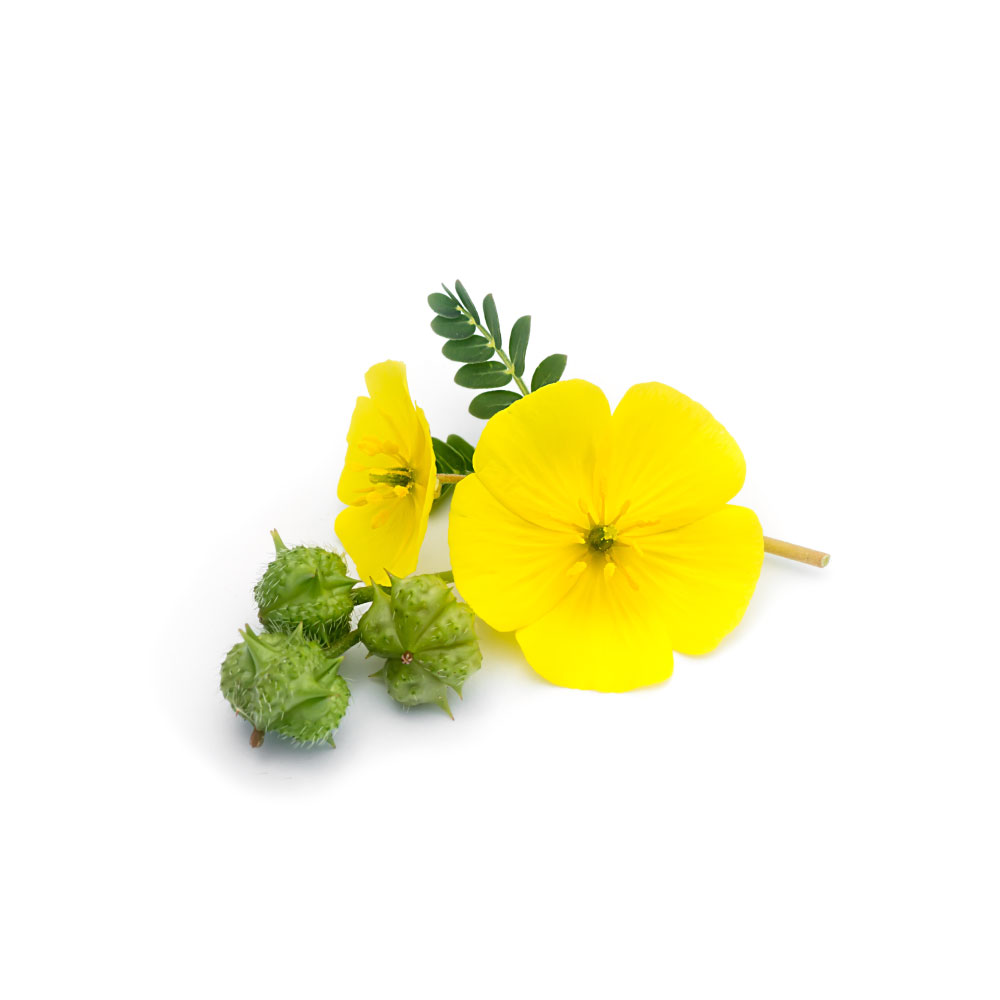
Tribulus (Tribulus terrestris) is a member of Zygophyllaceae, the caltrop family. It is a low, mat-forming annual whose wiry stems spread flat across the ground from a central crown, carrying soft, feathery pairs of pinnate leaflets and small five-petalled yellow flowers. Its defining feature is the fruit: a hard, woody burr that breaks into five sharp-spined segments — the source of its “puncture vine” and “goathead” names.
In herbal medicine it is the whole plant, and especially this spiny fruit, that is used; in the Ayurvedic tradition the fruit is the classic tonic drug gokshura. The genus contains several similar species that turn up in commercial supplements, so the botanical identity of the source material is worth checking.
Distribution
Native to the warm Old World — around the Mediterranean and across Africa and southern Asia — tribulus has since spread to nearly every warm, dry region on Earth, including much of North America and Australia. It thrives on disturbed sandy soils, roadsides and waste ground, where it is far better known as the notorious “puncture vine” weed — whose tyre-shredding burrs earn it noxious-weed listings — than as a medicinal herb.
Growing Conditions
- Grows as a warm-season annual on poor, dry, sandy or gravelly soils; needs full sun and shrugs off drought and heat.
- Prostrate and mat-forming — a single plant can sprawl several feet across, hugging the ground rather than climbing.
- Effectively a weed: it self-seeds aggressively and, once established, is far harder to remove than to grow.
- The spiny five-horned burrs cling to shoes, tyres, fur and clothing and can injure feet and paws, so it is genuinely unwanted in most gardens and pastures.
- Full cultivation detail lives on the companion farm-wiki grow guide for Tribulus terrestris (link to be added once that project’s public URL is confirmed).
Pharmacology & Research
Tribulus terrestris has one of the larger clinical literatures among “aphrodisiac” herbs — an outright rarity, since most of its neighbours rest entirely on animal work. The evidence is genuinely mixed by indication: sexual function in both men and women is supported by several randomised placebo-controlled trials and by meta-analysis, whereas the herb’s most heavily marketed claim — that it raises testosterone — is contradicted by essentially every controlled human trial. Everything else (antioxidant, anti-inflammatory, cardioprotective, antiurolithiatic, hypoglycaemic, neuroprotective) is preclinical, drawn from rodent and cell-line studies of standardised saponin extracts. A single caveat runs through all of it: activity tracks the furostanol saponin protodioscin, whose content varies more than twenty-fold with geographical origin (Bulgarian material is rich, much commercial material is not), so a result obtained with a standardised extract such as Tribestan does not transfer to an arbitrary tincture, tea, or powder.
- Best-supported: erectile and overall male sexual function improve versus placebo on the IIEF across multiple RCTs and a meta-analysis 1,2Reference 1Meta-analysisTribulus terrestris for management of patients with erectile dysfunction — a systematic review and meta-analysis of randomized trials — [systematic review and meta-analysis]View study →Reference 2RCTEvaluation of the efficacy and safety of Tribulus terrestris in male sexual dysfunction — a prospective, randomised, double-blind, placebo-controlled trial — [randomised placebo-controlled trial]View study →; female sexual desire and arousal improve on the FSFI across several RCTs 7,8,9Reference 7Systematic reviewTribulus terrestris for female sexual dysfunction — a systematic review — [systematic review]View study →Reference 8RCTTribulus terrestris for treatment of sexual dysfunction in women — randomised double-blind placebo-controlled study — [randomised placebo-controlled trial]View study →Reference 9RCTEfficacy of Tribulus terrestris for premenopausal women with hypoactive sexual desire disorder — randomised placebo-controlled trial — [randomised placebo-controlled trial]View study →.
- Emerging, worth watching: a glucose- and LDL-lowering signal in one diabetes RCT 22Reference 22RCTEfficacy of hydroalcoholic extract of Tribulus terrestris on serum glucose and lipid profile of women with type 2 diabetes — double-blind randomised placebo-controlled trial — [randomised placebo-controlled trial]View study →, and consistent anti-ischaemic and anti-atherosclerotic effects in animals 24,27,28Reference 24AnimalTribulosin protects rat hearts from ischaemia/reperfusion injury — animal model — [animal model]View study →Reference 27AnimalInfluence of Tribulus terrestris extract on lipid profile and endothelial structure in atherosclerotic rabbits — [animal model]View study →Reference 28In vitroTribulus terrestris extract alleviates atherosclerosis by suppressing TNF-alpha-mediated macrophage inflammation — in vitro and animal model — [animal model]View study →.
- Mechanistically thin: antioxidant, anti-inflammatory, antiurolithiatic and neuroprotective claims rest on in-vitro and rodent data with no human trials.
- The caveat: the sexual-function benefit is not mediated by a rise in testosterone — controlled trials repeatedly show no androgen change 1,35,36Reference 1Meta-analysisTribulus terrestris for management of patients with erectile dysfunction — a systematic review and meta-analysis of randomized trials — [systematic review and meta-analysis]View study →Reference 35Systematic reviewDo ‘testosterone boosters’ really increase serum total testosterone? A systematic review — [systematic review]View study →Reference 36Systematic reviewA systematic review on the herbal extract Tribulus terrestris and its putative aphrodisiac and performance-enhancing effect — [systematic review]View study →; and effects are tied to a standardised, protodioscin-rich extract, not to whole herb generally.
1. Erectile & male sexual function
This is the herb’s strongest evidence base. A 2026 systematic review and meta-analysis of eight randomised trials found that Tribulus terrestris outperformed placebo on the International Index of Erectile Function, with a mean difference of about 3.2 points on the abridged IIEF-5 and a larger difference on the full IIEF-15 1Reference 1Meta-analysisTribulus terrestris for management of patients with erectile dysfunction — a systematic review and meta-analysis of randomized trials — [systematic review and meta-analysis]View study →. The signal is anchored by a well-powered phase IV RCT (n=180, 12 weeks) of the standardised Bulgarian extract Tribestan (250 mg tablets standardised to furostanol saponins), which improved erectile function and sexual desire versus placebo in men with mild-to-moderate erectile dysfunction 2Reference 2RCTEvaluation of the efficacy and safety of Tribulus terrestris in male sexual dysfunction — a prospective, randomised, double-blind, placebo-controlled trial — [randomised placebo-controlled trial]View study →. A smaller 30-day RCT (n=30, 800 mg/day) found no benefit in older men 3Reference 3RCTTribulus terrestris versus placebo in the treatment of erectile dysfunction — a prospective, randomised, double-blind study — [randomised placebo-controlled trial]View study →, while a study in men with late-onset hypogonadism reported improved IIEF alongside a rise in total testosterone 4Reference 4RCTTribulus terrestris versus placebo in erectile dysfunction and lower urinary tract symptoms in late-onset hypogonadism — [randomised placebo-controlled trial]View study → — an inconsistency in whether androgens move at all. Mechanistically, extracts relax cavernosal smooth muscle and raise intracavernous pressure in animals, apparently through nitric-oxide/cGMP signalling driven by protodioscin 5,6Reference 5AnimalEffects and mechanism of action of a Tribulus terrestris extract on penile erection — animal model — [animal model]View study →Reference 6AnimalAphrodisiac properties of Tribulus terrestris extract (protodioscin) in normal and castrated rats — [animal model]View study →.
Gap: most positive trials are short (4–12 weeks) and several used proprietary standardised extracts; the meta-analysis notes clinical heterogeneity, and the benefit does not track a measurable testosterone increase.
2. Female sexual dysfunction
Five randomised placebo-controlled trials (pooled n≈279) underpin a 2020 systematic review concluding that Tribulus significantly improves sexual-function scores in both pre- and postmenopausal women after 1–3 months, with a signal toward higher serum testosterone in premenopausal women 7Reference 7Systematic reviewTribulus terrestris for female sexual dysfunction — a systematic review — [systematic review]View study →. Individual trials are consistent: an Iranian RCT in premenopausal women with hypoactive sexual desire disorder improved total Female Sexual Function Index and its desire, arousal, lubrication and satisfaction domains 8Reference 8RCTTribulus terrestris for treatment of sexual dysfunction in women — randomised double-blind placebo-controlled study — [randomised placebo-controlled trial]View study →; Brazilian trials in premenopausal 9Reference 9RCTEfficacy of Tribulus terrestris for premenopausal women with hypoactive sexual desire disorder — randomised placebo-controlled trial — [randomised placebo-controlled trial]View study →, postmenopausal 10,11Reference 10RCTEfficacy of Tribulus terrestris for hypoactive sexual desire disorder in postmenopausal women — randomised placebo-controlled trial — [randomised placebo-controlled trial]View study →Reference 11RCTAssessment of the effects of Tribulus terrestris on sexual function of menopausal women — randomised placebo-controlled trial — [randomised placebo-controlled trial]View study → and mixed 12Reference 12RCTEffect of Tribulus terrestris on female sexual dysfunction and clitoral vascularisation — randomised study of two dosage regimes — [randomised trial]View study → cohorts reported similar FSFI/QS-F gains, with one study also documenting increases in free and bioavailable testosterone 9Reference 9RCTEfficacy of Tribulus terrestris for premenopausal women with hypoactive sexual desire disorder — randomised placebo-controlled trial — [randomised placebo-controlled trial]View study →. Gap: samples are small, several trials come from a single research group, and the reviews rate the certainty of evidence as low; a clitoral-Doppler study found symptom improvement without a measurable change in clitoral artery blood flow 12Reference 12RCTEffect of Tribulus terrestris on female sexual dysfunction and clitoral vascularisation — randomised study of two dosage regimes — [randomised trial]View study →.
3. Antioxidant
Radical-scavenging is one of the herb’s most reproducible preclinical properties, attributed to its saponins and flavonoids and invoked as the upstream mechanism behind many of its organ-protective effects. In rodent models of cardiac, renal and neural injury, Tribulus extracts restore glutathione, superoxide dismutase and catalase and lower lipid peroxidation 26,29Reference 26AnimalProtective effect of Tribulus terrestris fruit extract on lipid profile and oxidative stress in isoproterenol-induced myocardial necrosis in rats — [animal model]View study →Reference 29AnimalTribulusterine-containing Tribulus terrestris extract exhibited neuroprotection through attenuating stress kinases in rat — [animal model]View study →. Human data are limited to exercise trials measuring oxidative-stress markers: one RCT in CrossFit athletes reported higher total antioxidant status with supplementation 13Reference 13RCTFernandez-Lazaro D (2022). 6-week supplementation with Tribulus terrestris in trained CrossFit athletes — muscle, inflammation and antioxidant status — randomised controlled trial — [randomised controlled trial]. Int J Environ Res Public Health. https://pubmed.ncbi.nlm.nih.gov/36498228/View study →, while a trial on exercise-induced oxidative stress and delayed-onset muscle soreness found more modest effects 14Reference 14RCTEffect of Tribulus terrestris supplementation on exercise-induced oxidative stress and delayed-onset muscle soreness — randomised controlled trial — [randomised controlled trial]View study →. Gap: no trial has tested antioxidant endpoints in a disease population; the human evidence is confined to athletes and to surrogate blood markers.
4. Anti-inflammatory
Isolated Tribulus constituents damp inflammatory signalling in cell models: the amide N-trans-p-caffeoyl tyramine and tribulusamide D each suppress nitric oxide, prostaglandin E2, COX-2 and pro-inflammatory cytokines (TNF-α, IL-6) in LPS-stimulated macrophages 15,16Reference 15In vitroN-trans-p-caffeoyl tyramine isolated from Tribulus terrestris exerts anti-inflammatory effects in LPS-stimulated RAW 264.7 cells — in vitro — [in vitro]View study →Reference 16In vitroAnti-inflammatory effect of tribulusamide D from Tribulus terrestris in LPS-stimulated RAW 264.7 macrophages — in vitro — [in vitro]View study →. A whole-extract study in rats reported anti-oedema activity in the carrageenan and zymosan models comparable to diclofenac at 150–200 mg/kg 17Reference 17AnimalStudy of the anti-inflammatory properties of a thick extract of Tribulus terrestris — rat carrageenan/zymosan model — [animal model]View study →. Gap: the effect is entirely in vitro and in rodents, is driven by minor constituents that vary between preparations, and has never been tested clinically.
5. Antiurolithiatic & diuretic
Tribulus (gokshura) is a classical Ayurvedic and Unani remedy for urinary “gravel,” and preclinical work gives that use a plausible mechanism. In vitro, aqueous extract inhibits nucleation and growth of calcium-oxalate crystals and protects renal tubular (NRK-52E) cells from oxalate injury 18Reference 18In vitroDiminution of oxalate-induced renal tubular cell injury and inhibition of calcium oxalate crystallisation in vitro by Tribulus terrestris — [in vitro]View study →, with a ~60 kDa cytoprotective protein identified as one active component 20Reference 20In vitroA novel antilithiatic protein from Tribulus terrestris with cytoprotective potency — in vitro — [in vitro]View study →. In nephrolithiatic rats, extract improved renal function and reduced stone burden with a favourable short-term safety profile 19Reference 19AnimalAntiurolithiatic potential of Tribulus terrestris extract — in vivo efficacy and preclinical safety in Wistar rats — [animal model]View study →. A rat study found the aqueous extract produced diuresis slightly exceeding furosemide at a high oral dose 21Reference 21AnimalTribulus terrestris — preliminary study of its diuretic and contractile effects in rats — [animal model]View study →. Gap: despite strong traditional use and consistent animal data, there is no human clinical trial of Tribulus for kidney stones — and, paradoxically, the herb itself has case reports of nephrotoxicity (see Safety).
6. Hypoglycemic
A double-blind RCT in 98 women with type 2 diabetes found that Tribulus 1000 mg/day for three months significantly lowered blood glucose versus placebo, and also reduced total and LDL cholesterol, without affecting triglycerides or HDL 22Reference 22RCTEfficacy of hydroalcoholic extract of Tribulus terrestris on serum glucose and lipid profile of women with type 2 diabetes — double-blind randomised placebo-controlled trial — [randomised placebo-controlled trial]View study →. This is supported mechanistically by in-vitro inhibition of the carbohydrate- and lipid-digesting enzymes α-amylase, α-glucosidase and pancreatic lipase 23Reference 23In vitroInhibitory effects of chickpea and Tribulus terrestris on lipase, alpha-amylase and alpha-glucosidase — in vitro — [in vitro]View study →. Gap: the clinical evidence is a single trial in one sex; it needs independent replication and dose-finding before the effect can be considered established.
7. Cardioprotective & hypolipidemic
The page’s original single citation sits here, and the wider animal literature is consistent. The spirostanol saponin tribulosin protects rat myocardium against ischaemia/reperfusion injury via protein kinase C-epsilon activation 24Reference 24AnimalTribulosin protects rat hearts from ischaemia/reperfusion injury — animal model — [animal model]View study →, and whole-extract pretreatment is anti-ischaemic through a MAPK-mediated anti-apoptotic pathway 25Reference 25AnimalPretreatment with Tribulus terrestris causes anti-ischaemic cardioprotection through a MAPK-mediated anti-apoptotic pathway in rat — [animal model]View study →. In diet-induced atherosclerosis models, Tribulus lowered serum cholesterol, LDL and triglycerides and preserved vascular endothelium in rabbits 27Reference 27AnimalInfluence of Tribulus terrestris extract on lipid profile and endothelial structure in atherosclerotic rabbits — [animal model]View study →, and a 2025 study attributed anti-atherosclerotic action to suppression of TNF-α-driven macrophage inflammation 28Reference 28In vitroTribulus terrestris extract alleviates atherosclerosis by suppressing TNF-alpha-mediated macrophage inflammation — in vitro and animal model — [animal model]View study →; a rat myocardial-necrosis model showed parallel lipid and oxidative-stress benefits 26Reference 26AnimalProtective effect of Tribulus terrestris fruit extract on lipid profile and oxidative stress in isoproterenol-induced myocardial necrosis in rats — [animal model]View study →. Gap: all cardiovascular efficacy data are from animals; the only human lipid signal is a secondary outcome of the diabetes RCT 22Reference 22RCTEfficacy of hydroalcoholic extract of Tribulus terrestris on serum glucose and lipid profile of women with type 2 diabetes — double-blind randomised placebo-controlled trial — [randomised placebo-controlled trial]View study →.
8. Neuroprotective
An emerging preclinical theme. Tribulus extracts reduced infarct size and neuroinflammation in rat middle-cerebral-artery-occlusion stroke models 30Reference 30AnimalSupplementation with Tribulus terrestris extract exhibits protective effects in MCAO rats via modulating inflammation — animal model — [animal model]View study →, showed neuroprotection by attenuating stress-activated kinases 29Reference 29AnimalTribulusterine-containing Tribulus terrestris extract exhibited neuroprotection through attenuating stress kinases in rat — [animal model]View study →, and improved outcomes in a rodent Parkinson’s model by modulating acetylcholinesterase, α-synuclein and inflammatory cytokines 31Reference 31AnimalAnti-Parkinson’s activity of Tribulus terrestris via modulation of AChE, alpha-synuclein, TNF-alpha and IL-1beta — animal model — [animal model]View study →. Gap: confined to rodent models of stroke and neurodegeneration; no human data of any kind, and the crossing of active saponins into the brain is not established.
9. Male fertility (sperm parameters)
A systematic review of seven small trials found that Tribulus improved some or all sperm parameters (count, motility, morphology) in men with idiopathic infertility in most studies, with one uncontrolled study reporting no effect 32Reference 32Systematic reviewEffect of Tribulus terrestris on sperm parameters in men with idiopathic infertility — a systematic review — [systematic review]View study →. Against this, a randomised study in men with unexplained infertility (750 mg/day for three months) found no change in testosterone, LH or any semen parameter 33Reference 33RCTProspective analysis of Tribulus terrestris on serum testosterone and semen parameters in males with unexplained infertility — randomised trial — [randomised trial]View study →. Gap: the trials are small and heterogeneous in extract and duration, results conflict, and the better-controlled studies are the more negative ones.
10. Antihypertensive
A randomised, double-blind, placebo-controlled Unani-medicine trial found that powdered Tribulus fruit (6 g/day for two months) lowered blood pressure in prehypertensive adults 34Reference 34RCTEfficacy of Khar-i-khasak (Tribulus terrestris) in prehypertension — randomised, double-blind, placebo-controlled trial — [randomised placebo-controlled trial]View study →, echoing traditional use as an antihypertensive. Animal work supports a vasorelaxant/ACE-inhibitory mechanism. Gap: a single small trial of whole dried fruit; no confirmation in established hypertension and no standardised-extract data.
11. Testosterone elevation
This is the herb’s central marketing claim and the one the evidence most clearly refutes. A systematic review of “testosterone boosters” concluded that Tribulus does not raise serum total testosterone in men 35Reference 35Systematic reviewDo ‘testosterone boosters’ really increase serum total testosterone? A systematic review — [systematic review]View study →, as did an earlier review finding an effect only when Tribulus was one component of a multi-ingredient supplement, never alone 36Reference 36Systematic reviewA systematic review on the herbal extract Tribulus terrestris and its putative aphrodisiac and performance-enhancing effect — [systematic review]View study →; the 2026 ED meta-analysis likewise found no testosterone difference versus placebo 1Reference 1Meta-analysisTribulus terrestris for management of patients with erectile dysfunction — a systematic review and meta-analysis of randomized trials — [systematic review and meta-analysis]View study →. A 2025 systematic review of ten studies similarly found erectile function improved in some trials while eight of ten reported no significant change in androgen profile 37Reference 37Systematic reviewEffects of Tribulus terrestris supplementation on erectile dysfunction and testosterone levels in men — a systematic review — [systematic review]View study →. A pilot study of urinary steroid profiles saw small time-dependent shifts but no significant between-sample differences 41Reference 41Impact of Tribulus terrestris supplementation on urinary steroid profiles — a short-term pilot study — [pilot study]View study →. Some female-sexual-function trials did report modest rises in free testosterone 9Reference 9RCTEfficacy of Tribulus terrestris for premenopausal women with hypoactive sexual desire disorder — randomised placebo-controlled trial — [randomised placebo-controlled trial]View study →, leaving open a possible sex- or population-specific effect. Gap: in healthy and hypogonadal men the controlled evidence is consistently null; the claim persists commercially despite this.
12. Ergogenic / athletic performance
Controlled trials do not support the bodybuilding-supplement reputation. Tribulus produced no gain in strength or body composition in resistance-trained men 38Reference 38RCTThe effects of Tribulus terrestris on body composition and exercise performance in resistance-trained males — randomised controlled trial — [randomised controlled trial]View study →, no change in strength or the urinary testosterone/epitestosterone ratio in elite rugby players 39Reference 39RCTThe effect of five weeks of Tribulus terrestris on muscle strength and body composition in elite rugby league players — randomised controlled trial — [randomised controlled trial]View study →, and no performance or body-composition benefit in CrossFit athletes 40Reference 40RCTThe effects of 6 weeks of Tribulus terrestris on body composition, hormonal response and performance in CrossFit athletes — randomised controlled trial — [randomised controlled trial]View study →; a systematic review of sport and health biomarkers found improvements only in lipid profile, with no clear ergogenic effect 49Reference 49Systematic reviewEffects of Tribulus terrestris on sport and health biomarkers in physically active adult males — a systematic review — [systematic review]View study →. Gap: the human trials are consistently negative for performance; a signal for reduced muscle-damage markers exists but does not translate to output 13Reference 13RCTFernandez-Lazaro D (2022). 6-week supplementation with Tribulus terrestris in trained CrossFit athletes — muscle, inflammation and antioxidant status — randomised controlled trial — [randomised controlled trial]. Int J Environ Res Public Health. https://pubmed.ncbi.nlm.nih.gov/36498228/View study →.
Mechanisms
| Mechanism | Drives | Key compounds |
|---|---|---|
| NO/cGMP-mediated cavernosal & vascular smooth-muscle relaxation | erectile functionantihypertensive | protodioscin |
| Steroidal-saponin modulation of sexual behaviour (not via serum testosterone) | male & female sexual function | protodioscin, furostanol glycosides |
| Radical scavenging; ↑ SOD/catalase/glutathione, ↓ lipid peroxidation | antioxidantorgan protection | steroidal saponins, flavonoids |
| NF-κB ↓, COX-2 ↓, TNF-α/IL-6 ↓ | anti-inflammatoryanti-atherosclerotic | tribulusamide D, N-trans-p-caffeoyl tyramine |
| PKC-epsilon activation; MAPK-mediated anti-apoptosis | cardioprotection (ischaemia/reperfusion) | tribulosin |
| Calcium-oxalate anti-crystallisation; renal-cell cytoprotection | antiurolithiatic | saponin fraction, antilithiatic protein |
| α-amylase / α-glucosidase / lipase inhibition | hypoglycaemichypolipidaemic | saponin fraction |
Clinical trials
Registered human trials do exist — a rarity for an aphrodisiac herb — clustered around sexual function, infertility and one ophthalmology study, though several remain unpublished or of uncertain status.
| Completed | Planned | Terminated | Preclinical |
|---|---|---|---|
| 7 | 1 | 1(withdrawn) | ~100+ |
Last checked: July 2026.
Phytochemistry
Tribulus is defined by its steroidal saponins, dominated by the furostanol glycoside protodioscin — the marker compound used to standardise extracts — alongside related furostanols such as prototribestin and protogracillin, the spirostanol tribulosin and the toxicology-relevant spirostanol terrestrosin D. Smaller fractions include the phytosterol β-sitosterol, flavonol glycosides, anti-inflammatory amides such as tribulusamide D and N-trans-p-caffeoyl tyramine, and trace β-carboline alkaloids (harman, harmine) whose presence varies by population and is sometimes debated 50,51,52,53,56Reference 50Determination of furostanol saponins in the preparation tribestanReference 51Steroidal saponins from Tribulus terrestris L. with a stimulating action on the sexual functionsReference 52Steroidal saponins from fruits of Tribulus terrestrisReference 53A novel furostanol saponin from Tribulus terrestris of Bulgarian originReference 56Phytochemical and antimicrobial evaluation of Tribulus terrestris L. growing in Nigeria.
Constituent Summary
Approximate share of the dried aerial parts; figures are highly variable by geographical origin, plant part and growth stage — leaves carry the highest saponin load. Protodioscin in particular ranges roughly 0.06–1.3% of plant material across regions (China low, Bulgaria high) 58Reference 58Distribution of steroidal saponins in Tribulus terrestris from different geographical regionsView study →.
Terpenoid1 compound1 with data
Saponin5 compounds2 with data
Sterol1 compoundno data
Lignanamide1 compoundno data
Phenylpropanoid1 compoundno data
Alkaloid2 compounds2 with data
Clinical Applications
Tribulus is useful for infertility, and low libido, especially in males. It’s also useful for mild cardiovascular disease or insufficiency.
The high saponin content of the plant necessary to substantiate its effects means that saponin concentrated extracts are easier to use, unless tribulus is used alone rather than in formulation.
Dosage
In research, tribulus is almost always given as a standardised extract titrated to a set furostanol-saponin dose — most often the Bulgarian Tribestan product — so trial doses do not map cleanly onto whole-herb or tincture amounts.
| Indication | Preparation | Dose | Est. dried-herb equivalent | Source |
|---|---|---|---|---|
| Erectile dysfunction | Standardised extract (Tribestan, 35–45:1, std. to furostanol saponins) | 3 × 2 × 250 mg tablets/day (1500 mg extract/day) × 12 wk | ~50–65 g/day raw herb at 35–45:1 (assumes extract ratio as labelled) | 2Reference 2RCTEvaluation of the efficacy and safety of Tribulus terrestris in male sexual dysfunction — a prospective, randomised, double-blind, placebo-controlled trial — [randomised placebo-controlled trial]View study → |
| Erectile dysfunction | Dried extract capsules | 800 mg/day × 30 days | order-of-magnitude only; no marker % given | 3Reference 3RCTTribulus terrestris versus placebo in the treatment of erectile dysfunction — a prospective, randomised, double-blind study — [randomised placebo-controlled trial]View study → |
| ED + LUTS (late-onset hypogonadism) | Extract, three times daily | ~750 mg/day × 3 months | — (marker % not stated) | 4Reference 4RCTTribulus terrestris versus placebo in erectile dysfunction and lower urinary tract symptoms in late-onset hypogonadism — [randomised placebo-controlled trial]View study → |
| Female HSDD (premenopausal) | Standardised extract | 7.5 mg/day (high-potency std. extract) × 4 wk | not convertible (proprietary high-potency) | 8Reference 8RCTTribulus terrestris for treatment of sexual dysfunction in women — randomised double-blind placebo-controlled study — [randomised placebo-controlled trial]View study → |
| Female sexual dysfunction (postmenopausal) | Extract | 750 mg/day × 120 days | — | 10Reference 10RCTEfficacy of Tribulus terrestris for hypoactive sexual desire disorder in postmenopausal women — randomised placebo-controlled trial — [randomised placebo-controlled trial]View study → |
| Type 2 diabetes (women) | Hydroalcoholic extract | 1000 mg/day × 3 months | ~tens of g raw herb (assumes ~10:1 hydroalcoholic extract) | 22Reference 22RCTEfficacy of hydroalcoholic extract of Tribulus terrestris on serum glucose and lipid profile of women with type 2 diabetes — double-blind randomised placebo-controlled trial — [randomised placebo-controlled trial]View study → |
| Prehypertension | Powdered dried fruit | 6 g/day (3 divided doses) × 2 months | ~6 g/day (whole dried fruit, direct) | 34Reference 34RCTEfficacy of Khar-i-khasak (Tribulus terrestris) in prehypertension — randomised, double-blind, placebo-controlled trial — [randomised placebo-controlled trial]View study → |
| Athletic (resistance training) | Extract | 3.21 mg/kg/day (~250 mg/day) × 8 wk | — | 38Reference 38RCTThe effects of Tribulus terrestris on body composition and exercise performance in resistance-trained males — randomised controlled trial — [randomised controlled trial]View study → |
The dried-herb equivalent is a rough estimate on the stated assumption — a guide, not a fixed conversion factor, and never a recommendation. Where only a proprietary-extract mg with no marker % was reported it is left ”—” or marked order-of-magnitude. Note the wide gap between the ~7.5 mg high-potency extract 8Reference 8RCTTribulus terrestris for treatment of sexual dysfunction in women — randomised double-blind placebo-controlled study — [randomised placebo-controlled trial]View study → and the multi-gram whole-fruit doses 34Reference 34RCTEfficacy of Khar-i-khasak (Tribulus terrestris) in prehypertension — randomised, double-blind, placebo-controlled trial — [randomised placebo-controlled trial]View study → — these are not interchangeable.
Traditional Dosage
Traditional systems use the whole dried fruit or a liquid extract, in doses far larger than the standardised-extract trials.
| System | Preparation | Dose |
|---|---|---|
| Western herbal | Liquid extract 1:2 | 40–100 mL/week |
| Ayurveda (gokshura) | Dried fruit powder / decoction | ~3–6 g/day dried fruit |
| TCM (Bai Ji Li) | Dried fruit, decoction | ~6–9 g/day dried fruit |
Safety & Pregnancy
Tribulus is well tolerated in controlled trials, but real-world case reports describe serious liver, kidney and muscle harm at supplement doses, and it carries a CYP3A4-mediated statin interaction.
- Organ-toxicity case reports. Supplement doses linked to drug-induced liver injury, acute kidney injury and rhabdomyolysis.
- Avoid in pregnancy & breastfeeding. Steroidal saponins and uterine-relevant animal activity make it unsuitable.
- Statin interaction. CYP3A4-mediated; rhabdomyolysis reported with atorvastatin — caution with statins and other narrow-therapeutic-index drugs.
- Liver/kidney disease. Caution given the hepatorenal case reports; avoid prolonged high-dose use.
- Product quality. Some performance-marketed products have been found adulterated with anabolic steroids.
Full safety & interactions detail
Tribulus is generally well tolerated in controlled trials, where adverse-event rates did not differ from placebo across the sexual-function studies 1,7Reference 1Meta-analysisTribulus terrestris for management of patients with erectile dysfunction — a systematic review and meta-analysis of randomized trials — [systematic review and meta-analysis]View study →Reference 7Systematic reviewTribulus terrestris for female sexual dysfunction — a systematic review — [systematic review]View study →. However, real-world case reports describe serious harm at supplement doses: severe drug-induced liver injury with concurrent acute kidney injury and bile-cast nephropathy 42,44Reference 42Case reportSevere liver and renal injury from Tribulus terrestris — case report — [case report]View study →Reference 44Case reportAcute kidney injury and hyperbilirubinaemia in a young male after ingestion of Tribulus terrestris — case report — [case report]View study →, rhabdomyolysis in a man taking Tribulus alongside atorvastatin 43Reference 43Case reportRhabdomyolysis risk — the dangers of Tribulus terrestris, an over-the-counter supplement (with atorvastatin) — case report — [case report]View study →, and a 72-hour priapism after a Tribulus-based product 45Reference 45Case reportPriapism caused by Tribulus terrestris — case report — [case report]View study →. Preclinical work identifies the spirostanol saponin terrestrosin D as a likely hepatorenal toxin 46Reference 46In vitroTerrestrosin D, a spirostanol saponin from Tribulus terrestris, with potential hepatorenal toxicity — in vitro and animal model — [animal model]View study →, though whole-extract in-vitro testing found no genotoxicity in Comet or Ames assays and only the methanol extract was cytotoxic 47Reference 47In vitroInvestigation on the toxic potential of Tribulus terrestris in vitro — [in vitro]View study →; some performance-marketed products have been found adulterated with anabolic steroids. Given the case reports and the CYP3A4-mediated statin interaction, caution is warranted with liver or kidney disease, with statins and other narrow-therapeutic-index drugs, and against prolonged high-dose use.
Scope: of the interactions listed in the sidebar, only the CYP3A4/statin interaction is backed by a case report 43Reference 43Case reportRhabdomyolysis risk — the dangers of Tribulus terrestris, an over-the-counter supplement (with atorvastatin) — case report — [case report]View study →; the others (antihypertensives, antidiabetics, anticoagulants, lithium) are theoretical pharmacodynamic cautions, not confirmed in dedicated interaction studies.
Avoid. Tribulus has not been formally studied for safety in human pregnancy or lactation, and its steroidal-saponin content and documented endocrine and uterine-relevant activity in animals make it unsuitable during pregnancy and breastfeeding. This is a precautionary contraindication based on absence of safety data plus biological plausibility, not on a positive finding of harm in humans.
Synergy
Tribulus fruit has often been employed with ashwagandha in Ayurvedic formulas. 55Reference 55Principles and Practice of Phytotherapy. Synergy may be present between these 2 herbs.
References
- Suharyani S (2026). Tribulus terrestris for management of patients with erectile dysfunction — a systematic review and meta-analysis of randomized trials — [systematic review and meta-analysis]. Int J Impot Res. https://pubmed.ncbi.nlm.nih.gov/40360723/
- Kamenov Z (2017). Evaluation of the efficacy and safety of Tribulus terrestris in male sexual dysfunction — a prospective, randomised, double-blind, placebo-controlled trial — [randomised placebo-controlled trial]. Maturitas. https://pubmed.ncbi.nlm.nih.gov/28364864/
- Santos CA Jr (2014). Tribulus terrestris versus placebo in the treatment of erectile dysfunction — a prospective, randomised, double-blind study — [randomised placebo-controlled trial]. Actas Urol Esp. https://pubmed.ncbi.nlm.nih.gov/24630840/
- GamalEl Din SF (2019). Tribulus terrestris versus placebo in erectile dysfunction and lower urinary tract symptoms in late-onset hypogonadism — [randomised placebo-controlled trial]. Urologia. https://pubmed.ncbi.nlm.nih.gov/30253697/
- Do J (2013). Effects and mechanism of action of a Tribulus terrestris extract on penile erection — animal model — [animal model]. Korean J Urol. https://pubmed.ncbi.nlm.nih.gov/23526694/
- Gauthaman K (2002). Aphrodisiac properties of Tribulus terrestris extract (protodioscin) in normal and castrated rats — [animal model]. Life Sci. https://pubmed.ncbi.nlm.nih.gov/12127159/
- Martimbianco ALC (2020). Tribulus terrestris for female sexual dysfunction — a systematic review — [systematic review]. Rev Bras Ginecol Obstet. https://pubmed.ncbi.nlm.nih.gov/32736394/
- Akhtari E (2014). Tribulus terrestris for treatment of sexual dysfunction in women — randomised double-blind placebo-controlled study — [randomised placebo-controlled trial]. Daru. https://pubmed.ncbi.nlm.nih.gov/24773615/
- Vale FBC (2018). Efficacy of Tribulus terrestris for premenopausal women with hypoactive sexual desire disorder — randomised placebo-controlled trial — [randomised placebo-controlled trial]. Gynecol Endocrinol. https://pubmed.ncbi.nlm.nih.gov/29172782/
- de Souza KZ (2016). Efficacy of Tribulus terrestris for hypoactive sexual desire disorder in postmenopausal women — randomised placebo-controlled trial — [randomised placebo-controlled trial]. Menopause. https://pubmed.ncbi.nlm.nih.gov/27760089/
- Postigo S (2016). Assessment of the effects of Tribulus terrestris on sexual function of menopausal women — randomised placebo-controlled trial — [randomised placebo-controlled trial]. Rev Bras Ginecol Obstet. https://pubmed.ncbi.nlm.nih.gov/26902700/
- Vale FBC (2021). Effect of Tribulus terrestris on female sexual dysfunction and clitoral vascularisation — randomised study of two dosage regimes — [randomised trial]. J Sex Marital Ther. https://pubmed.ncbi.nlm.nih.gov/34142638/
- Fernandez-Lazaro D (2022). 6-week supplementation with Tribulus terrestris in trained CrossFit athletes — muscle, inflammation and antioxidant status — randomised controlled trial — [randomised controlled trial]. Int J Environ Res Public Health. https://pubmed.ncbi.nlm.nih.gov/36498228/
- Ataei L (2023). Effect of Tribulus terrestris supplementation on exercise-induced oxidative stress and delayed-onset muscle soreness — randomised controlled trial — [randomised controlled trial]. J Diet Suppl. https://pubmed.ncbi.nlm.nih.gov/36073362/
- Ko HJ (2015). N-trans-p-caffeoyl tyramine isolated from Tribulus terrestris exerts anti-inflammatory effects in LPS-stimulated RAW 264.7 cells — in vitro — [in vitro]. Int J Mol Med. https://pubmed.ncbi.nlm.nih.gov/26239676/
- Lee HH (2017). Anti-inflammatory effect of tribulusamide D from Tribulus terrestris in LPS-stimulated RAW 264.7 macrophages — in vitro — [in vitro]. Mol Med Rep. https://pubmed.ncbi.nlm.nih.gov/28849109/
- Yunusova S (2023). Study of the anti-inflammatory properties of a thick extract of Tribulus terrestris — rat carrageenan/zymosan model — [animal model]. Ceska Slov Farm. https://pubmed.ncbi.nlm.nih.gov/37805264/
- Aggarwal A (2010). Diminution of oxalate-induced renal tubular cell injury and inhibition of calcium oxalate crystallisation in vitro by Tribulus terrestris — [in vitro]. Int Braz J Urol. https://pubmed.ncbi.nlm.nih.gov/20815954/
- Kaushik J (2019). Antiurolithiatic potential of Tribulus terrestris extract — in vivo efficacy and preclinical safety in Wistar rats — [animal model]. Sci Rep. https://pubmed.ncbi.nlm.nih.gov/31685914/
- Aggarwal A (2012). A novel antilithiatic protein from Tribulus terrestris with cytoprotective potency — in vitro — [in vitro]. Protein Pept Lett. https://pubmed.ncbi.nlm.nih.gov/22702898/
- Al-Ali M (2003). Tribulus terrestris — preliminary study of its diuretic and contractile effects in rats — [animal model]. J Ethnopharmacol. https://pubmed.ncbi.nlm.nih.gov/12639749/
- Samani NB (2016). Efficacy of hydroalcoholic extract of Tribulus terrestris on serum glucose and lipid profile of women with type 2 diabetes — double-blind randomised placebo-controlled trial — [randomised placebo-controlled trial]. J Evid Based Complementary Altern Med. https://pubmed.ncbi.nlm.nih.gov/27255456/
- Ercan P (2016). Inhibitory effects of chickpea and Tribulus terrestris on lipase, alpha-amylase and alpha-glucosidase — in vitro — [in vitro]. Food Chem. https://pubmed.ncbi.nlm.nih.gov/27006227/
- Zhang S (2010). Tribulosin protects rat hearts from ischaemia/reperfusion injury — animal model — [animal model]. Acta Pharmacol Sin. https://pubmed.ncbi.nlm.nih.gov/20453871/
- Reshma PL (2019). Pretreatment with Tribulus terrestris causes anti-ischaemic cardioprotection through a MAPK-mediated anti-apoptotic pathway in rat — [animal model]. Biomed Pharmacother. https://pubmed.ncbi.nlm.nih.gov/30841448/
- Sailaja KV (2013). Protective effect of Tribulus terrestris fruit extract on lipid profile and oxidative stress in isoproterenol-induced myocardial necrosis in rats — [animal model]. EXCLI J. https://pubmed.ncbi.nlm.nih.gov/26417233/
- Tuncer MA (2009). Influence of Tribulus terrestris extract on lipid profile and endothelial structure in atherosclerotic rabbits — [animal model]. Acta Histochem. https://pubmed.ncbi.nlm.nih.gov/19269683/
- Yu-Qian Z (2025). Tribulus terrestris extract alleviates atherosclerosis by suppressing TNF-alpha-mediated macrophage inflammation — in vitro and animal model — [animal model]. FASEB J. https://pubmed.ncbi.nlm.nih.gov/40772840/
- Ranjithkumar R (2019). Tribulusterine-containing Tribulus terrestris extract exhibited neuroprotection through attenuating stress kinases in rat — [animal model]. Neurochem Res. https://pubmed.ncbi.nlm.nih.gov/30863969/
- Zhang H (2023). Supplementation with Tribulus terrestris extract exhibits protective effects in MCAO rats via modulating inflammation — animal model — [animal model]. ACS Omega. https://pubmed.ncbi.nlm.nih.gov/36687021/
- Saleem U (2020). Anti-Parkinson’s activity of Tribulus terrestris via modulation of AChE, alpha-synuclein, TNF-alpha and IL-1beta — animal model — [animal model]. ACS Omega. https://pubmed.ncbi.nlm.nih.gov/33043200/
- Sanagoo S (2019). Effect of Tribulus terrestris on sperm parameters in men with idiopathic infertility — a systematic review — [systematic review]. Complement Ther Med. https://pubmed.ncbi.nlm.nih.gov/30670288/
- Roaiah MF (2017). Prospective analysis of Tribulus terrestris on serum testosterone and semen parameters in males with unexplained infertility — randomised trial — [randomised trial]. J Diet Suppl. https://pubmed.ncbi.nlm.nih.gov/27337519/
- Siddiqui MA (2021). Efficacy of Khar-i-khasak (Tribulus terrestris) in prehypertension — randomised, double-blind, placebo-controlled trial — [randomised placebo-controlled trial]. J Complement Integr Med. https://pubmed.ncbi.nlm.nih.gov/33793146/
- Morgado A (2024). Do ‘testosterone boosters’ really increase serum total testosterone? A systematic review — [systematic review]. Int J Impot Res. https://pubmed.ncbi.nlm.nih.gov/37697053/
- Qureshi A (2014). A systematic review on the herbal extract Tribulus terrestris and its putative aphrodisiac and performance-enhancing effect — [systematic review]. J Diet Suppl. https://pubmed.ncbi.nlm.nih.gov/24559105/
- Vilar Neto JO (2025). Effects of Tribulus terrestris supplementation on erectile dysfunction and testosterone levels in men — a systematic review — [systematic review]. Nutrients. https://pubmed.ncbi.nlm.nih.gov/40219032/
- Antonio J (2000). The effects of Tribulus terrestris on body composition and exercise performance in resistance-trained males — randomised controlled trial — [randomised controlled trial]. Int J Sport Nutr Exerc Metab. https://pubmed.ncbi.nlm.nih.gov/10861339/
- Rogerson S (2007). The effect of five weeks of Tribulus terrestris on muscle strength and body composition in elite rugby league players — randomised controlled trial — [randomised controlled trial]. J Strength Cond Res. https://pubmed.ncbi.nlm.nih.gov/17530942/
- Fernandez-Lazaro D (2021). The effects of 6 weeks of Tribulus terrestris on body composition, hormonal response and performance in CrossFit athletes — randomised controlled trial — [randomised controlled trial]. Nutrients. https://pubmed.ncbi.nlm.nih.gov/34836225/
- Minotti L (2026). Impact of Tribulus terrestris supplementation on urinary steroid profiles — a short-term pilot study — [pilot study]. J Pharm Biomed Anal. https://pubmed.ncbi.nlm.nih.gov/41005195/
- Mohy-Ud-Din N (2024). Severe liver and renal injury from Tribulus terrestris — case report — [case report]. ACG Case Rep J. https://pubmed.ncbi.nlm.nih.gov/38328764/
- Huff R (2024). Rhabdomyolysis risk — the dangers of Tribulus terrestris, an over-the-counter supplement (with atorvastatin) — case report — [case report]. Am J Case Rep. https://pubmed.ncbi.nlm.nih.gov/39012853/
- Ryan M (2015). Acute kidney injury and hyperbilirubinaemia in a young male after ingestion of Tribulus terrestris — case report — [case report]. Clin Nephrol. https://pubmed.ncbi.nlm.nih.gov/25295577/
- Campanelli M (2016). Priapism caused by Tribulus terrestris — case report — [case report]. Int J Impot Res. https://pubmed.ncbi.nlm.nih.gov/26631925/
- Sun XC (2022). Terrestrosin D, a spirostanol saponin from Tribulus terrestris, with potential hepatorenal toxicity — in vitro and animal model — [animal model]. J Ethnopharmacol. https://pubmed.ncbi.nlm.nih.gov/34626781/
- Abudayyak M (2015). Investigation on the toxic potential of Tribulus terrestris in vitro — [in vitro]. Pharm Biol. https://pubmed.ncbi.nlm.nih.gov/25471616/
- Bourke CA (1992). Locomotor effects in sheep of alkaloids identified in Australian Tribulus terrestris — animal — [animal]. Aust Vet J. https://pubmed.ncbi.nlm.nih.gov/1445080/
- Fernandez-Lazaro D (2022). Effects of Tribulus terrestris on sport and health biomarkers in physically active adult males — a systematic review — [systematic review]. Int J Environ Res Public Health. https://pubmed.ncbi.nlm.nih.gov/35954909/
- Gjulemetowa, R., Tomowa, M., Simowa, M., Pangarowa, T., & Peewa, S. (1982). Determination of furostanol saponins in the preparation tribestan. Die Pharmazie, 37(4), 296.
- Tomova, M., Gjulemetova, R., Zarkova, S., Peeva, S., Pangarova, T., & Simova, M. (1981). Steroidal saponins from Tribulus terrestris L. with a stimulating action on the sexual functions. 1st Proc Int Conf Chem Biotechnol Biol Active Nat Products, Varna, 298–302.
- Yan, W., Ohtani, K., Kasai, R., & Yamasaki, K. (1996). Steroidal saponins from fruits of Tribulus terrestris. Phytochemistry, 42(5), 1417–1422.
- Conrad, J., Dinchev, D., Klaiber, I., Mika, S., Kostova, I., & Kraus, W. (2004). A novel furostanol saponin from Tribulus terrestris of Bulgarian origin. Fitoterapia, 75(2), 117–122.
- Chhatre S, Nesari T, Somani G, Kanchan D, Sathaye S. (2014). Phytopharmacological overview of Tribulus terrestris. Pharmacognosy Reviews, 8(15), 45–51. doi:10.4103/0973-7847.125530
- Bone K, Mills S. (2013). Principles and Practice of Phytotherapy. Elsevier Health.
- Usman H, Abdulrahman F, Ladan A. (2007). Phytochemical and antimicrobial evaluation of Tribulus terrestris L. growing in Nigeria. Res J Biol Sci, 2, 244–247.
- Khare CP. (2007). Indian medicinal plants: An illustrated dictionary. Springer Verlag; 669–671.
- Dinchev, D., Janda, B., Evstatieva, L., Oleszek, W., Aslani, M. R., & Kostova, I. (2008). Distribution of steroidal saponins in Tribulus terrestris from different geographical regions. Phytochemistry, 69(1), 176–186. doi:10.1016/j.phytochem.2007.07.003