
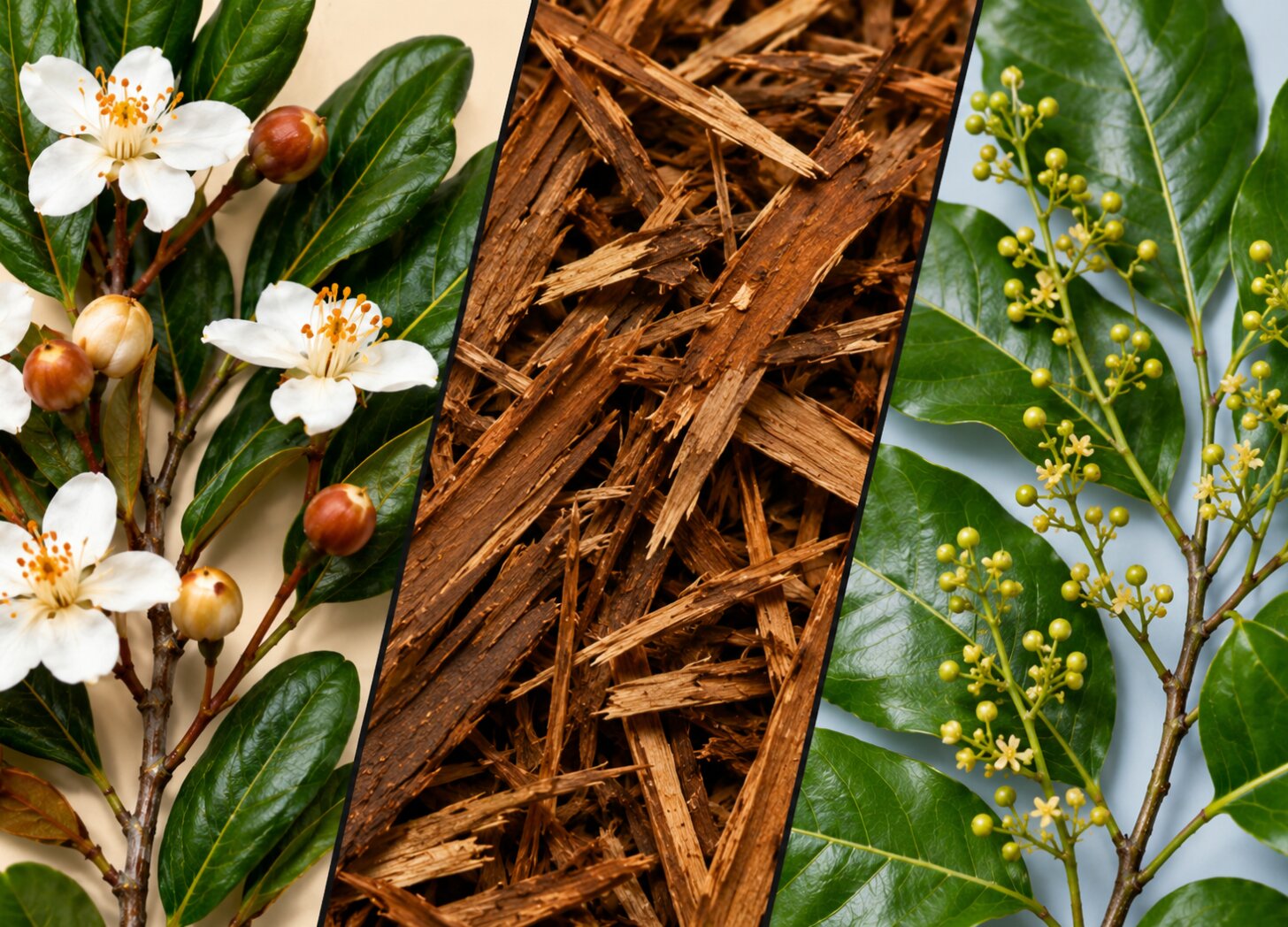
A guide to the many plants sold as catuaba.
The catuaba on your supplement label might not be the same catuaba used in the study you read.
It might not even be the same plant family.
That’s the problem with common names in general — but catuaba takes this to another level. It’s sold like a single herb, but the name has been applied to a long list of unrelated Brazilian and South American plants — different trees, different chemistry, different effects, and very different levels of evidence.
Some are well-documented medicinal barks, like Trichilia catigua. Others are regional species with limited research. And at least one name that shows up in herbal commerce — Juniperus braziliensis — doesn’t even appear to correspond to a valid plant species at all.
So before asking whether catuaba “works,” we need to ask a better question: which catuaba are we talking about?
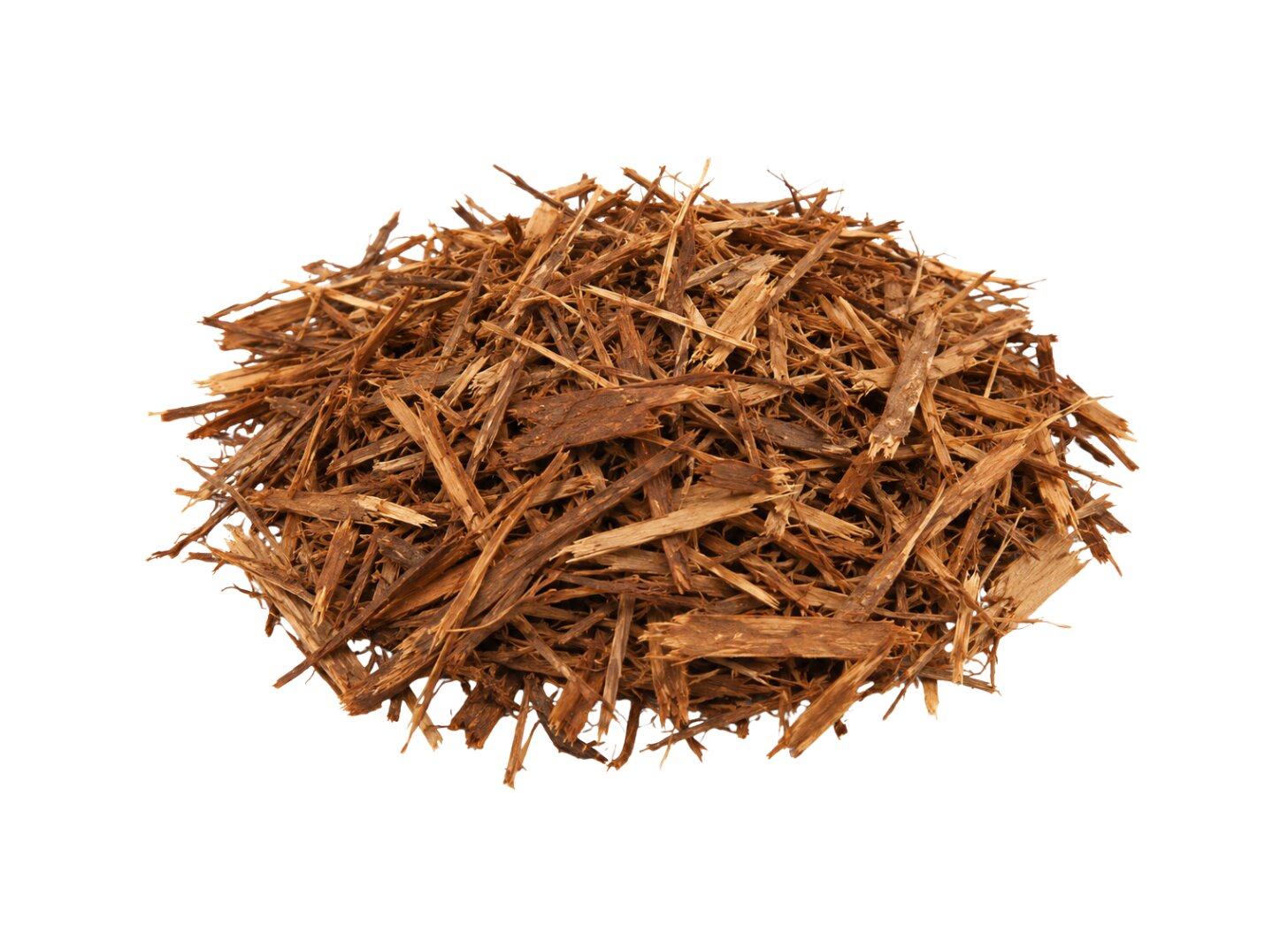
Dried catuaba bark — but which species?
Quick Guide: How to Read a Catuaba Label
If you’re shopping for catuaba, don’t just look for the word “catuaba.” Look for the botanical name.
That one detail tells you whether the product contains one of the better-documented catuaba species, a regional species with limited evidence, or a questionable name that shouldn’t be treated as a reliable botanical identity.
| Botanical Name | Recommended? | Quick Status | Best Label Interpretation |
|---|---|---|---|
| Trichilia catigua | ✅ Yes | Best-supported commercial catuaba | The main species to look for in most catuaba supplements. |
| Erythroxylum vacciniifolium | ✅ Yes | Legitimate but often mislabeled | A valid Brazilian catuaba species; avoid vague “Erythroxylum catuaba” labeling. |
| Anemopaegma arvense | 🟡 Maybe | Traditional/pharmacopoeial catuaba | A legitimate catuaba identity, but less common in supplements. |
| Eriotheca candolleana | ❌ Usually no | Regional “white catuaba” | Mostly relevant to common-name confusion, not modern supplements. |
| Micropholis gardneriana | ❌ Usually no | Regional catuaba identity; often mislabeled at the genus level | Avoid products labeled only as Micropholis spp. or Micropholis bark unless the exact species is listed. |
| Phyllanthus spp. | ❌ Usually no | Questionable catuaba association | May share the name, but not necessarily the same traditional use. |
| Protium catuaba | ❌ Usually no | Real species; taxonomy clarification | Important for explaining the “Erythroxylum catuaba” naming problem. |
| Juniperus braziliensis / brasiliensis | ❌ No | Dubious name | Treat as a warning sign, not a verified catuaba species. |
The table above is meant as a quick sorting tool. Herbal actions and known constituents are covered in the species notes below, since the chemistry varies widely between catuaba species.
Why Catuaba Is So Confusing
Common names are useful in everyday language, but they’re messy in herbal medicine.
A common name can refer to different plants depending on the region, supplier, preparation, or historical source. That’s exactly what happened with catuaba.
“Catuaba” is used broadly for tonic barks associated with energy, libido, mood, and resilience. Over time, unrelated trees and shrubs with somewhat similar uses became grouped under the same commercial name.
This is why botanical names matter.
Trichilia catigua refers to one plant. Erythroxylum vacciniifolium refers to one plant. Catuaba does not. It’s a category, not a species.
This becomes a real quality-control issue in supplements. One study of commercial catuaba bark products found that only a minority of tested samples contained the plant material claimed on the label, and more than half were adulterated with other crude drugs 1Reference 1Morphological, chemical and functional analysis of Catuaba preparations. The same study found that most samples contained bark originating from Trichilia catigua.
That doesn’t mean every catuaba product is bad. It means the label matters.
A good catuaba supplement should list the botanical species, the plant part used, and ideally provide identity testing or a certificate of analysis.

Catuaba comes from the Amazon rainforest
Catuaba Is Not One Plant
There are several plants sold or described as catuaba. The first two are the most important for modern supplement buyers.
Several of the unrelated plants sold under the name catuaba
1. Trichilia catigua
| Field | Detail |
|---|---|
| Family | Meliaceae |
| Other names | Big catuaba, catigua |
| Status | Best-supported commercial catuaba |
| Herbal actions | Nervine tonic; mood, focus, and fatigue support; antioxidant |
| Main constituents | Catechin, epicatechin, procyanidin B2, cinchonains, chlorogenic acid, tannins |
| Best label interpretation | One of the best species names to look for on a catuaba supplement. |
Trichilia catigua is probably the most important catuaba species to know.
It’s a tree in the mahogany family, Meliaceae. Plants of the World Online lists Trichilia catigua A.Juss. as an accepted species native from Bolivia to Brazil and northeastern Argentina 4Reference 4Trichilia catigua A.Juss.
This is the species most often discussed in modern research on catuaba. A review of Trichilia catigua notes that Brazilian catuaba plants represent more than twenty species, while T. catigua is one of the most common species associated with catuaba in Brazil.
This species is especially associated with the “nervine tonic” side of catuaba — mood, stress resilience, focus, fatigue, and memory support. Chemically, it’s best known for polyphenols such as catechin, epicatechin, procyanidin B2, cinchonains, chlorogenic acid, and tannins.
The evidence is still preliminary, so it shouldn’t be treated as a proven treatment for depression, ADHD, erectile dysfunction, or any other medical condition. But from a quality-control perspective, Trichilia catigua is the cleanest and most useful species name to look for.
Bottom line: If you want a modern catuaba supplement, start with Trichilia catigua bark.
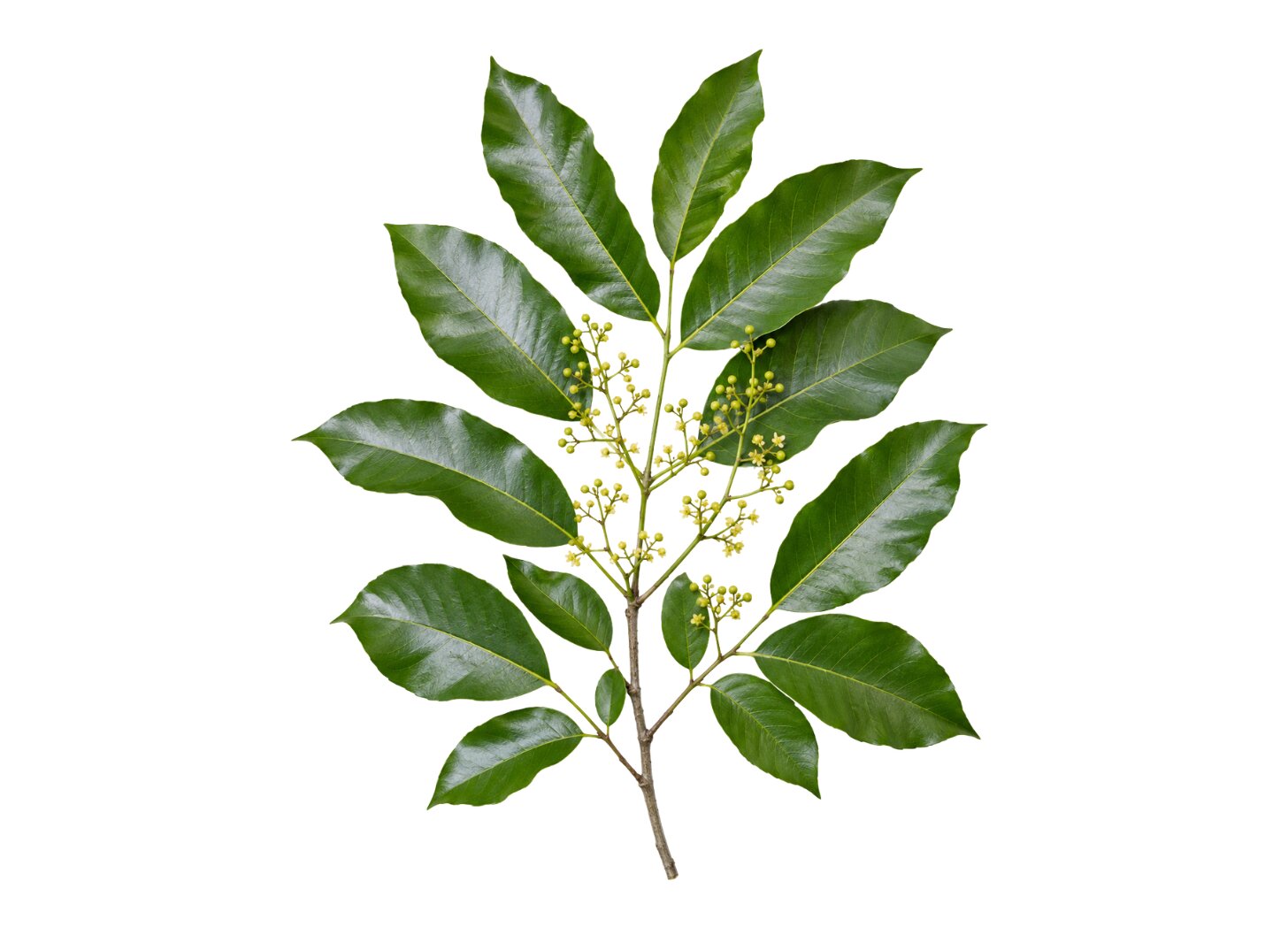
Trichilia catigua
2. Erythroxylum vacciniifolium
| Field | Detail |
|---|---|
| Family | Erythroxylaceae |
| Other names | Small catuaba, catuaba |
| Status | Legitimate catuaba species, but often confused with older naming |
| Herbal actions | Traditional stimulant; aphrodisiac; energy and libido support |
| Main constituents | Tropane alkaloids, including catuabine-type alkaloids |
| Best label interpretation | A valid catuaba species, but avoid vague “Erythroxylum catuaba” labeling unless the supplier explains the taxonomy. |
Erythroxylum vacciniifolium is another important catuaba species.
Plants of the World Online lists Erythroxylum vacciniifolium Mart. as an accepted species native to central Brazil 5Reference 5Erythroxylum vacciniifolium Mart. Kew’s Erythroxylaceae family notes also describe Erythroxylum vacciniifolium, popularly known as catuaba, as a Brazilian plant traditionally used as a central nervous system stimulant and aphrodisiac.
This species belongs to the same plant family as coca, but that does not mean catuaba has the same chemistry or effects. It’s better to think of this as a botanical relationship, not a practical equivalence.
Chemically, this is the catuaba species most associated with tropane alkaloids. Research on the bark of Erythroxylum vacciniifolium has identified multiple tropane alkaloids, including methylpyrrole-substituted tropane alkaloids and related N-oxides 3Reference 3Methylpyrrole tropane alkaloids from the bark of Erythroxylum vacciniifolium.
There’s also a naming trap here: many older articles and product listings use the name “Erythroxylum catuaba.” Modern taxonomy is more complicated. Plants of the World Online treats Erythroxylum catuaba A.J.Silva as a synonym of Protium catuaba, not as the accepted name for an Erythroxylum species 6Reference 6Protium catuaba (Soares da Cunha) Daly & P.Fine, incl.
That means “Erythroxylum catuaba” is not the cleanest name to look for on a label. If the supplier means the Erythroxylum species commonly used as catuaba, the better name is usually Erythroxylum vacciniifolium.
Bottom line: Look for Erythroxylum vacciniifolium, not vague “Erythroxylum catuaba” labeling.
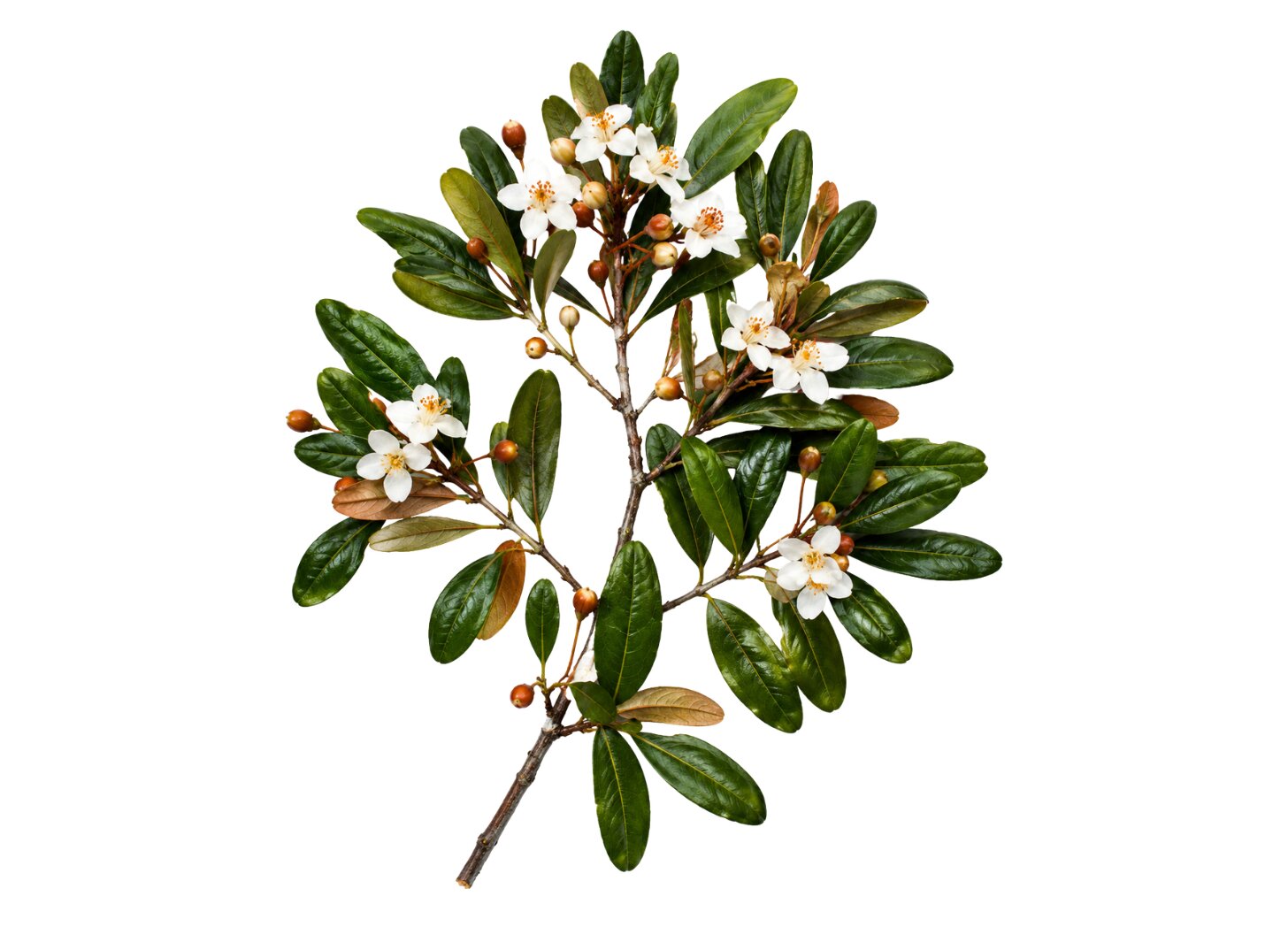
Erythroxylum vacciniifolium
3. “Juniperus braziliensis” / “Juniperus brasiliensis”
| Field | Detail |
|---|---|
| Family | Cupressaceae, if it were truly a Juniperus |
| Other names | Sometimes listed online as catuaba |
| Status | Dubious name; not a clearly accepted Brazilian catuaba species |
| Herbal actions | No reliable actions can be assigned under this name |
| Main constituents | Unknown; no reliable species-level phytochemistry found |
| Best label interpretation | Treat this as a warning sign, not a recommended catuaba species. |
This is one of the strangest names attached to catuaba.
Some older herbal lists and commercial product pages mention Juniperus braziliensis, Juniperus brasiliensis, or even misspellings like Junuperus braziliansis as a type of catuaba.
The problem is that this name does not appear to correspond to a clearly accepted botanical species.
Kew’s Plants of the World Online recognizes Juniperus as a valid genus, but its listed native range is subarctic and temperate Eurasia, tropical African mountains, North America to Guatemala, and the Caribbean — not Brazil or the Amazon basin 7Reference 7Juniperus L.
That doesn’t absolutely prove no supplier has ever used a juniper-like plant under the name catuaba. But it does strongly suggest that Juniperus braziliensis / brasiliensis is not a reliable botanical identity for catuaba.
It may be a trade-name error, a copied mistake, an obsolete misapplication, or a label that drifted through herbal commerce without being tied back to a verified herbarium specimen.
For a consumer, the practical advice is simple: don’t choose catuaba products labeled as Juniperus braziliensis or Juniperus brasiliensis.
A supplier using this name should be able to provide a verified botanical identity, plant part, sourcing information, and testing data. Without that, this is not a trustworthy catuaba label.
Bottom line: Treat Juniperus braziliensis / brasiliensis as a dubious name, not a recommended catuaba species.
4. Anemopaegma arvense
| Field | Detail |
|---|---|
| Family | Bignoniaceae |
| Other names | Catuaba |
| Status | Traditional/pharmacopoeial catuaba |
| Herbal actions | Traditional stimulant and tonic; antioxidant; possible antifungal activity |
| Main constituents | Flavan-3-ol phenylpropanoid conjugates; flavonoids, including rutin and quercetin glycosides |
| Best label interpretation | A legitimate catuaba identity, but less common in mainstream supplement products. |
Anemopaegma arvense is another plant associated with the name catuaba.
It belongs to the Bignoniaceae family, which also includes trumpet vines and related tropical woody plants. This species is sometimes presented as an official or pharmacopoeial catuaba identity, but it’s not necessarily the same as what you’ll find in most modern commercial catuaba supplements.
Compared with Trichilia catigua, there’s less accessible modern supplement-oriented research on Anemopaegma arvense. That doesn’t make it irrelevant, but it does mean buyers should be cautious.
Chemically, Anemopaegma arvense has been studied for flavan-3-ol phenylpropanoid conjugates and antioxidant activity. One study identified a commercially available catuaba sample as Anemopaegma arvense using micromorphological characteristics and TLC comparison 1Reference 1Morphological, chemical and functional analysis of Catuaba preparations.
Bottom line: A legitimate catuaba identity, but not the most common label you’ll see in mainstream supplement products.
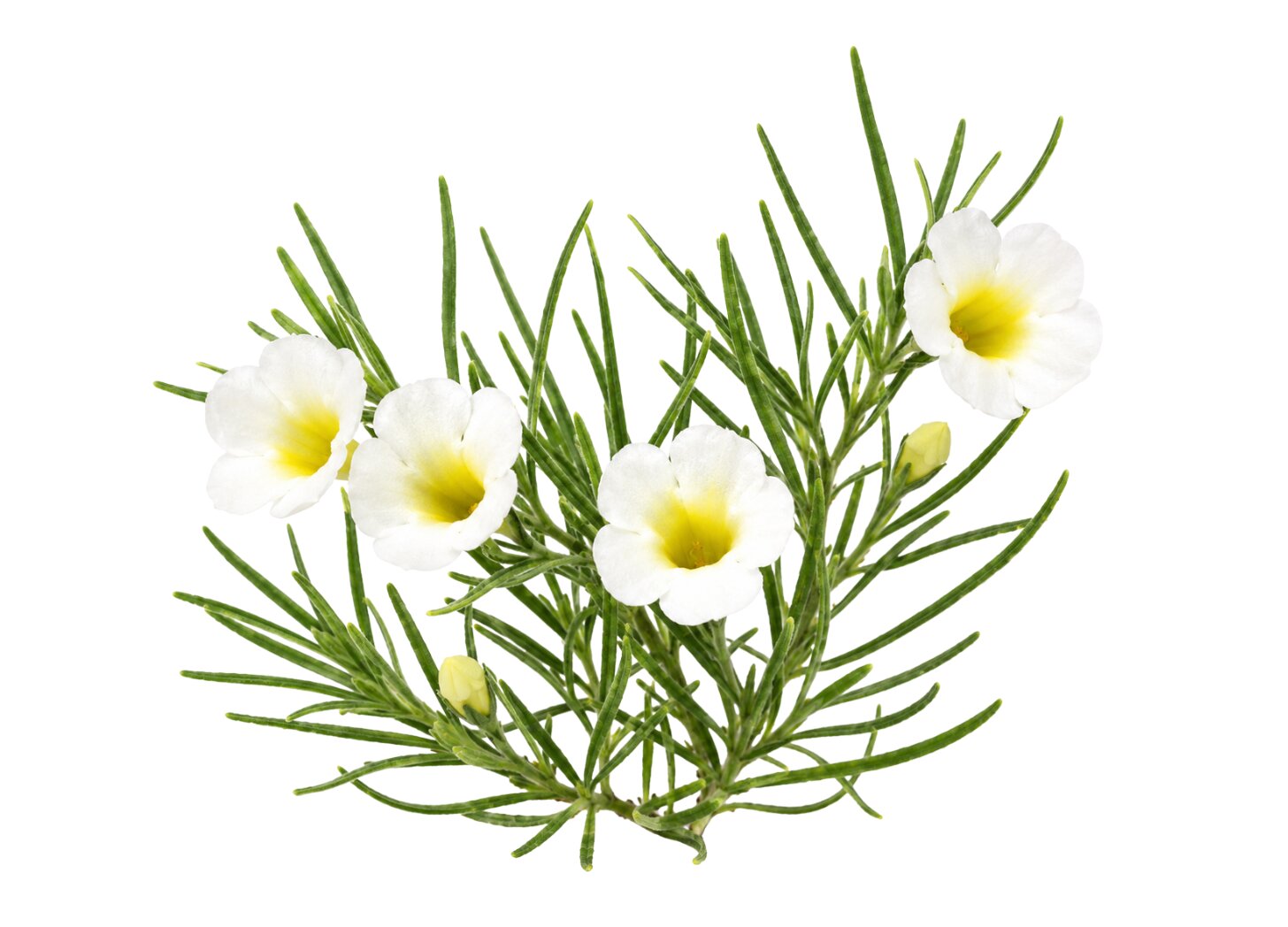
Anemopaegma arvense
5. Eriotheca candolleana
| Field | Detail |
|---|---|
| Family | Malvaceae |
| Other names | White catuaba, catuaba-branca, embiruçu |
| Status | Regional “white catuaba” |
| Herbal actions | Poorly documented as a medicinal catuaba |
| Main constituents | Not well characterized in the catuaba literature |
| Best label interpretation | Mostly relevant to common-name confusion, not a primary supplement species. |
Eriotheca candolleana is a Brazilian tree also associated with catuaba-like common names.
This plant is in the Malvaceae family, which is a completely different family from Trichilia, Erythroxylum, and Anemopaegma.
That’s the whole catuaba problem in one example: the same common name can jump across unrelated plant families.
Eriotheca candolleana may be locally important, but it’s not the species most consumers are looking for when they buy catuaba supplements online.
Bottom line: Useful to know as part of the catuaba naming mess, but not a primary supplement species.
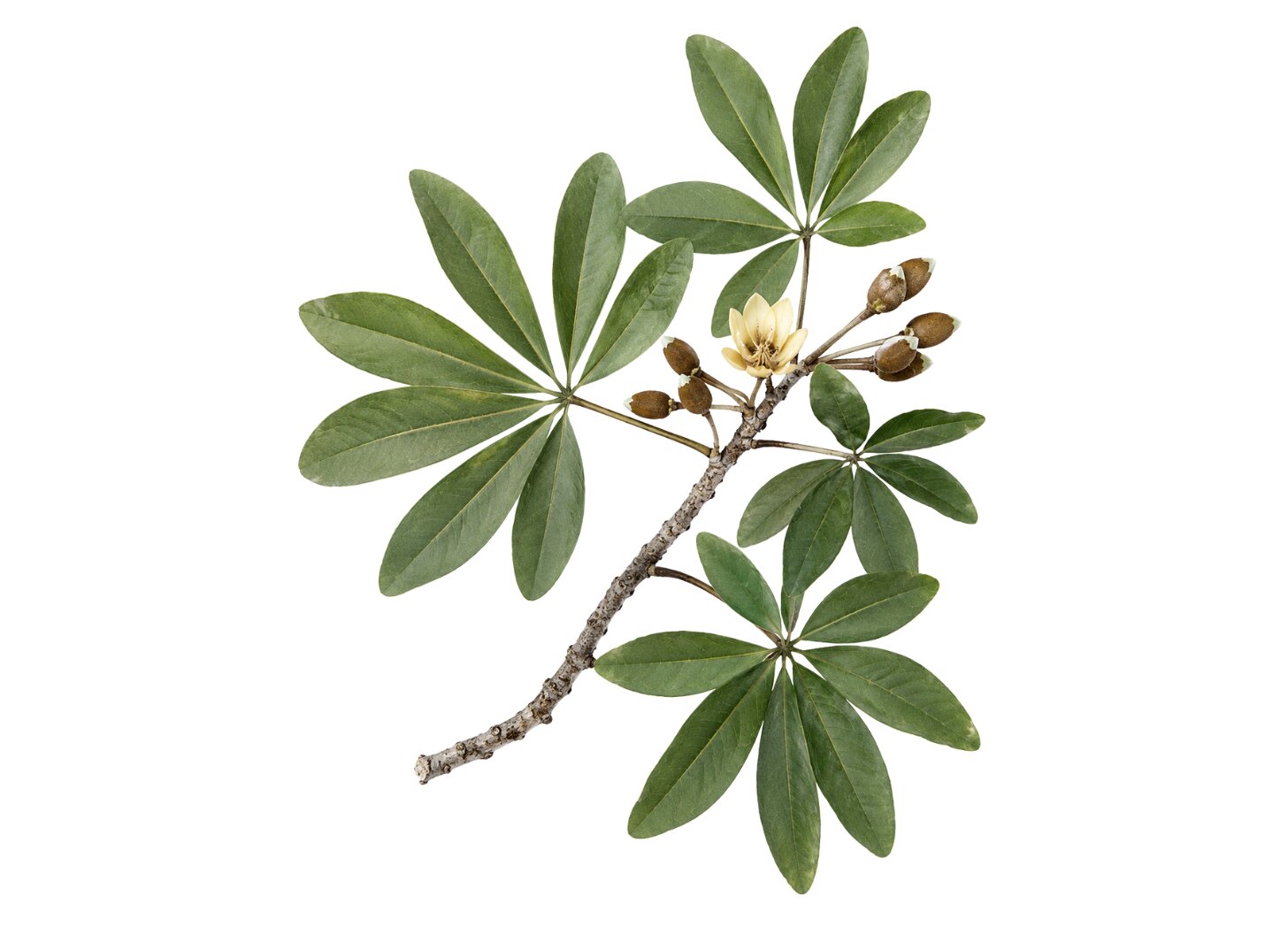
Eriotheca candolleana
6. Micropholis gardneriana
| Field | Detail |
|---|---|
| Family | Sapotaceae |
| Other names | Catuaba |
| Status | Regional catuaba identity; often mislabeled only at the genus level |
| Herbal actions | Poorly documented as a medicinal catuaba; traditionally grouped with stimulant/aphrodisiac bark tonics |
| Main constituents | Not well characterized in the catuaba literature |
| Best label interpretation | Avoid products labeled only as Micropholis spp. or Micropholis bark unless the exact species is listed. |
Some catuaba supplements and herbal references list Micropholis only at the genus level. That’s a problem.
Micropholis is not one plant. It’s a whole genus in the Sapotaceae family, and Plants of the World Online currently lists 41 accepted species in the genus 9Reference 9Micropholis Pierre, incl. These species are distributed from southern Mexico through tropical America, including multiple regions of Brazil.
Because there are so many different species, a label that only says Micropholis spp., Micropholis bark, or “Micropholis catuaba” doesn’t tell you enough. Different species in the genus may have different chemistry, different traditional uses, and different effects. There simply isn’t enough catuaba-specific research to treat the whole genus as interchangeable.
The most likely species behind the catuaba name appears to be Micropholis gardneriana. The New York Botanical Garden’s World Flora Online monograph page for Micropholis gardneriana lists the common name catuaba, with Brazilian specimens recorded from Bahia and Pará 10Reference 10ReviewWorld Flora Online: Micropholis gardneriana monograph. POWO also treats Micropholis gardneriana as an accepted species native to South Tropical America and growing mainly in wet tropical forest 9Reference 9Micropholis Pierre, incl.
Even so, this is not one of the main catuaba species most supplement buyers should be looking for. Compared with Trichilia catigua, Erythroxylum vacciniifolium, and Anemopaegma arvense, there’s much less useful information on its medicinal actions, chemistry, or role in commercial catuaba products.
Bottom line: If a product lists only Micropholis spp. or Micropholis bark, avoid it. The genus contains dozens of species, and without a clear species name, there’s no reliable way to know what plant you’re taking or what effects to expect. If a supplier means this regional catuaba identity, the label should ideally say Micropholis gardneriana.
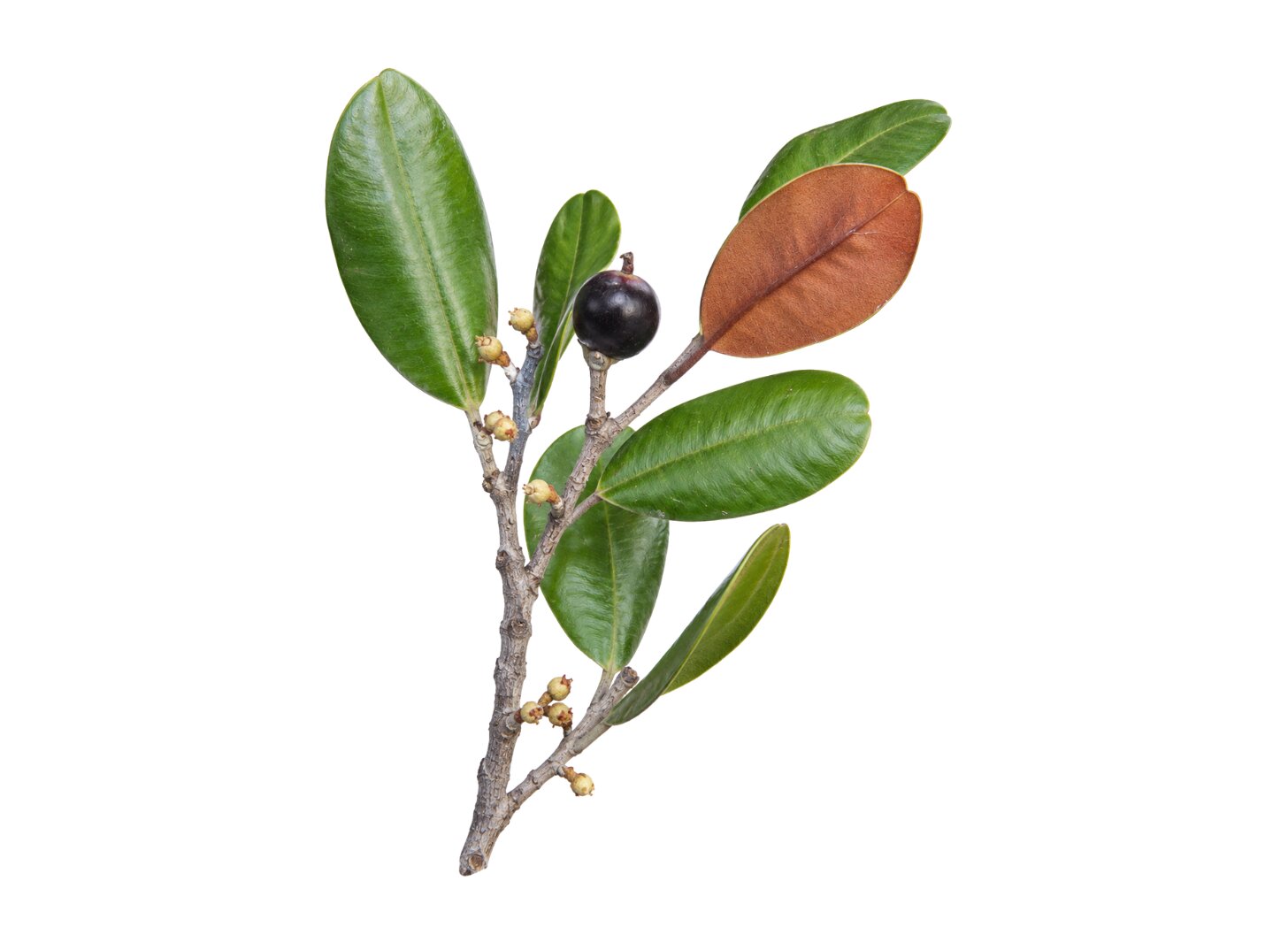
Micropholis gardneriana
7. Phyllanthus spp.
| Field | Detail |
|---|---|
| Family | Phyllanthaceae |
| Other names | Occasionally appears in catuaba lists |
| Status | Questionable catuaba association |
| Herbal actions | Not reliably established as a classic catuaba species |
| Main constituents | Varies widely by species; not useful without exact species ID |
| Best label interpretation | Don’t assume a Phyllanthus-based product has the same actions as better-known catuaba species. |
Some catuaba lists include Phyllanthus species.
This is another example of how broad the catuaba name has become. Phyllanthus is a large and diverse genus, and not every plant casually associated with catuaba should be assumed to have the same chemistry or traditional use.
If a product says Phyllanthus and catuaba together, that’s not automatically wrong — but it does require more scrutiny. Which species? Which plant part? What source? What testing?
Without those details, there’s no good reason to treat it as equivalent to Trichilia catigua, Erythroxylum vacciniifolium, or Anemopaegma arvense.
Bottom line: Don’t buy a Phyllanthus-based “catuaba” product unless the species and quality controls are clear.
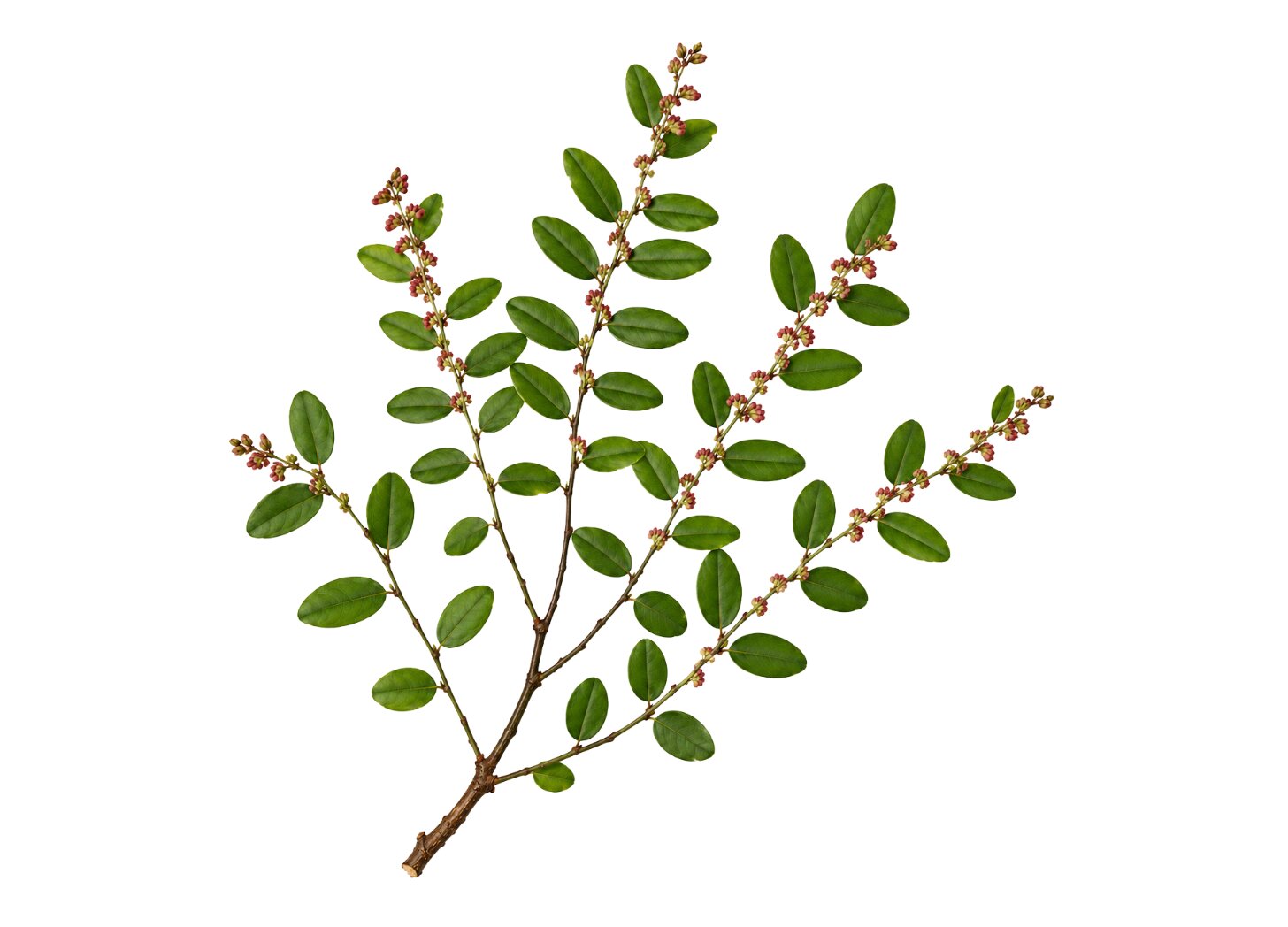
Phyllanthus nobilis
8. Protium catuaba
| Field | Detail |
|---|---|
| Family | Burseraceae |
| Other names | Catuaba; formerly treated as Tetragastris catuaba |
| Status | Real accepted species; mainly useful for taxonomy clarification |
| Herbal actions | Poorly documented as a consumer catuaba; possible antimicrobial relevance from essential oil research |
| Main constituents | Resin/essential oil constituents; β-caryophyllene reported from Tetragastris catuaba oil |
| Best label interpretation | Important for explaining the “Erythroxylum catuaba” naming problem, but not the main supplement species to look for. |
Protium catuaba is one of the more taxonomically confusing plants attached to the catuaba name.
Modern taxonomy treats Protium catuaba (Soares da Cunha) Daly & P.Fine as an accepted species in the Burseraceae family. Plants of the World Online lists it as a tree native to northeastern Brazil, extending to Espírito Santo, where it grows primarily in wet tropical forest 6Reference 6Protium catuaba (Soares da Cunha) Daly & P.Fine, incl.
This is the plant that helps explain why the name “Erythroxylum catuaba” can be so misleading. Although many older herbal articles use Erythroxylum catuaba as if it were the standard “small catuaba,” POWO treats Erythroxylum catuaba A.J.Silva as a synonym under Protium catuaba, not as the accepted name for an Erythroxylum species 6Reference 6Protium catuaba (Soares da Cunha) Daly & P.Fine, incl.
The older name Tetragastris catuaba also appears in the literature. This older placement makes sense historically, but the current accepted name is Protium catuaba.
Medicinally, this is not the easiest catuaba species to interpret. It belongs to the resin-rich Burseraceae family, and available research appears to focus more on essential oil chemistry and antimicrobial potential than on the tonic, aphrodisiac, or nervous-system effects usually associated with commercial catuaba supplements.
That’s interesting, but it does not mean Protium catuaba should be treated as interchangeable with Trichilia catigua or Erythroxylum vacciniifolium.
Bottom line: Protium catuaba is a real accepted species and an important taxonomic clue, but it’s not the main catuaba most supplement buyers are looking for. Its biggest role in this article is clearing up the confusion around names like “Erythroxylum catuaba” and “Tetragastris catuaba.”
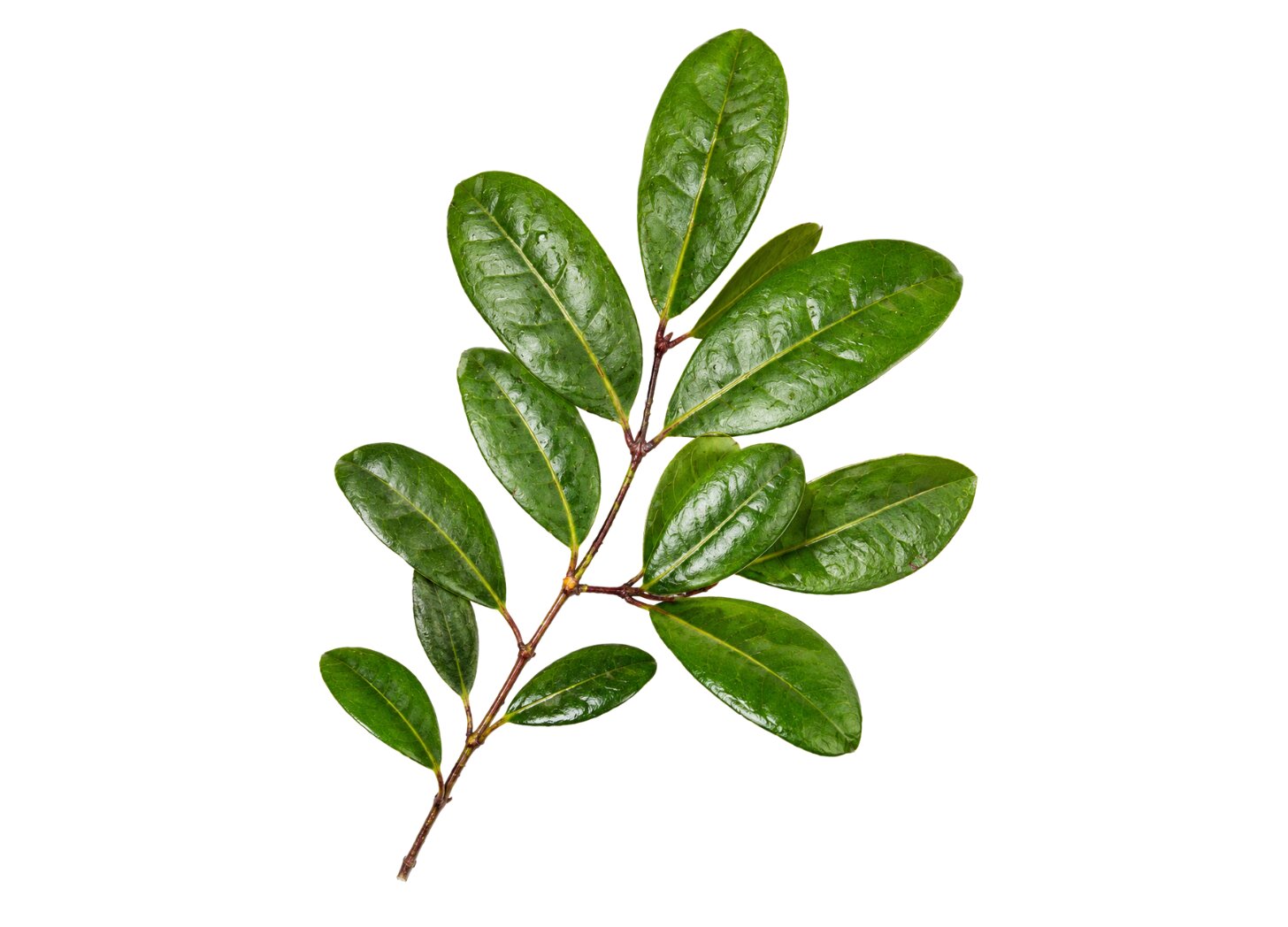
Protium catuaba (formerly Tetragastris catuaba)
The Classic Pairing: Catuaba & Muira Puama
There’s one more thing to know before moving on: catuaba is very often sold in combination with muira puama.
Muira puama usually refers to Ptychopetalum olacoides, another South American tonic bark/root used in traditional Amazonian and Brazilian herbal systems. If you search for catuaba supplements, tinctures, or libido formulas, you’ll often find the two herbs paired together rather than sold separately.
This pairing isn’t random. In traditional use, catuaba and muira puama are both associated with energy, libido, resilience, and age-related vitality. Catuaba is usually framed as the more stimulating, mood-supportive bark, while muira puama is often framed as a nervous-system and sexual tonic.
The two also appear together in Catuama®, a Brazilian polyherbal formula made with Trichilia catigua catuaba, Ptychopetalum olacoides muira puama, Paullinia cupana guarana, and Zingiber officinale ginger.
This formula is one reason catuaba and muira puama are so closely linked in modern Brazilian herbal products 2Reference 2Clinical toxicology study of an herbal medicinal extract of Paullinia cupana, Trichilia catigua, Ptychopetalum olacoides and Zingiber officinale (Catuama®) in healthy volunteers. UTEP’s herbal safety monograph also notes muira puama as an ingredient in Catuama alongside guarana, ginger, and Trichilia catigua 8Reference 8ReviewHerbal Safety: Muira Puama monograph.
From a label-reading perspective, this matters because a “catuaba supplement” may not be just catuaba. It may be a broader Amazonian tonic formula.
A good label should still list each species clearly:
- Catuaba bark extract — Trichilia catigua
- Muira puama bark/root extract — Ptychopetalum olacoides
A weak label will say something vague like:
- “Catuaba complex”
- “Amazonian libido blend”
- “Catuaba and muira puama bark blend”
Those phrases may sound traditional, but they don’t tell you exactly what plants you’re taking.
Bottom line: Catuaba and muira puama are commonly paired, and that pairing makes sense historically. But the same rule still applies: the label should list the botanical name for each herb.
Catuaba Research Has a Species Problem
Research on catuaba is difficult to interpret because not every study uses the same plant.
This is one of the biggest problems with common-name herbs. A study might report results for “catuaba,” but if the species isn’t clearly identified, the findings are hard to apply to real-world supplements.
Even when the species is listed, consumers still have to make sure the product they’re buying contains the same species used in the study.
For example, research on Trichilia catigua does not automatically apply to Erythroxylum vacciniifolium, Anemopaegma arvense, or a vague “catuaba bark” product.
This is why catuaba supplement claims should be read carefully. Traditional use and early research are interesting, but they don’t replace species-level identification, clinical evidence, or medical guidance.

How to Choose a Better Catuaba Supplement
When shopping for catuaba, don’t start with the front of the bottle. Start with the Supplement Facts panel and the botanical name.
Look for:
- The botanical species, ideally Trichilia catigua or Erythroxylum vacciniifolium
- The plant part used, usually bark
- Extract ratio or standardization details
- Third-party testing or identity testing
- Clear sourcing information
- A company that avoids exaggerated medical claims
Avoid:
- Products that only say “catuaba bark”
- Products that don’t list a botanical name
- Products labeled Juniperus braziliensis or Juniperus brasiliensis
- Products using the name “Erythroxylum catuaba” without explanation
- “Proprietary blends” that hide the dose of each ingredient
- Brands making strong claims about curing depression, erectile dysfunction, ADHD, infertility, or other medical conditions
So, Which Catuaba Should You Use?
For most people, the best choice is a product that clearly lists Trichilia catigua bark.
This is the catuaba species most often emphasized in modern research and commercial identity testing. It’s also one of the species most commonly associated with catuaba in Brazilian herbal literature.
Erythroxylum vacciniifolium is also a legitimate catuaba species, but the labeling around Erythroxylum can be confusing. Be cautious with products that use the name “Erythroxylum catuaba,” because modern taxonomy treats that name differently than many herbal articles imply.
Anemopaegma arvense is another traditional catuaba identity, but it’s less commonly seen in mainstream supplement products.
Avoid products labeled Juniperus braziliensis, Juniperus brasiliensis, or Junuperus braziliansis. These names do not appear to match a clearly accepted Brazilian catuaba species, and the genus Juniperus itself is not native to Brazil or the Amazon basin according to POWO’s range summary for the genus 7Reference 7Juniperus L.
Final Thoughts
Catuaba is a perfect example of why botanical names matter.
The common name is attached to several unrelated plants, and the supplement market doesn’t always make it clear which one is inside the bottle.
If you’re buying catuaba, look for Trichilia catigua first. Erythroxylum vacciniifolium is also worth knowing. Be cautious with vague labels, proprietary blends, and questionable species names.
And if you see Juniperus braziliensis or Juniperus brasiliensis, treat it as a warning sign rather than a feature.
That name may appear in herbal commerce, but it does not appear to represent a well-supported catuaba species.
Author:
The Sunlight Experiment
(Updated July 2026)
References:
- Kletter, C., Glasl-Tazreiter, S., Presser, A., Werner, I., Reznicek, G., Narantuya, S., Cellek, S., Haslinger, E., & Jurenitsch, J. (2004). Morphological, chemical and functional analysis of Catuaba preparations. Planta Medica. 70(10). 993-1000.
- Oliveira, C. H., Moraes, M. E. A., Moraes, M. O., Bezerra, F. A. F., Abib, E., & De Nucci, G. (2005). Clinical toxicology study of an herbal medicinal extract of Paullinia cupana, Trichilia catigua, Ptychopetalum olacoides and Zingiber officinale (Catuama®) in healthy volunteers. Phytotherapy Research. 19(1). 54-57.
- Queiroz, E. F., Zanolari, B., Marston, A., Guilet, D., Burgener, L., de Queiroz Paulo, M., & Hostettmann, K. (2005). Methylpyrrole tropane alkaloids from the bark of Erythroxylum vacciniifolium. Journal of Natural Products. 68(8). 1153-1158.
- Plants of the World Online. Trichilia catigua A.Juss. Royal Botanic Gardens, Kew. powo.science.kew.org.
- Plants of the World Online. Erythroxylum vacciniifolium Mart. Royal Botanic Gardens, Kew. powo.science.kew.org.
- Plants of the World Online. Protium catuaba (Soares da Cunha) Daly & P.Fine, incl. synonymy of Erythroxylum catuaba A.J.Silva and Tetragastris catuaba. Royal Botanic Gardens, Kew. powo.science.kew.org.
- Plants of the World Online. Juniperus L. Royal Botanic Gardens, Kew. powo.science.kew.org.
- University of Texas at El Paso. Herbal Safety: Muira Puama monograph. utep.edu.
- Plants of the World Online. Micropholis Pierre, incl. Micropholis gardneriana (A.DC.) Pierre. Royal Botanic Gardens, Kew. powo.science.kew.org.
- New York Botanical Garden. World Flora Online: Micropholis gardneriana monograph. worldfloraonline.org.
Justin Cooke
Clinical herbalist and the writer behind The Sunlight Experiment — an evidence-based pharmacopoeia of herbs, supplements, and the chemistry behind them.