
Materia Medica
Muira Puama
Ptychopetalum olacoides
Muira puama (Ptychopetalum olacoides) — an Amazonian 'potency wood' used for libido, memory and nervous-system support, with a preclinical-heavy evidence base.
What Is Muira Puama?
Muira puama (Ptychopetalum olacoides) is a small Amazonian tree in the family Olacaceae, long known in Brazil as “potency wood” (pau-homem, marapuama). The bark and roots are the medicinal parts, traditionally extracted into alcohol and used across the Amazon for libido, fatigue, “nervous weakness” and age-related decline. Its reputation as a sexual and nerve tonic is genuinely old; its clinical evidence is not.
The best-supported modern signal is on the nervous system, not the bedroom. A single Brazilian research group has repeatedly shown that a standardised ethanol extract inhibits acetylcholinesterase in cognition-relevant brain areas and improves memory retrieval in rodents 4,5Reference 4In vitroPtychopetalum olacoides, a traditional Amazonian “nerve tonic”, possesses anticholinesterase activity — in vitro / animal studyView study →Reference 5AnimalAcetylcholinesterase inhibition in cognition-relevant brain areas of mice treated with a nootropic Amazonian herbal (Marapuama) — animal studyView study → — but the molecule responsible has never been isolated, so this is an effect of the whole extract, demonstrated only in animals. The popular aphrodisiac claim, by contrast, rests on one in-vitro study and on human trials of multi-herb formulas, never the herb alone.
One caveat reshapes the older literature: quantitative chemistry published in 2018 found P. olacoides bark is dominated by the alkaloids magnoflorine and menisperine (together about 76% of measured constituents), with only modest lupeol and phenolics 20Reference 20Qualitative and quantitative analysis of chemical constituents of Ptychopetalum olacoides BenthView study →. Much of the earlier writing — including on this page previously — framed lupeol as the herb’s central active. That framing overstates lupeol’s role in this particular plant.
Traditional & Modern Uses
In the Amazon rainforest muira puama has a long history as a near-panacea, especially for age-related complaints. Traditionally almost every part of the plant was used, though practice narrowed over time to the bark and roots. In the Rio Negro region of Brazil, native peoples used it for baldness, fatigue, muscular weakness and “sexual debility,” and to treat what was called nervous weakness — lassitude, low motivation, tremor and loss of libido 28Reference 28The healing power of rainforest herbs: A guide to understanding and using herbal medicinals. It was also employed in stroke recovery and to cope with physical and emotional stress.
The classic preparation is an alcoholic one: the crushed bark, often combined with catuaba, infused in warm water or — more effectively — in spirit. Muira puama liquor (made with the sugar-cane spirit cachaça, or steeped in wine as garrafadas) was taken daily before meals 28Reference 28The healing power of rainforest herbs: A guide to understanding and using herbal medicinals. Because the active constituents are poorly water-soluble, the alcoholic extract remains the standard form today.
The herb also appears in a survey of Brazilian folk literature that searched two dozen books for plants resembling adaptogens; P. olacoides was one of only four species with prior research on anti-stress, memory or performance endpoints, alongside guaraná, damiana and Heteropterys aphrodisiaca 23Reference 23ReviewBrazilian plants as possible adaptogens: an ethnopharmacological survey of books edited in Brazil — review / surveyView study →. That survey is an ethnobotanical mapping exercise, not clinical evidence — the adaptogen label for muira puama is proposed and traditional, resting on rodent data.
Botany & Varieties
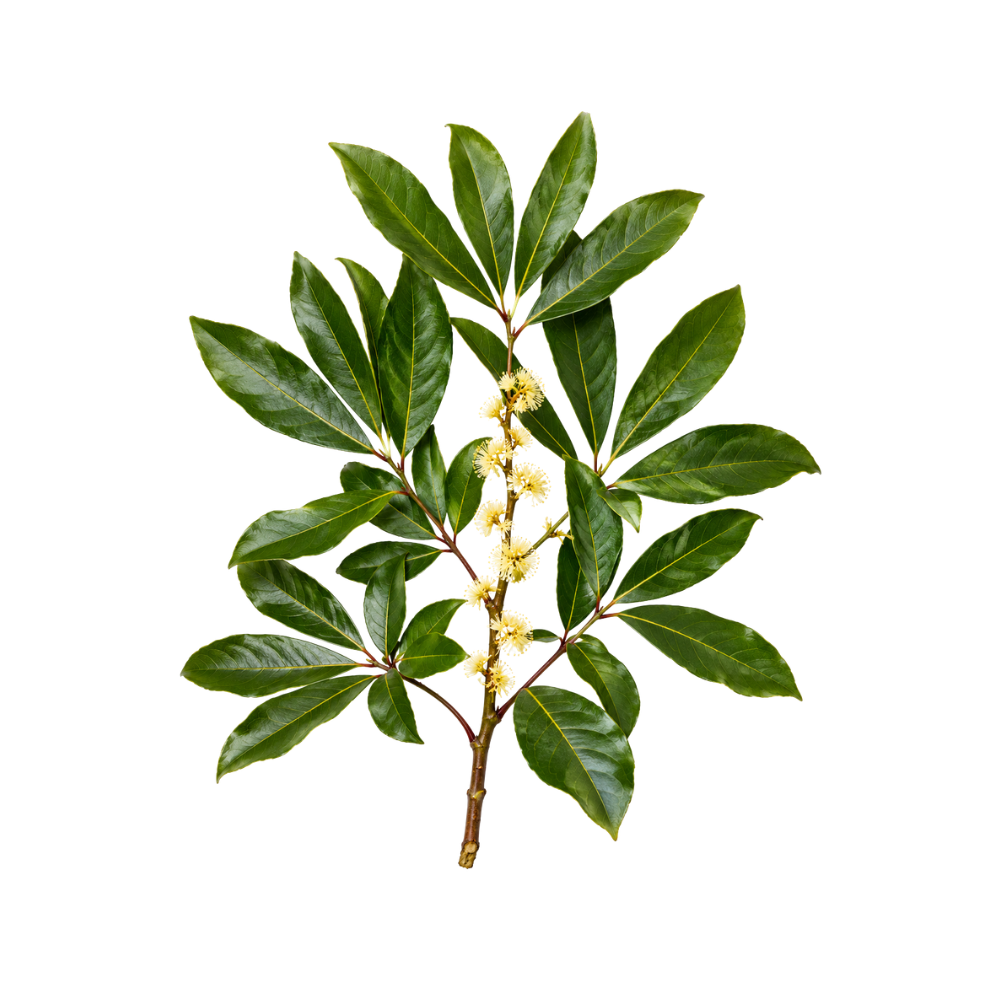
Muira puama is the common name for Ptychopetalum olacoides and its close relative Ptychopetalum uncinatum, both in the family Olacaceae. P. olacoides is a small tree reaching about 15 m, with ovate dark-green leaves, greyish bark (pink on the inner surface when scratched) and small white flowers with a jasmine-like fragrance. The roots and bark taste faintly salty and acrid.
Of the genus, two species occur in South America and five in tropical Africa. P. olacoides is found across French Guiana, Guyana, Suriname and Brazil, while P. uncinatum is restricted to Brazil. The two are near-identical except in lupeol content; P. olacoides carries more, and is preferred commercially and studied far more often.
A genuine misidentification hazard surrounds this herb. An unrelated tree, Liriosma ovata, is also sold as “muira puama,” but has neither the traditional record nor the research base of Ptychopetalum and should not be used interchangeably. Foragers and retailers sometimes substitute it, so correct identification from a reputable supplier is essential.
Habitat & Distribution
Ptychopetalum olacoides grows throughout the Amazon rainforest, while P. uncinatum is confined to the Brazilian portion. Other members of the family Olacaceae occur in tropical Africa.
Harvesting & Preparation
Although the traditional method infuses crushed bark in warm water overnight, the medicinal constituents of Ptychopetalum are largely water-insoluble and extract far better into alcohol. Most research has used the ethanol extract (sometimes lyophilised or further concentrated), and the alcoholic tincture is the common practical form. Powdering and encapsulation are used but are less efficient for the same solubility reason.
Much of the commercial supply is a by-product of Amazonian logging, but skilled foragers can harvest bark and roots with less ecological damage, which is preferable. When making a tincture from dried plant material, a high-proof clear alcohol is recommended over dark or amber liquors, at a standard 1:5 ratio (1 part dried herb to 5 parts alcohol).
Phytochemistry
For decades the chemistry of muira puama was described mainly through its essential oil and a lupeol-rich ester fraction. A 2018 quantitative analysis rewrote that picture: the bark of P. olacoides is dominated by two aporphine alkaloids, magnoflorine and menisperine, which together account for roughly 76% of measured constituents 20Reference 20Qualitative and quantitative analysis of chemical constituents of Ptychopetalum olacoides BenthView study →. Phenolics — several luteolin flavones and phenolic acids — were also identified for the first time, but at modest levels (the highest under ~1.04 mg/g) 20Reference 20Qualitative and quantitative analysis of chemical constituents of Ptychopetalum olacoides BenthView study →.
The older, still-valid detail sits underneath this. The bark and roots carry fatty-acid esters (chiefly behenic acid), an essential oil of sesquiterpenes and monoterpenes including beta-caryophyllene, alpha-humulene and the pinenes 27Reference 27Volatile constituents of Ptychopetalum olacoides root oilView study →, phytosterols (notably beta-sitosterol), the triterpene lupeol, and a historically named alkaloid, muirapuamine. Lupeol remains the marker triterpene and is higher in P. olacoides than P. uncinatum, but its widely cited antioxidant and anti-cancer activity comes almost entirely from studies of lupeol in other plants, not from muira puama itself — a distinction the older literature blurred.
Constituent Summary
Only the lupeol/sterol/behenic-acid ester fraction has a legacy quantitative figure (an ester mixture ~66% lupeol making up roughly 0.4–0.5% of the plant), traced to a secondary compilation 28Reference 28The healing power of rainforest herbs: A guide to understanding and using herbal medicinals. The 2018 analysis added the first modern figures for the dominant alkaloids and phenolics 20Reference 20Qualitative and quantitative analysis of chemical constituents of Ptychopetalum olacoides BenthView study →; the essential-oil and fatty-acid constituents remain documented qualitatively, so are listed as No Data.
Alkaloid3 compounds2 with data
Triterpene1 compound1 with data
Sterol3 compoundsno data
Flavone1 compound1 with data
Coumarin1 compoundno data
Sesquiterpene4 compoundsno data
Monoterpene4 compoundsno data
Fatty Acid3 compounds1 with data
Other reported plant chemicals include alpha-copaene, alpha-elemene, alpha-guaiene, alpha-muurolene, alpha-resinic acid, alpha-terpinene, allo-aromadendrene, beta-bisabolene, beta-resinic acid, beta-transfarnesene, borneol, camphene, car-3-ene, cerotic acid, cubebene, dotriacontanoic acid, elixene, ergosterol, eugenol, gamma-muurolene, hentriacontanoic acid, heptacosanoic acid, linalool, melissic acid, montanic acid, myrcene, nonacosanoic acid, para-cymene, pentacosanoic acid, phlobaphene, trichosanic acid and uncosanic acid 27,28Reference 27Volatile constituents of Ptychopetalum olacoides root oilView study →Reference 28The healing power of rainforest herbs: A guide to understanding and using herbal medicinals.
Pharmacology & Research
Muira puama has a modest but coherent research base — roughly two dozen primary studies, overwhelmingly preclinical. The most developed line of work comes from a single Brazilian group (Elisabetsky and colleagues at UFRGS) who characterised a standardised ethanol extract (POEE) across memory, anti-stress, antidepressant, and neuroprotective models in rodents; the strongest and most reproducible signal is acetylcholinesterase inhibition in cognition-relevant brain areas, confirmed both in vitro and in orally dosed mice 4,5Reference 4In vitroPtychopetalum olacoides, a traditional Amazonian “nerve tonic”, possesses anticholinesterase activity — in vitro / animal studyView study →Reference 5AnimalAcetylcholinesterase inhibition in cognition-relevant brain areas of mice treated with a nootropic Amazonian herbal (Marapuama) — animal studyView study →. There is no randomised controlled trial of muira puama on its own: every human dataset uses multi-herb formulas (Ginkgo-containing “Herbal vX”, or the guaraná/ginger/citrulline blends Catuama, COMP-4 and Revactin), so no human effect can be attributed to the herb alone 15,16,24Reference 15Clinical trialEffects of Herbal vX on libido and sexual activity in premenopausal and postmenopausal women — open-label clinical study (combination product)View study →Reference 16Clinical trialSafety and efficacy of daily Revactin in men with erectile dysfunction: a 3-month pilot study — uncontrolled clinical trial (combination product)View study →Reference 24Clinical trialClinical toxicology study of an herbal medicinal extract of Paullinia cupana, Trichilia catigua, Ptychopetalum olacoides and Zingiber officinale (Catuama) in healthy volunteers — clinical studyView study →. A further caveat runs through all of it — nearly every study uses the alcoholic extract of P. olacoides bark/root, and quantitative chemistry shows the plant is dominated by alkaloids (magnoflorine, menisperine), not the lupeol the older literature emphasised 20Reference 20Qualitative and quantitative analysis of chemical constituents of Ptychopetalum olacoides BenthView study →.
- Best-supported: acetylcholinesterase inhibition and memory-retrieval improvement in rodents, replicated across several paradigms and in aged animals 3,4,5Reference 3AnimalMemory retrieval improvement by Ptychopetalum olacoides in young and aging mice — animal studyView study →Reference 4In vitroPtychopetalum olacoides, a traditional Amazonian “nerve tonic”, possesses anticholinesterase activity — in vitro / animal studyView study →Reference 5AnimalAcetylcholinesterase inhibition in cognition-relevant brain areas of mice treated with a nootropic Amazonian herbal (Marapuama) — animal studyView study →; anti-stress/antidepressant activity with a plausible HPA-axis mechanism 7,8,9Reference 7AnimalAntidepressant profile of Ptychopetalum olacoides Bentham (Marapuama) in mice — animal studyView study →Reference 8Effects of Marapuama in the chronic mild stress model: further indication of antidepressant properties — animal studyView study →Reference 9AnimalAnti-stress effects of the “tonic” Ptychopetalum olacoides (Marapuama) in mice — animal studyView study →.
- Emerging, worth watching: clerodane diterpenoids that potentiate nerve growth factor (NGF) and protect neurons against β-amyloid — a distinctive neuroregenerative signal 6,21,22Reference 6AnimalThe Amazonian herbal Marapuama attenuates cognitive impairment and neuroglial degeneration in a mouse Alzheimer model — animal studyView study →Reference 21In vitroNovel NGF-potentiating diterpenoids from a Brazilian medicinal plant, Ptychopetalum olacoides — in vitro studyView study →Reference 22In vitroClerodane diterpenoids with NGF-potentiating activity from Ptychopetalum olacoides — in vitro studyView study →.
- Mechanistically thin: the aphrodisiac reputation rests on one in-vitro rabbit study and human trials of combination products; antioxidant and anti-cancer claims lean on lupeol studied in other plants.
- The caveat: preclinical-only for every efficacy claim, no standardised human dose, and no monotherapy trial — the herb’s traditional standing outruns its clinical evidence.
1. Nootropic & memory
This is the herb’s strongest evidence line. A standardised ethanol extract (POEE) improved memory retrieval in step-down inhibitory-avoidance and object-recognition tasks in both young and aged mice, acting on retrieval without altering acquisition or consolidation 3,2Reference 3AnimalMemory retrieval improvement by Ptychopetalum olacoides in young and aging mice — animal studyView study →Reference 2Promnesic effects of Ptychopetalum olacoides in aversive and non-aversive learning paradigms — animal studyView study →. The mechanism is anticholinesterase: POEE inhibited acetylcholinesterase in rat frontal cortex, hippocampus and striatum in vitro 4Reference 4In vitroPtychopetalum olacoides, a traditional Amazonian “nerve tonic”, possesses anticholinesterase activity — in vitro / animal studyView study →, and — importantly — oral dosing produced meaningful AChE inhibition in the hippocampus (CA1 ~33%) and striatum of live mice, confirming the active compounds are orally bioavailable and reach cognition-relevant tissue 5Reference 5AnimalAcetylcholinesterase inhibition in cognition-relevant brain areas of mice treated with a nootropic Amazonian herbal (Marapuama) — animal studyView study →. A serotonergic contribution (5-HT2A antagonism synergising with the extract) and β-adrenergic/dopaminergic involvement were also identified 1Reference 1Serotonin receptors contribute to the promnesic effects of P. olacoides (Marapuama) — animal studyView study →. All of it is rodent; there is no human cognition study, and the active constituent(s) behind the AChE effect remain unidentified.
Gap: No human trial of any kind, and the AChE-active molecule has never been isolated — the effect is attributed to the whole extract.
2. Antidepressant & anti-stress
POEE reduced immobility in the tail-suspension and forced-swim tests, with effects mapped to D1-dopamine and β-noradrenergic receptors 7Reference 7AnimalAntidepressant profile of Ptychopetalum olacoides Bentham (Marapuama) in mice — animal studyView study →. In the unpredictable chronic mild stress model it prevented coat-state degradation, restored grooming, and — the mechanistically interesting part — blocked stress-induced rises in serum corticosterone, i.e. it dampened HPA-axis hyperactivity, a feature shared with clinical antidepressants 8Reference 8Effects of Marapuama in the chronic mild stress model: further indication of antidepressant properties — animal studyView study →. A separate study reported broad anti-stress effects (light/dark test, increased hypoxia endurance, prevention of stress-induced hyperglycaemia), which the authors read as adaptogen-like 9Reference 9AnimalAnti-stress effects of the “tonic” Ptychopetalum olacoides (Marapuama) in mice — animal studyView study →. The honest complication: an earlier study found POEE produced anxiogenic-like behaviour at 30-300 mg/kg in mice 10Reference 10Anxiogenic properties of Ptychopetalum olacoides Benth. (Marapuama) — animal studyView study →, so the anxiety picture is dose-dependent and not uniformly calming.
Gap: Entirely rodent, and the biphasic anxiety signal (anxiogenic in one paradigm, anti-stress in others) is unresolved — no human mood or stress data exist.
3. Neuroprotective
Several strands converge here, all preclinical. In a β-amyloid (Aβ1-42) mouse Alzheimer model, 14 days of oral POEE prevented cognitive impairment while reducing amyloid deposits, astrogliosis and CA1 hippocampal neuron loss 6Reference 6AnimalThe Amazonian herbal Marapuama attenuates cognitive impairment and neuroglial degeneration in a mouse Alzheimer model — animal studyView study →. In rat hippocampal slices subjected to oxygen-glucose deprivation (an ischaemia/stroke model), POEE preserved mitochondrial viability and blocked the rise in free radicals 13Reference 13In vitroNeuroprotective effects of Ptychopetalum olacoides Bentham on oxygen and glucose deprivation-induced damage in rat hippocampal slices — in vitro studyView study → — consistent with the traditional use in stroke recovery. Distinctively, Japanese groups isolated clerodane-type diterpenoids from the bark that potentiate nerve growth factor and promote neurite outgrowth in PC12 cells 21,22Reference 21In vitroNovel NGF-potentiating diterpenoids from a Brazilian medicinal plant, Ptychopetalum olacoides — in vitro studyView study →Reference 22In vitroClerodane diterpenoids with NGF-potentiating activity from Ptychopetalum olacoides — in vitro studyView study →, pointing at a neuroregenerative mechanism separate from the antioxidant/AChE story. Whole-brain antioxidant activity 11Reference 11AnimalAntioxidant activities of Ptychopetalum olacoides (“muirapuama”) in mice brain — animal studyView study → rounds out the plausibility.
Gap: No in-vivo confirmation that the NGF-potentiating diterpenoids act after oral dosing, and no human neuroprotection data.
4. Aphrodisiac
This is the herb’s popular reputation and its thinnest efficacy evidence. The only direct mechanistic study injected a P. olacoides extract into isolated rabbit corpus cavernosum and saw dose-dependent smooth-muscle relaxation — a step in erection — but this was in vitro and done in the context of the Catuama formula 14Reference 14In vitroThe relaxation of isolated rabbit corpus cavernosum by the herbal medicine Catuama and its constituents — in vitro studyView study →. Every human dataset uses combination products: an open-label study in 202 women reported improved libido on “Herbal vX,” but that is muira puama plus Ginkgo biloba, uncontrolled and self-rated 15Reference 15Clinical trialEffects of Herbal vX on libido and sexual activity in premenopausal and postmenopausal women — open-label clinical study (combination product)View study →; the Revactin ED pilot (n=54, uncontrolled) combines muira puama with guaraná, ginger and L-citrulline 16Reference 16Clinical trialSafety and efficacy of daily Revactin in men with erectile dysfunction: a 3-month pilot study — uncontrolled clinical trial (combination product)View study →; and the supporting rat and cell work uses the same COMP-4 blend, where a nitric-oxide/cGMP mechanism is documented for the mixture, not the herb 17,18Reference 17In vitroEffect of ginger, Paullinia cupana, muira puama and L-citrulline on the inducible nitric oxide–NO–cGMP pathway in rat penile smooth muscle cells — in vitro studyView study →Reference 18AnimalNutraceutical and low-energy shockwave treatments improved sexual function recovery in a rat pelvic neurovascular injury model — animal studyView study →. No study isolates muira puama’s contribution.
Gap: No placebo-controlled trial and no monotherapy human data — the effect cannot be separated from Ginkgo, guaraná or citrulline in any human study.
5. Antioxidant
POEE reduced free-radical production in the hypothalamus and lowered lipid peroxidation in the cerebral cortex, striatum and hypothalamus of mice, with reduced protein-carbonyl content in cerebellum and striatum 11Reference 11AnimalAntioxidant activities of Ptychopetalum olacoides (“muirapuama”) in mice brain — animal studyView study →. An independent in-vitro screen confirmed free-radical scavenging by the ethanol extract in a cell-based assay, though P. olacoides was not the strongest of the Amazonian plants tested 12Reference 12In vitroAntioxidant activity and peroxidase inhibition of Amazonian plants extracts traditionally used as anti-inflammatory — in vitro studyView study →. Older accounts credit lupeol as the antioxidant driver, but that rests on lupeol studied in other species; the quantitative chemistry of P. olacoides itself found alkaloids and only modest phenolic content, so the molecular basis of the brain antioxidant effect is not established.
Gap: Effect is real in tissue/cell assays but the responsible constituent is unconfirmed, and the lupeol attribution is borrowed from other plants.
6. Antimicrobial
A single in-vitro screen of Amazonian plants found that the aqueous (water) extract of P. olacoides inhibited the growth of two gram-negative bacteria — Klebsiella ozaenae and Acinetobacter baumannii — at roughly 40% of the activity of the ciprofloxacin control 19Reference 19In vitroAntimicrobial activity of Amazonian medicinal plants — in vitro studyView study →. It had no effect on the gram-positive or other species tested.
Gap: One study, one preparation (a water extract — not the alcoholic extract the herb is actually used as), and only two susceptible species; nothing replicates it.
Mechanisms
| Mechanism | Drives | Key compounds |
|---|---|---|
| Acetylcholinesterase (G1/G4 isoforms) ↓ | nootropicmemoryneuroprotective | whole extract; alpha-pinene, beta-pinene (inferred) |
| HPA-axis / corticosterone ↓, β-noradrenergic & D1-dopaminergic ↑ | antidepressantanti-stress | whole extract |
| NGF potentiation, neurite outgrowth | neuroprotective | clerodane diterpenoids |
| Free-radical scavenging, lipid peroxidation ↓ | antioxidantneuroprotective | lupeol, beta-sitosterol |
| Corpus cavernosum smooth-muscle relaxation (NO–cGMP) | aphrodisiac | whole extract (in combination products) |
Clinical trials
No trial has tested muira puama on its own; the two registered trials (NCT05595915, completed; NCT07469475, active) study a multi-ingredient supplement (COMP-4: ginger, L-citrulline, guaraná and muira puama) for vascular/aging endpoints, and the published human studies are all of similar combination products.
| Completed | Planned | Terminated | Preclinical |
|---|---|---|---|
| 1 | 1 | 0 | ~20 |
Last checked: July 2026.
Dosage
There is no standardised human dose for muira puama and no monotherapy trial to derive one from. The efficacy doses below are rodent mg/kg figures (not back-convertible to a human whole-herb weight), and the human doses are proprietary combination products with no disclosed muira puama content — so the dried-herb equivalent is left blank throughout. These are research doses, not recommendations.
| Indication | Preparation | Dose | Est. dried-herb equivalent | Source |
|---|---|---|---|---|
| Memory / nootropic | Standardised ethanol extract (POEE), mice | 800–1000 mg/kg p.o. (50–100 mg/kg i.p.) | — (animal mg/kg) | 3,5Reference 3AnimalMemory retrieval improvement by Ptychopetalum olacoides in young and aging mice — animal studyView study →Reference 5AnimalAcetylcholinesterase inhibition in cognition-relevant brain areas of mice treated with a nootropic Amazonian herbal (Marapuama) — animal studyView study → |
| Antidepressant / anti-stress | POEE, mice | 50–300 mg/kg p.o. | — (animal mg/kg) | 7,8,9Reference 7AnimalAntidepressant profile of Ptychopetalum olacoides Bentham (Marapuama) in mice — animal studyView study →Reference 8Effects of Marapuama in the chronic mild stress model: further indication of antidepressant properties — animal studyView study →Reference 9AnimalAnti-stress effects of the “tonic” Ptychopetalum olacoides (Marapuama) in mice — animal studyView study → |
| Sexual function (women) | “Herbal vX” = muira puama + Ginkgo, oral | not disclosed per-herb (proprietary blend) | — (combination) | 15Reference 15Clinical trialEffects of Herbal vX on libido and sexual activity in premenopausal and postmenopausal women — open-label clinical study (combination product)View study → |
| Sexual function (men, ED) | Revactin/COMP-4 = muira puama + guaraná + ginger + L-citrulline | 500 mg/day combined botanicals | — (combination) | 16Reference 16Clinical trialSafety and efficacy of daily Revactin in men with erectile dysfunction: a 3-month pilot study — uncontrolled clinical trial (combination product)View study → |
| General tonic (human safety) | Catuama (contains P. olacoides), oral | 25 mL twice daily, 28 days | — (combination liquid) | 24Reference 24Clinical trialClinical toxicology study of an herbal medicinal extract of Paullinia cupana, Trichilia catigua, Ptychopetalum olacoides and Zingiber officinale (Catuama) in healthy volunteers — clinical studyView study → |
Efficacy doses are rodent mg/kg (not convertible to a human whole-herb weight without a validated interspecies model), and the human doses are combination products with no stated muira puama marker content — inventing a ratio would be misleading.
Traditional Dosage
Traditional use is of the whole herb as an alcoholic extract; water infusions extract the constituents poorly.
| System | Preparation | Dose |
|---|---|---|
| Western herbal | Liquid extract 1:2 | 10–25 mL |
| Western herbal | Tincture 1:5 (dried bark/root, high-proof alcohol) | whole-herb, taken with periodic breaks |
| Amazonian traditional | Alcoholic infusion (with catuaba), or spirit (cachaça/wine) | ~60 mL of the spirit before meals 28Reference 28The healing power of rainforest herbs: A guide to understanding and using herbal medicinals |
Safety & Pregnancy
Muira puama has no documented serious toxicity and appears safe at therapeutic doses, but its evidence is thin: interactions are unstudied, sourcing matters (an unrelated tree is sold under the same name), and one animal study flags an anxiogenic effect.
- No serious toxicity documented. a P. olacoides-containing formula dosed for 28 days caused no severe adverse effects in healthy volunteers 24Reference 24Clinical trialClinical toxicology study of an herbal medicinal extract of Paullinia cupana, Trichilia catigua, Ptychopetalum olacoides and Zingiber officinale (Catuama) in healthy volunteers — clinical studyView study →.
- Interactions unstudied. no interaction study exists; interactions are plausible but unquantified 25Reference 25ReviewPharmacology of herbal sexual enhancers: a review of psychiatric and neurological adverse effects — reviewView study →.
- Sourcing & adulteration. the unrelated Liriosma ovata is sold under the same “muira puama” name — use a reputable supplier.
- Possible anxiogenic effect. an animal study found anxiogenic-like behaviour at 30–300 mg/kg in mice 10Reference 10Anxiogenic properties of Ptychopetalum olacoides Benth. (Marapuama) — animal studyView study →.
Full safety & interactions detail
Muira puama has no documented serious toxicity: chronic dosing of a P. olacoides-containing formula (Catuama, 25 mL twice daily for 28 days) produced no severe adverse reactions or haematological/biochemical changes in healthy volunteers, though this was a combination product, not the herb alone 24Reference 24Clinical trialClinical toxicology study of an herbal medicinal extract of Paullinia cupana, Trichilia catigua, Ptychopetalum olacoides and Zingiber officinale (Catuama) in healthy volunteers — clinical studyView study →. A forensic-toxicology review of herbal sexual enhancers classed P. olacoides among those appearing safe at therapeutic doses, while flagging that drug interactions are plausible but essentially unstudied and that adverse effects can occur with overdosing or unstandardised products 25Reference 25ReviewPharmacology of herbal sexual enhancers: a review of psychiatric and neurological adverse effects — reviewView study →. The commonly repeated cautions of over-stimulation, insomnia and raised blood pressure are traditional and theoretical — they are not documented in the published literature, and the page’s own older text conceded “few studies if any” support them.
Two honesty points matter here. First, an animal study found the ethanol extract produced anxiogenic-like behaviour at 30–300 mg/kg in mice 10Reference 10Anxiogenic properties of Ptychopetalum olacoides Benth. (Marapuama) — animal studyView study → — relevant for a herb marketed as a calming nervine. Second, product misidentification is a real-world hazard: the unrelated Liriosma ovata is sold under the same “muira puama” name, so sourcing from a reputable supplier is a genuine safety concern, not just a botanical footnote.
Interactions assessed? No — no interaction study exists for muira puama. The 2020 review noted interactions are plausible but unstudied, especially as these products are typically combined with other herbs 25Reference 25ReviewPharmacology of herbal sexual enhancers: a review of psychiatric and neurological adverse effects — reviewView study →. The traditional “avoid excess caffeine” caution is theoretical.
Not researched. No study has assessed muira puama in pregnancy or lactation, and no pharmacopoeial monograph classifies its safety in these settings. Absence of reported harm is not evidence of safety; given the herb’s central-nervous-system activity in animal models, it is best avoided during pregnancy and breastfeeding until data exist.
Synergy
Traditional practice almost always pairs muira puama with catuaba for a wide range of complaints 28Reference 28The healing power of rainforest herbs: A guide to understanding and using herbal medicinals. A commercial formula, Catuama® — Ptychopetalum olacoides, Trichilia catigua, Paullinia cupana (guaraná) and Zingiber officinale (ginger) — has been through several peer-reviewed studies, including one showing it reverts and prevents ventricular fibrillation in the isolated rabbit heart 26Reference 26The herbal drug Catuama reverts and prevents ventricular fibrillation in the isolated rabbit heart — animal studyView study →. These findings, however, are of the formula, and cannot be attributed to muira puama alone; some sources also report that Catuama uses Croton echinoides rather than P. olacoides, which the original author could not resolve.
Beyond these, claimed synergies with Ginkgo biloba, licorice, sarsaparilla and Cucurbita seeds circulate widely but rest on web sources without sufficient scientific evidence, and are flagged here as unverified rather than endorsed.
References
- da Silva, A. L., Ferreira, J. G., da Silva Martins, B., et al. (2008). Serotonin receptors contribute to the promnesic effects of P. olacoides (Marapuama) — animal study. Physiology & Behavior. https://pubmed.ncbi.nlm.nih.gov/18561960/
- da Silva, A. L., Piato, A. L., Ferreira, J. G., et al. (2007). Promnesic effects of Ptychopetalum olacoides in aversive and non-aversive learning paradigms — animal study. Journal of Ethnopharmacology. https://pubmed.ncbi.nlm.nih.gov/17023132/
- da Silva, A. L., Piato, A. L., Bardini, S., et al. (2004). Memory retrieval improvement by Ptychopetalum olacoides in young and aging mice — animal study. Journal of Ethnopharmacology. https://pubmed.ncbi.nlm.nih.gov/15507336/
- Siqueira, I. R., Fochesatto, C., da Silva, A. L., et al. (2003). Ptychopetalum olacoides, a traditional Amazonian “nerve tonic”, possesses anticholinesterase activity — in vitro / animal study. Pharmacology, Biochemistry, and Behavior. https://pubmed.ncbi.nlm.nih.gov/12895682/
- Figueiró, M., Ilha, J., Pochmann, D., et al. (2010). Acetylcholinesterase inhibition in cognition-relevant brain areas of mice treated with a nootropic Amazonian herbal (Marapuama) — animal study. Phytomedicine. https://pubmed.ncbi.nlm.nih.gov/20833520/
- Figueiró, M., Ilha, J., Linck, V. M., et al. (2011). The Amazonian herbal Marapuama attenuates cognitive impairment and neuroglial degeneration in a mouse Alzheimer model — animal study. Phytomedicine. https://pubmed.ncbi.nlm.nih.gov/20739160/
- Piato, Â. L., Rizon, L. P., Martins, B. S., et al. (2009). Antidepressant profile of Ptychopetalum olacoides Bentham (Marapuama) in mice — animal study. Phytotherapy Research. https://pubmed.ncbi.nlm.nih.gov/19067380/
- Piato, A. L., Detanico, B. C., Jesus, J. F., et al. (2008). Effects of Marapuama in the chronic mild stress model: further indication of antidepressant properties — animal study. Journal of Ethnopharmacology. https://pubmed.ncbi.nlm.nih.gov/18513902/
- Piato, A. L., Detanico, B. C., Linck, V. M., et al. (2010). Anti-stress effects of the “tonic” Ptychopetalum olacoides (Marapuama) in mice — animal study. Phytomedicine. https://pubmed.ncbi.nlm.nih.gov/19682881/
- da Silva, A. L., Bardini, S., Nunes, D. S., & Elisabetsky, E. (2002). Anxiogenic properties of Ptychopetalum olacoides Benth. (Marapuama) — animal study. Phytotherapy Research. https://pubmed.ncbi.nlm.nih.gov/12164265/
- Siqueira, I. R., Fochesatto, C., Torres, I. L. S., et al. (2007). Antioxidant activities of Ptychopetalum olacoides (“muirapuama”) in mice brain — animal study. Phytomedicine. https://pubmed.ncbi.nlm.nih.gov/17433649/
- de Vargas, F. S., Almeida, P. D., de Boleti, A. P., et al. (2016). Antioxidant activity and peroxidase inhibition of Amazonian plants extracts traditionally used as anti-inflammatory — in vitro study. BMC Complementary and Alternative Medicine. https://pubmed.ncbi.nlm.nih.gov/26921197/
- Siqueira, I. R., Cimarosti, H., Fochesatto, C., et al. (2004). Neuroprotective effects of Ptychopetalum olacoides Bentham on oxygen and glucose deprivation-induced damage in rat hippocampal slices — in vitro study. Life Sciences. https://pubmed.ncbi.nlm.nih.gov/15302233/
- Antunes, E., Gordo, W. M., De Oliveira, J. F., et al. (2001). The relaxation of isolated rabbit corpus cavernosum by the herbal medicine Catuama and its constituents — in vitro study. Phytotherapy Research. https://pubmed.ncbi.nlm.nih.gov/11507734/
- Waynberg, J., & Brewer, S. (2000). Effects of Herbal vX on libido and sexual activity in premenopausal and postmenopausal women — open-label clinical study (combination product). Advances in Therapy. https://pubmed.ncbi.nlm.nih.gov/11186145/
- Nguyen, S., Rajfer, J., & Shaheen, M. (2018). Safety and efficacy of daily Revactin in men with erectile dysfunction: a 3-month pilot study — uncontrolled clinical trial (combination product). Translational Andrology and Urology. https://pubmed.ncbi.nlm.nih.gov/29732286/
- Ferrini, M. G., Garcia, E., Abraham, A., et al. (2018). Effect of ginger, Paullinia cupana, muira puama and L-citrulline on the inducible nitric oxide–NO–cGMP pathway in rat penile smooth muscle cells — in vitro study. Nitric Oxide. https://pubmed.ncbi.nlm.nih.gov/29551532/
- Crisostomo-Wynne, T. C., Hertz, A. M., Ferrini, M. G., et al. (2024). Nutraceutical and low-energy shockwave treatments improved sexual function recovery in a rat pelvic neurovascular injury model — animal study. Sexual Medicine. https://pubmed.ncbi.nlm.nih.gov/39845379/
- Oliveira, A. A., Segovia, J. F., Sousa, V. Y., et al. (2013). Antimicrobial activity of Amazonian medicinal plants — in vitro study. SpringerPlus. https://pubmed.ncbi.nlm.nih.gov/23961431/
- Tian, X., Guo, S., He, K., et al. (2018). Qualitative and quantitative analysis of chemical constituents of Ptychopetalum olacoides Benth. Natural Product Research. https://pubmed.ncbi.nlm.nih.gov/28750557/
- Tang, W., Kubo, M., Harada, K., et al. (2009). Novel NGF-potentiating diterpenoids from a Brazilian medicinal plant, Ptychopetalum olacoides — in vitro study. Bioorganic & Medicinal Chemistry Letters. https://pubmed.ncbi.nlm.nih.gov/19095451/
- Tang, W., Hioki, H., Harada, K., et al. (2008). Clerodane diterpenoids with NGF-potentiating activity from Ptychopetalum olacoides — in vitro study. Journal of Natural Products. https://pubmed.ncbi.nlm.nih.gov/18821798/
- Mendes, F. R., & Carlini, E. A. (2007). Brazilian plants as possible adaptogens: an ethnopharmacological survey of books edited in Brazil — review / survey. Journal of Ethnopharmacology. https://pubmed.ncbi.nlm.nih.gov/17030478/
- Oliveira, C. H., Moraes, M. E., Moraes, M. O., et al. (2005). Clinical toxicology study of an herbal medicinal extract of Paullinia cupana, Trichilia catigua, Ptychopetalum olacoides and Zingiber officinale (Catuama) in healthy volunteers — clinical study. Phytotherapy Research. https://pubmed.ncbi.nlm.nih.gov/15798997/
- Brunetti, P., Lo Faro, A. F., Tini, A., et al. (2020). Pharmacology of herbal sexual enhancers: a review of psychiatric and neurological adverse effects — review. Pharmaceuticals (Basel). https://pubmed.ncbi.nlm.nih.gov/33066617/
- Pontieri, V., Neto, A. S., de França Camargo, A. F., et al. (2007). The herbal drug Catuama reverts and prevents ventricular fibrillation in the isolated rabbit heart — animal study. Journal of Electrocardiology. https://pubmed.ncbi.nlm.nih.gov/17888942/
- Bucek, E. U., Fournier, G., & Dadoun, H. (1987). Volatile constituents of Ptychopetalum olacoides root oil. Planta Medica. https://pubmed.ncbi.nlm.nih.gov/17269009/
- Taylor, L. (2005). The healing power of rainforest herbs: A guide to understanding and using herbal medicinals. Square One Publishers (muira puama entry) — secondary compilation, not primary evidence.