
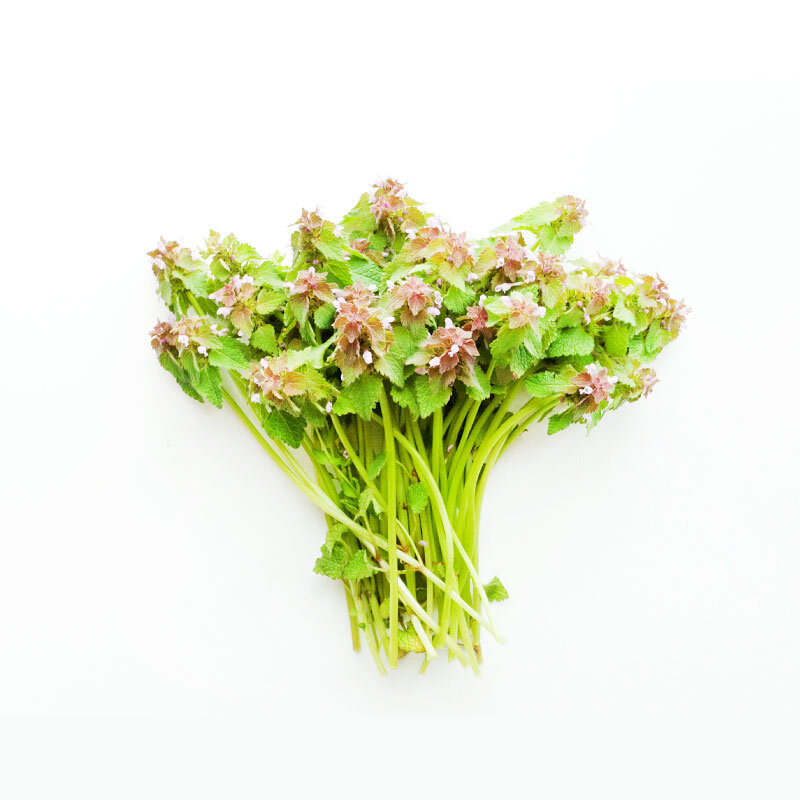
Materia Medica
Black Horehound
Ballota nigra
Black horehound (Ballota nigra) — a traditional European nervine and antispasmodic used for nausea, vomiting and nervous tension.
What Is Black Horehound?
Black horehound is best known for its offensive odour — which resembles stale sweat.
Despite the unfortunate smell of this mint-relative, it has a lot to offer therapeutically.
Black horehound is one of the oldest medicinal herb species from Europe. It has a long history of use for infectious diseases including rabies and parasites, as well as for nausea and vomiting caused by neurological disorders.
This herb is a bit of a jack of all trades — but master of none. It offers reliable nervine, antispasmodic, antimicrobial, and anticholesterolaemic effects — all thanks to five unique phenylpropanoid glycosides contained in the leaves, stems, and roots of the herb.
What Is Black Horehound Used For?
Many of the traditional uses of the herb have yet to be validated. The primary traditional uses for the herb that still stand today are for treating motion sickness or other causes of nausea or vomiting of neurological origin.
This herb is also still used as an antimicrobial for the digestive tract and topically on the skin.
Newer applications for the herb are aimed towards high cholesterol levels and diabetes.
Traditional Uses
Black horehound was used for a lot of different applications. It was also a common remedy for motion sickness or any vomiting caused by neurological origins (rather than digestive).
Topically, the leaves were used to treat wounds, burns, and infection. Some herbalists even gave the herb as an enema for parasitic worms.
In Europe, where the herb originated from, the flowering tops were used to treat rabies after getting bitten by a rabid dog.
Botany
Black horehound is a strong-smelling perennial herb in the mint family (Lamiaceae), growing over 1 m tall and often found on roadsides in rural areas. It is best known for its disagreeable, stale-sweat-like odor — the Greek name ballo (“getting rid of,” “throwing away”) reflects this — a chemical defense that repels both animals and humans.
Distribution
Black horehound is native to Europe and the Mediterranean region, extending east to Iran and central Asia, and has naturalized outside that range in Argentina, New Zealand, and scattered locations in the eastern United States. It grows as a nitrophilous plant of disturbed, nutrient-rich ground — ruins, fallow fields, hedgerows and roadsides.
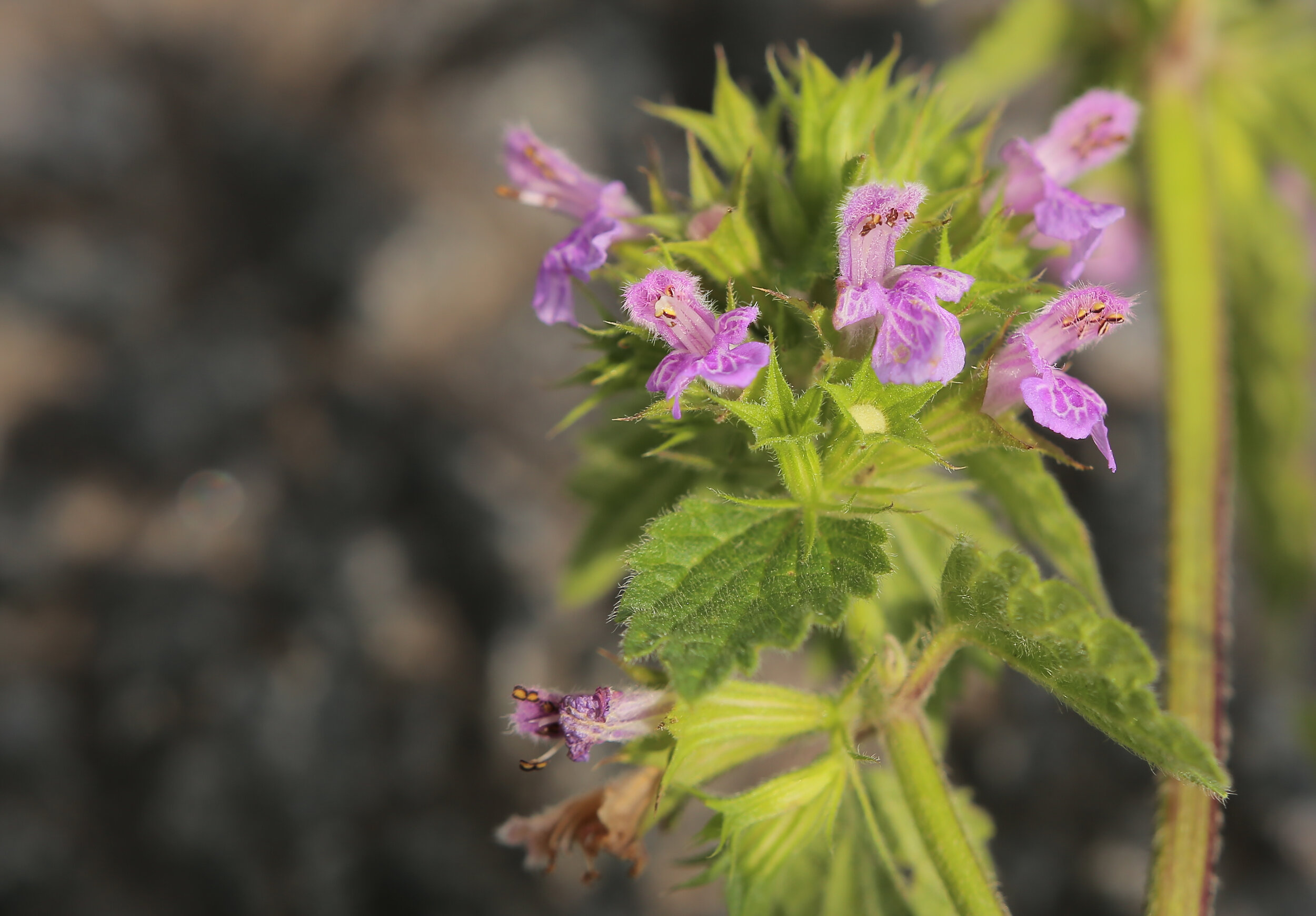
Growing Conditions
- Hardy perennial, full sun to part shade; roughly USDA zone 5–9.
- Thrives in disturbed, nutrient-rich soil — hedgerows, roadsides, waste ground.
- Full cultivation detail lives on the companion farm-wiki grow guide for Ballota nigra (link to be added once that project’s public URL is confirmed).
Pharmacology & Medical Research
Anticholesterolaemic
One of the major causes of atherosclerosis is the result of oxidization of low-density lipoproteins (LDL) [1].
Some of the phenolic compounds in black horehound (verbascoside, forsythoside B, arenarioside, and ballotetroside) were found to inhibit LDL oxidation through Cu2+ pathway [2].
Antimicrobial
Five phenolic compounds from black horehound were investigated to explore their antimicrobial potential. Of these five, three (verbascoside, forsythoside B, arenarioside) were found to have moderate activity against Proteus mirabilis, Salmonella typhi, and Staphylococcus aureus [3, 4].
Another study looked at the antimicrobial effects of each part of the plant (leaves, roots, and stems). The results suggested the crude extract of the roots had the best inhibitory activity on the strains tested (Enterococcus faecalis, Escherichia coli, Klebsiella pneumoniae, Proteus mirabilis, Salmonella typhi, and Staphylococcus aureus, Aspergillus fumigatus, Aspergillus niger, Fusarium solani, and Leishmania) [5]. The leaf and stem chloroform extracts had similar antimicrobial action.
Sedative
Phenylpropanoid compounds from black horehound were found to bind to benzodiazepine, dopaminergic, and morphinic receptors in animals [6, 4]. This provides a mechanism of action for the traditional sedative uses of the herb — but more research is needed to further elucidate these findings.
Phytochemistry
The medicinally used flowering tops are defined by two groups of compounds. The first is a set of labdane-type diterpenoid lactones of the marrubiin family — including marrubiin, 7α-acetoxymarrubiin, ballotenol, ballotinone, hispanolone and preleosibirin. The second is a characteristic family of phenylpropanoid glycosides — chiefly verbascoside, with forsythoside B, arenarioside and ballotetroside — which carry most of the herb’s antioxidant, antimicrobial and sedative activity.
The tops also contain flavonoids and lactate-conjugated phenolic compounds (luteolin-7-lactate, luteolin-7-glucosyl-lactate), organic acids such as quinic acid and malic acid, and trace volatile oils.
Constituent Summary
No reliable whole-herb percentages are published for most constituents; the phenylpropanoid figures below are percent of dried leaf and vary strongly with harvest timing (values peak around flowering in June).
Phenylpropanoid4 compounds2 with data
Diterpene3 compoundsno data
Flavonoid1 compoundno data
Organic Acid1 compoundno data
Safety & Pregnancy
Black horehound is regarded as a safe herb with little chance of side effects; the main considerations are occasional allergy and overlap with sedative, dopaminergic and antipsychotic medications.
- Drug interactions. May overlap with antipsychotics, anti-Parkinson’s drugs and sedatives through shared receptor activity.
- Iron absorption. Suggested to reduce iron uptake — separate dosing from iron supplements.
- Allergy possible. Reactions have been noted; start with a small test dose the first time.
- Generally well tolerated. Few side effects reported at normal doses.
Full safety & interactions detail
Black horehound is considered a safe herb, with little chances of experiencing any side effects.
Allergies to the herb have been noted, so caution is advised if using the herb for the first time. Always start with a small amount first to see how you react before using a full dose.
Black horehound may interact with the following medication classes:
- Antipsychotic medications (overlap in receptor activation)
- Anti-Parkinson’s disease medications (overlap in dopaminergic action)
- Sedatives (overlap in sedative effects and benzodiazepine receptor activation)
- Iron supplements (black horehound has been suggested to prevent the absorption of iron)
Black horehound is traditionally avoided during pregnancy and breastfeeding. Its safety in these settings has not been formally studied, so it is best avoided rather than assumed safe.
References
- Steinberg, D. (1997). Low density lipoprotein oxidation and its pathobiological significance.
- Seidel, V., Verholle, M., Malard, Y., Tillequin, F., Fruchart, J. C., Duriez, P., … & Teissier, E. (2000). Phenylpropanoids from Ballota nigra L. inhibit in vitro LDL peroxidation.
- Didry, N., Seidel, V., Dubreuil, L., Tillequin, F., & Bailleul, F. (1999). Isolation and antibacterial activity of phenylpropanoid derivatives from Ballota nigra.
- Al-Snafi, A. E. (2015). The Pharmacological Importance of Ballota nigra–A review.
- Ullah, N., Ahmad, I., & Ayaz, S. (2014). In vitro antimicrobial and antiprotozoal activities, phytochemical screening and heavy metals toxicity of different parts of Ballota nigra.
- Daels-Rakotoarison, D. A., Seidel, V., Gressier, B., Brunet, C., Tillequin, F., Bailleul, F., … & Cazin, J. C. (2000). Neurosedative and antioxidant activities of phenylpropanoids from Ballota nigra.