
Materia Medica
Buchu
Agathosma betulina
Buchu (Agathosma betulina) — a gentle diuretic and urinary antiseptic from South Africa used for urinary tract infections and bladder health.
What Is Buchu?
Buchu is best known for its effects on the urinary tract. It’s a diuretic, increasing the flow of urine, and speeding filtration in the blood. It works differently to most diuretics, however, by increasing blood flow to the kidneys, allowing them to work harder on their own accord. Other diuretics tend to work by decreasing the reabsorption rates in the nephrons.
Buchu is a diuretic, but it’s also a urinary antiseptic. It’s effective for treating urinary tract infections in men and women. It has a much gentler action than other urinary antiseptics, which makes it useful for children, the elderly, and those with weak or chronically damaged urinary tracts.
What Is Buchu Used For?
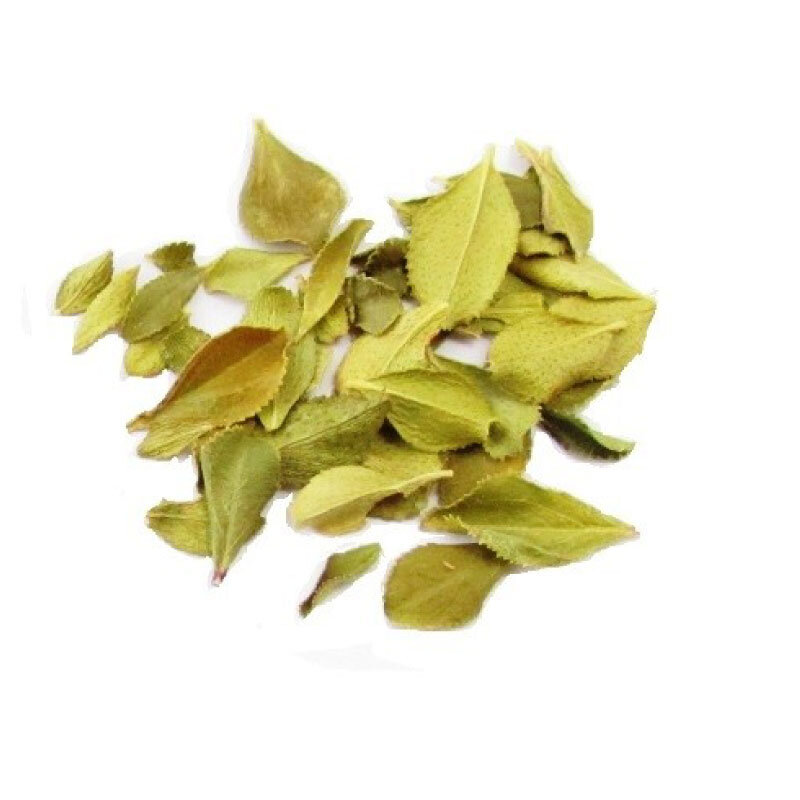
Buchu’s main use is as a urinary antiseptic, and to increase urine flow. It’s useful for conditions like prostatitis, cystitis, and urethritis.
Buchu is also used as a mild laxative and carminative.
Fortunately, Buchu has a great flavour, similar to cranberry, making it a good choice for children or those who find it difficult to palate herbs.
Indications
- Genitourinary infections
- Cystitis
- Urethritis
- Prostatitis
Contraindications
- Pregnancy — avoid the essential oil and concentrated extracts (pulegone is an abortifacient)
- High-dose or prolonged essential-oil use (pulegone hepatotoxicity)
Traditional Uses
Western Herbal Medicine
The eclectics suggested buchu as an aromatic stimulant and tonic and used it to treat poor appetite, flatulence, and nausea. It was also commonly used in Europe to treat urinary tract infection and inflammation. 1Reference 1In vitroBuchu (Agathosma betulina and A. crenulata, Rutaceae) essential oils: their pharmacological action on guinea-pig ileum and antimicrobial activity on microorganisms — in vitro studyView study →.
In modern times, buchu essential oil is often added to artificial fruit flavoring and is common in the food industry for this reason 1Reference 1In vitroBuchu (Agathosma betulina and A. crenulata, Rutaceae) essential oils: their pharmacological action on guinea-pig ileum and antimicrobial activity on microorganisms — in vitro studyView study →. It’s often used in perfumes 8Reference 8ReviewHepatotoxicity of monoterpenes and sesquiterpenes — reviewView study →.
The British Pharmacopoeia lists buchu as useful for a urinary antiseptic, and diuretic useful for cystitis, urethritis, and prostatitis. 4Reference 4Density functional theory and molecular dynamics simulation-based bioprospection of Agathosma betulina essential oil metabolites against protein tyrosine phosphatase 1B — in silico studyView study →.
South Africa
The Hottentots of South Africa used the leaves of buchu as a perfume. Most of its traditional medicinal usage in this region was for its ability to treat urinary tract disorders as well as for its carminative and laxative actions. 1,9Reference 1In vitroBuchu (Agathosma betulina and A. crenulata, Rutaceae) essential oils: their pharmacological action on guinea-pig ileum and antimicrobial activity on microorganisms — in vitro studyView study →Reference 9ReviewA decades-long investigation of acute metabolism-based hepatotoxicity by herbal constituents: a case study of pennyroyal oil — reviewView study →.
Botany
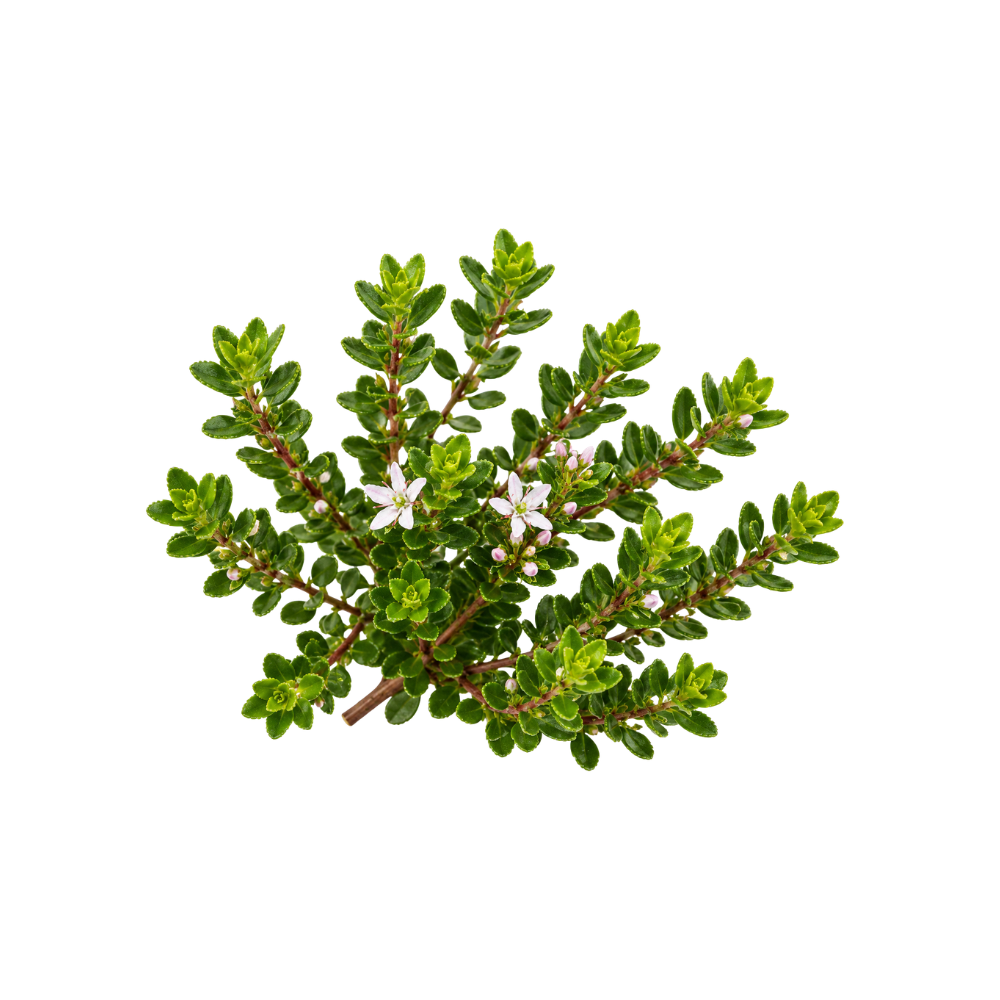
Buchu is an aromatic evergreen shrub in the citrus family (Rutaceae — about 2,000 species across 160 genera), growing up to 2 m tall with rhomboid-obovate leaves that resemble a blend of blackcurrant and peppermint when crushed 1,4Reference 1In vitroBuchu (Agathosma betulina and A. crenulata, Rutaceae) essential oils: their pharmacological action on guinea-pig ileum and antimicrobial activity on microorganisms — in vitro studyView study →Reference 4Density functional theory and molecular dynamics simulation-based bioprospection of Agathosma betulina essential oil metabolites against protein tyrosine phosphatase 1B — in silico studyView study →. The flowers have five whitish petals developing into brown fruits with five carpels. The Agathosma genus holds about 140 species, but A. betulina is the main one used medicinally — the Khoi-San term “buchu” is applied locally to many aromatic dusting herbs, which has caused some confusion in the region 1Reference 1In vitroBuchu (Agathosma betulina and A. crenulata, Rutaceae) essential oils: their pharmacological action on guinea-pig ileum and antimicrobial activity on microorganisms — in vitro studyView study →.
Recent evidence suggests buchu has a synergistic relationship with a common soil yeast that helps it grow in low-nutrient soil, and this relationship may influence the concentration of medicinal constituents in harvested plants 7Reference 7In vitroAntimicrobial interactions of Khoi-San poly-herbal remedies with emphasis on the combination Agathosma crenulata, Dodonaea viscosa and Eucalyptus globulus — in vitro studyView study →. More research is needed.
Distribution
Agathosma betulina is endemic to the fynbos biome of the southwestern Cape Province of South Africa, occurring near streams on lower-elevation mountains 4Reference 4Density functional theory and molecular dynamics simulation-based bioprospection of Agathosma betulina essential oil metabolites against protein tyrosine phosphatase 1B — in silico studyView study →. It is a narrow endemic with no naturalized range elsewhere and no documented weedy behavior; because most commercial buchu is still wild-harvested, sustainable-harvest pressure is a more relevant concern for this species than invasiveness.
Growing Conditions
- Aromatic evergreen shrub, full sun; roughly USDA zone 9–10 (Mediterranean-type fynbos climate).
- Full cultivation detail lives on the companion farm-wiki grow guide for Agathosma betulina (link to be added once that project’s public URL is confirmed).
Harvesting, Collection & Preparation
Buchu leaves are suggested to be of the highest quality medicinally while the plants are flowering or fruiting.
The Khoi-San of South Africa call any aromatic dusting herb buchu, which has led to some confusion in the region. There are currently many different species of herb referred to as buchu for the reason. The main species considered buchu for medicinal purposes however is Agathosma betulina. 1Reference 1In vitroBuchu (Agathosma betulina and A. crenulata, Rutaceae) essential oils: their pharmacological action on guinea-pig ileum and antimicrobial activity on microorganisms — in vitro studyView study →.
Phytochemistry
Buchu’s activity centres on its essential oil (roughly 1.5–3.5% of the leaf), whose signature component is diosphenol — the “buchu camphor” thought to carry much of the urinary-antiseptic action and unique to this genus. The oil also carries large fractions of menthone (and its isomer isomenthone), limonene and the (toxic at high dose) ketone pulegone. Alongside the oil the leaf supplies a set of flavonoids — notably diosmin, rutin, hesperidin, diosmetin and quercetin — plus B vitamins, tannins, resin and mucilage. 1,2,3Reference 1In vitroBuchu (Agathosma betulina and A. crenulata, Rutaceae) essential oils: their pharmacological action on guinea-pig ileum and antimicrobial activity on microorganisms — in vitro studyView study →Reference 2ReviewMoolla A, Viljoen AM. (2008). ‘Buchu’ — Agathosma betulina and Agathosma crenulata (Rutaceae): a review. J Ethnopharmacol. https://pubmed.ncbi.nlm.nih.gov/18725278/View study →Reference 3ReviewBuchu (Agathosma betulina and A. crenulata): Rightfully Forgotten or Underutilized? — reviewView study →.
Constituent Summary
Essential-oil components are given as a share of the volatile oil (which is ~1.5–3.5% of the leaf); flavonoids are present in much smaller, largely unquantified amounts. Oil composition varies widely between chemotypes and growing conditions.
Monoterpene4 compounds4 with data
Pharmacology & Research
The research base for buchu (Agathosma betulina) is small and, despite three centuries of commercial and medicinal use, remains almost entirely preclinical and traditional. No randomised controlled trial or human clinical study of buchu for any indication was identified; the evidence consists of a handful of in vitro pharmacology experiments, recent in silico modelling, ethnobotanical surveys, and two modern reviews that reach the same conclusion — the plant is commercially important but scientifically under-investigated 2,3Reference 2ReviewMoolla A, Viljoen AM. (2008). ‘Buchu’ — Agathosma betulina and Agathosma crenulata (Rutaceae): a review. J Ethnopharmacol. https://pubmed.ncbi.nlm.nih.gov/18725278/View study →Reference 3ReviewBuchu (Agathosma betulina and A. crenulata): Rightfully Forgotten or Underutilized? — reviewView study →. The most concrete experimental finding is a smooth-muscle relaxant (spasmolytic) action of the essential oil on guinea-pig ileum, with a defined cyclic-AMP/calcium-channel mechanism 1Reference 1In vitroBuchu (Agathosma betulina and A. crenulata, Rutaceae) essential oils: their pharmacological action on guinea-pig ileum and antimicrobial activity on microorganisms — in vitro studyView study →; the most interesting emerging signal is enzyme-level antidiabetic activity (PTP1B/DPP4 inhibition) reported in 2025–2026 in silico and essential-oil bioassay work 4,5Reference 4Density functional theory and molecular dynamics simulation-based bioprospection of Agathosma betulina essential oil metabolites against protein tyrosine phosphatase 1B — in silico studyView study →Reference 5In vitroDual PTP1B/DPP4 inhibitory potential of Agathosma betulina, Cymbopogon citratus and Artemisia afra: structure-based modeling of phytochemical leads and essential oil bioassays — in vitro/in silico studyView study →. A central caveat runs through everything: activity centres on the volatile oil, whose composition — including the potentially hepatotoxic ketone pulegone — varies widely between chemotypes and growing regions, so results do not transfer cleanly between an essential oil, a tincture, and a leaf tea.
- Best-supported: a smooth-muscle spasmolytic action of the essential oil, shown in vitro with a cAMP/calcium-channel mechanism 1Reference 1In vitroBuchu (Agathosma betulina and A. crenulata, Rutaceae) essential oils: their pharmacological action on guinea-pig ileum and antimicrobial activity on microorganisms — in vitro studyView study → — consistent with the traditional carminative/antispasmodic use.
- Emerging, worth watching: enzyme-level antidiabetic activity (PTP1B and DPP4 inhibition) from in silico and essential-oil bioassay studies of A. betulina 4,5Reference 4Density functional theory and molecular dynamics simulation-based bioprospection of Agathosma betulina essential oil metabolites against protein tyrosine phosphatase 1B — in silico studyView study →Reference 5In vitroDual PTP1B/DPP4 inhibitory potential of Agathosma betulina, Cymbopogon citratus and Artemisia afra: structure-based modeling of phytochemical leads and essential oil bioassays — in vitro/in silico studyView study →.
- Mechanistically thin: the anti-inflammatory/vasoprotective claim rests on the leaf’s flavonoid profile (diosmin, hesperidin, rutin) rather than any whole-herb study; the defining diuretic and urinary-antiseptic uses rest on pharmacopoeial tradition, not experiment.
- The caveat: no human data exist for any indication, and the one direct antimicrobial test found little to no activity 1Reference 1In vitroBuchu (Agathosma betulina and A. crenulata, Rutaceae) essential oils: their pharmacological action on guinea-pig ileum and antimicrobial activity on microorganisms — in vitro studyView study → — the “urinary antiseptic” reputation is not experimentally confirmed.
1. Antispasmodic
The single direct pharmacology study of buchu essential oil found a smooth-muscle relaxant (spasmolytic) action on guinea-pig ileum in vitro: at high concentration the oil was first spasmogenic, then spasmolytic, and the relaxant effect was post-synaptic, not atropine-like, and independent of adrenoceptors or guanylyl cyclase 1Reference 1In vitroBuchu (Agathosma betulina and A. crenulata, Rutaceae) essential oils: their pharmacological action on guinea-pig ileum and antimicrobial activity on microorganisms — in vitro studyView study →. It was potentiated by the phosphodiesterase inhibitor rolipram and A. betulina oil additionally appeared to block calcium channels, together pointing to a cyclic-AMP-mediated mechanism 1Reference 1In vitroBuchu (Agathosma betulina and A. crenulata, Rutaceae) essential oils: their pharmacological action on guinea-pig ileum and antimicrobial activity on microorganisms — in vitro studyView study →. This is a plausible basis for the traditional carminative and antispasmodic use, and it was tested on the essential oil — the relevant active fraction. Note that the tissue was gut smooth muscle, not the urinary tract.
Gap: one in vitro study, on ileum rather than bladder or ureter, with no dose-response in a living animal and no human confirmation.
2. Diuretic (aqueretic)
Increasing urine flow is buchu’s defining traditional use and the basis for its pharmacopoeial listing, yet no controlled experimental study — animal or human — was identified that measures a diuretic effect 2,3Reference 2ReviewMoolla A, Viljoen AM. (2008). ‘Buchu’ — Agathosma betulina and Agathosma crenulata (Rutaceae): a review. J Ethnopharmacol. https://pubmed.ncbi.nlm.nih.gov/18725278/View study →Reference 3ReviewBuchu (Agathosma betulina and A. crenulata): Rightfully Forgotten or Underutilized? — reviewView study →. The mechanistic story usually offered is the “aqueretic” concept: that buchu (like juniper, goldenrod and parsley) increases renal blood flow and glomerular filtration rather than acting on tubular ion handling as pharmaceutical diuretics do. This is a reasonable hypothesis but, for buchu specifically, it remains untested — it rests on traditional and secondary-source assertion, not measurement.
Gap: the herb’s headline action has never been experimentally verified; there is no measured urine-output or GFR data for buchu in any species.
3. Antidiabetic
The most recent and specific new signal is enzyme-level antidiabetic activity. A 2025 density-functional-theory and molecular-dynamics study modelled A. betulina essential-oil metabolites against protein tyrosine phosphatase 1B (PTP1B), a validated type-2-diabetes target, predicting favourable binding 4Reference 4Density functional theory and molecular dynamics simulation-based bioprospection of Agathosma betulina essential oil metabolites against protein tyrosine phosphatase 1B — in silico studyView study →. A 2026 follow-up extended this to dual PTP1B/DPP4 inhibition, combining structure-based modelling of phytochemical leads with essential-oil bioassays 5Reference 5In vitroDual PTP1B/DPP4 inhibitory potential of Agathosma betulina, Cymbopogon citratus and Artemisia afra: structure-based modeling of phytochemical leads and essential oil bioassays — in vitro/in silico studyView study →. Both are early-stage and computation-dominant, but they are among the few studies to interrogate a defined therapeutic mechanism in this exact species.
Gap: entirely in silico plus a single enzyme bioassay — no cell-culture, animal, or human glucose data, and the modelled metabolites may not reach relevant concentrations from any normal preparation.
4. Anti-inflammatory
Buchu leaf supplies a set of venoactive flavonoids — diosmin, hesperidin, rutin, diosmetin and quercetin — that are individually well characterised as anti-inflammatory and vasoprotective agents 2Reference 2ReviewMoolla A, Viljoen AM. (2008). ‘Buchu’ — Agathosma betulina and Agathosma crenulata (Rutaceae): a review. J Ethnopharmacol. https://pubmed.ncbi.nlm.nih.gov/18725278/View study →. On that basis an anti-inflammatory action is mechanistically plausible. However, this is constituent-level inference: no study has demonstrated an anti-inflammatory effect of buchu extract or oil itself, and the flavonoids are present in small, largely unquantified amounts relative to the dominant volatile oil.
Gap: the inference runs from isolated-compound literature, not from any test of buchu; flavonoid content is low and unquantified, so whole-herb activity cannot be assumed.
5. Antimicrobial (urinary antiseptic)
This is buchu’s most famous claim and its weakest experimental footing. In the one direct test, neither A. betulina nor A. crenulata essential oil showed antimicrobial action against Enterococcus hirae or Pseudomonas aeruginosa, and only very low activity against Escherichia coli, Saccharomyces cerevisiae and Staphylococcus aureus — the authors concluded there was “little potential for these oils as antimicrobial agents” 1Reference 1In vitroBuchu (Agathosma betulina and A. crenulata, Rutaceae) essential oils: their pharmacological action on guinea-pig ileum and antimicrobial activity on microorganisms — in vitro studyView study →. A separate 2013 study did find useful antibacterial activity, but for a three-herb Khoi-San combination built on A. crenulata (a different species), not A. betulina alone 7Reference 7In vitroAntimicrobial interactions of Khoi-San poly-herbal remedies with emphasis on the combination Agathosma crenulata, Dodonaea viscosa and Eucalyptus globulus — in vitro studyView study →. The traditional “urinary antiseptic” reputation is therefore not supported by direct testing of this species.
Gap: the primary evidence is essentially negative for A. betulina; positive combination data belong to a different species and cannot be transferred, and no study has tested urinary-tract antisepsis at concentrations achievable in urine.
6. Analgesic
A 2016 study reported analgesic activity, but the design limits its relevance to buchu as consumed: buchu ethanolic extract was used to synthesise silver nanoparticles, and the analgesic effect was strongest for the nanoparticle–extract combination, exceeding both aspirin and the extract alone 6Reference 6In vitroSynthesis of silver nanoparticles using buchu plant extracts and their analgesic properties — in vitro/in vivo studyView study →. The finding is about an engineered silver-nanoparticle material, not a tincture, tea, or oil, so it cannot be read as an analgesic property of the herb itself.
Gap: severe preparation mismatch — the tested agent is a silver-nanoparticle composite, not any form of buchu in traditional or commercial use; a single study with no replication.
Mechanisms
| Mechanism | Drives | Key compounds |
|---|---|---|
| Volatile oil; smooth-muscle relaxation via ↑cAMP and Ca²⁺-channel block; pulegone bioactivated by CYP450 to hepatotoxic menthofuran | antispasmodic; also the safety liability | diosphenol, menthone, pulegone |
| Renal/urinary excretion of aromatic terpenes (basis of the “aqueretic” hypothesis) | diuretic (proposeduntested) | limonene |
| NF-κB / eicosanoid modulation, vascular tone (constituent-level) | anti-inflammatory (inferred) | diosmin, hesperidin, rutin, diosmetin |
| PTP1B / DPP4 binding (in silico) | antidiabetic (emerging) | quercetin, diosmetin |
Clinical trials
No registered clinical trials were identified for buchu (Agathosma betulina) for any indication — a ClinicalTrials.gov search on “buchu” and “Agathosma” returned zero studies. The evidence base is entirely preclinical, in silico, and traditional.
| Completed | Planned | Terminated | Preclinical |
|---|---|---|---|
| 0 | 0 | 0 | ~6on A. betulina |
Last checked: July 2026.
Dosage
Buchu is taken traditionally as a leaf tea, tincture or liquid extract; a common Western-herbal figure is a 1:2 liquid extract at 15–30 mL per week. No primary study has established or validated a therapeutic dose — the evidence base is preclinical and traditional — so the figures below are pharmacopoeial and traditional rather than research-derived. Essential-oil intake should be kept distinct from tincture or tea: pulegone exposure from the concentrated oil can be an order of magnitude higher than from a dilute leaf preparation.
The research literature yields no measured, indication-specific doses for buchu; the table below records the traditional preparations only, and no dried-herb equivalent can be estimated from experimental data.
| Indication | Preparation | Dose | Est. dried-herb equivalent | Source |
|---|---|---|---|---|
| Urinary tract (traditional) | 1:2 liquid extract | 15–30 mL / week | No Data — not research-derived | 2Reference 2ReviewMoolla A, Viljoen AM. (2008). ‘Buchu’ — Agathosma betulina and Agathosma crenulata (Rutaceae): a review. J Ethnopharmacol. https://pubmed.ncbi.nlm.nih.gov/18725278/View study → |
Traditional Dosage
Traditional Western and South African herbalism used buchu leaf as an infusion or tincture for urinary complaints, and as a carminative for digestive upset.
| System | Preparation | Dose |
|---|---|---|
| Western herbal | 1:2 liquid extract | 15–30 mL / week |
| Western herbal | Leaf infusion (tea) | 1–2 g dried leaf per cup |
Safety & Pregnancy
Buchu leaf tea is gentle, but the essential oil is the real concern: it carries pulegone, a hepatotoxic ketone and recognised abortifacient whose level varies unpredictably between products.
- Oil is hepatotoxic. pulegone is CYP450-bioactivated to reactive metabolites that can cause dose-dependent liver injury
- Abortifacient — avoid in pregnancy. keep away from the essential oil and concentrated extracts
- Unpredictable potency. pulegone ranges from under 5% to ~34% of the oil and varies by chemotype and region
- Interactions not assessed. pulegone’s CYP450 bioactivation is a theoretical concern — treat as untested, not cleared
- Dilute leaf tea is far gentler. culinary flavour use and leaf tea carry much lower exposure
Full safety & interactions detail
Buchu’s essential oil contains pulegone, the same monoterpene ketone responsible for the toxicity of pennyroyal oil; pulegone is bioactivated by liver CYP450 enzymes to reactive metabolites (chiefly menthofuran) that deplete glutathione and can cause dose-dependent hepatotoxicity 8,9,10Reference 8ReviewHepatotoxicity of monoterpenes and sesquiterpenes — reviewView study →Reference 9ReviewA decades-long investigation of acute metabolism-based hepatotoxicity by herbal constituents: a case study of pennyroyal oil — reviewView study →Reference 10In vitroInter-individual variability in acute toxicity of R-pulegone and R-menthofuran in human liver slices — in vitro studyView study →. Reported pulegone levels in buchu oil range from under 5% to as high as 34%, and oil composition varies widely by chemotype and growing region, so the risk of a given product is not predictable from the label 11,13Reference 11ReviewFEMA GRAS assessment of natural flavor complexes: mint, buchu, dill and caraway derived flavoring ingredients — reviewView study →Reference 13Geographic influence on secondary metabolite profiles in leaves of the endemic Agathosma betulina in the Western Cape — analytical studyView study →. Pulegone is a recognised abortifacient, so buchu essential oil and concentrated extracts should be avoided in pregnancy; casual culinary flavour use and dilute leaf teas carry far lower exposure, and buchu leaf oil holds FEMA GRAS status only at flavouring levels of intake 11Reference 11ReviewFEMA GRAS assessment of natural flavor complexes: mint, buchu, dill and caraway derived flavoring ingredients — reviewView study →. EFSA has separately assessed the oil as a feed additive 12Reference 12ReviewSafety and efficacy of a feed additive consisting of an essential oil from the leaves of Agathosma betulina/A. crenulata — reviewView study →.
No human or in vivo drug-interaction study of buchu was identified. Pulegone’s CYP450 bioactivation raises a theoretical interaction concern with CYP-metabolised drugs and CYP inducers, but this has not been tested for buchu specifically — treat it as not assessed rather than cleared. The absence of reported buchu poisoning cases should not be read as evidence of safety; pulegone toxicity is well documented for the same molecule in pennyroyal.
Avoid the essential oil and concentrated extracts in pregnancy: pulegone is a recognised abortifacient, and buchu oil can carry it at up to ~34% 11,13Reference 11ReviewFEMA GRAS assessment of natural flavor complexes: mint, buchu, dill and caraway derived flavoring ingredients — reviewView study →Reference 13Geographic influence on secondary metabolite profiles in leaves of the endemic Agathosma betulina in the Western Cape — analytical studyView study →. No buchu-specific reproductive-toxicity study exists, so the caution derives from the known activity of the molecule rather than from direct testing. Dilute leaf tea and culinary flavour use represent far lower exposure, but medicinal or concentrated use in pregnancy should be avoided. Lactation has not been assessed.
References
- Lis-Balchin M, Hart S, Simpson E. (2001). Buchu (Agathosma betulina and A. crenulata, Rutaceae) essential oils: their pharmacological action on guinea-pig ileum and antimicrobial activity on microorganisms — in vitro study. J Pharm Pharmacol. https://pubmed.ncbi.nlm.nih.gov/11341377/
- Moolla A, Viljoen AM. (2008). ‘Buchu’ — Agathosma betulina and Agathosma crenulata (Rutaceae): a review. J Ethnopharmacol. https://pubmed.ncbi.nlm.nih.gov/18725278/
- Brendler T, Abdel-Tawab M. (2022). Buchu (Agathosma betulina and A. crenulata): Rightfully Forgotten or Underutilized? — review. Front Pharmacol. https://pubmed.ncbi.nlm.nih.gov/35197854/
- Adedirin O, Abdulsalam RA, Nasir-Naeem KO, et al. (2025). Density functional theory and molecular dynamics simulation-based bioprospection of Agathosma betulina essential oil metabolites against protein tyrosine phosphatase 1B — in silico study. Heliyon. https://pubmed.ncbi.nlm.nih.gov/39991230/
- Adedirin O, Sabiu S. (2026). Dual PTP1B/DPP4 inhibitory potential of Agathosma betulina, Cymbopogon citratus and Artemisia afra: structure-based modeling of phytochemical leads and essential oil bioassays — in vitro/in silico study. Comput Struct Biotechnol J. https://pubmed.ncbi.nlm.nih.gov/42007177/
- Chiguvare H, Oyedeji OO, Matewu R, et al. (2016). Synthesis of silver nanoparticles using buchu plant extracts and their analgesic properties — in vitro/in vivo study. Molecules. https://pubmed.ncbi.nlm.nih.gov/27314316/
- Zonyane S, Van Vuuren SF, Makunga NP. (2013). Antimicrobial interactions of Khoi-San poly-herbal remedies with emphasis on the combination Agathosma crenulata, Dodonaea viscosa and Eucalyptus globulus — in vitro study. J Ethnopharmacol. https://pubmed.ncbi.nlm.nih.gov/23588096/
- Zárybnický T, Boušová I, Ambrož M, et al. (2018). Hepatotoxicity of monoterpenes and sesquiterpenes — review. Arch Toxicol. https://pubmed.ncbi.nlm.nih.gov/28905185/
- Gordon P, Khojasteh SC. (2015). A decades-long investigation of acute metabolism-based hepatotoxicity by herbal constituents: a case study of pennyroyal oil — review. Drug Metab Rev. https://pubmed.ncbi.nlm.nih.gov/25512112/
- Zárybnický T, Matoušková P, Lancošová B, et al. (2018). Inter-individual variability in acute toxicity of R-pulegone and R-menthofuran in human liver slices — in vitro study. Int J Mol Sci. https://pubmed.ncbi.nlm.nih.gov/29921785/
- Cohen SM, Eisenbrand G, Fukushima S, et al. (2020). FEMA GRAS assessment of natural flavor complexes: mint, buchu, dill and caraway derived flavoring ingredients — review. Food Chem Toxicol. https://pubmed.ncbi.nlm.nih.gov/31604112/
- Bampidis V, Azimonti G, Bastos ML, et al. (EFSA FEEDAP Panel). (2022). Safety and efficacy of a feed additive consisting of an essential oil from the leaves of Agathosma betulina/A. crenulata — review. EFSA J. https://pubmed.ncbi.nlm.nih.gov/35281638/
- Mnisi NH, Gunununu RP, Dukashe L, et al. (2026). Geographic influence on secondary metabolite profiles in leaves of the endemic Agathosma betulina in the Western Cape — analytical study. Int J Mol Sci. https://pubmed.ncbi.nlm.nih.gov/42196464/