
Materia Medica
Calendula
Calendula officinalis
Calendula (Calendula officinalis) — a healing skin herb used topically for cuts, burns, rashes and fungal infections, and internally for the gut.
What Is Calendula?
Calendula is a staple when it comes to Western herbal medicine. Its broad action on skin and gut epithelial tissue health makes it useful for many different conditions.
Topically, its antibacterial and anti-fungal actions make it useful for infections including impetigo, athlete’s foot, and tinea. Calendula’s soothing action makes it useful for treating skin irritations like cuts, burns, and rashes.
What Is Calendula Used For?
Calendula is mainly used for topical applications involving the skin, including rashes, burns, cuts, scrapes, fungal infections, conjunctivitis, sun burns, skin ulcers, eczema, acne, psoriasis, and more. It’s also used internally for inflammatory conditions in the gastrointestinal tract.
Traditional Uses
Calendula has a long history of use throughout Europe for its ability to heal wounds for both skin, and gastrointestinal damage or inflammation. For this reason it was commonly used in World War 1 and the American Civil War in anti-inflammatory and antiseptic salves and creams.
Botany
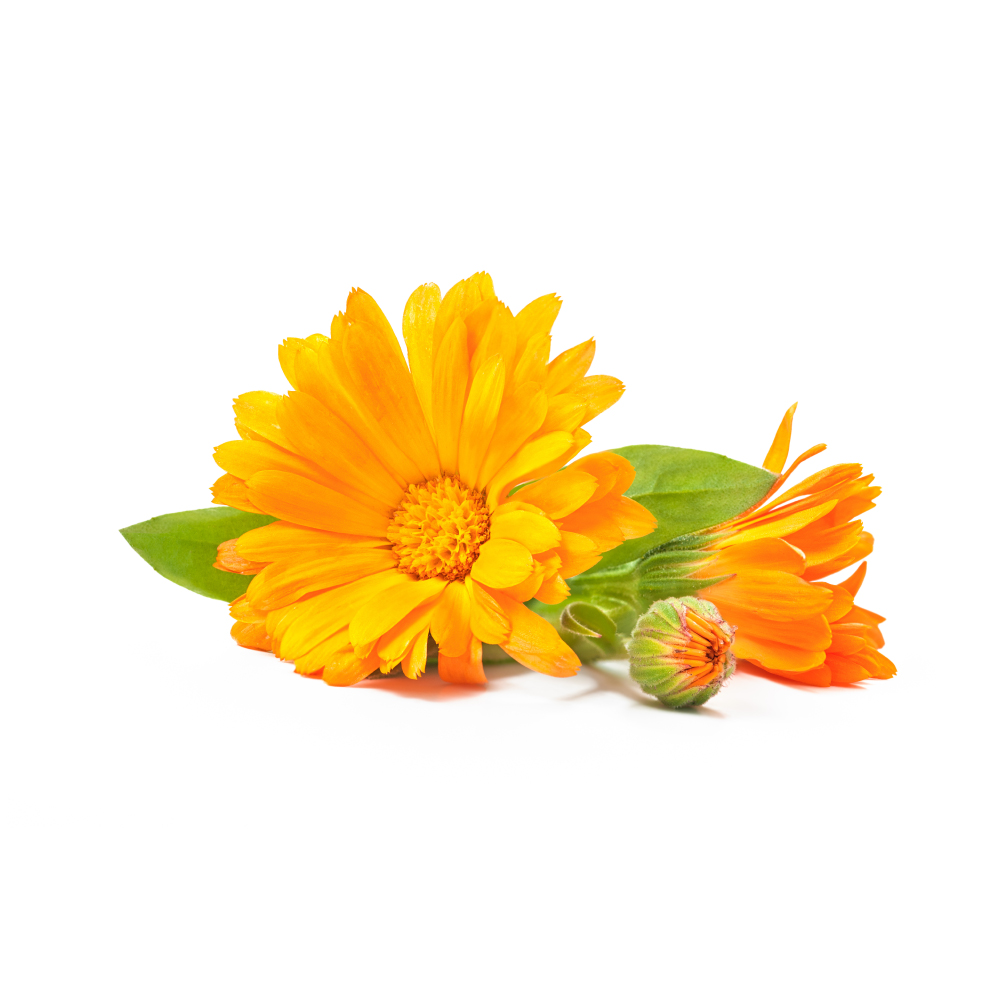
Calendula, or pot marigold, is a fast-growing aromatic annual in the daisy family (Asteraceae), forming a bushy plant 1–2 ft tall with light-green, slightly sticky lance-shaped leaves and bright yellow-to-orange daisy flower heads 2–4 in across. The ray florets are the medicinal and culinary part. It sits in the Calenduleae tribe of the Asteraceae — a group of over 100 species that also includes Osteospermum — and, despite the shared name, is not closely related to the Tagetes marigolds of Mexico.
Distribution
Calendula is of Mediterranean and southern European origin and is known mainly as a cultivated plant, with no clearly documented wild range. Grown worldwide as an easy garden and medicinal annual, it self-sows freely and escapes locally in temperate and Mediterranean climates, but it does not behave as an aggressive weed and carries no conservation concern.
Growing Conditions
- Life cycle: annual (a short-lived perennial in mild zones); very hardy across USDA zones 2–11.
- Light: full sun.
- Water: average, well-drained soil; easy and low-maintenance.
- Habit: blooms over a long season; deadhead for continued flowering and it self-sows.
- Full cultivation detail lives on the companion farm-wiki grow guide for Calendula officinalis (link to be added once that project’s public URL is confirmed).
Phytochemistry
The anti-inflammatory and wound-healing activity of Calendula officinalis flowers is carried mainly by lipophilic triterpenoids — above all the faradiol monoesters (faradiol-3-O-palmitate, -myristate and -laurate), the most abundant esters in the flower head and the constituent whose level best tracks anti-oedematous potency 9,10Reference 9In vitroThe role of triterpenoids in the topical anti-inflammatory activity of Calendula officinalis flowers — [in vitro / animal model]View study →Reference 10In vitroAnti-oedematous activities of the main triterpendiol esters of marigold (Calendula officinalis L.) — [in vitro / mouse model]View study →. Their content is concentrated in the ray florets and is used as a quality-control parameter for Calendula preparations. The free triterpenediols they are built from — faradiol, arnidiol and calenduladiol — are the most active anti-inflammatory forms, accompanied by monool triterpene alcohols such as psi-taraxasterol and taraxasterol, the triterpene acid oleanolic acid and the calendulosides (oleanane-type triterpene saponins).
Hydrophilic actives include flavonoids — notably the glycosides narcissin and rutin — for which the European Pharmacopoeia sets a minimum of 0.4% (calculated as hyperoside) in dried flowers. Yellow-orange carotenoids (flavoxanthin, luteoxanthin, lutein and beta-carotene), polysaccharides, chlorogenic acid, polyacetylenes, coumarins and a small fatty-acid fraction round out the profile.
Constituent Summary
Figures are % of dried flower or, where noted, a pharmacopoeial minimum; carotenoid figures are a share of total carotenoids. Content varies markedly with variety and flower part (esters richest in ray florets). “No Data” marks constituents recorded in the flower but without a reliable published figure.
Triterpene8 compoundsno data
Saponin3 compoundsno data
Flavonoid3 compounds1 with data
Phenolic Acid1 compound1 with data
Coumarin1 compoundno data
Carotenoid5 compounds2 with data
Polysaccharide1 compoundno data
Other1 compoundno data
Fatty Acid1 compoundno data
Pharmacology & Research
Calendula flower is one of the most-studied topical herbs in the encyclopedia, with several hundred indexed papers and — unusually for a traditional wound herb — a genuine human trial base rather than a purely preclinical one. The evidence is deepest and most mechanistically resolved for its topical anti-inflammatory action, which is carried by lipophilic triterpenoids — the free triterpenediol faradiol equals indomethacin in the standard mouse-ear oedema assay, while its esters (the most abundant form in the flower) are less potent but drive the whole-extract effect through sheer quantity 9,10Reference 9In vitroThe role of triterpenoids in the topical anti-inflammatory activity of Calendula officinalis flowers — [in vitro / animal model]View study →Reference 10In vitroAnti-oedematous activities of the main triterpendiol esters of marigold (Calendula officinalis L.) — [in vitro / mouse model]View study →. Beyond that mechanism, calendula has been tested in humans across radiation dermatitis, diaper dermatitis, episiotomy and caesarean wounds, chronic leg and diabetic-foot ulcers, gingivitis, and vaginal infection — but almost every trial is small, unblinded or compares calendula against another active rather than placebo, and the two published meta-analyses that pooled the radiation-dermatitis data found no benefit — one reporting no significant effect, the other that topical calendula actually increased radiodermatitis risk 5,6Reference 5Meta-analysisNatural and miscellaneous agents for the prevention of acute radiation dermatitis: a systematic review and meta-analysis — [systematic review and meta-analysis]View study →Reference 6Meta-analysisRadiodermatitis in Patients With Cancer: Systematic Review and Meta-Analysis — [systematic review and meta-analysis]View study →. The single best-known positive trial (Pommier 2004, a 254-patient phase III study) beat trolamine for radiation dermatitis, but larger replications against other creams were null 1,2,3Reference 1RCTPhase III randomized trial of Calendula officinalis compared with trolamine for the prevention of acute dermatitis during irradiation for breast cancer — [randomised controlled trial]View study →Reference 2RCTNo differences between Calendula cream and aqueous cream in the prevention of acute radiation skin reactions—results from a randomised blinded trial — [randomised controlled trial]View study →Reference 3RCTEfficacy of topical Calendula officinalis on prevalence of radiation-induced dermatitis: A randomised controlled trial — [randomised controlled trial]View study →. A recurring caveat runs through the whole literature: results are extract- and preparation-specific — a standardised triterpenoid-rich ointment, a hydroglycolic spray, and a home-made tea are not interchangeable, and faradiol-ester content varies severalfold between cultivars and flower parts.
- Best-supported: topical anti-inflammatory and wound-healing (vulnerary) action, with a resolved triterpenoid mechanism and consistent early-phase (inflammation/granulation) benefit in animals and small human trials 7,9,10,12Reference 7Systematic reviewA systematic review of Calendula officinalis extract for wound healing — [systematic review]View study →Reference 9In vitroThe role of triterpenoids in the topical anti-inflammatory activity of Calendula officinalis flowers — [in vitro / animal model]View study →Reference 10In vitroAnti-oedematous activities of the main triterpendiol esters of marigold (Calendula officinalis L.) — [in vitro / mouse model]View study →Reference 12In vitroBiosynthesis and bioactivity of anti-inflammatory triterpenoids in Calendula officinalis — [in vitro mechanistic study]View study →; and diaper dermatitis, where calendula matched olive oil and outperformed aloe vera (fewer rash sites) in paediatric RCTs 20,21Reference 20RCTA randomized comparative trial on the therapeutic efficacy of topical aloe vera and Calendula officinalis on diaper dermatitis in children — [randomised controlled trial]View study →Reference 21RCTComparison the effects of topical application of olive and calendula ointments on Children’s diaper dermatitis: A triple-blind randomized clinical trial — [randomised controlled trial]View study →.
- Emerging, worth watching: gingival/plaque reduction 22Reference 22RCTEvaluation of Calendula officinalis as an anti-plaque and anti-gingivitis agent — [randomised controlled trial]View study →, and vaginal infection where a calendula cream matched metronidazole and clotrimazole in small RCTs 24,25Reference 24RCTThe effect of Calendula officinalis versus metronidazole on bacterial vaginosis in women: A double-blind randomized controlled trial — [randomised controlled trial]View study →Reference 25RCTComparing the effects of Calendula officinalis and clotrimazole on vaginal Candidiasis: A randomized controlled trial — [randomised controlled trial]View study →.
- Mechanistically thin: anticancer (in-vitro/in-silico and nanoparticle formulations only) 26Reference 26In vitroEffects of Calendula officinalis and Capsicum annum glycolic extracts on planktonic cells and biofilms of multidrug-resistant strains of Klebsiella pneumoniae and Pseudomonas aeruginosa — [in vitro study]View study → and the gastroprotective/hypoglycaemic signal (a single rodent study on isolated calendasaponins) 27Reference 27AnimalMedicinal flowersView study →.
- The caveat: no standardised human dose, mostly low-quality or actively-controlled trials, and negative pooled data for the flagship radiation-dermatitis use 5,6Reference 5Meta-analysisNatural and miscellaneous agents for the prevention of acute radiation dermatitis: a systematic review and meta-analysis — [systematic review and meta-analysis]View study →Reference 6Meta-analysisRadiodermatitis in Patients With Cancer: Systematic Review and Meta-Analysis — [systematic review and meta-analysis]View study → — the honest read is “plausible and low-risk,” not “proven.”
1. Anti-inflammatory
This is calendula’s best-resolved activity. Bioassay-guided fractionation of the flower CO₂ extract identifies the lipophilic triterpenoids — and above all the faradiol monoesters — as the principal anti-inflammatory constituents: free faradiol is the single most active tested compound, equalling indomethacin in the croton-oil mouse-ear oedema test, while its monoesters are individually less potent but predominate quantitatively in the extract — so the monoester content tracks whole-drug potency closely enough to serve as a quality-control marker 9,10Reference 9In vitroThe role of triterpenoids in the topical anti-inflammatory activity of Calendula officinalis flowers — [in vitro / animal model]View study →Reference 10In vitroAnti-oedematous activities of the main triterpendiol esters of marigold (Calendula officinalis L.) — [in vitro / mouse model]View study →. Systematic chemical modification of these triterpenes has produced derivatives with further-improved potency in the same model, confirming the pharmacophore 11Reference 11AnimalImproved anti-inflammatory activity of three new terpenoids derived, by systematic chemical modifications, from the abundant triterpenes of the flowery plant Calendula officinalis — [mouse model]View study →. A 2025 mechanistic study pinned part of the effect on C16-hydroxylated triterpenoids modulating interleukin-6 release and mapped their complete biosynthetic pathway 12Reference 12In vitroBiosynthesis and bioactivity of anti-inflammatory triterpenoids in Calendula officinalis — [in vitro mechanistic study]View study →. Human evidence is indirect: a controlled irritant-contact-dermatitis model in healthy volunteers found marigold creams significantly reduced sodium-lauryl-sulfate–induced skin irritation when applied during the induction phase 30Reference 30Clinical trialProtective effects of different marigold (Calendula officinalis L.) and rosemary cream preparations against sodium-lauryl-sulfate-induced irritant contact dermatitis — [clinical trial]View study →.
Gap: the strongest data are animal oedema assays and an experimental irritation model — there is no placebo-controlled trial of calendula for an actual inflammatory skin disease (eczema, psoriasis) at a defined triterpenoid dose.
2. Wound healing (vulnerary)
Calendula’s signature traditional use has moderate supporting evidence, strongest in the early phases of healing. Animal excision/incision studies and one systematic review report faster resolution of the inflammation phase and increased granulation tissue with calendula extract, and a mechanistic study showed calendula tincture drives fibroblast proliferation and migration through a PI3K/Akt-dependent pathway 7,13Reference 7Systematic reviewA systematic review of Calendula officinalis extract for wound healing — [systematic review]View study →Reference 13In vitroPI3K-mediated proliferation of fibroblasts by Calendula officinalis tincture: implication in wound healing — [in vitro study]View study →. In humans the picture is genuinely mixed: two controlled studies on venous leg ulcers found reduced ulcer area, and prospective diabetic-foot-ulcer work reported high closure and pain relief, but a randomised diabetic-leg-ulcer trial found no benefit and a burns RCT found no advantage over control 7,17,18,19Reference 7Systematic reviewA systematic review of Calendula officinalis extract for wound healing — [systematic review]View study →Reference 17RCTTreatment of venous ulcers with the herbal-based ointment Herbadermal®: a prospective non-randomized pilot study — [non-randomised clinical trial]View study →Reference 18Clinical trialA Prospective, Descriptive Study to Assess the Clinical Benefits of Using Calendula officinalis Hydroglycolic Extract for the Topical Treatment of Diabetic Foot Ulcers — [prospective clinical study]View study →Reference 19RCTLow-level laser therapy and Calendula officinalis in repairing diabetic foot ulcers — [randomised controlled trial]View study →. Post-surgical trials are more consistently positive — calendula ointment reduced pain and improved redness/oedema after episiotomy and sped caesarean-wound healing on the REEDA scale 14,15,16Reference 14RCTUse of calendula ointment after episiotomy: a randomized clinical trial — [randomised controlled trial]View study →Reference 15RCTThe impact of calendula ointment on cesarean wound healing: A randomized controlled clinical trial — [randomised controlled trial]View study →Reference 16RCTThe Impact of Aloe vera and Calendula on Perineal Healing after Episiotomy in Primiparous Women: A Randomized Clinical Trial — [randomised controlled trial]View study →. Two older systematic reviews both concluded the underlying trial quality is low and the evidence “weak,” pending larger blinded studies 7,8Reference 7Systematic reviewA systematic review of Calendula officinalis extract for wound healing — [systematic review]View study →Reference 8Systematic reviewCalendula officinalis and Wound Healing: A Systematic Review — [systematic review]View study →.
Gap: almost no trial is placebo-controlled or blinded, “calendula” spans many extract types and formulations, and the one clean chronic-wound RCT (diabetic leg ulcers) was negative.
3. Diaper dermatitis
Two paediatric randomised trials support calendula here. In 66 infants, calendula ointment applied three times daily for 10 days improved diaper dermatitis significantly and left fewer rash sites than aloe vera cream, with no adverse effects in either arm 20Reference 20RCTA randomized comparative trial on the therapeutic efficacy of topical aloe vera and Calendula officinalis on diaper dermatitis in children — [randomised controlled trial]View study →. A triple-blind trial in 73 children found 1.5% calendula and 1.5% olive ointments produced statistically indistinguishable healing over 7 days 21Reference 21RCTComparison the effects of topical application of olive and calendula ointments on Children’s diaper dermatitis: A triple-blind randomized clinical trial — [randomised controlled trial]View study →. Both trials are small, single-centre and compare calendula against another botanical rather than placebo or a barrier standard, so they establish “at least as good as the comparator” rather than an absolute effect size.
Gap: no placebo or zinc-oxide/barrier-cream–controlled arm, small samples, and active-comparator designs that cannot isolate calendula’s own contribution.
4. Oral & gingival health
The cleanest single-herb signal is a six-month RCT in 240 patients with gingivitis in which a diluted calendula tincture mouthrinse (2 mL in 6 mL water, twice daily) significantly reduced plaque, gingival and bleeding indices versus placebo rinse 22Reference 22RCTEvaluation of Calendula officinalis as an anti-plaque and anti-gingivitis agent — [randomised controlled trial]View study →. A 2024 double-blind trial of a multi-botanical gel containing calendula (with propolis, aloe, green tea and cranberry) matched conventional toothpaste on gingival inflammation while shifting the crevicular-fluid proteome toward a host-immune response profile 23Reference 23RCTThe Effect of a Nature-Based Gel on Gingival Inflammation and the Proteomic Profile of Crevicular Fluid: A Randomized Clinical Trial — [randomised controlled trial]View study →. The mechanism plausibly combines the triterpenoid anti-inflammatory action with antioxidant polyphenols acting on oral tissue.
Gap: the strongest trial tests a home-diluted tincture (not a standardised product), and the newer trial cannot separate calendula’s contribution from four other actives.
5. Antimicrobial / antifungal
Human data here are stronger than the in-vitro data. In an 80-woman double-blind RCT, a calendula extract cream matched metronidazole for bacterial vaginosis, clearing all symptoms in both arms with no side effects 24Reference 24RCTThe effect of Calendula officinalis versus metronidazole on bacterial vaginosis in women: A double-blind randomized controlled trial — [randomised controlled trial]View study →; and in 150 women a calendula vaginal cream matched clotrimazole for vaginal candidiasis, acting more slowly but achieving a greater long-term negative-culture rate 25Reference 25RCTComparing the effects of Calendula officinalis and clotrimazole on vaginal Candidiasis: A randomized controlled trial — [randomised controlled trial]View study →. In vitro the results are inconsistent and extract-dependent: calendula glycolic extract showed measurable but modest inhibition of multidrug-resistant Klebsiella and Pseudomonas biofilms (MIC 1.56–50 mg/mL, weaker than a chilli-pepper comparator) 26Reference 26In vitroEffects of Calendula officinalis and Capsicum annum glycolic extracts on planktonic cells and biofilms of multidrug-resistant strains of Klebsiella pneumoniae and Pseudomonas aeruginosa — [in vitro study]View study →, while several formulation studies found calendula among the weakest of tested botanicals against skin flora.
Gap: the positive evidence is confined to two gynaecological RCTs against standard drugs; direct antibacterial potency in vitro is low and highly dependent on extract type and concentration, so calendula should not be treated as a substitute antimicrobial for an established infection.
6. Radiation dermatitis prevention
This is the most-tested and most contested indication. The landmark phase III RCT (Pommier 2004, n=254 breast-cancer patients) found calendula ointment cut grade-2+ acute dermatitis from 63% to 41% versus trolamine, with less radiation-induced pain and fewer treatment interruptions 1Reference 1RCTPhase III randomized trial of Calendula officinalis compared with trolamine for the prevention of acute dermatitis during irradiation for breast cancer — [randomised controlled trial]View study →. A smaller double-blind head-and-neck trial (n=51) also favoured calendula over essential fatty acids 4Reference 4RCTUsage of Calendula officinalis in the prevention and treatment of radiodermatitis: a randomized double-blind controlled clinical trial — [randomised controlled trial]View study →. But the two largest replications were null: a 420-patient blinded RCT found no difference between calendula and aqueous (Essex) cream 2Reference 2RCTNo differences between Calendula cream and aqueous cream in the prevention of acute radiation skin reactions—results from a randomised blinded trial — [randomised controlled trial]View study →, and an 82-patient trial found no difference versus sorbolene (though it was underpowered) 3Reference 3RCTEfficacy of topical Calendula officinalis on prevalence of radiation-induced dermatitis: A randomised controlled trial — [randomised controlled trial]View study →. Two systematic reviews with meta-analysis then pooled the data and found calendula did not significantly reduce radiation-dermatitis incidence — one even reported a signal toward increased risk 5,6Reference 5Meta-analysisNatural and miscellaneous agents for the prevention of acute radiation dermatitis: a systematic review and meta-analysis — [systematic review and meta-analysis]View study →Reference 6Meta-analysisRadiodermatitis in Patients With Cancer: Systematic Review and Meta-Analysis — [systematic review and meta-analysis]View study →.
Gap: the positive result is essentially one trial against a now-dated comparator; blinded replications against modern emollients are null, and the pooled evidence shows no benefit — one meta-analysis even reported calendula increased radiodermatitis risk 6Reference 6Meta-analysisRadiodermatitis in Patients With Cancer: Systematic Review and Meta-Analysis — [systematic review and meta-analysis]View study →. The honest verdict is “not established.”
7. Antioxidant
Calendula flower extracts scavenge free radicals (DPPH/ABTS/FRAP) and, in a thermal-burn model, raised tissue glutathione, superoxide dismutase and catalase — the antioxidant-defence boost that plausibly underpins part of the wound-healing effect. The activity tracks the hydrophilic flavonoid and phenolic fraction (notably rutin, narcissin and chlorogenic acid) plus the carotenoids. All of this is in-vitro and animal work; there is no human antioxidant-biomarker trial for calendula.
Gap: antioxidant capacity is a mechanistic property measured in assays and rodents, not a demonstrated clinical outcome — it belongs as a contributor to the wound/anti-inflammatory story rather than a standalone benefit.
8. Anticancer
Interest is entirely preclinical and mechanistic. Calendula extract loaded into chitosan nanoparticles was cytotoxic to gastric (AGS) and colon (Caco-2) cancer cell lines through a ROS-driven apoptotic pathway while sparing normal fibroblasts 26Reference 26In vitroEffects of Calendula officinalis and Capsicum annum glycolic extracts on planktonic cells and biofilms of multidrug-resistant strains of Klebsiella pneumoniae and Pseudomonas aeruginosa — [in vitro study]View study →, aqueous infusions show antiproliferative activity against several human cancer lines in vitro, and a 2025 computational study screened calendula phytochemicals as candidate KRAS inhibitors by molecular docking. None of this involves whole-herb dosing, an animal tumour model with the herb as taken, or any human data.
Gap: cell-line, nanoparticle-formulation and in-silico evidence only — no in-vivo or human antitumour data, and the effective forms bear no resemblance to how calendula is actually used.
9. Gastroprotective & hypoglycemic
This rests on a single phytochemistry-driven rodent study: the flower’s methanol extract and its saponin fraction lowered post-load serum glucose, slowed gastric emptying and protected against ethanol- and indomethacin-induced gastric lesions in rats, effects attributed to newly-isolated oleanane-type triterpene glycosides (calendasaponins A–D) 27Reference 27AnimalMedicinal flowersView study →. It is mechanistically interesting and consistent with the traditional internal use for gut inflammation, but it is one study, in one species, on an isolated fraction — not the topical or tincture form the herb is generally used as.
Gap: one animal study on an isolated saponin fraction; no replication and no human data for either the glucose or the gastroprotective endpoint.
Mechanisms
| Mechanism | Drives | Key compounds |
|---|---|---|
| Triterpenoid inhibition of oedema/prostaglandin pathway (faradiol ≈ indomethacin in vivo) | anti-inflammatorywound healingradiation/irritant dermatitis | faradiol, faradiol monoesters, oleanolic acid |
| IL-6 release modulation by C16-hydroxylated triterpenoids | anti-inflammatory | faradiol-type triterpenediols |
| PI3K/Akt-dependent fibroblast proliferation & migration | wound healing (vulnerary) | flavonol glycosides (narcissin, rutin) |
| Free-radical scavenging + antioxidant-enzyme (GSH/SOD/catalase) upregulation | antioxidantwound healing | flavonoids, chlorogenic acid, carotenoids (lutein, beta-carotene) |
| α-glucosidase / gastric-emptying inhibition | gastroprotectivehypoglycaemic | calendasaponins A–D |
Clinical trials
Calendula has a real registered-trial footprint (23 studies on ClinicalTrials.gov, plus published RCTs not registered there), but most test multi-ingredient creams, devices or supplements rather than single-herb calendula, and the flagship radiation-dermatitis programme has produced null replications and meta-analyses showing no benefit (one signalling increased risk).
| Completed | Planned | Terminated | Preclinical |
|---|---|---|---|
| ~18 | 2 | 2(withdrawn) | ~200+ |
Last checked: July 2026.
Dosage
Calendula is used overwhelmingly as a topical herb — an infused oil, ointment, cream, succus or diluted tincture applied to skin. The clinical trials below all tested topical or intravaginal preparations; none reported a triterpenoid-marker percentage, so a whole-herb-weight back-conversion cannot be made and is left ”—”. These figures are the doses studied, not recommendations.
| Indication | Preparation | Dose | Est. dried-herb equivalent | Source |
|---|---|---|---|---|
| Radiation dermatitis | Calendula ointment (proprietary) | Applied to irradiated field after each session, ≥2×/day | — (proprietary ointment, no marker %) | 1Reference 1RCTPhase III randomized trial of Calendula officinalis compared with trolamine for the prevention of acute dermatitis during irradiation for breast cancer — [randomised controlled trial]View study → |
| Radiation dermatitis | Calendula cream (standardised) | 2–3×/day during radiotherapy | — | 2,4Reference 2RCTNo differences between Calendula cream and aqueous cream in the prevention of acute radiation skin reactions—results from a randomised blinded trial — [randomised controlled trial]View study →Reference 4RCTUsage of Calendula officinalis in the prevention and treatment of radiodermatitis: a randomized double-blind controlled clinical trial — [randomised controlled trial]View study → |
| Diaper dermatitis | Calendula ointment | 3×/day for 10 days | — (topical) | 20Reference 20RCTA randomized comparative trial on the therapeutic efficacy of topical aloe vera and Calendula officinalis on diaper dermatitis in children — [randomised controlled trial]View study → |
| Diaper dermatitis | 1.5% calendula ointment | topical, 3×/day for 7 days | — | 21Reference 21RCTComparison the effects of topical application of olive and calendula ointments on Children’s diaper dermatitis: A triple-blind randomized clinical trial — [randomised controlled trial]View study → |
| Episiotomy pain/healing | Calendula ointment | every 8 h for 10 days (started 4 h post-episiotomy) | — | 14Reference 14RCTUse of calendula ointment after episiotomy: a randomized clinical trial — [randomised controlled trial]View study → |
| Caesarean wound | Calendula ointment | every 12 h for 10 days | — | 15Reference 15RCTThe impact of calendula ointment on cesarean wound healing: A randomized controlled clinical trial — [randomised controlled trial]View study → |
| Gingivitis / plaque | Calendula tincture rinse | 2 mL tincture in 6 mL water, rinse 2×/day for 6 months | ~0.4 mL 1:5 tincture-equivalent per rinse (assumes a 1:5 tincture) | 22Reference 22RCTEvaluation of Calendula officinalis as an anti-plaque and anti-gingivitis agent — [randomised controlled trial]View study → |
| Bacterial vaginosis | Calendula extract vaginal cream | 5 g intravaginally nightly × 7 days | — | 24Reference 24RCTThe effect of Calendula officinalis versus metronidazole on bacterial vaginosis in women: A double-blind randomized controlled trial — [randomised controlled trial]View study → |
| Vaginal candidiasis | Calendula vaginal cream | 5 g intravaginally nightly × 7 nights | — | 25Reference 25RCTComparing the effects of Calendula officinalis and clotrimazole on vaginal Candidiasis: A randomized controlled trial — [randomised controlled trial]View study → |
| Diabetic foot ulcer | Calendula hydroglycolic extract spray | twice daily under moist dressing, up to 30 weeks | — | 18Reference 18Clinical trialA Prospective, Descriptive Study to Assess the Clinical Benefits of Using Calendula officinalis Hydroglycolic Extract for the Topical Treatment of Diabetic Foot Ulcers — [prospective clinical study]View study → |
These are estimates and guides drawn from the trial literature, not conversion factors or dosing recommendations.
Traditional Dosage
| System | Preparation | Dose |
|---|---|---|
| Western herbal (internal) | 1:2 liquid extract | 10–30 mL/week (~1.5–4.5 mL/day) — the sidebar figure |
| Western herbal (internal) | Dried flower infusion | 1–4 g dried florets, 2–3×/day |
| Western herbal (internal) | 1:5 tincture (45% ethanol) | 2–4 mL, 3×/day |
| Western herbal (topical) | Infused oil / ointment / cream | applied to affected skin 2–3×/day as needed |
| Western herbal (topical) | Succus / diluted tincture | as a compress, wash or mouthrinse |
The sidebar figure (10–30 mL of a 1:2 liquid extract) is a weekly traditional internal dose; note that essentially all of the trial evidence above is for topical use.
Safety & Pregnancy
Calendula flower is well tolerated and low-toxicity, with essentially no adverse events reported in topical wound and dermatitis trials. The one meaningful risk is Asteraceae (daisy-family) allergic contact dermatitis in a sensitised minority; internal use is far less studied and carries no interaction data.
- Well tolerated. low-toxicity, essentially no adverse events in trials
- Daisy-family allergy. ~2% react — patch-test if sensitive to ragweed, chamomile, arnica or echinacea
- Internal use unstudied. no herb–drug interaction or CYP450 data — don’t assume it’s safe
- Pregnancy. traditional emmenagogue with a uterotonic signal — concentrated internal preparations best avoided
Full safety & interactions detail
Calendula flower is well tolerated and rates as low-toxicity: the Cosmetic Ingredient Review panel judged calendula-derived ingredients non-genotoxic, non-irritant and non-sensitising in animal and clinical testing (though possibly mildly irritant to the eye), and human wound and dermatitis trials report essentially no adverse events 31,20,24Reference 31ReviewFinal report of the Cosmetic Ingredient Review Expert Panel amended safety assessment of Calendula officinalis-derived cosmetic ingredients — [review (safety assessment)]View study →Reference 20RCTA randomized comparative trial on the therapeutic efficacy of topical aloe vera and Calendula officinalis on diaper dermatitis in children — [randomised controlled trial]View study →Reference 24RCTThe effect of Calendula officinalis versus metronidazole on bacterial vaginosis in women: A double-blind randomized controlled trial — [randomised controlled trial]View study →. The one meaningful risk is allergic contact dermatitis: calendula is a member of the Asteraceae (Compositae) family, whose sesquiterpene-lactone and related allergens sensitise a minority of people — patch-test cohorts found roughly 2% of tested patients reacted to marigold, often alongside arnica, propolis or other Compositae 28,29Reference 28Clinical trialThe seamy side of natural medicines: contact sensitization to arnica (Arnica montana L.) and marigold (Calendula officinalis L.) — [clinical study (patch-test cohort)]View study →Reference 29ReviewContact sensitization from Compositae-containing herbal remedies and cosmetics — [review]View study →. Anyone with known allergy to ragweed, chamomile, arnica, echinacea or other daisy-family plants should patch-test before broad topical use.
Internal use is far less studied than topical use, and calendula’s traditional reputation as an emmenagogue is consistent with a measurable uterotonic (uterus-tone–raising) effect of the flower infusion on isolated animal uterus 32Reference 32In vitroUterotonic action of extracts from a group of medicinal plants — [in vitro (isolated tissue)]View study →. An in-vitro study on mouse Leydig cells found calendula extract reduced cell viability and altered steroidogenesis at higher concentrations (≥150 µg/mL) 33Reference 33In vitroThe effect of Apium graveolens L., Levisticum officinale and Calendula officinalis L. on cell viability, membrane integrity, steroidogenesis, and intercellular communication in mice Leydig cells in vitro — [in vitro study]View study → — a minor, preclinical, dose-dependent signal. “Long term use acceptable” is well-supported for topical use (CIR non-toxicity assessment 31Reference 31ReviewFinal report of the Cosmetic Ingredient Review Expert Panel amended safety assessment of Calendula officinalis-derived cosmetic ingredients — [review (safety assessment)]View study →); internal long-term use has not been formally studied. Herb–drug interactions and CYP450 activity have not been assessed for calendula — the absence of reported interactions should not be read as evidence that none exist.
Calendula has not been formally assessed for safety in human pregnancy or lactation, so its position is not established. Topical use is likely acceptable — episiotomy and caesarean wound trials enrolled postpartum women without reported harm 14,15Reference 14RCTUse of calendula ointment after episiotomy: a randomized clinical trial — [randomised controlled trial]View study →Reference 15RCTThe impact of calendula ointment on cesarean wound healing: A randomized controlled clinical trial — [randomised controlled trial]View study → — but calendula flower extract raises uterine tone in isolated-tissue studies 32Reference 32In vitroUterotonic action of extracts from a group of medicinal plants — [in vitro (isolated tissue)]View study → and the herb is a traditional emmenagogue, so concentrated internal preparations (tinctures, teas) during pregnancy are not advised in the absence of data. Lactation safety has not been researched.
References
- Pommier P, et al. (2004). Phase III randomized trial of Calendula officinalis compared with trolamine for the prevention of acute dermatitis during irradiation for breast cancer — [randomised controlled trial]. J Clin Oncol. https://pubmed.ncbi.nlm.nih.gov/15084618/
- Sharp L, et al. (2013). No differences between Calendula cream and aqueous cream in the prevention of acute radiation skin reactions—results from a randomised blinded trial — [randomised controlled trial]. Eur J Oncol Nurs. https://pubmed.ncbi.nlm.nih.gov/23245940/
- Siddiquee S, et al. (2021). Efficacy of topical Calendula officinalis on prevalence of radiation-induced dermatitis: A randomised controlled trial — [randomised controlled trial]. Australas J Dermatol. https://pubmed.ncbi.nlm.nih.gov/32965030/
- Schneider F, et al. (2015). Usage of Calendula officinalis in the prevention and treatment of radiodermatitis: a randomized double-blind controlled clinical trial — [randomised controlled trial]. Rev Esc Enferm USP. https://pubmed.ncbi.nlm.nih.gov/25992820/
- Robijns J, et al. (2023). Natural and miscellaneous agents for the prevention of acute radiation dermatitis: a systematic review and meta-analysis — [systematic review and meta-analysis]. Radiother Oncol. https://pubmed.ncbi.nlm.nih.gov/36859690/
- Ginex PK, et al. (2020). Radiodermatitis in Patients With Cancer: Systematic Review and Meta-Analysis — [systematic review and meta-analysis]. Oncol Nurs Forum. https://pubmed.ncbi.nlm.nih.gov/33063778/
- Givol O, et al. (2019). A systematic review of Calendula officinalis extract for wound healing — [systematic review]. Wound Repair Regen. https://pubmed.ncbi.nlm.nih.gov/31145533/
- Leach MJ, et al. (2008). Calendula officinalis and Wound Healing: A Systematic Review — [systematic review]. Wounds. https://pubmed.ncbi.nlm.nih.gov/25941793/
- Della Loggia R, et al. (1994). The role of triterpenoids in the topical anti-inflammatory activity of Calendula officinalis flowers — [in vitro / animal model]. Planta Med. https://pubmed.ncbi.nlm.nih.gov/7809203/
- Zitterl-Eglseer K, et al. (1997). Anti-oedematous activities of the main triterpendiol esters of marigold (Calendula officinalis L.) — [in vitro / mouse model]. J Ethnopharmacol. https://pubmed.ncbi.nlm.nih.gov/9254116/
- Neukirch H, et al. (2005). Improved anti-inflammatory activity of three new terpenoids derived, by systematic chemical modifications, from the abundant triterpenes of the flowery plant Calendula officinalis — [mouse model]. Chem Biodivers. https://pubmed.ncbi.nlm.nih.gov/17192009/
- Golubova D, et al. (2025). Biosynthesis and bioactivity of anti-inflammatory triterpenoids in Calendula officinalis — [in vitro mechanistic study]. Nat Commun. https://pubmed.ncbi.nlm.nih.gov/40721615/
- Dinda M, et al. (2015). PI3K-mediated proliferation of fibroblasts by Calendula officinalis tincture: implication in wound healing — [in vitro study]. Phytother Res. https://pubmed.ncbi.nlm.nih.gov/25641010/
- De Angelis C, et al. (2022). Use of calendula ointment after episiotomy: a randomized clinical trial — [randomised controlled trial]. J Matern Fetal Neonatal Med. https://pubmed.ncbi.nlm.nih.gov/32460565/
- Jahdi F, et al. (2018). The impact of calendula ointment on cesarean wound healing: A randomized controlled clinical trial — [randomised controlled trial]. J Family Med Prim Care. https://pubmed.ncbi.nlm.nih.gov/30598929/
- Eghdampour F, et al. (2013). The Impact of Aloe vera and Calendula on Perineal Healing after Episiotomy in Primiparous Women: A Randomized Clinical Trial — [randomised controlled trial]. J Caring Sci. https://pubmed.ncbi.nlm.nih.gov/25276736/
- Kundaković T, et al. (2012). Treatment of venous ulcers with the herbal-based ointment Herbadermal®: a prospective non-randomized pilot study — [non-randomised clinical trial]. Forsch Komplementmed. https://pubmed.ncbi.nlm.nih.gov/22398923/
- Buzzi M, et al. (2016). A Prospective, Descriptive Study to Assess the Clinical Benefits of Using Calendula officinalis Hydroglycolic Extract for the Topical Treatment of Diabetic Foot Ulcers — [prospective clinical study]. Ostomy Wound Manage. https://pubmed.ncbi.nlm.nih.gov/26978856/
- Carvalho AF, et al. (2016). Low-level laser therapy and Calendula officinalis in repairing diabetic foot ulcers — [randomised controlled trial]. Rev Esc Enferm USP. https://pubmed.ncbi.nlm.nih.gov/27680049/
- Panahi Y, et al. (2012). A randomized comparative trial on the therapeutic efficacy of topical aloe vera and Calendula officinalis on diaper dermatitis in children — [randomised controlled trial]. ScientificWorldJournal. https://pubmed.ncbi.nlm.nih.gov/22606064/
- Sharifi-Heris Z, et al. (2018). Comparison the effects of topical application of olive and calendula ointments on Children’s diaper dermatitis: A triple-blind randomized clinical trial — [randomised controlled trial]. Dermatol Ther. https://pubmed.ncbi.nlm.nih.gov/30311724/
- Khairnar MS, et al. (2013). Evaluation of Calendula officinalis as an anti-plaque and anti-gingivitis agent — [randomised controlled trial]. J Indian Soc Periodontol. https://pubmed.ncbi.nlm.nih.gov/24554883/
- Figueiredo LC, et al. (2024). The Effect of a Nature-Based Gel on Gingival Inflammation and the Proteomic Profile of Crevicular Fluid: A Randomized Clinical Trial — [randomised controlled trial]. Gels. https://pubmed.ncbi.nlm.nih.gov/39727530/
- Pazhohideh Z, et al. (2018). The effect of Calendula officinalis versus metronidazole on bacterial vaginosis in women: A double-blind randomized controlled trial — [randomised controlled trial]. J Adv Pharm Technol Res. https://pubmed.ncbi.nlm.nih.gov/29441319/
- Saffari E, et al. (2017). Comparing the effects of Calendula officinalis and clotrimazole on vaginal Candidiasis: A randomized controlled trial — [randomised controlled trial]. Women Health. https://pubmed.ncbi.nlm.nih.gov/27880086/
- do Rosário Palma AL, et al. (2023). Effects of Calendula officinalis and Capsicum annum glycolic extracts on planktonic cells and biofilms of multidrug-resistant strains of Klebsiella pneumoniae and Pseudomonas aeruginosa — [in vitro study]. Biofouling. https://pubmed.ncbi.nlm.nih.gov/36971265/
- Yoshikawa M, et al. (2001). Medicinal flowers. III. Marigold. (1): hypoglycemic, gastric emptying inhibitory, and gastroprotective principles and new oleanane-type triterpene oligoglycosides, calendasaponins A, B, C, and D, from Egyptian Calendula officinalis — [animal model (rat/mouse)]. Chem Pharm Bull. https://pubmed.ncbi.nlm.nih.gov/11456093/
- Reider N, et al. (2001). The seamy side of natural medicines: contact sensitization to arnica (Arnica montana L.) and marigold (Calendula officinalis L.) — [clinical study (patch-test cohort)]. Contact Dermatitis. https://pubmed.ncbi.nlm.nih.gov/11722485/
- Paulsen E, et al. (2002). Contact sensitization from Compositae-containing herbal remedies and cosmetics — [review]. Contact Dermatitis. https://pubmed.ncbi.nlm.nih.gov/12492516/
- Fuchs SM, et al. (2005). Protective effects of different marigold (Calendula officinalis L.) and rosemary cream preparations against sodium-lauryl-sulfate-induced irritant contact dermatitis — [clinical trial]. Skin Pharmacol Physiol. https://pubmed.ncbi.nlm.nih.gov/15908760/
- Andersen FA, et al. (2010). Final report of the Cosmetic Ingredient Review Expert Panel amended safety assessment of Calendula officinalis-derived cosmetic ingredients — [review (safety assessment)]. Int J Toxicol. https://pubmed.ncbi.nlm.nih.gov/21164072/
- Shipochliev T, et al. (1981). Uterotonic action of extracts from a group of medicinal plants — [in vitro (isolated tissue)]. Vet Med Nauki. https://pubmed.ncbi.nlm.nih.gov/7314446/
- Jambor T, et al. (2021). The effect of Apium graveolens L., Levisticum officinale and Calendula officinalis L. on cell viability, membrane integrity, steroidogenesis, and intercellular communication in mice Leydig cells in vitro — [in vitro study]. Physiol Res. https://pubmed.ncbi.nlm.nih.gov/34062080/