
Materia Medica
Dagga
Leonotis nepetifolia
Dagga (Leonotis nepetifolia) is an African mint-family plant smoked as a mild, cannabis-like relaxant, distinct from true cannabis.
What is Dagga?
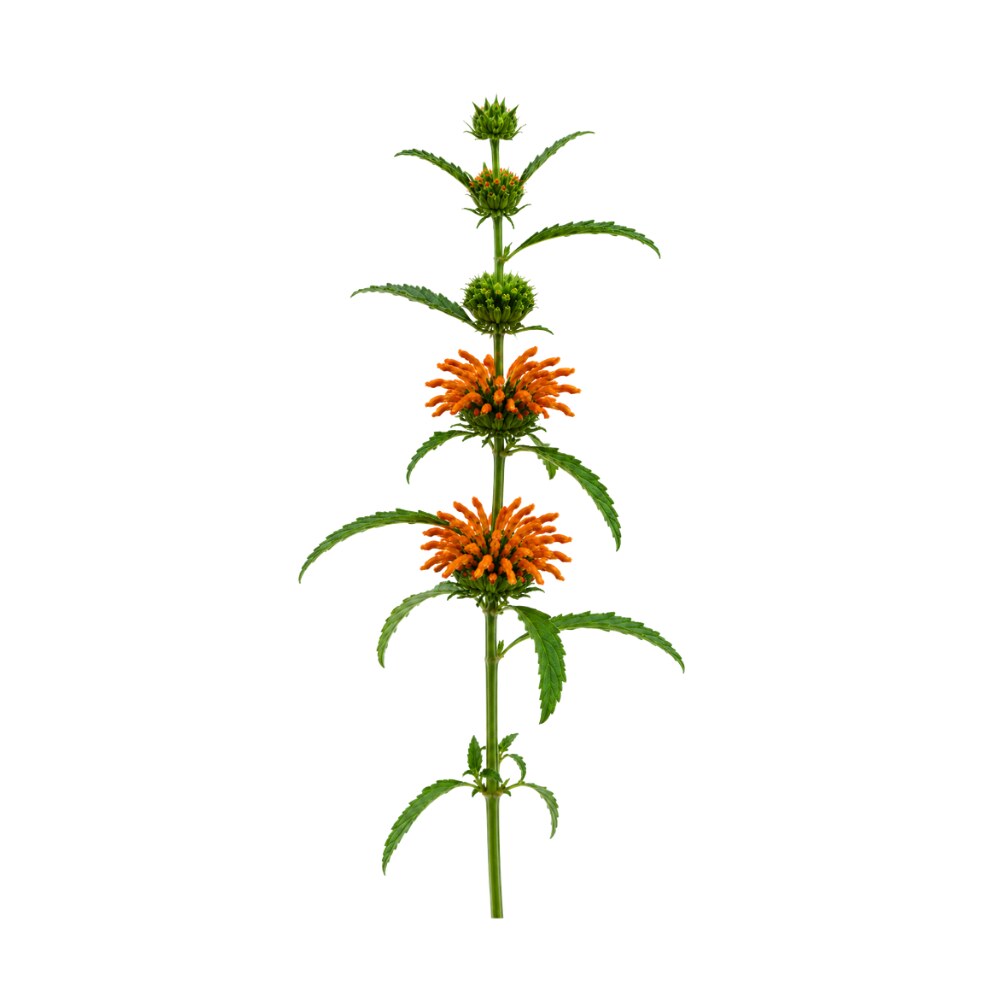
Dagga, or klip dagga (Leonotis nepetifolia), is a tall annual herb in the mint family with whorls of spiky orange flowers, native to Africa and naturalised throughout the tropics. The name “dagga” is used in southern Africa for several mildly psychoactive plants (and, confusingly, for cannabis), but this species is a distinct plant in the genus Leonotis, closely related to wild dagga (Leonotis leonurus).
Traditional & Modern Uses
In African and Caribbean folk traditions the plant has been used as a remedy for coughs, fevers and as a general tonic 24,25Reference 24ObservationalAn ethnobotanical survey of medicinal plants in Trinidad — ethnobotanical/observational surveyView study →Reference 25Medicinal plants used to treat “African” diseases by the local communities of Bwambara sub-county in Rukungiri District, Western Uganda — ethnobotanical surveyView study →, and the dried leaves and flowers are smoked for a mild euphoric, relaxing effect that is sometimes compared to a faint version of cannabis. Some people use it as a legal herbal smoke. Its effects are generally reported as subtle.
Botany
Dagga — more precisely klip dagga or lion’s ear (Leonotis nepetifolia) — is a member of the mint family (Lamiaceae): a tall, erect, square-stemmed herb usually grown as an annual, reaching 1–2 m, with broadly ovate, coarsely toothed, catnip-like leaves (the epithet nepetifolia means “Nepeta-leaved”). Its most distinctive feature is the flower head: dense, spherical whorls of stiff, spine-tipped bracts stacked up the stem, from which emerge tubular, two-lipped orange flowers, the spiky globes persisting as woody seed heads.
Worth clarifying, since the common name is ambiguous: this plant is klip dagga, the broad-leaved annual. “Wild dagga” usually refers to a different species, Leonotis leonurus — a South African perennial shrub with narrow, willow-like leaves and more tail-like flower spikes.
Distribution
Leonotis nepetifolia is native to tropical Africa and the Indian subcontinent. From that paleotropical origin it has become a classic pantropical weed, naturalized across the tropical and subtropical Americas (the southeastern US, the Caribbean, Latin America), northern Australia, several Pacific islands, Southeast Asia and the Mediterranean fringe. It favours disturbed ground — roadsides, streambanks and waste places — and is treated as a weed in parts of Australia, Florida and Hawaii.
Growing Conditions
- Frost-tender tropical annual (persisting as a short-lived perennial only in frost-free climates; roughly USDA zones 9–12); full sun; a plant of open, disturbed ground.
- Full cultivation detail lives on the companion farm-wiki grow guide for Leonotis nepetifolia (link to be added once that project’s public URL is confirmed).
Pharmacology & Research
The research base for dagga (Leonotis nepetifolia) is small and almost entirely preclinical: roughly two dozen primary studies, dominated by phytochemistry and in vitro bioassays, with a handful of rodent behavioural experiments and no human clinical trials of any indication. The most developed threads are anti-inflammatory pharmacology — where two isolated furanolabdane diterpenoids (nepetaefuran, leonotinin) and the leaf essential oil suppress NF-κB signalling in cell models 4,5,6Reference 4In vitroNepetaefuran and leonotinin isolated from Leonotis nepetaefolia RView study →Reference 5In vitroAnti-inflammatory activity of Leonotis nepetifolia leaf essential oil in LPS-stimulated RAW 264.7 cells and its molecular mechanism of action — in vitro macrophage modelView study →Reference 6In vitroLeonotis nepetifolia transformed root extract reduces pro-inflammatory cytokines and promotes tissue repair in vitro — in vitro airway/gingival cell modelView study → — and the plant’s traditional nervous-system use, which is partially echoed by antidepressant- and anxiolytic-like effects of methanol extracts in mice 17,18Reference 17AnimalAntidepressant-like effects of a methanol extract of Leonotis nepetifolia in mice — in vivo behavioural (animal model)View study →Reference 18AnimalPreliminary studies on the behavioural effects of the methanol extract of Leonotis nepetifolia Linn stem in mice — in vivo behavioural (animal model)View study →. Notably, no published pharmacological study demonstrates the euphoric or “cannabis-like” psychoactivity for which the smoked herb is best known; the compounds responsible remain unidentified. Almost all data come from extracts, essential oils, or isolated compounds rather than the smoked leaf/flower that is the plant’s actual mode of use, so preparation mismatch is the dominant caveat throughout.
- Best-supported: anti-inflammatory activity, mechanistically mapped to NF-κB / iNOS / COX-2 suppression by diterpenoids and essential-oil terpenes in cell models 4,5,6Reference 4In vitroNepetaefuran and leonotinin isolated from Leonotis nepetaefolia RView study →Reference 5In vitroAnti-inflammatory activity of Leonotis nepetifolia leaf essential oil in LPS-stimulated RAW 264.7 cells and its molecular mechanism of action — in vitro macrophage modelView study →Reference 6In vitroLeonotis nepetifolia transformed root extract reduces pro-inflammatory cytokines and promotes tissue repair in vitro — in vitro airway/gingival cell modelView study →; broad in vitro antimicrobial activity across leaf, flower and essential-oil preparations 7,8,10,12Reference 7In vitroAntimicrobial activity of essential oil of Leonotis nepetaefolia — in vitroView study →Reference 8In vitroAntibacterial mode of action of the hydroethanolic extract of Leonotis nepetifolia (L.) RView study →Reference 10In vitroExploring the bioactivity potential of Leonotis nepetifolia: phytochemical composition, antimicrobial and antileishmanial activities of extracts from different anatomical parts — in vitroView study →Reference 12In vitroChemical profile and antimicrobial activity of Leonotis nepetifolia (L.) RView study →.
- Emerging, worth watching: antidepressant- and anxiolytic-like effects of methanol extracts in mice, with a plausible HPA-axis signal 17,18Reference 17AnimalAntidepressant-like effects of a methanol extract of Leonotis nepetifolia in mice — in vivo behavioural (animal model)View study →Reference 18AnimalPreliminary studies on the behavioural effects of the methanol extract of Leonotis nepetifolia Linn stem in mice — in vivo behavioural (animal model)View study →; CNS receptor-binding of isolated bis-spirolabdane diterpenoids 3Reference 3In vitroBis-spirolabdane diterpenoids from Leonotis nepetaefolia — in vitro CNS G-protein-coupled receptor bindingView study →.
- Mechanistically thin: anticancer/cytotoxic and antidiabetic claims rest on isolated-compound or cell-line data (cirsiliol, triterpenoids), not the whole herb 20,21,22Reference 20In vitroOliveira AP, Silva JC, Silva RM, et al. (2019). β-Cyclodextrin complex improves the bioavailability and antitumor potential of cirsiliol, a flavone isolated from Leonotis nepetifolia (Lamiaceae) — in vitro plus in vivo murine sarcoma model. Heliyon. https://pubmed.ncbi.nlm.nih.gov/31720439/View study →Reference 21In vitroIn vitro and in silico studies on Leonotis nepetifolia (L.) RView study →Reference 22In vitroNepetifoliol — a new glutinane-triterpenoid from Leonotis nepetifolia — phytochemistry, in vitro α-glucosidase inhibitionView study →.
- The caveat: no human trials, no standardised dose, and the reputed smoked psychoactivity is undocumented pharmacologically — most effects are shown in extracts or essential oils, not the smoked plant.
1. Anti-inflammatory
This is the plant’s best-characterised pharmacology. Two furanolabdane diterpenoids isolated from the leaves, nepetaefuran and leonotinin, suppressed LPS-induced nitric oxide and CCL2 production in macrophages by inhibiting NF-κB transcriptional activity without affecting the MAP-kinase arm — placing the effect at the level of NF-κB transactivation 4Reference 4In vitroNepetaefuran and leonotinin isolated from Leonotis nepetaefolia RView study →. A 2025 study of the leaf essential oil (predominantly germacrene D, β-caryophyllene, α-humulene and phytol) reproduced this in LPS-stimulated RAW 264.7 macrophages: it lowered TNF-α, IL-1β, IL-6, iNOS and COX-2, dampened intracellular ROS, suppressed TLR4/MyD88 and NF-κB p65, and induced the Nrf2/HO-1 antioxidant axis 5Reference 5In vitroAnti-inflammatory activity of Leonotis nepetifolia leaf essential oil in LPS-stimulated RAW 264.7 cells and its molecular mechanism of action — in vitro macrophage modelView study →. Separately, transformed-root extracts blunted rhinovirus-induced IL-6 and IL-1β in airway and gingival cell lines 6Reference 6In vitroLeonotis nepetifolia transformed root extract reduces pro-inflammatory cytokines and promotes tissue repair in vitro — in vitro airway/gingival cell modelView study →, which is mechanistically consistent with the traditional use for bronchitis and asthma 4Reference 4In vitroNepetaefuran and leonotinin isolated from Leonotis nepetaefolia RView study →.
Gap: All data are in vitro (plus one root-culture system). No animal model of inflammation and no human data exist, and the most complete study used the essential oil rather than the smoked or infused leaf.
2. Antimicrobial
Antimicrobial screening is the most-replicated activity, spanning independent groups and preparations. A hydroethanolic leaf extract showed good broad-spectrum antibacterial activity (MIC 6.25 µg/mL against Staphylococcus aureus, Enterococcus faecalis, Bacillus subtilis and Shigella flexneri; 25 µg/mL against Helicobacter pylori) acting at least partly by perturbing bacterial membrane permeability, and was not cytotoxic to mammalian cells (IC50 > 200 µg/mL) 8Reference 8In vitroAntibacterial mode of action of the hydroethanolic extract of Leonotis nepetifolia (L.) RView study →. Essential oils are consistently active against Gram-positive bacteria and, notably, fungi and dermatophytes 7,9,12Reference 7In vitroAntimicrobial activity of essential oil of Leonotis nepetaefolia — in vitroView study →Reference 9In vitroActivity against microorganisms affecting cellulosic objects of the volatile constituents of Leonotis nepetaefolia from Nicaragua — in vitroView study →Reference 12In vitroChemical profile and antimicrobial activity of Leonotis nepetifolia (L.) RView study →, with germacrene D and β-caryophyllene the dominant volatiles 12Reference 12In vitroChemical profile and antimicrobial activity of Leonotis nepetifolia (L.) RView study →. Extracts from different anatomical parts also inhibited Bacillus cereus, S. aureus and Candida 10Reference 10In vitroExploring the bioactivity potential of Leonotis nepetifolia: phytochemical composition, antimicrobial and antileishmanial activities of extracts from different anatomical parts — in vitroView study →, flower-bud extracts inhibited a panel of bacterial and fungal pathogens 11Reference 11In vitroPhytochemical analysis, GC-MS profiling, and in vitro evaluation of biological applications of different solvent extracts of Leonotis nepetifolia (L.) R.Br. flower buds — in vitroView study →, and flower powder fully suppressed aflatoxigenic Aspergillus flavus at 10 mg/mL 13Reference 13In vitroEfficacy of Euphorbia splendens and Leonotis nepetaefolia on aflatoxin-producing fungi Aspergillus flavus and Aspergillus parasiticus — in vitroView study →.
Gap: Activity is moderate (µg–mg/mL range) and entirely in vitro; no infection model, no systemic exposure data, and the smoked route delivers none of these tested preparations.
3. Antidepressant & anxiolytic
This is the clearest experimental echo of the plant’s traditional calming use, though still preclinical. A methanol extract produced antidepressant-like effects in mice, reducing immobility in the tail-suspension and forced-swim tests and — over 28 days — improving body-weight gain and lowering corticosterone in chronically stressed animals, implicating the hypothalamic-pituitary-adrenal axis; the extract’s main metabolites were nepetaefolin, methoxynepetaefolin and luteolin-7-glucoside 17Reference 17AnimalAntidepressant-like effects of a methanol extract of Leonotis nepetifolia in mice — in vivo behavioural (animal model)View study →. An earlier study of a methanol stem extract found anxiolytic-type signals (reduced rearing in the staircase test, prolongation of diazepam-induced sleep) at 150 mg/kg, with a high intraperitoneal LD50 of 3.8 g/kg 18Reference 18AnimalPreliminary studies on the behavioural effects of the methanol extract of Leonotis nepetifolia Linn stem in mice — in vivo behavioural (animal model)View study →. Isolated bis-spirolabdane diterpenoids from the leaves were profiled against CNS G-protein-coupled receptors in vitro, providing a candidate molecular basis for central activity 3Reference 3In vitroBis-spirolabdane diterpenoids from Leonotis nepetaefolia — in vitro CNS G-protein-coupled receptor bindingView study →, and the flavone cirsiliol — a marker of this species — is documented as sedative/hypnotic in the wider literature 19Reference 19Influence of light intensity, fertilizing and season on the cirsiliol content, a chemical marker of Leonotis nepetifolia (Lamiaceae) — cultivation/chemical markerView study →.
Gap: Two small rodent studies, no dose-response into humans, and — critically — none of this demonstrates the euphoric/psychoactive effect attributed to the smoked herb; the actives behind that reputation are unidentified.
4. Antioxidant
Radical-scavenging activity is reproduced across many preparations but stays at the assay level. Flower-bud methanol extract reached 74% DPPH inhibition at 1000 µg/mL in a concentration-dependent manner 11Reference 11In vitroPhytochemical analysis, GC-MS profiling, and in vitro evaluation of biological applications of different solvent extracts of Leonotis nepetifolia (L.) R.Br. flower buds — in vitroView study →, and L. nepetifolia was among the more active species in brine-shrimp lethality within a Caatinga-plant antioxidant screen 14Reference 14In vitroRadical scavenging, antioxidant and cytotoxic activity of Brazilian Caatinga plants — in vitro DPPH/brine-shrimpView study →. Transformed- and normal-root extracts scavenged radicals and protected HUVEC cells against H2O2-induced DNA damage 15Reference 15In vitroPreliminary phytochemical analysis and evaluation of the biological activity of Leonotis nepetifolia (L.) RView study →, and silver-nanoparticle preparations showed concentration-dependent DPPH activity 16Reference 16In vitroLeonotis nepetifolia flower bud extract mediated green synthesis of silver nanoparticles, their characterization, and in vitro evaluation of biological applications — in vitroView study →. Mechanistically, the leaf essential oil raised endogenous SOD, GSH, GPx and catalase and activated Nrf2/HO-1 in macrophages 5Reference 5In vitroAnti-inflammatory activity of Leonotis nepetifolia leaf essential oil in LPS-stimulated RAW 264.7 cells and its molecular mechanism of action — in vitro macrophage modelView study →, linking the antioxidant and anti-inflammatory signals.
Gap: Evidence is almost entirely chemical-assay (DPPH) or cell-line; there is no in vivo oxidative-stress endpoint, and several positive results come from engineered preparations (nanoparticles, transformed roots) unrelated to traditional use.
5. Anticancer
Cytotoxic signals recur but are constituent- or construct-driven rather than whole-herb. The species-marker flavone cirsiliol, solubilised as a β-cyclodextrin complex, inhibited PC3, HCT-116 and HL-60 human lines and slowed tumour growth in mice bearing sarcoma S-180 without the toxicity of doxorubicin 20Reference 20In vitroOliveira AP, Silva JC, Silva RM, et al. (2019). β-Cyclodextrin complex improves the bioavailability and antitumor potential of cirsiliol, a flavone isolated from Leonotis nepetifolia (Lamiaceae) — in vitro plus in vivo murine sarcoma model. Heliyon. https://pubmed.ncbi.nlm.nih.gov/31720439/View study →. Methanolic transformed-root extracts were cytotoxic to A549 lung, HCC1937 breast and NALM-6 leukaemia cells 15Reference 15In vitroPreliminary phytochemical analysis and evaluation of the biological activity of Leonotis nepetifolia (L.) RView study →, and against melanoma cells raised p53 expression and pro-apoptotic activity, with docking implicating the identified phenolics 21Reference 21In vitroIn vitro and in silico studies on Leonotis nepetifolia (L.) RView study →; flower-bud extracts were also anti-proliferative in vitro 11Reference 11In vitroPhytochemical analysis, GC-MS profiling, and in vitro evaluation of biological applications of different solvent extracts of Leonotis nepetifolia (L.) R.Br. flower buds — in vitroView study →.
Gap: The strongest result depends on a solubility-enhanced isolated molecule, and the cell-line effects come from Rhizobium-transformed root cultures — neither reflects the plant as used. IC50 values for crude root extract are high (760–980 µg/mL). No clinical relevance is established.
6. Antispasmodic
A single 1991 study examined hydroalcoholic and tea extracts of the stem on isolated rat and guinea-pig tissue. Both relaxed KCl-precontracted rat uterus (the hydroalcoholic extract ~2-fold more potent, an effect potentiated by IBMX and unaffected by propranolol/forskolin) and produced rightward, largely non-competitive shifts of agonist curves (bradykinin, acetylcholine, BaCl2) in uterus and guinea-pig ileum 2Reference 2In vitroEffect of crude extracts from Leonotis nepetaefolia (Labiatae) on rat and guinea-pig smooth muscle and rat cardiac muscle — in vitro isolated-tissue studyView study →. The pattern suggests a non-specific smooth-muscle relaxant/spasmolytic action.
Gap: One isolated-tissue study, mechanism unresolved and non-specific, never replicated; the uterine activity is also a pregnancy-safety flag rather than a therapeutic endorsement.
7. Antileishmanial
Hydroethanolic extracts from different plant parts were tested against Leishmania amazonensis. Leaf and root extracts were the most active against the intracellular amastigote form (IC50 32.9 and 57.7 µg/mL respectively), the stage relevant to human disease, alongside their antibacterial and anti-Candida activity; the extracts contained apigenin, cirsiliol and several luteolin glycosides 10Reference 10In vitroExploring the bioactivity potential of Leonotis nepetifolia: phytochemical composition, antimicrobial and antileishmanial activities of extracts from different anatomical parts — in vitroView study →.
Gap: A single in vitro study with moderate potency and no selectivity-index or in vivo follow-up; strictly a preliminary antiprotozoal signal.
8. Antidiabetic
The signal is constituent-level and incidental. In a phytochemical study of the aerial parts, several isolated compounds — the anthraquinone chrysophanol and the sesquiterpenoid (+)-ar-turmerone — inhibited α-glucosidase with IC50 values (4.9 and 5.3 µg/mL) well below the acarbose control, while the newly described triterpenoid nepetifoliol itself was inactive 22Reference 22In vitroNepetifoliol — a new glutinane-triterpenoid from Leonotis nepetifolia — phytochemistry, in vitro α-glucosidase inhibitionView study →.
Gap: Enzyme-inhibition by minor, non-characteristic constituents in one study — no cellular, animal or glycaemic data, and no evidence these compounds reach relevant levels in any preparation of the herb.
Mechanisms
| Mechanism | Drives | Key compounds |
|---|---|---|
| NF-κB transactivation ↓, iNOS / NO ↓, CCL2 ↓; CNS GPCR binding | anti-inflammatorysedative / antidepressant | furanolabdane diterpenoids — nepetaefuran, leonotinin, nepetaefolin, leonotin, dubiin |
| Radical scavenging, COX-2 / NF-κB ↓, cytotoxic / pro-apoptotic, sedative-hypnotic | antioxidantanti-inflammatoryanticancerCNS | flavones — apigenin, cirsiliol, luteolin |
| Bacterial / fungal membrane disruption, TLR4/MyD88 ↓, Nrf2/HO-1 ↑ | antimicrobialanti-inflammatoryantioxidant | essential-oil volatiles — germacrene D, β-caryophyllene, α-humulene, phytol |
| α-Glucosidase inhibition | antidiabetic (constituent-level) | ar-turmerone, chrysophanol, nepetifoliol, friedelin |
| Radical scavenging, DNA protection, cytotoxicity | antioxidantanticancer (transformed-root only) | root phenolics — rosmarinic acid, (+)-catechin, p-coumaric acid |
Clinical trials
No registered clinical trials were identified for Leonotis nepetifolia on ClinicalTrials.gov for any indication — the evidence base is entirely preclinical. The only human data is an Ayurvedic taste (rasa) assessment in healthy volunteers 26Reference 26ObservationalRasa Nirdhāraṇa (assessment of taste) of Leonotis nepetifolia (L.) RView study →, not an efficacy trial.
| Completed | Planned | Terminated | Preclinical |
|---|---|---|---|
| 0 | 0 | 0 | ~25 |
Last checked: July 2026.
Phytochemistry
Like the rest of its genus, Leonotis nepetifolia is defined by labdane (and bis-spirolabdane) diterpenoids: the furanolabdanes nepetaefolin, leonotin, leonotinin, nepetaefuran and dubiin are the characteristic markers 3,22Reference 3In vitroBis-spirolabdane diterpenoids from Leonotis nepetaefolia — in vitro CNS G-protein-coupled receptor bindingView study →Reference 22In vitroNepetifoliol — a new glutinane-triterpenoid from Leonotis nepetifolia — phytochemistry, in vitro α-glucosidase inhibitionView study →. These are accompanied by flavones such as apigenin, cirsiliol — the validated chemical marker of the species 19Reference 19Influence of light intensity, fertilizing and season on the cirsiliol content, a chemical marker of Leonotis nepetifolia (Lamiaceae) — cultivation/chemical markerView study → — and luteolin, the last largely as its 7-O-glucoside 10,17Reference 10In vitroExploring the bioactivity potential of Leonotis nepetifolia: phytochemical composition, antimicrobial and antileishmanial activities of extracts from different anatomical parts — in vitroView study →Reference 17AnimalAntidepressant-like effects of a methanol extract of Leonotis nepetifolia in mice — in vivo behavioural (animal model)View study →. The leaf essential oil is dominated by the sesquiterpenes germacrene D and β-caryophyllene 12Reference 12In vitroChemical profile and antimicrobial activity of Leonotis nepetifolia (L.) RView study →. The bitter diterpene marrubiin, prominent in related Leonotis, is reported at the genus level. The alkaloid leonurine is frequently named in popular sources but has not been confirmed by rigorous chemical analysis of this species 10,22Reference 10In vitroExploring the bioactivity potential of Leonotis nepetifolia: phytochemical composition, antimicrobial and antileishmanial activities of extracts from different anatomical parts — in vitroView study →Reference 22In vitroNepetifoliol — a new glutinane-triterpenoid from Leonotis nepetifolia — phytochemistry, in vitro α-glucosidase inhibitionView study →, and the compounds behind its mild reputed psychoactivity remain unestablished.
Constituent Summary
No reliable quantitative content has been published for these compounds, so amounts are given as No Data; proportions vary with provenance, plant part and season. † marks the nepetaefolin-series furanolabdanes, the diterpenoids characteristic of the genus. The “reported” note on leonurine flags that its presence is asserted in popular literature but not confirmed analytically. The middle column gives the constituent type.
Diterpene6 compoundsno data
Flavonoid3 compoundsno data
Alkaloid1 compound1 with data
Safety & Pregnancy
Dagga is poorly researched but shows low systemic toxicity in the limited rodent and in-vitro studies available; the smoked route carries uncharacterised respiratory risk and it is best avoided in pregnancy.
- Avoid in pregnancy. Flower extracts were embryotoxic and teratogenic in a zebrafish-embryo model, and stem extracts alter uterine contractility in vitro.
- Smoked route unstudied. Its usual mode of use delivers uncharacterised inhaled combustion products (respiratory irritation).
- Poorly researched. No human data, no established dose, and herb–drug interactions have not been assessed.
- Mint-family allergy. Cross-sensitivity is plausible in people allergic to related Lamiaceae herbs.
- Low systemic toxicity in tests. Rodent LD50 ~3.8 g/kg; leaf extract non-cytotoxic to mammalian cells in vitro.
Full safety & interactions detail
Formal safety data for dagga are sparse: there are no human clinical or toxicology studies, and no established therapeutic dose. Acute rodent work suggests low systemic toxicity — the intraperitoneal LD50 of a methanol stem extract was 3.8 g/kg in mice 18Reference 18AnimalPreliminary studies on the behavioural effects of the methanol extract of Leonotis nepetifolia Linn stem in mice — in vivo behavioural (animal model)View study → — and a leaf hydroethanolic extract was non-cytotoxic to mammalian cells in vitro (IC50 > 200 µg/mL) 8Reference 8In vitroAntibacterial mode of action of the hydroethanolic extract of Leonotis nepetifolia (L.) RView study →. Against that, an isolated-tissue study shows stem extracts relax and alter the contractility of rat uterine muscle 2Reference 2In vitroEffect of crude extracts from Leonotis nepetaefolia (Labiatae) on rat and guinea-pig smooth muscle and rat cardiac muscle — in vitro isolated-tissue studyView study →, and a 2026 zebrafish-embryo study found the methanol extract — and especially the ethyl-acetate fraction of the flowers — caused embryotoxic and teratogenic effects, with acetylcholinesterase, lipid-peroxidation and cardiotoxicity signals 23Reference 23AnimalComprehensive analysis of Leonotis nepetifolia flower extracts: phytochemical composition and toxicity in zebrafish embryos — in vivo zebrafish toxicityView study →. Because dagga is most often smoked, the primary real-world hazard is inhaled combustion products (respiratory irritation), a route for which no controlled safety data exist, and the compounds behind its reputed psychoactivity remain unidentified — so its inhalation risk is uncharacterised rather than demonstrably absent.
Herb–drug interactions have not been assessed: no CYP450 or pharmacokinetic study exists for this species, so the absence of reported interactions is a gap, not a clearance. As a mint-family (Lamiaceae) plant, cross-sensitivity in people allergic to related herbs is plausible, though no case reports were found.
Avoid in pregnancy. This is an evidence-based caution rather than a purely precautionary one: flower extracts and fractions were embryotoxic and teratogenic in a zebrafish-embryo model 23Reference 23AnimalComprehensive analysis of Leonotis nepetifolia flower extracts: phytochemical composition and toxicity in zebrafish embryos — in vivo zebrafish toxicityView study →, and stem extracts altered uterine smooth-muscle contractility in vitro 2Reference 2In vitroEffect of crude extracts from Leonotis nepetaefolia (Labiatae) on rat and guinea-pig smooth muscle and rat cardiac muscle — in vitro isolated-tissue studyView study →. No human pregnancy data exist, and lactation has not been assessed — treat as an avoid while breastfeeding too.
References
- Purushothaman KK, Vasanth S, Connolly JD. (1976). 4,6,7-Trimethoxy-5-methylchromen-2-one, a new coumarin from Leonotis nepetaefolia — phytochemistry, isolation. J Chem Soc Perkin Trans 1. https://pubmed.ncbi.nlm.nih.gov/1034648/
- Calixto JB, Yunes RA, Rae GA. (1991). Effect of crude extracts from Leonotis nepetaefolia (Labiatae) on rat and guinea-pig smooth muscle and rat cardiac muscle — in vitro isolated-tissue study. J Pharm Pharmacol. https://pubmed.ncbi.nlm.nih.gov/1681066/
- Li J, Xu PB, Wang Y, et al. (2012). Bis-spirolabdane diterpenoids from Leonotis nepetaefolia — in vitro CNS G-protein-coupled receptor binding. J Nat Prod. https://pubmed.ncbi.nlm.nih.gov/22475308/
- Ueda F, Iizuka K, Tago K, et al. (2015). Nepetaefuran and leonotinin isolated from Leonotis nepetaefolia R. Br. potently inhibit the LPS signaling pathway by suppressing the transactivation of NF-κB — in vitro mechanistic. Int Immunopharmacol. https://pubmed.ncbi.nlm.nih.gov/26319953/
- Mohanta O, Jena AK, Das PK, et al. (2025). Anti-inflammatory activity of Leonotis nepetifolia leaf essential oil in LPS-stimulated RAW 264.7 cells and its molecular mechanism of action — in vitro macrophage model. Sci Rep. https://pubmed.ncbi.nlm.nih.gov/41006625/
- Sitarek P, Kowalczyk T, Wielanek M, et al. (2023). Leonotis nepetifolia transformed root extract reduces pro-inflammatory cytokines and promotes tissue repair in vitro — in vitro airway/gingival cell model. Int J Environ Res Public Health. https://pubmed.ncbi.nlm.nih.gov/36981614/
- Gopal RH, Vasanth S, Vasudevan SV. (1994). Antimicrobial activity of essential oil of Leonotis nepetaefolia — in vitro. Anc Sci Life. https://pubmed.ncbi.nlm.nih.gov/22556678/
- Oliveira DM, Melo FG, Balogun SO, et al. (2015). Antibacterial mode of action of the hydroethanolic extract of Leonotis nepetifolia (L.) R. Br. involves bacterial membrane perturbations — in vitro. J Ethnopharmacol. https://pubmed.ncbi.nlm.nih.gov/26102550/
- Casiglia S, Bruno M, Senatore F. (2014). Activity against microorganisms affecting cellulosic objects of the volatile constituents of Leonotis nepetaefolia from Nicaragua — in vitro. Nat Prod Commun. https://pubmed.ncbi.nlm.nih.gov/25532300/
- de Oliveira DP, Almeida L, Marques MJ, et al. (2021). Exploring the bioactivity potential of Leonotis nepetifolia: phytochemical composition, antimicrobial and antileishmanial activities of extracts from different anatomical parts — in vitro. Nat Prod Res. https://pubmed.ncbi.nlm.nih.gov/31691582/
- Nagaraja SK, Nayaka S, Kumar RS. (2023). Phytochemical analysis, GC-MS profiling, and in vitro evaluation of biological applications of different solvent extracts of Leonotis nepetifolia (L.) R.Br. flower buds — in vitro. Appl Biochem Biotechnol. https://pubmed.ncbi.nlm.nih.gov/36342622/
- Adolpho LO, Marques MJ, Dalcol II, et al. (2024). Chemical profile and antimicrobial activity of Leonotis nepetifolia (L.) R. Br. essential oils — in vitro. Nat Prod Res. https://pubmed.ncbi.nlm.nih.gov/37583125/
- Abubacker MN, Ramanathan R. (2003). Efficacy of Euphorbia splendens and Leonotis nepetaefolia on aflatoxin-producing fungi Aspergillus flavus and Aspergillus parasiticus — in vitro. Indian J Exp Biol. https://pubmed.ncbi.nlm.nih.gov/15320507/
- David JP, Meira M, David JM, et al. (2007). Radical scavenging, antioxidant and cytotoxic activity of Brazilian Caatinga plants — in vitro DPPH/brine-shrimp. Fitoterapia. https://pubmed.ncbi.nlm.nih.gov/17331673/
- Kowalczyk T, Merecz-Sadowska A, Rijo P, et al. (2021). Preliminary phytochemical analysis and evaluation of the biological activity of Leonotis nepetifolia (L.) R. Br transformed roots extracts obtained through Rhizobium rhizogenes-mediated transformation — in vitro. Cells. https://pubmed.ncbi.nlm.nih.gov/34070057/
- Nagaraja SK, Kumar RS, Chakraborty B, et al. (2022). Leonotis nepetifolia flower bud extract mediated green synthesis of silver nanoparticles, their characterization, and in vitro evaluation of biological applications — in vitro. Materials (Basel). https://pubmed.ncbi.nlm.nih.gov/36556796/
- Arrieta-Báez D, Cruz-Carrillo M, Gómez-Cansino R, et al. (2022). Antidepressant-like effects of a methanol extract of Leonotis nepetifolia in mice — in vivo behavioural (animal model). Nat Prod Res. https://pubmed.ncbi.nlm.nih.gov/35357257/
- Ayanwuyi LO, Yaro AH, Adama TZ. (2016). Preliminary studies on the behavioural effects of the methanol extract of Leonotis nepetifolia Linn stem in mice — in vivo behavioural (animal model). Afr J Tradit Complement Altern Med. https://pubmed.ncbi.nlm.nih.gov/28852715/
- de Oliveira AP, Guimarães AL, Pacheco AGM, et al. (2019). Influence of light intensity, fertilizing and season on the cirsiliol content, a chemical marker of Leonotis nepetifolia (Lamiaceae) — cultivation/chemical marker. PeerJ. https://pubmed.ncbi.nlm.nih.gov/30671296/
- Oliveira AP, Silva JC, Silva RM, et al. (2019). β-Cyclodextrin complex improves the bioavailability and antitumor potential of cirsiliol, a flavone isolated from Leonotis nepetifolia (Lamiaceae) — in vitro plus in vivo murine sarcoma model. Heliyon. https://pubmed.ncbi.nlm.nih.gov/31720439/
- Merecz-Sadowska A, Sitarek P, Kowalczyk T, et al. (2022). In vitro and in silico studies on Leonotis nepetifolia (L.) R. Br. root extract against cancer cells — in vitro + in silico. Curr Pharm Biotechnol. https://pubmed.ncbi.nlm.nih.gov/35249478/
- Nguyen TK, Pham HD, Le TVT, et al. (2023). Nepetifoliol — a new glutinane-triterpenoid from Leonotis nepetifolia — phytochemistry, in vitro α-glucosidase inhibition. Nat Prod Res. https://pubmed.ncbi.nlm.nih.gov/34365866/
- Adolpho LF, Marques MJ, Morel AF, et al. (2026). Comprehensive analysis of Leonotis nepetifolia flower extracts: phytochemical composition and toxicity in zebrafish embryos — in vivo zebrafish toxicity. Nat Prod Res. https://pubmed.ncbi.nlm.nih.gov/39878299/
- Clement YN, Baksh-Comeau YS, Seaforth CE. (2015). An ethnobotanical survey of medicinal plants in Trinidad — ethnobotanical/observational survey. J Ethnobiol Ethnomed. https://pubmed.ncbi.nlm.nih.gov/26369926/
- Gumisiriza H, Birungi G, Olet EA, et al. (2021). Medicinal plants used to treat “African” diseases by the local communities of Bwambara sub-county in Rukungiri District, Western Uganda — ethnobotanical survey. J Ethnopharmacol. https://pubmed.ncbi.nlm.nih.gov/33189840/
- Pushpan R, Nishteswar K. (2014). Rasa Nirdhāraṇa (assessment of taste) of Leonotis nepetifolia (L.) R. Br.: a preliminary study in healthy volunteers — human sensory/observational. Anc Sci Life. https://pubmed.ncbi.nlm.nih.gov/25538356/
- Nguyen TQ, Duong TH, Nguyen HH, et al. (2026). Larvicidal activity and component interactions of Leonotis nepetifolia essential oil against Aedes aegypti — in vitro/insecticidal. Parasitol Int. https://pubmed.ncbi.nlm.nih.gov/42103275/