
Materia Medica
Epeña
Virola spp.
Epeña (Virola spp.) is the tryptamine-rich bark resin of Amazonian trees prepared into potent visionary snuffs by several indigenous peoples.
What is Epeña?
Epeña refers to the psychoactive snuff prepared from the inner-bark resin of several Virola trees (family Myristicaceae) of the Amazon, and to the trees themselves. The reddish resin is rich in tryptamine alkaloids and has been used for centuries by indigenous peoples of the north-western Amazon and Orinoco regions.
Traditional & Modern Uses
Among peoples such as the Yanomami and various groups of the Colombian and Venezuelan Amazon, the resin is scraped, dried and processed — often with the ash of other plants — into a fine snuff that is blown forcefully into the nostrils through a tube, sometimes by another person. The snuff (called epená, yakee, yopo or by other local names) is used by shamans for healing, divination and contact with the spirit world. The experience is rapid, powerful and physically demanding.
Beyond the snuff, the Virola resin has a second, quieter ethnobotanical life: applied topically to the skin as an antifungal, a use documented across roughly fourteen Amazonian groups in four countries 6Reference 6ReviewVirola: a promising genus for ethnopharmacological investigation — review of antifungal ethnobotanyView study →. It is arguably the plant’s best-attested non-psychoactive traditional use, and — unlike the snuff — one that maps onto a plausible pharmacological mechanism (see below).
Botany
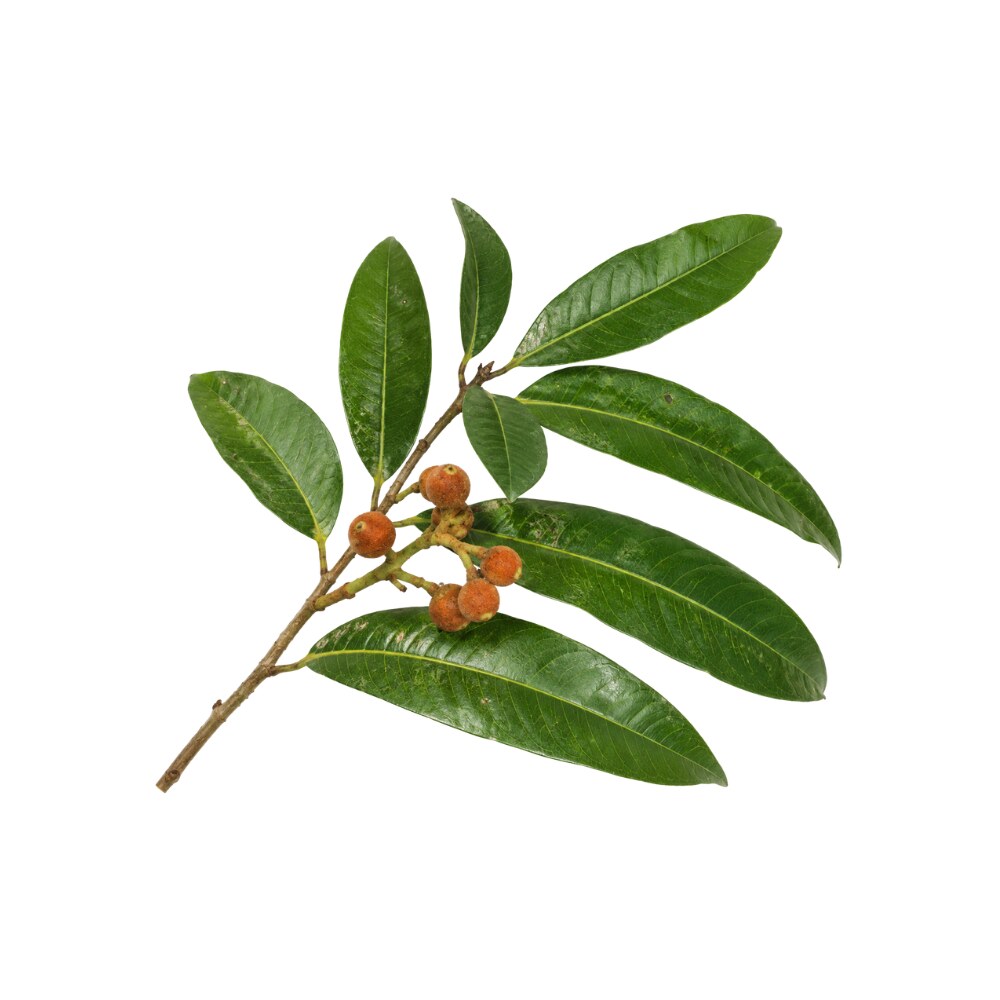
Epena is not an herb but a tall rainforest tree — a member of the nutmeg family, Virola, the American cousins of the tree that gives us culinary nutmeg. It rises 20–30 m into the Amazon canopy on a straight trunk, carrying the family’s simple, leathery, pale-backed leaves and small, easily-missed yellowish flowers.
The part that matters is neither leaf nor fruit but the tree’s blood-red, strongly aromatic inner-bark resin, which wells up when the living bark is cut. It is this resin, gathered from the trunk, that Amazonian peoples have long prepared. Several Virola species share the trait and look nearly alike — V. theiodora and V. elongata are so close that botanists sometimes treat them as one — so identity within the genus is a matter of fine detail.
Distribution
Epena is a wild tree of the western and northern Amazon, from southeastern Colombia and southern Venezuela into northern Brazil, with close relatives spreading through Peru, Ecuador, the Guianas and Panama. It grows in humid lowland rainforest as part of the canopy, is assessed as of least conservation concern, and occurs only in its native forest — never as a naturalised or weedy plant.
Habitat & Cultivation
- Essentially never cultivated. It is a large, slow-maturing tropical rainforest canopy tree with no frost tolerance, grown only in situ or in specialist tropical collections — not as an ornamental or crop.
- It requires constant equatorial warmth and humidity with year-round rainfall, and deep, moist but well-drained forest soil — conditions unattainable in temperate cultivation.
- Seedlings establish in the partial shade of the forest understory, then grow up into full canopy sun over many years.
- Propagation is from fresh seed only; like other nutmeg-family trees the seed is recalcitrant (short-lived and intolerant of drying) and must be sown at once.
- Habitat and identification notes live on the companion farm-wiki entry for Virola theiodora (link to be added once that project’s public URL is confirmed).
Phytochemistry
The active compounds of the snuff are indole alkaloids of the tryptamine and β-carboline classes, concentrated in the reddish bark resin. The principal and marker compound is 5-MeO-DMT, one of the most potent psychedelics known, accompanied by lesser amounts of N,N-DMT and N-monomethyltryptamine, together with the β-carboline 2-methyl-6-methoxy-1,2,3,4-tetrahydro-beta-carboline 1Reference 1Alkaloids in certain species of Virola and other South American plants of ethnopharmacologic interest — chemical isolation studyView study →. In Virola theiodora, the species most used for snuff, the resin can be exceptionally alkaloid-rich, with 5-MeO-DMT alone reported around 8% and total alkaloids in some prepared snuffs reaching about 11% 1Reference 1Alkaloids in certain species of Virola and other South American plants of ethnopharmacologic interest — chemical isolation studyView study →. The exact alkaloid profile varies considerably — by orders of magnitude — between species, region and preparation 3Reference 3Monoamine oxidase inhibitors in South American hallucinogenic plants Part 2: Constituents of orally-active Myristicaceous hallucinogens — analytical/ethnopharmacology studyView study →.
Beyond the alkaloids, the wider Virola genus carries a substantial non-psychoactive chemistry that underlies all of its preclinical pharmacology: lignans and 8.O.4′-neolignans (grandisin, surinamensin, otobaphenol), flavonoids and phenolic acids (epicatechin, eriodictyol, catechin, gallic acid, rutin), and essential-oil sesquiterpenes (nerolidol) 37Reference 37ReviewPharmacological Extracts and Molecules from Virola Species: Traditional Uses, Phytochemistry, and Biological Activity — reviewView study →. These are largely documented in other Virola species (V. surinamensis, V. oleifera, V. elongata, V. sebifera) rather than the snuff source V. theiodora, and are pharmacologically and legally distinct from the tryptamine snuff.
Constituent Summary
Figures are approximate percentages of the dried bark resin from classic isolation work on Virola theiodora; the minor tryptamines and the β-carboline are present in much smaller, generally unquantified amounts, and the profile differs by species and source. † marks the marker constituent that characterises Virola snuff (epena).
Indole alkaloid4 compounds1 with data
Pharmacology & Research
Epeña occupies two distinct evidentiary worlds. Its marker alkaloid, 5-MeO-DMT, is now the subject of early human clinical trials as a rapid-acting antidepressant — the only genuinely human-tier evidence in this monograph 21,22,23,24Reference 21RCTPhase 1, placebo-controlled, single ascending dose trial to evaluate the safety, pharmacokinetics and effect on altered states of consciousness of intranasal BPL-003 (5-methoxy-N,N-dimethyltryptamine benzoate) in healthy participants — randomised controlled trialView study →Reference 22Clinical trialEvaluation of the peak experience scale as a rapid assessment tool for the strength of a psychoactive experience with 5-MeO-DMT — clinical studyView study →Reference 23Meta-analysisEfficacy of N, N-dimethyltryptamine (DMT) psychedelic therapy for substance misuse: A systematic review and meta-analysis — systematic review and meta-analysisView study →Reference 24ReviewPsychedelic-assisted pharmacotherapy: clinical applications and regulatory considerations — reviewView study →. The rest of the Virola genus (Myristicaceae) carries a compact preclinical literature — roughly forty studies — built on its non-psychoactive chemistry of lignans, neolignans, flavonoids and phenolic acids, showing consistent gastroprotective, antioxidant and anti-inflammatory activity in rodents plus antifungal, antiparasitic and antiproliferative signals in vitro 7,8,9,10,11,12,13,14,16,17,18,19,25,26,27,28,29,30,31,37Reference 7AnimalAntiulcerogenic action of ethanolic extract of the resin from Virola surinamensis Warb. (Myristicaceae) — in vivo rodent studyView study →Reference 8AnimalGastroprotective activity of the resin from Virola oleifera — in vivo mouse studyView study →Reference 9AnimalChemical characterization and evaluation of gastric antiulcer properties of the hydroethanolic extract of the stem bark of Virola elongata (Benth.) Warb — in vivo rodent studyView study →Reference 10In vitroAntioxidant activity of aryltetralone lignans and derivatives from Virola sebifera (Aubl.) — in vitro studyView study →Reference 11In vitroThe natural antioxidant otobaphenol delays the permeability transition of mitochondria and induces their aggregation — in vitro studyView study →Reference 12In vitroVirola oleifera-capped gold nanoparticles showing radical-scavenging activity and low cytotoxicity — in vitro studyView study →Reference 13AnimalChronic administration of antioxidant resin from Virola oleifera attenuates atherogenesis in LDLr — in vivo mouse studyView study →Reference 14AnimalResin from Virola oleifera Protects Against Radiocontrast-Induced Nephropathy in Mice — in vivo mouse studyView study →Reference 16AnimalAntinociceptive and antiinflammatory activities of grandisin extracted from Virola surinamensis — in vivo mouse studyView study →Reference 17AnimalAnti-inflammatory activity of flavone and some of its derivates from Virola michelli Heckel — in vivo rat studyView study →Reference 18In vitroPhytochemistry and Evaluation of the Anti-Inflammatory Activity of the Hydroethanolic Extract of Virola elongata (Benth.) WarbView study →Reference 19In vitroIn vitro studies on mode of action of antifungal 8.O.4’-neolignans occurring in certain species of Virola and related genera of Myristicaceae — in vitro studyView study →Reference 25In vitroAnti-leishmanial activity of neolignans from Virola species and synthetic analogues — in vitro and in vivo studyView study →Reference 26In vitroLeishmania amazonensis and Leishmania chagasi: In vitro leishmanicide activity of Virola surinamensis (rol.) warb — in vitro studyView study →Reference 27In vitroFlavonoids and lignans from Virola surinamensis twigs and their in vitro activity against Trypanosoma cruzi — in vitro studyView study →Reference 28In vitroPaes SS, et al. (2023). (-)-5-Demethoxygrandisin B a New Lignan from Virola surinamensis (Rol.) Warb. Leaves: Evaluation of the Leishmanicidal Activity by In Vitro and In Silico Approaches — in vitro study. Pharmaceutics. 15(9). https://pubmed.ncbi.nlm.nih.gov/37765261/View study →Reference 29In vitroAntiproliferative properties of polyketides isolated from Virola sebifera leaves — in vitro studyView study →Reference 30In vitroIn vitro and in vivo inhibition of HCT116 cells by essential oils from bark and leaves of Virola surinamensis (Rol. ex Rottb.) Warb. (Myristicaceae) — in vitro and in vivo mouse studyView study →Reference 31In vitroEvaluation of Virola oleifera activity in musculoskeletal pathologies: Inhibition of human multiple myeloma cells proliferation and combination therapy with dexamethasone or bortezomib — in vitro studyView study →Reference 37ReviewPharmacological Extracts and Molecules from Virola Species: Traditional Uses, Phytochemistry, and Biological Activity — reviewView study →. Crucially, the human trials use a synthetic, isolated form of 5-MeO-DMT delivered by nasal spray or inhalation — pharmacologically and legally distinct from the highly variable ceremonial snuff 3,21Reference 3Monoamine oxidase inhibitors in South American hallucinogenic plants Part 2: Constituents of orally-active Myristicaceous hallucinogens — analytical/ethnopharmacology studyView study →Reference 21RCTPhase 1, placebo-controlled, single ascending dose trial to evaluate the safety, pharmacokinetics and effect on altered states of consciousness of intranasal BPL-003 (5-methoxy-N,N-dimethyltryptamine benzoate) in healthy participants — randomised controlled trialView study →. Alkaloid content differs by orders of magnitude between species, regions and preparations 3Reference 3Monoamine oxidase inhibitors in South American hallucinogenic plants Part 2: Constituents of orally-active Myristicaceous hallucinogens — analytical/ethnopharmacology studyView study →, so preparation match is the running caveat throughout.
- Best-supported: 5-MeO-DMT as a fast-acting antidepressant in early human trials 21,22,23,24Reference 21RCTPhase 1, placebo-controlled, single ascending dose trial to evaluate the safety, pharmacokinetics and effect on altered states of consciousness of intranasal BPL-003 (5-methoxy-N,N-dimethyltryptamine benzoate) in healthy participants — randomised controlled trialView study →Reference 22Clinical trialEvaluation of the peak experience scale as a rapid assessment tool for the strength of a psychoactive experience with 5-MeO-DMT — clinical studyView study →Reference 23Meta-analysisEfficacy of N, N-dimethyltryptamine (DMT) psychedelic therapy for substance misuse: A systematic review and meta-analysis — systematic review and meta-analysisView study →Reference 24ReviewPsychedelic-assisted pharmacotherapy: clinical applications and regulatory considerations — reviewView study →; gastroprotection of the bark resin, replicated across three Virola species in rodent ulcer models 7,8,9Reference 7AnimalAntiulcerogenic action of ethanolic extract of the resin from Virola surinamensis Warb. (Myristicaceae) — in vivo rodent studyView study →Reference 8AnimalGastroprotective activity of the resin from Virola oleifera — in vivo mouse studyView study →Reference 9AnimalChemical characterization and evaluation of gastric antiulcer properties of the hydroethanolic extract of the stem bark of Virola elongata (Benth.) Warb — in vivo rodent studyView study →; broad antioxidant activity of the lignans and phenolics 10,11,12,13,14Reference 10In vitroAntioxidant activity of aryltetralone lignans and derivatives from Virola sebifera (Aubl.) — in vitro studyView study →Reference 11In vitroThe natural antioxidant otobaphenol delays the permeability transition of mitochondria and induces their aggregation — in vitro studyView study →Reference 12In vitroVirola oleifera-capped gold nanoparticles showing radical-scavenging activity and low cytotoxicity — in vitro studyView study →Reference 13AnimalChronic administration of antioxidant resin from Virola oleifera attenuates atherogenesis in LDLr — in vivo mouse studyView study →Reference 14AnimalResin from Virola oleifera Protects Against Radiocontrast-Induced Nephropathy in Mice — in vivo mouse studyView study →.
- Emerging, worth watching: antifungal use of the resin, unusually well documented ethnobotanically across ~14 Amazonian groups 6,19Reference 6ReviewVirola: a promising genus for ethnopharmacological investigation — review of antifungal ethnobotanyView study →Reference 19In vitroIn vitro studies on mode of action of antifungal 8.O.4’-neolignans occurring in certain species of Virola and related genera of Myristicaceae — in vitro studyView study →; anti-inflammatory activity of the neolignan grandisin and Virola flavones 16,17,18Reference 16AnimalAntinociceptive and antiinflammatory activities of grandisin extracted from Virola surinamensis — in vivo mouse studyView study →Reference 17AnimalAnti-inflammatory activity of flavone and some of its derivates from Virola michelli Heckel — in vivo rat studyView study →Reference 18In vitroPhytochemistry and Evaluation of the Anti-Inflammatory Activity of the Hydroethanolic Extract of Virola elongata (Benth.) WarbView study →.
- Mechanistically thin: antimalarial and antiparasitic claims rest on single studies, isolated constituents (nerolidol), or preparations the plant isn’t used as 25,26,27,28,32Reference 25In vitroAnti-leishmanial activity of neolignans from Virola species and synthetic analogues — in vitro and in vivo studyView study →Reference 26In vitroLeishmania amazonensis and Leishmania chagasi: In vitro leishmanicide activity of Virola surinamensis (rol.) warb — in vitro studyView study →Reference 27In vitroFlavonoids and lignans from Virola surinamensis twigs and their in vitro activity against Trypanosoma cruzi — in vitro studyView study →Reference 28In vitroPaes SS, et al. (2023). (-)-5-Demethoxygrandisin B a New Lignan from Virola surinamensis (Rol.) Warb. Leaves: Evaluation of the Leishmanicidal Activity by In Vitro and In Silico Approaches — in vitro study. Pharmaceutics. 15(9). https://pubmed.ncbi.nlm.nih.gov/37765261/View study →Reference 32In vitroAntimalarial use of volatile oil from leaves of Virola surinamensis (Rol.) Warb. by Waiãpi Amazon Indians — in vitro studyView study →.
- The caveat: the human antidepressant data apply to a purified synthetic tryptamine, not the snuff; everything botanical is preclinical; and alkaloid profiles vary wildly between collections 3Reference 3Monoamine oxidase inhibitors in South American hallucinogenic plants Part 2: Constituents of orally-active Myristicaceous hallucinogens — analytical/ethnopharmacology studyView study →.
1. Antidepressant (5-MeO-DMT)
The plant’s marker compound reaching the clinic, and the only human-tier evidence for epeña. Isolated 5-MeO-DMT — the principal Virola tryptamine — is in active development for treatment-resistant depression. A Phase 1 placebo-controlled ascending-dose RCT of the intranasal benzoate salt BPL-003 (1-12 mg) in 44 volunteers was well tolerated, rapidly absorbed (peak plasma ~8-10 min, half-life <27 min) and produced a “complete mystical experience” in 60% at 10-12 mg 21Reference 21RCTPhase 1, placebo-controlled, single ascending dose trial to evaluate the safety, pharmacokinetics and effect on altered states of consciousness of intranasal BPL-003 (5-methoxy-N,N-dimethyltryptamine benzoate) in healthy participants — randomised controlled trialView study →; a separate inhaled formulation (GH001) has run in healthy volunteers and treatment-resistant depression, with a rapid-assessment peak-experience scale developed to guide dosing 22Reference 22Clinical trialEvaluation of the peak experience scale as a rapid assessment tool for the strength of a psychoactive experience with 5-MeO-DMT — clinical studyView study →. Systematic-review and regulatory analyses group 5-MeO-DMT with DMT as therapeutically promising for depression and substance-use disorders, while noting substantial risk of bias and no established efficacy yet 23,24Reference 23Meta-analysisEfficacy of N, N-dimethyltryptamine (DMT) psychedelic therapy for substance misuse: A systematic review and meta-analysis — systematic review and meta-analysisView study →Reference 24ReviewPsychedelic-assisted pharmacotherapy: clinical applications and regulatory considerations — reviewView study →. The molecule acts as a serotonergic (5-HT2A / 5-HT1A) agonist and is metabolised to the active tryptamine bufotenine 21Reference 21RCTPhase 1, placebo-controlled, single ascending dose trial to evaluate the safety, pharmacokinetics and effect on altered states of consciousness of intranasal BPL-003 (5-methoxy-N,N-dimethyltryptamine benzoate) in healthy participants — randomised controlled trialView study →.
Gap: The human data describe a purified synthetic molecule delivered by spray or inhalation under supervision — pharmacologically and legally distinct from the snuff, whose highly variable multi-alkaloid content 3Reference 3Monoamine oxidase inhibitors in South American hallucinogenic plants Part 2: Constituents of orally-active Myristicaceous hallucinogens — analytical/ethnopharmacology studyView study → and forceful nasal use bear no resemblance to a titrated pharmaceutical. Efficacy for depression remains at the phase-2 stage, and none of this validates traditional epeña as a treatment.
2. Gastroprotective
The strongest botanical signal for Virola, and the one that best matches traditional use of the bark resin for stomach pain and ulcers. Ethanolic resin extract of Virola surinamensis (500 mg/kg p.o.) inhibited acidified-ethanol gastric lesions by ~95% in rodents and also cut indomethacin-, stress- and pylorus-ligature-induced ulceration by 31-45%, with epicatechin identified as the principal constituent 7Reference 7AnimalAntiulcerogenic action of ethanolic extract of the resin from Virola surinamensis Warb. (Myristicaceae) — in vivo rodent studyView study →. Resin from Virola oleifera was gastroprotective at 10-100 mg/kg — comparable to lansoprazole — and is unusually phenol-rich (~82% polyphenols, with epicatechin and eriodictyol) 8Reference 8AnimalGastroprotective activity of the resin from Virola oleifera — in vivo mouse studyView study →. A hydroethanolic stem-bark extract of Virola elongata, standardised to gallic acid, catechin and rutin, reproduced the antiulcer effect in a third species 9Reference 9AnimalChemical characterization and evaluation of gastric antiulcer properties of the hydroethanolic extract of the stem bark of Virola elongata (Benth.) Warb — in vivo rodent studyView study →. The activity is attributed to mucosal antioxidant/cytoprotective phenolics rather than acid suppression.
Gap: Entirely rodent, single-dose, prophylactic-model data; no healing-of-established-ulcer studies and no human trials. One report explicitly flags population-level toxicity concerns with the crude resin 7Reference 7AnimalAntiulcerogenic action of ethanolic extract of the resin from Virola surinamensis Warb. (Myristicaceae) — in vivo rodent studyView study →.
3. Antioxidant
A broad and well-replicated preclinical theme that underlies most of Virola’s other activities. Aryltetralone lignans from Virola sebifera inhibited lipid peroxidation more effectively than α-tocopherol in vitro 10Reference 10In vitroAntioxidant activity of aryltetralone lignans and derivatives from Virola sebifera (Aubl.) — in vitro studyView study →, and the neolignan otobaphenol blocked iron/ascorbate-driven mitochondrial lipoperoxidation and delayed the permeability transition 11Reference 11In vitroThe natural antioxidant otobaphenol delays the permeability transition of mitochondria and induces their aggregation — in vitro studyView study →. The polyphenol-rich resin of V. oleifera shows strong DPPH/FRAP radical-scavenging, retained even when used to cap gold nanoparticles 12Reference 12In vitroVirola oleifera-capped gold nanoparticles showing radical-scavenging activity and low cytotoxicity — in vitro studyView study →. This antioxidant capacity translates into disease models: chronic resin administration reduced vascular lipid accumulation ~50% in atherosclerotic LDLr-knockout mice independent of cholesterol 13Reference 13AnimalChronic administration of antioxidant resin from Virola oleifera attenuates atherogenesis in LDLr — in vivo mouse studyView study →, and protected against radiocontrast-induced nephropathy dose-dependently, outperforming N-acetylcysteine 14Reference 14AnimalResin from Virola oleifera Protects Against Radiocontrast-Induced Nephropathy in Mice — in vivo mouse studyView study →. A topical resin formulation also accelerated wound contraction while lowering tissue lipid/protein oxidation 15Reference 15AnimalDevelopment and Evaluation of Virola oleifera Formulation for Cutaneous Wound Healing — in vivo rat studyView study →.
Gap: All in vitro or animal; “antioxidant activity in an assay” is a mechanism, not a proven clinical benefit. No human oxidative-stress endpoints have been tested.
4. Anti-inflammatory
Consistent activity in standard rodent models, traceable to both lignan and flavonoid fractions. The neolignan grandisin from Virola surinamensis reduced acetic-acid writhing dose-dependently and cut inflammatory-phase pain by ~60% and oil-induced ear oedema by ~36%, without sedation 16Reference 16AnimalAntinociceptive and antiinflammatory activities of grandisin extracted from Virola surinamensis — in vivo mouse studyView study →. A flavone (titonine) and its derivatives from Virola michelli inhibited carrageenan paw oedema up to 68% and were dose-dependently analgesic 17Reference 17AnimalAnti-inflammatory activity of flavone and some of its derivates from Virola michelli Heckel — in vivo rat studyView study →. A whole hydroethanolic extract of Virola elongata showed multitarget activity in LPS-peritonitis and croton-oil dermatitis, lowering TNF-α, IL-1β and nitric oxide while raising IL-10 in mice and macrophages 18Reference 18In vitroPhytochemistry and Evaluation of the Anti-Inflammatory Activity of the Hydroethanolic Extract of Virola elongata (Benth.) WarbView study →.
Gap: Animal and cell models only; effective doses and the active fraction differ between studies, and one V. oleifera study found no effect on LPS-induced NO in chondrocytes 31Reference 31In vitroEvaluation of Virola oleifera activity in musculoskeletal pathologies: Inhibition of human multiple myeloma cells proliferation and combination therapy with dexamethasone or bortezomib — in vitro studyView study → — the anti-inflammatory signal is real but not universal across species/preparations.
5. Antifungal
The best-documented ethnobotanical use of the resin, and the one with a plausible in vitro mechanism. Antifungal use of Virola exudate is recorded across roughly 14 Amazonian groups in four countries, applied topically to deep skin mycoses 6Reference 6ReviewVirola: a promising genus for ethnopharmacological investigation — review of antifungal ethnobotanyView study →. Racemic 8.O.4′-neolignan alcohols characteristic of Virola inhibited hyphal growth of Neurospora crassa, apparently by interfering with cell-wall polymer synthesis, though β-glucan synthase inhibition did not fully explain the effect 19Reference 19In vitroIn vitro studies on mode of action of antifungal 8.O.4’-neolignans occurring in certain species of Virola and related genera of Myristicaceae — in vitro studyView study →. Broader antimicrobial screening of Virola surinamensis extracts supports activity against microbial panels 20Reference 20In vitroAntimicrobial activity of some medicinal plants of the Cerrado, Brazil — in vitro studyView study →.
Gap: No controlled clinical antifungal trial despite the strong traditional record; the mechanistic in vitro work uses model fungi and isolated neolignans, and the active principle in the whole resin is not definitively pinned.
6. Antiparasitic
A recurring but inconsistent in vitro signal against Leishmania and Trypanosoma. Neolignans from Virola species and synthetic analogues were active against Leishmania donovani promastigotes, with the best (a sulphur-bridged analogue, not a natural product) giving 42% amastigote inhibition in mice 25Reference 25In vitroAnti-leishmanial activity of neolignans from Virola species and synthetic analogues — in vitro and in vivo studyView study →. A hexane extract of Virola surinamensis leaves was leishmanicidal against promastigotes but inactive against the clinically relevant intracellular amastigotes 26Reference 26In vitroLeishmania amazonensis and Leishmania chagasi: In vitro leishmanicide activity of Virola surinamensis (rol.) warb — in vitro studyView study →. Lignans from V. surinamensis twigs were the most trypanocidal fraction against Trypanosoma cruzi in vitro 27Reference 27In vitroFlavonoids and lignans from Virola surinamensis twigs and their in vitro activity against Trypanosoma cruzi — in vitro studyView study →, and a newly described lignan, (−)-5-demethoxygrandisin B, adds to the antileishmanial series 28Reference 28In vitroPaes SS, et al. (2023). (-)-5-Demethoxygrandisin B a New Lignan from Virola surinamensis (Rol.) Warb. Leaves: Evaluation of the Leishmanicidal Activity by In Vitro and In Silico Approaches — in vitro study. Pharmaceutics. 15(9). https://pubmed.ncbi.nlm.nih.gov/37765261/View study →.
Gap: Activity is largely confined to extracellular parasite forms and isolated/synthetic compounds; efficacy against the intracellular stage that matters clinically is weak or absent, and no in vivo cure has been shown with a natural Virola preparation.
7. Antiproliferative
Cytotoxic activity against cancer cell lines, with one in vivo signal. Novel polyketides from Virola sebifera leaves were selectively cytotoxic to ovarian (OVCAR03) and multidrug-resistant (NCI-ADR) lines at 2-4 µg/mL 29Reference 29In vitroAntiproliferative properties of polyketides isolated from Virola sebifera leaves — in vitro studyView study →. Essential oils from Virola surinamensis bark and leaves inhibited human colon-carcinoma HCT116 cells in vitro and slowed HCT116 tumour growth in SCID mice, driving apoptosis and cell-cycle arrest 30Reference 30In vitroIn vitro and in vivo inhibition of HCT116 cells by essential oils from bark and leaves of Virola surinamensis (Rol. ex Rottb.) Warb. (Myristicaceae) — in vitro and in vivo mouse studyView study →. Resin from Virola oleifera strongly reduced multiple-myeloma cell viability via G2/M arrest and synergised with dexamethasone — but also antagonised bortezomib, a clear herb-drug-interaction warning 31Reference 31In vitroEvaluation of Virola oleifera activity in musculoskeletal pathologies: Inhibition of human multiple myeloma cells proliferation and combination therapy with dexamethasone or bortezomib — in vitro studyView study →.
Gap: Cell-line dominated, with only a single xenograft; selectivity over normal cells is modest and the bortezomib antagonism means this is as much an interaction caution as a therapeutic lead.
8. Antimalarial
A single ethnobotany-driven study, and a preparation caveat that caps it. The Waiãpi of Amapá inhale vapour from Virola surinamensis leaves for malaria; the leaf essential oil (notably the sesquiterpene nerolidol) gave 100% inhibition of Plasmodium falciparum schizont development in vitro, apparently by blocking isoprenoid/glycoprotein biosynthesis 32Reference 32In vitroAntimalarial use of volatile oil from leaves of Virola surinamensis (Rol.) Warb. by Waiãpi Amazon Indians — in vitro studyView study →.
Gap: One in vitro study, using the volatile leaf oil — not the bark resin snuff and not a systemic dose. Nerolidol’s antimalarial activity is a genus-wide constituent effect, not evidence specific to how epeña is prepared or used.
Mechanisms
| Mechanism | Drives | Key compounds |
|---|---|---|
| 5-HT2A / 5-HT1A agonism (bufotenine = active 5-MeO-DMT metabolite) | psychoactivity; investigational antidepressant (isolated molecule) | 5-MeO-DMT, N,N-DMT, bufotenine |
| lipid-peroxidation inhibition, mitochondrial protection, cytokine/NO ↓, fungal cell-wall interference | antioxidantanti-inflammatoryantifungalantiparasitic | grandisin, surinamensin, otobaphenol |
| radical scavenging, gastric mucosal cytoprotection | gastroprotectiveantioxidantvascular protection | epicatechin, eriodictyol, catechin, gallic acid, rutin |
| isoprenoid / glycoprotein-biosynthesis inhibition | antimalarialantiproliferative | nerolidol |
Clinical trials
No registered clinical trial exists for epeña or any whole-plant Virola preparation; the ~21 trials filed under “5-MeO-DMT” test synthetic, isolated 5-MeO-DMT (e.g. GH001 inhaled, BPL-003 intranasal) as an investigational antidepressant under medical supervision — credited to the marker alkaloid’s parent herb for scoring, but a purified pharmaceutical molecule, not the snuff.
| Completed | Planned | Terminated | Preclinical |
|---|---|---|---|
| ~21(isolated synthetic 5-MeO-DMT; 0 whole-Virola) | — | — | ~40 |
Last checked: July 2026.
Safety & Pregnancy
Epeña is a potent 5-MeO-DMT snuff for experienced ceremonial use only; its central dangers are serotonin toxicity in combination with MAOIs or serotonergic drugs, wildly unpredictable potency, and its status as a controlled substance in most countries.
- Serotonin toxicity. 5-MeO-DMT combines dangerously with MAOIs and other serotonergic drugs — fatalities reported.
- Unpredictable potency. Alkaloid content varies by orders of magnitude between species, region and preparation.
- Ceremonial use only. An intense, physically forceful psychedelic snuff, used traditionally by experienced practitioners.
- Drug interactions. The lignan grandisin inhibits several CYP450 enzymes in vitro; Virola resin antagonised the chemotherapy drug bortezomib.
- Controlled substance. DMT-class compounds are Schedule I (or equivalent) in most countries.
Full safety & interactions detail
Epeña is a potent tryptamine snuff whose principal alkaloid, 5-MeO-DMT, is one of the most powerful serotonergic psychedelics known; the prepared snuffs are intense, physically forceful and used only in traditional ceremonial contexts by experienced practitioners 1,4Reference 1Alkaloids in certain species of Virola and other South American plants of ethnopharmacologic interest — chemical isolation studyView study →Reference 4ReviewA multidisciplinary overview of intoxicating snuff rituals in the western hemisphere — reviewView study →. The dominant pharmacological hazard is serotonin toxicity: 5-MeO-DMT combines dangerously with MAOIs and other serotonergic drugs, and the β-carbolines sometimes admixed with the snuff (or present in co-administered Banisteriopsis preparations) are themselves MAO-inhibiting and markedly potentiate the tryptamines 3,5,35Reference 3Monoamine oxidase inhibitors in South American hallucinogenic plants Part 2: Constituents of orally-active Myristicaceous hallucinogens — analytical/ethnopharmacology studyView study →Reference 5Pharmepéna-Psychonautics: Human intranasal, sublingual and oral pharmacology of 5-methoxy-N,N-dimethyl-tryptamine — human self-experiment studyView study →Reference 35Clinical trialSafety and Efficacy of Monoamine Oxidase Inhibitors in Patients Who Use Psychoactive Substances: Potential Drug Interactions and Substance Use Disorder Treatment Data — review of drug interactionsView study →. Fatalities have been reported for 5-MeO-DMT combined with MAOIs 35Reference 35Clinical trialSafety and Efficacy of Monoamine Oxidase Inhibitors in Patients Who Use Psychoactive Substances: Potential Drug Interactions and Substance Use Disorder Treatment Data — review of drug interactionsView study →. Alkaloid content varies enormously between species, regions and preparations, so potency is unpredictable 1,3Reference 1Alkaloids in certain species of Virola and other South American plants of ethnopharmacologic interest — chemical isolation studyView study →Reference 3Monoamine oxidase inhibitors in South American hallucinogenic plants Part 2: Constituents of orally-active Myristicaceous hallucinogens — analytical/ethnopharmacology studyView study →. DMT-class compounds — including DMT and 5-MeO-DMT — are controlled substances (Schedule I or equivalent) in most countries.
Notably, the plant’s non-alkaloidal extracts appear to have low intrinsic toxicity — a hydroethanolic Virola elongata bark extract was non-cytotoxic and non-genotoxic in vitro with a rodent NOAEL >1200 mg/kg 33Reference 33In vitroEvaluation of the toxicity of the hydroethanolic extract of the stem bark of Virola elongata (Benth.) Warb. in in vitro and in vivo models — in vivo rodent toxicology studyView study → — but this does not extend to the alkaloid-rich ceremonial snuff, whose hazard is the tryptamine pharmacology rather than general phytotoxicity. A separate interaction signal comes from the oncology literature: Virola oleifera resin antagonised the chemotherapy drug bortezomib in a multiple-myeloma cell study 31Reference 31In vitroEvaluation of Virola oleifera activity in musculoskeletal pathologies: Inhibition of human multiple myeloma cells proliferation and combination therapy with dexamethasone or bortezomib — in vitro studyView study →.
Herb–drug interactions have been assessed only for the specific mechanisms above: MAOI / serotonergic potentiation of 5-MeO-DMT is well documented and is the central concern 3,5,35Reference 3Monoamine oxidase inhibitors in South American hallucinogenic plants Part 2: Constituents of orally-active Myristicaceous hallucinogens — analytical/ethnopharmacology studyView study →Reference 5Pharmepéna-Psychonautics: Human intranasal, sublingual and oral pharmacology of 5-methoxy-N,N-dimethyl-tryptamine — human self-experiment studyView study →Reference 35Clinical trialSafety and Efficacy of Monoamine Oxidase Inhibitors in Patients Who Use Psychoactive Substances: Potential Drug Interactions and Substance Use Disorder Treatment Data — review of drug interactionsView study →; the lignan grandisin inhibits CYP1A2, 2C9, 3A4/5, 2D6 and 2E1 in vitro 34Reference 34In vitroIn Vitro Inhibition of Human CYP450s 1A2, 2C9, 3A4/5, 2D6 and 2E1 by Grandisin — in vitro studyView study →; and the resin–bortezomib antagonism was seen in one cell study 31Reference 31In vitroEvaluation of Virola oleifera activity in musculoskeletal pathologies: Inhibition of human multiple myeloma cells proliferation and combination therapy with dexamethasone or bortezomib — in vitro studyView study →. No broader human interaction screening exists.
Avoid. No reproductive or lactation toxicology has been performed on epeña or any Virola preparation, so there is no evidence of safety in pregnancy or breastfeeding — treat this as “not assessed,” not as “safe.” Given that the active snuff is a potent serotonergic psychedelic with serious interaction and serotonin-toxicity risk, and that alkaloid content is unpredictable 3,35Reference 3Monoamine oxidase inhibitors in South American hallucinogenic plants Part 2: Constituents of orally-active Myristicaceous hallucinogens — analytical/ethnopharmacology studyView study →Reference 35Clinical trialSafety and Efficacy of Monoamine Oxidase Inhibitors in Patients Who Use Psychoactive Substances: Potential Drug Interactions and Substance Use Disorder Treatment Data — review of drug interactionsView study →, avoidance in pregnancy and lactation is the only defensible position. The rodent non-toxicity of the plant’s non-alkaloidal phenolic extracts 33Reference 33In vitroEvaluation of the toxicity of the hydroethanolic extract of the stem bark of Virola elongata (Benth.) Warb. in in vitro and in vivo models — in vivo rodent toxicology studyView study → does not transfer to the alkaloid-rich snuff and should not be read as reassurance.
References
- Agurell S, Holmstedt B, Lindgren JE, Schultes RE (1969). Alkaloids in certain species of Virola and other South American plants of ethnopharmacologic interest — chemical isolation study. Acta Chem Scand. 23(3):903-16. https://pubmed.ncbi.nlm.nih.gov/5806312/
- Holmstedt B (1965). Tryptamine derivatives in Epená, an intoxicating snuff used by some South American Indian tribes — ethnopharmacology study. Arch Int Pharmacodyn Ther. 156(2):285-305. https://pubmed.ncbi.nlm.nih.gov/5868939/
- McKenna DJ, Towers GH, Abbott FS (1984). Monoamine oxidase inhibitors in South American hallucinogenic plants Part 2: Constituents of orally-active Myristicaceous hallucinogens — analytical/ethnopharmacology study. J Ethnopharmacol. 12(2):179-211. https://pubmed.ncbi.nlm.nih.gov/6521493/
- de Smet PA (1985). A multidisciplinary overview of intoxicating snuff rituals in the western hemisphere — review. J Ethnopharmacol. 13(1):3-49. https://pubmed.ncbi.nlm.nih.gov/3887041/
- Ott J (2001). Pharmepéna-Psychonautics: Human intranasal, sublingual and oral pharmacology of 5-methoxy-N,N-dimethyl-tryptamine — human self-experiment study. J Psychoactive Drugs. 33(4):403-7. https://pubmed.ncbi.nlm.nih.gov/11824699/
- Plotkin MJ, Schultes RE (1990). Virola: a promising genus for ethnopharmacological investigation — review of antifungal ethnobotany. J Psychoactive Drugs. 22(3):357-61. https://pubmed.ncbi.nlm.nih.gov/2286871/
- Hiruma-Lima CA, et al. (2009). Antiulcerogenic action of ethanolic extract of the resin from Virola surinamensis Warb. (Myristicaceae) — in vivo rodent study. J Ethnopharmacol. 122(2):406-9. https://pubmed.ncbi.nlm.nih.gov/19162155/
- Pereira AC, et al. (2017). Gastroprotective activity of the resin from Virola oleifera — in vivo mouse study. Pharm Biol. 55(1):472-480. https://pubmed.ncbi.nlm.nih.gov/27937036/
- Almeida GVB, et al. (2019). Chemical characterization and evaluation of gastric antiulcer properties of the hydroethanolic extract of the stem bark of Virola elongata (Benth.) Warb — in vivo rodent study. J Ethnopharmacol. 231:113-124. https://pubmed.ncbi.nlm.nih.gov/30415060/
- Rezende KR, et al. (2005). Antioxidant activity of aryltetralone lignans and derivatives from Virola sebifera (Aubl.) — in vitro study. Nat Prod Res. 19(7):661-6. https://pubmed.ncbi.nlm.nih.gov/16076635/
- Lemeshko VV, et al. (2003). The natural antioxidant otobaphenol delays the permeability transition of mitochondria and induces their aggregation — in vitro study. Antioxid Redox Signal. 5(3):281-90. https://pubmed.ncbi.nlm.nih.gov/12880483/
- Dos Santos Corrêa A, et al. (2018). Virola oleifera-capped gold nanoparticles showing radical-scavenging activity and low cytotoxicity — in vitro study. Mater Sci Eng C Mater Biol Appl. 91:853-858. https://pubmed.ncbi.nlm.nih.gov/30033320/
- Coutinho PN, et al. (2017). Chronic administration of antioxidant resin from Virola oleifera attenuates atherogenesis in LDLr — in vivo mouse study. J Ethnopharmacol. 206:65-72. https://pubmed.ncbi.nlm.nih.gov/28502908/
- Bôa IS, et al. (2015). Resin from Virola oleifera Protects Against Radiocontrast-Induced Nephropathy in Mice — in vivo mouse study. PLoS One. 10(12):e0144329. https://pubmed.ncbi.nlm.nih.gov/26674346/
- Carvalho GR, et al. (2022). Development and Evaluation of Virola oleifera Formulation for Cutaneous Wound Healing — in vivo rat study. Antioxidants (Basel). 11(9). https://pubmed.ncbi.nlm.nih.gov/36139721/
- Carvalho AA, et al. (2010). Antinociceptive and antiinflammatory activities of grandisin extracted from Virola surinamensis — in vivo mouse study. Phytother Res. 24(1):113-8. https://pubmed.ncbi.nlm.nih.gov/19468987/
- Carvalho JC, et al. (1999). Anti-inflammatory activity of flavone and some of its derivates from Virola michelli Heckel — in vivo rat study. J Ethnopharmacol. 64(2):173-7. https://pubmed.ncbi.nlm.nih.gov/10197753/
- Di Serio BF, et al. (2024). Phytochemistry and Evaluation of the Anti-Inflammatory Activity of the Hydroethanolic Extract of Virola elongata (Benth.) Warb. Stem Bark — in vivo mouse and in vitro study. Biology (Basel). 13(10). https://pubmed.ncbi.nlm.nih.gov/39452085/
- Zacchino S, et al. (1998). In vitro studies on mode of action of antifungal 8.O.4’-neolignans occurring in certain species of Virola and related genera of Myristicaceae — in vitro study. J Ethnopharmacol. 62(1):35-41. https://pubmed.ncbi.nlm.nih.gov/9720609/
- Costa ES, et al. (2008). Antimicrobial activity of some medicinal plants of the Cerrado, Brazil — in vitro study. Phytother Res. 22(5):705-7. https://pubmed.ncbi.nlm.nih.gov/18350520/
- Rucker JJ, et al. (2024). Phase 1, placebo-controlled, single ascending dose trial to evaluate the safety, pharmacokinetics and effect on altered states of consciousness of intranasal BPL-003 (5-methoxy-N,N-dimethyltryptamine benzoate) in healthy participants — randomised controlled trial. J Psychopharmacol. 38(8):712-723. NCT05347849. https://pubmed.ncbi.nlm.nih.gov/38616411/
- Reckweg JT, et al. (2025). Evaluation of the peak experience scale as a rapid assessment tool for the strength of a psychoactive experience with 5-MeO-DMT — clinical study. Front Psychol. 16:1543640. https://pubmed.ncbi.nlm.nih.gov/40528856/
- Wallace LM, et al. (2026). Efficacy of N, N-dimethyltryptamine (DMT) psychedelic therapy for substance misuse: A systematic review and meta-analysis — systematic review and meta-analysis. J Psychopharmacol. 2698811261430518. https://pubmed.ncbi.nlm.nih.gov/41967021/
- Marazziti D, et al. (2026). Psychedelic-assisted pharmacotherapy: clinical applications and regulatory considerations — review. Expert Opin Pharmacother. 27(5):451-461. https://pubmed.ncbi.nlm.nih.gov/41944071/
- Barata LE, et al. (2000). Anti-leishmanial activity of neolignans from Virola species and synthetic analogues — in vitro and in vivo study. Phytochemistry. 55(6):589-95. https://pubmed.ncbi.nlm.nih.gov/11130669/
- Veiga A, et al. (2017). Leishmania amazonensis and Leishmania chagasi: In vitro leishmanicide activity of Virola surinamensis (rol.) warb — in vitro study. Exp Parasitol. 175:68-73. https://pubmed.ncbi.nlm.nih.gov/28174103/
- Lopes NP, et al. (1998). Flavonoids and lignans from Virola surinamensis twigs and their in vitro activity against Trypanosoma cruzi — in vitro study. Planta Med. 64(7):667-8. https://pubmed.ncbi.nlm.nih.gov/9810278/
- Paes SS, et al. (2023). (-)-5-Demethoxygrandisin B a New Lignan from Virola surinamensis (Rol.) Warb. Leaves: Evaluation of the Leishmanicidal Activity by In Vitro and In Silico Approaches — in vitro study. Pharmaceutics. 15(9). https://pubmed.ncbi.nlm.nih.gov/37765261/
- Denny C, et al. (2008). Antiproliferative properties of polyketides isolated from Virola sebifera leaves — in vitro study. Phytother Res. 22(1):127-30. https://pubmed.ncbi.nlm.nih.gov/17685388/
- Anunciação TAD, et al. (2020). In vitro and in vivo inhibition of HCT116 cells by essential oils from bark and leaves of Virola surinamensis (Rol. ex Rottb.) Warb. (Myristicaceae) — in vitro and in vivo mouse study. J Ethnopharmacol. 262:113166. https://pubmed.ncbi.nlm.nih.gov/32730868/
- Francisco V, et al. (2021). Evaluation of Virola oleifera activity in musculoskeletal pathologies: Inhibition of human multiple myeloma cells proliferation and combination therapy with dexamethasone or bortezomib — in vitro study. J Ethnopharmacol. 272:113932. https://pubmed.ncbi.nlm.nih.gov/33609728/
- Lopes NP, et al. (1999). Antimalarial use of volatile oil from leaves of Virola surinamensis (Rol.) Warb. by Waiãpi Amazon Indians — in vitro study. J Ethnopharmacol. 67(3):313-9. https://pubmed.ncbi.nlm.nih.gov/10617066/
- Carvalho MS, et al. (2024). Evaluation of the toxicity of the hydroethanolic extract of the stem bark of Virola elongata (Benth.) Warb. in in vitro and in vivo models — in vivo rodent toxicology study. J Ethnopharmacol. 319(Pt 1):117171. https://pubmed.ncbi.nlm.nih.gov/37714226/
- Habenschus MD, et al. (2017). In Vitro Inhibition of Human CYP450s 1A2, 2C9, 3A4/5, 2D6 and 2E1 by Grandisin — in vitro study. Planta Med. 83(8):727-736. https://pubmed.ncbi.nlm.nih.gov/28073119/
- Rached G, et al. (2026). Safety and Efficacy of Monoamine Oxidase Inhibitors in Patients Who Use Psychoactive Substances: Potential Drug Interactions and Substance Use Disorder Treatment Data — review of drug interactions. CNS Drugs. 40(3):359-417. https://pubmed.ncbi.nlm.nih.gov/41546846/
- Lotfi A, et al. (2026). 5-Methoxy-N,N-Dimethyltryptamine: Functional Safety Pharmacology and Video-EEG Assessment of a Short-Acting Serotonergic Psychedelic in Beagle Canines — in vivo animal safety study. Int J Toxicol. 10915818261419429. https://pubmed.ncbi.nlm.nih.gov/41618660/
- González-Rodríguez M, et al. (2021). Pharmacological Extracts and Molecules from Virola Species: Traditional Uses, Phytochemistry, and Biological Activity — review. Molecules. 26(4). https://pubmed.ncbi.nlm.nih.gov/33546469/