
Materia Medica
Graviola
Annona muricata
Graviola / soursop (Annona muricata) — a tropical leaf used for blood sugar, blood pressure, insomnia, parasites and cancer support.
What Is Graviola?
Graviola is a large tropical tree with a rich history of traditional use for conditions like cancer, parasitic infection, insomnia, and dysentery. Modern use remains very similar, mainly focusing on tension headaches and muscle aches, insomnia, diabetes, cancer, hypertension, and parasitic infection.
Although the entire plant has been used as medicine by various traditional medical systems, the most common form the plant is available in today is as a leaf extract, and raw leaves intended for tea.
Graviola is gaining in popularity outside worldwide as a general health supplement, blood sugar regulator, and anticancer agent. As a result, it’s getting easier to find the herb as time goes on. It’s likely this tea will become a staple in Western herbal medicine in the coming years.
How Is Graviola Used?
Graviola is mainly used as an adjunctive treatment for cancer, especially leukemia and other haematological cancers, as well as prostate, colon, and breast cancers.
Graviola is also popular as an anti-diabetic herb, and can be used to reduce hypertension, especially in combination with diabetes or metabolic syndrome.
Graviola is a potent anti-parasitic, useful for a wide range of different parasitic species, including worms, protozoa, and bacterial parasites.
Traditional Uses
South America
Graviola originated from South America and/or the Carribean. All parts of the plant were used as medicine for a wide range of conditions.
The most common use of the plant appears to involve cancer treatment and parasitic infection.
The darkest leaves on the plants were used primarily as a sedative or antispasmodic. They were used to treat insomnia, arthritic pains, colic, dysentery, muscle aches, headaches, and diabetes. The leaves were often placed inside a pillow or bedsheets to improve sleep.
In Brazil, the leaves were made into a tea for treating various liver conditions. The oil of the leaves and unripe fruits were used topically for treating neuralgia, and arthritis.
In Peru, the leaves were used to treat excess catarrh, and the bark and root were used for treating diabetes, insomnia, and muscle aches.
In Guyana, the leaves were used as a heart tonic.
Southeast Asia
In Southeast Asia, graviola was an important treatment for malaria. It was made into candies, ice cream, and syrups for treating malaria and other parasites.
Botany
Graviola, or soursop, is Annona muricata, a member of the custard-apple family (Annonaceae). It is a small evergreen tropical tree with leathery, glossy dark-green leaves and a shallow, spreading habit, rarely exceeding about 6 metres.
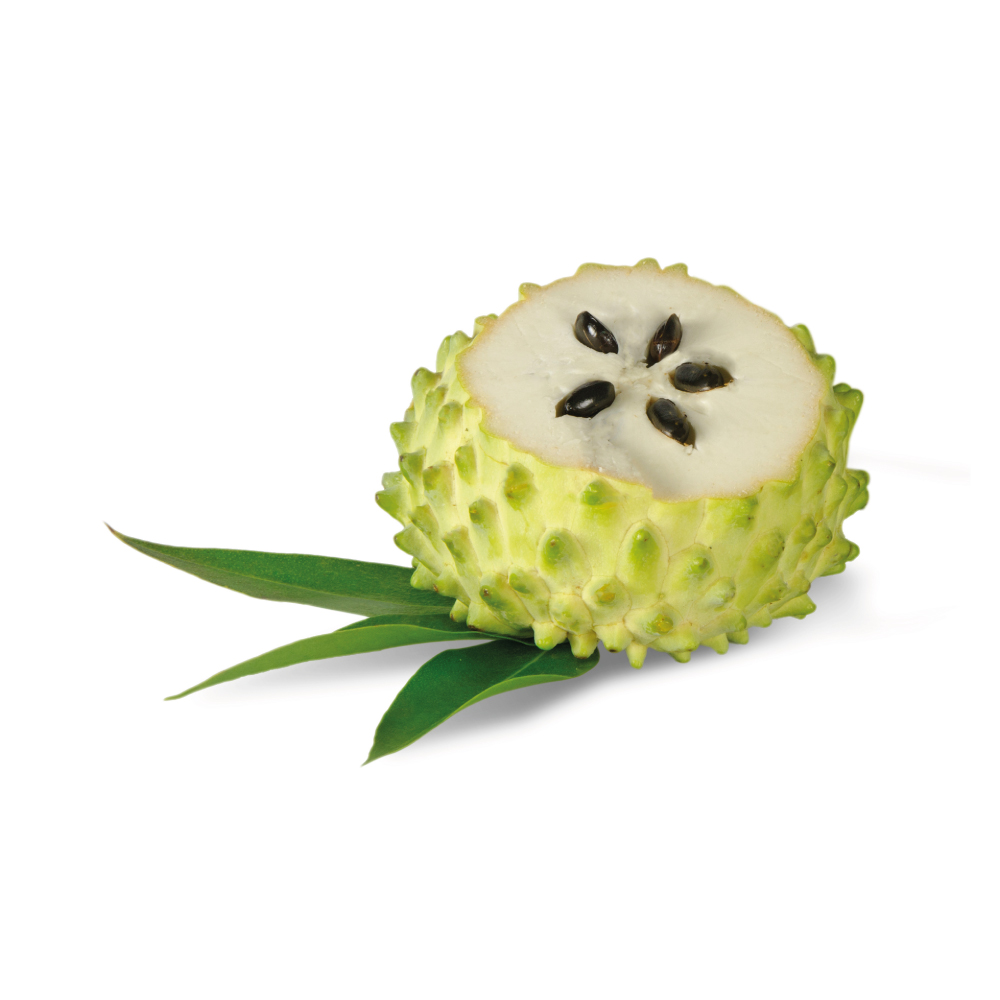
The plant is best known for its unmistakable fruit — a large, heart-shaped green berry studded with soft spines, filled with fragrant, custard-like white pulp that is eaten fresh and used in juices and sorbets across the tropics.
Its close kin are the other edible Annona — cherimoya (A. cherimola), sugar apple (A. squamosa) and custard apple — while the wider family also gives us the aromatic ylang-ylang tree. For the herbalist, the leaf is the principal medicinal part, while the fruit is treated as food.
Distribution
Graviola is native to the warm lowlands of tropical America, from southern Mexico and the Caribbean down through Central America into northern South America. Valued everywhere for its fruit, it has long since spread by cultivation and now grows throughout the humid tropics of Africa and Asia as well.
Growing Conditions
- A strictly tropical, frost-tender tree — it needs consistent warmth (roughly USDA zones 10–11) and will not tolerate cold.
- Prefers full sun to light shade and warm, humid conditions year-round.
- Likes deep, well-drained soil with steady moisture; it dislikes both waterlogging and drought.
- Stays compact for a fruit tree (usually under 6 m), making it suited to containers or greenhouses in cooler climates.
- Full cultivation detail lives on the companion farm-wiki grow guide for Annona muricata (link to be added once that project’s public URL is confirmed).
Phytochemistry
Graviola’s defining and most-studied constituents are its annonaceous acetogenins — over 100 have been isolated from the plant, and they are regarded as the primary actives 1,4Reference 1ReviewAnnona muricata (Annonaceae): a review of its traditional uses, isolated acetogenins and biological activities — reviewView study →Reference 4In vitroGraviola: a natural-derived drug that inhibits tumorigenicity and metastasis of pancreatic cancer cells in vitro and in vivo — animal modelView study →. Structurally they are derivatives of long-chain (C35 or C37) fatty acids, cytotoxic against tumour cell lines and molluscicidal. The single most abundant and characteristic acetogenin is annonacin, which serves as the marker compound for the leaf; it is also the constituent implicated in the atypical-parkinsonism signal attached to heavy soursop consumption 1Reference 1ReviewAnnona muricata (Annonaceae): a review of its traditional uses, isolated acetogenins and biological activities — reviewView study →. Alongside the acetogenins, the plant carries a set of isoquinoline alkaloids — chiefly reticuline, coreximine and coclaurine — plus a sesquiterpene-rich essential oil and the flavonoid quercetin 1,4Reference 1ReviewAnnona muricata (Annonaceae): a review of its traditional uses, isolated acetogenins and biological activities — reviewView study →Reference 4In vitroGraviola: a natural-derived drug that inhibits tumorigenicity and metastasis of pancreatic cancer cells in vitro and in vivo — animal modelView study →.
Graviola is also reported to contain saponins, terpenoids, flavonoids, coumarins, lactones, anthraquinones, tannins, cardiac glycosides and phytosterols 4,5Reference 4In vitroGraviola: a natural-derived drug that inhibits tumorigenicity and metastasis of pancreatic cancer cells in vitro and in vivo — animal modelView study →Reference 5AnimalHistomorphological and morphometric studies of the pancreatic islet cells of diabetic rats treated with Annona muricata — animal modelView study →.
Constituent Summary
Annonacin figure is mg/g of dry leaf in commercial products 19Reference 19Quantification of acetogenins in Annona muricata linked to atypical parkinsonism in GuadeloupeView study →; it varies widely with provenance and preparation. All other constituents are reported qualitatively (No Data = no reliable quantitative figure located).
Lipid27 compounds1 with data
Isoquinoline alkaloid4 compoundsno data
Sesquiterpene4 compoundsno data
Flavonoid1 compoundno data
Pharmacology & Research
The Annona muricata literature is large but almost entirely preclinical: several hundred PubMed records span anticancer, antidiabetic, antiparasitic, anti-inflammatory, antihypertensive, hepatoprotective, antioxidant and antimicrobial activity, yet human data amount to a single small randomised trial and a handful of observational studies. The best-developed signal is anticancer — driven by the annonaceous acetogenins, a family of over 100 long-chain fatty-acid derivatives that inhibit mitochondrial complex I and are cytotoxic to tumour cell lines 1Reference 1ReviewAnnona muricata (Annonaceae): a review of its traditional uses, isolated acetogenins and biological activities — reviewView study → — but the only controlled human study (n=28, colorectal cancer) measured serum cytotoxicity, a laboratory surrogate, not tumour outcomes 2Reference 2RCTThe effect of an Annona muricata leaf extract on nutritional status and cytotoxicity in colorectal cancer: a randomised controlled trialView study →. Antidiabetic and antimalarial effects are reproducible across rodent models but untested in people 5,6,10Reference 5AnimalHistomorphological and morphometric studies of the pancreatic islet cells of diabetic rats treated with Annona muricata — animal modelView study →Reference 6AnimalDeciphering the mechanism of Annona muricata leaf extract in alloxan–nicotinamide-induced diabetic rats — animal modelView study →Reference 10AnimalIn vivo antimalarial activity of Annona muricata leaf extract in mice infected with Plasmodium berghei — animal modelView study →. The same acetogenins that define the plant’s pharmacology are also the basis of a serious safety signal: annonacin, the leaf’s marker compound, is neurotoxic to dopaminergic neurons and is epidemiologically linked to atypical parkinsonism in populations with heavy soursop intake 19,21,23Reference 19Quantification of acetogenins in Annona muricata linked to atypical parkinsonism in GuadeloupeView study →Reference 21AnimalAnnonacin, a lipophilic inhibitor of mitochondrial complex I, induces nigral and striatal neurodegeneration in rats — animal modelView study →Reference 23ObservationalAnnonaceae consumption worsens disease severity and cognitive deficits in degenerative parkinsonism — observationalView study →. Almost every result below comes from leaf aqueous or ethanol extracts; potency varies widely with provenance and preparation, and no standardised clinical dose exists.
- Best-supported: anticancer cytotoxicity — extensive in vitro and rodent acetogenin data plus one small human cytotoxicity RCT 2,3,4Reference 2RCTThe effect of an Annona muricata leaf extract on nutritional status and cytotoxicity in colorectal cancer: a randomised controlled trialView study →Reference 3In vitroAnnona muricata leaves induced apoptosis in A549 cells through the mitochondrial-mediated pathway — in vitroView study →Reference 4In vitroGraviola: a natural-derived drug that inhibits tumorigenicity and metastasis of pancreatic cancer cells in vitro and in vivo — animal modelView study →; antidiabetic glucose-lowering across multiple rodent models 5,6,7Reference 5AnimalHistomorphological and morphometric studies of the pancreatic islet cells of diabetic rats treated with Annona muricata — animal modelView study →Reference 6AnimalDeciphering the mechanism of Annona muricata leaf extract in alloxan–nicotinamide-induced diabetic rats — animal modelView study →Reference 7AnimalUse of an extract of Annona muricata to prevent high-fat-diet-induced metabolic disorders — animal modelView study →.
- Emerging, worth watching: antimalarial and broader antiparasitic activity in infected-mouse models 10,11,12Reference 10AnimalIn vivo antimalarial activity of Annona muricata leaf extract in mice infected with Plasmodium berghei — animal modelView study →Reference 11In vitroAnti-parasitic activity of Annona muricata L. leaf ethanolic extract and its fractions against Toxoplasma gondii — in vitro and in vivoView study →Reference 12AnimalEvaluation of Annona muricata (Graviola) leaves activity against experimental trichinellosis — animal modelView study →; anti-inflammatory/antinociceptive effects of the leaf extract 8,9Reference 8AnimalAntinociceptive and anti-inflammatory activities of the ethanol extract of Annona muricata L. leaves in animal modelsView study →Reference 9AnimalDevelopment and pre-clinical anti-inflammatory efficacy of a transdermal ureasil–polyether Annona muricata formulation — in vivoView study →.
- Mechanistically thin: sedative/anxiolytic use rests on one modern mouse study, a 1979 report and receptor-binding data 17,18Reference 17AnimalPhytochemical analysis and central (sedative/anticonvulsant) effects of Annona muricata Linnaeus in mice — animal modelView study →Reference 18A preliminary study of the sedative effects of Annona muricata (soursop) — animal studyView study →; antimicrobial claims are almost entirely in vitro.
- The caveat: no efficacy trial exists for any indication, “graviola” covers wildly different preparations, and the plant’s signature actives carry a documented neurotoxicity liability that caps how freely it can be recommended 19,21,23Reference 19Quantification of acetogenins in Annona muricata linked to atypical parkinsonism in GuadeloupeView study →Reference 21AnimalAnnonacin, a lipophilic inhibitor of mitochondrial complex I, induces nigral and striatal neurodegeneration in rats — animal modelView study →Reference 23ObservationalAnnonaceae consumption worsens disease severity and cognitive deficits in degenerative parkinsonism — observationalView study →.
1. Anticancer
Graviola’s anticancer reputation rests on the acetogenins, which inhibit mitochondrial complex I and are selectively cytotoxic to tumour cell lines; a leaf extract induced mitochondrial-mediated apoptosis in A549 lung cancer cells in vitro 3Reference 3In vitroAnnona muricata leaves induced apoptosis in A549 cells through the mitochondrial-mediated pathway — in vitroView study →, and in a pancreatic-cancer model graviola reduced tumorigenicity and metastasis in vitro and in mice by altering cancer-cell metabolism 4Reference 4In vitroGraviola: a natural-derived drug that inhibits tumorigenicity and metastasis of pancreatic cancer cells in vitro and in vivo — animal modelView study →. The single human study is a randomised, double-blind, placebo-controlled trial in 28 colorectal cancer patients who had undergone tumour resection: serum from the leaf-extract group showed greater cytotoxicity against colorectal cancer cell lines than placebo 2Reference 2RCTThe effect of an Annona muricata leaf extract on nutritional status and cytotoxicity in colorectal cancer: a randomised controlled trialView study →. That is an ex vivo laboratory readout, not a measure of tumour shrinkage, survival or recurrence — the trial explicitly called for further work on clinically meaningful endpoints 2Reference 2RCTThe effect of an Annona muricata leaf extract on nutritional status and cytotoxicity in colorectal cancer: a randomised controlled trialView study →. Most positive data remain at the cell-line and rodent level 1Reference 1ReviewAnnona muricata (Annonaceae): a review of its traditional uses, isolated acetogenins and biological activities — reviewView study →.
Gap: No trial has tested whether graviola changes any clinical cancer outcome; the human evidence is a single small study with a surrogate endpoint, and the active acetogenins are also neurotoxic.
2. Antidiabetic
Glucose lowering is the most consistently reproduced effect in animals. Leaf extracts improved glycaemic control in alloxan–nicotinamide diabetic rats with a mapped mechanism 6Reference 6AnimalDeciphering the mechanism of Annona muricata leaf extract in alloxan–nicotinamide-induced diabetic rats — animal modelView study →, reduced hyperglycaemia and associated hepatic damage in streptozotocin-diabetic rats 15Reference 15AnimalAmeliorative effect of Annona muricata (Graviola) extract on hyperglycaemia-induced hepatic damage in STZ diabetic rats — animal modelView study →, and prevented high-fat-diet-induced metabolic disorder in rodents 7Reference 7AnimalUse of an extract of Annona muricata to prevent high-fat-diet-induced metabolic disorders — animal modelView study →; histomorphometric work reported partial restoration of pancreatic islet β-cells after extract treatment 5Reference 5AnimalHistomorphological and morphometric studies of the pancreatic islet cells of diabetic rats treated with Annona muricata — animal modelView study →. Effects appear across aqueous and ethanol leaf preparations and multiple diabetes-induction models, which strengthens the signal. Human evidence is limited to a small adjunctive study and ethnobotanical survey data rather than controlled trials.
Gap: No adequately powered human trial; doses and extract standardisation differ between studies, so an effective human regimen is unknown, and additive hypoglycaemia with diabetes drugs is a real interaction risk.
3. Anti-inflammatory / analgesic
The ethanol extract of the leaf produced dose-dependent antinociceptive and anti-inflammatory effects in classic rodent assays (writhing, carrageenan-induced oedema), consistent with the traditional use for aches and colic 8Reference 8AnimalAntinociceptive and anti-inflammatory activities of the ethanol extract of Annona muricata L. leaves in animal modelsView study →. A more recent transdermal leaf-extract formulation inhibited induced inflammation in vivo, supporting a genuine anti-inflammatory pharmacology rather than an artefact of one model 9Reference 9AnimalDevelopment and pre-clinical anti-inflammatory efficacy of a transdermal ureasil–polyether Annona muricata formulation — in vivoView study →. Effects track with the leaf’s flavonoid and phenolic content. All data are preclinical and use leaf extracts, not the whole-leaf tea most consumers drink.
Gap: No human analgesic or anti-inflammatory data; the effective constituent(s) and a translatable dose are not established.
4. Antimalarial / antiparasitic
This is the best-replicated infectious-disease signal. Aqueous and ethanolic leaf extracts showed dose-dependent antimalarial activity in Plasmodium berghei-infected mice 10Reference 10AnimalIn vivo antimalarial activity of Annona muricata leaf extract in mice infected with Plasmodium berghei — animal modelView study →, and leaf extracts reduced parasite burden in models of Toxoplasma gondii 11Reference 11In vitroAnti-parasitic activity of Annona muricata L. leaf ethanolic extract and its fractions against Toxoplasma gondii — in vitro and in vivoView study → and Trichinella spiralis 12Reference 12AnimalEvaluation of Annona muricata (Graviola) leaves activity against experimental trichinellosis — animal modelView study →. Activity spans protozoa and helminths, matching the plant’s traditional anti-parasitic reputation, and several studies report added benefit when combined with standard antimalarials. The acetogenins and alkaloids are plausible actives, though the responsible fraction is not pinned down.
Gap: All work is in infected animals or in vitro; there is no human antiparasitic trial, and efficacy relative to established antimalarial/anthelmintic drugs is untested.
5. Antihypertensive
In anaesthetised normotensive rats, aqueous leaf extract lowered mean arterial pressure dose-dependently, with a mechanism proposed to involve peripheral (non-adrenergic, possibly calcium-channel/muscarinic) pathways rather than a direct cardiac effect 13Reference 13AnimalPossible mechanisms of the hypotensive effect of Annona muricata (soursop) in normotensive rats — animal modelView study →. A separate rat study reported both hypotensive and antihypertensive effects together with a basic safety assessment 14Reference 14AnimalHypotensive and antihypertensive properties and safety for use of Annona muricata and Persea americana — animal modelView study →. The effect is real and reproducible in small models but modest in scope. It aligns with traditional use of the leaf as a heart tonic and for hypertension.
Gap: No human blood-pressure data; combining graviola with antihypertensive or hypoglycaemic drugs could produce additive effects that have not been characterised.
6. Hepatoprotective
Across several rodent hepatotoxin models — streptozotocin-diabetic liver damage 15Reference 15AnimalAmeliorative effect of Annona muricata (Graviola) extract on hyperglycaemia-induced hepatic damage in STZ diabetic rats — animal modelView study →, stem-bark extract against chemically induced injury 16Reference 16AnimalEffect of ethanol extract of soursop (Annona muricata L.) stem bark on rat liver function — animal modelView study →, and others using paracetamol or MSG challenges — graviola preparations lowered ALT/AST and improved liver histology. The direction is consistent, but the studies use different plant parts (leaf, stem bark, flower) and different injury models, so they measure a general antioxidant/anti-inflammatory hepatoprotection rather than one defined effect. This supports the Brazilian traditional use of leaf tea for liver complaints.
Gap: No human data; the mixing of plant parts and models makes it hard to say which preparation, at what dose, protects the liver.
7. Antioxidant
Antioxidant activity is the most frequently reported and least specific finding: leaf extracts scavenge radicals in vitro and shift tissue antioxidant markers (SOD, catalase, glutathione, lipid peroxidation) across dozens of in vivo studies, and it underlies much of the hepatoprotective and antidiabetic data above. Because almost any polyphenol-rich botanical scores well on these assays, a high antioxidant reading says little about clinical benefit on its own. It is best read as a mechanistic contributor to other effects rather than a standalone indication.
Gap: No clinical antioxidant endpoint; in vitro radical-scavenging potency does not predict any health outcome in people.
8. Antimicrobial / antifungal
Leaf, bark and seed extracts inhibit a broad range of bacteria and fungi in vitro, including Candida species and Aspergillus (with suppression of aflatoxin production), and a few animal Candida models support the in vitro picture. Activity is generally at MIC concentrations achievable in a dish, not demonstrated at systemic exposures in a host. Isolated alkaloids such as reticuline contribute to the antifungal activity. This is a plausible but shallow evidence base.
Gap: Almost entirely in vitro; no human data and little evidence that achievable tissue concentrations are antimicrobial.
9. Sedative / anxiolytic
The traditional use of dark graviola leaves for insomnia has thin modern support: a 2018 study found sedative and anticonvulsant effects of a hydroalcoholic leaf extract in mice, with phytochemical characterisation suggesting central activity 17Reference 17AnimalPhytochemical analysis and central (sedative/anticonvulsant) effects of Annona muricata Linnaeus in mice — animal modelView study →, echoing a 1979 preliminary report of sedative effects 18Reference 18A preliminary study of the sedative effects of Annona muricata (soursop) — animal studyView study →. Older receptor work found Annona alkaloids interact with 5-HT1A binding, offering a candidate mechanism. The evidence is sparse, largely dated, and entirely preclinical.
Gap: No human sleep or anxiety data; the sedative constituent(s) and any safe dose are unknown, and chronic use raises the acetogenin-neurotoxicity concern.
Mechanisms
| Mechanism | Drives | Key compounds |
|---|---|---|
| Mitochondrial complex I inhibition → ATP depletion; selective tumour-cell cytotoxicity — but also dopaminergic neurotoxicity | anticancer; antiparasitic; neurotoxicity liability | annonacin, annonacin A |
| Receptor/enzyme interactions incl. 5-HT1A binding; antifungal activity | sedative; antimicrobial | reticuline, coreximine, coclaurine |
| Radical scavenging; NF-κB / inflammatory signalling modulation | antioxidant; anti-inflammatory; hepatoprotective | quercetin |
| Anti-inflammatory and antinociceptive signalling | anti-inflammatory; analgesic | β-caryophyllene, δ-cadinene |
Clinical trials
The human evidence base is minimal: one completed randomised controlled trial (colorectal cancer, cytotoxicity surrogate endpoint) 2Reference 2RCTThe effect of an Annona muricata leaf extract on nutritional status and cytotoxicity in colorectal cancer: a randomised controlled trialView study →, with the remaining human data observational and mostly concerning the parkinsonism safety signal rather than efficacy 23,24Reference 23ObservationalAnnonaceae consumption worsens disease severity and cognitive deficits in degenerative parkinsonism — observationalView study →Reference 24The clinical effect of Annonaceae fruit consumption on Caribbean Parkinson’s disease severity — clinical multicentre study (NCT03368300)View study →.
| Completed | Planned | Terminated | Preclinical |
|---|---|---|---|
| 2(1 efficacy 2Reference 2RCTThe effect of an Annona muricata leaf extract on nutritional status and cytotoxicity in colorectal cancer: a randomised controlled trialView study →; 1 safety, NCT03368300 24Reference 24The clinical effect of Annonaceae fruit consumption on Caribbean Parkinson’s disease severity — clinical multicentre study (NCT03368300)View study →) | 0 | 0 | ~200+ |
Last checked: December 2025.
Clinical Applications
Graviola is useful for parasitic infection, including protozoan, and helminth parasites. It’s used as a mild sedative and antispasmodic, and can be very useful for gastrointestinal inflammation and dysbiotic conditions.
Graviola is also a popular treatment for diabetes by slowing lipid per-oxidation, and restoring islet beta-cells in the pancreas.
It’s commonly used as an adjunctive treatment of cancer, especially haematological cancers and colon cancer.
Dosage
No validated human therapeutic dose has been established — the evidence base is preclinical, and “graviola” covers wildly different preparations (leaf tea, aqueous and ethanol leaf extracts, fruit, nectar) whose acetogenin content varies widely with provenance. The doses reported in the literature come almost entirely from animal work and do not translate directly to a human regimen.
| Preparation | Reported use | Notes |
|---|---|---|
| Leaf aqueous / ethanol extract | Rodent efficacy models (antidiabetic, antimalarial, hypotensive) | Doses are per kg of animal body weight; not a validated human dose 5,6,10,13Reference 5AnimalHistomorphological and morphometric studies of the pancreatic islet cells of diabetic rats treated with Annona muricata — animal modelView study →Reference 6AnimalDeciphering the mechanism of Annona muricata leaf extract in alloxan–nicotinamide-induced diabetic rats — animal modelView study →Reference 10AnimalIn vivo antimalarial activity of Annona muricata leaf extract in mice infected with Plasmodium berghei — animal modelView study →Reference 13AnimalPossible mechanisms of the hypotensive effect of Annona muricata (soursop) in normotensive rats — animal modelView study → |
| Human leaf-extract trial | ~one capsule daily for 8 weeks (colorectal cancer RCT) | Measured a cytotoxicity surrogate, not efficacy; not a dosing recommendation 2Reference 2RCTThe effect of an Annona muricata leaf extract on nutritional status and cytotoxicity in colorectal cancer: a randomised controlled trialView study → |
Because the leaf’s signature acetogenins are cumulatively neurotoxic, the safest reading of the evidence is that no dose is established for regular long-term use, and chronic consumption should be avoided (see Safety).
Traditional Dosage
Traditionally the leaves are taken as a tea or tincture — a leaf infusion, or a liquid extract of the leaf. The sidebar figure (a 1:2 liquid extract at 40–80 mL) reflects traditional Western-herbalist practice rather than a research-derived dose, and sits uneasily beside the caution against long-term use.
Safety & Pregnancy
Graviola’s signature actives, the annonaceous acetogenins, are neurotoxic to dopaminergic neurons and epidemiologically linked to an atypical, treatment-resistant parkinsonism — the reason regular long-term use should be avoided. It can also add to the effects of blood-sugar and blood-pressure medication.
- Neurotoxic acetogenins. Annonacin is neurotoxic to dopaminergic neurons and linked to atypical, treatment-resistant parkinsonism — avoid regular long-term use.
- Neurodegenerative disease. The same complex-I inhibition raises tau; avoid altogether with Parkinson’s or other neurodegenerative disorders.
- Not in pregnancy or breastfeeding. Cytotoxic and neurotoxic actives, safety unstudied — avoid.
- Additive drug effects. Lowers blood glucose and blood pressure in animal models — caution with antidiabetic and antihypertensive drugs.
- No pharmacopoeial endorsement. No WHO/ESCOP/EMA monograph, and “graviola” preparations vary widely.
Full safety & interactions detail
Graviola’s defining constituents, the annonaceous acetogenins (marker compound annonacin), are mitochondrial complex-I inhibitors that are neurotoxic to dopaminergic neurons in vitro and in rats 20,21Reference 20In vitroThe mitochondrial complex I inhibitor annonacin is toxic to mesencephalic dopaminergic neurons by impairment of energy metabolism — in vitroView study →Reference 21AnimalAnnonacin, a lipophilic inhibitor of mitochondrial complex I, induces nigral and striatal neurodegeneration in rats — animal modelView study →, and heavy dietary Annonaceae exposure is epidemiologically associated with an atypical, treatment-resistant parkinsonism/tauopathy in Guadeloupe and the wider Caribbean 22,23Reference 22ReviewIs atypical parkinsonism in the Caribbean caused by the consumption of Annonaceae? — reviewView study →Reference 23ObservationalAnnonaceae consumption worsens disease severity and cognitive deficits in degenerative parkinsonism — observationalView study →. A registered multicentre clinical study found more severe motor and cognitive Parkinson’s symptoms in Annonaceae-exposed patients 24Reference 24The clinical effect of Annonaceae fruit consumption on Caribbean Parkinson’s disease severity — clinical multicentre study (NCT03368300)View study →. Quantification work estimated that an adult consuming one fruit or one can of nectar daily ingests, over a year, an annonacin dose comparable to what caused brain lesions in rats given purified annonacin — the basis for avoiding regular, long-term consumption 19Reference 19Quantification of acetogenins in Annona muricata linked to atypical parkinsonism in GuadeloupeView study →. This concern is not confined to Parkinson’s disease: the same complex-I inhibition raises 4-repeat tau in cell models, tying the acetogenins to a tauopathy as well as to dopaminergic loss 25Reference 25In vitroMitochondrial complex I inhibition increases 4-repeat isoform tau by SRSF2 upregulation — in vitroView study →, so the neurotoxicity extends to other neurodegenerative conditions and argues against chronic use in anyone. It is best avoided altogether by people with Parkinson’s or other neurodegenerative disorders.
Beyond the neurotoxicity, graviola lowers blood glucose and blood pressure in animal models, so additive effects with hypoglycaemic and antihypertensive medication are a plausible interaction and warrant caution 13,15Reference 13AnimalPossible mechanisms of the hypotensive effect of Annona muricata (soursop) in normotensive rats — animal modelView study →Reference 15AnimalAmeliorative effect of Annona muricata (Graviola) extract on hyperglycaemia-induced hepatic damage in STZ diabetic rats — animal modelView study →. No named CYP450 enzyme interaction has been demonstrated in the literature reviewed, and no formal human drug-interaction study was located — the interaction cautions here are inferred from pharmacology, not from clinical data. No pharmacopoeial monograph (WHO/ESCOP/EMA) endorses graviola.
Avoid. Reproductive and lactation safety have not been formally studied, so there is no evidence of safety — and given cytotoxic and neurotoxic actives (the acetogenins), the precautionary course is to avoid graviola in pregnancy and while breastfeeding. Absence of reported harm is not evidence of safety; treat it as unstudied and steer clear.
References
- Moghadamtousi, S. Z., Fadaeinasab, M., Nikzad, S., et al. (2015). Annona muricata (Annonaceae): a review of its traditional uses, isolated acetogenins and biological activities — review. International Journal of Molecular Sciences, 16(7), 15625–15658. https://pubmed.ncbi.nlm.nih.gov/26184167/
- Indrawati, L., Ascobat, P., Bela, B., Abdullah, M., & Surono, I. S. (2017). The effect of an Annona muricata leaf extract on nutritional status and cytotoxicity in colorectal cancer: a randomised controlled trial. Asia Pacific Journal of Clinical Nutrition, 26(4), 606–612. https://pubmed.ncbi.nlm.nih.gov/28582808/
- Moghadamtousi, S. Z., Kadir, H. A., Paydar, M., et al. (2014). Annona muricata leaves induced apoptosis in A549 cells through the mitochondrial-mediated pathway — in vitro. BMC Complementary and Alternative Medicine, 14, 299. https://pubmed.ncbi.nlm.nih.gov/25127718/
- Torres, M. P., Rachagani, S., Purohit, V., et al. (2012). Graviola: a natural-derived drug that inhibits tumorigenicity and metastasis of pancreatic cancer cells in vitro and in vivo — animal model. Cancer Letters, 323(1), 29–40. https://pubmed.ncbi.nlm.nih.gov/22475682/
- Adeyemi, D. O., Komolafe, O. A., Adewole, O. S., et al. (2010). Histomorphological and morphometric studies of the pancreatic islet cells of diabetic rats treated with Annona muricata — animal model. Folia Morphologica, 69(2), 92–100. https://pubmed.ncbi.nlm.nih.gov/20512759/
- Zubaidi, S. N., et al. (2025). Deciphering the mechanism of Annona muricata leaf extract in alloxan–nicotinamide-induced diabetic rats — animal model. Journal of Pharmaceutical and Biomedical Analysis, 260. https://pubmed.ncbi.nlm.nih.gov/40106911/
- Sasso, S., et al. (2019). Use of an extract of Annona muricata to prevent high-fat-diet-induced metabolic disorders — animal model. Nutrients, 11. https://pubmed.ncbi.nlm.nih.gov/31269728/
- De Sousa, O. V., Vieira, G. D. V., de Pinho, J. J. R., et al. (2010). Antinociceptive and anti-inflammatory activities of the ethanol extract of Annona muricata L. leaves in animal models. International Journal of Molecular Sciences, 11(5), 2067–2078. https://pubmed.ncbi.nlm.nih.gov/20559502/
- Araújo, C. B. B., et al. (2024). Development and pre-clinical anti-inflammatory efficacy of a transdermal ureasil–polyether Annona muricata formulation — in vivo. Pharmaceutics, 16. https://pubmed.ncbi.nlm.nih.gov/39204442/
- Somsak, V., Polwiang, N., & Chachiyo, S. (2016). In vivo antimalarial activity of Annona muricata leaf extract in mice infected with Plasmodium berghei — animal model. Journal of Pathogens, 2016, 3264070. https://pubmed.ncbi.nlm.nih.gov/27092277/
- Miranda, N. C., et al. (2021). Anti-parasitic activity of Annona muricata L. leaf ethanolic extract and its fractions against Toxoplasma gondii — in vitro and in vivo. Journal of Ethnopharmacology, 273. https://pubmed.ncbi.nlm.nih.gov/33716084/
- El-Wakil, E. S., et al. (2021). Evaluation of Annona muricata (Graviola) leaves activity against experimental trichinellosis — animal model. Journal of Helminthology, 95. https://pubmed.ncbi.nlm.nih.gov/34515021/
- Nwokocha, C. R., Owu, D. U., Gordon, A., et al. (2012). Possible mechanisms of the hypotensive effect of Annona muricata (soursop) in normotensive rats — animal model. Pharmaceutical Biology, 50(11), 1436–1441. https://pubmed.ncbi.nlm.nih.gov/22950673/
- Sokpe, A., et al. (2020). Hypotensive and antihypertensive properties and safety for use of Annona muricata and Persea americana — animal model. Evidence-Based Complementary and Alternative Medicine, 2020. https://pubmed.ncbi.nlm.nih.gov/33488751/
- Son, Y., et al. (2021). Ameliorative effect of Annona muricata (Graviola) extract on hyperglycaemia-induced hepatic damage in STZ diabetic rats — animal model. Antioxidants, 10. https://pubmed.ncbi.nlm.nih.gov/34679681/
- Masykur, et al. (2023). Effect of ethanol extract of soursop (Annona muricata L.) stem bark on rat liver function — animal model. Pakistan Journal of Biological Sciences, 26. https://pubmed.ncbi.nlm.nih.gov/38110557/
- Souza, D. O., et al. (2018). Phytochemical analysis and central (sedative/anticonvulsant) effects of Annona muricata Linnaeus in mice — animal model. Iranian Journal of Pharmaceutical Research, 17. https://pubmed.ncbi.nlm.nih.gov/30568689/
- Bourne, R. K., et al. (1979). A preliminary study of the sedative effects of Annona muricata (soursop) — animal study. West Indian Medical Journal, 28. https://pubmed.ncbi.nlm.nih.gov/473760/
- Champy, P., Melot, A., Guérineau Eng, V., et al. (2005). Quantification of acetogenins in Annona muricata linked to atypical parkinsonism in Guadeloupe. Movement Disorders, 20(12), 1629–1633. https://pubmed.ncbi.nlm.nih.gov/16078200/
- Lannuzel, A., Michel, P. P., Höglinger, G. U., et al. (2003). The mitochondrial complex I inhibitor annonacin is toxic to mesencephalic dopaminergic neurons by impairment of energy metabolism — in vitro. Neuroscience, 121(2), 287–296. https://pubmed.ncbi.nlm.nih.gov/14521988/
- Champy, P., Höglinger, G. U., Féger, J., et al. (2004). Annonacin, a lipophilic inhibitor of mitochondrial complex I, induces nigral and striatal neurodegeneration in rats — animal model. Journal of Neurochemistry, 88(1), 63–69. https://pubmed.ncbi.nlm.nih.gov/14675150/
- Lannuzel, A., Höglinger, G. U., Verhaeghe, S., et al. (2006). Is atypical parkinsonism in the Caribbean caused by the consumption of Annonaceae? — review. Journal of Neural Transmission Supplementum, (72), 153–157. https://pubmed.ncbi.nlm.nih.gov/17017523/
- Cleret de Langavant, L., et al. (2022). Annonaceae consumption worsens disease severity and cognitive deficits in degenerative parkinsonism — observational. Movement Disorders, 37. https://pubmed.ncbi.nlm.nih.gov/36210778/
- Ribeyron, L., Petit, A., Edragas, R., et al. (2026). The clinical effect of Annonaceae fruit consumption on Caribbean Parkinson’s disease severity — clinical multicentre study (NCT03368300). Behavioural Neurology, 2026. https://pubmed.ncbi.nlm.nih.gov/42192274/
- Bruch, J., et al. (2014). Mitochondrial complex I inhibition increases 4-repeat isoform tau by SRSF2 upregulation — in vitro. PLoS One, 9. https://pubmed.ncbi.nlm.nih.gov/25402454/