
Materia Medica
Hawthorn
Crataegus oxyacantha
Hawthorn (Crataegus oxyacantha) — a premier heart tonic whose flowers and berries support blood pressure, circulation and heart health.
What Is Hawthorn?
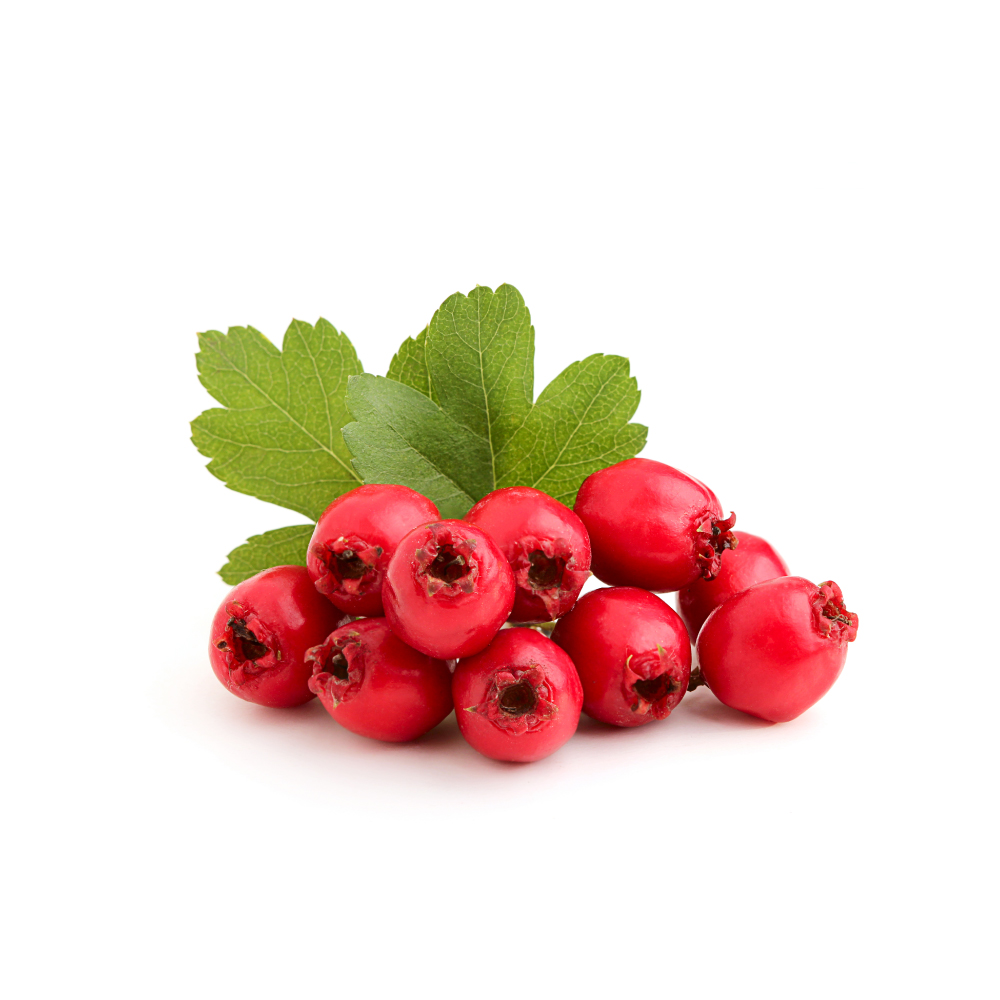
Hawthorn is a handsome tree, growing to just a few meters in height and sporting small white flowers and bright red berries. It’s popular in gardens across North America and in parts of Europe and Australia.
The flowers and berries of the tree are used in Western herbal medicine to treat a range of cardiovascular conditions and can be used as a preventative measure against heart disease.
Today, cardiovascular disease remains the number one killer in developed parts of the world. The benefits hawthorn offers to cardiovascular function, together with the plant’s worldwide prevalence, make it an outstanding candidate for future heart-disease medicines.
Aside from cardiovascular disease, hawthorn is commonly used to treat anxiety conditions and topically to treat acne and dry skin.
What Is Hawthorn Used For?
The main use of hawthorn is for treating cardiovascular disease. The flowers and berries contain a slurry of chemicals with well-studied effects on the cardiovascular system. Hawthorn dilates the coronary arteries, provides arteriole protection through antioxidant activity, regulates abnormal heart rhythms, and improves microcirculation.
All of these effects from a single plant make hawthorn an important herb for treating and preventing a range of cardiovascular conditions. Hawthorn is used to lower cholesterol and triglycerides, treat heart palpitations and other forms of arrhythmia, improve the contractibility of the heart for congestive heart failure and improve diminished blood flow with COPD.
Traditional Uses
Western Herbal Medicine
There is a lot of reference to hawthorn in older texts, and much of the indications are towards cardiac diseases and circulation. It was used in the past to treat conditions including tachycardia, hypertension, angina pectoris, and myocardial weakness. The berries were also used as an astringent for sore throats, and as a diuretic. 25Reference 25Principles and Practice of Phytotherapy.
Traditionally the berry was mainly used, however more recent findings suggest the leaves to have a stronger action medicinally 25Reference 25Principles and Practice of Phytotherapy.
Hawthorn has also been extensively used as a source of wood, and the berries as a flavouring of liquor. 25Reference 25Principles and Practice of Phytotherapy.
The British herbal pharmacopoeia lists crataegus as cardiotonic, coronary vasodilator, and hypotensive specific for cardiac failure, myocardial weakness, hypertension, arteriosclerosis, Buerger’s disease, and paroxysmal tachycardia 27Reference 27British Herbal Pharmacopoeia.
Traditional Chinese Medicine
In Chinese medicine, the fruit was often used to improve digestion, stimulate circulation, and treat blood stasis. 25Reference 25Principles and Practice of Phytotherapy.
Botany
Hawthorn is a thorny, deciduous member of the rose family (Rosaceae), grown as a hedgerow shrub or small tree with lobed leaves, white spring blossom and clusters of small red “haw” fruits. It sits in the genus Crataegus alongside many closely related species and hybrids, including North American natives such as Crataegus douglasii.
A point that genuinely matters for herbal practice: the old pharmacopoeial name Crataegus oxyacantha is an ambiguous synonym, now split into two accepted species — Crataegus laevigata (Midland hawthorn) and Crataegus monogyna (common hawthorn). In practice these two species, plus material still labelled C. oxyacantha, are used interchangeably as cardiovascular hawthorn; their leaves, flowers and berries are treated as botanically equivalent for medicine, and most commercial “hawthorn” is a mix of the two.
Distribution
Hawthorn is native to Europe, northwest Africa and western Asia, where it is a classic hedgerow and woodland-edge plant. It has since naturalized widely across North America and other temperate regions — so widely that the common European species is now treated as an invasive weed in parts of the US Pacific Northwest.
Growing Conditions
- Thrives in full sun to partial shade; flowers and fruits best with more sun.
- Tolerant of a wide range of soils — heavy clay, poor, and chalky ground — as long as drainage is reasonable.
- Very cold-hardy and low-maintenance once established; suited to roughly temperate (USDA zones 4–7) climates.
- Responds well to hard pruning and is traditionally used for hedging; the thorns make siting near paths a consideration.
- Full cultivation detail lives on the companion farm-wiki grow guide for Crataegus oxyacantha (link to be added once that project’s public URL is confirmed).
Harvesting, Collection & Preparation
Although traditionally the berries were preferred, in general it has been found that the leaves offer the most benefit towards cardiovascular disease 25Reference 25Principles and Practice of Phytotherapy.
Pharmacology & Research
Hawthorn is one of the most-studied cardiovascular botanicals, with a literature spanning several decades, two Cochrane/meta-analyses, and at least two large placebo-controlled RCTs — a rare depth of human data for a herb. The catch is that the strongest signal, symptomatic relief in chronic heart failure, was built largely on trials where hawthorn was added to older background therapy; when it was tested on top of modern guideline-directed treatment (ACE-inhibitors, beta-blockers), the benefit on hard functional endpoints disappeared and one trial even flagged faster disease progression 1,2,3,4,5Reference 1Meta-analysisHawthorn extract for treating chronic heart failure — systematic review and meta-analysisView study →Reference 2Meta-analysisHawthorn extract for treating chronic heart failure: meta-analysis of randomized trialsView study →Reference 3RCTThe efficacy and safety of Crataegus extract WS 1442 in patients with heart failure: the SPICE trial — randomised controlled trialView study →Reference 4RCTHawthorn Extract Randomized Blinded Chronic Heart Failure (HERB CHF) trial — randomised controlled trialView study →Reference 5RCTThe effect of Crataegus oxycantha special extract WS 1442 on clinical progression in patients with mild to moderate heart failure — randomised controlled trialView study →. The more durable human signal is now a modest blood-pressure reduction confirmed by a 2025 meta-analysis 6Reference 6Meta-analysisHawthorn (Crataegus spp.) clinically significantly reduces blood pressure in hypertension: a meta-analysis of randomized placebo-controlled clinical trialsView study →. Almost all the mechanistic work — coronary dilation, positive inotropy, endothelial nitric-oxide release, antiarrhythmic and anti-ischaemic effects — is animal or in-vitro, and centres on standardised leaf-and-flower extracts (WS 1442, LI 132), not the tea, tincture, or berry preparations the herb is often sold as.
- Best-supported: modest blood-pressure lowering (meta-analysis of RCTs) 6,7Reference 6Meta-analysisHawthorn (Crataegus spp.) clinically significantly reduces blood pressure in hypertension: a meta-analysis of randomized placebo-controlled clinical trialsView study →Reference 7RCTHypotensive effects of hawthorn for patients with diabetes taking prescription drugs: a randomised controlled trialView study →; symptom and exercise-tolerance gains in mild heart failure as an adjunct to older therapy 1,2Reference 1Meta-analysisHawthorn extract for treating chronic heart failure — systematic review and meta-analysisView study →Reference 2Meta-analysisHawthorn extract for treating chronic heart failure: meta-analysis of randomized trialsView study →.
- Emerging, worth watching: endothelial eNOS activation and NO-mediated vasorelaxation, replicated across preclinical models 11,12,13Reference 11In vitroCrataegus special extract WS 1442 induces an endothelium-dependent, NO-mediated vasorelaxation via eNOS-phosphorylation at serine 1177 — in vitroView study →Reference 12In vitroCrataegus special extract WS 1442 causes endothelium-dependent relaxation via a redox-sensitive Src- and Akt-dependent activation of endothelial NO synthase — in vitroView study →Reference 13AnimalCrataegus special extract WS 1442 prevents aging-related endothelial dysfunction — animal modelView study →.
- Mechanistically thin: antiarrhythmic, anti-ischaemic cardioprotection, and hypolipidemic claims rest on animal models or combination products, not human monopreparation data 18,19,20,21,22Reference 18AnimalCrataegus special extract WS 1442 improves cardiac function and reduces infarct size in a rat model of prolonged coronary ischemia and reperfusion — animal modelView study →Reference 19AnimalProtective effect of Crataegus oxyacantha against reperfusion arrhythmias after global no-flow ischemia in the rat heart — animalView study →Reference 20RCTCrataegus laevigata decreases neutrophil elastase and has hypolipidemic effect: a randomized, double-blind, placebo-controlled trialView study →Reference 21RCTDouble-blind, randomised, placebo-controlled study of a fixed combination of Crataegus oxyacantha and Eschscholtzia californica with magnesium in mild-to-moderate anxiety disordersView study →Reference 22RCTEfficacy of a Crataegus extract mixture on body fat and lipid profiles in overweight adults: a 12-week randomized, double-blind, placebo-controlled trialView study →.
- The caveat: on modern heart-failure therapy the functional benefit vanishes and a harm signal has been reported 4,5Reference 4RCTHawthorn Extract Randomized Blinded Chronic Heart Failure (HERB CHF) trial — randomised controlled trialView study →Reference 5RCTThe effect of Crataegus oxycantha special extract WS 1442 on clinical progression in patients with mild to moderate heart failure — randomised controlled trialView study →; effects are tied to standardised leaf/flower extracts, not tea or berry.
1. Chronic heart failure
This is hawthorn’s largest evidence base and its most instructive one. A Cochrane systematic review of 14 double-blind RCTs (10 pooled, 855 patients, NYHA I-III) found that standardised leaf-and-flower extract, used mostly as an adjunct, improved maximal workload (+5.35 W), exercise tolerance, the pressure-heart-rate product, and symptoms of breathlessness and fatigue versus placebo 1,2Reference 1Meta-analysisHawthorn extract for treating chronic heart failure — systematic review and meta-analysisView study →Reference 2Meta-analysisHawthorn extract for treating chronic heart failure: meta-analysis of randomized trialsView study →. But those trials largely predate or ran alongside older heart-failure regimens. When hawthorn was tested on top of contemporary therapy the story changed: the US HERB CHF RCT (n=120, patients already on ACE-inhibitors and beta-blockers) found no benefit on six-minute walk distance, quality of life, or functional capacity, and reported more adverse events in the hawthorn arm 4Reference 4RCTHawthorn Extract Randomized Blinded Chronic Heart Failure (HERB CHF) trial — randomised controlled trialView study →. The large SPICE trial (n=2,681, WS 1442 900 mg/day for 24 months) missed its primary endpoint of time-to-first-cardiac-event, though it confirmed safety and hinted at reduced sudden cardiac death in the subgroup with less-impaired ejection fraction (LVEF ≥25%) 3Reference 3RCTThe efficacy and safety of Crataegus extract WS 1442 in patients with heart failure: the SPICE trial — randomised controlled trialView study →. A separate US trial by the same HERB CHF team reported that the extract increased early heart-failure progression 5Reference 5RCTThe effect of Crataegus oxycantha special extract WS 1442 on clinical progression in patients with mild to moderate heart failure — randomised controlled trialView study →.
Gap: the symptomatic benefit was demonstrated mainly as add-on to pre-modern therapy; on today’s guideline-directed treatment the functional benefit is neutral-to-negative and there is no mortality benefit — the German Commission E approval (NYHA II) predates this evidence.
2. Antihypertensive
A 2024/2025 systematic review and meta-analysis of six randomised placebo-controlled trials (428 participants) found hawthorn produced a clinically meaningful reduction in systolic blood pressure (mean difference −6.65 mmHg) with a non-significant diastolic reduction, across treatment periods of 10 weeks to 6 months 6Reference 6Meta-analysisHawthorn (Crataegus spp.) clinically significantly reduces blood pressure in hypertension: a meta-analysis of randomized placebo-controlled clinical trialsView study →. The single best individual trial randomised 79 people with type 2 diabetes — most already taking antihypertensive and hypoglycaemic drugs — to 1,200 mg/day hawthorn extract or placebo for 16 weeks, and found a significant group difference in diastolic (but not systolic) reduction, with no herb-drug interaction detected 7Reference 7RCTHypotensive effects of hawthorn for patients with diabetes taking prescription drugs: a randomised controlled trialView study →. An earlier pilot in mild essential hypertension (n=36, 500 mg/day) showed only non-significant trends 8Reference 8RCTPromising hypotensive effect of hawthorn extract: a randomized double-blind pilot study of mild, essential hypertensionView study →.
Gap: the trials are small, heterogeneous, and used widely varying doses (250-1,200 mg/day); no large dedicated hypertension trial exists, and the effect size, while real, is modest.
3. Antioxidant & vascular protection
The vascular-protective claim now rests on a specific, replicated mechanism rather than generic antioxidant assays. Standardised extract WS 1442 activates endothelial nitric-oxide synthase (eNOS) through phosphorylation at serine 1177, driving nitric-oxide-mediated vasorelaxation 11Reference 11In vitroCrataegus special extract WS 1442 induces an endothelium-dependent, NO-mediated vasorelaxation via eNOS-phosphorylation at serine 1177 — in vitroView study →; a follow-up showed this proceeds via redox-sensitive Src- and Akt-dependent eNOS activation rather than oestrogen-receptor signalling 12Reference 12In vitroCrataegus special extract WS 1442 causes endothelium-dependent relaxation via a redox-sensitive Src- and Akt-dependent activation of endothelial NO synthase — in vitroView study →. In aged animal/ex-vivo vessels the extract prevented aging-related endothelial dysfunction 13Reference 13AnimalCrataegus special extract WS 1442 prevents aging-related endothelial dysfunction — animal modelView study →. The classical claim that flavonoids strengthen the vessel wall by increasing collagen cross-linking traces to older herbal-pharmacology sources and has not been confirmed in humans.
Gap: the mechanism is well mapped preclinically but no human trial has shown an antioxidant clinical outcome — HERB CHF specifically measured oxidative-stress and inflammation markers and found no difference from placebo 4Reference 4RCTHawthorn Extract Randomized Blinded Chronic Heart Failure (HERB CHF) trial — randomised controlled trialView study →.
4. Positive inotropy
Hawthorn’s cardiotonic reputation has a plausible, non-glycoside mechanism. Flavonoids inhibit cardiac cyclic-AMP phosphodiesterase in rat heart tissue 15Reference 15AnimalInhibitory effect of some flavonoids and flavonoid mixtures on cyclic AMP phosphodiesterase activity of rat heart — animalView study →, and hawthorn extract increased contraction amplitude and energy turnover in isolated rat cardiomyocytes 16Reference 16AnimalEffect of a hawthorn extract on contraction and energy turnover of isolated rat cardiomyocytes — animalView study →; flavonoids from Crataegus produced measurable myocardial effects in isolated preparations 17Reference 17Myocardial effects of flavonoids from Crataegus species — animalView study →. Unlike cardiac glycosides, the effect is described as improving the availability and utilisation of energy in the myocardium rather than acting directly on contractile fibres. The active constituents implicated include vitexin-2″-O-rhamnoside, ursolic acid, and crataegolic acid.
Gap: entirely animal and in-vitro; there is no isolated human study of hawthorn’s inotropic effect, and it is inferred within the broader heart-failure trials rather than measured directly.
5. Coronary vasodilation & microcirculation
Oligomeric procyanidins from Crataegus evoke endothelium-dependent vasorelaxation in isolated rat aorta 14Reference 14AnimalProcyanidins in crataegus extract evoke endothelium-dependent vasorelaxation in rat aorta — animalView study →, consistent with the eNOS mechanism above, and older work reported improved coronary blood flow after oral dosing in dogs. The effect is attributed to the procyanidins together with flavonoids and triterpene acids acting on nitric-oxide release and, in some assays, angiotensin-converting-enzyme inhibition.
Gap: the coronary-flow data are animal and decades old; no human coronary imaging or flow-reserve study has tested hawthorn.
6. Antiarrhythmic
Preclinical models support an antiarrhythmic effect: Crataegus oxyacantha extract protected against reperfusion arrhythmias after global no-flow ischaemia in isolated rat heart 19Reference 19AnimalProtective effect of Crataegus oxyacantha against reperfusion arrhythmias after global no-flow ischemia in the rat heart — animalView study →, and the contractile/energy effects on cardiomyocytes are consistent with a stabilising influence on the ischaemic myocardium 16Reference 16AnimalEffect of a hawthorn extract on contraction and energy turnover of isolated rat cardiomyocytes — animalView study →. The only human hint is the SPICE subgroup in which sudden cardiac death trended lower with WS 1442 in patients with LVEF ≥25% — a secondary, non-primary finding 3Reference 3RCTThe efficacy and safety of Crataegus extract WS 1442 in patients with heart failure: the SPICE trial — randomised controlled trialView study →.
Gap: no dedicated human antiarrhythmic trial exists; the mechanism is rat-model and the human signal is a post-hoc subgroup.
7. Cardioprotection
In a rat model of prolonged coronary ischaemia and reperfusion, WS 1442 improved cardiac function and reduced infarct size 18Reference 18AnimalCrataegus special extract WS 1442 improves cardiac function and reduces infarct size in a rat model of prolonged coronary ischemia and reperfusion — animal modelView study →, and a related model showed protection against reperfusion arrhythmias 19Reference 19AnimalProtective effect of Crataegus oxyacantha against reperfusion arrhythmias after global no-flow ischemia in the rat heart — animalView study →. These findings underpin the traditional use of hawthorn after myocardial injury but have not moved into humans.
Gap: rodent ischaemia–reperfusion models only; no human infarct or post-MI outcome data.
8. Hypolipidemic
The human lipid evidence is weak. A randomised, double-blind trial in 49 diabetic patients with chronic coronary disease already on statins found that Crataegus laevigata (400 mg three times daily for 6 months) lowered LDL and non-HDL cholesterol within the treatment group and reduced neutrophil elastase, but the between-group differences did not reach significance 20Reference 20RCTCrataegus laevigata decreases neutrophil elastase and has hypolipidemic effect: a randomized, double-blind, placebo-controlled trialView study →. A 2024 RCT reported reductions in body fat and triglycerides — but with a Crataegus-plus-Citrus combination product, not a hawthorn monopreparation 22Reference 22RCTEfficacy of a Crataegus extract mixture on body fat and lipid profiles in overweight adults: a 12-week randomized, double-blind, placebo-controlled trialView study →.
Gap: the monopreparation effect is a non-significant within-group trend; the clearer result comes from a combination product and cannot be attributed to hawthorn alone.
9. Anxiolytic
Hawthorn appears in anxiety trials only as one ingredient in fixed combinations. A double-blind RCT of 264 patients with mild-to-moderate generalised anxiety found a preparation of Crataegus oxyacantha plus Eschscholtzia californica (californian poppy) and magnesium outperformed placebo on the Hamilton anxiety scale 21Reference 21RCTDouble-blind, randomised, placebo-controlled study of a fixed combination of Crataegus oxyacantha and Eschscholtzia californica with magnesium in mild-to-moderate anxiety disordersView study →, and the hawthorn hypertension pilot noted an incidental trend toward reduced anxiety 8Reference 8RCTPromising hypotensive effect of hawthorn extract: a randomized double-blind pilot study of mild, essential hypertensionView study →.
Gap: every positive result is a combination product; no trial has tested hawthorn alone for anxiety, so the effect cannot be attributed to the herb.
Mechanisms
| Mechanism | Drives | Key compounds |
|---|---|---|
| eNOS phosphorylation (Ser1177) → NO-mediated vasorelaxation | antihypertensivecoronary/microcirculatory dilationendothelial protection | oligomeric procyanidins, quercetin |
| Cyclic-AMP phosphodiesterase inhibition | positive inotropycardiotonic | vitexin-2″-O-rhamnoside, luteolin-7-glucoside |
| Improved myocardial energy utilisation, reduced O₂ consumption | heart-failure symptom relief | whole standardised extract |
| Free-radical scavenging, vascular collagen cross-linking | antioxidantvessel-wall protection | hyperoside, rutin, chlorogenic acid |
| Reduced reperfusion injury / arrhythmia in ischaemic myocardium | cardioprotectionantiarrhythmic | ursolic acid, procyanidins |
Clinical trials
Registered and completed trials exist — the pivotal monopreparation RCTs (SPICE with WS 1442, and HERB CHF) are complete — but most recent ClinicalTrials.gov entries are combination nutraceuticals rather than hawthorn-only preparations, and no large trial is currently recruiting.
| Completed | Planned | Terminated | Preclinical |
|---|---|---|---|
| ~24 | 1 | 2 | ~40+ |
Last checked: July 2026.
Phytochemistry
Hawthorn’s cardiovascular reputation rests on three groups acting together: the oligomeric procyanidins (OPCs), the flavonoids — chiefly vitexin, hyperoside, and rutin — and the triterpene acids ursolic, oleanolic, and crataegolic (maslinic) acid. These are the constituents repeatedly tied to coronary dilation, positive inotropy, and antioxidant protection of the vessel wall 23,24,25,26Reference 23Medical herbalism: The science and practice of herbal medicineReference 24The ABC clinical guide to herbsReference 25Principles and Practice of PhytotherapyReference 26Comparative study of the cardiovascular activity of shoots, leaves and flowers of Crataegus oxyacantha: 2. The leaves and flowers are richer in flavonoids and OPCs than the berries, which is why modern extracts favour them.
Hawthorn Berries
The berries contain flavonoids, amines, catechols, carboxylic acid, and triterpene acids 25Reference 25Principles and Practice of Phytotherapy.
Hawthorn Leaves & Flowers
The leaves contain flavonoids up to 1.78% (including vitexin, quercetin, hyperoside, rutin), oligomeric procyanidins (1–2.4%), triterpene acids up to 0.6% (ursolic acid, oleanolic acid, crataegolic acids), and phenolic acids (caffeic, chlorogenic, and related phenolcarboxylic acids) 23,24,25Reference 23Medical herbalism: The science and practice of herbal medicineReference 24The ABC clinical guide to herbsReference 25Principles and Practice of Phytotherapy.
Constituent Summary
Figures are % of dried leaf/flower, the part used in standardised cardiac extracts; content varies with species, plant part, and harvest 23,24,25Reference 23Medical herbalism: The science and practice of herbal medicineReference 24The ABC clinical guide to herbsReference 25Principles and Practice of Phytotherapy.
Tannin1 compound1 with data
Flavonoid5 compounds1 with data
Triterpene4 compounds1 with data
A Note on Concentrated Extracts of Hawthorn
There have been multiple reports of studies using isolated constituents showing very little or no significant activity when compared to the whole herb extract. The whole extract has been found to consistently produce noticeable, and broad actions, especially on the cardiovascular system 23Reference 23Medical herbalism: The science and practice of herbal medicine.
Clinical Applications
The coronary artery dilating activity of hawthorn makes it useful for treating coronary artery disease and angina. The high level of safety with this herb and a broad range of other cardiovascular effects have made this a staple in those at risk for cardiovascular disease or those who have suffered a myocardial infarct in the past. Hawthorn is also useful for lowering high cholesterol levels, high triglyceride levels, treating atherosclerosis, heart palpitations, arrhythmias, and congestive heart failure.
Dosage
In research, hawthorn is almost always given as a proprietary standardised leaf-and-flower extract (WS 1442, LI 132) titrated to a set marker content (e.g. 18.75% oligomeric procyanidins or 2.25% flavonoids) rather than as a whole-herb weight.
| Indication | Preparation | Dose | Est. dried-herb equivalent | Source |
|---|---|---|---|---|
| Chronic heart failure | Standardised leaf/flower extract WS 1442 | 900 mg/day (24 months) | — (proprietary extract; ratio not stated) | 3Reference 3RCTThe efficacy and safety of Crataegus extract WS 1442 in patients with heart failure: the SPICE trial — randomised controlled trialView study → |
| Chronic heart failure (meta-analysis range) | Standardised leaf/flower extracts | 160–1,800 mg/day, 3–24 weeks | — | 1,9Reference 1Meta-analysisHawthorn extract for treating chronic heart failure — systematic review and meta-analysisView study →Reference 9Systematic reviewAdverse-event profile of Crataegus spp.: a systematic reviewView study → |
| Hypertension (type 2 diabetes) | Hawthorn extract | 1,200 mg/day (16 weeks) | — (extract; no marker % given) | 7Reference 7RCTHypotensive effects of hawthorn for patients with diabetes taking prescription drugs: a randomised controlled trialView study → |
| Hypertension (mild essential, pilot) | Hawthorn extract | 500 mg/day (10 weeks) | — | 8Reference 8RCTPromising hypotensive effect of hawthorn extract: a randomized double-blind pilot study of mild, essential hypertensionView study → |
| Hypolipidaemia (diabetic CHD) | C. laevigata micronized flower/leaf | 400 mg ×3/day (6 months) | — | 20Reference 20RCTCrataegus laevigata decreases neutrophil elastase and has hypolipidemic effect: a randomized, double-blind, placebo-controlled trialView study → |
The trials used proprietary standardised extracts reported as mg of extract with defined marker percentages but no stated extract-to-herb drug ratio, so a whole-herb equivalent would be invented rather than estimated and is left as ”—”. Research doses are not recommendations.
Traditional Dosage
Whole-herb, tincture and decoction doses from the Western herbal reference texts (not the clinical trials).
| System | Preparation | Dose |
|---|---|---|
| Western herbal | 1:2 liquid extract | 20–50 mL/week (≈ 3–7 mL/day) |
| Western herbal | Dried leaf/flower or berry (infusion/decoction) | 1–1.5 g three times daily |
| Western herbal | 1:5 tincture | 1–2 mL three times daily |
Safety & Pregnancy
Hawthorn is well tolerated, with mostly mild, transient side effects; the key caution is not to substitute it for modern heart-failure treatment, since on top of guideline-directed therapy it showed no functional benefit and more adverse events.
- Not a heart-failure substitute. On modern therapy it gave no functional benefit and more adverse events, and one trial reported faster disease progression.
- Cardiovascular drug interactions. Additive effects with cardiac glycosides, antihypertensives and other heart drugs are plausible and warrant supervision.
- Pregnancy & lactation unstudied. Cardioactive constituents — avoid without professional guidance.
- Generally well tolerated. Across 5,577 patients adverse events were mostly mild and transient — dizziness, GI upset, headache, palpitations.
- No major digoxin interaction. A dedicated pharmacokinetic RCT found hawthorn did not significantly alter digoxin levels.
Full safety & interactions detail
Hawthorn is well tolerated: a systematic review of 24 clinical studies (5,577 patients evaluated) found adverse events were generally mild and transient — most commonly dizziness/vertigo, gastrointestinal complaints, headache and palpitations — with only a small number of severe events, all in trials of the LI 132 extract 9Reference 9Systematic reviewAdverse-event profile of Crataegus spp.: a systematic reviewView study →. The most important caution is in heart failure: while older adjunctive trials showed symptomatic benefit, a controlled trial in patients on modern therapy found no functional benefit and more adverse events in the hawthorn arm, and a separate trial from the same team reported increased early heart-failure progression 4,5Reference 4RCTHawthorn Extract Randomized Blinded Chronic Heart Failure (HERB CHF) trial — randomised controlled trialView study →Reference 5RCTThe effect of Crataegus oxycantha special extract WS 1442 on clinical progression in patients with mild to moderate heart failure — randomised controlled trialView study → — so hawthorn should not be self-prescribed as a substitute for guideline-directed heart-failure treatment. A dedicated pharmacokinetic RCT found hawthorn (WS 1442 450 mg twice daily) did not significantly alter digoxin levels, suggesting the two can be co-administered without a major interaction, though monitoring remains prudent given hawthorn’s own cardioactivity 10Reference 10RCTInteraction study between digoxin and a preparation of hawthorn (Crataegus oxyacantha) — randomised controlled trialView study →. Additive effects with cardiac glycosides, antihypertensives and other cardiovascular drugs are theoretically plausible and warrant supervision.
Scope note: a dedicated RCT assessed the digoxin pharmacokinetic interaction 10Reference 10RCTInteraction study between digoxin and a preparation of hawthorn (Crataegus oxyacantha) — randomised controlled trialView study →; additive pharmacodynamic effects with cardiac glycosides, beta-blockers and antihypertensives are plausible but have not been formally quantified, and no CYP450 interaction study was identified. Pregnancy and lactation have not been assessed (see below).
Hawthorn’s safety in pregnancy and lactation has not been formally studied in humans, and its cardioactive constituents mean it should not be used during pregnancy or breastfeeding without qualified guidance. Absence of reported harm is not evidence of safety here — the question simply has not been researched.
Synergy
Often used in conjunction with Tilia platyphyllos, Allium sativum, or Viburnum opulus for arteriosclerosis 23Reference 23Medical herbalism: The science and practice of herbal medicine. There may be possible synergy here.
Combines well with Tilia and Scutellaria for hypertension 23Reference 23Medical herbalism: The science and practice of herbal medicine.
Crataegus has been reported to have synergy with digitalis glycosides and beta-blockers. No adverse interactions have been reported with digoxin. 25Reference 25Principles and Practice of Phytotherapy.
The British herbal pharmacopeia suggests crataegus has possible synergy with Selenicereus grandiflorus, Tilia, Viscum, or Scutellaria 27Reference 27British Herbal Pharmacopoeia.
References
- Pittler, M. H., Guo, R., & Ernst, E. (2008). Hawthorn extract for treating chronic heart failure — systematic review and meta-analysis. Cochrane Database of Systematic Reviews. https://pubmed.ncbi.nlm.nih.gov/18254076/
- Pittler, M. H., Schmidt, K., & Ernst, E. (2003). Hawthorn extract for treating chronic heart failure: meta-analysis of randomized trials. The American Journal of Medicine. https://pubmed.ncbi.nlm.nih.gov/12798455/
- Holubarsch, C. J., Colucci, W. S., Meinertz, T., Gaus, W., & Tendera, M. (2008). The efficacy and safety of Crataegus extract WS 1442 in patients with heart failure: the SPICE trial — randomised controlled trial. European Journal of Heart Failure. https://pubmed.ncbi.nlm.nih.gov/19019730/
- Zick, S. M., Vautaw, B. M., Gillespie, B., & Aaronson, K. D. (2009). Hawthorn Extract Randomized Blinded Chronic Heart Failure (HERB CHF) trial — randomised controlled trial. European Journal of Heart Failure. https://pubmed.ncbi.nlm.nih.gov/19789403/
- Zick, S. M., Gillespie, B., & Aaronson, K. D. (2008). The effect of Crataegus oxycantha special extract WS 1442 on clinical progression in patients with mild to moderate heart failure — randomised controlled trial. European Journal of Heart Failure. https://pubmed.ncbi.nlm.nih.gov/18490196/
- Szikora, Z., Mátyus, R. O., Szabó, B. V., Csupor, D., & Tóth, B. (2025). Hawthorn (Crataegus spp.) clinically significantly reduces blood pressure in hypertension: a meta-analysis of randomized placebo-controlled clinical trials. Pharmaceuticals. https://pubmed.ncbi.nlm.nih.gov/40732315/
- Walker, A. F., Marakis, G., Simpson, E., Hope, J. L., Robinson, P. A., Hassanein, M., & Simpson, H. C. (2006). Hypotensive effects of hawthorn for patients with diabetes taking prescription drugs: a randomised controlled trial. British Journal of General Practice. https://pubmed.ncbi.nlm.nih.gov/16762125/
- Walker, A. F., Marakis, G., Morris, A. P., & Robinson, P. A. (2002). Promising hypotensive effect of hawthorn extract: a randomized double-blind pilot study of mild, essential hypertension. Phytotherapy Research. https://pubmed.ncbi.nlm.nih.gov/11807965/
- Daniele, C., Mazzanti, G., Pittler, M. H., & Ernst, E. (2006). Adverse-event profile of Crataegus spp.: a systematic review. Drug Safety. https://pubmed.ncbi.nlm.nih.gov/16752934/
- Tankanow, R., Tamer, H. R., Streetman, D. S., et al. (2003). Interaction study between digoxin and a preparation of hawthorn (Crataegus oxyacantha) — randomised controlled trial. Journal of Clinical Pharmacology. https://pubmed.ncbi.nlm.nih.gov/12817526/
- Brixius, K., Willms, S., Napp, A., et al. (2006). Crataegus special extract WS 1442 induces an endothelium-dependent, NO-mediated vasorelaxation via eNOS-phosphorylation at serine 1177 — in vitro. Cardiovascular Drugs and Therapy. https://pubmed.ncbi.nlm.nih.gov/16779533/
- Anselm, E., Socorro, V. F. M., Dal-Ros, S., Schott, C., Bronner, C., & Schini-Kerth, V. B. (2009). Crataegus special extract WS 1442 causes endothelium-dependent relaxation via a redox-sensitive Src- and Akt-dependent activation of endothelial NO synthase — in vitro. Journal of Cardiovascular Pharmacology. https://pubmed.ncbi.nlm.nih.gov/19247189/
- Idris-Khodja, N., Auger, C., Koch, E., & Schini-Kerth, V. B. (2012). Crataegus special extract WS 1442 prevents aging-related endothelial dysfunction — animal model. Nutrition (and related). https://pubmed.ncbi.nlm.nih.gov/22621780/
- Kim, S. H., Kang, K. W., Kim, K. W., & Kim, N. D. (2000). Procyanidins in crataegus extract evoke endothelium-dependent vasorelaxation in rat aorta — animal. Life Sciences. https://pubmed.ncbi.nlm.nih.gov/10901280/
- Petkov, E., Nikolov, N., & Uzunov, P. (1981). Inhibitory effect of some flavonoids and flavonoid mixtures on cyclic AMP phosphodiesterase activity of rat heart — animal. Planta Medica. https://pubmed.ncbi.nlm.nih.gov/6273955/
- Pöpping, S., Rose, H., Ionescu, I., Fischer, Y., & Kammermeier, H. (1995). Effect of a hawthorn extract on contraction and energy turnover of isolated rat cardiomyocytes — animal. Arzneimittel-Forschung. https://pubmed.ncbi.nlm.nih.gov/8929230/
- Schüssler, M., Hölzl, J., & Fricke, U. (1995). Myocardial effects of flavonoids from Crataegus species — animal. Arzneimittel-Forschung. https://pubmed.ncbi.nlm.nih.gov/7575743/
- Veveris, M., Koch, E., & Chatterjee, S. S. (2004). Crataegus special extract WS 1442 improves cardiac function and reduces infarct size in a rat model of prolonged coronary ischemia and reperfusion — animal model. Life Sciences. https://pubmed.ncbi.nlm.nih.gov/14761675/
- Al Makdessi, S., Sweidan, H., Dietz, K., & Jacob, R. (1999). Protective effect of Crataegus oxyacantha against reperfusion arrhythmias after global no-flow ischemia in the rat heart — animal. Basic Research in Cardiology. https://pubmed.ncbi.nlm.nih.gov/10326654/
- Dalli, E., Colomer, E., Tormos, M. C., et al. (2011). Crataegus laevigata decreases neutrophil elastase and has hypolipidemic effect: a randomized, double-blind, placebo-controlled trial. Phytomedicine. https://pubmed.ncbi.nlm.nih.gov/21242072/
- Hanus, M., Lafon, J., & Mathieu, M. (2004). Double-blind, randomised, placebo-controlled study of a fixed combination of Crataegus oxyacantha and Eschscholtzia californica with magnesium in mild-to-moderate anxiety disorders. Current Medical Research and Opinion. https://pubmed.ncbi.nlm.nih.gov/14741074/
- Song, J., Kim, D. Y., Lee, H. S., Rhee, S. Y., & Lim, H. (2024). Efficacy of a Crataegus extract mixture on body fat and lipid profiles in overweight adults: a 12-week randomized, double-blind, placebo-controlled trial. Nutrients. https://pubmed.ncbi.nlm.nih.gov/38398818/
- Hoffmann, D. (2003). Medical herbalism: The science and practice of herbal medicine. Rochester, VT: Healing Arts Press.
- Blumenthal, M., Brinckmann, J., & Wollschlaeger, B. (2003). The ABC clinical guide to herbs. Austin, TX: American Botanical Council.
- Bone, K., & Mills, S. (2013). Principles and Practice of Phytotherapy. Elsevier Health. China. (Pg. 392-398).
- Occhiuto, F., Circosta, C., Costa, R., Briguglio, F., & Tommasini, A. (1986). Comparative study of the cardiovascular activity of shoots, leaves and flowers of Crataegus oxyacantha: 2. Action of extracts and isolated pure active principles on the isolated rabbit heart. Plantes médicinales et phytothérapie, 20, 52-63.
- British Herbal Medicine Association. (1983). British Herbal Pharmacopoeia. Bournemouth, UK: Author.