
Materia Medica
Chinese Skullcap
Scutellaria baicalensis
Chinese skullcap (Scutellaria baicalensis) — an anti-inflammatory, antiallergic herb for infections, allergies and arthritis.
What Is Chinese Skullcap?
Chinese skullcap is very similar to the popular nervine herb, American skullcap (Scutellaria lateriflora), however, there are some major differences in their use.
Chinese skullcap is far better for treating immune conditions, including the allergic response, inflammation, and infections. American skullcap, on the other hand, is much better for conditions involving the neurological system.
What Is Chinese Skullcap Used For?
Chinese skullcap is mainly used for inflammatory, or allergic conditions. It’s useful for nasal congestion, upper respiratory tract infections, seasonal allergies and hay fever, arthritis, and migraine headaches.
Traditional Uses
Traditional Chinese Medicine
Pinyin
Huáng Qín
Taste
Bitter 41,42Reference 41Introduction to chinese materia medica (3rd ed.). (Pg 96-98)Reference 42An illustrated Chinese materia medica
Energy
Cold 41,42Reference 41Introduction to chinese materia medica (3rd ed.). (Pg 96-98)Reference 42An illustrated Chinese materia medica
Channels
Lung, Gallbladder, Stomach, large intestine 42Reference 42An illustrated Chinese materia medica
Actions
Dispels (clears) heat, expels (drains) damp heat, drains fire, detoxificant, stops bleeding, calms the fetus 37,41,42Reference 37A clinical guide to blending liquid herbs: Herbal formulations for the individual patientReference 41Introduction to chinese materia medica (3rd ed.). (Pg 96-98)Reference 42An illustrated Chinese materia medica.
Indications
The roots are generally the preferred part of the plant in Chinese medicine, used for fevers, cough with thick sputum, pneumonia, nausea, vomiting, hemoptysis, jaundice, viral hepatitis, diarrhoea, dysentery-like diseases, painful urination, hypertension, restless foetus, carbuncles, allergic conditions, hyperlipidemia, vexing heat, internal accumulation of heat toxin, bleeding due to heat exuberance, internal accumulation of damp-heat, and dermatitis 37,40,41Reference 37A clinical guide to blending liquid herbs: Herbal formulations for the individual patientReference 40Herbal medicines (3rd ed.)Reference 41Introduction to chinese materia medica (3rd ed.). (Pg 96-98).
Cautions & Safety
Do not use with cold syndromes of deficiency type 42Reference 42An illustrated Chinese materia medica.
In traditional Chinese medicine, skullcap is considered one of the 50 fundamental herbs, and as such is one of the most commonly used herbs in this medical system 38Reference 38Herbal antivirals: Natural remedies for emerging resistant and epidemic viral infections.
Tibet
In Tibet, S. barbata is the most common species, where it’s juiced (both root and leaves) and used for wounds, fevers, indigestion, and gastric disturbances 38Reference 38Herbal antivirals: Natural remedies for emerging resistant and epidemic viral infections.
Western Herbal Medicine
In North America, the main species used traditionally was S. lateriflora. The Native Americans here used the leaves to treat sore eyes, chills, fever, colds, coughs, heart problems, and as a laxative. The roots were used as an emmenagogue, and abortifacient, antidiarrheal, nervine, treat kidney disorders, cold and flu, and to prevent smallpox 38Reference 38Herbal antivirals: Natural remedies for emerging resistant and epidemic viral infections.
The leaves were often used in the form of a tea, or steamed and eaten as a vegetable 38Reference 38Herbal antivirals: Natural remedies for emerging resistant and epidemic viral infections.
Priest and priest suggested skullcap as a diffusive, and a stimulating and relaxing vasodilator and trophorestorative. They suggested it useful for treating nervous irritation of the cerebro-spinal nervous system, nervous exhaustion, post-febrile nervous weakness, chorea, hysteria, agitation, epileptiform convulsions, insomnia, and restless sleep. 39Reference 39Medical herbalism: The science and practice of herbal medicine.
In western botanical practice, skullcaps of all varieties are used mainly as a nervine, but also for conditions such as chorea, convulsions, hysteria, nervous tension, intermittent fever, neuralgia, insomnia, and restlessness. 38,40Reference 38Herbal antivirals: Natural remedies for emerging resistant and epidemic viral infectionsReference 40Herbal medicines (3rd ed.).
Botany
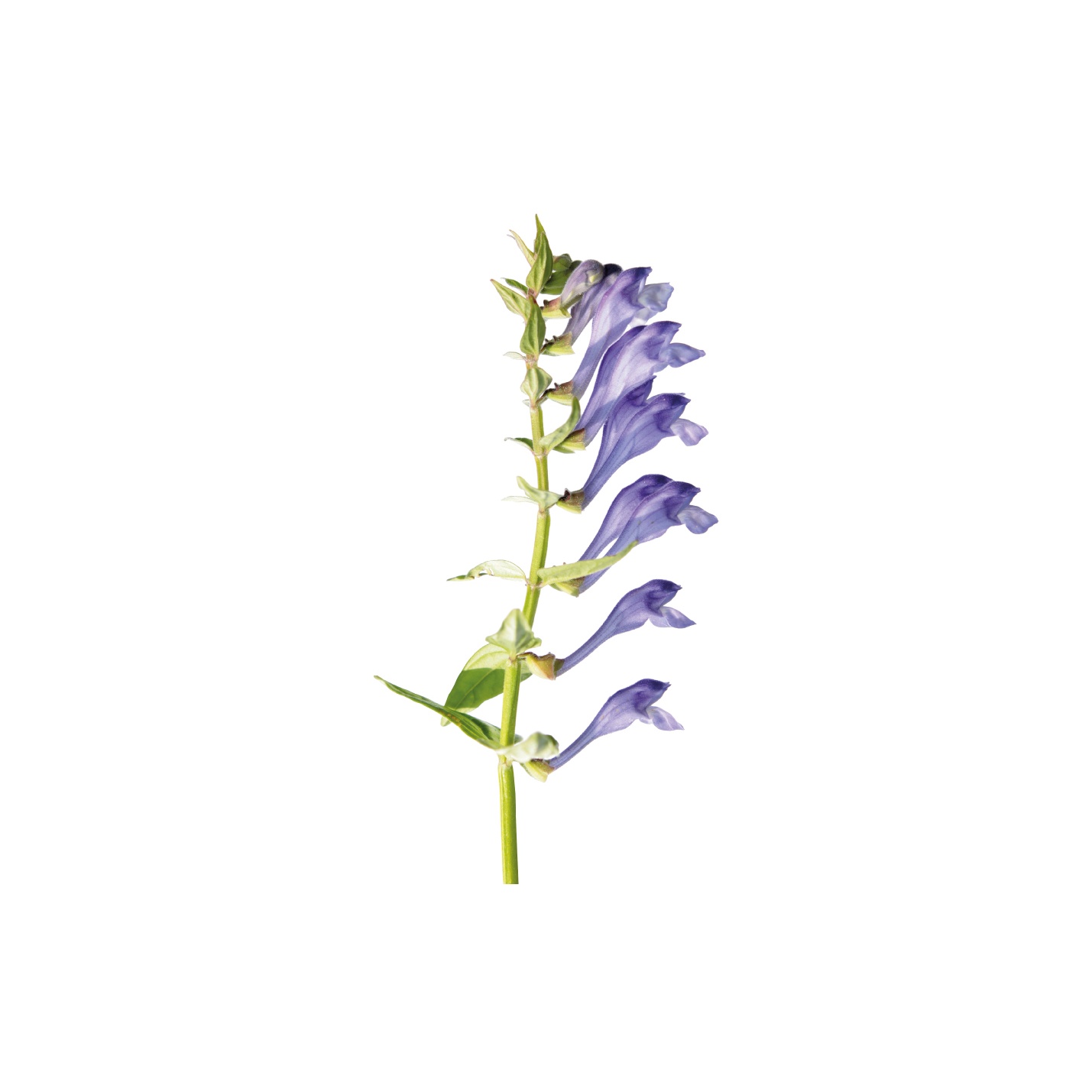
Chinese skullcap is an upright perennial mint (Scutellaria baicalensis, Lamiaceae) with the family’s four-sided stems, opposite lance-shaped leaves, and hooded, two-lipped flowers in a deep blue-violet. The blooms line up along one side of the flowering stem, and the seed cup wears the little raised ridge across its back that gives every skullcap its name.
For the herbalist, the essential point is which part is used. In Chinese skullcap the medicine is the root — the dried root is the classic Traditional Chinese Medicine herb Huang Qin, prized for its bitter, cooling character. This is what separates it from its American cousin. American skullcap (Scutellaria lateriflora) is a different species used entirely for its aerial parts — the leaf and flowering tops, taken as a nervine — with a different constituent profile. The two are not interchangeable: same genus, but different plant, different part and different tradition of use. When a monograph or product simply says “skullcap,” it is worth confirming which species and which plant part is meant.
Distribution
Chinese skullcap is a plant of cold northeast Asia, growing wild on dry, sunny slopes and stony ground across northern China, Mongolia, the Russian Far East and eastern Siberia, and Korea. The Lake Baikal region of Siberia gives it its other common name, Baikal skullcap. It is now cultivated as a root crop well beyond that range.
Growing Conditions
- Full sun and sharp, free-draining soil; it resents heavy, wet ground and rots in winter damp.
- Very cold-hardy (roughly USDA zones 4–8), reflecting its harsh continental homeland.
- Grown as a multi-year root crop — the taproot (Huang Qin) is harvested after two to three seasons, not the leaves or flowers.
- Compact and clump-forming, around 30–50 cm tall, easily raised from seed for a small medicinal bed.
- Full cultivation detail lives on the companion farm-wiki grow guide for Scutellaria baicalensis (link to be added once that project’s public URL is confirmed).
Pharmacology & Research
The literature on Chinese skullcap (Scutellaria baicalensis) is large but lopsided: several thousand papers, almost all of them on isolated root flavonoids — baicalin, its aglycone baicalein, wogonin and oroxylin A — rather than the crude root that herbalists actually dispense. The mechanistic work is deep and internally consistent (NF-κB and COX-2 suppression, radical scavenging, broad in-vitro antiviral activity), but human data are thin and indirect: the only controlled trials in people used either purified single compounds (baicalein tablets, oroxylin A) or fixed combination products (flavocoxid and UP446, both skullcap plus Acacia catechu), never the root on its own. No randomised trial of the whole herb for a defined clinical endpoint has been published, and there is no ESCOP, EMA-HMPC or Commission E monograph. Read the scores below as strength of mechanistic evidence with a preparation caveat attached, not as proof the tea or tincture does these things in people.
- Best-supported: anti-inflammatory activity, with dense preclinical mechanism and the only real human signal (a baicalin RCT in coronary artery disease and flavonoid-combination osteoarthritis trials) 1,2,3Reference 1In vitroAnti-inflammatory effects of baicalin, baicalein, and wogonin in vitro and in vivo — in vitro and animal studyView study →Reference 2RCTBaicalin reduces blood lipids and inflammation in patients with coronary artery disease and rheumatoid arthritis — randomised, double-blind, placebo-controlled trialView study →Reference 3RCTEfficacy and safety of flavocoxid compared with naproxen in osteoarthritis of the knee — randomised controlled trialView study →; antioxidant activity, consistently reproduced but constituent-level 7Reference 7ReviewPromising role of the Scutellaria baicalensis root hydroxyflavone baicalein as an antioxidant — reviewView study →.
- Emerging, worth watching: broad antiviral activity in vitro (influenza, RSV, HBV, HIV, SARS-CoV-2) with baicalein now through Phase I and into a Phase IIa influenza trial 9,11,16Reference 9In vitroScutellaria baicalensis extract and baicalein inhibit replication of SARS-CoV-2 and its 3C-like protease — in vitro studyView study →Reference 11In vitroBaicalein and Scutellaria baicalensis extracts inhibit the neuraminidase activity of pandemic 2009 H1N1 and seasonal influenza A viruses — in vitro studyView study →Reference 16RCTSafety, tolerability, and pharmacokinetics of oral baicalein tablets in healthy Chinese subjects — randomised, double-blind, placebo-controlled Phase I multiple-ascending-dose studyView study →; hepatoprotection, where the crude root extract — not just isolated compounds — reduced fibrosis in rats 18Reference 18AnimalScutellaria baicalensis inhibits liver fibrosis induced by bile duct ligation or carbon tetrachloride in rats — animal studyView study →.
- Mechanistically thin: anticancer, neuroprotective and antidiabetic claims rest almost entirely on cell lines and rodent models, or on multi-herb formulas 21,25,29Reference 21Systematic reviewWogonin and its analogs for the prevention and treatment of cancer — systematic reviewView study →Reference 25Meta-analysisPreclinical evidence and possible mechanisms of baicalein for rats and mice with Parkinson’s disease — systematic review and meta-analysis of animal modelsView study →Reference 29Chemoproteomics reveals baicalin activates hepatic CPT1 to ameliorate diet-induced obesity and hepatic steatosis — animal studyView study →.
- The caveat: effects are documented for purified flavonoids or combination products, not the crude root, and there is no standardised human dose. Root flavonoid content varies two- to threefold with origin and processing, so potency is not consistent between products.
1. Anti-inflammatory
This is the herb’s best-characterised action and the mechanistic hub for most of the others. The root flavonoids baicalin, baicalein and wogonin suppress the NF-κB pathway and directly inhibit COX-2, lowering TNF-α, IL-6 and IL-1β; in cultured endothelium and in mice all three blunted LPS-driven adhesion-molecule expression and leukocyte migration 1Reference 1In vitroAnti-inflammatory effects of baicalin, baicalein, and wogonin in vitro and in vivo — in vitro and animal studyView study →. Human evidence exists but is indirect. A randomised, double-blind, placebo-controlled trial (n=374, 12 weeks, 500 mg baicalin daily) in patients with coexisting coronary artery disease and rheumatoid arthritis reported lower blood lipids and hs-CRP 2Reference 2RCTBaicalin reduces blood lipids and inflammation in patients with coronary artery disease and rheumatoid arthritis — randomised, double-blind, placebo-controlled trialView study →. Two randomised osteoarthritis trials of flavocoxid (500 mg twice daily) — a fixed blend of skullcap baicalin and Acacia catechins — found it noninferior to naproxen over 4–12 weeks 3,4Reference 3RCTEfficacy and safety of flavocoxid compared with naproxen in osteoarthritis of the knee — randomised controlled trialView study →Reference 4RCTFlavocoxid is as effective as naproxen for osteoarthritis of the knee — randomised, double-blind pilot studyView study →, and two randomised pilots of the related UP446 blend reported reduced knee pain versus placebo 5,6Reference 5RCTA combination of Scutellaria baicalensis and Acacia catechu extracts for short-term relief of knee osteoarthritis — randomised controlled trialView study →Reference 6RCTA randomised, double-blind, placebo- and active-comparator-controlled pilot study of UP446 — randomised controlled trialView study →. None of these tested the crude root, and the combination products confound the skullcap contribution; the same flavocoxid product also carries a rare acute-liver-injury signal (see Safety) 30,31Reference 30Case reportAcute liver injury due to flavocoxid (Limbrel), a medical food for osteoarthritis — case seriesView study →Reference 31ObservationalComparative safety of flavocoxid vs prescription NSAIDs among osteoarthritis patients — observational cohort studyView study →.
Gap: No trial has tested whole-root skullcap for an inflammatory endpoint; the human data come from a single isolated glycoside or from two-herb combinations.
2. Antioxidant
Baikal skullcap root extract and its dominant flavone baicalein are strong direct radical scavengers and, more importantly, activate the Nrf2/HO-1 axis while suppressing pro-oxidant signalling — the same free-B-ring flavone chemistry that drives the anti-inflammatory effect 7Reference 7ReviewPromising role of the Scutellaria baicalensis root hydroxyflavone baicalein as an antioxidant — reviewView study →. This activity is highly reproducible across chemical assays and cell models and underlies much of the reported organ protection (liver, brain, vasculature) elsewhere on this page. It is also the honest mechanism behind vague “antiaging” marketing claims. Every result, however, is from purified compounds or extracts in vitro and in animals; there is no human antioxidant-biomarker trial of the herb 7,8Reference 7ReviewPromising role of the Scutellaria baicalensis root hydroxyflavone baicalein as an antioxidant — reviewView study →Reference 8Systematic reviewBaicalin and its aglycone: a novel approach for treatment of metabolic disorders — systematic reviewView study →.
Gap: Entirely preclinical and constituent-driven — no evidence that drinking a decoction raises antioxidant capacity or lowers oxidative-stress markers in people.
4. Hepatoprotective
Unusually for this herb, some of the liver work used the actual root rather than a single molecule. A methanol extract of S. baicalensis root reduced liver fibrosis, lipid peroxidation and hydroxyproline in rats with bile-duct ligation or carbon-tetrachloride injury 18Reference 18AnimalScutellaria baicalensis inhibits liver fibrosis induced by bile duct ligation or carbon tetrachloride in rats — animal studyView study →. Isolated baicalin reproduces this across models of alcohol-associated liver disease, fatty liver and toxin injury, acting through antioxidant, anti-inflammatory and stellate-cell pathways 19,20Reference 19Baicalin confers hepatoprotective effect against alcohol-associated liver disease by upregulating microRNA-205 — animal studyView study →Reference 20ReviewPharmacological properties of baicalin on liver diseases — narrative reviewView study →. The mechanism is coherent and the antioxidant/anti-inflammatory basis is well mapped, but the entire body of work is preclinical.
Gap: No human hepatoprotection trial exists, and the herb’s own rare hepatotoxicity signal (see Safety) means “liver protective” cannot be stated for people.
5. Anticancer
A very large in-vitro and animal literature: baicalein, wogonin and oroxylin A induce apoptosis, arrest the cell cycle and inhibit proliferation across leukaemia, breast, colon, lung and cervical cancer lines, largely by suppressing NF-κB and modulating p53 and the tumour microenvironment 21,22Reference 21Systematic reviewWogonin and its analogs for the prevention and treatment of cancer — systematic reviewView study →Reference 22Systematic reviewThe therapeutic potential of baicalin and baicalein in breast cancer — systematic reviewView study →. Two systematic reviews of this preclinical work judge the flavonoids promising but note the near-total absence of clinical data 21,22Reference 21Systematic reviewWogonin and its analogs for the prevention and treatment of cancer — systematic reviewView study →Reference 22Systematic reviewThe therapeutic potential of baicalin and baicalein in breast cancer — systematic reviewView study →. Human exposure exists only through multi-herb formulas (e.g. PHY906 alongside chemotherapy) and ex-vivo experiments on patient leukocytes, not through skullcap given as an anticancer treatment.
Gap: No human antitumour efficacy data for the herb or its isolated compounds; the signal is entirely cell-line and rodent.
6. Antiallergic
A long-standing traditional use with plausible mechanism. Skullcap flavonoids stabilise mast cells and cut histamine release, suppress IgE-mediated responses, and drive eosinophil apoptosis: baicalein, wogonin and an ethanol extract reduced airway inflammation in ovalbumin-sensitised mice 23Reference 23Baicalein, wogonin, and Scutellaria baicalensis ethanol extract alleviate ovalbumin-induced allergic airway inflammation — animal studyView study →, and wogonin induced eosinophil apoptosis while attenuating allergic airway inflammation in a mouse asthma model 24Reference 24In vitroWogonin induces eosinophil apoptosis and attenuates allergic airway inflammation — in vitro and mouse studyView study →. This maps onto the herb’s documented traditional use for hay fever and allergic complaints. All of it, however, is cell-based or in mice.
Gap: No human allergy or asthma trial; the effect is well-supported preclinically but unproven in patients.
7. Neuroprotective
Baicalein is under active development as an isolated neuroprotective drug, chiefly for Parkinson’s disease. Two systematic reviews and meta-analyses of animal Parkinson’s models found consistent protection of dopaminergic neurons, attributed to antioxidant, anti-inflammatory and anti-aggregation effects 25,26Reference 25Meta-analysisPreclinical evidence and possible mechanisms of baicalein for rats and mice with Parkinson’s disease — systematic review and meta-analysis of animal modelsView study →Reference 26Systematic reviewNeuroprotective effects of baicalein in animal models of Parkinson’s disease — systematic review of experimental studiesView study →, and a preclinical meta-analysis reported antidepressant-like effects of baicalin in rodent models 27Reference 27Meta-analysisThe effects of baicalin in depression: preclinical evidence construction based on meta-analysis of animal studiesView study →. Baicalein has completed Phase I pharmacokinetic and safety trials in this context 28Reference 28RCTSafety, tolerability, and pharmacokinetics of a single ascending dose of baicalein chewable tablets in healthy subjects — randomised Phase I studyView study →. As with the antiviral programme, the clinical work is on the purified compound, not the herb.
Gap: No human neurological efficacy data; the animal meta-analyses are consistent but the crude herb has never been tested for a cognitive or mood endpoint.
8. Antidiabetic
Baicalin improves insulin sensitivity and glucose handling in rodent models, in part by activating hepatic carnitine palmitoyltransferase-1 (CPT1) to increase fatty-acid oxidation and reduce diet-induced obesity and hepatic steatosis 29Reference 29Chemoproteomics reveals baicalin activates hepatic CPT1 to ameliorate diet-induced obesity and hepatic steatosis — animal studyView study →; a systematic review of preclinical metabolic-disorder studies reaches the same conclusion 8Reference 8Systematic reviewBaicalin and its aglycone: a novel approach for treatment of metabolic disorders — systematic reviewView study →. Human data are limited to one small controlled study combining skullcap extract with metformin, which is confounded by the drug. Traditional use does not emphasise diabetes, so this rests almost entirely on modern animal pharmacology.
Gap: Essentially no direct human evidence; the mechanism is well mapped in rodents but the herb is not an established antidiabetic.
Mechanisms
| Mechanism | Drives | Key compounds |
|---|---|---|
| NF-κB ↓, COX-2 ↓, TNF-α/IL-6 ↓ | anti-inflammatoryhepatoprotectiveanticancer | baicalin, baicalein, wogonin |
| Nrf2/HO-1 ↑, direct radical scavenging | antioxidantneuroprotectivehepatoprotective | baicalein, oroxylin A |
| Viral neuraminidase / 3CLpro / RdRp inhibition, blocked viral entry, innate-immune ↑ | antiviral | baicalein, baicalin |
| Mast-cell stabilisation, IgE ↓, eosinophil apoptosis | antiallergic | baicalein, wogonin |
| Pro-apoptotic (p53 ↑, cell-cycle arrest) | anticancer | wogonin, oroxylin A, baicalein |
| CPT1 activation, ↑ fatty-acid oxidation, insulin sensitising | antidiabetichepatoprotective | baicalin |
Clinical trials
Registered trials exist but almost all test multi-herb TCM formulas or isolated single compounds rather than crude skullcap: baicalein tablets have completed Phase I and entered a Phase IIa influenza trial 16,17Reference 16RCTSafety, tolerability, and pharmacokinetics of oral baicalein tablets in healthy Chinese subjects — randomised, double-blind, placebo-controlled Phase I multiple-ascending-dose studyView study →Reference 17RCTSafety, tolerability, pharmacokinetics, and food effect of baicalein tablets in healthy Chinese subjects — randomised, double-blind, placebo-controlled Phase I studyView study →, and oroxylin A completed Phase I 36Reference 36RCTSafety and pharmacokinetics evaluation of oroxylin A in Chinese healthy volunteers — randomised, double-blind, placebo-controlled Phase I studyView study → — no trial of the whole root for a defined efficacy endpoint has reported, and no ESCOP/EMA/Commission E monograph covers the herb.
| Completed | Planned | Terminated | Preclinical |
|---|---|---|---|
| 4(constituent/combo) | 1(baicalein Phase IIa) | 0 | ~thousands |
Last checked: July 2026.
Phytochemistry
Scutellaria baicalensis reportedly contains more than 295 compounds, but its medicine is dominated by a handful of root flavones. The single most abundant is baicalin (the glucuronide), which can reach roughly 10% of the dry root; it is accompanied by its aglycone baicalein (~5%), the methoxy-flavone pair wogonoside (~3.5%) and wogonin (~1.3%), and the minor but pharmacologically prominent oroxylin A 44Reference 44ReviewA comprehensive review on phytochemistry, pharmacology, and flavonoid biosynthesis of Scutellaria baicalensisView study →. These free-B-ring flavones, largely unique to Scutellaria, carry most of the antiallergic, anti-inflammatory and antiviral activity discussed above 44Reference 44ReviewA comprehensive review on phytochemistry, pharmacology, and flavonoid biosynthesis of Scutellaria baicalensisView study →.
Around the major flavones sit further flavonoids (scutellarein, scutellarin, norwogonin, mosloflavone, apigenin, hispidulin, luteolin, naringenin), a small essential-oil fraction, the iridoid catalpol, and trace amines including melatonin and serotonin 43,44Reference 43Herbs & natural supplements: An evidence-based guide VolReference 44ReviewA comprehensive review on phytochemistry, pharmacology, and flavonoid biosynthesis of Scutellaria baicalensisView study →.
Constituent Summary
Percentages are of dried root (Huang Qin) and vary with origin, age and processing; total bioactive flavonoids run to roughly 10–20% of dry weight, with baicalin alone often near 8–12% 44Reference 44ReviewA comprehensive review on phytochemistry, pharmacology, and flavonoid biosynthesis of Scutellaria baicalensisView study →. Essential-oil, iridoid and amine constituents are minor and not reliably quantified.
Flavonoid14 compounds5 with data
Sesquiterpene4 compoundsno data
Iridoid1 compoundno data
Clinical Applications
Chinese skullcap is reliable as a way to reduce the allergic response in allergic conditions, as well as inflammation. The root is a promising treatment option for a range of different viral infections, including influenza and HIV.
Dosage
In research, Chinese skullcap has almost never been given as the crude root — the controlled human studies used an isolated marker flavonoid (baicalin or baicalein) or a proprietary combination product, titrated to a set milligram dose rather than to a whole-herb weight.
| Indication | Preparation | Dose | Est. dried-herb equivalent | Source |
|---|---|---|---|---|
| Anti-inflammatory (CAD + RA) | Isolated baicalin, oral | 500 mg/day, 12 weeks | ~4–6 g dried root (assuming root ≈ 8–12% baicalin) | 2Reference 2RCTBaicalin reduces blood lipids and inflammation in patients with coronary artery disease and rheumatoid arthritis — randomised, double-blind, placebo-controlled trialView study → |
| Osteoarthritis | Flavocoxid (baicalin + Acacia catechins) | 500 mg twice daily | — (proprietary combination; not back-convertible) | 3,4Reference 3RCTEfficacy and safety of flavocoxid compared with naproxen in osteoarthritis of the knee — randomised controlled trialView study →Reference 4RCTFlavocoxid is as effective as naproxen for osteoarthritis of the knee — randomised, double-blind pilot studyView study → |
| Osteoarthritis | UP446 (S. baicalensis + Acacia catechu) | 250–500 mg/day | — (proprietary combination) | 5,6Reference 5RCTA combination of Scutellaria baicalensis and Acacia catechu extracts for short-term relief of knee osteoarthritis — randomised controlled trialView study →Reference 6RCTA randomised, double-blind, placebo- and active-comparator-controlled pilot study of UP446 — randomised controlled trialView study → |
| Antiviral (influenza, Phase I/IIa) | Isolated baicalein tablets | 200–600 mg up to 3×/day | ~4–12 g dried root (assuming root ≈ 5% baicalein) | 16,17Reference 16RCTSafety, tolerability, and pharmacokinetics of oral baicalein tablets in healthy Chinese subjects — randomised, double-blind, placebo-controlled Phase I multiple-ascending-dose studyView study →Reference 17RCTSafety, tolerability, pharmacokinetics, and food effect of baicalein tablets in healthy Chinese subjects — randomised, double-blind, placebo-controlled Phase I studyView study → |
The “Est. dried-herb equivalent” back-converts the marker dose to whole-herb weight on a stated assumption (root ≈ 8–12% baicalin; ≈ 5% baicalein). It is an estimate and a guide, not a conversion factor or a dosing recommendation. Combination-product doses are left ”—” because the skullcap fraction is proprietary and not separable.
Traditional Dosage
Traditional whole-herb doses come from the reference texts, not the trials, and are not interchangeable with the research doses above.
| System | Preparation | Dose |
|---|---|---|
| Western herbal | 1:2 liquid extract | 20–40 mL/week |
| Traditional Chinese Medicine | Dried root, decoction | 3–9 g/day |
Synergy
Herbalist Stephen Buhner suggests skullcap as a synergist herbal for its potentiating effects on other herbs.
He considers this herb especially synergistic with the pharmaceutical antivirals and antibacterials ribavirin, albendazole, ciprofloxacin, and amphotericin B. He reports that skullcap is synergistic with antibiotics by its ability to inhibit the Nor A efflux pump of resistant bacteria 38Reference 38Herbal antivirals: Natural remedies for emerging resistant and epidemic viral infections.
He also reports that skullcap can dose-dependently inhibit (the effects increase as dose increases) the CYP3A4 enzymes in the liver which are responsible for drug metabolism 38Reference 38Herbal antivirals: Natural remedies for emerging resistant and epidemic viral infections. This same CYP3A4 inhibition is also a drug-interaction hazard — it can raise plasma levels of narrow-therapeutic-index drugs cleared by that enzyme, so it should not be read only as a benefit (see Safety).
Suggested to be synergistic as an antiviral with licorice 38Reference 38Herbal antivirals: Natural remedies for emerging resistant and epidemic viral infections.
Safety & Pregnancy
Chinese skullcap root is generally well tolerated, but rare idiosyncratic liver injury has been documented (mostly tied to the flavocoxid combination product), and its flavonoids inhibit CYP3A4 and drug transporters — a real interaction concern with narrow-therapeutic-index drugs.
- Rare liver injury. Idiosyncratic acute hepatocellular injury documented, mainly with the flavocoxid combination product; reversible on withdrawal.
- Drug interactions. Inhibits CYP3A4 and alters the OATP1B1 transporter — caution with narrow-therapeutic-index drugs.
- Bleeding, theoretical. Flavonoids act on COX/LOX pathways; antiplatelet interaction not formally assessed.
- No regulatory monograph. ESCOP, EMA/HMPC and Commission E have not assessed its safety.
- Well tolerated traditionally. Generally well tolerated at customary doses in traditional use.
Full safety & interactions detail
Chinese skullcap root is generally well tolerated in traditional use, but rare idiosyncratic liver injury has been documented — most clearly in the drug-induced liver injury network’s case series of flavocoxid (Limbrel), a baicalin-containing combination medical food, where four patients developed acute hepatocellular injury that resolved on withdrawal 30Reference 30Case reportAcute liver injury due to flavocoxid (Limbrel), a medical food for osteoarthritis — case seriesView study →. A large claims-based cohort found flavocoxid carried a higher rate of liver injury and hypersensitivity pneumonitis than prescription NSAIDs 31Reference 31ObservationalComparative safety of flavocoxid vs prescription NSAIDs among osteoarthritis patients — observational cohort studyView study →. The herb and its flavonoids inhibit and interact with several drug-handling pathways: baicalin inhibits CYP3A activity and displaces plasma protein binding (shown for the CYP3A substrate nifedipine in rats) 33Reference 33AnimalContribution of baicalin to plasma protein binding displacement and CYP3A inhibition in the pharmacokinetics of nifedipine in rats — animal studyView study →, and in healthy volunteers baicalin altered the pharmacokinetics of rosuvastatin, a substrate of the OATP1B1 transporter 34Reference 34RCTThe effect of herbal medicine baicalin on pharmacokinetics of rosuvastatin, a substrate of OATP1B1 — randomised human studyView study →, so caution is warranted with narrow-therapeutic-index drugs cleared by CYP3A4 or those transporters 32Reference 32ReviewDrug–herb interactions between Scutellaria baicalensis and pharmaceutical drugs — reviewView study →. In traditional practice it is avoided in cold or deficiency-type patterns.
Bleeding/antiplatelet interactions have not been formally assessed in this package; because skullcap flavonoids act on arachidonic-acid (COX/LOX) pathways, theoretical caution with anticoagulant or antiplatelet therapy is reasonable, but there are no human data either way. There is no ESCOP, EMA/HMPC or German Commission E monograph for S. baicalensis, so its safety and efficacy have not been assessed by those bodies.
Not established. Paradoxically, S. baicalensis root (“Huangqin”) is a classical Chinese “fetus-calming” herb historically used to help prevent miscarriage, and a modern review catalogues preclinical work on its flavonoids in pregnancy-related conditions 35Reference 35ReviewEffectiveness of Scutellaria baicalensis Georgi root in pregnancy-related diseases — reviewView study →; however, that review reports mechanistic and animal data, not controlled human safety trials, and lactation has not been studied. There is no adequate human safety evidence either way, so it should not be assumed safe in pregnancy or breastfeeding without professional supervision.
References
- Lee, W., et al. (2015). Anti-inflammatory effects of baicalin, baicalein, and wogonin in vitro and in vivo — in vitro and animal study. Inflammation. https://pubmed.ncbi.nlm.nih.gov/25249339/
- Hang, Y., et al. (2018). Baicalin reduces blood lipids and inflammation in patients with coronary artery disease and rheumatoid arthritis — randomised, double-blind, placebo-controlled trial. Lipids in Health and Disease. https://pubmed.ncbi.nlm.nih.gov/29935544/
- Levy, R. M., et al. (2010). Efficacy and safety of flavocoxid compared with naproxen in osteoarthritis of the knee — randomised controlled trial. Advances in Therapy. https://pubmed.ncbi.nlm.nih.gov/20845002/
- Levy, R. M., et al. (2009). Flavocoxid is as effective as naproxen for osteoarthritis of the knee — randomised, double-blind pilot study. Nutrition Research. https://pubmed.ncbi.nlm.nih.gov/19555810/
- Arjmandi, B. H., et al. (2014). A combination of Scutellaria baicalensis and Acacia catechu extracts for short-term relief of knee osteoarthritis — randomised controlled trial. Journal of Medicinal Food. https://pubmed.ncbi.nlm.nih.gov/24611484/
- Sampalis, J. S., et al. (2012). A randomised, double-blind, placebo- and active-comparator-controlled pilot study of UP446 — randomised controlled trial. Nutrition Journal. https://pubmed.ncbi.nlm.nih.gov/22480204/
- Chmiel, M., et al. (2023). Promising role of the Scutellaria baicalensis root hydroxyflavone baicalein as an antioxidant — review. International Journal of Molecular Sciences. https://pubmed.ncbi.nlm.nih.gov/36902160/
- Fang, P., et al. (2020). Baicalin and its aglycone: a novel approach for treatment of metabolic disorders — systematic review. Pharmacological Reports. https://pubmed.ncbi.nlm.nih.gov/32016847/
- Liu, H., et al. (2021). Scutellaria baicalensis extract and baicalein inhibit replication of SARS-CoV-2 and its 3C-like protease — in vitro study. Journal of Enzyme Inhibition and Medicinal Chemistry. https://pubmed.ncbi.nlm.nih.gov/33491508/
- Zandi, K., et al. (2021). Baicalein and baicalin inhibit SARS-CoV-2 RNA-dependent RNA polymerase — in vitro study. Microorganisms. https://pubmed.ncbi.nlm.nih.gov/33921971/
- Hour, M. J., et al. (2013). Baicalein and Scutellaria baicalensis extracts inhibit the neuraminidase activity of pandemic 2009 H1N1 and seasonal influenza A viruses — in vitro study. Evidence-Based Complementary and Alternative Medicine. https://pubmed.ncbi.nlm.nih.gov/23864896/
- Ma, S. C., et al. (2002). Antiviral Chinese medicinal herbs against respiratory syncytial virus — in vitro study. Journal of Ethnopharmacology. https://pubmed.ncbi.nlm.nih.gov/11801383/
- Qin, S., et al. (2022). Baicalin induces a potent innate immune response to inhibit respiratory syncytial virus replication — in vitro and mouse study. Frontiers in Immunology. https://pubmed.ncbi.nlm.nih.gov/35812414/
- Li, B. Q., et al. (2000). Flavonoid baicalin inhibits HIV-1 infection at the level of viral entry — in vitro study. Biochemical and Biophysical Research Communications. https://pubmed.ncbi.nlm.nih.gov/11027509/
- Fan, X., et al. (2023). Baicalin inhibits replication of hepatitis B virus by targeting TRIM25 — in vitro study. Journal of Traditional and Complementary Medicine. https://pubmed.ncbi.nlm.nih.gov/38020548/
- Li, L., et al. (2021). Safety, tolerability, and pharmacokinetics of oral baicalein tablets in healthy Chinese subjects — randomised, double-blind, placebo-controlled Phase I multiple-ascending-dose study. Clinical and Translational Science. https://pubmed.ncbi.nlm.nih.gov/34156161/
- Dong, R., et al. (2021). Safety, tolerability, pharmacokinetics, and food effect of baicalein tablets in healthy Chinese subjects — randomised, double-blind, placebo-controlled Phase I study. Journal of Ethnopharmacology. https://pubmed.ncbi.nlm.nih.gov/33753147/
- Nan, J. X., et al. (2002). Scutellaria baicalensis inhibits liver fibrosis induced by bile duct ligation or carbon tetrachloride in rats — animal study. Journal of Pharmacy and Pharmacology. https://pubmed.ncbi.nlm.nih.gov/11999134/
- Fang, L., et al. (2022). Baicalin confers hepatoprotective effect against alcohol-associated liver disease by upregulating microRNA-205 — animal study. International Immunopharmacology. https://pubmed.ncbi.nlm.nih.gov/35358777/
- Yang, J. Y., et al. (2021). Pharmacological properties of baicalin on liver diseases — narrative review. Pharmacological Reports. https://pubmed.ncbi.nlm.nih.gov/33595821/
- Banik, K., et al. (2022). Wogonin and its analogs for the prevention and treatment of cancer — systematic review. Phytotherapy Research. https://pubmed.ncbi.nlm.nih.gov/35102626/
- Zieniuk, B., et al. (2025). The therapeutic potential of baicalin and baicalein in breast cancer — systematic review. Current Issues in Molecular Biology. https://pubmed.ncbi.nlm.nih.gov/40136435/
- Bui, T. T., et al. (2017). Baicalein, wogonin, and Scutellaria baicalensis ethanol extract alleviate ovalbumin-induced allergic airway inflammation — animal study. Anatomy & Cell Biology. https://pubmed.ncbi.nlm.nih.gov/28713616/
- Lucas, C. D., et al. (2015). Wogonin induces eosinophil apoptosis and attenuates allergic airway inflammation — in vitro and mouse study. American Journal of Respiratory and Critical Care Medicine. https://pubmed.ncbi.nlm.nih.gov/25629436/
- Wang, Y., et al. (2020). Preclinical evidence and possible mechanisms of baicalein for rats and mice with Parkinson’s disease — systematic review and meta-analysis of animal models. Frontiers in Aging Neuroscience. https://pubmed.ncbi.nlm.nih.gov/33101006/
- Zhu, Q., et al. (2019). Neuroprotective effects of baicalein in animal models of Parkinson’s disease — systematic review of experimental studies. Phytomedicine. https://pubmed.ncbi.nlm.nih.gov/30385133/
- Wang, D., et al. (2024). The effects of baicalin in depression: preclinical evidence construction based on meta-analysis of animal studies. Frontiers in Pharmacology. https://pubmed.ncbi.nlm.nih.gov/39114351/
- Li, M., et al. (2014). Safety, tolerability, and pharmacokinetics of a single ascending dose of baicalein chewable tablets in healthy subjects — randomised Phase I study. Journal of Ethnopharmacology. https://pubmed.ncbi.nlm.nih.gov/25219601/
- Dai, J., et al. (2018). Chemoproteomics reveals baicalin activates hepatic CPT1 to ameliorate diet-induced obesity and hepatic steatosis — animal study. PNAS. https://pubmed.ncbi.nlm.nih.gov/29891721/
- Chalasani, N., et al. (2012). Acute liver injury due to flavocoxid (Limbrel), a medical food for osteoarthritis — case series. Annals of Internal Medicine. https://pubmed.ncbi.nlm.nih.gov/22711078/
- Curtis, J. R., et al. (2020). Comparative safety of flavocoxid vs prescription NSAIDs among osteoarthritis patients — observational cohort study. Osteoarthritis and Cartilage. https://pubmed.ncbi.nlm.nih.gov/32305527/
- Zhou, X., et al. (2021). Drug–herb interactions between Scutellaria baicalensis and pharmaceutical drugs — review. Biomedicine & Pharmacotherapy. https://pubmed.ncbi.nlm.nih.gov/33711551/
- Cheng, Z. Y., et al. (2014). Contribution of baicalin to plasma protein binding displacement and CYP3A inhibition in the pharmacokinetics of nifedipine in rats — animal study. PLoS ONE. https://pubmed.ncbi.nlm.nih.gov/24498050/
- Fan, L., et al. (2008). The effect of herbal medicine baicalin on pharmacokinetics of rosuvastatin, a substrate of OATP1B1 — randomised human study. Clinical Pharmacology & Therapeutics. https://pubmed.ncbi.nlm.nih.gov/17851565/
- Fang, D. N., et al. (2023). Effectiveness of Scutellaria baicalensis Georgi root in pregnancy-related diseases — review. Journal of Integrative Medicine. https://pubmed.ncbi.nlm.nih.gov/36216728/
- Yang, F., et al. (2026). Safety and pharmacokinetics evaluation of oroxylin A in Chinese healthy volunteers — randomised, double-blind, placebo-controlled Phase I study. Clinical and Translational Oncology. https://pubmed.ncbi.nlm.nih.gov/40903694/
- Bone, K. (2003). A clinical guide to blending liquid herbs: Herbal formulations for the individual patient. Edinburgh [u.a.: Churchill Livingstone. (Pg. 83-85)
- Buhner, S. H. (2013). Herbal antivirals: Natural remedies for emerging resistant and epidemic viral infections. MA: Storey Publishing. (Pg. 125-143).
- Hoffmann, D. (2003). Medical herbalism: The science and practice of herbal medicine. Rochester, VT: Healing Arts Press. (Pg. 582)
- Barnes, J., Anderson, L. A., & Phillipson, J. D. (2007). Herbal medicines (3rd ed.). London, United Kingdom: Pharmaceutical Press.
- Yang, J., Huang, H., Zhu, Li-Jiang, & Chen, Y. (2013). Introduction to chinese materia medica (3rd ed.). (Pg 96-98).
- Wu, J. N. (2005). An illustrated Chinese materia medica. New York: Oxford University Press.(Pg. 582-583).
- Braun, L., & Cohen, M. (2010). Herbs & natural supplements: An evidence-based guide Vol. 2. Sydney: Elsevier Australia. (Pg. 49-50).
- Wang, Z. L., Wang, S., Kuang, Y., Hu, Z. M., Qiao, X., & Ye, M. (2018). A comprehensive review on phytochemistry, pharmacology, and flavonoid biosynthesis of Scutellaria baicalensis. Pharmaceutical Biology, 56(1), 465-484. doi:10.1080/13880209.2018.1492620