
Materia Medica
Hops
Humulus lupulus
Hops (Humulus lupulus) — a relaxing, sedative flower used for insomnia, stress, muscle tension and nervous digestion.
What Are Hops?
Hops have become famous for the role they play in beer. The unique flavor is embraced around the world.
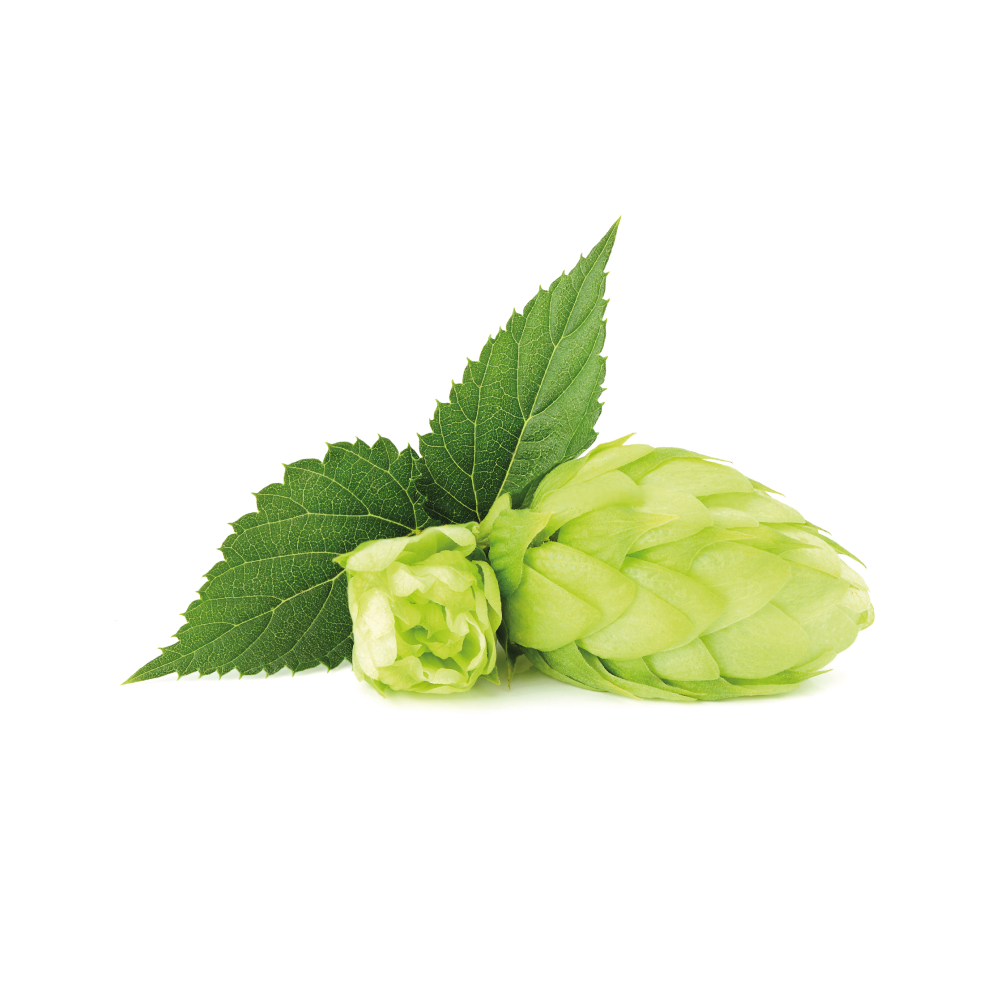
The female flowers of the hops plant have a characteristic resin, similar to cannabis. High in the terpene myrcene — hops have a wide range of medicinal attributes in the same chemicals that give its flavor.
Medicinally, hops is used as a sedative, muscle relaxant, and estrogenic. Myrcene and other phytochemicals help to promote parasympathetic nervous system dominance to combat states of high stress and insomnia.
What Is Hops Used For?
The classic use for hops is in beer making. It’s one of the main ingredients in the beverage, and is responsible for beers unique flavor.
Medicinally, hops is used for nervous conditions for its ability to relax the mind, and initiate sleep. It’s hypnotic, and anxiolytic, making it useful for anxiety, especially when it’s affecting sleep.
Hops also have estrogenic qualities, making them useful for treating symptoms of menopause or other female complaints linked to low estrogen.
Traditional Uses
Much of the history of hops surround the practice of beer making.
The hops flowers were, in fact, a principal ingredient in the making of beer since at least 2000 years ago by Germanic populations 28Reference 28The Lore of Spices: Their History and Uses Around the World — [traditional reference] — but was used medicinally by these peoples, and others across the world as well.
Hops have been used in the past to treat insomnia, excitability, neuralgia, headaches, hysteria, indigestion, mucous colitis, kidney stones, and delirium tremens, gynecological disorders and to reduce menopausal symptoms 31Reference 31A Clinical Guide to Blending Liquid Herbs: Herbal Formulations for the Individual Patient — [traditional reference].
The British herbal pharmacopeia lists hops as a sedative, hypnotic, and topical bactericidal. It’s indicated for neuralgia, insomnia, excitability, priapism, mucous colitis, and topically to treat crural ulcers 32Reference 32British Herbal Pharmacopoeia — [traditional reference].
Botany
Hops is a dioecious, rhizomatous, twining perennial vine in the hemp family (Cannabaceae) — a small family whose most notable member is cannabis, with which hops shares therapeutic resin-borne constituents acting on the central nervous system. Vigorous each season, it climbs rapidly to 15–20 ft on rough, hairy stems clad with lobed leaves. Yellow-green male flowers bloom in loose catkins on separate plants from the females, whose flowers and subsequent seeds develop inside cone-like structures (strobiles) that mature September–October and are the part harvested for both brewing and medicine. The plant dies back to the ground each winter, with the perennial rootstock sending up new growth each spring.
Hops cultivars vary widely in resin chemistry, and it’s medicinally relevant: the potent phytoestrogen 8-prenylnaringenin and the prenylflavonoid xanthohumol, along with the alpha- and beta-acids behind the sedative and bittering effects, differ severalfold between brewing varieties — so a given hop’s pharmacological punch depends heavily on cultivar and freshness 6,27Reference 6ReviewFlavonoids as Phytoestrogenic Components of Hops and Beer — [review]View study →Reference 27ReviewXanthohumol and related prenylflavonoids from hops and beer: to your good health! — [review]View study →.
Distribution
Native to Europe and southwestern Asia, with a native variety (H. lupulus var. lupuloides) also occurring in North America. The European variety grown commercially for brewing has escaped cultivation and naturalized in many parts of North America. No weed, invasive, or conservation-status concern is documented for this species.
Growing Conditions
- Life cycle: herbaceous perennial vine, hardy USDA zones 4–8.
- Light: full sun to part shade.
- Water: medium, with some drought tolerance once established.
- Habit: vigorous climber needing a trellis, pergola or other support structure; dies back to the ground each winter and regrows from perennial roots each spring.
- Full cultivation details live on the companion farm-wiki grow guide for Humulus lupulus (link to be added once that project’s public URL is confirmed).
Pharmacology & Research
The research base for hops is larger and more human than its reputation as a “beer herb” suggests, but it is split in two. Almost every controlled human trial studies one of two things: the potent phytoestrogen 8-prenylnaringenin (8-PN) for menopausal and bone endpoints, or valerian–hops sleep combinations in which the hops contribution can’t be isolated. Everything else — the large and fast-growing xanthohumol literature on inflammation, cancer, and metabolic disease — is preclinical, uses the isolated chalcone rather than the whole flower, and has not been tested for efficacy in people. At least a dozen randomised trials exist, but they are small, frequently confounded by placebo response, and dominated by standardised extracts whose results do not transfer to a tea or tincture of the raw cone.
- Best-supported: menopausal/vasomotor symptom relief from 8-PN-standardised extracts, though the trials are genuinely mixed 1,2,3,4Reference 1RCTA first prospective, randomized, double-blind, placebo-controlled study on the use of a standardized hop extract to alleviate menopausal discomforts — [randomized]View study →Reference 2RCTA randomized, double-blind, placebo-controlled, cross-over pilot study on the use of a standardized hop extract to alleviate menopausal discomforts — [randomized]View study →Reference 3RCTThe effect of Hop (Humulus lupulus L.) on early menopausal symptoms and hot flashes: A randomized placebo-controlled trial — [randomized]View study →Reference 4RCTEfficacy and Safety of a Standardized Soy and Hop Extract on Menopausal Symptoms: A 12-Week, Multicenter, Randomized, Double-Blind, Placebo-Controlled Clinical Trial — [randomized]View study →; sedative use as part of valerian–hops sleep formulas 8,9Reference 8RCTValerian-hops combination and diphenhydramine for treating insomnia: a randomized placebo-controlled clinical trial — [randomized]View study →Reference 9RCTEffects of a Valerian-Hops Extract Combination (Ze 91019) on Sleep Duration and Daytime Cognitive and Psychological Parameters in Occasional Insomnia: A Randomized Controlled Feasibility Trial — [randomized]View study →.
- Emerging, worth watching: 8-PN for postmenopausal bone loss (one 1-year RCT plus solid animal data) 13,14Reference 13RCTEffect of a Hop Extract Standardized in 8-Prenylnaringenin on Bone Health and Gut Microbiome in Postmenopausal Women with Osteopenia: A One-Year Randomized, Double-Blind, Placebo-Controlled Trial — [randomized]View study →Reference 14Tissue specificity of 8-prenylnaringenin: protection from ovariectomy induced bone loss with minimal trophic effects on the uterus — [animal]View study →; matured hop bitter acids for cognition and mood 16,17Reference 16RCTEffects of Hop Bitter Acids, Bitter Components in Beer, on Cognition in Healthy Adults: A Randomized Controlled Trial — [randomized]View study →Reference 17RCTSupplementation with Matured Hop Bitter Acids Improves Cognitive Performance and Mood State in Healthy Older Adults with Subjective Cognitive Decline — [randomized]View study →; xanthohumol for metabolic syndrome 21,22Reference 21ReviewBioavailability and Cardiometabolic Effects of Xanthohumol: Evidence from Animal and Human Studies — [review]View study →Reference 22In vitroBeneficial Effects of Xanthohumol on Metabolic Syndrome: Evidence from In Vitro and Animal Model Studies — [review]View study →.
- Mechanistically thin: anticancer and broad anti-inflammatory claims rest almost entirely on isolated-xanthohumol cell and rodent work 18,19Reference 18ReviewXanthohumol from Hop: Hope for cancer prevention and treatment — [review]View study →Reference 19ReviewXanthohumol for Human Malignancies: Chemistry, Pharmacokinetics and Molecular Targets — [review]View study →; antimicrobial activity is in vitro only 23,24Reference 23In vitroStrong antimicrobial activity of xanthohumol and other derivatives from hops (Humulus lupulus L.) on gut anaerobic bacteria — [in vitro]View study →Reference 24In vitroPositive antibacterial co-action between hop (Humulus lupulus) constituents and selected antibiotics — [in vitro]View study →.
- The caveat: 8-PN and bitter-acid content swing wildly between cultivars and degrade on storage, and most positive results come from a standardised extract — not the whole herb a herbalist actually prescribes.
1. Menopausal & vasomotor symptoms
Hops carries 8-prenylnaringenin, which competes strongly with 17β-estradiol at both the α- and β-oestrogen receptors and is the most potent plant oestrogen yet identified — related hop flavonoids have under 1% of its activity 5,6Reference 5In vitroThe endocrine activities of 8-prenylnaringenin and related hop (Humulus lupulus L.) flavonoids — [in vitro]View study →Reference 6ReviewFlavonoids as Phytoestrogenic Components of Hops and Beer — [review]View study →. That biology has driven at least four randomised trials, and they genuinely conflict. A 12-week study in 67 menopausal women found a standardised extract delivering 100 µg 8-PN/day beat placebo on the Kupperman index at 6 weeks (P=0.023) but not 12 weeks, with no dose-response — the higher 250 µg dose was less active 1Reference 1RCTA first prospective, randomized, double-blind, placebo-controlled study on the use of a standardized hop extract to alleviate menopausal discomforts — [randomized]View study →. A 16-week crossover (n=36) saw both active and placebo improve, with somewhat larger reductions on placebo 2Reference 2RCTA randomized, double-blind, placebo-controlled, cross-over pilot study on the use of a standardized hop extract to alleviate menopausal discomforts — [randomized]View study →. Against that, a 12-week trial in 120 women reported large, significant drops in Greene score and hot-flash frequency 3Reference 3RCTThe effect of Hop (Humulus lupulus L.) on early menopausal symptoms and hot flashes: A randomized placebo-controlled trial — [randomized]View study →, and a soy–hop combination trial was also positive 4Reference 4RCTEfficacy and Safety of a Standardized Soy and Hop Extract on Menopausal Symptoms: A 12-Week, Multicenter, Randomized, Double-Blind, Placebo-Controlled Clinical Trial — [randomized]View study →. The honest read: a real hormonal mechanism and a suggestive but inconsistent clinical signal, heavily shaped by placebo response.
Gap: No adequately powered, long-duration trial has resolved the conflicting results, and effects are tied to specific 8-PN-standardised extracts — a tea or ordinary tincture delivers an unknown, likely far smaller, 8-PN dose.
2. Sedative & sleep
Hops is a traditional sedative, and the controlled evidence is real but confounded: in essentially every trial it is paired with valerian, so the hops-specific contribution can’t be isolated. A US multicentre RCT (n=184, mild insomnia) tested a valerian–hops combination against diphenhydramine and placebo, with modest benefit on sleep 8Reference 8RCTValerian-hops combination and diphenhydramine for treating insomnia: a randomized placebo-controlled clinical trial — [randomized]View study →; a 2025 randomised feasibility study of the valerian–hops preparation Ze 91019 (n=40) found a significant increase in objectively tracked sleep duration 9Reference 9RCTEffects of a Valerian-Hops Extract Combination (Ze 91019) on Sleep Duration and Daytime Cognitive and Psychological Parameters in Occasional Insomnia: A Randomized Controlled Feasibility Trial — [randomized]View study →; and a polyherbal valerian–passionflower–hops formula performed comparably to zolpidem in primary insomnia 10Reference 10RCTEfficacy and safety of a polyherbal sedative-hypnotic formulation NSF-3 in primary insomnia in comparison to zolpidem: a randomized controlled trial — [randomized]View study →. Mechanistically, the sedation is attributed to degradation products of the bitter humulone α-acids — chiefly 2-methyl-3-buten-2-ol — enhancing GABAergic inhibition of the CNS, shown in an animal activity/rest model 11Reference 11The sedative effects of hops (Humulus lupulus), a component of beer, on the activity/rest rhythm — [animal]View study →.
Gap: No trial isolates hops from valerian, so its independent hypnotic effect in humans remains unproven; the active sedative metabolite also forms on storage, making fresh-herb potency uncertain.
3. Bone protection
The same phytoestrogen that drives the menopause work has a tissue-selective bone signal. In ovariectomised rats, 8-prenylnaringenin completely prevented bone loss while exerting minimal trophic effect on the uterus — an oestrogen-like benefit to bone without the endometrial stimulation that limits HRT 14Reference 14Tissue specificity of 8-prenylnaringenin: protection from ovariectomy induced bone loss with minimal trophic effects on the uterus — [animal]View study →. In osteoblast (MC3T3-E1) and osteoclast (RAW264.7) cultures it raised alkaline phosphatase and suppressed osteoclast formation, acting mainly through ERβ 15Reference 15In vitroEffects and mechanisms of 8-prenylnaringenin on osteoblast MC3T3-E1 and osteoclast-like cells RAW264.7 — [in vitro]View study →. Human data now exist: a one-year double-blind RCT in 100 postmenopausal osteopenic women tested an 8-PN-standardised hop extract with calcium and vitamin D against calcium/vitamin D alone, also probing the gut microbiome’s role in the effect 13Reference 13RCTEffect of a Hop Extract Standardized in 8-Prenylnaringenin on Bone Health and Gut Microbiome in Postmenopausal Women with Osteopenia: A One-Year Randomized, Double-Blind, Placebo-Controlled Trial — [randomized]View study →.
Gap: Only a single human bone-outcome trial, using a standardised extract; fracture and long-term bone-density endpoints are untested, and whole-herb doses of 8-PN are far below those used here.
4. Anti-inflammatory
Hops’ anti-inflammatory reputation rests on xanthohumol, the prenylated chalcone of the lupulin glands, and it is a preclinical story. Across cell and rodent models, xanthohumol suppresses NF-κB signalling and downstream inflammatory mediators, which is the mechanistic thread running through most of its reported effects 18,19,21Reference 18ReviewXanthohumol from Hop: Hope for cancer prevention and treatment — [review]View study →Reference 19ReviewXanthohumol for Human Malignancies: Chemistry, Pharmacokinetics and Molecular Targets — [review]View study →Reference 21ReviewBioavailability and Cardiometabolic Effects of Xanthohumol: Evidence from Animal and Human Studies — [review]View study →. The bitter α- and β-acids (humulone, lupulone) contribute additional COX- and cytokine-modulating activity. Recruiting human trials are testing hop compounds on immune markers and inflammatory conditions, but as of now no completed trial demonstrates an anti-inflammatory clinical benefit from hops.
Gap: Every anti-inflammatory result is in vitro or animal and mostly uses isolated xanthohumol, whose oral bioavailability is poor; human efficacy is unproven.
5. Cognition & mood
A distinct line of work studies matured hop bitter acids (MHBAs) — oxidised β-acids from aged hops — for brain function, proposing a gut-to-brain vagal mechanism. In a randomised, double-blind trial (n=60, ages 45–64 with self-perceived cognitive decline), 35 mg/day MHBA for 12 weeks significantly improved verbal fluency at 6 weeks versus placebo 16Reference 16RCTEffects of Hop Bitter Acids, Bitter Components in Beer, on Cognition in Healthy Adults: A Randomized Controlled Trial — [randomized]View study →. A second RCT (n=100 older adults) found significantly better divided attention (Symbol Digit Modalities Test) at 12 weeks, alongside lower β-endorphin and changes in a putative cognitive-impairment marker 17Reference 17RCTSupplementation with Matured Hop Bitter Acids Improves Cognitive Performance and Mood State in Healthy Older Adults with Subjective Cognitive Decline — [randomized]View study →. Effects are modest and partly subgroup-driven.
Gap: Both trials use a specific matured-bitter-acid preparation, not the whole flower or its sedative fraction; effect sizes are small and independent replication is limited.
6. Metabolic & cardiometabolic
Xanthohumol and 8-prenylnaringenin improve markers of metabolic dysfunction in animals: in a high-fat-diet mouse model of type 2 diabetes, both polyphenols improved lipid and glycolytic metabolism in liver and skeletal muscle 20Reference 20AnimalXanthohumol and 8-prenylnaringenin ameliorate diabetic-related metabolic dysfunctions in mice — [animal]View study →. Review syntheses of animal and cell data report favourable effects of xanthohumol on body weight, lipid and glucose handling, systemic inflammation, and redox status, framing it as a candidate for metabolic-syndrome prevention 21,22Reference 21ReviewBioavailability and Cardiometabolic Effects of Xanthohumol: Evidence from Animal and Human Studies — [review]View study →Reference 22In vitroBeneficial Effects of Xanthohumol on Metabolic Syndrome: Evidence from In Vitro and Animal Model Studies — [review]View study →. Human evidence is confined to biomarker and pharmacokinetic studies of isolated xanthohumol rather than clinical outcomes.
Gap: No human outcome trials; results use isolated constituents at doses unattainable from whole hops, and xanthohumol’s oral bioavailability is low.
7. Anxiolytic & stress
Beyond sedation, one small trial addresses daytime anxiety and stress directly. In a randomised, placebo-controlled, double-blind crossover pilot (n=36 healthy young adults with at least mild baseline symptoms), a hops dry-extract supplement taken over two 4-week periods reduced self-reported depression, anxiety and stress on the DASS-21 scale, with morning cortisol also measured 12Reference 12RCTEffects of a hops (Humulus lupulus L.) dry extract supplement on self-reported depression, anxiety and stress levels in apparently healthy young adults: a randomized, placebo-controlled, double-blind, crossover pilot study — [randomized]View study →. It is a single, small, short study in a non-clinical population.
Gap: Unreplicated, small, and in subclinical volunteers rather than diagnosed anxiety; no dose-finding and no comparison against an active anxiolytic.
8. Anticancer (chemopreventive)
Xanthohumol is one of the more studied dietary chemopreventive chalcones, with a large in vitro and animal literature spanning antiproliferative, pro-apoptotic, anti-angiogenic and anti-metastatic effects across many tumour cell lines 18,19Reference 18ReviewXanthohumol from Hop: Hope for cancer prevention and treatment — [review]View study →Reference 19ReviewXanthohumol for Human Malignancies: Chemistry, Pharmacokinetics and Molecular Targets — [review]View study →. 8-prenylnaringenin independently inhibits angiogenesis and oestrogen-receptor-driven cell growth. The mechanisms are well catalogued, but this remains cell-culture and rodent work; registered human trials to date address pharmacokinetics and DNA-damage biomarkers, not cancer outcomes.
Gap: No human efficacy data; findings use isolated xanthohumol at concentrations far above what hops or beer provide, and its poor bioavailability is a central obstacle.
9. Antimicrobial
The bitter acids and prenylflavonoids give hops genuine antimicrobial activity in vitro, consistent with its traditional role as a topical bactericidal and a beer preservative. Purified humulone, lupulone and xanthohumol inhibit gut anaerobes including Clostridium difficile 23Reference 23In vitroStrong antimicrobial activity of xanthohumol and other derivatives from hops (Humulus lupulus L.) on gut anaerobic bacteria — [in vitro]View study →, and lupulone and xanthohumol show positive co-action with polymyxin B, tobramycin and ciprofloxacin against Gram-positive and some Gram-negative bacteria 24Reference 24In vitroPositive antibacterial co-action between hop (Humulus lupulus) constituents and selected antibiotics — [in vitro]View study →. Activity is predominantly against Gram-positive organisms.
Gap: All evidence is in vitro; there are no clinical antimicrobial trials, and systemic exposure from oral hops is far below inhibitory concentrations — the plausible use is topical.
Mechanisms
| Mechanism | Drives | Key compounds |
|---|---|---|
| ERα/ERβ agonism (most potent phytoestrogen known); tissue-selective in bone | menopausal symptomsbone protection | 8-prenylnaringenin |
| NF-κB ↓, pro-apoptotic, anti-angiogenic, lipid/glucose modulation | anti-inflammatoryanticancermetabolic | xanthohumol |
| GABAergic sedation via 2-methyl-3-buten-2-ol; antibacterial | sedation/sleepantimicrobial | humulone, lupulone |
| Vagal gut–brain signalling | cognitionmood | oxidised β-acids (MHBAs) |
| CNS-relaxant volatile-oil component | sedation/sleep | myrcene |
Clinical trials
Registered human trials exist, but most study isolated xanthohumol (metabolic syndrome, oxidative stress, viral and inflammatory conditions) or 8-PN / whole-extract menopause and bone endpoints, rather than the whole flower as traditionally used.
| Completed | Planned | Terminated | Preclinical |
|---|---|---|---|
| ~12 | ~6 | 0 | Several hundred |
Last checked: July 2026.
Phytochemistry
Hops chemistry is dominated by the soft resins of the lupulin glands: the bitter α-acids, of which humulone is the marker, and the β-acids headed by lupulone. Alongside these sits the prenylated chalcone xanthohumol and its potent phytoestrogen derivative 8-prenylnaringenin — the strongest plant oestrogen yet identified — plus the relaxing terpene myrcene, which dominates the essential oil 5,29,30Reference 5In vitroThe endocrine activities of 8-prenylnaringenin and related hop (Humulus lupulus L.) flavonoids — [in vitro]View study →Reference 29Potter’s New Cyclopaedia of Botanical Drugs and Preparations — [traditional reference]Reference 30Medical Herbalism: The Science and Practice of Herbal Medicine — [traditional reference].
In whole-herb terms the cones carry bitter resins (15–30%), volatile oils (0.3–1%: humulene, β-caryophyllene, myrcene, farnesene), polyphenolic condensed tannins (2–4%), flavonoids (astragalin, kaempferol, quercetin, quercitrin, and rutin), chalcones (xanthohumol), oleoresin (3–12%), oestrogenic substances, and lipids 29,30Reference 29Potter’s New Cyclopaedia of Botanical Drugs and Preparations — [traditional reference]Reference 30Medical Herbalism: The Science and Practice of Herbal Medicine — [traditional reference].
Constituent Summary
Figures are % of dried cone, except myrcene which is given as a share of the essential oil; bitter-acid and prenylflavonoid levels swing widely between brewing and wild varieties 27,33,34Reference 27ReviewXanthohumol and related prenylflavonoids from hops and beer: to your good health! — [review]View study →Reference 33ReviewHumulus lupulus – a story that begs to be told — [review]Reference 34ReviewBiologically active compounds from hops and prospects for their use — [review].
Phenolic acid2 compounds2 with data
Chalcone1 compound1 with data
Flavonoid1 compoundno data
Monoterpene1 compound1 with data
Clinical Applications
Hops is a reliable sedative for decreasing SNS dominance in both an acutely stressed, and chronically stressed individual. It’s useful for anxiety, muscle spasms, and insomnia.
The estrogenic effects of hops makes it useful for some cases of PMS, abnormal uterine bleeding, and menopause.
Dosage
No clinical trial has established a whole-herb dose for hops, and the human trials that exist used standardised extracts, not the raw cone. In Western herbal practice hops is typically given as a 1:2 liquid extract at around 10–30 mL/week, or as an infusion of the dried strobiles — figures that rest on traditional practice, not trial evidence. For context, the menopause trials delivered a hop extract standardised to about 100 µg 8-prenylnaringenin per day 1,3Reference 1RCTA first prospective, randomized, double-blind, placebo-controlled study on the use of a standardized hop extract to alleviate menopausal discomforts — [randomized]View study →Reference 3RCTThe effect of Hop (Humulus lupulus L.) on early menopausal symptoms and hot flashes: A randomized placebo-controlled trial — [randomized]View study →, the bone trial a comparable 8-PN-standardised extract 13Reference 13RCTEffect of a Hop Extract Standardized in 8-Prenylnaringenin on Bone Health and Gut Microbiome in Postmenopausal Women with Osteopenia: A One-Year Randomized, Double-Blind, Placebo-Controlled Trial — [randomized]View study →, and the cognition trials 35 mg/day of matured hop bitter acids 16,17Reference 16RCTEffects of Hop Bitter Acids, Bitter Components in Beer, on Cognition in Healthy Adults: A Randomized Controlled Trial — [randomized]View study →Reference 17RCTSupplementation with Matured Hop Bitter Acids Improves Cognitive Performance and Mood State in Healthy Older Adults with Subjective Cognitive Decline — [randomized]View study →. None of these corresponds to a known weight of dried herb, because 8-PN and bitter-acid content vary widely with cultivar and storage. Treat any figure here as a guide, not a recommendation — a tea or ordinary tincture delivers an unknown, and probably far smaller, dose of the active constituents than those standardised extracts.
Safety & Pregnancy
Hops has a long, reassuring record as a food and calming herb; the main flags are its potent oestrogenic activity — a reason to avoid it in pregnancy and hormone-sensitive conditions — and mild sedation that adds to alcohol and other sedatives.
- Oestrogenic — avoid in pregnancy & breastfeeding. Contains 8-prenylnaringenin, the most potent plant oestrogen yet identified.
- Hormone-sensitive conditions. Best set aside with breast, uterine or ovarian cancer, endometriosis, or on hormone therapy.
- Additive sedation. Mildly sedating — go easy with alcohol and other sedatives; the old caution about combining with depression sits here too.
- CYP450 interactions unlikely. A controlled PK study found no meaningful change in probe-drug clearance.
- Well tolerated. Long record as food and calming herb; contact allergy is uncommon, mostly in handlers of the fresh plant.
Full safety & interactions detail
Hops has a long, reassuring record as both a food and a calming herb, and in normal tea or extract amounts it’s well tolerated. The one thing genuinely worth keeping in mind is that it’s oestrogenic — it contains 8-prenylnaringenin, the most potent plant oestrogen yet identified 5Reference 5In vitroThe endocrine activities of 8-prenylnaringenin and related hop (Humulus lupulus L.) flavonoids — [in vitro]View study → — so as a sensible precaution it’s best set aside by anyone with an oestrogen-sensitive condition (breast, uterine or ovarian cancer, endometriosis) or on hormone therapy, even though these situations haven’t been formally tested. Because it’s mildly sedating, go easy when pairing it with alcohol or other sedatives, and the old caution about combining hops with depression sits here too. Contact allergy is uncommon but documented, mostly in people who handle the fresh plant 26Reference 26ReviewSafety Assessment of Hops as Used in Cosmetics — [review]View study →.
Clinically meaningful cytochrome-P450 interactions appear unlikely: a controlled pharmacokinetic study in 16 peri- and postmenopausal women taking a standardised hop extract twice daily for two weeks found no meaningful change in CYP2C9, CYP1A2, CYP2D6 or CYP3A4/5 probe-drug clearance (only a ~7.6% fall in alprazolam exposure) 25Reference 25Clinical trialPharmacokinetic Interactions of a Hop Dietary Supplement with Drug Metabolism in Perimenopausal and Postmenopausal Women — [clinical trial]View study →. Interactions beyond this CYP study haven’t been comprehensively mapped, so a little care alongside other medicines is still sensible.
Hops is not a traditional pregnancy remedy, and it has not been studied in pregnant or breastfeeding women. The reason to avoid it is its content of 8-prenylnaringenin, the most potent phytoestrogen yet identified 5Reference 5In vitroThe endocrine activities of 8-prenylnaringenin and related hop (Humulus lupulus L.) flavonoids — [in vitro]View study →: a compound that acts directly on oestrogen receptors is a poor candidate for use in pregnancy, even though no study has actually measured harm. Lactation is likewise unstudied — worth noting because hops carries a folk reputation as a galactagogue, which is not backed by data and does not outweigh the oestrogenic caution. On current evidence, avoid hops in pregnancy and breastfeeding.
References
- Heyerick A, Vervarcke S, Depypere H, Bracke M, & De Keukeleire D (2006). A first prospective, randomized, double-blind, placebo-controlled study on the use of a standardized hop extract to alleviate menopausal discomforts — [randomized]. Maturitas, 54(2), 164-75. https://pubmed.ncbi.nlm.nih.gov/16321485/
- Erkkola R, Vervarcke S, Vansteelandt S, Rompotti P, De Keukeleire D, & Heyerick A (2010). A randomized, double-blind, placebo-controlled, cross-over pilot study on the use of a standardized hop extract to alleviate menopausal discomforts — [randomized]. Phytomedicine, 17(6), 389-96. https://pubmed.ncbi.nlm.nih.gov/20167461/
- Aghamiri V, Mirghafourvand M, Mohammad-Alizadeh-Charandabi S, & Nazemiyeh H (2016). The effect of Hop (Humulus lupulus L.) on early menopausal symptoms and hot flashes: A randomized placebo-controlled trial — [randomized]. Complement Ther Clin Pract, 23, 130-5. https://pubmed.ncbi.nlm.nih.gov/25982391/
- Kim HI, Kim MK, Lee I, Yun J, Kim EH, & Seo SK (2021). Efficacy and Safety of a Standardized Soy and Hop Extract on Menopausal Symptoms: A 12-Week, Multicenter, Randomized, Double-Blind, Placebo-Controlled Clinical Trial — [randomized]. J Altern Complement Med, 27(11), 959-967. https://pubmed.ncbi.nlm.nih.gov/34399063/
- Milligan SR, Kalita JC, Pocock V, Van De Kauter V, Stevens JF, Deinzer ML, et al. (2000). The endocrine activities of 8-prenylnaringenin and related hop (Humulus lupulus L.) flavonoids — [in vitro]. J Clin Endocrinol Metab, 85(12), 4912-5. https://pubmed.ncbi.nlm.nih.gov/11134162/
- Tronina T, Popłoński J, & Bartmańska A (2020). Flavonoids as Phytoestrogenic Components of Hops and Beer — [review]. Molecules, 25(18). https://pubmed.ncbi.nlm.nih.gov/32937790/
- Abdi F, Kazemi F, Ramezani Tehrani F, & Roozbeh N (2016). Protocol for systematic review and meta-analysis: hop (Humulus lupulus L.) for menopausal vasomotor symptoms — [systematic review]. BMJ Open, 6(4), e010734. https://pubmed.ncbi.nlm.nih.gov/27105715/
- Morin CM, Koetter U, Bastien C, Ware JC, & Wooten V (2005). Valerian-hops combination and diphenhydramine for treating insomnia: a randomized placebo-controlled clinical trial — [randomized]. Sleep, 28(11), 1465-71. https://pubmed.ncbi.nlm.nih.gov/16335333/
- Schicktanz N, Gerhards C, Schlitt T, Aerni A, Müggler E, de Quervain D, et al. (2025). Effects of a Valerian-Hops Extract Combination (Ze 91019) on Sleep Duration and Daytime Cognitive and Psychological Parameters in Occasional Insomnia: A Randomized Controlled Feasibility Trial — [randomized]. Brain Behav, 15(6), e70600. https://pubmed.ncbi.nlm.nih.gov/40462685/
- Maroo N, Hazra A, & Das T (2013). Efficacy and safety of a polyherbal sedative-hypnotic formulation NSF-3 in primary insomnia in comparison to zolpidem: a randomized controlled trial — [randomized]. Indian J Pharmacol, 45(1), 34-9. https://pubmed.ncbi.nlm.nih.gov/23543804/
- Franco L, Sánchez C, Bravo R, Rodriguez A, Barriga C, & Juánez JC (2012). The sedative effects of hops (Humulus lupulus), a component of beer, on the activity/rest rhythm — [animal]. Acta Physiol Hung, 99(2), 133-9. https://pubmed.ncbi.nlm.nih.gov/22849837/
- Kyrou I, Christou A, Panagiotakos D, Stefanaki C, Skenderi K, Katsana K, et al. (2017). Effects of a hops (Humulus lupulus L.) dry extract supplement on self-reported depression, anxiety and stress levels in apparently healthy young adults: a randomized, placebo-controlled, double-blind, crossover pilot study — [randomized]. Hormones (Athens), 16(2), 171-180. https://pubmed.ncbi.nlm.nih.gov/28742505/
- Lecomte M, Tomassi D, Rizzoli R, Tenon M, Berton T, Harney S, et al. (2023). Effect of a Hop Extract Standardized in 8-Prenylnaringenin on Bone Health and Gut Microbiome in Postmenopausal Women with Osteopenia: A One-Year Randomized, Double-Blind, Placebo-Controlled Trial — [randomized]. Nutrients, 15(12). https://pubmed.ncbi.nlm.nih.gov/37375599/
- Hümpel M, Isaksson P, Schaefer O, Kaufmann U, Ciana P, Maggi A, et al. (2005). Tissue specificity of 8-prenylnaringenin: protection from ovariectomy induced bone loss with minimal trophic effects on the uterus — [animal]. J Steroid Biochem Mol Biol, 97(3), 299-305. https://pubmed.ncbi.nlm.nih.gov/16153822/
- Luo D, Kang L, Ma Y, Chen H, Kuang H, Huang Q, et al. (2014). Effects and mechanisms of 8-prenylnaringenin on osteoblast MC3T3-E1 and osteoclast-like cells RAW264.7 — [in vitro]. Food Sci Nutr, 2(4), 341-50. https://pubmed.ncbi.nlm.nih.gov/25473491/
- Fukuda T, Obara K, Saito J, Umeda S, & Ano Y (2020). Effects of Hop Bitter Acids, Bitter Components in Beer, on Cognition in Healthy Adults: A Randomized Controlled Trial — [randomized]. J Agric Food Chem, 68(1), 206-212. https://pubmed.ncbi.nlm.nih.gov/31808686/
- Fukuda T, Ohnuma T, Obara K, Kondo S, Arai H, & Ano Y (2020). Supplementation with Matured Hop Bitter Acids Improves Cognitive Performance and Mood State in Healthy Older Adults with Subjective Cognitive Decline — [randomized]. J Alzheimers Dis, 76(1), 387-398. https://pubmed.ncbi.nlm.nih.gov/32474473/
- Girisa S, Saikia Q, Bordoloi D, Banik K, Monisha J, Daimary UD, et al. (2021). Xanthohumol from Hop: Hope for cancer prevention and treatment — [review]. IUBMB Life, 73(8), 1016-1044. https://pubmed.ncbi.nlm.nih.gov/34170599/
- Harish V, Haque E, Śmiech M, Taniguchi H, Jamieson S, Tewari D, et al. (2021). Xanthohumol for Human Malignancies: Chemistry, Pharmacokinetics and Molecular Targets — [review]. Int J Mol Sci, 22(9). https://pubmed.ncbi.nlm.nih.gov/33923053/
- Costa R, Rodrigues I, Guardão L, Rocha-Rodrigues S, Silva C, Magalhães J, et al. (2017). Xanthohumol and 8-prenylnaringenin ameliorate diabetic-related metabolic dysfunctions in mice — [animal]. J Nutr Biochem, 45, 39-47. https://pubmed.ncbi.nlm.nih.gov/28431322/
- Neumann HF, Frank J, Venturelli S, & Egert S (2022). Bioavailability and Cardiometabolic Effects of Xanthohumol: Evidence from Animal and Human Studies — [review]. Mol Nutr Food Res, 66(6), e2100831. https://pubmed.ncbi.nlm.nih.gov/34967501/
- Gómez-Zorita S, Proença C, Fernández-Quintela A, Moreno-Indias I, & Portillo MP (2024). Beneficial Effects of Xanthohumol on Metabolic Syndrome: Evidence from In Vitro and Animal Model Studies — [review]. Int J Mol Sci, 25(22). https://pubmed.ncbi.nlm.nih.gov/39596505/
- Cermak P, Olsovska J, Mikyska A, Dusek M, Kadleckova Z, Vanicek J, et al. (2017). Strong antimicrobial activity of xanthohumol and other derivatives from hops (Humulus lupulus L.) on gut anaerobic bacteria — [in vitro]. APMIS, 125(11), 1033-1038. https://pubmed.ncbi.nlm.nih.gov/28960474/
- Natarajan P, Katta S, Andrei I, Babu Rao Ambati V, Leonida M, & Haas GJ (2008). Positive antibacterial co-action between hop (Humulus lupulus) constituents and selected antibiotics — [in vitro]. Phytomedicine, 15(3), 194-201. https://pubmed.ncbi.nlm.nih.gov/18162387/
- van Breemen RB, Chen L, Tonsing-Carter A, Banuvar S, Barengolts E, Viana M, et al. (2020). Pharmacokinetic Interactions of a Hop Dietary Supplement with Drug Metabolism in Perimenopausal and Postmenopausal Women — [clinical trial]. J Agric Food Chem, 68(18), 5212-5220. https://pubmed.ncbi.nlm.nih.gov/32285669/
- Becker L, Boyer I, Bergfeld WF, Belsito DV, Hill RA, Klaassen CD, et al. (2024). Safety Assessment of Hops as Used in Cosmetics — [review]. Int J Toxicol, 43(1_suppl), 5S-29S. https://pubmed.ncbi.nlm.nih.gov/38126727/
- Stevens JF, & Page JE (2004). Xanthohumol and related prenylflavonoids from hops and beer: to your good health! — [review]. Phytochemistry, 65(10), 1317-30. https://pubmed.ncbi.nlm.nih.gov/15231405/
- Swahn, J. O. (1991). The Lore of Spices: Their History and Uses Around the World — [traditional reference]. New York: Crescent Books.
- Wren, R. C. (1956). Potter’s New Cyclopaedia of Botanical Drugs and Preparations — [traditional reference].
- Hoffmann, D. (2003). Medical Herbalism: The Science and Practice of Herbal Medicine — [traditional reference]. Rochester, VT: Healing Arts Press.
- Bone, K. (2003). A Clinical Guide to Blending Liquid Herbs: Herbal Formulations for the Individual Patient — [traditional reference]. Edinburgh: Churchill Livingstone.
- British Herbal Medicine Association. (1983). British Herbal Pharmacopoeia — [traditional reference]. Bournemouth, UK.
- Almaguer C, Schönberger C, Gastl M, Arendt EK, & Becker T (2014). Humulus lupulus – a story that begs to be told — [review]. Journal of the Institute of Brewing, 120(4), 289-314.
- Karabín M, Hudcová T, Jelínek L, & Dostálek P (2016). Biologically active compounds from hops and prospects for their use — [review]. Comprehensive Reviews in Food Science and Food Safety, 15(3), 542-567.
- Missouri Botanical Garden Plant Finder — Humulus lupulus — [botanical/distribution reference]. https://www.missouribotanicalgarden.org/PlantFinder/PlantFinderDetails.aspx?kempercode=f191