
Materia Medica
Fish Mint
Houttuynia cordata
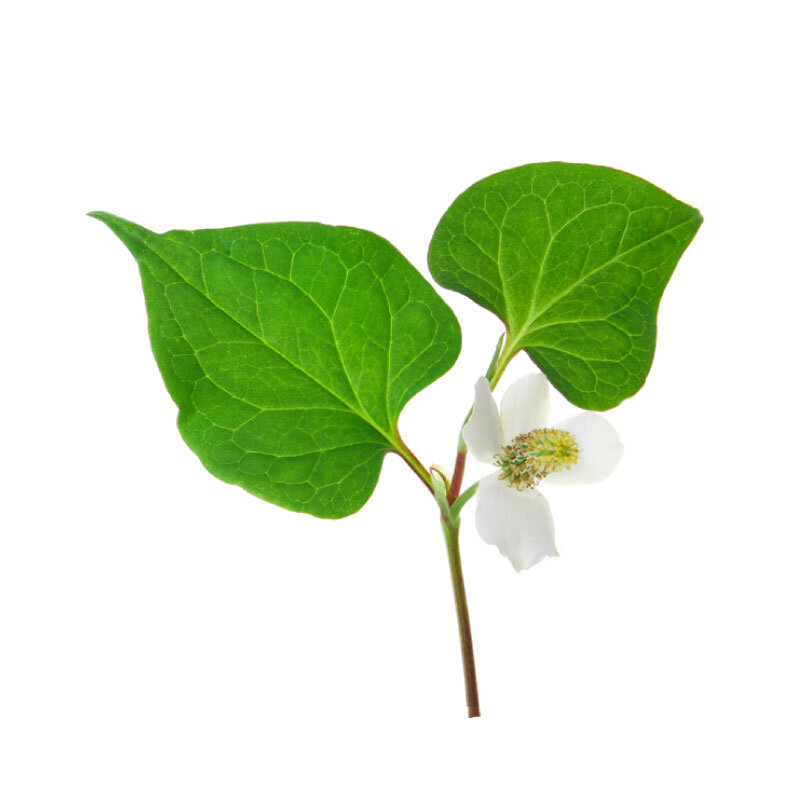
Houttuynia (Houttuynia cordata), fish mint — a strongly antiviral herb studied against coronaviruses, influenza and herpes.
What Is Houttuynia?
Houttuynia is a Southeast Asian herb that’s spread all over the world as an invasive species. It’s common name “fish mint” refers to the strong fish-like aroma of the essential oil content. This characteristic flavor makes the herb useful as a flavoring in various dishes.
The fishy roots of the herb are also eaten as a vegetable in some Asian dishes.
Houttuynia drew intense interest during the SARS and COVID-19 outbreaks as a candidate antiviral, though that work has stayed at the laboratory level and no clinical antiviral role has emerged.
In vitro and animal studies show activity against a range of viruses — herpes simplex types 1 and 2 and influenza are the best-replicated — alongside anti-inflammatory, antibacterial and antidiabetic effects. Almost all of this evidence is preclinical, and results vary sharply with the preparation used (essential oil vs. water extract vs. flavonoid or polysaccharide fraction). See the research section below for the detail.
What Is Houttuynia Used For?
Houttuynia is primarily used for bacterial and viral infections of the respiratory tract. Traditionally it was favoured as a preventive taken before or early in an infection, though there is no clinical evidence that it prevents or shortens viral illness in people.
Other applications of the herb are for its diuretic effects, anti-allergic effects, anti-inflammatory actions, and for diabetes.
Traditional Uses
In Southeast Asia, where houttuynia thrives, the leaves are used in a lot of local culinary dishes. The leaves have a characteristic “fishy” flavor and aroma that lend itself to some dishes as a garnish or spice. In parts of China, the roots are eaten in a dish called Zhé’ěrgēn.
Medicinally, fish mint has had a long history of use in Japan, Korea, China, and Vietnam for a wide range of conditions.
The leaves of the fish mint plant were traditionally used for the following:
- Digestive issues
- Insect bites
- Hypertension
- Constipation
- Hyperglycemia
- Influenza or other viral infections
- Pneumonia
- Kidney disorders
- Inflammation of the urinary tract
- Cough
- Insect repellant
Topically, the herb was used for sores, carbuncles, and inflammation.
In traditional Chinese medicine the herb was used to reduce heat.
Botany
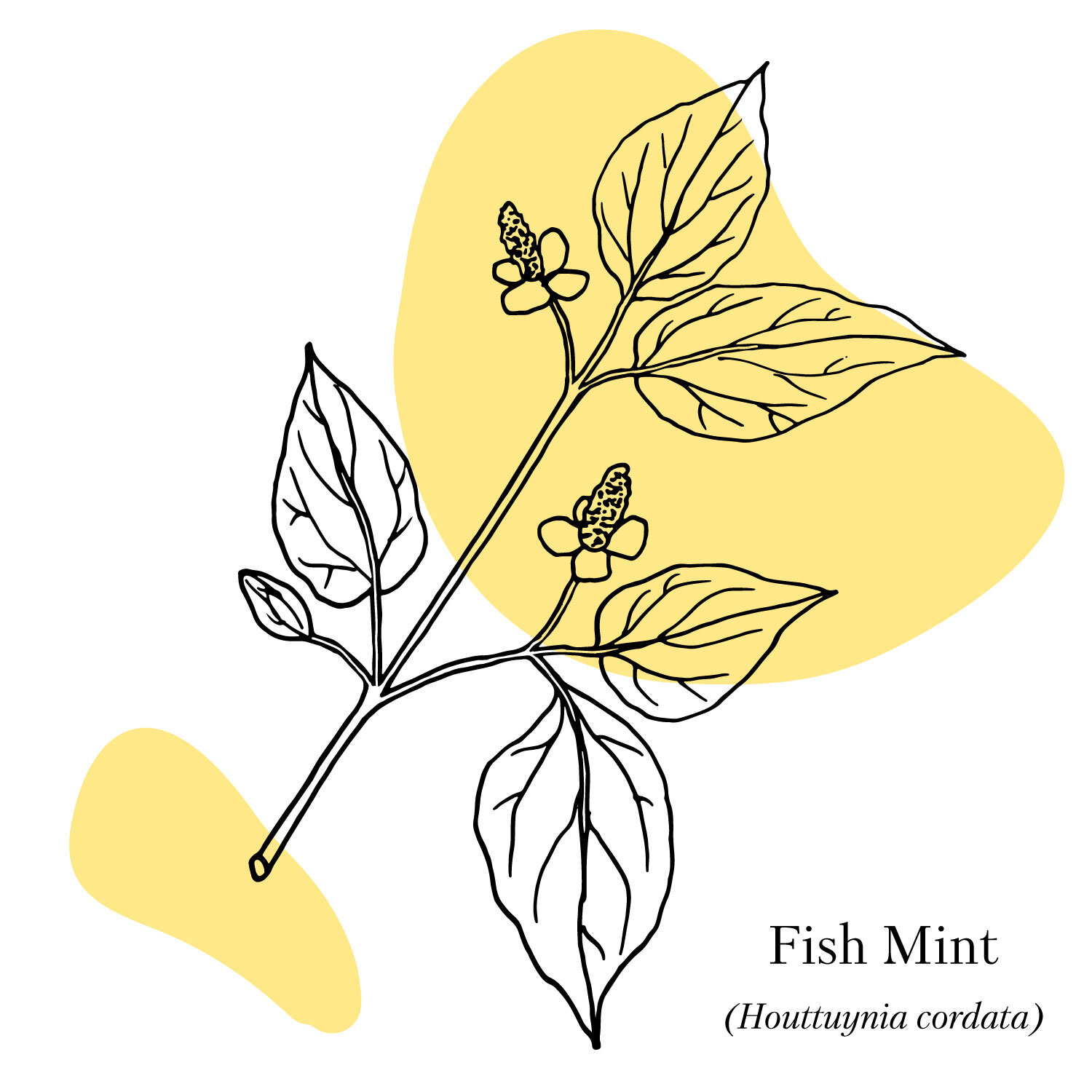
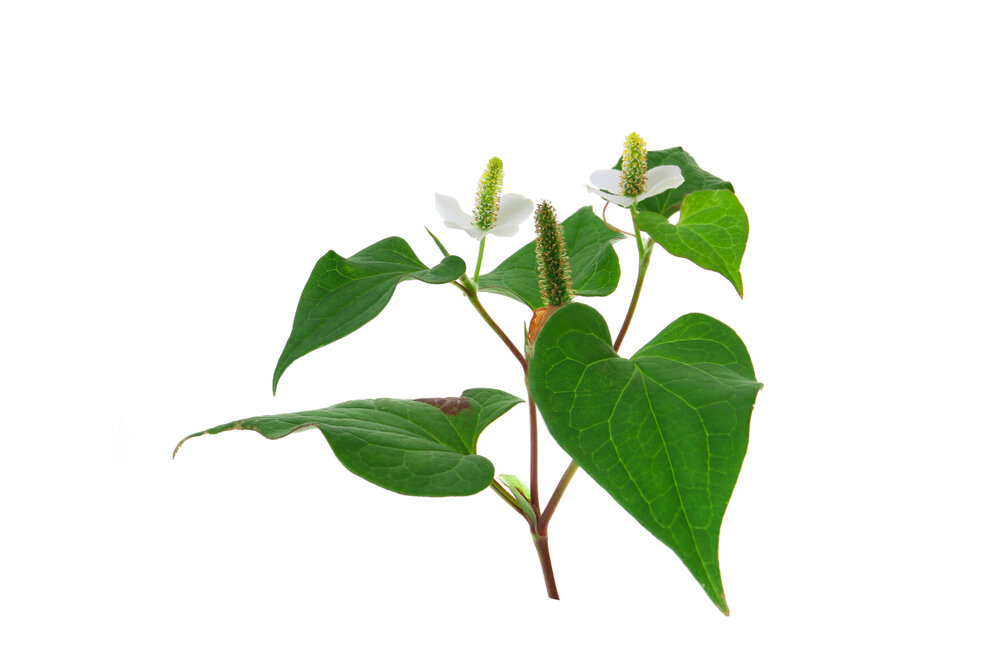
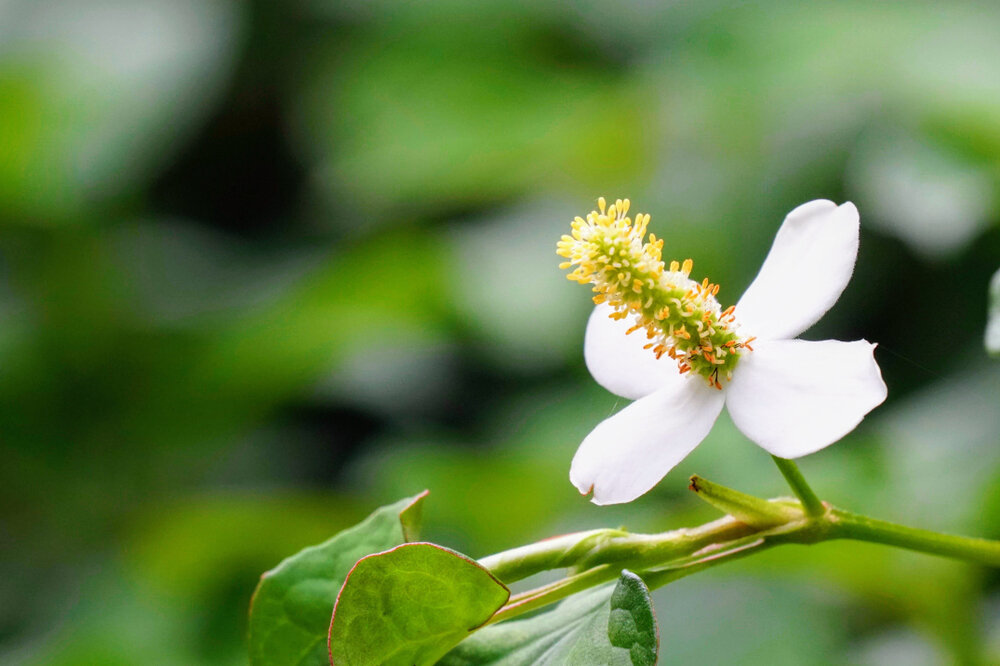
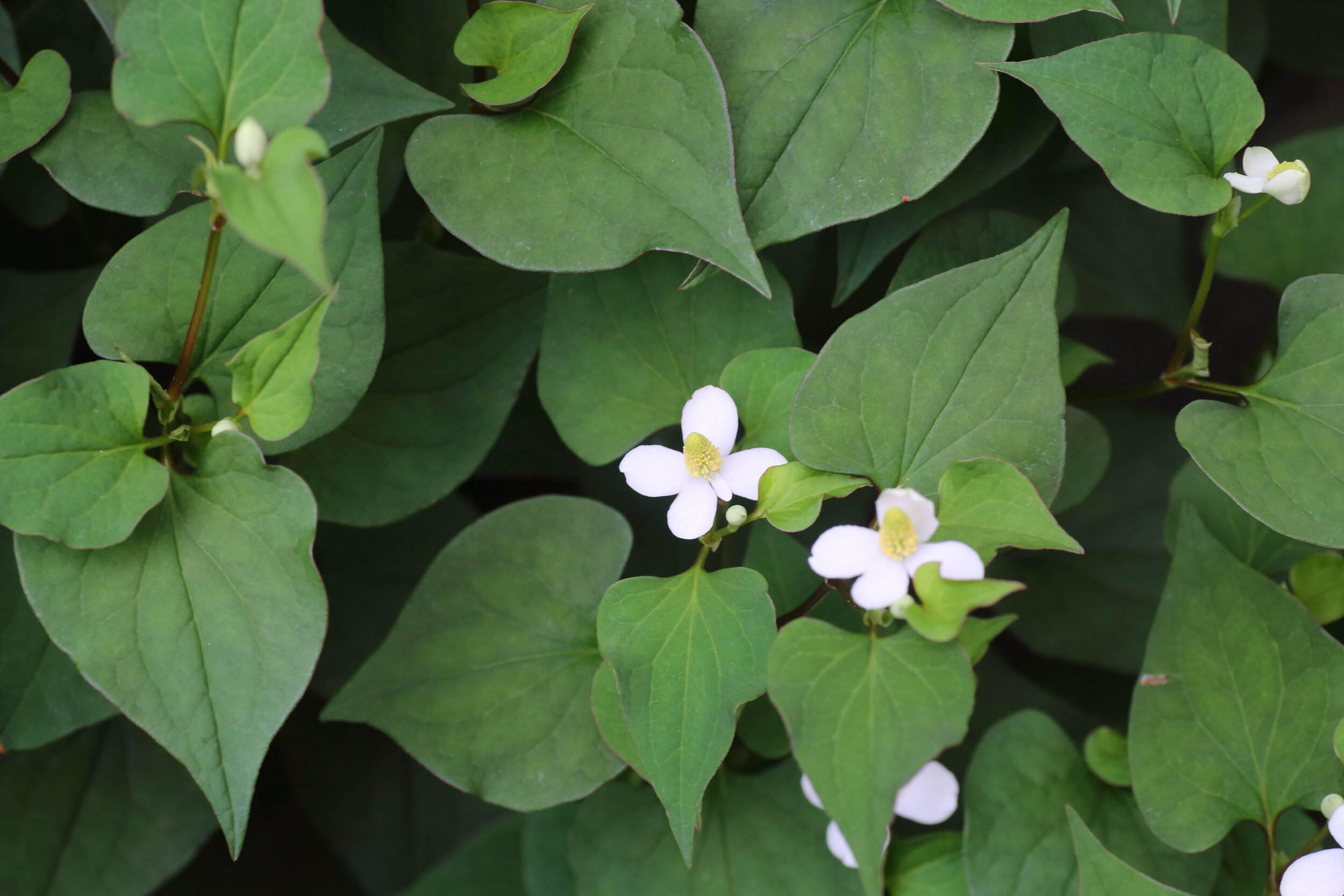
Houttuynia cordata belongs to the lizard’s-tail family (Saururaceae), a small clan of wetland perennials named for the tail-like flower spikes. It is a low, rhizomatous, mat-forming herb with heart-shaped leaves and short flower spikes wrapped in four white bracts; the underside of the leaf often carries a purple hue, and ornamental cultivars like ‘Chameleon’ come in mixed cream, pink, yellow and red.
The medicinal and culinary part is the aromatic aerial growth — chiefly the leaves — which give off a pronounced fishy, coriander-like smell when crushed. That distinctive aroma is the plant’s calling card: in Southeast Asia the fresh leaves are eaten raw as “fish mint,” while in traditional Chinese medicine the herb is known as yu xing cao (literally “fishy-smell herb”). Despite the name, it is unrelated to the true mints; two aroma types circulate — a more citrus-scented Japanese form and a fishier, coriander-scented Chinese form.
Distribution
Native across a wide swathe of Asia — from the Himalaya through China, Japan and Korea into Southeast Asia — where it grows in damp, shaded ground. It has since been carried into gardens worldwide and naturalized in parts of Europe and North America, where its running rhizomes make it an aggressive spreader that is hard to remove once settled.
Growing Conditions
- Thrives in consistently moist to wet soil in full sun or part shade; happiest at a pond edge or in a boggy spot.
- Grows from vigorous underground rhizomes and forms a dense, low ground-covering mat.
- Spreads aggressively and is considered locally invasive — best contained in a pot or a bottomless sunken container, never let loose in an open bed.
- Broken rhizome fragments regrow readily, so it is very difficult to fully eradicate once established.
- Full cultivation detail lives on the companion farm-wiki grow guide for Houttuynia cordata (link to be added once that project’s public URL is confirmed).
Harvesting, Collection & Preparation
Houttuynia prefers growing in shady, moist environments and can even grow while slightly submerged in water. You can often find this herb growing nearby streams, and in deep forests. This herb is very resourceful and can be very difficult to get rid of.
Once houttuynia finds an area it likes it will take over completely — causing many regions to classify it as a potential threat to the environment.
It’s considered an invasive weed in places such as the United States, Australia, various pacific islands, and South America. It reportedly thrives in USDA Zones 5a to 9b.
In Asia, the herb can be found growing anywhere from sea level to around 2500 meters in altitude.
Fish mint loves water, so make sure to keep this one wet at all times. As long as the leaves remain above the water-level the plant will continue to thrive.
This herb is a perennial, growing up to 1 meter in height and spreading out in a 1 meter radius. It primarily spreads with the help of adventitious roots that creep along the moist soil of the rainforest bottom.
Propagating the plant is best done from cuttings. The seeds of the plant are usually sterile.
Pharmacology & Research
Houttuynia cordata carries a large but lopsided evidence base: well over a hundred PubMed-indexed studies, almost all of them in vitro or in animals. The most distinctive and best-replicated signal is antiviral — a family of flavonoid glycosides unique to this plant (the houttuynoids) shows consistent activity against herpes simplex virus, while polysaccharide and flavonoid fractions repeatedly protect mice from influenza-driven lung injury 1,2,3,4,5,6,9,10Reference 1In vitroVirucidal effects of the steam distillate from Houttuynia cordata and its components on HSV-1, influenza virus, and HIV — in vitroView study →Reference 2In vitroHouttuynoids A–E, anti-herpes simplex virus active flavonoids with novel skeletons from Houttuynia cordata — in vitroView study →Reference 3In vitroHouttuynia cordata blocks HSV infection through inhibition of NF-κB activation — in vitroView study →Reference 4In vitroHouttuynia cordata targets the beginning stage of herpes simplex virus infection — in vitroView study →Reference 5In vitroAnti-herpes simplex virus type 1 activity of Houttuynoid A, a flavonoid from Houttuynia cordata — in vitroView study →Reference 6In vitroHouttuynoid M, an anti-HSV active houttuynoid from Houttuynia cordata — in vitroView study →Reference 9AnimalTherapeutic effects on H1N1-induced pneumonia in mice and intestinal biotransformation of four main flavonoids from Houttuynia cordata — animal modelView study →Reference 10AnimalAn anti-complement homogeneous polysaccharide from Houttuynia cordata ameliorates acute pneumonia from viral–bacterial co-infection — animal modelView study →. Anti-inflammatory, antibacterial and antidiabetic effects are also reproducible in animals 8,11,12,14Reference 8In vitroHouttuynia cordata volatile oil exhibited anti-inflammatory effects in vivo and inhibited nitric oxide and TNF-α in vitro — animal modelView study →Reference 11In vitroAnti-bacterial and anti-inflammatory effects of ethanol extract from Houttuynia cordata poultice — in vitroView study →Reference 12In vitroChemical composition and allelopathic, antibacterial, antifungal, and antiacetylcholinesterase activity of fish-mint (Houttuynia cordata) from India — in vitroView study →Reference 14AnimalAntihyperglycemic activity of Houttuynia cordata Thunb. in streptozotocin-induced diabetic rats — animal modelView study →. The much-publicised anti-SARS/coronavirus work is real but rests on enzyme-inhibition and immune-cell assays plus molecular docking, not clinical outcomes 7Reference 7In vitroImmunomodulatory and anti-SARS activities of Houttuynia cordata — in vitro / animal modelView study →; the only controlled human data is a single trial of a multi-herb formula that merely contains houttuynia 23Reference 23RCTA Houttuynia cordata-based Chinese herbal formula improved symptoms of allergic rhinitis during the COVID-19 pandemic — randomised controlled trialView study →. Two caveats dominate: the essential oil’s composition swings enormously with chemotype and processing, and no standardised human monotherapy dose has been trialled.
- Best-supported: anti-inflammatory activity (volatile oil and flavonoids, multiple animal models) 8,9,10Reference 8In vitroHouttuynia cordata volatile oil exhibited anti-inflammatory effects in vivo and inhibited nitric oxide and TNF-α in vitro — animal modelView study →Reference 9AnimalTherapeutic effects on H1N1-induced pneumonia in mice and intestinal biotransformation of four main flavonoids from Houttuynia cordata — animal modelView study →Reference 10AnimalAn anti-complement homogeneous polysaccharide from Houttuynia cordata ameliorates acute pneumonia from viral–bacterial co-infection — animal modelView study →; anti-herpes activity of the houttuynoid flavonoids in vitro 1,2,3,4,5,6Reference 1In vitroVirucidal effects of the steam distillate from Houttuynia cordata and its components on HSV-1, influenza virus, and HIV — in vitroView study →Reference 2In vitroHouttuynoids A–E, anti-herpes simplex virus active flavonoids with novel skeletons from Houttuynia cordata — in vitroView study →Reference 3In vitroHouttuynia cordata blocks HSV infection through inhibition of NF-κB activation — in vitroView study →Reference 4In vitroHouttuynia cordata targets the beginning stage of herpes simplex virus infection — in vitroView study →Reference 5In vitroAnti-herpes simplex virus type 1 activity of Houttuynoid A, a flavonoid from Houttuynia cordata — in vitroView study →Reference 6In vitroHouttuynoid M, an anti-HSV active houttuynoid from Houttuynia cordata — in vitroView study →.
- Emerging, worth watching: polysaccharide-driven protection against influenza lung injury 9,10Reference 9AnimalTherapeutic effects on H1N1-induced pneumonia in mice and intestinal biotransformation of four main flavonoids from Houttuynia cordata — animal modelView study →Reference 10AnimalAn anti-complement homogeneous polysaccharide from Houttuynia cordata ameliorates acute pneumonia from viral–bacterial co-infection — animal modelView study →; antibacterial action against MRSA and diabetic-wound isolates 11,12,13Reference 11In vitroAnti-bacterial and anti-inflammatory effects of ethanol extract from Houttuynia cordata poultice — in vitroView study →Reference 12In vitroChemical composition and allelopathic, antibacterial, antifungal, and antiacetylcholinesterase activity of fish-mint (Houttuynia cordata) from India — in vitroView study →Reference 13In vitroIn vitro activity of Houttuynia cordata against bacteria isolated from diabetic foot — in vitroView study →.
- Mechanistically thin: antioxidant and hepatoprotective claims rest largely on constituent-level inference (quercetin, hyperoside) and single animal studies 19,20Reference 19In vitroHouttuynia cordata attenuates lipid accumulation via AMP-activated protein kinase signaling in HepG2 cells — in vitroView study →Reference 20AnimalHouttuynia cordata polysaccharide alleviates hepatic ischemia-reperfusion injury by regulating macrophage polarization via TLR4/NF-κB — animal modelView study →.
- The caveat: essentially all efficacy data are preclinical; the sole human RCT tested a multi-herb formula, not the herb alone, and essential-oil chemistry is highly variable 23Reference 23RCTA Houttuynia cordata-based Chinese herbal formula improved symptoms of allergic rhinitis during the COVID-19 pandemic — randomised controlled trialView study →.
1. Anti-inflammatory
This is the most reproducible activity in animals. The steam-distilled volatile oil reduced xylene-, formaldehyde- and carrageenan-induced edema in mice and rats, and lowered prostaglandin E2 (via COX-2), nitric oxide and TNF-α in LPS-stimulated macrophages 8Reference 8In vitroHouttuynia cordata volatile oil exhibited anti-inflammatory effects in vivo and inhibited nitric oxide and TNF-α in vitro — animal modelView study →. Separate work shows the four major leaf flavonoids — rutin, hyperoside, isoquercitrin and quercitrin, plus their aglycone quercetin — and several purified polysaccharides dampen inflammation and lung injury in influenza and hepatic ischemia-reperfusion models, largely through TLR4/NF-κB suppression 9,10,20Reference 9AnimalTherapeutic effects on H1N1-induced pneumonia in mice and intestinal biotransformation of four main flavonoids from Houttuynia cordata — animal modelView study →Reference 10AnimalAn anti-complement homogeneous polysaccharide from Houttuynia cordata ameliorates acute pneumonia from viral–bacterial co-infection — animal modelView study →Reference 20AnimalHouttuynia cordata polysaccharide alleviates hepatic ischemia-reperfusion injury by regulating macrophage polarization via TLR4/NF-κB — animal modelView study →. Effects are dose-dependent and consistent across labs, but every study is preclinical and the active preparation varies (oil vs flavonoid vs polysaccharide).
Gap: No human anti-inflammatory trial, and the three active fractions behave differently — a result for the volatile oil says nothing about a water infusion.
2. Antiherpetic
Houttuynia’s most chemically interesting antiviral story. A steam distillate of the fresh plant directly inactivated HSV-1 in vitro without cytotoxicity, an effect traced to volatile carbonyls including 2-undecanone (methyl n-nonyl ketone) and lauraldehyde 1Reference 1In vitroVirucidal effects of the steam distillate from Houttuynia cordata and its components on HSV-1, influenza virus, and HIV — in vitroView study →. Water extracts block HSV-1, HSV-2 and even acyclovir-resistant HSV-1 by inhibiting viral binding/penetration and NF-κB activation 3,4Reference 3In vitroHouttuynia cordata blocks HSV infection through inhibition of NF-κB activation — in vitroView study →Reference 4In vitroHouttuynia cordata targets the beginning stage of herpes simplex virus infection — in vitroView study →. The standout is a class of flavonoids found only in this genus — the houttuynoids, in which a houttuynin chain is tethered to a hyperoside core; houttuynoids A–E and M show potent anti-HSV activity (IC50 values in the low-micromolar range) in plaque assays 2,5,6Reference 2In vitroHouttuynoids A–E, anti-herpes simplex virus active flavonoids with novel skeletons from Houttuynia cordata — in vitroView study →Reference 5In vitroAnti-herpes simplex virus type 1 activity of Houttuynoid A, a flavonoid from Houttuynia cordata — in vitroView study →Reference 6In vitroHouttuynoid M, an anti-HSV active houttuynoid from Houttuynia cordata — in vitroView study →. All data are in vitro; no animal or human herpes study exists.
Gap: Purely in vitro. The houttuynoids are scarce, structurally complex, and there is no evidence a tea, tincture or topical delivers an antiviral concentration in vivo.
4. Antibacterial
A long traditional use as a “herbal antibiotic” with moderate in vitro support. An ethanol extract of a houttuynia poultice was bactericidal against methicillin-resistant Staphylococcus aureus (MRSA), inhibiting biofilm formation and inducing IL-8 11Reference 11In vitroAnti-bacterial and anti-inflammatory effects of ethanol extract from Houttuynia cordata poultice — in vitroView study →. The essential oil shows antibacterial and antifungal activity in India-sourced material, though potency tracks the highly variable oil composition 12Reference 12In vitroChemical composition and allelopathic, antibacterial, antifungal, and antiacetylcholinesterase activity of fish-mint (Houttuynia cordata) from India — in vitroView study →. More recently, extracts inhibited S. aureus and Pseudomonas aeruginosa clinical isolates from diabetic-foot ulcers in vitro 13Reference 13In vitroIn vitro activity of Houttuynia cordata against bacteria isolated from diabetic foot — in vitroView study →. Effects are real but preparation-dependent and unconfirmed in any controlled human infection.
Gap: All activity is in vitro; minimum inhibitory concentrations are modest versus conventional antibiotics, and no clinical antibacterial outcome has been shown.
5. Antidiabetic
Several independent streptozotocin-induced diabetic-rat studies converge. A standardised extract (200–400 mg/kg for 21 days) significantly lowered fasting glucose and raised insulin, attributed to pancreatic β-cell protection and up-regulation of the insulin-dependent glucose transporter GLUT-4 alongside antioxidant activity 14Reference 14AnimalAntihyperglycemic activity of Houttuynia cordata Thunb. in streptozotocin-induced diabetic rats — animal modelView study →. Ethanolic and fermented preparations reproduce glucose-lowering and lipid-improving effects in the same model 15,16Reference 15AnimalImpacts of Plu kaow (Houttuynia cordata) ethanolic extract on diabetes and dyslipidemia in STZ-induced diabetic rats — animal modelView study →Reference 16AnimalEffects of fermented Houttuynia cordata on diabetic rats and on insulin resistance in 3T3-L1 adipocytes — animal modelView study →. The signal is consistent across labs but confined to rodents; the herb is eaten as a “medicinal salad” for blood sugar in north-east India, which motivates the work.
Gap: Animal-only, all in chemically-induced diabetes; no human glucose or HbA1c data, and doses were high relative to culinary intake.
6. Antiallergic
Water extracts inhibited systemic anaphylaxis and local allergic reactions in mice by stabilising mast cells — reducing degranulation, histamine release and calcium influx 17Reference 17AnimalInhibitory effects of Houttuynia cordata water extracts on anaphylactic reaction and mast cell activation — animal modelView study → — and suppressed IgE-mediated responses by blocking multiple steps of FcεRI signalling 18Reference 18AnimalHouttuynia cordata water extract suppresses anaphylactic reaction and IgE-mediated allergic response by inhibiting FcεRI signaling in mast cells — animal modelView study →. A related Th2-suppressing effect (lower IL-4, IL-5) supports use in allergic inflammation. This coexists with an important paradox: the injectable houttuynia preparation is itself a documented cause of anaphylactoid reactions, apparently via the MRGPRB2/X2 receptor 26Reference 26Mrgprb2 gene plays a role in the anaphylactoid reactions induced by Houttuynia cordata injection — animal / mechanisticView study → — the oral extract calms mast cells while the parenteral product can trigger them.
Gap: Efficacy data are murine; the mast-cell-stabilising oral effect must not be conflated with the parenteral product’s anaphylaxis risk (see Safety).
7. Antioxidant
Largely a constituent-level story. The leaf is rich in quercetin, quercitrin, hyperoside and rutin, flavonoids with well-characterised radical-scavenging chemistry, and in vivo diabetic-rat studies report lower oxidative-stress markers and activation of the Nrf2/HO-1 antioxidant axis after dosing 14,15,16Reference 14AnimalAntihyperglycemic activity of Houttuynia cordata Thunb. in streptozotocin-induced diabetic rats — animal modelView study →Reference 15AnimalImpacts of Plu kaow (Houttuynia cordata) ethanolic extract on diabetes and dyslipidemia in STZ-induced diabetic rats — animal modelView study →Reference 16AnimalEffects of fermented Houttuynia cordata on diabetic rats and on insulin resistance in 3T3-L1 adipocytes — animal modelView study →. The activity is plausible and mechanism-mapped rather than demonstrated as a standalone clinical benefit.
Gap: Rests on known flavonoid chemistry plus secondary in vivo markers; no dedicated human antioxidant-status trial.
8. Hepatoprotective
Two threads. In HepG2 hepatocytes, an extract curbed high-glucose-induced lipid accumulation by activating AMP-activated protein kinase (AMPK) 19Reference 19In vitroHouttuynia cordata attenuates lipid accumulation via AMP-activated protein kinase signaling in HepG2 cells — in vitroView study →. In vivo, a purified polysaccharide reduced liver injury (lower ALT/AST, less oxidative stress) in a mouse hepatic ischemia-reperfusion model by steering macrophages away from a pro-inflammatory state via TLR4/NF-κB 20Reference 20AnimalHouttuynia cordata polysaccharide alleviates hepatic ischemia-reperfusion injury by regulating macrophage polarization via TLR4/NF-κB — animal modelView study →. Supportive but sparse.
Gap: One cell-line study and one animal model; no repeated replication and no human liver data.
9. Anticancer
Preliminary. Five bioactive alkaloids isolated from houttuynia were cytotoxic to a panel of human cancer cell lines (lung A549, ovarian SK-OV-3, melanoma SK-MEL-2, CNS XF-498, colon HCT-15) in vitro 21Reference 21In vitroCytotoxic alkaloids from Houttuynia cordata — in vitroView study →. More recent work reports the essential oil inhibits diffuse large B-cell lymphoma cells and slows tumour growth in mice 22Reference 22In vitroHouttuynia cordata Thunb. essential oil inhibits diffuse large B-cell lymphoma growth — in vitro / animal modelView study →. These are early-stage cytotoxicity findings, not evidence of anticancer use.
Gap: Cell-line and single-model data only; cytotoxicity to cancer lines does not establish selectivity, safety or clinical benefit.
10. Diuretic
Diuresis is a core traditional and pharmacopoeial indication — in Chinese medicine houttuynia is used to promote urination and drain damp-heat, and “diuretic” is among its listed herbal actions 27Reference 27ReviewHouttuynia cordata Thunb: an ethnopharmacological review — reviewView study →. Modern experimental confirmation is almost absent; the property is asserted in reviews but not backed by controlled measurement of urine output or electrolyte handling.
Gap: Essentially traditional. No modern pharmacological study quantifies a diuretic effect, so the score reflects documented use rather than tested activity.
Mechanisms
| Mechanism | Drives | Key compounds |
|---|---|---|
| NF-κB ↓, COX-2/PGE2 ↓, NO ↓, TNF-α ↓ | anti-inflammatoryantiherpetichepatoprotective | houttuynin, quercitrin, myrcene |
| Viral binding/penetration blockade; envelope disruption | antiherpeticrespiratory antiviral | 2-undecanone, lauraldehyde (houttuynoids as a class) |
| SARS-CoV 3CLpro & RdRp inhibition; CD4+/CD8+, IL-2/IL-10 modulation | respiratory antiviral | whole extract (fraction-level) |
| Mast-cell stabilisation, FcεRI signalling ↓, histamine ↓ | antiallergic | water-extract fraction |
| GLUT-4 ↑, β-cell protection; Nrf2/HO-1 axis | antidiabeticantioxidant | quercetin, hyperoside |
| AMPK activation; TLR4/NF-κB ↓ (macrophage repolarisation) | hepatoprotectiveanti-inflammatory | leaf polysaccharides |
Clinical trials
No registered trials test houttuynia as a single herb; the only controlled human evidence is one randomised trial of a multi-herb formula (Zheng-Yi-Fang) that contains houttuynia and improved allergic-rhinitis symptoms over four weeks 23Reference 23RCTA Houttuynia cordata-based Chinese herbal formula improved symptoms of allergic rhinitis during the COVID-19 pandemic — randomised controlled trialView study →, and ClinicalTrials.gov lists several other multi-herb TCM formulas (e.g. Jing Si tea) that include it. The monotherapy evidence base is entirely preclinical.
| Completed | Planned | Terminated | Preclinical |
|---|---|---|---|
| 1(multi-herb formula) | 0 | 0 | ~150+ |
Last checked: July 2026.
Phytochemistry
Two fractions carry most of houttuynia’s activity. The first is the pungent essential oil, whose antimicrobial marker is houttuynin (decanoyl acetaldehyde / 3-oxo-dodecanal) — an unstable aldehyde that readily degrades to the stable ketone 2-undecanone, the compound used to standardise the oil — alongside large amounts of the monoterpene myrcene 12,27Reference 12In vitroChemical composition and allelopathic, antibacterial, antifungal, and antiacetylcholinesterase activity of fish-mint (Houttuynia cordata) from India — in vitroView study →Reference 27ReviewHouttuynia cordata Thunb: an ethnopharmacological review — reviewView study →. The second is the flavonoid fraction of the leaf, dominated by quercitrin and hyperoside, the glycosides tied to its anti-inflammatory and antiviral effects 28Reference 28Simultaneous quantification of eight bioactive components of Houttuynia cordata and related Saururaceae medicinal plants by HPLC-DAD-ESI-MS — analytical chemistryView study →.
Essential-oil proportions are extremely variable: houttuynin/2-undecanone and myrcene each swing from single digits to roughly half the oil depending on chemotype, harvest season, and how the oil is processed 12,27Reference 12In vitroChemical composition and allelopathic, antibacterial, antifungal, and antiacetylcholinesterase activity of fish-mint (Houttuynia cordata) from India — in vitroView study →Reference 27ReviewHouttuynia cordata Thunb: an ethnopharmacological review — reviewView study →.
Constituent Summary
Essential-oil figures are % of the volatile oil; flavonoid figures are % of total flavonoid content of the leaf. Ranges are wide because composition shifts markedly with origin, season, and distillation 12,27,28Reference 12In vitroChemical composition and allelopathic, antibacterial, antifungal, and antiacetylcholinesterase activity of fish-mint (Houttuynia cordata) from India — in vitroView study →Reference 27ReviewHouttuynia cordata Thunb: an ethnopharmacological review — reviewView study →Reference 28Simultaneous quantification of eight bioactive components of Houttuynia cordata and related Saururaceae medicinal plants by HPLC-DAD-ESI-MS — analytical chemistryView study →.
Lipid6 compounds2 with data
Monoterpene7 compounds2 with data
Sesquiterpene2 compoundsno data
Flavonoid5 compounds4 with data
Two safety-relevant minor alkaloids also occur in the leaf — aristolactam I and aristolactam BII, structural analogues of aristolochic acid I. They are the herb’s key food-safety consideration and are covered under Safety; dietary-level exposure appears low-risk owing to poor oral bioavailability, but aristolactam content varies with plant material 24Reference 24AnimalSafety evaluation of aristolactams from the edible herb Houttuynia cordata: implications for dietary exposure and food safety — animal modelView study →.
Dosage
In research, houttuynia is almost always given as a standardised or crude extract in animal models; no human monotherapy dose has been established, and the doses below are what the studies used, not recommendations.
| Indication | Preparation | Dose | Est. dried-herb equivalent | Source |
|---|---|---|---|---|
| Antidiabetic | Standardised extract, oral (rat) | 200–400 mg/kg/day × 21 d | — (animal mg/kg; not human-convertible) | 14Reference 14AnimalAntihyperglycemic activity of Houttuynia cordata Thunb. in streptozotocin-induced diabetic rats — animal modelView study → |
| Antidiabetic / antioxidant | Ethanolic extract, oral (rat) | 500 mg/kg/day × 28 d | — (animal) | 15Reference 15AnimalImpacts of Plu kaow (Houttuynia cordata) ethanolic extract on diabetes and dyslipidemia in STZ-induced diabetic rats — animal modelView study → |
| Antidiabetic | Fermented extract, oral (rat) | 100 mg/kg/day | — (animal) | 16Reference 16AnimalEffects of fermented Houttuynia cordata on diabetic rats and on insulin resistance in 3T3-L1 adipocytes — animal modelView study → |
| Anti-inflammatory | Volatile oil, oral/topical (mouse/rat edema models) | dose varies by model | — (animal; essential oil, not tea) | 8Reference 8In vitroHouttuynia cordata volatile oil exhibited anti-inflammatory effects in vivo and inhibited nitric oxide and TNF-α in vitro — animal modelView study → |
| Allergic rhinitis | Multi-herb formula (ZYF), oral (human) | formula dose, 4 weeks | — (houttuynia content not isolated) | 23Reference 23RCTA Houttuynia cordata-based Chinese herbal formula improved symptoms of allergic rhinitis during the COVID-19 pandemic — randomised controlled trialView study → |
All efficacy doses are animal (mg/kg) except the multi-herb formula RCT; none establishes a human monotherapy dose, and mg/kg rat doses should not be back-converted to a human whole-herb weight.
Traditional Dosage
Traditional whole-herb doses come from the reference texts, not the trials, and are not interchangeable with the research doses above.
| System | Preparation | Dose |
|---|---|---|
| TCM (Chinese Pharmacopoeia, Yu Xing Cao) | Dried aerial parts, decoction (added late/briefly, as the volatiles are heat-labile) | 15–25 g (up to 30 g); fresh herb double |
| TCM | Fresh herb, juiced/poultice (topical for sores, carbuncles) | applied topically, quantity to lesion |
| Western herbal | Dried herb infusion/decoction | ~15–30 g (per the page’s stated 1:30 decoction) |
Safety & Pregnancy
Houttuynia is eaten as a leaf vegetable and is generally well tolerated as a food, with allergy and a low-level aristolactam (aristolochic-acid analogue) exposure the main oral cautions. The injectable hospital product — a separate thing from the oral herb — has a serious record of anaphylactoid reactions.
- Injectable form — serious reactions. The hospital IV product (not the oral herb) has a documented record of anaphylactoid reactions, including shock and deaths; this does not transfer to culinary or oral use.
- Aristolactams. Contains aristolochic-acid I analogues, a nephrotoxic/carcinogenic class; dietary-level exposure appears low-risk owing to poor oral bioavailability, but content varies with plant material.
- Allergy. Can provoke genuine allergic reactions in sensitive individuals.
- Interactions unassessed. No oral-herb drug or CYP450 interaction has been studied — assume unknown; long-term use (over ~2 months) should be avoided.
- Well tolerated as a food. Generally well tolerated as a leaf vegetable across East and Southeast Asia.
Full safety & interactions detail
Houttuynia is eaten as a leaf vegetable across East and Southeast Asia and is generally well tolerated as a food, but three cautions deserve mention. First, it can provoke genuine allergic reactions in sensitive individuals. Second — and largely absent from most monographs — the plant contains aristolactams, structural analogues of the nephrotoxic and carcinogenic aristolochic acid I; a 2025 mouse study found the predominant aristolactams (AL I, AL BII) caused only modest kidney changes at dietary levels, attributed to low oral bioavailability and metabolism to less toxic forms, and concluded typical dietary consumption is likely safe while urging monitoring of aristolactam content 24Reference 24AnimalSafety evaluation of aristolactams from the edible herb Houttuynia cordata: implications for dietary exposure and food safety — animal modelView study →. Third, the injectable houttuynia preparation used in Chinese hospitals (not the oral herb) has a well-documented record of serious anaphylactoid reactions: a systematic review of 1,232 adverse-drug-reaction cases found anaphylactic shock accounted for roughly 59% of the most severe events and was responsible for the reported deaths, with risk raised by intravenous administration and by combining the injection with macrolide, cephalosporin or penicillin antibiotics 25,26Reference 25Systematic reviewAdverse events to Houttuynia injection — systematic reviewView study →Reference 26Mrgprb2 gene plays a role in the anaphylactoid reactions induced by Houttuynia cordata injection — animal / mechanisticView study →. These injection risks do not transfer to culinary or oral use, but they underscore that the herb is immunologically active.
Interactions and CYP450 — not assessed for the oral herb. The only documented interactions concern the injectable product co-administered with macrolide, cephalosporin or penicillin antibiotics (higher adverse-reaction risk) 25Reference 25Systematic reviewAdverse events to Houttuynia injection — systematic reviewView study →. No oral-herb–drug pharmacokinetic interaction (including CYP450) has been studied; assume unknown rather than absent.
Houttuynia has not been specifically studied for safety in human pregnancy or lactation, so no evidence supports its safe use at medicinal doses. The presence of aristolactams (aristolochic-acid analogues with genotoxic potential) provides an additional, precautionary reason to avoid concentrated preparations during pregnancy 24Reference 24AnimalSafety evaluation of aristolactams from the edible herb Houttuynia cordata: implications for dietary exposure and food safety — animal modelView study →. Occasional culinary use of the leaf is a separate, lower-exposure situation, but medicinal doses and extracts should be avoided.
References
- Hayashi, K., Kamiya, M., & Hayashi, T. (1995). Virucidal effects of the steam distillate from Houttuynia cordata and its components on HSV-1, influenza virus, and HIV — in vitro. Planta Medica. https://pubmed.ncbi.nlm.nih.gov/7617766/
- Chen, S. D., Gao, H., Zhu, Q. C., et al. (2012). Houttuynoids A–E, anti-herpes simplex virus active flavonoids with novel skeletons from Houttuynia cordata — in vitro. Organic Letters. https://pubmed.ncbi.nlm.nih.gov/22414220/
- Chen, X., Wang, Z., Yang, Z., et al. (2011). Houttuynia cordata blocks HSV infection through inhibition of NF-κB activation — in vitro. Antiviral Research. https://pubmed.ncbi.nlm.nih.gov/21951655/
- Hung, P. Y., Ho, B. C., Lee, S. Y., et al. (2015). Houttuynia cordata targets the beginning stage of herpes simplex virus infection — in vitro. PLoS ONE. https://pubmed.ncbi.nlm.nih.gov/25643242/
- Li, T., Liu, L., Wu, H., et al. (2017). Anti-herpes simplex virus type 1 activity of Houttuynoid A, a flavonoid from Houttuynia cordata — in vitro. Antiviral Research. https://pubmed.ncbi.nlm.nih.gov/28629987/
- Li, J. J., Chen, G. D., Fan, H. X., et al. (2017). Houttuynoid M, an anti-HSV active houttuynoid from Houttuynia cordata — in vitro. Journal of Natural Products. https://pubmed.ncbi.nlm.nih.gov/29099182/
- Lau, K. M., Lee, K. M., Koon, C. M., et al. (2008). Immunomodulatory and anti-SARS activities of Houttuynia cordata — in vitro / animal model. Journal of Ethnopharmacology. https://pubmed.ncbi.nlm.nih.gov/18479853/
- Li, W., Fan, T., Zhang, Y., et al. (2013). Houttuynia cordata volatile oil exhibited anti-inflammatory effects in vivo and inhibited nitric oxide and TNF-α in vitro — animal model. Phytotherapy Research. https://pubmed.ncbi.nlm.nih.gov/23280586/
- Tang, J., Li, X., Chen, Y., et al. (2023). Therapeutic effects on H1N1-induced pneumonia in mice and intestinal biotransformation of four main flavonoids from Houttuynia cordata — animal model. Journal of Pharmaceutical and Biomedical Analysis. https://pubmed.ncbi.nlm.nih.gov/37244222/
- Li, X., et al. (2025). An anti-complement homogeneous polysaccharide from Houttuynia cordata ameliorates acute pneumonia from viral–bacterial co-infection — animal model. Acta Pharmaceutica Sinica B. https://pubmed.ncbi.nlm.nih.gov/40654358/
- Sekita, Y., Murakami, K., Yumoto, H., et al. (2016). Anti-bacterial and anti-inflammatory effects of ethanol extract from Houttuynia cordata poultice — in vitro. Bioscience, Biotechnology, and Biochemistry. https://pubmed.ncbi.nlm.nih.gov/27023331/
- Verma, R. S., Joshi, N., Padalia, R. C., et al. (2017). Chemical composition and allelopathic, antibacterial, antifungal, and antiacetylcholinesterase activity of fish-mint (Houttuynia cordata) from India — in vitro. Chemistry & Biodiversity. https://pubmed.ncbi.nlm.nih.gov/28636756/
- Geng, C., et al. (2025). In vitro activity of Houttuynia cordata against bacteria isolated from diabetic foot — in vitro. Hereditas. https://pubmed.ncbi.nlm.nih.gov/40745559/
- Kumar, M., Prasad, S. K., Krishnamurthy, S., & Hemalatha, S. (2014). Antihyperglycemic activity of Houttuynia cordata Thunb. in streptozotocin-induced diabetic rats — animal model. Advances in Pharmacological Sciences. https://pubmed.ncbi.nlm.nih.gov/24707284/
- Rahman, S. S., et al. (2024). Impacts of Plu kaow (Houttuynia cordata) ethanolic extract on diabetes and dyslipidemia in STZ-induced diabetic rats — animal model. Antioxidants. https://pubmed.ncbi.nlm.nih.gov/39334723/
- Sakuludomkan, W., et al. (2021). Effects of fermented Houttuynia cordata on diabetic rats and on insulin resistance in 3T3-L1 adipocytes — animal model. Journal of Nutrition and Metabolism. https://pubmed.ncbi.nlm.nih.gov/34394985/
- Li, G. Z., Chai, O. H., Lee, M. S., et al. (2005). Inhibitory effects of Houttuynia cordata water extracts on anaphylactic reaction and mast cell activation — animal model. Biological & Pharmaceutical Bulletin. https://pubmed.ncbi.nlm.nih.gov/16204936/
- Han, E. H., Park, J. H., Kim, J. Y., & Jeong, H. G. (2009). Houttuynia cordata water extract suppresses anaphylactic reaction and IgE-mediated allergic response by inhibiting FcεRI signaling in mast cells — animal model. Food and Chemical Toxicology. https://pubmed.ncbi.nlm.nih.gov/19394399/
- Kang, H., & Koppula, S. (2014). Houttuynia cordata attenuates lipid accumulation via AMP-activated protein kinase signaling in HepG2 cells — in vitro. American Journal of Chinese Medicine. https://pubmed.ncbi.nlm.nih.gov/24871657/
- Yu, B., et al. (2026). Houttuynia cordata polysaccharide alleviates hepatic ischemia-reperfusion injury by regulating macrophage polarization via TLR4/NF-κB — animal model. Biomedicines. https://pubmed.ncbi.nlm.nih.gov/41751332/
- Kim, S. K., Ryu, S. Y., No, J., et al. (2001). Cytotoxic alkaloids from Houttuynia cordata — in vitro. Archives of Pharmacal Research. https://pubmed.ncbi.nlm.nih.gov/11794526/
- Peng, Y., et al. (2026). Houttuynia cordata Thunb. essential oil inhibits diffuse large B-cell lymphoma growth — in vitro / animal model. Journal of Oleo Science. https://pubmed.ncbi.nlm.nih.gov/41765394/
- Chang, K. W., et al. (2022). A Houttuynia cordata-based Chinese herbal formula improved symptoms of allergic rhinitis during the COVID-19 pandemic — randomised controlled trial. Journal of the Chinese Medical Association. https://pubmed.ncbi.nlm.nih.gov/35421875/
- Xue, S., et al. (2025). Safety evaluation of aristolactams from the edible herb Houttuynia cordata: implications for dietary exposure and food safety — animal model. Food Research International. https://pubmed.ncbi.nlm.nih.gov/41267271/
- Wang, L., Cui, X., Cheng, L., et al. (2010). Adverse events to Houttuynia injection — systematic review. Journal of Evidence-Based Medicine. https://pubmed.ncbi.nlm.nih.gov/21349062/
- Sun, X., et al. (2022). Mrgprb2 gene plays a role in the anaphylactoid reactions induced by Houttuynia cordata injection — animal / mechanistic. Journal of Ethnopharmacology. https://pubmed.ncbi.nlm.nih.gov/35104575/
- Wu, Z., Deng, X., Hu, Q., et al. (2021). Houttuynia cordata Thunb: an ethnopharmacological review — review. Frontiers in Pharmacology. https://pubmed.ncbi.nlm.nih.gov/34539401/
- Meng, J., Leung, K. S. Y., Dong, X. P., et al. (2009). Simultaneous quantification of eight bioactive components of Houttuynia cordata and related Saururaceae medicinal plants by HPLC-DAD-ESI-MS — analytical chemistry. Fitoterapia. https://pubmed.ncbi.nlm.nih.gov/19559769/