
Materia Medica
Juniper
Juniperus communis
Juniper (Juniperus communis) — an antimicrobial berry used for urinary tract infections, digestion and, increasingly, as a nootropic.
What Is Juniper?
Juniper is a common conifer species that can be found all over North America, Europe, and Asia. It has been a particularly successful species worldwide for its ability to thrive in both hot and cold, wet and dry, and sunny or shaded areas.
The berries are used as a medicine and have a distinctive pine fragrance and flavor. Juniper berries are high in many of the same volatile compounds that can be found in the pine tree and other conifers, and share a similar antimicrobial profile as well.
Juniper is mainly used as a traditional urinary antiseptic and for its antimicrobial actions.
New research is suggesting junipers use as a nootropic to enhance memory.
What Is Juniper Used For?
The berries of juniper are high in antiseptic volatile oils, which makes it useful for microbial infection including topical and upper respiratory tract infections. It’s also a popular traditional urinary antiseptic and diuretic for treating lower urinary tract infections — though the antiseptic reputation is well established in tradition, proven efficacy against clinical UTIs has not been demonstrated in humans.
Newer use involves junipers anti-acetylcholinesterase activity for enhancing memory.
Traditional Uses
The British herbal pharmacopeia lists juniper as a diuretic, antiseptic, carminative, stomachic, and anti-rheumatic useful for acute or chronic cystitis, flatulent colic, edema, and rheumatism. It’s listed as a topical application for rheumatic pain in the joints and muscles 22Reference 22British Herbal Pharmacopoeia.
It was frequently burned by the ancient Greeks to combat epidemics and was used by both the native Tibetans and Native Americans for ceremonial purposes 21Reference 21The complete guide to aromatherapy (2nd ed.).
Juniper is also a popular addition to cooking, especially game meat and fish.
Juniper berries and the essential oils are popular in the perfume, aromatherapy, food, and liquor industries 23Reference 23A comparison between the oil, hexane extract and supercritical carbon dioxide extract of Juniperus communis LView study →.
Botany
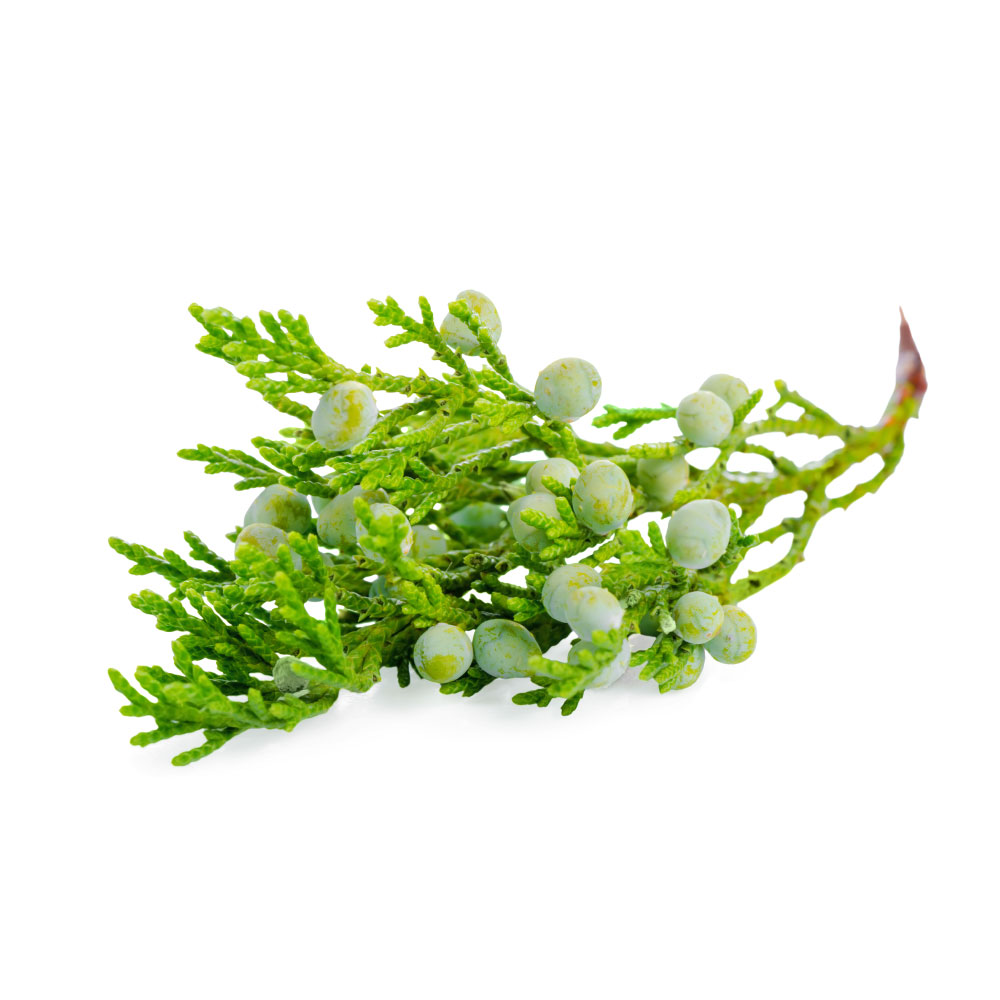
Common juniper is a hardy evergreen conifer — sometimes a low, wind-shorn shrub, sometimes a small upright tree — clothed year-round in short, prickly, needle-shaped leaves set three to a whorl. It is dioecious, meaning male and female plants are separate, so the fruiting “berries” appear only on female specimens.
Those berries are the reason the plant matters to herbalists and distillers, and it pays to understand what they actually are. Botanically they are not berries at all but small seed cones: a handful of cone scales that turn fleshy and fuse into a rounded, berry-like body. They ripen slowly — green at first, then deepening over many months to a blue-black dusted with a pale waxy bloom. This ripe seed cone is the part used to flavour gin and to prepare traditional diuretic and digestive remedies.
One caution overrides everything else: only Juniperus communis berries are used. Several other junipers are unsafe, most notoriously savin (Juniperus sabina), whose foliage and oil are toxic and abortifacient and must never be substituted or foraged by mistake. Even with true common juniper, the berries are avoided in pregnancy. Correct species identification is not optional here.
Distribution
Common juniper is one of the most widely distributed woody plants on Earth, ringing the cool-temperate and boreal Northern Hemisphere across North America, Europe and Asia. This enormous, resilient range makes it a plant of heaths, hillsides and open northern woodland rather than a rarity, and it is assessed as of least conservation concern.
Growing Conditions
- Prefers full sun and open, exposed positions; it naturally grows on heaths, rocky slopes and thin ground.
- Extremely cold-hardy (roughly USDA zones 2–7) and tolerant of wind, drought and poor soils.
- Needs sharply drained soil; dislikes wet, heavy or waterlogged ground.
- Dioecious — a female plant sets its berry-like cones only if a male is nearby, and cones take about 18 months to ripen.
- Full cultivation detail lives on the companion farm-wiki grow guide for Juniperus communis (link to be added once that project’s public URL is confirmed).
Harvesting, Collection & Preparation
When extracting juniper berry, hexane was found to yield a higher amount than both super critical carbon dioxide, and hydrodistillation 23Reference 23A comparison between the oil, hexane extract and supercritical carbon dioxide extract of Juniperus communis LView study →.
If terpene hydrocarbons are desired, extraction by hydrodistillation is best. If the resin is desired (including long-chain paraffinic acids, and hexadecanoic acid) then the hexane or supercritical CO2 is the best extraction method. These methods will also produce a more stable extract. If terpinen-4-ol is desired (diuretic), supercritical CO2 extraction is the best 23Reference 23A comparison between the oil, hexane extract and supercritical carbon dioxide extract of Juniperus communis LView study →.
Phytochemistry
Juniper berry is first and foremost an essential-oil drug: the volatile oil is a mixture of monoterpene terpene hydrocarbons dominated by Alpha-pinene, typically the largest single component at roughly 30–50% of the oil, with Beta-pinene (~5–18%), Myrcene (~3–25%), Sabinene (~5–17%) and Limonene (~1–14%) making up most of the remainder. These pine-scented monoterpenes carry the berry’s antimicrobial and carminative character 1,23Reference 1In vitroChemical composition and antioxidant properties of juniper berry (Juniperus communis L.) essential oil — in vitroView study →Reference 23A comparison between the oil, hexane extract and supercritical carbon dioxide extract of Juniperus communis LView study →.
The diuretic and urinary-antiseptic reputation rests largely on terpinen-4-ol, a minor but pharmacologically important oxygenated monoterpene (trace up to ~6% of the oil) best recovered by supercritical-CO₂ extraction. A separate, less volatile resin fraction holds long-chain paraffinic acids and the fatty acid hexadecanoic acid (palmitic acid); these are the components favoured by hexane or CO₂ extraction over hydrodistillation 23Reference 23A comparison between the oil, hexane extract and supercritical carbon dioxide extract of Juniperus communis LView study →.
Beyond the oil, the berry and needle carry a polyphenol fraction that drives much of the antioxidant and anti-inflammatory activity — the flavonols quercetin, hyperoside and rutin, the flavanonol taxifolin and the organic acid quinic acid, enriched in ethyl-acetate and butanol fractions rather than in the essential oil 2,7Reference 2In vitroFraction-dependent polyphenolic profile and biological activities of Juniperus communis pseudo-fruit extracts: antioxidant, antimicrobial and selective antimelanoma effects — in vitroView study →Reference 7AnimalJuniperus communis L. needle extract modulates oxidative and inflammatory pathways in an experimental model of acute inflammation — animal modelView study →.
Constituent Summary
Percentages are share of the berry essential oil and vary widely with ripeness, provenance and extraction method; polyphenols and resin acids are not part of the oil and are given as No Data.
Monoterpene7 compounds7 with data
Other1 compoundno data
Flavonoid4 compounds4 with data
Organic Acid1 compound1 with data
Lipid2 compounds2 with data
Pharmacology & Research
The published pharmacology of common juniper (Juniperus communis) is sizeable but sits almost entirely in the preclinical tier: dozens of in vitro assays on the berry essential oil and polyphenol-rich extracts, a smaller set of rodent studies, and no completed human efficacy trial for any medicinal indication. The best-replicated activities are antioxidant and antimicrobial — both consistent across independent labs and both matching the berry’s traditional roles as a urinary antiseptic and preservative. The most active emerging signals are anti-inflammatory and anticancer, each now supported by in vivo rodent work as well as cell-line data, while the page’s headline “nootropic” claim rests on a single lab’s inhaled-oil model in amyloid-injected rats. Throughout, extract type is decisive: monoterpene-rich essential oil, whole decoction, and ethyl-acetate polyphenol fractions behave differently, and results from one rarely transfer to another. Read the scores below as a rank of preclinical evidence weight, not as clinical proof.
- Best-supported: antioxidant radical-scavenging and enzyme-restoring activity, replicated in vitro and in cholesterol-fed and inflammation rat models 1,3,6,8Reference 1In vitroChemical composition and antioxidant properties of juniper berry (Juniperus communis L.) essential oil — in vitroView study →Reference 3In vitroEvaluation of fruit extracts of six Turkish Juniperus species for their antioxidant, anticholinesterase and antimicrobial activities — in vitroView study →Reference 6AnimalJuniperus communis Linn oil decreases oxidative stress and increases antioxidant enzymes in the heart of rats administered a cholesterol-rich diet — animal modelView study →Reference 8AnimalJuniperus communis extract ameliorates lipopolysaccharide-induced acute kidney injury through the AMPK pathway — animal modelView study →; broad antimicrobial activity of the berry oil, strongest against Candida and dermatophytes 9Reference 9In vitroAntimicrobial activity of juniper berry essential oil (Juniperus communis L., Cupressaceae) — in vitroView study →.
- Emerging, worth watching: anti-inflammatory NF-κB suppression in vivo 5,8Reference 5AnimalGenoprotective, antioxidant, antifungal and anti-inflammatory evaluation of hydroalcoholic extract of wild-growing Juniperus communis L. — animal modelView study →Reference 8AnimalJuniperus communis extract ameliorates lipopolysaccharide-induced acute kidney injury through the AMPK pathway — animal modelView study → and antiproliferative effects seen across several cancer cell lines with two supporting rodent studies 10,11Reference 10In vitroEvaluation of anticancer effects of Juniperus communis extract on hepatocellular carcinoma cells in vitro and in vivo — animal modelView study →Reference 11AnimalJuniperus communis extract exerts antitumor effects in human glioblastomas through the blood-brain barrier — animal modelView study →.
- Mechanistically thin: the nootropic / anti-acetylcholinesterase claim rests on inhaled volatile oil in one rat amyloid model plus in vitro enzyme inhibition — a preparation (aromatherapy inhalation) unlike how the berry is normally taken 15,3Reference 15AnimalAnti-acetylcholinesterase and antioxidant activities of inhaled juniper oil on amyloid beta (1-42)-induced oxidative stress in the rat hippocampus — animal modelView study →Reference 3In vitroEvaluation of fruit extracts of six Turkish Juniperus species for their antioxidant, anticholinesterase and antimicrobial activities — in vitroView study →.
- The caveat: essential-oil composition (α-pinene 30–50%, terpinen-4-ol trace–6%) swings widely with ripeness, provenance and extraction method, so there is no standardised dose and no human efficacy data to anchor one.
1. Antioxidant
This is juniper’s most consistently documented activity. Berry essential oil from independent samples scavenges DPPH, ABTS, hydroxyl and superoxide radicals and chelates iron in vitro, with α-pinene-dominated oils showing strong electron-transfer antioxidant capacity though weaker lipid-peroxidation inhibition than the reference butylated hydroxytoluene (BHT) 1Reference 1In vitroChemical composition and antioxidant properties of juniper berry (Juniperus communis L.) essential oil — in vitroView study →. Polyphenol-rich fractions — driven by quercetin, hyperoside and rutin rather than the oil — carry the strongest radical-scavenging, and the ethyl-acetate fraction of the pseudo-fruit reaches the highest phenolic content and activity 2,3Reference 2In vitroFraction-dependent polyphenolic profile and biological activities of Juniperus communis pseudo-fruit extracts: antioxidant, antimicrobial and selective antimelanoma effects — in vitroView study →Reference 3In vitroEvaluation of fruit extracts of six Turkish Juniperus species for their antioxidant, anticholinesterase and antimicrobial activities — in vitroView study →. The effect also appears in vivo: juniper oil restored superoxide dismutase, glutathione peroxidase and catalase in the hearts of cholesterol-fed rats 6Reference 6AnimalJuniperus communis Linn oil decreases oxidative stress and increases antioxidant enzymes in the heart of rats administered a cholesterol-rich diet — animal modelView study →, and a needle extract lowered malondialdehyde, protein-oxidation and DNA-oxidation markers in acutely inflamed rats 7Reference 7AnimalJuniperus communis L. needle extract modulates oxidative and inflammatory pathways in an experimental model of acute inflammation — animal modelView study →.
Gap: every result is in vitro or in animals — no human antioxidant biomarker study exists, and the “which fraction” answer (oil vs. polyphenols) changes the active molecules entirely.
2. Antimicrobial
The berry oil shows broad but moderate activity. Against a panel of sixteen bacteria, ten yeasts and dermatophytes, juniper berry oil was similarly bactericidal to Gram-positive and Gram-negative species (MIC 8–70% v/v) but markedly more potent as a fungicide, with the strongest activity against Candida species and dermatophytes (MIC 0.39–2% v/v) 9Reference 9In vitroAntimicrobial activity of juniper berry essential oil (Juniperus communis L., Cupressaceae) — in vitroView study →. Solvent fractions of the pseudo-fruit add weak-to-moderate antibacterial activity, notably against Streptococcus pyogenes 2Reference 2In vitroFraction-dependent polyphenolic profile and biological activities of Juniperus communis pseudo-fruit extracts: antioxidant, antimicrobial and selective antimelanoma effects — in vitroView study →, and reviews consistently list antibacterial, antifungal and antiviral activity as the berry’s best-characterised antimicrobial profile 18,19Reference 18ReviewPotential of Juniperus communis L as a nutraceutical in human and veterinary medicine — reviewView study →Reference 19ReviewZimbro (Juniperus communis L.) as a promising source of bioactive compounds and biomedical activities — reviewView study →. The activity tracks the monoterpene content — alpha-pinene, sabinene and terpinen-4-ol — which aligns mechanistically with the traditional use as a topical and urinary antiseptic.
Gap: all data are in vitro MICs; the concentrations that inhibit microbes in a dish are far above what a diuretic dose or culinary use delivers to urine or tissue, and there is no clinical infection study.
3. Anti-inflammatory
Rodent models give this indication genuine in vivo support. A hydroalcoholic berry extract reduced dextran- and kaolin-induced paw edema in rats, with diclofenac sodium as the reference drug 5Reference 5AnimalGenoprotective, antioxidant, antifungal and anti-inflammatory evaluation of hydroalcoholic extract of wild-growing Juniperus communis L. — animal modelView study →; a comparative screen of five Juniperus taxa also found the methanolic fruit and leaf extracts of J. communis var. saxatilis among the more active in carrageenan-induced edema 16Reference 16AnimalA comparative study on the antinociceptive and anti-inflammatory activities of five Juniperus taxa — animal modelView study →. An ethanolic needle extract attenuated turpentine-oil-induced acute inflammation while lowering NF-κB activity 7Reference 7AnimalJuniperus communis L. needle extract modulates oxidative and inflammatory pathways in an experimental model of acute inflammation — animal modelView study →. Mechanistically the clearest signal comes from an LPS-induced acute kidney injury model, where J. communis extract suppressed NF-κB signalling and activated the AMPK and Nrf2/HO-1 pathways, cutting tumour-necrosis-factor-α and interleukin-1β release 8Reference 8AnimalJuniperus communis extract ameliorates lipopolysaccharide-induced acute kidney injury through the AMPK pathway — animal modelView study →. These converge on NF-κB downregulation as the shared driver of the antioxidant and anti-inflammatory effects.
Gap: consistent across rat models but entirely preclinical; extract types differ between studies (berry vs. needle), and no dose-ranging or human data exist.
4. Hepatoprotective
A phenol-rich ethyl-acetate fraction of J. communis leaves protected rat livers against paracetamol-induced damage, lowering serum aspartate and alanine aminotransferases, total and direct bilirubin, alongside strong DPPH scavenging (IC50 177 µg/mL) and iron chelation 4Reference 4AnimalAntioxidant and hepatoprotective potential of phenol-rich fraction of Juniperus communis Linn. leaves — animal modelView study →. The effect is plausibly downstream of the same antioxidant / NF-κB mechanism, and antitumour work in hepatocellular carcinoma cells is consistent with a hepatic tropism for the extract 10Reference 10In vitroEvaluation of anticancer effects of Juniperus communis extract on hepatocellular carcinoma cells in vitro and in vivo — animal modelView study →.
Gap: rests on a single in vivo model using a leaf fraction — not the berry the herb is actually used as — so the finding does not transfer cleanly to juniper-berry preparations.
5. Anticancer
This is preclinical but unusually well-replicated across models. Berry and whole-plant extracts induce G0/G1 or S-phase arrest and intrinsic-pathway apoptosis — elevated Bax/Bcl-2 ratio, cleaved caspase-3, cytochrome-c release — in hepatocellular carcinoma, cervical (HeLa) and colorectal (HCT 116) cells 10,12Reference 10In vitroEvaluation of anticancer effects of Juniperus communis extract on hepatocellular carcinoma cells in vitro and in vivo — animal modelView study →Reference 12In vitroInsights into molecular mechanisms of anticancer activity of Juniperus communis essential oil in HeLa and HCT 116 cells — in vitroView study →. Two rodent studies extend this in vivo: a berry extract suppressed hepatocellular carcinoma growth and extended survival with low toxicity 10Reference 10In vitroEvaluation of anticancer effects of Juniperus communis extract on hepatocellular carcinoma cells in vitro and in vivo — animal modelView study →, and a berry extract crossed the blood-brain barrier to slow rat glioblastoma with selectivity over normal cells 11Reference 11AnimalJuniperus communis extract exerts antitumor effects in human glioblastomas through the blood-brain barrier — animal modelView study →. The oil and post-distillation waste also synergise with doxorubicin against lung carcinoma cells 13Reference 13In vitroChemical characterization, antioxidant, genotoxic and in vitro cytotoxic activity assessment of Juniperus communis var. saxatilis — in vitroView study →, and the ethyl-acetate fraction is selectively cytotoxic to melanoma over keratinocytes 2Reference 2In vitroFraction-dependent polyphenolic profile and biological activities of Juniperus communis pseudo-fruit extracts: antioxidant, antimicrobial and selective antimelanoma effects — in vitroView study →.
Gap: no human data, and the active concentrations require concentrated extracts far beyond culinary or tea exposure — this is a drug-discovery lead, not a claim for eating juniper berries.
6. Antidiabetic
A decoction of juniper berries lowered blood glucose in both normoglycaemic and streptozotocin-diabetic rats, and over 24 days of dosing reduced blood glucose, mortality and weight loss in diabetic animals — effects the authors attributed to increased peripheral glucose consumption and potentiated glucose-induced insulin secretion 14Reference 14AnimalHypoglycemic activity of juniper “berries” — animal modelView study →. Reviews list hypoglycaemic and hypolipidaemic effects among the berry’s documented experimental activities 18,19Reference 18ReviewPotential of Juniperus communis L as a nutraceutical in human and veterinary medicine — reviewView study →Reference 19ReviewZimbro (Juniperus communis L.) as a promising source of bioactive compounds and biomedical activities — reviewView study →.
Gap: the core evidence is a single 1994 in vivo study; it has not been independently replicated, and there is no human glycaemic trial. The redeeming feature is that the active preparation — a water decoction — matches how the berry is realistically consumed.
7. Nootropic (anti-AChE)
This is the page’s “new use” and the thinnest of the scored indications. Inhaled J. communis volatile oil (1–3%, 60 min daily for 21 days) reduced acetylcholinesterase activity and oxidative damage in the hippocampus of rats given intracerebroventricular amyloid-beta (1–42), improving memory measures in a dose-dependent way 15Reference 15AnimalAnti-acetylcholinesterase and antioxidant activities of inhaled juniper oil on amyloid beta (1-42)-induced oxidative stress in the rat hippocampus — animal modelView study →. In vitro, fruit extracts of Turkish Juniperus species including J. communis show anticholinesterase activity 3Reference 3In vitroEvaluation of fruit extracts of six Turkish Juniperus species for their antioxidant, anticholinesterase and antimicrobial activities — in vitroView study →. The mechanism — cholinesterase inhibition plus antioxidant protection of the hippocampus — is coherent, but the in vivo evidence is from a single research group.
Gap: the active preparation is inhaled essential oil (aromatherapy), not the ingested berry; there is no human cognitive data, and single-lab in vivo findings need independent replication before the “memory herb” framing is warranted.
8. Diuretic
Diuresis is juniper’s oldest documented action and the basis of its “urinary antiseptic” reputation, attributed chiefly to terpinen-4-ol, an oxygenated monoterpene that acts as an aquaretic by increasing glomerular filtration rather than by irritating the tubules. An isolated diuretic principle was described in the mid-twentieth-century literature 17Reference 17Diuretic substance from juniper (Juniperus communis L.)View study →, and reviews continue to list diuretic activity as a defining property of the berry 18Reference 18ReviewPotential of Juniperus communis L as a nutraceutical in human and veterinary medicine — reviewView study →. Importantly, the modern reading is that pure J. communis oil — low in the harsher components once blamed for kidney irritation — drives water loss through terpinen-4-ol without the nephrotoxicity historically ascribed to adulterated or whole-oil preparations; a regulatory safety review of Juniperus extracts likewise found the fragrance-grade materials acceptable for topical use while noting no assessment of therapeutic oral dosing 20Reference 20ReviewFinal report on the safety assessment of Juniperus communis extract, J. oxycedrus extract/tar, J. phoenicea extract, and J. virginiana extract — safety reviewView study →.
Gap: despite being the herb’s signature use, there is essentially no modern controlled human diuresis study; the mechanism is well-reasoned but the human dose-response is undocumented.
Mechanisms
| Mechanism | Drives | Key compounds |
|---|---|---|
| Radical scavenging + metal chelation; SOD/GSH-Px/CAT restoration | antioxidanthepatoprotectivecardioprotective | alpha-pinene, quercetin, hyperoside |
| NF-κB ↓, AMPK ↑, Nrf2/HO-1 ↑ | anti-inflammatoryhepatoprotective | polyphenol fraction, terpinen-4-ol |
| Intrinsic apoptosis (Bax/Bcl-2 ↑, caspase-3 ↑), cell-cycle arrest, MMP2/9 ↓ | anticancer | berry essential oil, ethyl-acetate polyphenols |
| Acetylcholinesterase inhibition + hippocampal antioxidant protection | nootropic (anti-AChE) | volatile oil (inhaled) |
| Aquaretic ↑ glomerular filtration | diureticurinary antiseptic | terpinen-4-ol |
| Membrane disruption of microbes/fungi | antimicrobial | sabinene, alpha-pinene, terpinen-4-ol |
Clinical trials
No registered clinical trials of Juniperus communis for any medicinal indication were identified — the only ClinicalTrials.gov records naming a juniper concern Juniperus oxycedrus pollen-allergen immunotherapy and unrelated protocols, not therapeutic use of the berry. The evidence base is preclinical.
| Completed | Planned | Terminated | Preclinical |
|---|---|---|---|
| 0 | 0 | 0 | ~40+ |
Last checked: July 2026.
Dosage
In research, juniper is almost never given as a standardised human dose — the evidence base is preclinical, and the studies that report a dose use rodent preparations (berry decoction, berry oil, or inhaled oil) that do not convert cleanly to a whole-herb amount.
| Indication | Preparation | Dose | Est. dried-herb equivalent | Source |
|---|---|---|---|---|
| Antidiabetic | Aqueous berry decoction (rat) | 125–250 mg berries/kg | ~9–17 g/day for 70 kg (direct berry weight, allometry not applied) | 14Reference 14AnimalHypoglycemic activity of juniper “berries” — animal modelView study → |
| Antioxidant (cardiac) | Berry oil in rats | 50–200 mg/kg oil | oil, not whole herb — no berry equivalent | 6Reference 6AnimalJuniperus communis Linn oil decreases oxidative stress and increases antioxidant enzymes in the heart of rats administered a cholesterol-rich diet — animal modelView study → |
| Nootropic (anti-AChE) | Inhaled volatile oil (rat) | 1–3% oil, 60 min/day | inhalation — no oral equivalent | 15Reference 15AnimalAnti-acetylcholinesterase and antioxidant activities of inhaled juniper oil on amyloid beta (1-42)-induced oxidative stress in the rat hippocampus — animal modelView study → |
The antidiabetic row is a direct berry-decoction weight, so no marker back-conversion is applied; the human figure is an unadjusted mg/kg scale-up shown only for order of magnitude, not a recommended dose. The oil and inhalation rows have no meaningful whole-herb equivalent and are marked so.
Traditional Dosage
Western herbal practice uses the whole berry as a short-course diuretic and carminative, dosed by liquid extract, infusion or tincture rather than to a chemical marker.
| System | Preparation | Dose |
|---|---|---|
| Western herbal (BHP) | 1:2 liquid extract | 10–20 mL (weekly range per BHP) |
| Western herbal (BHP) | Dried berries / infusion | ~2–4 g dried berries, short courses |
| Western herbal | Tincture 1:5 (45%) | traditional range per herbal texts |
Safety & Pregnancy
Juniper berry is moderately toxic and best reserved for short courses; the oil and whole-berry preparations are irritant in excess, and it is avoided in kidney disease and pregnancy.
- Moderately toxic. Reserve for short courses — the oil and whole-berry preparations are irritant in excess.
- Avoid in pregnancy. Traditionally contraindicated for possible uterine stimulation.
- Kidney disease. Traditional caution persists, though the historic “renal irritation” is now attributed to whole/adulterated oils rather than pure oil.
- Antidiabetic drugs. A documented hypoglycaemic effect raises a theoretical additive risk.
- Interactions unstudied. No human safety data exists — absence of reports is not evidence of safety.
Full safety & interactions detail
Juniper berry is classed as moderately toxic and is best reserved for short courses. The essential oil and whole-berry preparations are irritant in excess, and the herb’s traditional caution against use in kidney disease persists — though modern analysis attributes the historic “renal irritation” to whole/adulterated oils rather than to pure oil, whose diuretic action runs through terpinen-4-ol and increased glomerular filtration rather than tubular damage 17Reference 17Diuretic substance from juniper (Juniperus communis L.)View study →. Antimicrobial and antioxidant activity is well documented in vitro 1,9Reference 1In vitroChemical composition and antioxidant properties of juniper berry (Juniperus communis L.) essential oil — in vitroView study →Reference 9In vitroAntimicrobial activity of juniper berry essential oil (Juniperus communis L., Cupressaceae) — in vitroView study →, but no human safety or interaction study exists, so drug-interaction risk is uncharacterised rather than established as low. A regulatory safety review of Juniperus extracts found the fragrance-grade materials acceptable for topical cosmetic use but did not assess therapeutic oral dosing 20Reference 20ReviewFinal report on the safety assessment of Juniperus communis extract, J. oxycedrus extract/tar, J. phoenicea extract, and J. virginiana extract — safety reviewView study →.
Herb–drug interactions have not been specifically evaluated for juniper; the absence of reported problems should not be read as evidence of safety. Given the documented in vivo hypoglycaemic effect 14Reference 14AnimalHypoglycemic activity of juniper “berries” — animal modelView study →, a theoretical additive effect with antidiabetic drugs is worth precautionary attention.
Contraindications
- Kidney infection
- Kidney inflammation
- Pregnancy
Avoid. Juniper is traditionally contraindicated in pregnancy on the grounds that it may stimulate uterine contractions, and this caution is carried by the pharmacopoeial and herbal literature. No controlled reproductive-toxicity study of J. communis berry in pregnancy or lactation has been performed, so the recommendation rests on traditional contraindication and precaution, not on modern data — do not read the absence of studies as evidence of safety. Lactation is likewise unstudied and best treated as an avoid.
Clinical Applications
Juniper has a long traditional reputation as a mild urinary antiseptic and diuretic, and its antimicrobial effects are well characterised in vitro and applied both topically and internally. Its emerging nootropic signal is preclinical and rests on a single research group’s inhaled-oil model, so the “memory herb” framing should be read as a research lead awaiting replication, not an established use. There is no human clinical trial for any juniper indication; the herb’s value here is traditional and mechanistic rather than clinically proven.
References
- Höferl, M., Stoilova, I., Schmidt, E., et al. (2016). Chemical composition and antioxidant properties of juniper berry (Juniperus communis L.) essential oil — in vitro. Antioxidants (Basel). https://pubmed.ncbi.nlm.nih.gov/26784665/
- Jojić, A. A., et al. (2026). Fraction-dependent polyphenolic profile and biological activities of Juniperus communis pseudo-fruit extracts: antioxidant, antimicrobial and selective antimelanoma effects — in vitro. Antioxidants (Basel). https://pubmed.ncbi.nlm.nih.gov/42352044/
- Öztürk, M., Tümen, İ., Uğur, A., et al. (2011). Evaluation of fruit extracts of six Turkish Juniperus species for their antioxidant, anticholinesterase and antimicrobial activities — in vitro. J Sci Food Agric. https://pubmed.ncbi.nlm.nih.gov/21384354/
- Ved, A., et al. (2020). Antioxidant and hepatoprotective potential of phenol-rich fraction of Juniperus communis Linn. leaves — animal model. Pharmacognosy Magazine. https://pubmed.ncbi.nlm.nih.gov/28216892/
- Fierașcu, I., et al. (2018). Genoprotective, antioxidant, antifungal and anti-inflammatory evaluation of hydroalcoholic extract of wild-growing Juniperus communis L. — animal model. BMC Complement Altern Med. https://pubmed.ncbi.nlm.nih.gov/29301523/
- Gumral, N., et al. (2015). Juniperus communis Linn oil decreases oxidative stress and increases antioxidant enzymes in the heart of rats administered a cholesterol-rich diet — animal model. Toxicol Ind Health. https://pubmed.ncbi.nlm.nih.gov/23293127/
- Bolunduț, D., et al. (2026). Juniperus communis L. needle extract modulates oxidative and inflammatory pathways in an experimental model of acute inflammation — animal model. Molecules. https://pubmed.ncbi.nlm.nih.gov/41599297/
- Lin, T. C., et al. (2024). Juniperus communis extract ameliorates lipopolysaccharide-induced acute kidney injury through the AMPK pathway — animal model. Food Sci Nutr. https://pubmed.ncbi.nlm.nih.gov/36249972/
- Pepeljnjak, S., Kosalec, I., Kalođera, Z., Blažević, N. (2006). Antimicrobial activity of juniper berry essential oil (Juniperus communis L., Cupressaceae) — in vitro. Acta Pharm (Zagreb). https://pubmed.ncbi.nlm.nih.gov/16375831/
- Huang, N. C., et al. (2022). Evaluation of anticancer effects of Juniperus communis extract on hepatocellular carcinoma cells in vitro and in vivo — animal model. Biosci Rep. https://pubmed.ncbi.nlm.nih.gov/34151367/
- Tsai, N. M., et al. (2018). Juniperus communis extract exerts antitumor effects in human glioblastomas through the blood-brain barrier — animal model. Cell Physiol Biochem. https://pubmed.ncbi.nlm.nih.gov/30261501/
- Marković, T., et al. (2024). Insights into molecular mechanisms of anticancer activity of Juniperus communis essential oil in HeLa and HCT 116 cells — in vitro. Plants (Basel). https://pubmed.ncbi.nlm.nih.gov/39273835/
- Vasilijević, B., et al. (2018). Chemical characterization, antioxidant, genotoxic and in vitro cytotoxic activity assessment of Juniperus communis var. saxatilis — in vitro. Food Chem Toxicol. https://pubmed.ncbi.nlm.nih.gov/29287791/
- Sánchez de Medina, F., et al. (1994). Hypoglycemic activity of juniper “berries” — animal model. Planta Med. https://pubmed.ncbi.nlm.nih.gov/8073081/
- Cioancă, O., Hancianu, M., Mihasan, M., Hritcu, L. (2016). Anti-acetylcholinesterase and antioxidant activities of inhaled juniper oil on amyloid beta (1-42)-induced oxidative stress in the rat hippocampus — animal model. Neurochem Res. https://pubmed.ncbi.nlm.nih.gov/25743585/
- Akkol, E. K., Güvenç, A., Yesilada, E. (2009). A comparative study on the antinociceptive and anti-inflammatory activities of five Juniperus taxa — animal model. J Ethnopharmacol. https://pubmed.ncbi.nlm.nih.gov/19505566/
- Janků, I., Hava, M., Motl, O. (1957). Diuretic substance from juniper (Juniperus communis L.). Experientia. https://pubmed.ncbi.nlm.nih.gov/13447954/
- Raina, R., et al. (2019). Potential of Juniperus communis L as a nutraceutical in human and veterinary medicine — review. Heliyon. https://pubmed.ncbi.nlm.nih.gov/31508527/
- Gonçalves, A. C., et al. (2022). Zimbro (Juniperus communis L.) as a promising source of bioactive compounds and biomedical activities — review. Int J Mol Sci. https://pubmed.ncbi.nlm.nih.gov/35328621/
- CIR Expert Panel. (2001). Final report on the safety assessment of Juniperus communis extract, J. oxycedrus extract/tar, J. phoenicea extract, and J. virginiana extract — safety review. Int J Toxicol. https://pubmed.ncbi.nlm.nih.gov/11558640/
- Battaglia, S. (2003). The complete guide to aromatherapy (2nd ed.). Brisbane, Australia: International Centre of Holistic Aromatherapy.
- British Herbal Medicine Association. (1983). British Herbal Pharmacopoeia. Bournemouth, UK: Author.
- Damjanović, B. M., Skala, D., Petrović-Djakov, D., & Baras, J. (2003). A comparison between the oil, hexane extract and supercritical carbon dioxide extract of Juniperus communis L. Journal of Essential Oil Research, 15(2), 90–92. https://doi.org/10.1080/10412905.2003.9712076