
Materia Medica
Ylang Ylang
Cananga odorata
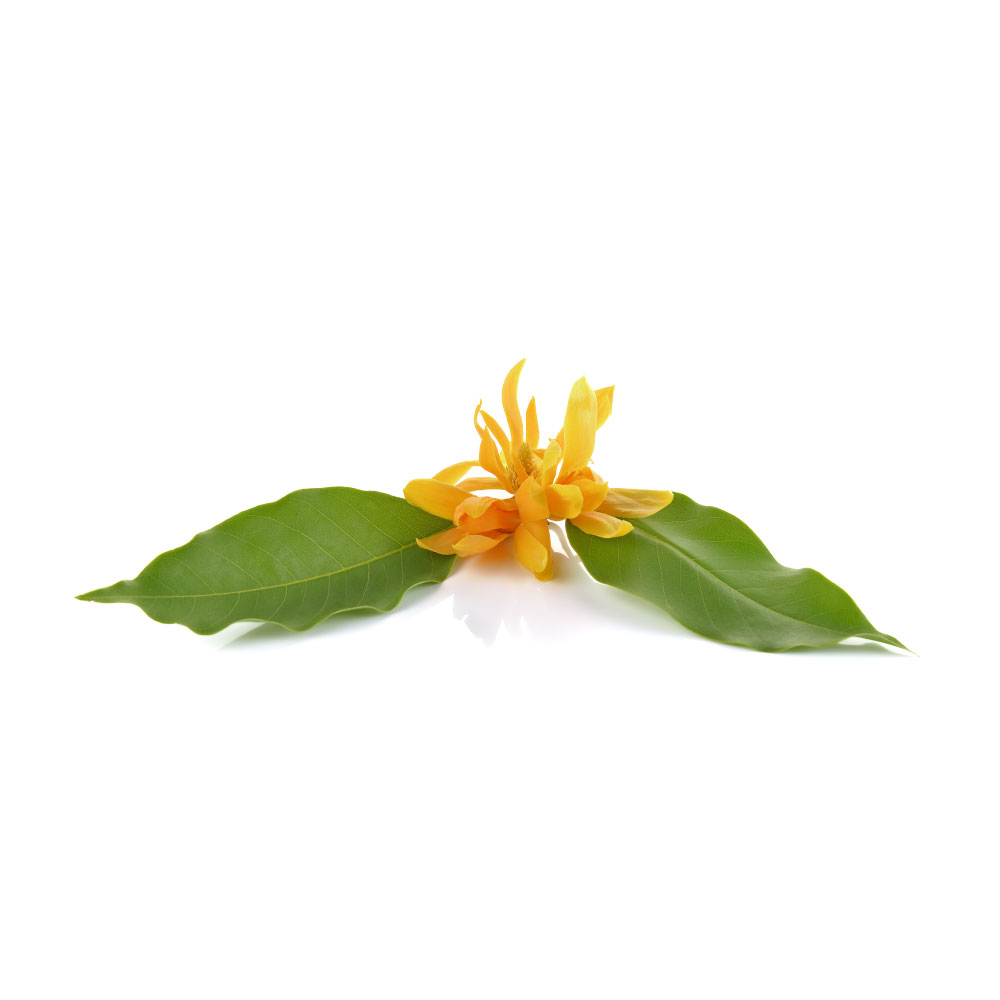
Ylang ylang (Cananga odorata) — a fragrant tropical flower whose essential oil is used to relax, lift mood and ease tension and stress.
What Is Ylang Ylang?
Ylang-ylang is the intensely fragrant flower of Cananga odorata, a fast-growing tropical tree in the custard-apple family (Annonaceae) native to the Philippines and Indonesia. The name comes from the Tagalog ilang-ilang — usually glossed as “flower of flowers” — and the plant is grown chiefly for the essential oil steam-distilled from its drooping, star-shaped yellow blooms 1Reference 1ReviewTraditional uses, phytochemistry, and bioactivities of Cananga odorata (Ylang-Ylang) — reviewView study →.
Unlike most herbs on this site, ylang-ylang is essentially never used as a tea, tincture, or dried-herb preparation. It reaches people almost entirely as its essential oil, a staple of perfumery (it is a classic middle note in fragrances such as Chanel No. 5) and of modern aromatherapy, where it is diffused or applied diluted to the skin to promote relaxation and a calmer mood 1,2,3Reference 1ReviewTraditional uses, phytochemistry, and bioactivities of Cananga odorata (Ylang-Ylang) — reviewView study →Reference 2RCTEvaluation of the harmonizing effect of ylang-ylang oil on humans after inhalation — randomized controlled trialView study →Reference 3Clinical trialRelaxing effect of ylang ylang oil on humans after transdermal absorption — clinical trialView study →.
What sets it apart from other calming aromatherapy oils is that its two best-supported uses — easing situational anxiety and producing a short-term drop in blood pressure and pulse — rest on actual human trials rather than tradition alone, even if those trials are small and sometimes test oil blends 2,3,5,6,14Reference 2RCTEvaluation of the harmonizing effect of ylang-ylang oil on humans after inhalation — randomized controlled trialView study →Reference 3Clinical trialRelaxing effect of ylang ylang oil on humans after transdermal absorption — clinical trialView study →Reference 5RCTAromatherapy with ylang ylang for anxiety and self-esteem: a pilot randomized controlled trialView study →Reference 6RCTAnxiolytic effect of ylang-ylang aromatherapy in interventional radiology patients — randomized controlled trialView study →Reference 14RCTEffect of Lavandula angustifolia and Cananga odorata sticker pads on blood pressure in high blood pressure volunteers — randomized controlled trialView study →. Everything else attributed to the oil (antimicrobial, insect-repellent, antioxidant effects) remains preclinical.
How Is Ylang Ylang Used?
Ylang-ylang is used almost exclusively as its steam-distilled flower essential oil — not as a tea, tincture, or dried-herb preparation. The two most common routes are inhalation (a few drops in a diffuser or personal inhaler, or simply smelling the oil from the bottle or a cotton pad) and diluted topical/transdermal application, where the oil is mixed into a carrier oil to a concentration of 0.8–1% or less before being applied to the skin, most often the abdomen or wrist 3,32,33Reference 3Clinical trialRelaxing effect of ylang ylang oil on humans after transdermal absorption — clinical trialView study →Reference 32ReviewEssential oils, part IV: contact allergy — reviewView study →Reference 33ObservationalContact sensitization to essential oils: IVDK data 2010–2019 — observationalView study →. Both routes are used for the same general purpose: to promote relaxation and a calmer mood, and — as a secondary effect measured in several of the human trials — a short-term reduction in blood pressure and pulse 2,3,13Reference 2RCTEvaluation of the harmonizing effect of ylang-ylang oil on humans after inhalation — randomized controlled trialView study →Reference 3Clinical trialRelaxing effect of ylang ylang oil on humans after transdermal absorption — clinical trialView study →Reference 13Effects of ylang-ylang aroma on blood pressure and heart rate in healthy men — controlled trialView study →. It is not taken internally.
In practice this usually means using the oil in the same way as other calming aromatherapy oils: diffused in a room in the evening or before a stressful event (procedures, dental visits, labour have all been studied 6,7,8Reference 6RCTAnxiolytic effect of ylang-ylang aromatherapy in interventional radiology patients — randomized controlled trialView study →Reference 7RCTYlang-ylang and lavender aromatherapy for paediatric dental anxiety — randomized controlled trialView study →Reference 8RCTEffect of ylang ylang oil and lemon oil inhalation on labor pain and anxiety — randomized controlled trialView study →), or worn on the skin or clothing (including as a scented sticker pad in the blood-pressure trials 14Reference 14RCTEffect of Lavandula angustifolia and Cananga odorata sticker pads on blood pressure in high blood pressure volunteers — randomized controlled trialView study →) so the aroma is present throughout the day. Because it is a recognised skin sensitiser, any topical use should be diluted and patch-tested first 32,33Reference 32ReviewEssential oils, part IV: contact allergy — reviewView study →Reference 33ObservationalContact sensitization to essential oils: IVDK data 2010–2019 — observationalView study →.
Traditional Uses
Western Herbal Medicine
Ylang-ylang has no deep history in Western herbal medicine as an internal remedy; its Western use is almost entirely modern aromatherapy, where the essential oil is diffused or applied topically (diluted) for relaxation, mood, and skin/hair care, and this is the tradition the current clinical trials are drawn from 1,2,3Reference 1ReviewTraditional uses, phytochemistry, and bioactivities of Cananga odorata (Ylang-Ylang) — reviewView study →Reference 2RCTEvaluation of the harmonizing effect of ylang-ylang oil on humans after inhalation — randomized controlled trialView study →Reference 3Clinical trialRelaxing effect of ylang ylang oil on humans after transdermal absorption — clinical trialView study →.
Traditional Chinese Medicine
Ylang-ylang (Cananga odorata) is not a Traditional Chinese Medicine herb — it has no meaningful entry in the TCM materia medica, and nothing on this page draws on a TCM source. It should not be assumed to carry TCM energetic or clinical associations just because Cananga species grow within the broader Asian region.
Ayurvedic Medicine
Likewise, ylang-ylang has no established place in classical Ayurvedic medicine. Its documented traditional use is Southeast Asian and Pacific Islander, not South Asian: the flowers are native to the Philippines and Indonesia, where they have long been used in perfumery, scenting coconut oil, and floral offerings/ceremonial adornment (including scattering flowers on newlyweds’ beds, the origin of the name “ylang-ylang,” meaning “flower of flowers”) 1Reference 1ReviewTraditional uses, phytochemistry, and bioactivities of Cananga odorata (Ylang-Ylang) — reviewView study →. That regional, ceremonial and cosmetic use — not an Ayurvedic clinical tradition — is the genuine historical backdrop for the plant.
Indications
Based on the evidence summarised in Pharmacology & Research, ylang-ylang essential oil (by inhalation or diluted topical/transdermal use) is best supported for:
- Situational anxiety and stress — short-term anxiolytic and “harmonising” effect on subjective state, shown in small human trials including pre-procedural and dental-anxiety settings 2,5,6,7Reference 2RCTEvaluation of the harmonizing effect of ylang-ylang oil on humans after inhalation — randomized controlled trialView study →Reference 5RCTAromatherapy with ylang ylang for anxiety and self-esteem: a pilot randomized controlled trialView study →Reference 6RCTAnxiolytic effect of ylang-ylang aromatherapy in interventional radiology patients — randomized controlled trialView study →Reference 7RCTYlang-ylang and lavender aromatherapy for paediatric dental anxiety — randomized controlled trialView study →.
- Mild, short-term elevation in blood pressure or pulse (e.g. situational/stress-related) — acute reductions shown after inhalation or transdermal application in healthy and at-risk volunteers, though most durable evidence in diagnosed hypertension uses oil blends rather than ylang-ylang alone 2,3,13,14Reference 2RCTEvaluation of the harmonizing effect of ylang-ylang oil on humans after inhalation — randomized controlled trialView study →Reference 3Clinical trialRelaxing effect of ylang ylang oil on humans after transdermal absorption — clinical trialView study →Reference 13Effects of ylang-ylang aroma on blood pressure and heart rate in healthy men — controlled trialView study →Reference 14RCTEffect of Lavandula angustifolia and Cananga odorata sticker pads on blood pressure in high blood pressure volunteers — randomized controlled trialView study →.
- General relaxation / mood support as part of an aromatherapy routine, given the consistent calming signal across multiple small RCTs 2,3,5Reference 2RCTEvaluation of the harmonizing effect of ylang-ylang oil on humans after inhalation — randomized controlled trialView study →Reference 3Clinical trialRelaxing effect of ylang ylang oil on humans after transdermal absorption — clinical trialView study →Reference 5RCTAromatherapy with ylang ylang for anxiety and self-esteem: a pilot randomized controlled trialView study →.
Weaker, preclinical-only signals (antimicrobial, insect-repellent, antioxidant, anti-inflammatory, analgesic, anticancer, anti-melanogenic) are not listed here as indications — see the relevant sub-sections above for what they do and don’t support.
Botany
Ylang-ylang is Cananga odorata, a fast-growing evergreen tree in the custard-apple family (Annonaceae) — the same family as soursop/graviola (Annona muricata). In the wild it reaches 10–20 m, but trees grown for oil are routinely topped and pruned to around 3 m to keep the flowers within reach of pickers. It has smooth grey bark, drooping brittle branches and glossy oval leaves with wavy margins.
The flowers are its defining feature: long-stalked and pendulous, each with six narrow, curling, greenish petals that ripen to a deep yellow and release a powerful sweet-floral scent, strongest in the early morning when the blooms are harvested and steam-distilled for their oil.
Two forms are usually distinguished commercially. The tall tree (historically C. odorata var. genuina) yields true ylang-ylang oil, prized in perfumery; a coarser, faster-growing form (var. macrophylla) yields the lower-value cananga oil. A separate dwarf, shrubby cultivar (var. fruticosa) is grown as an ornamental.
Distribution
Ylang-ylang is native to the Philippines, Indonesia and the wider tropical Asian–Malesian region, extending to northeastern Australia. Fast-growing and free-flowering in the humid lowland tropics, it now grows well beyond its native range across Southeast Asia and the Indian Ocean islands — Madagascar, the Comoros and Réunion — the last of which produce much of the world’s high-grade essential oil.
Growing Conditions
- Strictly tropical and frost-tender — thrives only in warm, humid, frost-free climates (roughly USDA zones 10–12).
- Fast-growing and sun-loving, tolerating light shade when young.
- Prefers rich, well-drained soil with steady moisture and warmth year-round.
- On plantations trees are routinely topped and pruned low so the fragrant flowers stay within reach for hand harvesting.
- Full cultivation detail lives on the companion farm-wiki grow guide for Cananga odorata (link to be added once that project’s public URL is confirmed).
Phytochemistry
Ylang-ylang is used almost entirely as its steam-distilled flower essential oil, a complex blend of oxygenated aromatics and sesquiterpene hydrocarbons. The fragrant top notes come from the monoterpene alcohol linalool and the benzenoid esters benzyl acetate and methyl benzoate, together with the distinctive ether p-cresyl methyl ether (methyl-p-cresol) — the compound most responsible for the oil’s characteristic floral-fruity character. The heavier base is dominated by sesquiterpenes, chiefly germacrene D, β-caryophyllene and α-farnesene 1Reference 1ReviewTraditional uses, phytochemistry, and bioactivities of Cananga odorata (Ylang-Ylang) — reviewView study →.
Constituent Summary
Figures are the share of the essential oil (%, GC–MS) and are given as ranges spanning the commercial grades, because ylang-ylang oil is fractionated during distillation into Extra, I, II and III grades whose composition shifts dramatically with collection time 1,21Reference 1ReviewTraditional uses, phytochemistry, and bioactivities of Cananga odorata (Ylang-Ylang) — reviewView study →Reference 21In vitroRadical scavenging activity and metabolomic profiling of ylang-ylang essential oils by HPTLC — in vitroView study →. The earliest fraction (Extra) is richest in the odoriferous esters and the ether, while the later fractions accumulate sesquiterpene hydrocarbons (>70% of grade III). Compounds marked † are the early-distillate markers that most strongly differentiate the high-value Extra/I grades from the sesquiterpene-rich later grades.
Benzenoid ester3 compounds2 with data
Benzenoid ether1 compound1 with data
Sesquiterpene3 compounds3 with data
Pharmacology & Research
Ylang-ylang is one of the better-studied aromatherapy oils, but “better-studied” is relative: the literature is a few dozen papers, dominated by in vitro chemistry and rodent behaviour, with a small cluster of genuine human trials clustered almost entirely around two claims — that inhaling or wearing the oil lowers blood pressure and eases anxiety. Those two indications rest on real, if small and sometimes blended, randomised controlled trials 2,3,14Reference 2RCTEvaluation of the harmonizing effect of ylang-ylang oil on humans after inhalation — randomized controlled trialView study →Reference 3Clinical trialRelaxing effect of ylang ylang oil on humans after transdermal absorption — clinical trialView study →Reference 14RCTEffect of Lavandula angustifolia and Cananga odorata sticker pads on blood pressure in high blood pressure volunteers — randomized controlled trialView study →; everything else is preclinical. The most interesting emerging signal is mechanistic: rodent work maps the calming effect onto serotonin and dopamine turnover and the ERK/CREB pathway rather than simple sedation 9,10,11Reference 9AnimalThe anxiolytic effect of essential oil of Cananga odorata exposure on mice and determination of its major active constituents — animal modelView study →Reference 10AnimalCananga odorata essential oil reverses m-CPP-induced anxiety via the MAPK pathway and serotonin system in mice — animal modelView study →Reference 11AnimalInhalation of Cananga odorata essential oil relieves anxiety behaviors in autism-like rats via serotonin and dopamine metabolism — animal modelView study →. The overriding caveat is preparation and grade — nearly all evidence uses the steam-distilled flower essential oil (often a specific Extra/I fraction), so nothing here transfers to a whole flower, a tea, or an unspecified “ylang-ylang” product, and the oil is not taken internally.
- Best-supported: short-term reduction of blood pressure and pulse after inhalation or transdermal use 2,3,13,14Reference 2RCTEvaluation of the harmonizing effect of ylang-ylang oil on humans after inhalation — randomized controlled trialView study →Reference 3Clinical trialRelaxing effect of ylang ylang oil on humans after transdermal absorption — clinical trialView study →Reference 13Effects of ylang-ylang aroma on blood pressure and heart rate in healthy men — controlled trialView study →Reference 14RCTEffect of Lavandula angustifolia and Cananga odorata sticker pads on blood pressure in high blood pressure volunteers — randomized controlled trialView study →; a calming/“harmonising” shift in subjective state and anxiety scores 3,5,6,7Reference 3Clinical trialRelaxing effect of ylang ylang oil on humans after transdermal absorption — clinical trialView study →Reference 5RCTAromatherapy with ylang ylang for anxiety and self-esteem: a pilot randomized controlled trialView study →Reference 6RCTAnxiolytic effect of ylang-ylang aromatherapy in interventional radiology patients — randomized controlled trialView study →Reference 7RCTYlang-ylang and lavender aromatherapy for paediatric dental anxiety — randomized controlled trialView study →.
- Emerging, worth watching: anxiolytic and analgesic mechanisms in animals (serotonergic/dopaminergic signalling, ERK/CREB) 9,10,11,12Reference 9AnimalThe anxiolytic effect of essential oil of Cananga odorata exposure on mice and determination of its major active constituents — animal modelView study →Reference 10AnimalCananga odorata essential oil reverses m-CPP-induced anxiety via the MAPK pathway and serotonin system in mice — animal modelView study →Reference 11AnimalInhalation of Cananga odorata essential oil relieves anxiety behaviors in autism-like rats via serotonin and dopamine metabolism — animal modelView study →Reference 12AnimalYlang-ylang (Cananga odorata) essential oil reduced neuropathic pain and associated anxiety in mice — animal modelView study →; robust insect-repellent and larvicidal activity of the oil 26,27,28,29Reference 26In vitroCananga odorata essential oil produces significant avoidance behavior in mosquitoes — in vitro/animalView study →Reference 27In vitroEfficacy of essential oil from Cananga odorata against Aedes aegypti, Anopheles dirus and Culex quinquefasciatus — in vitro/animalView study →Reference 28In vitroComparative larvicidal efficacy of commercial ylang-ylang essential oils — in vitro/animalView study →Reference 29In vitroAcaricidal efficacy and biochemical effects of Cananga odorata essential oil and selected compounds against Haemaphysalis ticks — in vitro/animalView study →.
- Mechanistically thin: anticancer and anti-melanogenic claims rest on isolated constituents in single cell-line studies 24,25Reference 24In vitroCytotoxic constituents of the fruits of Cananga odorata — in vitroView study →Reference 25In vitroLignan dicarboxylates and terpenoids from the flower buds of Cananga odorata and their inhibitory effects on melanogenesis — in vitroView study →; antioxidant/anti-inflammatory data are almost all in vitro 18,21,23Reference 18In vitroChemical composition, antioxidant, antibacterial and hemolytic properties of ylang-ylang (Cananga odorata) essential oil — in vitroView study →Reference 21In vitroRadical scavenging activity and metabolomic profiling of ylang-ylang essential oils by HPTLC — in vitroView study →Reference 23In vitroChemical composition analysis and in vitro biological activities of ylang-ylang oil in a pre-inflamed human dermal fibroblast system — in vitroView study →.
- The caveat: no standardised dose, small and frequently blended human trials, and dramatic compositional variation across distillation grades (Extra → III) that the studies rarely report.
1. Anxiolytic & relaxation
Ylang-ylang’s calming reputation has more human support than most aromatherapy oils, though the trials are small. A controlled inhalation study (n=24) found the oil significantly lowered blood pressure and pulse while raising subjective attentiveness and alertness, leading the authors to describe the effect as “harmonisation” rather than sedation 2Reference 2RCTEvaluation of the harmonizing effect of ylang-ylang oil on humans after inhalation — randomized controlled trialView study →. A pilot RCT in nursing staff reported reduced anxiety scores with cutaneous or inhaled oil 5Reference 5RCTAromatherapy with ylang ylang for anxiety and self-esteem: a pilot randomized controlled trialView study →, and later single-oil RCTs found reduced pre-procedural anxiety in interventional radiology patients 6Reference 6RCTAnxiolytic effect of ylang-ylang aromatherapy in interventional radiology patients — randomized controlled trialView study → and the largest physiological calming (pulse drop) among children in a paediatric dental trial 7Reference 7RCTYlang-ylang and lavender aromatherapy for paediatric dental anxiety — randomized controlled trialView study →. Rodent work gives the mechanism: inhaled oil is anxiolytic in the elevated-plus-maze and light–dark tests and shifts brain serotonin and dopamine metabolism 9Reference 9AnimalThe anxiolytic effect of essential oil of Cananga odorata exposure on mice and determination of its major active constituents — animal modelView study →, reverses 5-HT2C-agonist–induced anxiety via the MAPK/ERK–CREB pathway 10Reference 10AnimalCananga odorata essential oil reverses m-CPP-induced anxiety via the MAPK pathway and serotonin system in mice — animal modelView study →, and normalises monoamine signalling in an autism-model rat 11Reference 11AnimalInhalation of Cananga odorata essential oil relieves anxiety behaviors in autism-like rats via serotonin and dopamine metabolism — animal modelView study →. Not all human data are positive — one RCT found the aroma impaired memory and lengthened reaction time relative to peppermint 4Reference 4RCTModulation of cognitive performance and mood by aromas of peppermint and ylang-ylang — randomized controlled trialView study →.
Gap: Human trials are small, several use oil blends, and the direction of effect (relaxing vs. alerting) is inconsistent; no standardised dose or extract grade is established.
2. Hypotensive (blood pressure)
The blood-pressure effect is the most consistently measured objective outcome. In healthy volunteers, both transdermal application (n=40) and inhalation of the single oil produced statistically significant decreases in blood pressure, with transdermal use also raising skin temperature and self-rated calmness 2,3Reference 2RCTEvaluation of the harmonizing effect of ylang-ylang oil on humans after inhalation — randomized controlled trialView study →Reference 3Clinical trialRelaxing effect of ylang ylang oil on humans after transdermal absorption — clinical trialView study →. A controlled trial in healthy men found reduced blood pressure and heart rate after exposure to the aroma 13Reference 13Effects of ylang-ylang aroma on blood pressure and heart rate in healthy men — controlled trialView study →. In hypertensive or at-risk populations the signal persists but the oil is usually blended: a sticker-pad RCT combining lavender and ylang-ylang lowered blood pressure in high-blood-pressure volunteers over 14 days 14Reference 14RCTEffect of Lavandula angustifolia and Cananga odorata sticker pads on blood pressure in high blood pressure volunteers — randomized controlled trialView study →, and Korean nursing trials using lavender/ylang-ylang/bergamot or lemon blends reported reductions in blood pressure, serum cortisol and catecholamines and improved autonomic (heart-rate-variability) measures 15,16,17Reference 15RCTEffects of the inhalation method using essential oils on blood pressure and stress responses in essential hypertension — randomized controlled trial (oil blend)View study →Reference 16Clinical trialEffects of aromatherapy on autonomic nervous system, aortic pulse wave velocity and augmentation index in essential hypertension — controlled clinical trial (oil blend)View study →Reference 17RCTEffects of aromatherapy on stress responses, autonomic activity and blood pressure in patients undergoing coronary angiography — non-randomized controlled trial (oil blend)View study →.
Gap: Effects are acute and modest; the durable, single-oil evidence in diagnosed hypertension is thin, and blended-oil trials cannot isolate ylang-ylang’s contribution.
3. Antimicrobial
The essential oil shows broad in vitro activity. Screening of C. odorata extracts against a bacterial and yeast panel found activity against most tested strains with MICs from ~62.5 µg/mL, alongside antibiofilm effects and membrane-disrupting nucleic-acid leakage 19Reference 19In vitroIn vitro antimicrobial activities and phytochemical profiling of Cananga odorata, Terminalia catappa and Terminalia mantaly — in vitroView study →. A 2024 characterisation reported combined antioxidant and antibacterial activity for the oil in a dermatological context 18Reference 18In vitroChemical composition, antioxidant, antibacterial and hemolytic properties of ylang-ylang (Cananga odorata) essential oil — in vitroView study →, and a nanoencapsulated chitosan formulation of the oil suppressed a toxigenic Aspergillus flavus strain and its aflatoxin B production 20Reference 20In vitroNanoencapsulated Cananga odorata essential oil in chitosan nanopolymer against aflatoxigenic Aspergillus flavus — in vitroView study →. Activity is generally attributed to the oxygenated aromatics and sesquiterpenes rather than any single compound.
Gap: Entirely in vitro, often at concentrations far above what topical or aromatherapy use delivers; no clinical infection endpoint and no in vivo confirmation.
4. Insect repellent & larvicidal
This is one of the oil’s most reproducible activities. Flower oil showed high oviposition-deterrent, ovicidal, larvicidal and repellent activity against Aedes aegypti, Anopheles dirus and Culex quinquefasciatus 27Reference 27In vitroEfficacy of essential oil from Cananga odorata against Aedes aegypti, Anopheles dirus and Culex quinquefasciatus — in vitro/animalView study →, and an excito-repellency chamber study demonstrated strong contact-irritant and non-contact repellent (avoidance) behaviour in four mosquito species 26Reference 26In vitroCananga odorata essential oil produces significant avoidance behavior in mosquitoes — in vitro/animalView study →. Commercial ylang-ylang oils are larvicidal at sub-ppm concentrations 28Reference 28In vitroComparative larvicidal efficacy of commercial ylang-ylang essential oils — in vitro/animalView study →, and the oil and its constituents (e.g. linalool) show contact and fumigant toxicity against livestock ticks 29Reference 29In vitroAcaricidal efficacy and biochemical effects of Cananga odorata essential oil and selected compounds against Haemaphysalis ticks — in vitro/animalView study →.
Gap: No human field-repellency trial; efficacy and duration on skin at safe dilutions are untested, and volatile oils evaporate quickly, limiting protection time.
5. Antioxidant
Radical-scavenging activity is consistent across studies but assay-bound. Metabolomic profiling of 52 oil samples tied DPPH radical-scavenging to specific constituents and showed it varies with geographical origin and distillation grade 21Reference 21In vitroRadical scavenging activity and metabolomic profiling of ylang-ylang essential oils by HPTLC — in vitroView study →. The leaf volatile oil inhibited nitric oxide production in addition to scavenging radicals 22Reference 22In vitroChemical components of the volatile oil from leaves of Cananga odorata and its antioxidant activity — in vitroView study →, and the 2024 dermatological characterisation reported measurable antioxidant capacity for the flower oil 18Reference 18In vitroChemical composition, antioxidant, antibacterial and hemolytic properties of ylang-ylang (Cananga odorata) essential oil — in vitroView study →.
Gap: Almost all evidence is in vitro chemistry (DPPH/radical assays) with no cellular or clinical antioxidant endpoint; activity depends heavily on grade, so results don’t generalise across products.
6. Anti-inflammatory
Evidence is indirect. In a pre-inflamed human dermal fibroblast model, ylang-ylang oil modulated proteins involved in inflammation and tissue remodelling 23Reference 23In vitroChemical composition analysis and in vitro biological activities of ylang-ylang oil in a pre-inflamed human dermal fibroblast system — in vitroView study →, and the leaf oil inhibited nitric oxide production, a pro-inflammatory mediator 22Reference 22In vitroChemical components of the volatile oil from leaves of Cananga odorata and its antioxidant activity — in vitroView study →. The clearest functional signal comes from an animal neuropathic-pain study in which the oil reduced pain behaviours alongside associated anxiety and depression 12Reference 12AnimalYlang-ylang (Cananga odorata) essential oil reduced neuropathic pain and associated anxiety in mice — animal modelView study →, implying an anti-inflammatory or neuromodulatory component.
Gap: No dedicated in vivo anti-inflammatory model with a clean readout (e.g. paw oedema) and no human data; mechanism is inferred from adjacent endpoints.
7. Analgesic
The main direct evidence is a mouse spared-nerve-injury study in which the oil reduced neuropathic pain behaviour and the accompanying mood alterations 12Reference 12AnimalYlang-ylang (Cananga odorata) essential oil reduced neuropathic pain and associated anxiety in mice — animal modelView study →. Human aromatherapy pain trials exist — an RCT using ylang-ylang and lemon inhalation during labour reported effects on labour pain and anxiety — but the design blends oils and pain is measured subjectively 8Reference 8RCTEffect of ylang ylang oil and lemon oil inhalation on labor pain and anxiety — randomized controlled trialView study →.
Gap: A single animal model plus confounded human trials; no controlled, single-oil analgesia study with objective endpoints.
8. Anticancer
Activity is constituent-level and in vitro only. From the fruits, the sesquiterpene alkaloid cananodine showed cytotoxicity against human hepatocarcinoma cell lines 24Reference 24In vitroCytotoxic constituents of the fruits of Cananga odorata — in vitroView study →. Broader reviews note cytotoxic constituents, but no cellular finding has advanced to in vivo or clinical testing.
Gap: Isolated compounds against cell lines only; no whole-oil in vivo efficacy, no selectivity or pharmacokinetic data, and the aromatherapy preparation is not an oral anticancer agent.
9. Anti-melanogenic
The methanolic flower-bud extract inhibited melanogenesis in theophylline-stimulated murine B16 melanoma cells, and isolated terpenoids — notably canangaterpene I — suppressed melanin production more strongly than the reference agent arbutin without cytotoxicity 25Reference 25In vitroLignan dicarboxylates and terpenoids from the flower buds of Cananga odorata and their inhibitory effects on melanogenesis — in vitroView study →.
Gap: One cell-line study on isolated constituents; no human skin, ex vivo, or formulation data, and no evidence the essential oil (as opposed to the methanolic extract) carries the effect.
Mechanisms
| Mechanism | Drives | Key compounds |
|---|---|---|
| ↑ Serotonin & dopamine turnover; ERK/CREB, MAPK signalling | anxiolyticrelaxationanalgesic | benzyl benzoate, linalool |
| Autonomic shift (↓ sympathetic tone) → ↓ blood pressure & pulse | hypotensiverelaxation | linalool, benzyl acetate |
| Membrane disruption, nucleic-acid leakage, antibiofilm | antimicrobialantifungal | germacrene D, beta-caryophyllene |
| Radical scavenging; nitric-oxide inhibition | antioxidantanti-inflammatory | linalool, geranyl acetate |
| Contact irritancy / volatile avoidance cues | insect repellentlarvicidal | linalool, beta-caryophyllene |
| Tyrosinase / melanogenesis inhibition | anti-melanogenic | canangaterpenes (flower-bud terpenoids) |
Clinical trials
Registered aromatherapy trials involving ylang-ylang exist and several are completed (anxiety/self-esteem, dementia agitation, post-caesarean pain, blood-pressure sticker pads), with one actively recruiting (NCT06425237) and none identified as terminated — but almost all are small and many test oil blends rather than ylang-ylang alone. The single ongoing trial is counted below under “Planned” (the table’s catch-all for not-yet-completed registered trials).
| Completed | Planned | Terminated | Preclinical |
|---|---|---|---|
| ~9 | 1(recruiting) | 0 | ~30 |
Last checked: July 2026.
Dosage
In research, ylang-ylang is used exclusively as its steam-distilled flower essential oil, never as a dried-herb weight — so the doses below are extract/oil exposures, not whole-herb amounts, and are not recommendations.
| Indication | Preparation | Dose | Est. dried-herb equivalent | Source |
|---|---|---|---|---|
| Relaxation / blood pressure (transdermal) | Neat oil applied to skin (abdomen), physiological study | Single application; oil absorbed transdermally | — (essential oil, not whole herb) | 3Reference 3Clinical trialRelaxing effect of ylang ylang oil on humans after transdermal absorption — clinical trialView study → |
| Relaxation / blood pressure (inhalation) | Inhaled oil vs odourless placebo | Single inhalation exposure | — | 2,13Reference 2RCTEvaluation of the harmonizing effect of ylang-ylang oil on humans after inhalation — randomized controlled trialView study →Reference 13Effects of ylang-ylang aroma on blood pressure and heart rate in healthy men — controlled trialView study → |
| Anxiety (pilot) | Cutaneous or inhaled oil, nursing staff | Repeated over ~90 days | — | 5Reference 5RCTAromatherapy with ylang ylang for anxiety and self-esteem: a pilot randomized controlled trialView study → |
| Hypertension | Lavender + ylang-ylang sticker pad worn on clothing | Pad worn, 14 days | — (blend; ylang-ylang fraction not isolable) | 14Reference 14RCTEffect of Lavandula angustifolia and Cananga odorata sticker pads on blood pressure in high blood pressure volunteers — randomized controlled trialView study → |
| Topical safety ceiling | Diluted in carrier oil | ≤0.8–1% dilution (IFRA-style sensitiser limit) | — | 32,33Reference 32ReviewEssential oils, part IV: contact allergy — reviewView study →Reference 33ObservationalContact sensitization to essential oils: IVDK data 2010–2019 — observationalView study → |
Ylang-ylang is used only as the essential oil, so no dried-herb equivalent applies — back-conversion to a whole-herb mass would be misleading and is deliberately left ”—”.
Traditional Dosage
Outside the trials, ylang-ylang has no quantified traditional dose: aromatherapy and folk use apply the oil by scent or as a diluted topical, not as a measured herb.
| System | Preparation | Dose |
|---|---|---|
| Western aromatherapy | Essential oil, inhalation (diffuser/inhaler) | A few drops diffused; no standardised dose |
| Western aromatherapy | Essential oil, topical in carrier | Diluted to ≤0.8–1% for skin application |
| Traditional (SE Asia) | Fresh flowers, topical paste / infused oil | Applied externally; folk use, no quantified dose |
Safety & Pregnancy
Ylang-ylang essential oil is for external and aromatherapy use only and must not be ingested; its main documented risk is skin sensitisation, so any topical use should be diluted and patch-tested first.
- External use only. The essential oil must not be ingested.
- Skin sensitiser. A well-documented allergen — dilute topical use to ≤0.8–1%, patch-test first, and keep off damaged skin.
- Blood-pressure interaction. The oil has a real hypotensive effect; an additive interaction with antihypertensive drugs is plausible but unstudied.
- Pregnancy & lactation. Not specifically researched — use only well-diluted aromatherapy.
Full safety & interactions detail
Ylang-ylang essential oil is for external and aromatherapy use only and must not be ingested; it is a well-documented skin sensitiser and irritant. It is one of nine essential oils showing >2% positive patch-test reactions in dermatology patients, and occupational allergic contact dermatitis from the oil is on record 32,31Reference 32ReviewEssential oils, part IV: contact allergy — reviewView study →Reference 31Case reportOccupational allergic contact dermatitis caused by ylang-ylang oil — case reportView study →. Registry data from the IVDK confirm measurable contact-sensitisation rates, so the oil should always be diluted (topical use ≤0.8–1% in a carrier), patch-tested before use, and kept off damaged skin 33,34Reference 33ObservationalContact sensitization to essential oils: IVDK data 2010–2019 — observationalView study →Reference 34ReviewArt of prevention: essential oils — natural products not necessarily safe — reviewView study →. As a flavour ingredient the oil has a long history of food use with no reported allergic reactions by that route, but this does not extend to concentrated topical or undiluted application 30Reference 30ReviewSafety assessment of ylang-ylang (Cananga spp.) as a food ingredient — reviewView study →. Because both single-oil and blended trials show a real hypotensive effect 3,14Reference 3Clinical trialRelaxing effect of ylang ylang oil on humans after transdermal absorption — clinical trialView study →Reference 14RCTEffect of Lavandula angustifolia and Cananga odorata sticker pads on blood pressure in high blood pressure volunteers — randomized controlled trialView study →, an additive interaction with antihypertensive medication is plausible but has not been studied; herb–drug interactions have not otherwise been assessed for ylang-ylang, and the absence of reports should not be read as evidence of safety.
No dedicated human or animal study has assessed ylang-ylang essential oil in pregnancy or lactation for safety or teratogenicity. General essential-oil caution applies: use only well-diluted for aromatherapy, avoid ingestion entirely, and consult a qualified practitioner. Absence of reports is not evidence of safety.
References
- Tan, L. T. H., Lee, L. H., Yin, W. F., et al. (2015). Traditional uses, phytochemistry, and bioactivities of Cananga odorata (Ylang-Ylang) — review. Evid Based Complement Alternat Med, 2015, 896314. https://pubmed.ncbi.nlm.nih.gov/26294929/
- Hongratanaworakit, T., & Buchbauer, G. (2004). Evaluation of the harmonizing effect of ylang-ylang oil on humans after inhalation — randomized controlled trial. Planta Med, 70(7), 632–636. https://pubmed.ncbi.nlm.nih.gov/15303255/
- Hongratanaworakit, T., & Buchbauer, G. (2006). Relaxing effect of ylang ylang oil on humans after transdermal absorption — clinical trial. Phytother Res, 20(9), 758–763. https://pubmed.ncbi.nlm.nih.gov/16807875/
- Moss, M., Hewitt, S., Moss, L., & Wesnes, K. (2008). Modulation of cognitive performance and mood by aromas of peppermint and ylang-ylang — randomized controlled trial. Int J Neurosci, 118(1), 59–77. https://pubmed.ncbi.nlm.nih.gov/18041606/
- Gnatta, J. R., Piason, P. P., Lopes, C. de L. B. C., et al. (2014). Aromatherapy with ylang ylang for anxiety and self-esteem: a pilot randomized controlled trial. Rev Esc Enferm USP, 48(3), 492–499. https://pubmed.ncbi.nlm.nih.gov/25076278/
- Sriboonlert, J., et al. (2023). Anxiolytic effect of ylang-ylang aromatherapy in interventional radiology patients — randomized controlled trial. J Evid Based Integr Med, 28, 2515690X221150527. https://pubmed.ncbi.nlm.nih.gov/36659818/
- Patil, A. N., et al. (2025). Ylang-ylang and lavender aromatherapy for paediatric dental anxiety — randomized controlled trial. Bioinformation, 21(10), 3686–3691. https://pubmed.ncbi.nlm.nih.gov/41623781/
- Sirkeci, I., et al. (2023). Effect of ylang ylang oil and lemon oil inhalation on labor pain and anxiety — randomized controlled trial. Complement Ther Clin Pract, 52, 101748. https://pubmed.ncbi.nlm.nih.gov/37054616/
- Zhang, N., et al. (2016). The anxiolytic effect of essential oil of Cananga odorata exposure on mice and determination of its major active constituents — animal model. Phytomedicine, 23(14), 1727–1734. https://pubmed.ncbi.nlm.nih.gov/27912874/
- Zhang, N., et al. (2018). Cananga odorata essential oil reverses m-CPP-induced anxiety via the MAPK pathway and serotonin system in mice — animal model. J Ethnopharmacol, 219, 23–30. https://pubmed.ncbi.nlm.nih.gov/29545208/
- Zhang, N., et al. (2023). Inhalation of Cananga odorata essential oil relieves anxiety behaviors in autism-like rats via serotonin and dopamine metabolism — animal model. J Integr Med, 21(2), 205–214. https://pubmed.ncbi.nlm.nih.gov/36792414/
- Borgonetti, V., et al. (2022). Ylang-ylang (Cananga odorata) essential oil reduced neuropathic pain and associated anxiety in mice — animal model. J Ethnopharmacol, 294, 115362. https://pubmed.ncbi.nlm.nih.gov/35551977/
- Jung, D. J., et al. (2013). Effects of ylang-ylang aroma on blood pressure and heart rate in healthy men — controlled trial. J Exerc Rehabil, 9(2), 250–255. https://pubmed.ncbi.nlm.nih.gov/24278868/
- Napavichayanun, S., et al. (2024). Effect of Lavandula angustifolia and Cananga odorata sticker pads on blood pressure in high blood pressure volunteers — randomized controlled trial. Explore (NY), 20(4), 520–526. https://pubmed.ncbi.nlm.nih.gov/38087747/
- Hwang, J. H. (2006). Effects of the inhalation method using essential oils on blood pressure and stress responses in essential hypertension — randomized controlled trial (oil blend). Taehan Kanho Hakhoe Chi, 36(7), 1123–1134. https://pubmed.ncbi.nlm.nih.gov/17211115/
- Cha, J. H., et al. (2010). Effects of aromatherapy on autonomic nervous system, aortic pulse wave velocity and augmentation index in essential hypertension — controlled clinical trial (oil blend). J Korean Acad Nurs, 40(5), 705–713. https://pubmed.ncbi.nlm.nih.gov/21157172/
- Song, E. J., & Lee, M. Y. (2018). Effects of aromatherapy on stress responses, autonomic activity and blood pressure in patients undergoing coronary angiography — non-randomized controlled trial (oil blend). J Korean Acad Nurs, 48(1), 1–11. https://pubmed.ncbi.nlm.nih.gov/29535280/
- Alaoui Mrani, S., et al. (2024). Chemical composition, antioxidant, antibacterial and hemolytic properties of ylang-ylang (Cananga odorata) essential oil — in vitro. Pharmaceuticals (Basel), 17(10), 1376. https://pubmed.ncbi.nlm.nih.gov/39459015/
- Nguena-Dongue, B. N., et al. (2025). In vitro antimicrobial activities and phytochemical profiling of Cananga odorata, Terminalia catappa and Terminalia mantaly — in vitro. J Ethnopharmacol, 352, 120144. https://pubmed.ncbi.nlm.nih.gov/40544982/
- Upadhyay, N., et al. (2021). Nanoencapsulated Cananga odorata essential oil in chitosan nanopolymer against aflatoxigenic Aspergillus flavus — in vitro. Int J Biol Macromol, 171, 480–490. https://pubmed.ncbi.nlm.nih.gov/33428956/
- Lebanov, L., et al. (2021). Radical scavenging activity and metabolomic profiling of ylang-ylang essential oils by HPTLC — in vitro. J Chromatogr B, 1179, 122861. https://pubmed.ncbi.nlm.nih.gov/34339956/
- Zhao, C., et al. (2019). Chemical components of the volatile oil from leaves of Cananga odorata and its antioxidant activity — in vitro. Pak J Pharm Sci, 32(1), 165–169. https://pubmed.ncbi.nlm.nih.gov/30772805/
- Han, X., et al. (2017). Chemical composition analysis and in vitro biological activities of ylang-ylang oil in a pre-inflamed human dermal fibroblast system — in vitro. Biochim Open, 5, 1–7. https://pubmed.ncbi.nlm.nih.gov/29450150/
- Hsieh, T. J., et al. (2001). Cytotoxic constituents of the fruits of Cananga odorata — in vitro. J Nat Prod, 64(5), 616–619. https://pubmed.ncbi.nlm.nih.gov/11374955/
- Matsumoto, T., et al. (2014). Lignan dicarboxylates and terpenoids from the flower buds of Cananga odorata and their inhibitory effects on melanogenesis — in vitro. J Nat Prod, 77(4), 990–999. https://pubmed.ncbi.nlm.nih.gov/24601675/
- Sukkanon, C., et al. (2022). Cananga odorata essential oil produces significant avoidance behavior in mosquitoes — in vitro/animal. J Med Entomol, 59(1), 291–300. https://pubmed.ncbi.nlm.nih.gov/34516625/
- Soonwera, M. (2015). Efficacy of essential oil from Cananga odorata against Aedes aegypti, Anopheles dirus and Culex quinquefasciatus — in vitro/animal. Parasitol Res, 114(12), 4531–4543. https://pubmed.ncbi.nlm.nih.gov/26337270/
- Chaiphongpachara, T., & Laojun, S. (2020). Comparative larvicidal efficacy of commercial ylang-ylang essential oils — in vitro/animal. J Adv Vet Anim Res, 7(3), 391–396. https://pubmed.ncbi.nlm.nih.gov/33005663/
- Zhang, S., et al. (2026). Acaricidal efficacy and biochemical effects of Cananga odorata essential oil and selected compounds against Haemaphysalis ticks — in vitro/animal. Parasit Vectors. https://pubmed.ncbi.nlm.nih.gov/42260659/
- Burdock, G. A., & Carabin, I. G. (2008). Safety assessment of ylang-ylang (Cananga spp.) as a food ingredient — review. Food Chem Toxicol, 46(2), 433–445. https://pubmed.ncbi.nlm.nih.gov/17980945/
- Kanerva, L., et al. (1995). Occupational allergic contact dermatitis caused by ylang-ylang oil — case report. Contact Dermatitis, 33(3), 198–199. https://pubmed.ncbi.nlm.nih.gov/8565465/
- de Groot, A. C., & Schmidt, E. (2016). Essential oils, part IV: contact allergy — review. Dermatitis, 27(4), 170–175. https://pubmed.ncbi.nlm.nih.gov/27427818/
- Geier, J., et al. (2022). Contact sensitization to essential oils: IVDK data 2010–2019 — observational. Contact Dermatitis, 87(1), 71–80. https://pubmed.ncbi.nlm.nih.gov/35417610/
- Sindle, A., & Martin, K. (2021). Art of prevention: essential oils — natural products not necessarily safe — review. Int J Womens Dermatol, 7(3), 304–308. https://pubmed.ncbi.nlm.nih.gov/34222588/