Materia Medica
Marshmallow
Althaea officinalis
Marshmallow (Althaea officinalis) — a soothing, mucilaginous demulcent for an irritated digestive tract, lungs and skin.
What Is Marshmallow?
Marshmallow (Althaea officinalis) is a tall perennial in the mallow family (Malvaceae), native to the salt marshes and damp meadows of Europe and the Middle East. Its name survives on the confectionery shelf: the original marshmallow sweet was made from the plant’s thick, sweet, mucilaginous root, though today’s candy no longer contains it 26Reference 26A Modern Herbal — Mallow (Marsh). https://www.botanical.com/botanical/mgmh/m/mallow07.htmlView study →. That same mucilage — a viscous polysaccharide gel concentrated in the root and, to a lesser degree, the leaf — is the source of the herb’s medicinal reputation as a demulcent.
Marshmallow’s core use is to soothe and protect irritated mucous membranes. Taken internally it coats the lining of the throat, airways and digestive tract, easing dry cough, sore throat and gastrointestinal irritation; applied topically the root and leaf calm inflamed or damaged skin. Modern work confirms the mechanism is largely physical: the mucilage forms a bioadhesive film over inflamed tissue and supports its repair 5Reference 5In vitroAqueous extracts and polysaccharides from marshmallow roots: cellular internalisation and stimulation of cell physiology of human epithelial cells — in vitroView study →.
Traditional & Modern Uses
Marshmallow and the other mallows were eaten as food in the classical world — the Romans considered it a delicacy, and it is recorded as a foodstuff among the Chinese and Egyptians as well 26Reference 26A Modern Herbal — Mallow (Marsh). https://www.botanical.com/botanical/mgmh/m/mallow07.htmlView study →. Pliny’s claim that a daily dose of mallow makes a person “whole of all diseases” is folklore rather than pharmacology, but it captures the plant’s long reputation as a gentle cure-all 26Reference 26A Modern Herbal — Mallow (Marsh). https://www.botanical.com/botanical/mgmh/m/mallow07.htmlView study →. Arab physicians applied the leaves as an anti-inflammatory poultice, and in France a root paste (the original pâte de guimauve) was used to soothe sore chests, coughs and hoarseness 26Reference 26A Modern Herbal — Mallow (Marsh). https://www.botanical.com/botanical/mgmh/m/mallow07.htmlView study →.
In Western herbal practice marshmallow has long been used for respiratory catarrh, cough, peptic ulcers, inflammation of the mouth and pharynx, cystitis and urethritis, and topically for abscesses, boils and varicose ulcers 27Reference 27Herbal Medicines (3rd ed.). The through-line is its demulcent, soothing action on mucosa and epithelium — the root favoured for the digestive tract, the leaf for the urinary and respiratory tracts 25Reference 25Medical Herbalism: The Science and Practice of Herbal Medicine. Today it is most familiar as an ingredient in cough syrups, throat lozenges and soothing skin preparations.
Botany & Varieties
Marshmallow belongs to the mallow family (Malvaceae), whose better-known members include okra, cacao, cotton and hibiscus. The genus name Althaea derives from the Greek althaino, “to heal,” and the species epithet officinalis marks its historical status as an official medicinal plant 26Reference 26A Modern Herbal — Mallow (Marsh). https://www.botanical.com/botanical/mgmh/m/mallow07.htmlView study →.
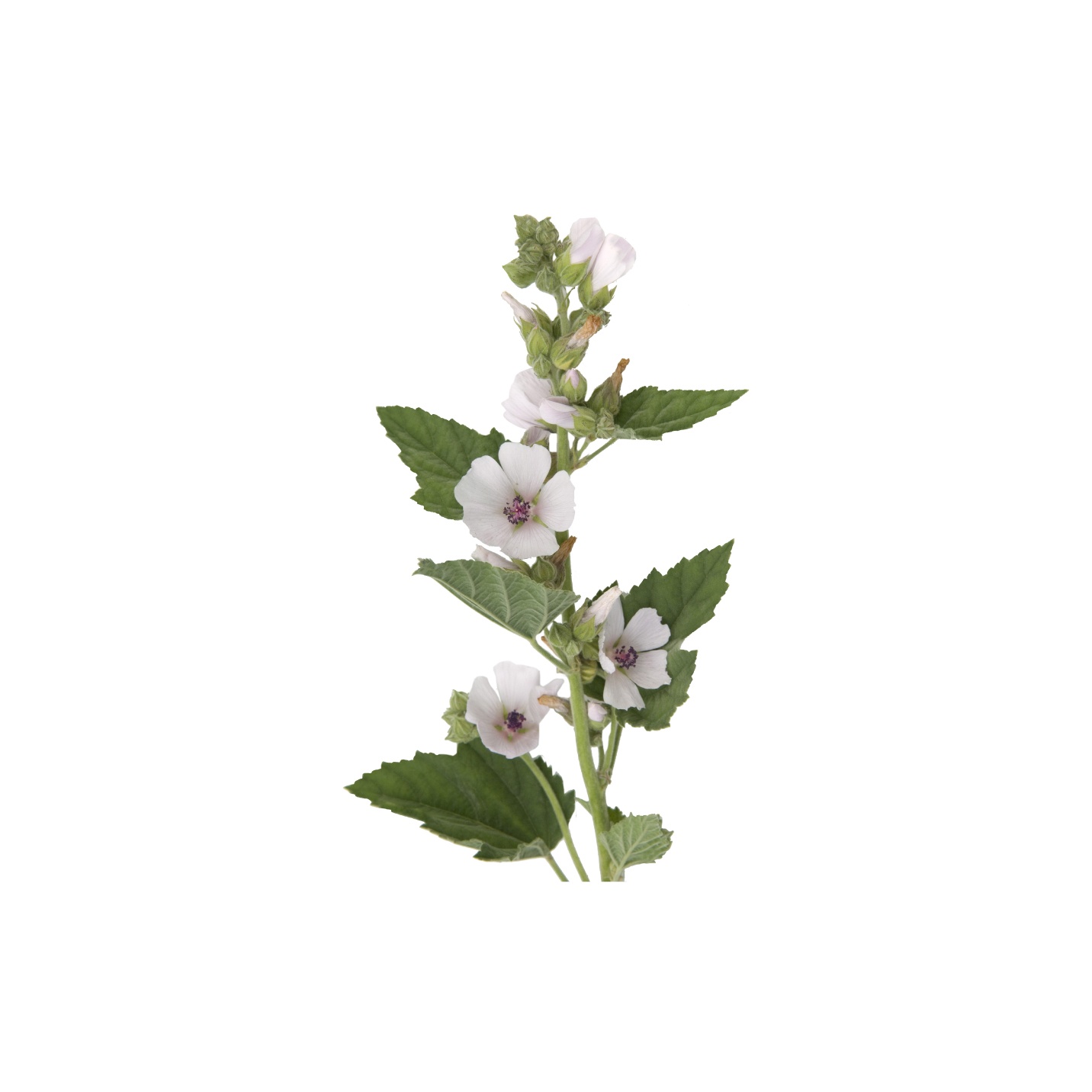
It is a perennial reaching to about two metres, with soft, velvety, ovate-cordate leaves toothed at the margin and pale flowers. A long, tapering taproot stores much of the mucilage and other soluble constituents 26Reference 26A Modern Herbal — Mallow (Marsh). https://www.botanical.com/botanical/mgmh/m/mallow07.htmlView study →. Marshmallow is distinguished from the common mallow (Malva sylvestris) by the numerous divisions of its outer calyx and by its downy, furry leaves and stems, with flowers paler than the common mallow’s 26Reference 26A Modern Herbal — Mallow (Marsh). https://www.botanical.com/botanical/mgmh/m/mallow07.htmlView study →.
Habitat & Distribution
Marshmallow is native to most of Europe and the Middle East, and is naturalised in parts of North America. True to its name, it favours damp, brackish ground — salt marshes, wet meadows and ditches 26Reference 26A Modern Herbal — Mallow (Marsh). https://www.botanical.com/botanical/mgmh/m/mallow07.htmlView study →.
Harvesting & Preparation
Both root and leaf are used, with the root generally preferred for the digestive tract and the leaf for the urinary and respiratory tracts 25Reference 25Medical Herbalism: The Science and Practice of Herbal Medicine. Because the active mucilage is water-soluble and heat-sensitive, marshmallow is traditionally prepared as a cold infusion — the chopped root steeped in cold water — to preserve it, or gently decocted; the root is also boiled with wine or milk, or made into a honey syrup for coughs, which is often preferred for children 26Reference 26A Modern Herbal — Mallow (Marsh). https://www.botanical.com/botanical/mgmh/m/mallow07.htmlView study →. A root decoction is mucilaginous enough to serve as an egg substitute in cooking, and the tender leaves can be eaten raw 26Reference 26A Modern Herbal — Mallow (Marsh). https://www.botanical.com/botanical/mgmh/m/mallow07.htmlView study →.
Phytochemistry
The defining constituent of marshmallow is its mucilage — a viscous polysaccharide complex (rhamnogalacturonans, arabinogalactans and arabinans) that makes up the largest single fraction of the root and drives the herb’s demulcent and emollient action 22Reference 22ReviewIsolation, structural properties, and bioactivities of polysaccharides from Althaea officinalis Linn.: a review — reviewView study →. Alongside it sit pectin, the amino acid asparagine, and a suite of leaf flavonoids (kaempferol, quercetin and diosmetin glucosides) responsible for its antimicrobial activity 18Reference 18In vitroPhytochemical, antimicrobial, and toxicological evaluation of traditional herbs used to treat sore throat — in vitroView study →. Modern phytochemical work on the root’s low-molecular-weight fraction has added hypolaetin and its O-sulfoglycosides (including a 4′-O-methylisoscutellarein sulfoglycoside), the coumarin glycoside haploperoside D, and appreciable amounts of glycine betaine (~8% of that fraction) and free proline; the hypolaetin sulfoglycosides are linked to the extract’s hyaluronidase-inhibiting, anti-inflammatory activity 6Reference 6In vitroPhytochemical characterization of low molecular weight constituents from marshmallow roots and inhibiting effects of the aqueous extract on human hyaluronidase-1 — in vitroView study →.
Constituent Summary
Amounts are percent of the dried root unless noted; mucilage figures vary with reporting method (older “total mucilage” assays give ~18–35%, isolated water-soluble polysaccharide ~5–12%) 25Reference 25Medical Herbalism: The Science and Practice of Herbal Medicine.
Mucilage1 compound1 with data
Polysaccharide1 compound1 with data
Amino Acid1 compound1 with data
Flavonoid2 compounds2 with data
Root
- Mucilage (18–35%) 25Reference 25Medical Herbalism: The Science and Practice of Herbal Medicine
- Starch
- Pectin (up to ~35%) 25Reference 25Medical Herbalism: The Science and Practice of Herbal Medicine
- Oil
- Sugar
- Asparagine (1–2%) 25Reference 25Medical Herbalism: The Science and Practice of Herbal Medicine
- Cellulose
- Glutinous matter 26Reference 26A Modern Herbal — Mallow (Marsh). https://www.botanical.com/botanical/mgmh/m/mallow07.htmlView study →
Leaves
- Mucilage
- Including low molecular weight D-glucan
- Flavonoids
- Kaempferol
- Quercetin
- Diosmetin glucosides
- Scopoletin
- Polyphenolic acids
- Syringic acid
- Caffeic acid
- Salicylic acid
- Vanillic acid
- p-Coumaric acid
Pharmacology & Research
Marshmallow (Althaea officinalis) has a modest but coherent literature dominated by one mechanism: its root and leaf mucilage forms a bioadhesive film that physically soothes irritated mucosa. The evidence tier is mostly preclinical — cell and animal work — anchored by human observational data (large consumer surveys of dry-cough preparations) and a handful of small clinical trials in which marshmallow is a component of a combination product rather than the sole active. The strongest and most interesting emerging signals sit slightly off the traditional demulcent axis: anti-inflammatory and antioxidant activity of standardised root extract on immune and endothelial cells 9,10Reference 9In vitroAnti-inflammatory and anti-oxidative effects of Phytohustil and root extract of Althaea officinalis L. on macrophages — in vitroView study →Reference 10In vitroPhytohustil and root extract of Althaea officinalis L. exert anti-inflammatory and anti-oxidative properties and improve migratory capacity of endothelial cells — in vitroView study →, and a small pilot trial in childhood atopic dermatitis 15Reference 15RCTEffect of topical marshmallow (Althaea officinalis) on atopic dermatitis in children: a pilot double-blind active-controlled clinical trial — randomisedView study →. No large placebo-controlled trial of marshmallow monotherapy exists for any indication, and results are heavily preparation-dependent — an aqueous mucilage-rich extract behaves very differently from an ethanolic or a flower extract, so findings rarely transfer across forms.
- Best-supported: demulcent soothing of dry cough and throat irritation, backed by codeine-comparable antitussive activity in animals 2,3,4Reference 2AnimalPossible mechanisms of dose-dependent cough suppressive effect of Althaea officinalis rhamnogalacturonan — animal (guinea pig in vivo)View study →Reference 3AnimalAntitussive activity of Althaea officinalis L. polysaccharide rhamnogalacturonan in guinea pigs with airways inflammation — animal in vivoView study →Reference 4AnimalThe antitussive activity of polysaccharides from Althaea officinalis L., varView study →, human consumer surveys 1Reference 1ObservationalMarshmallow root extract for the treatment of irritative cough: two surveys on users’ view on effectiveness and tolerability — observational/cohort surveyView study →, and mucosal-film/cell-repair mechanisms in vitro 5,6Reference 5In vitroAqueous extracts and polysaccharides from marshmallow roots: cellular internalisation and stimulation of cell physiology of human epithelial cells — in vitroView study →Reference 6In vitroPhytochemical characterization of low molecular weight constituents from marshmallow roots and inhibiting effects of the aqueous extract on human hyaluronidase-1 — in vitroView study →; anti-inflammatory and antioxidant activity of root extract on macrophages and endothelial cells 9,10Reference 9In vitroAnti-inflammatory and anti-oxidative effects of Phytohustil and root extract of Althaea officinalis L. on macrophages — in vitroView study →Reference 10In vitroPhytohustil and root extract of Althaea officinalis L. exert anti-inflammatory and anti-oxidative properties and improve migratory capacity of endothelial cells — in vitroView study →.
- Emerging, worth watching: topical wound healing and skin soothing, including a small atopic-dermatitis pilot trial 13,15Reference 13AnimalAlthaea officinalis improves wound healing in rats: a stereological study — animal (rat)View study →Reference 15RCTEffect of topical marshmallow (Althaea officinalis) on atopic dermatitis in children: a pilot double-blind active-controlled clinical trial — randomisedView study →; gastroprotection in rodent ulcer models 11,17Reference 11AnimalPharmacological evaluation of aqueous extract of Althaea officinalis flower grown in Lebanon — animal (rat)View study →Reference 17AnimalGastro-protective and anti-oxidant potential of Althaea officinalis and Solanum nigrum on pyloric ligation/indomethacin-induced ulceration in rats — animal (rat)View study →.
- Mechanistically thin: hypoglycaemic and skin-depigmenting claims rest on single, old, or in-vitro-only studies 16,20Reference 16In vitroInhibitory mechanism of an extract of Althaea officinalis L. on endothelin-1-induced melanocyte activation — in vitroView study →Reference 20AnimalHypoglycemic activity of twenty plant mucilages and three modified products — animal (mice)View study →.
- The caveat: almost entirely preclinical for internal use; human trials are small, combination-product, or survey-based, and there is no standardised monotherapy dose.
1. Demulcent & antitussive
Marshmallow’s flagship action is demulcent: its mucilage — a viscous polysaccharide complex (chiefly rhamnogalacturonan-type acidic polysaccharides) — forms a bioadhesive layer over inflamed oropharyngeal and gastrointestinal mucosa, physically shielding it and supporting repair 5Reference 5In vitroAqueous extracts and polysaccharides from marshmallow roots: cellular internalisation and stimulation of cell physiology of human epithelial cells — in vitroView study →. In guinea-pig and cat models, isolated root rhamnogalacturonan suppressed citric-acid- and mechanically-induced cough dose-dependently, with efficacy comparable to codeine and, unlike codeine, negligible impact on expectoration 2,3,4Reference 2AnimalPossible mechanisms of dose-dependent cough suppressive effect of Althaea officinalis rhamnogalacturonan — animal (guinea pig in vivo)View study →Reference 3AnimalAntitussive activity of Althaea officinalis L. polysaccharide rhamnogalacturonan in guinea pigs with airways inflammation — animal in vivoView study →Reference 4AnimalThe antitussive activity of polysaccharides from Althaea officinalis L., varView study →; the effect appears to act through serotonergic 5-HT₂ receptors rather than bronchodilation 2Reference 2AnimalPossible mechanisms of dose-dependent cough suppressive effect of Althaea officinalis rhamnogalacturonan — animal (guinea pig in vivo)View study →. In vitro, aqueous root extract is internalised by epithelial cells and upregulates genes for adhesion, extracellular matrix and cytokine release, stimulating mucosal regeneration 5Reference 5In vitroAqueous extracts and polysaccharides from marshmallow roots: cellular internalisation and stimulation of cell physiology of human epithelial cells — in vitroView study →. Human data are observational: two prospective surveys of 822 users of an aqueous root-extract lozenge/syrup (STW42) reported rapid symptom relief in dry cough — often within 10 minutes — with very good tolerability 1Reference 1ObservationalMarshmallow root extract for the treatment of irritative cough: two surveys on users’ view on effectiveness and tolerability — observational/cohort surveyView study →, and marshmallow root is an active component in multi-ingredient throat sprays and formulations shown effective in controlled trials 7,21Reference 7RCTEffectiveness and tolerability of Ectoin mouth and throat spray Althaea honey (ERS09) for sore throat — randomised, active-controlled trialView study →Reference 21RCTRandomized, open-label, multicenter comparative study of BNO 1030 extract (containing marshmallow root) in acute non-bacterial tonsillitis in children — randomised (combination product)View study →. A 2020 review concluded the animal and clinical evidence supports use in dry cough, strongest in combination products 8Reference 8ReviewMarsh mallow (Althaea officinalis L.) and its potency in the treatment of cough — reviewView study →.
Gap: no placebo-controlled RCT of marshmallow monotherapy; the best human evidence is survey-based or from combination products, so the herb’s independent effect size is unquantified.
2. Anti-inflammatory
Standardised root extract (a component of the cough product Phytohustil) reduced lipopolysaccharide-induced release of TNF-α and IL-6 in human macrophages, matching or exceeding diclofenac, and improved macrophage migratory capacity without cytotoxicity 9Reference 9In vitroAnti-inflammatory and anti-oxidative effects of Phytohustil and root extract of Althaea officinalis L. on macrophages — in vitroView study →; a companion study showed the same extract cut interleukin-6 release and improved wound-closure in human endothelial cells 10Reference 10In vitroPhytohustil and root extract of Althaea officinalis L. exert anti-inflammatory and anti-oxidative properties and improve migratory capacity of endothelial cells — in vitroView study →. In rats, aqueous flower extract significantly reduced both acute (carrageenan) and chronic (formalin) inflammation across all tested doses 11Reference 11AnimalPharmacological evaluation of aqueous extract of Althaea officinalis flower grown in Lebanon — animal (rat)View study →. Root extract also inhibits human hyaluronidase-1 in vitro (IC₅₀ ≈ 7.7 mg/mL) and downregulates its expression in keratinocytes, a mechanism relevant to inflamed buccal tissue 6Reference 6In vitroPhytochemical characterization of low molecular weight constituents from marshmallow roots and inhibiting effects of the aqueous extract on human hyaluronidase-1 — in vitroView study →. The flower flavonoids also inhibit NF-κB-linked signalling in mechanistic work 11Reference 11AnimalPharmacological evaluation of aqueous extract of Althaea officinalis flower grown in Lebanon — animal (rat)View study →.
Gap: all evidence is in vitro or rodent; the human-relevant effect is inferred from cell models of a proprietary extract, with no clinical anti-inflammatory endpoint measured.
3. Antioxidant
Antioxidant activity is documented consistently but only preclinically. Root extract protected human macrophages and endothelial cells against hydrogen-peroxide-induced cytotoxicity and lowered intracellular reactive oxygen species 9,10Reference 9In vitroAnti-inflammatory and anti-oxidative effects of Phytohustil and root extract of Althaea officinalis L. on macrophages — in vitroView study →Reference 10In vitroPhytohustil and root extract of Althaea officinalis L. exert anti-inflammatory and anti-oxidative properties and improve migratory capacity of endothelial cells — in vitroView study →. An isolated acidic root polysaccharide (639 kDa, ~51% galacturonic acid) showed appreciable radical-scavenging capacity in chemical assays 12Reference 12In vitroPolysaccharide extracted from Althaea officinalis L. root: structural, rheological and antioxidant properties — in vitroView study →. In rodent ulcer, carcinogenesis and nicotine-induced lung-injury models, marshmallow extracts raised endogenous antioxidant enzymes (superoxide dismutase, catalase, glutathione peroxidase) and reduced lipid peroxidation 17,19,23Reference 17AnimalGastro-protective and anti-oxidant potential of Althaea officinalis and Solanum nigrum on pyloric ligation/indomethacin-induced ulceration in rats — animal (rat)View study →Reference 19AnimalProtective effects of Althaea officinalis L. extract against N-diethylnitrosamine-induced hepatocellular carcinoma in male Wistar rats — animal (rat)View study →Reference 23AnimalProtective effect of Althaea officinalis on nicotine-induced lung injury — animal (rat)View study →.
Gap: all data are chemical-assay, cell or animal; antioxidant capacity in vitro is a weak predictor of clinical benefit, and no human biomarker study exists.
4. Wound healing
Two rat studies support topical use. A stereological study found 5% and 10% marshmallow gels increased fibroblast populations, dermal vessel diameter and — at 10% — collagen synthesis versus vehicle and untreated controls 13Reference 13AnimalAlthaea officinalis improves wound healing in rats: a stereological study — animal (rat)View study →. A separate excision-wound study reported significantly faster closure with hydroalcoholic leaf extract, attributed partly to activity against gram-positive bacteria that cause secondary wound infection 14Reference 14In vitroEvaluation of the antibacterial activity of the Althaea officinalis L. leaf extract and its wound healing potency in the rat model of excision wound — animal/in vitroView study →. The proposed mechanisms — fibroblast activation, anti-inflammatory and antioxidant effects — align with the cell-migration data above 10,13Reference 10In vitroPhytohustil and root extract of Althaea officinalis L. exert anti-inflammatory and anti-oxidative properties and improve migratory capacity of endothelial cells — in vitroView study →Reference 13AnimalAlthaea officinalis improves wound healing in rats: a stereological study — animal (rat)View study →.
Gap: rodent-only, topical, small; no controlled human wound-healing trial, and the antibacterial contribution is limited to gram-positive organisms 14Reference 14In vitroEvaluation of the antibacterial activity of the Althaea officinalis L. leaf extract and its wound healing potency in the rat model of excision wound — animal/in vitroView study →.
5. Skin soothing (atopic dermatitis)
The one internal human efficacy signal for skin is a pilot double-blind, active-controlled trial in 22 children with mild-to-moderate atopic dermatitis: a 1% Althaea officinalis ointment reduced SCORAD severity significantly and, in this small sample, more than 1% hydrocortisone 15Reference 15RCTEffect of topical marshmallow (Althaea officinalis) on atopic dermatitis in children: a pilot double-blind active-controlled clinical trial — randomisedView study →. The trial paired the clinical arm with in-silico docking suggesting flavonoid glycosides bind TNF-α, IL-6 and phosphodiesterase-4 targets 15Reference 15RCTEffect of topical marshmallow (Althaea officinalis) on atopic dermatitis in children: a pilot double-blind active-controlled clinical trial — randomisedView study →. Separately, root extract inhibited endothelin-1-induced melanocyte activation in vitro, pointing to a possible anti-hyperpigmentation and skin-calming role via suppressed MAPK signalling 16Reference 16In vitroInhibitory mechanism of an extract of Althaea officinalis L. on endothelin-1-induced melanocyte activation — in vitroView study →.
Gap: the clinical evidence is a single underpowered (n=22) active-controlled pilot with no placebo arm; the mechanistic support is docking and cell-line only, and the depigmentation finding is a single cosmetic-science study.
6. Gastroprotective
In a rat pyloric-ligation/indomethacin ulcer model, oral root extract pretreatment for 14 days reduced ulcer number and index, curbed acid and pepsin output, and restored mucosal antioxidant and protective factors, alongside omeprazole and misoprostol comparators 17Reference 17AnimalGastro-protective and anti-oxidant potential of Althaea officinalis and Solanum nigrum on pyloric ligation/indomethacin-induced ulceration in rats — animal (rat)View study →. Aqueous flower extract likewise showed significant antiulcer activity in an ethanol-induced gastric ulcer model at 50–250 mg/kg, with no adverse effect on liver enzymes 11Reference 11AnimalPharmacological evaluation of aqueous extract of Althaea officinalis flower grown in Lebanon — animal (rat)View study →. The protection is attributed to combined antioxidant, mucosal-coating and antihistamine-like actions 11,17Reference 11AnimalPharmacological evaluation of aqueous extract of Althaea officinalis flower grown in Lebanon — animal (rat)View study →Reference 17AnimalGastro-protective and anti-oxidant potential of Althaea officinalis and Solanum nigrum on pyloric ligation/indomethacin-induced ulceration in rats — animal (rat)View study →.
Gap: rodent-only, two independent models; the demulcent mucosal-coating rationale is plausible for humans but untested clinically.
7. Antibacterial
Activity is real but narrow. Leaf and flower flavonoids showed in vitro activity against multidrug-resistant Staphylococcus aureus in a screen of herbs used for sore throat 18Reference 18In vitroPhytochemical, antimicrobial, and toxicological evaluation of traditional herbs used to treat sore throat — in vitroView study →, and hydroalcoholic leaf extract inhibited gram-positive strains (including S. aureus and Listeria) but was ineffective against gram-negative organisms such as Pseudomonas aeruginosa and Escherichia coli 14Reference 14In vitroEvaluation of the antibacterial activity of the Althaea officinalis L. leaf extract and its wound healing potency in the rat model of excision wound — animal/in vitroView study →.
Gap: entirely in vitro, restricted to gram-positive bacteria; the herb is not a systemic antimicrobial and any topical use would need pairing with a gram-negative-active agent 14Reference 14In vitroEvaluation of the antibacterial activity of the Althaea officinalis L. leaf extract and its wound healing potency in the rat model of excision wound — animal/in vitroView study →.
8. Hepatoprotective
One rat study of N-diethylnitrosamine-induced hepatocellular carcinogenesis found flower extract (250 and 500 mg/kg), particularly co-administered with silymarin, normalised liver enzymes, improved serum antioxidant indices, lowered pro-inflammatory cytokines and shifted apoptotic markers (Bax/Bcl-2/p53, PI3K/Akt/mTOR) toward protection of normal hepatocytes 19Reference 19AnimalProtective effects of Althaea officinalis L. extract against N-diethylnitrosamine-induced hepatocellular carcinoma in male Wistar rats — animal (rat)View study →.
Gap: a single animal study where the clearest effects appear in combination with silymarin; marshmallow’s independent hepatoprotective contribution is unresolved and there is no human data.
9. Hypoglycaemic
The hypoglycaemic claim rests on a single 1987 study in which plant mucilages, including that of marshmallow, lowered blood glucose in non-diabetic mice 20Reference 20AnimalHypoglycemic activity of twenty plant mucilages and three modified products — animal (mice)View study →. No replication, no diabetic model, and no human data have followed.
Gap: one old animal study in non-diabetic animals; this is essentially a mechanistic curiosity, not a supported indication, and any additive effect with glucose-lowering drugs is theoretical.
Mechanisms
| Mechanism | Drives | Key compounds |
|---|---|---|
| Bioadhesive mucilage film on mucosa (physical barrier + cell-repair signalling) | demulcentantitussivegastroprotective | mucilage / rhamnogalacturonan (polysaccharide fraction) |
| 5-HT₂ receptor–mediated cough-reflex suppression | antitussive | rhamnogalacturonan fraction |
| TNF-α, IL-6 ↓ / NF-κB-linked signalling ↓ | anti-inflammatory | leaf flavonoids, quercetin, kaempferol |
| ROS scavenging; SOD, CAT, GPx ↑ | antioxidantgastroprotectivehepatoprotective | caffeic acid, acidic root polysaccharide |
| Hyaluronidase-1 inhibition | mucosal anti-inflammatory | hypolaetin sulfoglycosides |
| Fibroblast activation, collagen synthesis, epithelial migration | wound healing | extract-level (polysaccharide + phenolics) |
| Endothelin-1 secretion & MAPK ↓ | skin calming / depigmentation | extract-level |
Clinical trials
Registered and published clinical work is limited and mostly on marshmallow-containing combination products, not the herb alone: one completed device trial of an Althaea-honey throat spray (NCT04203810, n≈194) and small published trials of a combination tonsillitis extract and a topical atopic-dermatitis ointment; the remaining human evidence is consumer-survey rather than randomised.
| Completed | Planned | Terminated | Preclinical |
|---|---|---|---|
| 3(2 combination-product RCTs + 1 pilot ointment RCT) | 0 | 0 | ~20 |
Last checked: July 2026.
Dosage
Marshmallow’s human trials use proprietary aqueous extracts, sprays and topical ointments rather than a weighed herb dose, so the figures below are what was studied, not conversions to dried-herb weight. These are research doses, not recommendations.
| Indication | Preparation | Dose | Est. dried-herb equivalent | Source |
|---|---|---|---|---|
| Dry cough / throat irritation | Aqueous root-extract lozenge/syrup (STW42) | As-marketed OTC dosing over ~7 days | — (proprietary aqueous extract, no marker %) | 1Reference 1ObservationalMarshmallow root extract for the treatment of irritative cough: two surveys on users’ view on effectiveness and tolerability — observational/cohort surveyView study → |
| Sore throat / pharyngitis | Althaea-honey throat spray (ERS09) | Sprayed, 7 ± 2 days | — (device/spray) | 7Reference 7RCTEffectiveness and tolerability of Ectoin mouth and throat spray Althaea honey (ERS09) for sore throat — randomised, active-controlled trialView study → |
| Atopic dermatitis (children) | Topical 1% ointment | Twice daily for 1 wk, then 3×/wk for 3 wk | — (topical) | 15Reference 15RCTEffect of topical marshmallow (Althaea officinalis) on atopic dermatitis in children: a pilot double-blind active-controlled clinical trial — randomisedView study → |
Human trial doses were proprietary aqueous extracts, sprays or topical products with no stated marker-compound percentage, so no reliable back-conversion to dried-herb weight is possible — equivalents are left as ”—” rather than invented.
Traditional Dosage
Traditional use is of the whole root or leaf, taken as a cold infusion, tincture or syrup — a food-like demulcent rather than a titrated extract.
| System | Preparation | Dose |
|---|---|---|
| Western herbal | Liquid extract (1:2) | 2–40 mL/week |
| Western herbal | Cold-infused root (cold maceration) | 2–4 g dried root steeped cold, up to 3×/day |
| Western herbal | Root decoction / honey syrup | Traditional demulcent preparation, especially for children |
Safety & Pregnancy
Marshmallow is well tolerated and suitable for long-term use; its only real practical caution is that the mucilage can slow the absorption of other oral drugs, so doses should be separated.
- Well tolerated. Large consumer surveys of root-extract preparations report only rare, minor adverse events.
- Slows drug absorption. The mucilage coats the gut — take marshmallow at least 1–2 hours apart from other oral medications.
- Interactions unstudied. No CYP450 or transporter testing; absence of reported problems is not clearance.
- Gram-positive only. Its antibacterial action does not cover gram-negative infection — don’t rely on it there.
Full safety & interactions detail
Marshmallow is well tolerated and classified as safe for long-term use; the German pharmacopoeial tradition and large consumer surveys of aqueous root-extract preparations report only rare, minor adverse events 1Reference 1ObservationalMarshmallow root extract for the treatment of irritative cough: two surveys on users’ view on effectiveness and tolerability — observational/cohort surveyView study →. The main practical concern is not toxicity but absorption: the mucilage forms a viscous coating in the gut that can slow or reduce the uptake of other oral medications, supplements and herbs, so marshmallow is best taken at least 1–2 hours apart from other oral drugs 25Reference 25Medical Herbalism: The Science and Practice of Herbal Medicine. No hepatotoxicity was seen in animals given the flower extract for a month 11Reference 11AnimalPharmacological evaluation of aqueous extract of Althaea officinalis flower grown in Lebanon — animal (rat)View study →, and the acute toxicity of the root extract in mice is low 24Reference 24In vitroDevelopment and evaluation of novel lozenges containing marshmallow root extract — in vitro/pharmaceuticalView study →. A theoretical additive effect with blood-glucose-lowering agents follows from a single old animal study 20Reference 20AnimalHypoglycemic activity of twenty plant mucilages and three modified products — animal (mice)View study →, and marshmallow’s antibacterial action is limited to gram-positive organisms and should not be relied on against gram-negative infection 14Reference 14In vitroEvaluation of the antibacterial activity of the Althaea officinalis L. leaf extract and its wound healing potency in the rat model of excision wound — animal/in vitroView study →. Herb–drug interactions beyond the physical absorption effect have not been formally studied — no CYP450 or transporter interaction has been tested, so the absence of reported problems should not be read as clearance.
Not specifically researched. No controlled human or animal reproductive-safety studies of Althaea officinalis were identified, and pharmacopoeial sources record no specific reproductive toxicity — but absence of adverse reports is not evidence of safety. As a bland demulcent it is generally regarded as low-risk; the same absorption caveat applies, so separate it from any medication taken during pregnancy or lactation, and use it under professional guidance.
Synergy
As a vulnerary, marshmallow is best combined with herbs or essential oils that are active against gram-negative bacteria, since its own antibacterial effect is confined to gram-positive organisms and secondary wound infection is often gram-negative 14Reference 14In vitroEvaluation of the antibacterial activity of the Althaea officinalis L. leaf extract and its wound healing potency in the rat model of excision wound — animal/in vitroView study →. For cough, marshmallow root is frequently formulated with other demulcent and antitussive herbs — ivy (Hedera helix), Zataria multiflora and ginger among them — and reviews note that these combination products carry the strongest clinical evidence 8Reference 8ReviewMarsh mallow (Althaea officinalis L.) and its potency in the treatment of cough — reviewView study →.
References
- Fink, C., Schmidt, M., & Kraft, K. (2018). Marshmallow root extract for the treatment of irritative cough: two surveys on users’ view on effectiveness and tolerability — observational/cohort survey. Complementary Medicine Research. https://pubmed.ncbi.nlm.nih.gov/30064132/
- Šutovská, M., Nosáľová, G., Šutovský, J., Franová, S., Prisenžňáková, Ľ., & Capek, P. (2009). Possible mechanisms of dose-dependent cough suppressive effect of Althaea officinalis rhamnogalacturonan — animal (guinea pig in vivo). International Journal of Biological Macromolecules. https://pubmed.ncbi.nlm.nih.gov/19447256/
- Šutovská, M., Capek, P., Franová, S., Joskova, M., Šutovský, J., Marcinek, J., & Kalman, M. (2011). Antitussive activity of Althaea officinalis L. polysaccharide rhamnogalacturonan in guinea pigs with airways inflammation — animal in vivo. Bratislava Medical Journal. https://pubmed.ncbi.nlm.nih.gov/22372330/
- Šutovská, M., Nosáľová, G., Franová, S., & Kardošová, A. (2007). The antitussive activity of polysaccharides from Althaea officinalis L., var. Robusta — animal in vivo (cats). Bratislava Medical Journal. https://pubmed.ncbi.nlm.nih.gov/17685009/
- Deters, A., Zippel, J., Hellenbrand, N., Pappai, D., Possemeyer, C., & Hensel, A. (2010). Aqueous extracts and polysaccharides from marshmallow roots: cellular internalisation and stimulation of cell physiology of human epithelial cells — in vitro. Journal of Ethnopharmacology. https://pubmed.ncbi.nlm.nih.gov/19799989/
- Sendker, J., Böker, I., Lengers, I., et al. (2017). Phytochemical characterization of low molecular weight constituents from marshmallow roots and inhibiting effects of the aqueous extract on human hyaluronidase-1 — in vitro. Journal of Natural Products. https://pubmed.ncbi.nlm.nih.gov/28128955/
- Roventa, D. L. C., Pieper-Fürst, U., Acikel, C., Santos, D., Sent, U., & Mösges, R. (2023). Effectiveness and tolerability of Ectoin mouth and throat spray Althaea honey (ERS09) for sore throat — randomised, active-controlled trial. Journal of Clinical Medicine. https://pubmed.ncbi.nlm.nih.gov/37762768/
- Mahboubi, M. (2020). Marsh mallow (Althaea officinalis L.) and its potency in the treatment of cough — review. Complementary Medicine Research. https://pubmed.ncbi.nlm.nih.gov/31770755/
- Bonaterra, G. A., Bronischewski, K., Hunold, P., et al. (2020). Anti-inflammatory and anti-oxidative effects of Phytohustil and root extract of Althaea officinalis L. on macrophages — in vitro. Frontiers in Pharmacology. https://pubmed.ncbi.nlm.nih.gov/32256361/
- Bonaterra, G. A., Schmitt, J., Schneider, K., et al. (2022). Phytohustil and root extract of Althaea officinalis L. exert anti-inflammatory and anti-oxidative properties and improve migratory capacity of endothelial cells — in vitro. Frontiers in Pharmacology. https://pubmed.ncbi.nlm.nih.gov/36569306/
- Hage-Sleiman, R., Mroueh, M., & Daher, C. F. (2011). Pharmacological evaluation of aqueous extract of Althaea officinalis flower grown in Lebanon — animal (rat). Pharmaceutical Biology. https://pubmed.ncbi.nlm.nih.gov/21281251/
- Karimi, S., Ghanbarzadeh, B., Roufegarinejad, L., & Falcone, P. M. (2021). Polysaccharide extracted from Althaea officinalis L. root: structural, rheological and antioxidant properties — in vitro. Carbohydrate Research. https://pubmed.ncbi.nlm.nih.gov/34597979/
- Mohsenikia, M., Rafiee, S., Rozei, L. S., et al. (2020). Althaea officinalis improves wound healing in rats: a stereological study — animal (rat). Drug Discoveries & Therapeutics. https://pubmed.ncbi.nlm.nih.gov/33116035/
- Rezaei, M., Dadgar, Z., Noori-Zadeh, A., Mesbah-Namin, S. A., Pakzad, I., & Davodian, E. (2015). Evaluation of the antibacterial activity of the Althaea officinalis L. leaf extract and its wound healing potency in the rat model of excision wound — animal/in vitro. Avicenna Journal of Phytomedicine. https://pubmed.ncbi.nlm.nih.gov/25949951/
- Naseri, V., Chavoshzadeh, Z., Mizani, A., et al. (2021). Effect of topical marshmallow (Althaea officinalis) on atopic dermatitis in children: a pilot double-blind active-controlled clinical trial — randomised. Phytotherapy Research. https://pubmed.ncbi.nlm.nih.gov/33034099/
- Kobayashi, A., Hachiya, A., Ohuchi, A., Kitahara, T., & Takema, Y. (2002). Inhibitory mechanism of an extract of Althaea officinalis L. on endothelin-1-induced melanocyte activation — in vitro. Biological & Pharmaceutical Bulletin. https://pubmed.ncbi.nlm.nih.gov/11853172/
- Zaghlool, S. S., Abo-Seif, A. A., Rabeh, M. A., Abdelmohsen, U. R., & Messiha, B. A. S. (2019). Gastro-protective and anti-oxidant potential of Althaea officinalis and Solanum nigrum on pyloric ligation/indomethacin-induced ulceration in rats — animal (rat). Antioxidants (Basel). https://pubmed.ncbi.nlm.nih.gov/31731465/
- Mehreen, A., Waheed, M., Liaqat, I., & Arshad, N. (2016). Phytochemical, antimicrobial, and toxicological evaluation of traditional herbs used to treat sore throat — in vitro. BioMed Research International. https://pubmed.ncbi.nlm.nih.gov/27429983/
- Wang, Z., et al. (2023). Protective effects of Althaea officinalis L. extract against N-diethylnitrosamine-induced hepatocellular carcinoma in male Wistar rats — animal (rat). Food Science & Nutrition. https://pubmed.ncbi.nlm.nih.gov/37576045/
- Tomoda, M., Shimizu, N., Oshima, Y., Takahashi, M., Murakami, M., & Hikino, H. (1987). Hypoglycemic activity of twenty plant mucilages and three modified products — animal (mice). Planta Medica. https://pubmed.ncbi.nlm.nih.gov/3575513/
- Popovych, V., Koshel, I., Malofiichuk, A., et al. (2019). Randomized, open-label, multicenter comparative study of BNO 1030 extract (containing marshmallow root) in acute non-bacterial tonsillitis in children — randomised (combination product). American Journal of Otolaryngology. https://pubmed.ncbi.nlm.nih.gov/30554882/
- Xue, T., et al. (2023). Isolation, structural properties, and bioactivities of polysaccharides from Althaea officinalis Linn.: a review — review. International Journal of Biological Macromolecules. https://pubmed.ncbi.nlm.nih.gov/37245776/
- Kara, O., et al. (2026). Protective effect of Althaea officinalis on nicotine-induced lung injury — animal (rat). Complementary Medicine Research. https://pubmed.ncbi.nlm.nih.gov/42348476/
- Benbassat, N., Kostova, B., Nikolova, I., & Rachev, D. (2013). Development and evaluation of novel lozenges containing marshmallow root extract — in vitro/pharmaceutical. Pakistan Journal of Pharmaceutical Sciences. https://pubmed.ncbi.nlm.nih.gov/24191313/
- Hoffmann, D. (2003). Medical Herbalism: The Science and Practice of Herbal Medicine. Rochester, VT: Healing Arts Press. (pp. 526–527).
- Grieve, M. (1931). A Modern Herbal — Mallow (Marsh). https://www.botanical.com/botanical/mgmh/m/mallow07.html
- Barnes, J., Anderson, L. A., & Phillipson, J. D. (2007). Herbal Medicines (3rd ed.). London: Pharmaceutical Press. (pp. 418–420).