Materia Medica
Sarsaparilla
Smilax spp.
Sarsaparilla (Smilax spp.) — a tropical root used for psoriasis, gout, systemic infection and to enhance other herbs, with a modern evidence base that is almost entirely preclinical.
What Is Sarsaparilla?
Sarsaparilla is not a single plant but a trade name for the dried roots and rhizomes of several Smilax species — chiefly S. glabra (the Chinese “tu fu ling”), S. china, S. aristolochiifolia, S. ornata and S. riparia. The genus is widespread across the tropics, from China and Southeast Asia through the Caribbean and West Indies into Central and South America and Mexico, and across that range it has been used for a strikingly consistent set of problems: skin disease (especially psoriasis), systemic infection, and rheumatic or arthritic complaints 28,30Reference 28ReviewEthnomedicine, Phytochemistry and Pharmacology of Smilax glabra: An Important Traditional Chinese Medicine — reviewView study →Reference 30The Healing Power of Rainforest Herbs: A Guide to Understanding and Using Herbal Medicinals. Because these species differ in chemistry and potency, “sarsaparilla” is best understood as a botanically variable class of roots rather than one standardised herb.
Modern interest has centred on anti-gout, anti-inflammatory and hepatoprotective activity, with more speculative work on anticancer effects. It is important to be clear about the strength of that evidence: essentially the entire modern literature is animal and cell-line work, and no controlled human trial of sarsaparilla as a single herb exists 28,29Reference 28ReviewEthnomedicine, Phytochemistry and Pharmacology of Smilax glabra: An Important Traditional Chinese Medicine — reviewView study →Reference 29ReviewSmilax glabra Roxb.: A Review of Its Traditional Usages, Phytochemical Constituents, Pharmacological Properties, and Clinical Applications — reviewView study →. Its long-standing traditional role as a “carrier” that improves the absorption of other herbs in a formula is a formulation belief rather than a measured pharmacokinetic effect.
Traditional & Modern Uses
Across its range sarsaparilla has been used for psoriasis and other skin disorders, rheumatism and gout, systemic and febrile infection, and as a general “blood-cleansing” tonic — and, in formulation, to help “carry” or enhance other herbs. Several of these threads (skin disease, arthritis, infection) recur independently in Chinese, South American and European traditions.
Western Herbal Medicine
Sarsaparilla has been used as a blood cleanser and for abscesses, ulcers, syphilis, shingles, wound washes, asthma, rheumatism, digestive weakness, gout, gonorrhea, arthritis, fever, cough, scrofula, hypertension, psoriasis, skin diseases, and cancer 30Reference 30The Healing Power of Rainforest Herbs: A Guide to Understanding and Using Herbal Medicinals.
In Europe, sarsaparilla was considered a tonic, blood purifier, diuretic, and diaphoretic. After its introduction in the 1500s, Smilax became a popular treatment for syphilis, which had reached epidemic proportions; the standard alternative of the day was mercury, which frequently caused insanity, blindness, loss of teeth, muscle atrophy, and death 30Reference 30The Healing Power of Rainforest Herbs: A Guide to Understanding and Using Herbal Medicinals.
Smilax spp. was also marketed as a steroidal supplement for bodybuilders in the 1980s, though no evidence supports an anabolic effect (see Safety). It is mentioned in Monardes (1577), Gerard (1597), Hill (1751), Parke-Davis (1890) and the works of the eclectics, reflecting its long acceptance in Western materia medica.
Sarsaparilla was used to make root beer, but — contrary to popular belief — largely for its foaming rather than its flavour: the root is nearly tasteless and its high saponin content acts like a detergent, causing water to foam 30Reference 30The Healing Power of Rainforest Herbs: A Guide to Understanding and Using Herbal Medicinals.
Traditional Chinese Medicine
Smilax spp. is commonly used in soups and herbal teas in China, and in Sri Lanka and Thailand for cancer and skin conditions 29Reference 29ReviewSmilax glabra Roxb.: A Review of Its Traditional Usages, Phytochemical Constituents, Pharmacological Properties, and Clinical Applications — reviewView study →. Referred to as “tu fu ling,” it is considered sweet, bland and neutral in nature, entering the liver and stomach meridians. It is used to clear damp-heat and “poison,” benefit the skin, and open the channels.
Traditional South American Medicine
In South America, Smilax has been used for centuries for sexual impotence, rheumatism, skin ailments, and as a general tonic for weakness. In Peru the root was used for headaches, joint pain and infections such as influenza. Throughout the Amazon, shamans used it for leprosy (contracted from armadillos, a food item) and other skin disorders including psoriasis 30Reference 30The Healing Power of Rainforest Herbs: A Guide to Understanding and Using Herbal Medicinals.
Botany & Varieties
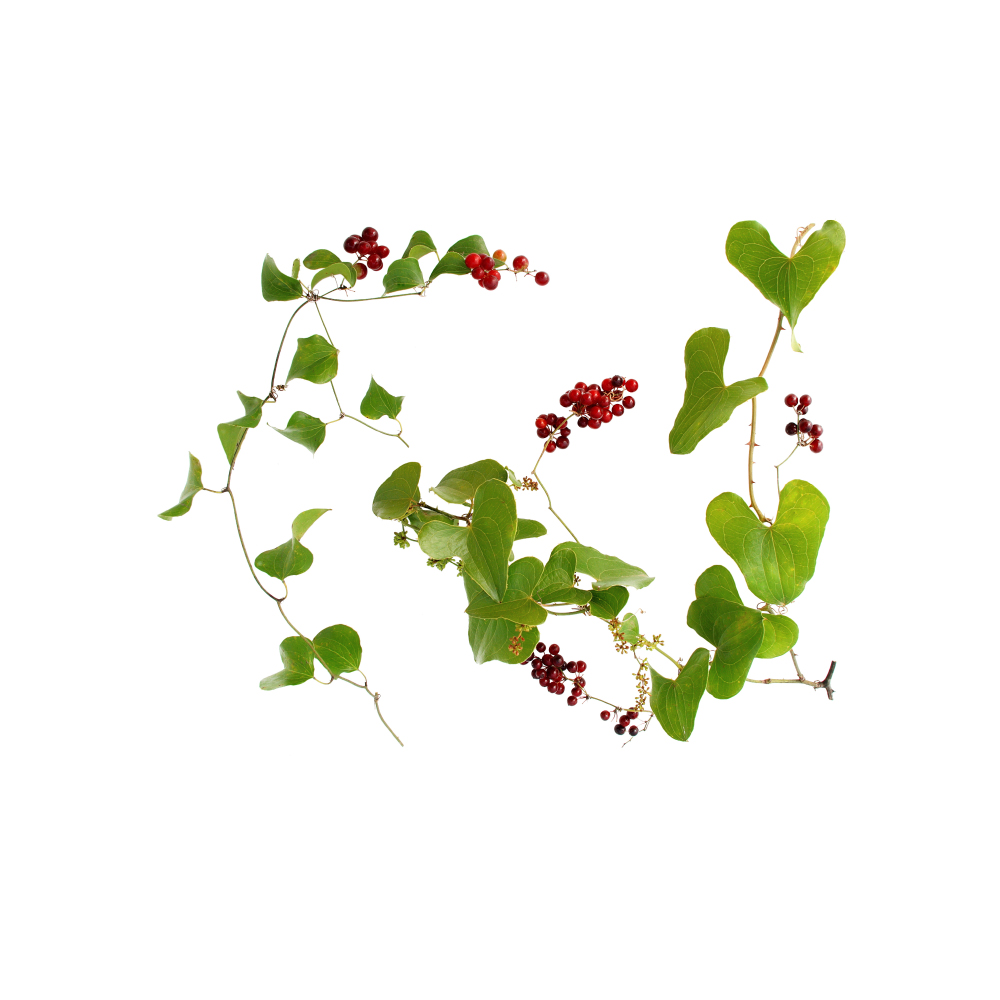
Sarsaparilla is a large, brambling, woody vine that favours the dark, humid understorey of tropical rainforest. The Smilacaceae is a monocot family of roughly 315 species across just two genera (Smilax and Heterosmilax).
The vine can climb up to ~50 m into the forest canopy on wiry tendrils, and produces black, blue or red fruits. Many Smilax species carry stem thorns and can be cultivated into impenetrable barriers (“greenbriers”). The tuberous root used medicinally can spread up to ~2.5 m; its flavour is subtle and often described as tasteless 30Reference 30The Healing Power of Rainforest Herbs: A Guide to Understanding and Using Herbal Medicinals.
There are roughly 300–350 Smilax species worldwide, native to Jamaica, South America, the Caribbean, Mexico, Honduras, the West Indies and China 29,30Reference 29ReviewSmilax glabra Roxb.: A Review of Its Traditional Usages, Phytochemical Constituents, Pharmacological Properties, and Clinical Applications — reviewView study →Reference 30The Healing Power of Rainforest Herbs: A Guide to Understanding and Using Herbal Medicinals. The commercial “sarsaparillas” come from several of these: S. officinalis, S. japicanga and S. febrifuga from South America; S. regelii, S. aristolochiifolia and S. ornata from Mexico and Central America; and S. glabra and S. china from China 30Reference 30The Healing Power of Rainforest Herbs: A Guide to Understanding and Using Herbal Medicinals. Because chemistry and potency differ between them, the species behind a given product genuinely matters.
Harvesting, Collection & Preparation
The medicinal part is the root/rhizome. Most of the desired constituents of Smilax are water-soluble, so an aqueous extract (decoction) is generally preferred — consistent with the fact that most of the reproducible pharmacology comes from water or flavonoid-enriched extracts rather than the traditional tincture. If making a tincture, a low-alcohol menstruum (roughly 75% water to 25% alcohol) suits the water-soluble actives.
Phytochemistry
Two chemical families define the genus Smilax. The first is an abundance of steroidal saponins — the markers that gave sarsaparilla its old reputation (and its foaming, root-beer use). The signature glycoside is sarsasaponin (parillin), which on hydrolysis releases the spirostanol aglycones sarsasapogenin and its 25-epimer smilagenin; these sapogenins, together with phytosterols such as β-sitosterol and stigmasterol, are the “plant steroids” sometimes wrongly marketed as anabolic 24,30Reference 24In vitroSteroidal saponins from the roots of Smilax sp.: structure and bioactivity — in vitroView study →Reference 30The Healing Power of Rainforest Herbs: A Guide to Understanding and Using Herbal Medicinals. The second family is phenolic: in Smilax glabra and S. china the dominant marker is the flavanonol glycoside astilbin (and its stereoisomers neoastilbin, isoastilbin and neoisoastilbin), alongside engeletin, resveratrol and related stilbenoids 3,29Reference 3AnimalThe anti-hyperuricemic effect of four astilbin stereoisomers in Smilax glabra on hyperuricemic mice — animal modelView study →Reference 29ReviewSmilax glabra Roxb.: A Review of Its Traditional Usages, Phytochemical Constituents, Pharmacological Properties, and Clinical Applications — reviewView study →.
Beyond these, S. glabra supplies phenylpropanoid esters, mannose-binding lectin and glycoproteins, plus protocatechuic aldehyde, chlorogenic acid, caffeic acid, 5-O-caffeoylshikimic acid, polydatin, oxyresveratrol, rutin and isoengeletin 20,29Reference 20In vitroChemical constituents from the rhizomes of Smilax glabra and their antimicrobial activity — in vitroView study →Reference 29ReviewSmilax glabra Roxb.: A Review of Its Traditional Usages, Phytochemical Constituents, Pharmacological Properties, and Clinical Applications — reviewView study →. Two further species-specific markers are the saponin glycoside pallidifloside D, from S. riparia, and the phenolic amide N-trans-feruloyl-tyramine, the standardisation marker of a S. aristolochiifolia metabolic extract 5,16Reference 5AnimalPallidifloside D from Smilax riparia enhanced allopurinol effects in hyperuricemia mice — animal modelView study →Reference 16AnimalHypoglycemic and hypotensive activity of a root extract of Smilax aristolochiifolia, standardized on N-trans-feruloyl-tyramine — animal modelView study →.
Steroidal saponins and their aglycones have been confirmed in S. aspera, S. lebrunii, S. exelsa, S. officinalis, S. medica (also known as S. aristolochiifolia), S. menispermoidea, S. riparia, S. ornata and S. sieboldii 24Reference 24In vitroSteroidal saponins from the roots of Smilax sp.: structure and bioactivity — in vitroView study →.
Constituent Summary
Sarsaparilla is sold as several Smilax species and reliable whole-root percentages are scarce, so most entries are qualitative; the astilbin figure is content in a methanol extract of S. glabra rhizome, not the raw root, and varies with species and solvent 10,29Reference 10In vitroAntioxidant and Anti-Inflammatory Activities of Phenolic-Enriched Extracts of Smilax glabra — in vitroView study →Reference 29ReviewSmilax glabra Roxb.: A Review of Its Traditional Usages, Phytochemical Constituents, Pharmacological Properties, and Clinical Applications — reviewView study →.
Saponin3 compounds1 with data
Sterol4 compoundsno data
Flavonoid4 compounds1 with data
Stilbene3 compoundsno data
Phenolic acid3 compoundsno data
Phenylpropanoid2 compounds1 with data
Protein/Peptide1 compoundno data
Pharmacology & Research
Sarsaparilla is not one plant but a trade name for the roots and rhizomes of several Smilax species — chiefly S. glabra (the Chinese “tu fu ling”), S. china, S. aristolochiifolia and S. riparia — and almost the entire modern evidence base is preclinical. Two chemical stories run through it: steroidal saponins (sarsasaponin/parillin and their aglycones) and phenolics dominated by the flavanonol astilbin, the marker compound used to grade S. glabra 28,29Reference 28ReviewEthnomedicine, Phytochemistry and Pharmacology of Smilax glabra: An Important Traditional Chinese Medicine — reviewView study →Reference 29ReviewSmilax glabra Roxb.: A Review of Its Traditional Usages, Phytochemical Constituents, Pharmacological Properties, and Clinical Applications — reviewView study →. The best-developed signals are anti-hyperuricaemic/anti-gout and anti-inflammatory activity, both reproduced across multiple rodent models with a mapped mechanism (xanthine-oxidase inhibition, urate-transporter modulation, NF-κB/COX-2 suppression) 1,2,3,8Reference 1AnimalAnti-hyperuricemic and nephroprotective effects of Smilax china L. — animal modelView study →Reference 2AnimalProtective effects of Rhizoma smilacis glabrae extracts on potassium oxonate- and monosodium urate-induced hyperuricemia and gout in mice — animal modelView study →Reference 3AnimalThe anti-hyperuricemic effect of four astilbin stereoisomers in Smilax glabra on hyperuricemic mice — animal modelView study →Reference 8AnimalAnti-inflammatory and anti-nociceptive activities of Smilax china L. aqueous extract — animal modelView study →. No randomised controlled trial of sarsaparilla as a single herb exists; the only human uric-acid data come from a multi-herb Chinese granule in which Smilax is one of several ingredients 7Reference 7Clinical trialEffects of Rebixiao granules on blood uric acid in patients with repeatedly attacking acute gouty arthritis — clinical (multi-herb formula)View study →. Results also do not transfer cleanly between species or preparations — most anti-inflammatory and metabolic work uses aqueous or flavonoid-enriched extracts, not the tincture the herb is usually taken as.
- Best-supported: lowering uric acid and easing gouty inflammation in rodents, via xanthine-oxidase inhibition and improved urate excretion 1,3,6Reference 1AnimalAnti-hyperuricemic and nephroprotective effects of Smilax china L. — animal modelView study →Reference 3AnimalThe anti-hyperuricemic effect of four astilbin stereoisomers in Smilax glabra on hyperuricemic mice — animal modelView study →Reference 6AnimalPotential anti-gout properties of total saponins from Smilax nipponica, determined by UPLC-Q/TOF-MS — animal modelView study →; broad anti-inflammatory activity through NF-κB/COX-2 suppression 8,9Reference 8AnimalAnti-inflammatory and anti-nociceptive activities of Smilax china L. aqueous extract — animal modelView study →Reference 9In vitroThe flavonoid-enriched extract from the root of Smilax china L. inhibits inflammatory responses via the TLR-4-mediated signaling pathway — animal model / in vitroView study →.
- Emerging, worth watching: astilbin-driven hepatoprotection against drug- and toxin-induced liver injury 12,13Reference 12AnimalOral administration of astilbin mitigates acetaminophen-induced acute liver injury in mice by modulating the gut microbiota — animal modelView study →Reference 13AnimalProtective effects of the flavonoid-rich fraction from rhizomes of Smilax glabra Roxb. on carbon tetrachloride-induced hepatotoxicity — animal modelView study →, and correction of high-fat-diet metabolic dysfunction 16,19Reference 16AnimalHypoglycemic and hypotensive activity of a root extract of Smilax aristolochiifolia, standardized on N-trans-feruloyl-tyramine — animal modelView study →Reference 19AnimalAstilbin from Smilax glabra Roxb. alleviates high-fat diet-induced metabolic dysfunction — animal modelView study →.
- Mechanistically thin: anticancer claims rest entirely on tumour cell lines 24,25,26,27Reference 24In vitroSteroidal saponins from the roots of Smilax sp.: structure and bioactivity — in vitroView study →Reference 25In vitroCytotoxic polyphenols against breast tumor cell in Smilax china L. — in vitroView study →Reference 26In vitroSmilax china L. rhizome extract inhibits nuclear factor-κB and induces apoptosis in ovarian cancer cells — in vitroView study →Reference 27In vitroExtracellular signal-regulated kinase inhibition is required for methanol extract of Smilax china L. induced apoptosis through death receptor 5 in human oral mucoepidermoid carcinoma cells — in vitroView study →; antimicrobial activity is in-vitro only 20Reference 20In vitroChemical constituents from the rhizomes of Smilax glabra and their antimicrobial activity — in vitroView study →.
- The caveat: everything is animal or cell-line data on species-specific, mostly aqueous/flavonoid-enriched extracts — no human trials, no standardised dose, and the traditional liquid extract is the least-studied form.
1. Anti-hyperuricemic
This is the most thoroughly reproduced pharmacology in the genus. In potassium-oxonate-induced hyperuricaemic mice, Smilax china extract lowered serum uric acid by inhibiting xanthine oxidase and enhancing renal urate excretion through several distinct constituents 1Reference 1AnimalAnti-hyperuricemic and nephroprotective effects of Smilax china L. — animal modelView study →. S. glabra (tu fu ling) water extract repeated the effect and also reduced paw edema and renal injury in a combined potassium-oxonate/monosodium-urate gout model 2Reference 2AnimalProtective effects of Rhizoma smilacis glabrae extracts on potassium oxonate- and monosodium urate-induced hyperuricemia and gout in mice — animal modelView study →, and the four astilbin stereoisomers were identified as the active uric-acid-lowering fraction, acting on renal urate transporters 3Reference 3AnimalThe anti-hyperuricemic effect of four astilbin stereoisomers in Smilax glabra on hyperuricemic mice — animal modelView study →. A related species, S. riparia, and its saponin pallidifloside D augmented allopurinol’s uric-acid lowering in mice 4,5Reference 4AnimalAnti-hyperuricemia effects of allopurinol are improved by Smilax riparia — animal modelView study →Reference 5AnimalPallidifloside D from Smilax riparia enhanced allopurinol effects in hyperuricemia mice — animal modelView study →, and total saponins of S. nipponica eased gouty-arthritis inflammation in rats 6Reference 6AnimalPotential anti-gout properties of total saponins from Smilax nipponica, determined by UPLC-Q/TOF-MS — animal modelView study →. The only human data are from Rebixiao granules — a multi-herb formula containing Smilax, not the herb alone — which reduced blood uric acid in recurrent acute gout 7Reference 7Clinical trialEffects of Rebixiao granules on blood uric acid in patients with repeatedly attacking acute gouty arthritis — clinical (multi-herb formula)View study →.
Gap: every single-herb result is rodent; the human signal is confounded by a multi-ingredient formula, and the effective fraction is saponin/flavonoid-rich extract, not the traditional tincture.
2. Anti-inflammatory
An aqueous S. china extract (1000 mg/kg) matched acetylsalicylic acid (200 mg/kg) for anti-inflammatory effect in rat edema and inhibited both COX-2 activity and expression, the enzyme driving pro-inflammatory PGE₂ 8Reference 8AnimalAnti-inflammatory and anti-nociceptive activities of Smilax china L. aqueous extract — animal modelView study →. A flavonoid-enriched S. china root extract suppressed xylene-induced ear edema and cotton-pellet granuloma in rodents and blunted LPS-driven cytokine release in macrophages via the TLR-4 pathway 9Reference 9In vitroThe flavonoid-enriched extract from the root of Smilax china L. inhibits inflammatory responses via the TLR-4-mediated signaling pathway — animal model / in vitroView study →. Phenolic-enriched S. glabra extract cut nitric oxide, TNF-α and other mediators in LPS-stimulated cells 10Reference 10In vitroAntioxidant and Anti-Inflammatory Activities of Phenolic-Enriched Extracts of Smilax glabra — in vitroView study →, and among six isolated S. glabra flavonoids — astilbin, neoastilbin, isoastilbin, neoisoastilbin, engeletin and epicatechin — several reduced IL-1β, IL-6 and NO production 11Reference 11In vitroAntioxidant and Anti-Inflammatory Activities of Six Flavonoids from Smilax glabra Roxb. — in vitroView study →.
Gap: convincing across animals and cells but entirely preclinical; the aspirin-equivalence figure is a single high-dose rat comparison, not a clinical benchmark.
3. Hepatoprotective
Astilbin (50 mg/kg orally for 7 days) reduced acetaminophen-induced acute liver injury in mice, working partly through the gut microbiota because of its low oral bioavailability and intestinal accumulation 12Reference 12AnimalOral administration of astilbin mitigates acetaminophen-induced acute liver injury in mice by modulating the gut microbiota — animal modelView study →. A flavonoid-rich S. glabra fraction protected rat liver against carbon-tetrachloride toxicity 13Reference 13AnimalProtective effects of the flavonoid-rich fraction from rhizomes of Smilax glabra Roxb. on carbon tetrachloride-induced hepatotoxicity — animal modelView study →. Older S. china work found its resveratrol/oxyresveratrol content reduced nicotine-driven oxidative damage and induced CYP2A6, speeding nicotine clearance — though that was a cell/enzyme model, not a live liver 14Reference 14In vitroSmilax china root extract detoxifies nicotine by reducing reactive oxygen species and inducing CYP2A6 — in vitroView study →. The same antioxidant/detoxifying theme extends to the kidney, where S. glabra eased cisplatin-induced acute kidney injury in mice via the Nrf2/HO-1 pathway 15Reference 15AnimalSmilax glabra Roxb. alleviates cisplatin-induced acute kidney injury in mice by activating the Nrf2/HO-1 signalling pathway — animal modelView study →.
Gap: the strongest data are for isolated astilbin, not whole root; no human liver-function studies exist, and the CYP2A6 “detox” claim is in vitro.
4. Antioxidant
Phenolic-enriched S. glabra extract showed strong DPPH and ABTS radical scavenging and ferric-reducing power, matching or exceeding ascorbic acid for ABTS in vitro 10Reference 10In vitroAntioxidant and Anti-Inflammatory Activities of Phenolic-Enriched Extracts of Smilax glabra — in vitroView study →. Screening six purified S. glabra flavonoids confirmed astilbin — the herb’s marker compound — and its stereoisomers as the main antioxidant contributors 11Reference 11In vitroAntioxidant and Anti-Inflammatory Activities of Six Flavonoids from Smilax glabra Roxb. — in vitroView study →. Catechins and epicatechin, well characterised from tea, are also present and plausibly add to the net antioxidant capacity 10Reference 10In vitroAntioxidant and Anti-Inflammatory Activities of Phenolic-Enriched Extracts of Smilax glabra — in vitroView study →.
Gap: consistent but almost entirely chemical/cell-assay data; free-radical scavenging in a cuvette does not establish antioxidant benefit in the body, and no human biomarker study exists.
5. Antidiabetic & metabolic
A S. aristolochiifolia root extract standardised on N-trans-feruloyl-tyramine curbed metabolic-syndrome markers in mice: ~30% less weight gain, ~60% lower triglycerides, ~40% improved insulin resistance and roughly a third lower blood pressure 16Reference 16AnimalHypoglycemic and hypotensive activity of a root extract of Smilax aristolochiifolia, standardized on N-trans-feruloyl-tyramine — animal modelView study →. Rhizome extracts of S. glabra lowered blood glucose in normal and diabetic mice 17Reference 17AnimalHypoglycemic effect of the rhizomes of Smilax glabra in normal and diabetic mice — animal modelView study →, and an ethyl-acetate fraction with α-glucosidase/α-amylase inhibition reduced glucose and insulin resistance in a type-2 model 18Reference 18AnimalHypoglycemic activity of the ethyl acetate extract from Smilax glabra Roxb in mice — animal modelView study →. Astilbin itself reduced body weight, insulin resistance and inflammation in high-fat-diet mice while improving gut-microbiota balance 19Reference 19AnimalAstilbin from Smilax glabra Roxb. alleviates high-fat diet-induced metabolic dysfunction — animal modelView study →.
Gap: promising but heterogeneous — different species, different standardised fractions — and no human metabolic endpoints; the headline percentage reductions come from one mouse study.
6. Antimicrobial
A phytochemical survey of S. glabra rhizome isolated 63 phenolic compounds, including six new ones, and found activity against gram-positive bacteria — methicillin-resistant Staphylococcus aureus, S. aureus, several Streptococcus species and Enterococcus faecalis — as well as the yeast Candida albicans, through compound-specific mechanisms 20Reference 20In vitroChemical constituents from the rhizomes of Smilax glabra and their antimicrobial activity — in vitroView study →.
Gap: entirely in-vitro isolated-compound data; no whole-extract, animal-infection or clinical confirmation, and minimum inhibitory concentrations were not tied to achievable tissue levels.
7. Antipsoriatic
Traditional use for psoriasis has some modern preclinical backing. Quercetin isolated from S. china rhizome improved epidermal thickness and orthokeratosis in the mouse-tail psoriasis model 21Reference 21AnimalScreening of flavonoid “quercetin” from the rhizome of Smilax china Linn. for anti-psoriatic activity — animal modelView study →. Network-pharmacology plus an imiquimod-induced mouse model showed S. glabra dampens psoriatic skin inflammation by regulating T-cell differentiation 22Reference 22AnimalIntegrated network pharmacological analysis revealed that Smilax glabra Roxb. alleviates IMQ-induced psoriatic skin inflammation through regulating T cell immune response — animal modelView study →, and an ethyl-acetate fraction of S. china reduced imiquimod psoriasis severity by inhibiting IL-17-driven T-cell responses, benchmarked against methotrexate 23Reference 23AnimalSmilacis Chinae Rhizoma ethyl acetate fraction alleviates IMQ-induced psoriasis by inhibiting IL-17-driven T-cell immune responses — animal modelView study →.
Gap: all rodent or mechanistic; the flavonoid, not the whole tincture, carries the effect, and there is no controlled human trial despite centuries of topical/internal traditional use.
8. Anticancer
Antiproliferative activity is documented only in cell lines. Steroidal saponins from a commercial sarsaparilla (S. ornata) — including a new furostanol saponin — were antiproliferative across six tumour lines, most active against HT29 colon cancer 24Reference 24In vitroSteroidal saponins from the roots of Smilax sp.: structure and bioactivity — in vitroView study →. Polyphenols from S. china were cytotoxic to breast tumour cells and acted partly as antiestrogenic phytoestrogens 25Reference 25In vitroCytotoxic polyphenols against breast tumor cell in Smilax china L. — in vitroView study →; S. china rhizome extract inhibited NF-κB and induced apoptosis in ovarian cancer cells 26Reference 26In vitroSmilax china L. rhizome extract inhibits nuclear factor-κB and induces apoptosis in ovarian cancer cells — in vitroView study →; and a methanol extract triggered ERK-dependent, death-receptor-5-mediated apoptosis in oral carcinoma cells 27Reference 27In vitroExtracellular signal-regulated kinase inhibition is required for methanol extract of Smilax china L. induced apoptosis through death receptor 5 in human oral mucoepidermoid carcinoma cells — in vitroView study →.
Gap: in-vitro cytotoxicity only — no animal tumour models, no pharmacokinetics showing these concentrations are reachable, and no human data. Traditional “cancer” use should not be read as validated activity.
9. Analgesic
In the same study that established anti-inflammatory activity, an aqueous S. china extract (1000 mg/kg) significantly reduced acetic-acid-induced abdominal writhing and prolonged hot-plate latency in mice, an effect attributed to inhibition of prostaglandin-mediated pain signalling 8Reference 8AnimalAnti-inflammatory and anti-nociceptive activities of Smilax china L. aqueous extract — animal modelView study →.
Gap: rests on essentially one rodent study and is mechanistically inseparable from the anti-inflammatory (COX/PGE₂) action rather than a distinct analgesic pathway.
Mechanisms
| Mechanism | Drives | Key compounds |
|---|---|---|
| Xanthine oxidase ↓, renal urate transporter modulation | anti-hyperuricemicanti-gout | astilbin, pallidifloside D |
| NF-κB ↓, COX-2 ↓, TLR-4 ↓, PGE₂ ↓ | anti-inflammatoryanalgesic | astilbin, engeletin, quercetin |
| Radical scavenging, Nrf2/HO-1 ↑ | antioxidanthepatoprotectivenephroprotective | astilbin, epicatechin, oxyresveratrol |
| α-glucosidase/α-amylase ↓, gut-microbiota shift | antidiabeticmetabolic | astilbin, phenolic acids |
| Apoptosis induction (caspase-3, ERK/DR5), antiestrogenic binding | anticancer (in vitro) | steroidal saponins, quercetin |
Clinical trials
No registered clinical trial of sarsaparilla as a single herb was identified; ClinicalTrials.gov entries mentioning Smilax are multi-herb traditional-formula studies, and the only published human uric-acid data come from one such multi-ingredient granule 7Reference 7Clinical trialEffects of Rebixiao granules on blood uric acid in patients with repeatedly attacking acute gouty arthritis — clinical (multi-herb formula)View study →. The evidence base is otherwise entirely preclinical.
| Completed | Planned | Terminated | Preclinical |
|---|---|---|---|
| 0(single-herb) | 0 | 0 | ~40+ |
Last checked: July 2026.
Dosage
No human trial has established a therapeutic dose of sarsaparilla, so there is no evidence-based supplement dose. The research figures below are the doses used in animal or isolated-compound studies; they are recorded for transparency, not as human recommendations.
| Indication | Preparation | Dose | Est. dried-herb equivalent | Source |
|---|---|---|---|---|
| Anti-inflammatory / analgesic | S. china aqueous extract (rodent) | 1,000 mg/kg (mouse/rat) | — (animal mg/kg; no human back-conversion) | 8Reference 8AnimalAnti-inflammatory and anti-nociceptive activities of Smilax china L. aqueous extract — animal modelView study → |
| Anti-hyperuricaemic | S. glabra water extract / total flavonoids (rodent) | not standardised to human dose | — | 1,2,3Reference 1AnimalAnti-hyperuricemic and nephroprotective effects of Smilax china L. — animal modelView study →Reference 2AnimalProtective effects of Rhizoma smilacis glabrae extracts on potassium oxonate- and monosodium urate-induced hyperuricemia and gout in mice — animal modelView study →Reference 3AnimalThe anti-hyperuricemic effect of four astilbin stereoisomers in Smilax glabra on hyperuricemic mice — animal modelView study → |
| Hepatoprotective | Isolated astilbin (mouse) | 50 mg/kg/day, 7 days | — (isolated compound, not whole root) | 12Reference 12AnimalOral administration of astilbin mitigates acetaminophen-induced acute liver injury in mice by modulating the gut microbiota — animal modelView study → |
| Metabolic syndrome | S. aristolochiifolia standardised root extract (mouse) | dose per N-trans-feruloyl-tyramine standardisation | — | 16Reference 16AnimalHypoglycemic and hypotensive activity of a root extract of Smilax aristolochiifolia, standardized on N-trans-feruloyl-tyramine — animal modelView study → |
Every dose above is an animal mg/kg figure or an isolated-compound / standardised-extract dose with no marker-% basis for back-conversion to a whole-root human dose, so no dried-herb equivalent is given.
Traditional Dosage
Traditional use is of the whole root as a decoction or tincture. Because most of the actives are water-soluble, an aqueous preparation is generally preferred.
| System | Preparation | Dose |
|---|---|---|
| Western herbal | Liquid extract (1:2) | 20–40 mL/week |
| Western herbal | Dried root decoction | 1–4 g root, simmered |
| TCM (tu fu ling) | Decoction of dried rhizome | ~15–60 g/day in formula |
Safety & Pregnancy
Sarsaparilla has a long food and folk-medicine history but no formal human toxicology, so its safety is inferred rather than tested. The two practical points: despite old marketing it is not anabolic and contains no steroids, and its saponins can irritate the gut at high doses.
- Untested, not proven safe. No formal human toxicology — safety is only inferred from food use.
- Not anabolic. Contains no testosterone or steroids; its sterols convert to hormones only in a lab, not the body.
- Gut irritation. Surfactant saponins can irritate the gut and cause nausea at high doses.
- Possible interactions. Theoretical altered drug/nutrient absorption; in-vitro CYP2A6 induction, unconfirmed clinically.
- Variable product. Commercial “sarsaparilla” spans several Smilax species of differing chemistry and potency.
Full safety & interactions detail
Sarsaparilla has a long food and folk-medicine history and no formal human toxicology, so its safety profile is inferred rather than tested. The most important correction is that it does not contain testosterone or anabolic steroids: its plant sterols and steroidal saponins can be chemically converted to steroid hormones only in a laboratory, not in the body, and the anabolic marketing is unsupported 24,30Reference 24In vitroSteroidal saponins from the roots of Smilax sp.: structure and bioactivity — in vitroView study →Reference 30The Healing Power of Rainforest Herbs: A Guide to Understanding and Using Herbal Medicinals. The saponin content acts as a surfactant (the source of its historical root-beer foaming), which can be locally irritating to the gut and may cause nausea at high doses; saponins can also transiently reduce absorption of some co-administered drugs and nutrients. Interactions have not been formally studied — a theoretical concern exists around the herb altering absorption of other medicines (a use it was traditionally valued for) and around S. china’s in-vitro induction of the nicotine-metabolising enzyme CYP2A6 14Reference 14In vitroSmilax china root extract detoxifies nicotine by reducing reactive oxygen species and inducing CYP2A6 — in vitroView study →, neither of which has been confirmed clinically. Finally, because commercial “sarsaparilla” spans several botanically distinct Smilax species with different chemistry and potency, product composition is inherently variable.
Not researched. No pregnancy or lactation safety data exist for any Smilax species; the herb’s traditional use and steroidal-saponin content have not been evaluated for reproductive safety. It cannot be considered established as safe in pregnancy or breastfeeding, and the absence of reports should not be read as evidence of safety.
Synergy
Sarsaparilla is traditionally said to work better alongside sassafras and burdock (Arctium lappa) than alone, and more broadly to “carry” or enhance other herbs in a formula. These are traditional formulation claims with no controlled pharmacokinetic study behind them 30Reference 30The Healing Power of Rainforest Herbs: A Guide to Understanding and Using Herbal Medicinals.
References
- Chen L, Yin H, Lan Z, Ma S, Zhang C, Yang Z, Li P, Lin B. (2011). Anti-hyperuricemic and nephroprotective effects of Smilax china L. — animal model. J Ethnopharmacol. https://pubmed.ncbi.nlm.nih.gov/21420478/
- Liang G, et al. (2019). Protective effects of Rhizoma smilacis glabrae extracts on potassium oxonate- and monosodium urate-induced hyperuricemia and gout in mice — animal model. Phytomedicine. https://pubmed.ncbi.nlm.nih.gov/31005813/
- Huang L, et al. (2019). The anti-hyperuricemic effect of four astilbin stereoisomers in Smilax glabra on hyperuricemic mice — animal model. J Ethnopharmacol. https://pubmed.ncbi.nlm.nih.gov/30851369/
- Wu XH, et al. (2015). Anti-hyperuricemia effects of allopurinol are improved by Smilax riparia — animal model. J Ethnopharmacol. https://pubmed.ncbi.nlm.nih.gov/25617746/
- Hou PY, et al. (2015). Pallidifloside D from Smilax riparia enhanced allopurinol effects in hyperuricemia mice — animal model. Fitoterapia. https://pubmed.ncbi.nlm.nih.gov/26051087/
- Yuan C, et al. (2025). Potential anti-gout properties of total saponins from Smilax nipponica, determined by UPLC-Q/TOF-MS — animal model. Nat Prod Res. https://pubmed.ncbi.nlm.nih.gov/41051190/
- Ji W, et al. (2005). Effects of Rebixiao granules on blood uric acid in patients with repeatedly attacking acute gouty arthritis — clinical (multi-herb formula). Chin J Integr Med. https://pubmed.ncbi.nlm.nih.gov/15975301/
- Shu XS, Gao ZH, Yang XL. (2006). Anti-inflammatory and anti-nociceptive activities of Smilax china L. aqueous extract — animal model. J Ethnopharmacol. https://pubmed.ncbi.nlm.nih.gov/16387460/
- Feng H, et al. (2020). The flavonoid-enriched extract from the root of Smilax china L. inhibits inflammatory responses via the TLR-4-mediated signaling pathway — animal model / in vitro. J Ethnopharmacol. https://pubmed.ncbi.nlm.nih.gov/32222576/
- Lu CL, Zhu W, Wang M, Xu XJ, Lu CJ. (2014). Antioxidant and Anti-Inflammatory Activities of Phenolic-Enriched Extracts of Smilax glabra — in vitro. Evid Based Complement Alternat Med. https://pubmed.ncbi.nlm.nih.gov/25477999/
- Zhao X, et al. (2020). Antioxidant and Anti-Inflammatory Activities of Six Flavonoids from Smilax glabra Roxb. — in vitro. Molecules. https://pubmed.ncbi.nlm.nih.gov/33202848/
- Yang Q, et al. (2025). Oral administration of astilbin mitigates acetaminophen-induced acute liver injury in mice by modulating the gut microbiota — animal model. Acta Pharmacol Sin. https://pubmed.ncbi.nlm.nih.gov/39313515/
- Xia D, et al. (2013). Protective effects of the flavonoid-rich fraction from rhizomes of Smilax glabra Roxb. on carbon tetrachloride-induced hepatotoxicity — animal model. J Membr Biol. https://pubmed.ncbi.nlm.nih.gov/23681353/
- Kim KM, et al. (2014). Smilax china root extract detoxifies nicotine by reducing reactive oxygen species and inducing CYP2A6 — in vitro. J Food Sci. https://pubmed.ncbi.nlm.nih.gov/25220663/
- Zhao L, et al. (2025). Smilax glabra Roxb. alleviates cisplatin-induced acute kidney injury in mice by activating the Nrf2/HO-1 signalling pathway — animal model. Phytomedicine. https://pubmed.ncbi.nlm.nih.gov/40043544/
- Amaro CA, et al. (2014). Hypoglycemic and hypotensive activity of a root extract of Smilax aristolochiifolia, standardized on N-trans-feruloyl-tyramine — animal model. Molecules. https://pubmed.ncbi.nlm.nih.gov/25090124/
- Fukunaga T, et al. (1997). Hypoglycemic effect of the rhizomes of Smilax glabra in normal and diabetic mice — animal model. Biol Pharm Bull. https://pubmed.ncbi.nlm.nih.gov/9013805/
- Nguyen PTM, et al. (2020). Hypoglycemic activity of the ethyl acetate extract from Smilax glabra Roxb in mice — animal model. Iran J Basic Med Sci. https://pubmed.ncbi.nlm.nih.gov/33489029/
- Wang T, et al. (2022). Astilbin from Smilax glabra Roxb. alleviates high-fat diet-induced metabolic dysfunction — animal model. Food Funct. https://pubmed.ncbi.nlm.nih.gov/35388843/
- Xu S, et al. (2013). Chemical constituents from the rhizomes of Smilax glabra and their antimicrobial activity — in vitro. Molecules. https://pubmed.ncbi.nlm.nih.gov/23698042/
- Vijayalakshmi A, Ravichandiran V, Velraj M, Nirmala S, Jayakumari S. (2012). Screening of flavonoid “quercetin” from the rhizome of Smilax china Linn. for anti-psoriatic activity — animal model. Asian Pac J Trop Biomed. https://pubmed.ncbi.nlm.nih.gov/23569912/
- Guo Y, et al. (2024). Integrated network pharmacological analysis revealed that Smilax glabra Roxb. alleviates IMQ-induced psoriatic skin inflammation through regulating T cell immune response — animal model. J Ethnopharmacol. https://pubmed.ncbi.nlm.nih.gov/38301985/
- Wang Y, et al. (2026). Smilacis Chinae Rhizoma ethyl acetate fraction alleviates IMQ-induced psoriasis by inhibiting IL-17-driven T-cell immune responses — animal model. J Ethnopharmacol. https://pubmed.ncbi.nlm.nih.gov/42219068/
- Challinor VL, et al. (2012). Steroidal saponins from the roots of Smilax sp.: structure and bioactivity — in vitro. Steroids. https://pubmed.ncbi.nlm.nih.gov/22285850/
- Wu LS, et al. (2010). Cytotoxic polyphenols against breast tumor cell in Smilax china L. — in vitro. J Ethnopharmacol. https://pubmed.ncbi.nlm.nih.gov/20669365/
- Hu LL, et al. (2015). Smilax china L. rhizome extract inhibits nuclear factor-κB and induces apoptosis in ovarian cancer cells — in vitro. Chin J Integr Med. https://pubmed.ncbi.nlm.nih.gov/25511428/
- Yu HJ, et al. (2014). Extracellular signal-regulated kinase inhibition is required for methanol extract of Smilax china L. induced apoptosis through death receptor 5 in human oral mucoepidermoid carcinoma cells — in vitro. Mol Med Rep. https://pubmed.ncbi.nlm.nih.gov/24270523/
- Hua S, et al. (2018). Ethnomedicine, Phytochemistry and Pharmacology of Smilax glabra: An Important Traditional Chinese Medicine — review. Am J Chin Med. https://pubmed.ncbi.nlm.nih.gov/29433390/
- Wu H, et al. (2022). Smilax glabra Roxb.: A Review of Its Traditional Usages, Phytochemical Constituents, Pharmacological Properties, and Clinical Applications — review. Drug Des Devel Ther. https://pubmed.ncbi.nlm.nih.gov/36277602/
- Taylor, L. (2005). The Healing Power of Rainforest Herbs: A Guide to Understanding and Using Herbal Medicinals. Square One Publishers (sarsaparilla / Smilax).