
Materia Medica
Cashew
Anacardium occidentale
Cashew (Anacardium occidentale) — an Amazonian tree whose astringent leaves and bark are used for blood sugar, diabetes and skin conditions.
What Is the Cashew Tree?
The cashew plant is a large Amazonian tree growing throughout South America. It favours the drier, sandier regions of the central plains of Brazil, but can also be found growing deep within the Amazon rainforest.
The fruit is well known across the world for its delicious flavour and high protein content. Medicinally, the leaves, bark, and pseudo-fruit are more important.
The leaves are used during radiation therapy for cancer as an adjunctive treatment, and have a positive impact on glucose regulation as well making them useful for both type I and type II diabetics.
The bark is highly astringent, and therefore reliable as a treatment for acute diarrhea. This part of the tree is also commonly used as a hypotensive agent to lower blood pressure.
What Is Cashew Used For?
The leaves and bark are used to treat diabetes, diarrhea, colic, urinary tract infections, hepatitis C, mouth ulcers, stomach ulcers, hypertension, and cardiovascular disease.
The pseudo-fruit is mainly used for its anti-tumor action, as a supportive agent during radiation therapy. It’s also an antimicrobial and prebiotic agent useful for inhibiting urease and lipoxygenase activity.
Traditional Uses
South America
Indigenous cultures of the Amazon rain forest, have used A. occidentale medicinally for hundreds of years, and has been cultivated by them for use as well. Amazonian indigenous cultures have used this plants various parts for different uses. The bark was used for diarrhea, colic for infants, as a douche, astringent, tooth extraction post treatments, diabetes, weakness, muscular debility, urinary disorders, asthma 15Reference 15The healing power of rainforest herbs: A guide to understanding and using herbal medicinals.
The leaves were used most commonly as a tea referred to as casho, and was employed for such uses as diarrhea treatment, mouth ulcers, tonsillitis, throat problems, washing wounds. Both the leaves and the bark were used interchangeably for such uses as treating eczema, psoriasis, scrofula, dyspepsia, genital problems and STIs, impotence, bronchitis, colic, diarrhea, and as a general tonic 15Reference 15The healing power of rainforest herbs: A guide to understanding and using herbal medicinals.
The fruit and fruit juice were used for influenza, diarrhea, syphilis, as a stimulant, diuretic, and aphrodisiac, and in the 1600s, in Brazil, Europeans were taking cashew juice to treat fever, to sweeten the breath, and to “conserve the stomach” 15Reference 15The healing power of rainforest herbs: A guide to understanding and using herbal medicinals.
The toxic seed oil has been used traditionally as a topical remedy for botfly larvae 15Reference 15The healing power of rainforest herbs: A guide to understanding and using herbal medicinals.
Brazil uses the leaves for eczema, psoriasis, scrofula, dyspepsia, genital problems, and venereal diseases, as well as for impotence, bronchitis, cough, intestinal colic, leishmaniasis, and syphilis-related skin disorders 16Reference 16AnimalComparative Effects of Some Medicinal Plants: Anacardium occidentale, Eucalyptus globulus, Psidium guajava, and Xylopia aethiopica Extracts in Alloxan-Induced Diabetic Male Wistar Albino RatsView study →.
Botany
The cashew (Anacardium occidentale) is a large, aromatic evergreen tree of the cashew/sumac family (Anacardiaceae) — relatives include mango, pistachio and poison ivy — growing to around 10–15 m.
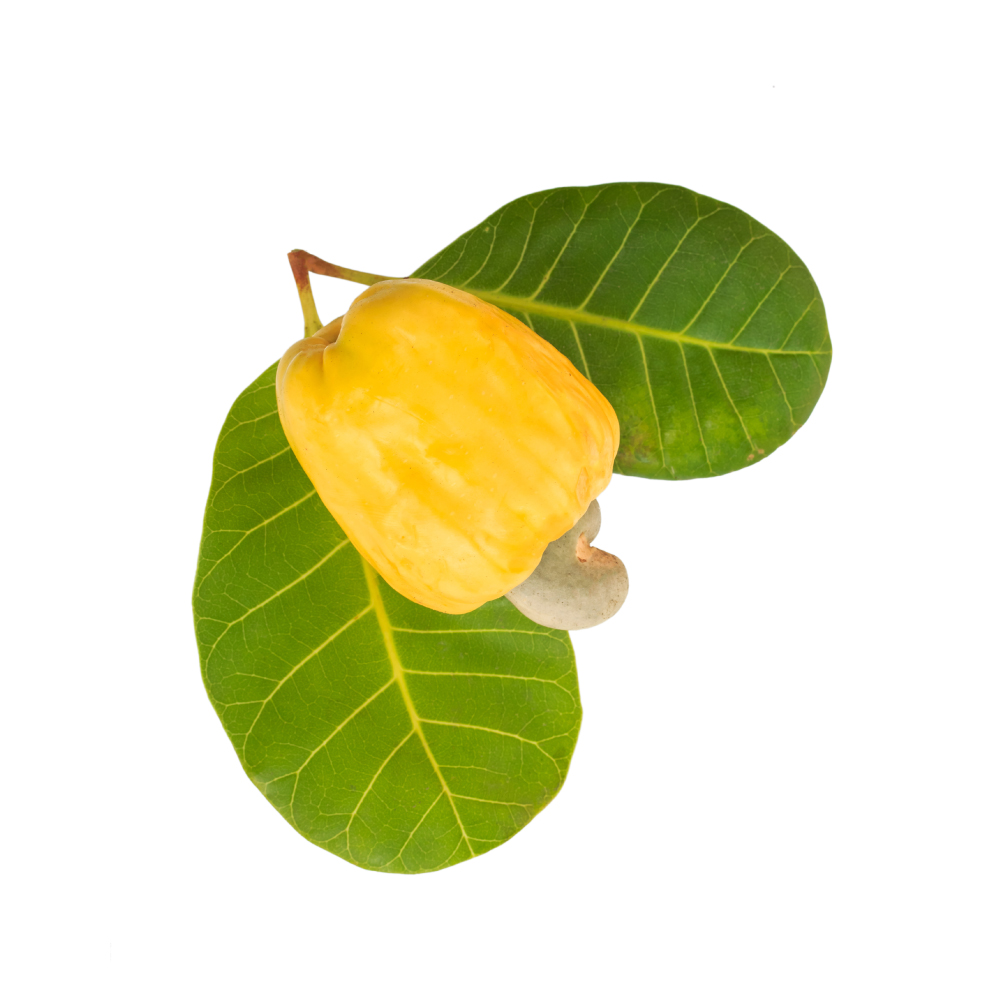
Its fruit structure is what makes it unmistakable. The familiar cashew “nut” is the true fruit, a kidney-shaped drupe whose shell is filled with a caustic, irritating phenolic latex; behind it swells a large fleshy “cashew apple” (a pseudo-fruit formed from the enlarged flower stalk) whose sweet juice is high in minerals and vitamin C. The leaves are simple, entire and clustered toward the shoot tips, and the paniculate inflorescences carry both bisexual and male flowers on the same tree. Medicinally, the bark, leaves, pseudo-fruit and seed are all used 15Reference 15The healing power of rainforest herbs: A guide to understanding and using herbal medicinals.
Several other Anacardium species exist; A. microcarpum is edible and of growing interest in Brazil, but there is not yet good evidence for it as a safe substitute for the medicinal A. occidentale.
Distribution
Anacardium occidentale is native to tropical South America, centred on northeastern Brazil and extending across the Guianas and northern South America, where it favours drier, sandy soils. From the 1500s Portuguese traders carried it out of Brazil to India and East Africa — where it has since naturalized — and on through Sri Lanka, Southeast Asia and West Africa; it is now a major cultivated crop throughout the tropics.
Cashew is grown as a crop rather than behaving as an aggressive weed, though it has naturalized locally (for example on some Pacific islands) and is treated as a minor “sleeper” weed in parts of monsoonal northern Australia.
Growing Conditions
- Drought-hardy tropical evergreen tree; full sun; frost-free only (roughly USDA zones 10–12).
- Full cultivation detail lives on the companion farm-wiki grow guide for Anacardium occidentale (link to be added once that project’s public URL is confirmed).
Pharmacology & Medical Research
Diabetes
A study done on Anacardium occidentale and its effects on diabetes found that the long term efficacy of a hexane extract (leaves) acted as a hypoglycemic agent in diabetic rats. 10Reference 10AnimalAcute and subacute toxicity of Anacardium ocidentale LINN (Anacardiaceae) leaves hexane extract in mice.
An ethanol extract of the stem bark showed no hypoglycemic effects on type 1 diabetic rats, or type 2 diabetic rats in fasting condition, however did show significant hypoglycemic effects in type 2 diabetic rats when fed glucose simultaneously. These results were suggested to be due to insulin stimulating actions in a glucose dependant manner in the pancreas, as well as possible inhibition of glucose absorption in the gastrointestinal tract 14Reference 14AnimalAntihyperglycemic effect of Ethanol Extract And Fractions Of Anacardium occidentale L. These findings suggest the best time to take this herb for treatment in diabetes, may be with meals.
Anacardium humile stems have also been shown to produce significant antidiabetic effects, regulating blood sugar levels in diabetic rats, though did not alter insulin secretion. This extract (aqueous) also showed no toxicity 12Reference 12Evaluation of the Hypoglycemic Properties of Anacardium humile Aqueous Extract. This species needs closer examination to identify how it compares to A. occidentale.
Diarrhea
Tannins have been found in the bark, and leaves of the cashew tree 15Reference 15The healing power of rainforest herbs: A guide to understanding and using herbal medicinals. These chemicals have a proven effect on astringing the digestive tract, and therefore produce anti-diarrhea actions.
Cancer
Anacardic acid is associated with A. occidentale’s antitumor effects 9Reference 9The Inhibitory Effects of Anacardic Acid on Hepatitis C Virus Life CycleView study →. One study 2Reference 2Anacardic acid (6-nonadecyl salicylic acid), an inhibitor of histone acetyltransferase, suppresses expression of nuclear factor-κB–regulated gene products involved in cell survival, proliferation, invasion, and inflammation through inhibition of the inhibitory subunit of nuclear factor-κBα kinase, leading to potentiation of apoptosisView study → suggested that “one possible mechanism by which anacardic acid exerts its effects is by modulating the nuclear factor-κB”. Various inflammatory agents induce activation of this protein complex, including cytokines, carcinogens, cigarette smoke, stress, and environmental pollutants. Due to the various negative effects associated with the activation of this complex (such as various tumor cell promoting effects), suitable inhibitors are actively being researched, including A. occidentale extracts.
Lucio Neto et al., (2013) reports that “anacardic acid has been shown to be cytotoxic to lung, liver and gastric tumor cells through epigenetic mechanisms by inhibiting histone acetyl-transferases (HATs)” 11Reference 11Characterization of cytotoxic activity of compounds derived from anacardic acid, cardanol and cardol in oral squamous cell carcinoma.
Anacardic acid has also been shown to potentiate apoptosis induced by TNF 2Reference 2Anacardic acid (6-nonadecyl salicylic acid), an inhibitor of histone acetyltransferase, suppresses expression of nuclear factor-κB–regulated gene products involved in cell survival, proliferation, invasion, and inflammation through inhibition of the inhibitory subunit of nuclear factor-κBα kinase, leading to potentiation of apoptosisView study →.
This constituent, which can be found in a variety of plants, has been shown to also exhibit actions that sensitize tumors to radiation 2Reference 2Anacardic acid (6-nonadecyl salicylic acid), an inhibitor of histone acetyltransferase, suppresses expression of nuclear factor-κB–regulated gene products involved in cell survival, proliferation, invasion, and inflammation through inhibition of the inhibitory subunit of nuclear factor-κBα kinase, leading to potentiation of apoptosisView study →, which may increase the efficacy of radiation therapy cancer treatment.
A. De Sousa Leite et al, (2015), investigated the effects of natural cashew nut shell liquid (iCNSL) (only heated to 45C), and technical cashew nut shell liquid (tCNSL) (heated to 195C for 3 hours), on genotoxicity. They discovered that the lowest concentrations of iCNSL and all concentrations of tCNSL provided preventive, antimutagenic, and reparative effects on micronuclei and on chromosomal aberration. The tCNSL was reported to be not toxic, cytotoxic, or mutagenic in any of the concentrations 1Reference 1Evaluation of Toxic, Cytotoxic, Mutagenic, and Antimutagenic Activities of Natural and Technical Cashew Nut Shell Liquids Using the Allium cepa and Artemia salina Bioassays.
These combined effects, may prove Anacardium occidentale efficacious in the treatment of various cancers.
Hypertension
A bark stem extract of A. occidentale was shown to produce hypotensive effects in vivo 5Reference 5AnimalAnacardium occidentale LINN. (Anacardiaceae) Stem Bark Extract Induces hypotensive And Cardio-inhibitory Effects In Experimental Animal Models.
Inflammation
Listed in the Nigerian, and Brazilian traditional pharmacopoeia for its anti inflammatory effects 10Reference 10AnimalAcute and subacute toxicity of Anacardium ocidentale LINN (Anacardiaceae) leaves hexane extract in mice. These effects are at least partly due to its anacardic acid content, which has been demonstrated to produce anti inflammatory actions, as well as many more effects 9Reference 9The Inhibitory Effects of Anacardic Acid on Hepatitis C Virus Life CycleView study →. These effects are thought to be due to modulation of nuclear factor-κB 2Reference 2Anacardic acid (6-nonadecyl salicylic acid), an inhibitor of histone acetyltransferase, suppresses expression of nuclear factor-κB–regulated gene products involved in cell survival, proliferation, invasion, and inflammation through inhibition of the inhibitory subunit of nuclear factor-κBα kinase, leading to potentiation of apoptosisView study → which plays a key role in the process of inflammation.
Antimicrobial
A. occidentale fruit has been shown to produce antimicrobial effects against Helicobacter pylori 15Reference 15The healing power of rainforest herbs: A guide to understanding and using herbal medicinals. Anacardic acid, contained in this plant, have demonstrated antimicrobial effects 9Reference 9The Inhibitory Effects of Anacardic Acid on Hepatitis C Virus Life CycleView study →, and may at least in part be responsible for this action from the plant or plant extract.
Cosmetically, extracts from A. occidentale pseudo-fruits, demonstrated antimicrobial actions, however were considered unstable, forming crusts on the surface of the formulas. Researchers in this study suggested the addition of antioxidant substances may ameliorate this instability but suggested more research in this area was required 7Reference 7Antimicrobial Effect of Anacardium Occidentale Extract and Cosmetic Formulation Development.
In a study done by G. Anand et al., (2015), identifying the antimicrobial effects of A. occidentale in the form of an oral mouthwash, noted the significant antifungal, and antibacterial effects that were considered equal, or greater than povidone-iodine rinses currently used today. Some of the pathogens of note in oral health are Enterococcus faecalis, Staphylococcus aureus, Streptococcus mutans, Escherichia coli, and Candida albicans due to the common resistance these pathogens have against normal oral care products. This study showed that the ethanol extract of A. occidentale showed significant in vitro activity against all of these organisms, as well as MRSA 6Reference 6In vitroIn vitro antimicrobial and cytotoxic effects of Anacardium occidentale and Mangifera indica in oral careView study →.
Cardiovascular
A stem bark extract has been shown to produce cardio-inhibitory effects in vitro and was suggested to be due to either calcium channel blockage, or hindrance of calcium release from internal storages, or a combination of both 5Reference 5AnimalAnacardium occidentale LINN. (Anacardiaceae) Stem Bark Extract Induces hypotensive And Cardio-inhibitory Effects In Experimental Animal Models. More research is needed in this area to determine the exact mechanism of action, however it’s clear that A. occidentale bark stem extract has a positive effect on hypertension, and CVD.
Hepatitis C
Hepatitis C is a virus in the genus Hepacivirus contained within the Flaviviridae family. This infection can become chronic, and will eventually lead to cirrhosis of the liver, hepatocarcinoma, and eventually death by liver failure. The World Health Organization suggests more than 120-150 million people worldwide are infected with this virus,and the numbers are growing. About 500 000 people die each year as a result of this infection 18Reference 18World Health Organization. (2015, July). WHO | Hepatitis C. Retrieved November 2015, from http://www.who.int/mediacentre/factsheets/fs164/en/View study →.
Anacardic acid has been shown to inhibit HCV entry, replication, translation, and virion secretion in a dose dependant action and has no reported toxicity, or measurable effects on cell viability 9Reference 9The Inhibitory Effects of Anacardic Acid on Hepatitis C Virus Life CycleView study →. These researchers suggested the mechanism of action be due to anacardic acids ability to inhibit histone acetyltransferases (HATs). The dose focused specifically on anacardic acid (>5µM) and needed to be administered over multiple hours (12h) to produce the significant effects noted in the study. These researchers did not specify how the anacardic acid was administered, however it’s most likely intravenous. This brings up the question of how long, and in what concentrations anacardic acid will remain active in the system from oral administration, and if these demonstrated therapeutic effects can be recreated through oral ingestion of A. occidentale extract. More research is needed to better understand this mechanism of action. Researchers need to investigate further whether these effects can be translated to other members of the Flaviviridae family, or other viruses in general.
Other members of this family (Flaviviridae), include yellow fever, dengue fever, and arboviruses 17Reference 17Infectious Diseases ManualView study →.
Nutritive
Cashew nuts nutritional profile per 100g is as follows: 2314 kJ of energy, 46.4g of fat, 9.2g saturated fatty acids, 27.3g monounsaturated fatty acids, and 7.8g polyunsaturated fatty acids, 7.7g linoleic acid, 0.15g α-linolenic acid, 18.2g protein, 5.9g fiber, 25μg folate, 158 mg plant sterols, 37mg Ca, 292 mg Mg, 12 mg Na, 660 mg K 3Reference 3Health Benefits of Nut ConsumptionView study →.
Nuts in general are considered an energy dense food, and have been reported to positively affect coronary heart disease, high cholesterol, and diabetes with their consumption. Nutritionally, cashews in particular contain significant amounts of plant protein, α-linolenic acid, plant sterols (not including cholesterol), Mg, Na, and K as compared to other nuts 3Reference 3Health Benefits of Nut ConsumptionView study →.
Prebiotic
In order to be considered a prebiotic oligosaccharide, it must:
- Not be absorbable by the upper GI tract
- Be a selective substrate for beneficial bacteria in the gut
- Promote healthy intestinal biota
With this in mind, A. occidentale fermented pseudo-fruit juice has been shown to meet these requirements to be considered as a prebiotic source 8Reference 8Cashew juice containing prebiotic oligosaccharidesView study →.
Phytochemistry
Cashew’s chemistry is split sharply between its parts. The astringent bark and leaves are rich in tannins, which account for much of the plant’s antidiarrheal action 15Reference 15The healing power of rainforest herbs: A guide to understanding and using herbal medicinals. The nut shell, by contrast, is dominated by a class of long-chain alkylphenol lipids — anacardic acids, cardol and cardanol — together known as cashew nut shell liquid (CNSL). Anacardic acid (a 6-alkylsalicylic acid) is the major active and the compound behind most of the shell’s documented cytotoxic, anti-inflammatory and tyrosinase-inhibiting effects 9,11,15Reference 9The Inhibitory Effects of Anacardic Acid on Hepatitis C Virus Life CycleView study →Reference 11Characterization of cytotoxic activity of compounds derived from anacardic acid, cardanol and cardol in oral squamous cell carcinomaReference 15The healing power of rainforest herbs: A guide to understanding and using herbal medicinals. The pseudo-fruit (cashew apple) contributes a separate profile of vitamin C, carotenoids (β-carotene, β-cryptoxanthin) and a suite of glycosylated flavonols (myricetin and quercetin glycosides) 4Reference 4Determination of the flavonoid components of cashew apple ( Anacardium occidentale) by LC-DAD-ESI/MS.Food Chemistry. doi:10.1016/j.foodchem.2007.02.009View study →.
The nutshells contain anacardic acids in high amounts, which have been shown to produce cytotoxicity to certain cancer cells, and curb the darkening effect of aging through tyrosinase inhibition 15Reference 15The healing power of rainforest herbs: A guide to understanding and using herbal medicinals.
Constituent Summary
Figures are share of natural cashew nut shell liquid (iCNSL) for the alkylphenols 1Reference 1Evaluation of Toxic, Cytotoxic, Mutagenic, and Antimutagenic Activities of Natural and Technical Cashew Nut Shell Liquids Using the Allium cepa and Artemia salina Bioassays; other entries are qualitative. CNSL composition shifts dramatically with processing — thermal extraction (tCNSL) decarboxylates anacardic acid to cardanol, raising cardanol to ~60–65% 1Reference 1Evaluation of Toxic, Cytotoxic, Mutagenic, and Antimutagenic Activities of Natural and Technical Cashew Nut Shell Liquids Using the Allium cepa and Artemia salina Bioassays. Amounts vary by plant part, cultivar and method.
Phenolic acid2 compounds2 with data
Phenolic2 compounds2 with data
Tannin1 compound1 with data
Flavonoid2 compounds2 with data
Vitamin1 compound1 with data
Carotenoid2 compounds2 with data
Sterol1 compound1 with data
Lipid1 compound1 with data
Anacardic Acid
Anacardic acid (found in high amounts in the nutshell), has been found to inhibit the activity of various cellular enzymes, including histone acetyltransferases (HATs) 9Reference 9The Inhibitory Effects of Anacardic Acid on Hepatitis C Virus Life CycleView study →. Anacardic acid can also be found in Ginkgo biloba, Amphipterygeum adstringens, and Ozoroa insignis. This compound has been shown to produce numerous medicinal actions such as anti inflammatory, antimicrobial, antioxidant, and antitumor activities. It has also been shown to inhibit numerous other enzymes, including tyrosinase (also associated with cytotoxicity), xanthine oxidase (likely cause for low shelf life of juice), phosphatidylinositol-specific phospholipase C, tissue factor VIIa, lipoxygenase, and cyclooxygenase (COX) 2Reference 2Anacardic acid (6-nonadecyl salicylic acid), an inhibitor of histone acetyltransferase, suppresses expression of nuclear factor-κB–regulated gene products involved in cell survival, proliferation, invasion, and inflammation through inhibition of the inhibitory subunit of nuclear factor-κBα kinase, leading to potentiation of apoptosisView study →. The nut shell liquid, contains high amounts of cardol, and cardanol as well.
Cashew Shell Latex
A. De Sousa Leite et al, (2015), reports the concentrations in the natural cashew nut shell liquid extracted via solvents (referred to as iCNSL) (highest temperature reached in the making of this extract was 45C) as 62.9% anacardic acid, 23.98% cardol, and 6.99% cardanol. A different extraction process referred to as technical cashew nut shell liquid (tCNSL) is achieved by burning the nuts at high temperatures (195C bath for 3 hours), which in turn changes these amount to 60-65% cardanol, 15-20% cardol, 10% polymeric material, and small amounts of melticardol. This process of burning the nuts decarboxylates the anacardic acid (removes acid group), and converts this compound into cardanol. 1Reference 1Evaluation of Toxic, Cytotoxic, Mutagenic, and Antimutagenic Activities of Natural and Technical Cashew Nut Shell Liquids Using the Allium cepa and Artemia salina Bioassays.
Cashew Apple Juice
Interestingly, E.S. De Brito et al., (2007) reports that both cashew apple (pseudo-fruit) and cranberry contained the same set of 12 glycosylated flavonols, namely, 3-O- galactoside, 3-O-glucoside, 3-O-xylopyranoside, 3-O-arabinopyranoside, 3-O- arabinofuranoside and 3-O-rhamnoside of myricetin and quercetin. 4Reference 4Determination of the flavonoid components of cashew apple ( Anacardium occidentale) by LC-DAD-ESI/MS.Food Chemistry. doi:10.1016/j.foodchem.2007.02.009View study →.
It would be interesting to examine the comparative effects of these two botanicals to determine possible effects of these chemicals and their synergy.
Summary of Constituents
Taylor L. (2005), describes the main chemicals contained within A. occidentale as follows: alanine, alpha-catechin, alpha-linolenic acid, anacardic acids, anacardol, antimony, arabinose, caprylic acid, cardanol, cardol, europium, folacin, gadoleic acid, gallic acid, ginkgol, glucuronic acid, glutamic acid, hafnium, hexanal, histidine, hydroxybenzoic acid, isoleucine, kaempferol-epicatechin, lauric acid, leucine, leucocyanidin, leucopelargonidine, limonene, linoleic acid, methyl-glucuronic acid, myristic acid, naringenin, oleic acid, oxalic acid, palmitic acid, palmitoleic acid, phenylalanine, phytosterols, proline, quercetin-glycoside, salicylic acid, samarium, scandium, serine, squalene, stearic acid, tannin, and trans-hex-2-enal tryptophan. 15Reference 15The healing power of rainforest herbs: A guide to understanding and using herbal medicinals.
Clinical Applications
The most clinically relevant uses of the cashew tree involve its antimicrobial actions, both topically and internally for both bacterium and virus, as well as its glucose regulating actions, and hypotensive effects on the cardiovascular system.
There has been some compelling evidence for its use as an adjunctive cancer treatment in recent years as well.
The barks astringent qualities makes it reliable for treating diarrhea.
Synergy
A combination of Anacardium occidentale (stem bark, and leaf extract), Eucalyptus globulus, Psidium guajava (leaves), and Xylopia aethiopaca (fruits), were found to produce synergistic action on the treatment of diabetes 16Reference 16AnimalComparative Effects of Some Medicinal Plants: Anacardium occidentale, Eucalyptus globulus, Psidium guajava, and Xylopia aethiopica Extracts in Alloxan-Induced Diabetic Male Wistar Albino RatsView study →.
Safety & Pregnancy
Cashew bark and leaf are generally well tolerated; the real hazards belong to the raw nut shell — whose caustic oil causes severe skin burns — and to tree-nut allergy.
- Raw shell oil & unroasted nuts. The caustic phenolic shell liquid (CNSL) causes severe dermatitis and chemical burns — avoid contact and never use unroasted.
- Tree-nut allergy. Avoid in anyone with a cashew or tree-nut allergy.
- Bark & leaf well tolerated. The medicinal bark and leaf preparations have a long record of traditional use.
Full safety & interactions detail
The medicinal bark and leaf of cashew are generally well tolerated. The plant’s main hazard lies in the raw nut shell, whose caustic phenolic latex (cashew nut shell liquid, rich in anacardic acids, cardol and cardanol) causes severe contact dermatitis and chemical burns — raw shell oil and unroasted nuts should be avoided, and commercial nuts are roasted to destroy this irritant. As a member of the cashew/sumac family (a relative of mango, pistachio and poison ivy), cashew should also be avoided by anyone with a tree-nut allergy. Interaction and formal toxicity data for the medicinal preparations are limited.
Cashew has not been formally studied in pregnancy or lactation. The roasted nut and the cashew apple are ordinary foods and are eaten freely, but the medicinal bark and leaf preparations are unassessed in these populations. Treat therapeutic doses as unestablished rather than assumed safe.
References
- Aracelli de Sousa Leite, Alisson Ferreira Dantas, George Laylson da Silva Oliveira, Antonio L. Gomes Júnior, Sidney Gonçalo de Lima, Antônia Maria das Graças Lopes Citó, Rivelilson M. de Freitas, Ana Amélia de C. Melo-Cavalcante, and José Arimateia Dantas Lopes. (2015). Evaluation of Toxic, Cytotoxic, Mutagenic, and Antimutagenic Activities of Natural and Technical Cashew Nut Shell Liquids Using the Allium cepa and Artemia salina Bioassays. BioMed Research International. Volume 2015, Article ID 626835.
- Bokyung Sung, Manoj K. Pandey, Kwang Seok Ahn, Tingfang Yi, Madan M. Chaturvedi, Mingyao Liu, and Bharat B. Aggarwal. (2008). Anacardic acid (6-nonadecyl salicylic acid), an inhibitor of histone acetyltransferase, suppresses expression of nuclear factor-κB–regulated gene products involved in cell survival, proliferation, invasion, and inflammation through inhibition of the inhibitory subunit of nuclear factor-κBα kinase, leading to potentiation of apoptosis. Blood. 111(10): 4880–4891. doi: 10.1182/blood-2007-10-117994
- Emilio Ros. (2010). Health Benefits of Nut Consumption. Nutrients. Vol 2. 652-682. doi:10.3390/nu2070652
- E.S. Brito, M.C. Araújo, L. Lin, & J. Harnly, (2007). Determination of the flavonoid components of cashew apple ( Anacardium occidentale) by LC-DAD-ESI/MS.Food Chemistry. doi:10.1016/j.foodchem.2007.02.009
- Francis Olivier Tchikaya , Guy Bernard Bantsielé , Gisèle Kouakou-Siransy , Jacques Yao Datté , Paul Angoue Yapo, Noel Guedé Zirihi , Michel Atté Offoumou. (2011). Anacardium occidentale LINN. (Anacardiaceae) Stem Bark Extract Induces hypotensive And Cardio-inhibitory Effects In Experimental Animal Models. Afr J Tradit Complement Altern Med. 8(4):452‐461
- Geethashri Anand, Manikandan Ravinanthan,1 Ravishankar Basaviah,2 and A. Veena Shetty. (2015). In vitro antimicrobial and cytotoxic effects of Anacardium occidentale and Mangifera indica in oral care. J Pharm Bioallied Sci. Jan-Mar; 7(1): 69–74. doi: 10.4103/0975-7406.148780
- Gisele Mara Silva Gonçalves and Juliana Gobbo. (2012). Antimicrobial Effect of Anacardium Occidentale Extract and Cosmetic Formulation Development. Braz. Arch. Biol. Technol. v.55 n.6: pp. 843-850.
- Isabel Moreira da Silva & Maria Cristiane Rabelo & Sueli Rodrigues. (2014). Cashew juice containing prebiotic oligosaccharides. J Food Sci Technol. 51(9):2078–2084. DOI 10.1007/s13197-012-0689-9
- Jana Hundt, Zhubing Li, Qiang Liu. (2015). The Inhibitory Effects of Anacardic Acid on Hepatitis C Virus Life Cycle. PLOS ONE. DOI:10.1371/journal.pone.0117514
- L. Tedong, P.D. Djomeni Dzeufiet, T. Dimo, E.A. Asongalem, S.N.Sokeng, J-F. Flejou, P. Callard, P. Kamtchouing. (2007). Acute and subacute toxicity of Anacardium ocidentale LINN (Anacardiaceae) leaves hexane extract in mice. Afr. J. Trad. CAM. 4 (2). 140-147.
- Lucio Neto, Nayara Matos, Wellington Gonzaga, Luiz Romeiro, Maria Santos, Damaris Santos, Andrea Motoyama. (2014). Characterization of cytotoxic activity of compounds derived from anacardic acid, cardanol and cardol in oral squamous cell carcinoma. Neto et al. BMC Proceedings 2014, 8(Suppl 4):P30.
- Márcio A. Urzêda, Silvana Marcussi, Luciana L. Silva Pereira, Suzelei C. França,Ana Maria S. Pereira, Paulo S. Pereira, Saulo L. da Silva, César L. S. Guimarães, Leonardo A. Calderon, Rodrigo G. Stábeli, Andreimar M. Soares, and Lucélio B. Couto. (2013). Evaluation of the Hypoglycemic Properties of Anacardium humile Aqueous Extract. Evidence-Based Complementary and Alternative Medicine. Vol 2013.
- Pennington, T. D., Reynel, C., Daza, A., & Wise, R. (2004). Illustrated guide to the trees of Peru. Sherborne, England: D. Hunt. Pg 429-430.
- Ramnik Singh. (2010). Antihyperglycemic effect of Ethanol Extract And Fractions Of Anacardium occidentale L. Stem Bark In Streptozotocin-Induced Diabetic Rats. Journal of Basic and Clinical Pharmacy. Vol 1. 1.
- Taylor, L. (2005). The healing power of rainforest herbs: A guide to understanding and using herbal medicinals. Garden City Park, NY: Square One Publishers.
- Victor Eshu Okpashi, Bayim Peter-Robins Bayim, and Margaret Obi-Abang. (2014). Comparative Effects of Some Medicinal Plants: Anacardium occidentale, Eucalyptus globulus, Psidium guajava, and Xylopia aethiopica Extracts in Alloxan-Induced Diabetic Male Wistar Albino Rats. Biochemistry Research International. Vol 2014. http://dx.doi.org/10.1155/2014/203051
- Wilks, D., Farrington, M., & Rubenstein, D. (2008). Infectious Diseases Manual. Chichester, GBR: Wiley. Retrieved from http://www.ebrary.com
- World Health Organization. (2015, July). WHO | Hepatitis C. Retrieved November 2015, from http://www.who.int/mediacentre/factsheets/fs164/en/