What Is Goldenrod?
Goldenrod is a flowering perennial herb with a long history of use in European and Western herbal medicine as a urinary tract remedy. The aerial parts are traditionally used to soothe irritation while gently increasing urine flow, making the herb especially associated with cystitis, urinary tract inflammation, and mild fluid retention.
Despite its bright yellow flowers and reputation as an allergy plant, goldenrod is not usually the cause of seasonal hay fever. That reputation more often belongs to wind-pollinated plants such as ragweed, which flower at a similar time.
Medicinally, goldenrod combines diuretic, anti-inflammatory, astringent, and soothing actions. This makes it useful where urinary discomfort, irritation, or inflammation occur alongside sluggish fluid elimination.
How Is Goldenrod Used?
Goldenrod is most commonly prepared as a tea, infusion, tincture, capsule, or urinary tract formula.
Traditional use centers around urinary tract infections, cystitis, bladder irritation, kidney gravel, mild fluid retention, and inflammatory urinary conditions. The herb is often used when the goal is to flush the urinary tract while also calming irritated tissue.
Goldenrod is frequently combined with herbs such as marshmallow root, corn silk, couch grass, uva ursi, yarrow, or nettle depending on the presentation.
It is generally used short term during acute urinary irritation, though it may also appear in longer-term formulas for recurring urinary tract sensitivity.
Traditional Uses
Western Herbal Medicine
In Western herbal medicine, goldenrod is regarded as a urinary antiseptic, aquaretic diuretic, anti-inflammatory, and mild astringent.
Traditional indications include cystitis, urinary tract infections, kidney gravel, urethral irritation, mild edema, and inflammatory conditions of the urinary tract.
The herb was also historically used for wounds, sore throats, catarrh, and inflammatory conditions involving excess fluid or irritated mucous membranes.
Goldenrod is especially associated with urinary conditions where burning, irritation, or inflammation coexist with the need for increased urine flow.
European Folk Medicine
European folk medicine used goldenrod as a primary kidney and bladder herb.
It was traditionally prepared as teas and infusions for urinary complaints, fluid retention, and gravel. The flowering tops were also used in folk remedies for colds, wounds, and inflammatory skin conditions.
Indications
Goldenrod is primarily indicated for urinary tract irritation and inflammatory urinary conditions.
Common traditional and modern indications include:
- Urinary tract infections
- Cystitis
- Bladder irritation
- Urethral irritation
- Kidney gravel
- Mild fluid retention
- Inflammation of the urinary tract
- Urinary discomfort
- Irritated mucous membranes
- Mild edema
Clinically, the herb is most commonly used in urinary formulas intended to flush and soothe the lower urinary tract.
Botany
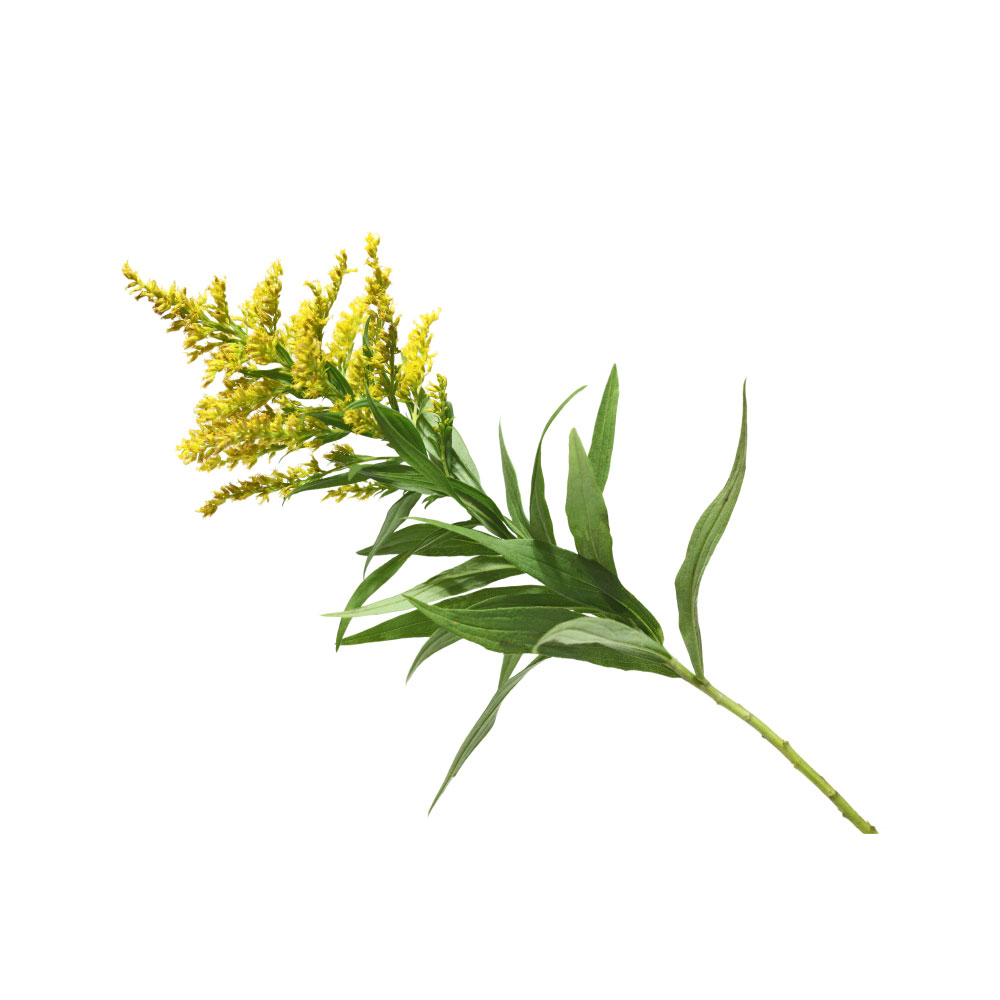
European goldenrod (Solidago virgaurea) is a clump-forming perennial in the daisy family (Asteraceae). It sends up erect, leafy stems topped with slim wands of tiny golden-yellow flower heads in late summer and autumn; the leaves are narrow and lance-shaped. The medicinal material is the flowering aerial part — the leafy, flowering tops harvested as the plant comes into bloom.
S. virgaurea is the classic European medicinal goldenrod, but the genus is large and many Solidago species (including the North American S. canadensis and S. gigantea) are used interchangeably in practice. Worth dispelling one persistent myth: goldenrod is insect-pollinated, with heavy, sticky pollen that does not travel on the wind, so it is not a cause of hay fever — the autumn sneezing is down to ragweed, which simply blooms at the same time.
Distribution
European goldenrod is native throughout most of Europe (including Britain), across temperate Asia to central Siberia and into North Africa. It is a well-behaved native rather than a weed — the goldenrods notorious for invading habitats abroad are the introduced North American species, not S. virgaurea.
Growing Conditions
- Grows as a hardy perennial across roughly USDA zones 4–8, dying back in winter and returning from the rootstock each spring.
- Happy in full sun to part shade; tolerant of a wide range of soils, from acid to alkaline, including heavy clay.
- Prefers moisture-retentive ground but copes with both dry and moist conditions once established.
- Forms an upright clump usually around 60 cm tall; flowers from mid-summer into autumn, drawing bees and hoverflies.
- Full cultivation detail lives on the companion farm-wiki grow guide for Solidago virgaurea (link to be added once that project’s public URL is confirmed).
Phytochemistry
European goldenrod is a flavonoid-and-saponin herb whose diuretic, anti-inflammatory action is spread across several groups rather than a single marker 1,2Reference 1ReviewSolidaginis virgaureae herba (European Goldenrod) — pharmacopoeial monograph (review)Reference 2Systematic reviewSolidago virgaurea L.: A Review of Its Ethnomedicinal Uses, Phytochemistry, and Pharmacological Activities — systematic reviewView study →. It contains around 1.5% flavonoids — chiefly rutin, with quercitrin, isoquercitrin and hyperoside — which provide the antioxidant and aquaretic effects 1,2Reference 1ReviewSolidaginis virgaureae herba (European Goldenrod) — pharmacopoeial monograph (review)Reference 2Systematic reviewSolidago virgaurea L.: A Review of Its Ethnomedicinal Uses, Phytochemistry, and Pharmacological Activities — systematic reviewView study →.
Its more distinctive constituents are the phenol glycoside leiocarposide (anti-inflammatory and analgesic, ~0.2–1% of the herb) and a large set of triterpene saponins — the virgaureasaponins and solidagosaponins — that drive the flushing diuresis 1,2Reference 1ReviewSolidaginis virgaureae herba (European Goldenrod) — pharmacopoeial monograph (review)Reference 2Systematic reviewSolidago virgaurea L.: A Review of Its Ethnomedicinal Uses, Phytochemistry, and Pharmacological Activities — systematic reviewView study →. LC-MS profiling also identifies the flavonoid aglycones quercetin, kaempferol and isorhamnetin 2Reference 2Systematic reviewSolidago virgaurea L.: A Review of Its Ethnomedicinal Uses, Phytochemistry, and Pharmacological Activities — systematic reviewView study →. Phenolic acids (caffeic acid, chlorogenic acid) and astringent tannins complete the profile 1Reference 1ReviewSolidaginis virgaureae herba (European Goldenrod) — pharmacopoeial monograph (review).
Constituent Summary
The herb contains roughly 1.5% total flavonoids and 0.4–0.5% essential oil; saponin and tannin levels are high but vary by subspecies and source 1,2Reference 1ReviewSolidaginis virgaureae herba (European Goldenrod) — pharmacopoeial monograph (review)Reference 2Systematic reviewSolidago virgaurea L.: A Review of Its Ethnomedicinal Uses, Phytochemistry, and Pharmacological Activities — systematic reviewView study →.
Flavonoid7 compoundsno data
Phenolic glycoside1 compound1 with data
Saponin1 compoundno data
Tannin1 compoundno data
Pharmacology & Research
European goldenrod has a moderately large but shallow research base: several dozen studies, overwhelmingly in vitro and animal work, with the human evidence confined almost entirely to multi-herb combination products (Phytodolor/STW 1, and various urinary phyto-complexes) rather than goldenrod on its own 1,2Reference 1ReviewSolidaginis virgaureae herba (European Goldenrod) — pharmacopoeial monograph (review)Reference 2Systematic reviewSolidago virgaurea L.: A Review of Its Ethnomedicinal Uses, Phytochemistry, and Pharmacological Activities — systematic reviewView study →. The best-characterised activities — anti-inflammatory, aquaretic-diuretic, and anti-adhesion/anti-biofilm effects against Candida and uropathogens — are consistent across preclinical models and align with the herb’s traditional urinary use, but almost none have been tested as single-herb trials in people 2,5,11Reference 2Systematic reviewSolidago virgaurea L.: A Review of Its Ethnomedicinal Uses, Phytochemistry, and Pharmacological Activities — systematic reviewView study →Reference 5AnimalIn vivo anti-inflammatory activity of caffeoylquinic acid derivatives from Solidago virgaurea in rats — carrageenan paw-oedema, in vivo animal modelView study →Reference 11In vitroInhibition of Candida albicans yeast-hyphal transition and biofilm formation by Solidago virgaurea water extracts — in vitroView study →. The single most rigorous human study of S. virgaurea alone is an oral-hygiene trial of a goldenrod toothpaste, not a urinary trial 14Reference 14RCTSolidago virgaurea LView study →. A recurring caveat runs through the literature: results shift with subspecies, plant part, and extract type — aqueous infusions, hydroalcoholic tinctures, saponin fractions, and essential oils are pharmacologically different preparations, and the essential-oil antiproliferative data in particular do not transfer to the tea or tincture the herb is actually used as 2,23Reference 2Systematic reviewSolidago virgaurea L.: A Review of Its Ethnomedicinal Uses, Phytochemistry, and Pharmacological Activities — systematic reviewView study →Reference 23In vitroChemical Composition and Antiproliferative Effect of Essential Oils of Four Solidago Species — in vitro cell-line studyView study →.
- Best-supported: anti-inflammatory activity from caffeoylquinic acids and leiocarposide in animal models 5,6Reference 5AnimalIn vivo anti-inflammatory activity of caffeoylquinic acid derivatives from Solidago virgaurea in rats — carrageenan paw-oedema, in vivo animal modelView study →Reference 6AnimalAntiphlogistic and analgesic effects of leiocarposide, a phenolic bisglucoside of Solidago virgaurea L. — in vivo animal modelView study →; aquaretic diuresis from flavonoid fractions 17Reference 17AnimalEffect of flavonoid fractions of Solidago virgaurea L. on diuresis and levels of electrolytes — in vivo rat studyView study →; anti-adhesion/anti-biofilm effects against Candida albicans and uropathogenic bacteria in vitro 11,12,16Reference 11In vitroInhibition of Candida albicans yeast-hyphal transition and biofilm formation by Solidago virgaurea water extracts — in vitroView study →Reference 12In vitroInhibition of adhesion-specific genes by Solidago virgaurea extract causes loss of Candida albicans biofilm integrity — in vitro (gene expression)View study →Reference 16In vitroIs it Worth Combining Solidago virgaurea Extract and Antibiotics against Uropathogenic Escherichia coli rods? An In Vitro Model Study — in vitro biofilm and antibiotic-synergy studyView study →.
- Emerging, worth watching: inhibition of bladder smooth-muscle contraction via muscarinic antagonism in rat and human tissue 19Reference 19In vitroExtracts from Rhois aromatica and Solidaginis virgaurea inhibit rat and human bladder contraction — in vitro tissue-bath and muscarinic receptor studyView study →; antidiabetic/hypolipidemic signals in rodents 20,21Reference 20In vitroIn Vitro and In Vivo Evaluation of the Antidiabetic Activity of Solidago virgaurea Extracts — in vitro enzyme/cell and in vivo animal studyView study →Reference 21AnimalAntidiabetic and hypolipidemic potentials of Solidago virgaurea extract in alloxan-induced diabetes type 1 — in vivo rat studyView study →.
- Mechanistically thin: antioxidant and cardioprotective claims rest on enzyme-model and single-animal studies, and one careful assay found goldenrod had no effect on myeloperoxidase 8,9,24Reference 8In vitroAntioxidative properties of alcoholic extracts from Fraxinus excelsior, Populus tremula and Solidago virgaurea — in vitro enzyme-model studyView study →Reference 9In vitroEffects of extracts from Populus tremula L., Solidago virgaurea L. and Fraxinus excelsior L. on various myeloperoxidase systems — in vitro (goldenrod null result)View study →Reference 24AnimalBiochemical effects of Solidago virgaurea extract on experimental cardiotoxicity — in vivo rat studyView study →.
- The caveat: virtually no single-herb human trials for the urinary indications; effects vary by subspecies, plant part and extract type, and there is no standardised clinical dose 1,2Reference 1ReviewSolidaginis virgaureae herba (European Goldenrod) — pharmacopoeial monograph (review)Reference 2Systematic reviewSolidago virgaurea L.: A Review of Its Ethnomedicinal Uses, Phytochemistry, and Pharmacological Activities — systematic reviewView study →.
1. Anti-inflammatory
This is goldenrod’s best-mapped activity. A phenolic-rich fraction of the aerial parts, and four caffeoylquinic acids isolated from it — including 3,5-di-O-caffeoylquinic acid — significantly reduced carrageenan-induced paw oedema and lowered TNF-α and IL-1β in rats at 25–50 mg/kg 5Reference 5AnimalIn vivo anti-inflammatory activity of caffeoylquinic acid derivatives from Solidago virgaurea in rats — carrageenan paw-oedema, in vivo animal modelView study →. The phenol glycoside leiocarposide showed antiphlogistic and analgesic activity in classic animal models 6Reference 6AnimalAntiphlogistic and analgesic effects of leiocarposide, a phenolic bisglucoside of Solidago virgaurea L. — in vivo animal modelView study →, and an aqueous goldenrod infusion suppressed pro-inflammatory mediator release from human neutrophils in vitro, with gut-microbiota metabolism shown to alter which compounds are actually absorbed 10Reference 10In vitroGut microbiota metabolism and the permeability of natural products contained in infusions from herb of European goldenrod Solidago virgaurea L. — in vitro (Caco-2, human/piglet microbiota)View study →. Much of the older human-facing evidence comes from the fixed combination STW 1 / Phytodolor (poplar, ash, goldenrod), where each component contributed to dose-dependent anti-inflammatory, analgesic and antipyretic effects comparable to salicyl alcohol and indometacin — but that does not isolate goldenrod’s own contribution 7Reference 7AnimalAnti-inflammatory, analgesic and antipyretic effect of various plant extracts and their combinations in an animal model (STW 1) — in vivo animal modelView study →.
Gap: No single-herb human trial; the strongest clinical data are for a three-herb product, and one enzyme study found goldenrod alone did not inhibit myeloperoxidase 9Reference 9In vitroEffects of extracts from Populus tremula L., Solidago virgaurea L. and Fraxinus excelsior L. on various myeloperoxidase systems — in vitro (goldenrod null result)View study →.
2. Antimicrobial / anti-biofilm
Goldenrod’s antimicrobial action is better described as anti-virulence than bactericidal: aqueous extracts repeatedly fail to kill planktonic organisms yet disrupt adhesion and biofilms. Against Candida albicans, water extracts inhibit the yeast-to-hypha transition and biofilm biomass without affecting growth, an effect traced to saponin content 11Reference 11In vitroInhibition of Candida albicans yeast-hyphal transition and biofilm formation by Solidago virgaurea water extracts — in vitroView study →, and shown at the gene level to down-regulate the adhesion/hyphal genes ALS3, HWP1 and ECE1 while synergising with miconazole and nystatin 12Reference 12In vitroInhibition of adhesion-specific genes by Solidago virgaurea extract causes loss of Candida albicans biofilm integrity — in vitro (gene expression)View study →. Bioassay-guided work isolated oleanane-type triterpenoid saponins as the anti-hyphal principles 13Reference 13In vitroTriterpenoid saponins from the aerial parts of Solidago virgaurea alpestris with inhibiting activity of Candida albicans yeast-hyphal conversion — in vitro, bioassay-guided isolationView study →. The same anti-biofilm pattern appears against uropathogenic E. coli, where extract prolonged the post-antibiotic effect of amikacin and ciprofloxacin 16Reference 16In vitroIs it Worth Combining Solidago virgaurea Extract and Antibiotics against Uropathogenic Escherichia coli rods? An In Vitro Model Study — in vitro biofilm and antibiotic-synergy studyView study →, and against ESBL-producing Pseudomonas aeruginosa 15Reference 15In vitroImpact of Solidago virgaurea Extract on Biofilm Formation for ESBL-Pseudomonas aeruginosa: An In Vitro Model Study — in vitroView study →. The one human single-herb trial sits here: a randomised, double-blind study (n=66) of a fluoride toothpaste containing goldenrod extract reduced total oral bacterial load and C. albicans over four weeks 14Reference 14RCTSolidago virgaurea LView study →.
Gap: All bacterial data are in vitro; extracts are anti-adhesion, not antibiotic, so goldenrod cannot substitute for antimicrobials in a genuine UTI.
3. Aquaretic / diuretic
The diuretic action underpins goldenrod’s pharmacopoeial “irrigation therapy” classification, approved by both the German Commission E and the EMA/HMPC for flushing the lower urinary tract 3,4Reference 3ReviewCommunity herbal monograph on Solidago virgaurea L., herba — traditional-use regulatory monographReference 4ReviewSolidaginis virgaureae herba (European goldenrod herb) — German Commission E approved monograph (irrigation therapy, lower urinary tract) — review. Flavonoid fractions from S. virgaurea given orally to rats raised overnight urine output by 57–88%, and — unlike loop diuretics — decreased urinary sodium and potassium excretion, the hallmark of an aquaretic (water flushed without major electrolyte loss) 17Reference 17AnimalEffect of flavonoid fractions of Solidago virgaurea L. on diuresis and levels of electrolytes — in vivo rat studyView study →. An isolated Solidago glycoside reproduced the diuretic effect 18Reference 18AnimalDiuretic effect of the glycoside from a plant of the Solidago L. genus — in vivo animal studyView study →. This aquaretic profile, driven by flavonoids (rutin, quercitrin, isoquercitrin, hyperoside) and saponins, is the mechanistic basis for the traditional flush-and-soothe use in lower urinary tract irritation 1,2Reference 1ReviewSolidaginis virgaureae herba (European Goldenrod) — pharmacopoeial monograph (review)Reference 2Systematic reviewSolidago virgaurea L.: A Review of Its Ethnomedicinal Uses, Phytochemistry, and Pharmacological Activities — systematic reviewView study →.
Gap: The quantitative diuresis data are decades old and rodent-only; no modern controlled human study has measured goldenrod’s aquaretic effect or defined an effective dose.
4. Antioxidant
Hydroalcoholic and phenolic-rich goldenrod extracts scavenge free radicals and inhibit oxidative enzyme systems (xanthine oxidase, lipoxygenase, and riboflavin/rose-bengal photodynamic reactions) in vitro, an activity attributed to the flavonoid and caffeoyl content 8Reference 8In vitroAntioxidative properties of alcoholic extracts from Fraxinus excelsior, Populus tremula and Solidago virgaurea — in vitro enzyme-model studyView study →. LC-MS profiling of Solidago herb identifies quercetin, kaempferol and isorhamnetin glycosides plus caffeoylquinic and caffeoyl-shikimic acids as the antioxidant constituents 25Reference 25In vitroHPLC investigation of antioxidant components in Solidago herba — in vitro analytical/LC-MS studyView study →. This antioxidant capacity is often invoked as the upstream mechanism behind the anti-inflammatory and organ-protective signals, but it is measured in cell-free systems.
Gap: Entirely in vitro; no evidence that oral goldenrod raises antioxidant status or lowers oxidative markers in people.
5. Bladder antispasmodic
A mechanistically specific finding: S. virgaurea extract concentration-dependently inhibited carbachol-induced contraction of both rat and human bladder strips, with radioligand-binding and inositol-phosphate studies on cloned receptors showing direct, insurmountable antagonism at M2 and M3 muscarinic receptors 19Reference 19In vitroExtracts from Rhois aromatica and Solidaginis virgaurea inhibit rat and human bladder contraction — in vitro tissue-bath and muscarinic receptor studyView study →. Because muscarinic receptors are the pharmacological target of overactive-bladder drugs, this offers a plausible route by which goldenrod could ease bladder irritability and urinary urgency alongside its diuretic and anti-inflammatory actions.
Gap: One research group, isolated tissue and transfected cells only; no in vivo or human confirmation, and effective concentrations were high (0.01–0.1% extract).
6. Antidiabetic / hypolipidemic
Outside the traditional urinary remit, two studies report metabolic activity. S. virgaurea extracts inhibited α-glucosidase and PTP1B, reduced advanced glycation end-products, and up-regulated GLUT4-mediated glucose uptake in L6 myotubes 20Reference 20In vitroIn Vitro and In Vivo Evaluation of the Antidiabetic Activity of Solidago virgaurea Extracts — in vitro enzyme/cell and in vivo animal studyView study →; in alloxan-induced diabetic rats, 250 mg/kg for 15 days lowered blood glucose, serum amylase, TNF-α and pancreatic lipid peroxidation while raising insulin, liver glycogen and antioxidant enzymes 21Reference 21AnimalAntidiabetic and hypolipidemic potentials of Solidago virgaurea extract in alloxan-induced diabetes type 1 — in vivo rat studyView study →. Related work on S. virgaurea var. gigantea found constituents that inhibit adipocyte lipid accumulation.
Gap: Two rodent/cell studies, no human data, and this is an off-label direction unrelated to the herb’s documented clinical use — treat as exploratory only.
7. Anticancer / antiproliferative
A water-soluble, ~40 kDa fraction of goldenrod leaf was cytotoxic to prostate (PC3), breast, melanoma and lung tumour cell lines and reduced tumour growth in an SCID-mouse prostate model, consistent with the herb’s folk use for prostatic complaints 22Reference 22AnimalAntineoplastic activity of Solidago virgaurea on prostatic tumor cells in an SCID mouse model — in vivo animal modelView study →. Triterpenoid saponins account for much of the cell-line cytotoxicity, and goldenrod essential oils (rich in germacrene D) are antiproliferative against several human tumour lines 23Reference 23In vitroChemical Composition and Antiproliferative Effect of Essential Oils of Four Solidago Species — in vitro cell-line studyView study →.
Gap: No clinical evidence; the essential-oil data use a volatile preparation the herb is not taken as, and saponin cytotoxicity is non-selective (also haemolytic), so in vitro potency should not be read as therapeutic promise.
8. Cardioprotective
In a single rat study, pre-treatment with S. virgaurea extract blunted isoproterenol-induced cardiotoxicity — attenuating the rise in cardiac enzymes (LDH, CPK), lipids, malondialdehyde and nitric oxide, and restoring glutathione and superoxide dismutase 24Reference 24AnimalBiochemical effects of Solidago virgaurea extract on experimental cardiotoxicity — in vivo rat studyView study →. The effect is presented as an extension of the herb’s antioxidant and anti-inflammatory activity to cardiac tissue.
Gap: One animal study; no replication and no human relevance established — the lowest-confidence indication here.
Mechanisms
| Mechanism | Drives | Key compounds |
|---|---|---|
| TNF-α ↓, IL-1β ↓; radical scavenging | anti-inflammatoryantioxidant | 3,5-dicaffeoylquinic acid, caffeic acid, chlorogenic acid |
| Antiphlogistic / analgesic (salicylate-like) | anti-inflammatoryanalgesic | leiocarposide |
| Aquaretic diuresis (↑ urine, ↓ Na⁺/K⁺ loss); antioxidant | aquaretic/diureticantioxidant | rutin, quercitrin, isoquercitrin, hyperoside |
| Surfactant disruption of Candida hyphae/biofilm; cell-line cytotoxicity | antimicrobial/anti-biofilmanticancer | virgaureasaponins, solidagosaponins |
| M2/M3 muscarinic antagonism | bladder antispasmodic | whole aqueous/hydroalcoholic extract |
Clinical trials
No registered clinical trial has tested Solidago virgaurea as a single agent for any indication; every human trial identified uses a fixed multi-herb product (Phytodolor/STW 1, Cistimev, Aqualibra, stent-symptom phyto-complexes) in which goldenrod is one of several components, so its individual effect cannot be isolated — and in a 2026 open-label RCT (n=60) a five-herb complex containing goldenrod was inferior to tamsulosin on urinary-symptom scores in ureteral-stent patients 27Reference 27RCTA randomized controlled trial comparing alpha-blocker (tamsulosin) and a phyto-complex (Solidago virga-aurea, Phyllantus niruri, Epilobium angustifolium, Peumus boldus and Ononis spinosa) in the treatment of ureteral stent-related symptoms — randomised controlled trial (combination product)View study →.
| Completed | Planned | Terminated | Preclinical |
|---|---|---|---|
| 4(combination products only; 0 single-herb goldenrod) 14,26,27Reference 14RCTSolidago virgaurea LView study →Reference 26RCTSolidago, orthosiphon, birch and cranberry extracts can decrease microbial colonization and biofilm development in indwelling urinary catheter: a microbiologic and ultrastructural pilot study — randomised controlled pilot trial (combination product)View study →Reference 27RCTA randomized controlled trial comparing alpha-blocker (tamsulosin) and a phyto-complex (Solidago virga-aurea, Phyllantus niruri, Epilobium angustifolium, Peumus boldus and Ononis spinosa) in the treatment of ureteral stent-related symptoms — randomised controlled trial (combination product)View study → | 0 | 0 | ~40–50 |
Last checked: July 2026.
Dosage
Dosage varies depending on preparation and intended use. No modern controlled human trial has defined a standardised clinical dose for single-herb goldenrod; the figures below follow the pharmacopoeial “irrigation therapy” monographs, and the preclinical studies used doses that do not translate directly to a human regimen.
Typical adult dosing ranges include:
- Tea or infusion: 1–3 cups daily
- Dried aerial parts: 2–4 g per cup of infusion
- Tincture: 2–5 mL, up to three times daily
- Capsules or extracts: follow product-specific dosing
Goldenrod is usually taken with adequate water intake — this is mechanistically load-bearing, as the herb’s benefit rests on flushing (aquaretic) diuresis rather than a bactericidal action.
Research doses
| Indication | Preparation | Dose | Est. dried-herb equivalent | Source |
|---|---|---|---|---|
| Anti-inflammatory (rat paw-oedema) | Caffeoylquinic-acid-rich fraction | 25–50 mg/kg (rat) | Not human-translatable | 5Reference 5AnimalIn vivo anti-inflammatory activity of caffeoylquinic acid derivatives from Solidago virgaurea in rats — carrageenan paw-oedema, in vivo animal modelView study → |
| Aquaretic diuresis (rat) | Flavonoid fraction, oral | Fraction dose raising urine output 57–88% | Not human-translatable | 17Reference 17AnimalEffect of flavonoid fractions of Solidago virgaurea L. on diuresis and levels of electrolytes — in vivo rat studyView study → |
| Antidiabetic (alloxan rat) | Whole extract, 15 days | 250 mg/kg (rat) | Not human-translatable | 21Reference 21AnimalAntidiabetic and hypolipidemic potentials of Solidago virgaurea extract in alloxan-induced diabetes type 1 — in vivo rat studyView study → |
The above are preclinical animal doses reported at mg/kg of an isolated fraction or extract; they are not human dose recommendations and no allometric conversion is implied. Human dosing follows the traditional/pharmacopoeial figures below.
Traditional Dosage
| System | Preparation | Dose |
|---|---|---|
| EMA/HMPC (traditional use) | Dried herb as infusion | 3–4 g, 2–4× daily, with plenty of fluid |
| German Commission E | Dried herb (irrigation therapy) | 6–12 g/day |
| Western herbal (liquid extract) | 1:2 liquid extract | 20–40 mL/week |
Safety & Pregnancy
Goldenrod is generally well tolerated; the main cautions are daisy-family allergy and the fact that its water-flushing action is contraindicated for irrigation where oedema comes from impaired heart or kidney function.
- Generally well tolerated. Used as directed, adverse effects are uncommon.
- Cardiac/renal oedema contraindication. Its aquaretic (water-flushing) action means it must not be used for irrigation therapy where oedema is caused by impaired cardiac or renal function.
- Asteraceae allergy. Can provoke allergic reactions, including contact dermatitis, in people sensitised to daisy-family plants (ragweed, chrysanthemum and relatives).
- Diuretic interaction. Use cautiously with pharmaceutical diuretics, where a theoretical additive effect is the main precaution.
- Short-term use only. Seek medical advice if urinary symptoms persist beyond about a week, or with fever, back pain, or blood in the urine.
Full safety & interactions detail
Goldenrod is generally well tolerated when used as directed 1,2Reference 1ReviewSolidaginis virgaureae herba (European Goldenrod) — pharmacopoeial monograph (review)Reference 2Systematic reviewSolidago virgaurea L.: A Review of Its Ethnomedicinal Uses, Phytochemistry, and Pharmacological Activities — systematic reviewView study →. As an Asteraceae (daisy-family) plant it can provoke allergic reactions, including allergic contact dermatitis, in sensitised individuals — cross-reactivity with ragweed, chrysanthemum and related plants is documented for the family 28Reference 28ReviewContact dermatitis as an adverse reaction to some topically used European herbal medicinal products - part 4: Solidago virgaurea-Vitis vinifera — review of adverse reactionsView study →.
Its aquaretic (water-flushing) diuretic action is the basis for pharmacopoeial “irrigation therapy” 3,4Reference 3ReviewCommunity herbal monograph on Solidago virgaurea L., herba — traditional-use regulatory monographReference 4ReviewSolidaginis virgaureae herba (European goldenrod herb) — German Commission E approved monograph (irrigation therapy, lower urinary tract) — review, but this same action is why the major monographs contraindicate goldenrod for irrigation in oedema caused by impaired cardiac or renal function, and advise adequate fluid intake during use 1,3Reference 1ReviewSolidaginis virgaureae herba (European Goldenrod) — pharmacopoeial monograph (review)Reference 3ReviewCommunity herbal monograph on Solidago virgaurea L., herba — traditional-use regulatory monograph. Use cautiously alongside pharmaceutical diuretics, where a theoretical additive effect is the main precaution 1,2Reference 1ReviewSolidaginis virgaureae herba (European Goldenrod) — pharmacopoeial monograph (review)Reference 2Systematic reviewSolidago virgaurea L.: A Review of Its Ethnomedicinal Uses, Phytochemistry, and Pharmacological Activities — systematic reviewView study →.
No specific cytochrome-P450 or clinically significant herb–drug interaction has been demonstrated for goldenrod; the diuretic-additive caution is mechanistic inference, not a documented interaction, and the absence of reports should not be read as evidence of safety 1,2Reference 1ReviewSolidaginis virgaureae herba (European Goldenrod) — pharmacopoeial monograph (review)Reference 2Systematic reviewSolidago virgaurea L.: A Review of Its Ethnomedicinal Uses, Phytochemistry, and Pharmacological Activities — systematic reviewView study →.
Traditional use is short-term: seek medical advice if urinary symptoms persist beyond about a week, or if there is fever, back pain, or blood in the urine, which require medical evaluation rather than self-treatment.
Safety in pregnancy and lactation has not been assessed for goldenrod; there is no direct study, and the EMA traditional-use monograph restricts the product to adults and does not recommend use in pregnancy or lactation for lack of data. Treat as unstudied and avoid; do not read the absence of reports as evidence of safety.
References
- ESCOP (2008). Solidaginis virgaureae herba (European Goldenrod) — pharmacopoeial monograph (review). ESCOP Monographs, 2nd ed., Supplement. European Scientific Cooperative on Phytotherapy.
- Fursenco C, et al. (2020). Solidago virgaurea L.: A Review of Its Ethnomedicinal Uses, Phytochemistry, and Pharmacological Activities — systematic review. Biomolecules, 10(12). https://pubmed.ncbi.nlm.nih.gov/33266185/
- EMA/HMPC (2008). Community herbal monograph on Solidago virgaurea L., herba — traditional-use regulatory monograph. European Medicines Agency, Committee on Herbal Medicinal Products (EMEA/HMPC/285759/2007).
- Blumenthal, M. (ed.) (1998). Solidaginis virgaureae herba (European goldenrod herb) — German Commission E approved monograph (irrigation therapy, lower urinary tract) — review. The Complete German Commission E Monographs, American Botanical Council.
- Abdel Motaal A, et al. (2016). In vivo anti-inflammatory activity of caffeoylquinic acid derivatives from Solidago virgaurea in rats — carrageenan paw-oedema, in vivo animal model. Pharmaceutical Biology, 54(12):2864–2870. https://pubmed.ncbi.nlm.nih.gov/27249953/
- Metzner J, et al. (1984). Antiphlogistic and analgesic effects of leiocarposide, a phenolic bisglucoside of Solidago virgaurea L. — in vivo animal model. Die Pharmazie, 39(12):869–70. https://pubmed.ncbi.nlm.nih.gov/6531401/
- Okpanyi SN, et al. (1989). Anti-inflammatory, analgesic and antipyretic effect of various plant extracts and their combinations in an animal model (STW 1) — in vivo animal model. Arzneimittel-Forschung, 39(6):698–703. https://pubmed.ncbi.nlm.nih.gov/2476136/
- Meyer B, et al. (1995). Antioxidative properties of alcoholic extracts from Fraxinus excelsior, Populus tremula and Solidago virgaurea — in vitro enzyme-model study. Arzneimittel-Forschung, 45(2):174–6. https://pubmed.ncbi.nlm.nih.gov/7710443/
- von Kruedener S, et al. (1996). Effects of extracts from Populus tremula L., Solidago virgaurea L. and Fraxinus excelsior L. on various myeloperoxidase systems — in vitro (goldenrod null result). Arzneimittel-Forschung, 46(8):809–14. https://pubmed.ncbi.nlm.nih.gov/9125284/
- Popowski D, et al. (2021). Gut microbiota metabolism and the permeability of natural products contained in infusions from herb of European goldenrod Solidago virgaurea L. — in vitro (Caco-2, human/piglet microbiota). Journal of Ethnopharmacology, 273:113924. https://pubmed.ncbi.nlm.nih.gov/33607199/
- Chevalier M, et al. (2012). Inhibition of Candida albicans yeast-hyphal transition and biofilm formation by Solidago virgaurea water extracts — in vitro. Journal of Medical Microbiology, 61(Pt 7):1016–1022. https://pubmed.ncbi.nlm.nih.gov/22422572/
- Chevalier M, et al. (2019). Inhibition of adhesion-specific genes by Solidago virgaurea extract causes loss of Candida albicans biofilm integrity — in vitro (gene expression). Journal of Applied Microbiology, 127(1):68–77. https://pubmed.ncbi.nlm.nih.gov/31013388/
- Laurençon L, et al. (2013). Triterpenoid saponins from the aerial parts of Solidago virgaurea alpestris with inhibiting activity of Candida albicans yeast-hyphal conversion — in vitro, bioassay-guided isolation. Phytochemistry, 86:103–11. https://pubmed.ncbi.nlm.nih.gov/23137724/
- Prêcheur I, et al. (2020). Solidago virgaurea L. Plant Extract Targeted Against Candida albicans to Reduce Oral Microbial Biomass: a Double Blind Randomized Trial on Healthy Adults — randomised, double-blind controlled clinical trial (n=66, 4 weeks). Antibiotics (Basel), 9(4). https://pubmed.ncbi.nlm.nih.gov/32218125/
- Abdulkareem AH, et al. (2023). Impact of Solidago virgaurea Extract on Biofilm Formation for ESBL-Pseudomonas aeruginosa: An In Vitro Model Study — in vitro. Pharmaceuticals (Basel), 16(10). https://pubmed.ncbi.nlm.nih.gov/37895854/
- Wojnicz D, et al. (2021). Is it Worth Combining Solidago virgaurea Extract and Antibiotics against Uropathogenic Escherichia coli rods? An In Vitro Model Study — in vitro biofilm and antibiotic-synergy study. Pharmaceutics, 13(4). https://pubmed.ncbi.nlm.nih.gov/33920649/
- Chodera A, et al. (1991). Effect of flavonoid fractions of Solidago virgaurea L. on diuresis and levels of electrolytes — in vivo rat study. Acta Poloniae Pharmaceutica, 48(5-6):35–7. https://pubmed.ncbi.nlm.nih.gov/1669338/
- Chodera A, et al. (1985). Diuretic effect of the glycoside from a plant of the Solidago L. genus — in vivo animal study. Acta Poloniae Pharmaceutica, 42(2):199–204. https://pubmed.ncbi.nlm.nih.gov/4083055/
- Borchert VE, et al. (2004). Extracts from Rhois aromatica and Solidaginis virgaurea inhibit rat and human bladder contraction — in vitro tissue-bath and muscarinic receptor study. Naunyn-Schmiedeberg’s Archives of Pharmacology, 369(3):281–6. https://pubmed.ncbi.nlm.nih.gov/14963639/
- Zehra SA, et al. (2023). In Vitro and In Vivo Evaluation of the Antidiabetic Activity of Solidago virgaurea Extracts — in vitro enzyme/cell and in vivo animal study. Current Bioactive Compounds, 19(4). https://pubmed.ncbi.nlm.nih.gov/37900701/
- Sanad FA, et al. (2022). Antidiabetic and hypolipidemic potentials of Solidago virgaurea extract in alloxan-induced diabetes type 1 — in vivo rat study. Archives of Physiology and Biochemistry, 128(3):716–723. https://pubmed.ncbi.nlm.nih.gov/32026741/
- Gross SC, et al. (2002). Antineoplastic activity of Solidago virgaurea on prostatic tumor cells in an SCID mouse model — in vivo animal model. Nutrition and Cancer, 43(1):76–81. https://pubmed.ncbi.nlm.nih.gov/12467138/
- Nkuimi Wandjou JG, et al. (2020). Chemical Composition and Antiproliferative Effect of Essential Oils of Four Solidago Species — in vitro cell-line study. Chemistry & Biodiversity, 17(11):e2000685. https://pubmed.ncbi.nlm.nih.gov/32930493/
- El-Tantawy WH (2014). Biochemical effects of Solidago virgaurea extract on experimental cardiotoxicity — in vivo rat study. Journal of Physiology and Biochemistry, 70(1):33–42. https://pubmed.ncbi.nlm.nih.gov/23872883/
- Apáti P, et al. (2004). HPLC investigation of antioxidant components in Solidago herba — in vitro analytical/LC-MS study. Acta Pharmaceutica Hungarica, 74(4):223–31. https://pubmed.ncbi.nlm.nih.gov/16316050/
- Cai T, et al. (2014). Solidago, orthosiphon, birch and cranberry extracts can decrease microbial colonization and biofilm development in indwelling urinary catheter: a microbiologic and ultrastructural pilot study — randomised controlled pilot trial (combination product). World Journal of Urology, 32(4):1007–14. https://pubmed.ncbi.nlm.nih.gov/24092275/
- Gallo G, et al. (2026). A randomized controlled trial comparing alpha-blocker (tamsulosin) and a phyto-complex (Solidago virga-aurea, Phyllantus niruri, Epilobium angustifolium, Peumus boldus and Ononis spinosa) in the treatment of ureteral stent-related symptoms — randomised controlled trial (combination product). Urologia. https://pubmed.ncbi.nlm.nih.gov/42244389/
- Minciullo PL, et al. (2017). Contact dermatitis as an adverse reaction to some topically used European herbal medicinal products - part 4: Solidago virgaurea-Vitis vinifera — review of adverse reactions. Contact Dermatitis, 77(2):67–87. https://pubmed.ncbi.nlm.nih.gov/28543097/