
Materia Medica
Gotu Kola
Centella asiatica
Gotu kola (Centella asiatica) — an Ayurvedic brain tonic used for cognition, wound and skin healing, and circulation.
What is Gotu Kola?
Gotu Kola, also known as Brahmi in India where it originates from, is a common brain tonic herb in the Ayurvedic and Traditional Chinese medical systems.
Modern research has since shed more light on this classification — identifying how and to what extent it improves cognitive function.
You can find gotu kola or gotu kola its derivatives in various nootropic formulas.
Other uses for gotu kola include the promotion of skin and wound healing, eczema, digestive support, and infections.
It’s also great as a vegetable — rich in vitamins B and C, amino acids, minerals, and various other phytonutrients.
What is Gotu Kola Used For?
Gotu kola is mainly used for treating neurological and skin disorders.
Topically it’s used for healing wounds and infections.
Traditional Uses
Western Herbal Medicine
In western herbal medicine, gotu kola was used mainly as a nervine, depurative, and vulnerary. It was especially useful in connective tissue and skin healing. 28Reference 28Principles and Practice of Phytotherapy (2nd ed.).
In Australia, the leaves were consumed from a similar species for arthritis 28Reference 28Principles and Practice of Phytotherapy (2nd ed.).
Ayurveda
Gotu kola is one of the highly esteemed Rasayana herbs of the Ayurvedic medical system. This means it is used to improve the mind body and spirit in much the same way as a tonic herb from China, or an adaptogenic herb of western herbal medicine.
The Sanskrit name Brahmi means “from Brahma,” who is a central deity in the Hindu pantheon 28Reference 28Principles and Practice of Phytotherapy (2nd ed.). This shows the level of distinction gotu kola has in this medical system.
Traditional Chinese Medicine
Gotu Kola was used in the traditional Chinese medical system for its ability to clear “damp-heat,” cool the blood, stop bleeding and clear the liver. It was also suggested to brighten the eyes. 28Reference 28Principles and Practice of Phytotherapy (2nd ed.).
Many of the medical systems of South Asia used gotu kola for skin conditions and infections 28Reference 28Principles and Practice of Phytotherapy (2nd ed.).
Botany
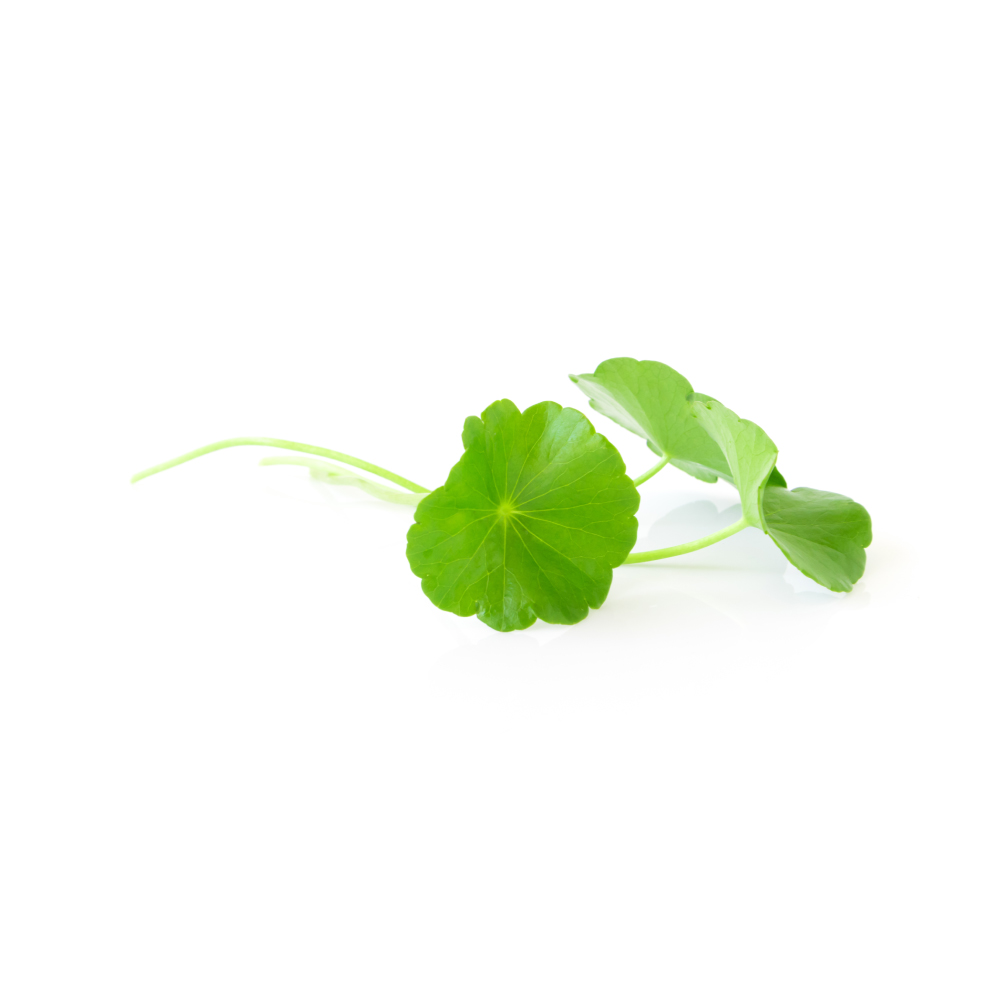
Gotu kola is a low, creeping herbaceous perennial in the carrot family (Apiaceae), spreading by slender stolons that root at the nodes to form a mat only a few inches high. Its long-stalked, kidney-to-fan-shaped (“spade-leaf”) green leaves rise from each node, and it bears tiny, inconspicuous pinkish flowers tucked near the ground. Unusually for the aromatic Apiaceae — which includes angelica, fennel, carrot, anise, coriander and parsley — gotu kola is a nearly odourless wetland creeper rather than a tap-rooted herb.
Distribution
Gotu kola is native across the tropical and subtropical Old World — India, Sri Lanka, China, Southeast Asia, Australia, South Africa and Madagascar — where it grows in moist to wet ground along swamps, ponds and rivers. It has been introduced elsewhere in the tropics and is recorded as invasive on several Pacific islands, so it is best described as locally weedy in parts of its introduced range. In cool climates it is grown as an annual ground cover or container plant. No conservation concern.
Growing Conditions
- Life cycle: tender creeping perennial, hardy roughly USDA zones 7–11; grown as an annual in cool regions.
- Light: part shade to full sun.
- Water: moisture-loving — thrives in wet, boggy ground and shallow water margins.
- Habit: low mat-former spreading by rooting stolons; harvested as a leaf crop.
- Full cultivation detail lives on the companion farm-wiki grow guide for Centella asiatica (link to be added once that project’s public URL is confirmed).
Pharmacology & Research
Gotu kola has one of the larger clinical literatures among traditional “brain tonic” herbs, but the evidence is lopsided: the strongest human data sit not in cognition — its Ayurvedic reputation — but in venous and microvascular disease, where a standardised triterpene fraction (TTFCA/TECA, “total triterpenic fraction of Centella asiatica”) has been tested in a run of small placebo-controlled trials since the 1980s and is now recognised by the European Medicines Agency as a traditional-use venous remedy. A 2017 systematic review and meta-analysis of cognition found no benefit across cognitive domains, only a short-lived lift in alertness and mood, so the “smart herb” framing is not well supported by controlled data 7Reference 7Meta-analysisEffects of Centella asiatica on cognitive function and mood — systematic review and meta-analysisView study →. Wound healing, skin ageing and anxiety carry genuine but smaller human signals, and a deep preclinical literature maps the mechanisms to four triterpene “centellosides” — asiaticoside, madecassoside, and their acids asiatic acid and madecassic acid. The dominant caveat throughout is standardisation: results come from defined extracts (TTFCA, ECa 233, standardised creams), not from tea or raw powder, and the marker content of raw herb varies enormously by accession.
- Best-supported: chronic venous insufficiency and venous/diabetic microangiopathy — reduced ankle oedema, capillary filtration and microcirculatory symptoms in multiple placebo-controlled trials of the standardised triterpene fraction 2,3,4,6Reference 2Meta-analysisPhlebotonics for venous insufficiency — systematic review and meta-analysis (Cochrane)View study →Reference 3RCTTreatment of diabetic microangiopathy and edema with total triterpenic fraction of Centella asiatica — placebo-controlled randomised trialView study →Reference 4RCTEffects of the total triterpenic fraction of Centella asiatica in venous hypertensive microangiopathy — placebo-controlled randomised trialView study →Reference 6RCTTitrated extract of Centella asiatica (TECA) in the treatment of venous insufficiency of the lower limbs — multicentre double-blind randomised trialView study →; topical/oral wound and scar healing 8,9Reference 8Systematic reviewA systematic review of the effect of Centella asiatica on wound healingView study →Reference 9RCTWound healing efficacy of a polymeric spray film containing Centella asiatica leaf extract — multicentre randomised controlled trialView study →.
- Emerging, worth watching: oral extracts for skin ageing (wrinkle depth, hydration) 10,11Reference 10Meta-analysisEfficacy and safety of Centella asiatica on wrinkles — systematic review and network meta-analysis of randomised controlled trialsView study →Reference 11RCTOral Centella asiatica extract on skin aging parameters in middle-aged women — randomised, double-blind, placebo-controlled trialView study → and macular pigment density 15Reference 15RCTLong-term supplementation with Centella asiatica extract (CA-HE50) on macular pigment optical density — randomised, double-blind, placebo-controlled trialView study →; acute anxiolytic/mood effects 12,13Reference 12RCTA double-blind, placebo-controlled study on the effects of Gotu Kola on acoustic startle response in healthy subjects — randomised trialView study →Reference 13Clinical trialA clinical study on the management of generalized anxiety disorder with Centella asiatica — clinical trialView study →.
- Mechanistically thin: the classic “cognitive enhancer” claim — preclinical mechanisms are rich, but the human meta-analysis is null for cognition 7Reference 7Meta-analysisEffects of Centella asiatica on cognitive function and mood — systematic review and meta-analysisView study →.
- The caveat: nearly every positive human result used a standardised extract (TTFCA, TECA, ECa 233) or a defined topical, not the whole herb, tea or juice — and centelloside content of raw material is highly variable.
1. Venous insufficiency & microangiopathy
This is gotu kola’s strongest human evidence. A standardised total triterpenic fraction (TTFCA/TECA) has been tested in a series of small placebo-controlled and comparative trials in chronic venous insufficiency and venous/diabetic microangiopathy. An early double-blind trial (n=94, 2 months) found TECA at 60–120 mg/day significantly improved leg heaviness, oedema and venous distensibility versus placebo 6Reference 6RCTTitrated extract of Centella asiatica (TECA) in the treatment of venous insufficiency of the lower limbs — multicentre double-blind randomised trialView study →. Later randomised, placebo-controlled trials (typically 60 mg twice or thrice daily, 4–8 weeks, n≈40 each) reported significant reductions in capillary filtration rate, ankle oedema, resting flux and microcirculatory symptoms, with improved venoarteriolar response 2,3,4,5Reference 2Meta-analysisPhlebotonics for venous insufficiency — systematic review and meta-analysis (Cochrane)View study →Reference 3RCTTreatment of diabetic microangiopathy and edema with total triterpenic fraction of Centella asiatica — placebo-controlled randomised trialView study →Reference 4RCTEffects of the total triterpenic fraction of Centella asiatica in venous hypertensive microangiopathy — placebo-controlled randomised trialView study →Reference 5RCTTreatment of edema and increased capillary filtration in venous hypertension with total triterpenic fraction of Centella asiatica — randomised, placebo-controlled, dose-ranging trialView study →; a 12-month trial extended benefit to diabetic microangiopathy 3Reference 3RCTTreatment of diabetic microangiopathy and edema with total triterpenic fraction of Centella asiatica — placebo-controlled randomised trialView study →. The 2020 Cochrane review of phlebotonics judged the class to moderately reduce oedema and some venous symptoms, listing Centella asiatica among the agents assessed 2Reference 2Meta-analysisPhlebotonics for venous insufficiency — systematic review and meta-analysis (Cochrane)View study →. The European Medicines Agency accepts Centellae asiaticae herba as a traditional herbal medicine for minor venous circulation symptoms. Honest limits: trials are small, mostly from a single Italian research group, and used a proprietary standardised fraction rather than crude herb.
Gap: trials are small and largely single-group; no large multicentre RCT or hard-outcome (ulcer-healing) data, and results apply to the standardised fraction, not tea or tincture.
2. Wound & scar healing
The classic traditional use, and the one with the clearest mechanism. In animal wounds, topical asiaticoside raised wound-tissue antioxidants (SOD +35%, catalase +67%, glutathione peroxidase +49%) and cut lipid peroxides, alongside its known collagen and angiogenesis effects 16Reference 16AnimalAsiaticoside-induced elevation of antioxidant levels in healing wounds — animal (rat) modelView study →; oral madecassoside accelerated burn-wound closure in mice with increased hydroxyproline (collagen) and reduced inflammatory infiltrate 17Reference 17AnimalMadecassoside isolated from Centella asiatica facilitates burn wound healing in mice — animal modelView study →. In humans, a 2022 systematic review of four clinical trials found C. asiatica improved wound contraction, granulation and re-epithelialisation, attributing this to stimulation of collagen I, FGF and VEGF plus suppression of IL-1β, IL-6, TNF-α and COX-2 8Reference 8Systematic reviewA systematic review of the effect of Centella asiatica on wound healingView study →; a 2023 multicentre RCT (n=60) of a standardised triterpene spray-film improved healing of clean-contaminated acute wounds 9Reference 9RCTWound healing efficacy of a polymeric spray film containing Centella asiatica leaf extract — multicentre randomised controlled trialView study →. Effects are best documented for standardised topical preparations.
Gap: most trials are small, use varied standardised topicals, and lack blinding rigour; oral whole-herb wound data are thin.
3. Anti-inflammatory
Anti-inflammatory activity is the mechanistic thread linking the wound, venous and neuroprotective effects, and it is well characterised at the molecular level. In LPS-stimulated macrophages, madecassic acid suppressed nitric oxide, PGE2, TNF-α, IL-1β and IL-6, downregulated iNOS and COX-2, and inhibited NF-κB activation — more potently than madecassoside 18Reference 18In vitroAnti-inflammatory effects of madecassic acid via suppression of the NF-κB pathway in LPS-induced macrophages — in vitroView study →. The same cytokine and COX-2 suppression is reported in the human wound-healing review 8Reference 8Systematic reviewA systematic review of the effect of Centella asiatica on wound healingView study →. Evidence is overwhelmingly preclinical (cell and animal), but it is consistent and directly explains the clinically observed effects.
Gap: no trial measures inflammatory endpoints in humans taking the herb systemically; the anti-inflammatory case is inferred from cell/animal work plus downstream clinical outcomes.
4. Skin ageing
Oral and topical standardised extracts show modest anti-ageing effects on skin. A 2020 systematic review and network meta-analysis of five double-blind RCTs (172 Asian women) concluded C. asiatica or asiaticoside applied topically for 8–12 weeks improved periocular and lip wrinkles and markedly raised skin hydration, appearing more effective than Pueraria mirifica though possibly less than tretinoin, with fewer adverse events than tretinoin 10Reference 10Meta-analysisEfficacy and safety of Centella asiatica on wrinkles — systematic review and network meta-analysis of randomised controlled trialsView study →. A 2026 RCT (n=112, 12 weeks) of an oral extract (200 mg/day) reported significant reductions in wrinkle depth and improved hydration and elasticity versus baseline 11Reference 11RCTOral Centella asiatica extract on skin aging parameters in middle-aged women — randomised, double-blind, placebo-controlled trialView study →. Preparations are proprietary and standardisation varies.
Gap: trials are short, several are industry-linked, and lack of standardisation across products limits generalisation.
5. Antioxidant
Antioxidant activity is one of gotu kola’s most reproducible preclinical properties and underlies several of its other effects. In wound tissue asiaticoside raised SOD, catalase, glutathione peroxidase, vitamin E and ascorbate while cutting lipid peroxidation 16Reference 16AnimalAsiaticoside-induced elevation of antioxidant levels in healing wounds — animal (rat) modelView study →; in Alzheimer’s-model mice, water extract activated the NRF2 antioxidant-response pathway and improved mitochondrial antioxidant markers in the hippocampus 19,14Reference 19AnimalCentella asiatica improves memory and promotes antioxidative NRF2 signaling in 5XFAD mice — animal modelView study →Reference 14AnimalCentella asiatica attenuates hippocampal mitochondrial dysfunction and improves memory and executive function in β-amyloid overexpressing mice — animal modelView study →. The 2012 Orhan review catalogues consistent radical-scavenging and lipid-peroxidation-lowering effects across models 1Reference 1ReviewCentella asiatica (L.) Urban: From traditional medicine to modern medicine with neuroprotective potential — reviewView study →. Direct human antioxidant-endpoint data are limited, though a 2026 RCT found an oral extract raised macular pigment optical density, a nutrition-responsive ocular antioxidant marker 15Reference 15RCTLong-term supplementation with Centella asiatica extract (CA-HE50) on macular pigment optical density — randomised, double-blind, placebo-controlled trialView study →.
Gap: antioxidant effects are demonstrated almost entirely in vitro and in animals; systemic antioxidant benefit in humans is largely inferred.
6. Anxiety & mood
Anxiolytic use has one rigorous acute human trial and several weaker ones. In a double-blind, placebo-controlled study (n=40), a single 12 g oral dose of gotu kola significantly attenuated the acoustic startle response 30–60 minutes after dosing — a validated marker of anxiety — without affecting mood, heart rate or blood pressure 12Reference 12RCTA double-blind, placebo-controlled study on the effects of Gotu Kola on acoustic startle response in healthy subjects — randomised trialView study →. A small open-label study in generalised anxiety disorder (n=33, 500 mg twice daily, 60 days) reported reduced anxiety, stress and depression scores 13Reference 13Clinical trialA clinical study on the management of generalized anxiety disorder with Centella asiatica — clinical trialView study →, and the 2017 cognition/mood meta-analysis found C. asiatica improved alertness and reduced anger acutely 7Reference 7Meta-analysisEffects of Centella asiatica on cognitive function and mood — systematic review and meta-analysisView study →. A 2026 scoping review of mood disorders found only three small human studies (n=91 total) and judged the evidence too limited for meta-analysis 20Reference 20ReviewTherapeutic potential of Gotu Kola, phosphatidylcholine and taurine in mood disorders — systematic scoping reviewView study →.
Gap: the strongest data are acute and single-dose; no adequately powered RCT tests sustained treatment of a diagnosed anxiety disorder.
7. Neuroprotection
Preclinical neuroprotection is a rich, active research area, particularly for Alzheimer’s disease. Water extract of C. asiatica improved memory and executive function in β-amyloid-overexpressing (5xFAD/Tg2576) mice, attenuated hippocampal mitochondrial dysfunction, reduced oxidative stress and activated NRF2-regulated antioxidant genes 19,14Reference 19AnimalCentella asiatica improves memory and promotes antioxidative NRF2 signaling in 5XFAD mice — animal modelView study →Reference 14AnimalCentella asiatica attenuates hippocampal mitochondrial dysfunction and improves memory and executive function in β-amyloid overexpressing mice — animal modelView study →. Asiatic acid shows neuroprotective activity across models of cerebral ischaemia, spinal cord injury, epilepsy and neurodegeneration, acting through anti-inflammatory and antioxidant signalling 21Reference 21ReviewNeuroprotective mechanisms of asiatic acid — reviewView study →. The 2012 review attributes the herb’s brain effects to acetylcholinesterase and tyrosinase inhibition, reduced lipid peroxidation, dendritic arborisation and increased Na⁺/K⁺-ATPase activity 1Reference 1ReviewCentella asiatica (L.) Urban: From traditional medicine to modern medicine with neuroprotective potential — reviewView study →. All of this remains preclinical.
Gap: no human neuroprotection trial exists; the case rests entirely on rodent and cell models, with human pharmacokinetics showing the parent glycosides are poorly absorbed 22,23Reference 22Clinical trialSafety and pharmacokinetics of standardized extract of Centella asiatica (ECa 233) capsules in healthy volunteers — phase 1 clinical trialView study →Reference 23Clinical trialPharmacokinetics and metabolomics of an orally modified formula of standardized Centella asiatica extract in healthy volunteers — clinical trialView study →.
8. Cognitive enhancement
Despite its “brain tonic” reputation, controlled human data do not support cognitive enhancement. The 2017 systematic review and meta-analysis (five RCTs of C. asiatica alone plus six of C. asiatica-containing products) found no significant difference from placebo in any cognitive domain; the only positive effects were improved alertness and reduced anger acutely 7Reference 7Meta-analysisEffects of Centella asiatica on cognitive function and mood — systematic review and meta-analysisView study →. The most cited positive trial (n=28 healthy elderly, 2 months) found working-memory gains only at the highest dose (750 mg/day), not lower doses 24Reference 24RCTPositive modulation of cognition and mood in the healthy elderly following Centella asiatica — randomised, placebo-controlled trialView study →. The gap between strong animal data and null human cognition results is the central tension in the herb’s modern profile.
Gap: the human meta-analysis is null for cognition; positive signals are limited to one dose in one small trial, and no large confirmatory RCT exists.
9. Hepatoprotective
Liver-protective claims rest on animal and cell models and are complicated by safety data pointing the other way. C. asiatica juice altered oncogene expression (c-myc, c-fos, c-erbB2) and induced apoptosis in hepatocellular carcinoma cells in vitro 25Reference 25In vitroCentella asiatica juice effects on DNA damage, apoptosis and gene expression in hepatocellular carcinoma — in vitroView study →, and madecassoside prevented LPS/D-galactosamine-induced acute liver failure in mice by suppressing inflammation 26Reference 26AnimalMadecassoside prevents acute liver failure in LPS/D-GalN-induced mice — animal modelView study →. However, C. asiatica is among the more frequently reported herbal causes of drug-induced liver injury in pharmacovigilance reviews 27Reference 27Systematic reviewProfile of herbal and dietary supplement-induced liver injury in Latin America — systematic reviewView study → — so any hepatoprotective framing must be weighed against documented idiosyncratic hepatotoxicity.
Gap: no human hepatoprotective data; the preclinical signal is directly contradicted by real-world hepatotoxicity case series, making net liver effect uncertain.
Mechanisms
| Mechanism | Drives | Key compounds |
|---|---|---|
| NF-κB ↓, COX-2 ↓, iNOS ↓, TNF-α/IL-1β/IL-6 ↓ | anti-inflammatorywound healingvenous | madecassic acid, madecassoside |
| Collagen I / hydroxyproline ↑, FGF ↑, VEGF ↑ (angiogenesis) | wound & scar healingvenous wall integrity | asiaticoside, asiatic acid |
| NRF2 activation, SOD/catalase/GPx ↑, lipid peroxidation ↓ | antioxidantneuroprotection | asiaticoside, asiatic acid |
| Capillary filtration ↓, venoarteriolar response ↑, microvascular tone | venous insufficiencymicroangiopathyoedema | triterpene fraction (TTFCA) |
| Acetylcholinesterase ↓, tyrosinase ↓, β-amyloid ↓, Na⁺/K⁺-ATPase ↑ | neuroprotectioncognition (preclinical) | asiatic acid, madecassoside |
Clinical trials
Gotu kola has a real but modest clinical trial base — concentrated in venous insufficiency, wound/skin healing and small anxiety/cognition studies — dominated by one Italian group’s microangiopathy trials and by standardised extracts rather than whole herb; a 2025 type-2-diabetes RCT was null for HbA1c after covariate adjustment.
| Completed | Planned | Terminated | Preclinical |
|---|---|---|---|
| ~20 | few | 0identified | ~hundreds |
Last checked: July 2026.
Phytochemistry
The characteristic and most-studied constituents of Centella asiatica are its triterpenes — specifically the four “centellosides”: the saponin glycosides asiaticoside and madecassoside, and their corresponding aglycone acids asiatic acid and madecassic acid. These four are the markers used to standardise extracts and underlie most of the herb’s wound-healing and neuroprotective activity 1,28Reference 1ReviewCentella asiatica (L.) Urban: From traditional medicine to modern medicine with neuroprotective potential — reviewView study →Reference 28Principles and Practice of Phytotherapy (2nd ed.). Beyond them the plant carries a broad range of additional triterpenes, flavonoid derivatives such as quercetin and kaempferol, polysaccharides, sterols, phenolic acids, and a volatile oil in which the sesquiterpene α-copaene predominates 1Reference 1ReviewCentella asiatica (L.) Urban: From traditional medicine to modern medicine with neuroprotective potential — reviewView study →.
Centelloside content varies enormously with accession, growing conditions and plant part; madecassoside is usually the most abundant of the four markers and asiatic acid the least 28Reference 28Principles and Practice of Phytotherapy (2nd ed.).
Constituent Summary
Figures are % of dry herb across surveyed accessions 28Reference 28Principles and Practice of Phytotherapy (2nd ed.); ranges are wide and extract grades are often standardised far higher. Classes other than the four centelloside markers are listed qualitatively.
Saponin8 compounds2 with data
Triterpene6 compounds2 with data
Flavonoid6 compoundsno data
Phenolic acid1 compoundno data
Sesquiterpene2 compoundsno data
Monoterpene1 compoundno data
Sterol1 compoundno data
Carbohydrate1 compoundno data
Lipid1 compoundno data
Clinical Applications
Gotu kola’s best-evidenced clinical uses are not the cognitive ones its Ayurvedic reputation implies. The strongest human data are for chronic venous insufficiency and venous/diabetic microangiopathy — reduced ankle oedema and microcirculatory symptoms with a standardised triterpene fraction 2,3,4,5,6Reference 2Meta-analysisPhlebotonics for venous insufficiency — systematic review and meta-analysis (Cochrane)View study →Reference 3RCTTreatment of diabetic microangiopathy and edema with total triterpenic fraction of Centella asiatica — placebo-controlled randomised trialView study →Reference 4RCTEffects of the total triterpenic fraction of Centella asiatica in venous hypertensive microangiopathy — placebo-controlled randomised trialView study →Reference 5RCTTreatment of edema and increased capillary filtration in venous hypertension with total triterpenic fraction of Centella asiatica — randomised, placebo-controlled, dose-ranging trialView study →Reference 6RCTTitrated extract of Centella asiatica (TECA) in the treatment of venous insufficiency of the lower limbs — multicentre double-blind randomised trialView study → — and for wound and scar healing with standardised topicals 8,9Reference 8Systematic reviewA systematic review of the effect of Centella asiatica on wound healingView study →Reference 9RCTWound healing efficacy of a polymeric spray film containing Centella asiatica leaf extract — multicentre randomised controlled trialView study →. Oral and topical extracts show modest anti-ageing effects on skin 10,11Reference 10Meta-analysisEfficacy and safety of Centella asiatica on wrinkles — systematic review and network meta-analysis of randomised controlled trialsView study →Reference 11RCTOral Centella asiatica extract on skin aging parameters in middle-aged women — randomised, double-blind, placebo-controlled trialView study →, and a single acute dose has a measurable anxiolytic effect 12Reference 12RCTA double-blind, placebo-controlled study on the effects of Gotu Kola on acoustic startle response in healthy subjects — randomised trialView study →. By contrast, a 2017 meta-analysis found no cognitive benefit across domains, only a short-lived lift in alertness and mood 7Reference 7Meta-analysisEffects of Centella asiatica on cognitive function and mood — systematic review and meta-analysisView study →, so the “brain tonic” framing is traditional rather than clinically established.
Dosage
Almost every positive clinical result used a standardised extract (the total triterpenic fraction TTFCA/TECA, or ECa 233) or a defined topical — not tea or raw powder — so the research and traditional doses below are not interchangeable, and a whole-herb equivalent can only be estimated on a stated assumption.
Research doses
| Indication | Preparation | Dose | Est. dried-herb equivalent | Source |
|---|---|---|---|---|
| Venous insufficiency / microangiopathy | Standardised triterpene fraction (TTFCA/TECA) | 60–120 mg/day (e.g. 60 mg 2–3×/day) | ~6–12 g dried herb (assuming raw herb ≈ 1% total triterpenes; extract is standardised far higher) — estimate only | 3,4,5,6Reference 3RCTTreatment of diabetic microangiopathy and edema with total triterpenic fraction of Centella asiatica — placebo-controlled randomised trialView study →Reference 4RCTEffects of the total triterpenic fraction of Centella asiatica in venous hypertensive microangiopathy — placebo-controlled randomised trialView study →Reference 5RCTTreatment of edema and increased capillary filtration in venous hypertension with total triterpenic fraction of Centella asiatica — randomised, placebo-controlled, dose-ranging trialView study →Reference 6RCTTitrated extract of Centella asiatica (TECA) in the treatment of venous insufficiency of the lower limbs — multicentre double-blind randomised trialView study → |
| Cognition (elderly) | Standardised extract capsule | 750 mg/day (effect only at high dose) | — (proprietary; marker % not stated) | 24Reference 24RCTPositive modulation of cognition and mood in the healthy elderly following Centella asiatica — randomised, placebo-controlled trialView study → |
| Anxiety (acute startle) | Whole dried herb, single dose | 12 g once | ~12 g (whole herb used directly) | 12Reference 12RCTA double-blind, placebo-controlled study on the effects of Gotu Kola on acoustic startle response in healthy subjects — randomised trialView study → |
| Generalized anxiety | 70% hydro-ethanolic extract capsule | 500 mg twice daily | — (extract ratio not stated) | 13Reference 13Clinical trialA clinical study on the management of generalized anxiety disorder with Centella asiatica — clinical trialView study → |
| Skin ageing | Oral standardised extract | 200 mg/day | — (proprietary) | 11Reference 11RCTOral Centella asiatica extract on skin aging parameters in middle-aged women — randomised, double-blind, placebo-controlled trialView study → |
The dried-herb equivalent is a rough guide on a stated assumption (raw aerial parts ≈ 1% total triterpenes), not a conversion factor or recommendation; where only a proprietary-extract mg is given without a marker %, it is left blank.
Traditional Dosage
| System | Preparation | Dose |
|---|---|---|
| Western herbal (Bone & Mills) | Liquid extract 1:2 | 15–40 mL/week (≈ 2–6 mL/day) |
| Western herbal | Dried herb (infusion) | ~2–4 g, up to 3×/day |
| Ayurveda | Whole herb / juice (Rasayana tonic) | traditionally as fresh juice or powder, low daily amounts |
Safety & Pregnancy
Gotu kola is well tolerated in short-to-medium-term trials; the signals worth knowing are rare idiosyncratic liver injury and, with topical use, an Apiaceae-family contact allergy. It may also lower blood glucose.
- Idiosyncratic liver injury. Among the more frequently reported herbal causes of drug-induced liver injury — avoid with liver disease and stop at any sign.
- Not in pregnancy or breastfeeding. EMA says safety is not established; older animal reports raised fertility and pregnancy concerns.
- Antidiabetic interaction. May lower blood glucose — use caution alongside diabetes medication.
- Apiaceae contact allergy. Topical use can cause allergic contact dermatitis in people sensitised to related plants.
- Otherwise well tolerated. Standardised-extract trials from 4 weeks to 12 months reported no significant adverse effects.
Full safety & interactions detail
Gotu kola is well tolerated in the short-to-medium-term clinical trials conducted to date, with the standardised triterpene fraction reporting no significant adverse effects over 4 weeks to 12 months 3,4,5Reference 3RCTTreatment of diabetic microangiopathy and edema with total triterpenic fraction of Centella asiatica — placebo-controlled randomised trialView study →Reference 4RCTEffects of the total triterpenic fraction of Centella asiatica in venous hypertensive microangiopathy — placebo-controlled randomised trialView study →Reference 5RCTTreatment of edema and increased capillary filtration in venous hypertension with total triterpenic fraction of Centella asiatica — randomised, placebo-controlled, dose-ranging trialView study →. The most consistent adverse signal is allergic contact dermatitis from topical use — an Apiaceae-family reaction, uncommon but genuine, and relevant to people sensitised to related plants 10Reference 10Meta-analysisEfficacy and safety of Centella asiatica on wrinkles — systematic review and network meta-analysis of randomised controlled trialsView study →.
The more serious concern is idiosyncratic hepatotoxicity: Centella asiatica is among the more frequently implicated herbal supplements in drug-induced liver injury case series, typically hepatocellular and predominantly in women, so it should be avoided by people with liver disease and stopped if signs of liver injury appear 27Reference 27Systematic reviewProfile of herbal and dietary supplement-induced liver injury in Latin America — systematic reviewView study →. Because oral use may lower blood glucose, caution is warranted alongside antidiabetic medication 1Reference 1ReviewCentella asiatica (L.) Urban: From traditional medicine to modern medicine with neuroprotective potential — reviewView study → — note this is the opposite direction to older warnings about raising blood sugar. Human pharmacokinetic work shows the parent glycosides (asiaticoside, madecassoside) are poorly absorbed and act via their acid metabolites, which is why extract standardisation and preparation matter 22,23Reference 22Clinical trialSafety and pharmacokinetics of standardized extract of Centella asiatica (ECa 233) capsules in healthy volunteers — phase 1 clinical trialView study →Reference 23Clinical trialPharmacokinetics and metabolomics of an orally modified formula of standardized Centella asiatica extract in healthy volunteers — clinical trialView study →.
Scope note: no dedicated human drug-interaction or CYP450 study was identified. The glucose-lowering interaction is plausible (and one diabetes RCT co-administered antidiabetic drugs) and additive hepatotoxicity with other hepatotoxic agents is inferred, not tested — treat interactions as not adequately assessed rather than absent.
Avoid. The European Medicines Agency states that safety in pregnancy and lactation has not been established and use cannot be recommended; older animal reports raised concerns about fertility and pregnancy. There is no adequate human safety data, so gotu kola should not be used during pregnancy or while trying to conceive, and should be avoided while breastfeeding. Topical anti-stretch-mark creams containing Centella triterpenes among other ingredients have been trialled in pregnancy, but this does not establish safety of oral use.
References
- Orhan, I. E. (2012). Centella asiatica (L.) Urban: From traditional medicine to modern medicine with neuroprotective potential — review. Evidence-Based Complementary and Alternative Medicine. https://pubmed.ncbi.nlm.nih.gov/22666298/
- Martínez-Zapata, M. J., et al. (2020). Phlebotonics for venous insufficiency — systematic review and meta-analysis (Cochrane). Cochrane Database of Systematic Reviews. https://pubmed.ncbi.nlm.nih.gov/33141449/
- Incandela, L., et al. (2001). Treatment of diabetic microangiopathy and edema with total triterpenic fraction of Centella asiatica — placebo-controlled randomised trial. Angiology. https://pubmed.ncbi.nlm.nih.gov/11666119/
- Cesarone, M. R., et al. (2001). Effects of the total triterpenic fraction of Centella asiatica in venous hypertensive microangiopathy — placebo-controlled randomised trial. Angiology. https://pubmed.ncbi.nlm.nih.gov/11666117/
- De Sanctis, M. T., et al. (2001). Treatment of edema and increased capillary filtration in venous hypertension with total triterpenic fraction of Centella asiatica — randomised, placebo-controlled, dose-ranging trial. Angiology. https://pubmed.ncbi.nlm.nih.gov/11666125/
- Pointel, J. P., et al. (1987). Titrated extract of Centella asiatica (TECA) in the treatment of venous insufficiency of the lower limbs — multicentre double-blind randomised trial. Angiology. https://pubmed.ncbi.nlm.nih.gov/3544968/
- Puttarak, P., et al. (2017). Effects of Centella asiatica on cognitive function and mood — systematic review and meta-analysis. Scientific Reports. https://pubmed.ncbi.nlm.nih.gov/28878245/
- Arribas-López, E., et al. (2022). A systematic review of the effect of Centella asiatica on wound healing. International Journal of Environmental Research and Public Health. https://pubmed.ncbi.nlm.nih.gov/35328954/
- Changsan, N., et al. (2023). Wound healing efficacy of a polymeric spray film containing Centella asiatica leaf extract — multicentre randomised controlled trial. Journal of Wound Care. https://pubmed.ncbi.nlm.nih.gov/38063299/
- Kongkaew, C., et al. (2020). Efficacy and safety of Centella asiatica on wrinkles — systematic review and network meta-analysis of randomised controlled trials. Journal of Cosmetic Science. https://pubmed.ncbi.nlm.nih.gov/33413787/
- Hur, N., et al. (2026). Oral Centella asiatica extract on skin aging parameters in middle-aged women — randomised, double-blind, placebo-controlled trial. Nutrients. https://pubmed.ncbi.nlm.nih.gov/42196964/
- Bradwejn, J., et al. (2000). A double-blind, placebo-controlled study on the effects of Gotu Kola on acoustic startle response in healthy subjects — randomised trial. Journal of Clinical Psychopharmacology. https://pubmed.ncbi.nlm.nih.gov/11106141/
- Jana, U., et al. (2010). A clinical study on the management of generalized anxiety disorder with Centella asiatica — clinical trial. Nepal Medical College Journal. https://pubmed.ncbi.nlm.nih.gov/20677602/
- Gray, N. E., et al. (2018). Centella asiatica attenuates hippocampal mitochondrial dysfunction and improves memory and executive function in β-amyloid overexpressing mice — animal model. Molecular and Cellular Neuroscience. https://pubmed.ncbi.nlm.nih.gov/30253196/
- Baek, H. I., et al. (2026). Long-term supplementation with Centella asiatica extract (CA-HE50) on macular pigment optical density — randomised, double-blind, placebo-controlled trial. Nutrients. https://pubmed.ncbi.nlm.nih.gov/41901080/
- Shukla, A., et al. (1999). Asiaticoside-induced elevation of antioxidant levels in healing wounds — animal (rat) model. Phytotherapy Research. https://pubmed.ncbi.nlm.nih.gov/10189951/
- Liu, M., et al. (2008). Madecassoside isolated from Centella asiatica facilitates burn wound healing in mice — animal model. Planta Medica. https://pubmed.ncbi.nlm.nih.gov/18484522/
- Won, J. H., et al. (2010). Anti-inflammatory effects of madecassic acid via suppression of the NF-κB pathway in LPS-induced macrophages — in vitro. Planta Medica. https://pubmed.ncbi.nlm.nih.gov/19774506/
- Matthews, D. G., et al. (2019). Centella asiatica improves memory and promotes antioxidative NRF2 signaling in 5XFAD mice — animal model. Antioxidants. https://pubmed.ncbi.nlm.nih.gov/31817977/
- Pedregosa, B. I. C., et al. (2026). Therapeutic potential of Gotu Kola, phosphatidylcholine and taurine in mood disorders — systematic scoping review. Complementary Medicine Research. https://pubmed.ncbi.nlm.nih.gov/42391143/
- Ding, L., et al. (2023). Neuroprotective mechanisms of asiatic acid — review. Heliyon. https://pubmed.ncbi.nlm.nih.gov/37180926/
- Songvut, P., et al. (2019). Safety and pharmacokinetics of standardized extract of Centella asiatica (ECa 233) capsules in healthy volunteers — phase 1 clinical trial. Planta Medica. https://pubmed.ncbi.nlm.nih.gov/30699457/
- Songvut, P., et al. (2021). Pharmacokinetics and metabolomics of an orally modified formula of standardized Centella asiatica extract in healthy volunteers — clinical trial. Scientific Reports. https://pubmed.ncbi.nlm.nih.gov/33767223/
- Wattanathorn, J., et al. (2008). Positive modulation of cognition and mood in the healthy elderly following Centella asiatica — randomised, placebo-controlled trial. Journal of Ethnopharmacology. https://pubmed.ncbi.nlm.nih.gov/18191355/
- Hussin, F., et al. (2014). Centella asiatica juice effects on DNA damage, apoptosis and gene expression in hepatocellular carcinoma — in vitro. BMC Complementary and Alternative Medicine. https://pubmed.ncbi.nlm.nih.gov/24444147/
- Wang, W., et al. (2018). Madecassoside prevents acute liver failure in LPS/D-GalN-induced mice — animal model. International Immunopharmacology. https://pubmed.ncbi.nlm.nih.gov/29715757/
- Santos, G., et al. (2021). Profile of herbal and dietary supplement-induced liver injury in Latin America — systematic review. Phytotherapy Research. https://pubmed.ncbi.nlm.nih.gov/32525269/
- Bone, K., & Mills, S. (2013). Principles and Practice of Phytotherapy (2nd ed.). Elsevier Health. (Pg. 657–670).