
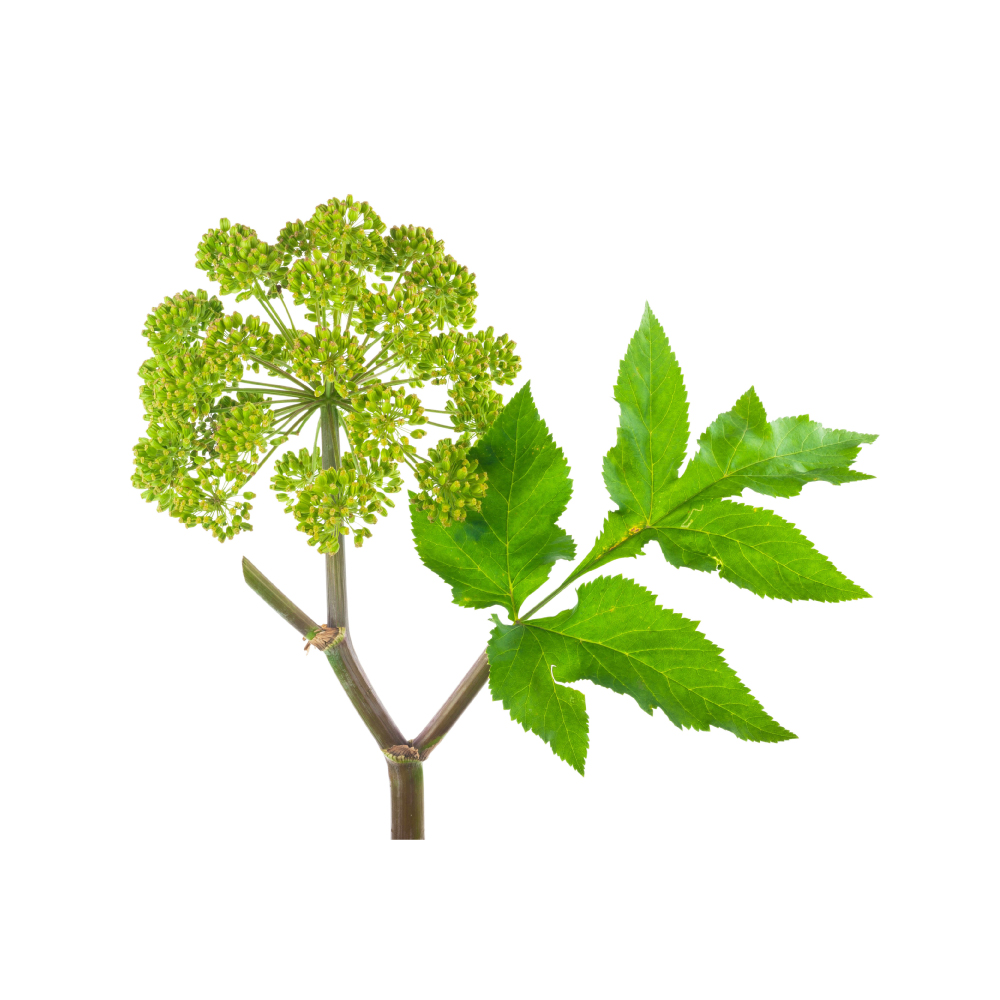
Materia Medica
Angelica
Angelica archangelica
Angelica (Angelica archangelica) — an aromatic bitter used for muscle cramps, period pain, sluggish digestion and as a traditional antibacterial.
What Is Angelica?
Angelica seeds are a common ingredient in alcoholic beverages including chartreuse and gin for their aromatic nature.
Both the roots and seeds are used as medicine.
Angelica roots and seeds are both potent antispasmodics, and are useful in treating muscle cramping and period pains. They’re also bitter, making them useful for stimulating digestion.
One of the best uses for angelica though are for its antibacterial actions. In the times of the black plague, angelica was said to have been brought to humans by an angel as a cure, hence the botanical name Angelica archangelica.
What Is Angelica Used For?
Muscle cramps, period pains, indigestion, bacterial infection of the gastrointestinal tract.
Traditional Uses
Traditional Chinese Medicine
Drains the yin, awakens the appetite, invigorates the spleen, stomach, and intestines, and dispels mucous damp conditions 46Reference 46The Complete Guide to Aromatherapy (2nd ed.). It’s as such beneficial in all yin excess conditions, such as cold, damp, and phlegm congestion in the lungs, intestines, and uterus 46,49Reference 46The Complete Guide to Aromatherapy (2nd ed.)Reference 49The energetics of western herbs Vol 1.
Botany
Garden angelica is a stout biennial (occasionally short-lived perennial) herb in the carrot family (Apiaceae — 3,700 species across 434 genera, the 16th-largest family of flowering plants), growing up to 2 m tall 46Reference 46The Complete Guide to Aromatherapy (2nd ed.). Like other biennial umbellifers it forms a basal rosette of large, deeply divided leaves in its first year, then bolts to flower and set seed in its second.
About 30 species make up the genus Angelica; the two most medicinally significant are this species and A. sinensis (Dong Quai). This page covers A. archangelica only — the two species carry distinct chemistry and their evidence bases do not transfer.
Distribution
Garden angelica is native to northern Europe — Scandinavia, Iceland, Greenland and northern Russia — where it grows in wet meadows, marshland and disturbed ground near water. It has long been cultivated on a large scale further south and east, including Belgium, the Netherlands, France, Germany, Hungary and northern India 47Reference 47Perfume and flavour materials of natural origin, Allured publishing, USA. Outside its native range it naturalizes locally, mainly along riverbanks and other wet, disturbed sites, but is not documented as a formally listed noxious weed anywhere in that introduced range.
Growing Conditions
- Biennial herb, full sun to part shade; prefers rich, slightly acidic, medium-to-wet soil.
- Hardy to roughly USDA zone 4–9.
- Full cultivation detail lives on the companion farm-wiki grow guide for Angelica archangelica (link to be added once that project’s public URL is confirmed).
Harvesting, Collection & Preparation
After harvesting or acquiring fresh Angelica roots, they should be dried rapidly and stored in air tight containers. Here they will store for many years. 48Reference 48A Modern Herbal — AngelicaView study →. The preferred age of the roots before harvesting and use is 2 years or less. Older roots are considered inferior and lack the peppery top note often desired from the younger root but can still be used medicinally. 46Reference 46The Complete Guide to Aromatherapy (2nd ed.).
Alcohol should be used to extract the medicinal components rather than water 48Reference 48A Modern Herbal — AngelicaView study →.
The essential oil is obtained from the roots via steam distillation.
The stems of Angelica are popular when candied. 48Reference 48A Modern Herbal — AngelicaView study →.
Pharmacology & Research
Angelica archangelica has a modest but unusually broad research base — roughly a hundred indexed papers, overwhelmingly preclinical (in vitro and rodent), spread thinly across a dozen activities. The genuinely distinctive feature is that the only human trials target an indication most monographs never mention: the leaf extract (marketed as SagaPro) has been through two randomised, placebo-controlled trials for overactive bladder and nocturia 1,2Reference 1RCTEffects of Angelica archangelica extract on overactive bladder: a pilot randomized controlled trial — randomised placebo-controlled trialView study →Reference 2RCTA parallel, randomized, double-blind, placebo-controlled study to investigate the effect of SagaPro on nocturia in men — randomised placebo-controlled trial (RCT)View study →, with mixed results. A second cluster of human data — the Japanese “Feru-guard” trials in mild cognitive impairment — exists but tests angelica combined with ferulic acid, so the effect cannot be attributed to the herb alone 4,5,6Reference 4RCTEffects of ferulic acid and Angelica archangelica extract (Feru-guard) on mild cognitive impairment — randomised placebo-controlled trial (RCT)View study →Reference 5Clinical trialEffect of Feru-guard 100M on amyloid-beta deposition in individuals with mild cognitive impairment — controlled clinical trialView study →Reference 6Clinical trialEffect of ferulic acid and Angelica archangelica extract on behavioral and psychological symptoms of dementia in frontotemporal lobar degeneration and dementia with Lewy bodies — open-label clinical trialView study →. Everything else (anticancer, antimicrobial, anxiolytic, hepatoprotective, anti-inflammatory) rests on cell-line and animal work, much of it driven by the furanocoumarins imperatorin and osthole rather than the whole herb. Because activity tracks these coumarins, and coumarin content swings widely with chemotype, provenance and plant part, results from one preparation (essential oil, root tincture, leaf extract) transfer poorly to another. This page covers A. archangelica (garden/European angelica) only — it is a different species from A. sinensis (Dong Quai), and the two evidence bases do not transfer.
- Best-supported: overactive-bladder/nocturia symptom relief from the leaf extract — the only indication with human RCTs, though the primary endpoints were mixed 1,2Reference 1RCTEffects of Angelica archangelica extract on overactive bladder: a pilot randomized controlled trial — randomised placebo-controlled trialView study →Reference 2RCTA parallel, randomized, double-blind, placebo-controlled study to investigate the effect of SagaPro on nocturia in men — randomised placebo-controlled trial (RCT)View study →; and a consistent antioxidant signal across animal and in vitro models 27,31,32Reference 27AnimalOptimization of extraction conditions of Angelica archangelica extract and activity evaluation in experimental fibromyalgia — animal model (mouse)View study →Reference 31AnimalRadioprotective efficacy of Ginkgo biloba and Angelica archangelica extract against technetium-99m-sestamibi induced oxidative stress and lens injury in rats — animal model (rat)View study →Reference 32AnimalAntioxidant-rich Angelica archangelica and Ginkgo biloba extracts modulate haemoglobin derivatives and antioxidant enzymes in high-altitude-resident rabbits — animal model (rabbit)View study →.
- Emerging, worth watching: antiproliferative activity of leaf/fruit/root extracts and the isolated coumarins imperatorin and angelicin against several cancer cell lines 19,20,21,22,23,24Reference 19AnimalAntitumour activity of Angelica archangelica leaf extract — animal model (mouse)View study →Reference 20In vitroAntiproliferative effect of Angelica archangelica fruits — in vitroView study →Reference 21In vitroThe cytotoxic effect of two chemotypes of essential oils from the fruits of Angelica archangelica L — in vitroView study →Reference 22In vitroMedicinal properties of Angelica archangelica root extract: Cytotoxicity in breast cancer cells and its protective effects against in vivo tumor development — in vitro and animal model (mouse)View study →Reference 23In vitroImperatorin as a Promising Chemotherapeutic Agent Against Human Larynx Cancer and Rhabdomyosarcoma Cells — in vitroView study →Reference 24In vitroAngelicin inhibits the growth and migration of triple-negative breast cancer cells — in vitroView study →; anxiolytic behaviour in rodents 10,11,12,13Reference 10AnimalCoumarins from Angelica archangelica Linn. and their effects on anxiety-like behavior — animal model (rat)View study →Reference 11AnimalAnti-anxiety activity of successive extracts of Angelica archangelica Linn. on the elevated T-maze and forced swimming tests in rats — animal model (rat)View study →Reference 12AnimalAnti-anxiety Activity of Methanolic Extracts of Different Parts of Angelica archangelica Linn — animal model (rat)View study →Reference 13AnimalThe effects of imperatorin on anxiety and memory-related behavior in male Swiss mice — animal model (mouse)View study →.
- Mechanistically thin: antidiabetic/β-cell and antimutagenic claims (in vitro, constituent-level only) 39,40,41Reference 39In vitroSalikhova RA, Poroshenko GG (1995). [Antimutagenic properties of Angelica archangelica L] — in vitro, comparative study. Vestn Ross Akad Med Nauk. https://pubmed.ncbi.nlm.nih.gov/7767122/View study →Reference 40In vitroPharmacological and phytochemical insights on the pancreatic β-cell modulation by Angelica L. roots — in vitroView study →Reference 41In vitroBioactivity-Guided Identification of Botanical Inhibitors of Ketohexokinase — in vitroView study →; cognitive benefit, where the human data are confounded by co-administered ferulic acid 4,5,6Reference 4RCTEffects of ferulic acid and Angelica archangelica extract (Feru-guard) on mild cognitive impairment — randomised placebo-controlled trial (RCT)View study →Reference 5Clinical trialEffect of Feru-guard 100M on amyloid-beta deposition in individuals with mild cognitive impairment — controlled clinical trialView study →Reference 6Clinical trialEffect of ferulic acid and Angelica archangelica extract on behavioral and psychological symptoms of dementia in frontotemporal lobar degeneration and dementia with Lewy bodies — open-label clinical trialView study →.
- The caveat: no standardised whole-herb dose has been validated in humans for any indication, and the furanocoumarins that carry most of the activity also carry the phototoxicity risk — the same chemistry cuts both ways.
1. Overactive bladder & nocturia
This is the herb’s strongest human evidence and its most specific traditional-to-clinical bridge. A 2013 parallel, randomised, double-blind, placebo-controlled trial (n=69 men ≥45 with ≥2 nocturnal voids, 8 weeks) of SagaPro — a supplement made from A. archangelica leaf — found the product safe but failed its primary endpoint: nocturnal voids fell in both arms with no significant difference versus placebo 2Reference 2RCTA parallel, randomized, double-blind, placebo-controlled study to investigate the effect of SagaPro on nocturia in men — randomised placebo-controlled trial (RCT)View study →. A pre-specified subgroup with reduced nocturnal bladder capacity (baseline NBC index >1.3) did improve significantly, which the authors flagged as hypothesis-generating 2Reference 2RCTA parallel, randomized, double-blind, placebo-controlled study to investigate the effect of SagaPro on nocturia in men — randomised placebo-controlled trial (RCT)View study →. A 2025 pilot RCT (NCT04357223; n=143 adults, triple-blind, 6 weeks) of A. archangelica leaf extract in overactive bladder reported significant improvements in daytime voids (p=0.004), the IPSS storage subscore (p=0.025) and quality of life (p<0.001), with a near-significant nocturia effect (p=0.069) 1Reference 1RCTEffects of Angelica archangelica extract on overactive bladder: a pilot randomized controlled trial — randomised placebo-controlled trialView study →. The two trials point the same direction on symptom burden and quality of life but disagree on the headline endpoint, and both are small.
Gap: No adequately powered trial has confirmed a benefit on a pre-registered primary endpoint; the mechanism of a leaf extract on bladder function is not established.
2. Antioxidant
Antioxidant activity is the most consistently reproduced effect and underpins much of the herb’s other preclinical activity. Root and leaf extracts restored superoxide dismutase and glutathione peroxidase toward normal and reduced haemoglobin autoxidation in high-altitude-stressed rabbits 32Reference 32AnimalAntioxidant-rich Angelica archangelica and Ginkgo biloba extracts modulate haemoglobin derivatives and antioxidant enzymes in high-altitude-resident rabbits — animal model (rabbit)View study →, protected rat lens tissue against radionuclide-induced oxidative injury 31Reference 31AnimalRadioprotective efficacy of Ginkgo biloba and Angelica archangelica extract against technetium-99m-sestamibi induced oxidative stress and lens injury in rats — animal model (rat)View study →, and lowered brain oxidative-stress markers in a reserpine fibromyalgia model in mice 27Reference 27AnimalOptimization of extraction conditions of Angelica archangelica extract and activity evaluation in experimental fibromyalgia — animal model (mouse)View study →. Essential oil and phenolic fractions also show direct radical-scavenging and antiaflatoxigenic activity in vitro 35,28Reference 35In vitroEfficacy of Angelica archangelica essential oil, phenyl ethyl alcohol and α- terpineol against isolated molds from walnut and their antiaflatoxigenic and antioxidant activity — in vitroView study →Reference 28In vitroBiocidal, antioxidant, and anti-inflammatory activities of essential oils extracted from Angelica spp. cultivated on contaminated soils — in vitroView study →. The signal is robust across models but is largely a mechanistic substrate — it is measured as an enzyme or marker change, not a clinical outcome.
Gap: No human antioxidant-status data; potency relative to common dietary antioxidants is unquantified.
3. Anticancer
Antiproliferative activity appears across every plant part and several isolated coumarins, though entirely in cell lines and mice. A leaf extract reduced tumour growth in a mouse sarcoma model 19Reference 19AnimalAntitumour activity of Angelica archangelica leaf extract — animal model (mouse)View study →; fruit extracts and two essential-oil chemotypes were antiproliferative/cytotoxic against cancer cell lines in vitro 20,21Reference 20In vitroAntiproliferative effect of Angelica archangelica fruits — in vitroView study →Reference 21In vitroThe cytotoxic effect of two chemotypes of essential oils from the fruits of Angelica archangelica L — in vitroView study →; and a root extract was cytotoxic to breast cancer cells and slowed tumour development in mice 22Reference 22In vitroMedicinal properties of Angelica archangelica root extract: Cytotoxicity in breast cancer cells and its protective effects against in vivo tumor development — in vitro and animal model (mouse)View study →. Among constituents, imperatorin inhibited larynx cancer and rhabdomyosarcoma cells 23Reference 23In vitroImperatorin as a Promising Chemotherapeutic Agent Against Human Larynx Cancer and Rhabdomyosarcoma Cells — in vitroView study →, and angelicin induced G2/M arrest and suppressed migration in triple-negative breast cancer cells in vitro 24Reference 24In vitroAngelicin inhibits the growth and migration of triple-negative breast cancer cells — in vitroView study →. Effects generally required high micromolar concentrations.
Gap: No in vivo dosing that maps to achievable human exposure, and no clinical data; furanocoumarin phototoxicity/genotoxicity complicates any systemic anticancer use.
4. Antimicrobial
Traditional use as an antibacterial is echoed by consistent in vitro activity of the root essential oil, driven by its monoterpene and coumarin content. Root EO inhibited a panel of bacteria 33,34Reference 33In vitroEssential oil composition and antimicrobial activity of Angelica archangelica L. (Apiaceae) roots — in vitroView study →Reference 34In vitroChemical Composition and Antibacterial Activity of Angelica archangelica Root Essential Oil — in vitroView study → and, along with α-terpineol, suppressed walnut-spoilage moulds while blocking aflatoxin production 35Reference 35In vitroEfficacy of Angelica archangelica essential oil, phenyl ethyl alcohol and α- terpineol against isolated molds from walnut and their antiaflatoxigenic and antioxidant activity — in vitroView study →. Coumarin-derived compounds from the herb also reduced Herpes simplex virus-1 and Coxsackievirus B3 replication in cell culture 36Reference 36In vitroAntiviral effect of compounds derived from Angelica archangelica L. on Herpes simplex virus-1 and Coxsackievirus B3 infections — in vitroView study →.
Gap: All activity is in vitro at essential-oil concentrations; no evidence that oral or topical use of the whole herb reaches antimicrobial levels in the body.
5. Anxiolytic
Rodent behavioural models give a reproducible anti-anxiety signal that tracks the coumarin fraction. Coumarins isolated from A. archangelica reduced anxiety-like behaviour in rats 10Reference 10AnimalCoumarins from Angelica archangelica Linn. and their effects on anxiety-like behavior — animal model (rat)View study →, and successive whole-extract fractions were anxiolytic on the elevated T-maze and forced-swim tests 11,12Reference 11AnimalAnti-anxiety activity of successive extracts of Angelica archangelica Linn. on the elevated T-maze and forced swimming tests in rats — animal model (rat)View study →Reference 12AnimalAnti-anxiety Activity of Methanolic Extracts of Different Parts of Angelica archangelica Linn — animal model (rat)View study →. The isolated furanocoumarin imperatorin was anxiolytic and altered memory-related behaviour in mice 13Reference 13AnimalThe effects of imperatorin on anxiety and memory-related behavior in male Swiss mice — animal model (mouse)View study →. Effects are dose-dependent and consistent across labs.
Gap: No human anxiety data; the active doses and long-term safety of coumarin-rich fractions are uncharacterised.
6. Cognitive & memory support
The cognitive story is a case where human trials exist but do not test the herb by itself. Three Japanese trials of “Feru-guard” — ferulic acid combined with A. archangelica extract — reported improved MMSE/ADAS-cog scores in mild cognitive impairment 4Reference 4RCTEffects of ferulic acid and Angelica archangelica extract (Feru-guard) on mild cognitive impairment — randomised placebo-controlled trial (RCT)View study →, reduced amyloid-β measures 5Reference 5Clinical trialEffect of Feru-guard 100M on amyloid-beta deposition in individuals with mild cognitive impairment — controlled clinical trialView study →, and eased behavioural/psychological symptoms in dementia 6Reference 6Clinical trialEffect of ferulic acid and Angelica archangelica extract on behavioral and psychological symptoms of dementia in frontotemporal lobar degeneration and dementia with Lewy bodies — open-label clinical trialView study →, but the design cannot separate angelica’s contribution from ferulic acid’s. Supporting mechanism comes from the herb alone: extracts and furanocoumarins inhibit acetylcholinesterase and butyrylcholinesterase in vitro 7,8Reference 7In vitroInhibition of acetylcholinesterase by extracts and constituents from Angelica archangelica and Geranium sylvaticum — in vitroView study →Reference 8In vitroBioactivity-guided fractionation for the butyrylcholinesterase inhibitory activity of furanocoumarins from Angelica archangelica L. roots and fruits — in vitroView study →, and oral imperatorin improved memory in mice 9Reference 9AnimalEffect of oral imperatorin on memory in mice — animal model (mouse)View study →.
Gap: No trial isolates A. archangelica from ferulic acid; the whole-herb cognitive effect in humans is therefore unproven.
7. Anti-inflammatory
Anti-inflammatory activity shows up mainly as cytokine suppression in rodent pain models. Extracts significantly lowered TNF-α and IL-6 in an alloxan diabetic-neuropathy rat model 26Reference 26AnimalEvaluation of the antihyperalgesic potential of Morus alba, Angelica archangelica, Valeriana officinalis, and Passiflora incarnata in alloxan-induced diabetic neuropathy in rats — animal model (rat)View study → and reduced serum cytokines and brain oxidative stress in a reserpine fibromyalgia model in mice 27Reference 27AnimalOptimization of extraction conditions of Angelica archangelica extract and activity evaluation in experimental fibromyalgia — animal model (mouse)View study →. Angelica essential oils also showed anti-inflammatory activity in vitro 28Reference 28In vitroBiocidal, antioxidant, and anti-inflammatory activities of essential oils extracted from Angelica spp. cultivated on contaminated soils — in vitroView study →.
Gap: Effects are secondary readouts in disease models rather than dedicated anti-inflammatory trials; no human inflammatory-marker data.
8. Hepatoprotective
Two rodent studies support a protective liver effect. A. archangelica reduced hepatic injury markers in chronically ethanol-treated mice 29Reference 29AnimalHepatoprotective effect of Angelica archangelica in chronically ethanol-treated mice — animal model (mouse)View study →, and an extract combined with Ginkgo biloba normalised the hepatic apoptotic/anti-apoptotic protein ratio after radionuclide (technetium-99m) exposure in rats 30Reference 30AnimalGinkgo biloba and Angelica archangelica bring back an impartial hepatic apoptotic to anti-apoptotic protein ratio after exposure to technetium 99mTc — animal model (rat)View study →. Both are single-lab and one uses a combination.
Gap: No dose-response or human data; the ethanol-model result has not been independently replicated.
9. Anticonvulsant
The seizure evidence is carried by the constituent imperatorin, not the whole herb, and is now partly contradicted. Root essential oil delayed seizures in mice 14Reference 14AnimalEvaluation of Antiseizure Activity of Essential Oil from Roots of Angelica archangelica Linn. in Mice — animal model (mouse)View study →, and imperatorin raised the maximal-electroshock seizure threshold 15,16Reference 15AnimalTime-course and dose-response relationships of imperatorin in the mouse maximal electroshock seizure threshold model — animal model (mouse)View study →Reference 16AnimalAnticonvulsant and acute neurotoxic effects of imperatorin, osthole and valproate in the maximal electroshock seizure and chimney tests in mice: a comparative study — animal model (mouse), comparative studyView study →, plausibly by suppressing voltage-gated Na⁺ channels 17Reference 17In vitroSuppression of voltage-gated Na(+) channels and neuronal excitability by imperatorin — in vitroView study →. However, a 2025 in vivo study found A. archangelica ethanolic extract produced only moderate, non-significant anticonvulsant activity in an electroshock model 18Reference 18AnimalInvestigation of anticonvulsant potential of Morus alba, Angelica archangelica, Valeriana officinalis, and Passiflora incarnata extracts: in vivo and in silico studies — animal model (in vivo) and in silicoView study →, tempering the whole-herb claim.
Gap: Whole-extract efficacy is unconfirmed; the positive data are largely for an isolated compound at controlled doses.
10. Analgesic
Analgesic/antihyperalgesic activity is limited to two rodent pain models. In alloxan diabetic-neuropathy rats, A. archangelica extract raised nociceptive thresholds and lowered TNF-α/IL-6, though less than the comparator Morus alba 26Reference 26AnimalEvaluation of the antihyperalgesic potential of Morus alba, Angelica archangelica, Valeriana officinalis, and Passiflora incarnata in alloxan-induced diabetic neuropathy in rats — animal model (rat)View study →. In a reserpine fibromyalgia model, the root extract increased paw-withdrawal thresholds and improved motor function and cognition 27Reference 27AnimalOptimization of extraction conditions of Angelica archangelica extract and activity evaluation in experimental fibromyalgia — animal model (mouse)View study →.
Gap: Only two disease-specific animal models; no direct analgesic human evidence.
11. Antiulcer
Gastroprotective activity aligns with the herb’s traditional role as a digestive bitter but rests on weak, indirect data. A. archangelica was gastroprotective in a rat model, but only as one component of a multi-herb combination (STW 5-type), so its individual contribution is unclear 25Reference 25AnimalAntiulcerogenic effect of some gastrointestinally acting plant extracts and their combination — animal model (rat)View study →. Separately, N-phenylpropenoyl amino-acid amides present in the herb reduced Helicobacter pylori adhesion to human gastric cells in vitro 37Reference 37In vitroOccurrence of N-phenylpropenoyl-L-amino acid amides in different herbal drugs and their influence on human keratinocytes, on human liver cells and on adhesion of Helicobacter pylori to the human stomach — in vitroView study →.
Gap: No study isolates A. archangelica’s antiulcer effect; no human data.
12. Antidiabetic
Metabolic activity is entirely in vitro and constituent-level. Angelica root preparations modulated pancreatic β-cell function in vitro 40Reference 40In vitroPharmacological and phytochemical insights on the pancreatic β-cell modulation by Angelica L. roots — in vitroView study →, and a bioactivity-guided screen identified angelica constituents as inhibitors of ketohexokinase, the enzyme central to fructose metabolism 41Reference 41In vitroBioactivity-Guided Identification of Botanical Inhibitors of Ketohexokinase — in vitroView study →.
Gap: No whole-animal glycaemic data and no clinical evidence; findings are enzyme/cell-level only.
13. Antimutagenic
A single older comparative study reported antimutagenic properties for A. archangelica in vitro 39Reference 39In vitroSalikhova RA, Poroshenko GG (1995). [Antimutagenic properties of Angelica archangelica L] — in vitro, comparative study. Vestn Ross Akad Med Nauk. https://pubmed.ncbi.nlm.nih.gov/7767122/View study →. This is notable given that the herb’s own furanocoumarins are photo-genotoxic under UV 44Reference 44In vitroApplication of the equivalency factor concept to the phototoxicity and -genotoxicity of furocoumarin mixtures — in vitroView study → — the net genotoxic/antigenotoxic balance is unresolved.
Gap: One study, no replication, and a direct tension with the phototoxicity data.
Mechanisms
| Mechanism | Drives | Key compounds |
|---|---|---|
| Na⁺-channel & AChE/BuChE inhibition; cell-cycle arrest; UV-activated DNA intercalation (linear furanocoumarins) | anticonvulsantcognitiveanticancer — and phototoxicity | imperatorin, xanthotoxin, bergapten |
| GABAergic/anxiolytic signalling; G2/M arrest, MMP-2 down-regulation (simple coumarins) | anxiolyticanticancer | osthole, angelicin |
| Membrane disruption of microbes; radical scavenging (monoterpenes, essential oil) | antimicrobialantioxidant | α-pinene, β-phellandrene, limonene |
| Reduced H. pylori adhesion; antioxidant capacity (phenolic acids/amides) | antiulcerantioxidant | N-phenylpropenoyl amino-acid amides |
Clinical trials
The human evidence is confined to five completed trials in two indication areas — two trials of the leaf extract alone for overactive bladder/nocturia 1,2Reference 1RCTEffects of Angelica archangelica extract on overactive bladder: a pilot randomized controlled trial — randomised placebo-controlled trialView study →Reference 2RCTA parallel, randomized, double-blind, placebo-controlled study to investigate the effect of SagaPro on nocturia in men — randomised placebo-controlled trial (RCT)View study →, and three of a ferulic-acid combination product for mild cognitive impairment 4,5,6Reference 4RCTEffects of ferulic acid and Angelica archangelica extract (Feru-guard) on mild cognitive impairment — randomised placebo-controlled trial (RCT)View study →Reference 5Clinical trialEffect of Feru-guard 100M on amyloid-beta deposition in individuals with mild cognitive impairment — controlled clinical trialView study →Reference 6Clinical trialEffect of ferulic acid and Angelica archangelica extract on behavioral and psychological symptoms of dementia in frontotemporal lobar degeneration and dementia with Lewy bodies — open-label clinical trialView study → — with no ongoing or terminated trials identified and roughly 90 preclinical studies.
| Completed | Planned | Terminated | Preclinical |
|---|---|---|---|
| 5 | 0 | 0 | ~90 |
Last checked: June 2026.
Phytochemistry
Angelica archangelica root yields roughly 1% essential oil, an aromatic mix dominated by monoterpenes — chiefly α-pinene, β-phellandrene, limonene, δ-3-carene and α-phellandrene — with smaller fractions of sesquiterpenes and the musky macrocyclic lactones pentadecanolide and tridecanolide 46,47Reference 46The Complete Guide to Aromatherapy (2nd ed.)Reference 47Perfume and flavour materials of natural origin, Allured publishing, USA. The pepper-and-musk character that makes angelica valuable in gin and perfumery comes from this volatile fraction.
Medicinally, the root’s coumarins and furanocoumarins are central: the simple coumarin osthole is the main root coumarin, while imperatorin, oxypeucedanin, bergapten and xanthotoxin are the principal furanocoumarins — the compounds responsible for both antibacterial activity and the skin photosensitivity warning 47Reference 47Perfume and flavour materials of natural origin, Allured publishing, USA. The seeds add aromatic acids such as angelic acid and valeric acid.
Constituent Summary
Volatile-oil figures are share of root essential oil (≈1% of the root); coumarins are share of dried root. Composition varies markedly with provenance and chemotype 46,47Reference 46The Complete Guide to Aromatherapy (2nd ed.)Reference 47Perfume and flavour materials of natural origin, Allured publishing, USA. Classes are collapsible.
Monoterpene14 compounds5 with data
Sesquiterpene3 compoundsno data
Sterol1 compoundno data
Coumarin3 compounds2 with data
Furanocoumarin5 compounds1 with data
Macrocyclic lactone2 compoundsno data
Organic acid3 compounds1 with data
Fatty acid2 compounds1 with data
Phenolic acid1 compoundno data
Tannin1 compoundno data
Clinical Applications
Traditionally used for muscle cramps, period pain and sluggish digestion, and long valued as a digestive bitter and traditional antibacterial for gastrointestinal infection. The only indication with human trial evidence is overactive bladder/nocturia, from a standardised leaf extract (SagaPro) — not the root tincture traditionally used for cramps 1,2Reference 1RCTEffects of Angelica archangelica extract on overactive bladder: a pilot randomized controlled trial — randomised placebo-controlled trialView study →Reference 2RCTA parallel, randomized, double-blind, placebo-controlled study to investigate the effect of SagaPro on nocturia in men — randomised placebo-controlled trial (RCT)View study →. The seizure/anticonvulsant evidence is limited to mouse essential-oil studies and is tempered by a 2025 whole-extract trial that found no significant effect 14,18Reference 14AnimalEvaluation of Antiseizure Activity of Essential Oil from Roots of Angelica archangelica Linn. in Mice — animal model (mouse)View study →Reference 18AnimalInvestigation of anticonvulsant potential of Morus alba, Angelica archangelica, Valeriana officinalis, and Passiflora incarnata extracts: in vivo and in silico studies — animal model (in vivo) and in silicoView study → — this is a plausible mechanism, not an established human treatment for epilepsy or convulsions. The antibacterial activity is well supported in vitro (root essential oil against a panel of bacteria, fungi and two viruses) but untested in humans 33,34,35,36Reference 33In vitroEssential oil composition and antimicrobial activity of Angelica archangelica L. (Apiaceae) roots — in vitroView study →Reference 34In vitroChemical Composition and Antibacterial Activity of Angelica archangelica Root Essential Oil — in vitroView study →Reference 35In vitroEfficacy of Angelica archangelica essential oil, phenyl ethyl alcohol and α- terpineol against isolated molds from walnut and their antiaflatoxigenic and antioxidant activity — in vitroView study →Reference 36In vitroAntiviral effect of compounds derived from Angelica archangelica L. on Herpes simplex virus-1 and Coxsackievirus B3 infections — in vitroView study →.
Dosage
No standardised whole-herb dose has been validated in humans for any indication — the only human trials used proprietary leaf-extract products (SagaPro, Feru-guard), not the tincture or tea traditionally taken. Here’s what those trials used:
| Indication | Preparation | Dose | Est. dried-herb equivalent | Source |
|---|---|---|---|---|
| Overactive bladder / nocturia | SagaPro (leaf extract) | Standardised leaf-extract tablet, 6–8 weeks | Not established (proprietary extract) | RCTs 1,2Reference 1RCTEffects of Angelica archangelica extract on overactive bladder: a pilot randomized controlled trial — randomised placebo-controlled trialView study →Reference 2RCTA parallel, randomized, double-blind, placebo-controlled study to investigate the effect of SagaPro on nocturia in men — randomised placebo-controlled trial (RCT)View study → |
| Mild cognitive impairment (combination product) | Feru-guard (ferulic acid + leaf extract) | 40 mg A. archangelica extract + 200 mg ferulic acid/day | Not established (combination product; angelica dose not isolated) | RCTs 4,5,6Reference 4RCTEffects of ferulic acid and Angelica archangelica extract (Feru-guard) on mild cognitive impairment — randomised placebo-controlled trial (RCT)View study →Reference 5Clinical trialEffect of Feru-guard 100M on amyloid-beta deposition in individuals with mild cognitive impairment — controlled clinical trialView study →Reference 6Clinical trialEffect of ferulic acid and Angelica archangelica extract on behavioral and psychological symptoms of dementia in frontotemporal lobar degeneration and dementia with Lewy bodies — open-label clinical trialView study → |
These are proprietary standardised-extract doses, not whole-herb equivalents — no conversion to dried root/leaf weight is established, so none is given. Treat as a record of what was studied, not a dosing guide.
Traditional Dosage
In Western herbal medicine, angelica root is used as a digestive bitter and antispasmodic, most often as a tincture or liquid extract; TCM uses the dried root in decoction.
| System | Preparation | Dose |
|---|---|---|
| Western herbal | Tincture (1:2 liquid extract) | 5–20 mL |
| TCM | Dried root (decoction) | Traditional decoction dose, not separately quantified in the sources reviewed |
Safety & Pregnancy
The dominant, well-established concern is phototoxicity from the herb’s linear furanocoumarins — avoid sun exposure after topical use; a CYP3A4 drug interaction is biologically plausible but has not been quantified for this species.
- Phototoxicity. Rich in linear furanocoumarins — phytophotodermatitis on skin followed by UV; do not apply the essential oil before sun exposure.
- Avoid in pregnancy & lactation. Traditionally described as a uterine stimulant/emmenagogue; furanocoumarins are photo-genotoxic in vitro.
- CYP3A4 interaction. Furanocoumarins inhibit CYP3A4, so an interaction with CYP3A4-metabolised drugs is plausible though unquantified for A. archangelica.
- Diabetes. Traditional sources caution against use in diabetes, based on in vitro metabolic activity rather than clinical data.
- Leaf extract tolerated. The SagaPro leaf-extract product was reported safe over 6–8 weeks in two clinical trials.
Full safety & interactions detail
The dominant, well-established safety concern is phototoxicity: A. archangelica is rich in linear furanocoumarins (imperatorin, xanthotoxin/8-MOP, bergapten/5-MOP), which are photoactive and can cause phytophotodermatitis on skin contact followed by UV exposure 43,44,45Reference 43In vitroA bioassay using Artemia salina for detecting phototoxicity of plant coumarins — in vitro bioassayView study →Reference 44In vitroApplication of the equivalency factor concept to the phototoxicity and -genotoxicity of furocoumarin mixtures — in vitroView study →Reference 45ReviewBotanical briefs: garden Angelica (Angelica archangelica) — reviewView study →. Furanocoumarin mixtures modelled on A. archangelica extract are both photo-cytotoxic and photo-genotoxic under UVA in vitro 44Reference 44In vitroApplication of the equivalency factor concept to the phototoxicity and -genotoxicity of furocoumarin mixtures — in vitroView study →, so both topical use and internal use with sun exposure warrant caution, and the essential oil should not be applied before sun/UV exposure. Because furanocoumarins are established inhibitors of CYP3A4 (a class effect of dietary furanocoumarins, best characterised for grapefruit-type compounds), a pharmacokinetic interaction with CYP3A4-metabolised drugs is biologically plausible, though it has not been directly quantified for A. archangelica — treat as a theoretical interaction, not a demonstrated one. The leaf-extract product SagaPro was reported safe over 6–8 weeks in two clinical trials 1,2Reference 1RCTEffects of Angelica archangelica extract on overactive bladder: a pilot randomized controlled trial — randomised placebo-controlled trialView study →Reference 2RCTA parallel, randomized, double-blind, placebo-controlled study to investigate the effect of SagaPro on nocturia in men — randomised placebo-controlled trial (RCT)View study →.
No dedicated human drug-interaction study has been done for A. archangelica, and interactions beyond the theoretical CYP3A4 effect have not been assessed — absence of reports is not evidence of safety. Traditional sources also caution against use in diabetes, based on the herb’s in vitro metabolic activity rather than clinical data 40,41Reference 40In vitroPharmacological and phytochemical insights on the pancreatic β-cell modulation by Angelica L. roots — in vitroView study →Reference 41In vitroBioactivity-Guided Identification of Botanical Inhibitors of Ketohexokinase — in vitroView study →.
Avoid in pregnancy and lactation. There is no clinical pregnancy or lactation data for A. archangelica, so the caution is precautionary: traditional sources describe the herb as a uterine stimulant/emmenagogue, and its furanocoumarin content is photo-genotoxic in vitro 44Reference 44In vitroApplication of the equivalency factor concept to the phototoxicity and -genotoxicity of furocoumarin mixtures — in vitroView study →, neither of which has been tested in pregnancy specifically.
Synergy
Commonly mixed with Juniper for their similar flavours in such preparations as gin 48Reference 48A Modern Herbal — AngelicaView study →.
References
- López-Seoane J, Gesteiro E, Castro-Alija MJ, Quesada-González C, et al. (2025). Effects of Angelica archangelica extract on overactive bladder: a pilot randomized controlled trial — randomised placebo-controlled trial. Food Sci Nutr. https://pubmed.ncbi.nlm.nih.gov/41368330/
- Sigurdsson S, Geirsson G, Gudmundsdottir H, Egilsdottir PB, et al. (2013). A parallel, randomized, double-blind, placebo-controlled study to investigate the effect of SagaPro on nocturia in men — randomised placebo-controlled trial (RCT). Scand J Urol. https://pubmed.ncbi.nlm.nih.gov/23323790/
- Kowal NM, Eyjolfsson R, Olafsdottir ES (2017). Investigations on the constituents of SagaPro tablets, a food supplement manufactured from — analytical study. Pharmazie. https://pubmed.ncbi.nlm.nih.gov/29441889/
- Kudoh C, Hori T, Yasaki S, Ubagai R, et al. (2020). Effects of ferulic acid and Angelica archangelica extract (Feru-guard) on mild cognitive impairment — randomised placebo-controlled trial (RCT). J Alzheimers Dis Rep. https://pubmed.ncbi.nlm.nih.gov/33163900/
- Matsuyama K, Yamamoto Y, Sora I (2020). Effect of Feru-guard 100M on amyloid-beta deposition in individuals with mild cognitive impairment — controlled clinical trial. Psychogeriatrics. https://pubmed.ncbi.nlm.nih.gov/32767414/
- Kimura T, Hayashida H, Murata M, Takamatsu J (2011). Effect of ferulic acid and Angelica archangelica extract on behavioral and psychological symptoms of dementia in frontotemporal lobar degeneration and dementia with Lewy bodies — open-label clinical trial. Geriatr Gerontol Int. https://pubmed.ncbi.nlm.nih.gov/21272180/
- Sigurdsson S, Gudbjarnason S (2007). Inhibition of acetylcholinesterase by extracts and constituents from Angelica archangelica and Geranium sylvaticum — in vitro. Z Naturforsch C J Biosci. https://pubmed.ncbi.nlm.nih.gov/18069242/
- Wszelaki N, Paradowska K, Jamróz MK, Granica S, et al. (2011). Bioactivity-guided fractionation for the butyrylcholinesterase inhibitory activity of furanocoumarins from Angelica archangelica L. roots and fruits — in vitro. J Agric Food Chem. https://pubmed.ncbi.nlm.nih.gov/21786787/
- Sigurdsson S, Gudbjarnason S (2013). Effect of oral imperatorin on memory in mice — animal model (mouse). Biochem Biophys Res Commun. https://pubmed.ncbi.nlm.nih.gov/24140410/
- Kumar D, Bhat ZA, Kumar V, Shah MY (2013). Coumarins from Angelica archangelica Linn. and their effects on anxiety-like behavior — animal model (rat). Prog Neuropsychopharmacol Biol Psychiatry. https://pubmed.ncbi.nlm.nih.gov/22960104/
- Kumar D, Bhat ZA, Shah MY (2012). Anti-anxiety activity of successive extracts of Angelica archangelica Linn. on the elevated T-maze and forced swimming tests in rats — animal model (rat). J Tradit Chin Med. https://pubmed.ncbi.nlm.nih.gov/23297567/
- Kumar D, Bhat ZA (2012). Anti-anxiety Activity of Methanolic Extracts of Different Parts of Angelica archangelica Linn — animal model (rat). J Tradit Complement Med. https://pubmed.ncbi.nlm.nih.gov/24716138/
- Budzynska B, Kruk-Slomka M, Skalicka-Wozniak K, Biala G, et al. (2012). The effects of imperatorin on anxiety and memory-related behavior in male Swiss mice — animal model (mouse). Exp Clin Psychopharmacol. https://pubmed.ncbi.nlm.nih.gov/22686497/
- Pathak S, Wanjari MM, Jain SK, Tripathi M (2010). Evaluation of Antiseizure Activity of Essential Oil from Roots of Angelica archangelica Linn. in Mice — animal model (mouse). Indian J Pharm Sci. https://pubmed.ncbi.nlm.nih.gov/21188050/
- Luszczki JJ, Glowniak K, Czuczwar SJ (2007). Time-course and dose-response relationships of imperatorin in the mouse maximal electroshock seizure threshold model — animal model (mouse). Neurosci Res. https://pubmed.ncbi.nlm.nih.gov/17602770/
- Luszczki JJ, Wojda E, Andres-Mach M, Cisowski W, et al. (2009). Anticonvulsant and acute neurotoxic effects of imperatorin, osthole and valproate in the maximal electroshock seizure and chimney tests in mice: a comparative study — animal model (mouse), comparative study. Epilepsy Res. https://pubmed.ncbi.nlm.nih.gov/19406619/
- Wu KC, Chen YH, Cheng KS, Kuo YH, et al. (2013). Suppression of voltage-gated Na(+) channels and neuronal excitability by imperatorin — in vitro. Eur J Pharmacol. https://pubmed.ncbi.nlm.nih.gov/24113522/
- Suciu F, Mihai DP, Ungurianu A, Andrei C, et al. (2025). Investigation of anticonvulsant potential of Morus alba, Angelica archangelica, Valeriana officinalis, and Passiflora incarnata extracts: in vivo and in silico studies — animal model (in vivo) and in silico. Int J Mol Sci. https://pubmed.ncbi.nlm.nih.gov/40650201/
- Sigurdsson S, Ogmundsdottir HM, Hallgrimsson J, Gudbjarnason S (2005). Antitumour activity of Angelica archangelica leaf extract — animal model (mouse). In Vivo. https://pubmed.ncbi.nlm.nih.gov/15796173/
- Sigurdsson S, Ogmundsdottir HM, Gudbjarnason S (2004). Antiproliferative effect of Angelica archangelica fruits — in vitro. Z Naturforsch C J Biosci. https://pubmed.ncbi.nlm.nih.gov/15813373/
- Sigurdsson S, Ogmundsdottir HM, Gudbjarnason S (2005). The cytotoxic effect of two chemotypes of essential oils from the fruits of Angelica archangelica L — in vitro. Anticancer Res. https://pubmed.ncbi.nlm.nih.gov/16158920/
- Oliveira CR, Spindola DG, Garcia DM, Erustes A, et al. (2019). Medicinal properties of Angelica archangelica root extract: Cytotoxicity in breast cancer cells and its protective effects against in vivo tumor development — in vitro and animal model (mouse). J Integr Med. https://pubmed.ncbi.nlm.nih.gov/30799248/
- Grabarska A, Skalicka-Woźniak K, Kiełbus M, Dmoszyńska-Graniczka M, et al. (2020). Imperatorin as a Promising Chemotherapeutic Agent Against Human Larynx Cancer and Rhabdomyosarcoma Cells — in vitro. Molecules. https://pubmed.ncbi.nlm.nih.gov/32353989/
- I-Hsiao C, Chien-Yu C, Yu-Hsuan L, I-Fen C (2023). Angelicin inhibits the growth and migration of triple-negative breast cancer cells — in vitro. Pak J Pharm Sci. https://pubmed.ncbi.nlm.nih.gov/36967496/
- Khayyal MT, el-Ghazaly MA, Kenawy SA, Seif-el-Nasr M, et al. (2001). Antiulcerogenic effect of some gastrointestinally acting plant extracts and their combination — animal model (rat). Arzneimittelforschung. https://pubmed.ncbi.nlm.nih.gov/11505785/
- Suciu F, Pușcașu C, Mihai DP, Ungurianu A, et al. (2025). Evaluation of the antihyperalgesic potential of Morus alba, Angelica archangelica, Valeriana officinalis, and Passiflora incarnata in alloxan-induced diabetic neuropathy in rats — animal model (rat). Curr Issues Mol Biol. https://pubmed.ncbi.nlm.nih.gov/41020842/
- Kaur A, Singh N, Bhatti MS, Bhatti R (2020). Optimization of extraction conditions of Angelica archangelica extract and activity evaluation in experimental fibromyalgia — animal model (mouse). J Food Sci. https://pubmed.ncbi.nlm.nih.gov/33047814/
- Langrand J, Fontaine J, Verdin A, Laruelle F, et al. (2025). Biocidal, antioxidant, and anti-inflammatory activities of essential oils extracted from Angelica spp. cultivated on contaminated soils — in vitro. Sci Rep. https://pubmed.ncbi.nlm.nih.gov/41413236/
- Yeh ML, Liu CF, Huang CL, Huang TC (2003). Hepatoprotective effect of Angelica archangelica in chronically ethanol-treated mice — animal model (mouse). Pharmacology. https://pubmed.ncbi.nlm.nih.gov/12711833/
- Raafat BM, Saleh A, Shafaa MW, Khedr M, et al. (2013). Ginkgo biloba and Angelica archangelica bring back an impartial hepatic apoptotic to anti-apoptotic protein ratio after exposure to technetium 99mTc — animal model (rat). Toxicol Ind Health. https://pubmed.ncbi.nlm.nih.gov/22294442/
- Khedr MH, Shafaa MW, Abdel-Ghaffar A, Saleh A (2018). Radioprotective efficacy of Ginkgo biloba and Angelica archangelica extract against technetium-99m-sestamibi induced oxidative stress and lens injury in rats — animal model (rat). Int J Radiat Biol. https://pubmed.ncbi.nlm.nih.gov/29157082/
- Raafat BM, Gamal-Eldeen AM, Almehmadi MM, El-Daly SM, et al. (2022). Antioxidant-rich Angelica archangelica and Ginkgo biloba extracts modulate haemoglobin derivatives and antioxidant enzymes in high-altitude-resident rabbits — animal model (rabbit). Curr Pharm Biotechnol. https://pubmed.ncbi.nlm.nih.gov/34792008/
- Fraternale D, Flamini G, Ricci D (2014). Essential oil composition and antimicrobial activity of Angelica archangelica L. (Apiaceae) roots — in vitro. J Med Food. https://pubmed.ncbi.nlm.nih.gov/24788027/
- Aćimović MG, Pavlović SĐ, Varga AO, Filipović VM, et al. (2017). Chemical Composition and Antibacterial Activity of Angelica archangelica Root Essential Oil — in vitro. Nat Prod Commun. https://pubmed.ncbi.nlm.nih.gov/30428212/
- Prakash B, Singh P, Goni R, Raina AK, et al. (2015). Efficacy of Angelica archangelica essential oil, phenyl ethyl alcohol and α- terpineol against isolated molds from walnut and their antiaflatoxigenic and antioxidant activity — in vitro. J Food Sci Technol. https://pubmed.ncbi.nlm.nih.gov/25829603/
- Rajtar B, Skalicka-Woźniak K, Świątek Ł, Stec A, et al. (2017). Antiviral effect of compounds derived from Angelica archangelica L. on Herpes simplex virus-1 and Coxsackievirus B3 infections — in vitro. Food Chem Toxicol. https://pubmed.ncbi.nlm.nih.gov/28487231/
- Hensel A, Deters AM, Müller G, Stark T, et al. (2007). Occurrence of N-phenylpropenoyl-L-amino acid amides in different herbal drugs and their influence on human keratinocytes, on human liver cells and on adhesion of Helicobacter pylori to the human stomach — in vitro. Planta Med. https://pubmed.ncbi.nlm.nih.gov/17295182/
- Sun Z, Hwang E, Park SY, Zhang M, et al. (2016). Angelica archangelia Prevented Collagen Degradation by Blocking Production of Matrix Metalloproteinases in UVB-exposed Dermal Fibroblasts — in vitro. Photochem Photobiol. https://pubmed.ncbi.nlm.nih.gov/27128690/
- Salikhova RA, Poroshenko GG (1995). [Antimutagenic properties of Angelica archangelica L] — in vitro, comparative study. Vestn Ross Akad Med Nauk. https://pubmed.ncbi.nlm.nih.gov/7767122/
- Patyra A, Vaillé J, Omhmmed S, Dudek MK, et al. (2024). Pharmacological and phytochemical insights on the pancreatic β-cell modulation by Angelica L. roots — in vitro. J Ethnopharmacol. https://pubmed.ncbi.nlm.nih.gov/38580187/
- Le MT, Lanaspa MA, Cicerchi CM, Rana J, et al. (2016). Bioactivity-Guided Identification of Botanical Inhibitors of Ketohexokinase — in vitro. PLoS One. https://pubmed.ncbi.nlm.nih.gov/27322374/
- Kaur A, Bhatti R (2021). Understanding the phytochemistry and molecular insights to the pharmacology of Angelica archangelica L. (garden angelica) and its bioactive components — review. Phytother Res. https://pubmed.ncbi.nlm.nih.gov/34254374/
- Ojala T, Vuorela P, Kiviranta J, Vuorela H, et al. (1999). A bioassay using Artemia salina for detecting phototoxicity of plant coumarins — in vitro bioassay. Planta Med. https://pubmed.ncbi.nlm.nih.gov/10630112/
- Raquet N, Schrenk D (2014). Application of the equivalency factor concept to the phototoxicity and -genotoxicity of furocoumarin mixtures — in vitro. Food Chem Toxicol. https://pubmed.ncbi.nlm.nih.gov/24680798/
- Knapp CF, Elston DM (2009). Botanical briefs: garden Angelica (Angelica archangelica) — review. Cutis. https://pubmed.ncbi.nlm.nih.gov/19911672/
- Battaglia, S. (2003). The Complete Guide to Aromatherapy (2nd ed.). Brisbane, Australia: The International Centre of Holistic Aromatherapy. (Pg 160-162)
- Arctander S. (1994). Perfume and flavour materials of natural origin, Allured publishing, USA.
- Grieve, M. (1931). A Modern Herbal — Angelica. Retrieved from http://www.botanical.com/botanical/mgmh/a/anegl037.html
- Holmes P. (1989). The energetics of western herbs Vol 1. Artemis press, USA.