
Materia Medica
Kanna
Sceletium tortuosum
Kanna (Sceletium tortuosum) is a South African succulent traditionally chewed or fermented as a mood-lifting, mildly empathogenic herb.
What Is Kanna?
Kanna (Sceletium tortuosum) is a low succulent from the semi-arid regions of South Africa, used for centuries as a mood-lifter. It is not hallucinogenic — the effects are subtle, closer to a gentle lift in mood, calm, and sociability than to any kind of “trip.” Its reputation is as one of nature’s better plant antidepressants, and it’s a relative of the ice plant in the family Aizoaceae.
A useful thing to understand up front: kanna mostly works on people who need it. Its alkaloids act largely by slowing the breakdown of serotonin, so the lift is most noticeable in people dealing with low mood, anxiety, or stress, while people whose mood is already balanced often feel very little. It’s gentle and well-tolerated, with low toxicity and no history of fatal overdose — so the real cautions aren’t about the plant being overwhelming, they’re about drug interactions. Because it raises serotonin and dilates blood vessels, kanna should not be combined with antidepressants, erectile-dysfunction drugs, or blood-pressure medication (see Cautions & Safety).
Although eight Sceletium species are sold interchangeably as kanna, S. tortuosum is the most common and the most studied.
Traditional Uses
Kanna has a long history among the San and Khoikhoi peoples of South Africa, who fermented the aerial parts into a preparation called kougoed (“something to chew”) that was chewed, used as snuff, or brewed. It was valued on long journeys to blunt thirst, hunger, and fatigue, to soften stress, and socially as a relaxant. The traditional fermentation step isn’t just for flavour — it shifts the alkaloid profile (generally raising potency) and lowers the plant’s oxalate content.
How Much Should I Take?
Raw kanna is used anywhere from 20 to 500 mg, and the reason that range is so wide is that the dose depends almost entirely on the method — snuffed kanna needs roughly a quarter of an oral dose to do the same job. Start low (around 20 mg the first time) and build up gradually. Onset runs from a few minutes (snuffed or smoked) up to ~45 minutes (oral), and effects last 2–5 hours.
| Method | Typical dose |
|---|---|
| Sublingual (powder) | 100–1000 mg, held in the mouth ~15 min, then swallowed |
| Chewed (fermented leaf) | 100–1000 mg, chewed ~15 min |
| Tea | 200–1000 mg, steeped 10–20 min |
| Tincture (1:3) | 0.5–1 mL (≈200–2000 mg equivalent) |
| Zembrin (standardised extract) | 25–50 mg/day |
| Insufflation (snuffed) | 20–50 mg |
| Smoked | 100–500 mg |
What is kanna “priming”?
First-time users sometimes feel the opposite of the intended effect — nausea, fatigue, or a mentally “clouded” feeling — instead of the euphoria and focus kanna is known for. This is common enough to have a name: priming. It usually only happens for the first one to three sessions and then fades, replaced by the more desirable effects. Not everyone gets it; rough estimates put it at about one in three people on first use.
Fermented vs. raw kanna
The traditional preparation ferments the plant, which shifts the alkaloid profile (often increasing potency) and reduces oxalate content. Fermented kanna tastes worse but is generally preferred for its effect; raw kanna works too and is somewhat less unpleasant (though still not tasty).
How Does Kanna Work?
Kanna’s activity comes from a group of mesembrine-type alkaloids — chiefly mesembrine, with mesembrenone, mesembrenol and others. They work through a few complementary mechanisms:
- Serotonin reuptake inhibition — the main one. Rather than activating serotonin receptors the way psychedelics do, mesembrine slows the reabsorption of serotonin once it’s released, raising its levels in the synapse. This is the same broad mechanism as SSRI antidepressants, which is why the mood lift shows up mainly in people whose serotonin is already under-functioning.
- PDE4 inhibition — kanna alkaloids (notably mesembrenone) block the enzyme PDE4, raising cAMP. This is the basis for the plant’s effects on blood flow and erectile function, and likely contributes to its cognitive effects.
- Other targets — kanna also inhibits acetylcholinesterase (raising acetylcholine, a memory and learning neurotransmitter) and has been shown in vitro to activate the VMAT2 transporter, which moves monoamines like dopamine and serotonin into the synapse.
Response to kanna varies a lot between people, and some of that appears to be genetic — natural variation in the serotonin-handling genes is thought to make some people strong responders and others barely responsive 6Reference 6The genetics of selective serotonin reuptake inhibitors.
Pharmacology & Medical Research
Kanna is far less studied than its long traditional use would warrant, but a handful of trials — many using the standardised extract Zembrin — point in consistent directions.
Mood & depression
As a serotonin-reuptake inhibitor, kanna raises synaptic serotonin much as antidepressants do. Importantly, it doesn’t push normal mood higher the way a stimulant or MDMA would — it tends to bring a low mood back up toward baseline, which is why the effect is most pronounced in people who are depressed or down 5Reference 5Pharmacological actions of the South African medicinal and functional food plant Sceletium tortuosum and its principal alkaloids.
Anxiety & stress
An fMRI study found that a single 25 mg dose of Zembrin reduced reactivity in the amygdala — the brain’s fear and threat centre — and weakened its coupling to the hypothalamus, consistent with a calmer, more regulated stress response 4Reference 4Acute effects of Sceletium tortuosum (Zembrin), a dual 5-HT reuptake and PDE4 inhibitor, in the human amygdala and its connection to the hypothalamus.
Cognition & focus
A randomised controlled trial of Zembrin in healthy adults reported improvements in cognitive flexibility and executive function, attributed to PDE4 inhibition — a target also of interest in Alzheimer’s research 3Reference 3RCTProof-of-concept randomized controlled study of cognition effects of the proprietary extract Sceletium tortuosum (Zembrin) targeting phosphodiesterase-4 in cognitively healthy subjects: implications for Alzheimer’s dementia. The cognitive evidence is still early.
Erectile function & libido
By inhibiting PDE4 and raising cAMP, kanna relaxes and widens blood vessels, which may improve blood flow and erectile function 5Reference 5Pharmacological actions of the South African medicinal and functional food plant Sceletium tortuosum and its principal alkaloids — a mechanism in the same spirit as drugs like Viagra and Cialis (which act on the related enzyme PDE5). For the same reason, kanna should never be stacked with erectile-dysfunction medication.
Sleep & appetite
Kanna isn’t a sedative, but by easing anxiety and mental over-activity it can help some people wind down for sleep — though others find it mildly alerting instead. Its traditional use to blunt hunger on long journeys traces to serotonin’s role in appetite and satiety.
How Kanna Compares
Kanna is a subtle herb — milder than most of the plants it gets compared to. People with an existing imbalance (low mood, anxiety) notice it most; others may barely feel it.
Kanna vs. kava
The closest comparison. Kava produces a similar calm, relaxed, mildly euphoric state, though through a different mechanism (kava acts mainly on GABA). The main difference is sedation — kava is far more soporific at higher doses, while kanna stays light.
Kanna vs. kratom
Kratom is much stronger across the board — stimulating at low doses, sedating and analgesic at high ones — and carries a real dependence risk. Kanna is something like “kratom light”: a milder version of the mood and relaxation benefits with much less risk of side effects or habit formation.
Kanna vs. cannabis
Both are relaxing and mildly euphoric, but cannabis clearly alters perception and kanna does not. Kanna is also the better libido support thanks to its PDE4 activity. The two are often combined, with kanna used to take the edge off cannabis-related anxiety or paranoia.
Botany
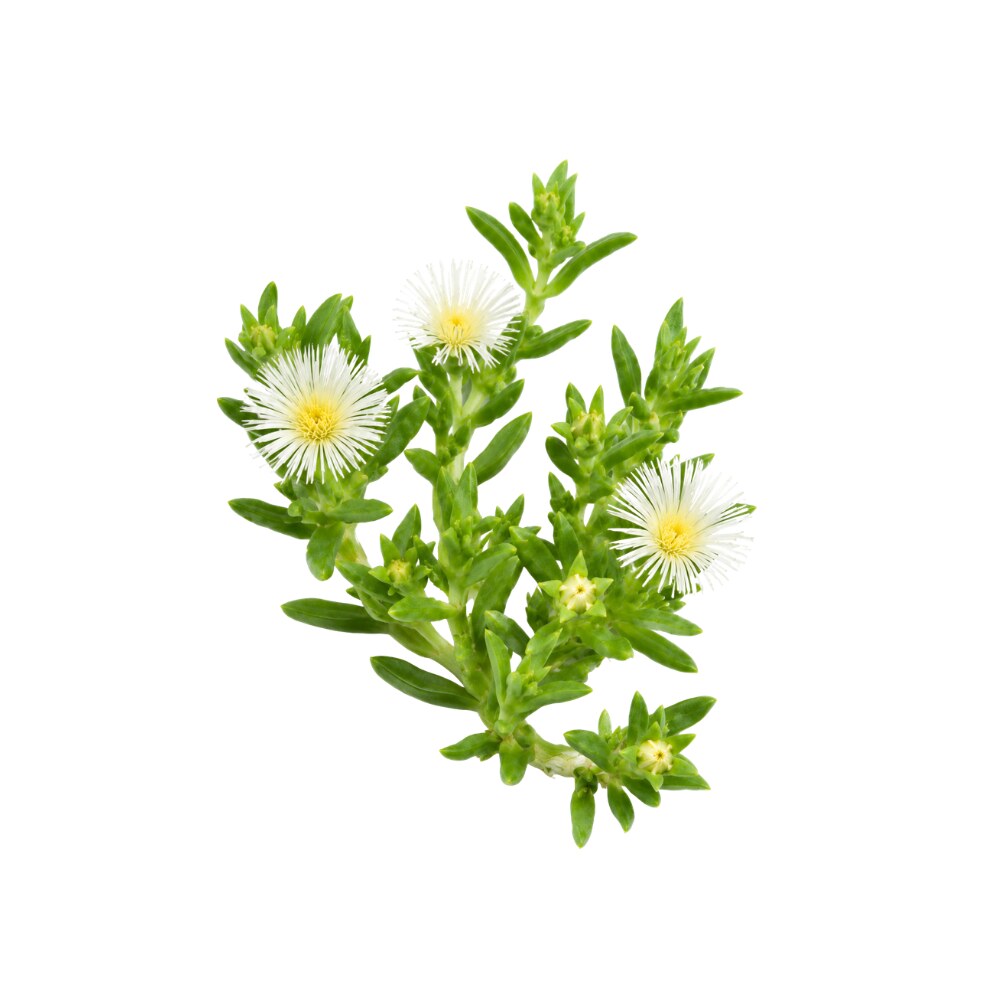
Kanna is a low, creeping succulent of the southern-African vygie family — the same family as the ice plants — forming tangled mats of fleshy, curved green leaves that store water in swollen, glassy cells. Older stems turn woody and lie flat, and in season the plant opens pale, many-petalled, daisy-like flowers.
Its botanical name carries a useful field clue: Sceletium, “little skeleton,” describes what happens to the old leaves as they die back — the soft tissue vanishes and leaves behind a fine, translucent skeleton of leaf veins. The whole above-ground plant is the material used, traditionally crushed and fermented by Khoisan people into the chewable preparation known as kougoed.
Distribution
Kanna grows wild only in the dry interior of South Africa’s Cape — from Namaqualand through the Western Cape to the Eastern Cape — in open, sunny, stony Karoo semi-desert where rainfall can be as little as a hundred millimetres a year. It is assessed as of least concern, but heavy wild-harvesting for the supplement trade has become a real pressure, pushing growers toward cultivating it instead.
Growing Conditions
- Treat it as an arid-zone succulent: a very free-draining, gritty, sandy mix, watered sparingly with the soil allowed to dry between waterings to prevent rot.
- Give it the brightest position you can — full sun keeps growth compact and encourages flowering.
- Frost-tender: overwinter under cover or in a cool but frost-free spot (roughly USDA 9b–11).
- Propagates very easily from stem cuttings, which root readily along the creeping woody stems; it can also be raised from its fine seed.
- Full cultivation detail lives on the companion farm-wiki grow guide for Sceletium tortuosum (link to be added once that project’s public URL is confirmed).
Phytochemistry
The characteristic constituents of kanna are the mesembrine-type alkaloids. The signature compound is mesembrine — a serotonin-reuptake inhibitor — accompanied by mesembrenone (which also inhibits the enzyme PDE4), mesembrenol and Δ7-mesembrenone, along with the structurally distinct alkaloid tortuosamine. These actions on serotonin and PDE4 are thought to underlie the herb’s mood-lifting and cognitive effects.
Total alkaloid content of wild material is highly variable, reported between about 0.11% and 1.99% of dry weight, with roughly 1–1.5% a commonly cited typical range 1,2Reference 1Investigations of the phytochemical content of Sceletium tortuosum following the preparation of “Kougoed” by fermentation of plant materialReference 2The chemotypic variation of Sceletium tortuosum alkaloids and commercial product formulations. Critically, Sceletium tortuosum exists as distinct chemotypes dominated by different alkaloids — some plants are rich in mesembrine, others in mesembrenone or mesembrenol — and traditional fermentation (“kougoed”) further shifts the profile, so the proportion of any single alkaloid varies enormously between samples 1,2Reference 1Investigations of the phytochemical content of Sceletium tortuosum following the preparation of “Kougoed” by fermentation of plant materialReference 2The chemotypic variation of Sceletium tortuosum alkaloids and commercial product formulations.
Constituent Summary
Total alkaloids are % of dry weight; individual alkaloids vary by chemotype, geography and fermentation, so no fixed per-compound percentage applies (No Data where no reliable figure exists). † marks mesembrine as the signature alkaloid of the herb.
Alkaloid6 compounds5 with data
Safety & Pregnancy
Kanna is a low-risk, well-tolerated herb with low toxicity and no record of fatal overdose; the genuinely important cautions are about combining it with serotonergic, erectile-dysfunction or blood-pressure medication.
- Antidepressants (SSRIs, MAOIs). Kanna inhibits serotonin reuptake, so combining risks additive serotonergic effects — avoid.
- Erectile-dysfunction drugs. Shares their vasodilating mechanism; avoid, including within ~48 hours, to prevent prolonged erection and other effects.
- Blood-pressure medication. Vasodilation can compound these drugs and drop blood pressure too far.
- Snuffing & oxalates. Habitual insufflation damages the nasal passages, and kanna’s oxalate load can burden the kidneys in very large doses.
- Low toxicity. No fatal overdose and not physically addictive; overdose usually amounts to nausea and malaise.
Full safety & interactions detail
Kanna is a low-risk herb. It has low toxicity, no record of fatal overdose, and isn’t addictive in the physical sense — though, like anything that lifts mood, it can become a psychological crutch if used to paper over a problem rather than address it. Take too much and the worst you’re likely to get is nausea and malaise. The genuinely important cautions are about combining it with medication:
- Antidepressants (SSRIs, MAOIs): kanna inhibits serotonin reuptake just as these drugs do, so combining them risks additive serotonergic effects. Avoid.
- Erectile-dysfunction drugs (Viagra, Cialis, Levitra, etc.): kanna shares their vasodilating mechanism; stacking them raises the risk of side effects like dangerously prolonged erection. Avoid, including within ~48 hours of an ED drug.
- Blood-pressure medication: because kanna dilates blood vessels, it can compound these drugs and drop blood pressure too far, causing dizziness or fainting.
Common short-term side effects are mild — nausea, headache, fatigue, dizziness, brain fog, or muscle tension — and most likely during the “priming” of the first few sessions. Kanna also contains oxalates (up to ~5% of dry weight, similar to spinach or kale), which in very large doses could burden the kidneys; traditional fermentation reduces them. Snuffing kanna is best avoided as a habit, since repeated insufflation damages the nasal passages over time. Kanna is legal in most parts of the world.
Safety data in pregnancy is sparse, so kanna is best avoided during pregnancy. Lactation has likewise not been studied and is best treated as an avoid.
References
- Patnala, S., & Kanfer, I. (2009). Investigations of the phytochemical content of Sceletium tortuosum following the preparation of “Kougoed” by fermentation of plant material. Journal of Ethnopharmacology, 121(1), 86–91. (Identifies mesembrine-type alkaloid chemotypes and shows fermentation shifts the alkaloid profile.)
- Shikanga, E. A., Viljoen, A. M., Vermaak, I., & Combrinck, S. (2012). The chemotypic variation of Sceletium tortuosum alkaloids and commercial product formulations. Biochemical Systematics and Ecology, 44, 364–373. (Reports total alkaloid content of wild material varying ~0.11–1.99% of dry weight and quantifies individual mesembrine-type alkaloids including Δ7-mesembrenone.)
- Chiu, S., Gericke, N., Farina-Woodbury, M., Badmaev, V., Raheb, H., Terpstra, K., … & Goble, L. (2014). Proof-of-concept randomized controlled study of cognition effects of the proprietary extract Sceletium tortuosum (Zembrin) targeting phosphodiesterase-4 in cognitively healthy subjects: implications for Alzheimer’s dementia. Evidence-Based Complementary and Alternative Medicine, 2014, 682014.
- Terburg, D., Syal, S., Rosenberger, L. A., Heany, S., Phillips, N., Gericke, N., … & van Honk, J. (2013). Acute effects of Sceletium tortuosum (Zembrin), a dual 5-HT reuptake and PDE4 inhibitor, in the human amygdala and its connection to the hypothalamus. Neuropsychopharmacology, 38(13), 2708–2716.
- Harvey, A. L., Young, L. C., Viljoen, A. M., & Gericke, N. P. (2011). Pharmacological actions of the South African medicinal and functional food plant Sceletium tortuosum and its principal alkaloids. Journal of Ethnopharmacology, 137(3), 1124–1129.
- Kroeze, Y., Zhou, H., & Homberg, J. R. (2012). The genetics of selective serotonin reuptake inhibitors. Pharmacology & Therapeutics, 136(3), 375–400.