
Materia Medica
Kratom
Mitragyna speciosa
Kratom (Mitragyna speciosa) — a Southeast Asian coffee relative whose mitragynine alkaloids give dose-dependent stimulant, pain-relieving and sedative effects, shadowed by a real risk of dependence.
What Is Kratom?
Kratom (Mitragyna speciosa) is a tree native to Southeast Asia with a distinctive, dose-dependent effect profile: stimulating at low doses, and pain-relieving and sedating at higher ones.
As a member of the coffee family, it’s no surprise kratom was traditionally used to fight fatigue and work longer hours — but that’s only half the picture. Kratom is stimulating in lower doses and sedative in higher doses. It acts on the opioid system and interacts with neurotransmitters like serotonin, dopamine and noradrenaline, which is why the same leaf can energise one person and relax another depending on dose and strain.
This unusual combination of relaxing, pain-killing and stimulating effects gives kratom its range of uses: working longer hours, easing joint and muscle pain, and — most significantly — helping some people manage opioid withdrawal or step down from stronger pain medications. Those same opioid properties are also the source of its main risk: with regular use, kratom can cause tolerance, dependence and a genuine withdrawal syndrome of its own (see Safety, below).
What Is Kratom Used For?
Modern kratom use splits along dose, and it’s easiest to understand that way.
Lower doses (roughly 2.5–7 g) are stimulating and mildly mood-lifting — the traditional “herb of productivity” effect. Several kratom alkaloids act on adrenergic receptors, nudging up alertness, heart rate and energy; these effects can last around 4–8 hours.
Higher doses (upwards of ~8 g) shift toward sedation and pain relief as the opioid activity takes over. This sedating effect is less reliable than the stimulant one — some people hit side effects (see kratom wobble, under Safety) before they reach a calming dose — and it varies by strain.
The use that draws the most attention is opioid withdrawal and pain management. Kratom’s alkaloids are partial opioid agonists, so people use it to blunt withdrawal symptoms or to manage chronic pain with a lower ceiling of effect than drugs like morphine or oxycodone. The evidence here is genuine but uneven — a single controlled human trial supports acute pain relief, while the withdrawal use rests on survey and animal data (see Pharmacology & Research). Kratom’s opioid action also releases dopamine in the brain’s reward centre, producing the mild euphoria and mood lift many users describe, and some alkaloids add serotonergic activity — which is why kratom is often reached for during low moods or stressful stretches.
One older idea about kratom deserves a correction. Because kratom shares several alkaloids with cat’s claw (Uncaria tomentosa) — a plant known for immune effects — kratom has sometimes been described as immune-boosting or even anticancer. In reality those claims rest on studies of Uncaria, or on isolated kratom compounds in test tubes, not on kratom itself, and shouldn’t be read as established properties of the leaf.
Traditional Uses
Traditionally, the leaves were chewed fresh or brewed into a strong tea — delivering much lower doses than modern powders and extracts. In low doses the effect is stimulating, much like coffee or yerba maté, and most traditional use revolved around that: Southeast Asian labourers took kratom to fight fatigue and work longer through long, hot days, and some reports describe it being used to increase tolerance to working in the sun, its pain-dulling effect easing the aches of hard physical labour. Other traditional uses included treating diarrhoea, intestinal infections and muscle pain.
Kratom goes by many regional names — kakuam, ketum, biak-biak, ithang and thom among them — and across Thailand, Malaysia, Indonesia, Bali and Papua New Guinea the leaves were chewed, smoked, or brewed into a tea sweetened with honey or citrus.
A brief history
Kratom was a herb of everyday work long before it was studied. For centuries it helped Southeast Asian labourers push through long days, hunt for longer, and manage the pain of injury or infection. The Western world only took note in the 1800s, when a botanist travelling through Malaysia recorded it as a substitute for opium — which was already heavily restricted at the time.
Interest spread slowly through Europe and North America, but kratom never rivalled coffee as a stimulant or the pharmaceuticals as a painkiller. Only in the last decade or so — against the backdrop of the opioid-addiction crisis — has it become widely used in the West as an alternative to pain medication, often alongside CBD. Its legal history has been turbulent (see Legality, below): Thailand banned kratom in 1943 and only fully legalised it again in 2021, and it is now a significant agricultural export for the country.
Botany
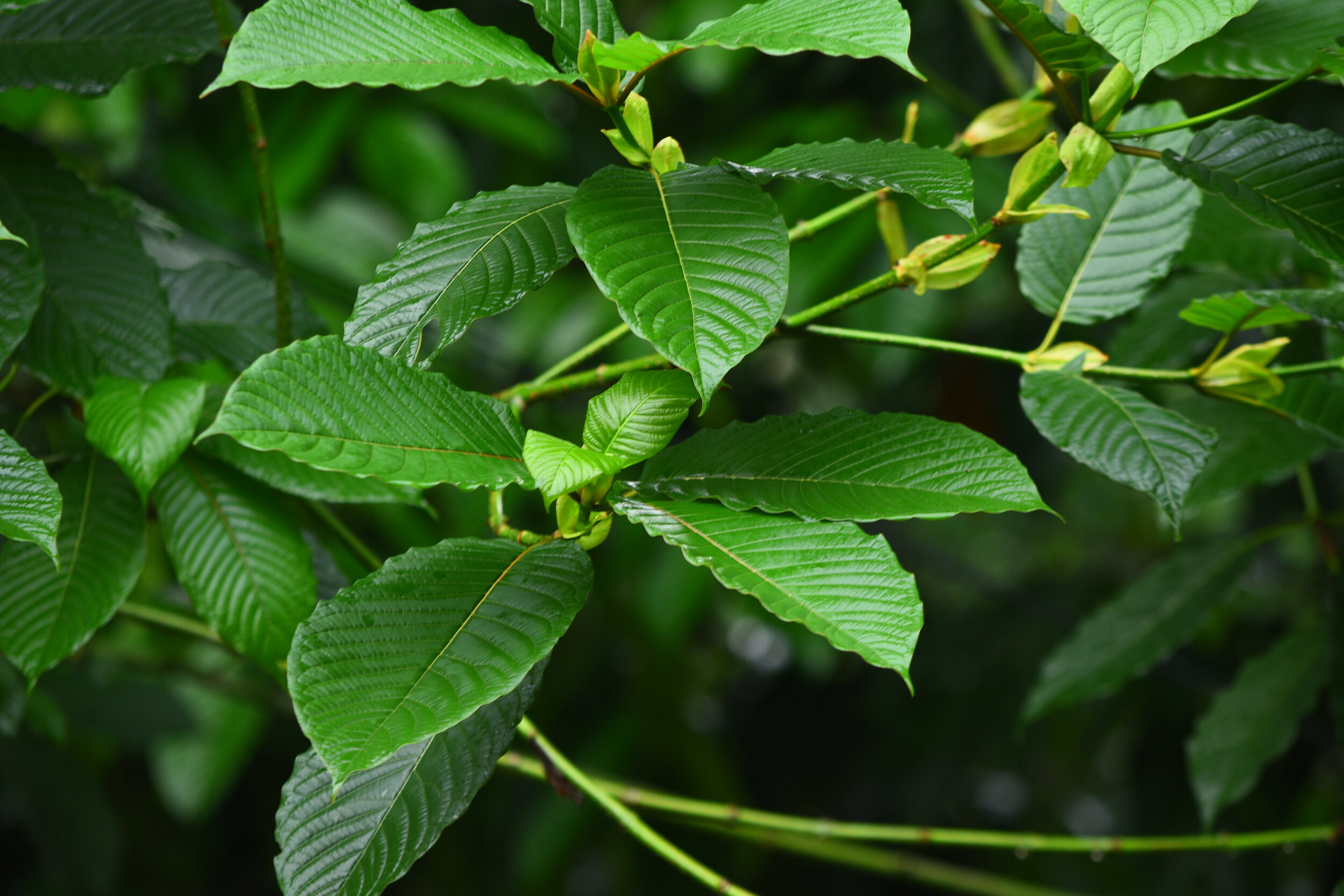
Kratom is a tall tropical tree, not a shrub or herb — a member of the coffee family that can reach the height of a forest canopy tree, with a straight grey trunk and dense, glossy, dark-green leaves. Look up into a flowering crown and you see the family resemblance to coffee and gardenia: the tiny flowers are bunched into round, deep-yellow, pom-pom heads at the ends of the branches.
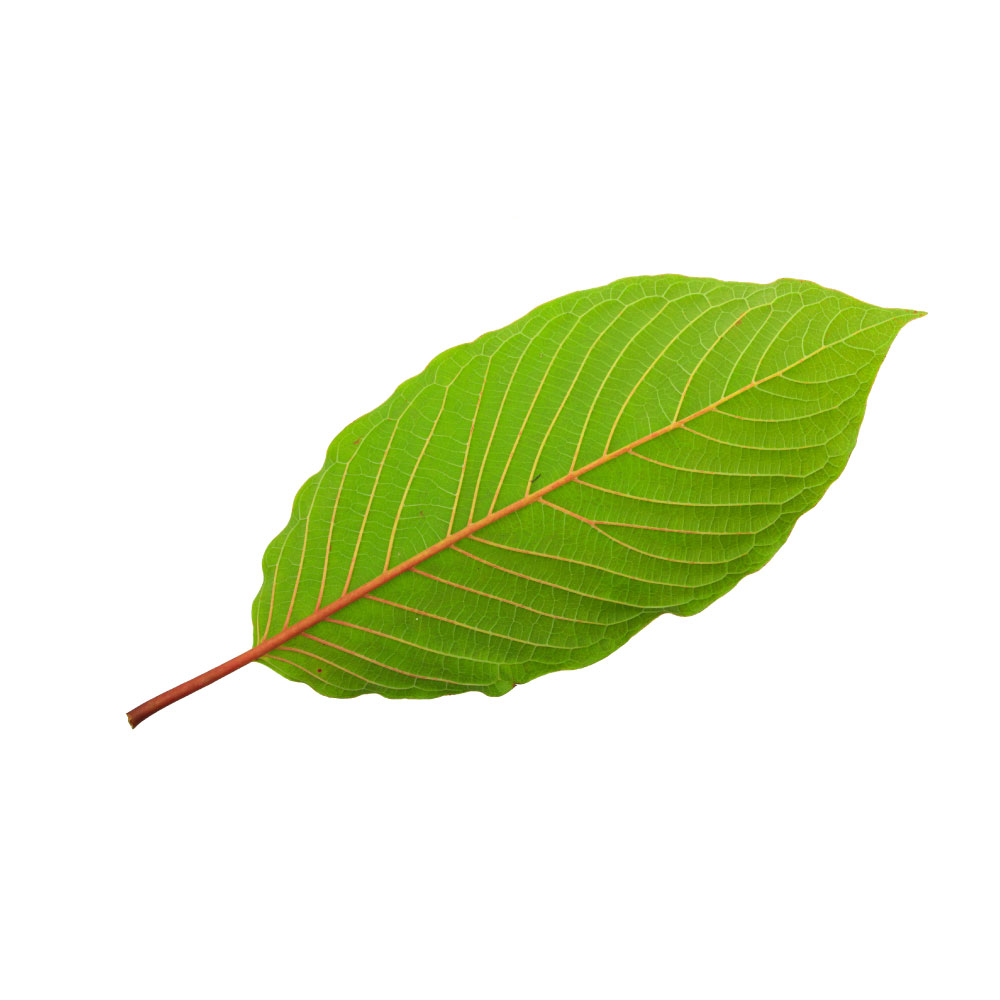
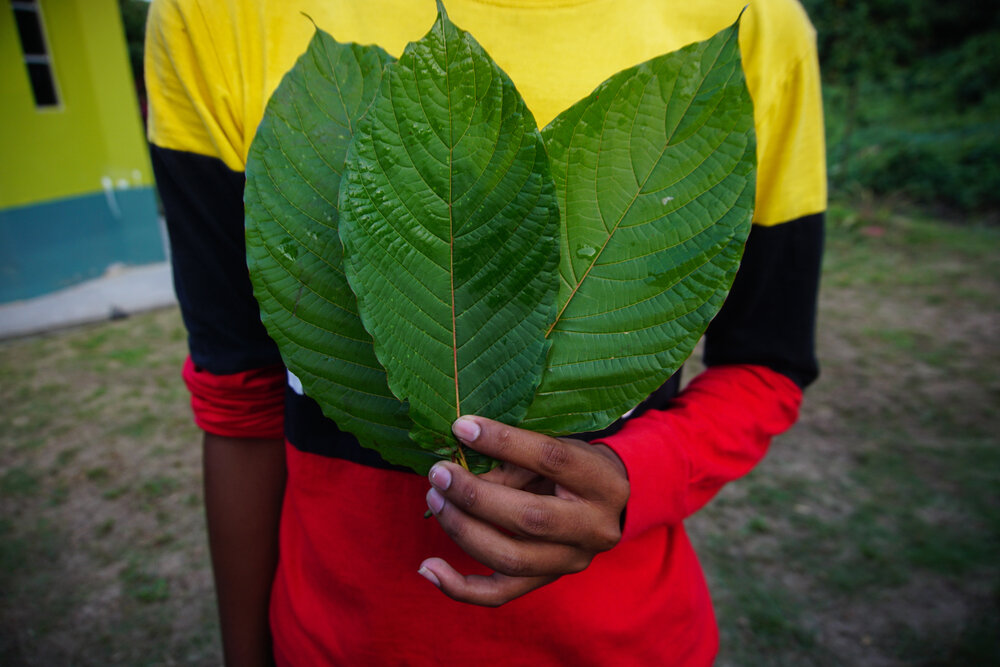
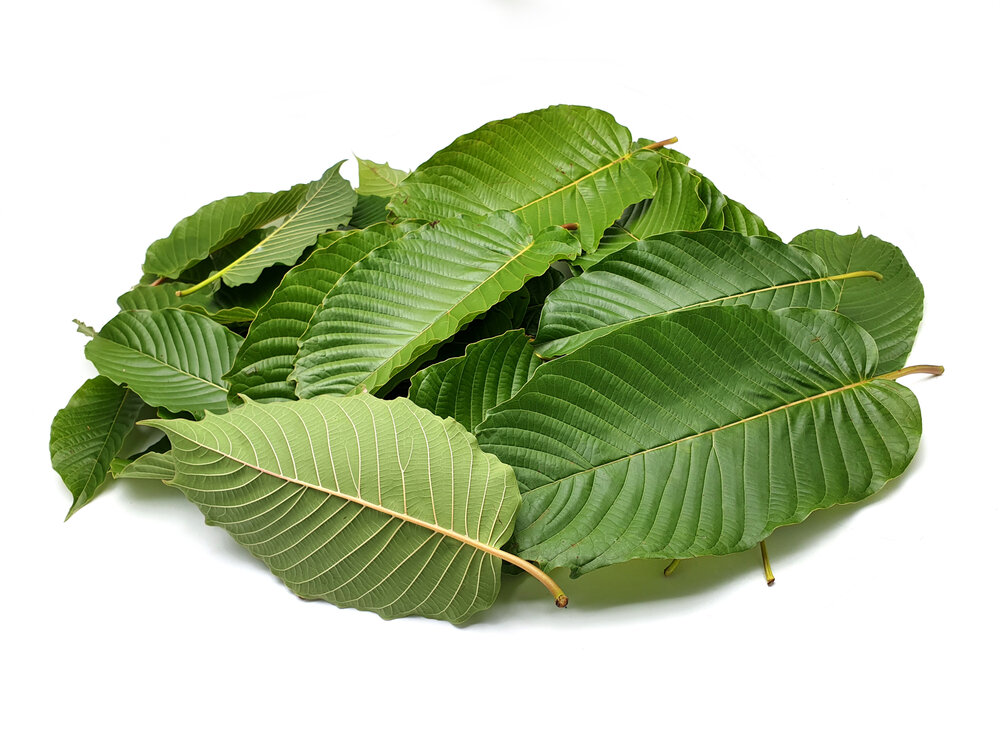
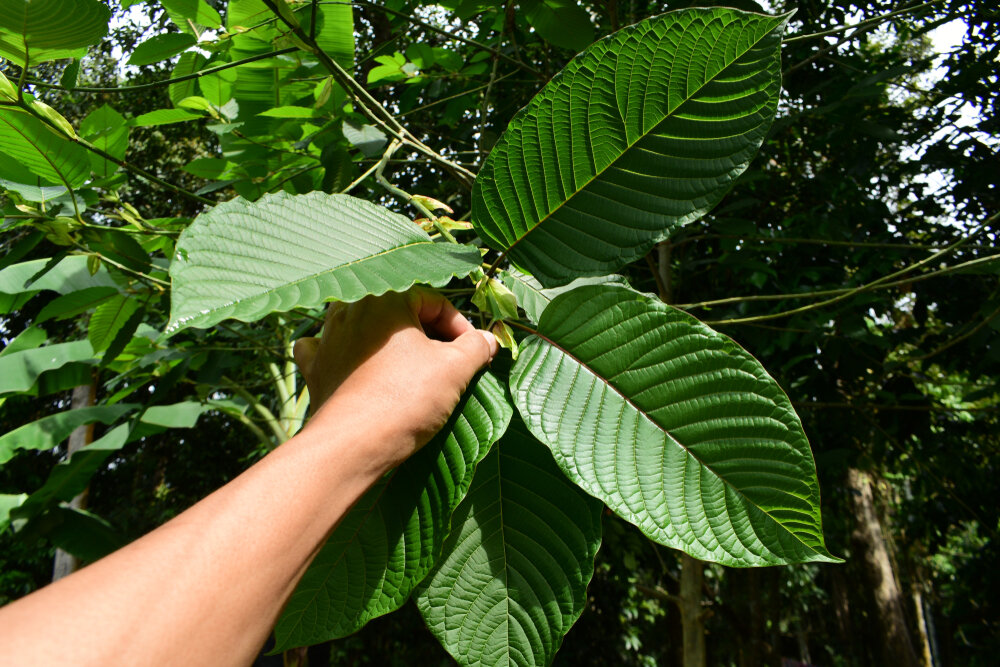
The leaf is the part used. Kratom leaves are large and broad, borne in opposite pairs, and it is the mature leaf — dried and often stripped of its central vein — that is harvested, sorted in trade by the colour of the leaf vein.
Distribution
Kratom is native to the wet tropics of Southeast Asia — Thailand, Malaysia, Indonesia and neighbouring countries out to New Guinea. It is a lowland tree that favours damp, rich ground, thriving especially in swampy riverside forest that floods periodically, and it is common enough across that range to be assessed as of least conservation concern.
Growing Conditions
- A tropical wetland tree: it needs consistent heat and high humidity and does not tolerate frost, so outside the humid tropics it survives only under glass.
- Prefers rich, moist, fertile soil and naturally thrives on riverbanks, floodplains and periodically flooded ground.
- Grows best in full sun at low elevations.
- Propagated mainly by seed (which is short-lived) and also from cuttings; slow to reach mature, harvestable size outside its native climate.
- Full cultivation detail lives on the companion farm-wiki grow guide for Mitragyna speciosa (link to be added once that project’s public URL is confirmed).
Phytochemistry
Kratom works mainly through its alkaloids — nitrogen-containing plant compounds that tend to have strong effects on the body because they can switch cell receptors on or off. (Caffeine is a familiar example: it blocks the adenosine receptors that would otherwise make us drowsy.) Kratom is exceptionally rich in them, with more than 40 alkaloids identified — the current count is around 45 — most of them monoterpene indole and oxindole alkaloids. The majority of kratom’s effects come down to activation of the opioid receptors (pain relief, sedation, euphoria) and the adrenergic receptors (stimulation), with smaller contributions from serotonergic, dopaminergic and other pathways. The leaf also carries antioxidant flavonoids such as epicatechin, better known from green tea and cacao.
These alkaloids together amount to roughly 0.5–1.5% of the dry leaf. The dominant one is mitragynine, which makes up about 66% of the alkaloid fraction in Thai material and has been measured between roughly 0.7% and 4.9% of dry leaf weight across seasons and provenances; it is a partial mu-opioid agonist with additional adrenergic and serotonergic activity, and accounts for most of kratom’s analgesic and stimulant–sedative profile 26Reference 26Seasonal and Geographic Variation in Alkaloid Content of Kratom (Mitragyna speciosa) from Thailand — analyticalView study →.
The far more potent mu-opioid agonist 7-hydroxymitragynine is only a minor component — generally under 2% of the alkaloids and often just 0.02–0.04% of the leaf — yet contributes disproportionately to opioid effects, and it is the constituent that carries the clearest abuse liability. The next most abundant alkaloids are the smooth-muscle relaxant paynantheine (~8% of alkaloids) and speciogynine (~7%); together with mitragynine and 7-hydroxymitragynine, these four are often cited as making up around 90% of the alkaloid content. A broad cast of supporting indole and oxindole alkaloids (many shared with cat’s claw) fills out the profile, and the leaf additionally carries antioxidant epicatechin and other flavonoids, plus triterpene quinovic acids and the sterol glycoside daucosterol 26,27Reference 26Seasonal and Geographic Variation in Alkaloid Content of Kratom (Mitragyna speciosa) from Thailand — analyticalView study →Reference 27Phytochemical characterization of the leaves of Mitragyna speciosa grown in the U.S.A. — analyticalView study →.
Notable alkaloids — what each one does
Kratom’s effects are the sum of many alkaloids, not just mitragynine. A few worth knowing — with the caveat that several are far better characterised in Uncaria (cat’s claw) than in kratom itself, and much of the per-compound data is preliminary or in-vitro:
- Mitragynine — the dominant alkaloid (~66% of the alkaloid fraction) and the most studied. A partial mu-opioid agonist with adrenergic and 5-HT2A serotonergic activity; antitussive, antidiarrhoeal, analgesic, and both stimulant and sedative depending on dose.
- 7-Hydroxymitragynine — a minor but far more potent mu-opioid agonist, formed partly by the body’s own metabolism of mitragynine. It drives much of the opioid effect and carries the clearest abuse liability — relevant now that concentrated “7-OH” products are sold.
- Paynantheine — second most abundant; a smooth-muscle relaxant with minor opioid and adrenergic activity.
- Speciogynine — third most abundant; a close relative of mitragynine with muscle-relaxant properties.
- 9-Hydroxycorynantheidine — a partial opioid agonist thought to modulate the effects of the stronger agonists.
- Corynantheidine — a mu-opioid antagonist, working against some of the other alkaloids.
- Ajmalicine — also found in yohimbe and Rauwolfia; an α-adrenergic antagonist used pharmaceutically for blood pressure, and a mild smooth-muscle relaxant and sedative.
- Mitraphylline, rhynchophylline and isorhynchophylline — oxindole alkaloids with reported vasodilating, blood-pressure-lowering and calcium-channel effects. Note these findings come mostly from Uncaria research, not kratom, and shouldn’t be assumed to apply to the leaf as consumed.
- Isomitraphylline and isopteropodine — oxindole alkaloids reported as immunostimulant in older work; the claim that they supply “most” of kratom’s immune activity is not established.
- Speciophylline — shared with cat’s claw; early cell-line work hints at antileukaemic activity, but this is in-vitro only.
Other compounds round out the leaf. Epicatechin is a flavonoid antioxidant abundant across the plant kingdom (green tea, cacao, grapes). Daucosterol is a sterol glycoside; claims about it inducing Th1 immune responses or regenerating neural stem cells come from studies in other plants and contexts, not kratom. Quinovic acids are triterpene saponins shared with cat’s claw, with antiviral activity reported in vitro only.
Constituent Summary
Alkaloid percentages are share of the total alkaloid fraction unless “of leaf” is stated; absolute leaf content varies several-fold with strain, season, altitude and harvest. Most minor alkaloids have no published per-compound figure (No Data).
Indole Alkaloid13 compounds5 with data
Oxindole Alkaloid9 compounds2 with data
Saponin3 compoundsno data
Sterol1 compoundno data
Flavanol1 compoundno data
Flavonoid1 compoundno data
Pharmacology & Research
Kratom (Mitragyna speciosa) has a moderately large but lopsided literature: decades of chemistry and animal pharmacology on its ~45 monoterpene indole and oxindole alkaloids, a rich body of observational and survey data from Southeast Asian and US users, and — unusually for a herb — a small number of controlled human studies. The centre of gravity is the opioid pharmacology of the dominant alkaloid mitragynine and its potent metabolite 7-hydroxymitragynine, which explains most of the analgesic and stimulant–sedative profile. The strongest single result is a randomised, placebo-controlled, double-blind trial showing kratom decoction raises pain tolerance in regular users 1Reference 1RCTKratom and Pain Tolerance: A Randomized, Placebo-Controlled, Double-Blind Study — randomised controlled trialView study →; beyond that, efficacy claims rest on user surveys, animal models and in-vitro work, and there is no controlled trial demonstrating efficacy for opioid withdrawal despite that being a leading real-world use. A structural caveat runs through everything: alkaloid content varies several-fold with strain, provenance and preparation, and highly concentrated Western extracts behave differently from the traditional chewed leaf or tea, so results rarely transfer cleanly between preparations 26Reference 26Seasonal and Geographic Variation in Alkaloid Content of Kratom (Mitragyna speciosa) from Thailand — analyticalView study →.
- Best-supported: acute analgesia (a human RCT plus large survey data and animal antinociception) 1,2,3Reference 1RCTKratom and Pain Tolerance: A Randomized, Placebo-Controlled, Double-Blind Study — randomised controlled trialView study →Reference 2ObservationalPatterns of Kratom use and health impact in the US — Results from an online survey — observationalView study →Reference 3AnimalAnti-inflammatory and antinociceptive effects of Mitragyna speciosa Korth methanolic extract — rat/mouse animal modelView study → and, more tentatively, opioid-withdrawal symptom relief (observational and animal evidence, no efficacy RCT) 7,8,10Reference 7ObservationalKratom (Mitragyna speciosa) dependence, withdrawal symptoms and craving in regular users — observational cohortView study →Reference 8ObservationalThe informal use of ketum (Mitragyna speciosa) for opioid withdrawal in northern peninsular Malaysia — observational surveyView study →Reference 10AnimalKratom Alkaloids, Natural and Semi-Synthetic, Show Less Physical Dependence and Ameliorate Opioid Withdrawal — mouse animal modelView study →.
- Emerging, worth watching: dual COX-2/5-LOX inhibition by the alkaloid fraction 14Reference 14In vitroDual anti-inflammatory activities of COX-2/5-LOX driven by kratom alkaloid extracts in LPS-induced RAW 264.7 cells — in vitroView study →, and a metabolism-driven “ceiling” on respiratory depression that may distinguish mitragynine from classical opioids 4,5Reference 4In vitroKruegel, A. C., et al. (2019). 7-Hydroxymitragynine Is an Active Metabolite of Mitragynine and a Key Mediator of Its Analgesic Effects — in vitro / mouse. ACS Cent Sci. https://pubmed.ncbi.nlm.nih.gov/31263758/View study →Reference 5AnimalThe respiratory depressant effects of mitragynine are limited by its conversion to 7-OH mitragynine — mouse in vivoView study →.
- Mechanistically thin: antioxidant, antimicrobial, anticancer and antidiabetic activity are in-vitro or constituent-level only — and the one in-vivo antidiabetic rat study was retracted in 2026 19,20Reference 19In vitroInhibition of α-Glucosidase and Pancreatic Lipase Properties of Mitragyna speciosa Leaves — in vitroView study →Reference 20AnimalRetraction notice to “Antidiabetic and antioxidant activities of Mitragyna speciosa leaf extract in type 2 diabetic rats” — retraction of a rat studyView study →.
- The caveat: dependence and withdrawal are real with sustained use 7Reference 7ObservationalKratom (Mitragyna speciosa) dependence, withdrawal symptoms and craving in regular users — observational cohortView study →, product alkaloid content is wildly inconsistent, and the more potent metabolite 7-hydroxymitragynine carries genuine abuse liability 12Reference 12AnimalAbuse liability and therapeutic potential of the Mitragyna speciosa alkaloids mitragynine and 7-hydroxymitragynine — rat self-administrationView study → — this is not a benign herb.
1. Analgesic
This is kratom’s best-supported effect and the only one with controlled human data. A randomised, placebo-controlled, double-blind study (n=26 regular male users, single inpatient day) found that a kratom decoction significantly increased cold-pressor pain tolerance, from a mean 11.2 s before dosing to 24.9 s one hour after, with no change on placebo 1Reference 1RCTKratom and Pain Tolerance: A Randomized, Placebo-Controlled, Double-Blind Study — randomised controlled trialView study →. This aligns with the largest user survey (n=8049), in which self-treatment of pain was the leading reason for use (68%) 2Reference 2ObservationalPatterns of Kratom use and health impact in the US — Results from an online survey — observationalView study →, and with animal work: a methanolic leaf extract (100–200 mg/kg) produced dose-dependent antinociception across writhing, hot-plate and formalin tests in rodents 3Reference 3AnimalAnti-inflammatory and antinociceptive effects of Mitragyna speciosa Korth methanolic extract — rat/mouse animal modelView study →. Mechanistically, mitragynine is a low-efficacy partial agonist at the µ-opioid receptor, and CYP3A-mediated conversion to 7-hydroxymitragynine — a much more potent µ-agonist — appears sufficient to explain most of the opioid-mediated analgesia in mice 4,6Reference 4In vitroKruegel, A. C., et al. (2019). 7-Hydroxymitragynine Is an Active Metabolite of Mitragynine and a Key Mediator of Its Analgesic Effects — in vitro / mouse. ACS Cent Sci. https://pubmed.ncbi.nlm.nih.gov/31263758/View study →Reference 6In vitroIn vitro and in vivo pharmacology of kratom — reviewView study →. In a chemotherapy-induced neuropathic-pain model, mitragynine’s benefit also depended partly on cannabinoid (CB1/CB2/TRPV1) mechanisms, suggesting more than one analgesic pathway 15Reference 15AnimalCannabinoid mechanisms contribute to the therapeutic efficacy of the kratom alkaloid mitragynine against neuropathic pain — mouse animal modelView study →.
Gap: The human evidence is a single small acute study in experienced users measuring experimental (not clinical) pain; there is no trial in pain patients, no standardised dose, and analgesic potency is inseparable from opioid-type risks.
2. Opioid-withdrawal aid
Using kratom to manage opioid withdrawal is one of its most common Western uses, but the evidence is observational rather than experimental. Malaysian field surveys document that users take ketum specifically to reduce heroin intake and blunt withdrawal, describing it as cheaper and less stigmatising than substitution therapy 8Reference 8ObservationalThe informal use of ketum (Mitragyna speciosa) for opioid withdrawal in northern peninsular Malaysia — observational surveyView study →, and a US case series first flagged online self-treatment of opioid withdrawal in 2007 9Reference 9ObservationalSelf-treatment of opioid withdrawal with a dietary supplement, Kratom — observationalView study →. Survey data likewise list withdrawal relief among primary motivations 2Reference 2ObservationalPatterns of Kratom use and health impact in the US — Results from an online survey — observationalView study →. Preclinically, combined kratom alkaloid extract and mitragynine produced significantly fewer naloxone-precipitated withdrawal signs than morphine and eased withdrawal in morphine-dependent mice 10Reference 10AnimalKratom Alkaloids, Natural and Semi-Synthetic, Show Less Physical Dependence and Ameliorate Opioid Withdrawal — mouse animal modelView study →, and mitragynine reduced heroin — but not methamphetamine — self-administration in rats while itself failing to maintain self-administration, indicating low intrinsic abuse liability 11,12Reference 11AnimalAbuse liability of mitragynine assessed with a self-administration procedure in rats — animal modelView study →Reference 12AnimalAbuse liability and therapeutic potential of the Mitragyna speciosa alkaloids mitragynine and 7-hydroxymitragynine — rat self-administrationView study →. The counterweight is that kratom itself causes dependence: a survey of 293 regular users found more than half met criteria for severe dependence, with a recognisable withdrawal syndrome (muscle pain, insomnia, watery eyes, irritability) 7Reference 7ObservationalKratom (Mitragyna speciosa) dependence, withdrawal symptoms and craving in regular users — observational cohortView study →.
Gap: No controlled trial has tested whether kratom actually relieves opioid withdrawal in humans; the signal is entirely self-report and animal data, and it must be weighed against kratom’s own documented dependence and withdrawal.
3. Stimulant / energy
Stimulation is the classic traditional use — Southeast Asian labourers chewed the leaf to work longer in heat — and it is dose-dependent, with low doses energising and higher doses becoming sedative 16Reference 16In vitroEvaluation of antioxidant and antibacterial activities of aqueous, methanolic and alkaloid extracts from Mitragyna speciosa leaves — in vitroView study →. Several alkaloids act on adrenergic receptors, providing a plausible catecholamine-like mechanism for increased alertness 6Reference 6In vitroIn vitro and in vivo pharmacology of kratom — reviewView study →. Human data are supportive but uncontrolled: energy and mood enhancement rank among the top self-reported effects in large surveys 2Reference 2ObservationalPatterns of Kratom use and health impact in the US — Results from an online survey — observationalView study →, and a placebo-controlled abuse-potential study in 116 healthy adults recorded modest, dose-related subjective drug effects that decreased on repeated dosing 13Reference 13RCTAssessment of Abuse Potential-Related Effects of Oral Dried Kratom Leaf Powder in Healthy Normal Participants Following Single and Multiple Daily Doses — randomised placebo-controlled trialView study →. No trial has isolated an ergogenic or alertness endpoint under controlled conditions.
Gap: The stimulant claim rests on strong traditional consistency and mechanism plus subjective human reports, but there is no objective, controlled measure of energy, endurance or vigilance.
4. Anti-inflammatory
Anti-inflammatory activity is documented preclinically. The same rodent study that showed antinociception also found that a methanolic leaf extract (100–200 mg/kg) suppressed carrageenan-induced paw edema and, at the higher dose, granuloma formation, with the authors attributing the effect to lipoxygenase and cyclooxygenase inhibition 3Reference 3AnimalAnti-inflammatory and antinociceptive effects of Mitragyna speciosa Korth methanolic extract — rat/mouse animal modelView study →. More recent in-vitro work is mechanistically specific: a kratom alkaloid extract (~46% mitragynine) produced dual inhibition of COX-2 and 5-LOX in LPS-stimulated macrophages at low concentrations, cutting ROS, nitric oxide, TNF-α and IL-6, whereas a crude leaf extract with ~5% mitragynine was inactive — implicating the concentrated alkaloid fraction specifically 14Reference 14In vitroDual anti-inflammatory activities of COX-2/5-LOX driven by kratom alkaloid extracts in LPS-induced RAW 264.7 cells — in vitroView study →.
Gap: All evidence is animal or cell-based; there is no human anti-inflammatory data, and the active concentrations sit close to cytotoxic levels in vitro.
5. Anxiolytic & antidepressant
Mood improvement is a frequently self-reported reason for kratom use 2Reference 2ObservationalPatterns of Kratom use and health impact in the US — Results from an online survey — observationalView study →, but controlled support is preclinical. In a diabetic-rat model, a hydro-alcoholic leaf extract (50 and 200 mg/kg for 5 weeks) reduced depression- and anxiety-like behaviour in forced-swim, open-field and elevated-plus-maze tests while lowering brain oxidative stress and pro-inflammatory cytokines 18Reference 18AnimalAnxiolytic and Antidepressant-like Effects of Mitragyna speciosa Extract in Diabetic Rats — rat animal modelView study →. The underlying pharmacology is consistent with mood effects — mitragynine has serotonergic (5-HT2A) activity alongside its opioid and adrenergic actions 6Reference 6In vitroIn vitro and in vivo pharmacology of kratom — reviewView study → — but this remains a mechanistic and animal-level inference.
Gap: No human trial for anxiety or depression exists; the animal model is confounded by diabetes, and forced-swim-type assays are themselves of debated predictive value.
6. Antioxidant
Antioxidant activity is real in vitro but modest and preparation-dependent. Leaf extracts scavenge DPPH radicals in proportion to their phenolic content, with the methanolic extract (rich in flavonoids, IC50 ≈ 37 µg/mL) outperforming aqueous and alkaloid extracts 16Reference 16In vitroEvaluation of antioxidant and antibacterial activities of aqueous, methanolic and alkaloid extracts from Mitragyna speciosa leaves — in vitroView study →. Isolated mitragynine shows only moderate radical-scavenging capacity (ABTS and DPPH assays) 17Reference 17In vitroAntioxidant value and antiproliferative efficacy of mitragynine and a silane reduced analogue — in vitroView study →. The leaf’s antioxidant capacity tracks its epicatechin and other flavonoid content rather than its alkaloids.
Gap: Purely in-vitro, phenolic-driven and extract-specific — there is no cellular or in-vivo antioxidant evidence, and the effect is unremarkable relative to common dietary polyphenol sources.
7. Antimicrobial
In-vitro screens show measurable but weak antibacterial activity. Aqueous, methanolic and alkaloid leaf extracts inhibited Salmonella typhi and Bacillus subtilis with minimum inhibitory concentrations of roughly 3–6 mg/mL — high concentrations — with the alkaloid extract the most active 16Reference 16In vitroEvaluation of antioxidant and antibacterial activities of aqueous, methanolic and alkaloid extracts from Mitragyna speciosa leaves — in vitroView study →. Fermented leaf preparations (with Lactobacillus rhamnosus) later showed antibacterial and antibiofilm activity against Staphylococcus aureus, MRSA and E. coli alongside antioxidant and anti-inflammatory readouts 21Reference 21In vitroAntibacterial, Antibiofilm, Antioxidant and Anti-Inflammatory Activities of Kratom Leaf Fermentation Supernatant — in vitroView study →.
Gap: Activity appears only at high concentrations in vitro, with no in-vivo confirmation and no evidence that oral kratom achieves antimicrobial exposures.
8. Anticancer
Evidence is limited to cell-line antiproliferation. Mitragynine and a silane-reduced analogue inhibited K562 leukaemia and HCT116 colorectal cancer cells with IC50 values comparable to reference cytotoxics, and showed some selectivity for cancer over normal cells 17Reference 17In vitroAntioxidant value and antiproliferative efficacy of mitragynine and a silane reduced analogue — in vitroView study →. These are cytotoxicity screens at high micromolar concentrations, not disease models.
Gap: No animal tumour models and no human data; cell-line cytotoxicity at high concentrations is a weak basis for any anticancer claim.
9. Antidiabetic
Traditional use for “sugar” and modern in-vitro work suggest a glucose-handling angle, but the strongest supporting study has been retracted. In vitro, mitragynine and kratom ethanol extracts inhibit α-glucosidase (more potently than acarbose in one assay) and, less strongly, pancreatic lipase — enzyme-level mechanisms relevant to post-meal glucose 19Reference 19In vitroInhibition of α-Glucosidase and Pancreatic Lipase Properties of Mitragyna speciosa Leaves — in vitroView study →. However, the only in-vivo study, an antidiabetic/antioxidant experiment in type-2 diabetic rats, was retracted by the journal in 2026 and cannot be relied upon 20Reference 20AnimalRetraction notice to “Antidiabetic and antioxidant activities of Mitragyna speciosa leaf extract in type 2 diabetic rats” — retraction of a rat studyView study →.
Gap: After the retraction, the evidence is in-vitro enzyme inhibition plus traditional use only — there is no trustworthy in-vivo or human data supporting a glucose-lowering effect.
Mechanisms
| Mechanism | Drives | Key compounds |
|---|---|---|
| µ-opioid partial agonism (low efficacy); CYP3A → active metabolite | analgesiaopioid-withdrawal reliefsedation | mitragynine, 7-hydroxymitragynine |
| Metabolic “ceiling” limiting respiratory depression | relative safety margin vs classical opioids | mitragynine |
| Adrenergic (catecholamine-like) + serotonergic (5-HT2A) activity | stimulationenergymood | mitragynine, indole alkaloids |
| COX / 5-LOX inhibition | anti-inflammatoryanalgesic | mitragynine, alkaloid fraction |
| CB1/CB2/TRPV1 involvement (neuropathic pain) | analgesia (neuropathic) | mitragynine |
| α-glucosidase / pancreatic lipase inhibition | antidiabetic (in vitro) | mitragynine |
| Phenolic radical scavenging | antioxidant | epicatechin, flavonoids |
Clinical trials
Kratom has a small but growing clinical footprint: a completed placebo-controlled pain-tolerance RCT and a completed clinical CYP drug-interaction study exist, several pharmacokinetic and abuse-potential trials are underway, and a distinct pharmaceutical programme is developing a mitragynine analogue rather than the whole herb 22Reference 22In vitroMitragynine/Corynantheidine Pseudoindoxyls as Opioid Analgesics with Mu Agonism and Delta Antagonism — in vitro / mouseView study →. Registry counts below are for interventional/observational studies of kratom or mitragynine.
| Completed | Planned | Terminated | Preclinical |
|---|---|---|---|
| 3 | 4 | 0 | ~hundreds |
Last checked: July 2026.
Dosage
The general range for kratom leaf powder is 2.5 to 15 grams, and the effect depends heavily on where you land in that range — lower doses stimulate, higher doses sedate. Concentrates (extracts, resins, “7-OH” products) are far stronger and less predictable, so always follow the product’s own directions rather than these whole-leaf figures.
Everyone responds a little differently, so if you’re new to kratom, start low. A sensible approach: begin with about 2 grams, wait 30 minutes, then add ~1 gram every 30 minutes until you reach the effect you’re after. If you start to feel kratom wobble (dizziness, nausea — see Safety), you’ve passed your limit for that strain; note the dose that worked and start there next time. A kitchen scale is worth using — measuring spoons only approximate, and potency varies batch to batch.
In research, kratom is almost always given as whole leaf or a decoction rather than titrated to a standardised marker dose, so the figures below are what studies actually used — not recommendations.
| Indication | Preparation | Dose | Est. dried-leaf equivalent | Source |
|---|---|---|---|---|
| Analgesic (pain tolerance) | Traditional decoction (whole-leaf brew) | Single decoction dose in regular users | Whole-leaf brew as consumed; not standardised | 1Reference 1RCTKratom and Pain Tolerance: A Randomized, Placebo-Controlled, Double-Blind Study — randomised controlled trialView study → |
| General use (survey) | Dried leaf powder | Commonly 1–3 g; adverse GI effects rise ≥5 g per dose | Whole leaf as reported | 2Reference 2ObservationalPatterns of Kratom use and health impact in the US — Results from an online survey — observationalView study → |
| Abuse-potential (subjective effects) | Dried leaf powder, capsules | 0.5–4 g leaf (≈6.7–53 mg mitragynine) | 0.5–4 g dried leaf | 13Reference 13RCTAssessment of Abuse Potential-Related Effects of Oral Dried Kratom Leaf Powder in Healthy Normal Participants Following Single and Multiple Daily Doses — randomised placebo-controlled trialView study → |
| Anti-inflammatory / antinociceptive | Methanolic leaf extract (rodent, i.p.) | 100–200 mg/kg | Not human-applicable (animal, i.p.) | 3Reference 3AnimalAnti-inflammatory and antinociceptive effects of Mitragyna speciosa Korth methanolic extract — rat/mouse animal modelView study → |
| CYP3A interaction probe | Kratom tea | 2 g leaf tea | 2 g dried leaf | 23Reference 23RCTClinical Assessment of the Drug Interaction Potential of the Psychotropic Natural Product Kratom — randomised clinical pharmacokinetic studyView study → |
Dried-leaf equivalents assume ~1.3% mitragynine (mid-range of the 0.7–4.9% reported), i.e. ~13 mg mitragynine per gram of leaf — an estimate for orientation, not a conversion factor or a recommendation. Animal intraperitoneal doses do not back-convert to oral human doses.
Traditional Dosage
| System | Preparation | Dose |
|---|---|---|
| Southeast Asian (stimulant, low dose) | Fresh leaves chewed or brewed as tea | ~2.5–7 g dried-equivalent |
| Southeast Asian (sedative / analgesic, high dose) | Dried leaf powder / decoction | >8 g (sidebar range 2.5–15 g) |
Preparation
There are two common ways to take kratom powder.
Kratom tea is the traditional route. Mix your dose (2.5–15 g) into about 500 mL–1 L of just-boiled water and stir until there are no clumps. Let it settle for a few minutes, then pour off the liquid, leaving the sediment behind. Honey or citrus helps with the bitter taste.
Toss & wash is the fastest. Measure the dose, tip the powder into your mouth a little at a time, and rinse it down with water, juice or milk. It isn’t pleasant — the powder is bitter and hard to swallow — but it needs no preparation. Take it in a few small mouthfuls rather than one large one.
Safety & Pregnancy
Kratom acts through the opioid system, so its main risk is dependence: regular use causes tolerance and a genuine withdrawal syndrome, with rarer liver injury and a clinically confirmed drug interaction on top. Serious harms cluster in concentrated extracts, adulterated products and polydrug use rather than in plain leaf.
- Dependence & withdrawal. Regular use causes tolerance and a real opioid-type withdrawal syndrome — the single most important risk.
- Liver injury. Cholestatic hepatotoxicity is uncommon but an established, biopsy-confirmed adverse effect.
- Not in pregnancy or breastfeeding. Opioid-active; neonatal withdrawal has been reported.
- Drug interactions. A confirmed CYP3A inhibitor — dangerous with CYP3A-metabolised drugs, other opioids or sedatives.
- Product quality. Concentrated extracts, “7-OH” products, adulteration and batch variability carry most of the real harm.
Full safety & interactions detail
Kratom acts through the µ-opioid system, and its main risks follow from that. Regular use causes tolerance, dependence and a real withdrawal syndrome — in a survey of 293 long-term users, the majority met criteria for severe dependence, with muscle pain, insomnia, watery eyes, irritability and restlessness on stopping 7Reference 7ObservationalKratom (Mitragyna speciosa) dependence, withdrawal symptoms and craving in regular users — observational cohortView study →. This is the single most important thing to understand about kratom: dependence is demonstrated, not merely theoretical.
Two further risks are easy to miss. Kratom is a clinically confirmed CYP3A inhibitor — a single 2 g dose of kratom tea raised exposure to the drug midazolam by about 40% — so combining it with medications heavily metabolised by CYP3A, or with other opioids and sedatives, can precipitate serious interactions 23Reference 23RCTClinical Assessment of the Drug Interaction Potential of the Psychotropic Natural Product Kratom — randomised clinical pharmacokinetic studyView study →. And cholestatic liver injury, while uncommon, is an established adverse effect, with biopsy-confirmed case reports and a prospective US cohort of 11 attributed cases that recovered after stopping 24,25Reference 24ObservationalLiver injury associated with kratom: Experience from the U.SView study →Reference 25Case reportKratom-Induced Cholestatic Liver Injury and Its Conservative Management — case reportView study →.
Finally, the product matters as much as the dose. Serious harms and fatalities cluster in high-concentration Western extracts, adulterated products and polydrug use rather than in traditional leaf, and commercial kratom has documented problems with heavy-metal and microbial contamination and several-fold batch-to-batch variability in alkaloid content 26Reference 26Seasonal and Geographic Variation in Alkaloid Content of Kratom (Mitragyna speciosa) from Thailand — analyticalView study →. Concentrated 7-hydroxymitragynine products are a particular concern — that minor metabolite carries the clearest abuse liability 12Reference 12AnimalAbuse liability and therapeutic potential of the Mitragyna speciosa alkaloids mitragynine and 7-hydroxymitragynine — rat self-administrationView study →. Kratom’s effects are also genuinely unpredictable from strain to strain, so speak with your doctor before using it if you take any medications or have a medical condition.
Kratom Side Effects
With responsible use, kratom’s side effects are usually manageable, and most are dose-related. Because the plant works through both adrenergic and opioid receptors, its side effects come in two flavours.
Adrenergic (stimulant-type):
- Nausea
- Dizziness
- Anxiety
- Stimulation
- Insomnia
- Dry mouth
- Headaches
- Irritability
- Sweating
- Diarrhea
- Increased urination
- Rapid heartbeat
Opioid (sedative-type):
- Sedation
- Lethargy
- Nausea or vomiting
- Dizziness
- Itchy nose
- Euphoria
- Constipation
- Increased urination
What Is the “Kratom Wobble”?
So-called kratom wobble is the most common side effect of high doses. It causes dizziness and loss of coordination and can make users feel quite unwell.
Kratom wobble has three main symptoms:
- Blurry vision
- Dizziness
- Nausea / vomiting
These effects are more common with some strains than others. If you experience wobble, the first thing to do is relax — panicking only amplifies it. Find somewhere comfortable to sit or lie down; the effects usually pass within a few minutes but can last up to a few hours, and many people find ginger tea or warm water helps. Wobble is a sign you’ve hit your dose limit for that strain, so reduce the dose next time, or switch to a strain less prone to causing it.
Is Kratom Dangerous?
Almost anything is dangerous in excess, and kratom is no exception — but the risk has often been both over- and under-stated. Whole leaf, taken sensibly, has a fairly wide margin: an old (1972) study found no deaths in animals even at very high doses of mitragynine, and in practice the wobble above tends to stop people well before they can take a truly dangerous amount of leaf. That’s the kernel of truth in the “kratom is basically safe” claim.
But it holds only for whole leaf used on its own. The serious harms and deaths that do occur are concentrated in concentrated extracts, adulterated products, and combinations with other drugs — exactly the situations where kratom’s self-limiting wobble no longer protects you. Treat kratom with respect: stick to sensible doses of plain leaf, don’t combine it with other opioids, sedatives or alcohol, and be especially cautious with extracts and “7-OH” products.
Is Kratom Addictive?
Yes — and this is the risk to take most seriously. Kratom is an opioid agonist, and with regular use it produces genuine dependence and a withdrawal syndrome, as the survey data above make clear 7Reference 7ObservationalKratom (Mitragyna speciosa) dependence, withdrawal symptoms and craving in regular users — observational cohortView study →. It’s true that kratom’s dependence tends to be milder than that of pharmaceutical opioids like oxycodone or heroin — its many alkaloids act on multiple pathways, giving a more “rounded” profile, and you can’t easily push whole leaf to a strong high before wobble sets in. Short-term, low-dose or occasional use is much less likely to lead to dependence, and some people even use kratom to step down off stronger opioids.
But “milder than heroin” is not “safe.” Daily, heavy or long-term use is the pattern that leads to dependence, and concentrated 7-hydroxymitragynine products behave much more like classical opioids 12Reference 12AnimalAbuse liability and therapeutic potential of the Mitragyna speciosa alkaloids mitragynine and 7-hydroxymitragynine — rat self-administrationView study →. If you have a history of addiction — especially to opioids — talk to your doctor before using kratom.
Avoid in pregnancy and while breastfeeding. Kratom is an opioid-active substance; neonatal opioid withdrawal syndrome has been reported in infants of mothers who used kratom during pregnancy, and no controlled safety data exist for pregnancy or breastfeeding. Given documented dependence potential and the transfer of opioid-active alkaloids across the placenta and into breast milk, kratom should not be used while pregnant or nursing.
Kratom Strains
Kratom is sold in a confusing variety of “strains,” usually named by vein colour (red, green, white) and often a place of origin (Bali, Maeng Da, Borneo, and so on). The vein colour is the more useful signal: it tracks roughly with how the leaf was harvested and processed, and both vendors and users associate each colour with a general effect profile.
One caveat worth keeping in mind: the popular idea that vein colour maps cleanly onto specific alkaloids — for example, that red veins are “rich in 7-hydroxymitragynine” — is an oversimplification. Fresh leaf actually contains very little 7-OH; most of it forms through oxidation during drying and processing, and the measured alkaloid differences between colours are smaller and less consistent than the marketing suggests. Treat strain effects as rough tendencies, not guarantees.
- Red vein — the most sedating, and the usual choice for pain and relaxation.
- Green vein — a middle ground: mildly stimulating and mildly calming, often described as balanced for mood, focus and pain.
- White vein — the most stimulating and mood-lifting, used more like coffee for alertness and focus; generally the subtlest of the three.

Forms of Kratom
Kratom comes in several forms, each with trade-offs.
Powder is dried, ground leaf — the most versatile and cost-effective form, and the closest to traditional use. You can brew it, capsule it, or toss-and-wash it. The downsides: it tastes strongly bitter, needs a fairly large dose, and takes some preparation.
Capsules are powder pre-packed into capsules. Convenient, discreet and consistently dosed, and a good option for beginners — but pricier than loose powder, you may need several to feel an effect, and not every strain is sold this way.
Tinctures & glycerites are liquid extracts made by soaking the leaf in alcohol or glycerine. Convenient, long-lasting, easy to dose, and faster-acting if held under the tongue — but more expensive, and some alkaloids are lost in extraction.
Resin & concentrated extracts pack the alkaloids into a much stronger product. A little goes a long way, which is exactly the problem: it’s easy to take too much, and concentrated extracts (including “7-OH” products) carry more of kratom’s real risk than whole leaf does. Use with genuine caution, if at all.
Legality
Kratom’s legal status is a patchwork, and it changes often. The summary below is current as of July 2026 — laws shift frequently, so always verify the rules where you live before buying or carrying kratom.
United States — Kratom is legal at the federal level (it is not a controlled substance). It is banned in a handful of states — Alabama, Arkansas, Connecticut, Indiana, Kansas, Louisiana, Tennessee, Vermont and Wisconsin — and in some counties and cities elsewhere, and California restricts commercial sale. More than thirty states have instead adopted a Kratom Consumer Protection Act (KCPA), which keeps kratom legal while adding age limits (usually 21+), labelling standards, alkaloid limits, and bans on adulterated or synthetic 7-OH products. The map is actively moving in both directions — Rhode Island reversed its long-standing ban in 2026, while other states, including Kansas and Tennessee, enacted new bans that took effect the same year.
Europe — Mixed. Some countries permit kratom (for example Germany and the Netherlands), while others ban or heavily restrict it (including the UK, Ireland, Sweden, Denmark, Finland, Poland, Lithuania, Latvia, Romania and Italy). Rules and enforcement vary widely.
Asia & the Pacific — Kratom is native to Southeast Asia but has been restricted across much of the region. Thailand, after a 78-year ban dating to 1943, fully legalised kratom in 2021 and now treats it as a traditional herb and export crop. It remains illegal or tightly controlled in several neighbouring and regional countries, including Malaysia, Singapore, South Korea, Japan, Myanmar, Vietnam and Australia.
References
- Vicknasingam, B., et al. (2020). Kratom and Pain Tolerance: A Randomized, Placebo-Controlled, Double-Blind Study — randomised controlled trial. Yale J Biol Med. https://pubmed.ncbi.nlm.nih.gov/32607084/
- Grundmann, O. (2017). Patterns of Kratom use and health impact in the US — Results from an online survey — observational. Drug Alcohol Depend. https://pubmed.ncbi.nlm.nih.gov/28521200/
- Shaik Mossadeq, W. M., et al. (2009). Anti-inflammatory and antinociceptive effects of Mitragyna speciosa Korth methanolic extract — rat/mouse animal model. Med Princ Pract. https://pubmed.ncbi.nlm.nih.gov/19648761/
- Kruegel, A. C., et al. (2019). 7-Hydroxymitragynine Is an Active Metabolite of Mitragynine and a Key Mediator of Its Analgesic Effects — in vitro / mouse. ACS Cent Sci. https://pubmed.ncbi.nlm.nih.gov/31263758/
- Hill, R., et al. (2022). The respiratory depressant effects of mitragynine are limited by its conversion to 7-OH mitragynine — mouse in vivo. Br J Pharmacol. https://pubmed.ncbi.nlm.nih.gov/35297034/
- Hiranita, T., et al. (2022). In vitro and in vivo pharmacology of kratom — review. Adv Pharmacol. https://pubmed.ncbi.nlm.nih.gov/35341571/
- Singh, D., et al. (2014). Kratom (Mitragyna speciosa) dependence, withdrawal symptoms and craving in regular users — observational cohort. Drug Alcohol Depend. https://pubmed.ncbi.nlm.nih.gov/24698080/
- Vicknasingam, B., et al. (2010). The informal use of ketum (Mitragyna speciosa) for opioid withdrawal in northern peninsular Malaysia — observational survey. Int J Drug Policy. https://pubmed.ncbi.nlm.nih.gov/20092998/
- Boyer, E. W., et al. (2007). Self-treatment of opioid withdrawal with a dietary supplement, Kratom — observational. Am J Addict. https://pubmed.ncbi.nlm.nih.gov/17882605/
- Wilson, L. L., et al. (2021). Kratom Alkaloids, Natural and Semi-Synthetic, Show Less Physical Dependence and Ameliorate Opioid Withdrawal — mouse animal model. Cell Mol Neurobiol. https://pubmed.ncbi.nlm.nih.gov/33433723/
- Yue, K., et al. (2018). Abuse liability of mitragynine assessed with a self-administration procedure in rats — animal model. Psychopharmacology (Berl). https://pubmed.ncbi.nlm.nih.gov/30039246/
- Hemby, S. E., et al. (2019). Abuse liability and therapeutic potential of the Mitragyna speciosa alkaloids mitragynine and 7-hydroxymitragynine — rat self-administration. Addict Biol. https://pubmed.ncbi.nlm.nih.gov/29949228/
- Coe, M., et al. (2026). Assessment of Abuse Potential-Related Effects of Oral Dried Kratom Leaf Powder in Healthy Normal Participants Following Single and Multiple Daily Doses — randomised placebo-controlled trial. Drug Test Anal. https://pubmed.ncbi.nlm.nih.gov/42144893/
- Rahmawati, S. I., et al. (2024). Dual anti-inflammatory activities of COX-2/5-LOX driven by kratom alkaloid extracts in LPS-induced RAW 264.7 cells — in vitro. Sci Rep. https://pubmed.ncbi.nlm.nih.gov/39578527/
- Farkas, D. J., et al. (2023). Cannabinoid mechanisms contribute to the therapeutic efficacy of the kratom alkaloid mitragynine against neuropathic pain — mouse animal model. Life Sci. https://pubmed.ncbi.nlm.nih.gov/37392779/
- Parthasarathy, S., et al. (2009). Evaluation of antioxidant and antibacterial activities of aqueous, methanolic and alkaloid extracts from Mitragyna speciosa leaves — in vitro. Molecules. https://pubmed.ncbi.nlm.nih.gov/19924042/
- Goh, T. B., et al. (2014). Antioxidant value and antiproliferative efficacy of mitragynine and a silane reduced analogue — in vitro. Asian Pac J Cancer Prev. https://pubmed.ncbi.nlm.nih.gov/25081682/
- Chen, L., et al. (2022). Anxiolytic and Antidepressant-like Effects of Mitragyna speciosa Extract in Diabetic Rats — rat animal model. Molecules. https://pubmed.ncbi.nlm.nih.gov/35408607/
- Limcharoen, T., et al. (2022). Inhibition of α-Glucosidase and Pancreatic Lipase Properties of Mitragyna speciosa Leaves — in vitro. Nutrients. https://pubmed.ncbi.nlm.nih.gov/36235558/
- Zhang, P., et al. (2026). Retraction notice to “Antidiabetic and antioxidant activities of Mitragyna speciosa leaf extract in type 2 diabetic rats” — retraction of a rat study. Biomed Pharmacother. https://pubmed.ncbi.nlm.nih.gov/42014273/
- Sornsenee, P., et al. (2025). Antibacterial, Antibiofilm, Antioxidant and Anti-Inflammatory Activities of Kratom Leaf Fermentation Supernatant — in vitro. Probiotics Antimicrob Proteins. https://pubmed.ncbi.nlm.nih.gov/37713167/
- Váradi, A., et al. (2016). Mitragynine/Corynantheidine Pseudoindoxyls as Opioid Analgesics with Mu Agonism and Delta Antagonism — in vitro / mouse. J Med Chem. https://pubmed.ncbi.nlm.nih.gov/27556704/
- Tanna, R. S., et al. (2023). Clinical Assessment of the Drug Interaction Potential of the Psychotropic Natural Product Kratom — randomised clinical pharmacokinetic study. Clin Pharmacol Ther. https://pubmed.ncbi.nlm.nih.gov/36924284/
- Ahmad, J., et al. (2021). Liver injury associated with kratom: Experience from the U.S. Drug-Induced Liver Injury Network — observational cohort. Drug Alcohol Depend. https://pubmed.ncbi.nlm.nih.gov/33257199/
- Fernandes, C. T., et al. (2019). Kratom-Induced Cholestatic Liver Injury and Its Conservative Management — case report. J Investig Med High Impact Case Rep. https://pubmed.ncbi.nlm.nih.gov/30920318/
- Sengnon, N., et al. (2023). Seasonal and Geographic Variation in Alkaloid Content of Kratom (Mitragyna speciosa) from Thailand — analytical. Plants (Basel). https://pubmed.ncbi.nlm.nih.gov/36840297/
- León, F., et al. (2009). Phytochemical characterization of the leaves of Mitragyna speciosa grown in the U.S.A. — analytical. Nat Prod Commun. https://pubmed.ncbi.nlm.nih.gov/19731590/