
Materia Medica
Yarrow
Achillea millefolium
Yarrow (Achillea millefolium) — a versatile bitter and styptic used to stop bleeding, break fevers and support digestion and circulation.
What Is Yarrow?
Yarrow is one of the most important herbs in Western herbal medicine. It has a wide range of actions, some of which are broad enough to cover a range of seemingly unrelated conditions. The intensely bitter flavour of yarrow makes it hard to mask, but is also a source of its medicinal qualities.
Yarrow is used externally as a styptic. In WWII soldiers carried small sacks of powdered yarrow to place into gunshot wounds to stop the bleeding. In modern times, yarrow makes for a great emergency herb on hikes through the Rocky mountains of North America or by carrying some in a first aid pack when on the trail.
Internally yarrow is used for its bitter component, and to break a fever through its diaphoretic actions.
What Is Yarrow Used For?
Yarrow is used topically to treat wounds and stop bleeding through hemostatic chemicals contained in the leaves. It’s used on skin rashes and eruptions.
Internally, yarrow is useful for breaking fevers, inducing sweating, treating kidney disorders, stomach cramps and indigestion, enteritis, hyperglycemia, diabetes, metabolic syndrome, poor appetite, and infection of influenza.
Traditional Uses
Western Herbal Medicine
Traditionally, yarrow was used as a styptic and vulnerary, and was especially useful in times of war by the soldiers. Some of its common names reflect this use very well such as “Soldiers wound wort”, and “Knights milfoil”. The famous herbalist Gerard suggests that yarrow was used by Achilles to stanch the bleeding of his soldiers 35,12Reference 35YarrowView study →Reference 12In vitroComparative studies on phenolic composition, antioxidant, wound healing and cytotoxic activities of selected Achillea L. species growing in Turkey — [in vitro]View study →. This may be why the herb’s botanical name is Achillea millefolium. He also suggested its use for headaches, to stop nosebleeds, and for toothaches 36Reference 36The Complete Guide to Aromatherapy (2nd ed.).
Culpeper suggested it is “drying and binding” and suggested a poultice of yarrow for treating piles, and an ointment of the leaves for wounds 36Reference 36The Complete Guide to Aromatherapy (2nd ed.).
In the 17th century its leaves were used in salads despite its highly bitter taste 35Reference 35YarrowView study →.
A wash was used to prevent baldness and treat bleeding piles by making a strong decoction of the whole plant 35Reference 35YarrowView study →.
Traditional Chinese Medicine
Yarrow is considered to be cooling and drying. It stimulates the liver and regulates the flow of Qi. It’s generally used for inflammatory and digestive conditions and releasing stagnant Qi 36Reference 36The Complete Guide to Aromatherapy (2nd ed.).
Botany
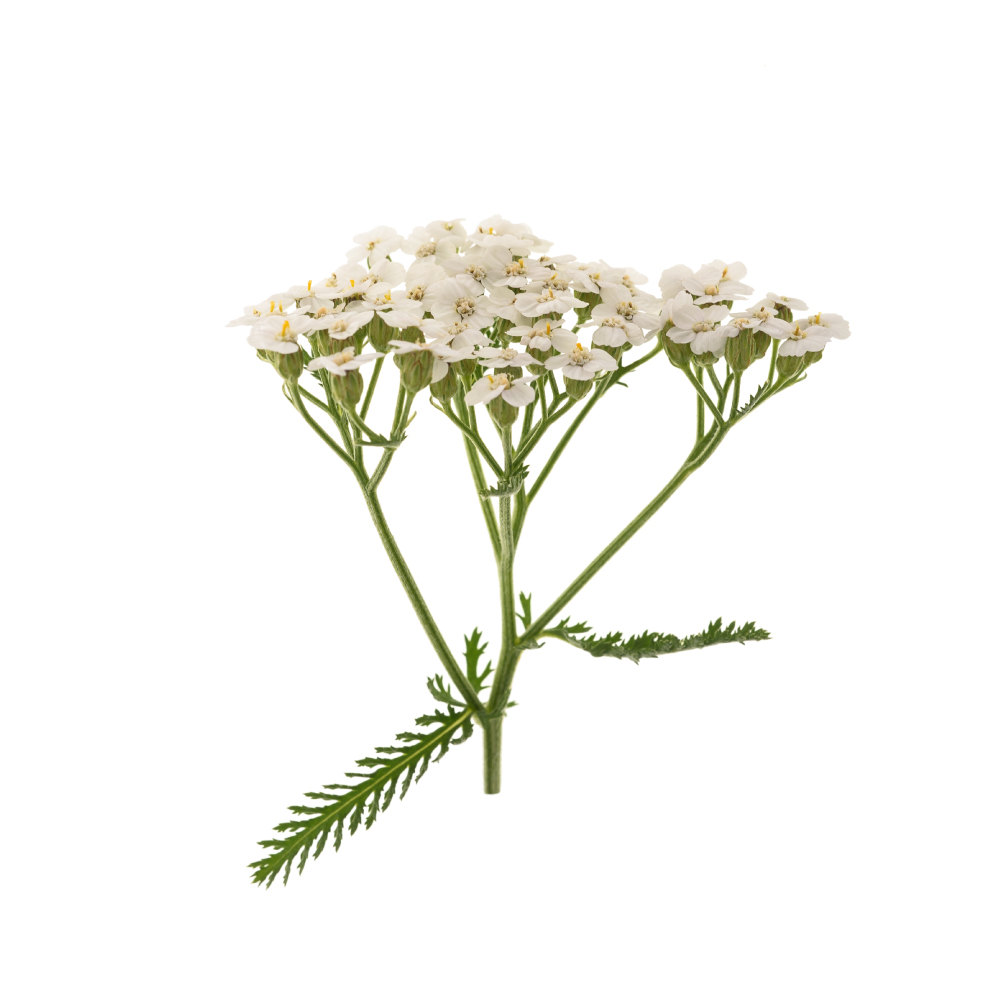
Common yarrow is a rhizomatous, spreading, upright-to-mat-forming perennial in the daisy family (Asteraceae) — one of roughly 1,900+ genera in the family, placed within the Anthemideae tribe alongside other aromatic relatives such as mugwort, wormwood, tarragon and Roman chamomile. It produces deeply-dissected, fern-like, aromatic foliage and tiny, long-lasting white flowers in dense, flattened, compound corymb-like clusters on stems typically 2–3 ft tall. The genus name honors Achilles, who Greek mythology credits with using the plant to treat his soldiers’ wounds; the species epithet millefolium (“thousand-leaved”) refers to the finely dissected foliage.
Botanically “yarrow” is an aggregate — Achillea millefolium sensu lato, a polyploid complex of closely related cytotypes rather than one uniform plant 31Reference 31In vitroYarrow (Achillea millefolium L. s.l.): pharmaceutical quality of commercial samples — [in vitro]View study →. This matters medicinally: the anti-inflammatory blue oil comes from proazulenes that distil into chamazulene, and only some cytotypes (notably the tetraploid and hexaploid ones) produce them — other populations yield an oil essentially free of azulene, so wild-collected yarrow varies widely in this active fraction 16,33Reference 16In vitroAchillea millefolium L. s.l. — is the anti-inflammatory activity mediated by protease inhibition? — [in vitro]View study →Reference 33ReviewBiological activities of yarrow species (Achillea spp.) — [review]View study →.
Distribution
Unusually for a widespread “weed,” common yarrow is genuinely native across Western Asia, Europe, and North America — not merely naturalized there. The Eurasian form was also separately introduced to North America in colonial times and has since spread by rhizome and self-seeding into substantial colonies along roadsides, fields, waste areas and lawns; Missouri Botanical Garden describes it as “considered by many to be an aggressive weed,” though it is not on the USDA federal noxious weed list. No formal conservation concern; it is common and widespread.
Growing Conditions
- Life cycle: rhizomatous herbaceous perennial, hardy USDA zones 3–9.
- Light: full sun.
- Water: dry to medium; drought-tolerant and wet-sensitive — good drainage matters more than fertility.
- Habit: spreads aggressively by rhizomes and self-seeding; divide clumps every 2–3 years to keep it in bounds.
- Full cultivation details live on the companion farm-wiki grow guide for Achillea millefolium (link to be added once that project’s public URL is confirmed).
Other Common Names
Yarrow, Nosebleed, Milfoil, Old Man’s Pepper, Soldier’s Woundwort, Knights Milfoil, Herbe Militaris, Thousand Weed, Bloodwort, Staunchweed, Devil’s Nettle, Devil’s Plaything, Yarroway, Plumajillo.
Harvesting, Collection & Preparation
Yarrow is easy to cultivate in temperate climates, and has a tendency to become a garden weed.
Yarrow can be collected, dried, and powdered to keep on hand for any cuts or wounds in which first aid treatment requires the stoppage of blood.
Pharmacology & Research
Yarrow (Achillea millefolium) has a moderately large but preclinically-weighted literature: dozens of in vitro and rodent studies map its antispasmodic, antioxidant, anti-inflammatory, hepatoprotective and cardiovascular activities to specific constituent classes, while human data are thin and mostly from small single-centre trials. A handful of randomised controlled trials exist — for episiotomy wound healing, primary dysmenorrhea, chemotherapy-induced oral mucositis and multiple sclerosis add-on therapy — but each is a single study, often testing a distinct preparation (ointment, teabag, distillate, aqueous extract), so their results do not readily generalise to yarrow tea or tincture as normally used 1,2,3,4Reference 1RCTAchillea millefolium is beneficial as an add-on therapy in patients with multiple sclerosis: a randomized placebo-controlled clinical trial — [randomised placebo-controlled]View study →Reference 2RCTEffect of Achillea millefolium on relief of primary dysmenorrhea: a double-blind randomized clinical trial — [double-blind randomised]View study →Reference 3RCTThe effect of Achillea millefolium and Hypericum perforatum ointments on episiotomy wound healing in primiparous women — [double-blind randomised]View study →Reference 4RCTEffect of adding the herb Achillea millefolium on mouthwash on chemotherapy induced oral mucositis in cancer patients: a double-blind randomized controlled trial — [double-blind randomised]View study →. The most consistent and mechanistically coherent signals are the smooth-muscle relaxant (antispasmodic) and antioxidant/anti-inflammatory activities, which are reproduced across multiple models and tie directly to the herb’s traditional digestive and anti-inflammatory uses 8,9,10,11,12,13,14,15,16Reference 8AnimalStudies on hepatoprotective, antispasmodic and calcium antagonist activities of the aqueous-methanol extract of Achillea millefolium — [mouse in vivo]View study →Reference 9AnimalAntispasmodic effects of yarrow (Achillea millefolium L.) extract in the isolated ileum of rat — [rat in vivo]View study →Reference 10In vitroThe effect of hydro-ethanolic extract of Achillea millefolium on muscarinic receptors of guinea pig tracheal smooth muscle — [in vitro]View study →Reference 11In vitroAntioxidant and antimicrobial activity of the essential oil and methanol extracts of Achillea millefolium subsp. millefolium Afan. — [in vitro]View study →Reference 12In vitroComparative studies on phenolic composition, antioxidant, wound healing and cytotoxic activities of selected Achillea L. species growing in Turkey — [in vitro]View study →Reference 13In vitroAchillolide A protects astrocytes against oxidative stress by reducing intracellular reactive oxygen species and interfering with cell signaling — [in vitro]View study →Reference 14In vitroPhenolic compounds from Achillea millefolium L. and their bioactivity — [in vitro]View study →Reference 15In vitroGuaianolides from Achillea millefolium L. and their anti-inflammatory activity — [in vitro]View study →Reference 16In vitroAchillea millefolium L. s.l. — is the anti-inflammatory activity mediated by protease inhibition? — [in vitro]View study →. The recurring caveat throughout is preparation and chemotype variance: yarrow’s essential-oil composition — including its proazulene content — varies enormously between samples, and a European Pharmacopoeia survey found only half of commercial material met quality standards 31Reference 31In vitroYarrow (Achillea millefolium L. s.l.): pharmaceutical quality of commercial samples — [in vitro]View study →.
- Best-supported: smooth-muscle relaxation via calcium-channel blockade 8,9Reference 8AnimalStudies on hepatoprotective, antispasmodic and calcium antagonist activities of the aqueous-methanol extract of Achillea millefolium — [mouse in vivo]View study →Reference 9AnimalAntispasmodic effects of yarrow (Achillea millefolium L.) extract in the isolated ileum of rat — [rat in vivo]View study →, broad antioxidant radical-scavenging from its flavonoid and phenolic-acid fraction 11,12,14Reference 11In vitroAntioxidant and antimicrobial activity of the essential oil and methanol extracts of Achillea millefolium subsp. millefolium Afan. — [in vitro]View study →Reference 12In vitroComparative studies on phenolic composition, antioxidant, wound healing and cytotoxic activities of selected Achillea L. species growing in Turkey — [in vitro]View study →Reference 14In vitroPhenolic compounds from Achillea millefolium L. and their bioactivity — [in vitro]View study →, and anti-inflammatory enzyme/pathway inhibition (NF-κB, COX-2, neutrophil elastase) 15,16Reference 15In vitroGuaianolides from Achillea millefolium L. and their anti-inflammatory activity — [in vitro]View study →Reference 16In vitroAchillea millefolium L. s.l. — is the anti-inflammatory activity mediated by protease inhibition? — [in vitro]View study →.
- Emerging, worth watching: a positive add-on RCT in multiple sclerosis 1Reference 1RCTAchillea millefolium is beneficial as an add-on therapy in patients with multiple sclerosis: a randomized placebo-controlled clinical trial — [randomised placebo-controlled]View study →, isolated hypotensive sesquiterpene lactones (leucodin, achillin) and the flavonoid artemetin 20,21Reference 20AnimalHypotensive mechanism of the extracts and artemetin isolated from Achillea millefolium L. in rats — [rat in vivo]View study →Reference 21AnimalAntihypertensive and vasorelaxant effect of leucodin and achillin isolated from Achillea millefolium through calcium channel blockade and NO production: in vivo, functional ex vivo and in silico studies — [rat in vivo]View study →, and pancreatic β-cell protection in diabetic rats 18Reference 18AnimalAchillea millefolium L. hydro-alcoholic extract protects pancreatic cells by down regulating IL-1β and iNOS gene expression in diabetic rats — [rat in vivo]View study →.
- Mechanistically thin: antimicrobial and antifungal claims rest on essential-oil assays whose potency depends on a chamazulene/monoterpene profile that drinking the herb as tea does not reliably deliver 11,27Reference 11In vitroAntioxidant and antimicrobial activity of the essential oil and methanol extracts of Achillea millefolium subsp. millefolium Afan. — [in vitro]View study →Reference 27In vitroAntioxidant and antimicrobial activities of the essential oil of Achillea millefolium L. grown in France — [in vitro]View study →.
- The caveat: almost all efficacy evidence is in vitro or rodent; human trials are single, small, and preparation-specific; and there is no standardised dose or extract across the literature 31,33Reference 31In vitroYarrow (Achillea millefolium L. s.l.): pharmaceutical quality of commercial samples — [in vitro]View study →Reference 33ReviewBiological activities of yarrow species (Achillea spp.) — [review]View study →.
1. Antispasmodic
Yarrow’s best-replicated activity is relaxation of smooth muscle. A crude aqueous-methanol extract relaxed spontaneous and K⁺-induced contractions in isolated rabbit jejunum and shifted calcium concentration-response curves rightward, behaving like the calcium-channel blocker verapamil 8Reference 8AnimalStudies on hepatoprotective, antispasmodic and calcium antagonist activities of the aqueous-methanol extract of Achillea millefolium — [mouse in vivo]View study →. A hydroalcoholic extract likewise relaxed acetylcholine- and KCl-induced contractions in rat ileum, an effect not blocked by propranolol or the nitric-oxide-synthase inhibitor L-NAME, pointing to a direct musculotropic (calcium-antagonist) mechanism 9Reference 9AnimalAntispasmodic effects of yarrow (Achillea millefolium L.) extract in the isolated ileum of rat — [rat in vivo]View study →. In guinea-pig trachea the extract acted partly through muscarinic-receptor inhibition 10Reference 10In vitroThe effect of hydro-ethanolic extract of Achillea millefolium on muscarinic receptors of guinea pig tracheal smooth muscle — [in vitro]View study →. The flavonoid fraction appears to carry much of this antispasmodic activity 32Reference 32ReviewAchillea millefolium L. s.l. revisited: recent findings confirm the traditional use — [review]View study →. All evidence is in vitro/ex vivo — no human trial of yarrow for spasm or colic exists.
Gap: No human data; the effective doses relaxed isolated tissue at concentrations not clearly reached by drinking the herb.
2. Wound healing
Yarrow’s flagship traditional use is as a styptic and vulnerary, and it has the herb’s clearest human evidence. In a double-blind trial of 140 primiparous women, an A. millefolium ointment reduced episiotomy pain, redness, oedema and ecchymosis versus placebo and non-intervention, though it did not change wound discharge or dehiscence 3Reference 3RCTThe effect of Achillea millefolium and Hypericum perforatum ointments on episiotomy wound healing in primiparous women — [double-blind randomised]View study →. In vitro, yarrow extracts promote fibroblast activity and wound closure and are rich in the antioxidant phenolics thought to support tissue repair 12Reference 12In vitroComparative studies on phenolic composition, antioxidant, wound healing and cytotoxic activities of selected Achillea L. species growing in Turkey — [in vitro]View study →. A separate placebo-controlled cosmetic trial found a 2% extract improved epidermal differentiation markers and the appearance of skin surface over two months 6Reference 6RCTSurface rejuvenating effect of Achillea millefolium extract — [randomised placebo-controlled]View study →. Most positive wound-healing work in the genus, however, is on other Achillea species, and the human trial tested a topical ointment rather than the powdered herb of battlefield tradition.
Gap: Only one A. millefolium wound RCT, and it combined the herb with a standard base; the classic haemostatic (“stop bleeding”) claim itself has not been tested in a controlled human setting.
3. Antioxidant
Yarrow is a consistent radical scavenger in vitro. Its essential oil strongly reduced the DPPH radical (IC₅₀ ≈ 1.6 µg/mL), scavenged hydroxyl radicals and inhibited lipid peroxidation 11Reference 11In vitroAntioxidant and antimicrobial activity of the essential oil and methanol extracts of Achillea millefolium subsp. millefolium Afan. — [in vitro]View study →. The activity tracks a phenolic fraction dominated by chlorogenic acid and flavonoids such as luteolin, apigenin, quercetin and rutin, all shown to scavenge free radicals and inhibit lipid peroxidation 12,14Reference 12In vitroComparative studies on phenolic composition, antioxidant, wound healing and cytotoxic activities of selected Achillea L. species growing in Turkey — [in vitro]View study →Reference 14In vitroPhenolic compounds from Achillea millefolium L. and their bioactivity — [in vitro]View study →. The sesquiterpene lactone achillolide A reduced reactive oxygen species and modulated MAPK signalling in cultured astrocytes and microglia, suggesting a cell-level protective role beyond simple scavenging 13Reference 13In vitroAchillolide A protects astrocytes against oxidative stress by reducing intracellular reactive oxygen species and interfering with cell signaling — [in vitro]View study →. Essential oil from French-grown material confirmed the antioxidant profile 27Reference 27In vitroAntioxidant and antimicrobial activities of the essential oil of Achillea millefolium L. grown in France — [in vitro]View study →. No human antioxidant-biomarker trial exists.
Gap: Entirely in vitro/cell-based; no evidence that oral yarrow raises antioxidant capacity or lowers oxidative markers in people.
4. Anti-inflammatory
The anti-inflammatory activity is mechanistically well-mapped but preclinical. Newly-described guaianolides from A. millefolium (millefolactons) inhibited 15-lipoxygenase and, for millefolacton C, suppressed nitric-oxide release, TNF-α, IL-6, PGE₂, iNOS, COX-2 and the NLRP3 inflammasome in LPS-stimulated microglial cells 15Reference 15In vitroGuaianolides from Achillea millefolium L. and their anti-inflammatory activity — [in vitro]View study →. Yarrow extract and its flavonoid fraction inhibited human neutrophil elastase (IC₅₀ ≈ 20 µg/mL), a protease central to inflammation, giving a second distinct mechanism 16Reference 16In vitroAchillea millefolium L. s.l. — is the anti-inflammatory activity mediated by protease inhibition? — [in vitro]View study →. The flavonoids and sesquiterpene lactones are the presumed active principles.
Gap: No human anti-inflammatory trial; the cytokine and enzyme effects come from isolated cells and rodent tissue at defined concentrations.
5. Hepatoprotective
Yarrow shows genuine liver protection in animal models, consistent with its long use for hepatobiliary complaints. Pre-treatment with the crude extract (150–600 mg/kg) cut mortality and blunted the rise in ALT and AST in mice given hepatotoxic D-galactosamine plus lipopolysaccharide, with histology confirming preserved liver architecture 8Reference 8AnimalStudies on hepatoprotective, antispasmodic and calcium antagonist activities of the aqueous-methanol extract of Achillea millefolium — [mouse in vivo]View study →. In streptozotocin-diabetic rats a hydroalcoholic extract lowered elevated liver enzymes alongside glucose and lipids, performing comparably to metformin on several markers 17Reference 17AnimalHydroalcoholic extract of Achillea millefolium improved blood glucose, liver enzymes and lipid profile compared to metformin in streptozotocin-induced diabetic rats — [rat in vivo]View study →. The effect plausibly reflects the combined antioxidant, anti-inflammatory and choleretic (bile-flow-stimulating) actions 23Reference 23AnimalCholeretic effects of yarrow (Achillea millefolium s.l.) in the isolated perfused rat liver — [rat in vivo]View study → rather than a single mechanism.
Gap: No human hepatoprotective trial; doses are high relative to typical human intake, and the models are acute chemical injury rather than chronic liver disease.
6. Antihypertensive & vasorelaxant
Several rodent studies converge on a blood-pressure-lowering effect. The crude extract produced a dose-dependent fall in arterial pressure in anaesthetised rats, with negative inotropic/chronotropic effects on atria and verapamil-like relaxation of aortic rings 19Reference 19AnimalBlood pressure lowering, cardiovascular inhibitory and bronchodilatory actions of Achillea millefolium — [rat in vivo]View study →. A hydroethanolic extract and its dichloromethane fractions lowered mean arterial pressure in rats, and the isolated flavonoid artemetin reproduced the hypotension, partly via angiotensin-converting-enzyme inhibition 20Reference 20AnimalHypotensive mechanism of the extracts and artemetin isolated from Achillea millefolium L. in rats — [rat in vivo]View study →. Two epimeric sesquiterpene lactones, leucodin and achillin, lowered pressure in spontaneously hypertensive rats through calcium-channel blockade and nitric-oxide-mediated vasorelaxation 21Reference 21AnimalAntihypertensive and vasorelaxant effect of leucodin and achillin isolated from Achillea millefolium through calcium channel blockade and NO production: in vivo, functional ex vivo and in silico studies — [rat in vivo]View study →. The signal is consistent and now traced to specific molecules, but remains entirely animal-level.
Gap: No human blood-pressure data; effective compounds are minor extract constituents whose oral bioavailability is unknown.
7. Primary dysmenorrhea
Yarrow has one positive human trial for menstrual pain. In a double-blind randomised study, female students with primary dysmenorrhea drank yarrow as a teabag preparation for three days across two cycles; the mean reduction in visual-analogue pain score was significantly greater than placebo at one and two months 2Reference 2RCTEffect of Achillea millefolium on relief of primary dysmenorrhea: a double-blind randomized clinical trial — [double-blind randomised]View study →. The effect is biologically plausible given yarrow’s antispasmodic (calcium-channel) 9Reference 9AnimalAntispasmodic effects of yarrow (Achillea millefolium L.) extract in the isolated ileum of rat — [rat in vivo]View study → and anti-inflammatory (prostaglandin/COX-2) 15Reference 15In vitroGuaianolides from Achillea millefolium L. and their anti-inflammatory activity — [in vitro]View study → activities, which target the uterine mechanisms of dysmenorrhoea. This is, however, a single small single-centre trial without objective endpoints.
Gap: One unreplicated trial; no measurement of prostaglandins or menstrual blood loss, and yarrow’s emmenagogue reputation was not addressed.
8. Antidiabetic
Antidiabetic activity is supported by rodent work only. A hydroalcoholic extract protected pancreatic β-cells in diabetic rats, an effect linked to down-regulation of IL-1β and iNOS gene expression — cytokines that drive β-cell destruction through the NF-κB inflammatory pathway 18Reference 18AnimalAchillea millefolium L. hydro-alcoholic extract protects pancreatic cells by down regulating IL-1β and iNOS gene expression in diabetic rats — [rat in vivo]View study →. In streptozotocin-diabetic rats the extract significantly lowered blood glucose, triglycerides and LDL-cholesterol while raising HDL, comparably to metformin on several endpoints 17Reference 17AnimalHydroalcoholic extract of Achillea millefolium improved blood glucose, liver enzymes and lipid profile compared to metformin in streptozotocin-induced diabetic rats — [rat in vivo]View study →. A registered human trial of a multi-herb “antidiabetic tea” containing yarrow exists, but its design cannot isolate yarrow’s contribution.
Gap: No controlled human data for yarrow alone; mechanism is inferred from gene-expression and glycaemic markers in chemically-induced diabetic rodents.
9. Anxiolytic & neuroprotective
Central-nervous-system effects are early-stage but intriguing. A hydroalcoholic extract produced diazepam-like anxiolytic behaviour in the elevated-plus-maze and marble-burying tests in mice, reversed by the benzodiazepine antagonist flumazenil and confirmed by binding to the GABAₐ/benzodiazepine site — a defined GABAergic mechanism 24Reference 24AnimalAnxiolytic-like effects of acute and chronic treatment with Achillea millefolium L. extract — [mouse in vivo]View study →. In a triple-blind add-on RCT, one-year A. millefolium aqueous extract (250 or 500 mg/day) reduced the annualised relapse rate and lesion volume in multiple-sclerosis patients versus placebo 1Reference 1RCTAchillea millefolium is beneficial as an add-on therapy in patients with multiple sclerosis: a randomized placebo-controlled clinical trial — [randomised placebo-controlled]View study →. An aqueous extract also reduced oxidative stress, apoptosis and memory impairment in the hippocampus of morphine-treated rats 25Reference 25AnimalNeuroprotective effect of Achillea millefolium aqueous extract against oxidative stress and apoptosis induced by chronic morphine in rat hippocampal CA1 neurons — [rat in vivo]View study →, echoing the astrocyte-protective action of achillolide A 13Reference 13In vitroAchillolide A protects astrocytes against oxidative stress by reducing intracellular reactive oxygen species and interfering with cell signaling — [in vitro]View study →.
Gap: The MS trial is single and small with broad secondary endpoints; the rest is rodent behavioural/biochemical data with no anxiety or cognition trial in people.
10. Anti-ulcer
One rigorous rodent study supports gastroprotection. In Wistar rats the aqueous extract protected gastric mucosa against ethanol- and indomethacin-induced acute lesions and healed acetic-acid-induced chronic ulcers (ED₅₀ ≈ 32 mg/kg), while a 28–90-day safety arm found only slight changes in liver weight, cholesterol and glucose 22Reference 22AnimalSafety and antiulcer efficacy studies of Achillea millefolium L. after chronic treatment in Wistar rats — [rat in vivo]View study →. This aligns with the herb’s traditional use for dyspepsia and gastritis and complements its choleretic and anti-inflammatory actions.
Gap: Single species-specific animal study; no human gastric or dyspepsia trial with objective endpoints.
11. Antimicrobial
Antimicrobial activity is real in vitro but preparation-limited. The essential oil inhibited Streptococcus pneumoniae, Clostridium perfringens, Candida albicans, Mycobacterium smegmatis and other organisms, while the water-soluble extract was largely inactive 11Reference 11In vitroAntioxidant and antimicrobial activity of the essential oil and methanol extracts of Achillea millefolium subsp. millefolium Afan. — [in vitro]View study →; French-grown oil showed a similar profile 27Reference 27In vitroAntioxidant and antimicrobial activities of the essential oil of Achillea millefolium L. grown in France — [in vitro]View study →. In a clinical trial, an aqueous-extract vaginal cream reduced vulvovaginal candidiasis symptoms but cleared Candida in fewer patients than clotrimazole, i.e. it was active but inferior to the standard antifungal 5Reference 5RCTThe effect of Achillea millefolium L. on vulvovaginal candidiasis compared with clotrimazole: a randomized controlled trial — [randomised controlled trial]View study →. Because the activity lives in the essential oil — whose composition and proazulene content vary widely between samples — a water infusion or tincture does not reliably deliver it.
Gap: Efficacy is tied to the volatile oil at concentrations tea/tincture may not reach; the one human antifungal trial showed inferiority to standard treatment.
Mechanisms
| Mechanism | Drives | Key compounds |
|---|---|---|
| Voltage-gated Ca²⁺ channel blockade | antispasmodicantihypertensive | artemetin, leucodin, achillin |
| NF-κB ↓, COX-2 ↓, iNOS ↓, NLRP3 ↓ | anti-inflammatoryhepatoprotectiveantidiabetic | luteolin, apigenin |
| Free-radical scavenging, lipid-peroxidation ↓ | antioxidanthepatoprotective | chlorogenic acid, quercetin, achillolide A |
| Human neutrophil elastase / 15-LOX inhibition | anti-inflammatory | flavonoid & dicaffeoylquinic-acid fractions |
| GABAₐ/benzodiazepine-site agonism | anxiolytic | hydroalcoholic-extract fraction (unresolved) |
| Bile-flow stimulation (choleresis) | digestive/hepatobiliary | dicaffeoylquinic acids, luteolin-7-O-glucuronide |
| Endothelial nitric-oxide release | vasorelaxant | leucodin, achillin |
Clinical trials
Yarrow’s single-herb randomised trials (dysmenorrhoea, episiotomy, oral mucositis, MS, candidiasis) were registered in the Iranian Registry of Clinical Trials rather than ClinicalTrials.gov; on ClinicalTrials.gov only two completed multi-herb studies name yarrow as an intervention (a type-2-diabetes herbal tea and a gingivitis mouthrinse), so no single-herb yarrow trial is registered there.
| Completed | Planned | Terminated | Preclinical |
|---|---|---|---|
| ~7(single-herb RCTs, various registries) | 0 | 0 | ~50+ |
Last checked: July 2026.
Phytochemistry
Yarrow’s most distinctive constituent is the deep-blue chamazulene, which is not present in the fresh plant but forms during steam distillation from the proazulene sesquiterpene lactone matricin (achillicin) — its presence separates the azulene-rich (usually polyploid) chemotypes from azulene-free ones. The rest of the essential oil is mostly oxygenated monoterpenes, led by camphor, sabinene, 1,8-cineole and α-pinene, alongside bitter sesquiterpene lactones such as achillolide A, and antioxidant flavonoids (apigenin, luteolin, quercetin) 35,12,36,37Reference 35YarrowView study →Reference 12In vitroComparative studies on phenolic composition, antioxidant, wound healing and cytotoxic activities of selected Achillea L. species growing in Turkey — [in vitro]View study →Reference 36The Complete Guide to Aromatherapy (2nd ed.)Reference 37A clinical guide to blending liquid herbs: Herbal formulations for the individual patient.
Constituent Summary
Volatile-oil figures are share of the distilled oil from one representative analysis; oil yield and especially chamazulene content vary enormously between samples (chamazulene reported anywhere from trace to ~44% of oil). Compounds marked † are azulene/proazulene chemotype markers 36Reference 36The Complete Guide to Aromatherapy (2nd ed.).
Monoterpene13 compounds13 with data
Sesquiterpene1 compound1 with data
Sesquiterpene lactone4 compounds2 with data
Flavonoid5 compounds1 with data
Phenolic acid2 compoundsno data
Across the genus Achillea, the broader phenolic profile reported includes quinic acid, malic acid, trans-aconitic acid, gallic acid, chlorogenic acid, protocatechuic acid, tannic acid, trans-caffeic acid, vanillin, p-coumaric acid, rosmarinic acid, rutin, hesperidin, hyperoside, 4-hydroxybenzoic acid, salicylic acid, myricetin, fisetin, coumarin, quercetin, naringenin, hesperetin, luteolin, kaempferol, apigenin, rhamnetin and chrysin 12Reference 12In vitroComparative studies on phenolic composition, antioxidant, wound healing and cytotoxic activities of selected Achillea L. species growing in Turkey — [in vitro]View study →.
Clinical Applications
Yarrow’s intensely bitter principles make it useful for any applications of a standard bitter, including indigestion, hepatobiliary stimulation, stimulating appetite, and treating a range of skin conditions.
Yarrow is also useful as a diaphoretic in the treatment of viral or bacterial infection to break a high fever. Traditionally it is reached for in fever and flu-like illness, chiefly via its diaphoretic (sweat-inducing) action rather than any demonstrated direct antiviral effect — the modern antimicrobial evidence is essential-oil antibacterial/antifungal work in vitro only 11,27Reference 11In vitroAntioxidant and antimicrobial activity of the essential oil and methanol extracts of Achillea millefolium subsp. millefolium Afan. — [in vitro]View study →Reference 27In vitroAntioxidant and antimicrobial activities of the essential oil of Achillea millefolium L. grown in France — [in vitro]View study →. It’s also a popular herb for muscle tightness and spasms for its antispasmodic activity 8,9Reference 8AnimalStudies on hepatoprotective, antispasmodic and calcium antagonist activities of the aqueous-methanol extract of Achillea millefolium — [mouse in vivo]View study →Reference 9AnimalAntispasmodic effects of yarrow (Achillea millefolium L.) extract in the isolated ileum of rat — [rat in vivo]View study →; a yarrow extract additionally showed peripheral antinociceptive (pain-relieving) activity in mice 26Reference 26AnimalAntinociceptive peripheral effect of Achillea millefolium L. and Artemisia vulgaris L. — [mouse in vivo]View study →.
Dosage
In research, yarrow has been given in several forms — aqueous extract, teabag infusion and various topical preparations — with no single standardised dose across trials; the doses below are the ones each study actually used.
| Indication | Preparation | Dose | Est. dried-herb equivalent | Source |
|---|---|---|---|---|
| Multiple sclerosis (add-on) | Aqueous extract, oral | 250–500 mg/day, 1 year | ~2.5–5 g dried herb/day (assumes extract ≈ 10% of herb weight; estimate only) | 1Reference 1RCTAchillea millefolium is beneficial as an add-on therapy in patients with multiple sclerosis: a randomized placebo-controlled clinical trial — [randomised placebo-controlled]View study → |
| Primary dysmenorrhea | Teabag infusion, oral | 1 teabag/day × 3 days, 2 cycles | ~1.5–2 g dried herb/day (typical teabag fill; estimate) | 2Reference 2RCTEffect of Achillea millefolium on relief of primary dysmenorrhea: a double-blind randomized clinical trial — [double-blind randomised]View study → |
| Episiotomy wound | Topical ointment | applied to perineum, days 1–14 | — (topical; no oral equivalent) | 3Reference 3RCTThe effect of Achillea millefolium and Hypericum perforatum ointments on episiotomy wound healing in primiparous women — [double-blind randomised]View study → |
| Oral mucositis | Distillate mouthwash | 15 mL gargle, 4×/day, 14 days | — (distillate, not weight-defined) | 4Reference 4RCTEffect of adding the herb Achillea millefolium on mouthwash on chemotherapy induced oral mucositis in cancer patients: a double-blind randomized controlled trial — [double-blind randomised]View study → |
| Vulvovaginal candidiasis | Aqueous-extract vaginal cream | 7 days | — (topical) | 5Reference 5RCTThe effect of Achillea millefolium L. on vulvovaginal candidiasis compared with clotrimazole: a randomized controlled trial — [randomised controlled trial]View study → |
| Skin rejuvenation | 2% topical extract | 2 months | — (topical) | 6Reference 6RCTSurface rejuvenating effect of Achillea millefolium extract — [randomised placebo-controlled]View study → |
Est. dried-herb equivalent is a rough guide on a stated assumption, not a conversion factor or recommendation. Trial extracts were not marker-standardised, so equivalents are order-of-magnitude only; topical preparations have no oral equivalent and are left ”—”.
Traditional Dosage
Whole-herb, tincture and decoction doses come from the Western herbal and TCM reference texts rather than the trials, and are not interchangeable with the research doses above.
| System | Preparation | Dose |
|---|---|---|
| Western herbal medicine | Liquid extract 1:2 | 15–40 mL/week |
| Western herbal medicine | Dried herb infusion | 2–4 g, three times daily |
| Western herbal medicine | Tincture 1:5 (45% ethanol) | 2–4 mL, three times daily |
| Traditional Chinese Medicine | Cooling/drying herb for Qi stagnation, inflammatory & digestive conditions | per practitioner |
Safety & Pregnancy
Yarrow is well tolerated short-term at customary doses; its most established risk is Asteraceae allergy, and it is traditionally avoided in pregnancy. Material quality varies widely between samples.
- Avoid in pregnancy. Traditional emmenagogue with demonstrated in vitro estrogenic activity.
- Asteraceae allergy. Sesquiterpene lactones can cause contact dermatitis and cross-react with ragweed, chamomile, feverfew and chrysanthemum.
- Chemotype & quality vary. Contains thujone; only about half of commercial material meets European Pharmacopoeia standards.
- Interactions unstudied. Theoretical additive effects with antihypertensive and sedative drugs (rodent-level only); no CYP450 data.
- Well tolerated short-term. Chronic rat dosing produced only minor changes with no major organ toxicity.
Full safety & interactions detail
Yarrow is generally well tolerated when used short-term at customary doses, and chronic dosing in rats produced only minor changes in liver weight and blood chemistry with no major organ toxicity 22Reference 22AnimalSafety and antiulcer efficacy studies of Achillea millefolium L. after chronic treatment in Wistar rats — [rat in vivo]View study →. Its most established risk is allergic: as an Asteraceae (Compositae) plant rich in sesquiterpene lactones, yarrow can cause allergic contact dermatitis and cross-reacts within the Compositae group, so people sensitive to ragweed, chamomile, feverfew or chrysanthemums should use it cautiously 30Reference 30ReviewFinal report on the safety assessment of Yarrow (Achillea millefolium) Extract — [review]View study →. Yarrow contains thujone and, in azulene-poor chemotypes, other monoterpenes whose content varies widely between samples, and only about half of commercial material meets European Pharmacopoeia quality standards 31Reference 31In vitroYarrow (Achillea millefolium L. s.l.): pharmaceutical quality of commercial samples — [in vitro]View study →. Because rodent and in vitro studies show blood-pressure-lowering and smooth-muscle-relaxant activity, theoretical additive effects with antihypertensive and sedative medication are plausible though not formally studied in humans 20,24Reference 20AnimalHypotensive mechanism of the extracts and artemetin isolated from Achillea millefolium L. in rats — [rat in vivo]View study →Reference 24AnimalAnxiolytic-like effects of acute and chronic treatment with Achillea millefolium L. extract — [mouse in vivo]View study →; a high oral dose increased abnormal sperm in male rats, a finding of uncertain human relevance 29Reference 29AnimalReproductive evaluation of aqueous crude extract of Achillea millefolium L. (Asteraceae) in Wistar rats — [rat in vivo]View study →.
Scope of this safety review. No human drug-interaction study of yarrow exists — the antihypertensive and sedative additive-effect cautions above are theoretical, extrapolated from rodent hypotensive 20Reference 20AnimalHypotensive mechanism of the extracts and artemetin isolated from Achillea millefolium L. in rats — [rat in vivo]View study → and GABAergic anxiolytic 24Reference 24AnimalAnxiolytic-like effects of acute and chronic treatment with Achillea millefolium L. extract — [mouse in vivo]View study → activity, and there are no CYP450 interaction data. Pregnancy and lactation have not been assessed in humans (see below). Absence of adverse reports is not evidence of safety.
Avoid in pregnancy. Yarrow is traditionally used as an emmenagogue (to stimulate menstruation) and has demonstrated in vitro estrogenic activity through its flavonoids apigenin and luteolin 28Reference 28In vitroIn vitro estrogenic activity of Achillea millefolium L. — [in vitro]View study →, which is the basis for the long-standing caution against use in pregnancy. No controlled human pregnancy-safety data exist, and lactation safety has not been formally studied — the verdict rests on traditional contraindication plus mechanistic estrogenic/uterine-activity signals, not on evidence of harm being ruled out.
References
- Ayoobi F, et al. (2019). Achillea millefolium is beneficial as an add-on therapy in patients with multiple sclerosis: a randomized placebo-controlled clinical trial — [randomised placebo-controlled]. Phytomedicine. https://pubmed.ncbi.nlm.nih.gov/30599916/
- Jenabi E, Fereidoony B (2015). Effect of Achillea millefolium on relief of primary dysmenorrhea: a double-blind randomized clinical trial — [double-blind randomised]. J Pediatr Adolesc Gynecol. https://pubmed.ncbi.nlm.nih.gov/26238568/
- Hajhashemi M, et al. (2018). The effect of Achillea millefolium and Hypericum perforatum ointments on episiotomy wound healing in primiparous women — [double-blind randomised]. J Matern Fetal Neonatal Med. https://pubmed.ncbi.nlm.nih.gov/28027682/
- Miranzadeh S, et al. (2015). Effect of adding the herb Achillea millefolium on mouthwash on chemotherapy induced oral mucositis in cancer patients: a double-blind randomized controlled trial — [double-blind randomised]. Eur J Oncol Nurs. https://pubmed.ncbi.nlm.nih.gov/25667123/
- Zakeri S, et al. (2020). The effect of Achillea millefolium L. on vulvovaginal candidiasis compared with clotrimazole: a randomized controlled trial — [randomised controlled trial]. Complement Ther Med. https://pubmed.ncbi.nlm.nih.gov/32951733/
- Pain S, et al. (2011). Surface rejuvenating effect of Achillea millefolium extract — [randomised placebo-controlled]. Int J Cosmet Sci. https://pubmed.ncbi.nlm.nih.gov/21711463/
- Ghadjar P, et al. (2021). External application of liver compresses to reduce fatigue in patients with metastatic cancer undergoing radiation therapy: a randomized clinical trial — [randomised clinical trial]. Radiat Oncol. https://pubmed.ncbi.nlm.nih.gov/33874968/
- Yaeesh S, et al. (2006). Studies on hepatoprotective, antispasmodic and calcium antagonist activities of the aqueous-methanol extract of Achillea millefolium — [mouse in vivo]. Phytother Res. https://pubmed.ncbi.nlm.nih.gov/16619341/
- Moradi MT, et al. (2013). Antispasmodic effects of yarrow (Achillea millefolium L.) extract in the isolated ileum of rat — [rat in vivo]. Afr J Tradit Complement Altern Med. https://pubmed.ncbi.nlm.nih.gov/24311877/
- Feizpour A, et al. (2013). The effect of hydro-ethanolic extract of Achillea millefolium on muscarinic receptors of guinea pig tracheal smooth muscle — [in vitro]. Indian J Pharmacol. https://pubmed.ncbi.nlm.nih.gov/23543621/
- Candan F, et al. (2003). Antioxidant and antimicrobial activity of the essential oil and methanol extracts of Achillea millefolium subsp. millefolium Afan. — [in vitro]. J Ethnopharmacol. https://pubmed.ncbi.nlm.nih.gov/12860311/
- Agar OT, et al. (2015). Comparative studies on phenolic composition, antioxidant, wound healing and cytotoxic activities of selected Achillea L. species growing in Turkey — [in vitro]. Molecules. https://pubmed.ncbi.nlm.nih.gov/26437391/
- Elmann A, et al. (2016). Achillolide A protects astrocytes against oxidative stress by reducing intracellular reactive oxygen species and interfering with cell signaling — [in vitro]. Molecules. https://pubmed.ncbi.nlm.nih.gov/26950103/
- Vitalini S, et al. (2011). Phenolic compounds from Achillea millefolium L. and their bioactivity — [in vitro]. Acta Biochim Pol. https://pubmed.ncbi.nlm.nih.gov/21503279/
- Li H, et al. (2023). Guaianolides from Achillea millefolium L. and their anti-inflammatory activity — [in vitro]. Phytochemistry. https://pubmed.ncbi.nlm.nih.gov/36963706/
- Benedek B, et al. (2007). Achillea millefolium L. s.l. — is the anti-inflammatory activity mediated by protease inhibition? — [in vitro]. J Ethnopharmacol. https://pubmed.ncbi.nlm.nih.gov/17689902/
- Rezaei S, et al. (2020). Hydroalcoholic extract of Achillea millefolium improved blood glucose, liver enzymes and lipid profile compared to metformin in streptozotocin-induced diabetic rats — [rat in vivo]. Lipids Health Dis. https://pubmed.ncbi.nlm.nih.gov/32340610/
- Zolghadri Y, et al. (2014). Achillea millefolium L. hydro-alcoholic extract protects pancreatic cells by down regulating IL-1β and iNOS gene expression in diabetic rats — [rat in vivo]. Int J Mol Cell Med. https://pubmed.ncbi.nlm.nih.gov/25635252/
- Khan AU, Gilani AH (2011). Blood pressure lowering, cardiovascular inhibitory and bronchodilatory actions of Achillea millefolium — [rat in vivo]. Phytother Res. https://pubmed.ncbi.nlm.nih.gov/20857434/
- de Souza P, et al. (2011). Hypotensive mechanism of the extracts and artemetin isolated from Achillea millefolium L. in rats — [rat in vivo]. Phytomedicine. https://pubmed.ncbi.nlm.nih.gov/21420289/
- Arias-Durán L, et al. (2021). Antihypertensive and vasorelaxant effect of leucodin and achillin isolated from Achillea millefolium through calcium channel blockade and NO production: in vivo, functional ex vivo and in silico studies — [rat in vivo]. J Ethnopharmacol. https://pubmed.ncbi.nlm.nih.gov/33610712/
- Cavalcanti AM, et al. (2006). Safety and antiulcer efficacy studies of Achillea millefolium L. after chronic treatment in Wistar rats — [rat in vivo]. J Ethnopharmacol. https://pubmed.ncbi.nlm.nih.gov/16647233/
- Benedek B, et al. (2006). Choleretic effects of yarrow (Achillea millefolium s.l.) in the isolated perfused rat liver — [rat in vivo]. Phytomedicine. https://pubmed.ncbi.nlm.nih.gov/16303291/
- Baretta IP, et al. (2012). Anxiolytic-like effects of acute and chronic treatment with Achillea millefolium L. extract — [mouse in vivo]. J Ethnopharmacol. https://pubmed.ncbi.nlm.nih.gov/22155391/
- Mozafari N, et al. (2022). Neuroprotective effect of Achillea millefolium aqueous extract against oxidative stress and apoptosis induced by chronic morphine in rat hippocampal CA1 neurons — [rat in vivo]. Acta Neurobiol Exp. https://pubmed.ncbi.nlm.nih.gov/35833817/
- Pires JM, et al. (2009). Antinociceptive peripheral effect of Achillea millefolium L. and Artemisia vulgaris L. — [mouse in vivo]. Phytother Res. https://pubmed.ncbi.nlm.nih.gov/18844327/
- El-Kalamouni C, et al. (2017). Antioxidant and antimicrobial activities of the essential oil of Achillea millefolium L. grown in France — [in vitro]. Medicines. https://pubmed.ncbi.nlm.nih.gov/28930245/
- Innocenti G, et al. (2007). In vitro estrogenic activity of Achillea millefolium L. — [in vitro]. Phytomedicine. https://pubmed.ncbi.nlm.nih.gov/16860978/
- Dalsenter PR, et al. (2004). Reproductive evaluation of aqueous crude extract of Achillea millefolium L. (Asteraceae) in Wistar rats — [rat in vivo]. Reprod Toxicol. https://pubmed.ncbi.nlm.nih.gov/15279880/
- Cosmetic Ingredient Review (Andersen FA, ed.) (2001). Final report on the safety assessment of Yarrow (Achillea millefolium) Extract — [review]. Int J Toxicol. https://pubmed.ncbi.nlm.nih.gov/11558643/
- Benedek B, et al. (2008). Yarrow (Achillea millefolium L. s.l.): pharmaceutical quality of commercial samples — [in vitro]. Pharmazie. https://pubmed.ncbi.nlm.nih.gov/18271298/
- Benedek B, Kopp B (2007). Achillea millefolium L. s.l. revisited: recent findings confirm the traditional use — [review]. Wien Med Wochenschr. https://pubmed.ncbi.nlm.nih.gov/17704978/
- Németh E, Bernáth J (2008). Biological activities of yarrow species (Achillea spp.) — [review]. Curr Pharm Des. https://pubmed.ncbi.nlm.nih.gov/19075697/
- Missouri Botanical Garden Plant Finder — Achillea millefolium — [botanical/distribution reference]. https://www.missouribotanicalgarden.org/PlantFinder/PlantFinderDetails.aspx?kempercode=b282
- A Modern Herbal (Grieve M). (1931). Yarrow. Retrieved from http://www.botanical.com/botanical/mgmh/y/yarrow02.html
- Battaglia S. (2003). The Complete Guide to Aromatherapy (2nd ed.). Brisbane, Australia: The International Centre of Holistic Aromatherapy. (Pg 276-277).
- Bone K. (2003). A clinical guide to blending liquid herbs: Herbal formulations for the individual patient. Edinburgh: Churchill Livingstone. (Pg. 471-473).