

Altitude sickness (also known as acute mountain sickness) (AMS), is a severe medical condition that occurs at high elevations.
If you plan on travelling to high altitudes, it’s important you understand the signs and symptoms of the condition.
Here, we give you the rundown on what altitude sickness is, how it works, and what to do if it happens to you.
We also provide a few herbs and supplements you can use to lower your chances of developing the condition while you’re on the mountain.
What Causes Altitude Sickness?
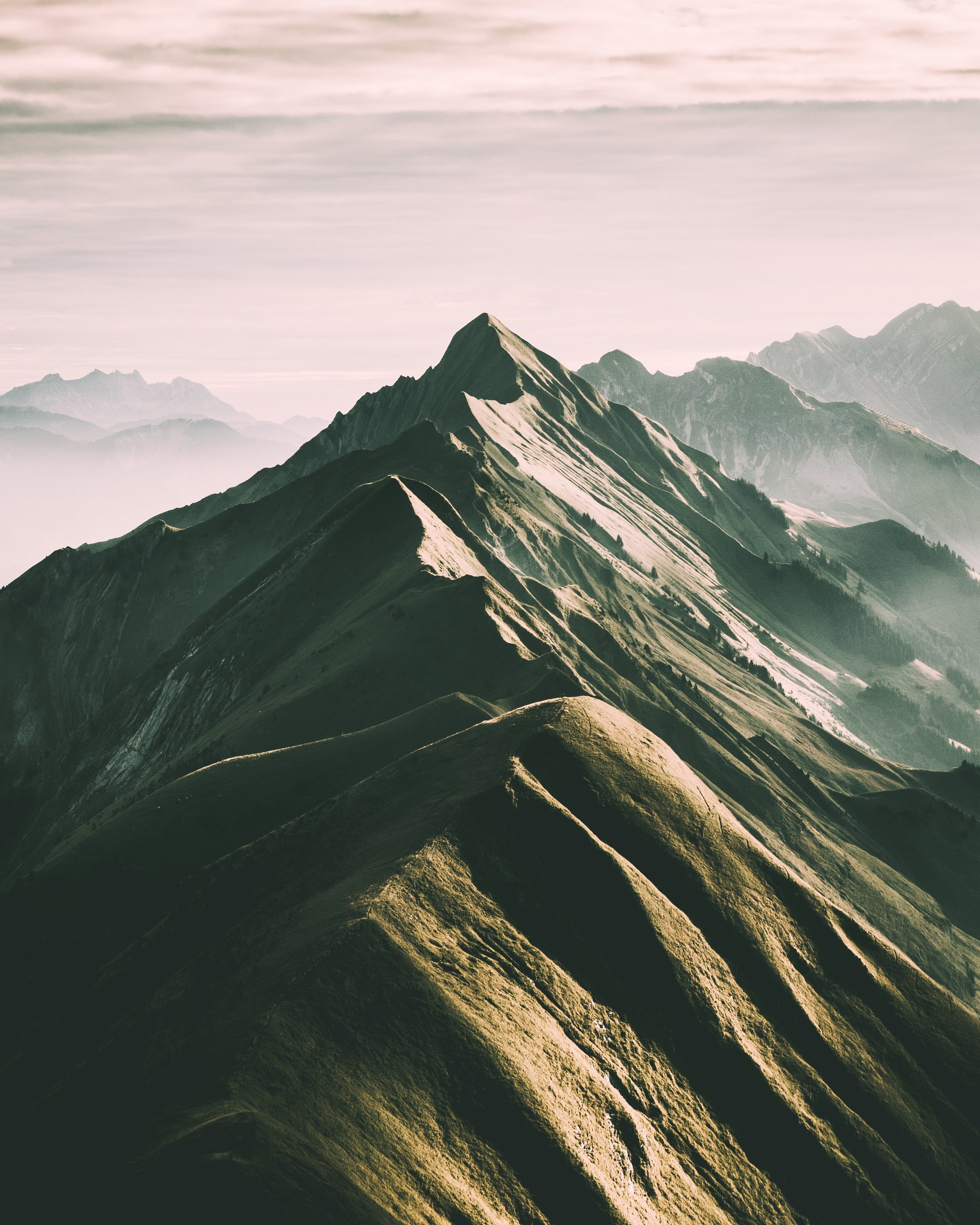
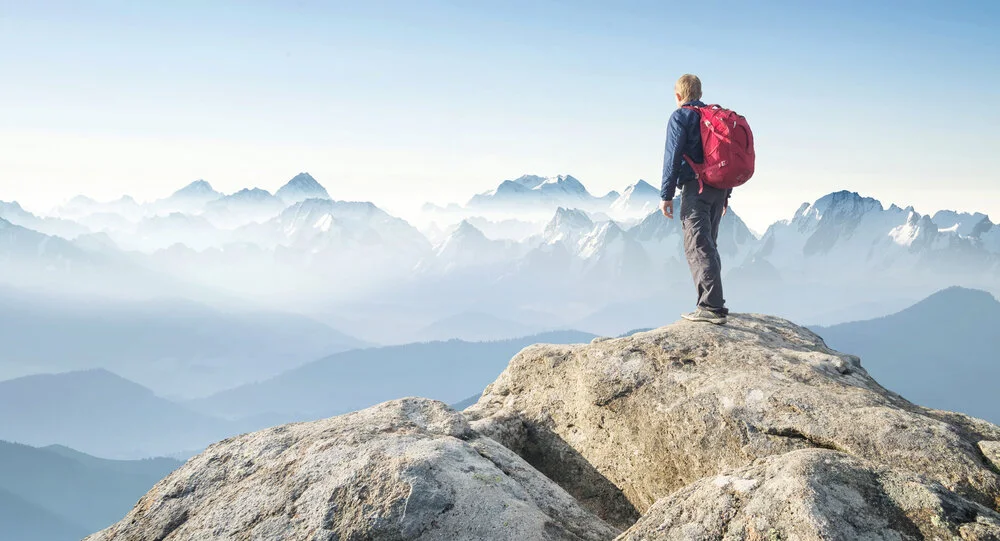
High altitude mountains, like Everest are notorious for putting climbers through the hardships of acute mountain sickness (AMS) — often preventing them from ever being able to reach the top.
Everest was summited in 1953 with the help of supplemental oxygen tanks to resist the effects of the low-oxygen environment on the top half of the mountain.
Climbers couldn’t do the trip without carrying extra oxygen with them because as soon as their oxygen ran out, they started to fall ill, often times perishing on the remote slopes of the mountain as a result.
In 1978 the first ascent without supplemental oxygen was made by 2 men, Messner and Habeler. They spent months preparing and acclimatizing to the environment to allow them to do it, and almost quit several times along the way.
Acclimatization is the keyword here.
In order for the body to survive at these altitudes, it needs to adapt and make changes to the heart, blood, and lungs. This can take several weeks to achieve, but can be sped up with the use of some supplements or herbs.
(More on that later).
What Is Altitude Sickness?
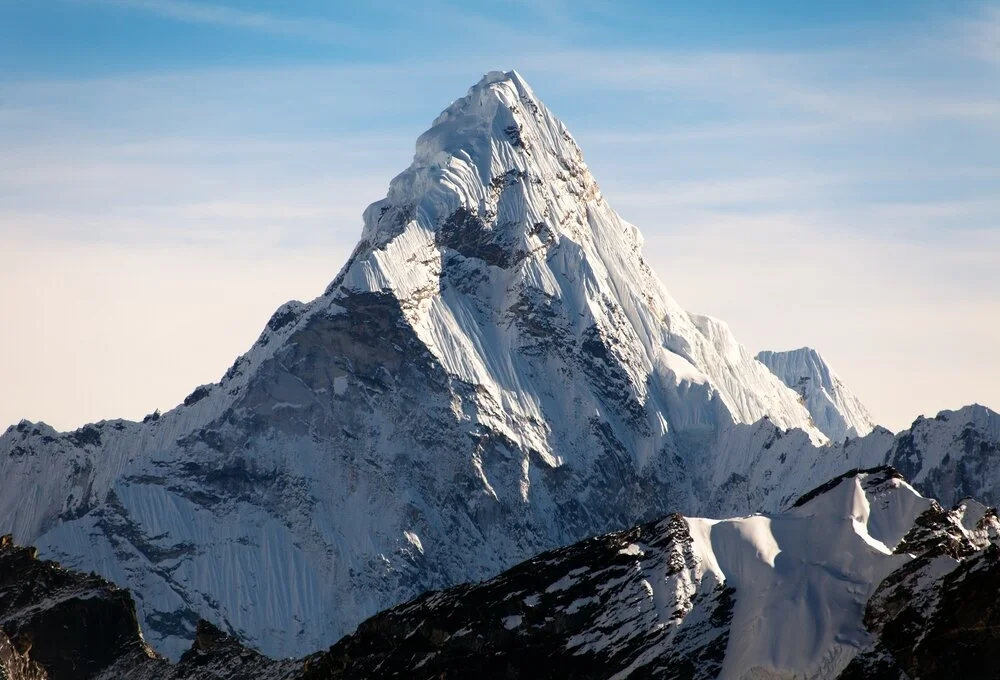
Altitude sickness only occurs in places like the Himalayas, Andes, and some areas of the Rocky Mountains.
The illness can leave people speaking gibberish (video posted below), out of breath, and eventually push them into a coma.
As altitude increases from sea level, the atmospheric pressure decreases, taking oxygen concentration with it. This makes it more difficult to deliver oxygen to your cells. As a result, your body will need to work extra hard to meet its oxygen demands.
This is then pushed even further when you start doing physical activity like climbing or hiking, which increases your body’s demand for oxygen further.
Recommended Reading
For those looking for an in depth manual on alpinism, including managing and preventing altitude sickness, check out this Book written by a group of high-level alpinists on the topic.
How Atmospheric Pressure Changes Oxygen Status
Oxygen represents about 21% of our air content.
Contrary to popular belief, this doesn’t change at altitude. No matter what altitude you’re at, the air will always contain roughly 21% oxygen.
However, the higher up we go, the lower the pressure. This means that the molecules that make up our air (oxygen, nitrogen, and carbon dioxide) become more spaced out and less concentrated than they were at sea level.
With each breath you take, less of these molecules enter the lungs.
Think of it like this — at sea level, let’s say there’s 100 particles in the air, 21 of them will be oxygen. At altitude, you get the same 21%, but there are now only 25 particles in the air — leaving you with just 5 oxygens.
Despite the change in air pressure, the oxygen demands of the body do not decrease — so in order to deliver this essential element in adequate supply, our body needs to adapt and work harder to compensate with low oxygen intake.
Your body does this by taking more breaths, and pumping blood harder and faster through the body.
This can be seen by an increase in heart and breathing rates.
The Progression Of Altitude Sickness
The higher in elevation you go, the more common/severe altitude sickness becomes.
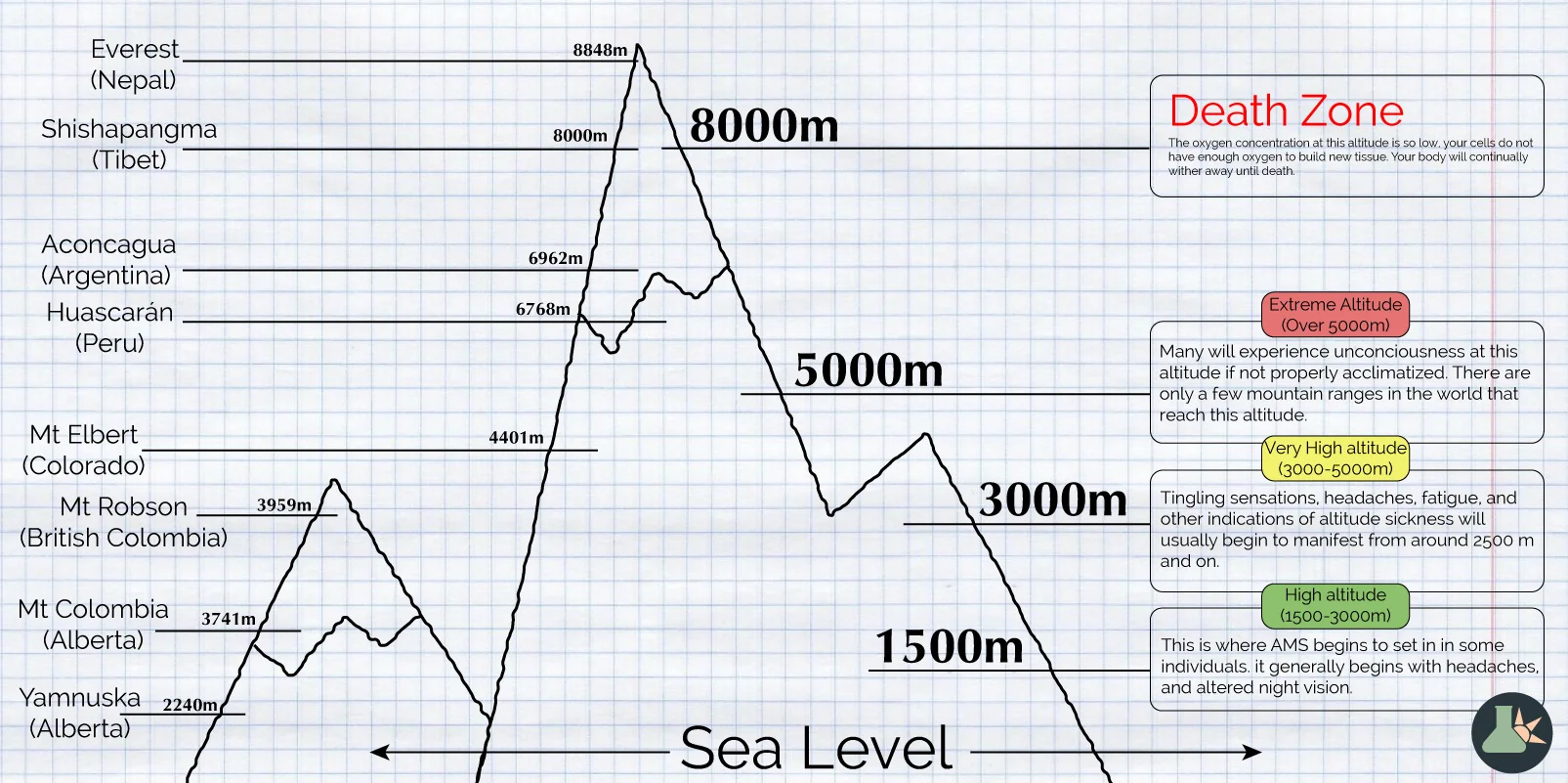
Although different elevations will affect everyone differently, here are the standard guidelines of what to expect in terms of altitude sickness by elevation.
1. 1500 – 2500 Meters
At 1500m above sea level, most people won’t feel the effects of altitude, however, some will begin to notice altered night vision.
As you continue to climb through this band, these effects are felt by more and more people, and some will begin to feel a tingling sensation in their fingers and toes. This is usually the first noticeable indication of AMS. Other early symptoms include poor night vision, headaches, and insomnia.
2. 2500 – 5000 Meters
This is the point at which altitude sickness becomes common — most people will experience at least some degree of it at this altitude if unacclimatized. Symptoms can range from mild to severe depending on the level of adaptation and acclimatization.
According to the International Society of Mountain Medicine (ISMM) “The diagnosis of altitude sickness is made when a headache, along with any one or more of the listed symptoms, is present after a recent ascent above 2500 meters”, they list the following symptoms:
- Loss of appetite
- Vomiting
- Fatigue or weakness
- Dizziness
- Difficulty sleeping.
3. 5000 – 8000 Meters
Many unacclimatized people will quickly fall unconscious at this elevation, which will then lead to a coma, and eventual death if not given immediate medical attention (oxygen and immediate descent).
4. The 8000 Meter Mark… The Death Zone
The 8000 meter mark is aptly named, the “death zone”. This is an altitude where no matter how acclimatized you are, the environment is no longer conducive to cellular reproduction and human life. We can survive here, but not for extended amounts of time.
Everest is a whopping 8848m high, so most people who climb this beast require supplemental oxygen when approaching the 8000m mark. Others will require this much sooner than that depending on the individual.
It’s highly recommended by most “altitude sickness authorities” to remain at this height for the shortest amount of time possible. It’s possible to climb Everest and other extreme altitude mountains without supplemental oxygen, but will require rigorous acclimatization practices. See here for Ed Viesturs account on his ascent of Everest without supplemental oxygen.
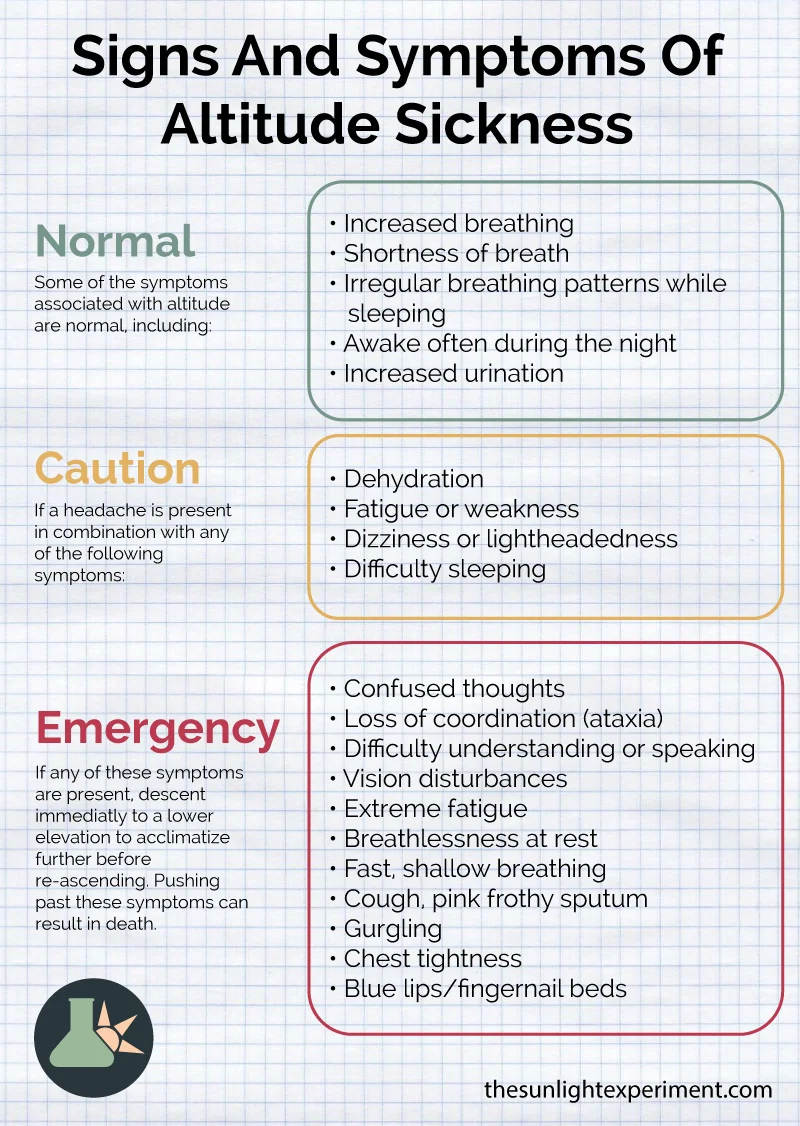
What Are the Signs & Symptoms of Altitude Sickness?
The symptoms of altitude sickness start small and increase over time as long as you remain at high altitude.
Common Symptoms Include:
- Nausea or vomiting
- Rapid pulse (heart rate)
- Difficulty sleeping
- Dizziness or light-headedness
- Fatigue
- Headache
- Loss of appetite
- Breathlessness at rest
- Fast shallow breathing
- Cough
- Pink frothy sputum
- Gurgling
- Chest tightness
- Blue lips/fingernail beds
Two Serious Complications of AMS
1. High Altitude Cerebral Edema (HACE)
This happens when the brain swells and stops functioning properly.
This is a serious, life-threatening condition. People experiencing HACE are often confused and may not be aware of the danger they are in.
People will display confused thoughts, and loss of coordination (ataxia), difficulty understanding or speaking, and vision disturbances.
If you notice someone with these effects, make them walk in a straight line and ask them questions regarding who they are, what time or date it is, and what they are doing.
This is a very useful set of simple questions used in emergency medicine to determine if the person is confused or not.
Ask specific questions to person, place, time, and event. It is crucial to include questions involving all 4 of these concepts, because if different areas of the brain are affected, someone might be able to answer 3 perfectly, but struggle on the one.
By not asking for all of these concepts, HACE may go unnoticed for longer.
If they fail any of these tests, DESCEND IMMEDIATELY to a lower altitude, and if available, give supplemental oxygen (and dexamethasone, if anyone in the party is carrying it). Fortunately, with a speedy descent people usually recover quickly, and after a few days may re-ascend with caution.
Watch this video of a climber experiencing dysphasia caused by HACE.
2. High Altitude Pulmonary Edema (HAPE)
This is a serious complication from AMS that is classified as a fluid buildup in the lungs.
This condition will ultimately result in death if left untreated for too long and is virtually the same cause of death for conditions like pneumonia, only from a different pathology.
Just like with HACE, if treated promptly by descending to a lower altitude and supplementing oxygen, this condition will usually clear up without issues. It’s most common in younger, more fit hikers and climbers, and usually begins during sleep.
How is AMS Treated?
Many write-off the early effects of altitude sickness as a cold/flu, or simply fatigue from physical exertion.
This causes many people to ignore their symptoms and continue pushing further up in elevation.
If you continue past these symptoms for too long or push them too hard, serious complications can arise like HACE, ataxia, HAPE, hallucinations, and loss of consciousness which will eventually result in coma and death.
For this reason, if you are above 2500m, and any of these symptoms are present, it’s most likely altitude sickness.
Based on the severity of symptoms you should descend and acclimatize further, or push on with extreme caution.
It’s unwise to ignore serious symptoms, listen to your body. It’s okay to experience some forms of altitude sickness, but it is not okay to ignore it.
In the early signs of AMS, it’s recommended that you slow your pace, and allow more time to acclimatize, and keep hydrated. Have a pot of coffee, yerba maté, or some caffeine or vinpocetine tablets and ensure you are taking long, deep, and rhythmic breaths.
As the symptoms progress, you need to consider reducing your altitude to the last altitude in which you felt healthy in order to avoid the more dangerous side effects.
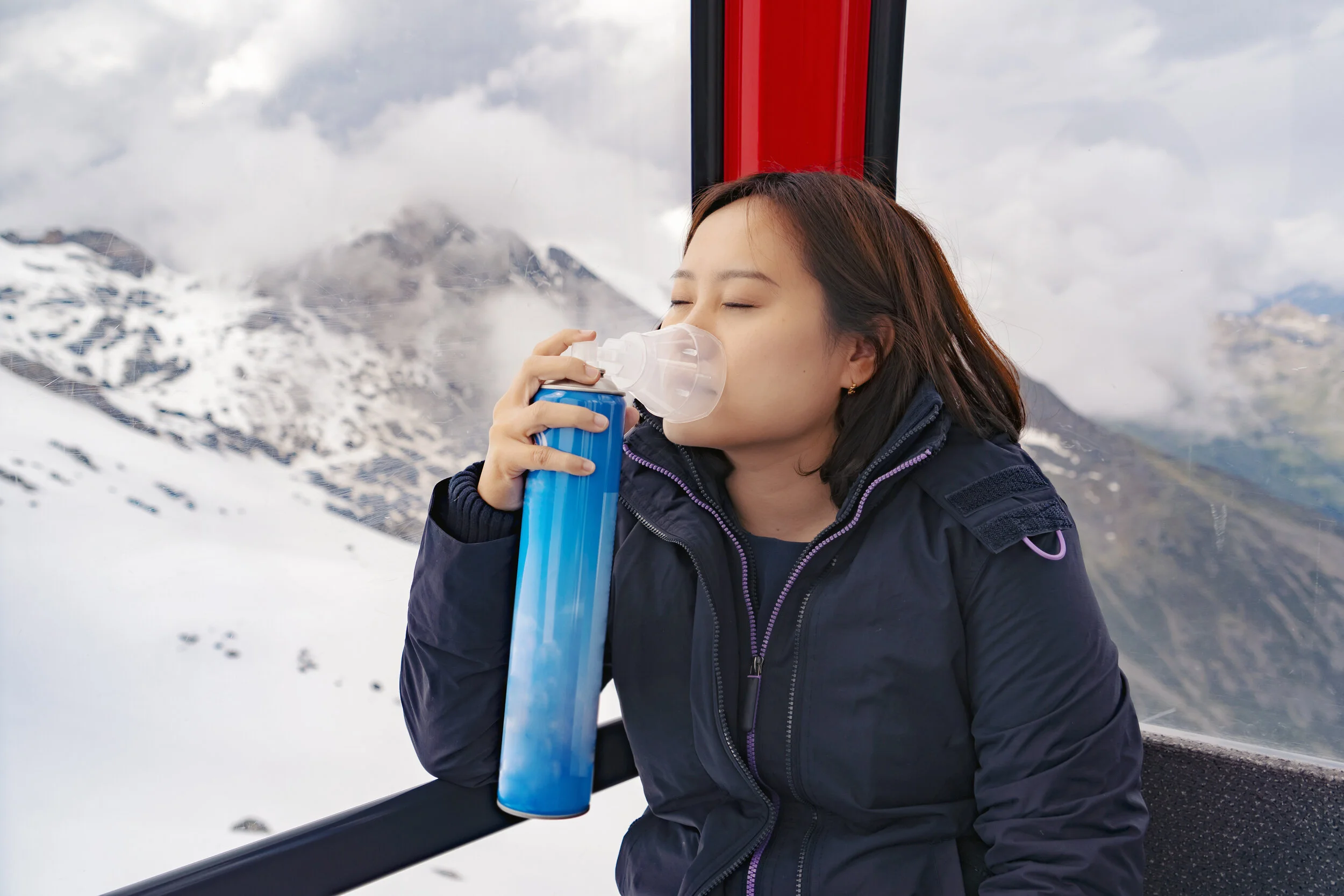
In the worst case scenario, where someone has encountered pulmonary edema, or cerebral edema, hallucinations, and possible coma, oxygen should be administered immediately, and this person needs to be removed to a lower altitude.
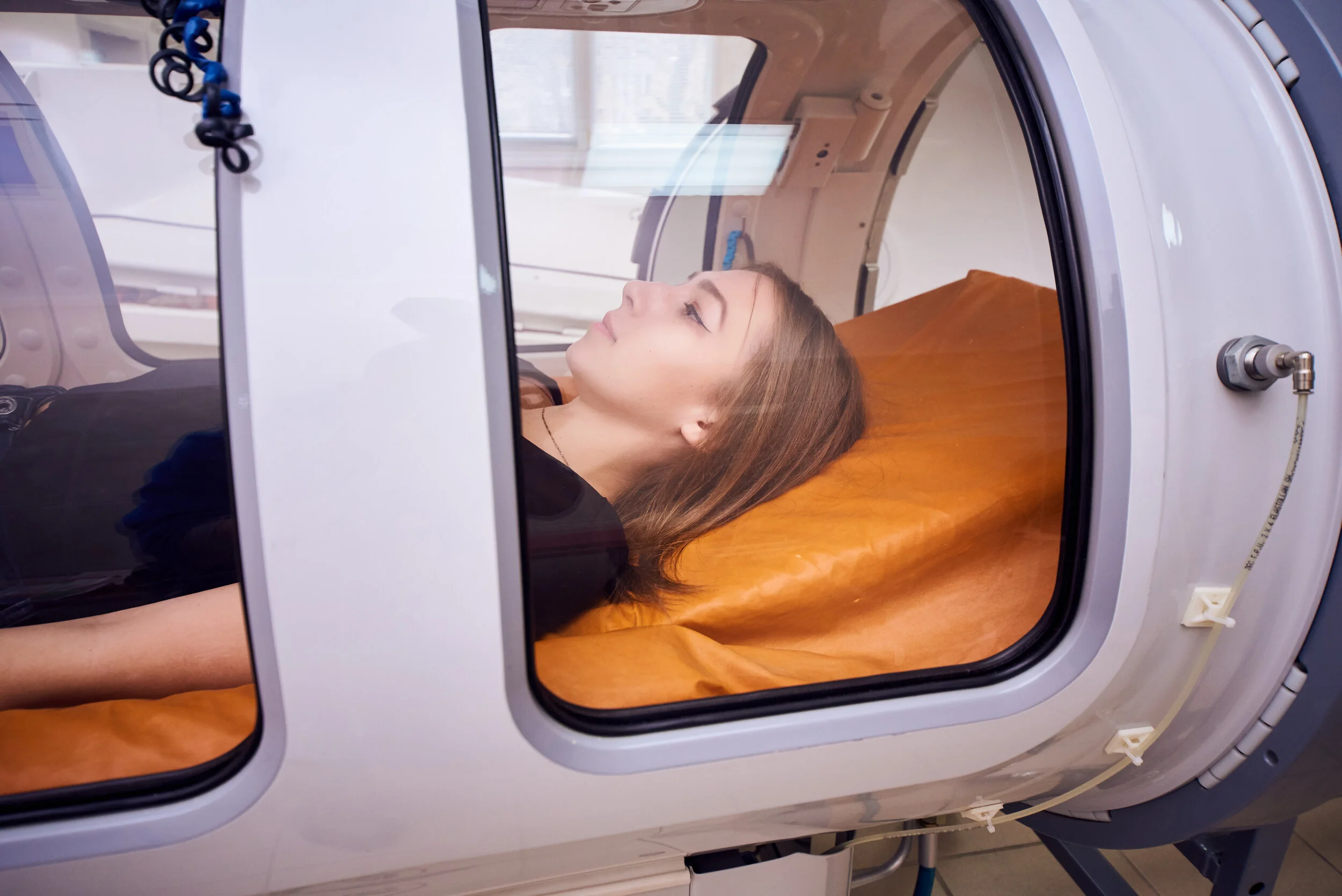
Hyperbaric bags also exist as a way to immediately increase pressure and oxygen concentration while removing a severely affected individual to a lower altitude.
Fortunately, AMS is generally easy to treat if the treatment is given before serious complications occur.
The Medical Drugs
Descent and oxygen are the real cornerstones of treatment, but a handful of prescription drugs are well established for prevention and treatment, and any serious high-altitude party should carry and understand them 7Reference 7Wilderness Medical Society Clinical Practice Guidelines for the Prevention, Diagnosis, and Treatment of Acute Altitude Illness: 2024 Update:
- Acetazolamide (Diamox) — the mainstay for preventing AMS. It speeds acclimatization by mildly acidifying the blood, which prompts you to breathe more and take in more oxygen. A commonly used preventive dose is 125 mg twice daily, started the day before ascent; it also helps treat mild AMS.
- Dexamethasone — a steroid used to treat AMS and, critically, HACE. It doesn’t speed acclimatization the way acetazolamide does — it buys time by reducing brain swelling while you descend.
- Nifedipine — used to prevent and treat HAPE by lowering the pulmonary-artery pressure that drives fluid into the lungs.
These are prescription medications with real side effects and interactions — arrange them with a doctor well before a trip, not on the mountain. They complement descent and oxygen; they don’t replace them.
Are There Any Supplements For Altitude Sickness?
There are numerous supplements available for reducing the effects of altitude sickness, most of which work best if taken for weeks-months building up to the altitude exposure.
These supplements generally work by increasing the hemoglobin counts in the blood gradually (thus more oxygen carrying capacity), increasing cerebral blood flow through vasodilation, or through a number of other mechanisms.
A few botanicals have a long history of traditional use at altitude. None of them are a cure — and the clinical evidence behind them is uneven — but several may help the body condition itself to a low-oxygen environment when taken consistently in the weeks leading up to a trip. Here are the ones worth knowing about.
Cordyceps (Cordyceps sinensis)
The indigenous cultures of Tibet have used cordyceps — a peculiar fungus that grows at high altitude, often parasitising caterpillars — for centuries to cope with the thin air of the Himalayas. It’s an adaptogen, traditionally taken as a powder, tincture, or tea, and is popular with endurance athletes. Claims that it meaningfully raises blood-oxygen levels are weak and not well supported by good human trials, so treat it as a traditional tonic rather than a proven oxygen-booster. Some small studies have looked at it alongside rhodiola for high-altitude training. Best taken over a long period before exposure.
Ginkgo (Ginkgo biloba)
Ginkgo has had a lot of media attention as an AMS preventive, but the picture is genuinely mixed: a few early trials were encouraging, while several later, better-controlled studies found little to no benefit. It does not treat altitude sickness, and it’s best described as traditionally used, evidence mixed rather than effective. If you try it, a standardized extract (commonly 24% flavone glycosides, 6% terpene lactones) taken for a few weeks beforehand is the form that’s actually been studied.
Maca (Lepidium meyenii)
Maca is the highest-altitude crop in the world, grown above 4000m and a staple food for Andean populations. One observational study of people living at 4100m in Junín, Peru found that regular maca consumers reported better overall health scores than non-consumers — an effect the researchers attributed to long-term maca intake. That’s a population living at altitude rather than a trial of acute prevention, so read it cautiously, but maca is a well-tolerated food with a strong traditional track record. Pre-treat for a few months before a trip rather than starting on the mountain.
Rhodiola (Rhodiola crenulata)
Rhodiola is an adaptogen of high, cold mountain regions. The species most associated with altitude, Rhodiola crenulata, grows across the Himalayas and Tibetan plateau (roughly 2000–5000m); its better-known relative R. rosea ranges through the cold mountains of Europe, Asia, and North America. Animal work has shown improved endurance, and small human studies have paired it with cordyceps for high-altitude training, where it appears to support oxygen efficiency at the cellular level. Evidence is preliminary, but it’s a reasonable addition to a pre-acclimatization regimen taken over several weeks.
Coca Leaf (Erythroxylum coca)
For completeness rather than as a recommendation: indigenous communities across the South American Andes have chewed coca leaf, or drunk it as a tea, for generations to blunt the effects of altitude. In its whole-leaf form it is a mild traditional stimulant and is not the same thing as cocaine. Rigorous study of its effect on AMS is lacking. Note that coca is a controlled plant that is illegal or legally restricted in most countries outside the Andes — so this is background, not advice.
Herbs For Altitude Sickness (Prevention)
Acclimatization is the best way to Prevent Altitude Sickness
The best form of medicine in all cases is prevention.
By taking some steps, and preparation before subjecting yourself to altitude, you can both reduce its effects, and increase altitude before it’s felt in the first place.
Prevention consists of acclimatization, and system toning through herbs, supplements, and training techniques.
The most common preventative steps for altitude sickness:
1. Acclimatization:
Anybody can get altitude sickness. It’s not dependent on age, gender, or fitness levels, and resistance is mainly thought to be genetic. Some acclimate very quickly while others take a long time. It’s suggested that those with previous experience at altitude will acclimate much faster, especially if within the last 3-6 months.
Acclimatization basically means allowing the body to adapt to the environment of higher altitudes. To do this requires time.
If you live in the rocky mountains, Himalayas, Andes, or any other range with mountains exceeding 2000 meters, a good practice would be to go up the nearest mountain as often as possible, and spend some time at the top. Many athletes try to spend the night at these elevations about once a week or so to maintain their tolerance to these sorts of altitudes.
Basically by doing this you are trying to convince your body to trigger the defensive steps it takes to reduce the effects of a hypoxic environment, AKA high altitude.
2. Cardio Training
Another option, which can easily be incorporated into a workout routine to prepare for the low oxygen environment, is to use what is called an elevation mask.
Oxygen masks are useful, but not for the reasons you might think.
Let me explain.
Oxygen masks sound like they can limit the amount of oxygen that goes into your lungs, and they do– just not in the same way this happens at real altitude.
An altitude mask blocks the flow of oxygen — however, the concentration of oxygen in the air is much thicker.
This is fundamentally different from the conditions that cause altitude sickness and will NOT condition the body to resist the low oxygen concentrations at high altitudes.
What a mask will do, is force the heart and lungs to work harder, which is something they would need to do at higher altitude to make up for the loss of oxygen.
Altitude Sickness: Summing it Up
The golden rule should be — if you’re above 2500m and you feel sick, assume it’s altitude sickness.
Know the symptoms, and know when to turn around and descend to a lower elevation for a few days before continuing back up.
There may be times where you will have to make that judgment for your partners when they are too confused to make it for themselves, and keep in mind, this might not be as obvious as it seems.
Let us know about your opinions or experiences with altitude sickness , we’d love to hear from you.
Author
The Sunlight Experiment
References
- Altitude.org. (2007, June). Altitude.org | Haemoglobin carries oxygen in the blood. Retrieved from http://www.altitude.org/haemoglobin.php
- Gonzales, G. F., Gasco, M., & Lozada, I. (2013). Role of maca (Lepidium meyenii) consumption on serum interleukin-6 levels and health status in populations living in the Peruvian central Andes over 4000 m of altitude. Plant Foods for Human Nutrition (Dordrecht, Netherlands), 68(4), 10.1007/s11130–013–0378–5. http://doi.org/10.1007/s11130-013-0378-5
- Hillebrandt, D. (2010). Wilderness Medical Society Consensus Guidelines for the Prevention and Treatment of Acute Altitude Illness—A View From the Other Side of the Atlantic.Wilderness & Environmental Medicine, 21(4), 383-384. doi:10.1016/j.wem.2010.04.001
- International Society for Mountain Medicine. (2006, January). Non-Physician Altitude Tutorial. Retrieved from http://www.ismmed.org/np\_altitude\_tutorial.html
- Chen, C. Y., Hou, C. W., Bernard, J. R., Chen, C. C., Hung, T. C., Cheng, L. L., … & Kuo, C. H. (2014). Rhodiola crenulata- and Cordyceps sinensis-based supplement boosts aerobic exercise performance after short-term high altitude training. High Altitude Medicine & Biology, 15(3), 371-379.
- Moraga, F. A., Flores, A., Serra, J., Esnaola, C., & Barriento, C. (2007). Ginkgo biloba decreases acute mountain sickness in people ascending to high altitude at Ollagüe (3696 m) in northern Chile. Wilderness & Environmental Medicine, 18(4), 251-257.
- Luks, A. M., Beidleman, B. A., Freer, L., et al. (2024). Wilderness Medical Society Clinical Practice Guidelines for the Prevention, Diagnosis, and Treatment of Acute Altitude Illness: 2024 Update. Wilderness & Environmental Medicine. Link
Justin Cooke
Clinical herbalist and the writer behind The Sunlight Experiment — an evidence-based pharmacopoeia of herbs, supplements, and the chemistry behind them.