
Materia Medica
Coffee
Coffea arabica
Coffee (Coffea arabica) — the world's favourite caffeine source; a stimulant studied for alertness, mood, metabolism and longevity.
Coffee Summary
Coffee is by far one of the most popular herbs on the planet. The stimulating, productivity-enhancing effects of the caffeine in coffee is loved by all and its unique flavor has lead to hundreds of different styles, varieties, and combinations of coffee beverages worldwide.
It’s the caffeine in coffee that’s responsible for many of its effects — as well as some of its negative side effects.
The health signal for coffee is strongest at moderate, habitual intake — roughly 3–4 cups a day — where studies find the lowest all-cause and cardiovascular mortality; benefit plateaus around that range and does not keep rising with very high intake 3,4Reference 3Meta-analysisCoffee consumption and all-cause and cause-specific mortality: a meta-analysis by potential modifiers — meta-analysisView study →Reference 4Meta-analysisCoffee consumption and mortality from all causes, cardiovascular disease, and cancer: a dose-response meta-analysisView study →.
The body quickly develops a tolerance to the negative side effects of caffeine through down regulation of the adenosine receptors in the central nervous system. Once this happens, the antioxidant, broncho-dilating, hypotensive, and neuroprotective effects of coffee can shine through.
What Is Coffee Used For?
Coffee contains caffeine, which is a central nervous system stimulant.
Most of its uses stem from this effect — such as helping you stay awake and focused while up late cramming for a test or helping you wake up for that 8 am meeting.
**The dried, roasted seeds are also rich in antioxidants —**which offer protective effects to the kidneys, blood vessels, lungs, and brain.
Many of the alkaloids and phenolic compounds in coffee need to be processed by the liver. In doing so, it’s used to stimulate both phase I and phase II liver detox pathways.
Long-term coffee consumption is also associated with lower blood pressure and better blood-sugar control over time.
Medicinal Uses of Coffee
- May relieve symptoms of altitude sickness
- Protects the brain from neurodegenerative disorders
- Can be used as a diuretic
- Stimulates liver activity
- Helps regulate blood pressure and blood sugar
- Maintains a feeling of wakefulness
Traditional Uses
Coffee use dates back thousands of years in Ethiopia where it originated. It was initially restricted to the Arab world and was primarily grown in Yemen around the 15th century.
Sufi religious practices (related to Islam) promoted the popularity and spread of coffee at this time. This religious group used coffee as a way to encourage wakefulness and trance-like states in their ceremonies, which often lasted all night. 30Reference 30The Essence of Commodification: Caffeine Dependencies in the Early Modern WorldView study →.
After domestication, it became popular among the Arab world within about a century. By this time, its spread was due less by religious practices, and more by the new social concept of coffeehouses. These became (as they still are) a place for people to meet and socialize over coffee. During this time it was a practice exclusive to men. Women were socially excluded from all of these establishments. By the end of the 17th century, Cairo had become the central coffee market for the far east. 30Reference 30The Essence of Commodification: Caffeine Dependencies in the Early Modern WorldView study →.
Coffee was introduced to Europe through European travelers passing through Arab cities. This is quite different from many of the other traditional and medicinal plants introduced into Europe, which were mainly introduced through brutal colonial conquest instead. Upon introduction to European culture, it was reserved for therapeutic use, however over time people began to develop a taste for the beverage and coffee consumption took off with the general population and soon became commonplace in the home.
Coffee shops popped up all over Europe, as they adopted the Arab practice for themselves. 30Reference 30The Essence of Commodification: Caffeine Dependencies in the Early Modern WorldView study →.
Botany
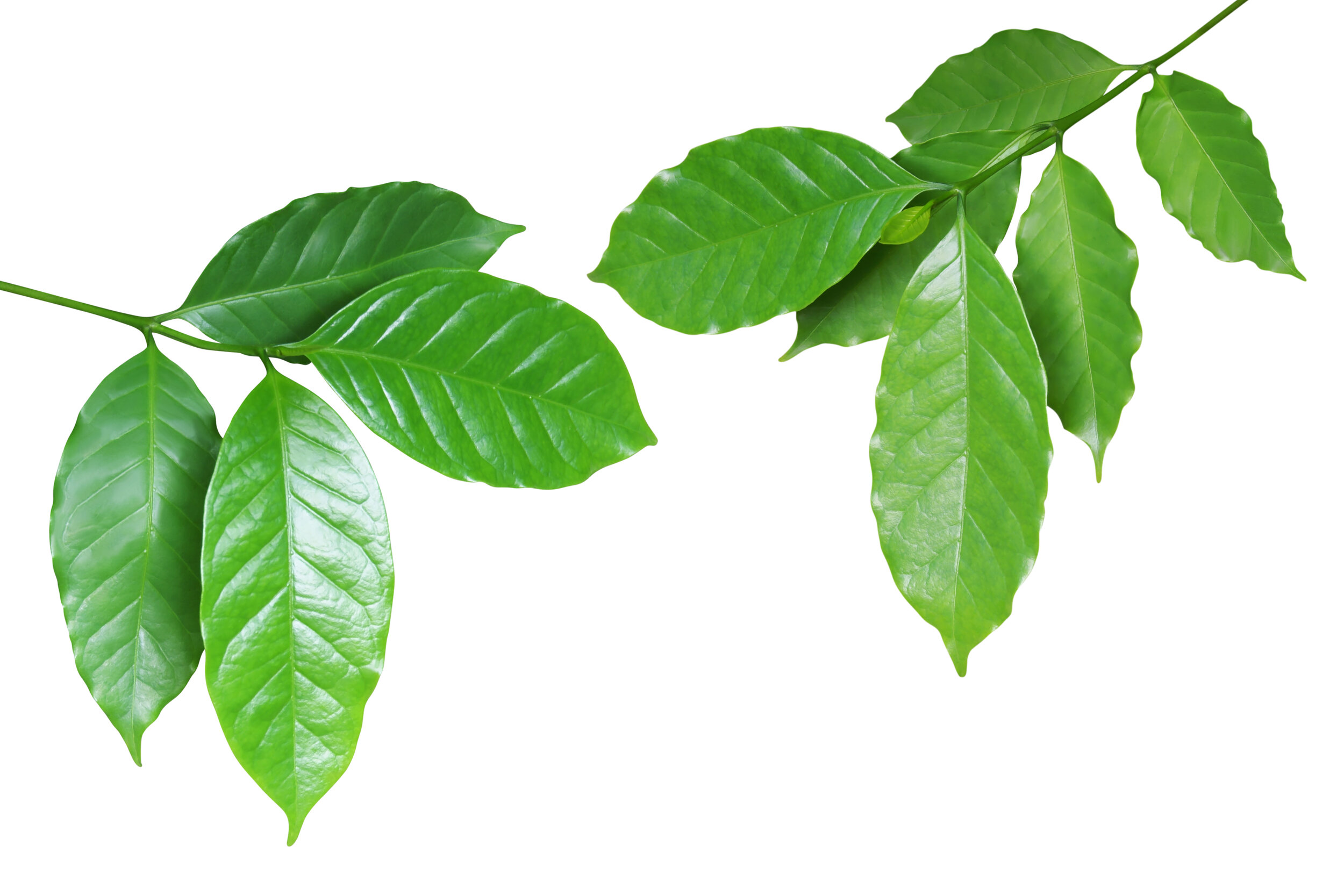
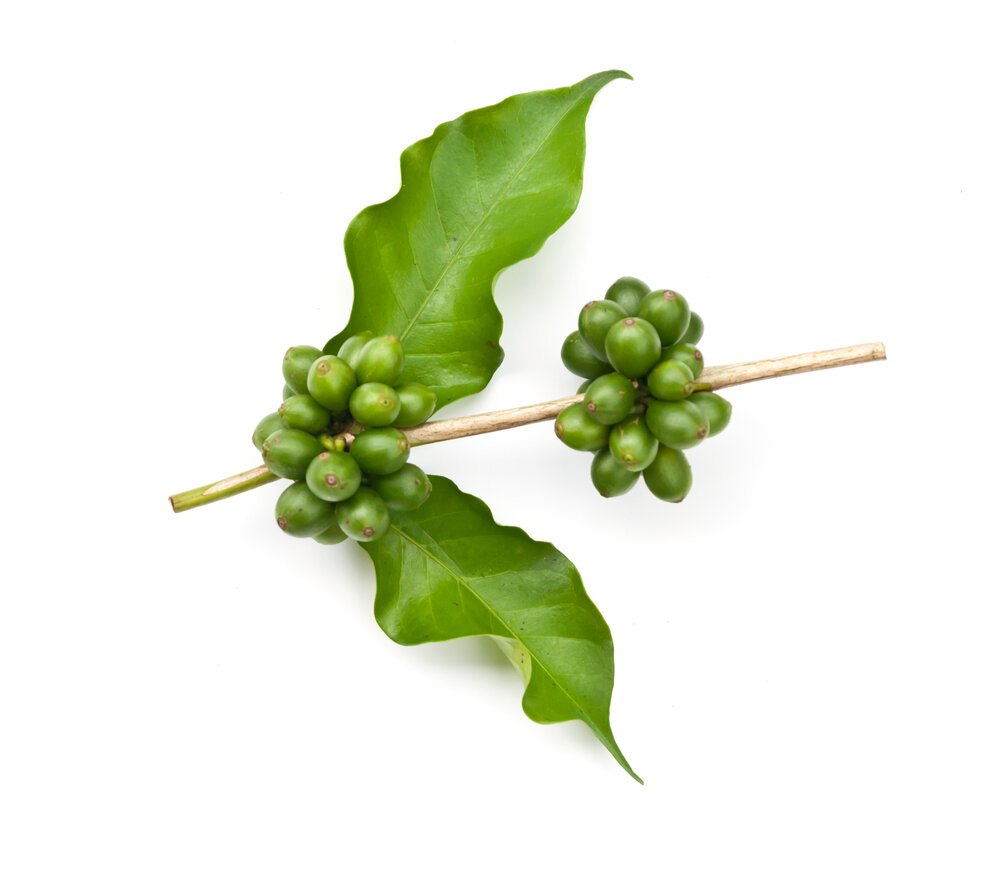
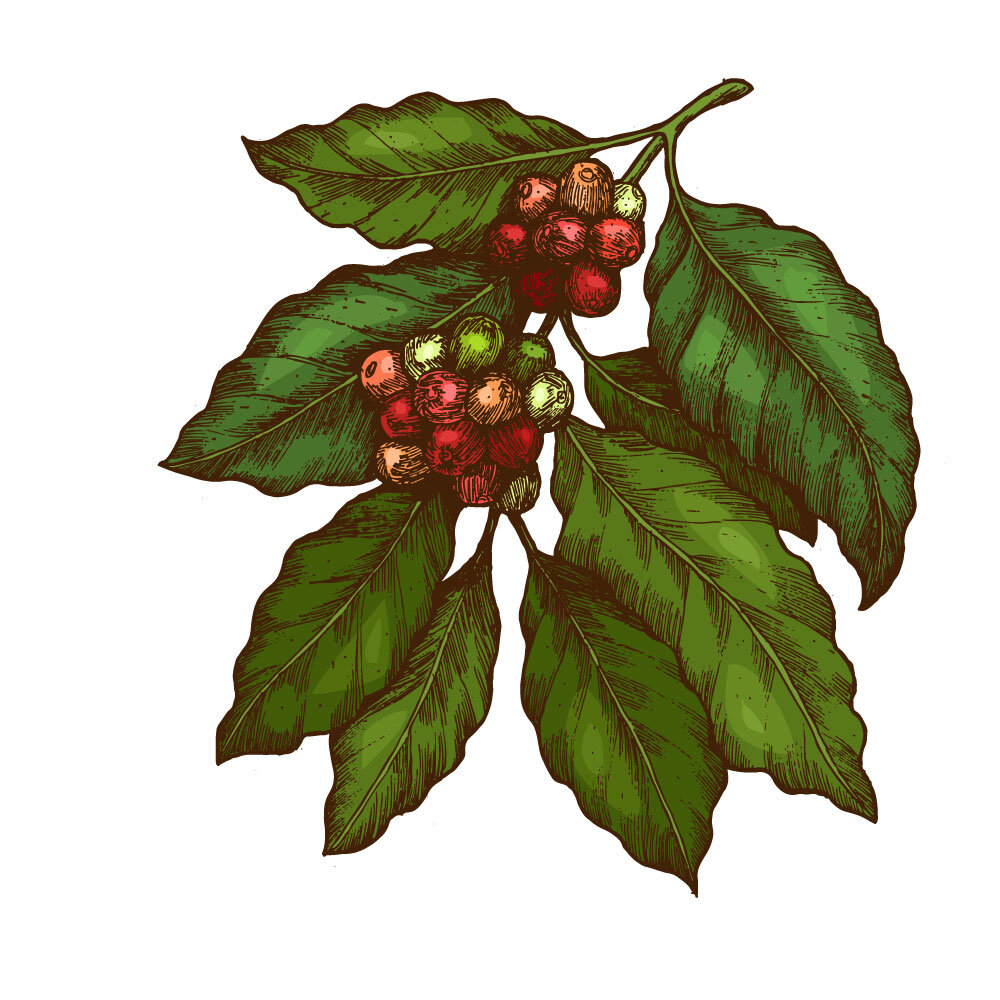
Arabica coffee is an evergreen shrub or small tree in the madder family (Rubiaceae), reaching 15–20 ft in the wild but usually kept to 6–10 ft in cultivation. It bears glossy dark-green opposite leaves, clusters of fragrant white star-shaped flowers, and oval red “cherries,” each holding the two seeds sold as coffee beans. It is a naturally-occurring allotetraploid — a hybrid of Coffea eugenioides and C. canephora (robusta) — unusual in a genus of otherwise diploid species. Its most important relative is that second parent, robusta coffee; the wider Rubiaceae also includes cinchona (the source of quinine).
The two commercial coffees differ enough to matter medicinally: arabica (this species) is milder and lower in caffeine, whereas robusta (C. canephora) carries roughly twice the caffeine and more chlorogenic acids — a harsher cup and a stronger stimulant dose per gram 21Reference 21ReviewCoffee: biochemistry and potential impact on health — reviewView study →.
Distribution
The wild native range of Coffea arabica is small and montane: the highland forests of southwestern Ethiopia, southeastern South Sudan and a single mountain (Mt. Marsabit) in northern Kenya. From there it was carried into cultivation across the tropical-highland “coffee belt” of the Americas, Africa and Asia. Strikingly, despite the crop’s global abundance, the wild species is assessed by the IUCN Red List as Endangered, owing to deforestation and the projected impact of climate change on its narrow habitat.
Growing Conditions
- Life cycle: tender evergreen perennial, hardy only in USDA zones 10–12 (frost-sensitive).
- Light: part shade — classically an understory crop, though sun-grown in plantations.
- Water: steady moisture with high humidity; high rainfall, no frost.
- Habit: grown at 1,400–1,800 m in the tropics; kept pruned low for hand-picking.
- Full cultivation detail lives on the companion farm-wiki grow guide for Coffea arabica (link to be added once that project’s public URL is confirmed).
Harvesting, Collection & Preparation
Depending on where coffee is grown, the flavor profile will change, altitudes, humidity, soil conditions, and growing techniques will all influence flavor.
Generally, the best species to use for flavor is arabica, which is grown worldwide.
Each region tends to offer its own general characteristic. However, this can also vary quite a bit within the region.
Coffee takes about 3-4 years for the coffee plant to produce berries, after which yearly harvests generally take place. The berries ripen at different times throughout the plant, which makes harvesting a very long and intensive process where harvesters must pick the fruit by hand over a few weeks.
The processing of coffee generally consists of drying and roasting. Which is very similar to the other famous caffeine containing stimulants such as yerba maté, tea, and guarana. This process is suggested to reduce the bitter flavor, add a roasted flavor, prevent further oxidation of the polyphenols through destruction of the enzymes responsible, and free the caffeine and other xanthine alkaloids from the chlorogenic acids. In doing so, the constituents of the seeds change
Pharmacology & Research
Coffee has one of the largest human evidence bases of any plant — hundreds of prospective cohorts, dozens of dose-response meta-analyses, and two major 2017 umbrella reviews (a BMJ review by Poole and an Annual Review of Nutrition review by Grosso) that together map roughly 200 health outcomes 1,2Reference 1Meta-analysisCoffee consumption and health: umbrella review of meta-analyses of multiple health outcomes — systematic reviewView study →Reference 2Systematic reviewCoffee, caffeine, and health outcomes: an umbrella review — systematic reviewView study →. The overall picture is consistent: moderate habitual consumption (about 3–4 cups/day) is associated with lower all-cause and cardiovascular mortality and lower risk of type 2 diabetes, several cancers, Parkinson’s disease and chronic liver disease, with a recurring “more is not better” ceiling and a J- or U-shaped curve 1,2,3,4Reference 1Meta-analysisCoffee consumption and health: umbrella review of meta-analyses of multiple health outcomes — systematic reviewView study →Reference 2Systematic reviewCoffee, caffeine, and health outcomes: an umbrella review — systematic reviewView study →Reference 3Meta-analysisCoffee consumption and all-cause and cause-specific mortality: a meta-analysis by potential modifiers — meta-analysisView study →Reference 4Meta-analysisCoffee consumption and mortality from all causes, cardiovascular disease, and cancer: a dose-response meta-analysisView study →. The strongest single signal is type 2 diabetes: a dose-response meta-analysis of 28 cohorts (>1.1 million people) found risk fell by roughly 9% per cup/day for both caffeinated and decaffeinated coffee 5Reference 5Meta-analysisCaffeinated and decaffeinated coffee consumption and risk of type 2 diabetes: a systematic review and dose-response meta-analysisView study →. The critical caveat is that almost all of this is observational — coffee drinking tracks with income, smoking and diet — and newer Mendelian-randomization (genetic) analyses do not reproduce several of the headline protective effects (notably liver cancer), suggesting some associations are overstated by confounding 6,7Reference 6Systematic reviewCoffee and health outcomes: a systematic review of Mendelian randomisation studies — systematic reviewView study →Reference 7Meta-analysisCoffee and the risk of hepatocellular carcinoma: a systematic review and meta-analysis of Mendelian randomization studiesView study →. Effects also depend heavily on preparation: unfiltered coffee (espresso, French press, boiled) raises LDL cholesterol through the diterpenes cafestol and kahweol, which paper filters remove.
- Best-supported: lower type 2 diabetes risk (dose-dependent, caffeinated and decaf) 5Reference 5Meta-analysisCaffeinated and decaffeinated coffee consumption and risk of type 2 diabetes: a systematic review and dose-response meta-analysisView study →; lower all-cause and CVD mortality, optimal around 3–4 cups/day 3,4Reference 3Meta-analysisCoffee consumption and all-cause and cause-specific mortality: a meta-analysis by potential modifiers — meta-analysisView study →Reference 4Meta-analysisCoffee consumption and mortality from all causes, cardiovascular disease, and cancer: a dose-response meta-analysisView study →.
- Strong, well-replicated: reduced risk of chronic liver disease and hepatocellular carcinoma 8,9Reference 8Meta-analysisCoffee, including caffeinated and decaffeinated coffee, and the risk of hepatocellular carcinoma: a systematic review and dose-response meta-analysisView study →Reference 9Meta-analysisCoffee consumption and non-alcoholic fatty liver disease: an umbrella review and a systematic review and meta-analysis — reviewView study →; lower Parkinson’s disease risk (caffeine-driven) 10,11Reference 10Meta-analysisDose-response meta-analysis on coffee, tea and caffeine consumption with risk of Parkinson’s disease — meta-analysisView study →Reference 11Meta-analysisThe effect of caffeine on the risk and progression of Parkinson’s disease: a meta-analysisView study →.
- Emerging, worth watching: lower risk of depression and cognitive decline/dementia 12,13,14Reference 12Meta-analysisCoffee and caffeine consumption and depression: a meta-analysis of observational studiesView study →Reference 13Meta-analysisModerate coffee or tea consumption decreased the risk of cognitive disorders: an updated dose-response meta-analysisView study →Reference 14Meta-analysisTea, coffee, and caffeine intake and risk of dementia and Alzheimer’s disease: a systematic review and meta-analysis of cohort studiesView study →; heart-failure and hypertension signals that are protective at moderate intake 15,16Reference 15Meta-analysisHabitual coffee consumption and risk of incident heart failure: an updated systematic review and dose-response meta-analysis of prospective cohort studiesView study →Reference 16Meta-analysisCoffee consumption and risk of hypertension: a dose-response meta-analysis of prospective studiesView study →.
- The caveat: the evidence is overwhelmingly observational; Mendelian-randomization studies temper or overturn some claims (e.g. HCC) 6,7Reference 6Systematic reviewCoffee and health outcomes: a systematic review of Mendelian randomisation studies — systematic reviewView study →Reference 7Meta-analysisCoffee and the risk of hepatocellular carcinoma: a systematic review and meta-analysis of Mendelian randomization studiesView study →, and unfiltered brews raise cholesterol. Caffeine in pregnancy is a genuine harm signal 17,18Reference 17Meta-analysisMaternal caffeine intake during pregnancy and risk of pregnancy loss: a categorical and dose-response meta-analysis of prospective studiesView study →Reference 18Meta-analysisMaternal caffeine intake during pregnancy is associated with risk of low birth weight: a systematic review and dose-response meta-analysisView study →.
1. Type 2 diabetes prevention
This is coffee’s most robust and dose-dependent association. A systematic review and dose-response meta-analysis of 28 prospective cohorts (1,109,272 participants, 45,335 diabetes cases) found relative risk fell stepwise with intake — 0.92, 0.85, 0.79, 0.75, 0.71 and 0.67 for 1 through 6 cups/day versus none 5Reference 5Meta-analysisCaffeinated and decaffeinated coffee consumption and risk of type 2 diabetes: a systematic review and dose-response meta-analysisView study →. Crucially the protection held for both caffeinated (RR 0.91 per cup/day) and decaffeinated coffee (RR 0.94), which argues the effect is not primarily caffeine but likely chlorogenic acid and other components that improve insulin sensitivity and glucose metabolism 5Reference 5Meta-analysisCaffeinated and decaffeinated coffee consumption and risk of type 2 diabetes: a systematic review and dose-response meta-analysisView study →. The finding is echoed in both 2017 umbrella reviews as one of the highest-confidence coffee associations 1,2Reference 1Meta-analysisCoffee consumption and health: umbrella review of meta-analyses of multiple health outcomes — systematic reviewView study →Reference 2Systematic reviewCoffee, caffeine, and health outcomes: an umbrella review — systematic reviewView study →. Mendelian-randomization work, however, has flagged a positive genetic association with T2D risk in at least one synthesis, so the causal direction is not fully settled 6Reference 6Systematic reviewCoffee and health outcomes: a systematic review of Mendelian randomisation studies — systematic reviewView study →.
Gap: no long-term RCT (unfeasible); the decaf effect implies non-caffeine actives, but the specific compound and dose are not established.
2. All-cause & cardiovascular mortality
Large dose-response meta-analyses converge on a J-shaped curve. Pooling 40 studies (3.85 million subjects, 450,256 deaths), the lowest risk was at ~3.5 cups/day for all-cause mortality (RR 0.85), 2.5 cups/day for CVD mortality (RR 0.83) and 2 cups/day for cancer mortality (RR 0.96), with no further benefit beyond those intakes 3Reference 3Meta-analysisCoffee consumption and all-cause and cause-specific mortality: a meta-analysis by potential modifiers — meta-analysisView study →. An earlier dose-response meta of 21 studies found the largest reductions at 4 cups/day for all-cause mortality (16% lower) and at 3 cups/day for CVD mortality (21% lower) 4Reference 4Meta-analysisCoffee consumption and mortality from all causes, cardiovascular disease, and cancer: a dose-response meta-analysisView study →. The association is preserved for decaffeinated coffee, again pointing beyond caffeine 19Reference 19Meta-analysisCaffeinated and decaffeinated coffee consumption and risk of all-cause mortality: a dose-response meta-analysis of cohort studiesView study →. The 2026 updated CVD meta-analysis is more cautious — reporting no significant association with total coronary heart disease or heart failure at the highest-vs-lowest contrast, and even a positive association with myocardial infarction — underscoring heterogeneity across endpoints 20Reference 20Meta-analysisCoffee, caffeine, and cardiovascular health: navigating risks and benefits — an updated systematic review and meta-analysisView study →.
Gap: entirely observational; residual confounding by smoking and socioeconomic status is hard to exclude, and endpoint-specific results (MI, CHD) are inconsistent.
3. Hepatoprotective (liver disease / HCC)
The liver is where coffee’s benefit looks largest per cup. A dose-response meta-analysis found each extra two cups/day was associated with a 35% lower risk of hepatocellular carcinoma (RR 0.65), an effect not significantly altered by stage of liver disease, alcohol, BMI, diabetes, smoking or hepatitis B/C, and present (though weaker) even for decaffeinated coffee 8Reference 8Meta-analysisCoffee, including caffeinated and decaffeinated coffee, and the risk of hepatocellular carcinoma: a systematic review and dose-response meta-analysisView study →. Coffee is also linked to lower risk of non-alcoholic fatty liver disease and liver fibrosis in umbrella reviews 9Reference 9Meta-analysisCoffee consumption and non-alcoholic fatty liver disease: an umbrella review and a systematic review and meta-analysis — reviewView study →. The important recent qualifier: a 2026 meta-analysis of Mendelian-randomization studies found no statistically significant causal effect on HCC (IVW odds ratio 0.92, CI 0.58–1.47), concluding the observational protection was probably overestimated 6,7Reference 6Systematic reviewCoffee and health outcomes: a systematic review of Mendelian randomisation studies — systematic reviewView study →Reference 7Meta-analysisCoffee and the risk of hepatocellular carcinoma: a systematic review and meta-analysis of Mendelian randomization studiesView study →.
Gap: the strong cohort signal is not confirmed by genetic-causal methods, so coffee may be a marker of healthier livers rather than a cause of them.
4. Parkinson’s disease (risk reduction)
Coffee shows a consistent, caffeine-specific inverse association with Parkinson’s. A dose-response meta-analysis (13 coffee studies, ~902,000 participants) found a non-linear relationship with maximal protection near 3 cups/day (smoking-adjusted RR 0.72), and a linear 17% risk reduction per 200 mg/day of caffeine 10Reference 10Meta-analysisDose-response meta-analysis on coffee, tea and caffeine consumption with risk of Parkinson’s disease — meta-analysisView study →. A 2020 meta-analysis of 13 studies confirmed lower PD risk in regular caffeine consumers (HR ~0.80) and hinted at slower progression 11Reference 11Meta-analysisThe effect of caffeine on the risk and progression of Parkinson’s disease: a meta-analysisView study →. The protection is stronger in men, consistent with an estrogen–caffeine metabolism interaction, and mechanistically fits caffeine’s adenosine A2A-receptor antagonism, which is neuroprotective in dopaminergic models 1,10Reference 1Meta-analysisCoffee consumption and health: umbrella review of meta-analyses of multiple health outcomes — systematic reviewView study →Reference 10Meta-analysisDose-response meta-analysis on coffee, tea and caffeine consumption with risk of Parkinson’s disease — meta-analysisView study →.
Gap: observational; decaffeinated coffee does not confer the effect, and reverse causation (prodromal PD reduces coffee enjoyment) remains a partial concern.
5. Antioxidant
For many populations coffee is the single largest dietary source of antioxidants, driven by its chlorogenic-acid content — green beans are 6–10% chlorogenic acid by dry weight, the largest bioactive fraction 2,21Reference 2Systematic reviewCoffee, caffeine, and health outcomes: an umbrella review — systematic reviewView study →Reference 21ReviewCoffee: biochemistry and potential impact on health — reviewView study →. Brewed coffee shows high, bioavailable antioxidant capacity in standardized assays, and roasting generates additional radical-scavenging melanoidins even as it degrades native chlorogenic acids 21Reference 21ReviewCoffee: biochemistry and potential impact on health — reviewView study →. Chlorogenic acid and its metabolites plausibly underlie downstream vascular and metabolic benefits via improved nitric-oxide availability and reduced oxidative DNA damage 21Reference 21ReviewCoffee: biochemistry and potential impact on health — reviewView study →.
Gap: “high antioxidant capacity in vitro” is a chemical property, not a clinical outcome; the leap to disease prevention runs through the epidemiology above, not direct antioxidant trials.
6. Cognitive decline / dementia
Moderate coffee intake is associated with lower risk of cognitive disorders. An updated dose-response meta-analysis (33 studies, 389,505 participants) found coffee linked to a lower risk of cognitive disorders overall (RR 0.73), with a non-linear curve peaking near 2.5 cups/day for Alzheimer’s disease (RR 0.74) and stronger protection in men 13Reference 13Meta-analysisModerate coffee or tea consumption decreased the risk of cognitive disorders: an updated dose-response meta-analysisView study →. A separate cohort meta-analysis of tea, coffee and caffeine reached broadly similar conclusions for dementia and Alzheimer’s 14Reference 14Meta-analysisTea, coffee, and caffeine intake and risk of dementia and Alzheimer’s disease: a systematic review and meta-analysis of cohort studiesView study →, and an older caffeine-and-dementia review found supportive but mixed results 22Reference 22Meta-analysisCaffeine intake and dementia: systematic review and meta-analysisView study →. Countervailing evidence exists: some Mendelian-randomization analyses associate genetically higher coffee intake with smaller brain volume and a possible increased Alzheimer’s risk, so the field is genuinely unsettled 7Reference 7Meta-analysisCoffee and the risk of hepatocellular carcinoma: a systematic review and meta-analysis of Mendelian randomization studiesView study →.
Gap: observational protection versus genetic-causal signals point in opposite directions; residual confounding and reverse causation are strong candidates.
7. Depression (lower risk)
Observational data associate coffee with lower depression risk. A dose-response meta-analysis found a pooled RR of 0.76 for coffee and 0.72 for caffeine versus lowest intake, with risk falling about 8% per cup/day in the linear model 12Reference 12Meta-analysisCoffee and caffeine consumption and depression: a meta-analysis of observational studiesView study →. An independent meta-analysis of observational studies reached the same direction of effect 23Reference 23Meta-analysisCoffee, tea, caffeine and risk of depression: a systematic review and dose-response meta-analysis of observational studiesView study →. Proposed mechanisms include caffeine’s adenosine antagonism and coffee polyphenols’ anti-inflammatory and neuroprotective actions 12Reference 12Meta-analysisCoffee and caffeine consumption and depression: a meta-analysis of observational studiesView study →.
Gap: cross-sectional and cohort data only; reverse causation is a serious concern, since depression itself reduces coffee consumption.
8. Blood pressure / hypertension
Coffee’s blood-pressure story resolves the apparent paradox on the current page. Caffeine causes an acute pressor response, but habitual moderate intake is neutral-to-protective: a dose-response meta-analysis of prospective studies found no increased hypertension risk at 1–2 cups/day and a small protective association from 3 cups/day upward (RR 0.97) 16Reference 16Meta-analysisCoffee consumption and risk of hypertension: a dose-response meta-analysis of prospective studiesView study →, and a 2023 meta-analysis of cohorts found ~7% lower hypertension risk at highest-vs-lowest intake 24Reference 24Meta-analysisCoffee consumption and risk of hypertension in adults: systematic review and meta-analysisView study →. The blood-pressure-lowering component is attributed largely to chlorogenic acid: randomized trials of green-coffee-bean extract (chlorogenic-acid rich) show modest but significant reductions in systolic (−2.95 mmHg) and diastolic (−2.15 mmHg) pressure 25,26Reference 25Meta-analysisThe use of green coffee extract as a weight loss supplement: a systematic review and meta-analysis of randomised clinical trialsView study →Reference 26Meta-analysisThe effects of green coffee bean extract on blood pressure and heart rate: a systematic review and dose-response meta-analysis of randomized controlled trialsView study →.
Gap: acute-versus-chronic effects differ, tolerance develops, and the green-coffee-extract RCTs use a concentrated preparation, not brewed coffee.
9. Cognitive & athletic performance (acute)
Caffeine’s acute ergogenic effect is one of the best-established in sports science, mediated by adenosine-receptor antagonism, improved calcium handling in skeletal muscle and lowered perceived exertion 2Reference 2Systematic reviewCoffee, caffeine, and health outcomes: an umbrella review — systematic reviewView study →. The cognitive story is more nuanced: a well-known analysis argued that much of caffeine’s apparent alertness benefit in habitual users is reversal of overnight withdrawal rather than net enhancement, though physical-performance gains persist even in low consumers. Coffee raises resting outcomes only slightly — a meta-analysis of RCTs found chronic coffee consumption had a limited effect on resting heart rate 27Reference 27Meta-analysisA meta-analysis and systematic review of randomized clinical trials on the effect of coffee consumption on heart rate — randomized trialsView study →.
Gap: the alertness benefit is partly withdrawal-reversal in regular drinkers; benefits are acute and dose-timed, not a durable trait improvement.
10. Weight / metabolic (thermogenesis)
Caffeine acutely stimulates thermogenesis and lipolysis (raising plasma free fatty acids), and increases satiety, effects amplified by chlorogenic acid 2Reference 2Systematic reviewCoffee, caffeine, and health outcomes: an umbrella review — systematic reviewView study →. Green-coffee-extract trials show small weight reductions, but the systematic reviews judge the trials small, short and methodologically weak, so the effect is real but minor and of uncertain durability 25Reference 25Meta-analysisThe use of green coffee extract as a weight loss supplement: a systematic review and meta-analysis of randomised clinical trialsView study →.
Gap: effect sizes are small, trials are short and often industry-linked; tolerance to the thermogenic effect develops with habitual intake.
Mechanisms
| Mechanism | Drives | Key compounds |
|---|---|---|
| Adenosine A1/A2A receptor antagonism | CNS stimulationParkinson’s protectionperformance | caffeine |
| Chlorogenic-acid antioxidant / ↑ nitric oxide | antioxidantblood-pressurevascularhepatic | chlorogenic acid, caffeic acid |
| Improved insulin sensitivity & glucose handling | type 2 diabetes prevention | chlorogenic acid, trigonelline |
| ↓ hepatic oxidative DNA damage & fibrogenesis | hepatoprotection | caffeine, diterpenes, chlorogenic acids |
| Cholesterol raising (LDL) — unfiltered brews | adverse lipid effect | cafestol, kahweol |
| Thermogenesis, lipolysis, Na⁺/K⁺-ATPase effects | weight/metabolicathletic performance | caffeine, paraxanthine |
Clinical trials
Coffee is unusual among herbs in that its evidence rests on very large observational cohorts and their meta-analyses rather than single registered trials; acute-outcome RCTs (blood pressure, lipids, performance, green-coffee-extract weight loss) exist and are captured in the umbrella reviews, while long-term disease endpoints cannot ethically be randomized. Recent Mendelian-randomization studies increasingly serve as the causal-inference check on the observational base.
| Completed | Planned | Terminated | Preclinical |
|---|---|---|---|
| many(acute RCTs + green-coffee-extract trials) | ongoing | 0notable | extensive(mechanistic) |
Last checked: July 2026.
Phytochemistry
Caffeinated coffee is an incredibly complex beverage, containing well over 1000 components, and the mix shifts dramatically with roasting. Three groups carry most of the activity: the stimulant alkaloid caffeine, the antioxidant chlorogenic acids (the single largest bioactive fraction of the green bean), and the oily diterpenes cafestol and kahweol 32,33,37Reference 32Effects of habitual coffee consumption on cardiometabolic disease, cardiovascular health, and all-cause mortalityReference 33Antihypertensive effects and mechanisms of chlorogenic acidsReference 37ReviewThe changes of kahweol and cafestol of arabica coffee from bean to consumption: A systematic literature reviewView study →. The pyridine alkaloid trigonelline rounds out the headline constituents, breaking down on roasting into niacin and the flavour-active N-methylpyridinium 31Reference 31Bioappearance and pharmacokinetics of bioactives upon coffee consumptionView study →.
Constituent Summary
Figures are for Coffea arabica seeds and span different units (green-bean % dry weight unless noted); roasting degrades chlorogenic acids and trigonelline, so roasted values run lower. Contents vary widely with species, origin and roast.
Purine Alkaloid4 compounds4 with data
Alkaloid (amine)1 compound1 with data
Phenylpropanoid1 compound1 with data
Phenolic Acid1 compound1 with data
Tannin1 compound1 with data
Phenolic1 compound1 with data
Diterpene2 compounds2 with data
Other1 compound1 with data
Vitamin1 compound1 with data
Xanthine Alkaloids
The major xanthine alkaloid found in Coffea spp. (seeds) is caffeine, but also contains theobromine, and theophylline in varying amounts depending on the species 29Reference 29Medical Toxicology of Drugs Abuse: Synthesized Chemicals and Psychoactive Plants. One species however Coffea liberica, is different in that its major xanthine alkaloid is theacrine, liberine. The leaves are suggested to include even more caffeine than the seeds and are sometimes consumed as a tea 28Reference 28A modern herbal. (n.d.). Coffee. Retrieved from https://www.botanical.com/botanical/mgmh/c/coffee82.htmlView study →.
The most commonly consumed species, however, Coffea arabica, which contains about 0.4-2.5% caffeine in its seeds 29,34Reference 29Medical Toxicology of Drugs Abuse: Synthesized Chemicals and Psychoactive PlantsReference 34The healing power of rainforest herbs: A guide to understanding and using herbal medicinals. Coffea spp. is considered to contain about 3.5% tannin, and 1.25% trigonelline as well (supposedly contained at similar levels as caffeine but unstable and degrades during heating, into pyridines that also provide coffee flavor). While the coffee seeds are being roasted, the caffeine is liberated from the inactive combination with chlorogenic acid. The signature aroma of coffee is due to the caffeol (50% furfurol, traces of valerianic acid, phenol, and pyridine). Herbalist Terry Willard suggests this is what causes unwanted hangover from coffee.
Caffeine is synthesized in plants as a method of chemical defense in the plant and often builds up in the seeds, leaf edges, and sometimes in the stems depending on the species 35Reference 35Guarana: Revisiting a highly caffeinated plant from the AmazonView study →. It can be found in 13 orders of the plant kingdom. Some other well-known plants containing this chemical includes the tea plant (Camellia sinensis), guarana (Paullinia cupana), and yerba maté (Ilex paraguariensis). Caffeine is considered a xanthine alkaloid, which begins as xanthosine, and is converted in the plant to 7-methylxanthine, and subsequently theobromine. This chemical is very similar to caffeine and is contained in high amounts in other stimulating plants such as cacao theobroma. In the coffee plant, this theobromine undergoes another conversion to become caffeine. 29Reference 29Medical Toxicology of Drugs Abuse: Synthesized Chemicals and Psychoactive Plants. The molecule itself is highly soluble in solvents such as chloroform, but only slightly soluble in water and ethanol.
Chlorogenic Acids
Green coffee seeds are very rich in chlorogenic acids (6-10% dry weight) and contain the largest variety (72), plus 3 separate cinnamic acids 36Reference 36Hoboken: Wiley-Blackwell. This chemical is found in much higher amounts in green coffee beans than roasted coffee. This chemical supposedly bonds to caffeine making it inactive, and upon heating these chemicals are released, and thus the caffeine becomes active. It’s considered a phenol, specifically, an ester formed between caffeic-acid and L-quinic acid. It’s also suggested to have mild hypotensive effects.
Polyphenols
Green unprocessed coffee beans contain a rich source of polyphenols (especially 5-, 4-, and 3-O-caffeoylquinic acid), as well as the alkaloids trigonelline and caffeine. Upon roasting, chlorogenic acids undergo significant degradation which results in a new set of products including caffeoyl quinides, caffeic acid, and catechol. Trigonelline degradation breaks down into N-methyl-pyridinium and niacin but still remains in fairly high amounts in even highly roasted espresso coffee beans (~5.3mg/g). Trigonelline and N-methylpyridinium are readily absorbed after coffee consumption and reach peak plasma levels after 2.5 and 1 hours respectively. Caffeine is fairly heat stable and remains mostly intact upon heating. 31Reference 31Bioappearance and pharmacokinetics of bioactives upon coffee consumptionView study →.
Caffeic Acid
Caffeic acid is also found in coffee but only in modest amounts (0.03mg per 100 ml). It can be found in a wide range of other botanicals. Despite the similarity in its name, caffeic acid is unrelated to caffeine. It possesses its own range of medicinal effects including antioxidant, immunomodulatory, anti-inflammatory, anticarcinogenic (controversial).
Caffeol is an umbrella term for the aromatic constituents of coffee, that gives it the signature aroma. Caffeol is made up of many constituents (roughly 850 different volatiles constituents), most of which are formed during the heating (roasting) process. Consists mainly of furfuryl alcohol. It’s formed from the degradation of sugars, and pyrolysis of wood fibers.
Coffee contains Oil, wax, caffeine, aromatic oil, tannic acid, caffeotannic acid, gum, sugar, protein. 28Reference 28A modern herbal. (n.d.). Coffee. Retrieved from https://www.botanical.com/botanical/mgmh/c/coffee82.htmlView study →.
Synergy
Tynanthus panurensis A 200µg/ml dose of T. panurensis extract was shown to inhibit up to 40% of uric acid production, possibly prolonging the effects of caffeine and its derivatives.
Dosage
Coffee is unusual among the herbs studied here: the “dose” in the research is almost always the beverage itself, measured in cups per day, not a standardised extract. The research-dose table below reports the intakes at which each association was observed. The green-coffee-bean-extract row is a concentrated chlorogenic-acid supplement and does not map to cups of brewed coffee.
| Indication | Preparation | Dose | Est. dried-herb equivalent | Source |
|---|---|---|---|---|
| Type 2 diabetes prevention | Brewed coffee | dose-dependent; ~6 cups/day → RR 0.67 | whole-beverage (not applicable) | 5Reference 5Meta-analysisCaffeinated and decaffeinated coffee consumption and risk of type 2 diabetes: a systematic review and dose-response meta-analysisView study → |
| All-cause mortality | Brewed coffee | nadir ~3.5 cups/day (RR 0.85) | whole-beverage (not applicable) | 3Reference 3Meta-analysisCoffee consumption and all-cause and cause-specific mortality: a meta-analysis by potential modifiers — meta-analysisView study → |
| CVD mortality | Brewed coffee | nadir ~2.5–3 cups/day | whole-beverage (not applicable) | 3,4Reference 3Meta-analysisCoffee consumption and all-cause and cause-specific mortality: a meta-analysis by potential modifiers — meta-analysisView study →Reference 4Meta-analysisCoffee consumption and mortality from all causes, cardiovascular disease, and cancer: a dose-response meta-analysisView study → |
| Hepatocellular carcinoma | Brewed coffee | −35% per +2 cups/day | whole-beverage (not applicable) | 8Reference 8Meta-analysisCoffee, including caffeinated and decaffeinated coffee, and the risk of hepatocellular carcinoma: a systematic review and dose-response meta-analysisView study → |
| Parkinson’s disease | Brewed coffee / caffeine | max protection ~3 cups/day; −17% per 200 mg caffeine/day | whole-beverage (not applicable) | 10Reference 10Meta-analysisDose-response meta-analysis on coffee, tea and caffeine consumption with risk of Parkinson’s disease — meta-analysisView study → |
| Hypertension | Brewed coffee | protective from ~3 cups/day (RR 0.97) | whole-beverage (not applicable) | 16Reference 16Meta-analysisCoffee consumption and risk of hypertension: a dose-response meta-analysis of prospective studiesView study → |
| Blood pressure (extract) | Green-coffee-bean extract (CGA-rich) | SBP −2.95 / DBP −2.15 mmHg | not equivalent to brewed coffee | 26Reference 26Meta-analysisThe effects of green coffee bean extract on blood pressure and heart rate: a systematic review and dose-response meta-analysis of randomized controlled trialsView study → |
For coffee the dose is the beverage itself (cups/day), so a dried-herb back-conversion is not meaningful and is left as whole-beverage — a guide, not a conversion factor, and never a recommendation. The green-coffee-extract row is a concentrated chlorogenic-acid supplement and explicitly does not map to cups of brewed coffee.
Traditional Dosage
| System | Preparation | Dose |
|---|---|---|
| Western / common use | Brewed coffee (drip/filter) | 1 cup ≈ 80–120 mg caffeine; 3–4 cups/day typical beneficial range |
| Western / common use | Espresso | 1 shot ≈ 60–80 mg caffeine (unfiltered — carries diterpenes) |
| Regulatory guidance | Total caffeine (all sources) | ≤400 mg/day non-pregnant adults; ≤200 mg/day pregnancy |
Safety & Pregnancy
Coffee is safe for most adults at moderate habitual intake (about 3–4 cups/day), the range tied to lowest all-cause mortality; its main cautions are pharmacological — caffeine’s cardiovascular and stimulant effects, LDL-raising unfiltered brews, CYP1A2 drug interactions, and a genuine pregnancy harm signal.
- Pregnancy harm signal. Maternal caffeine dose-dependently raises pregnancy loss and low birth weight — keep below ~200 mg/day (about two cups).
- Cardiac & stimulant effects. Acute blood-pressure rise, plus anxiety, insomnia, palpitations and, at high doses, arrhythmia in susceptible people.
- Unfiltered coffee raises LDL. Espresso, French press and boiled/Turkish brews carry cafestol and kahweol — a concern in dyslipidaemia.
- Drug interactions. Caffeine is a CYP1A2 substrate; fluvoxamine, ciprofloxacin and oral contraceptives raise its levels.
- Withdrawal syndrome. Abrupt cessation causes headache, fatigue and low mood.
- Well tolerated. Up to ~400 mg caffeine/day (roughly 4 cups) is generally regarded as safe for non-pregnant adults.
Full safety & interactions detail
Coffee is safe for most adults at moderate habitual intake (about 3–4 cups/day), the range associated with the lowest all-cause mortality 3,4Reference 3Meta-analysisCoffee consumption and all-cause and cause-specific mortality: a meta-analysis by potential modifiers — meta-analysisView study →Reference 4Meta-analysisCoffee consumption and mortality from all causes, cardiovascular disease, and cancer: a dose-response meta-analysisView study →; health authorities generally regard up to ~400 mg caffeine/day (roughly 4 cups) as safe for non-pregnant adults. The main cautions are pharmacological rather than toxicological. Caffeine causes an acute rise in blood pressure and can provoke anxiety, insomnia, palpitations and, at high doses, arrhythmia in susceptible people, though tolerance to the pressor effect develops with regular use 2,16Reference 2Systematic reviewCoffee, caffeine, and health outcomes: an umbrella review — systematic reviewView study →Reference 16Meta-analysisCoffee consumption and risk of hypertension: a dose-response meta-analysis of prospective studiesView study →. Unfiltered coffee (espresso, French press, boiled/Turkish) raises LDL cholesterol because the diterpenes cafestol and kahweol are not removed without a paper filter — a relevant consideration for people with dyslipidaemia 2Reference 2Systematic reviewCoffee, caffeine, and health outcomes: an umbrella review — systematic reviewView study →. Caffeine also interacts with medications metabolised by CYP1A2 and with certain psychiatric and cardiac drugs, and abrupt cessation produces a recognised withdrawal syndrome (headache, fatigue, low mood). The clearest genuine harm signal is in pregnancy (see below).
Scope note: interactions have been only partially assessed here — caffeine is a documented CYP1A2 substrate, and interactions with fluvoxamine, ciprofloxacin, oral contraceptives (which raise caffeine levels) and with other stimulants/theophylline are pharmacologically established, but a full herb–drug interaction catalogue is beyond the cited meta-analyses.
Limit in pregnancy; avoid high intake. Meta-analyses of prospective studies link maternal caffeine intake to dose-dependent increases in pregnancy loss (~7–8% higher risk per 100 mg/day, roughly one cup) and low birth weight (~13% per 100 mg/day) 17,18Reference 17Meta-analysisMaternal caffeine intake during pregnancy and risk of pregnancy loss: a categorical and dose-response meta-analysis of prospective studiesView study →Reference 18Meta-analysisMaternal caffeine intake during pregnancy is associated with risk of low birth weight: a systematic review and dose-response meta-analysisView study →. Major obstetric bodies advise keeping caffeine below ~200 mg/day (about two cups) during pregnancy; some genetic (Mendelian-randomization) data suggest no fully “safe” threshold, so less is better. Caffeine passes into breast milk and can affect infant sleep — moderate intake is generally considered compatible with breastfeeding but high intake should be avoided.
References
- Poole, R., Kennedy, O. J., Roderick, P., et al. (2017). Coffee consumption and health: umbrella review of meta-analyses of multiple health outcomes — systematic review. BMJ. https://pubmed.ncbi.nlm.nih.gov/29167102/
- Grosso, G., Godos, J., Galvano, F., & Giovannucci, E. L. (2017). Coffee, caffeine, and health outcomes: an umbrella review — systematic review. Annu Rev Nutr. https://pubmed.ncbi.nlm.nih.gov/28826374/
- Kim, Y., Je, Y., & Giovannucci, E. (2019). Coffee consumption and all-cause and cause-specific mortality: a meta-analysis by potential modifiers — meta-analysis. Eur J Epidemiol. https://pubmed.ncbi.nlm.nih.gov/31055709/
- Crippa, A., Discacciati, A., Larsson, S. C., et al. (2014). Coffee consumption and mortality from all causes, cardiovascular disease, and cancer: a dose-response meta-analysis. Am J Epidemiol. https://pubmed.ncbi.nlm.nih.gov/25156996/
- Ding, M., Bhupathiraju, S. N., Chen, M., et al. (2014). Caffeinated and decaffeinated coffee consumption and risk of type 2 diabetes: a systematic review and dose-response meta-analysis. Diabetes Care. https://pubmed.ncbi.nlm.nih.gov/24459154/
- Pham, K., et al. (2025). Coffee and health outcomes: a systematic review of Mendelian randomisation studies — systematic review. Nutr Res Rev. https://pubmed.ncbi.nlm.nih.gov/41069178/
- Choi, H. B., et al. (2026). Coffee and the risk of hepatocellular carcinoma: a systematic review and meta-analysis of Mendelian randomization studies. Gut Liver. https://pubmed.ncbi.nlm.nih.gov/40852740/
- Kennedy, O. J., Roderick, P., Buchanan, R., et al. (2017). Coffee, including caffeinated and decaffeinated coffee, and the risk of hepatocellular carcinoma: a systematic review and dose-response meta-analysis. BMJ Open. https://pubmed.ncbi.nlm.nih.gov/28490552/
- Kositamongkol, C., et al. (2021). Coffee consumption and non-alcoholic fatty liver disease: an umbrella review and a systematic review and meta-analysis — review. Front Pharmacol. https://pubmed.ncbi.nlm.nih.gov/34966282/
- Qi, H., & Li, S. (2014). Dose-response meta-analysis on coffee, tea and caffeine consumption with risk of Parkinson’s disease — meta-analysis. Geriatr Gerontol Int. https://pubmed.ncbi.nlm.nih.gov/23879665/
- Hong, C. T., Chan, L., & Bai, C. H. (2020). The effect of caffeine on the risk and progression of Parkinson’s disease: a meta-analysis. Nutrients. https://pubmed.ncbi.nlm.nih.gov/32580456/
- Wang, L., Shen, X., Wu, Y., & Zhang, D. (2016). Coffee and caffeine consumption and depression: a meta-analysis of observational studies. Aust N Z J Psychiatry. https://pubmed.ncbi.nlm.nih.gov/26339067/
- Zhu, Y., et al. (2024). Moderate coffee or tea consumption decreased the risk of cognitive disorders: an updated dose-response meta-analysis. Nutr Rev. https://pubmed.ncbi.nlm.nih.gov/37523229/
- Li, F., et al. (2024). Tea, coffee, and caffeine intake and risk of dementia and Alzheimer’s disease: a systematic review and meta-analysis of cohort studies. Food Funct. https://pubmed.ncbi.nlm.nih.gov/39054894/
- Biswas, S., et al. (2026). Habitual coffee consumption and risk of incident heart failure: an updated systematic review and dose-response meta-analysis of prospective cohort studies. J Health Popul Nutr. https://pubmed.ncbi.nlm.nih.gov/41845455/
- D’Elia, L., La Fata, E., Galletti, F., et al. (2019). Coffee consumption and risk of hypertension: a dose-response meta-analysis of prospective studies. Eur J Nutr. https://pubmed.ncbi.nlm.nih.gov/29222637/
- Chen, L. W., Wu, Y., Neelakantan, N., et al. (2016). Maternal caffeine intake during pregnancy and risk of pregnancy loss: a categorical and dose-response meta-analysis of prospective studies. Public Health Nutr. https://pubmed.ncbi.nlm.nih.gov/26329421/
- Chen, L. W., Wu, Y., Neelakantan, N., et al. (2014). Maternal caffeine intake during pregnancy is associated with risk of low birth weight: a systematic review and dose-response meta-analysis. BMC Med. https://pubmed.ncbi.nlm.nih.gov/25238871/
- Li, Q., et al. (2019). Caffeinated and decaffeinated coffee consumption and risk of all-cause mortality: a dose-response meta-analysis of cohort studies. J Hum Nutr Diet. https://pubmed.ncbi.nlm.nih.gov/30786114/
- Shaban, E. E., et al. (2026). Coffee, caffeine, and cardiovascular health: navigating risks and benefits — an updated systematic review and meta-analysis. BMC Cardiovasc Disord. https://pubmed.ncbi.nlm.nih.gov/42098622/
- Ludwig, I. A., Clifford, M. N., Lean, M. E., et al. (2014). Coffee: biochemistry and potential impact on health — review. Food Funct. https://pubmed.ncbi.nlm.nih.gov/24671262/
- Santos, C., Costa, J., Santos, J., et al. (2010). Caffeine intake and dementia: systematic review and meta-analysis. J Alzheimers Dis. https://pubmed.ncbi.nlm.nih.gov/20182026/
- Grosso, G., Micek, A., Castellano, S., et al. (2016). Coffee, tea, caffeine and risk of depression: a systematic review and dose-response meta-analysis of observational studies. Mol Nutr Food Res. https://pubmed.ncbi.nlm.nih.gov/26518745/
- Haghighatdoost, F., et al. (2023). Coffee consumption and risk of hypertension in adults: systematic review and meta-analysis. Nutrients. https://pubmed.ncbi.nlm.nih.gov/37447390/
- Onakpoya, I., Terry, R., & Ernst, E. (2011). The use of green coffee extract as a weight loss supplement: a systematic review and meta-analysis of randomised clinical trials. Gastroenterol Res Pract. https://pubmed.ncbi.nlm.nih.gov/20871849/
- Samavat, S., et al. (2024). The effects of green coffee bean extract on blood pressure and heart rate: a systematic review and dose-response meta-analysis of randomized controlled trials. Diabetes Metab Syndr. https://pubmed.ncbi.nlm.nih.gov/39368321/
- Han, S., et al. (2024). A meta-analysis and systematic review of randomized clinical trials on the effect of coffee consumption on heart rate — randomized trials. Nutr Rev. https://pubmed.ncbi.nlm.nih.gov/37647856/
- A modern herbal. (n.d.). Coffee. Retrieved from https://www.botanical.com/botanical/mgmh/c/coffee82.html
- Barceloux, D. G. (2012). Medical Toxicology of Drugs Abuse: Synthesized Chemicals and Psychoactive Plants. Somerset, NJ, USA: John Wiley & Sons.
- Jamieson, R. W. (2001). The Essence of Commodification: Caffeine Dependencies in the Early Modern World. Journal of Social History, 35(2), 269-294. doi:10.1353/jsh.2001.0125
- Lang, R., Dieminger, N., Beusch, A., Lee, Y., Dunkel, A., Suess, B., … Hofmann, T. (2013). Bioappearance and pharmacokinetics of bioactives upon coffee consumption. Anal Bioanal Chem, 405(26), 8487-8503. doi:10.1007/s00216-013-7288-0
- O’Keefe, J. H., Bhatti, S. K., Patil, H. R., DiNicolantonio, J. J., Lucan, S. C., & Lavie, C. J. (2013). Effects of habitual coffee consumption on cardiometabolic disease, cardiovascular health, and all-cause mortality. J Am Coll Cardiol, 62, 1043-1051.
- Zhao, Y., Wang, J., Ballevre, O., Luo, H., & Zhang, W. (2012). Antihypertensive effects and mechanisms of chlorogenic acids. Hypertens Res, 35, 370-374.
- Taylor, L. (2005). The healing power of rainforest herbs: A guide to understanding and using herbal medicinals. Garden City Park, NY: Square One Publishers.
- Schimpl, F. C., Da Silva, J. F., Gonçalves, J. F., & Mazzafera, P. (2013). Guarana: Revisiting a highly caffeinated plant from the Amazon. Journal of Ethnopharmacology, 150(1), 14-31. doi:10.1016/j.jep.2013.08.023
- Teas, Cocoa and Coffee: Plant Secondary Metabolites and Health. (2011). Hoboken: Wiley-Blackwell.
- Juwita, A. I., Faridah, D. N., Herawati, D., Andarwulan, N., Kazimierczak, R., & Średnicka-Tober, D. (2025). The changes of kahweol and cafestol of arabica coffee from bean to consumption: A systematic literature review. Beverages, 11(4), 105. doi:10.3390/beverages11040105