
Materia Medica
Abuta
Cissampelos pareira
Abuta (Cissampelos pareira), the traditional 'midwives herb' — used for menstrual cramps, painful periods, pregnancy support and as an antioxidant tonic.
What Is Abuta?
Abuta is commonly known as the midwives herb.
This is because one of the most common uses of the plant is during pregnancy to keep symptoms like cramping and high blood pressure down.
It’s also popular with women who aren’t pregnant for regulating dysfunctional menstrual cycles and reducing the pain from cramping during menstruation.
Abuta grows in Southeast Asia, as well as parts of North America, and South America, but most of its traditional uses were documented from the perspective of Ayurvedic medicine in India. Here, it’s known as Patha.
Its high antioxidant content makes it useful as a general tonic and is useful as a hepatoprotective agent (liver protecting), and pain reliever.
The uses of abuta are many and depending on which part of the world you’re in, the uses may vary slightly but maintain the same general uses.
Most of the research on this herb has been on the neurological system, with only a small amount of research having been done on its most common traditional uses.
What Is Abuta Used For?
Abuta is mainly used during pregnancy to increase the chances of going full term. It’s also used during menstruation to ease pain and cramping.
Traditional Uses
Western Herbal Medicine
Abuta is also used to aid poor digestion, drowsiness after meals, and constipation 35Reference 35The Healing Power of Rainforest Herbs: A Guide to Understanding and Using Herbal Medicinals — reference text.
North American herbal practitioners use abuta for many of the same conditions as well as for testicular inflammation, and minor kidney problems 35Reference 35The Healing Power of Rainforest Herbs: A Guide to Understanding and Using Herbal Medicinals — reference text.
Traditional Chinese Medicine
In Chinese medicine, the root is used as medicine. It’s referred to as Xi Sheng Teng.
Ayurvedic Medicine
In India, the herb is called langhu patha. Its ethnomedical uses in this area include urinary problems, skin problems, cancer, bacterial infection, malaria, as a diuretic, convulsions 33Reference 33Phytochemical investigation and pharmacognostic standardization of Cissampelos pareira root — phytochemical analysisView study →.
One tribal use of abuta in India is to prevent pregnancy 36,37,38Reference 36Herbal medicines used by traditional birth attendants in Malawi — ethnobotanical reportReference 37Folklore information from Assam for family planning and birth control — ethnobotanical surveyReference 38In vitroPharmacological screening of some West Indian medicinal plants — animal/in vitro screening. It’s commonly included in Ayurvedic formulas intended for conditions like rheumatism, ulcers, and fevers 8Reference 8In vitroAntioxidant and immunomodulatory activity of the alkaloidal fraction of Cissampelos pareira Linn — in vitro and in vivo (mice)View study →.
Traditional South American Medicine
Indigenous cultures throughout the Amazon have used virtually every part of this plant as medicine. It has been used for a few thousand years for a wide range of illnesses, and conditions and is still a popular choice in herbal medicine today. 35Reference 35The Healing Power of Rainforest Herbs: A Guide to Understanding and Using Herbal Medicinals — reference text.
Abuta is commonly referred to as the midwives herb throughout South America because of its long history, and high value for all types of women’s ailments. It has been used traditionally to prevent miscarriage, and stop uterine hemorrhages after childbirth. In the Amazon, it’s still fairly common to find midwives carrying this herb for menstrual cramps and both pre, and postnatal pains, excessive menstrual bleeding, and uterine hemorrhaging 35Reference 35The Healing Power of Rainforest Herbs: A Guide to Understanding and Using Herbal Medicinals — reference text.
Some Tribe-Specific Uses of Abuta:
- In Guyana, Palikur Indians use abuta leaves in the form of a poultice to reduce pain topically.
- The Wayãpi Indians make a decoction of the leaf and stem as an oral analgesic.
- Kettchwa tribes of Ecuador use a decoction of the leaves to treat eye infections and snakebites.
- Creoles in Guyana soak the leaves, bark, and roots in rum and use it as an aphrodisiac.
- Other Indigenous tribes throughout Peru use the seeds for snakebites, fevers, STIs, internal/external bleeding, as a diuretic, rheumatism, irregular heartbeat, and as an expectorant. 35Reference 35The Healing Power of Rainforest Herbs: A Guide to Understanding and Using Herbal Medicinals — reference text.
More modern day uses in Brazil includes its use as a general tonic, diuretic, reduce fevers, menstrual cramps, painful menstruation, excessive bleeding, uterine hemorrhages, fibroid tumors, prenatal and postnatal pain, colic, constipation, digestive difficulty, dyspepsia and to reduce pain. 35Reference 35The Healing Power of Rainforest Herbs: A Guide to Understanding and Using Herbal Medicinals — reference text.
In Mexico, Abuta is commonly used for very similar conditions including muscle inflammation, snakebite, rheumatism, diarrhea, dysentery, and menstrual problems 35Reference 35The Healing Power of Rainforest Herbs: A Guide to Understanding and Using Herbal Medicinals — reference text.
Worldwide Traditional Uses
- Gastrointestinal complaints such as diarrhea, dysentery, ulcers, colic, intestinal worms and digestive complaints, drowsiness after meals, constipation,
- Urogenital problems such as menstrual problems, venereal diseases, infertility, uterine bleeding, and threatening miscarriage, pre, and postnatal pains, excessive menstrual bleeding, and uterine hemorrhaging, fibroid tumors
- Cancer
- Topically to reduce pain and treat sores, boils, scabies, and childhood eczema.
- As an oral analgesic in the form of a decoction
- Infections such as eye infections, malaria, bacterial infections
- Snakebites
- As an aphrodisiac
- Fevers
- internal/external bleeding
- as a diuretic
- Rheumatism
- Muscle inflammation
- irregular heartbeat
- as an expectorant for coughs and phlegm
- Testicular inflammation
- Minor kidney problems
Botany
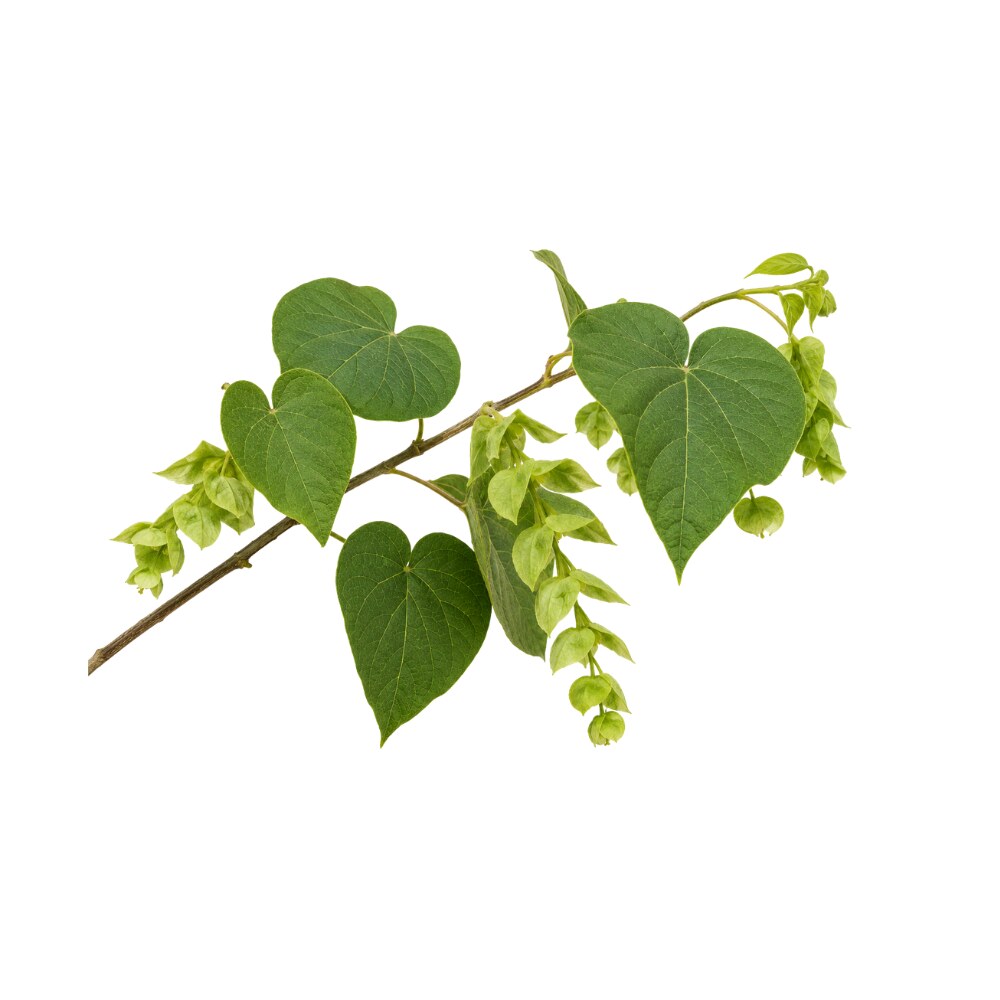
Abuta is a slender woody liana in the moonseed family (Menispermaceae), climbing by twining, waxy-coated stems and bearing broadly ovate to orbicular-reniform leaves up to 30 cm long with a heart-shaped base 33Reference 33Phytochemical investigation and pharmacognostic standardization of Cissampelos pareira root — phytochemical analysisView study →. Small greenish-yellow flowers give way to inedible, grape-sized berries.
Cissampelos holds roughly 30–40 species distributed throughout the tropics worldwide 33Reference 33Phytochemical investigation and pharmacognostic standardization of Cissampelos pareira root — phytochemical analysisView study →. A more densely hairy form of this species is sometimes distinguished as var. hirsuta — worth knowing because some of the newer cytotoxicity research above was done on that variety specifically, not the species proper 20,21Reference 20In vitroCytotoxic polyhydroxylated pregnane glycosides from Cissampelos pareira var. hirsuta — in vitroView study →Reference 21In vitroCytotoxic polyhydroxylated oleanane triterpenoids from Cissampelos pareira var. hirsuta — in vitroView study →.
A naming caution: the common name “abuta” is shared with an unrelated Amazonian plant, Abuta grandiflora, which has different uses and should not be substituted. Conversely, the Indian common name for Cissampelos pareira — Patha — is also applied to Cyclea peltata and Stephania japonica 33Reference 33Phytochemical investigation and pharmacognostic standardization of Cissampelos pareira root — phytochemical analysisView study →. All three confusions matter clinically, since the underlying chemistry differs.
Distribution
Abuta’s native range is naturally pantropical — spanning the Americas (Mexico to Argentina and the Caribbean), tropical Africa, and tropical/monsoon Asia — rather than radiating from one center of origin.
It grows wild in rainforest understory and disturbed forest edges (it’s especially common throughout the Amazon in Colombia, Peru, Brazil and Ecuador) and is also cultivated in gardens. Outside cultivation it behaves as a weed of crop fields and other open, sunny disturbed ground, and is naturalized in Australia beyond its native range.
Growing Conditions
- Grows as a tropical understory liana, full sun to part shade.
- Prefers humid, wet-tropical conditions; not frost-tolerant (roughly USDA zone 10–12 as a perennial).
- Full cultivation detail lives on the companion farm-wiki grow guide for Cissampelos pareira (link to be added once that project’s public URL is confirmed).
Pharmacology & Research
Abuta (Cissampelos pareira) carries a substantial phytochemical literature but a shallow pharmacological one: roughly 75 PubMed-indexed studies, dominated by alkaloid chemistry and by single-study, single-lab animal experiments. Two ethnopharmacology reviews anchor the field 1,2Reference 1ReviewCissampelos pareira L.: A review of its traditional uses, phytochemistry, and pharmacology — reviewView study →Reference 2ReviewFrom arrow poison to herbal medicine — the ethnobotanical, phytochemical and pharmacological significance of Cissampelos (Menispermaceae) — reviewView study →, and the most complete efficacy dataset is a bioassay-guided dengue-antiviral programme that ran from cell assays into a mouse model 3Reference 3In vitroCissampelos pareira Linn: Natural source of potent antiviral activity against all four dengue virus serotypes — in vitro and in vivo mouse modelView study →. There is no registered human clinical trial for any indication — every activity claim below rests on in vitro, in vivo rodent, or in silico work. A recurring caveat runs through all of it: activity is usually shown for a root or leaf extract, or for an isolated alkaloid concentrated far beyond what the whole plant supplies, so results do not transfer cleanly to the traditional decoction or tincture.
- Best-supported: pan-serotype antiviral activity against dengue in vitro and in a mouse model 3Reference 3In vitroCissampelos pareira Linn: Natural source of potent antiviral activity against all four dengue virus serotypes — in vitro and in vivo mouse modelView study →; dose-dependent anti-inflammatory action in multiple rat models 5Reference 5AnimalEvaluation of anti-inflammatory activity of Cissampelos pareira root in rats — animal model (rat)View study →; antinociceptive and antiarthritic activity of the root 6Reference 6AnimalAntinociceptive and antiarthritic activity of Cissampelos pareira roots — animal model (mouse/rat)View study →.
- Emerging, worth watching: in vitro anti-SARS-CoV-2 signal from connectivity-map screening 4Reference 4In vitroAnti-SARS-CoV-2 potential of Cissampelos pareira L. identified by connectivity map-based analysis and in vitro studies — in vitro and in silicoView study →, and a potent acetylcholinesterase-inhibiting alkaloid, N-methylneolitsine 14Reference 14In vitroN-Methylneolitsine as a new and potent acetylcholinesterase inhibitor of Cissampelos pareira Linn. aerial parts — in vitro (bioassay-guided isolation)View study →.
- Mechanistically thin: antimalarial claims rest largely on molecular docking and constituent-level inference 28Reference 28Bisbenzylisoquinolines from Cissampelos pareira L. as antimalarial agents: molecular docking, pharmacokinetics and molecular dynamics — in silicoView study →; antivenom use is ethnobotanically strong but experimentally preliminary 31Reference 31In vitroThe effects of Cissampelos pareira extract on envenomation induced by Bothrops diporus snake venom — in vitro and in vivoView study →.
- The caveat: no human data, no standardised dose, and heavy preparation/variety variance (much of the newest cytotoxicity work is on C. pareira var. hirsuta, not the species proper) 20,21Reference 20In vitroCytotoxic polyhydroxylated pregnane glycosides from Cissampelos pareira var. hirsuta — in vitroView study →Reference 21In vitroCytotoxic polyhydroxylated oleanane triterpenoids from Cissampelos pareira var. hirsuta — in vitroView study →.
2. Anti-inflammatory
A well-constructed rat study tested a 50% ethanolic root extract (200 and 400 mg/kg) across acute, subacute and chronic models: carrageenan-induced paw edema was reduced ~60-64%, with dose-dependent protection also against histamine-, serotonin- and prostaglandin-E₂-induced edema, formaldehyde edema and cotton-pellet granuloma 5Reference 5AnimalEvaluation of anti-inflammatory activity of Cissampelos pareira root in rats — animal model (rat)View study →. Critically, the extract produced no gastric lesions up to 1000 mg/kg — distinguishing it from NSAIDs. Newer chemistry supports the mechanism: polyhydroxylated pregnane and oleanane compounds from var. hirsuta inhibit NO release in LPS-stimulated macrophages 20,21Reference 20In vitroCytotoxic polyhydroxylated pregnane glycosides from Cissampelos pareira var. hirsuta — in vitroView study →Reference 21In vitroCytotoxic polyhydroxylated oleanane triterpenoids from Cissampelos pareira var. hirsuta — in vitroView study →.
Gap: Single primary in vivo study for the whole extract; the anti-inflammatory constituents are not standardised, and much mechanistic data comes from a different botanical variety.
3. Analgesic
A 50% aqueous-ethanolic root extract produced significant, dose-dependent antinociception in mice — reducing acetic-acid writhing by ~52% at 400 mg/kg and roughly tripling hot-plate latency — and gave 71% protection against complete-Freund’s-adjuvant arthritis, approaching dexamethasone’s effect 6Reference 6AnimalAntinociceptive and antiarthritic activity of Cissampelos pareira roots — animal model (mouse/rat)View study →. A comparative study against Cyclea peltata confirmed analgesic activity for both the powder and ethanolic extract in radiant-heat and writhing models, with the powder form performing well 7Reference 7AnimalComparative antipyretic and analgesic activities of Cissampelos pareira Linn. and Cyclea peltata — animal model (rat)View study →.
Gap: Rodent-only; the arthritis result is promising but unreplicated, and the effective doses are high.
4. Antioxidant
The alkaloidal fraction of the roots (containing ~0.18% berberine) showed strong scavenging of DPPH and superoxide radicals and inhibited iron-induced lipid peroxidation in rat-liver homogenate 8Reference 8In vitroAntioxidant and immunomodulatory activity of the alkaloidal fraction of Cissampelos pareira Linn — in vitro and in vivo (mice)View study →. Recent work on stem and leaf extracts found high total phenolic (up to ~96 mg GAE/g) and flavonoid content with corresponding in vitro antioxidant capacity 9Reference 9In vitroPhytochemical screening and in vitro antioxidant and anticancer evaluation of stem and leaf extracts of Cissampelos pareira L. — in vitroView study →, and antioxidant-enzyme restoration recurs as a secondary finding in the hepatoprotective and cardioprotective studies 10,16Reference 10In vitroIn vitro and in vivo hepatoprotective activity of Cissampelos pareira against carbon-tetrachloride-induced hepatic damage — in vitro and animal model (rat)View study →Reference 16AnimalCissampelos pareira Linn. ameliorates thyroxin-induced cardiac hypertrophy in rats — animal model (rat)View study →.
Gap: Entirely in vitro/ex vivo; no demonstration that oral dosing raises antioxidant status in a living system for this herb specifically.
5. Hepatoprotective
Against carbon-tetrachloride injury, a hydroalcoholic root extract (100-400 mg/kg) significantly lowered elevated AST, ALT, ALP and bilirubin toward normal, reduced lipid peroxidation, and raised SOD, catalase, GST, GPx and GSH — with a parallel dose-dependent protection of freshly isolated rat hepatocytes and HepG2 cells in vitro 10Reference 10In vitroIn vitro and in vivo hepatoprotective activity of Cissampelos pareira against carbon-tetrachloride-induced hepatic damage — in vitro and animal model (rat)View study →. Effect size compared favourably to silymarin.
Gap: One study from one group; no chronic or fibrosis model, no human data.
6. Antipyretic
Antipyretic activity is one of abuta’s classical uses and shows up consistently in preclinical work: C. pareira powder produced moderate fever reduction in the Brewer’s-yeast pyrexia model in rats 7Reference 7AnimalComparative antipyretic and analgesic activities of Cissampelos pareira Linn. and Cyclea peltata — animal model (rat)View study →, and the dengue-antiviral study independently noted intrinsic antipyretic action in Wistar rats, proposing synergy with paracetamol 3Reference 3In vitroCissampelos pareira Linn: Natural source of potent antiviral activity against all four dengue virus serotypes — in vitro and in vivo mouse modelView study →.
Gap: Modest effect sizes, rodent-only; no comparison to standard antipyretic dosing in humans.
7. Anxiolytic & antidepressant
Two independent leaf-extract studies support central nervous activity. A hydroalcoholic extract (200-400 mg/kg) showed antidepressant effects (reduced immobility in despair-swim and tail-suspension tests), anxiolytic effects (elevated-plus-maze, hole-board) and skeletal-muscle relaxation, with no mortality to 2000 mg/kg 11Reference 11AnimalAnti-depressant, anxiolytic, and muscle relaxant activity of hydroalcoholic extract of Cissampelos pareira Linn. leaves — animal model (mice)View study →. A separate 70% hydroethanolic leaf extract confirmed anxiolytic activity across elevated-plus-maze, light-dark and forced-swim models, comparable to diazepam at 200-400 mg/kg 12Reference 12AnimalEffect of Cissampelos pareira leaves on anxiety-like behavior in experimental animals — animal model (rat)View study →.
Gap: Rodent behavioural models only; the muscle-relaxant finding is consistent with the plant’s curare-alkaloid chemistry and warrants a safety, not efficacy, reading.
8. Cardioprotective
Two rat studies from the same group show cardioprotection. Root extract (100-200 mg/kg) attenuated isoproterenol-induced cardiac dysfunction, restoring calcineurin, LDH, nitric oxide and glutathione-system markers and improving histology 15Reference 15AnimalEffect of Cissampelos pareira root extract on isoproterenol-induced cardiac dysfunction — animal model (rat)View study →, and separately ameliorated thyroxin-induced cardiac hypertrophy 16Reference 16AnimalCissampelos pareira Linn. ameliorates thyroxin-induced cardiac hypertrophy in rats — animal model (rat)View study →. Mechanistically this is plausible: the constituent tetrandrine is a well-characterised calcium-channel-blocking cardiotonic and hypotensive agent.
Gap: Both models from one lab, unreplicated; the traditional “irregular heartbeat” use rests on the isolated alkaloid, not the whole herb.
9. Immunomodulatory
An alkaloidal fraction of the roots modulated both T-cell and B-cell responses in mice, but the direction matters: it was significantly immunosuppressive at lower doses (25-50 mg/kg), lowering humoral antibody titre and delayed-type hypersensitivity, with no effect at higher doses 8Reference 8In vitroAntioxidant and immunomodulatory activity of the alkaloidal fraction of Cissampelos pareira Linn — in vitro and in vivo (mice)View study →. This bidirectional, dose-sensitive profile is often described for the plant but is easy to overstate as simple “immune boosting.”
Gap: The effect is suppressive and dose-limited; no disease-model or human immunological endpoint.
10. Anticancer
Mostly cell-line cytotoxicity plus one in vivo model. A methanol extract showed cytotoxicity (IC₅₀ ~95 µg/mL) and extended lifespan 54-72% in Dalton’s-lymphoma-bearing mice 17Reference 17In vitroAnticancer activity of Cissampelos pareira against Dalton’s lymphoma ascites-bearing mice — in vitro and animal model (mice)View study →. The classical isolate cissampareine was cytotoxic against nasopharyngeal carcinoma cells 18Reference 18In vitroCissampareine, new cytotoxic alkaloid from Cissampelos pareira; cytotoxicity of bisbenzylisoquinoline alkaloids — in vitroView study →, and pareirubrine A showed antileukemic activity 19Reference 19In vitroStructures and solid-state tautomeric forms of two novel antileukemic tropoloisoquinoline alkaloids (pareirubrines) from Cissampelos pareira — in vitroView study →; more recent var. hirsuta pregnane glycosides and oleanane triterpenoids reach low-µM IC₅₀s against several human lines 20,21Reference 20In vitroCytotoxic polyhydroxylated pregnane glycosides from Cissampelos pareira var. hirsuta — in vitroView study →Reference 21In vitroCytotoxic polyhydroxylated oleanane triterpenoids from Cissampelos pareira var. hirsuta — in vitroView study →, and n-hexane-fraction alkaloids (hayatinine, cycleanine) are active against KB/SiHa cells 22Reference 22In vitroCytotoxic agents for KB and SiHa cells from the n-hexane fraction of Cissampelos pareira — in vitroView study →.
Gap: One in vivo study; most activity is at concentrations the whole plant cannot deliver, and the strongest cytotoxic compounds come from a different variety.
11. Antifertility
This is the pharmacological correlate of abuta’s “midwives herb” reputation — and it cuts against the “pregnancy-support” framing. A methanolic leaf extract given orally to female mice prolonged the estrous cycle (extended diestrus), altered LH, FSH, prolactin and estradiol, and significantly reduced litter numbers, with an oral LD₅₀ of 7.3 g/kg 23Reference 23AnimalAntifertility activity of the methanolic leaf extract of Cissampelos pareira in female albino mice — animal model (mice)View study →. In vitro, extract constituents down-regulate estrogen-response signatures through ERα 24Reference 24In vitroTranscriptome analysis and connectivity mapping of Cissampelos pareira L. provides molecular links of ESR1 modulation to viral inhibition — in vitro and in silicoView study →, a coherent mechanism.
Gap: One rodent antifertility study; the tension with traditional anti-abortive/pregnancy use is unresolved and clinically important (see Safety).
12. Antidiarrheal
An ethanolic root extract (25-100 mg/kg) dose-dependently reduced fecal output (29-60% inhibition) and intestinal fluid accumulation in the castor-oil model, cut gastrointestinal transit, and preferentially reduced luminal Na⁺ — while also lowering lipid peroxidation 25Reference 25AnimalEthnomedical value of Cissampelos pareira extract in experimentally induced diarrhoea — animal modelView study →. This maps directly onto the widespread traditional use for dysentery and diarrhea.
Gap: Single study, acute model only.
13. Antiurolithic & diuretic
Paired rat studies from one group: an alcoholic root extract (100-400 mg/kg) reduced urinary calcium and uric acid and limited crystal deposition in ethylene-glycol/ammonium-chloride-induced lithiasis 26Reference 26AnimalEvaluation of antiurolithic activity of alcoholic extract of roots of Cissampelos pareira in albino rats — animal model (rat)View study →, and produced dose-dependent diuresis with increased Na⁺/K⁺/Cl⁻ excretion by the Lipschitz method 27Reference 27AnimalEvaluation of diuretic activity of alcoholic extract of roots of Cissampelos pareira in albino rats — animal model (rat)View study →. Together they support the traditional diuretic and “kidney/stone” uses.
Gap: Same lab, unreplicated; short duration; the antilithic tag on the page rests entirely on these two papers.
14. Cognitive / neuroprotective
The headline memory study used PM52, a combined extract of C. pareira and Anethum graveolens, not abuta alone — it attenuated AF64A-induced memory loss and hippocampal neurodegeneration in rats via AChE suppression and reduced oxidative stress 13Reference 13AnimalEvaluation of safety and protective effect of combined extract of Cissampelos pareira and Anethum graveolens (PM52) against age-related cognitive impairment — animal model (rat)View study →. Standalone support is mechanistic: bioassay-guided isolation from the aerial parts yielded N-methylneolitsine, a potent acetylcholinesterase inhibitor (IC₅₀ ~12 µg/mL) 14Reference 14In vitroN-Methylneolitsine as a new and potent acetylcholinesterase inhibitor of Cissampelos pareira Linn. aerial parts — in vitro (bioassay-guided isolation)View study →.
Gap: The in vivo cognitive benefit is a two-herb formula, so the effect cannot be attributed to abuta; the standalone data is a single enzyme-inhibition result.
15. Antimalarial
Despite strong traditional antimalarial use, direct experimental support is weak. Molecular-docking and dynamics studies predict that bisbenzylisoquinolines such as hayatinine and curine bind Plasmodium targets (dihydrofolate reductase, cGMP-dependent kinase, prolyl-tRNA synthetase) 28Reference 28Bisbenzylisoquinolines from Cissampelos pareira L. as antimalarial agents: molecular docking, pharmacokinetics and molecular dynamics — in silicoView study →, and a Kenyan antiplasmodial screen tested the genus among many plants with mixed potency 29Reference 29In vitroAnti-plasmodial activity of the extracts of some Kenyan medicinal plants — in vitroView study →.
Gap: No whole-extract in vivo antimalarial study; the claim is essentially in silico plus constituent-level inference.
Mechanisms
| Mechanism | Drives | Key compounds |
|---|---|---|
| Ca²⁺-channel blockade, cytotoxicity, TNF-α ↓, antiplasmodial target binding | cardioprotectiveanticancerantiviralantimalarial | tetrandrine, curine, hayatinine, cissampareine |
| antileukemic cytotoxicity | anticancer | pareirubrine A, grandirubrine |
| acetylcholinesterase inhibition, antioxidant | cognitive / neuroprotective | magnoflorine, N-methylneolitsine |
| free-radical scavenging, antimicrobial | antioxidantantidiarrheal | berberine |
| ROS scavenging, NF-κB / cytokine damping, antitrypanosomal | anti-inflammatoryantioxidant | cissampeloflavone, flavonoids |
Clinical trials
No registered clinical trials were identified for Cissampelos pareira on ClinicalTrials.gov for any indication — the evidence base is entirely preclinical.
| Completed | Planned | Terminated | Preclinical |
|---|---|---|---|
| 0 | 0 | 0 | ~75 |
Last checked: July 2026.
Phytochemistry
Abuta contains a group of chemicals called isoquinoline alkaloids.
These alkaloids run through the genus Cissampelos and are mostly bisbenzylisoquinoline alkaloids 33Reference 33Phytochemical investigation and pharmacognostic standardization of Cissampelos pareira root — phytochemical analysisView study →. The most-studied member, tetrandrine, has received the most attention and carries pain-relieving, anti-inflammatory and fever-reducing activity, along with significant anti-cancer effects useful against leukemia. The catch is that the therapeutic range found useful against cancer is far higher than the natural plant supplies, so it must be extracted and concentrated to reproduce those study results 33Reference 33Phytochemical investigation and pharmacognostic standardization of Cissampelos pareira root — phytochemical analysisView study →. Tetrandrine has also been well studied as a cardiotonic and hypotensive agent through numerous pathways in the body 33Reference 33Phytochemical investigation and pharmacognostic standardization of Cissampelos pareira root — phytochemical analysisView study →.
Berberine is also present — a common alkaloid shared with plants such as barberry and goldenseal — contributing antifungal, hypotensive and antimicrobial actions, and used for conditions including irregular heartbeat, Candida, diarrhea and irritable bowel syndrome 33Reference 33Phytochemical investigation and pharmacognostic standardization of Cissampelos pareira root — phytochemical analysisView study →. The alkaloid cissampeline has been used as a skeletal muscle relaxant 33Reference 33Phytochemical investigation and pharmacognostic standardization of Cissampelos pareira root — phytochemical analysisView study →, while pareirubrine A, a novel tropoloisoquinoline alkaloid isolated from the plant, was reported to have antileukemic activity 19Reference 19In vitroStructures and solid-state tautomeric forms of two novel antileukemic tropoloisoquinoline alkaloids (pareirubrines) from Cissampelos pareira — in vitroView study →.
Two constituents have been characterised more recently: the quaternary benzylisoquinoline magnocurarine 32Reference 32In vitroBioactive isoquinoline alkaloids from Cissampelos pareira — in vitroView study →, part of the plant’s curare-type alkaloid group, and cissampeloflavone, a chalcone-flavone dimer with antitrypanosomal activity 34Reference 34In vitroCissampeloflavone, a chalcone-flavone dimer from Cissampelos pareira (antitrypanosomal) — in vitroView study →.
Constituent Summary
Abuta’s profile is overwhelmingly alkaloidal; specific quantitative figures for individual alkaloids in C. pareira are largely unpublished, so most entries read No Data. Classes are collapsible — the alkaloids carry the activity 33Reference 33Phytochemical investigation and pharmacognostic standardization of Cissampelos pareira root — phytochemical analysisView study →.
Bisbenzylisoquinoline11 compoundsno data
Isoquinoline8 compoundsno data
Tropoloisoquinoline5 compoundsno data
Aporphine7 compoundsno data
Protoberberine1 compoundno data
Benzylisoquinoline2 compoundsno data
Cyclitol1 compoundno data
Fatty acid3 compoundsno data
Flavonoid1 compoundno data
Clinical Applications
The immunomodulatory and anti-inflammatory actions of abuta, make it useful for many conditions, including cancer.
By far the most well established use of this plant is during pregnancy and to treat pain and dysregulation with the female menstrual cycle.
Dosage
No clinical trial has established a human dose for abuta, and every quantitative dose in the research literature is an animal dose that does not translate directly to people. In Western herbal practice it is typically given as a 1:2 liquid extract at around 20–40 mL, and traditionally as a root decoction or tincture — figures that rest on practitioner custom, not trial evidence. For context, the preclinical studies behind the actions above used root or leaf extracts at roughly 100–400 mg/kg in rodents (the anti-inflammatory, analgesic, hepatoprotective, cardioprotective and antiurolithic work all sit in that range); those cannot be read across to a human amount. Treat any figure here as a guide, not a recommendation.
Safety & Pregnancy
Abuta’s acute toxicity is low, but it carries curare-family muscle-relaxant alkaloids and its herb–drug interactions are essentially unstudied — so the real cautions are around sedatives, immune medication, and pregnancy.
- Low acute toxicity. No mortality or blood/biochemistry changes in rats at oral doses up to 2 g/kg over 28 days.
- Curare-family alkaloids. Carries skeletal-muscle-relaxant constituents — additive effects with sedatives or neuromuscular-blocking drugs are plausible at high intake.
- Immunosuppression. The alkaloid fraction is immunosuppressive at low doses — relevant if you’re immunocompromised or on immunosuppressant medication.
- Interactions unstudied. No formal herb–drug or CYP450 data — the absence of reports is not evidence of safety.
Full safety & interactions detail
Acute and subacute toxicity screening of a 50% aqueous-ethanolic extract found no mortality and no biochemical or haematological changes in rats at oral doses up to 2 g/kg over 28 days, and antiviral studies used high doses without observed toxicity 30,3Reference 30AnimalToxicological screening of traditional medicine Laghupatha (Cissampelos pareira) in experimental animals — animal model (acute/subacute)View study →Reference 3In vitroCissampelos pareira Linn: Natural source of potent antiviral activity against all four dengue virus serotypes — in vitro and in vivo mouse modelView study →. On that basis the acute toxicity is low. The plant does, however, belong to the curare (arrow-poison) alkaloid family and carries skeletal-muscle-relaxant constituents 2,11Reference 2ReviewFrom arrow poison to herbal medicine — the ethnobotanical, phytochemical and pharmacological significance of Cissampelos (Menispermaceae) — reviewView study →Reference 11AnimalAnti-depressant, anxiolytic, and muscle relaxant activity of hydroalcoholic extract of Cissampelos pareira Linn. leaves — animal model (mice)View study →, so additive effects with sedatives or neuromuscular-blocking drugs are plausible at high intake.
Herb–drug interactions have not been formally studied for abuta and no CYP450 data exist, so the absence of interaction reports should not be read as evidence of safety. The one documented immune effect of the alkaloid fraction is immunosuppression at low doses 8Reference 8In vitroAntioxidant and immunomodulatory activity of the alkaloidal fraction of Cissampelos pareira Linn — in vitro and in vivo (mice)View study →, relevant for anyone who is immunocompromised or taking immunosuppressant medication.
Abuta is best known as the Amazonian “midwives’ herb” — traditionally a uterine tonic taken for pre- and post-natal cramping, to steady a threatened miscarriage, and to check bleeding after childbirth 35Reference 35The Healing Power of Rainforest Herbs: A Guide to Understanding and Using Herbal Medicinals — reference text. An opposite tradition runs against it: in parts of India the leaf is used as a folk contraceptive 36,37,38Reference 36Herbal medicines used by traditional birth attendants in Malawi — ethnobotanical reportReference 37Folklore information from Assam for family planning and birth control — ethnobotanical surveyReference 38In vitroPharmacological screening of some West Indian medicinal plants — animal/in vitro screening, and the one animal study to test this found a methanolic leaf extract disrupted the estrous cycle and reduced litters in mice 23Reference 23AnimalAntifertility activity of the methanolic leaf extract of Cissampelos pareira in female albino mice — animal model (mice)View study →. There is no human evidence on either side. Given that genuine uncertainty and the plant’s uterine and hormonal activity, use abuta in pregnancy — or when trying to conceive — only under the guidance of an experienced practitioner, not self-prescribed. No lactation data exist.
Synergy
Cissampelos pareira and Anethum graveolens were suggested to be synergistic in preventing and treating age-related cognitive decline.
A combination of the two were found to possess significant neuroprotective effects through multiple factors ultimately leading to an increase in neuronal density of the hippocampus, and through antiacetylcholinesterase activity 13Reference 13AnimalEvaluation of safety and protective effect of combined extract of Cissampelos pareira and Anethum graveolens (PM52) against age-related cognitive impairment — animal model (rat)View study →.
Abuta extract appeared to possess an intrinsic antipyretic activity which could be synergistic with that of paracetamol in regards to dengue virus treatment 3Reference 3In vitroCissampelos pareira Linn: Natural source of potent antiviral activity against all four dengue virus serotypes — in vitro and in vivo mouse modelView study →.
References
- Kanmani, S., et al. (2021). Cissampelos pareira L.: A review of its traditional uses, phytochemistry, and pharmacology — review. Journal of Ethnopharmacology. https://pubmed.ncbi.nlm.nih.gov/33485976/
- Semwal, D. K., et al. (2014). From arrow poison to herbal medicine — the ethnobotanical, phytochemical and pharmacological significance of Cissampelos (Menispermaceae) — review. Journal of Ethnopharmacology. https://pubmed.ncbi.nlm.nih.gov/24997389/
- Sood, R., et al. (2015). Cissampelos pareira Linn: Natural source of potent antiviral activity against all four dengue virus serotypes — in vitro and in vivo mouse model. PLoS Neglected Tropical Diseases. https://pubmed.ncbi.nlm.nih.gov/26709822/
- Haider, S., et al. (2022). Anti-SARS-CoV-2 potential of Cissampelos pareira L. identified by connectivity map-based analysis and in vitro studies — in vitro and in silico. BMC Complementary Medicine and Therapies. https://pubmed.ncbi.nlm.nih.gov/35459166/
- Amresh, G., et al. (2007). Evaluation of anti-inflammatory activity of Cissampelos pareira root in rats — animal model (rat). Journal of Ethnopharmacology. https://pubmed.ncbi.nlm.nih.gov/17097249/
- Amresh, G., et al. (2007). Antinociceptive and antiarthritic activity of Cissampelos pareira roots — animal model (mouse/rat). Journal of Ethnopharmacology. https://pubmed.ncbi.nlm.nih.gov/17240096/
- Dhamija, I., et al. (2016). Comparative antipyretic and analgesic activities of Cissampelos pareira Linn. and Cyclea peltata — animal model (rat). Ayu. https://pubmed.ncbi.nlm.nih.gov/28827957/
- Bafna, A., & Mishra, S. (2010). Antioxidant and immunomodulatory activity of the alkaloidal fraction of Cissampelos pareira Linn — in vitro and in vivo (mice). Scientia Pharmaceutica. https://pubmed.ncbi.nlm.nih.gov/21179368/
- (2025). Phytochemical screening and in vitro antioxidant and anticancer evaluation of stem and leaf extracts of Cissampelos pareira L. — in vitro. Mediators of Inflammation. https://pubmed.ncbi.nlm.nih.gov/40689394/
- (2011). In vitro and in vivo hepatoprotective activity of Cissampelos pareira against carbon-tetrachloride-induced hepatic damage — in vitro and animal model (rat). Indian Journal of Experimental Biology. https://pubmed.ncbi.nlm.nih.gov/22403868/
- (2021). Anti-depressant, anxiolytic, and muscle relaxant activity of hydroalcoholic extract of Cissampelos pareira Linn. leaves — animal model (mice). Central Nervous System Agents in Medicinal Chemistry. https://pubmed.ncbi.nlm.nih.gov/33964866/
- (2013). Effect of Cissampelos pareira leaves on anxiety-like behavior in experimental animals — animal model (rat). Journal of Traditional and Complementary Medicine. https://pubmed.ncbi.nlm.nih.gov/24716177/
- Thukham-mee, W., & Wattanathorn, J. (2012). Evaluation of safety and protective effect of combined extract of Cissampelos pareira and Anethum graveolens (PM52) against age-related cognitive impairment — animal model (rat). Evidence-Based Complementary and Alternative Medicine. https://pubmed.ncbi.nlm.nih.gov/23028394/
- (2024). N-Methylneolitsine as a new and potent acetylcholinesterase inhibitor of Cissampelos pareira Linn. aerial parts — in vitro (bioassay-guided isolation). Natural Product Research. https://pubmed.ncbi.nlm.nih.gov/37154600/
- (2013). Effect of Cissampelos pareira root extract on isoproterenol-induced cardiac dysfunction — animal model (rat). Journal of Natural Medicines. https://pubmed.ncbi.nlm.nih.gov/22415653/
- (2016). Cissampelos pareira Linn. ameliorates thyroxin-induced cardiac hypertrophy in rats — animal model (rat). Journal of Ethnopharmacology. https://pubmed.ncbi.nlm.nih.gov/26647106/
- (2014). Anticancer activity of Cissampelos pareira against Dalton’s lymphoma ascites-bearing mice — in vitro and animal model (mice). Pharmacognosy Magazine. https://pubmed.ncbi.nlm.nih.gov/25210304/
- Kupchan, S. M., et al. (1965). Cissampareine, new cytotoxic alkaloid from Cissampelos pareira; cytotoxicity of bisbenzylisoquinoline alkaloids — in vitro. Journal of Pharmaceutical Sciences. https://pubmed.ncbi.nlm.nih.gov/5842344/
- Morita, H., et al. (1993). Structures and solid-state tautomeric forms of two novel antileukemic tropoloisoquinoline alkaloids (pareirubrines) from Cissampelos pareira — in vitro. Chemical & Pharmaceutical Bulletin. https://pubmed.ncbi.nlm.nih.gov/8403090/
- (2021). Cytotoxic polyhydroxylated pregnane glycosides from Cissampelos pareira var. hirsuta — in vitro. RSC Advances. https://pubmed.ncbi.nlm.nih.gov/35424474/
- (2022). Cytotoxic polyhydroxylated oleanane triterpenoids from Cissampelos pareira var. hirsuta — in vitro. Molecules. https://pubmed.ncbi.nlm.nih.gov/35208972/
- (2015). Cytotoxic agents for KB and SiHa cells from the n-hexane fraction of Cissampelos pareira — in vitro. Natural Product Research. https://pubmed.ncbi.nlm.nih.gov/25430075/
- Ganguly, M., et al. (2007). Antifertility activity of the methanolic leaf extract of Cissampelos pareira in female albino mice — animal model (mice). Journal of Ethnopharmacology. https://pubmed.ncbi.nlm.nih.gov/17324540/
- (2021). Transcriptome analysis and connectivity mapping of Cissampelos pareira L. provides molecular links of ESR1 modulation to viral inhibition — in vitro and in silico. Scientific Reports. https://pubmed.ncbi.nlm.nih.gov/34635729/
- (2004). Ethnomedical value of Cissampelos pareira extract in experimentally induced diarrhoea — animal model. Acta Pharmaceutica. https://pubmed.ncbi.nlm.nih.gov/15050042/
- (2014). Evaluation of antiurolithic activity of alcoholic extract of roots of Cissampelos pareira in albino rats — animal model (rat). Journal of Clinical and Diagnostic Research. https://pubmed.ncbi.nlm.nih.gov/25177580/
- (2014). Evaluation of diuretic activity of alcoholic extract of roots of Cissampelos pareira in albino rats — animal model (rat). Journal of Clinical and Diagnostic Research. https://pubmed.ncbi.nlm.nih.gov/24995192/
- (2023). Bisbenzylisoquinolines from Cissampelos pareira L. as antimalarial agents: molecular docking, pharmacokinetics and molecular dynamics — in silico. Computational Biology and Chemistry. https://pubmed.ncbi.nlm.nih.gov/36848855/
- (2009). Anti-plasmodial activity of the extracts of some Kenyan medicinal plants — in vitro. Journal of Ethnopharmacology. https://pubmed.ncbi.nlm.nih.gov/19041710/
- (2008). Toxicological screening of traditional medicine Laghupatha (Cissampelos pareira) in experimental animals — animal model (acute/subacute). Journal of Ethnopharmacology. https://pubmed.ncbi.nlm.nih.gov/18280070/
- (2018). The effects of Cissampelos pareira extract on envenomation induced by Bothrops diporus snake venom — in vitro and in vivo. Journal of Ethnopharmacology. https://pubmed.ncbi.nlm.nih.gov/28943445/
- (2019). Bioactive isoquinoline alkaloids from Cissampelos pareira — in vitro. Natural Product Research. https://pubmed.ncbi.nlm.nih.gov/29126362/
- Samanta, J., et al. (2012). Phytochemical investigation and pharmacognostic standardization of Cissampelos pareira root — phytochemical analysis. Ancient Science of Life. https://pubmed.ncbi.nlm.nih.gov/23661865/
- (2003). Cissampeloflavone, a chalcone-flavone dimer from Cissampelos pareira (antitrypanosomal) — in vitro. Phytochemistry. https://pubmed.ncbi.nlm.nih.gov/12943789/
- Taylor, L. (2005). The Healing Power of Rainforest Herbs: A Guide to Understanding and Using Herbal Medicinals — reference text. Square One Publishers.
- Bullough, C. H., & Leary, W. P. (1982). Herbal medicines used by traditional birth attendants in Malawi — ethnobotanical report. Tropical and Geographical Medicine, 34, 81–85.
- Tiwari, K. C., Majumder, R., & Bhattacharya, S. (1982). Folklore information from Assam for family planning and birth control — ethnobotanical survey. International Journal of Crude Drug Research, 20, 133–137.
- Feng, P. C., Haynes, L. J., Magnus, K. E., Plummer, J. R., & Sherratt, H. S. (1962). Pharmacological screening of some West Indian medicinal plants — animal/in vitro screening. Journal of Pharmacy and Pharmacology, 14, 556–561.