
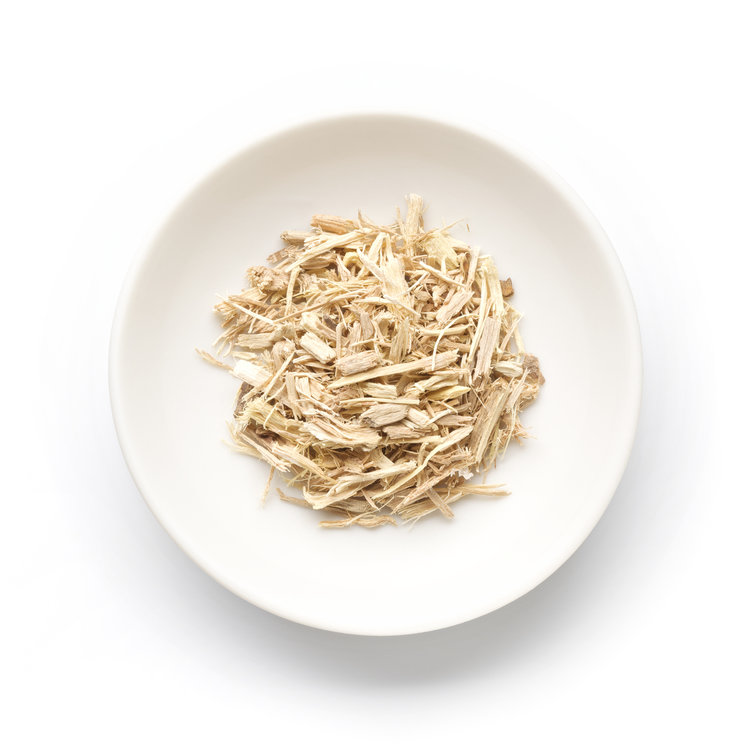
What Is Eleuthero Root (Siberian Ginseng)?
Commonly known as Siberian ginseng, this herb is well known across the globe for its adaptogenic profile.
As a close relative to the true ginsengs (Panax spp.), Siberian ginseng has many of the same actions and broad, non-specific activity on reducing the negative effects of stress (mainly through the HPA axis and immunomodulation).
The plant became popular in Russia when researchers in the 1950s became interested in the use of adaptogens, which the Russian government invested millions to develop. It wasn’t until later in the 1970s when the information hit the public domain after a Russian researcher leaked confidential documents on the research they had been doing.
Now, Siberian ginseng is among the most popular herbs in the world, used by the chronically ill, athletic elite, and elderly across the globe. It’s cheaper than ginseng yet has very similar benefits, and is even better for immune-related conditions of both excess and deficiency.
What Is Eleuthero Used For?
Eleuthero root, also known as Siberian Ginseng, is mainly used for its adaptogenic and immunomodulatory actions. It’s used during states of fatigue, slow mental and physical performance, chronic fatigue syndrome, mild depression, altitude sickness, and cancer for this reason.
Other uses include treatment for cardiovascular disease, hypertension, oedema, joint pain, and to improve athletic performance.
Traditional Uses
In Russia
Thanks to a lot of research done in the 1950s in Russia, investigating the adaptogenic actions of this herb. Eleuthero was incorporated into the Russian pharmacopoeia and was used by Russian athletes to prepare for the Olympic games in the late 1970s and early 1980s and was even used in the Russian space programme in 1977. 21Reference 21Principles and Practice of Phytotherapy (2nd ed.) — reference text (pp.
Traditional Chinese Medicine
Taste
Pungent, bitter
Energy
Warm
Channels
Liver, kidney
Actions
Dispels wind-dampness, disperses obstructions due to wind, disperses obstructions due to dampness, drains dampness, promotes urination, strengthens the bones and sinews, tonifies yang. 20,21Reference 20A Materia Medica for Chinese Medicine: Plants, Minerals, and Animal Products — reference text (ppReference 21Principles and Practice of Phytotherapy (2nd ed.) — reference text (pp
Indications
Acceptale during pregnancy
Dose
3-15 g simmered 20 min
Contraindications: Yin deficient heat signs 20Reference 20A Materia Medica for Chinese Medicine: Plants, Minerals, and Animal Products — reference text (pp.
Botany
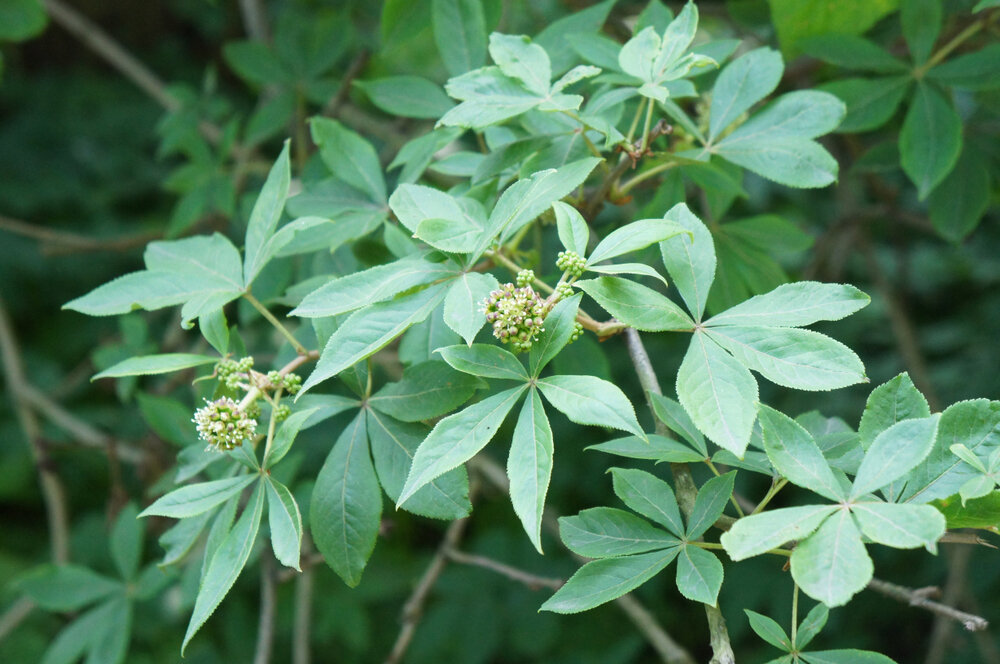
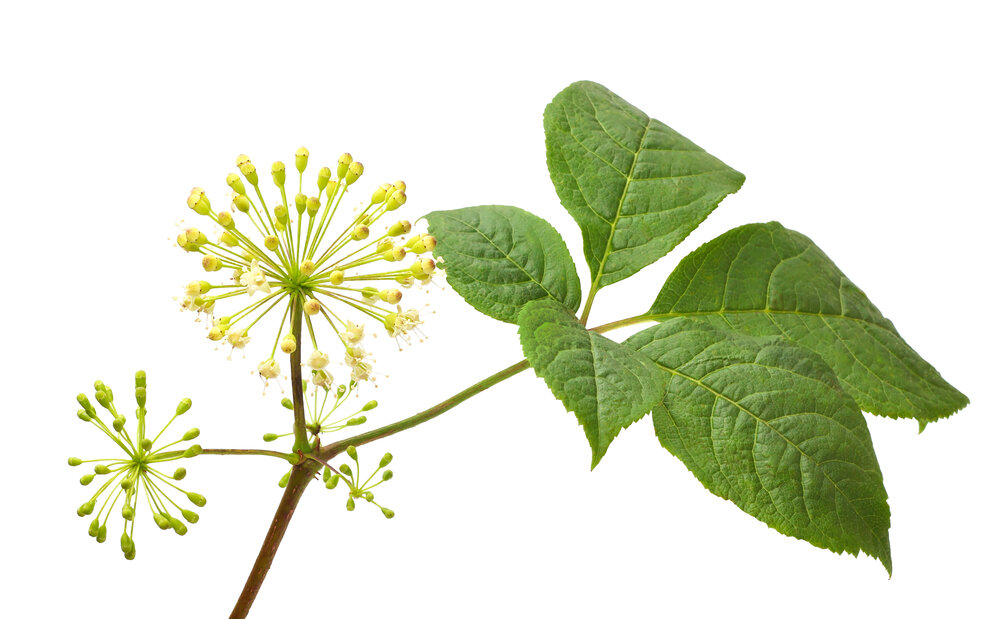
Eleuthero is a woody shrub of the Araliaceae — the ginseng family — and grows as a slow, densely thorny bush a couple of metres high, with long-stalked leaves split into three to five fingered leaflets. In summer it throws up small globe-shaped flower clusters, followed by dark, almost black berries. For the herbalist, though, the plant above ground is mostly a way of finding the plant below it: the root and root bark are the working material, and everything of interest is dug rather than picked.
The common name “Siberian ginseng” is a persistent source of confusion and worth stating plainly: eleuthero is not a true ginseng. True ginsengs belong to the genus Panax (Asian Panax ginseng, American Panax quinquefolius), whereas eleuthero sits in the separate genus Eleutherococcus. The two share a family and a general “adaptogen” reputation, but they are different plants with different root chemistry. Its closer relatives sit around it in the same family: Panax itself, the wild sarsaparillas and spikenards of Aralia, and the fiercely spiny devil’s club (Oplopanax horridus).
Distribution
Eleuthero is a plant of the cold northeastern corner of Asia, growing wild through the Russian Far East, northeastern China, Korea and Japan, where it forms part of the shrubby understory in coniferous and mixed forests. It is exceptionally cold-hardy and is now cultivated well beyond that range in temperate gardens.
Growing Conditions
- Very cold-hardy; tolerates hard winters (roughly USDA zones 3–8).
- Takes full sun to partial shade, in the manner of a forest-edge shrub.
- Prefers moist but well-drained soil; naturally an understory plant.
- Slow-growing and long-lived; grown for its roots, so plants are given years before harvest.
- Full cultivation detail lives on the companion farm-wiki grow guide for Eleutherococcus senticosus (link to be added once that project’s public URL is confirmed).
Pharmacology & Research
Eleuthero has one of the larger clinical literatures among Western adaptogens, but the depth does not match the breadth: most of the human work is small, short, and heterogeneous in preparation, and the single strongest signal is immunological rather than the anti-fatigue effect the herb is famous for 1,4,5Reference 1RCTFlow-cytometric studies with Eleutherococcus senticosus extract as an immunomodulatory agent — randomised placebo-controlled trialView study →Reference 4ReviewEvidence-based efficacy of adaptogens in fatigue, and molecular mechanisms related to their stress-protective activity — reviewView study →Reference 5RCTRandomized controlled trial of Siberian ginseng for chronic fatigue — RCTView study →. A placebo-controlled flow-cytometry trial found a genuine shift in lymphocyte subsets 1Reference 1RCTFlow-cytometric studies with Eleutherococcus senticosus extract as an immunomodulatory agent — randomised placebo-controlled trialView study →, while the adaptogenic claims rest on a mix of modest-positive and frankly null trials 5,6,7Reference 5RCTRandomized controlled trial of Siberian ginseng for chronic fatigue — RCTView study →Reference 6RCTEffects of Siberian ginseng (Eleutherococcus senticosus) on elderly quality of life — randomised clinical trialView study →Reference 7RCTNo benefit adding Eleutherococcus senticosus to stress management training in stress-related fatigue — randomised controlled studyView study →. Athletic performance is the paradox — the most-studied and most-popular use, yet controlled trials of a direct ergogenic effect are consistently null 12,13,14Reference 12RCTEffect of Eleutherococcus senticosus on submaximal and maximal exercise performance — randomised placebo-controlled trialView study →Reference 13RCTThe effect of Siberian ginseng (Eleutherococcus senticosus) on substrate utilization and performance — randomised crossover trialView study →Reference 14ReviewAssessment of the effects of Eleutherococcus senticosus on endurance performance — reviewView study →, most likely because they test acute performance markers rather than the recovery and cumulative stress resilience an adaptogen is used for. The European Medicines Agency has nonetheless accepted the root as a traditional treatment for asthenia (fatigue and weakness) 30,31Reference 30ReviewEleutherococcus root: a comprehensive review of its phytochemistry and pharmacological potential in the context of its adaptogenic effect — reviewView study →Reference 31ReviewEuropean Medicines Agency, Committee on Herbal Medicinal Products (HMPC). (2006/2014). Community herbal monograph on Eleutherococcus senticosus (Rupr. et Maxim.) Maxim., radix — Doc. EMEA/HMPC/244569/2006 (traditional use for asthenia). https://www.ema.europa.eu/en/medicines/herbal/eleutherococci-radixView study →, and almost everything beyond immune and fatigue endpoints — anti-inflammatory, neuroprotective, cardiovascular, antiviral — is preclinical and extract-specific, so a standardised-extract finding should not be read across to a tincture or a cup of root decoction.
- Best-supported: immune modulation, with a human RCT showing raised T-lymphocyte and NK-cell counts 1Reference 1RCTFlow-cytometric studies with Eleutherococcus senticosus extract as an immunomodulatory agent — randomised placebo-controlled trialView study → backed by consistent animal data 2,3Reference 2AnimalEffects of Acanthopanax senticosus supplementation on innate immunity and changes of related immune factors in healthy mice — animal studyView study →Reference 3Immunomodulatory effect of Acanthopanax senticosus polysaccharide on immunosuppressed chickens — animal studyView study →; and a mild, real-but-inconsistent adaptogenic/anti-fatigue effect in already-fatigued or elderly people, recognised by the EMA for asthenia 4,6,30Reference 4ReviewEvidence-based efficacy of adaptogens in fatigue, and molecular mechanisms related to their stress-protective activity — reviewView study →Reference 6RCTEffects of Siberian ginseng (Eleutherococcus senticosus) on elderly quality of life — randomised clinical trialView study →Reference 30ReviewEleutherococcus root: a comprehensive review of its phytochemistry and pharmacological potential in the context of its adaptogenic effect — reviewView study →.
- Emerging, worth watching: neuroprotection across several animal models (ischaemic stroke, anaesthesia- and Alzheimer-type cognitive impairment) 10,26,27Reference 10AnimalSiberian ginseng reduces infarct volume in transient focal cerebral ischaemia in Sprague-Dawley rats — animal modelView study →Reference 26Eleutheroside E attenuates isoflurane-induced cognitive dysfunction by regulating the α7-nAChR-NMDAR pathway — animal studyView study →Reference 27Acanthopanax senticosus improves cognitive impairment in Alzheimer’s disease by promoting the phosphorylation of the MAPK signaling pathway — animal studyView study →; endothelium-dependent vasorelaxation and a blood-pressure drop in rats 24Reference 24Acanthopanax senticosus induces vasorelaxation via endothelial nitric oxide-dependent and -independent pathways — animal studyView study →; RNA-virus inhibition in cell culture 11Reference 11In vitroAntiviral activity of an extract derived from roots of Eleutherococcus senticosus — in vitroView study →.
- Mechanistically thin: most anti-inflammatory, antiviral and “tonic” claims rest on single studies, combination products, or constituent-level inference rather than replicated human data 8,11,28Reference 8RCTDouble-blind, placebo-controlled, randomised study of single-dose effects of ADAPT-232 on cognitive functions — RCT of a fixed combinationView study →Reference 11In vitroAntiviral activity of an extract derived from roots of Eleutherococcus senticosus — in vitroView study →Reference 28RCTEfficacy of Kan Jang in patients with mild COVID-19 — randomised, quadruple-blind, placebo-controlled trial of a fixed Andrographis–Eleutherococcus combinationView study →.
- The caveat: eleutheroside content varies several-fold with provenance, no single clinical dose is established, and the flagship athletic-performance use is not supported by controlled acute-exercise trials 12,13,14Reference 12RCTEffect of Eleutherococcus senticosus on submaximal and maximal exercise performance — randomised placebo-controlled trialView study →Reference 13RCTThe effect of Siberian ginseng (Eleutherococcus senticosus) on substrate utilization and performance — randomised crossover trialView study →Reference 14ReviewAssessment of the effects of Eleutherococcus senticosus on endurance performance — reviewView study →.
1. Immunomodulation
This is eleuthero’s best human evidence. In a double-blind, placebo-controlled trial, 36 healthy volunteers took an ethanolic root extract (10 mL three times daily for 4 weeks); flow cytometry showed a pronounced rise in immunocompetent cells — chiefly T-helper/inducer lymphocytes, but also cytotoxic T-cells and natural killer cells — with no side effects over a 6-month observation window 1Reference 1RCTFlow-cytometric studies with Eleutherococcus senticosus extract as an immunomodulatory agent — randomised placebo-controlled trialView study →. Animal work is consistent: root-powder supplementation raised NK-cell killing rate, lysozyme and secretory IgA dose-dependently in healthy mice 2Reference 2AnimalEffects of Acanthopanax senticosus supplementation on innate immunity and changes of related immune factors in healthy mice — animal studyView study →, and a polysaccharide fraction (eleutherans, the immune-active glucans) restored lymphocyte proliferation and antibody titres in immunosuppressed poultry 3Reference 3Immunomodulatory effect of Acanthopanax senticosus polysaccharide on immunosuppressed chickens — animal studyView study →. A quadruple-blind RCT in mild COVID-19 also reported faster symptom resolution and lower inflammatory markers, but for a fixed combination of eleuthero with Andrographis paniculata (Kan Jang), so the effect cannot be credited to eleuthero alone 28Reference 28RCTEfficacy of Kan Jang in patients with mild COVID-19 — randomised, quadruple-blind, placebo-controlled trial of a fixed Andrographis–Eleutherococcus combinationView study →. The consistent direction across a human RCT and multiple animal models is what lifts this above the others.
Gap: the human single-herb trial measured cell counts, not clinical outcomes — there is no RCT showing eleuthero reduces infection rate, duration, or severity in people.
2. Adaptogen & anti-fatigue
The adaptogen claim is real but modest and preparation-dependent. A randomised trial in chronic fatigue (n=96) found no overall benefit versus placebo, though a pre-specified subgroup with less severe, longer-duration fatigue did improve 5Reference 5RCTRandomized controlled trial of Siberian ginseng for chronic fatigue — RCTView study →. In elderly hypertensive patients, 300 mg/day dry extract improved social-functioning and mental-health scores at 4 weeks — but the effect had attenuated by 8 weeks 6Reference 6RCTEffects of Siberian ginseng (Eleutherococcus senticosus) on elderly quality of life — randomised clinical trialView study →. Adding eleuthero (120 mg/day) to stress-management training produced negligible extra benefit in stress-related fatigue 7Reference 7RCTNo benefit adding Eleutherococcus senticosus to stress management training in stress-related fatigue — randomised controlled studyView study →. A review of adaptogen trials rated the human evidence for eleuthero in mild fatigue and weakness as “good” but not strong, tying the effect mechanistically to HPA-axis regulation and heat-shock protein (Hsp70) signalling 4Reference 4ReviewEvidence-based efficacy of adaptogens in fatigue, and molecular mechanisms related to their stress-protective activity — reviewView study →, and the European Medicines Agency accepts the root as a traditional herbal medicine for symptoms of asthenia such as fatigue and weakness 30,31Reference 30ReviewEleutherococcus root: a comprehensive review of its phytochemistry and pharmacological potential in the context of its adaptogenic effect — reviewView study →Reference 31ReviewEuropean Medicines Agency, Committee on Herbal Medicinal Products (HMPC). (2006/2014). Community herbal monograph on Eleutherococcus senticosus (Rupr. et Maxim.) Maxim., radix — Doc. EMEA/HMPC/244569/2006 (traditional use for asthenia). https://www.ema.europa.eu/en/medicines/herbal/eleutherococci-radixView study →. Combination-product trials (with Rhodiola and Schisandra) show faster gains in attention under stress, but those cannot be credited to eleuthero alone 8Reference 8RCTDouble-blind, placebo-controlled, randomised study of single-dose effects of ADAPT-232 on cognitive functions — RCT of a fixed combinationView study →.
Gap: effects are small, often transient, and clearest only in already-fatigued or elderly populations; no trial demonstrates a durable adaptogenic benefit in healthy adults, and the EMA classification is traditional-use, not well-established-efficacy.
3. Anti-inflammatory
Anti-inflammatory activity is documented mechanistically rather than clinically. In a rat cerebral-ischaemia model, a water extract markedly inhibited cyclooxygenase-2 (COX-2) and microglial (OX-42) expression in the injured brain region 10Reference 10AnimalSiberian ginseng reduces infarct volume in transient focal cerebral ischaemia in Sprague-Dawley rats — animal modelView study →, and the coumarin isofraxidin is the constituent most often credited with suppressing inflammatory mediators. The direction is coherent with the immune data, but every anti-inflammatory endpoint to date is in animals or cell systems.
Gap: no human study measures an inflammatory outcome (CRP, cytokines, symptom scores); the classification is inferred from a single in vivo model plus constituent-level reasoning.
4. Neuroprotective
The neuroprotective signal has broadened from one study to a convergent set of animal models. In transient middle-cerebral-artery occlusion in Sprague-Dawley rats, an intraperitoneal water extract (100 mg/kg) reduced infarct volume by 37% and suppressed COX-2 and microglial activation in the penumbra, implying protection via anti-inflammatory rather than direct neuronal mechanisms 10Reference 10AnimalSiberian ginseng reduces infarct volume in transient focal cerebral ischaemia in Sprague-Dawley rats — animal modelView study →. The lignan eleutheroside E attenuated anaesthesia-induced cognitive dysfunction in aged rats by restoring hippocampal acetylcholine and α7-nicotinic/NMDA-receptor signalling 26Reference 26Eleutheroside E attenuates isoflurane-induced cognitive dysfunction by regulating the α7-nAChR-NMDAR pathway — animal studyView study →, and whole-extract and saponin fractions improved memory in Alzheimer-model mice via MAPK-pathway phosphorylation 27Reference 27Acanthopanax senticosus improves cognitive impairment in Alzheimer’s disease by promoting the phosphorylation of the MAPK signaling pathway — animal studyView study →. A pharmacological review collates further activity across depression, Parkinson and ischaemia models 25Reference 25ReviewPharmacological effects of Eleutherococcus senticosus on the neurological disorders — reviewView study →. The results are directionally consistent, but every study is in animals, and several lean heavily on network-pharmacology target prediction.
Gap: no replication in humans, no head-to-head oral-dosing data, and heavy reliance on in silico target mapping — the effect cannot yet be generalised to people.
5. Cardiovascular
A vasodilatory signal is mapped in animals but contradicted in the single human trial. In isolated rat thoracic aorta, a root extract produced dose-dependent relaxation that was partly endothelium- and nitric-oxide-dependent (blocked by NOS and guanylyl-cyclase inhibitors and by endothelium removal) and partly endothelium-independent; oral dosing (900 mg/kg/day for a week) lowered systolic blood pressure in the same rats 24Reference 24Acanthopanax senticosus induces vasorelaxation via endothelial nitric oxide-dependent and -independent pathways — animal studyView study →. That mechanism is coherent with the herb’s traditional use for circulation and oedema. But in the one human dataset — elderly hypertensive patients given 300 mg/day dry extract — blood pressure did not change in either direction 6Reference 6RCTEffects of Siberian ginseng (Eleutherococcus senticosus) on elderly quality of life — randomised clinical trialView study →, so eleuthero should not be treated as an antihypertensive.
Gap: the vasorelaxant effect is ex vivo and in a rat model at a dose far above human use; the only human cardiovascular endpoint was null, and no trial has tested blood pressure or endothelial function as a primary outcome.
7. Physical performance
Eleuthero’s oldest and most popular use is as a training and recovery tonic — the role it earned in Soviet-era sports programs and still holds among athletes and practitioners today. The controlled trials mostly don’t capture it: in highly trained distance runners, 8 weeks of extract produced no change in VO2, heart rate, lactate, perceived exertion or time to exhaustion 12Reference 12RCTEffect of Eleutherococcus senticosus on submaximal and maximal exercise performance — randomised placebo-controlled trialView study →; in endurance cyclists, 1,200 mg/day for a week did not alter substrate use or 10-km time-trial performance 13Reference 13RCTThe effect of Siberian ginseng (Eleutherococcus senticosus) on substrate utilization and performance — randomised crossover trialView study →; and a structured review found the three studies suggesting benefit were each methodologically flawed, while five rigorous studies showed no effect at 1,000–1,200 mg/day for up to 6 weeks 14Reference 14ReviewAssessment of the effects of Eleutherococcus senticosus on endurance performance — reviewView study →. One later crossover trial (n=9) did report improved endurance time and VO2 peak 15Reference 15RCTThe effect of eight weeks of supplementation with Eleutherococcus senticosus on endurance capacity and metabolism — randomised crossover trialView study →. The likeliest reason for the split is that these trials measure an acute ergogenic effect — a direct boost to a single performance test — whereas eleuthero is used as an adaptogen for cumulative stress resilience and recovery across a training block, an endpoint no short trial was built to detect (one study even found it shifted the testosterone-to-cortisol ratio in trained athletes 9Reference 9Clinical trialThe effects of Eleutherococcus senticosus and Panax ginseng on steroidal hormone indices of stress and lymphocyte subset numbers in endurance athletes — clinical trialView study →).
Gap: controlled trials of a direct, acute ergogenic effect are null; the case for eleuthero in athletic performance rests on its long traditional and practical use for recovery and stress resilience over a training block — experience-backed, not yet RCT-proven.
Mechanisms
| Mechanism | Drives | Key compounds |
|---|---|---|
| HPA-axis modulation, Hsp70 up-regulation, cortisol/NO control | adaptogenanti-fatigue | eleutheroside B (syringin) |
| stress-response signalling, antioxidant support | adaptogenimmune | eleutheroside E, syringaresinol, sesamin |
| macrophage/NK activation, lymphocyte proliferation, cytokine induction | immunomodulation | polysaccharides (eleutherans, glucans A–G) |
| COX-2 ↓, inflammatory-mediator and microglial suppression | anti-inflammatoryneuroprotective | isofraxidin |
| endothelial NO / cGMP-dependent vasorelaxation | cardiovascular | caffeoylquinic acids, chlorogenic acid |
| α7-nAChR / NMDA-receptor and MAPK signalling | neuroprotectivecognitive | eleutheroside E |
Clinical trials
Single-herb eleuthero has roughly eight published human randomised/controlled trials, most predating trial-registry mandates; on ClinicalTrials.gov most registered “eleuthero” entries test fixed adaptogen combinations (with Rhodiola, Schisandra or Andrographis) rather than the herb alone 8,28Reference 8RCTDouble-blind, placebo-controlled, randomised study of single-dose effects of ADAPT-232 on cognitive functions — RCT of a fixed combinationView study →Reference 28RCTEfficacy of Kan Jang in patients with mild COVID-19 — randomised, quadruple-blind, placebo-controlled trial of a fixed Andrographis–Eleutherococcus combinationView study →.
| Completed | Planned | Terminated | Preclinical |
|---|---|---|---|
| ~8single-herb RCTs | 2registered | — | Dozens |
Last checked: July 2026.
Phytochemistry
Eleuthero is defined not by a single class but by a diverse set of marker glycosides collectively called the eleutherosides (A–M), which are chemically unrelated to the triterpenoid saponins (ginsenosides) of true ginseng. The two used for standardisation are eleutheroside B — the phenylpropanoid glycoside syringin — and eleutheroside E, the lignan syringaresinol diglucoside. The European Pharmacopoeia requires the dried root to contain at least 0.08% of the sum of the two; content varies with provenance, Russian- and Korean-grown root running higher in eleutheroside E than Chinese material 19,21Reference 19ReviewAlternative Medicine Review, 11(2), 151–155 — reference monographReference 21Principles and Practice of Phytotherapy (2nd ed.) — reference text (pp.
The immune-active fraction is carried by the eleutherans (glucans A–G). Supporting constituents include the coumarin isofraxidin, the lignan sesamin, chlorogenic acid, the triterpene friedelin, minor saponins (ciwujianosides), and phytosterols (beta-sitosterol, stigmasterol, campesterol); the fixed oil supplies caproic, lauric and palmitic acids with ~75% neutral fats 19,22,23Reference 19ReviewAlternative Medicine Review, 11(2), 151–155 — reference monographReference 22ReviewAcanthopanax senticosus (Rupr. et Maxim.) HarmsReference 23ReviewConstituents and pharmacological effects of Eucommia and Siberian ginseng — review.
Constituent Summary
Marker figures are percent of dried root (sum of eleutherosides B + E); the pharmacopoeial minimum is 0.08% but content varies several-fold with provenance and processing. Entries marked No Data are documented qualitatively only 19,21,22,23Reference 19ReviewAlternative Medicine Review, 11(2), 151–155 — reference monographReference 21Principles and Practice of Phytotherapy (2nd ed.) — reference text (ppReference 22ReviewAcanthopanax senticosus (Rupr. et Maxim.) HarmsReference 23ReviewConstituents and pharmacological effects of Eucommia and Siberian ginseng — review.
Phenylpropanoid1 compound1 with data
Polysaccharide1 compoundno data
Coumarin1 compoundno data
Triterpene1 compoundno data
Sterol1 compoundno data
Clinical Applications
The well-known adaptogenic activities of eleutherococcus makes it useful for athletic performance enhancement, as well as stress-related conditions ranging from chronic fatigue, to cardiovascular disease. The broad immunomodulating actions of the plant make it useful for inflammation, cancer, infection, and autoimmune conditions.
Synergy
Combines well with Schizandra and rhodiola for stress, and echinacea and astragalus for immune function. 21Reference 21Principles and Practice of Phytotherapy (2nd ed.) — reference text (pp.
Dosage
In research, eleuthero is given as several different preparations — a proprietary ethanolic liquid extract for the immune trial, dry-extract capsules for the fatigue and stress studies, and standardised capsules for the performance work — and no single clinical dose is established. Content of the marker eleutherosides varies several-fold with provenance, so these are a guide to what was tested, not a recommendation.
| Indication | Preparation | Dose | Est. dried-herb equivalent | Source |
|---|---|---|---|---|
| Immunomodulation | Ethanolic root extract | ~30 mL/day (10 mL × 3) for 4 weeks | — (proprietary extract; no marker %) | RCT 1Reference 1RCTFlow-cytometric studies with Eleutherococcus senticosus extract as an immunomodulatory agent — randomised placebo-controlled trialView study → |
| Elderly quality of life | Dry extract | 300 mg/day for 4–8 weeks | order-of-magnitude only | RCT 6Reference 6RCTEffects of Siberian ginseng (Eleutherococcus senticosus) on elderly quality of life — randomised clinical trialView study → |
| Stress-related fatigue | Standardised extract (adjunct) | 120 mg/day | order-of-magnitude only | RCT 7Reference 7RCTNo benefit adding Eleutherococcus senticosus to stress management training in stress-related fatigue — randomised controlled studyView study → |
| Physical performance | Extract capsules | 800–1,200 mg/day, up to 8 weeks | order-of-magnitude only | RCTs 13,15Reference 13RCTThe effect of Siberian ginseng (Eleutherococcus senticosus) on substrate utilization and performance — randomised crossover trialView study →Reference 15RCTThe effect of eight weeks of supplementation with Eleutherococcus senticosus on endurance capacity and metabolism — randomised crossover trialView study → |
Eleuthero research doses do not convert cleanly to a whole-herb weight: the trials used different proprietary or standardised extracts, and eleutheroside content varies several-fold with provenance and processing. Treat each row as preparation-specific — a guide to what was tested, never a recommendation, and not interchangeable with the traditional doses below.
Traditional Dosage
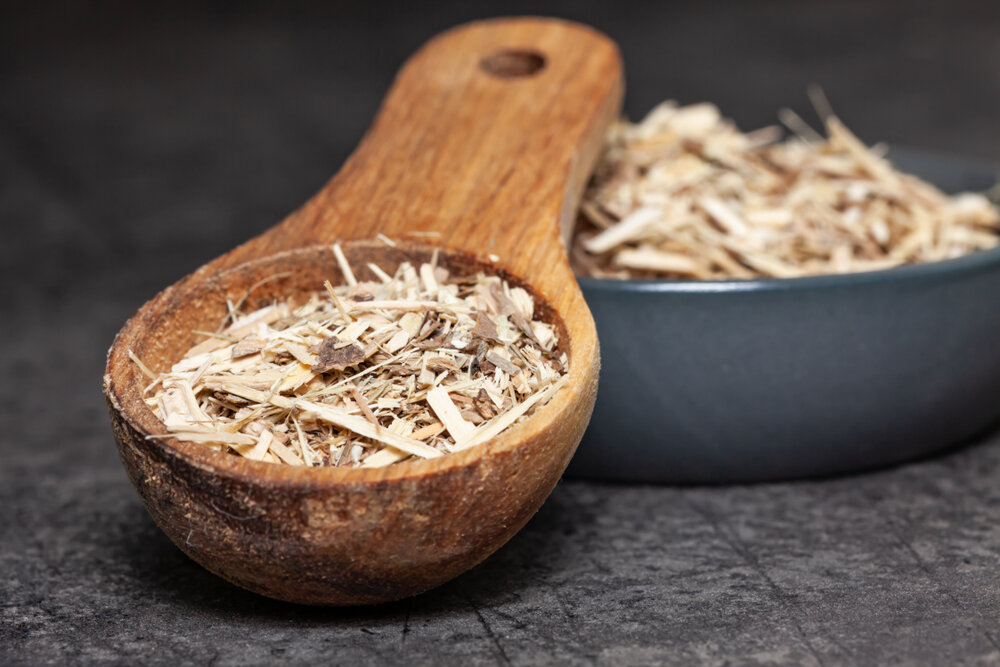
In Western and traditional East Asian practice eleuthero is used as the whole root — a decoction, tincture or liquid extract — rather than a standardised isolate. These are traditional preparation ranges, distinct from the research extracts above.
| System | Preparation | Dose |
|---|---|---|
| Western herbal | 1:2 liquid extract | 15–55 mL / week 21Reference 21Principles and Practice of Phytotherapy (2nd ed.) — reference text (pp |
| Western herbal | Dried root (decoction) | ~2–4 g, up to 3× daily |
| TCM | Dried root, simmered 20 min | 3–15 g 20Reference 20A Materia Medica for Chinese Medicine: Plants, Minerals, and Animal Products — reference text (pp |
Safety & Pregnancy
Eleuthero is well tolerated and low in toxicity; the main things to know are a mild stimulant edge at higher doses and that it distorts digoxin immunoassay readings without causing true toxicity.
- Digoxin assay interference. Falsely alters immunoassay digoxin readings (an artefact, not true toxicity) — tell your doctor if you take digoxin.
- Mild stimulant edge. Higher doses can cause insomnia, irritability or palpitations; caution with anxiety, insomnia or other stimulants.
- Medication interactions. Reported with antidepressants and psychotropics; theoretical caution in autoimmune disease or with immunosuppressants.
- Avoid in acute infection. Traditionally contraindicated during acute febrile illness.
- Low toxicity. Very high rodent LD50 and lifelong-feeding studies with no toxic effects.
Full safety & interactions detail
Eleuthero is well tolerated and low in toxicity. Rodent LD50 values are very high — around 31 g/kg for the root in mice and 10 mL/kg for the 1:1 fluid extract in rats — and rats fed eleutherococcus for their entire lifespan at well above the usual doses showed no toxic effects 21Reference 21Principles and Practice of Phytotherapy (2nd ed.) — reference text (pp. At higher doses it can cause insomnia, irritability, palpitations or restlessness, consistent with its mild stimulant character, so people with anxiety or insomnia, or those already taking stimulants, should be cautious. It is traditionally avoided during acute febrile infection.
The most-cited interaction concern — raised serum digoxin — is best understood as assay interference rather than a true pharmacokinetic effect. Eleuthero contains digoxin-like immunoreactive substances that can falsely elevate (or, on some analysers, falsely lower) immunoassay digoxin readings, an artefact demonstrated across multiple assay platforms, while chromatographic methods are unaffected 17,18Reference 17Effect of Asian and Siberian ginseng on serum digoxin measurement by five digoxin immunoassays — assay-interference studyView study →Reference 18Effect of Brazilian, Indian, Siberian, Asian, and North American ginseng on serum digoxin measurement by immunoassays — assay-interference studyView study →. The single case report of apparently raised digoxin on eleuthero could not confirm true toxicity 16Reference 16Case reportElevated serum digoxin levels in a patient taking digoxin and Siberian ginseng — case reportView study →. Patients taking digoxin should nonetheless disclose eleuthero use so clinicians can interpret levels on a non-interfering assay rather than needlessly stopping the herb.
A retrospective adverse-event review has linked adaptogens, including eleuthero, to interactions with antidepressant drugs — agitation, insomnia and blood-pressure changes — so caution is reasonable alongside antidepressants or other psychotropic medication 29Reference 29ReviewAdverse events of interactions between adaptogens and antidepressant drugs — retrospective chart reviewView study →. Given eleuthero’s documented immune-activating effect, there is a theoretical caution in autoimmune disease or alongside immunosuppressant therapy — mechanistic, not evidenced by case reports 1Reference 1RCTFlow-cytometric studies with Eleutherococcus senticosus extract as an immunomodulatory agent — randomised placebo-controlled trialView study →. Interactions with anticoagulants, antihypertensives, sedatives and CYP substrates have not been formally studied, and the one human trial in hypertensive patients found no blood-pressure effect either way 6Reference 6RCTEffects of Siberian ginseng (Eleutherococcus senticosus) on elderly quality of life — randomised clinical trialView study →, so eleuthero should not be relied on as an antihypertensive. No significant allergy signal is documented in the literature. The absence of reported problems is not evidence of safety.
Contraindications
- Traditionally contraindicated during acute infection.
Eleuthero has not been formally evaluated for safety in pregnancy or lactation. Traditional Chinese practice has regarded the root as acceptable during pregnancy, but that is a traditional position rather than a safety study, so modern use in pregnancy and breastfeeding is best treated as unstudied. The EMA traditional-use monograph covers asthenia only and reports no fertility data, so it provides no positive safety basis for use in pregnancy or lactation 31Reference 31ReviewEuropean Medicines Agency, Committee on Herbal Medicinal Products (HMPC). (2006/2014). Community herbal monograph on Eleutherococcus senticosus (Rupr. et Maxim.) Maxim., radix — Doc. EMEA/HMPC/244569/2006 (traditional use for asthenia). https://www.ema.europa.eu/en/medicines/herbal/eleutherococci-radixView study →.
References
- Bohn B, Nebe CT, Birr C. (1987). Flow-cytometric studies with Eleutherococcus senticosus extract as an immunomodulatory agent — randomised placebo-controlled trial. Arzneimittelforschung. https://pubmed.ncbi.nlm.nih.gov/2963645/
- Zhang Y, Zhang Y, Liu Z. (2021). Effects of Acanthopanax senticosus supplementation on innate immunity and changes of related immune factors in healthy mice — animal study. Innate Immunity. https://pubmed.ncbi.nlm.nih.gov/32938286/
- Yang S, Shan C, Ma X, et al. (2021). Immunomodulatory effect of Acanthopanax senticosus polysaccharide on immunosuppressed chickens — animal study. Poultry Science. https://pubmed.ncbi.nlm.nih.gov/33518115/
- Panossian A, Wikman G. (2009). Evidence-based efficacy of adaptogens in fatigue, and molecular mechanisms related to their stress-protective activity — review. Current Clinical Pharmacology. https://pubmed.ncbi.nlm.nih.gov/19500070/
- Hartz AJ, Bentler S, Noyes R, et al. (2004). Randomized controlled trial of Siberian ginseng for chronic fatigue — RCT. Psychological Medicine. https://pubmed.ncbi.nlm.nih.gov/14971626/
- Cicero AF, Derosa G, Brillante R, et al. (2004). Effects of Siberian ginseng (Eleutherococcus senticosus) on elderly quality of life — randomised clinical trial. Archives of Gerontology and Geriatrics Supplement. https://pubmed.ncbi.nlm.nih.gov/15207399/
- Schaffler K, Wolf OT, Burkart M. (2013). No benefit adding Eleutherococcus senticosus to stress management training in stress-related fatigue — randomised controlled study. Pharmacopsychiatry. https://pubmed.ncbi.nlm.nih.gov/23740477/
- Aslanyan G, Amroyan E, Gabrielyan E, et al. (2010). Double-blind, placebo-controlled, randomised study of single-dose effects of ADAPT-232 on cognitive functions — RCT of a fixed combination. Phytomedicine. https://pubmed.ncbi.nlm.nih.gov/20374974/
- Gaffney BT, Hügel HM, Rich PA. (2001). The effects of Eleutherococcus senticosus and Panax ginseng on steroidal hormone indices of stress and lymphocyte subset numbers in endurance athletes — clinical trial. Life Sciences. https://pubmed.ncbi.nlm.nih.gov/11798012/
- Bu Y, Jin ZH, Park SY, et al. (2005). Siberian ginseng reduces infarct volume in transient focal cerebral ischaemia in Sprague-Dawley rats — animal model. Phytotherapy Research. https://pubmed.ncbi.nlm.nih.gov/15852490/
- Glatthaar-Saalmüller B, Sacher F, Esperester A. (2001). Antiviral activity of an extract derived from roots of Eleutherococcus senticosus — in vitro. Antiviral Research. https://pubmed.ncbi.nlm.nih.gov/11397509/
- Dowling EA, Redondo DR, Branch JD, et al. (1996). Effect of Eleutherococcus senticosus on submaximal and maximal exercise performance — randomised placebo-controlled trial. Medicine & Science in Sports & Exercise. https://pubmed.ncbi.nlm.nih.gov/8778554/
- Eschbach LF, Webster MJ, Boyd JC, et al. (2000). The effect of Siberian ginseng (Eleutherococcus senticosus) on substrate utilization and performance — randomised crossover trial. International Journal of Sport Nutrition and Exercise Metabolism. https://pubmed.ncbi.nlm.nih.gov/11099371/
- Goulet ED, Dionne IJ. (2005). Assessment of the effects of Eleutherococcus senticosus on endurance performance — review. International Journal of Sport Nutrition and Exercise Metabolism. https://pubmed.ncbi.nlm.nih.gov/15902991/
- Kuo J, Chen KW, Cheng IS, et al. (2010). The effect of eight weeks of supplementation with Eleutherococcus senticosus on endurance capacity and metabolism — randomised crossover trial. Chinese Journal of Physiology. https://pubmed.ncbi.nlm.nih.gov/21793317/
- McRae S. (1996). Elevated serum digoxin levels in a patient taking digoxin and Siberian ginseng — case report. CMAJ. https://pubmed.ncbi.nlm.nih.gov/8705908/
- Dasgupta A, Wu S, Actor J, et al. (2003). Effect of Asian and Siberian ginseng on serum digoxin measurement by five digoxin immunoassays — assay-interference study. American Journal of Clinical Pathology. https://pubmed.ncbi.nlm.nih.gov/12580002/
- Dasgupta A, Reyes MA. (2005). Effect of Brazilian, Indian, Siberian, Asian, and North American ginseng on serum digoxin measurement by immunoassays — assay-interference study. American Journal of Clinical Pathology. https://pubmed.ncbi.nlm.nih.gov/16040294/
- Eleutherococcus senticosus monograph. (2006). Alternative Medicine Review, 11(2), 151–155 — reference monograph.
- Hempen, C. H., & Fischer, T. (2009). A Materia Medica for Chinese Medicine: Plants, Minerals, and Animal Products — reference text (pp. 348–349). Churchill Livingstone/Elsevier.
- Bone, K., & Mills, S. (2013). Principles and Practice of Phytotherapy (2nd ed.) — reference text (pp. 818–825). Elsevier.
- Tang, W., & Eisenbrand, G. (1992). Acanthopanax senticosus (Rupr. et Maxim.) Harms. In Chinese Drugs of Plant Origin — reference text/review (pp. 1–12). Springer.
- Deyama, T., Nishibe, S., & Nakazawa, Y. (2001). Constituents and pharmacological effects of Eucommia and Siberian ginseng — review. Acta Pharmacologica Sinica, 22, 1057–1070.
- Shiokawa Y, Sadahiro T, Yagi M, et al. (2019). Acanthopanax senticosus induces vasorelaxation via endothelial nitric oxide-dependent and -independent pathways — animal study. Planta Medica. https://pubmed.ncbi.nlm.nih.gov/31342475/
- Li XT, Zhou JC, Zhou Y, et al. (2022). Pharmacological effects of Eleutherococcus senticosus on the neurological disorders — review. Phytotherapy Research. https://pubmed.ncbi.nlm.nih.gov/35844057/
- Lu X, Wang C, Wu L, et al. (2019). Eleutheroside E attenuates isoflurane-induced cognitive dysfunction by regulating the α7-nAChR-NMDAR pathway — animal study. Neuroreport. https://pubmed.ncbi.nlm.nih.gov/30585907/
- Zhang Z, Wang J, Yang Y, et al. (2024). Acanthopanax senticosus improves cognitive impairment in Alzheimer’s disease by promoting the phosphorylation of the MAPK signaling pathway — animal study. Frontiers in Immunology. https://pubmed.ncbi.nlm.nih.gov/38545117/
- Ratiani L, Sanikidze T, Ormotsadze G, et al. (2023). Efficacy of Kan Jang in patients with mild COVID-19 — randomised, quadruple-blind, placebo-controlled trial of a fixed Andrographis–Eleutherococcus combination. Pharmaceuticals (Basel). https://pubmed.ncbi.nlm.nih.gov/37765004/
- Siwek M, Woroń J, Wrzosek A, et al. (2023). Adverse events of interactions between adaptogens and antidepressant drugs — retrospective chart review. Frontiers in Pharmacology. https://pubmed.ncbi.nlm.nih.gov/37829299/
- Patyra A, Kołtun-Jasion M, Kiss AK, et al. (2025). Eleutherococcus root: a comprehensive review of its phytochemistry and pharmacological potential in the context of its adaptogenic effect — review. Frontiers in Pharmacology. https://pubmed.ncbi.nlm.nih.gov/41235111/
- European Medicines Agency, Committee on Herbal Medicinal Products (HMPC). (2006/2014). Community herbal monograph on Eleutherococcus senticosus (Rupr. et Maxim.) Maxim., radix — Doc. EMEA/HMPC/244569/2006 (traditional use for asthenia). https://www.ema.europa.eu/en/medicines/herbal/eleutherococci-radix