Materia Medica
Maca
Lepidium meyenii
Maca (Lepidium meyenii) — a high-Andean root in the mustard family used for libido, fertility, menopausal symptoms and stress resilience, with effects that are colour- and preparation-specific.
What Is Maca?
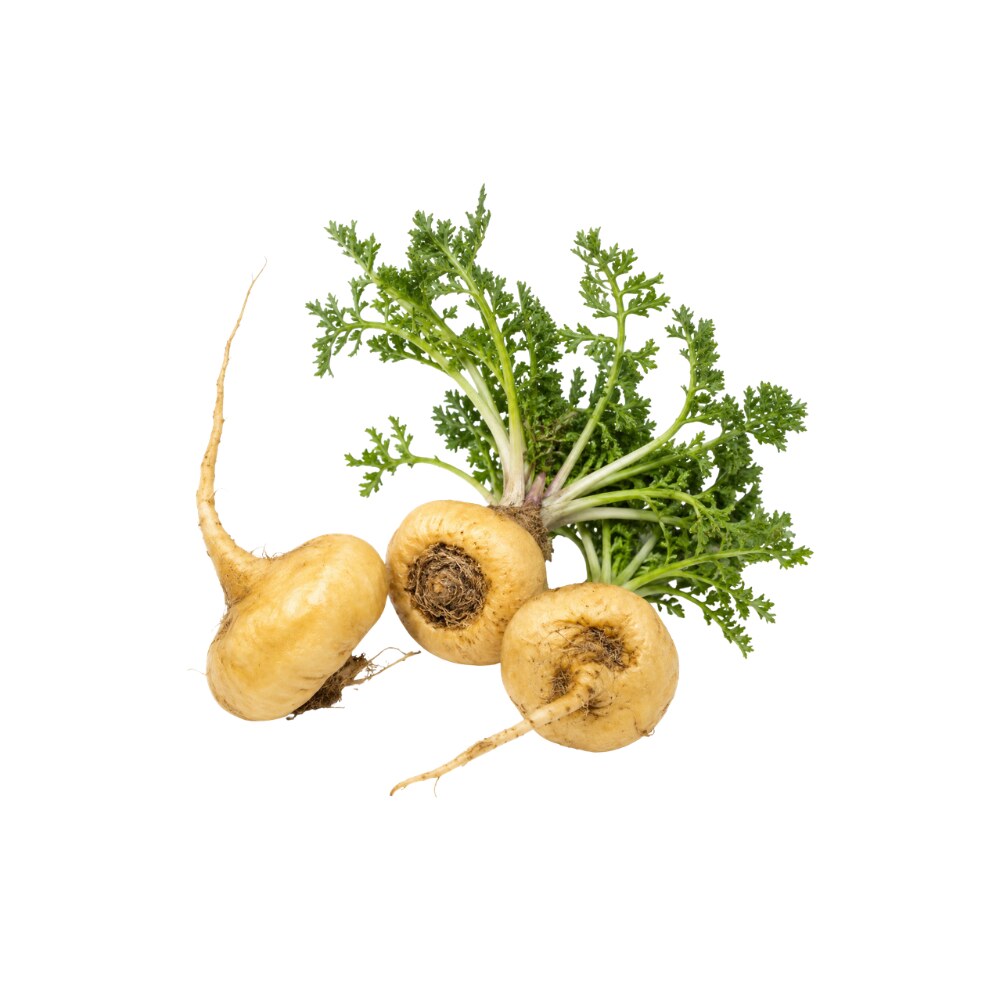
Maca (Lepidium meyenii) is a root vegetable in the mustard family (Brassicaceae), cultivated for roughly two thousand years on the high plateaus of the central Peruvian Andes, where it grows at about 3,500–4,500 m — among the highest-altitude crops in the world. The swollen hypocotyl (a turnip-like root) is dried and powdered, and has a long history as both a staple food and a traditional remedy for fertility and vitality.
Maca is best known today as an adaptogen and libido tonic. That adaptogenic framing is traditional and proposed rather than settled 34Reference 34Brazilian plants as possible adaptogens: an ethnopharmacological survey of books edited in Brazil: it rests largely on preclinical evidence that maca supports the hypothalamic–pituitary axis without acting as a hormone. Tellingly, the human trials consistently find its effects on libido and menopausal symptoms occur without changing serum testosterone, oestradiol or gonadotropins — maca is not a hormone 1,14Reference 1RCTEffect of Lepidium meyenii (Maca) on sexual desire and its absent relationship with serum testosterone levels in adult healthy men — randomised placebo-controlled trialView study →Reference 14RCTBeneficial effects of Lepidium meyenii (Maca) on psychological symptoms and measures of sexual dysfunction in postmenopausal women are not related to oestrogen or androgen content — randomised controlled trialView study →.
A defining, often-overlooked caveat runs through the whole literature: maca’s effects are colour- and preparation-specific. Black, red and yellow ecotypes are not interchangeable, and raw powder, gelatinised (pre-cooked) extract and hydroalcoholic extract behave differently — a result in one form does not transfer to another 23Reference 23ReviewEthnobiology and ethnopharmacology of Lepidium meyenii (Maca), a plant from the Peruvian highlands — reviewView study →.
Traditional & Modern Uses
Maca was domesticated by Andean cultures at least two thousand years ago, with primitive cultivars dated as far back as ~1600 BC. In a region largely inhospitable to crops — intense sun, freezing nights, high winds and thin, rocky soil — it is one of the few edible plants that thrives, and so has long carried real value: eaten fresh or dried, cooked like a sweet potato, boiled into a porridge or juice, or fermented into an alcoholic drink (maca chicha), and traded down to lower elevations for rice, corn and beans 33Reference 33The Healing Power of Rainforest Herbs.
Peruvians have used maca for centuries as both food and medicine, above all as a fertility enhancer in humans and livestock 33Reference 33The Healing Power of Rainforest Herbs. In Peruvian folk medicine it is still applied to anaemia, menstrual disorders, menopausal symptoms, memory loss and general vitality, and internationally it has become popular as an aphrodisiac, hormone-balancing and stress-support supplement 23,33Reference 23ReviewEthnobiology and ethnopharmacology of Lepidium meyenii (Maca), a plant from the Peruvian highlands — reviewView study →Reference 33The Healing Power of Rainforest Herbs.
Culinary Uses
The taste of maca is often compared to butterscotch — most varieties are slightly tangy and sweet, with colour and flavour shifting a little between ecotypes. It is used as a powder stirred into drinks and porridge, and traditionally as a cooked root vegetable.
Botany & Varieties
Maca belongs to the Brassicaceae (“mustard”) family; Lepidium is one of the family’s largest genera. The part used is the hypocotyl — a swollen root-stem axis resembling a small turnip, ranging from about 7 g to 24 g dried, with fresh roots roughly 80% water.
There is a genuine nomenclature question in the literature. Although the plant is usually listed as Lepidium meyenii, a phytochemical study argued that most cultivated Peruvian maca is a distinct species, L. peruvianum, and that the two are not truly synonymous 32Reference 32Peruvian Maca: two scientific names Lepidium meyenii Walpers and Lepidium peruvianum Chacon — are they phytochemically synonymous? International Journal of Biomedical Science, 11(1), 1–19. Because much research simply refers to “cultivated Peruvian maca,” it is not always clear which species a given result belongs to.
Around thirteen colour varieties have been described — white, yellow, red and black, with yellow the most common — and they differ meaningfully in biological activity 23Reference 23ReviewEthnobiology and ethnopharmacology of Lepidium meyenii (Maca), a plant from the Peruvian highlands — reviewView study →:
- Black maca shows the strongest effects on spermatogenesis and on learning/memory endpoints, but is weaker for prostate reduction 17,23Reference 17AnimalEffect of three different cultivars of Lepidium meyenii (Maca) on learning and depression in ovariectomised mice — animal modelView study →Reference 23ReviewEthnobiology and ethnopharmacology of Lepidium meyenii (Maca), a plant from the Peruvian highlands — reviewView study →.
- Red maca has the strongest effect on prostate size in rodent models, but little effect on sperm 23Reference 23ReviewEthnobiology and ethnopharmacology of Lepidium meyenii (Maca), a plant from the Peruvian highlands — reviewView study →.
- Yellow maca — the dominant commercial form — gives intermediate effects on sperm counts and prostatic hyperplasia. All three colours behave similarly on depression endpoints in mice 17Reference 17AnimalEffect of three different cultivars of Lepidium meyenii (Maca) on learning and depression in ovariectomised mice — animal modelView study →.
This colour-specificity is the single most practical fact about maca: the generic yellow powder most people buy is not the form behind many of the headline black- or red-maca findings.
Habitat & Distribution
Maca is native to the central Peruvian Andes — particularly the Junín plateau (Carhuamayo, Junín, Ondores) — generally above ~3,500 m and often cited between 4,000 and 4,500 m 23Reference 23ReviewEthnobiology and ethnopharmacology of Lepidium meyenii (Maca), a plant from the Peruvian highlands — reviewView study →. It requires high altitude to thrive, tolerating searing daytime sun, night frosts, high winds and long dry spells.
Cultivation has expanded dramatically: fewer than 50 hectares were planted in 1994 versus around 1,200 hectares five years later, and Peruvian maca exports grew from roughly USD 1.4 million in 2001 to over USD 6 million by 2010 23Reference 23ReviewEthnobiology and ethnopharmacology of Lepidium meyenii (Maca), a plant from the Peruvian highlands — reviewView study →. Growers typically raise it as an annual (though it is technically a perennial), with roughly 7–9 months from planting to harvest.
Harvesting & Preparation
Maca is almost always sold dried and powdered, for ease of use and shelf life. Preparation matters chemically: boiling or heating changes the metabolite profile — the boiled aqueous extract behaves more like a hydroalcoholic extract, glucosinolates are heat-sensitive and degrade, while sulforaphane can increase with heating 23Reference 23ReviewEthnobiology and ethnopharmacology of Lepidium meyenii (Maca), a plant from the Peruvian highlands — reviewView study →. Variety selection is the other key preparation choice: red maca (yellow as second choice) for prostatic hyperplasia, black maca (again yellow second) for fertility, with all three roughly equivalent for mood. Since yellow maca dominates the market, it is a reasonable default for most uses.
Phytochemistry
Maca is nutritionally dense — high in carbohydrate, protein, fibre and minerals (notably iron, iodine, calcium and potassium) 33Reference 33The Healing Power of Rainforest Herbs. The metabolites considered most characteristic are the macamides and macaenes — long-chain fatty-acid amides and polyenes used as the chemical marker for authenticated maca — together with its glucosinolate load (chiefly glucotropaeolin, the principal benzyl glucosinolate and an authentication marker), the phytosterol beta-sitosterol, and the species-unique imidazolium alkaloid lepidiline 23,30Reference 23ReviewEthnobiology and ethnopharmacology of Lepidium meyenii (Maca), a plant from the Peruvian highlands — reviewView study →Reference 30Comprehensive profiling of macamides and fatty acid derivatives in maca with different postharvest drying processes using UPLC-QTOF-MSView study →.
Constituent Summary
Amounts are percent or μg per gram of dried hypocotyl; macamide and glucosinolate content swings widely with ecotype, drying method and producer 30Reference 30Comprehensive profiling of macamides and fatty acid derivatives in maca with different postharvest drying processes using UPLC-QTOF-MSView study →.
Glucosinolate2 compounds2 with data
Sterol1 compoundno data
Alkaloid1 compoundno data
Chemical Breakdown
Dry maca is approximately 10.2% protein, 59% carbohydrate, 2.2% lipid and 8.5% fibre 23Reference 23ReviewEthnobiology and ethnopharmacology of Lepidium meyenii (Maca), a plant from the Peruvian highlands — reviewView study →. Its free fatty acids include linoleic, palmitic and oleic acids; unsaturated fatty acids (~52.7%) outweigh saturated (~40.1%).
Amino acids (mg/g protein): Glutamic acid (156.5), Arginine (99.4), Leucine (91.0), Aspartic acid (91.7), Valine (79.3), Glycine (68.3), Alanine (63.1), Phenylalanine (55.3), Lysine (54.3), Serine (50.4), Isoleucine (47.4), Threonine (33.1), Tyrosine (30.6), Methionine (28.0), Hydroxyproline (26), Histidine (21.9), Sarcosine (0.7), Proline (0.5).
Minerals (per 100 g dry matter): Potassium (2050 mg), Calcium (150 mg), Iron (16.6 mg), Copper (5.9 mg), Zinc (3.8 mg).
Characteristic secondary metabolites include macaridine, macaenes and macamides 23Reference 23ReviewEthnobiology and ethnopharmacology of Lepidium meyenii (Maca), a plant from the Peruvian highlands — reviewView study →.
Pharmacology & Research
Maca has a moderate, uneven literature: roughly three decades of modern study dominated by animal and in-vitro work, on top of about a dozen small human randomised controlled trials (RCTs) — most with fewer than 100 participants and several industry-funded. The strongest human signals are for sexual desire/libido and antidepressant-induced sexual dysfunction, where independent placebo-controlled trials agree despite modest sample sizes; semen quality, mild erectile dysfunction and menopausal symptoms have positive but thinner human data, and every relevant systematic review lands on “limited” or “suggestive” rather than proven. A defining caveat runs through all of it: effects are colour- and ecotype-specific (black maca for sperm and memory, red maca for prostate) and preparation-dependent (gelatinised extract, raw powder and hydroalcoholic extract are not interchangeable), so a result in one form does not transfer to another 23,27,28Reference 23ReviewEthnobiology and ethnopharmacology of Lepidium meyenii (Maca), a plant from the Peruvian highlands — reviewView study →Reference 27ReviewMedicinal effects of Peruvian maca (Lepidium meyenii): a reviewView study →Reference 28ReviewIs the hype around the reproductive health claims of maca (Lepidium meyenii Walp.) justified? — reviewView study →. Notably, the human trials consistently find these effects occur without changing serum testosterone, oestradiol or gonadotropins — maca is not a hormone 1,14Reference 1RCTEffect of Lepidium meyenii (Maca) on sexual desire and its absent relationship with serum testosterone levels in adult healthy men — randomised placebo-controlled trialView study →Reference 14RCTBeneficial effects of Lepidium meyenii (Maca) on psychological symptoms and measures of sexual dysfunction in postmenopausal women are not related to oestrogen or androgen content — randomised controlled trialView study →.
- Best-supported: improved subjective sexual desire in healthy men, independent of testosterone 1,2Reference 1RCTEffect of Lepidium meyenii (Maca) on sexual desire and its absent relationship with serum testosterone levels in adult healthy men — randomised placebo-controlled trialView study →Reference 2Systematic reviewMaca (L. meyenii) for improving sexual function: a systematic reviewView study →; relief of antidepressant-induced sexual dysfunction at 3 g/day 7,8Reference 7RCTA double-blind, randomised, pilot dose-finding study of maca root (L. meyenii) for the management of SSRI-induced sexual dysfunctionView study →Reference 8RCTA double-blind placebo-controlled trial of maca root as treatment for antidepressant-induced sexual dysfunction in women — randomised controlled trialView study →.
- Emerging, worth watching: small gains in semen concentration/quality 9,11Reference 9RCTDoes Lepidium meyenii (Maca) improve seminal quality? — randomised double-blind placebo-controlled trialView study →Reference 11Systematic reviewThe use of maca (Lepidium meyenii) to improve semen quality: a systematic reviewView study →, mild erectile dysfunction 4,6Reference 4RCTSubjective effects of Lepidium meyenii (Maca) extract on well-being and sexual performance in patients with mild erectile dysfunction — randomised double-blind clinical trialView study →Reference 6Meta-analysisHerbal dietary supplements for erectile dysfunction: a systematic review and meta-analysis of randomised controlled trialsView study →, and menopausal symptom scores 13,14Reference 13Systematic reviewMaca (Lepidium meyenii) for treatment of menopausal symptoms: a systematic reviewView study →Reference 14RCTBeneficial effects of Lepidium meyenii (Maca) on psychological symptoms and measures of sexual dysfunction in postmenopausal women are not related to oestrogen or androgen content — randomised controlled trialView study →.
- Mechanistically thin: antioxidant, neuroprotective, antihypertensive and anti-osteoporosis claims rest on rodent and in-vitro data only 18,22,23Reference 18AnimalAqueous extract of black maca (Lepidium meyenii) on memory impairment induced by ovariectomy in mice — animal modelView study →Reference 22AnimalThe influence of maca (Lepidium meyenii) on antioxidant status, lipid and glucose metabolism in rats — animal modelView study →Reference 23ReviewEthnobiology and ethnopharmacology of Lepidium meyenii (Maca), a plant from the Peruvian highlands — reviewView study →.
- The caveat: most trials are small, several are industry-funded, and results are colour/preparation-specific — no standardised dose or extract exists across studies 23,27Reference 23ReviewEthnobiology and ethnopharmacology of Lepidium meyenii (Maca), a plant from the Peruvian highlands — reviewView study →Reference 27ReviewMedicinal effects of Peruvian maca (Lepidium meyenii): a reviewView study →.
1. Sexual desire / libido
The clearest human finding. A 12-week double-blind, placebo-controlled, randomised trial (n=57 men aged 21–56) found that Maca Gelatinizada at 1,500 or 3,000 mg/day improved self-reported sexual desire from week 8, and regression analysis showed this was independent of Hamilton depression/anxiety scores and of serum testosterone and oestradiol — so it is not a mood or hormone effect 1Reference 1RCTEffect of Lepidium meyenii (Maca) on sexual desire and its absent relationship with serum testosterone levels in adult healthy men — randomised placebo-controlled trialView study →. A 14-day crossover trial in trained male cyclists likewise raised self-rated sexual desire versus both baseline and placebo 3Reference 3RCTA pilot investigation into the effect of maca supplementation on physical activity and sexual desire in sportsmen — randomised crossover trialView study →. The 2010 Cochrane-method systematic review pooled four RCTs and concluded two showed a significant effect on desire/dysfunction (in men and in menopausal women) while one in cyclists was null — “limited evidence” overall 2Reference 2Systematic reviewMaca (L. meyenii) for improving sexual function: a systematic reviewView study →. Endpoints throughout are subjective, which the trials themselves flag as a weakness.
Gap: Every positive result relies on self-report questionnaires; no objective physiological measure of libido has been used, and sample sizes are small.
2. Erectile dysfunction
A 12-week double-blind RCT in 50 men with mild erectile dysfunction (ED) found maca dry extract 2,400 mg/day produced a significantly larger rise in IIEF-5 score than placebo, and improved physical and social performance sub-scores 4Reference 4RCTSubjective effects of Lepidium meyenii (Maca) extract on well-being and sexual performance in patients with mild erectile dysfunction — randomised double-blind clinical trialView study →. A 2023 RCT (n=80) in eugonadal men with late-onset-hypogonadism symptoms reported significant improvement in erectile function (IIEF), aging-male symptoms and prostate-symptom scores on gelatinised maca 6 g/day over 12 weeks 5Reference 5RCTEfficacy and safety of Maca (Lepidium meyenii) in patients with symptoms of late-onset hypogonadism — randomised placebo-controlled trialView study →. A 2025 systematic review and meta-analysis of 14 herbal-supplement RCTs for ED (n=1,227) found a significant positive pooled effect on erectile function across the class, with maca among the studied herbs 6Reference 6Meta-analysisHerbal dietary supplements for erectile dysfunction: a systematic review and meta-analysis of randomised controlled trialsView study →. Effects are modest and populations are mostly mild ED.
Gap: No large, maca-only, placebo-controlled ED trial with hard erectile endpoints; the meta-analytic signal is for herbal supplements as a class, not maca in isolation.
3. Antidepressant-induced sexual dysfunction
Two double-blind, placebo-controlled trials from the same group address a real clinical problem — sexual side effects of SSRIs/SNRIs. A dose-finding pilot in 20 remitted depressed outpatients found that maca 3.0 g/day (but not 1.5 g/day) significantly improved ASEX and MGH-SFQ sexual-function scores, suggesting a dose-response, and was well tolerated 7Reference 7RCTA double-blind, randomised, pilot dose-finding study of maca root (L. meyenii) for the management of SSRI-induced sexual dysfunctionView study →. A 12-week trial in 45 women with antidepressant-induced sexual dysfunction found higher remission rates on 3.0 g/day than placebo, with the benefit concentrated in postmenopausal women 8Reference 8RCTA double-blind placebo-controlled trial of maca root as treatment for antidepressant-induced sexual dysfunction in women — randomised controlled trialView study →. Both are small, and network meta-analyses of this indication rank maca below agents such as sildenafil 8Reference 8RCTA double-blind placebo-controlled trial of maca root as treatment for antidepressant-induced sexual dysfunction in women — randomised controlled trialView study →.
Gap: Small samples, single research group, and modest absolute remission rates; independent replication is lacking.
4. Semen quality
An early open study in nine normal men found that maca tablets (1,500–3,000 mg/day, 4 months) raised seminal volume, sperm count and motility without changing LH, FSH, prolactin, testosterone or oestradiol — a non-hormonal effect 10Reference 10Lepidium meyenii (Maca) improved semen parameters in adult menView study →. A 2020 double-blind RCT in 69 men with mild asthenozoospermia/oligozoospermia found maca 2 g/day for 12 weeks significantly increased sperm concentration versus placebo, though volume, motility and morphology did not differ 9Reference 9RCTDoes Lepidium meyenii (Maca) improve seminal quality? — randomised double-blind placebo-controlled trialView study →. The 2016 systematic review of five studies (three RCTs, two uncontrolled) judged the evidence “suggestive” of benefit on semen quality but too limited for firm conclusions 11Reference 11Systematic reviewThe use of maca (Lepidium meyenii) to improve semen quality: a systematic reviewView study →. Rodent work supports the mechanism: maca dose-dependently increased sperm count and protected spermatogenesis in rats exposed to high altitude 12Reference 12AnimalEffect of Lepidium meyenii (Maca) on spermatogenesis in male rats acutely exposed to high altitude — animal modelView study →, and black maca specifically outperforms yellow and red varieties on sperm production 23Reference 23ReviewEthnobiology and ethnopharmacology of Lepidium meyenii (Maca), a plant from the Peruvian highlands — reviewView study →.
Gap: Human trials are small and short; only sperm concentration replicates cleanly, and effects are variety-specific (black maca), so generic yellow-maca powder may not deliver them.
5. Menopausal symptoms
Four RCTs, pooled in a 2011 systematic review, all reported favourable effects of maca on menopausal symptom scores (Kupperman Index, Greene Climacteric Scale) in peri- and postmenopausal women — but the review stressed the small number and modest quality of trials and that safety is unproven 13Reference 13Systematic reviewMaca (Lepidium meyenii) for treatment of menopausal symptoms: a systematic reviewView study →. A crossover RCT in 14 postmenopausal women found powdered maca 3.5 g/day lowered Greene Climacteric scores and psychological symptoms without any change in oestradiol, FSH, LH or SHBG, and lab assays confirmed no direct oestrogenic or androgenic activity 14Reference 14RCTBeneficial effects of Lepidium meyenii (Maca) on psychological symptoms and measures of sexual dysfunction in postmenopausal women are not related to oestrogen or androgen content — randomised controlled trialView study →. A 2018 meta-analysis of phytoestrogens found maca among the plants that significantly improved sexual function in menopausal women 16Reference 16Meta-analysisEffect of phytoestrogens on sexual function in menopausal women: a systematic review and meta-analysisView study →. The consistent theme is symptom relief through a non-hormonal route. Supporting rodent work found long-term maca modulated endocrine hormone balance (notably lowering elevated FSH) in ovariectomised rats, an effect attributed to hypothalamic–pituitary-axis support rather than direct oestrogen activity 24,25Reference 24AnimalEffect of ethanolic extract of Lepidium meyenii Walp on serum hormone levels in ovariectomised rats — animal modelView study →Reference 25AnimalHormone-balancing effect of pre-gelatinised organic maca (Lepidium peruvianum Chacon): biochemical and pharmacodynamic study on ovariectomised rats — animal modelView study →.
Gap: Trials are small and heterogeneous in preparation and dose; long-term safety in this population has not been established.
6. Mood & anxiety
In the 14-woman postmenopausal crossover RCT, maca reduced psychological symptoms including anxiety and depression on the Greene scale 14Reference 14RCTBeneficial effects of Lepidium meyenii (Maca) on psychological symptoms and measures of sexual dysfunction in postmenopausal women are not related to oestrogen or androgen content — randomised controlled trialView study →. A separate pilot RCT in 29 Chinese postmenopausal women found maca 3.3 g/day reduced depression scores (alongside lower blood pressure) 15Reference 15RCTMaca reduces blood pressure and depression in a pilot study in postmenopausal women — randomised controlled trialView study →. In ovariectomised mice, all three maca colours produced a similar antidepressant-like effect 17Reference 17AnimalEffect of three different cultivars of Lepidium meyenii (Maca) on learning and depression in ovariectomised mice — animal modelView study →. The human signal is confined to postmenopausal women and small samples.
Gap: No trials in clinically depressed or general adult populations; mood endpoints are secondary in the existing RCTs.
7. Antioxidant
Antioxidant activity is documented only in animals and in vitro. In hypertriglyceridaemic rats, 1% dietary maca for 2 weeks improved antioxidant status alongside lipid and glucose parameters 22Reference 22AnimalThe influence of maca (Lepidium meyenii) on antioxidant status, lipid and glucose metabolism in rats — animal modelView study →. In ovariectomised mice, black maca lowered brain malondialdehyde (a lipid-peroxidation marker), an effect linked to its memory benefit 18Reference 18AnimalAqueous extract of black maca (Lepidium meyenii) on memory impairment induced by ovariectomy in mice — animal modelView study →. No human study has measured an oxidative-stress endpoint after maca.
Gap: Entirely preclinical; the antioxidant claim has never been tested in people and rests on rodent biomarkers.
8. Neuroprotection & memory
Black maca reverses experimentally induced memory impairment in mice. Aqueous black-maca extract improved learning and memory in ovariectomised mice while lowering brain malondialdehyde and acetylcholinesterase (AChE) activity 18Reference 18AnimalAqueous extract of black maca (Lepidium meyenii) on memory impairment induced by ovariectomy in mice — animal modelView study →, and both aqueous and hydroalcoholic black-maca extracts corrected scopolamine-induced memory deficits in male mice, again through AChE inhibition 19Reference 19AnimalAqueous and hydroalcoholic extracts of black maca (Lepidium meyenii) improve scopolamine-induced memory impairment in mice — animal modelView study →. Reviews attribute the effect to antioxidant plus AChE-inhibitory activity and note black maca outperforms other colours 23Reference 23ReviewEthnobiology and ethnopharmacology of Lepidium meyenii (Maca), a plant from the Peruvian highlands — reviewView study →. There are no human cognition trials.
Gap: No clinical data; all evidence is from induced-deficit rodent models with black maca specifically, not the yellow powder most people buy.
9. Benign prostatic hyperplasia
Red maca shrinks the prostate in rodent models of testosterone-driven growth. In rats with testosterone-enanthate-induced prostatic hyperplasia, aqueous red-maca extract reduced prostate weight 20Reference 20AnimalEffect of two different extracts of red maca in male rats with testosterone-induced prostatic hyperplasia — animal modelView study →, and a freeze-dried red-maca extract did so in a clear dose-dependent manner 21Reference 21AnimalDose-response effect of red maca (Lepidium meyenii) on benign prostatic hyperplasia induced by testosterone enanthate — animal modelView study →. The effect appears not to run through androgen receptors, since seminal-vesicle weight (also androgen-dependent) was unchanged 23Reference 23ReviewEthnobiology and ethnopharmacology of Lepidium meyenii (Maca), a plant from the Peruvian highlands — reviewView study →. Yellow maca gives intermediate effects and black maca little 23Reference 23ReviewEthnobiology and ethnopharmacology of Lepidium meyenii (Maca), a plant from the Peruvian highlands — reviewView study →.
Gap: No human BPH trial exists; the active constituents (benzyl glucosinolates vs polyphenols) are still debated, and the effect is red-maca-specific.
10. Physical performance
Evidence is weak. In a crossover RCT, eight trained cyclists on maca extract for 14 days improved their 40 km time-trial time versus their own baseline, but not versus placebo — so the apparent gain did not survive the control condition 3Reference 3RCTA pilot investigation into the effect of maca supplementation on physical activity and sexual desire in sportsmen — randomised crossover trialView study →. A 2024 systematic review and meta-analysis reported large effect sizes for physical performance, but the pooled estimate is dominated by animal models (forced-swim, rota-rod, grip-strength tests), with sparse and inconsistent human data 29Reference 29Meta-analysisEffects of maca (Lepidium meyenii Walp.) on physical performance in animals and humans: a systematic review and meta-analysisView study →.
Gap: The one placebo-controlled human trial was null; the meta-analytic effect is essentially an animal-model finding and does not establish an ergogenic effect in people.
11. Antihypertensive
Maca inhibits angiotensin-I-converting enzyme (ACE) in vitro and is rich in potassium, both plausibly relevant to blood-pressure control 23Reference 23ReviewEthnobiology and ethnopharmacology of Lepidium meyenii (Maca), a plant from the Peruvian highlands — reviewView study →. The 29-woman postmenopausal pilot RCT found maca lowered blood pressure alongside its mood effect 15Reference 15RCTMaca reduces blood pressure and depression in a pilot study in postmenopausal women — randomised controlled trialView study →. This is the extent of the human evidence.
Gap: Only one small trial reports a blood-pressure effect; the mechanism rests on an in-vitro ACE assay, and no dedicated hypertension trial exists.
12. Osteoporosis
In ovariectomised rats — a postmenopausal-bone model — red and black maca extracts showed bone-protective effects, and dietary maca influenced bone metabolism and post-menopausal lipid abnormalities without markedly changing femoral bone density in one study 23,26Reference 23ReviewEthnobiology and ethnopharmacology of Lepidium meyenii (Maca), a plant from the Peruvian highlands — reviewView study →Reference 26AnimalInfluence of Lepidium meyenii Walp on lipid and bone mass in ovariectomised rats — animal modelView study →. Effects appear independent of oestrogen levels 23Reference 23ReviewEthnobiology and ethnopharmacology of Lepidium meyenii (Maca), a plant from the Peruvian highlands — reviewView study →.
Gap: Confined to ovariectomised rodents with inconsistent bone-density outcomes; no human bone-density or fracture data.
Mechanisms
| Mechanism | Drives | Key compounds |
|---|---|---|
| L-arginine–nitric oxide–cGMP signalling ↑ | erectile functionlibido | macamides 30Reference 30Comprehensive profiling of macamides and fatty acid derivatives in maca with different postharvest drying processes using UPLC-QTOF-MSView study →, L-arginine |
| HPA/HPG-axis modulation without changing serum testosterone, oestradiol, FSH or LH | libidosemen qualitymenopausal symptoms | macamides, glucosinolates |
| Androgen-dependent prostate growth ↓ (variety-specific, not via androgen receptor) | benign prostatic hyperplasia | benzyl glucosinolate, polyphenols |
| Acetylcholinesterase inhibition + lipid-peroxidation (MDA) ↓ | neuroprotection & memoryantioxidant | p-methoxybenzyl isothiocyanate, polyphenols |
| Angiotensin-I-converting enzyme (ACE) inhibition in vitro | antihypertensive | polyphenols |
Clinical trials
Registered human trials exist and cluster around sexual function and antidepressant-induced sexual dysfunction, with several completed and one terminated (NCT00575328, sexual dysfunction in bipolar disorder); the remaining evidence is overwhelmingly preclinical.
| Completed | Planned | Terminated | Preclinical |
|---|---|---|---|
| 6+ | 2 | 1 | dozens(~50+) |
Last checked: July 2026.
Dosage
In research, maca is almost always given as whole powdered or gelatinised (pre-cooked) root, dosed by weight rather than to a standardised marker — so the trial doses below double as a rough guide to whole-herb amounts. These are research doses, not recommendations.
| Indication | Preparation | Dose | Est. dried-herb equivalent | Source |
|---|---|---|---|---|
| Sexual desire / libido | Gelatinised maca | 1,500–3,000 mg/day, 12 wk | ~1.5–3 g dried root | 1Reference 1RCTEffect of Lepidium meyenii (Maca) on sexual desire and its absent relationship with serum testosterone levels in adult healthy men — randomised placebo-controlled trialView study → |
| Erectile dysfunction (mild) | Maca dry extract | 2,400 mg/day, 12 wk | order-of-magnitude only (extract ratio not stated) | 4Reference 4RCTSubjective effects of Lepidium meyenii (Maca) extract on well-being and sexual performance in patients with mild erectile dysfunction — randomised double-blind clinical trialView study → |
| Late-onset hypogonadism symptoms | Gelatinised maca | 6,000 mg/day, 12 wk | ~6 g dried root | 5Reference 5RCTEfficacy and safety of Maca (Lepidium meyenii) in patients with symptoms of late-onset hypogonadism — randomised placebo-controlled trialView study → |
| Antidepressant-induced sexual dysfunction | Maca root powder | 3,000 mg/day, 12 wk | ~3 g dried root | 7,8Reference 7RCTA double-blind, randomised, pilot dose-finding study of maca root (L. meyenii) for the management of SSRI-induced sexual dysfunctionView study →Reference 8RCTA double-blind placebo-controlled trial of maca root as treatment for antidepressant-induced sexual dysfunction in women — randomised controlled trialView study → |
| Semen quality | Maca powder / tablets | 2,000–3,000 mg/day, 12 wk–4 mo | ~2–3 g dried root | 9,10Reference 9RCTDoes Lepidium meyenii (Maca) improve seminal quality? — randomised double-blind placebo-controlled trialView study →Reference 10Lepidium meyenii (Maca) improved semen parameters in adult menView study → |
| Menopausal symptoms | Powdered maca | 3,300–3,500 mg/day, 6 wk | ~3.3–3.5 g dried root | 14,15Reference 14RCTBeneficial effects of Lepidium meyenii (Maca) on psychological symptoms and measures of sexual dysfunction in postmenopausal women are not related to oestrogen or androgen content — randomised controlled trialView study →Reference 15RCTMaca reduces blood pressure and depression in a pilot study in postmenopausal women — randomised controlled trialView study → |
Most trials used whole powdered or gelatinised root, so the mg dose ≈ dried-root weight on a ~1:1 basis — a guide, not a conversion factor. For the “dry extract” ED trial 4Reference 4RCTSubjective effects of Lepidium meyenii (Maca) extract on well-being and sexual performance in patients with mild erectile dysfunction — randomised double-blind clinical trialView study → no marker % or extract ratio was reported, so its dried-herb equivalent is an order-of-magnitude estimate only.
Traditional Dosage
Traditional and supplement use is of the whole dried root, taken as a food-like dose rather than a titrated extract.
| System | Preparation | Dose |
|---|---|---|
| Western herbal / supplement | Dried powdered root | 3–7 g/day |
| Andean traditional food use | Cooked/boiled root, porridge, or fermented drink (maca chicha) | Eaten as a staple food; no fixed medicinal dose |
Safety & Pregnancy
Maca has a strong safety record — low toxicity and good tolerance across preclinical and human data; the main cautions are large amounts of raw powder in thyroid conditions or brassica allergy, and drug interactions that have not been formally studied.
- Strong safety record. Low toxicity in preclinical work and well tolerated in human trials (12 weeks at 1.5–6 g/day) with rare, mild adverse effects.
- Thyroid & brassica caution. A mustard-family crop containing glucosinolates — caution with cabbage-family allergy or thyroid conditions when consuming large amounts of raw powder.
- Interactions unstudied. Drug and hormone-therapy interactions have not been formally studied — unknown rather than established as safe.
Full safety & interactions detail
Maca has a strong safety record: preclinical studies show low toxicity and good tolerance, and the reviewed human trials (12 weeks at 1.5–6 g/day) report it is well tolerated with rare, mild adverse effects 7,8,23Reference 7RCTA double-blind, randomised, pilot dose-finding study of maca root (L. meyenii) for the management of SSRI-induced sexual dysfunctionView study →Reference 8RCTA double-blind placebo-controlled trial of maca root as treatment for antidepressant-induced sexual dysfunction in women — randomised controlled trialView study →Reference 23ReviewEthnobiology and ethnopharmacology of Lepidium meyenii (Maca), a plant from the Peruvian highlands — reviewView study →. Population and toxicological studies in the Andes found no evidence of harm from prolonged high-dose dietary use, and no hepatotoxic or embryotoxic effects were seen in animals 23Reference 23ReviewEthnobiology and ethnopharmacology of Lepidium meyenii (Maca), a plant from the Peruvian highlands — reviewView study →. Two theoretical concerns are worth noting: maca is a Brassicaceae (mustard-family) crop containing glucosinolates, so people with cabbage-family allergies or thyroid conditions who consume large amounts of raw powder should be cautious, and its histidine/histamine content has been raised as a possible allergy trigger, though this is not documented clinically 23,27Reference 23ReviewEthnobiology and ethnopharmacology of Lepidium meyenii (Maca), a plant from the Peruvian highlands — reviewView study →Reference 27ReviewMedicinal effects of Peruvian maca (Lepidium meyenii): a reviewView study →. Drug interactions have not been formally studied, and because maca does not alter sex-hormone levels its interaction potential with hormone therapy is unknown rather than established as safe 1,14Reference 1RCTEffect of Lepidium meyenii (Maca) on sexual desire and its absent relationship with serum testosterone levels in adult healthy men — randomised placebo-controlled trialView study →Reference 14RCTBeneficial effects of Lepidium meyenii (Maca) on psychological symptoms and measures of sexual dysfunction in postmenopausal women are not related to oestrogen or androgen content — randomised controlled trialView study →.
An older claim that maca contains toxic MTCA is not a practical concern — MTCA occurs naturally in many common foods (oranges, grapefruit, fermented garlic) not associated with toxicity, and maca has shown no toxicological signal in dietary use 23Reference 23ReviewEthnobiology and ethnopharmacology of Lepidium meyenii (Maca), a plant from the Peruvian highlands — reviewView study →.
Maca is eaten as a traditional food in the Andes, including by women of childbearing age, but no controlled trials have assessed its safety in pregnancy or breastfeeding, and the reviewed clinical trials excluded pregnant women. Traditional food use is not evidence of therapeutic-dose safety, and concentrated extracts and high supplemental doses have not been tested — so given the absence of data, therapeutic-dose supplementation is best avoided in pregnancy and lactation.
Synergy
A study in rats found synergy between black maca and Fagara tessmannii on male reproductive-organ activity and hormone levels 31Reference 31AnimalSynergistic effect of the hydroalcoholic extract from Lepidium meyenii (Brassicaceae) and Fagara tessmannii (Rutaceae) on male sexual organs and hormone level in rats. A combined Uncaria guianensis + maca product has also been reported to improve pain and stiffness in osteoarthritis, but that trial tested the combination rather than maca alone and is not independently sourced here.
References
- Gonzales, G. F., et al. (2002). Effect of Lepidium meyenii (Maca) on sexual desire and its absent relationship with serum testosterone levels in adult healthy men — randomised placebo-controlled trial. Andrologia. https://pubmed.ncbi.nlm.nih.gov/12472620/
- Shin, B. C., et al. (2010). Maca (L. meyenii) for improving sexual function: a systematic review. BMC Complement Altern Med. https://pubmed.ncbi.nlm.nih.gov/20691074/
- Stone, M., et al. (2009). A pilot investigation into the effect of maca supplementation on physical activity and sexual desire in sportsmen — randomised crossover trial. J Ethnopharmacol. https://pubmed.ncbi.nlm.nih.gov/19781622/
- Zenico, T., et al. (2009). Subjective effects of Lepidium meyenii (Maca) extract on well-being and sexual performance in patients with mild erectile dysfunction — randomised double-blind clinical trial. Andrologia. https://pubmed.ncbi.nlm.nih.gov/19260845/
- Shin, D., et al. (2023). Efficacy and safety of Maca (Lepidium meyenii) in patients with symptoms of late-onset hypogonadism — randomised placebo-controlled trial. World J Mens Health. https://pubmed.ncbi.nlm.nih.gov/36593713/
- Ho, C. Y., et al. (2025). Herbal dietary supplements for erectile dysfunction: a systematic review and meta-analysis of randomised controlled trials. J Tradit Complement Med. https://pubmed.ncbi.nlm.nih.gov/41696741/
- Dording, C. M., et al. (2008). A double-blind, randomised, pilot dose-finding study of maca root (L. meyenii) for the management of SSRI-induced sexual dysfunction. CNS Neurosci Ther. https://pubmed.ncbi.nlm.nih.gov/18801111/
- Dording, C. M., et al. (2015). A double-blind placebo-controlled trial of maca root as treatment for antidepressant-induced sexual dysfunction in women — randomised controlled trial. Evid Based Complement Alternat Med. https://pubmed.ncbi.nlm.nih.gov/25954318/
- Alcalde, A. M., et al. (2020). Does Lepidium meyenii (Maca) improve seminal quality? — randomised double-blind placebo-controlled trial. Andrologia. https://pubmed.ncbi.nlm.nih.gov/32654242/
- Gonzales, G. F., et al. (2001). Lepidium meyenii (Maca) improved semen parameters in adult men. Asian J Androl. https://pubmed.ncbi.nlm.nih.gov/11753476/
- Lee, M. S., et al. (2016). The use of maca (Lepidium meyenii) to improve semen quality: a systematic review. Maturitas. https://pubmed.ncbi.nlm.nih.gov/27621241/
- Gonzales, G. F., et al. (2004). Effect of Lepidium meyenii (Maca) on spermatogenesis in male rats acutely exposed to high altitude — animal model. J Endocrinol. https://pubmed.ncbi.nlm.nih.gov/14709147/
- Lee, M. S., et al. (2011). Maca (Lepidium meyenii) for treatment of menopausal symptoms: a systematic review. Maturitas. https://pubmed.ncbi.nlm.nih.gov/21840656/
- Brooks, N. A., et al. (2008). Beneficial effects of Lepidium meyenii (Maca) on psychological symptoms and measures of sexual dysfunction in postmenopausal women are not related to oestrogen or androgen content — randomised controlled trial. Menopause. https://pubmed.ncbi.nlm.nih.gov/18784609/
- Stojanovska, L., et al. (2015). Maca reduces blood pressure and depression in a pilot study in postmenopausal women — randomised controlled trial. Climacteric. https://pubmed.ncbi.nlm.nih.gov/24931003/
- Najaf Najafi, M., et al. (2018). Effect of phytoestrogens on sexual function in menopausal women: a systematic review and meta-analysis. Climacteric. https://pubmed.ncbi.nlm.nih.gov/30156931/
- Rubio, J., et al. (2006). Effect of three different cultivars of Lepidium meyenii (Maca) on learning and depression in ovariectomised mice — animal model. BMC Complement Altern Med. https://pubmed.ncbi.nlm.nih.gov/16796734/
- Rubio, J., et al. (2011). Aqueous extract of black maca (Lepidium meyenii) on memory impairment induced by ovariectomy in mice — animal model. Evid Based Complement Alternat Med. https://pubmed.ncbi.nlm.nih.gov/18955369/
- Rubio, J., et al. (2007). Aqueous and hydroalcoholic extracts of black maca (Lepidium meyenii) improve scopolamine-induced memory impairment in mice — animal model. Food Chem Toxicol. https://pubmed.ncbi.nlm.nih.gov/17543435/
- Gonzales, G. F., et al. (2007). Effect of two different extracts of red maca in male rats with testosterone-induced prostatic hyperplasia — animal model. Asian J Androl. https://pubmed.ncbi.nlm.nih.gov/17334591/
- Gasco, M., et al. (2007). Dose-response effect of red maca (Lepidium meyenii) on benign prostatic hyperplasia induced by testosterone enanthate — animal model. Phytomedicine. https://pubmed.ncbi.nlm.nih.gov/17289361/
- Vecera, R., et al. (2007). The influence of maca (Lepidium meyenii) on antioxidant status, lipid and glucose metabolism in rats — animal model. Plant Foods Hum Nutr. https://pubmed.ncbi.nlm.nih.gov/17333395/
- Gonzales, G. F. (2012). Ethnobiology and ethnopharmacology of Lepidium meyenii (Maca), a plant from the Peruvian highlands — review. Evid Based Complement Alternat Med. https://pubmed.ncbi.nlm.nih.gov/21977053/
- Zhang, Y., et al. (2014). Effect of ethanolic extract of Lepidium meyenii Walp on serum hormone levels in ovariectomised rats — animal model. Indian J Pharmacol. https://pubmed.ncbi.nlm.nih.gov/25097281/
- Meissner, H. O., et al. (2006). Hormone-balancing effect of pre-gelatinised organic maca (Lepidium peruvianum Chacon): biochemical and pharmacodynamic study on ovariectomised rats — animal model. Int J Biomed Sci. https://pubmed.ncbi.nlm.nih.gov/23674989/
- Wang, Z., et al. (2009). Influence of Lepidium meyenii Walp on lipid and bone mass in ovariectomised rats — animal model. Wei Sheng Yan Jiu. https://pubmed.ncbi.nlm.nih.gov/19689071/
- da Silva Leitão Peres, N., et al. (2020). Medicinal effects of Peruvian maca (Lepidium meyenii): a review. Food Funct. https://pubmed.ncbi.nlm.nih.gov/31951246/
- Beharry, S., et al. (2018). Is the hype around the reproductive health claims of maca (Lepidium meyenii Walp.) justified? — review. J Ethnopharmacol. https://pubmed.ncbi.nlm.nih.gov/28811221/
- Huerta Ojeda, Á., et al. (2024). Effects of maca (Lepidium meyenii Walp.) on physical performance in animals and humans: a systematic review and meta-analysis. Nutrients. https://pubmed.ncbi.nlm.nih.gov/39796542/
- Xia, C., et al. (2021). Comprehensive profiling of macamides and fatty acid derivatives in maca with different postharvest drying processes using UPLC-QTOF-MS. ACS Omega. https://pubmed.ncbi.nlm.nih.gov/34604630/
- Lembè, D. M., Gasco, M., & Gonzales, G. F. (2014). Synergistic effect of the hydroalcoholic extract from Lepidium meyenii (Brassicaceae) and Fagara tessmannii (Rutaceae) on male sexual organs and hormone level in rats. Pharmacognosy Research, 6(1), 80–85.
- Meissner, H. O., et al. (2015). Peruvian Maca: two scientific names Lepidium meyenii Walpers and Lepidium peruvianum Chacon — are they phytochemically synonymous? International Journal of Biomedical Science, 11(1), 1–19.
- Taylor, L. (2005). The Healing Power of Rainforest Herbs. Square One Publishers (maca, pp. 122–125).
- Mendes, F. R., & Carlini, E. A. (2007). Brazilian plants as possible adaptogens: an ethnopharmacological survey of books edited in Brazil. Journal of Ethnopharmacology, 109(3), 493–500.