
Materia Medica
Peppermint
Mentha × piperita
Peppermint (Mentha × piperita) — a cooling, menthol-rich herb whose standardised, enteric-coated oil is one of the best-evidenced botanical antispasmodics for irritable bowel syndrome and functional dyspepsia.
What Is Peppermint?
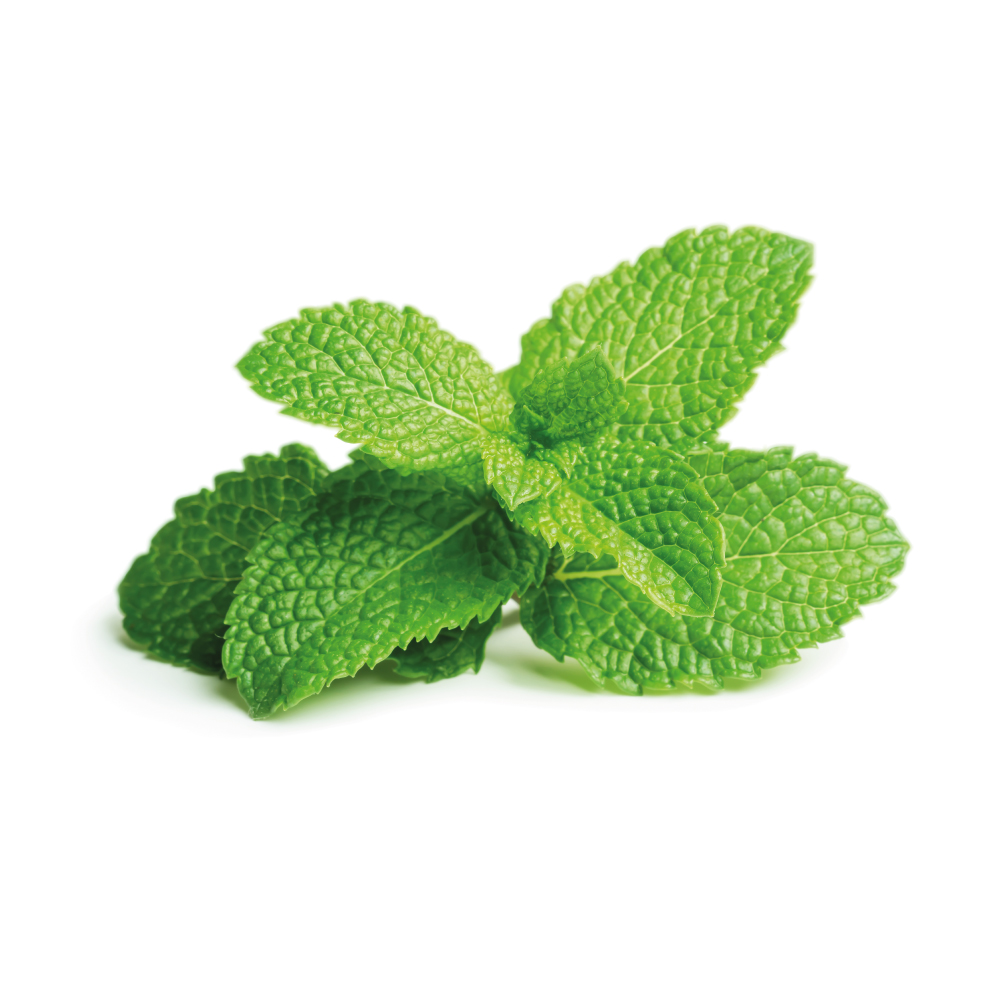
Peppermint (Mentha × piperita) is a cooling, aromatic member of the mint family (Lamiaceae). It is a natural hybrid of watermint (Mentha aquatica) and spearmint (Mentha spicata), which is why its accepted botanical name carries the hybrid cross (×). Grown and used for centuries as a culinary and medicinal herb, it is one of the most familiar plants in the world — its menthol scent flavours confectionery, toothpaste, cosmetics and tea.
Medicinally, peppermint is above all a digestive herb. Its character comes down to the essential oil, and within that oil to a single dominant constituent, menthol, together with its parent ketone menthone. Menthol relaxes gastrointestinal smooth muscle (an antispasmodic, carminative action) and activates the skin’s cold receptors to produce the familiar cooling sensation used topically for headache and irritated skin. A critical distinction runs through the whole evidence base: peppermint’s best-supported medicinal effects belong to the standardised, enteric-coated oil, not to the leaf tea, which never delivers a comparable menthol dose 10Reference 10ReviewReview article: the physiological effects and safety of peppermint oil and its efficacy in irritable bowel syndrome and other functional disorders — reviewView study →.
Traditional & Modern Uses
Peppermint and other mints have a long history throughout Europe and the Mediterranean, where they were used for gas, bloating and indigestion, as a local analgesic for toothache and abdominal pain, for headaches and inflammatory complaints, and for their antiseptic character 29Reference 29ReviewEthnomedicinal, phytochemical and pharmacological updates on peppermint (Mentha × piperita L.) — a review — reviewView study →. That traditional picture — a warming-to-the-gut carminative that settles digestion and cools the skin — maps closely onto what modern trials support: the herb’s evidence-backed uses are overwhelmingly gastrointestinal, led by irritable bowel syndrome and functional dyspepsia, with topical oil for tension headache a smaller but genuine modern use.
Today peppermint is used in three quite different forms, and they are not interchangeable: the leaf (as tea or tincture) for gentle carminative and digestive support; the standardised essential oil, usually enteric-coated, for irritable bowel syndrome and (combined with caraway) functional dyspepsia; and dilute oil applied topically for headache or intraluminally as an antispasmodic during endoscopy.
Botany & Varieties
Peppermint belongs to the Lamiaceae (mint family), a large family of aromatic plants that also includes basil, lavender, lemon balm, hyssop, catnip, sage and rosemary. It is a sterile hybrid of Mentha aquatica × Mentha spicata, so it is propagated vegetatively (from runners and cuttings) rather than reliably from seed.
Peppermint should be kept distinct from spearmint (Mentha spicata), a separate species whose oil is carvone-dominant and low in menthol — several antimicrobial studies test both, and their chemistry and activity are not the same.
Habitat & Distribution
Peppermint grows across Europe and North America, favouring moist ground near streams and damp meadows 34Reference 34A Modern Herbal — “Mints.” (historical/traditional reference). It is a vigorous perennial that spreads rapidly by runners and can become invasive in a garden if left unchecked. It has been cultivated since antiquity — the ancient Egyptians and Romans grew mint — and today the largest commercial producers of peppermint oil are in the United States 34Reference 34A Modern Herbal — “Mints.” (historical/traditional reference).
Harvesting & Preparation
Mint is easy to cultivate indoors or out. For medicinal use the leaf is harvested just before flowering, when the volatile-oil content peaks 34Reference 34A Modern Herbal — “Mints.” (historical/traditional reference). Preparation determines potency: steam-distilled leaf oil concentrates the active monoterpenes and is the form behind almost all of the clinical evidence, whereas an infusion (tea) extracts mainly the water-soluble phenolics and only a fraction of the menthol. Buyers of the essential oil should be aware of documented adulterants — camphor oil, cedarwood oil, turpentine and others — and of Epsom-salt cutting of crystallised menthol 34Reference 34A Modern Herbal — “Mints.” (historical/traditional reference).
Phytochemistry
Peppermint is, above all, an essential-oil herb — the dried leaf yields roughly 1–3% volatile oil, and that oil carries most of the plant’s activity. Its character comes down to two monoterpenes: menthol, the cooling alcohol that makes up a third to a half of the oil, and its parent ketone menthone. Menthol drives the familiar cold sensation (it activates the TRPM8 cold receptor), the antispasmodic and carminative effect on gut smooth muscle, and much of the oil’s antimicrobial action 10,21,22Reference 10ReviewReview article: the physiological effects and safety of peppermint oil and its efficacy in irritable bowel syndrome and other functional disorders — reviewView study →Reference 21In vitroThe mechanism of action of peppermint oil on gastrointestinal smooth muscleView study →Reference 22In vitroThe actions of peppermint oil and menthol on calcium channel dependent processes in intestinal, neuronal and cardiac preparations — in vitroView study →.
Supporting these are a cluster of related monoterpenes — menthyl acetate, menthofuran, isomenthone, 1,8-cineole, limonene and the pinenes — over a lighter sesquiterpene fraction (caryophyllene, germacrene D). Two minor monoterpenes, pulegone and menthofuran, are hepatotoxic and are capped by the European Pharmacopoeia for that reason 33Reference 33European Pharmacopoeia — Peppermint oil (Menthae piperitae aetheroleum): gas-chromatographic composition limits. The water-soluble side of the leaf adds phenolics: rosmarinic acid and related phenolic acids, the strongest radical scavengers of the aqueous extract 23Reference 23In vitroAntiradical and anti-H2O2 properties of polyphenolic compounds from an aqueous peppermint extract — in vitroView study →; the antiallergic flavonoid glycosides studied by Inoue et al. 32Reference 32Antiallergic effect of flavonoid glycosides obtained from Mentha piperita LView study →; and astringent tannins — the last responsible for peppermint’s mild reduction of iron absorption 10Reference 10ReviewReview article: the physiological effects and safety of peppermint oil and its efficacy in irritable bowel syndrome and other functional disorders — reviewView study →.
Constituent Summary
Quantified figures are the European Pharmacopoeia composition limits for steam-distilled leaf oil (share of essential oil); blank cells are constituents reported without a standard figure 33Reference 33European Pharmacopoeia — Peppermint oil (Menthae piperitae aetheroleum): gas-chromatographic composition limits.
Monoterpene16 compounds9 with data
Sesquiterpene5 compoundsno data
Phenolic acid2 compoundsno data
Flavonoid1 compoundno data
Tannin1 compoundno data
Pharmacology & Research
Peppermint (Mentha × piperita) is one of the most extensively studied medicinal plants, and — unusually for a traditional herb — the strongest evidence is human, not preclinical. The centre of gravity is gastrointestinal: enteric-coated or sustained-release peppermint oil has been tested in multiple placebo-controlled trials and pooled in several meta-analyses for irritable bowel syndrome, where it is one of the few botanical antispasmodics with a consistent effect 1,2,3,4Reference 1Meta-analysisSystematic review and meta-analysis: efficacy of peppermint oil in irritable bowel syndrome — systematic review, meta-analysisView study →Reference 2Meta-analysisEffect of fibre, antispasmodics, and peppermint oil in the treatment of irritable bowel syndrome — systematic review, meta-analysisView study →Reference 3Meta-analysisPeppermint oil for the treatment of irritable bowel syndrome — systematic review, meta-analysisView study →Reference 4Meta-analysisThe impact of peppermint oil on the irritable bowel syndrome: a meta-analysis of the pooled clinical data — meta-analysisView study →. A peppermint–caraway oil combination has its own randomised base for functional dyspepsia 11,12,13,14Reference 11RCTEfficacy and tolerability of a fixed combination of peppermint oil and caraway oil in patients suffering from functional dyspepsia — randomised controlled trialView study →Reference 12RCTEffects of a fixed combination of peppermint oil and caraway oil on symptoms and quality of life in patients suffering from functional dyspepsia — randomised controlled trialView study →Reference 13RCTA randomized placebo-controlled trial on the effects of Menthacarin, a proprietary peppermint- and caraway-oil-preparation, on symptoms and quality of life in patients with functional dyspepsia — randomised controlled trialView study →Reference 14Meta-analysisA combination of peppermint oil and caraway oil for the treatment of functional dyspepsia: a systematic review and meta-analysis — systematic review, meta-analysisView study →, and dilute oil is used as a luminal antispasmodic during endoscopy 15,16Reference 15Clinical trialEfficacy of peppermint oil as an antispasmodic during endoscopic retrograde cholangiopancreatography — clinical trialView study →Reference 16Meta-analysisThe anti-spasmodic effect of peppermint oil during colonoscopy: a systematic review and meta-analysis — systematic review, meta-analysisView study →. Almost all of this rests on the essential oil, not the leaf tea — a critical caveat, since the oil delivers a menthol dose the drunk infusion never reaches. Older preclinical work on antimicrobial, antioxidant and anti-inflammatory activity is real but sits well below the clinical signal 29Reference 29ReviewEthnomedicinal, phytochemical and pharmacological updates on peppermint (Mentha × piperita L.) — a review — reviewView study →.
- Best-supported: symptom relief in irritable bowel syndrome (multiple RCTs + meta-analyses) 1,2,3,4Reference 1Meta-analysisSystematic review and meta-analysis: efficacy of peppermint oil in irritable bowel syndrome — systematic review, meta-analysisView study →Reference 2Meta-analysisEffect of fibre, antispasmodics, and peppermint oil in the treatment of irritable bowel syndrome — systematic review, meta-analysisView study →Reference 3Meta-analysisPeppermint oil for the treatment of irritable bowel syndrome — systematic review, meta-analysisView study →Reference 4Meta-analysisThe impact of peppermint oil on the irritable bowel syndrome: a meta-analysis of the pooled clinical data — meta-analysisView study →, and functional dyspepsia when paired with caraway oil 11,14Reference 11RCTEfficacy and tolerability of a fixed combination of peppermint oil and caraway oil in patients suffering from functional dyspepsia — randomised controlled trialView study →Reference 14Meta-analysisA combination of peppermint oil and caraway oil for the treatment of functional dyspepsia: a systematic review and meta-analysis — systematic review, meta-analysisView study →.
- Emerging, worth watching: dilute oil as a procedural antispasmodic during colonoscopy/endoscopy 15,16Reference 15Clinical trialEfficacy of peppermint oil as an antispasmodic during endoscopic retrograde cholangiopancreatography — clinical trialView study →Reference 16Meta-analysisThe anti-spasmodic effect of peppermint oil during colonoscopy: a systematic review and meta-analysis — systematic review, meta-analysisView study →; topical oil for tension headache 18,19Reference 18RCTEffectiveness of Oleum menthae piperitae and paracetamol in therapy of headache of the tension type — randomised controlled trialView study →Reference 19ReviewPeppermint oil in the acute treatment of tension-type headache — reviewView study →.
- Mechanistically thin: antioxidant, antimicrobial and anti-inflammatory claims rest on in vitro and animal data, mostly using the essential oil at concentrations the herb isn’t consumed at 23,24,27Reference 23In vitroAntiradical and anti-H2O2 properties of polyphenolic compounds from an aqueous peppermint extract — in vitroView study →Reference 24AnimalRadioprotective influence of Mentha piperita (Linn) against gamma irradiation in mice: antioxidant and radical scavenging activity — animal modelView study →Reference 27In vitroChemical composition, antifungal and antibiofilm activities of the essential oil of Mentha piperita L. — in vitroView study →.
- The caveat: the clinical evidence is for standardised, enteric-coated oil — it does not transfer to peppermint tea or loose dried leaf, and the most common (mild) adverse effect, heartburn, comes from the same menthol that drives the benefit 5,10Reference 5RCTEfficacy and safety of peppermint oil in a randomized, double-blind trial of patients with irritable bowel syndrome — randomised controlled trialView study →Reference 10ReviewReview article: the physiological effects and safety of peppermint oil and its efficacy in irritable bowel syndrome and other functional disorders — reviewView study →.
1. Irritable bowel syndrome
This is peppermint’s best-evidenced use. Enteric-coated or sustained-release peppermint oil capsules (typically 180–225 mg two to three times daily, delivering roughly 0.2–0.4 mL oil per dose) reduce global IBS symptoms and abdominal pain versus placebo across numerous double-blind trials 6,7,8,9Reference 6RCTPeppermint oil (Mintoil) in the treatment of irritable bowel syndrome: a prospective double blind placebo-controlled randomized trial — randomised controlled trialView study →Reference 7RCTThe effect of enteric-coated, delayed-release peppermint oil on irritable bowel syndrome — randomised controlled trialView study →Reference 8RCTA novel delivery system of peppermint oil is an effective therapy for irritable bowel syndrome symptoms — randomised controlled trialView study →Reference 9RCTEnteric-coated peppermint-oil capsules in the treatment of irritable bowel syndrome — randomised controlled trialView study →. Several meta-analyses pool this into a consistent benefit: a 2008 BMJ review found peppermint oil superior to placebo for global symptoms 2Reference 2Meta-analysisEffect of fibre, antispasmodics, and peppermint oil in the treatment of irritable bowel syndrome — systematic review, meta-analysisView study →, and later syntheses by Khanna (2014), Alammar (2019) and Ingrosso (2022) reached the same conclusion, with numbers-needed-to-treat in the low single digits for symptom response 1,3,4Reference 1Meta-analysisSystematic review and meta-analysis: efficacy of peppermint oil in irritable bowel syndrome — systematic review, meta-analysisView study →Reference 3Meta-analysisPeppermint oil for the treatment of irritable bowel syndrome — systematic review, meta-analysisView study →Reference 4Meta-analysisThe impact of peppermint oil on the irritable bowel syndrome: a meta-analysis of the pooled clinical data — meta-analysisView study →. The largest recent phase III RCT (Weerts 2020, n=190) confirmed reduced abdominal pain even though it missed the strict FDA composite responder endpoint, illustrating that effect size is modest and endpoint-sensitive 5Reference 5RCTEfficacy and safety of peppermint oil in a randomized, double-blind trial of patients with irritable bowel syndrome — randomised controlled trialView study →. Mechanism is antispasmodic: menthol blocks L-type calcium channels in intestinal smooth muscle, relaxing it 21,22Reference 21In vitroThe mechanism of action of peppermint oil on gastrointestinal smooth muscleView study →Reference 22In vitroThe actions of peppermint oil and menthol on calcium channel dependent processes in intestinal, neuronal and cardiac preparations — in vitroView study →. The effect is specific to the standardised oil in a formulation that survives the stomach — it does not extend to peppermint tea. A paediatric RCT (Kline 2001) reported similar symptom relief in children with IBS 20Reference 20RCTEnteric-coated, pH-dependent peppermint oil capsules for the treatment of irritable bowel syndrome in children — randomised controlled trialView study →, and a controlled study reported peppermint oil shifts the gut microbiome in children with functional abdominal pain 30Reference 30Peppermint oil effects on the gut microbiome in children with functional abdominal pain — controlled studyView study →.
Gap: trials are heterogeneous in formulation, dose and duration, follow-up is usually short (2–12 weeks), and long-term efficacy and relapse rates are largely untested.
2. Functional dyspepsia
Peppermint oil is effective here almost entirely as half of a fixed combination with caraway oil (marketed as Menthacarin/Enteroplant), not on its own. Randomised, placebo-controlled trials show the combination relieves epigastric pain, fullness and cramping in functional dyspepsia and improves quality of life 11,13Reference 11RCTEfficacy and tolerability of a fixed combination of peppermint oil and caraway oil in patients suffering from functional dyspepsia — randomised controlled trialView study →Reference 13RCTA randomized placebo-controlled trial on the effects of Menthacarin, a proprietary peppermint- and caraway-oil-preparation, on symptoms and quality of life in patients with functional dyspepsia — randomised controlled trialView study →, with an active-comparator trial reporting efficacy comparable to cisapride 12Reference 12RCTEffects of a fixed combination of peppermint oil and caraway oil on symptoms and quality of life in patients suffering from functional dyspepsia — randomised controlled trialView study →. A 2019 systematic review and meta-analysis of the peppermint–caraway combination confirmed a significant symptom benefit over placebo 14Reference 14Meta-analysisA combination of peppermint oil and caraway oil for the treatment of functional dyspepsia: a systematic review and meta-analysis — systematic review, meta-analysisView study →. The plausible mechanism combines menthol-driven smooth-muscle relaxation with caraway’s carminative action, plus possible visceral-sensitivity and gastric-accommodation effects 10Reference 10ReviewReview article: the physiological effects and safety of peppermint oil and its efficacy in irritable bowel syndrome and other functional disorders — reviewView study →.
Gap: the evidence is for the peppermint + caraway combination — it cannot be assumed to hold for peppermint oil alone, and the trials are dominated by a single proprietary preparation.
3. GI antispasmodic (endoscopy)
Applied directly to the gut lumen (sprayed intraluminally or given as capsules before the procedure), dilute peppermint oil relaxes smooth muscle and reduces spasm during endoscopy. A clinical trial found intraluminal peppermint oil an effective antispasmodic during ERCP 15Reference 15Clinical trialEfficacy of peppermint oil as an antispasmodic during endoscopic retrograde cholangiopancreatography — clinical trialView study →, and randomised trials plus a 2020 systematic review and meta-analysis report that peppermint oil eases colonic spasm, improves caecal-intubation conditions and reduces spasm scores during colonoscopy 16Reference 16Meta-analysisThe anti-spasmodic effect of peppermint oil during colonoscopy: a systematic review and meta-analysis — systematic review, meta-analysisView study →, with a double-blind RCT of pre-procedure capsules showing similar benefit 17Reference 17RCTPremedication with peppermint oil capsules in colonoscopy: a double blind placebo-controlled randomized trial study — randomised controlled trialView study →. This is a direct, topical antispasmodic use — the same menthol calcium-channel mechanism as in IBS, applied acutely rather than therapeutically over weeks.
Gap: trials use varied delivery (intraluminal spray vs oral capsule) and endpoints (spasm score, intubation time, patient comfort), and it is a procedural aid, not a treatment.
4. Tension headache
Applied topically, a 10% peppermint oil solution in ethanol dabbed on the forehead and temples eased tension-type headache in small double-blind trials from the Göbel group, with pain relief reported as comparable to paracetamol at 15–30 minutes 18,19Reference 18RCTEffectiveness of Oleum menthae piperitae and paracetamol in therapy of headache of the tension type — randomised controlled trialView study →Reference 19ReviewPeppermint oil in the acute treatment of tension-type headache — reviewView study →. The proposed mechanism is menthol activating cold-sensitive TRPM8 receptors in the skin, producing analgesia and muscle relaxation rather than any systemic action 19Reference 19ReviewPeppermint oil in the acute treatment of tension-type headache — reviewView study →.
Gap: the human evidence is a small number of older trials from essentially one research group, with no large independent replication; the effect is for topical oil, not oral or tea use.
5. Antioxidant
Peppermint’s water-soluble phenolics — chiefly rosmarinic acid and related polyphenols — are strong radical scavengers in vitro, quenching DPPH and hydrogen peroxide in aqueous leaf extracts 23Reference 23In vitroAntiradical and anti-H2O2 properties of polyphenolic compounds from an aqueous peppermint extract — in vitroView study →. In mice, a leaf extract showed radioprotective, antioxidant activity against gamma irradiation, raising endogenous antioxidant enzymes 24Reference 24AnimalRadioprotective influence of Mentha piperita (Linn) against gamma irradiation in mice: antioxidant and radical scavenging activity — animal modelView study →. These findings are consistent with the leaf’s phenolic content but stop at biochemical and animal endpoints.
Gap: no human study links peppermint intake to a meaningful antioxidant clinical outcome; the activity is measured in test tubes and rodents at doses unrelated to normal use.
6. Nausea & vomiting
Peppermint aromatherapy (inhaled oil) is widely used for nausea, and a 2024 systematic review and meta-analysis of aromatherapy for cancer-related nausea found a modest benefit across pooled RCTs 25Reference 25Meta-analysisEffects of aromatherapy on nausea and vomiting in patients with cancer: a systematic review and meta-analysis of randomized controlled trials — systematic review, meta-analysisView study →, with a paediatric randomised trial reporting reduced chemotherapy nausea from a peppermint–lemon blend 26Reference 26RCTEffect of peppermint-lemon aromatherapy on nausea-vomiting and quality of life in pediatric patients with leukemia: a randomized controlled trial — randomised controlled trialView study →. Results are inconsistent, though, and many trials combine peppermint with other oils or use it as adjunct to antiemetics, making the specific contribution of peppermint hard to isolate.
Gap: trials are small and heterogeneous, frequently use blended oils, and blinding of an aromatic intervention is inherently weak — the signal is suggestive, not established.
7. Antimicrobial
Peppermint essential oil and its main volatiles inhibit a range of bacteria, fungi and biofilms in vitro. Studies report antibacterial, antifungal and anti-biofilm activity for the oil, including inhibition of Candida albicans and Listeria biofilms 27Reference 27In vitroChemical composition, antifungal and antibiofilm activities of the essential oil of Mentha piperita L. — in vitroView study →. The activity tracks the menthol and menthone content and reflects membrane-disrupting action of the monoterpenes.
Gap: all data are in vitro, at oil concentrations far above what any oral or topical human use delivers — there is no clinical antimicrobial evidence, and this does not support treating infection.
8. Anti-inflammatory & analgesic
In animal models, aqueous peppermint leaf extract produced antinociception (reduced acetic-acid writhing in mice) without a measurable anti-oedema effect, suggesting an analgesic mechanism separate from anti-inflammatory action 28Reference 28AnimalAntinociceptive activity of Mentha piperita leaf aqueous extract in mice — animal modelView study →. Related preclinical work reports modest systemic anti-inflammatory activity for peppermint extracts 28Reference 28AnimalAntinociceptive activity of Mentha piperita leaf aqueous extract in mice — animal modelView study →. The topical cooling analgesia seen with the oil is again attributable to menthol acting on TRPM8 sensory receptors.
Gap: evidence is animal and in vitro only, the antinociceptive and anti-inflammatory signals are dissociated, and there is no controlled human trial of peppermint for pain or inflammation apart from topical headache use.
Mechanisms
| Mechanism | Drives | Key compounds |
|---|---|---|
| L-type Ca²⁺-channel blockade in GI smooth muscle | IBS reliefdyspepsiaendoscopic antispasmodiccarminative | menthol, menthone |
| TRPM8 cold-receptor activation | topical analgesiacoolingheadache relief | menthol |
| Radical scavenging / antioxidant enzyme induction | antioxidant activity | rosmarinic acid, phenolic acids |
| Monoterpene membrane disruption | antimicrobial (in vitro) | menthol, menthone |
Clinical trials
Peppermint oil has an unusually deep clinical footprint for a herb — ClinicalTrials.gov lists roughly 130 registered studies, the large majority in gastroenterology, and dozens of published RCTs have been pooled into multiple IBS and dyspepsia meta-analyses.
| Completed | Planned | Terminated | Preclinical |
|---|---|---|---|
| ~80 | ~16 | ~9 | numerous |
Last checked: July 2026.
Dosage
Peppermint’s clinical doses are for the essential oil, not the leaf, and they cannot be back-converted to a dried-herb weight without a fixed oil yield (the leaf yields a variable ~1–3% oil). The trial doses below are therefore given as oil amounts; the traditional table that follows covers leaf and tincture use. These are research doses, not recommendations.
| Indication | Preparation | Dose | Est. dried-herb equivalent | Source |
|---|---|---|---|---|
| Irritable bowel syndrome | Enteric-coated / sustained-release peppermint oil | ~180–225 mg oil 2–3×/day (0.2–0.4 mL oil/dose) | — (oil dose; not back-convertible to leaf) | 1,2,3,4,5,6,7,8,9Reference 1Meta-analysisSystematic review and meta-analysis: efficacy of peppermint oil in irritable bowel syndrome — systematic review, meta-analysisView study →Reference 2Meta-analysisEffect of fibre, antispasmodics, and peppermint oil in the treatment of irritable bowel syndrome — systematic review, meta-analysisView study →Reference 3Meta-analysisPeppermint oil for the treatment of irritable bowel syndrome — systematic review, meta-analysisView study →Reference 4Meta-analysisThe impact of peppermint oil on the irritable bowel syndrome: a meta-analysis of the pooled clinical data — meta-analysisView study →Reference 5RCTEfficacy and safety of peppermint oil in a randomized, double-blind trial of patients with irritable bowel syndrome — randomised controlled trialView study →Reference 6RCTPeppermint oil (Mintoil) in the treatment of irritable bowel syndrome: a prospective double blind placebo-controlled randomized trial — randomised controlled trialView study →Reference 7RCTThe effect of enteric-coated, delayed-release peppermint oil on irritable bowel syndrome — randomised controlled trialView study →Reference 8RCTA novel delivery system of peppermint oil is an effective therapy for irritable bowel syndrome symptoms — randomised controlled trialView study →Reference 9RCTEnteric-coated peppermint-oil capsules in the treatment of irritable bowel syndrome — randomised controlled trialView study → |
| Functional dyspepsia | Fixed peppermint + caraway oil (Menthacarin/Enteroplant) | ~90 mg peppermint oil + ~50 mg caraway oil, 2×/day | — (proprietary oil combination) | 11,14Reference 11RCTEfficacy and tolerability of a fixed combination of peppermint oil and caraway oil in patients suffering from functional dyspepsia — randomised controlled trialView study →Reference 14Meta-analysisA combination of peppermint oil and caraway oil for the treatment of functional dyspepsia: a systematic review and meta-analysis — systematic review, meta-analysisView study → |
| Endoscopy antispasmodic | Dilute oil, intraluminal or oral capsule | ~20 mL of 0.8% oil intraluminal, or capsules pre-procedure | — (topical/procedural) | 15,16,17Reference 15Clinical trialEfficacy of peppermint oil as an antispasmodic during endoscopic retrograde cholangiopancreatography — clinical trialView study →Reference 16Meta-analysisThe anti-spasmodic effect of peppermint oil during colonoscopy: a systematic review and meta-analysis — systematic review, meta-analysisView study →Reference 17RCTPremedication with peppermint oil capsules in colonoscopy: a double blind placebo-controlled randomized trial study — randomised controlled trialView study → |
| Tension headache | 10% peppermint oil in ethanol, topical | applied to forehead/temples, repeated at 15–30 min | — (topical) | 18,19Reference 18RCTEffectiveness of Oleum menthae piperitae and paracetamol in therapy of headache of the tension type — randomised controlled trialView study →Reference 19ReviewPeppermint oil in the acute treatment of tension-type headache — reviewView study → |
Doses are essential-oil or proprietary-extract amounts, not leaf weights. Because the leaf’s oil yield (~1–3%) is a range rather than a fixed factor, no dried-herb equivalent is given — inventing a ratio would misrepresent the doses.
Traditional Dosage
Traditional and over-the-counter use is of the leaf, as tea or tincture — a gentler, carminative preparation quite distinct from the standardised oil behind the trials.
| System | Preparation | Dose |
|---|---|---|
| Western herbal | Liquid extract 1:2 | 10–30 mL/week |
| Western herbal | Dried-leaf infusion (tea) | ~1.5–3 g dried leaf per cup, up to 3×/day |
| Western herbal | Tincture 1:5 (45%) | ~2–6 mL, 3×/day |
Safety & Pregnancy
Peppermint is well tolerated as a food and at therapeutic doses; the main practical issue is menthol aggravating reflux, and two minor oil constituents are hepatotoxic enough to be capped in the standardised oil.
- Hepatotoxic minor constituents. Pulegone and menthofuran are capped by the European Pharmacopoeia — avoid prolonged high-dose oil.
- Not for infants’ faces. Do not apply the oil to the face or chest of infants and young children — menthol can trigger reflex apnoea.
- Reflux aggravation. Menthol relaxes the lower oesophageal sphincter and can worsen heartburn; enteric-coated form reduces this.
- Iron absorption. Leaf tannins modestly lower iron uptake — take leaf preparations apart from iron-rich meals.
- Generally well tolerated. One of the better-studied herbs for safety; reactions are mild and uncommon.
Full safety & interactions detail
Peppermint is well tolerated as a food and in the doses used therapeutically, and it is one of the better-studied herbs for safety 10Reference 10ReviewReview article: the physiological effects and safety of peppermint oil and its efficacy in irritable bowel syndrome and other functional disorders — reviewView study →. The most common adverse effect of the oil is heartburn: menthol relaxes the lower oesophageal sphincter, so peppermint can aggravate gastro-oesophageal reflux and should be used cautiously, or in enteric-coated form, by people with reflux or hiatus hernia 10Reference 10ReviewReview article: the physiological effects and safety of peppermint oil and its efficacy in irritable bowel syndrome and other functional disorders — reviewView study →. Enteric coating largely shifts release past the stomach and reduces this effect 5,10Reference 5RCTEfficacy and safety of peppermint oil in a randomized, double-blind trial of patients with irritable bowel syndrome — randomised controlled trialView study →Reference 10ReviewReview article: the physiological effects and safety of peppermint oil and its efficacy in irritable bowel syndrome and other functional disorders — reviewView study →. Rare allergic and contact reactions to menthol occur, and the astringent tannins in the leaf can modestly reduce iron absorption, so leaf preparations are best taken apart from iron-rich meals or supplements. Peppermint oil should not be applied to the face or chest of infants and young children because menthol can trigger reflex apnoea.
Two of the oil’s minor monoterpenes, pulegone and menthofuran, are hepatotoxic, which is why the European Pharmacopoeia caps them (pulegone ≤4%, menthofuran 1–9%); this is the rationale for avoiding prolonged high-dose therapeutic oil use. Drug interactions are only partly assessed: reflux aggravation and the tannin/iron-absorption effect are documented, and reviews raise a theoretical menthol–CYP interaction, but no clinically significant drug interaction is well established and no dedicated interaction trials exist 10Reference 10ReviewReview article: the physiological effects and safety of peppermint oil and its efficacy in irritable bowel syndrome and other functional disorders — reviewView study →.
Peppermint tea and culinary use are traditionally regarded as acceptable in pregnancy, and systematic reviews of herbal use in pregnancy generally class peppermint among the lower-concern herbs 31Reference 31Systematic reviewSafety classification of herbal medicines used among pregnant women in Asian countries: a systematic review — systematic reviewView study →. The concentrated essential oil, however, has not been adequately studied at therapeutic doses in pregnancy or lactation, so high-dose oil supplementation cannot be affirmed as safe — food and tea amounts are the reasonable ceiling absent clinician guidance 31Reference 31Systematic reviewSafety classification of herbal medicines used among pregnant women in Asian countries: a systematic review — systematic reviewView study →.
Synergy
The best-validated peppermint combination is peppermint oil + caraway oil for functional dyspepsia, which has its own randomised base and a meta-analysis behind it rather than being merely traditional 11,14Reference 11RCTEfficacy and tolerability of a fixed combination of peppermint oil and caraway oil in patients suffering from functional dyspepsia — randomised controlled trialView study →Reference 14Meta-analysisA combination of peppermint oil and caraway oil for the treatment of functional dyspepsia: a systematic review and meta-analysis — systematic review, meta-analysisView study →. Traditionally, peppermint is also combined with caraway and wormwood for non-ulcer dyspepsia, and with fennel, caraway and gentian for chronic digestive complaints; and it appears in the classic YEP infusion with yarrow and elder for colds and flu 34Reference 34A Modern Herbal — “Mints.” (historical/traditional reference). These traditional pairings are long-standing herbal practice rather than trial-tested.
References
- Ingrosso, M. R., Ianiro, G., Nee, J., et al. (2022). Systematic review and meta-analysis: efficacy of peppermint oil in irritable bowel syndrome — systematic review, meta-analysis. Alimentary Pharmacology & Therapeutics. https://pubmed.ncbi.nlm.nih.gov/35942669/
- Ford, A. C., Talley, N. J., Spiegel, B. M., et al. (2008). Effect of fibre, antispasmodics, and peppermint oil in the treatment of irritable bowel syndrome — systematic review, meta-analysis. BMJ. https://pubmed.ncbi.nlm.nih.gov/19008265/
- Khanna, R., MacDonald, J. K., & Levesque, B. G. (2014). Peppermint oil for the treatment of irritable bowel syndrome — systematic review, meta-analysis. Journal of Clinical Gastroenterology. https://pubmed.ncbi.nlm.nih.gov/24100754/
- Alammar, N., Wang, L., Saberi, B., et al. (2019). The impact of peppermint oil on the irritable bowel syndrome: a meta-analysis of the pooled clinical data — meta-analysis. BMC Complementary and Alternative Medicine. https://pubmed.ncbi.nlm.nih.gov/30654773/
- Weerts, Z. Z. R. M., Masclee, A. A. M., Witteman, B. J. M., et al. (2020). Efficacy and safety of peppermint oil in a randomized, double-blind trial of patients with irritable bowel syndrome — randomised controlled trial. Gastroenterology. https://pubmed.ncbi.nlm.nih.gov/31470006/
- Cappello, G., Spezzaferro, M., Grossi, L., et al. (2007). Peppermint oil (Mintoil) in the treatment of irritable bowel syndrome: a prospective double blind placebo-controlled randomized trial — randomised controlled trial. Digestive and Liver Disease. https://pubmed.ncbi.nlm.nih.gov/17420159/
- Merat, S., Khalili, S., Mostajabi, P., et al. (2010). The effect of enteric-coated, delayed-release peppermint oil on irritable bowel syndrome — randomised controlled trial. Digestive Diseases and Sciences. https://pubmed.ncbi.nlm.nih.gov/19507027/
- Cash, B. D., Epstein, M. S., & Shah, S. M. (2016). A novel delivery system of peppermint oil is an effective therapy for irritable bowel syndrome symptoms — randomised controlled trial. Digestive Diseases and Sciences. https://pubmed.ncbi.nlm.nih.gov/26319955/
- Liu, J. H., Chen, G. H., Yeh, H. Z., et al. (1997). Enteric-coated peppermint-oil capsules in the treatment of irritable bowel syndrome — randomised controlled trial. Journal of Gastroenterology. https://pubmed.ncbi.nlm.nih.gov/9430014/
- Chumpitazi, B. P., Kearns, G. L., & Shulman, R. J. (2018). Review article: the physiological effects and safety of peppermint oil and its efficacy in irritable bowel syndrome and other functional disorders — review. Alimentary Pharmacology & Therapeutics. https://pubmed.ncbi.nlm.nih.gov/29372567/
- May, B., Köhler, S., & Schneider, B. (2000). Efficacy and tolerability of a fixed combination of peppermint oil and caraway oil in patients suffering from functional dyspepsia — randomised controlled trial. Alimentary Pharmacology & Therapeutics. https://pubmed.ncbi.nlm.nih.gov/11121917/
- Holtmann, G., Haag, S., Adam, B., et al. (2003). Effects of a fixed combination of peppermint oil and caraway oil on symptoms and quality of life in patients suffering from functional dyspepsia — randomised controlled trial. Phytomedicine. https://pubmed.ncbi.nlm.nih.gov/12807344/
- Rich, G., Shah, A., Koloski, N., et al. (2017). A randomized placebo-controlled trial on the effects of Menthacarin, a proprietary peppermint- and caraway-oil-preparation, on symptoms and quality of life in patients with functional dyspepsia — randomised controlled trial. Neurogastroenterology & Motility. https://pubmed.ncbi.nlm.nih.gov/28695660/
- Li, J., Lv, L., Zhang, J., et al. (2019). A combination of peppermint oil and caraway oil for the treatment of functional dyspepsia: a systematic review and meta-analysis — systematic review, meta-analysis. Evidence-Based Complementary and Alternative Medicine. https://pubmed.ncbi.nlm.nih.gov/31827561/
- Yamamoto, N., Nakai, Y., Sasahira, N., et al. (2006). Efficacy of peppermint oil as an antispasmodic during endoscopic retrograde cholangiopancreatography — clinical trial. Journal of Gastroenterology and Hepatology. https://pubmed.ncbi.nlm.nih.gov/16911682/
- Aziz, M., Sayeh, W., Ghazaleh, S., et al. (2020). The anti-spasmodic effect of peppermint oil during colonoscopy: a systematic review and meta-analysis — systematic review, meta-analysis. Minerva Gastroenterologica e Dietologica. https://pubmed.ncbi.nlm.nih.gov/31994371/
- Shavakhi, A., Ardestani, S. K., Taki, M., et al. (2012). Premedication with peppermint oil capsules in colonoscopy: a double blind placebo-controlled randomized trial study — randomised controlled trial. Acta Gastro-Enterologica Belgica. https://pubmed.ncbi.nlm.nih.gov/23082707/
- Göbel, H., Fresenius, J., Heinze, A., et al. (1996). Effectiveness of Oleum menthae piperitae and paracetamol in therapy of headache of the tension type — randomised controlled trial. Der Nervenarzt. https://pubmed.ncbi.nlm.nih.gov/8805113/
- Göbel, H., Heinze, A., Görlach, C., et al. (2016). Peppermint oil in the acute treatment of tension-type headache — review. Schmerz. https://pubmed.ncbi.nlm.nih.gov/27106030/
- Kline, R. M., Kline, J. J., Di Palma, J., & Barbero, G. J. (2001). Enteric-coated, pH-dependent peppermint oil capsules for the treatment of irritable bowel syndrome in children — randomised controlled trial. Journal of Pediatrics. https://pubmed.ncbi.nlm.nih.gov/11148527/
- Hills, J. M., & Aaronson, P. I. (1991). The mechanism of action of peppermint oil on gastrointestinal smooth muscle. An analysis using patch clamp electrophysiology and isolated tissue pharmacology — in vitro. Gastroenterology. https://pubmed.ncbi.nlm.nih.gov/1646142/
- Hawthorn, M., Ferrante, J., Luchowski, E., et al. (1988). The actions of peppermint oil and menthol on calcium channel dependent processes in intestinal, neuronal and cardiac preparations — in vitro. Alimentary Pharmacology & Therapeutics. https://pubmed.ncbi.nlm.nih.gov/2856502/
- Sroka, Z., Fecka, I., & Cisowski, W. (2005). Antiradical and anti-H2O2 properties of polyphenolic compounds from an aqueous peppermint extract — in vitro. Zeitschrift für Naturforschung C. https://pubmed.ncbi.nlm.nih.gov/16402541/
- Samarth, R. M., Panwar, M., Kumar, M., & Kumar, A. (2006). Radioprotective influence of Mentha piperita (Linn) against gamma irradiation in mice: antioxidant and radical scavenging activity — animal model. International Journal of Radiation Biology. https://pubmed.ncbi.nlm.nih.gov/16782650/
- Ahn, J. H., Kim, M., & Kim, H. (2024). Effects of aromatherapy on nausea and vomiting in patients with cancer: a systematic review and meta-analysis of randomized controlled trials — systematic review, meta-analysis. Complementary Therapies in Clinical Practice. https://pubmed.ncbi.nlm.nih.gov/38330531/
- Şancı, Y., & Bektaş, M. (2023). Effect of peppermint-lemon aromatherapy on nausea-vomiting and quality of life in pediatric patients with leukemia: a randomized controlled trial — randomised controlled trial. Journal of Pediatric Nursing. https://pubmed.ncbi.nlm.nih.gov/37453895/
- Saharkhiz, M. J., Motamedi, M., Zomorodian, K., et al. (2012). Chemical composition, antifungal and antibiofilm activities of the essential oil of Mentha piperita L. — in vitro. ISRN Pharmaceutics. https://pubmed.ncbi.nlm.nih.gov/23304561/
- Taher, Y. A. (2012). Antinociceptive activity of Mentha piperita leaf aqueous extract in mice — animal model. Libyan Journal of Medicine. https://pubmed.ncbi.nlm.nih.gov/22468149/
- Mahendran, G., & Rahman, L. U. (2020). Ethnomedicinal, phytochemical and pharmacological updates on peppermint (Mentha × piperita L.) — a review — review. Phytotherapy Research. https://pubmed.ncbi.nlm.nih.gov/32173933/
- Thapa, S., Luna, R. A., Chumpitazi, B. P., et al. (2022). Peppermint oil effects on the gut microbiome in children with functional abdominal pain — controlled study. Clinical and Translational Science. https://pubmed.ncbi.nlm.nih.gov/35048535/
- Ahmed, M., Hwang, J. H., Choi, S., & Han, D. (2017). Safety classification of herbal medicines used among pregnant women in Asian countries: a systematic review — systematic review. BMC Complementary and Alternative Medicine. https://pubmed.ncbi.nlm.nih.gov/29137614/
- Inoue, T., Sugimoto, Y., Masuda, H., & Kamei, C. (2002). Antiallergic effect of flavonoid glycosides obtained from Mentha piperita L. Biological & Pharmaceutical Bulletin. https://pubmed.ncbi.nlm.nih.gov/11853178/
- European Directorate for the Quality of Medicines & HealthCare (EDQM). European Pharmacopoeia — Peppermint oil (Menthae piperitae aetheroleum): gas-chromatographic composition limits. Strasbourg: Council of Europe.
- Grieve, M. (1931). A Modern Herbal — “Mints.” (historical/traditional reference).