
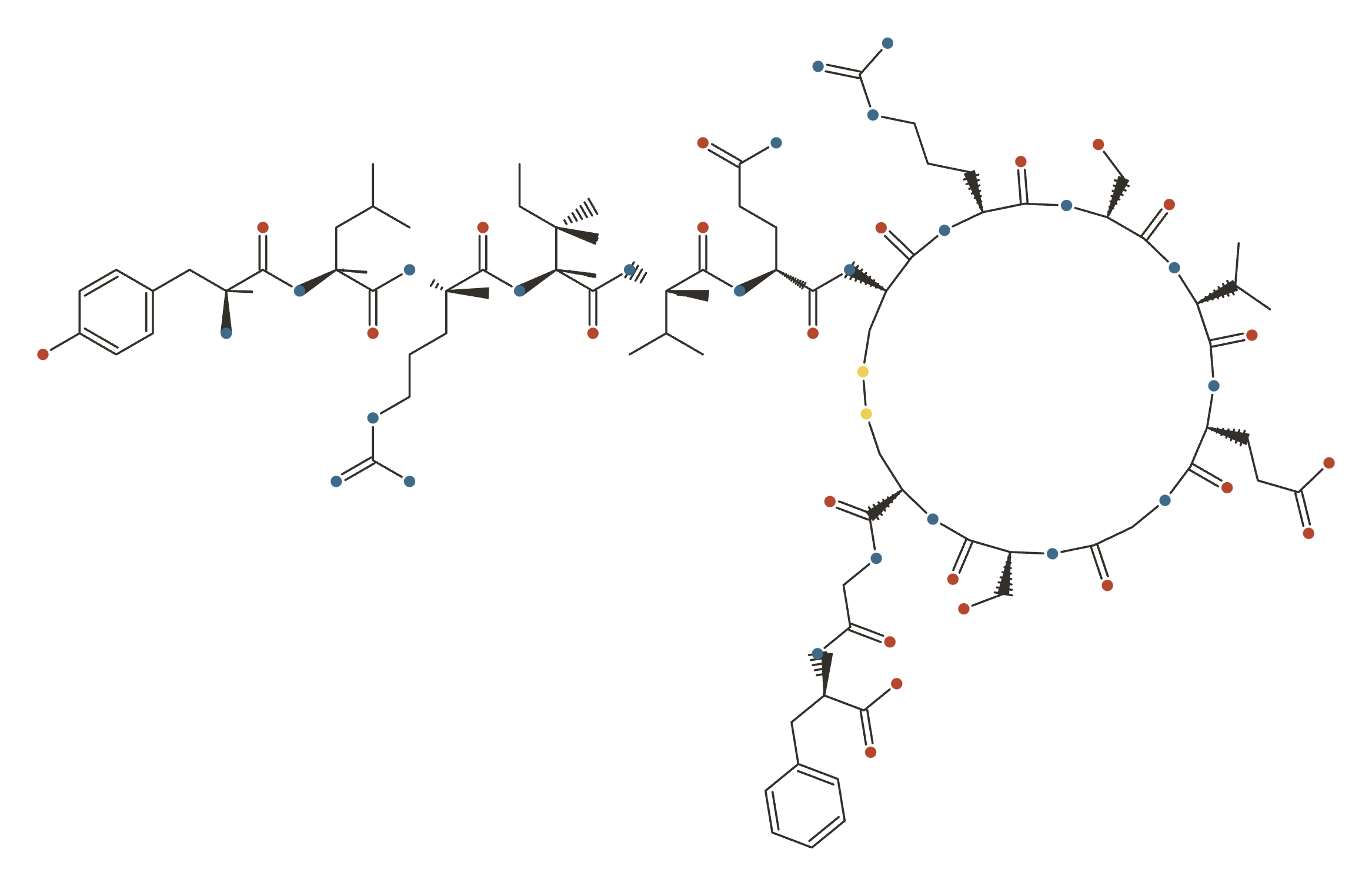
AOD-9604
A synthetic 16-amino-acid growth-hormone fragment developed as an oral anti-obesity drug; its pivotal trial failed and it remains unapproved.

AOD-9604 at a Glance
AOD-9604 is a 16-amino-acid fragment from the tail end of human growth hormone — the region associated with fat metabolism, isolated deliberately to separate that effect from growth hormone’s growth-promoting and glucose-disrupting actions. It was developed as an oral anti-obesity drug and taken through a full clinical programme. The pivotal trial failed to separate it from placebo, and development stopped. It is sold as a research chemical on the strength of the mechanism rather than the trial outcome.
History & Development
AOD-9604 was built on a clean idea: growth hormone burns fat, but it also raises blood sugar and grows tissue. If you could isolate just the fat-burning end of the molecule, you would have an obesity drug without the rest. The chemistry worked. The drug did not.
| First described | 2000, in metabolic studies of the synthetic lipolytic domain 1Reference 1AnimalMetabolic studies of a synthetic lipolytic domain (AOD9604) of human growth hormone — animal (rat)View study → |
| Discovered / synthesised by | F. M. Ng and colleagues 1Reference 1AnimalMetabolic studies of a synthetic lipolytic domain (AOD9604) of human growth hormone — animal (rat)View study → |
| Institution | Metabolic Pharmaceuticals (Australia) |
| Origin | Synthetic fragment - the C-terminal lipolytic domain of human growth hormone (residues 177-191) with an added N-terminal tyrosine |
| Key patent | Not established in the sources consulted for this section |
| Assignee | Metabolic Pharmaceuticals |
| Development status | Discontinued - Phase 2b OPTIONS trial (METAOD006) failed its primary endpoint; obesity development terminated |
Discovery
Growth hormone’s effects are distributed along the molecule rather than concentrated in one active site, and its lipolytic activity had been localised to the C-terminal region. AOD-9604 is that region synthesised on its own - residues 177-191 with a tyrosine added at the N-terminus for stability - which is why it was expected to drive fat metabolism without growth hormone’s effects on IGF-1, glucose or tissue growth.
The founding work was published in 2000 by F. M. Ng and colleagues, reporting metabolic studies
of the synthetic lipolytic domain in rats 1Reference 1AnimalMetabolic studies of a synthetic lipolytic domain (AOD9604) of human growth hormone — animal (rat)View study →, followed by mouse work showing increased fat oxidation
and weight loss on chronic treatment 2,
One naming point matters commercially. The compound is sold almost universally as “HGH Fragment 176-191”, and that label is a long-standing misnomer - the lipolytic domain is residues 177-191. The two names refer to the same product.
Development & ownership
Metabolic Pharmaceuticals developed AOD-9604 through an unusually complete human programme for a compound now sold as a research peptide: six randomized, double-blind, placebo-controlled trials, designated METAOD001 through METAOD006.
The pivotal test was METAOD006, the OPTIONS trial, which randomized 502 of 536 enrolled adults with obesity (BMI 30-45) to oral AOD-9604 at 0.25, 0.5 or 1 mg daily or placebo, alongside supervised diet and exercise. Weight loss versus placebo was too small to reach significance, and obesity development was terminated on that result.
The compound was later repurposed under the code LAT8881 for pain indications, with registered trials in that setting - a second life that its retail marketing rarely mentions.
How it reached the market
AOD-9604 reached consumers because it failed. Development stopped, the compound left pharmaceutical channels, and it now circulates as an unapproved research peptide marketed for fat loss - on the strength of the rodent lipolysis data, while the human trial that tested exactly that claim in exactly that population is the part left out. It has never been approved as a medicine or authorised as a dietary supplement in any country.
What It's Used For
AOD-9604 is the anti-obesity drug that didn’t work. It is a synthetic hexadecapeptide — the C-terminal lipolytic domain of human growth hormone (residues 177–191) with an extra tyrosine added at the N-terminus, cyclized by a disulfide bridge between its two cysteines — developed from the late 1990s by Metabolic Pharmaceuticals Ltd (Australia) as an oral treatment for obesity. Unlike almost every other peptide sold in the research-chemical market, it was properly tested: six company-funded randomized, double-blind, placebo-controlled human trials, culminating in a 536-patient Phase 2b study (the OPTIONS trial) combining the drug with a supervised diet and exercise program. It missed its primary endpoint, and on 21 February 2007 the company announced that the results “do not support the commercial viability of the drug as a treatment for obesity” and terminated development. It was then repositioned and sold as a “fat-burning peptide” through wellness clinics and gray-market vendors — and in December 2024 the FDA’s Pharmacy Compounding Advisory Committee reviewed it and concluded the evaluation criteria weigh against allowing it to be compounded at all, citing lack of evidence of effectiveness “for any route of administration.” A separate corporate second life as LAT8881 (Lateral Pharma) has produced three completed human pain trials — the flagship one also negative — plus a genuinely novel mechanism (LanCL1) that has nothing to do with growth hormone. The sequence matters more than any individual finding: a compound that failed as a drug does not become effective by being sold as a supplement.
On the name “HGH Fragment 176-191.” This page also covers the peptide sold under that name, because in practice they are the same product. The “176-191” label is a long-standing misnomer — the lipolytic domain is residues 177–191, and AOD-9604 is that sequence with an N-terminal tyrosine added and a disulfide bridge closing its two cysteines. A strictly raw, uncyclized 176-191 fragment would be a marginally different molecule, but it has never been studied: there is no published trial, animal or human, of anything other than the AOD-9604 form, and the vendors selling “Frag 176-191” cite AOD-9604’s research to do it. So everything below — including the failed 536-patient trial and the FDA’s 2024 negative review — is what is actually known about the compound sold under either name. The distinction is real chemically and empty evidentially.
Support is an experimental score I’m building — a composite weighted by study type (human > animal > in vitro > review) and study volume. It’s a beta: a fast way to rank strength of evidence at a glance, not a validated metric. Each application links down to its write-up.
Read this table carefully for this compound. A low score usually means untested. Here, two of the four scores mean something different and worse — tested in humans and failed. Fat loss sits at the bottom of this table because it has the most evidence, and that evidence is negative.
The “joint repair” marketing — worn cartilage, bone damage, injury recovery, often co-sold with BPC-157 — rests on very little, and on the wrong route.
The primary study is a rabbit model: 32 New Zealand white rabbits with collagenase-induced knee osteoarthritis received weekly intra-articular injections of saline, hyaluronic acid, 0.25 mg AOD9604, or AOD9604 plus HA. Gross morphological and histopathological cartilage-degeneration scores were better with AOD9604, and best with the combination 4Reference 4Effect of intra-articular injection of AOD9604 with or without hyaluronic acid in rabbit osteoarthritis model — animal (rabbit)View study →.
A mouse osteoarthritis model has also been reported alongside the influenza work 6Reference 6In vitroNaturally derived cytokine peptides limit virus replication and severe disease during influenza A virus infection — animal (mouse) + in vitroView study →.
Recent narrative reviews of peptides in orthopedics and sports medicine list AOD-9604 among unapproved musculoskeletal peptides marketed well ahead of their evidence 10,
Two facts frame this application. First, route: the rabbit data used injection directly into the joint cavity — not the subcutaneous injection or oral troche that “joint repair” products actually use. Second, regulatory: AOD-9604 was formally nominated to the FDA for osteoarthritis and osteoporosis, and the agency declined to evaluate those uses at all, because the nominations contained insufficient information and its own literature search found no clinical studies in those populations.
Gap: no human trial exists for any joint or bone indication. The entire application is one rabbit study by one group, at a route the marketed products do not use.
An entirely separate and entirely preclinical line of work treats this peptide family as host-directed anti-inflammatories rather than fat-loss agents. In mouse influenza A infection models with supporting in-vitro work, LAT8881 and its metabolite LAT9991F limited virus replication and reduced severe lung disease, acting independently of the growth-hormone receptor 6Reference 6In vitroNaturally derived cytokine peptides limit virus replication and severe disease during influenza A virus infection — animal (mouse) + in vitroView study →.
A follow-up advanced LAT9997, a shorter six-amino-acid linear fragment chosen for easier manufacture, in mouse models of severe influenza 7Reference 7AnimalHarnessing endogenous peptide compounds as potential therapeutics for severe influenza — animal (mouse)View study →.
Gap: mouse and in vitro only. There is no human infection, lung-injury, or inflammation data for AOD-9604 or LAT8881 in this indication, and none of it bears on any use the compound is actually sold for.
After the obesity program collapsed, the molecule was relicensed as LAT8881 by Lateral Pharma (Melbourne) and taken into human pain trials — a genuine second development program, not a marketing rebrand.
Three trials are registered and completed on ClinicalTrials.gov. NCT03865953, a Phase 2 crossover RCT of oral LAT8881 in 53 patients with neuropathic pain (diabetic peripheral neuropathy and post-herpetic neuralgia), posted its results: the primary endpoint, absolute change in mean 11-point pain score, was −0.87 on drug versus −0.74 on placebo — a net difference of −0.14 (95% CI −0.76 to 0.49, p=0.67). That is a clean negative. NCT04153409 was a Phase 2 acute-migraine proof-of-concept crossover in 21 patients (two 30 mg oral capsules), and NCT05298306 a Phase 1 two-part study of intravenous LAT8881 (0.8–1.8 mg/kg) in 26 patients with lumbar radicular pain; both are listed as completed, and neither has a peer-reviewed publication located.
The mechanistic story is the interesting part. A 2026 study in Pain used LAT8881 as a chemical probe and pulled down lanthionine synthetase C-like protein 1 (LanCL1) in spinal cord as its binding target, validated by siRNA knockdown in dorsal root ganglion. LAT8881 reversed mechanical allodynia across multiple rodent neuropathy models, suppressed ectopic firing at the DRG and wind-up in dorsal-horn neurons, and hyperpolarized neurons ex vivo 5Reference 5AnimalLanthionine synthetase C-like protein 1 (LanCL1): a therapeutic target for neuropathic pain — animal (rodent) + ex vivo, using LAT8881View study →.
Note what this implies: the compound’s pain activity runs through a target unrelated to the growth-hormone receptor, which is consistent with the in-vitro finding that it doesn’t engage GHR at all 3Reference 3AnimalThe effects of human GH and its lipolytic fragment (AOD9604) on lipid metabolism following chronic treatment in obese mice and beta(3)-AR knock-out mice — animal (mouse)View study →.
Gap: three completed human trials, and the flagship efficacy endpoint was negative. The encouraging mechanism and the allodynia reversal are entirely rodent; the migraine and radicular-pain studies are small, unpublished, and not powered to establish efficacy. Nothing here supports pain relief in humans.
This is what the molecule was invented for, and the reason its failure is the most important fact here.
The animal case was good. In obese Zucker rats, 21 days of oral AOD-9604 (500 µg/kg/day) produced ~50% less body-weight gain and significantly higher adipose lipolytic activity than vehicle — and, unlike intact human growth hormone given alongside it, caused no insulin resistance 1Reference 1AnimalMetabolic studies of a synthetic lipolytic domain (AOD9604) of human growth hormone — animal (rat)View study →. In obese (ob/ob) mice, 14 days of AOD-9604 (250 µg/kg/day, by minipump or intraperitoneal injection) reduced weight gain ~5–10% without reduced food intake, increased fat oxidation and plasma glycerol, and shrank white and brown adipose tissue — with no effect on plasma glucose, insulin, or glucose oxidation, where growth hormone raised glucose and lowered insulin 2,
The human case failed. Metabolic Pharmaceuticals ran six randomized, double-blind, placebo-controlled trials (METAOD001–006; pooled for safety by Stier and colleagues in 2013, a company-authored report in a low-tier journal that presented no efficacy data). What efficacy information exists is summarized in the FDA’s December 2024 Pharmacy Compounding Advisory Committee briefing document: an IV dose-escalation study in 23 adults with obesity raised non-esterified fatty acids but produced ~0.58 kg of weight loss over three weeks, not statistically different from placebo; an oral study in 16 men likewise raised NEFA with no significant weight loss; a third study in 36 men found 1 kg lost at the 10 mg dose versus 0.6 kg on placebo, with higher doses less effective. A 12-week study in 300 adults (Herd 2005, published only as a meeting abstract) reported greater weight loss than placebo at all doses with a non-linear dose-response — the largest effect at the lowest 1 mg dose, “significant” only in women, at a mean rate of −0.22 kg/week versus −0.07 kg/week on placebo. The FDA’s reviewers noted these were small differences of unclear clinical meaning, reported without methods or full results.
Then came the pivotal test. The OPTIONS trial (METAOD006) randomized 502 of 536 enrolled adults with obesity (BMI 30–45) to oral AOD-9604 at 0.25, 0.5 or 1 mg daily or placebo, on top of a dietician-supervised diet and exercise program, for 24 weeks. It was powered at 80% to detect a 1.8 kg placebo-adjusted difference. There was no significant difference in weight loss at the 12-week primary endpoint, nor at 24 weeks. The company terminated the obesity program in February 2007. The trial was never published in the medical literature.
Gap: this is not an evidence gap so much as an answered question. The one adequately powered human trial was negative, and the FDA’s 2024 conclusion is explicit: a lack of evidence of effectiveness for obesity by any route. Separately, no human has been dosed subcutaneously or transdermally in any study — so the products actually sold for fat loss have neither efficacy nor pharmacokinetic data behind them.
Mechanisms
| Target / pathway | Effect | Relevant to |
|---|---|---|
| Adipocyte lipolysis / fat oxidation | ↑ lipolytic activity, plasma glycerol and fat oxidation; ↓ fat mass in obese rodents 1, | Fat loss (rodent only) |
| β3-adrenergic receptor | ↑ β3-AR expression in white and brown fat; effect abolished in β3-AR knockout mice 3Reference 3AnimalThe effects of human GH and its lipolytic fragment (AOD9604) on lipid metabolism following chronic treatment in obese mice and beta(3)-AR knock-out mice — animal (mouse)View study → | Proposed route for the lipolytic effect |
| Growth-hormone receptor | Not engaged — no displacement of ¹²⁵I-hGH binding and no proliferation of GHR-expressing cells in vitro 3Reference 3AnimalThe effects of human GH and its lipolytic fragment (AOD9604) on lipid metabolism following chronic treatment in obese mice and beta(3)-AR knock-out mice — animal (mouse)View study →; no significant IGF-1 change in human trials | The “GH lipolysis without GH growth/glucose effects” claim |
| Glucose / insulin handling | No effect on plasma glucose, insulin, or glucose oxidation in rodents, unlike growth hormone 1, | Why it lacks GH’s diabetogenic liability |
| LanCL1 | Ligand binding in spinal cord; knockdown abolishes activity; reverses allodynia in rodent neuropathy models 5Reference 5AnimalLanthionine synthetase C-like protein 1 (LanCL1): a therapeutic target for neuropathic pain — animal (rodent) + ex vivo, using LAT8881View study → | Neuropathic pain (as LAT8881) |
| Anti-inflammatory / tissue-protective (GHR-independent) | Reduced severe lung disease in mouse influenza 6, | Influenzaosteoarthritis (animal) |
A caution the FDA’s pharmacology reviewers stated plainly and that the marketing does not: the molecular target and mechanism of action underlying AOD-9604’s reported effects remain unknown. None of the rodent studies assessed dose-response for weight loss or lipolysis, and none corrected for multiple comparisons. The β3-AR story is a single study’s inference, not an established receptor mechanism.
Pharmacokinetics
Route is the load-bearing fact here, and it runs the opposite way to most peptides. AOD-9604 is cyclic, closed by a disulfide bond between cysteines 7 and 14, and disulfide-constrained peptides resist enzymatic degradation better than linear ones — so it was developed, unusually, as an oral drug, and every human efficacy trial used the oral or intravenous route. In pigs given 2 mg/kg orally it appeared well absorbed, peaking at ~60 minutes; but the dose-adjusted AUC ratio implied an oral bioavailability of 170%, a physically impossible figure that the authors attributed to variability (many measurements had standard deviations near 100% of the mean). The FDA’s verdict: the magnitude of oral bioavailability remains unclear, even in animals.
It is very short-lived. After an IV bolus in pigs, the plasma half-life was ~3 minutes; incubated in rat blood in vitro the half-life was ~4 minutes and the peptide was fully hydrolyzed within an hour, degraded by successive trimming from the amino terminus — the N-2 and N-3 fragments dominating after oral dosing, N-5 and N-6 after IV. Validated anti-doping assays detect the parent peptide and several of these metabolites in urine and serum 8Reference 8In vitroDetection and in vitro metabolism of AOD9604 — in vitro / analytical validationView study →.
Two absences decide how to read the whole page. There is no human pharmacokinetic or pharmacodynamic data for AOD-9604 by any route — the FDA searched and found none. And no human has been studied on the subcutaneous or transdermal routes at all, which are precisely the routes the compounded and gray-market products use. So the SC injection protocols circulating online rest on no absorption data, no exposure data, and no efficacy data; and the “oral bioavailability” argument used to sell oral troches, while not baseless, points at the one route that was tested in humans and failed.
Clinical & regulatory status
AOD-9604 is an unapproved investigational drug. It has never been approved as a medicine, nor authorized as a dietary supplement, in any country, and it is not a component of any FDA-approved product. Development for obesity was terminated by its sponsor in February 2007 after the OPTIONS trial failed.
The current, load-bearing regulatory fact is the FDA Pharmacy Compounding Advisory Committee briefing document of 4 December 2024, which evaluated AOD-9604 (free base) and AOD-9604 acetate for the 503A Bulk Drug Substances List — the list of substances pharmacies may lawfully compound with. FDA proposed not adding either, concluding that the balance of criteria weighs against them on all four grounds: the substances are not physically and chemically well characterized (no USP monograph; certificates of analysis lacking impurity, aggregate, microbial and bacterial-endotoxin testing); historical compounding use is unclear; there is a lack of evidence of effectiveness for obesity by any route; and the safety information is insufficient, with unresolved immunogenicity and aggregation concerns that are greater by the subcutaneous route. Note that a compounding-list rejection is not the same thing as a scheduling action or a market ban — but it is the FDA saying, on the record, that this substance should not be in compounded medicines.
Trials registered on ClinicalTrials.gov exist only under the LAT8881 name (Lateral Pharma): NCT03865953 (Phase 2, neuropathic pain, n=53, completed, results posted, primary endpoint negative), NCT04153409 (Phase 2, acute migraine, n=21, completed) and NCT05298306 (Phase 1, lumbar radicular pain, n=26, IV, completed). A search under “AOD-9604” returns nothing — which is why the compound is often described as never having been trialled. The six METAOD obesity studies predate routine registration and were never registered or published.
| Completed | Ongoing | Terminated | Preclinical |
|---|---|---|---|
| 9human (6 obesity RCTs, unregistered + 3 registered LAT8881 pain trials) | 0known | Obesity program, February 2007 | ~10+(rat, mouse, rabbit, pig, monkey) |
Last checked: July 2026.
Sourcing, Route & Legal Status
Regulatory status. Never approved, anywhere, for anything. In the United States AOD-9604 is an unapproved drug sold through wellness clinics, medical spas and concierge-medicine services as a “peptide therapy” or nutraceutical; the FDA’s 2024 review documented clinics marketing it for weight loss, boosting metabolism, diabetes, osteoarthritis, osteoporosis, worn cartilage, bone damage, high cholesterol, depression, anti-aging and skin care, and identified products combining it with aminophylline, glycyrrhizic acid, N-acetyl BPC-157, topiramate, naltrexone or MIC. That marketing has no approved indication behind it. The December 2024 PCAC evaluation recommends against adding AOD-9604 (free base or acetate) to the 503A compounding list. In Australia, its country of origin, the Advisory Committee on Medicines Scheduling recommended and confirmed adding AOD-9604 to the Poisons Standard as a performance and image enhancing drug, making possession without a prescription illegal. It appears in no European, Chinese, Indian or Japanese pharmacopoeia.
Sport. AOD-9604 is prohibited at all times under the WADA Prohibited List. WADA’s own 2013 statement addressed it as a non-approved substance under S0; the current list captures growth-hormone fragments including AOD-9604 under S2.2. Validated urine and serum detection assays exist for the parent peptide and its truncation metabolites 8Reference 8In vitroDetection and in vitro metabolism of AOD9604 — in vitro / analytical validationView study →, so it is testable; recent reviews of performance-enhancing peptides acting on the GH–IGF-1 axis list it among the unapproved compounds circulating well ahead of their evidence 9Reference 9ReviewThe emerging landscape of performance-enhancing peptides modulating the GH-IGF1 axis — reviewView study →. Its most famous appearance is sociological rather than scientific: an Australian Crime Commission report named AOD-9604 among peptides supplied to athletes, and football players admitted using it — the episode that made “peptides” a household word in Australian sport. Unlabeled vials containing AOD-9604 have been recovered from German and Belgian elite athletes, and it has turned up in confiscated vials in the US 8Reference 8In vitroDetection and in vitro metabolism of AOD9604 — in vitro / analytical validationView study →. None of that is evidence about whether it works; it is evidence about how it circulates.
How it’s supplied & administered. Clinics and vendors sell it as lyophilized powder for reconstitution and subcutaneous injection (typically 600–1,200 µg/mL vials), and as oral capsules, tablets, troches and orally-dissolving melts, and topical creams. The FDA-reviewed nominations proposed exactly these three forms: 1,200 µg/mL SC injection, 600 µg oral capsule, and 600 µg/g transdermal cream. Two of the three — SC and transdermal — have no human exposure data whatsoever. The oral route does at least have human data, which is how we know it doesn’t produce meaningful weight loss. Reconstituted peptide is unstable and requires cold storage; safety data sheets specify −18 °C for three years, 0–7 °C for one year, 7–30 °C for six months for the dry powder.
Sourcing reality (this is a safety issue, not a footnote). Even the certificates of analysis submitted to the FDA by would-be compounders were deficient — they reported appearance, solubility, identity, peptide purity, water content and assay, but no results for impurities, aggregates, microbial limits, or bacterial endotoxin, the tests that actually matter for something you inject. There is no USP monograph to standardize them. Public-domain records for the substance are themselves inconsistent: two different CAS numbers circulate, and the FDA noted discrepancies between the chemical structures and amino-acid sequences that suppliers publish. The disulfide bridge that makes the peptide orally interesting also makes it prone to reduction, degradation and aggregation — and aggregates are a recognized driver of immunogenicity, a risk the FDA flagged as higher for the subcutaneous route than for oral or IV. Gray-market material carries all of this plus no manufacturing oversight at all. No vendors are recommended or linked here.
Safety
AOD-9604’s development ended for lack of efficacy rather than toxicity — but the FDA’s reviewers stated they could neither identify nor exclude a safety signal from the trial data, and several animal findings were flagged and never resolved.
- No growth-hormone-like liabilities. It did not raise IGF-1, impair glucose tolerance or insulin sensitivity, or produce anti-drug antibodies in the subsets tested.
- A safety signal could not be excluded. The six obesity trials differed too much in design and reported no case-level detail for the FDA to assess.
- Unresolved animal findings. Dose-related bone-turnover changes in rats, periportal liver vacuolation in monkeys, and equivocal genotoxicity assays — all dismissed by the study authors, all queried by FDA reviewers.
- Five cancers reported as serious adverse events. In one 12-week trial; investigators judged none related, but the FDA said the information was insufficient to assess relatedness.
- The injected route is the least characterized. Subcutaneous dosing has no human data at all and carries the greatest immunogenicity risk.
- Interactions not assessed. Only speculative mechanism-level cautions around β-adrenergic and GH/IGF-axis agents.
Full Safety & Interactions Detail
Overall posture. The honest summary is that AOD-9604 has never shown dramatic toxicity, and has also never been characterized well enough for that to mean much. The program ended for lack of efficacy, not toxicity. But the FDA’s Office of Surveillance and Epidemiology stated that it could not identify or exclude a safety signal from the available trial data, because the six studies differed in design, population, duration and formulation and reported no case-level detail; and the agency concluded it lacks sufficient information to know whether a compounded AOD-9604 product would cause harm.
Human adverse effects. Across the six company-funded obesity RCTs, the commonest events with intravenous dosing were headache, fatigue, unspecified hypoglycemia and dizziness; events assessed as possibly drug-related were a severe “feeling of chest tightness” and mild-to-moderate euphoria. With oral dosing the commonest were headache, diarrhea, flatulence, increased appetite, nausea, nasopharyngitis and back pain, with diarrhea reported as a serious adverse event at 54 mg. In the 12-week, 300-patient study, five participants had serious adverse events that were various cancers — basal cell carcinoma, squamous cell carcinoma, malignant melanoma, breast cancer and a lipoma. The investigators judged none related to treatment and noted none occurred in the highest-dose group; the FDA’s reviewers stated the information was insufficient to assess relatedness. That is not a demonstrated cancer risk, and it should not be reported as one — but it is an unresolved observation, and the failure to resolve it is part of why the compound was judged unfit for compounding.
Animal findings that were never settled. In a 26-week oral toxicity study in rats, serum osteocalcin — a marker of bone turnover — changed in a dose- and time-dependent way (down at week 13, up in females at week 26), which FDA reviewers described as potentially a clinically relevant signal about bone health. In a 9-month oral study in cynomolgus monkeys, minimal-to-slight periportal vacuolation of hepatocytes appeared dose-dependently, present in all high-dose females — potentially a signal of drug-induced liver injury. Genotoxicity assays were equivocal, not clean: a positive mutagenic signal in one preincubation AMES assay that did not reproduce, increased micronucleus formation in rat bone marrow without a clear dose-response, and increased chromosome aberrations in CHO cells in one of two runs (the reassuring higher-concentration result being uninterpretable because the peptide precipitated). The study authors dismissed all of these; the FDA’s reviewers said the dismissals should be treated with caution because no quantitative data were published. No acute-toxicity, reproductive-toxicity or carcinogenicity studies exist at all.
What it does not appear to do. Consistently across rodent studies and human trials, AOD-9604 did not raise IGF-1, did not impair glucose tolerance or insulin sensitivity, and did not produce anti-drug antibodies in the subsets tested. The “no growth-hormone side effects” half of the marketing claim is the part with actual support.
Route-specific risks. The subcutaneous route sold by clinics is the one with the least safety information and, per the FDA, the greatest immunogenicity risk — subcutaneous administration is generally more immunogenic than intravenous, and peptide aggregation from poor formulation, concentration or storage raises that risk further. Self-reconstituted, non-sterile, endotoxin-untested product adds injection-site reactions, contamination and infection risk on top.
Interactions. No controlled human interaction studies exist. Mechanism-level cautions only, and they are speculative: β-adrenergic agents (given the β3-AR dependence in mice) and growth-hormone or IGF-axis therapies. Neither has been assessed.
Who should avoid it. Anyone subject to anti-doping testing; anyone in Australia, where possession without a prescription is unlawful; anyone unable to verify product identity, purity and sterility (which is effectively everyone buying gray-market material); anyone with a history of malignancy, given the unresolved cancer reports; and, by default for an unapproved injectable, pregnant or breastfeeding people and children.
Scope disclosure (honesty, not a claim):
- Human data? Yes — unusually, and that is the point. Six company-funded obesity RCTs including a 536-patient Phase 2b, plus three registered LAT8881 pain trials. The two adequately powered efficacy endpoints were both negative. There is no human data at all for the subcutaneous or transdermal routes.
- Interactions assessed? No. Mechanism-level speculation only.
- Pregnancy/lactation assessed? No — no human data and no animal reproductive-toxicity studies.
- Long-term safety established? No. The longest human exposure was 24 weeks. Animal bone, liver and genotoxicity signals were flagged and never resolved, and the FDA states plainly that the absence of adverse-event reports does not imply the substance is safe.
Never imply safety from silence. Where AOD-9604 has not been studied — human pharmacokinetics, the injected route, interactions, pregnancy, long-term use, gray-market purity — the correct statement is “not assessed,” not “safe.”
Not assessed / not established. No human pregnancy or lactation data exist, and the FDA found no nonclinical developmental or reproductive toxicity studies of any kind. Treat as contraindicated by default.
Dosage
There is no established human dose for AOD-9604, and none is recommended here. It is not an approved drug or supplement in any country, and the doses below are reported as data, not as a protocol.
The doses that were actually tested in humans were oral and intravenous: IV single doses of 25–400 µg/kg, and oral doses ranging from 9–54 mg in the early studies down to 0.25, 0.5 and 1 mg daily in the pivotal 24-week trial. The pivotal doses were chosen after the 12-week study suggested — implausibly — that the lowest dose worked best; at those doses, over 24 weeks, with supervised diet and exercise, the drug did not beat placebo. There is no dose known to produce weight loss in humans, so there is no dose to report.
The ~250–300 µg/day subcutaneous regimen sold by clinics and repeated across vendor copy and forums has no controlled human dose-finding behind it, no human pharmacokinetic data, no human efficacy data, and no human safety data by that route. It is a number that circulated until it sounded official. Oral capsules and troches at 250 µg–1 mg at least use a route with human data — the route whose human data are negative. This entry is informational only.
References
- Ng FM, Sun J, Sharma L, et al. (2000). Metabolic studies of a synthetic lipolytic domain (AOD9604) of human growth hormone — animal (rat). Hormone Research. https://pubmed.ncbi.nlm.nih.gov/11146367/
- Heffernan MA, Thorburn AW, Fam B, et al. (2001). Increase of fat oxidation and weight loss in obese mice caused by chronic treatment with human growth hormone or a modified C-terminal fragment — animal (mouse). International Journal of Obesity and Related Metabolic Disorders. https://pubmed.ncbi.nlm.nih.gov/11673763/
- Heffernan M, Jiang WJ, Thorburn AW, Ng FM (2001). The effects of human GH and its lipolytic fragment (AOD9604) on lipid metabolism following chronic treatment in obese mice and beta(3)-AR knock-out mice — animal (mouse). Endocrinology. https://pubmed.ncbi.nlm.nih.gov/11713213/
- Kwon DR, Park GY (2015). Effect of intra-articular injection of AOD9604 with or without hyaluronic acid in rabbit osteoarthritis model — animal (rabbit). Annals of Clinical and Laboratory Science. https://pubmed.ncbi.nlm.nih.gov/26275694/
- Spanswick DC, Wei H, Zhao FY, et al. (2026). Lanthionine synthetase C-like protein 1 (LanCL1): a therapeutic target for neuropathic pain — animal (rodent) + ex vivo, using LAT8881. Pain. https://pubmed.ncbi.nlm.nih.gov/42263267/
- Harpur CM, et al. (2023). Naturally derived cytokine peptides limit virus replication and severe disease during influenza A virus infection — animal (mouse) + in vitro. Clinical & Translational Immunology. https://pubmed.ncbi.nlm.nih.gov/36969366/
- West AC, et al. (2024). Harnessing endogenous peptide compounds as potential therapeutics for severe influenza — animal (mouse). The Journal of Infectious Diseases. https://pubmed.ncbi.nlm.nih.gov/38060822/
- Cox HD, Smeal SJ, Hughes CM, Cox JE, Eichner D (2015). Detection and in vitro metabolism of AOD9604 — in vitro / analytical validation. Drug Testing and Analysis. https://pubmed.ncbi.nlm.nih.gov/25208511/
- Dominikowski A, et al. (2026). The emerging landscape of performance-enhancing peptides modulating the GH-IGF1 axis — review. Frontiers in Endocrinology. https://pubmed.ncbi.nlm.nih.gov/42395176/
- Mendias CL, et al. (2026). Safety and efficacy of approved and unapproved peptide therapies for musculoskeletal injuries and athletic performance — review. Sports Medicine. https://pubmed.ncbi.nlm.nih.gov/41966639/
- Rahman OF, et al. (2026). Therapeutic peptides in orthopaedics: applications, challenges, and future directions — review. Journal of the American Academy of Orthopaedic Surgeons: Global Research & Reviews. https://pubmed.ncbi.nlm.nih.gov/41490200/



