
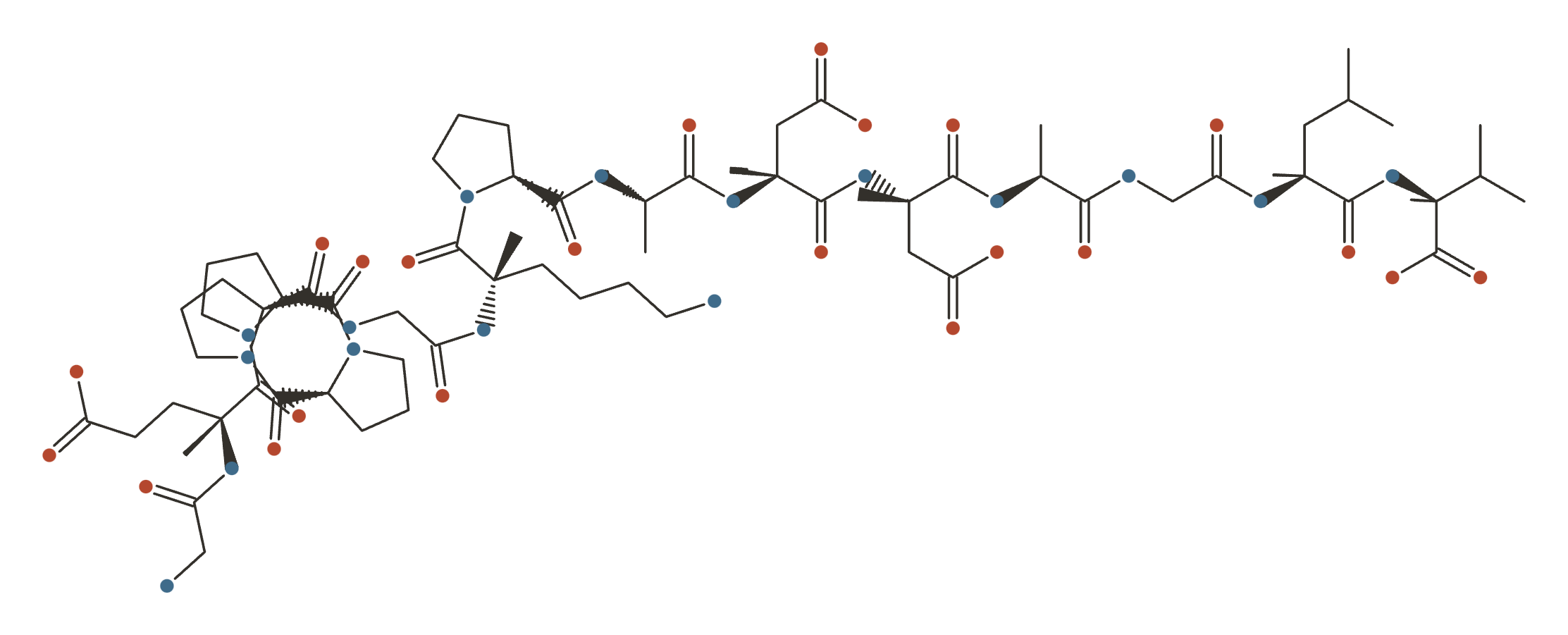

BPC-157 at a Glance
BPC-157 is a 15-amino-acid sequence described as a fragment of a protein found in human gastric juice, though the parent protein’s identity is itself contested. It is one of the most widely sold research peptides, taken for tendon, ligament, muscle and gut repair. The animal record is striking and unusually broad — rodent injury models across almost every tissue report faster healing — but it is concentrated in a single research group, and the human evidence is close to absent. It is an unapproved research chemical and is banned in sport at all times.
History & Development
BPC-157 came out of a Croatian gastroenterology laboratory in the early 1990s, from work on what in gastric juice protects the stomach lining — not from sports medicine, tendon repair, or any of the uses it is sold for today.
| First described | 1993 (earliest indexed PubMed entry 1992) 34, |
| Discovered / synthesised by | Predrag Sikirić and colleagues 34, |
| Institution | Department of Pharmacology, School of Medicine, University of Zagreb, Croatia 35Reference 35BPC-157: a MAHA-adjacent peptide, linked to Croatia — reporting on the compound’s origin in Predrag Sikirić’s laboratory at the University of Zagreb. https://undark.org/2026/02/03/bpc-157-peptide-fda/View study → |
| Origin | Synthetic peptide, described as a partial sequence of a protein reported in human gastric juice |
| Key patent | WO 1998/052973, “New BPC peptide salts with organo-protective activity”, Sikirić P. et al. 34Reference 34ReviewMultifunctionality and possible medical application of the BPC 157 peptide — literature and patent reviewView study → |
| Assignee | Not established in the accessible literature |
| Development status | Discontinued at Phase II (Pliva, ulcerative colitis and multiple sclerosis, 2000s); never approved anywhere 1Reference 1ReviewStable Gastric Pentadecapeptide BPC 157 and Wound Healing — review (preclinical)View study → |
Discovery
The compound originates in research on cytoprotection — the question of why the gastric mucosa
survives its own acid. Sikirić’s group at the University of Zagreb reported isolating a protective
peptide from human gastric juice and named it Body Protection Compound for the breadth of tissues
it appeared to protect; BPC-157 is a 15-amino-acid sequence derived from it 34,
One caveat belongs in the record rather than in the pharmacology. The identity of the parent protein has never been independently established — the gastric-juice provenance rests on the originating group’s own account, and no separate laboratory has isolated the parent molecule. That does not affect what the synthetic peptide does in animals, which is measured directly, but it does mean the “naturally occurring fragment” framing carried by most retail copy is weaker than it sounds.
Development & ownership
Patent activity around BPC-157 is unusually scattered. The founding filing associated with the originating group is WO 1998/052973, “New BPC peptide salts with organo-protective activity”, naming Sikirić and colleagues 34Reference 34ReviewMultifunctionality and possible medical application of the BPC 157 peptide — literature and patent reviewView study →. A 2025 literature-and-patent review catalogues at least a further nine filings from unrelated parties across the US, China, Croatia and the EPO, covering formulations and delivery rather than the molecule itself 34Reference 34ReviewMultifunctionality and possible medical application of the BPC 157 peptide — literature and patent reviewView study → — a pattern typical of a compound that entered wide commercial use without a single owner controlling it.
The only genuine pharmaceutical development programme was run by the Croatian company Pliva, which took the compound into Phase II trials for ulcerative colitis and multiple sclerosis in the 2000s under the development codes PL-14736 and PLD-116 1Reference 1ReviewStable Gastric Pentadecapeptide BPC 157 and Wound Healing — review (preclinical)View study →. That programme produced no full publication — the surviving results are conference abstracts — and it appears to have stopped; no reason has been stated in the accessible record 1Reference 1ReviewStable Gastric Pentadecapeptide BPC 157 and Wound Healing — review (preclinical)View study →.
No company has taken BPC-157 into a registered human trial since, until an independent Phase 2 hamstring-strain trial began recruiting in 2026 32Reference 32RCTBPC 157 for Acute Hamstring Muscle Strain Repair — Phase 2, randomised, placebo-controlled (recruiting; Hudson Biotech; n≈120). https://clinicaltrials.gov/study/NCT07437547View study →. It has never been approved by any regulator.
How it reached the market
BPC-157 reached consumers without ever completing a development pathway. After the Pliva programme lapsed, the compound moved into research-chemical supply channels, where the animal literature — broad, consistent, and almost entirely from one group — served as the marketing case. It is sold as an unapproved research chemical, and its US compounding status was examined by the FDA’s Pharmacy Compounding Advisory Committee in 2026, whose briefing document concluded the criteria weigh against adding it to the 503A Bulks List 1Reference 1ReviewStable Gastric Pentadecapeptide BPC 157 and Wound Healing — review (preclinical)View study →.
What It's Used For
BPC-157 (“Body Protection Compound-157”) is a synthetic pentadecapeptide — a 15-amino-acid chain, sequence GEPPPGKPADDAGLV (MW ≈ 1419 Da) — described as a partial fragment of a protein isolated from human gastric juice 1,
It is marketed and used experimentally as a “healing” peptide for tendon, ligament, muscle, gut, and other soft-tissue repair. The honest headline is that the evidence base is overwhelmingly preclinical and heavily concentrated in a single research group: across two decades, rodent (mostly rat) injury models report consistent, prompt healing across almost every tissue tested, but independent replication is limited and the mechanistic story rests largely on one lab’s work 2,
Human data are minimal — FDA’s 2026 systematic search of the literature found five clinical studies in total: three small uncontrolled pilot reports (an intra-articular knee-pain chart review, an interstitial-cystitis case series, and a two-person intravenous safety study) 5,
Support is an experimental score I’m building — a composite weighted by study type (human > animal > in vitro > review) and study volume. It’s a beta: a fast way to rank strength of evidence at a glance, not a validated metric. For a preclinical peptide like BPC-157 the ceiling is low on purpose — almost everything is rodent data, so even the best-supported rows sit in the middle of the scale with the human gap stated out loud. Because virtually all applications are animal-only and trace to the same research group, raw publication count is not the discriminator here (a category with more papers is usually more review articles from one lab, not more independent evidence); these scores are weighted toward any human signal, breadth of injury model, and mechanistic depth rather than hit volume. Each application links down to its write-up.
This is the origin indication — the peptide was isolated from gastric juice and named for gastric “body protection.” In rats, BPC-157 (typically 10 µg/kg or 10 ng/kg intraperitoneally, or ~0.16 µg/mL in drinking water) accelerates healing of gastric and intestinal ulcers, esophagitis, colitis, intestinal anastomoses, and various internal and external fistulas, and preserves lower-esophageal and pyloric sphincter pressure after injury 1,
Mechanistically the effect is tied to the nitric-oxide system and to stabilizing intestinal permeability (“leaky gut”) and gastric endothelial integrity 17Reference 17ReviewBPC 157 Rescued NSAID-cytotoxicity Via Stabilizing Intestinal Permeability and Enhancing Cytoprotection — reviewView study →.
The only randomized human evidence of any kind sits here: BPC-157 (as PL-14736 / PLD-116, Pliva) entered Phase II for ulcerative colitis (and multiple sclerosis) in the 2000s. It produced no full publication, but FDA’s 2026 review recovered the conference abstract — a 53-subject multicenter placebo-controlled trial of an 80 mg enema for two weeks in which the between-group Disease Activity Index difference was 1.6 points (95% CI −4.84, 1.62), i.e. not separating from placebo, from an abstract that never defined its endpoint. FDA judged it “inadequate to support the efficacy and safety of BPC-157.” The programs appear to have stopped 1,
A 2024 uncontrolled pilot in 12 women with interstitial cystitis (bladder, not gut) reported symptom resolution but had no control arm 28Reference 28Clinical trialEffect of BPC-157 on Symptoms in Patients with Interstitial Cystitis: A Pilot Study — human, uncontrolled (n=12)View study →.
Gap: deep and repeatedly reproduced in rats, but concentrated in one lab; the human UC trials were never published, so there is effectively no readable human efficacy evidence for any GI indication.
The flagship “healing peptide” claim. In rats, BPC-157 (10 µg/kg intraperitoneally, or applied locally) improves Achilles tendon-to-bone healing after sharp transection — better collagen organization, load-to-failure, stiffness, and functional index — and counteracts the healing impairment caused by corticosteroids 8,
In vitro, it accelerates outgrowth and migration of rat Achilles tendon fibroblasts and increases FAK–paxillin phosphorylation and F-actin formation, without directly increasing proliferation 7Reference 7In vitroThe promoting effect of pentadecapeptide BPC 157 on tendon healing involves tendon outgrowth, cell survival, and cell migration — in vitro / ratView study →.
The proposed driver is angiogenesis via the VEGFR2–Akt–eNOS axis 5Reference 5ReviewRegeneration or Risk? A Narrative Review of BPC-157 for Musculoskeletal HealingView study →.
The only human signal is a retrospective chart review of 17 patients given intra-articular BPC-157 (± thymosin-β4) for knee pain, followed up by phone with no objective outcome measures — hypothesis-generating at best 27Reference 27ReviewIntra-Articular Injection of BPC 157 for Multiple Types of Knee Pain — human, retrospective chart review (n=17)View study →.
A 2025 systematic review of BPC-157 in orthopedic sports medicine reached the same conclusion — the clinical evidence is preclinical and low-quality, with no adequately controlled human trial to date 4Reference 4Systematic reviewEmerging Use of BPC-157 in Orthopaedic Sports Medicine: A Systematic ReviewView study →.
Gap: no human tendon/ligament trial; the rat data are strong and consistent but single-lab-dominant, and the one human report is an uncontrolled retrospective survey. The 2026 Phase 2 hamstring-strain RCT (NCT07437547) is the study to watch 32Reference 32RCTBPC 157 for Acute Hamstring Muscle Strain Repair — Phase 2, randomised, placebo-controlled (recruiting; Hudson Biotech; n≈120). https://clinicaltrials.gov/study/NCT07437547View study →.
Among the most reproduced rodent findings. BPC-157 (10 µg/kg or 10 ng/kg) counteracts the combined gastrointestinal, liver, and brain (encephalopathy) toxicity of NSAIDs in rats — shown for diclofenac, celecoxib, aspirin, ibuprofen, and paracetamol — restoring sphincter pressures, normalizing liver enzymes, and reducing lesions, whether given intraperitoneally or in drinking water 14,
The mechanism is framed around the nitric-oxide system (effects paralleled by L-arginine, blocked by L-NAME) and restoration of intestinal-barrier integrity 15,
All of this is rat “cytoprotection”/“organoprotection” work from the originating group.
Gap: well-replicated but entirely animal, single-lab, and mechanistic; there is no human study of BPC-157 for NSAID-associated GI injury.
In rat gastrocnemius crush and quadriceps transection/detachment models, BPC-157 (10 µg/kg or 10 ng/kg intraperitoneally, locally as a cream, or per-oral) accelerates functional and histological muscle recovery and — notably — counteracts the muscle-healing impairment caused by systemic corticosteroids 10Reference 10AnimalImpact of pentadecapeptide BPC 157 on muscle healing impaired by systemic corticosteroid application — ratView study →.
A 2025 study reported that oral BPC-157 restored quadriceps muscle-to-bone reattachment after surgical detachment, with recovery tracked by ultrasound and MRI 11Reference 11AnimalStable Gastric Pentadecapeptide BPC 157 as Therapy After Surgical Detachment of the Quadriceps Muscle for Muscle-to-Bone Reattachment — ratView study →.
Review work extends the claim to smooth and cardiac muscle and to muscle dizability from diverse insults 12Reference 12ReviewStable Gastric Pentadecapeptide BPC 157 and Striated, Smooth, and Heart Muscle — reviewView study →.
Gap: rat-only, largely single-lab; no human muscle-injury trial exists (the 2026 hamstring RCT will be the first) 32Reference 32RCTBPC 157 for Acute Hamstring Muscle Strain Repair — Phase 2, randomised, placebo-controlled (recruiting; Hudson Biotech; n≈120). https://clinicaltrials.gov/study/NCT07437547View study →.
BPC-157 accelerates healing of incisional and excisional skin wounds, deep burns, diabetic ulcers, and alkali burns in rats, and simultaneously heals paired cutaneous/internal wounds (e.g. colocutaneous, gastrocutaneous, esophagocutaneous, vesicovaginal fistulas) at the same dose and by multiple routes 1Reference 1ReviewStable Gastric Pentadecapeptide BPC 157 and Wound Healing — review (preclinical)View study →. Healing is attributed to organized resolution of the clotting cascade and to angiogenesis 1,
Gap: consistent across many rat wound types but single-lab and animal-only; no controlled human wound-healing data.
One of the older, partly independent findings: in rabbits, a segmental osteoperiosteal defect that failed to heal in controls showed significantly improved callus formation with BPC-157 given locally or intramuscularly (10 µg/kg), compared favorably with bone marrow or autograft 13Reference 13Osteogenic effect of a gastric pentadecapeptide, BPC-157, on the healing of segmental bone defect in rabbits — rabbitView study →. Rat tendon-to-bone and muscle-to-bone junction models also show improved osseous integration 8,
Gap: few studies, mixed species (rabbit/rat), animal-only; no human fracture or non-union data.
Topical BPC-157 eye drops (2 µg/mL and 2 ng/mL, dose-dependent) accelerated healing of perforating corneal injuries and corneal epithelial defects in rats and preserved corneal transparency by limiting neovascularization 23,
Gap: distinct, dose-dependent rat data across several ocular models, but animal-only and single-lab; no human ophthalmic study.
More mechanism than clinical indication, but studied as an application. In rats, BPC-157 counteracts major-vessel occlusion syndromes (including ischemia-reperfusion after the Pringle maneuver and a Budd-Chiari model) by rapidly recruiting collateral vessels, and it is described as a potent “angiomodulatory” agent acting through NO, VEGF, and FAK pathways 18,
It also reduced bleeding time and thrombocytopenia after amputation in rats treated with heparin, warfarin, or aspirin, and both prevented and dissolved venous thrombus in earlier work 19Reference 19AnimalPentadecapeptide BPC 157 reduces bleeding time and thrombocytopenia after amputation in rats treated with heparin, warfarin or aspirin — ratView study →.
Gap: intriguing rat vascular biology, but almost entirely mechanistic and single-lab; no human cardiovascular or bleeding-disorder data, and the anticoagulant-interaction findings are themselves a safety flag, not an endorsed use.
In mice, BPC-157 (10 µg/kg or 10 ng/kg intraperitoneally) given prophylactically or shortly after a weight-drop traumatic brain injury reduced hemorrhagic lesions and brain edema and improved the conscious/unconscious/death ratio and early survival 21Reference 21AnimalTraumatic brain injury in mice and pentadecapeptide BPC 157 effect — mouseView study →. Broader CNS reviews from the originating group extend claims to spinal-cord injury, stroke models, and modulation of dopaminergic/serotonergic/GABA systems 22Reference 22ReviewPentadecapeptide BPC 157 and the central nervous system — reviewView study →.
Gap: limited to a few animal models (single-lab), with much of the “CNS” claim resting on narrative reviews rather than fresh primary data; no human neurological study.
Mechanisms
| Target / pathway | Effect | Relevant to |
|---|---|---|
| VEGFR2 → Akt → eNOS axis | ↑ angiogenesis, endothelial repair | tendonmusclewoundvasculargut |
| Nitric-oxide (NO) system (L-arginine-like; L-NAME-blocked) | modulation / restoration of vasomotor balance | GI cytoprotectionNSAID toxicityocularvascular |
| FAK–paxillin (focal-adhesion signaling) | ↑ fibroblast migration & spreading | tendon/ligament healing |
| ERK1/2 signaling | ↑ | musculoskeletal repair |
| Growth-factor / early-response genes (e.g. EGR-1), collagen organization | ↑ | wound & tendon healing |
| Gut epithelial/endothelial barrier (“leaky gut”) | stabilized | GI & NSAID cytoprotection |
| Collateral-vessel recruitment (arteriogenesis) | ↑ | vessel-occlusion / ischemia models |
Pharmacokinetics
Route is the single most decision-relevant fact for this peptide. In humans it is given almost exclusively by injection — subcutaneous (most common) or intramuscular; rodent studies additionally use intraperitoneal, local/topical, and oral/intragastric (drinking-water) dosing 1,
Clinical & regulatory status
BPC-157 is an unapproved research chemical: it is not approved by the FDA, EMA, TGA, or any other major regulator as a drug or as a dietary supplement, and there is no recognized pharmacopoeial (USP/NF) monograph 3,
What FDA’s 2026 review found in the human record. FDA’s briefing document for the 23–24 July 2026 Pharmacy Compounding Advisory Committee meeting searched PubMed, Embase, Cochrane, ClinicalTrials.gov, FAERS and the Human Foods Complaint System and identified five clinical studies in total — more than the three pilot reports usually cited, but not better ones. Two are meeting abstracts from the old Pliva program: a placebo-controlled Phase 1 tolerability/PK study in 32 healthy volunteers given rectal enemas (0.25–2 mg/kg; most common adverse events headache and flatulence, no difference from placebo), and the Ruenzi 2005 multicenter randomized double-blind Phase II trial in 53 subjects with mild-to-moderate ulcerative colitis (80 mg enema daily for two weeks). That trial’s headline number is the one to know: mean Disease Activity Index change −3.2 (95% CI −5.58, −0.82) on BPC-157 versus −1.6 (95% CI −3.86, 0.67) on placebo, a between-group difference of 1.6 (95% CI −4.84, 1.62) — a confidence interval straddling zero, from an abstract that never defined its own primary endpoint. FDA’s verdict is that the data “are therefore inadequate to support the efficacy and safety of BPC-157,” and that overall “there is a lack of evidence to make a conclusion on the effectiveness of BPC-157.” Notably, in both enema studies BPC-157 was not detected in plasma — FDA concludes “it does not appear that BPC-157 is absorbed systemically when given as a rectal enema,” so even the historical human program says nothing about systemic exposure. The evaluation also observes that the nominators proposed a rectal suppository, which reaches only the rectum, rather than the enema that was actually studied — a different delivery envelope from the one the evidence covers. The committee has not yet voted; see Sourcing, Route & Legal Status for FDA’s overall recommendation.
| Completed | Ongoing | Terminated | Preclinical |
|---|---|---|---|
| 1registered (Phase 1 PK, no results) + 3 uncontrolled pilots | 1(Phase 2 RCT, recruiting) | ~2historical Phase II (UC, MS; unpublished, apparently discontinued) | Hundreds of rodent/in-vitro studies (dozens of distinct models) |
Last checked: July 2026.
Sourcing, Route & Legal Status
Regulatory status — unapproved research chemical. BPC-157 is not approved by the FDA, EMA, TGA, or any other major regulator as a drug or as a dietary supplement, and there is no USP/NF monograph. In the United States it is sold under “for research use only / not for human consumption” labeling. Its compounding status has been unstable: the FDA placed BPC-157 in Category 2 of the 503A bulk-drug-substances review (interim category for substances with significant safety concerns, effectively prohibiting pharmacy compounding for human use) in September 2023, then removed it from Category 2 in April 2026 after the nomination was withdrawn. Critically, removal from Category 2 is not approval and does not move it to Category 1 (permitted for compounding); it leaves BPC-157 in a regulatory gray zone, with a Pharmacy Compounding Advisory Committee review pending. In sport it is firmly prohibited: WADA lists BPC-157 under class S0 (non-approved substances), banned at all times, with no therapeutic-use exemption available, and anti-doping agencies (e.g. USADA) warn athletes explicitly against it. Australia’s TGA schedules it as prescription-only (Schedule 4). It is not a DEA-controlled substance.
FDA’s 2026 compounding evaluation — the most systematic assessment of BPC-157 that exists (decision pending). Ahead of the 23–24 July 2026 Pharmacy Compounding Advisory Committee meeting, FDA published a briefing document (dated 11 May 2026) evaluating BPC-157 (free base) and BPC-157 acetate for the section 503A Bulks List — the list of bulk substances pharmacies may lawfully compound from. The committee has not yet met and FDA has not issued a final determination; the agency states explicitly that it “will not issue a final determination on the issues at hand until input from the advisory committee process has been considered and all reviews have been finalized.” What is already public is FDA’s own recommendation, and it is unambiguous: after weighing the four statutory criteria, “a balancing of the criteria weighs against” listing, and FDA proposes “not adding BPC-157 (free base) or BPC-157 acetate to the 503A Bulks List.” Both original nominations — from Wells Pharmacy Network and LDT Health Solutions / International Peptide Society — were withdrawn; FDA chose to complete the evaluation on its own initiative. This is the review the April 2026 Category 2 removal left pending, and it is worth reading as the most systematic search anyone has run on this molecule.
The evaluation is unusually specific about what does not exist, and much of it contradicts how BPC-157 is sold:
- The nominators could not say which molecule they were nominating. FDA notes it “is unclear in both packages whether the nomination was for BPC-157 acetate or BPC-157 (free base)” — both packages cited the UNII and CAS number of the free base (137525-51-0) while attaching certificates of analysis for the acetate (216441-37-1). These are different active pharmaceutical ingredients, and FDA concluded both forms are “not well-characterized from the physical and chemical characterization perspective.” BPC-157 has no USAN, INN or IUPAC name; FDA warns that inconsistent naming means a patient “may be dosed with a different bulk drug substance than the physician ordered.” There is no USP/NF, European, Japanese or International Pharmacopoeia monograph, and a globalEDGE search found no approved product containing BPC-157 in any country.
- Every route people actually use is untested — in humans and in animals. FDA found no human study of BPC-157 by the oral, subcutaneous, nasal or transdermal route for the evaluated indication, and, separately, no nonclinical pharmacokinetic or toxicology study by any of those routes either. The entire toxicology package (acute, 28-day repeat-dose, genotoxicity, teratogenicity) was run intramuscularly, in one 2020 publication; because the absolute bioavailability of the other routes is unknown, FDA says the IM no-observed-adverse-effect levels cannot be used to estimate safety margins for them. There are no carcinogenicity studies, no full reproductive-cycle or peri/postnatal studies, and no repeat-dose study longer than 28 days.
- The 28-day animal toxicology is not clean. FDA describes “clinically relevant safety signals” in rats and dogs dosed IM for 28 days: shortened aPTT in rats and prolonged aPTT in dogs (suggestive of altered clotting) plus liver-associated signals — raised serum ALT, glucose and triglycerides. This is a more concrete signal than the “LD1 not achieved” framing that circulates in vendor copy.
- Certificates of analysis test purity and essentially nothing else. Of the two CoAs submitted, one reported purity plus unspecified “related substances,” the other purity alone; FDA found the same pattern in the market (“most CoAs for BPC-157 acetate only contain purity testing”). No impurity identification, no aggregate testing, no bioburden, no bacterial endotoxin test, no residual-solvent data — for a substance proposed as a subcutaneous injection. FDA concludes it “cannot rule out the potential for immunogenicity associated with these impurities and peptide-related aggregates,” notes that no study has ever formally investigated the immunogenicity of BPC-157, and that SC and nasal routes carry higher immunogenicity risk than oral or rectal. For the proposed nasal spray, FDA had “strong concerns” — no information exists on the container-closure/pump system at all.
- Compounding volume, on the record, is zero. FDA’s outsourcing-facility product reporting data from January 2017 to June 2025 contains no reported compounded drug products containing BPC-157 (free base) or BPC-157 acetate — despite the peptide’s Google search volume hitting an all-time high in June 2024 and 50 million+ tagged video views. (Section 503A pharmacies do not report to that database, so this measures registered outsourcing facilities, not the gray market.)
- Three FAERS reports, all injectable, searched through 4 December 2025. A 55-year-old woman with nine days of injection-site redness and swelling (confounded by concurrent thymosin); a 28-year-old man on BPC-157 acetate SC for “injury/inflammation” who developed shortness of breath requiring an emergency-room visit; and a 40-year-old woman using a BPC-157 + TB-500 product labeled “research purposes only” who developed diffuse hyperpigmentation and gingival darkening, which recurred identically on rechallenge two weeks later and resolved when she stopped. FDA judged the third “likely due to the drug product” on rechallenge grounds but could not attribute it between the two peptides. A parallel search of the Human Foods Complaint System through 3 December 2025 returned three more cases, all confounded by multi-ingredient supplements. FDA is clear these numbers cannot establish safety — 503A compounders generally do not report adverse events at all.
- New Zealand’s Medicines Classification Committee proposed prescription-only classification in May 2023, with no approved products or pending applications there.
How it’s supplied & administered. BPC-157 is sold as a lyophilized (freeze-dried) white powder, typically in 5–10 mg vials, requiring reconstitution (usually with bacteriostatic or sterile water) before use. The route in humans is injection — most commonly subcutaneous, sometimes intramuscular or locally around an injury; some sources sell oral capsules and “stable” oral forms, but as a 15-residue peptide its systemic oral bioavailability is expected to be negligible, so any oral effect would be local to the gut rather than systemic. Reconstituted peptide is generally refrigerated, protected from light, and used within weeks; unreconstituted powder is stored frozen or refrigerated.
Sourcing reality (this is a safety issue, not a footnote). Because BPC-157 has no approved manufacturer for human use, essentially all supply comes from unregulated “research chemical” vendors and compounding operations with no FDA manufacturing oversight. Independent testing of gray-market peptides repeatedly finds mislabeled content, under- or over-dosing, incorrect or degraded peptide, and contaminants — for an injected product, the specific hazards are bacterial endotoxin, microbial contamination, and residual synthesis solvents, none of which the buyer can assess without a genuine third-party certificate of analysis (COA) with HPLC purity and endotoxin testing. Reconstitution and injection by non-clinicians add sterility and dosing-error risk. This page does not recommend, rank, or link any vendor; the responsible framing is that purity and identity are unverifiable in this market.
Safety
Human safety data for BPC-157 are almost non-existent — roughly 30 people across three uncontrolled pilot reports — and the FDA’s 2026 review of the one formal toxicology publication found clinically relevant safety signals, not a clean record.
- Genotoxicity assays were negative. Ames, chromosome-aberration and mouse micronucleus tests were all clean, and a rat teratogenicity study found no effect on fetal outcomes.
- No human safety data of approval grade. Absence of reported harm in about 30 people over a few weeks is not evidence of safety.
- FDA found clinically relevant safety signals. Altered clotting on 28-day intramuscular dosing (shortened aPTT in rats, prolonged in dogs) plus raised serum ALT, glucose and triglycerides.
- The toxicology package does not cover real-world use. No acute or repeat-dose toxicology by any route people actually use, no carcinogenicity study, nothing beyond 28 days, and no immunogenicity study at all.
- Anticoagulant and antiplatelet flag. Rat data show BPC-157 modifies the bleeding effects of heparin, warfarin and aspirin.
- Angiogenesis concern is theoretical and unresolved. A 2025 review raised tumor-promotion and neurodegeneration concerns on mechanistic grounds; the originating lab disputed them.
Full Safety & Interactions Detail
Overall posture. Human safety data are almost non-existent. The three published human pilot reports (intravenous safety n=2; intra-articular knee pain n=17 retrospective; interstitial cystitis n=12) reported no adverse effects, but each is tiny, uncontrolled, and short-term — absence of reported harm in ~30 people across a few weeks is not evidence of safety. Preclinical (rodent) work from the originating group describes a wide margin (“LD1 not achieved,” i.e. no dose killing even 1% of animals was reached) — but this is animal data and says nothing about human long-term risk, and “few side effects” overstates it. FDA’s 2026 compounding review, reading the one formal toxicology publication, found “clinically relevant safety signals” in the 28-day intramuscular repeat-dose studies: shortened aPTT in rats and prolonged aPTT in dogs (altered clotting properties) plus liver-associated signals — raised serum ALT, glucose and triglycerides. FDA also found no acute or repeat-dose toxicology by any route people actually use (oral, rectal, subcutaneous, nasal, transdermal), no carcinogenicity study, no repeat-dose study beyond 28 days, and no immunogenicity study of any kind — and concluded the nonclinical package was “too limited in scope and duration to inform safety considerations.” Genotoxicity is the one reassuring column: Ames, chromosome-aberration and mouse micronucleus assays were all negative, and an intramuscular rat teratogenicity study (gestation days 6–15) found no effect on fetal outcomes or malformation rates.
Adverse effects. From the human pilots, none were reported (injection-site reactions are the expected minor effect for any subcutaneous peptide). From mechanism and class, the theoretical concerns are: (1) angiogenesis — a peptide that promotes new blood-vessel growth could, in principle, be undesirable in the presence of a tumor or proliferative retinopathy; a 2025 review raised tumor-promotion and neurodegeneration concerns on mechanistic grounds, which the originating lab disputed in a published reply. This remains theoretical and unresolved, not a documented human harm. (2) Bleeding/clotting — rat studies show BPC-157 affects bleeding time and platelet counts and interacts with anticoagulants.
Dose-limiting effect. None established in humans (no dose-finding trial has defined one).
Interactions. No human interaction studies exist. The one mechanistically-grounded flag is anticoagulants/antiplatelet agents (heparin, warfarin, aspirin) — rat data show BPC-157 modifies their bleeding effects — so co-use with blood thinners is a theoretical concern worth flagging. All other interactions are unassessed.
Injection-specific risks. Because the product is self-reconstituted from unregulated powder and self-injected, the practical risks are non-sterile technique, contamination/endotoxin from impure product, injection-site infection, and dosing error — often larger real-world hazards than the peptide’s own pharmacology.
Who should avoid it. Anyone with active or prior cancer (angiogenesis concern), anyone on anticoagulant/antiplatelet therapy, pregnant or breastfeeding individuals, and competitive athletes subject to anti-doping testing (banned at all times). Because it is unapproved and unstudied in humans, the conservative position is that it should not be self-administered by anyone outside a supervised clinical trial.
Scope disclosure (what has and hasn’t been assessed):
- Human data? None of approval grade — only three small, uncontrolled pilot reports plus one unpublished Phase 1 PK study; the first randomized placebo-controlled efficacy trial (hamstring strain) began recruiting in 2026.
- Interactions assessed? No in humans; only a mechanistic anticoagulant flag from rat data.
- Pregnancy/lactation assessed? No — not established; avoid.
- Long-term safety established? No. There is no long-term human safety data; low rodent toxicity must not be read as human safety.
Where BPC-157 hasn’t been studied — which is almost everywhere in humans — the honest statement is “not assessed,” not “safe.”
Not assessed / not established. There are no human pregnancy or lactation data and no reproductive-safety studies adequate to inform use; it should be avoided in pregnancy and breastfeeding.
Dosage
There is no established human dose for BPC-157. It has no approved indication and no adequately-powered human trial to define a safe or effective dose, so no dose is recommended — regimens circulating on vendor sites and coaching forums are not derived from controlled human data and should not be treated as one.
For reference only, the figures that appear in the published record are: the single completed human PK study and the IV safety pilot used single intravenous infusions in the ~10–20 mg range; the uncontrolled pilot reports used intra-articular or peri-lesional injection (~10 mg) 27,
The preclinical literature is dosed in µg/kg or ng/kg in rodents (commonly 10 µg/kg or 10 ng/kg by injection, or ~0.16 µg/mL in drinking water) 1,
References
- Sikiric P, et al. (2021). Stable Gastric Pentadecapeptide BPC 157 and Wound Healing — review (preclinical). Front Pharmacol. https://pubmed.ncbi.nlm.nih.gov/34267654/
- Gwyer D, Wragg NM, Wilson SL (2019). Gastric pentadecapeptide body protection compound BPC 157 and its role in accelerating musculoskeletal soft tissue healing — review. Cell Tissue Res. https://pubmed.ncbi.nlm.nih.gov/30915550/
- Józwiak M, et al. (2025). Multifunctionality and Possible Medical Application of the BPC 157 Peptide — Literature and Patent Review. Pharmaceuticals (Basel). https://pubmed.ncbi.nlm.nih.gov/40005999/
- Vasireddi N, Hahamyan H, Salata MJ, et al. (2025). Emerging Use of BPC-157 in Orthopaedic Sports Medicine: A Systematic Review. HSS J. https://pubmed.ncbi.nlm.nih.gov/40756949/
- McGuire FP, Martinez R, Lenz A, et al. (2025). Regeneration or Risk? A Narrative Review of BPC-157 for Musculoskeletal Healing. Curr Rev Musculoskelet Med. https://pubmed.ncbi.nlm.nih.gov/40789979/
- Mendias CL, Awan TM (2026). Safety and Efficacy of Approved and Unapproved Peptide Therapies for Musculoskeletal Injuries and Athletic Performance — narrative review. Sports Med. https://pubmed.ncbi.nlm.nih.gov/41966639/
- Chang CH, et al. (2011). The promoting effect of pentadecapeptide BPC 157 on tendon healing involves tendon outgrowth, cell survival, and cell migration — in vitro / rat. J Appl Physiol. https://pubmed.ncbi.nlm.nih.gov/21030672/
- Krivic A, et al. (2006). Achilles detachment in rat and stable gastric pentadecapeptide BPC 157: promoted tendon-to-bone healing — rat. J Orthop Res. https://pubmed.ncbi.nlm.nih.gov/16583442/
- Krivic A, et al. (2008). Modulation of early functional recovery of Achilles tendon to bone unit after transection by BPC 157 and methylprednisolone — rat. Inflamm Res. https://pubmed.ncbi.nlm.nih.gov/18594781/
- Novinscak T, et al. (2010). Impact of pentadecapeptide BPC 157 on muscle healing impaired by systemic corticosteroid application — rat. Med Sci Monit. https://pubmed.ncbi.nlm.nih.gov/20190676/
- Matek D, Matek I, Staresinic E, et al. (2025). Stable Gastric Pentadecapeptide BPC 157 as Therapy After Surgical Detachment of the Quadriceps Muscle for Muscle-to-Bone Reattachment — rat. Pharmaceutics. https://pubmed.ncbi.nlm.nih.gov/39861766/
- Sikiric P, et al. (2022). Stable Gastric Pentadecapeptide BPC 157 and Striated, Smooth, and Heart Muscle — review. Biomedicines. https://pubmed.ncbi.nlm.nih.gov/36551977/
- Sebecic B, et al. (1999). Osteogenic effect of a gastric pentadecapeptide, BPC-157, on the healing of segmental bone defect in rabbits — rabbit. Bone. https://pubmed.ncbi.nlm.nih.gov/10071911/
- Ilic S, et al. (2011). Pentadecapeptide BPC 157 and its effects on a NSAID toxicity model: diclofenac-induced GI, liver and encephalopathy lesions — rat. Life Sci. https://pubmed.ncbi.nlm.nih.gov/21295044/
- Drmic D, Kolenc D, Ilic S, et al. (2017). Celecoxib-induced gastrointestinal, liver and brain lesions in rats, counteraction by BPC 157 or L-arginine, aggravation by L-NAME — rat. World J Gastroenterol. https://pubmed.ncbi.nlm.nih.gov/28839430/
- Vitaic S, Stupnisek M, Drmic D, et al. (2017). NSAID-induced failure of lower esophageal and pyloric sphincter and counteraction with BPC 157 — rat. J Physiol Pharmacol. https://pubmed.ncbi.nlm.nih.gov/28614776/
- Park JM, et al. (2020). BPC 157 Rescued NSAID-cytotoxicity Via Stabilizing Intestinal Permeability and Enhancing Cytoprotection — review. Curr Pharm Des. https://pubmed.ncbi.nlm.nih.gov/32445447/
- Seiwerth S, et al. (2014). BPC 157 and blood vessels — review. Curr Pharm Des. https://pubmed.ncbi.nlm.nih.gov/23782145/
- Stupnisek M, et al. (2012). Pentadecapeptide BPC 157 reduces bleeding time and thrombocytopenia after amputation in rats treated with heparin, warfarin or aspirin — rat. Thromb Res. https://pubmed.ncbi.nlm.nih.gov/21840572/
- Sikiric P, Skrtic A, Gojkovic S, et al. (2022). Cytoprotective gastric pentadecapeptide BPC 157 resolves major vessel occlusion disturbances, ischemia-reperfusion injury, and Budd-Chiari syndrome — rat. World J Gastroenterol. https://pubmed.ncbi.nlm.nih.gov/35125818/
- Tudor M, et al. (2010). Traumatic brain injury in mice and pentadecapeptide BPC 157 effect — mouse. Regul Pept. https://pubmed.ncbi.nlm.nih.gov/19931318/
- Sikiric P, et al. (2022). Pentadecapeptide BPC 157 and the central nervous system — review. Neural Regen Res. https://pubmed.ncbi.nlm.nih.gov/34380875/
- Lazic R, et al. (2015). Perforating corneal injury in rat and pentadecapeptide BPC 157 — rat. Exp Eye Res. https://pubmed.ncbi.nlm.nih.gov/25912999/
- Lazić R, Gabrić N, Dekaris I, et al. (2005). Gastric pentadecapeptide BPC 157 promotes corneal epithelial defects healing in rats — rat. Coll Antropol. https://pubmed.ncbi.nlm.nih.gov/16117343/
- Kralj T, Kokot A, Zlatar M, et al. (2021). Stable Gastric Pentadecapeptide BPC 157 Therapy of Rat Glaucoma — rat. Biomedicines. https://pubmed.ncbi.nlm.nih.gov/35052769/
- Sikiric P, Kokot A, Kralj T, et al. (2023). Stable Gastric Pentadecapeptide BPC 157 — Possible Novel Therapy of Glaucoma and Other Ocular Conditions — review. Pharmaceuticals (Basel). https://pubmed.ncbi.nlm.nih.gov/37513963/
- Lee E, Padgett B (2021). Intra-Articular Injection of BPC 157 for Multiple Types of Knee Pain — human, retrospective chart review (n=17). Altern Ther Health Med. https://pubmed.ncbi.nlm.nih.gov/34324435/
- Lee E, Walker C, Ayadi B (2024). Effect of BPC-157 on Symptoms in Patients with Interstitial Cystitis: A Pilot Study — human, uncontrolled (n=12). Altern Ther Health Med. https://pubmed.ncbi.nlm.nih.gov/39325560/
- Lee E, Burgess K (2025). Safety of Intravenous Infusion of BPC157 in Humans: A Pilot Study — human, uncontrolled (n=2). Altern Ther Health Med. https://pubmed.ncbi.nlm.nih.gov/40131143/
- Sikiric P, et al. (2025). BPC 157 Therapy: Targeting Angiogenesis and Nitric Oxide’s Actions — Comment on Józwiak et al. Pharmaceuticals (Basel). https://pubmed.ncbi.nlm.nih.gov/41155565/
- Józwiak M, et al. (2025). Reply to Sikiric et al. Comment on “BPC 157 Therapy: Targeting Angiogenesis and Nitric Oxide’s Actions”. Pharmaceuticals (Basel). https://pubmed.ncbi.nlm.nih.gov/41155566/
- ClinicalTrials.gov (2026). BPC 157 for Acute Hamstring Muscle Strain Repair — Phase 2, randomised, placebo-controlled (recruiting; Hudson Biotech; n≈120). https://clinicaltrials.gov/study/NCT07437547
- ClinicalTrials.gov (2015–16). PCO-02 — Safety and Pharmacokinetics Trial (Bepecin) — Phase 1 (n=42; PharmaCotherapia; status unknown, no results posted). https://clinicaltrials.gov/study/NCT02637284
- Józwiak, M., Bauer, M., Kamysz, W., & Kleczkowska, P. (2025). Multifunctionality and possible medical application of the BPC 157 peptide — literature and patent review. Pharmaceuticals, 18(2), 185. https://pmc.ncbi.nlm.nih.gov/articles/PMC11859134/
- Undark Magazine (2026). BPC-157: a MAHA-adjacent peptide, linked to Croatia — reporting on the compound’s origin in Predrag Sikirić’s laboratory at the University of Zagreb. https://undark.org/2026/02/03/bpc-157-peptide-fda/



