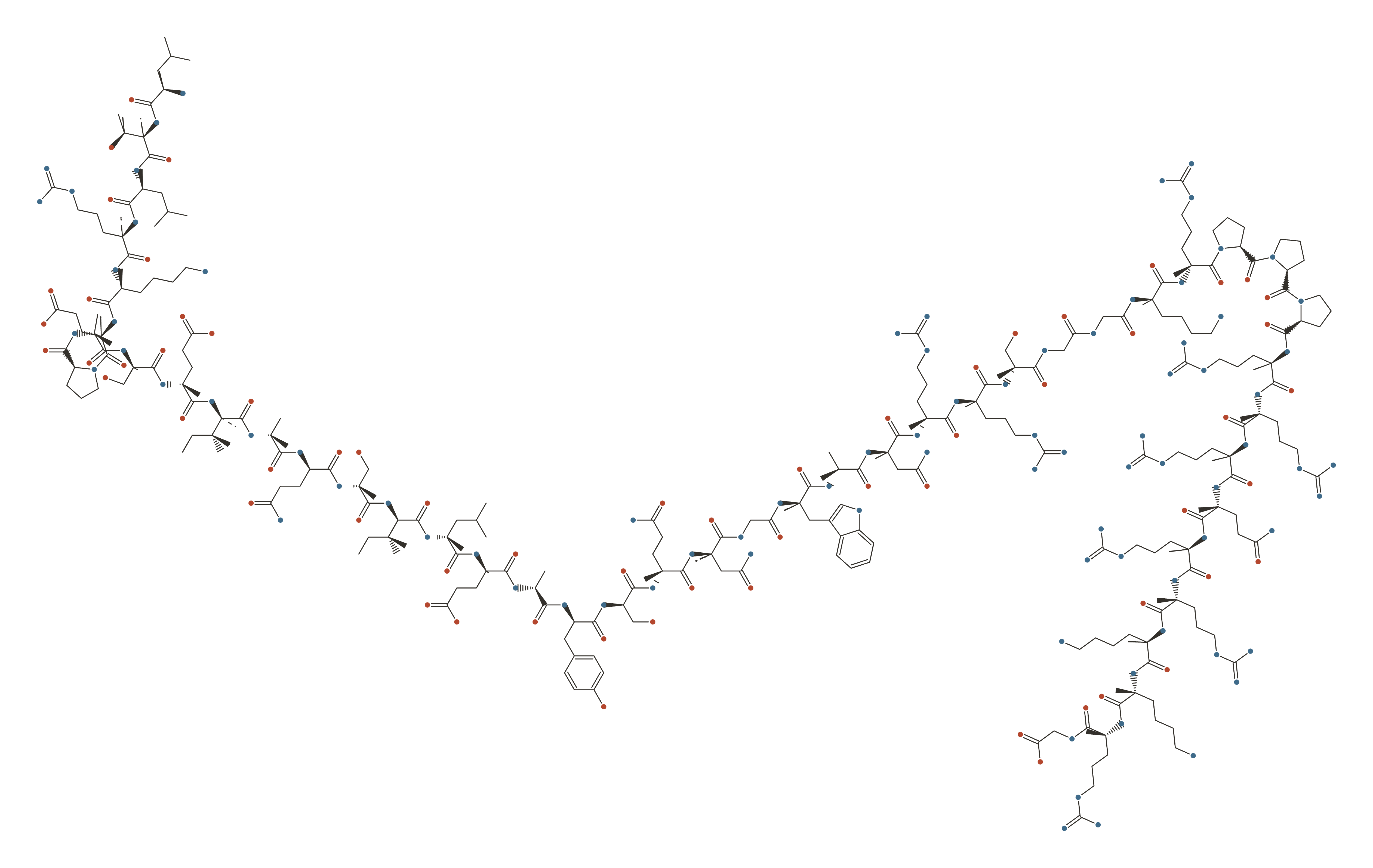
FOXO4-DRI
A synthetic senolytic peptide that disrupts the FOXO4–p53 interaction to kill senescent cells; preclinical only, unapproved, injectable.

FOXO4-DRI at a Glance
FOXO4-DRI is a designed senolytic — a peptide built to kill senescent cells rather than to signal to healthy ones. Senescent cells stop dividing but resist dying, accumulating with age and secreting inflammatory factors; FOXO4-DRI works by disrupting the FOXO4–p53 interaction those cells depend on to stay alive, releasing p53 to trigger apoptosis. The “DRI” refers to its retro-inverso design, built from D-amino acids in reverse order to resist degradation. It is preclinical, with no human data.
History & Development
FOXO4-DRI is designed to kill cells - specifically senescent ones. That makes it categorically different from everything else on this hub, which signals rather than destroys.
| First described | Not established in the sources consulted for this section |
| Discovered / synthesised by | Not established in the sources consulted for this section |
| Institution | Not established in the sources consulted for this section |
| Origin | Synthetic 46-residue construct (MW ~5,358) - a D-retro-inverso isoform of a FOXO4 fragment fused to a cationic cell-penetrating sequence |
| Key patent | Not established in the sources consulted for this section |
| Assignee | Not established in the sources consulted for this section |
| Development status | Preclinical only; never approved anywhere |
Discovery
Senescent cells stop dividing but refuse to die, accumulating with age and secreting inflammatory signals. Senolytics aim to remove them, and FOXO4-DRI is a designed one.
Its target is a protein-protein interaction. In senescent cells, FOXO4 sequesters p53, preventing it from triggering apoptosis - which is part of how those cells survive. FOXO4-DRI is built to disrupt that interaction, releasing p53 so the senescent cell dies as it otherwise would.
The construction is unusually elaborate for a peptide sold retail. A D-retro-inverso isoform uses D-amino acids in reversed sequence, presenting a similar side-chain topology while resisting proteases; that is fused to a cationic cell-penetrating sequence to get the construct inside cells. It is a designed intracellular disruptor, not a receptor ligand.
Development & ownership
The evidence is entirely preclinical, and the mechanism carries a risk profile unlike anything else here. A compound that triggers apoptosis by freeing p53 is not selective by virtue of intent - selectivity depends on senescent cells’ particular dependence on FOXO4 sequestration, and any off-target apoptosis is cell death rather than a side effect in the ordinary sense.
There is no human trial, no established dose, and no human safety data.
How it reached the market
FOXO4-DRI is sold as an injectable senolytic for anti-ageing. What is being bought is a preclinical cell-penetrating construct designed to induce programmed cell death, with no human data of any kind - which is a materially different proposition from a peptide that nudges a receptor.
What It's Used For
FOXO4-DRI is a synthetic senolytic peptide — a 46-residue construct (MW ≈ 5,358) built as a D-retro-inverso isoform of a FOXO4 fragment fused to a cationic cell-penetrating import sequence. It was engineered in 2017 as a proof-of-concept tool compound to test a specific idea: that senescent (“zombie”) cells stay alive because the transcription factor FOXO4 sequesters p53, and that breaking that interaction would release p53 and let the cell kill itself. The single fact that should frame everything else here is that FOXO4-DRI’s reputation rests almost entirely on one paper — Baar et al., Cell 2017, from Peter de Keizer’s group — which reported that the peptide selectively killed senescent cells and, in both progeroid and naturally aged mice, restored running fitness, fur density and renal function 1Reference 1In vitroTargeted apoptosis of senescent cells restores tissue homeostasis in response to chemotoxicity and aging — animal (mouse) / in vitroView study →.
That result is genuinely striking and the paper is real and heavily cited. But nine years later, no independent group has reproduced the aging-reversal phenotype. Other labs have picked the peptide up and used it as a tool in disease models — bleomycin lung fibrosis, senescent Leydig cells, keloid fibroblasts, cultured chondrocytes — and it does appear to do something senolytic in independent hands. Nobody has re-run the headline experiment. Meanwhile the one large independent study to test senescent-cell clearance in a different organ found the opposite of benefit: eliminating senescent cells, FOXO4-DRI included, promoted pulmonary hypertension 16Reference 16AnimalEliminating senescent cells can promote pulmonary hypertension development and progression — animal (mouse) / human tissueView study →.
There is no human data of any kind — no trial, no pharmacokinetics, no toxicology — and zero registered studies on ClinicalTrials.gov. Route is load-bearing: a ~5.4 kDa peptide has no meaningful oral absorption, so every published result comes from injection, mostly intravenous in mice. It is an unapproved research chemical sold gray-market, and the “reverses aging in humans” framing built around it is an extrapolation from one mouse study that no human study has ever tested.
Support is an experimental score I’m building — a composite weighted by study type (human > animal > in vitro > review) and study volume. It’s a beta: a fast way to rank strength of evidence at a glance, not a validated metric. For FOXO4-DRI the ceiling is deliberately low — nothing here clears 32%, because every row is animal or cell data and there is no human study of any kind. Two rows are not scored at all, and for opposite reasons: brain aging because I could not locate a single primary study behind the claim, and pulmonary hypertension because the evidence there points the wrong way — it is a harm finding, not a low score for lack of testing. Each application links down to its write-up.
Species: mouse and cultured cells. Not human. The defining study (Baar et al., Cell 2017) identified FOXO4 as the factor that keeps senescent cells viable by sequestering p53, designed FOXO4-DRI to break that interaction, and showed it drives p53 nuclear exclusion and cell-intrinsic apoptosis selectively in senescent cells in culture 1Reference 1In vitroTargeted apoptosis of senescent cells restores tissue homeostasis in response to chemotoxicity and aging — animal (mouse) / in vitroView study →. In mice dosed 3 × 5 mg/kg intravenously on alternating days, it neutralized doxorubicin-induced chemotoxicity and, in both fast-aging Xpd^TTD/TTD^ and naturally aged animals, restored running fitness, fur density and renal function 1Reference 1In vitroTargeted apoptosis of senescent cells restores tissue homeostasis in response to chemotoxicity and aging — animal (mouse) / in vitroView study →. A Cell commentary published alongside it framed the work as proof that senescent-cell elimination can restore tissue homeostasis after damage has already occurred 2Reference 2Rejuvenation by therapeutic elimination of senescent cells — commentaryView study →.
The breadth of endpoints is what made this paper famous — and it is also what makes the replication gap matter. This experiment has not been repeated by an independent group. Subsequent papers use the peptide in narrow disease models; none re-tests the aging phenotype. The two 2025 structural papers that resolved how the peptide engages p53 14Reference 14In vitroThe disordered p53 transactivation domain is the target of FOXO4 and the senolytic compound FOXO4-DRI — in vitro (structural NMR; co-authored by the originating investigator, part-funded by Cleara Biotech)View study → and how FOXO4 engages p53 15Reference 15In vitroStructural plasticity of the FOXO-DBD:p53-TAD interaction — in vitro (structural NMR; FOXO4/p53 proteins only — the FOXO4-DRI peptide was not tested in this study)View study → confirm that a real, physical interaction is being targeted — but structural confirmation of a binding event is not confirmation of an organism-level result, and the peptide-specific one 14Reference 14In vitroThe disordered p53 transactivation domain is the target of FOXO4 and the senolytic compound FOXO4-DRI — in vitro (structural NMR; co-authored by the originating investigator, part-funded by Cleara Biotech)View study → was co-authored by the originating investigator and part-funded by his company.
Gap: No human study of any kind. The headline aging result is a single paper from the originating lab, unreplicated nine years on, in mice, by intravenous injection. Structural work supports the mechanism; nothing supports the phenotype independently.
Species: mouse. Two independent groups used the bleomycin-induced pulmonary fibrosis model. One reported that the FOXO4 peptide targets myofibroblasts and ameliorates fibrosis through an ECM-receptor-interaction pathway, with an effect the authors compared favorably to the approved antifibrotic pirfenidone 3Reference 3AnimalFOXO4 peptide targets myofibroblast, ameliorates bleomycin-induced pulmonary fibrosis in mice through ECM-receptor interaction pathway — animal (mouse)View study →; a second group found FOXO4-D-retro-inverso reduces extracellular-matrix production in fibroblasts and ameliorates the same model 4Reference 4AnimalFOXO4-D-Retro-Inverso targets extracellular matrix production in fibroblasts and ameliorates bleomycin-induced pulmonary fibrosis in mice — animal (mouse)View study →. Cross-lab agreement in one disease model is a genuine strength for a compound this young, and it is the closest thing FOXO4-DRI has to replication.
Two honest caveats. First, the 2022 paper carries a published Correction (J Cell Mol Med, 2024) — a correction, not a retraction, but worth knowing for a load-bearing reference. Second, bleomycin is an acute injury model that responds to a great many things; it is not idiopathic pulmonary fibrosis in a person.
Gap: Rodent bleomycin model only. No human IPF study, no durability data, and lung-specific safety untested — which matters especially given the pulmonary hypertension finding below.
Species: mouse and cultured cells. Chemotherapy and radiotherapy leave behind therapy-induced senescent cells that can drive recurrence and toxicity, so oncology is the most commercially serious application of this mechanism. In non-small-cell lung cancer, clearing senescence-like cancer-associated fibroblasts radiosensitized tumors and reduced radiation-induced lung fibrosis in mice 5Reference 5In vitroTargeting senescence-like fibroblasts radiosensitizes non-small cell lung cancer and reduces radiation-induced pulmonary fibrosis — animal (mouse) / in vitroView study →. Structure-guided work modeled the FOXO4–TP53 interface to design senolytic peptides that kill senescent cancer cells 6Reference 6In vitroMolecular modelling of the FOXO4-TP53 interaction to design senolytic peptides for the elimination of senescent cancer cells — in vitro / computationalView study →, and a 2025 medicinal-chemistry study produced optimized cell-penetrating peptide inhibitors of the same interaction with senescent-cancer-cell-specific apoptosis 7Reference 7In vitroPeptide inhibitors targeting FOXO4-p53 interactions and inducing senescent cancer cell-specific apoptosis — in vitroView study →. Note what that last strand implies: the field is actively trying to replace FOXO4-DRI with better molecules, not to advance FOXO4-DRI itself.
Gap: In-vitro and mouse tumor models only; no clinical oncology data. Deliberately interfering with p53 signaling in a cancer setting is a two-edged intervention and has never been assessed for oncological risk in a human.
Species: human cells and tissue, ex vivo. A 2025 study found keloids — aggressive, recurrent scars — are enriched for senescent fibroblasts with elevated phospho-p53(Ser15), and that FOXO4-DRI promotes apoptosis of keloid senescent fibroblasts by driving nuclear exclusion of that phosphorylated p53 species 10Reference 10In vitroFOXO4-DRI induces keloid senescent fibroblast apoptosis by promoting nuclear exclusion of upregulated p53-serine 15 phosphorylation — in vitro (human cells/tissue)View study →. It is mechanistically coherent with the parent thesis, and it uses human material, which is a point in its favor.
Gap: A single study at the cell and tissue level. No in-human keloid treatment data, no dosing route, no comparison against existing keloid therapy.
Species: cultured human chondrocytes. In vitro only. In the context of autologous chondrocyte implantation — where cells are expanded in culture and accumulate senescence before being put back into a joint — a 2021 study reported that FOXO4-DRI selectively removes senescent cells from in-vitro expanded human chondrocytes 11Reference 11In vitroSenolytic peptide FOXO4-DRI selectively removes senescent cells from in vitro expanded human chondrocytes — in vitro (human cells)View study →. This is arguably the most plausible near-term use of the compound, because it is applied to cells in a dish before implantation rather than to a whole person.
Gap: In-vitro only. No animal joint model, no implantation outcome, no clinical data on whether senolytically “cleaned” chondrocytes actually prevent post-traumatic osteoarthritis.
Species: cultured cells. A 2025 study reported that FOXO4-DRI selectively induces apoptosis in senescent endothelial cells through a p53/BCL-2/caspase-3 pathway 12Reference 12In vitroFOXO4-DRI regulates endothelial cell senescence via the P53 signaling pathway — in vitroView study →. It fits the mechanism and extends it to a new cell type.
Gap: Single cell-culture study. No in-vivo vascular model in this citation set, and no human vascular data. Given the pulmonary hypertension finding, vascular senolysis is precisely where an in-vitro-only result should be treated with caution.
This row is not scored, and the reason is the finding. A 2026 narrative review asserts that in aged mammalian models FOXO4-DRI reduces senescent-cell burden, restores cerebral blood flow and blood-brain-barrier integrity, reverses hippocampal atrophy and improves cognition, with further signals in Alzheimer’s and tauopathy models 13Reference 13ReviewTargeting the FOXO4-p53 axis by retro-inverso peptide senolytic agents: a pharmacological strategy to mitigate brain aging and cognitive decline — narrative reviewView study →. That is a large set of claims. When I searched PubMed for primary studies combining FOXO4-DRI (or FOXO4-D-retro-inverso) with brain, cognition, hippocampus, Alzheimer’s or tau, no primary FOXO4-DRI study came back — the hits are FOXO4 transcription-factor biology papers, which are about the protein, not about the peptide. The same review additionally cites “preliminary human studies involving FOXO4-axis modulators, such as high-dose fisetin” — fisetin is a different senolytic compound with its own literature, and folding it in blurs exactly the line that has to hold.
Separately, the pharmacology makes the claim demanding on its face: a ~5.4 kDa cationic peptide is not an obvious blood-brain-barrier crosser, and no CNS penetration data for FOXO4-DRI exist.
Gap: I could not locate the primary evidence behind this application. Until a primary FOXO4-DRI brain study is identified, treat “senolytic peptide reverses brain aging” as a review-level assertion with no traceable source — not as a preclinical result.
Species: mouse models plus human lung tissue. This is a harm signal, not a benefit. A 2023 Circulation study by a large independent European consortium investigated senescent cells in pulmonary arterial hypertension. Using three separate methods of clearing senescent cells — a p53-promoter suicide-gene construct in p16-ATTAC mice, the BCL-2/BCL-xL inhibitor ABT-263, and the cell-permeable FOXO4–p53 interfering peptide FOXO4-DRI — the investigators found that senescent-cell elimination promoted the development and progression of pulmonary hypertension 16Reference 16AnimalEliminating senescent cells can promote pulmonary hypertension development and progression — animal (mouse) / human tissueView study →.
This is the most important non-founding paper here, for three reasons. It is independent of the originating group. It is larger and more methodologically triangulated than most of the positive literature. And it demonstrates the specific thing the senolytic pitch tends to skip: senescent cells are not simply debris. In some tissues they are doing load-bearing work, and removing them causes harm.
Gap: None to plead here — this is a positive finding of harm in an animal model, not an absence of data. What is missing is any human work that would tell us whether the same applies in people, in which tissues, and at what exposure.
Mechanisms
| Target / pathway | Effect | Relevant to |
|---|---|---|
| FOXO4–p53 (TP53) protein interaction | Disrupted; NMR work shows the disordered peptide binds the disordered p53 transactivation domain, with the cationic import sequence itself contributing to binding 14Reference 14In vitroThe disordered p53 transactivation domain is the target of FOXO4 and the senolytic compound FOXO4-DRI — in vitro (structural NMR; co-authored by the originating investigator, part-funded by Cleara Biotech)View study → | Core mechanismall applications |
| FOXO4 forkhead domain : p53-TAD (protein-level) | Heterogeneous, multi-mode, highly flexible interaction — the biology the peptide was designed against (peptide itself not tested in this study) 15Reference 15In vitroStructural plasticity of the FOXO-DBD:p53-TAD interaction — in vitro (structural NMR; FOXO4/p53 proteins only — the FOXO4-DRI peptide was not tested in this study)View study → | Background mechanism only |
| p53 nuclear localization | FOXO4-anchored nuclear sequestration released → p53 becomes transcriptionally active 1Reference 1In vitroTargeted apoptosis of senescent cells restores tissue homeostasis in response to chemotoxicity and aging — animal (mouse) / in vitroView study → | Senescent-cell apoptosis |
| p53 / BCL-2 / caspase-3 apoptotic axis | Activated, reportedly selectively in senescent cells 1, | Senolysis; also the safety question |
| Phospho-p53 (Ser15) | Nuclear exclusion promoted in senescent keloid fibroblasts 10Reference 10In vitroFOXO4-DRI induces keloid senescent fibroblast apoptosis by promoting nuclear exclusion of upregulated p53-serine 15 phosphorylation — in vitro (human cells/tissue)View study → | Keloid |
| Senescence-associated secretory phenotype (SASP) | Reduced as senescent cells are cleared 9Reference 9AnimalFOXO4-DRI improves spermatogenesis in aged mice through reducing senescence-associated secretory phenotype secretion from Leydig cells — animal (mouse)View study → | Hypogonadismfibrosisaging |
| ECM-receptor interaction / fibroblast ECM output | Reduced 3, | Pulmonary fibrosiskeloid |
Pharmacokinetics
There is no human pharmacokinetic data for FOXO4-DRI. None. No half-life, no clearance, no volume of distribution, no tissue distribution, no CNS penetration, no bioavailability figure — because the compound has never been administered in a registered human study.
What is known is structural. FOXO4-DRI is a 46-residue synthetic peptide (MW ≈ 5,358) built in the D-retro-inverso configuration: it is assembled from D-amino acids in reversed sequence, so that the side-chain topology approximates the natural L-peptide while the backbone is unrecognizable to proteases. This is legitimate, well-established medicinal chemistry with a clear rationale — a native L-peptide of this kind would be degraded too quickly to do anything — and it is also why the molecule is expensive and technically demanding to make correctly. But it is worth being precise about what the design buys: DRI is a stability solution, not an efficacy claim. It makes the peptide last; it does not make it work, and it does not make it selective.
It also introduces its own open questions. D-amino-acid peptides are poorly cleared by the normal proteolytic machinery, and can show very long tissue residence compared with their L-counterparts. For a compound whose purpose is to trigger apoptosis, that cuts both ways: it may allow effective dosing at low frequency, and it may mean that if something goes wrong there is no quick way to stop it. Neither the benefit nor the risk has been quantified in a human.
The C-terminal arginine/lysine-rich segment is a cell-penetrating “import” sequence that carries the FOXO4-derived portion into cells; notably, the 2025 NMR study found this cationic segment is not merely a delivery tag but contributes to p53 binding itself 14Reference 14In vitroThe disordered p53 transactivation domain is the target of FOXO4 and the senolytic compound FOXO4-DRI — in vitro (structural NMR; co-authored by the originating investigator, part-funded by Cleara Biotech)View study →. The compound is supplied as a lyophilized powder for reconstitution. Like essentially all peptides of this size, oral bioavailability is negligible, so all published dosing is parenteral — intravenous (occasionally intraperitoneal) in mice, with the founding regimen being 3 × 5 mg/kg i.v. on alternating days 1Reference 1In vitroTargeted apoptosis of senescent cells restores tissue homeostasis in response to chemotoxicity and aging — animal (mouse) / in vitroView study →. There is no oral, intranasal or transdermal form with any supporting data.
Clinical & regulatory status
FOXO4-DRI is an unapproved research chemical. It has never been approved by the FDA, EMA, TGA, PMDA or any comparable regulator for any indication in any country; it is neither a medicine nor a dietary supplement, and there is no approval document or drug label to cite — only the absence of one. It is not currently a scheduled or controlled substance. It is sold as a research reagent labeled “not for human consumption.”
There are zero registered clinical trials of FOXO4-DRI. A ClinicalTrials.gov v2 API query by intervention returns 0 studies for FOXO4-DRI and 0 for FOXO4 generally (checked July 2026). For calibration, the same registry holds 31 studies tagged senolytic, including completed human trials of dasatinib + quercetin and of fisetin — so the senolytic field as a whole has reached humans; this compound has not. That comparison is the fairest way to read FOXO4-DRI’s status: not “a senolytic, and senolytics are being trialled,” but “the one senolytic in this class that nobody has taken into a person.”
Nor is it obviously on its way there. The originating investigator co-founded Cleara Biotech (Utrecht) to commercialize this mechanism, and the company’s own materials describe its lead development candidates as CL04177 and CL04183 — optimized molecules with enhanced binding to phosphorylated p53 — evaluated in cell, organoid and mouse models and described as heading toward clinical trials. FOXO4-DRI itself is not presented as the clinical candidate. Read plainly: the people who invented it are developing something else. (Company statements are attributed inline here because they are not peer-reviewed sources and carry no PMID.) The same pattern shows in the wider literature: other groups pursuing the FOXO4 target have moved to different modalities entirely, such as FOXO4-targeting DNA nanoparticles for senescent lung fibroblasts 17Reference 17In vitroDNA nanoparticles targeting FOXO4 selectively eliminate cigarette smoke-induced senescent lung fibroblasts — in vitro (alternative delivery, not the DRI peptide)View study → — adjacent technology aimed at the same protein, not this peptide.
| Completed | Ongoing | Terminated | Preclinical |
|---|---|---|---|
| 0human | 0registered | 0 | ~15primary studies + reviews (2017–2026), heavily weighted to cells and mice |
Last checked: July 2026.
Sourcing, Route & Legal Status
Regulatory status — never approved anywhere. FOXO4-DRI holds no marketing authorization in any jurisdiction and never has. It is not a drug, not a dietary supplement, and not an ingredient with any recognized food or supplement status. It is not scheduled or controlled, but its sale for human use is unlawful in most jurisdictions precisely because it is an unapproved new drug being marketed for effect. Any human use is uncontrolled self-experimentation with a compound that has never entered a human trial.
How it’s supplied & administered. It is supplied as a lyophilized (freeze-dried) powder requiring reconstitution in bacteriostatic water or buffer. Because a ~5.4 kDa peptide is not meaningfully absorbed orally, all documented administration is by injection — intravenous and intraperitoneal in the animal work; the self-experimenting community uses subcutaneous injection, which has no supporting data at all. There is no oral, nasal or transdermal product with any evidence behind it. The D-retro-inverso design improves chemical stability, but reconstituted material still requires cold storage and has finite working stability.
The stereochemistry problem — this is the compound-specific sourcing argument, and it is a serious one. Most gray-market peptide risk is generic: wrong content, degradation, endotoxin. FOXO4-DRI has an additional and unusually severe problem. It is a 46-residue all-D-amino-acid peptide synthesized in reverse. That is a genuinely difficult and expensive synthesis: D-amino-acid building blocks cost substantially more than L, and a 46-mer requires 46 sequential couplings, every one of which must use the correct enantiomer. A batch made with cheaper L-residues, or with partial racemization, or assembled in the wrong direction, would be a different molecule — one that is proteolytically fragile and would be destroyed before it did anything.
And here is the part that matters most: no standard purity certificate demonstrates stereochemistry. HPLC purity tells you the material is one dominant species. Mass spectrometry tells you the mass is right — and D- and L-amino acids have identical mass. A vial containing the all-L peptide, or a partially racemized mixture, can return a perfectly clean COA showing “>98% purity, mass confirmed.” Establishing that a peptide is genuinely all-D in reverse sequence requires chiral analysis (chiral GC/LC of the hydrolysate) or comparative degradation testing, which essentially no vendor performs and no buyer requests. The realistic conclusion is that the probability gray-market “FOXO4-DRI” is actually the specified stereochemistry is low, unverifiable, and not addressed by any document a vendor is likely to provide.
The rest of the sourcing reality. Beyond stereochemistry, the usual unregulated-supply problems all apply: no manufacturing oversight, no pharmacopoeial standard, no regulatory accountability, unverified peptide content, and — for an injected product — bacterial endotoxin and sterility failures, which are directly dangerous. This page does not recommend, rank or link any vendor. Purity, identity and chirality are unverifiable in this market, and for a compound whose mechanism is to kill cells, that is not a footnote.
Safety
There is no human safety data for FOXO4-DRI whatsoever, and the mechanism is the deliberate induction of apoptosis by manipulating p53. Selectivity is the entire safety question, and it has never been tested in a human — while one published study found this exact intervention worsened pulmonary hypertension.
- Clearing senescent cells worsened pulmonary hypertension. An independent 2023 finding of harm from the exact intervention this compound performs — not a theoretical worry.
- No human data of any kind. No trial, no pharmacokinetics, no toxicology, no genotoxicity and no carcinogenicity study — on a mechanism that manipulates the p53 tumor suppressor.
- Some senescent cells are doing useful work. Senescence limits fibrosis in wound healing and is one of the body’s principal tumor-suppressive brakes.
- Not assessed in pregnancy or breastfeeding. See the box below.
- Designed to resist clearance, with no off-switch. Human residence time is unmeasured, and there is no antidote or reversal agent.
- Self-experiment anecdotes are not data. No control, no blinding, no verified product, no biomarker — and in the earliest account, a direct commercial interest.
Full Safety & Interactions Detail
This is the most important section here, and the honest version of it is short on data and long on reasons for caution.
Overall posture. There is no human safety data for FOXO4-DRI whatsoever. There is no clinical trial, no human pharmacokinetics, no formal toxicology study, no genotoxicity study and no carcinogenicity study. There is no pharmacovigilance system and no regulator collecting adverse events, so even serious harms in the self-experimenting population would be invisible. Everything below is drawn from animal work and from mechanism, and is labeled as such. Absence of reported harm here is absence of anyone looking.
Selectivity is the entire safety question. FOXO4-DRI does not “clear damage” — it induces apoptosis in cells it identifies as senescent. Whether that is safe depends completely on whether the identification is accurate, and there are two reasons to doubt that it is cleanly so:
- Senescence markers are not perfectly specific. Senescence is a heterogeneous, context-dependent state with no single defining marker. A peptide acting on the FOXO4–p53 axis acts on a pathway that is active well beyond canonical senescent cells, and off-target killing of non-senescent cells is a plausible and unmonitored risk.
- Some senescent cells are doing useful work. Senescence is a physiological program, not simply a defect. It limits fibrosis during wound healing, contributes to tissue remodeling, and — critically — is one of the body’s principal tumor-suppressive mechanisms: cells that would otherwise become cancerous are pushed into senescence instead. Indiscriminately removing them removes that brake.
The 2023 Circulation result is the concrete demonstration that this is not a theoretical worry: clearing senescent cells by three independent methods, FOXO4-DRI among them, worsened pulmonary hypertension 16Reference 16AnimalEliminating senescent cells can promote pulmonary hypertension development and progression — animal (mouse) / human tissueView study →. That is a real, published, independent finding of harm from the exact intervention this compound performs.
p53 interference cuts both ways oncologically. The mechanism is deliberate manipulation of p53 — the most important tumor suppressor in human biology — by disrupting a protein interaction that controls its localization. The optimistic reading is that releasing p53 in damaged cells is protective. The pessimistic reading is that chronically perturbing p53 signaling with a long-residence synthetic peptide is precisely the kind of intervention that ought to be assessed for carcinogenicity before anyone injects it. No such assessment exists. Note also that the commercial development of this mechanism is being pursued in p53-mutant cancers — which is to say, the people who understand the pathway best treat it as an oncology-grade intervention requiring oncology-grade safety work, not a wellness compound.
Long tissue residence, no off-switch. The D-retro-inverso design is chosen to resist proteolysis. That is the point of the molecule, and it also means the body’s normal route for clearing a foreign peptide is largely unavailable. Human residence time is unmeasured. If an adverse effect emerged, there is no antidote, no reversal agent, and no data on how long exposure would persist.
Immunogenicity. A 46-residue synthetic construct with a highly cationic cell-penetrating tail is a plausible immunogen, and cationic cell-penetrating peptides carry known concerns about membrane disruption at higher concentrations. Neither has been characterized for this compound in humans.
From the animal work. The founding study described the peptide as well tolerated under its tested intravenous regimen in mice 1Reference 1In vitroTargeted apoptosis of senescent cells restores tissue homeostasis in response to chemotoxicity and aging — animal (mouse) / in vitroView study →. That is a statement about mice, at 5 mg/kg, three times, in a short experiment. It is not a human safety claim, and it says nothing about repeated or chronic exposure.
Injection-specific risks. Because it is injected after reconstitution from gray-market powder, the ordinary parenteral hazards apply and are among the most likely near-term harms: injection-site reactions, infection and abscess, endotoxin exposure, and dosing errors from imprecize reconstitution — compounded here by the stereochemistry uncertainty described above.
Interactions. Not assessed. No controlled human interaction data exist. Co-use with chemotherapy and radiotherapy is an active research theme (it protected against doxorubicin toxicity in mice 1Reference 1In vitroTargeted apoptosis of senescent cells restores tissue homeostasis in response to chemotoxicity and aging — animal (mouse) / in vitroView study → and was studied alongside radiotherapy 5Reference 5In vitroTargeting senescence-like fibroblasts radiosensitizes non-small cell lung cancer and reduces radiation-induced pulmonary fibrosis — animal (mouse) / in vitroView study →), but that is a reason to be more careful, not less: these are interactions with cytotoxic therapy, studied only in animals.
Self-experimentation — a sociological fact, not evidence. FOXO4-DRI has been self-administered by members of the biohacking and longevity community since shortly after the 2017 paper. The longevity site Fight Aging! documented an early single-person self-experiment in 2017 by an individual who also sold the peptide, using injected doses in the tens of milligrams, and published a follow-up guide to running such self-experiments in 2018; the site’s own commentary criticized the effort for measuring no useful endpoints, concluding only that it did not appear immediately catastrophic. Comment-thread reports of feeling “a decade younger” circulate alongside it. None of this is evidence of anything. There is no control, no blinding, no verified product identity, no biomarker, no follow-up, and a direct commercial interest in the original account. It is recorded here because a reader will encounter these stories and should know exactly what they are: uncontrolled anecdotes from people injecting an unverified compound, which is also the only “human data” that exists.
Who should avoid it. Realistically, everyone outside a supervised clinical trial. Specifically: anyone with an active or prior malignancy or a family cancer history (p53 pathway interference, unassessed carcinogenicity); anyone with pulmonary hypertension or pulmonary vascular disease (the Circulation finding); anyone healing from injury or surgery (senescence has a role in wound repair); pregnant or breastfeeding individuals; and anyone unable to verify product identity, chirality and sterility — which, given the market, is essentially everyone.
Dose-limiting effect. None established. No dose-finding study has ever been run in a human.
Scope disclosure (what has and hasn’t been assessed):
- Human data? None — no trial, no PK, no toxicology. Cell and mouse data only.
- Interactions assessed? No — chemotherapy and radiotherapy combinations studied only in animals and cells.
- Pregnancy/lactation assessed? No — no data; avoid.
- Genotoxicity / carcinogenicity assessed? No — neither study exists, on a mechanism that directly manipulates the p53 tumor-suppressor pathway.
- Long-term safety established? No. There is no human safety data at any timescale, and no system that would detect harm if it occurred.
Never imply safety from silence. Where FOXO4-DRI hasn’t been studied in humans — which is everywhere — the honest statement is “not assessed,” not “safe.”
Not assessed / not established. There are no human pregnancy or lactation data and no reproductive-toxicity studies. A pro-apoptotic, p53-activating peptide with long tissue residence is mechanistically the class of agent one would most want excluded from pregnancy, but there is no study or label statement to cite. Treat as unknown and avoid.
Dosage
There is no established human dose for FOXO4-DRI, and none is recommended here. It has no approved indication, no human pharmacokinetic study, and no dose-finding trial of any kind, so there is no basis on which a human dose could be derived. This page makes no dosing recommendation.
For reference only, the animal regimen from the founding study was 3 × 5 mg/kg intravenously on alternating days in mice 1Reference 1In vitroTargeted apoptosis of senescent cells restores tissue homeostasis in response to chemotoxicity and aging — animal (mouse) / in vitroView study →. That figure should not be scaled to a person. Allometric conversion from mouse to human is unreliable at the best of times; it is meaningless here, because the peptide’s human clearance and tissue residence are entirely unmeasured, and the D-retro-inverso design specifically alters the elimination behavior that such scaling assumes.
Figures circulating in community protocols — commonly cited in the range of tens of milligrams per subcutaneous injection over a short “course” — are un-validated, derive from no trial, and originated in part with people selling the compound. They also use a route (subcutaneous) for which no efficacy data exist at all, since the published work is intravenous. Treat them as sociological facts about how the peptide is sold and discussed, not as a protocol. Until a human PK profile and a dose-finding study exist, any human dose is unestablished.
References
- Baar MP, Brandt RMC, Putavet DA, et al. (2017). Targeted apoptosis of senescent cells restores tissue homeostasis in response to chemotoxicity and aging — animal (mouse) / in vitro. Cell. https://pubmed.ncbi.nlm.nih.gov/28340339/
- Krimpenfort P, Berns A. (2017). Rejuvenation by therapeutic elimination of senescent cells — commentary. Cell. https://pubmed.ncbi.nlm.nih.gov/28340347/
- Han X, Yuan T, Zhang J, et al. (2022). FOXO4 peptide targets myofibroblast, ameliorates bleomycin-induced pulmonary fibrosis in mice through ECM-receptor interaction pathway — animal (mouse). J Cell Mol Med. (Correction published J Cell Mol Med 2024;28:e18502.) https://pubmed.ncbi.nlm.nih.gov/35510614/
- Liu Y, Hou Q, Wang R, et al. (2023). FOXO4-D-Retro-Inverso targets extracellular matrix production in fibroblasts and ameliorates bleomycin-induced pulmonary fibrosis in mice — animal (mouse). Naunyn Schmiedebergs Arch Pharmacol. https://pubmed.ncbi.nlm.nih.gov/37074394/
- Meng J, et al. (2021). Targeting senescence-like fibroblasts radiosensitizes non-small cell lung cancer and reduces radiation-induced pulmonary fibrosis — animal (mouse) / in vitro. JCI Insight. https://pubmed.ncbi.nlm.nih.gov/34877934/
- Le HH, Cinaroglu SS, Manalo EC, et al. (2021). Molecular modelling of the FOXO4-TP53 interaction to design senolytic peptides for the elimination of senescent cancer cells — in vitro / computational. EBioMedicine. https://pubmed.ncbi.nlm.nih.gov/34689087/
- Kang D, Lim Y, Ahn D, et al. (2025). Peptide inhibitors targeting FOXO4-p53 interactions and inducing senescent cancer cell-specific apoptosis — in vitro. J Med Chem. https://pubmed.ncbi.nlm.nih.gov/40739602/
- Zhang C, et al. (2020). FOXO4-DRI alleviates age-related testosterone secretion insufficiency by targeting senescent Leydig cells in aged mice — animal (mouse) / in vitro. Aging (Albany NY). https://pubmed.ncbi.nlm.nih.gov/31959736/
- Li Y, Zhang C, Cheng H, et al. (2024). FOXO4-DRI improves spermatogenesis in aged mice through reducing senescence-associated secretory phenotype secretion from Leydig cells — animal (mouse). Exp Gerontol. https://pubmed.ncbi.nlm.nih.gov/39025385/
- Kong YX, Li ZS, Liu YB, et al. (2025). FOXO4-DRI induces keloid senescent fibroblast apoptosis by promoting nuclear exclusion of upregulated p53-serine 15 phosphorylation — in vitro (human cells/tissue). Commun Biol. https://pubmed.ncbi.nlm.nih.gov/39994346/
- Huang Y, He Y, Makarcyzk MJ, Lin H. (2021). Senolytic peptide FOXO4-DRI selectively removes senescent cells from in vitro expanded human chondrocytes — in vitro (human cells). Front Bioeng Biotechnol. https://pubmed.ncbi.nlm.nih.gov/33996787/
- Hu Z, Li F, Hu C, et al. (2025). FOXO4-DRI regulates endothelial cell senescence via the P53 signaling pathway — in vitro. Front Bioeng Biotechnol. https://pubmed.ncbi.nlm.nih.gov/41625068/
- Alameen AAM, Al-Kuraishy HM, Fawzy MN, Batiha GE. (2026). Targeting the FOXO4-p53 axis by retro-inverso peptide senolytic agents: a pharmacological strategy to mitigate brain aging and cognitive decline — narrative review. Naunyn Schmiedebergs Arch Pharmacol. https://pubmed.ncbi.nlm.nih.gov/42024235/
- Bourgeois B, Spreitzer E, Platero-Rochart D, et al. (2025). The disordered p53 transactivation domain is the target of FOXO4 and the senolytic compound FOXO4-DRI — in vitro (structural NMR; co-authored by the originating investigator, part-funded by Cleara Biotech). Nat Commun. https://pubmed.ncbi.nlm.nih.gov/40593617/
- Kohoutova K, Srb P, Obsilova V, et al. (2025). Structural plasticity of the FOXO-DBD:p53-TAD interaction — in vitro (structural NMR; FOXO4/p53 proteins only — the FOXO4-DRI peptide was not tested in this study). Nat Commun. https://pubmed.ncbi.nlm.nih.gov/40425537/
- Born E, Lipskaia L, Breau M, et al. (2023). Eliminating senescent cells can promote pulmonary hypertension development and progression — animal (mouse) / human tissue. Circulation. https://pubmed.ncbi.nlm.nih.gov/36515093/
- Han Y, et al. (2023). DNA nanoparticles targeting FOXO4 selectively eliminate cigarette smoke-induced senescent lung fibroblasts — in vitro (alternative delivery, not the DRI peptide). Nanoscale Adv. https://pubmed.ncbi.nlm.nih.gov/37881696/