
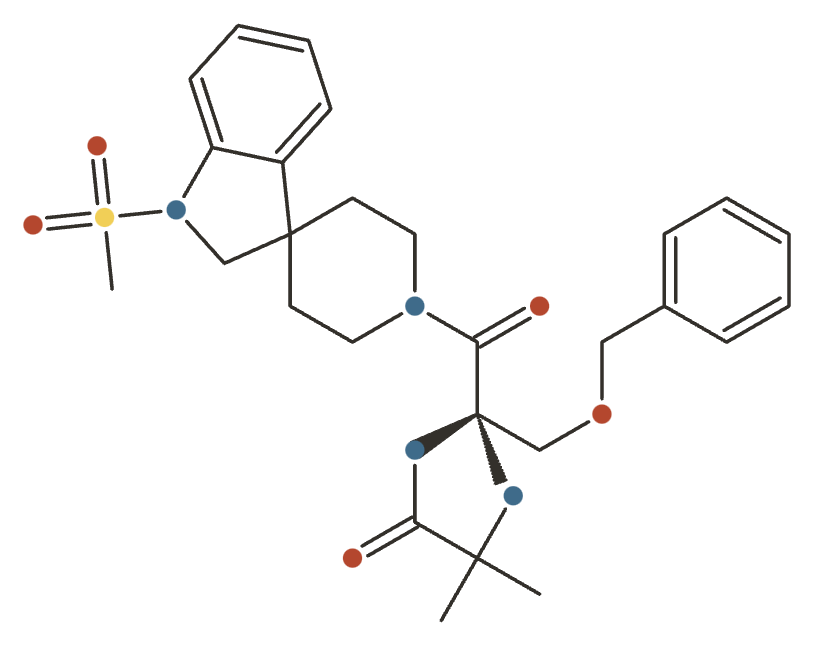
MK-677 (Ibutamoren)
An orally active, non-peptide ghrelin-receptor agonist that reliably raises growth hormone and IGF-1 — an investigational drug never approved for any indication, sold gray-market and banned in sport.

MK-677 (Ibutamoren) at a Glance
MK-677 (ibutamoren) is the odd one out in this group: an orally active, non-peptide ghrelin-receptor agonist, so it survives digestion and is taken as a capsule rather than injected. It raises growth hormone and IGF-1 reliably and durably, and unlike the injectable secretagogues it has been through substantial clinical development, including long-term trials in older adults. Development was not completed and it remains unapproved, sold as a research chemical. Its most consistent effects in those trials were increased appetite and fluid retention alongside the hormonal changes.
History & Development
MK-677 was a Merck drug, and Merck stopped it for a specific and instructive reason: it worked, but not as well as the treatment it was meant to replace.
| First described | Reported as an orally active growth-hormone secretagogue in the 1990s 6Reference 6RCTMK-677, an orally active growth hormone secretagogue, reverses diet-induced catabolism — human (randomised crossover)View study → |
| Discovered / synthesised by | Merck Research Laboratories 6, |
| Institution | Merck Research Laboratories |
| Origin | De-novo non-peptide small molecule; ghrelin-receptor (GHS-R1a) agonist |
| Key patent | Not established in the sources consulted for this section |
| Assignee | Merck |
| Development status | Discontinued - deemed less effective than standard growth-hormone therapy; never approved |
Discovery
Growth-hormone secretagogues before MK-677 were peptides, which meant injection. MK-677 - ibutamoren mesylate, development code MK-0677 - is not a peptide at all: it is an orally active small molecule that activates the same ghrelin receptor, and that oral activity was the entire point of the programme.
It appears on this hub as an honorary member. Every other compound here is a peptide; MK-677 is grouped with them because it does the same job through the same receptor, and because it is sold through the same channels.
Merck’s published work established the pharmacology: it reversed diet-induced catabolism in humans 6Reference 6RCTMK-677, an orally active growth hormone secretagogue, reverses diet-induced catabolism — human (randomised crossover)View study → and raised markers of bone turnover in healthy and functionally impaired elderly adults 9Reference 9Oral administration of the growth hormone secretagogue MK-677 increases markers of bone turnover in healthy and functionally impaired elderly adults — human (pooled RCTs)View study →. The endocrine effect is real and it is sustained - which distinguishes it from the injectable secretagogues, where tolerance is a recurring question.
Development & ownership
Merck Research Laboratories developed MK-677 and ran a Phase 2b trial in children with short stature and growth-hormone deficiency between 1996 and 1998.
The programme was discontinued, and the reason is the useful part of this history: height-velocity improvements were significantly lower than with standard growth-hormone treatment, so the compound was judged not competitive with existing therapy. It was not stopped for toxicity and not stopped for lack of effect - it was stopped for being worse than what already existed.
That framing matters when reading its retail claims. Merck’s own conclusion was that raising growth hormone this way is a weaker intervention than giving growth hormone.
How it reached the market
MK-677 has never been approved for any indication, anywhere. It reached consumers through the research-chemical market, where it is sold for muscle gain, appetite and sleep - and it is banned in sport. Its most consistent effects, appetite stimulation and fluid retention, are the ones users most often report as unwanted.
What It's Used For
MK-677 (ibutamoren; also written MK-0677 or ibutamoren mesylate) is not a peptide at all — it is a small-molecule spiroindoline that agonizes the ghrelin receptor (GHSR-1a), the same receptor the stomach hormone ghrelin acts on, prompting the pituitary to release more of the body’s own growth hormone (GH). It sits alongside the injectable GH secretagogues (the GHRPs) because it drives the same axis, but it differs in the way that matters most to anyone deciding whether to use it: it works by mouth, once a day. Every other compound in this corner — GHRP-2, GHRP-6, ipamorelin, hexarelin, CJC-1295 — is a peptide destroyed by digestion and therefore injected. MK-677 was purpose-engineered to survive the gut, and that single property is why it dominates gray-market GH stacks. Unusually for this hub, it also has a genuine base of published, placebo-controlled human trials: several small studies in the 1990s and two large multi-year randomized trials in the 2000s. The honest read of that evidence is that it reliably moves the biomarker but not the outcome — MK-677 dependably raises GH and IGF-1 by roughly 40–90%, but the two large trials designed to show that this helps (a 2-year body-composition study in healthy older adults and a 12-month trial in Alzheimer’s disease) both hit their biochemical target and then failed to deliver any clinical benefit. It was never approved for any indication, in any country: it is an investigational drug, sold gray-market as a research chemical and banned in sport.
Support is an experimental score I’m building — a composite weighted by study type (human > animal > in vitro > review) and study volume. It’s a beta: a fast way to rank strength of evidence at a glance, not a validated metric. Each application links down to its write-up.
This is the one thing MK-677 is proven to do in humans. In healthy elderly subjects, 25 mg orally once daily raised mean 24-hour GH by ~97% and brought serum IGF-1 up into the young-adult range within two weeks — a dose-dependent effect that works by amplifying the body’s existing GH pulses rather than adding new ones 1Reference 1RCTStimulation of the growth hormone (GH)-insulin-like growth factor I axis by daily oral administration of a GH secretagogue (MK-677) in healthy elderly subjects — human (RCT)View study →.
A 7-day study in healthy young men confirmed the GH/IGF-1 rise and found adrenocortical function largely unaffected 7Reference 7RCTEffects of a 7-day treatment with a novel, orally active GH secretagogue, MK-677, on 24-hour GH profiles, IGF-I, and adrenocortical function in normal young men — human (RCT)View study →; an 8-week trial in obese men reproduced it again 8Reference 8RCTTwo-month treatment of obese subjects with the oral growth hormone secretagogue MK-677 increases GH secretion, fat-free mass, and energy expenditure — human (RCT)View study →.
The mechanism is now resolved at atomic detail: a 2021 cryo-EM structure shows ibutamoren bound in the ghrelin-receptor pocket, engaging the same signaling complex as ghrelin itself 11Reference 11In vitroStructural basis of human ghrelin receptor signaling by ghrelin and the synthetic agonist ibutamoren — in vitro (cryo-EM structure)View study →.
All of this is human and mechanistic — but it is target engagement, the drug hitting its receptor, not evidence of a health benefit.
Gap: raising a hormone is not the same as improving health; every downstream benefit below had to be demonstrated separately, and mostly wasn’t.
The pivotal trial is a 2-year, double-blind, placebo-controlled human RCT in 65 healthy adults aged 60–81 (Nass 2008, Annals of Internal Medicine). Daily 25 mg MK-677 increased fat-free mass by +1.1 kg versus −0.5 kg on placebo (P < 0.001) and raised body weight, while GH and IGF-1 rose into the young-adult range 3Reference 3RCTEffects of an oral ghrelin mimetic on body composition and clinical outcomes in healthy older adults — human (RCT, 2-year)View study →.
The trial’s broader endpoints are the real story: there was no significant improvement in isokinetic strength or physical function, no reduction in abdominal visceral fat, and fasting glucose rose while insulin sensitivity fell 3Reference 3RCTEffects of an oral ghrelin mimetic on body composition and clinical outcomes in healthy older adults — human (RCT, 2-year)View study →.
An earlier 8-week RCT in 24 obese men likewise found fat-free mass and energy expenditure increased on MK-677 8Reference 8RCTTwo-month treatment of obese subjects with the oral growth hormone secretagogue MK-677 increases GH secretion, fat-free mass, and energy expenditure — human (RCT)View study →.
So the lean-mass signal is real, human and replicated — but it is body composition on a scan, not demonstrated strength, mobility or independence.
Gap: the extra lean mass did not become measurable strength or function in the one trial powered to look — human data, but a null on the endpoints that would justify use.
This is the one live approval path, and it is human clinical development. Repackaged as LUM-201 by Lumos Pharma, ibutamoren is being developed as an oral alternative to injected recombinant GH for a responder subset of children with growth hormone deficiency. In a pediatric GHD trial (68 subjects), a single oral dose of LUM-201 produced a larger GH response (median 15.0 ng/mL) than standard diagnostic secretagogues such as arginine, glucagon, clonidine, L-dopa or insulin-induced hypoglycemia (5.5 ng/mL; P < 0.0001), with the difference greatest in children who already had higher baseline IGF-1 and GH reserve 10Reference 10Clinical trialA GH secretagogue receptor agonist (LUM-201) elicits greater GH responses than standard GH secretagogues in subjects with pediatric growth hormone deficiency — human (clinical trial)View study →.
The Phase 2 OraGrowtH program has completed, and a Phase 3 trial (NCT06948214, ~150 children) is recruiting, with a long-term safety extension (NCT07129759) planned — both verified against the ClinicalTrials.gov registry, not a sponsor claim. This is genuine, sponsor-run development, but it is in children with a specific deficiency and a pre-selected responder phenotype — not the healthy adults who buy MK-677.
Gap: promising but not approved; Phase 3 is ongoing, and the population and responder selection are narrow and unlike the gray-market user.
A single double-blind crossover trial in humans gave MK-677 at bedtime to 8 healthy young men (7-day periods) and 6 older adults (14-day periods). In the young men, 25 mg increased stage-IV (deep) sleep duration by roughly 50% and REM sleep by more than 20% versus placebo; in the older adults REM rose by nearly 50% 5Reference 5Prolonged oral treatment with MK-677, a novel growth hormone secretagogue, improves sleep quality in man — human (crossover trial)View study →.
The effect is mechanistically coherent — GH secretion and slow-wave sleep are physiologically linked — and it is human data. But it rests on one very small study with no replication and no test of whether the altered sleep architecture produces any daytime benefit.
Gap: a single small human crossover trial (n=8 and n=6); no replication, no functional or daytime sleep outcomes.
In a double-blind crossover study, 8 healthy human volunteers were calorically restricted (18 kcal/kg/day) across two 14-day periods; adding oral MK-677 25 mg shifted mean daily nitrogen balance from −1.48 g/day on placebo to +0.31 g/day on drug (P < 0.01) — reversing the protein-wasting of underfeeding 6Reference 6RCTMK-677, an orally active growth hormone secretagogue, reverses diet-induced catabolism — human (randomised crossover)View study →.
This is a clean, mechanistically sensible human result and is the basis for interest in MK-677 for catabolic and wasting states. But it is a very short study in 8 healthy people measuring a metabolic surrogate (nitrogen balance), not muscle preserved or clinical recovery. A later randomized crossover trial in hemodialysis patients with protein-energy wasting confirmed MK-677 raises IGF-1 (~65% above placebo) but was likewise a biomarker study, not an outcome trial 12Reference 12RCTOral ghrelin receptor agonist MK-0677 increases serum insulin-like growth factor 1 in hemodialysis patients — human (randomised blinded study)View study →.
Gap: surrogate endpoint, n=8, healthy volunteers; no outcome trial in an actual wasting population.
Pooled human data from roughly 187 elderly adults across three short RCTs showed MK-677 raised urinary N-telopeptide (a resorption marker) by 10–17% and serum osteocalcin (a formation marker) by about 8% versus placebo 9Reference 9Oral administration of the growth hormone secretagogue MK-677 increases markers of bone turnover in healthy and functionally impaired elderly adults — human (pooled RCTs)View study →.
This confirms the drug engages bone remodeling — but these are turnover markers measured over 2–9 weeks, not bone-mineral-density gains and certainly not reduced fractures. The one trial that ran long enough to look at the skeleton (the 2-year body-composition study) reported no meaningful skeletal benefit 3Reference 3RCTEffects of an oral ghrelin mimetic on body composition and clinical outcomes in healthy older adults — human (RCT, 2-year)View study →.
Gap: short-term bone-turnover markers only; no BMD or fracture outcome, and the long trial that could have shown one didn’t.
A randomized, double-blind Phase IIb trial in humans (Adunsky 2011) treated 123 elderly hip-fracture patients with 25 mg/day MK-0677 or placebo. IGF-1 rose (+51 ng/mL versus placebo, P < 0.001) and gait speed improved modestly (P = 0.011), but stair-climbing power and most other functional measures showed no benefit 4Reference 4RCTMK-0677 (ibutamoren mesylate) for the treatment of patients recovering from hip fracture: a multicenter, randomized, placebo-controlled Phase IIb study — human (RCT, terminated early)View study →.
Critically, the trial was terminated early because of congestive heart failure in a small number of treated patients 4Reference 4RCTMK-0677 (ibutamoren mesylate) for the treatment of patients recovering from hip fracture: a multicenter, randomized, placebo-controlled Phase IIb study — human (RCT, terminated early)View study → — a termination confirmed on the registry record (NCT00128115). This is the compound’s risk profile surfacing in exactly the frail, older population the anti-aging framing targets.
Gap: mostly null on function and stopped early for a heart-failure safety signal — a cautionary human result, not a supportive one.
Included because a well-evidenced negative is a finding. A double-blind, multicenter human RCT randomized 563 patients with mild-to-moderate Alzheimer’s disease to 25 mg MK-677 or placebo for 12 months (Sevigny 2008). The drug did exactly what it does biochemically — serum IGF-1 rose 60% by 6 weeks and 73% at 12 months — and yet there was no difference from placebo on any cognitive, functional or global endpoint (ADAS-Cog, CIBIC-plus, ADCS-ADL, CDR-sob) 2Reference 2RCTGrowth hormone secretagogue MK-677: no clinical effect on AD progression in a randomized trial — human (RCT, n=563)View study →.
The Phase 3 Alzheimer’s program did not meet its endpoint and was not continued; the IGF-1/amyloid-clearance hypothesis that motivated it was not supported. Nothing here’s GH/IGF-1 data should be read as implying cognitive or neuroprotective benefit — the one large trial that tested exactly that came back flat.
Gap: this is a clean null in a large, adequately powered human trial. It argues against the “more IGF-1 is protective” rationale, not for it.
Mechanisms
| Target / pathway | Effect | Relevant to |
|---|---|---|
| Ghrelin receptor GHSR-1a (pituitary / hypothalamus) | Agonist → amplifies pulsatile GH release | GH/IGF-1 axislean masssleepbone |
| GH → hepatic IGF-1 | ↑ circulating IGF-1 (~40–90%) | Downstream of GH; the biomarker measured in most trials |
| Ghrelin receptor (appetite circuits) | ↑ hunger and food intake | Weight gain; the most common reported side effect |
| Insulin signaling | ↓ insulin sensitivity, ↑ fasting glucose | The dose-limiting metabolic risk |
| Fluid handling (GH-mediated) | Sodium and fluid retention → edema | Lower-limb edema; possible cardiac strain |
| Nitrogen / protein balance | Reverses catabolic nitrogen loss under caloric restriction | Wasting and catabolic states (surrogate endpoint) |
Pharmacokinetics
Oral activity is the whole point of this molecule — and the single fact that reframes everything else on the page. The GH secretagogues it is grouped with are peptides with negligible oral bioavailability: swallow them and they are digested, which is why GHRP-2, GHRP-6, ipamorelin and hexarelin are injected. MK-677 is not a peptide, and it was deliberately designed as an orally bioavailable non-peptide mimic of the GH-releasing peptides, so that constraint simply doesn’t apply. A single oral dose produces a measurable plasma time-course (characterized by a validated picogram-level LC-MS assay) 13Reference 13Determination of a novel growth hormone secretagogue (MK-677) in human plasma at picogram levels by liquid chromatography–tandem mass spectrometry — human (analytical/PK method)View study →, and a once-daily 25 mg schedule is what every major trial used 1,
Clinical & regulatory status
MK-677 is an investigational drug that was never approved by the FDA, EMA, TGA or any other major regulator, for any indication, despite an extensive Merck development program in the 1990s–2000s and two large randomized trials. It is not a dietary supplement and not a peptide; internationally it circulates as a “research chemical” labeled not for human consumption, and analytical surveys have found ibutamoren present as an undeclared ingredient in products sold online as something else 15Reference 15Chemical composition and labeling of substances marketed as selective androgen receptor modulators and sold via the internet — analytical study (ibutamoren found as an undeclared adulterant)View study →. It is prohibited in sport by WADA (class S2, hormone and metabolic modulators / growth-hormone secretagogues). The one active approval pathway is the pediatric-GHD program run by Lumos Pharma as LUM-201, now in Phase 3 (NCT06948214, recruiting; long-term safety extension NCT07129759 not yet recruiting). Registered adult trials cluster around body composition (NCT00474279, completed), Alzheimer’s disease (NCT00074529, completed), post-hip-fracture sarcopenia (NCT00128115, terminated), fibromyalgia (NCT00116129, completed), end-stage renal disease (NCT00395291, completed) and non-alcoholic fatty liver disease (NCT05364684, completed, n=12) — nearly all complete, none leading to approval. Registry statuses below were checked directly against the ClinicalTrials.gov API.
| Completed | Ongoing | Terminated | Preclinical |
|---|---|---|---|
| ~9(incl. LUM-201 Ph2) | 2(LUM-201 Ph3 + safety extension) | 1(post-hip-fracture sarcopenia) | many |
Last checked: July 2026.
Sourcing, Route & Legal Status
Regulatory status. MK-677 has never been approved by the FDA or any major regulator for any indication. Merck ran a large clinical program in the 1990s–2000s and, despite completed trials in body composition, Alzheimer’s disease, fibromyalgia and renal wasting, none led to approval. It is therefore an unapproved investigational drug — not a dietary supplement, not a medicine, and not legally marketable for human use in the US, UK, EU or Australia. The only active regulatory pathway is the pediatric growth-hormone-deficiency program under the name LUM-201 (Lumos Pharma), now in Phase 3; that program does not make adult gray-market use legal or safe. MK-677 is on the WADA Prohibited List (S2, growth-hormone secretagogues) and is therefore banned for competitive athletes both in and out of competition. It is not a scheduled/controlled substance in the US — but “not scheduled” is not “approved.”
How it’s supplied & administered. Unlike the injectable GH-releasing peptides, MK-677 is a small molecule that is orally active, and it is sold as capsules, tablets, or (most commonly on the gray market) an oral liquid or bulk powder. The trial dose is 25 mg once daily by mouth. Because it is not a peptide it requires no reconstitution, no sterile injection and no cold-chain storage — which removes the injection-specific hazards of the rest of this hub but does not remove the identity and purity problem below. If anything, the ease of oral dosing lowers the barrier to casual use.
Sourcing reality (this is a safety issue, not a footnote). MK-677 is sold by unregulated vendors as a “research chemical” labeled not for human consumption — a labeling fiction that provides no quality assurance whatsoever. There is no manufacturing oversight, and products in this channel are frequently mislabeled: an analytical study of 44 products sold online as SARMs found only about half contained what the label claimed, roughly a quarter contained substances not listed on the label, and ibutamoren specifically was detected as an undeclared adulterant in products sold as something else 15Reference 15Chemical composition and labeling of substances marketed as selective androgen receptor modulators and sold via the internet — analytical study (ibutamoren found as an undeclared adulterant)View study →. The risk runs in both directions — a product sold as MK-677 may contain little, none, or a different drug entirely, and a product sold as a SARM or “supplement” may contain MK-677 the buyer never intended to take. Without an independent third-party certificate of analysis (identity, purity and quantification), a buyer cannot know the dose or even the molecule. This page does not recommend or link vendors.
Safety
Unusually for a research chemical, MK-677’s adverse effects come from real human trials rather than inference — and the metabolic cost is the dose-limiter, with reduced insulin sensitivity and raised fasting glucose. One trial was stopped early for heart failure in treated patients.
- Reduced insulin sensitivity and raised fasting glucose. The dose-limiting effect, seen in the 2-year trial and consistent with GH physiology.
- A Phase IIb trial was terminated early for congestive heart failure. It occurred in exactly the frail, older group the anti-aging framing targets.
- Not assessed in pregnancy or breastfeeding. No human or animal reproductive data — see the box below.
- Fluid retention and edema. Transient mild lower-extremity swelling, alongside muscle and joint pain.
- Sustained IGF-1 elevation. A theoretical neoplasia concern that no trial was long enough to exclude.
- Glycemic control can drift on anti-diabetic or insulin therapy. No formal interaction program exists — this is mechanistic caution.
Full Safety & Interactions Detail
Overall posture. Unusually for this hub, the adverse-effect profile comes from real human trials rather than inference, and it is consistent across them. The most common effects are increased appetite (a direct ghrelin-receptor effect, often sustained rather than transient, and the reason weight gain is near-universal), fluid retention with transient mild lower-extremity edema, and muscle and joint pain 3Reference 3RCTEffects of an oral ghrelin mimetic on body composition and clinical outcomes in healthy older adults — human (RCT, 2-year)View study →. The metabolically important — and effectively dose-limiting — effect is reduced insulin sensitivity with raised fasting blood glucose, seen in the 2-year body-composition trial and entirely consistent with GH physiology 3Reference 3RCTEffects of an oral ghrelin mimetic on body composition and clinical outcomes in healthy older adults — human (RCT, 2-year)View study →. Because MK-677 sustains an elevation in IGF-1, there is a theoretical concern around any IGF-1-sensitive process, neoplasia included; no cancer signal was demonstrated in the trials, but none was designed or long enough to exclude one, and long-term safety is not established.
The most serious documented signal. The Phase IIb hip-fracture trial was terminated early because of cases of congestive heart failure in treated patients 4Reference 4RCTMK-0677 (ibutamoren mesylate) for the treatment of patients recovering from hip fracture: a multicenter, randomized, placebo-controlled Phase IIb study — human (RCT, terminated early)View study →. That is a real, registry-confirmed termination in exactly the frail, older demographic the anti-aging framing targets — and it carries particular weight for anyone with existing cardiac risk, given the drug’s fluid-retention effect.
Interactions. No formal drug-interaction program exists. On mechanism, caution is warranted with anti-diabetic and insulin therapy (MK-677 opposes insulin sensitivity and raises glucose, so glycemic control can drift), and with any drug or condition where GH/IGF-1 elevation is undesirable. These are mechanistic cautions, not tested findings.
Who should avoid it. Anyone with diabetes or impaired glucose tolerance; anyone with heart failure or significant cardiac risk; anyone with active or prior malignancy; and anyone pregnant, breastfeeding or trying to conceive. Children should only ever receive this molecule inside the supervised LUM-201 clinical program, never from the gray market. Competitive athletes are subject to a WADA ban.
Scope disclosure (honesty, not a claim):
- Human data? Yes — multiple RCTs, including two large multi-year trials. That is unusual for this hub. But the outcome trials were null on the endpoints that matter, and no approval resulted anywhere.
- Interactions assessed? No formal interaction program — only mechanism-based cautions (anti-diabetic agents, GH-axis drugs).
- Pregnancy/lactation assessed? No — no human or animal reproductive data located.
- Long-term safety established? No. The longest trial ran 2 years, and a separate trial was stopped early for a heart-failure signal. Multi-year cardiac and cancer outcomes are unstudied.
Never imply safety from silence. Where MK-677 has not been studied — interactions, pregnancy, long-term cardiac and neoplasia risk, gray-market product purity — the correct statement is “not assessed,” not “safe.”
Not assessed / not established. There are no human pregnancy or lactation data for MK-677. A GH/IGF-1-raising investigational drug should be treated as contraindicated by default in pregnancy and breastfeeding.
Dosage
There is no approved human dose for MK-677, and none is recommended here. It is not an approved medicine or dietary supplement in any jurisdiction, and the figure below is data reported for context, not a personal recommendation.
Essentially every human trial used 25 mg orally once daily 1,
References
- Chapman IM, Bach MA, Van Cauter E, et al. (1996). Stimulation of the growth hormone (GH)-insulin-like growth factor I axis by daily oral administration of a GH secretagogue (MK-677) in healthy elderly subjects — human (RCT). Journal of Clinical Endocrinology & Metabolism. https://pubmed.ncbi.nlm.nih.gov/8954023/
- Sevigny JJ, Ryan JM, van Dyck CH, et al. (2008). Growth hormone secretagogue MK-677: no clinical effect on AD progression in a randomized trial — human (RCT, n=563). Neurology. https://pubmed.ncbi.nlm.nih.gov/19015485/
- Nass R, Pezzoli SS, Oliveri MC, et al. (2008). Effects of an oral ghrelin mimetic on body composition and clinical outcomes in healthy older adults — human (RCT, 2-year). Annals of Internal Medicine. https://pubmed.ncbi.nlm.nih.gov/18981485/
- Adunsky A, Chandler J, Heyden N, et al. (2011). MK-0677 (ibutamoren mesylate) for the treatment of patients recovering from hip fracture: a multicenter, randomized, placebo-controlled Phase IIb study — human (RCT, terminated early). Archives of Gerontology and Geriatrics. https://pubmed.ncbi.nlm.nih.gov/21067829/
- Copinschi G, Leproult R, Van Onderbergen A, et al. (1997). Prolonged oral treatment with MK-677, a novel growth hormone secretagogue, improves sleep quality in man — human (crossover trial). Neuroendocrinology. https://pubmed.ncbi.nlm.nih.gov/9349662/
- Murphy MG, Plunkett LM, Gertz BJ, et al. (1998). MK-677, an orally active growth hormone secretagogue, reverses diet-induced catabolism — human (randomised crossover). Journal of Clinical Endocrinology & Metabolism. https://pubmed.ncbi.nlm.nih.gov/9467534/
- Copinschi G, Van Onderbergen A, L’Hermite-Balériaux M, et al. (1996). Effects of a 7-day treatment with a novel, orally active GH secretagogue, MK-677, on 24-hour GH profiles, IGF-I, and adrenocortical function in normal young men — human (RCT). Journal of Clinical Endocrinology & Metabolism. https://pubmed.ncbi.nlm.nih.gov/8768828/
- Svensson J, Lönn L, Jansson JO, et al. (1998). Two-month treatment of obese subjects with the oral growth hormone secretagogue MK-677 increases GH secretion, fat-free mass, and energy expenditure — human (RCT). Journal of Clinical Endocrinology & Metabolism. https://pubmed.ncbi.nlm.nih.gov/9467542/
- Murphy MG, Bach MA, Plotkin D, et al. (1999). Oral administration of the growth hormone secretagogue MK-677 increases markers of bone turnover in healthy and functionally impaired elderly adults — human (pooled RCTs). Journal of Bone and Mineral Research. https://pubmed.ncbi.nlm.nih.gov/10404019/
- Bright GM, Thorner MO. (2022). A GH secretagogue receptor agonist (LUM-201) elicits greater GH responses than standard GH secretagogues in subjects with pediatric growth hormone deficiency — human (clinical trial). Hormone Research in Paediatrics. https://pubmed.ncbi.nlm.nih.gov/35354138/
- Liu H, Sun D, Myasnikov A, et al. (2021). Structural basis of human ghrelin receptor signaling by ghrelin and the synthetic agonist ibutamoren — in vitro (cryo-EM structure). Nature Communications. https://pubmed.ncbi.nlm.nih.gov/34737341/
- Campbell GA, et al. (2018). Oral ghrelin receptor agonist MK-0677 increases serum insulin-like growth factor 1 in hemodialysis patients — human (randomised blinded study). Nephrology Dialysis Transplantation. https://pubmed.ncbi.nlm.nih.gov/28340044/
- Constanzer ML, Chavez-Eng CM, Matuszewski BK. (1997). Determination of a novel growth hormone secretagogue (MK-677) in human plasma at picogram levels by liquid chromatography–tandem mass spectrometry — human (analytical/PK method). Journal of Chromatography B. https://pubmed.ncbi.nlm.nih.gov/9200526/
- Philip M, et al. (2021). Characterization of equine liver microsome-generated metabolites of the growth hormone secretagogue small molecule ibutamoren — in vitro (equine microsomes). Rapid Communications in Mass Spectrometry. https://pubmed.ncbi.nlm.nih.gov/34542924/
- Van Wagoner RM, Eichner A, Bhasin S, et al. (2017). Chemical composition and labeling of substances marketed as selective androgen receptor modulators and sold via the internet — analytical study (ibutamoren found as an undeclared adulterant). JAMA. https://pubmed.ncbi.nlm.nih.gov/29183075/



