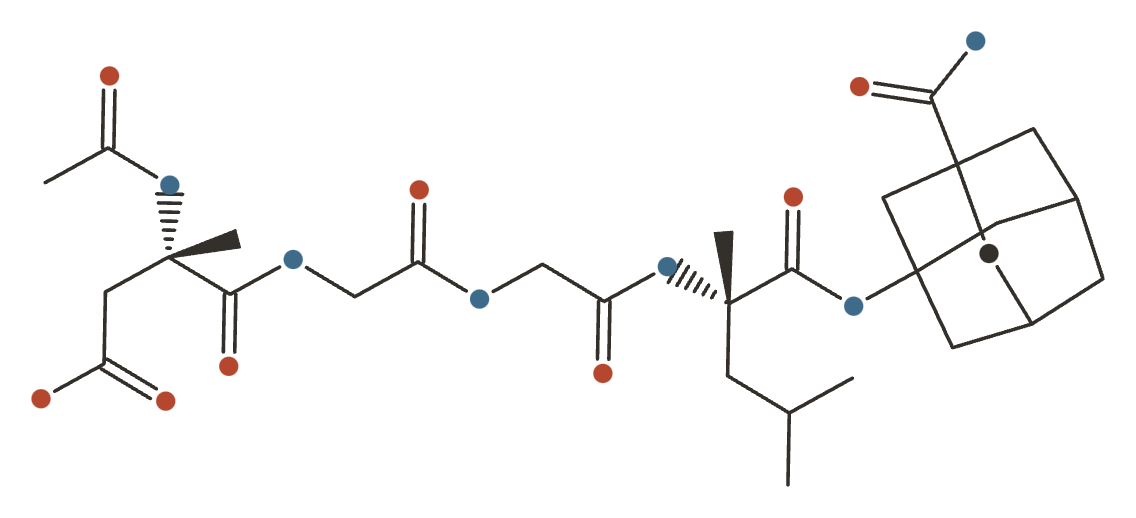
P21
A synthetic mimetic of the CNTF active region, studied only in rodents for neurogenesis and cognitive rescue in Alzheimer's models.

P21 at a Glance
P21 is a synthetic peptide mimicking the active region of ciliary neurotrophic factor (CNTF), built to reproduce CNTF’s neurogenic effects in a molecule small enough to reach the brain — the parent protein is too large and too short-lived to use as a drug. Rodent work reports increased neurogenesis and cognitive restoration in Alzheimer’s models. That preclinical record is all the evidence there is; it is an unapproved research chemical with no human data.
History & Development
P21 is a small-molecule mimetic of a neurotrophic factor, and everything known about it comes from rodents. It also carries a naming collision that makes it unusually easy to misread.
| First described | Not established in the sources consulted for this section |
| Discovered / synthesised by | Not established in the sources consulted for this section |
| Institution | Largely one laboratory lineage |
| Origin | Synthetic mimetic of the active region of ciliary neurotrophic factor (CNTF) |
| Key patent | Not established in the sources consulted for this section |
| Assignee | Not established in the sources consulted for this section |
| Development status | Preclinical only - no human trial exists and none is registered |
Discovery
A disambiguation first, because it matters more here than on almost any other page: “P21” refers to at least three unrelated things. This entry covers P21 / P021, the CNTF-derived peptide mimetic - not the cyclin-dependent kinase inhibitor p21 of cell-cycle biology, and not the other uses the name carries. Searching the term will return mostly the wrong molecule.
CNTF is a neurotrophic factor that supports neuron survival and promotes neurogenesis, but it is a large protein with poor drug-like properties. P021 is an attempt to capture the active region in a small, more deliverable molecule, and it has been studied for neurogenesis and cognitive rescue in Alzheimer’s models.
Development & ownership
The evidence base is entirely preclinical, and that is the single most important fact about this compound. Every result is from rodents or cell culture - transgenic mouse and aged-rat models - and the corpus is concentrated in largely one laboratory lineage.
No human trial exists and none is registered. There is no human pharmacokinetic data, no human safety data, and no independent replication of the efficacy findings.
What P021 does have is internal consistency: it is a mechanistically coherent preclinical programme that has simply never crossed into humans. That is a different position from a compound with contradictory or failed data, and it is worth distinguishing - but it is not evidence of effect in people.
How it reached the market
It reached consumers without ever being tested in one. P21 is sold as a research chemical for cognition and neurogenesis on the strength of mouse work from a single research lineage - the earliest possible stage of drug development, marketed as though it were an outcome.
What It's Used For
First, a disambiguation that matters more here than on almost any other page: “P21” refers to at least three unrelated things, and the subject here is only one of them. This entry covers P21 / P021, a small synthetic peptide mimetic derived from ciliary neurotrophic factor (CNTF) and sold on the research-peptide market. It is not p21^Waf1/Cip1 (CDKN1A), the endogenous cell-cycle-inhibitor protein and canonical cellular-senescence marker — a completely different molecule with a vast literature that dominates any search for “p21,” and which is not a supplement at all. It is also not HIV p21 or the various other proteins carrying that label. Nothing from the CDKN1A or senescence literature is evidence for this compound, and none of it is cited below.
With that settled: P21 was designed by epitope mapping of the most biologically active region of CNTF. The original hexapeptide P21 (Ac-DGGLAG-NH₂) was reported in 2010 1Reference 1AnimalNeurotrophic peptides incorporating adamantane improve learning and memory, promote neurogenesis and synaptic plasticity in mice — animal (mouse)View study →; the version used in nearly all subsequent work is P021 (Ac-DGGL(A)G-NH₂), carrying an adamantylated glycine at the C-terminus to resist exopeptidase cleavage and cross the blood–brain barrier 5Reference 5AnimalElevated tau level in aged rat cerebrospinal fluid reduced by treatment with a neurotrophic compound — animal (rat)View study →.
The names are used loosely and often interchangeably in the source literature, including by the originating lab. It was developed in Khalid Iqbal’s laboratory at the New York State Institute for Basic Research in Developmental Disabilities, and its proposed action is to raise brain BDNF, stimulate hippocampal neurogenesis and restore synaptic plasticity — rather than to target amyloid or tau directly.
The evidence base is entirely preclinical, and that is the single most important fact here. Every result below is a rodent or in-vitro result, drawn from a corpus concentrated in one laboratory lineage. There are no published human trials, no human pharmacokinetics, and no studies registered on ClinicalTrials.gov (verified against the registry API, July 2026). Route is also load-bearing and cuts against community practice: P021 was engineered to be orally active and was dosed in rodent diet in essentially every chronic study, whereas what vendors ship is lyophilized powder for reconstitution and injection. The studied route and the sold route are not the same route.
Support is an experimental score I’m building — a composite weighted by study type (human > animal > in vitro > review) and study volume. It’s a beta: a fast way to rank strength of evidence at a glance, not a validated metric.
Read the ceiling before you read the bars. No application here exceeds the low-30s, and that is structural, not incidental: there is no human study of P021 for anything, so nothing can reach the human-signal bands. The bars rank these applications against each other within an all-preclinical evidence base. A 35% here is not comparable to a 35% on a compound with human trials.
The most developed application, and still entirely mice and rats. In the 3xTg-AD transgenic mouse, chronic oral P021 mixed into diet reduced abnormal tau hyperphosphorylation at major neurofibrillary sites, lowered soluble Aβ with a trend toward reduced plaque load, and rescued deficits in cognition, neurogenesis and synaptic markers — effects the authors link to increased BDNF and decreased GSK-3β activity 2Reference 2AnimalDisease modifying effect of chronic oral treatment with a neurotrophic peptidergic compound in a triple transgenic mouse model of Alzheimer’s disease — animal (mouse)View study →.
Preventive dosing begun months before overt pathology (from 3 months of age, continued to 18–21 months) prevented neurodegeneration, Aβ and tau pathology and episodic-memory impairment 4Reference 4AnimalPrevention of amyloid-β and tau pathologies, associated neurodegeneration, and cognitive deficit by early treatment with a neurotrophic compound — animal (mouse)View study →; a parallel study over a similar window rescued dendritic and synaptic deficits, boosted neurogenesis and reversed cognitive impairment 6Reference 6AnimalPrevention of dendritic and synaptic deficits and cognitive impairment with a neurotrophic compound — animal (mouse)View study →.
Prenatal-to-early-postnatal and early-postnatal treatment windows produced comparable protection in the same model 8,
In aged Fisher rats, P021 was shown to be blood–brain-barrier-permeable and to lower brain and CSF total tau toward young-adult levels, without a detectable immune reaction over chronic dosing 5Reference 5AnimalElevated tau level in aged rat cerebrospinal fluid reduced by treatment with a neurotrophic compound — animal (rat)View study →.
A 2026 diffusion-MRI study reported detectable brain-microstructure changes with early P021 treatment in 3xTg-AD mice — an imaging-biomarker result, not a new efficacy claim 13Reference 13AnimalDiffusion MRI measures detect brain microstructure changes due to early treatment with neurotrophic peptide mimetic P021 in the 3xTg-AD mouse model of Alzheimer’s disease — animal (mouse, imaging)View study →.
This is a consistent and mechanistically coherent body of work. It is also rodent-only and concentrated in a single laboratory lineage, with no independent replication and no human data of any kind.
Gap: No human trial exists, and none is registered. Efficacy rests on transgenic-mouse and aged-rat models from largely one group; independent replication and any human pharmacokinetic or efficacy data are entirely absent.
In 22–24-month-old Fisher rats, chronic oral P021 significantly reduced the age-dependent decline in learning and memory, reversed the age-related deficit in hippocampal neurogenesis, increased BDNF expression, and restored cortical and hippocampal synaptic markers; in-vivo MR spectroscopy showed P021 significantly reduced the age-elevated myoinositol signal 3Reference 3AnimalRescue of cognitive-aging by administration of a neurogenic and/or neurotrophic compound — animal (rat)View study →. This is the cleanest “cognitive aging” result as distinct from a disease-model result — but it is a single rodent study.
Gap: Aged-rat model only. No human study of cognitive aging or “healthy aging” use exists. Dose, route and effect size do not transfer to humans without clinical data.
The 2010 discovery paper reported that the parent peptide P21 (Ac-DGGLAG-NH₂), administered peripherally, enhanced learning and both short-term and spatial reference memory in normal adult C57BL/6 mice, and increased neurogenesis and maturation of newborn neurons in the granular cell layer and subgranular zone of the dentate gyrus 1Reference 1AnimalNeurotrophic peptides incorporating adamantane improve learning and memory, promote neurogenesis and synaptic plasticity in mice — animal (mouse)View study →. This single study in healthy animals is the entire empirical basis for the “cognitive enhancer / neurogenesis booster for healthy people” framing that appears in vendor and forum copy.
Un-scored note: community and vendor claims about human neurogenesis, focus or “brain repair” are not evidence and are not scored anywhere. They are an extrapolation from one healthy-mouse experiment.
Gap: One healthy-animal study; no human cognitive-enhancement trial of any design exists.
In the Ts65Dn mouse model of Down syndrome, prenatal-to-early-postnatal P021 rescued developmental delay in pups and Alzheimer’s-like hippocampus-dependent memory deficits in adult life, prevented a pre-synaptic protein deficit, decreased GSK-3β activity, and raised BDNF and phospho-CREB in both young and adult animals 7Reference 7AnimalEarly neurotrophic pharmacotherapy rescues developmental delay and Alzheimer’s-like memory deficits in the Ts65Dn mouse model of Down syndrome — animal (mouse)View study →. A mechanistically plausible early-intervention concept — but a single model reported once.
Gap: One mouse model, one study, no human data. Prenatal dosing is a model paradigm, not a translatable protocol.
In aged rats and 3xTg-AD mice, chronic P021 ameliorated age-related-macular-degeneration-like retinal pathology — photoreceptor degeneration, lipofuscin accumulation, retinal-pigment-epithelium atrophy, Bruch’s-membrane thickening, microgliosis and astrogliosis, and sub-retinal tau/Aβ/VEGF deposition 12Reference 12AnimalInhibition of AMD-like pathology with a neurotrophic compound in aged rats and 3xTg-AD mice — animal (rat + mouse)View study →. Suggests the neurotrophic mechanism extends to the retina; again animal-only and single-study.
Gap: One preclinical study across two rodent models. No human ophthalmology data, and no defined route to the human eye.
Using CDKL5-knockout SH-SY5Y-derived cells (in vitro) and young and adult Cdkl5-KO mice (in vivo), P021 restored deficits in neuronal proliferation, survival and maturation and improved neuroanatomical and behavioral defects, again through a BDNF/GSK-3β-linked mechanism 10Reference 10In vitroEffects of a ciliary neurotrophic factor (CNTF) small-molecule peptide mimetic in an in vitro and in vivo model of CDKL5 deficiency disorder — in vitro + animal (mouse)View study →. A logical extension of the “raise BDNF” concept into a BDNF-responsive neurodevelopmental disorder, and the newest application line.
Gap: In-vitro plus one knockout-mouse model — the earliest-stage application here. No human data.
Mechanisms
| Target / pathway | Effect | Relevant to |
|---|---|---|
| CNTF active-region mimicry | Engages neurotrophic signaling without delivering the whole CNTF protein | All applications |
| BDNF (brain-derived neurotrophic factor) | ↑ expression in hippocampus and cortex | NeurogenesisAD modelscognitive agingDown syndromeCDKL5 |
| GSK-3β | ↓ activity | Tau hyperphosphorylation reduction; AD and Down-syndrome models |
| CREB (phospho-CREB) | ↑ activation | Synaptic plasticitymemory |
| PLC/PKC, MEK/ERK, PI3K/Akt cascades | ↑ downstream signaling | Synaptic-protein rescueneuroplasticity |
| Hippocampal neurogenesis (dentate gyrus SGZ/GCL) | ↑ generation and maturation of new neurons | Memorycognitive aging |
| Tau (total and phospho-tau) | ↓ brain and CSF levels | AD disease-modification |
| Amyloid-β / APP | ↓ soluble Aβ, trend toward ↓ plaque (reduced generation rather than clearance) | AD disease-modification |
All rows are rodent or in-vitro findings. None has been demonstrated in humans.
Pharmacokinetics
P021 is a small peptide (Ac-DGGL(A)G-NH₂) engineered specifically to defeat the two liabilities that sank whole-protein neurotrophic factors as drugs: blood–brain-barrier impermeability and rapid proteolysis. The adamantylated glycine at the C-terminus confers BBB permeability — directly demonstrated in rats 5Reference 5AnimalElevated tau level in aged rat cerebrospinal fluid reduced by treatment with a neurotrophic compound — animal (rat)View study → — and resistance to exopeptidase cleavage.
Unusually for a peptide, P021 was administered orally, mixed into rodent diet, in essentially all of the chronic studies, over treatment periods running from three to roughly eighteen months, and remained active — implying meaningful oral absorption and brain delivery in rodents 2,
No human pharmacokinetic data exist. Human oral bioavailability, plasma and CNS half-life, metabolism and clearance are all unknown. Any half-life figure circulating in vendor copy or forums is not derived from human data. The practical mismatch is worth stating plainly: the published work is oral diet-dosing in rodents; what is sold is lyophilized powder for injection. Community injectable use is not the studied route, and no bridging data connect the two.
Clinical & regulatory status
P021 is an unapproved research chemical. It has never held FDA, EMA, TGA, PMDA or any other regulatory approval, for any indication, in any jurisdiction — it is neither an approved medicine nor an approved dietary supplement, and no public IND or orphan designation has produced a human trial. A direct query of the ClinicalTrials.gov v2 API (July 2026) for P021, P21 peptide, Ac-DGGLAG and CNTF peptide mimetic returned no registered studies of this compound. The entire evidence base is preclinical, developed principally at the New York State Institute for Basic Research in Developmental Disabilities.
| Completed | Ongoing | Terminated | Preclinical |
|---|---|---|---|
| 0(human) | 0(human) | 0(human) | ~13rodent / in-vitro studies |
Last checked: July 2026.
Sourcing, Route & Legal Status
Regulatory status. P021 has never been approved anywhere, which is a stronger statement than “not approved in the West” — there is no Russian, Chinese or other national approval to point to, as there is for some peptides in this category. It is not a scheduled or controlled substance in the US, but “not scheduled” is not “approved”: marketing it for human consumption is unlawful in most Western jurisdictions, which is precisely why vendors label it “for research use only / not for human consumption.”
How it’s supplied versus how it was studied. In the published research P021 was delivered orally, mixed into rodent diet, over months-long courses — the adamantylated design is what made that work. What vendors ship is a different product used by a different route: typically lyophilized powder sold for reconstitution and, in community practice, subcutaneous injection. There is no established human route, dose, reconstitution standard, or storage protocol. Lyophilized peptides generally require cold storage and, once reconstituted, refrigeration and a short in-use window.
Sourcing reality (a safety issue, not a footnote). P021 is sold exclusively by unregulated research-chemical vendors with no manufacturing oversight, no pharmacopoeial monograph, and no guarantee of identity or purity. The usual class risks apply — mislabeling, wrong or absent peptide, synthesis byproducts, and endotoxin contamination, which is serious for anything injected.
There is a compound-specific problem on top of the usual ones, and it is worse here than for most peptides here: for a molecule this obscure, a buyer has no practical reference standard against which to verify identity at all. There is no approved pharmaceutical product to compare against, no pharmacopoeial specification, no established analytical method in general circulation, and — because the name collides with the far more famous CDKN1A protein — even the literature search a diligent buyer might run returns mostly irrelevant results. A certificate of analysis for a compound with no reference standard is close to unfalsifiable. This page recommends no vendor and no protocol.
Safety
There is no human safety data for P021 of any kind — everything known about its tolerability comes from rodents, and chronic oral rodent dosing says nothing about the injected gray-market use the community actually practices.
- No human safety data at all. No trials, no case reports, no pharmacovigilance.
- Not assessed in pregnancy or breastfeeding. No human reproductive-safety data — see the box below.
- Mechanism-level proliferation concern. Chronically driving neurotrophic and proliferative signaling is a theoretical caution, not a reported event.
- Interactions not assessed. No controlled data; a theoretical note only for CNS-active drugs.
- Injected gray-market use is unstudied. The animal work was oral; self-injection adds sterility, endotoxin and identity risk.
Full Safety & Interactions Detail
There is no human safety data for P021 of any kind — no trials, no case reports, no pharmacovigilance, no post-market surveillance, because there is no market. Everything below is either rodent data (labeled) or mechanism/class inference (labeled). None of it substitutes for human data.
Rodent tolerability (animal data). Across chronic oral studies running up to roughly eighteen months, investigators reported no overt toxicity, and in aged rats P021 did not provoke a detectable immune reaction 5Reference 5AnimalElevated tau level in aged rat cerebrospinal fluid reduced by treatment with a neurotrophic compound — animal (rat)View study →. This is reassuring for the animal work and says nothing about human safety, higher doses, or injected use.
Mechanism-based theoretical concerns (inferred, not observed). P021 acts by driving BDNF and neurotrophic/neurogenic signaling and inhibiting GSK-3β. Chronically stimulating neurotrophic and proliferative pathways is a plausible-in-principle concern for unintended cell proliferation or off-target CNS effects. This has not been evaluated in humans and is raised as a mechanism-level caution, not a reported adverse event.
Route- and sourcing-specific risks (class-level). Community use is injected, unlike the studied oral route. Injecting a gray-market lyophilized peptide carries injection-site reactions, sterility and infection risk, and endotoxin exposure from poorly manufactured material — risks arising from the sourcing and route rather than the molecule itself.
Interactions. Not assessed. No controlled interaction data exist. A mechanism-level note only: agents acting on GSK-3β or neurotrophic signaling could in theory interact with CNS-active drugs. This is untested.
Who should avoid it. With no human data, nobody can be identified as safe. Anyone pregnant or breastfeeding, anyone with a personal or family history of cancer, and anyone taking CNS-active medication has clear reason for caution. Self-administration of an unapproved injectable of unverifiable identity is not advisable for anyone.
Scope disclosure (honesty, not a claim):
- Human data? None. Preclinical rodent and in-vitro only. No trial, no case report, no registry entry.
- Interactions assessed? No. No controlled interaction data; mechanism-level note only.
- Pregnancy/lactation assessed? No. Rodent prenatal/postnatal dosing was for efficacy, not safety.
- Long-term safety established? No. Absence of reported adverse effects reflects absence of human study, not demonstrated safety.
Never imply safety from silence. For P021, essentially every human safety question is “not assessed” — that is the accurate answer, not “safe.”
Not assessed / not established. P021 has been administered prenatally and neonatally to rodent dams and pups as an efficacy paradigm in Down-syndrome and Alzheimer’s models 7,
Dosage
There is no established human dose for P21/P021, and none is recommended here. This is not a case of an uncertain dose range; it is a case of no human dose-finding data existing at all.
Every published dosing figure comes from chronic oral administration mixed into rodent chow, at milligram-per-kilogram levels in mice and rats over months-long courses 2,
Any specific milligram figure circulating in vendor copy or forum protocols is invented. This entry is informational only and is not a protocol.
References
- Li B, Wanka L, Blanchard J, et al. (2010). Neurotrophic peptides incorporating adamantane improve learning and memory, promote neurogenesis and synaptic plasticity in mice — animal (mouse). FEBS Letters. https://pubmed.ncbi.nlm.nih.gov/20600002/
- Kazim SF, Blanchard J, Dai CL, et al. (2014). Disease modifying effect of chronic oral treatment with a neurotrophic peptidergic compound in a triple transgenic mouse model of Alzheimer’s disease — animal (mouse). Neurobiology of Disease. https://pubmed.ncbi.nlm.nih.gov/25046994/
- Bolognin S, Buffelli M, Puoliväli J, et al. (2014). Rescue of cognitive-aging by administration of a neurogenic and/or neurotrophic compound — animal (rat). Neurobiology of Aging. https://pubmed.ncbi.nlm.nih.gov/24702821/
- Baazaoui N, Iqbal K. (2017). Prevention of amyloid-β and tau pathologies, associated neurodegeneration, and cognitive deficit by early treatment with a neurotrophic compound — animal (mouse). Journal of Alzheimer’s Disease. https://pubmed.ncbi.nlm.nih.gov/28387677/
- Khatoon S, Chalbot S, Bolognin S, et al. (2015). Elevated tau level in aged rat cerebrospinal fluid reduced by treatment with a neurotrophic compound — animal (rat). Journal of Alzheimer’s Disease. https://pubmed.ncbi.nlm.nih.gov/26401692/
- Baazaoui N, Iqbal K. (2017). Prevention of dendritic and synaptic deficits and cognitive impairment with a neurotrophic compound — animal (mouse). Alzheimer’s Research & Therapy. https://pubmed.ncbi.nlm.nih.gov/28655344/
- Kazim SF, Blanchard J, Bianchi R, et al. (2017). Early neurotrophic pharmacotherapy rescues developmental delay and Alzheimer’s-like memory deficits in the Ts65Dn mouse model of Down syndrome — animal (mouse). Scientific Reports. https://pubmed.ncbi.nlm.nih.gov/28368015/
- Wei W, Wang Y, Liu Y, et al. (2020). Prenatal to early postnatal neurotrophic treatment prevents Alzheimer-like behavior and pathology in mice — animal (mouse). Alzheimer’s Research & Therapy. https://pubmed.ncbi.nlm.nih.gov/32854771/
- Wei W, Liu Y, Dai CL, et al. (2021). Neurotrophic treatment initiated during early postnatal development prevents the Alzheimer-like behavior and synaptic dysfunction — animal (mouse). Journal of Alzheimer’s Disease. https://pubmed.ncbi.nlm.nih.gov/34057082/
- Mottolese N, Loi M, Trazzi S, et al. (2024). Effects of a ciliary neurotrophic factor (CNTF) small-molecule peptide mimetic in an in vitro and in vivo model of CDKL5 deficiency disorder — in vitro + animal (mouse). Journal of Neurodevelopmental Disorders. https://pubmed.ncbi.nlm.nih.gov/39592934/
- Baazaoui N, Iqbal K. (2022). Alzheimer’s disease: challenges and a therapeutic opportunity to treat it with a neurotrophic compound — review. Biomolecules. https://pubmed.ncbi.nlm.nih.gov/36291618/
- Liu Y, Wei W, Baazaoui N, et al. (2019). Inhibition of AMD-like pathology with a neurotrophic compound in aged rats and 3xTg-AD mice — animal (rat + mouse). Frontiers in Aging Neuroscience. https://pubmed.ncbi.nlm.nih.gov/31803044/
- Falangola MF, Voltin J, Cole M, et al. (2026). Diffusion MRI measures detect brain microstructure changes due to early treatment with neurotrophic peptide mimetic P021 in the 3xTg-AD mouse model of Alzheimer’s disease — animal (mouse, imaging). Magnetic Resonance Imaging. https://pubmed.ncbi.nlm.nih.gov/41740658/
For half-lives, timing and stacking across the nootropics on this site, see the Nootropic Dosage Guide.