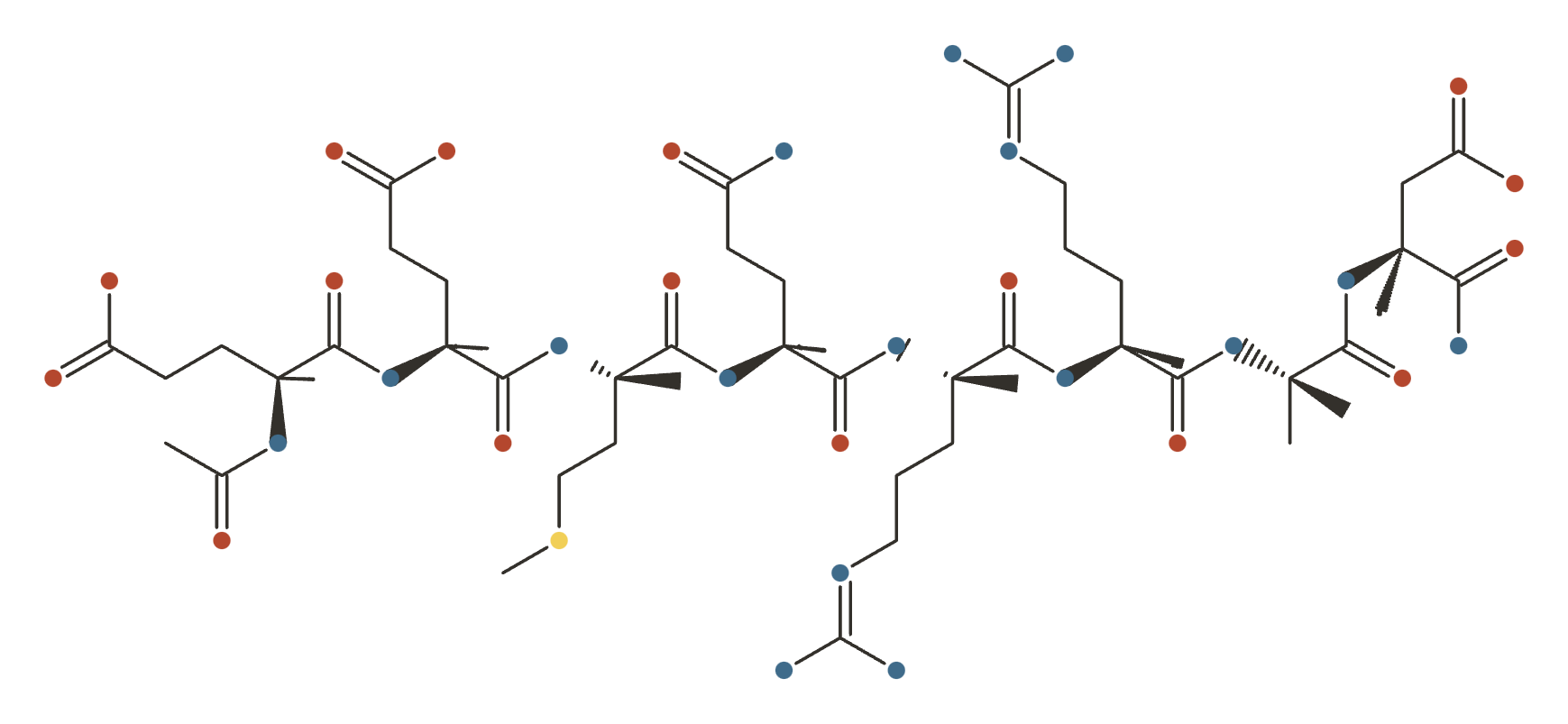
SNAP-8 (Acetyl Octapeptide-3)
A synthetic SNAP-25-mimetic octapeptide sold as a Botox-like topical anti-wrinkle cosmetic.

SNAP-8 (Acetyl Octapeptide-3) at a Glance
SNAP-8 is acetyl octapeptide-3, an eight-amino-acid extension of the same SNAP-25-mimetic idea behind argireline, designed to compete more effectively for the same binding site. It is sold as a topical anti-wrinkle cosmetic ingredient aimed at expression lines. Like all cosmetic peptides, its effect depends entirely on skin penetration, and it is regulated as a cosmetic ingredient rather than as a drug.
History & Development
SNAP-8 is argireline with two more amino acids - the same idea, extended, and sold on the same promise.
| First described | Not established in the sources consulted for this section |
| Discovered / synthesised by | Not established in the sources consulted for this section |
| Institution | Not established in the sources consulted for this section |
| Origin | Synthetic eight-residue peptide, Ac-Glu-Glu-Met-Gln-Arg-Arg-Ala-Asp-NH2 (Ac-EEMQRRAD-NH2); extends the SNAP-25 N-terminal mimic |
| Key patent | Not established in the sources consulted for this section |
| Assignee | Not established in the sources consulted for this section |
| Development status | Cosmetic ingredient - INCI acetyl octapeptide-3; not an approved drug in any jurisdiction |
Discovery
SNAP-8 takes argireline’s six-residue SNAP-25 mimic and adds two more residues - alanine and aspartate - on the reasoning that a longer fragment matches the native protein more closely and should compete more effectively within the SNARE complex.
That is the entire design rationale, and it is a plausible one. What it has not been accompanied by is evidence that the longer version outperforms the shorter, which is what the marketing implies.
Development & ownership
SNAP-8 is a trade name; its regulatory identity is acetyl octapeptide-3, also listed as acetyl glutamyl heptapeptide-1. It carries an INCI name and appears in cosmetic ingredient inventories.
Its human evidence is the thinnest of the cosmetic peptides here, and it comes with an attribution problem: the only human data exists inside multi-ingredient microneedle patches. A 24-subject split-face placebo-controlled study used a dissolving hyaluronic-acid patch loaded with acetyl octapeptide-3 - so the peptide, the hyaluronic acid and the microneedling cannot be separated, and microneedling has effects of its own.
How it reached the market
As a cosmetic ingredient, SNAP-8 required no pre-market approval and no efficacy evidence. The decisive practical question is skin permeation: a leave-on cosmetic must cross the stratum corneum in meaningful quantity to reach anything, and that the research studies used microneedle patches rather than a cream is itself informative about how readily it does so.
What It's Used For
SNAP-8 is the trade name for acetyl octapeptide-3 (INCI; also acetyl glutamyl heptapeptide-1), a synthetic eight-residue topical cosmetic peptide with the sequence Ac-Glu-Glu-Met-Gln-Arg-Arg-Ala-Asp-NH₂ (EEMQRRAD) — the well-known anti-wrinkle hexapeptide Argireline (acetyl hexapeptide-8, Ac-EEMQRR-NH₂) extended by two residues (Ala-Asp). It sits within the broader class of “neurotransmitter-inhibiting” cosmeceutical peptides marketed as topical Botox alternatives 7Reference 7ReviewCosmeceutical Peptides in the Framework of Sustainable Wellness Economy — review (peptide classification/background)View study →.
It is a leave-on cosmetic ingredient, not an oral supplement, an injectable, or an approved drug. The proposed mechanism is a “botox-like” one: the peptide is patterned on the N-terminal end of SNAP-25 (the SNARE protein that botulinum toxin A cleaves), and is thought to compete for a position in the SNARE complex, weakening complex assembly and so reducing the neurotransmitter release that drives expression-line muscle contraction. The honest evidence posture is that this is a manufacturer- and mechanism-driven story with no independent, SNAP-8-isolated clinical trial: a targeted literature search for “acetyl octapeptide-3” returns only two human studies, and in both the peptide is one active among several inside a microneedle patch — never tested alone, and never as the plain leave-on cream in which it is actually sold.
Support is an experimental score I’m building — a composite weighted by study type (human > animal > in vitro > review) and study volume. It’s a beta: a fast way to rank strength of evidence at a glance, not a validated metric. Each application links down to its write-up.
Human data for acetyl octapeptide-3 exists only inside multi-ingredient microneedle patches. In a 24-subject, split-face, placebo-controlled study, a dissolving hyaluronic-acid microneedle patch loaded with acetyl octapeptide-3 plus L-ascorbic acid 2-glucoside and sodium cyclic lysophosphatidic acid improved eye wrinkles, reduced trans-epidermal water loss, and enhanced elasticity/lifting over 28 days versus a placebo patch, with no adverse effects 1Reference 1Clinical trialClinical Safety and Efficacy Evaluation of a Dissolving Microneedle Patch Having Dual Anti-Wrinkle Effects — clinical study (combination product) [contains acetyl octapeptide-3]View study →.
A separate 12-week monocentric study of hyaluronic-acid microneedle patches combining arginine/lysine polypeptide, acetyl octapeptide-3, palmitoyl tripeptide-5, adenosine and seaweed extract reported a 25.8% decrease in fine lines/wrinkles and improved hydration, density and thickness 2Reference 2Clinical trialEfficacy of bioactive peptides loaded on hyaluronic acid microneedle patches: A monocentric clinical study — clinical trial (combination product) [contains acetyl octapeptide-3]View study →.
In both, SNAP-8 was one active among several and delivery was via skin-puncturing microneedles — so neither isolates the peptide’s own effect, and neither tests the leave-on topical form in which SNAP-8 is marketed. The mechanistic case (SNARE/synaptotagmin-1 interference reducing neurotransmitter release) is borrowed from the better-studied Argireline family rather than demonstrated for SNAP-8 3,
No independent trial reproduces the manufacturer’s isolated-SNAP-8 efficacy figures.
Gap: no controlled study of isolated SNAP-8, and none of it as a leave-on cream; all positive human data is combination products delivered by microneedle, which bypass the very skin-barrier limitation that makes topical peptide efficacy uncertain.
Mechanisms
| Target / pathway | Effect | Relevant to |
|---|---|---|
| SNAP-25 / SNARE complex (SNAP-8 patterned on SNAP-25 N-terminus) | Competes for SNARE assembly → ↓ vesicle fusion → ↓ neurotransmitter (catecholamine/ACh) release | Expression-line reduction (inferred from Argireline family) |
| Synaptotagmin-1 (Syt1) Ca²⁺ sensor | Botox-like peptides bind the C2A–C2B cleft, rigidifying Syt1 and suppressing the conformational change needed for release (in silico) | Mechanistic rationalenot SNAP-8-specific |
| Neuromuscular junction (facial expression muscles) | ↓ contraction of mimetic muscles → softened dynamic wrinkles | Claimed cosmetic endpoint |
Pharmacokinetics
SNAP-8 is applied topically (leave-on cosmetic, or embedded in dissolving/HA microneedle patches in the research studies); it is not taken orally or injected in cosmetic use. The decisive PK reality is skin permeation. Anti-wrinkle peptides are relatively large, hydrophilic, and ionizable, and are also vulnerable to skin proteases — so they penetrate the lipophilic stratum corneum poorly, and cellular potency is meaningless without delivery to the target depth 5Reference 5ReviewSkin permeability, a dismissed necessity for anti-wrinkle peptide performance — reviewView study →. This constraint is documented for the smaller sibling acetyl hexapeptide-8 6Reference 6ReviewAcetyl Hexapeptide-8 in Cosmeceuticals — A Review of Skin Permeability and Efficacy — review (sibling peptide)View study →; SNAP-8 is a larger octapeptide (C₄₁H₇₀N₁₆O₁₆S, MW ≈ 1075 Da; PubChem CID 86080331) carrying an additional acidic residue, so a plain topical solution is, if anything, less likely to permeate — which is why the positive human studies relied on microneedle delivery to bypass the barrier 1,
Clinical & regulatory status
SNAP-8 / acetyl octapeptide-3 is a cosmetic ingredient, not an approved drug in any jurisdiction. It carries an INCI name and appears in cosmetic ingredient inventories; as a cosmetic it is not pre-market approved by the FDA or EMA, and any true anti-wrinkle-by-muscle-relaxation claim would be a drug claim it is not licensed to make. There are no registered clinical trials for SNAP-8 or acetyl octapeptide-3 on ClinicalTrials.gov (the registered “botox-like peptide” trials are all for the sibling Argireline/acetyl hexapeptide-8). Separately, raw SNAP-8 powder is sold on the gray market as a “research” peptide by unregulated vendors — a sourcing channel with no manufacturing oversight (see Sourcing, Route & Legal Status).
| Completed | Ongoing | Terminated | Preclinical |
|---|---|---|---|
| 2(combination microneedle; SNAP-8 not isolated) | 0 | 0 | mechanism only (in vitro / in silico, sibling peptides) |
Last checked: July 2026.
Sourcing, Route & Legal Status
Regulatory status. SNAP-8 / acetyl octapeptide-3 is a cosmetic ingredient, not an approved drug in any jurisdiction. It has an INCI name and is used as a leave-on cosmetic active; cosmetics are not pre-market approved by the FDA or EMA, and a genuine “relaxes facial muscles to reduce wrinkles” claim is technically a drug claim the ingredient is not licensed to make (this is the standard cosmeceutical gray zone). There are no registered clinical trials for SNAP-8 (ClinicalTrials.gov). Separately, and importantly for this site’s audience, raw SNAP-8 is also sold as a gray-market “research” peptide powder (“not for human consumption”) by unregulated online vendors — a different and less controlled channel than a finished cosmetic from a formulator.
How it’s supplied & administered. As a finished cosmetic, SNAP-8 appears as a peptide solution/serum applied topically (leave-on) at low percent concentrations; in the only positive human studies it was instead loaded into dissolving/hyaluronic-acid microneedle patches, which puncture the stratum corneum to bypass the skin barrier. Gray-market raw material is a lyophilized powder requiring reconstitution. Route is topical only in cosmetic use — it is not intended to be injected or ingested, and there is no rationale for doing so.
Sourcing reality (a safety issue). For the gray-market powder, the usual research-peptide cautions apply in full: unregulated vendors, no manufacturing oversight, and real risks of low purity, mislabeling, wrong peptide, residual synthesis reagents, and endotoxin contamination. There is no manufacturing-quality guarantee, and third-party certificates of analysis (identity + purity + endotoxin) are the only check a buyer has — and even a clean COA does not make an unapproved compound a validated cosmetic. This page does not recommend or link vendors.
Safety
SNAP-8’s “well tolerated” reputation comes from manufacturer material and combination-product studies, not from an independent assessment of the isolated peptide — the expected risks are local rather than systemic, because it penetrates intact skin poorly.
- No adverse effects in the two published human studies. Over 28 days and 12 weeks — though both tested combination microneedle patches, not isolated SNAP-8.
- Not assessed in pregnancy or breastfeeding. Systemic absorption is expected to be low but has never been studied — see the box below.
- Local reactions are the plausible effect. Application-site irritation, redness or contact sensitization.
- No controlled toxicology for the isolated peptide. No long-term safety data, and interactions have no established basis.
- Gray-market raw powder. Product identity and purity are the dominant issue, not the molecule’s intrinsic toxicity.
Full Safety & Interactions Detail
SNAP-8 is marketed as well tolerated on skin, but that claim rests on manufacturer material and combination-product studies, not on an independent safety assessment of the isolated peptide. In the two published human microneedle-patch studies (multi-ingredient), no adverse effects were reported over 28 days and 12 weeks respectively 1,
Because SNAP-8 penetrates intact skin poorly, meaningful systemic exposure from a leave-on cosmetic is unlikely, which also means systemic drug–drug interactions have no established basis and have not been assessed. There is no controlled toxicology for the isolated peptide, and no long-term safety data. For gray-market raw powder, the dominant safety issue is product identity/purity, not the molecule’s intrinsic toxicity.
Scope disclosure (what has and hasn’t been assessed):
- Human data? Limited — two small studies of combination microneedle patches; no isolated-SNAP-8 trial, and none of the leave-on cream form.
- Interactions assessed? No — no basis established; low expected systemic exposure, but not studied.
- Pregnancy/lactation assessed? No — not established.
- Long-term safety established? No — no long-term or independent toxicology for the isolated peptide.
Never imply safety from silence. “Well tolerated” here reflects manufacturer/marketing framing and small combination-product studies, not an independent safety assessment.
Not assessed / not established. No pregnancy or lactation safety data exist for SNAP-8. Systemic absorption from topical use is expected to be low, but this has not been formally studied — treat as unknown, not as safe.
Dosage
There is no established human dose for SNAP-8, and none is recommended here. It is a topical cosmetic ingredient, not a dietary supplement or drug, so there is no oral or injectable dose — and no controlled study has defined an effective topical concentration for the isolated peptide.
For context only: in finished cosmetics the peptide solution is used at low percent concentrations (vendor copy typically cites a small single-digit-to-~10% fraction of a supplied peptide solution), but that is formulation practice, not a clinically validated dose — and the “up to ~35% wrinkle reduction” and “outperforms Argireline” figures attached to those concentrations are manufacturer claims, not trial results. The two human studies that did show benefit used SNAP-8 as one active among several inside microneedle patches, so they establish neither a dose nor an effect for SNAP-8 on its own 1,
References
- Shin JY, et al. (2024). Clinical Safety and Efficacy Evaluation of a Dissolving Microneedle Patch Having Dual Anti-Wrinkle Effects — clinical study (combination product) [contains acetyl octapeptide-3]. Annals of Dermatology. https://pubmed.ncbi.nlm.nih.gov/39082657/
- Avcil M, et al. (2020). Efficacy of bioactive peptides loaded on hyaluronic acid microneedle patches: A monocentric clinical study — clinical trial (combination product) [contains acetyl octapeptide-3]. Journal of Cosmetic Dermatology. https://pubmed.ncbi.nlm.nih.gov/31134751/
- Blanes-Mira C, et al. (2002). A synthetic hexapeptide (Argireline) with antiwrinkle activity — original design/mechanism paper for the sibling peptide (in vitro + rat + human topical). International Journal of Cosmetic Science. https://pubmed.ncbi.nlm.nih.gov/18498523/
- Wongrattanakamon P, et al. (2018). Molecular modeling elucidates the cellular mechanism of synaptotagmin–SNARE inhibition — in silico, botox-like cosmetic peptides. Molecular and Cellular Biochemistry. https://pubmed.ncbi.nlm.nih.gov/29019108/
- Mortazavi SM, Moghimi HR. (2022). Skin permeability, a dismissed necessity for anti-wrinkle peptide performance — review. International Journal of Cosmetic Science. https://pubmed.ncbi.nlm.nih.gov/35302659/
- Zdrada-Nowak J, et al. (2025). Acetyl Hexapeptide-8 in Cosmeceuticals — A Review of Skin Permeability and Efficacy — review (sibling peptide). International Journal of Molecular Sciences. https://pubmed.ncbi.nlm.nih.gov/40565185/
- Errante F, et al. (2020). Cosmeceutical Peptides in the Framework of Sustainable Wellness Economy — review (peptide classification/background). Frontiers in Chemistry. https://pubmed.ncbi.nlm.nih.gov/33195061/