
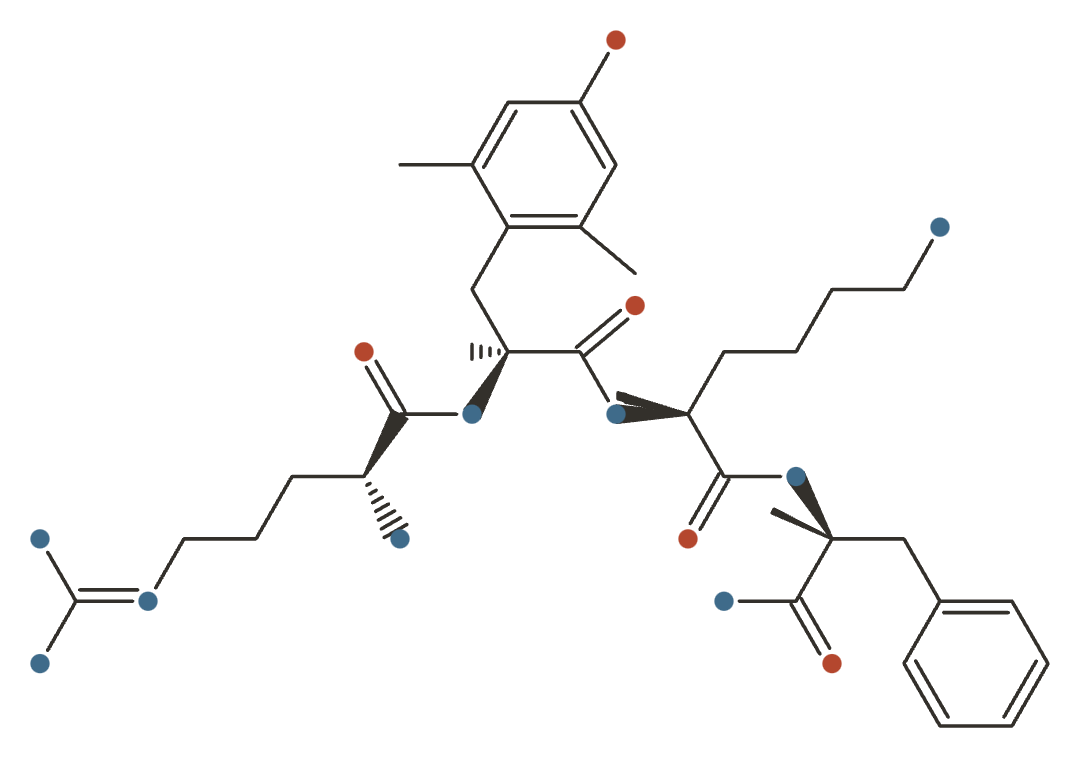
SS-31 (Elamipretide)
A mitochondria-targeted, cardiolipin-binding tetrapeptide approved (accelerated, 2025) for muscle strength in Barth syndrome, and negative elsewhere.

SS-31 (Elamipretide) at a Glance
SS-31 (elamipretide) is a tetrapeptide designed to concentrate in the inner mitochondrial membrane, where it binds cardiolipin — the phospholipid that organises the electron-transport chain. By stabilising cardiolipin it aims to restore efficient energy production in mitochondrial disease. Unlike most peptides in this category it went through a full clinical programme, and received accelerated approval in 2025 for muscle strength in a primary mitochondrial myopathy. It is a prescription medicine.
History & Development
SS-31 is the rare case here of a compound that travelled the whole distance - from an academic peptide series, through a biotech development programme, to an FDA approval - and it did it for an ultra-rare disease affecting roughly 150 people in the United States.
| First described | Not established in the sources consulted for this section |
| Discovered / synthesised by | Not established in the sources consulted for this section |
| Institution | Developed by Stealth BioTherapeutics 21, |
| Origin | De-novo synthetic tetrapeptide, designed to concentrate in the inner mitochondrial membrane |
| Key patent | Not established in the sources consulted for this section |
| Assignee | Stealth BioTherapeutics |
| Development status | Approved - FDA accelerated approval, 19 September 2025, as FORZINITY (elamipretide) for Barth syndrome 21, |
Discovery
The design problem was delivery. Mitochondria sit behind two membranes and maintain a strong negative charge across the inner one, so most molecules never reach the place where mitochondrial disease happens. SS-31 was built as a short, alternating aromatic-cationic tetrapeptide that exploits that charge to accumulate in the inner membrane.
Once there it binds cardiolipin, the distinctive phospholipid that organises the electron transport chain into functional supercomplexes. Cardiolipin abnormalities are the defining lesion in Barth syndrome, a mitochondrial cardioskeletal disease caused by TAFAZZIN mutations - which gave the compound a rare thing among mitochondrial therapeutics: a disease whose molecular defect matches the drug’s mechanism exactly.
Development & ownership
Stealth BioTherapeutics developed elamipretide across multiple indications, and the path was not smooth. The Barth syndrome application went before an FDA advisory committee, was delayed by manufacturing deficiencies at the company’s facility - resolved and confirmed by the FDA in July 2025
- and required agreement on an unusual endpoint before it could proceed 22Reference 22FDA grants accelerated approval to elamipretide, first treatment for Barth syndrome. https://www.pharmacytimes.com/view/fda-grants-accelerated-approval-to-elamipretide-first-treatment-for-barth-syndromeView study →.
That endpoint is worth stating precisely. The FDA accepted knee extensor muscle strength as an
intermediate clinical endpoint supporting accelerated approval, rather than a survival or
cardiac outcome 21,
Approval was granted on 19 September 2025 for FORZINITY (elamipretide HCl), to improve muscle
strength in adult and paediatric patients with Barth syndrome weighing at least 30 kg 21,
How it reached the market
FORZINITY is a prescription medicine for a diagnosed ultra-rare disease, supplied through specialty channels. Separately, “SS-31” has circulated for years in research-peptide supply on the strength of its mitochondrial mechanism, marketed for energy, ageing and performance. The approval covers neither those uses nor that population - and the gap between an accelerated approval on knee-extensor strength in Barth syndrome and a general mitochondrial-enhancement claim is a wide one.
What It's Used For
SS-31 — clinically elamipretide, earlier MTP-131 and Bendavia, and now marketed as Forzinity — is a synthetic, mitochondria-targeted, aromatic-cationic tetrapeptide (D-Arg-2,6-dimethyl-Tyr-Lys-Phe-NH₂). Its mechanism is unusually specific and is routinely mis-stated: it is not a general antioxidant. It concentrates on the inner mitochondrial membrane and binds cardiolipin, the signature phospholipid that organizes cristae architecture and scaffolds the electron-transport chain; the FDA label describes it simply as a “mitochondrial cardiolipin binder” that improves mitochondrial morphology and function 1,
Reduced reactive-oxygen-species output is a downstream consequence of a better-organized membrane, not the primary action. Route is load-bearing: the peptide has negligible oral bioavailability and is given by subcutaneous injection in the approved product and in most trials — with intravenous dosing used in the early myopathy, cardiac and aging studies, and a topical ophthalmic solution tested separately for two eye diseases.
This compound is the opposite of the usual research-peptide problem. It is not short of human data — it has around thirty registered trials, including four phase 3 programs, and its safety profile is genuinely characterized. What it is short of is wins. In September 2025 the FDA granted accelerated approval (NDA 215244, Stealth BioTherapeutics) to improve muscle strength in Barth syndrome in patients weighing at least 30 kg — a real, verifiable Western marketing authorization, and the first disease-specific therapy for that disease. But that approval rests on an intermediate endpoint (knee-extensor strength) in a 12-patient trial whose randomized primary endpoints failed, with continued approval contingent on a confirmatory trial. And outside Barth syndrome, the record is a decade of well-run trials that missed their primary endpoints: mitochondrial myopathy, heart failure, STEMI reperfusion injury, and dry AMD. Read every score below with that in mind — the low numbers here mostly mean tested and failed, not never tested.
Support is an experimental score I’m building — a composite weighted by study type (human > animal > in vitro > review) and study volume. It’s a beta: a fast way to rank strength of evidence at a glance, not a validated metric. Read the low scores carefully here: unlike most peptides here, several of these applications score low because they were tested in large randomized trials and failed, not because nobody looked. Each application links down to its write-up.
Barth syndrome is an ultra-rare, X-linked disorder caused by TAFAZZIN (TAZ) mutations that leave cardiolipin abnormally remodelled — SS-31’s direct binding target — which makes it the mechanistically cleanest possible fit for the drug. All data here are human. The pivotal TAZPOWER trial (NCT03098797, n=12 males aged 12–35, randomized double-blind crossover, 40 mg/day subcutaneously, 12 weeks per period) did not meet its pre-specified primary endpoints — neither the 6-minute walk test nor the Barth syndrome symptom assessment separated from placebo 3Reference 3RCTA phase 2/3 randomized clinical trial followed by an open-label extension to evaluate the effectiveness of elamipretide in Barth syndrome (TAZPOWER) — human (RCT, crossover, n=12; primary endpoints not met)View study →.
Benefit appeared only afterwards: in the open-label extension, 6-minute-walk distance improved cumulatively (+95.9 m at week 168) and knee-extensor muscle strength rose, with eight patients treated for 168 weeks and three for 192 4Reference 4Clinical trialLong-term efficacy and safety of elamipretide in patients with Barth syndrome: 168-week open-label extension results of TAZPOWER — human (open-label extension)View study →.
A separate propensity-matched natural-history comparison study supported the muscle-strength effect against untreated controls 5Reference 5Clinical trialNatural history comparison study to assess the efficacy of elamipretide in patients with Barth syndrome — human (observational, external control)View study →.
On that intermediate strength endpoint the FDA granted accelerated approval on 19 September 2025 (Forzinity, NDA 215244, priority review), for patients weighing at least 30 kg. The label is explicit that continued approval “may be contingent upon verification and description of clinical benefit in a confirmatory trial”; that trial, 4TAZPower (NCT07531251, phase 4, n=48), began recruiting in July 2026 and is not expected to complete before 2029.
Gap: An approval built on a surrogate endpoint in twelve patients — all male, eleven of twelve Caucasian — whose randomized primary endpoints failed, with the durable-benefit evidence coming from an uncontrolled open-label extension and an external control. That is the honest description of the strongest thing here.
The rationale is that retinal pigment epithelium is mitochondria-dense and cardiolipin-dependent, and the peptide protects retinal cells from oxidative-stress-induced apoptosis in culture (RGC-5 cells) 19Reference 19In vitroProtective effect of mitochondria-targeted peptide MTP-131 against oxidative stress-induced apoptosis in RGC-5 cells — in vitroView study →.
Note the route here: these were subcutaneous trials, not intravitreal injections. An open-label phase 1 study (ReCLAIM, n=40) in dry AMD with noncentral geographic atrophy found daily subcutaneous dosing feasible and safe over 24 weeks, with exploratory visual-function signals 11Reference 11Clinical trialPhase 1 clinical trial of elamipretide in dry age-related macular degeneration and noncentral geographic atrophy: ReCLAIM NCGA study — human (open-label, phase 1)View study →.
The randomized, double-masked phase 2 (ReCLAIM-2, NCT03891875, n=176, 40 mg/day subcutaneously, 48 weeks) then missed both of its primary endpoints — low-luminance visual acuity and geographic-atrophy lesion growth. Its one notable result was a secondary measure: a reduction in the rate of ellipsoid-zone (photoreceptor) attenuation 10Reference 10RCTReCLAIM-2: a randomized phase II clinical trial evaluating elamipretide in age-related macular degeneration with geographic atrophy — human (RCT, phase 2, n=176; primary endpoints not met)View study →.
All of this is human.
A phase 3 program (ReNEW, NCT06373731, n=313) is active but not recruiting, with primary completion projected for August 2027 and no results posted.
Gap: The only randomized trial in this indication missed both primaries. The photoreceptor-preservation finding is a secondary, structural, imaging measure — not a demonstrated visual outcome — and the phase 3 that would confirm or kill it has not read out.
The most-tested indication, and the most cautionary. All data are human. A phase 1/2 multiple-ascending-dose trial (MMPOWER, NCT02367014, n=36) delivered the peptide intravenously and reported improved 6-minute-walk distance with good tolerability 6Reference 6RCTRandomized dose-escalation trial of elamipretide in adults with primary mitochondrial myopathy (MMPOWER) — human (RCT, phase 1/2, intravenous)View study →.
A phase 2 crossover (MMPOWER-2, NCT02805790, n=30, 40 mg/day subcutaneously) then missed its 6-minute-walk primary but showed a clear reduction in patient-reported fatigue 7Reference 7RCTA randomized crossover trial of elamipretide in adults with primary mitochondrial myopathy (MMPOWER-2) — human (RCT, phase 2, n=30)View study →.
The pivotal phase 3 (MMPOWER-3, NCT03323749, n=218, 24 weeks) failed both primary endpoints — no benefit over placebo on either the 6-minute walk or the fatigue score — and the registry lists it as Terminated, with the sponsor’s stated reason being that the double-blind portion “did not meet the primary end points” 8Reference 8RCTEfficacy and safety of elamipretide in individuals with primary mitochondrial myopathy: the MMPOWER-3 randomized clinical trial — human (RCT, phase 3, n=218; primary endpoints not met)View study →.
The open-label extension (NCT02976038) was terminated for the same reason. Tolerability was again fine; efficacy was not there.
A post-hoc genotype analysis found that the subgroup with nuclear-DNA (nDNA) mutations improved on the walk test while the mtDNA majority did not 9Reference 9RCTGenotype-specific effects of elamipretide in patients with primary mitochondrial myopathy: a post hoc analysis of the MMPOWER-3 trial — human (post-hoc subgroup analysis of a phase 3 RCT)View study →. That motivated a genotype-selected phase 3 (NCT05162768 / SPIMD-301, n=102, nDNA-associated disease), which completed in December 2024 — and as of July 2026 has no results posted to the registry and no peer-reviewed publication I could locate. A completed pivotal trial that has not reported is not a positive result; it is an open question, and it is the single most important thing to watch here.
Gap: The pivotal phase 3 was negative and was terminated on that basis. The surviving hypothesis is a post-hoc genotype subgroup, and the trial designed to test it finished eighteen months ago without reporting. Nothing in this indication is established.
A rodent foundation in acute-kidney-injury and renal-ischemia models, plus one small human signal. In a phase 2a trial (n=14), patients with atherosclerotic renal-artery stenosis undergoing angioplasty and stenting received intravenous elamipretide or placebo around the procedure. Treated kidneys showed less post-procedure cortical hypoxia on BOLD-MRI and improved renal blood flow versus placebo 16Reference 16RCTPhase 2a clinical trial of mitochondrial protection (elamipretide) during stent revascularization in patients with atherosclerotic renal artery stenosis — human (RCT, phase 2a, n=14, imaging surrogate)View study →.
That is an imaging surrogate measured in fourteen people — not a clinical renal outcome. A related Bendavia angioplasty study (NCT01755858, n=16) was terminated.
Gap: One 14-patient surrogate-endpoint trial is the entire human case. No trial has demonstrated a hard renal outcome — preserved GFR, avoided dialysis, reduced AKI incidence — in humans, and the substantive mechanistic work remains rodent.
This is the closest thing to a controlled test of the “anti-aging” use SS-31 is actually sold for, and it is worth reading precisely. In a randomized, double-blind, placebo-controlled trial, 39 older adults (60–85 years) pre-selected for poorly functioning mitochondria received a single two-hour intravenous infusion of elamipretide. In-vivo mitochondrial ATP capacity (ATPmax by ³¹P magnetic resonance spectroscopy) rose significantly versus placebo immediately after dosing — but there was no improvement in fatigue resistance, and the effect had disappeared by day 7 17Reference 17RCTIn vivo mitochondrial ATP production is improved in older adult skeletal muscle after a single dose of elamipretide in a randomized trial — human (RCT, n=39, single intravenous dose; no functional benefit)View study →.
Human, randomized, and honest: a transient biochemical change with no accompanying functional benefit.
A phase 2 healthy-aging and physical-function study (NCT07275424, n=30) began recruiting in November 2025.
Gap: One acute, single-dose, surrogate-endpoint study. Nothing exists on chronic dosing, strength, physical function, or any aging outcome that matters clinically — which is precisely the evidence the consumer marketing implies and does not have.
Two human phase 2 randomized trials pointing in opposite directions. An ascending-dose infusion study in heart failure with reduced ejection fraction (n=36) found that the highest single intravenous dose acutely reduced left-ventricular end-diastolic and end-systolic volumes, with no serious adverse events — an acute imaging surrogate 12Reference 12RCTNovel mitochondria-targeting peptide in heart failure treatment: a randomized, placebo-controlled trial of elamipretide — human (RCT, n=36, acute infusion)View study →.
The follow-up multi-dose PROGRESS-HF trial (NCT02788747, n=71, 4 mg or 40 mg subcutaneously daily for 28 days) found no significant change in left-ventricular end-systolic volume or ejection fraction versus placebo 13Reference 13RCTEffects of elamipretide on left ventricular function in patients with heart failure with reduced ejection fraction: the PROGRESS-HF phase 2 trial — human (RCT, phase 2, n=71; negative)View study →.
The mechanistic rationale traces to rat myocardial-infarction models 18Reference 18AnimalPotent mitochondria-targeted peptides reduce myocardial infarction in rats — animal (rat)View study →.
Two further phase 2 cardiac studies — a 4-week chronic-heart-failure trial (NCT02814097, n=46) and a large study of cardiac and renal effects in patients hospitalized with heart failure (NCT02914665, n=308) — both completed in 2017 with no results posted to the registry and no publication I could locate. A multiple-ascending-dose Bendavia HFrEF study (NCT02388529) was withdrawn.
Gap: The only sustained-dosing randomized trial was negative. The positive data are a single-infusion acute imaging effect that did not translate over four weeks, there is no clinical-outcome trial, and a 308-patient completed study has never reported. Treat heart failure as a tested-and-unsupported indication.
The original Bendavia thesis: limit mitochondrial reperfusion injury when a blocked coronary artery is reopened. EMBRACE STEMI (NCT01572909) was a phase 2a randomized trial in 300 human patients undergoing primary percutaneous coronary intervention for first anterior ST-elevation myocardial infarction, given intravenous MTP-131 during reperfusion. It did not meet its primary endpoint — no significant reduction in infarct size by creatine-kinase-MB area under the curve 14Reference 14RCTEMBRACE STEMI study: a phase 2a trial to evaluate the safety, tolerability, and efficacy of intravenous MTP-131 on reperfusion injury in patients undergoing primary percutaneous coronary intervention — human (RCT, phase 2a, n=300; primary endpoint not met)View study →.
A substudy did show that treatment lowered circulating HtrA2, a mitochondrial pro-apoptotic protease, confirming target engagement without clinical benefit 15Reference 15RCTThe mitochondria-targeting peptide elamipretide diminishes circulating HtrA2 in ST-segment elevation myocardial infarction — human (RCT substudy)View study →.
Rat myocardial-infarction models had been strongly positive 18Reference 18AnimalPotent mitochondria-targeted peptides reduce myocardial infarction in rats — animal (rat)View study →, which is exactly the animal-to-human gap this site exists to flag.
Gap: A properly sized randomized human trial tested this hypothesis and it failed. The mechanism was demonstrably engaged and the outcome did not move — the most informative kind of negative result, and the reason no cardiac reperfusion program continued.
A separate and largely invisible strand: elamipretide was formulated as a topical ophthalmic solution and tested in two mitochondria-linked eye diseases. A phase 1/2 randomized, double-masked, vehicle-controlled, paired-eye study in Fuchs’ corneal endothelial dystrophy (NCT02653391, n=22) completed in 2018, and a phase 2 study in Leber’s hereditary optic neuropathy (NCT02693119, n=12) completed in 2019. Neither has results posted on ClinicalTrials.gov, and I could not locate a peer-reviewed publication for either. The only supporting literature is in-vitro: the peptide protected retinal ganglion cell-line cultures from oxidative-stress-induced apoptosis 19Reference 19In vitroProtective effect of mitochondria-targeted peptide MTP-131 against oxidative stress-induced apoptosis in RGC-5 cells — in vitroView study →.
Gap: Two completed human trials that have never reported, and cell-culture data underneath them. This row exists to record that the trials happened, not to claim a result — and unreported trials should never be read as quiet positives.
Mechanisms
| Target / pathway | Effect | Relevant to |
|---|---|---|
| Cardiolipin, inner mitochondrial membrane | Direct binding; stabilizes cristae architecture and improves mitochondrial morphology — the FDA-label mechanism of action 1, | Every application; this is the core mechanism |
| Respiratory-chain supercomplex organization | Supports assembly and oxidative-phosphorylation efficiency 2Reference 2ReviewContemporary insights into elamipretide’s mitochondrial mechanism of action and therapeutic effects — reviewView study → | Barth syndromemyopathyaging muscleheart failure |
| ATP-generating capacity | Raised ATPmax in human skeletal muscle after a single dose (transient) 17Reference 17RCTIn vivo mitochondrial ATP production is improved in older adult skeletal muscle after a single dose of elamipretide in a randomized trial — human (RCT, n=39, single intravenous dose; no functional benefit)View study → | Aging musclemyopathy |
| Reactive oxygen species | Reduced ROS and oxidative damage — a downstream consequence of membrane stabilization, not free-radical scavenging 2, | Retinakidneyreperfusion |
| Apoptotic signaling (cytochrome c, HtrA2) | Preserves membrane integrity and limits pro-apoptotic release; HtrA2 fell in human STEMI patients 15, | Ischemia-reperfusionretina |
| CYP enzymes and drug transporters | No CYP inhibition in vitro, and no induction of CYP1A2, 2B6 or 3A4; inhibits the drug transporter MATE1 but no other transporter tested (label) | Interaction profile |
Pharmacokinetics
The figures here come from the FDA prescribing information for Forzinity, which makes this one of the few peptides here with regulator-reviewed human pharmacokinetics rather than inference.
Elamipretide is given by subcutaneous injection, with absolute subcutaneous bioavailability of approximately 92% and peak concentrations at 0.5–1 hour. Exposure is dose-proportional across 2–80 mg with minimal accumulation on daily dosing, and is comparable whether injected into the thigh or the abdomen. It distributes through total body water (volume of distribution ≈ 0.5 L/kg) with low plasma-protein binding (≈39%). It is metabolized by sequential C-terminal degradation to the pharmacologically inactive M1 tripeptide and M2 dipeptide, and eliminated renally — approximately 100% of a dose is recovered in urine as parent plus metabolites within 48 hours in people with normal renal function. No hepatic metabolism was observed in vitro, so hepatic impairment is not expected to alter its pharmacokinetics.
Renal function is the pharmacokinetic variable that matters. Exposure rises by 39%, 75% and 125% at creatinine clearances of 60–89, 30–59 and under 30 mL/min respectively, and metabolite exposure rises far more steeply (M1 up to 280%, M2 up to 640% in severe impairment) — which is why the label halves the dose below eGFR 30 mL/min and declines to recommend any dose for patients on dialysis.
Note what is absent: the label states no numeric terminal half-life. The drug’s action is clearly short-lived — the aging-muscle study saw its ATPmax effect vanish by day 7 17Reference 17RCTIn vivo mitochondrial ATP production is improved in older adult skeletal muscle after a single dose of elamipretide in a randomized trial — human (RCT, n=39, single intravenous dose; no functional benefit)View study →, and daily dosing is required — but “short” is the honest description, not a figure. Oral bioavailability is negligible, which is why no oral form exists and why any oral “SS-31” product is pharmacologically irrelevant regardless of its label.
Two formulation facts separate the medicine from the research chemical. The approved product is a ready-to-use sterile aqueous solution (80 mg/mL, 3.5 mL single-patient-use vials, 40 mg per 0.5 mL dose), preserved with benzyl alcohol (20 mg/mL), stored refrigerated and discarded eight days after first opening. Gray-market “SS-31” is a lyophilized powder the buyer reconstitutes — a different physical product with none of that control.
Clinical & regulatory status
Approved, once, narrowly. Elamipretide holds a single marketing authorization anywhere in the world: FDA accelerated approval granted 19 September 2025 under NDA 215244 (priority review), marketed by Stealth BioTherapeutics as Forzinity, indicated to improve muscle strength in adult and pediatric patients with Barth syndrome weighing at least 30 kg. The label states plainly that this indication is approved on the basis of an improvement in knee extensor muscle strength, an intermediate clinical endpoint, and that continued approval may be contingent on verification of clinical benefit in a confirmatory trial. There is no EMA, MHRA, or TGA approval.
Everything else is investigational or unapproved. The approval covers one indication in one population; it transfers to nothing else. Pivotal or key trials in primary mitochondrial myopathy (MMPOWER-3), heart failure (PROGRESS-HF), STEMI reperfusion (EMBRACE STEMI) and dry AMD (ReCLAIM-2) each missed their primary endpoints 8,
Three loose threads worth naming. The genotype-selected mitochondrial-myopathy phase 3 (NCT05162768) completed in December 2024 without reporting; a 308-patient heart-failure study (NCT02914665) and a 46-patient chronic-heart-failure study (NCT02814097) both completed in 2017 without reporting; and the two topical ophthalmic trials (Fuchs’ dystrophy, LHON) likewise have no posted results. Completed-but-unreported is not evidence of anything, in either direction.
An investigator-initiated phase 1/2 study in Friedreich ataxia (NCT05168774, n=20) completed in July 2024 with results posted to the registry but no publication located — recorded here for completeness, not scored.
| Completed | Ongoing | Terminated | Preclinical |
|---|---|---|---|
| 22 | 3(2 recruiting, 1 active/not recruiting) | 3(+1 withdrawn) | Dozens(rodent, ex-vivo, in vitro; not enumerated) |
Registered-trial counts from ClinicalTrials.gov, searched by intervention across elamipretide, MTP-131, Bendavia and SS-31 (30 records, including 1 expanded-access protocol). Last checked: July 2026.
Sourcing, Route & Legal Status
Regulatory status — one molecule, two completely different products. Since September 2025, elamipretide is an FDA-approved prescription medicine (Forzinity), available through a prescriber, for Barth syndrome patients weighing at least 30 kg. For every other use — mitochondrial myopathy, heart failure, dry AMD, and above all the “anti-aging,” “mitochondrial energy” and longevity uses it is marketed for online — it is investigational or unapproved. The “SS-31” sold by research-chemical vendors is not the approved product: it is a different physical formulation from an unregulated supply chain, typically labeled “for research use only / not for human consumption,” and none of the trial evidence or label safety data here applies to it. Do not let the existence of an approval launder the powder. Elamipretide is not a scheduled or controlled substance, but “not scheduled” is not “approved,” and marketing an unapproved drug for human use is unlawful in most Western jurisdictions.
How it’s supplied & administered. The approved product is a ready-to-use sterile aqueous solution, 80 mg/mL in 3.5 mL single-patient-use vials, preserved with benzyl alcohol, given as 40 mg (0.5 mL) subcutaneously once daily into the abdomen or outer thigh with daily site rotation, using aseptic technique and after formal training; it is refrigerated and discarded eight days after first opening. Gray-market “SS-31” is instead shipped as a lyophilized powder that the buyer reconstitutes with bacteriostatic water and self-injects — adding reconstitution error, concentration error, and sterility failure to a compound that in its pharmaceutical form has none of those variables. Both routes are injectable: oral bioavailability is negligible, so oral SS-31 products cannot deliver intact peptide. A topical ophthalmic formulation exists but only as an unreported investigational eye drop, and it is not a consumer product.
Sourcing reality (a safety issue, not a footnote). Outside the pharmacy channel there is no manufacturing oversight, and identity, sequence, purity, degradation state, endotoxin load and sterility cannot be assumed or assessed by eye. A 2026 review of approved and unapproved peptides in sports medicine names SS-31 specifically among the gray-market compounds where human safety data are scarce and the regulatory position is misrepresented to buyers 20Reference 20ReviewSafety and efficacy of approved and unapproved peptide therapies for musculoskeletal injuries and athletic performance — reviewView study →. Independent third-party certificates of analysis — mass-spectrometry identity and HPLC purity — are the minimum needed to know what is in a vial, and even a clean certificate does not make an unapproved use effective. No vendors are recommended or linked here. Anyone with a genuine Barth-syndrome indication should obtain the approved product through a prescriber, not this market.
Safety
Elamipretide has been generally well tolerated across roughly a decade and thirty registered trials, on controlled human data rather than mechanism — but well tolerated is not effective, and a clean profile is not a reason to take a drug whose efficacy endpoints failed.
- Labeled hypersensitivity warning. Serious allergic reactions requiring emergency intervention have occurred, with onset from minutes to months.
- Not for use in neonates. The product contains benzyl alcohol, which has caused fatal metabolic acidosis and gasping syndrome in preterm infants.
- No human pregnancy or lactation data at all. Contraindicated by default — see the box below.
- Injection-site reactions are near-universal. Every patient on drug in the Barth crossover trial had one; erythema and pain dominate.
- Renal function, not other drugs, is the real interaction. Clearance is entirely renal and the label halves the dose below eGFR 30.
- Classical drug interactions look unlikely. No CYP inhibition in vitro, no effect on aspirin, clopidogrel or heparin in people, no clinically significant QTc prolongation.
Full Safety & Interactions Detail
Overall posture. Across roughly a decade and thirty registered trials, elamipretide has been generally well tolerated, and unlike most peptides here that statement rests on controlled human data and a regulator-reviewed label rather than on mechanism. The most important framing, though, is this: well tolerated is not effective. Safety was clean in trial after trial whose efficacy endpoints failed. A good tolerability profile is not a reason to take a drug that did not work.
The dominant adverse effect is local. In the Barth crossover trial, every patient on drug had an injection-site reaction (versus 67% on placebo) — erythema in 100%, pain in 75%, induration and pruritus in 67%, plus bruising and urticaria. Injection-site intolerance also caused occasional withdrawals in the myopathy and AMD programs. The label also records eosinophilia: absolute eosinophil counts rose frequently on dosing beyond 30 days, peaking around day 90 and returning to baseline over 6–12 months of continued exposure or after stopping, without clinical manifestations.
Two labeled warnings, and a contraindication. First, hypersensitivity — serious allergic reactions requiring emergency medical intervention have occurred, including rash, papular lesions, eczematous dermatitis and cough, with onset anywhere from minutes to months after starting; serious hypersensitivity to elamipretide or any excipient is a formal contraindication, and patients who react seriously should not be rechallenged. Second, benzyl alcohol toxicity — the product contains 20 mg/mL benzyl alcohol and is not for use in neonates, where benzyl-alcohol-containing drugs have caused fatal metabolic acidosis and gasping syndrome in low-birth-weight and preterm infants. Neither warning appears anywhere on gray-market packaging.
Interactions. Better characterized than for most peptides here, and reassuring as far as it goes. In vitro, elamipretide does not inhibit the major CYP enzymes (1A, 2B6, 2C8, 2C9, 2C19, 2D6, 2E1, 3A) and does not induce CYP1A2, 2B6 or 3A4, so classical pharmacokinetic drug–drug interactions are unlikely. In people, intravenous elamipretide did not change the pharmacokinetics or antiplatelet effect of aspirin or clopidogrel, and did not alter the anticoagulant effect of unfractionated heparin (label).
Of the drug transporters tested, it inhibits only MATE1 (IC50 3.53 µM), a drug-efflux transporter in the kidney and liver; it does not inhibit P-gp, BCRP, OATP1B1/1B3, OAT1/3, OCT2 or MATE2-K.
The real interaction is with renal function, not with another drug: because clearance is entirely renal, exposure rises sharply as eGFR falls and the label mandates a halved dose below 30 mL/min. Cardiac electrophysiology was assessed — no clinically significant QTc prolongation at three times the peak concentration of the maximum recommended dose.
Who should avoid it. Neonates (benzyl alcohol) and anyone with prior serious hypersensitivity to the drug are excluded outright. Beyond that: anyone with reduced renal function without dose adjustment and supervision; and — for the gray-market powder — essentially everyone, since there is no approved indication outside Barth syndrome, no evidence of benefit in a healthy person, and no assurance of what is in the vial.
Scope disclosure (honesty, not a claim):
- Human data? Yes, unusually — around thirty registered trials including four phase 3 programs, and a regulator-reviewed safety label. But efficacy is established for one indication, on an intermediate endpoint, in twelve patients; the other pivotal trials were negative.
- Interactions assessed? Partially. In-vitro CYP and transporter work is on the label and is negative apart from MATE1 inhibition; the renal-impairment dose adjustment is established. Clinical interaction studies cover only aspirin, clopidogrel and unfractionated heparin, with no significant change.
- Pregnancy/lactation assessed? No human data exist (the indicated population is male). Animal reproductive data are available and unremarkable.
- Long-term safety established? Only in a handful of people — eight Barth patients dosed for 168 weeks and three for 192. That is real long-term data, and it is a cohort of eight. Long-term safety in any broader or healthy population is not established, and none of it transfers to unregulated product.
Never imply safety from silence. Where SS-31 has not been studied — human pregnancy, most clinical drug interactions, chronic use by healthy people, and gray-market product quality — the correct statement is “not assessed,” not “safe.”
Not established in humans. Barth syndrome is X-linked recessive and does not meaningfully affect females, so the approved population contains no pregnant patients and there are no human pregnancy or lactation data at all — the label says exactly this. Animal reproduction data are reassuring but not translatable: no embryo-fetal developmental toxicity in pregnant rats dosed through organogenesis up to roughly 4× the human exposure at the maximum recommended dose, none in rabbits up to roughly 10×, and no adverse developmental effects in a rat pre- and post-natal study up to roughly 6×. Treat as not assessed in humans and contraindicated by default in pregnancy and breastfeeding outside a supervised indication.
Dosage
The only established dose is a prescription dose for one rare disease, and nothing below is a recommendation.
The FDA-approved regimen is 40 mg subcutaneously once daily for Barth syndrome patients weighing at least 30 kg, taken at the same time each day; a missed dose is skipped rather than doubled. In adults with severe renal impairment (eGFR under 30 mL/min, not on dialysis) the label reduces this to 20 mg subcutaneously once daily, and states there is insufficient information to recommend any dose for adults on dialysis or for children ≥30 kg with renal impairment. Injections rotate between abdomen and outer thigh, using aseptic technique after training, from a refrigerated ready-to-use solution.
That same 40 mg/day subcutaneous dose was the workhorse across the trial program — mitochondrial myopathy, heart failure and dry AMD all used it — which is why it circulates online as “the SS-31 dose.” Reproducing a number does not reproduce a result. Those trials, at that dose, missed their primary endpoints. The aging-muscle study that consumer marketing leans on used a single intravenous infusion, not daily subcutaneous dosing, and produced a transient biochemical change with no functional benefit 17Reference 17RCTIn vivo mitochondrial ATP production is improved in older adult skeletal muscle after a single dose of elamipretide in a randomized trial — human (RCT, n=39, single intravenous dose; no functional benefit)View study →. There is no established dose, duration, or schedule for any anti-aging, energy, performance or longevity use, because no trial has established that such a use does anything. This entry is informational only.
References
- Shirley M. (2026). Elamipretide: First Approval — review (regulatory). Drugs. https://pubmed.ncbi.nlm.nih.gov/41335372/
- Sabbah HN, Alder NN, Sparagna GC. (2025). Contemporary insights into elamipretide’s mitochondrial mechanism of action and therapeutic effects — review. Biomedicine & Pharmacotherapy. https://pubmed.ncbi.nlm.nih.gov/40294492/
- Reid Thompson W, et al. (2021). A phase 2/3 randomized clinical trial followed by an open-label extension to evaluate the effectiveness of elamipretide in Barth syndrome (TAZPOWER) — human (RCT, crossover, n=12; primary endpoints not met). Genetics in Medicine. https://pubmed.ncbi.nlm.nih.gov/33077895/
- Thompson WR, et al. (2024). Long-term efficacy and safety of elamipretide in patients with Barth syndrome: 168-week open-label extension results of TAZPOWER — human (open-label extension). Genetics in Medicine. https://pubmed.ncbi.nlm.nih.gov/38602181/
- Hornby B, et al. (2022). Natural history comparison study to assess the efficacy of elamipretide in patients with Barth syndrome — human (observational, external control). Orphanet Journal of Rare Diseases. https://pubmed.ncbi.nlm.nih.gov/36056411/
- Karaa A, et al. (2018). Randomized dose-escalation trial of elamipretide in adults with primary mitochondrial myopathy (MMPOWER) — human (RCT, phase 1/2, intravenous). Neurology. https://pubmed.ncbi.nlm.nih.gov/29500292/
- Karaa A, et al. (2020). A randomized crossover trial of elamipretide in adults with primary mitochondrial myopathy (MMPOWER-2) — human (RCT, phase 2, n=30). Journal of Cachexia, Sarcopenia and Muscle. https://pubmed.ncbi.nlm.nih.gov/32096613/
- Karaa A, et al. (2023). Efficacy and safety of elamipretide in individuals with primary mitochondrial myopathy: the MMPOWER-3 randomized clinical trial — human (RCT, phase 3, n=218; primary endpoints not met). Neurology. https://pubmed.ncbi.nlm.nih.gov/37268435/
- Karaa A, et al. (2024). Genotype-specific effects of elamipretide in patients with primary mitochondrial myopathy: a post hoc analysis of the MMPOWER-3 trial — human (post-hoc subgroup analysis of a phase 3 RCT). Orphanet Journal of Rare Diseases. https://pubmed.ncbi.nlm.nih.gov/39574155/
- Ehlers JP, et al. (2025). ReCLAIM-2: a randomized phase II clinical trial evaluating elamipretide in age-related macular degeneration with geographic atrophy — human (RCT, phase 2, n=176; primary endpoints not met). Ophthalmology Science. https://pubmed.ncbi.nlm.nih.gov/39605874/
- Mettu PS, et al. (2022). Phase 1 clinical trial of elamipretide in dry age-related macular degeneration and noncentral geographic atrophy: ReCLAIM NCGA study — human (open-label, phase 1). Ophthalmology Science. https://pubmed.ncbi.nlm.nih.gov/36246181/
- Daubert MA, et al. (2017). Novel mitochondria-targeting peptide in heart failure treatment: a randomized, placebo-controlled trial of elamipretide — human (RCT, n=36, acute infusion). Circulation: Heart Failure. https://pubmed.ncbi.nlm.nih.gov/29217757/
- Butler J, et al. (2020). Effects of elamipretide on left ventricular function in patients with heart failure with reduced ejection fraction: the PROGRESS-HF phase 2 trial — human (RCT, phase 2, n=71; negative). Journal of Cardiac Failure. https://pubmed.ncbi.nlm.nih.gov/32068002/
- Gibson CM, et al. (2016). EMBRACE STEMI study: a phase 2a trial to evaluate the safety, tolerability, and efficacy of intravenous MTP-131 on reperfusion injury in patients undergoing primary percutaneous coronary intervention — human (RCT, phase 2a, n=300; primary endpoint not met). European Heart Journal. https://pubmed.ncbi.nlm.nih.gov/26586786/
- Hortmann M, et al. (2019). The mitochondria-targeting peptide elamipretide diminishes circulating HtrA2 in ST-segment elevation myocardial infarction — human (RCT substudy). European Heart Journal: Acute Cardiovascular Care. https://pubmed.ncbi.nlm.nih.gov/28534645/
- Saad A, et al. (2017). Phase 2a clinical trial of mitochondrial protection (elamipretide) during stent revascularization in patients with atherosclerotic renal artery stenosis — human (RCT, phase 2a, n=14, imaging surrogate). Circulation: Cardiovascular Interventions. https://pubmed.ncbi.nlm.nih.gov/28916603/
- Roshanravan B, et al. (2021). In vivo mitochondrial ATP production is improved in older adult skeletal muscle after a single dose of elamipretide in a randomized trial — human (RCT, n=39, single intravenous dose; no functional benefit). PLoS One. https://pubmed.ncbi.nlm.nih.gov/34264994/
- Cho J, et al. (2007). Potent mitochondria-targeted peptides reduce myocardial infarction in rats — animal (rat). Coronary Artery Disease. https://pubmed.ncbi.nlm.nih.gov/17429296/
- Chen M, et al. (2017). Protective effect of mitochondria-targeted peptide MTP-131 against oxidative stress-induced apoptosis in RGC-5 cells — in vitro. Molecular Medicine Reports. https://pubmed.ncbi.nlm.nih.gov/28260075/
- Mendias CL, et al. (2026). Safety and efficacy of approved and unapproved peptide therapies for musculoskeletal injuries and athletic performance — review. Sports Medicine. https://pubmed.ncbi.nlm.nih.gov/41966639/
- U.S. Food and Drug Administration (2025). Elamipretide - NDA 215244 integrated review. https://www.accessdata.fda.gov/drugsatfda_docs/nda/2025/215244Orig1s000IntegratedR.pdf
- Pharmacy Times (2025). FDA grants accelerated approval to elamipretide, first treatment for Barth syndrome. https://www.pharmacytimes.com/view/fda-grants-accelerated-approval-to-elamipretide-first-treatment-for-barth-syndrome



