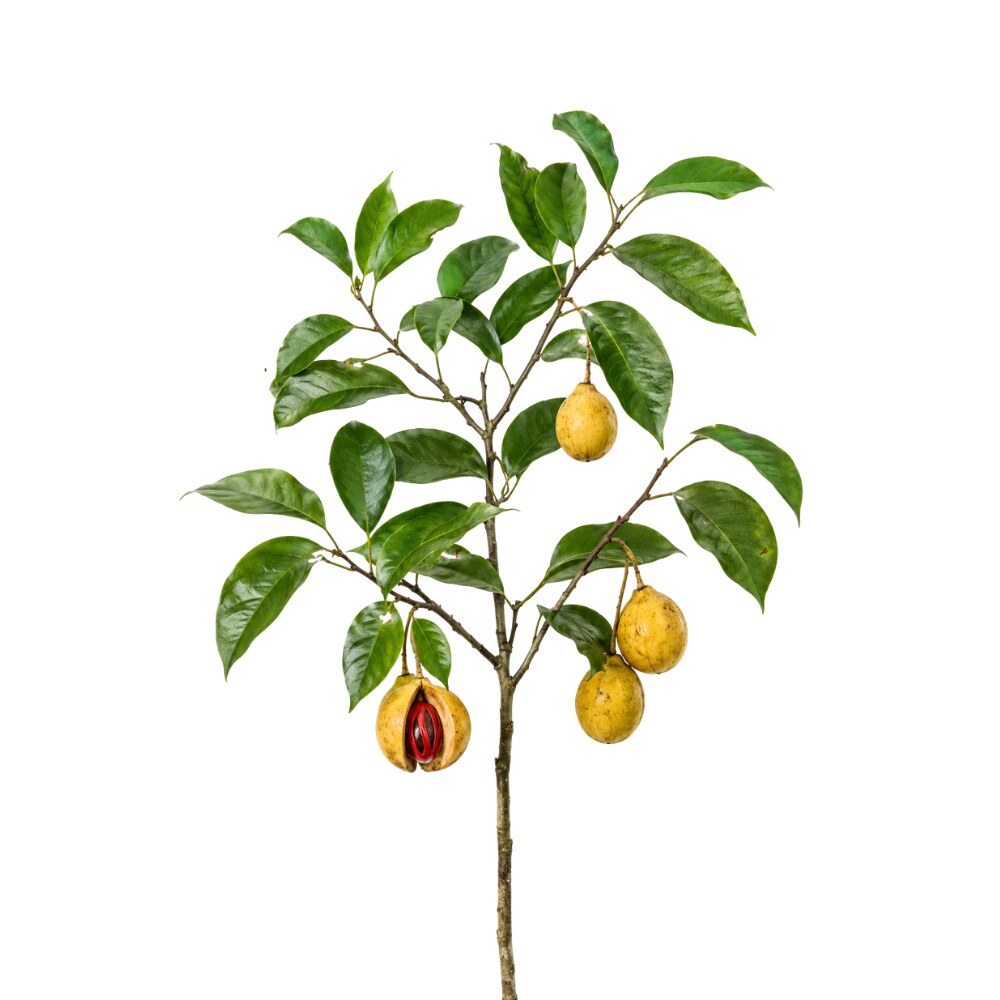
Epeña
Virola spp.
Plant Family
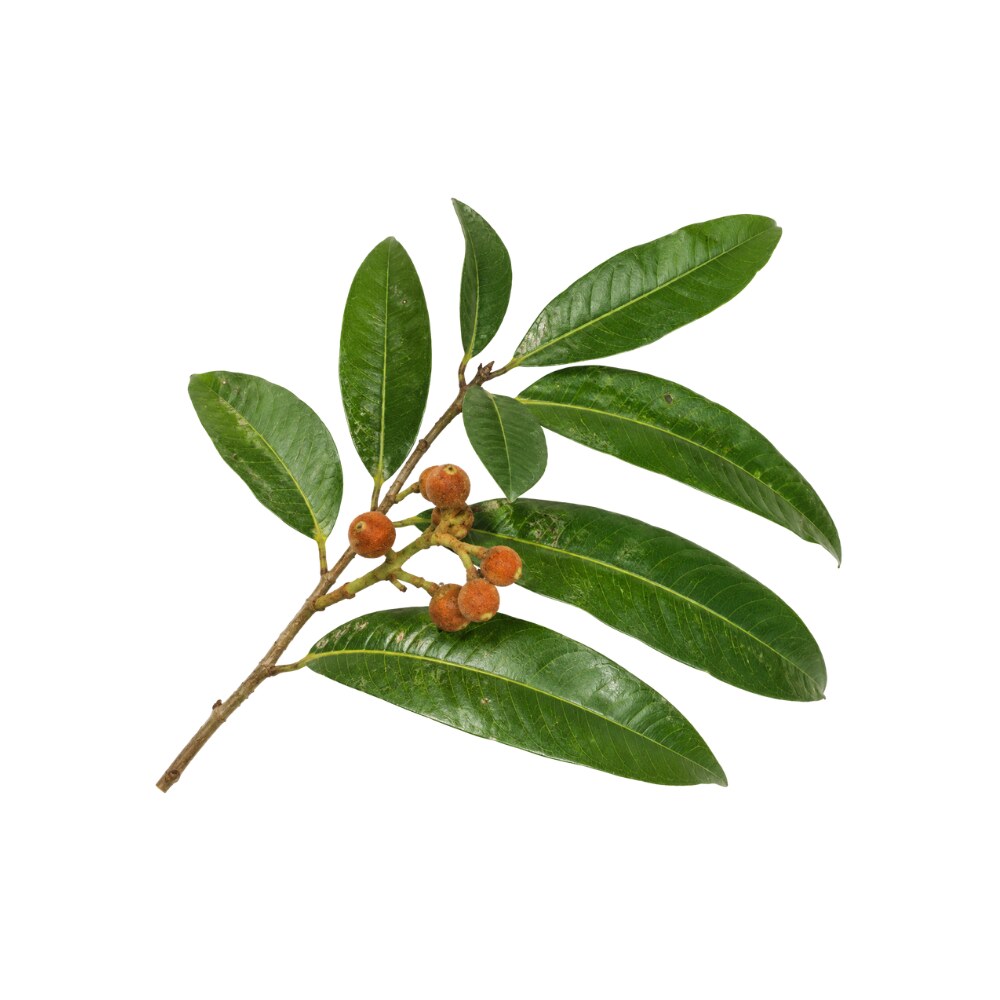
Pictured: Epeña
Nutmeg family
Aromatic tropical trees with red sap, giving both the nutmeg spice and the DMT-bearing Virola resins of Amazonian snuff traditions.
2 Herbs // 1 Constituent // 5 Notable Members
Overview
Around 20 genera and 500 species of tropical trees, almost all of them dioecious. A reliable field character is the red or orange sap that bleeds from cut bark — a resin that turns out to be pharmacologically important in the genus Virola. The family sits among the magnoliids, an early-diverging lineage well outside the main flowering-plant radiations, and its chemistry reflects that isolation.
Shared Traits
In Practice
Two very different traditions come out of this family.
Nutmeg (Myristica fragrans) supplies two spices from one fruit — nutmeg from the seed, mace from the red aril that wraps it — and has a long record as a carminative, digestive and sedative across Ayurvedic, Arabic and European practice. Its volatile oil carries myristicin and elemicin, phenylpropanoids that are weakly psychoactive at high doses; in-body amination to amphetamine-like metabolites has been proposed but is not well established. What is established is that nutmeg in large quantity (roughly two whole nuts and up) produces a genuinely unpleasant deliriant syndrome — nausea, tachycardia, dry mouth, agitation, confusion, lasting a day or more — and hospitalisations occur every year. Myristicin is also hepatotoxic in quantity. This is a spice with a narrow margin, and its recreational use is uniformly reported as regrettable.
Epeña (Virola spp.) represents the other tradition. Several Amazonian peoples prepare the tree’s red inner-bark resin into a snuff — epená, yopo’s relative — rich in DMT and 5-MeO-DMT alongside beta-carbolines. Insufflation bypasses gut monoamine oxidase, which is why no separate MAOI admixture is needed here, unlike ayahuasca. The tradition is ceremonial and shamanic, the material is powerfully active, and 5-MeO-DMT in particular has a steep dose–response.
Safety: nutmeg’s toxicity is dose-related and real; Virola snuffs carry the cardiovascular and psychological risks of potent tryptamines, plus serotonergic interaction risk.
Materia Medica
The 2 monographs in the database whose Myristicaceae membership is recorded on the herb itself — so this list keeps itself current as new herbs land.
Phytochemistry
Phenylpropanoids (myristicin, elemicin, safrole) in the volatile oil, tryptamine alkaloids (DMT, 5-MeO-DMT) and beta-carbolines in the Virola resins, plus lignans, neolignans and the fixed oil “nutmeg butter” rich in trimyristin.
Compounds recorded in two or more of the 2 herbs above — the chemistry this family holds in common, grouped by class. A further 20 appear in only one member and are listed on that herb's own page.
Beyond the Database
Notable members without a monograph yet.
Keep Exploring