
Materia Medica
Nutmeg
Myristica fragrans
Nutmeg is the seed of a tropical evergreen tree and one of the world's classic warming spices; the red aril around the seed is sold as mace. In small amounts it is a carminative for digestion, and in large amounts its myristicin makes it a deliriant.
What Is Nutmeg?
Nutmeg is the seed of Myristica fragrans, a tropical evergreen tree, and one of the classic warming spices of the world’s kitchens. The lacy red covering around the seed, the aril, is dried separately and sold as mace 44Reference 44Li, B., & Wilson, T. K. Myristica fragrans Houttuyn — species description and distribution — flora. In Wu, Z. Y., & Raven, P. H. (eds.), Flora of China, Vol. 7 (Myristicaceae). http://www.efloras.org/florataxon.aspx?flora_id=2&taxon_id=200008618View study →.
The tree is native to the Moluccas of Indonesia, the historic Spice Islands, and is now grown throughout the humid tropics 44Reference 44Li, B., & Wilson, T. K. Myristica fragrans Houttuyn — species description and distribution — flora. In Wu, Z. Y., & Raven, P. H. (eds.), Flora of China, Vol. 7 (Myristicaceae). http://www.efloras.org/florataxon.aspx?flora_id=2&taxon_id=200008618View study →. For centuries nutmeg has been used in small amounts as a digestive spice in European, Chinese, Ayurvedic and Unani practice.
The seed’s aroma comes from an essential oil rich in monoterpenes, along with the phenylpropenes myristicin, elemicin and safrole 1,
In large amounts, far beyond anything used in cooking, nutmeg is a deliriant, and it has a long history of misuse for that effect 46Reference 46Case reportIntoxication with nutmeg: a case presentation and analysis of Swiss poisons information center (Tox Info Suisse) enquiries 2014-2023 — case report and poison-centre seriesView study →.
How Is Nutmeg Used?
- Grated or ground seed — a pinch in food or warm milk, as a warming carminative and spice.
- Roasted seed — rou dou kou in Chinese medicine, used in small amounts for chronic diarrhoea.
- Powdered seed — jaiphal in Ayurvedic and Unani practice, for digestion and sleep.
- Mace — the dried aril, used as a spice in its own right 44Reference 44Li, B., & Wilson, T. K. Myristica fragrans Houttuyn — species description and distribution — flora. In Wu, Z. Y., & Raven, P. H. (eds.), Flora of China, Vol. 7 (Myristicaceae). http://www.efloras.org/florataxon.aspx?flora_id=2&taxon_id=200008618View study →.
Traditional Uses
Western Herbal Medicine
Across European kitchens and folk practice nutmeg is a warming carminative. A pinch of the grated seed is taken for sluggish digestion, nausea and flatulence, and in warm milk as a mild sleep aid.
The dose is always small. Nutmeg was used less as a medicine in its own right than as a corrective added to food.
Traditional Chinese Medicine
In Traditional Chinese Medicine the roasted seed is rou dou kou. It is given in small amounts to “astringe the intestines” and check chronic diarrhoea, and to warm the middle burner against cold, deficient digestion 4Reference 4ReviewMyristica fragrans: a comprehensive review of its botanical characterization, traditional uses, phytochemistry and pharmacological propertiesView study →.
Ayurveda & Unani
In Ayurvedic and Unani practice the seed is jaiphal, used for weak digestive fire, nausea and insomnia. The Unani tradition in particular regards it as an aphrodisiac.
Both systems use the seed sparingly and treat it as warming and drying.
Recreational Use
Large amounts of the ground seed have long been swallowed for their psychoactive effect. Poison centres saw a rise in such cases in 2020 and 2021, when a social-media “nutmeg challenge” circulated 46Reference 46Case reportIntoxication with nutmeg: a case presentation and analysis of Swiss poisons information center (Tox Info Suisse) enquiries 2014-2023 — case report and poison-centre seriesView study →.
Indications
- Sluggish digestion and flatulence [seed; Western folk use, Ayurveda]
- Nausea [seed; Western folk use, Ayurveda]
- Chronic diarrhoea [roasted seed; TCM, Ayurveda]
- Insomnia [seed; Western folk use, Ayurveda, Unani] Caution: Rodent work supports only a lengthening of drug-induced sleep. In a rat study, myristicin did not reduce anxiety and blunted the effect of midazolam 29,
38 . - Low libido [seed; Unani]
Botany
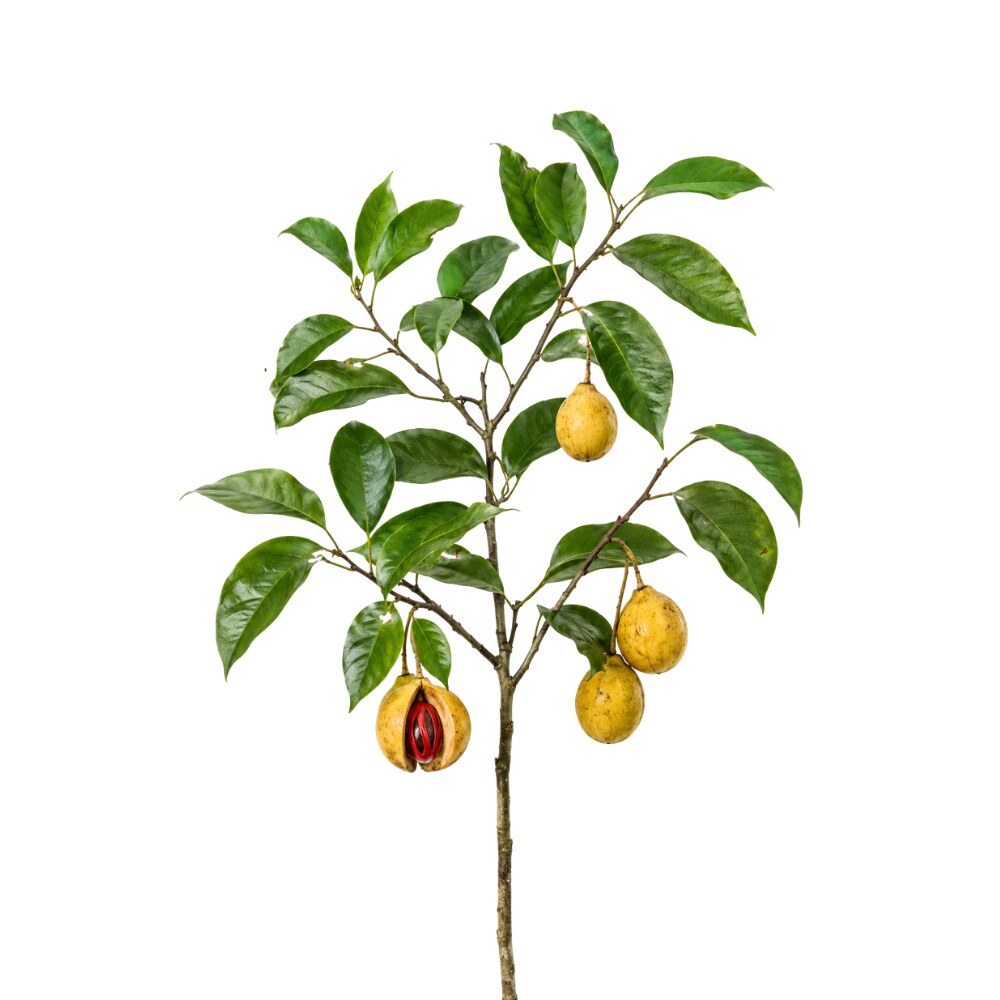
Nutmeg is a slow-growing, strongly aromatic evergreen tree in the nutmeg family (Myristicaceae), with a dense, conical crown 45Reference 45Myristica fragrans — habit, range, habitat and cultivation — plant databaseView study →. In cultivation it usually grows 3–15 m tall and occasionally reaches 20 m; Flora of China describes it as a small tree to about 10 m 44,
The leaves are elliptic, 4–8 cm long and almost leathery 44Reference 44Li, B., & Wilson, T. K. Myristica fragrans Houttuyn — species description and distribution — flora. In Wu, Z. Y., & Raven, P. H. (eds.), Flora of China, Vol. 7 (Myristicaceae). http://www.efloras.org/florataxon.aspx?flora_id=2&taxon_id=200008618View study →.
The flowers are small and either male or female, borne in separate clusters 44Reference 44Li, B., & Wilson, T. K. Myristica fragrans Houttuyn — species description and distribution — flora. In Wu, Z. Y., & Raven, P. H. (eds.), Flora of China, Vol. 7 (Myristicaceae). http://www.efloras.org/florataxon.aspx?flora_id=2&taxon_id=200008618View study →. The trees are not self-fertile, and the flowers are pollinated by moths and other insects 45Reference 45Myristica fragrans — habit, range, habitat and cultivation — plant databaseView study →.
The fruit is orange or yellow, pear-shaped to round, and 3.5–5 cm across. It holds a single egg-shaped seed, 2–3 cm long, wrapped in a bright red, deeply cut aril 44Reference 44Li, B., & Wilson, T. K. Myristica fragrans Houttuyn — species description and distribution — flora. In Wu, Z. Y., & Raven, P. H. (eds.), Flora of China, Vol. 7 (Myristicaceae). http://www.efloras.org/florataxon.aspx?flora_id=2&taxon_id=200008618View study →. The seed is the nutmeg and the aril is mace. The seed is 40–73% fat 44Reference 44Li, B., & Wilson, T. K. Myristica fragrans Houttuyn — species description and distribution — flora. In Wu, Z. Y., & Raven, P. H. (eds.), Flora of China, Vol. 7 (Myristicaceae). http://www.efloras.org/florataxon.aspx?flora_id=2&taxon_id=200008618View study →.
Distribution
Nutmeg is native to the Moluccas (Maluku) of Indonesia and is widely cultivated in the tropics 44Reference 44Li, B., & Wilson, T. K. Myristica fragrans Houttuyn — species description and distribution — flora. In Wu, Z. Y., & Raven, P. H. (eds.), Flora of China, Vol. 7 (Myristicaceae). http://www.efloras.org/florataxon.aspx?flora_id=2&taxon_id=200008618View study →. The main producers are Indonesia, Sri Lanka and Grenada in the West Indies 45Reference 45Myristica fragrans — habit, range, habitat and cultivation — plant databaseView study →.
It grows best in humid coastal lowlands, up to about 500 m, with rainfall spread evenly through the year 45Reference 45Myristica fragrans — habit, range, habitat and cultivation — plant databaseView study →.
Growing Conditions
Cultivation snapshot for Nutmeg
- Strictly tropical: thrives in hot, humid lowlands and has no cold tolerance — frost will kill it.
- Prefers warm temperatures (roughly 22–34 °C) with generous, year-round rainfall.
- Likes deep, rich, well-drained soils; grows in full sun to partial shade.
- Male and female flowers form on separate trees, so fruit production needs both present.
Grow it yourself
Farm Wiki is our cultivation-focused sister site, also run by Justin Cooke.
Phytochemistry
The seed’s essential oil is dominated by monoterpene hydrocarbons, chiefly sabinene and α-pinene. The phenylpropenes myristicin, elemicin and safrole make up a smaller share 1,
Myristicin and elemicin have anticholinergic properties. Myristicin has been proposed to be converted in the body into amphetamine-like compounds, but analyses of urine after large doses have not confirmed this 46Reference 46Case reportIntoxication with nutmeg: a case presentation and analysis of Swiss poisons information center (Tox Info Suisse) enquiries 2014-2023 — case report and poison-centre seriesView study →.
The seed also carries lignans and neolignans. Dehydrodiisoeugenol and the diarylnonanoids malabaricone B and malabaricone C were identified as the main antioxidant compounds of a seed extract 12Reference 12Evaluation of antioxidant and anti-α-glucosidase activities of various solvent extracts and major bioactive components from the seeds of Myristica fragransView study →. A group of diarylbutane lignans from the seed inhibited LDL oxidation, the most potent at about 2.6 µM 13Reference 13Low-density lipoprotein (LDL)-antioxidant lignans from Myristica fragrans seedsView study →. Macelignan, nectandrin B and grandisin belong to the same group.
The neolignan licarin A was identified in mace, the aril, rather than the seed 34Reference 34Molecular networking, docking and biological evaluation of licarin A from Myristica fragrans as a potential cancer chemopreventive agentView study →. The essential oil also contains terpinen-4-ol.
Composition varies with origin: East Indian oils run higher in myristicin and safrole, and West Indian oils higher in elemicin 1,
Constituent Summary
Figures are shares of the seed and kernel oil, as ranges across samples from India, Sri Lanka, Indonesia, Pakistan, Brazil and Grenada 1Reference 1ReviewNutmeg (Myristica fragrans Houtt.) essential oil: a review on its composition, biological and pharmacological activitiesView study →.
Phenylpropanoid4 compounds3 with data
Monoterpene5 compounds5 with data
Lipid1 compound1 with data
Pharmacology & Research
Nutmeg has several dozen laboratory studies behind it, on the seed, the aril (mace), the essential oil and isolated constituents. There are no clinical trials of nutmeg for any therapeutic use 5,
The most consistent findings are antioxidant, anti-inflammatory, liver-protective and antimicrobial activity. Most of it traces to the seed’s lignans and neolignans, such as macelignan, malabaricone C and dehydrodiisoeugenol, while myristicin has been studied mainly for its toxicology 5,
-
Best-supported: hepatoprotection in chemical-injury models via Nrf2/HO-1 induction 18,
19, , broad in-vitro antioxidant activity driven by seed lignans 12,20Reference 18Myristica fragrans kernels prevent paracetamol-induced hepatotoxicity by inducing anti-apoptotic genes and the Nrf2/HO-1 pathwayView study →Reference 19AnimalHepatoprotective effect of nanoniosome-loaded Myristica fragrans phenolic compounds in mice-induced hepatotoxicityView study →Reference 20AnimalMyristica fragrans extract regulates gut microbes and metabolites to attenuate hepatic inflammation and lipid metabolism disorders in NAFLD miceView study → 13Reference 12Evaluation of antioxidant and anti-α-glucosidase activities of various solvent extracts and major bioactive components from the seeds of Myristica fragransView study →Reference 13Low-density lipoprotein (LDL)-antioxidant lignans from Myristica fragrans seedsView study → , and anti-inflammatory suppression of NF-κB/NO signalling 16,17Reference 16Anti-inflammatory effect of myristicin on RAW 264.7 macrophages stimulated with polyinosinic-polycytidylic acidView study →Reference 17Neolignans and diarylnonanoid derivatives with anti-inflammatory activity from Myristica fragrans Houtt. seedsView study → . -
Emerging, worth watching: metabolic effects (α-glucosidase and pancreatic-lipase inhibition, cholesterol efflux, anti-adipogenesis) 21,
22, and neuroprotection in scopolamine/ischaemia models 25,23, 24Reference 21In vitroProminent pancreatic lipase inhibition and free-radical scavenging activity of a Myristica fragrans ethanolic extract in vitroView study →Reference 22Myristica fragrans promotes ABCA1 expression and cholesterol efflux in THP-1-derived macrophagesView study →Reference 23The protective effect of Myristica fragrans Houtt. extracts against obesity and inflammation by regulating free fatty acid metabolism in NAFLDView study →Reference 24In vitroAn in vitro study reveals the anti-obesity effects of a benzofuran from Myristica fragransView study → 26, .27Reference 25AnimalImprovement of mouse memory by Myristica fragrans seedsView study →Reference 26AnimalMyristica fragrans seed extract reverses scopolamine-induced cortical injury via stimulation of HO-1 expression in male ratsView study →Reference 27Macelignan, a lignan from Myristica fragrans Houtt., rescues mitochondrial homeostasis and prevents cognitive decline in vascular dementiaView study → -
Mechanistically thin: anticancer and aphrodisiac claims rest on high-dose cell-line work and a pair of rodent mating studies respectively 30,
31, .32, 33, 34, 35, 36Reference 30Myristicin suppresses gastric cancer growth via targeting the EGFR/ERK signalling pathwayView study →Reference 31Mechanistic evaluation of myristicin on apoptosis and cell-cycle regulation in breast cancer cellsView study →Reference 32Myristicin from nutmeg induces apoptosis via the mitochondrial pathway in human leukaemia K562 cellsView study →Reference 33Anticancer effect of myristicin on hepatic carcinoma and related molecular mechanismView study →Reference 34Molecular networking, docking and biological evaluation of licarin A from Myristica fragrans as a potential cancer chemopreventive agentView study →Reference 35An experimental study of the sexual-function-improving effect of Myristica fragrans Houtt. (nutmeg)View study →Reference 36AnimalAphrodisiac activity of 50% ethanolic extracts of Myristica fragrans Houtt. (nutmeg) and Syzygium aromaticum (clove) in male miceView study → - The caveat: everything is animal or in-vitro, doses and extract types vary enormously, and the same constituent (myristicin) that drives several activities is also the seed’s toxic principle.
None of this is human evidence. Every finding comes from animals or cell cultures, and an effect shown for a steam-distilled oil or a purified lignan does not carry over to the ground seed used in the kitchen 3,
1. Hepatoprotective
In rats, a nutmeg kernel extract (300 mg/kg orally for seven days) prevented paracetamol-induced liver injury. It lowered transaminases and lipid peroxidation, reduced TNF-α, IL-1β and NF-κB, and induced the Nrf2/HO-1 pathway, with results comparable to silymarin 18Reference 18Myristica fragrans kernels prevent paracetamol-induced hepatotoxicity by inducing anti-apoptotic genes and the Nrf2/HO-1 pathwayView study →.
Mouse work reproduced the pattern against L-asparaginase toxicity 19Reference 19AnimalHepatoprotective effect of nanoniosome-loaded Myristica fragrans phenolic compounds in mice-induced hepatotoxicityView study →. In a high-fat-diet model of fatty liver disease, a seed extract lowered hepatic IL-6 and TNF-α and improved lipid handling through changes in the gut microbiome 20Reference 20AnimalMyristica fragrans extract regulates gut microbes and metabolites to attenuate hepatic inflammation and lipid metabolism disorders in NAFLD miceView study →.
The proposed mechanism is inhibition of the cytochrome P450 step that forms paracetamol’s toxic metabolite, together with stronger antioxidant defences. All of these are chemically induced injuries in rodents, at extract doses far above culinary intake, with no human liver data.
2. Antioxidant
Seed extracts show strong DPPH, ABTS, superoxide and hydroxyl-radical scavenging, with malabaricone C and dehydrodiisoeugenol among the main active molecules 12Reference 12Evaluation of antioxidant and anti-α-glucosidase activities of various solvent extracts and major bioactive components from the seeds of Myristica fragransView study →. Diarylbutane lignans from the seed inhibited LDL oxidation, the most potent with an IC₅₀ of about 2.6 µM 13Reference 13Low-density lipoprotein (LDL)-antioxidant lignans from Myristica fragrans seedsView study →.
The essential oil and a lignan from the root add further scavenging data 14,
The work is almost entirely in cell-free assays. It shows chemical activity rather than an antioxidant effect in people, and the potent forms are purified lignans rather than the ground spice.
3. Anti-Inflammatory
Myristicin suppresses inflammatory signalling in macrophages. In dsRNA-stimulated RAW 264.7 cells it inhibited nitric oxide and a panel of cytokines through a calcium-dependent pathway, at up to 50 µM without cytotoxicity 16Reference 16Anti-inflammatory effect of myristicin on RAW 264.7 macrophages stimulated with polyinosinic-polycytidylic acidView study →.
A 2024 study isolated 33 new neolignan and diarylnonanoid conjugates, several of which inhibited TLR-driven NF-κB/AP1 and IRF signalling 17Reference 17Neolignans and diarylnonanoid derivatives with anti-inflammatory activity from Myristica fragrans Houtt. seedsView study →. Mace extracts inhibited LPS-induced nitric oxide release in the same cell model 11Reference 11Anti-Helicobacter pylori, anti-inflammatory, cytotoxic and antioxidant activities of mace extracts from Myristica fragransView study →.
TNF-α, IL-1β and NF-κB also fell in the liver-injury models, so the effect appears in animals as well as in cell culture 18,
There is no human anti-inflammatory endpoint. The active molecules are minor components of the whole spice, so the cell-culture doses do not translate directly to dietary use.
4. Antimicrobial
Seed constituents (trimyristin, myristic acid, myristicin) gave measurable MICs against Gram-positive and Gram-negative organisms 8Reference 8Antibacterial principles from Myristica fragrans seedsView study →, and the essential oil inhibited a panel of endodontic pathogens 9Reference 9In vitroIn vitro evaluation of antimicrobial effect of Myristica fragrans on common endodontic pathogensView study →.
Ester derivatives of α-terpineol and 4-carvomenthenol showed MICs of 40–170 µg/mL, with synergy alongside streptomycin and antibiofilm activity 10Reference 10Antimicrobial, synergistic and antibiofilm activities of Myristica fragrans Houtt. bioactive compounds and their derivativesView study →.
An ethanolic mace extract inhibited Helicobacter pylori at 125–250 µg/mL, roughly 250–500-fold weaker than the antibiotic clarithromycin 11Reference 11Anti-Helicobacter pylori, anti-inflammatory, cytotoxic and antioxidant activities of mace extracts from Myristica fragransView study →.
These are in-vitro MICs, largely for the essential oil rather than the ingested seed. No animal infection model or human data exists.
5. Antidiabetic & Metabolic
Methanolic seed extract inhibited α-glucosidase 12Reference 12Evaluation of antioxidant and anti-α-glucosidase activities of various solvent extracts and major bioactive components from the seeds of Myristica fragransView study →, and an ethanolic extract inhibited pancreatic lipase by about 66% at 100 µg/mL, approaching orlistat 21Reference 21In vitroProminent pancreatic lipase inhibition and free-radical scavenging activity of a Myristica fragrans ethanolic extract in vitroView study →.
In macrophages, nutmeg promoted cholesterol efflux through ABCA1/LXRα and lowered cytokines 22Reference 22Myristica fragrans promotes ABCA1 expression and cholesterol efflux in THP-1-derived macrophagesView study →.
In high-fat-diet mice, an alcoholic seed extract reduced body weight, glucose, cholesterol and liver fat without changing food intake, and down-regulated FASN and SREBP-1c 23Reference 23The protective effect of Myristica fragrans Houtt. extracts against obesity and inflammation by regulating free fatty acid metabolism in NAFLDView study →.
A benzofuran from mace suppressed fat-cell differentiation in 3T3-L1 cells 24Reference 24In vitroAn in vitro study reveals the anti-obesity effects of a benzofuran from Myristica fragransView study →.
This is a mix of in-vitro enzyme assays and rodent diet models, with no glucose or weight endpoint in humans, and the active extracts differ from the whole spice.
6. Neuroprotective / Memory
An n-hexane seed extract at 5 mg/kg for three days improved learning and memory in young and aged mice, and reversed scopolamine- and diazepam-induced impairment 25Reference 25AnimalImprovement of mouse memory by Myristica fragrans seedsView study →.
A methanolic extract protected rat cortex against scopolamine-induced oxidative damage and apoptosis through HO-1 induction 26Reference 26AnimalMyristica fragrans seed extract reverses scopolamine-induced cortical injury via stimulation of HO-1 expression in male ratsView study →. The seed lignan macelignan preserved mitochondrial function and prevented cognitive decline in a rat model of vascular dementia 27Reference 27Macelignan, a lignan from Myristica fragrans Houtt., rescues mitochondrial homeostasis and prevents cognitive decline in vascular dementiaView study →.
A 2023 systematic review of plant-derived nootropics in humans did not list nutmeg among the agents with human cognitive evidence 28Reference 28Systematic reviewPlant-derived nootropics and human cognition: a systematic reviewView study →.
Gap: all positive data are rodent, and a human nootropic review found no clinical evidence for nutmeg.
7. Antidiarrheal
In a rodent study, both a crude suspension and a petroleum-ether fraction (but not the aqueous extract) reduced loose stools or delayed their onset. The petroleum-ether fraction inhibited intestinal contractions evoked by acetylcholine, histamine and prostaglandin, an antispasmodic mechanism 29Reference 29Pharmacological studies on Myristica fragrans — antidiarrhoeal, hypnotic, analgesic and haemodynamic parametersView study →.
Chinese and Ayurvedic texts describe the seed as “astringing the intestines to relieve diarrhea” 4Reference 4ReviewMyristica fragrans: a comprehensive review of its botanical characterization, traditional uses, phytochemistry and pharmacological propertiesView study →.
The controlled evidence is one animal study, and no human antidiarrhoeal trial exists.
8. Anticancer (Cytotoxicity)
Cytotoxic and pro-apoptotic activity has been reported across several cell lines, mainly for myristicin. It induced mitochondrial apoptosis in K562 leukaemia cells 32Reference 32Myristicin from nutmeg induces apoptosis via the mitochondrial pathway in human leukaemia K562 cellsView study →, suppressed gastric cancer in vitro and in a xenograft through EGFR/ERK (7.8–31 µM) 30Reference 30Myristicin suppresses gastric cancer growth via targeting the EGFR/ERK signalling pathwayView study →, induced apoptosis in MCF-7 breast cancer cells 31Reference 31Mechanistic evaluation of myristicin on apoptosis and cell-cycle regulation in breast cancer cellsView study →, and inhibited liver-cancer cell growth through PI3K/AKT/mTOR at millimolar concentrations 33Reference 33Anticancer effect of myristicin on hepatic carcinoma and related molecular mechanismView study →.
The mace neolignan licarin A reduced NF-κB p65 activation in prostate cancer cells, with low toxicity in zebrafish 34Reference 34Molecular networking, docking and biological evaluation of licarin A from Myristica fragrans as a potential cancer chemopreventive agentView study →.
Gap: almost entirely cell-line work, several studies at millimolar concentrations unreachable by dietary or medicinal use. The single in-vivo result is a gastric xenograft, and myristicin’s own toxicity limits any therapeutic use.
9. Aphrodisiac
A 50% ethanolic seed extract at 500 mg/kg for seven days increased mounting and intromission frequency and shortened mounting latency in male rats, compared against sildenafil 35Reference 35An experimental study of the sexual-function-improving effect of Myristica fragrans Houtt. (nutmeg)View study →.
A study in male mice found the same 50% ethanolic extract (500 mg/kg) stimulated mounting and mating performance without obvious short-term toxicity 36Reference 36AnimalAphrodisiac activity of 50% ethanolic extracts of Myristica fragrans Houtt. (nutmeg) and Syzygium aromaticum (clove) in male miceView study →.
Both come from the same research group at a fixed high dose. There is no human sexual-function data, and the mechanism is uncharacterised.
10. Analgesic
An alkaloid fraction reduced acetic-acid writhing in mice at 1 g/kg, but only in females, and 0.5 g/kg had no effect. The fraction was classed as slightly toxic (LD₅₀ 5.1 g/kg) 37Reference 37AnimalEvaluation of analgesic activity and toxicity of alkaloids in Myristica fragrans seeds in miceView study →.
An earlier study found only a weak effect for the crude suspension 29Reference 29Pharmacological studies on Myristica fragrans — antidiarrhoeal, hypnotic, analgesic and haemodynamic parametersView study →.
The effect is weak and sex-specific, and appears only at doses close to the toxic range.
11. Sedative / Hypnotic
A petroleum-ether fraction lengthened barbiturate-induced sleeping time in rodents 29Reference 29Pharmacological studies on Myristica fragrans — antidiarrhoeal, hypnotic, analgesic and haemodynamic parametersView study →.
⚠ A controlled rat study found that myristicin did not reduce anxiety, showed no GABA-A modulation, tended to increase anxiety, and blunted the effect of midazolam 38Reference 38AnimalEvaluation of the anxiolytic properties of myristicin, a component of nutmeg, in the male Sprague-Dawley rat. https://pubmed.ncbi.nlm.nih.gov/21560973/View study →.
Gap: only a sleep-lengthening signal is supported, in one rodent study. The anxiolytic claim failed its direct test.
Mechanisms
Nutmeg’s lignans and neolignans have been studied for Nrf2/HO-1 induction, NF-κB suppression and radical scavenging, and they carry most of the liver-protective, antioxidant and metabolic findings.
Myristicin has been studied for its anti-inflammatory and cytotoxic activity. It is also the main toxic principle of the seed.
| Mechanism | Drives | Key compounds |
|---|---|---|
| Nrf2/HO-1 induction, ↑ SOD/catalase/glutathione | hepatoprotectiveneuroprotectiveantioxidant | macelignan, malabaricone C, seed lignans |
| NF-κB ↓, iNOS/NO ↓, TNF-α/IL-6/IL-1β ↓ | anti-inflammatoryhepatoprotective | myristicin, neolignans |
| Free-radical scavenging (DPPH/ABTS/LDL) | antioxidant | dehydrodiisoeugenol, diarylbutane lignans |
| α-glucosidase & pancreatic-lipase inhibition, ABCA1/LXRα ↑, FASN/SREBP-1c ↓ | antidiabetic & metabolic | seed lignans, malabaricone C |
| Mitochondrial apoptosis, EGFR/ERK ↓, PI3K/AKT/mTOR ↓ | anticancer (cytotoxicity) | myristicin, licarin A |
| MIC inhibition, DNA-gyrase binding, antibiofilm | antimicrobial | α-terpineol, trimyristin, essential-oil terpenes |
Clinical Trials
No registered clinical trials of nutmeg or its constituents were identified. Human data on nutmeg come from poisoning case reports and poison-centre records 42,
| Completed | Planned | Terminated | Preclinical |
|---|---|---|---|
| 0 | 0 | 0 | ~50 |
Last checked: August 2026.
Dosage
Nutmeg is used in culinary amounts. The doses below come from animal and cell studies.
| Indication | Preparation | Dose | Est. dried-herb equivalent | Source |
|---|---|---|---|---|
| Hepatoprotective | Kernel extract, oral (rats) | 300 mg/kg × 7 days | — | 18Reference 18Myristica fragrans kernels prevent paracetamol-induced hepatotoxicity by inducing anti-apoptotic genes and the Nrf2/HO-1 pathwayView study → |
| Memory / neuroprotective | n-Hexane seed extract, oral (mice) | 5 mg/kg × 3 days | — | 25Reference 25AnimalImprovement of mouse memory by Myristica fragrans seedsView study → |
| Aphrodisiac | 50% ethanolic seed extract (rats, mice) | 500 mg/kg × 7 days | — | 35, |
| Analgesic | Seed alkaloid fraction (mice) | 1 g/kg — females only; LD₅₀ 5.1 g/kg | — | 37Reference 37AnimalEvaluation of analgesic activity and toxicity of alkaloids in Myristica fragrans seeds in miceView study → |
| Antimicrobial | Essential oil / isolated constituents (in vitro) | MIC 40–170 µg/mL | — | 8, |
No dried-herb equivalents are given. Every row is a rodent or in-vitro dose, and the extracts differ from each other and from the ground spice.
Traditional Dosage
| System | Preparation | Dose |
|---|---|---|
| Culinary / Western herbal | Grated or ground seed | A pinch to ~¼ teaspoon, as a warming carminative |
| TCM (rou dou kou) | Roasted seed, decocted or powdered | Small amounts, for chronic diarrhoea |
| Ayurveda / Unani (jaiphal) | Powdered seed | Small amounts, for digestion and sleep |
Neuropsychological symptoms can be expected after about 10–15 g of nutmeg, far above culinary use 46Reference 46Case reportIntoxication with nutmeg: a case presentation and analysis of Swiss poisons information center (Tox Info Suisse) enquiries 2014-2023 — case report and poison-centre seriesView study →.
Safety & Pregnancy
Nutmeg is safe in the amounts used in cooking. Large amounts, from about 10–15 g of the ground seed, cause a deliriant intoxication 46Reference 46Case reportIntoxication with nutmeg: a case presentation and analysis of Swiss poisons information center (Tox Info Suisse) enquiries 2014-2023 — case report and poison-centre seriesView study →.
- Toxic in large amounts. From about 10–15 g, nutmeg causes nausea, a racing heart, agitation and hallucinations; anticholinergic effects are likely above 25–28 g 46Reference 46Case reportIntoxication with nutmeg: a case presentation and analysis of Swiss poisons information center (Tox Info Suisse) enquiries 2014-2023 — case report and poison-centre seriesView study →.
- Slow onset. Symptoms begin one to six hours after eating it and usually last up to a day, at most about three days. Overdoses have needed hospital care 42,
46Reference 42Case reportNutmeg overdose: spice not so nice — case reportView study →Reference 46Case reportIntoxication with nutmeg: a case presentation and analysis of Swiss poisons information center (Tox Info Suisse) enquiries 2014-2023 — case report and poison-centre seriesView study → . - Myristicin is both an active and the toxic principle. It is metabolically activated to reactive compounds 40Reference 40Metabolic activation of myristicin and its role in cellular toxicityView study → and is toxic to human nerve cells in culture 41Reference 41Myristicin-induced neurotoxicity in human neuroblastoma SK-N-SH cellsView study →.
- Drug combinations. Poisonings that combined nutmeg with other drugs were more serious, and an added serotonergic effect with SSRI antidepressants is plausible 46Reference 46Case reportIntoxication with nutmeg: a case presentation and analysis of Swiss poisons information center (Tox Info Suisse) enquiries 2014-2023 — case report and poison-centre seriesView study →.
- Composition varies. East Indian oils run higher in myristicin and safrole, West Indian higher in elemicin 1,
2Reference 1ReviewNutmeg (Myristica fragrans Houtt.) essential oil: a review on its composition, biological and pharmacological activitiesView study →Reference 2AnimalIdentification of compounds in the essential oil of nutmeg seeds that inhibit locomotor activity in miceView study → . - Culinary amounts are safe. Normal spice quantities pose no problem.
Full Safety Detail
Intoxication. Features include euphoria, hallucinations, agitation, delirium, drowsiness, a racing heart, headache, nausea and vomiting, and changes in pupil size 46Reference 46Case reportIntoxication with nutmeg: a case presentation and analysis of Swiss poisons information center (Tox Info Suisse) enquiries 2014-2023 — case report and poison-centre seriesView study →. Most cases are mild. In a Swiss poison-centre series of 236 patients over ten years, there were no severe or fatal cases, and people with mild symptoms had taken a median of about 18 g 46Reference 46Case reportIntoxication with nutmeg: a case presentation and analysis of Swiss poisons information center (Tox Info Suisse) enquiries 2014-2023 — case report and poison-centre seriesView study →.
Timing. Symptoms begin one to six hours after ingestion and usually settle within 24 hours, with a maximum of about 72 hours. Myristicin, safrole and elemicin have half-lives of 8.5–19 hours, which is why symptoms persist 46Reference 46Case reportIntoxication with nutmeg: a case presentation and analysis of Swiss poisons information center (Tox Info Suisse) enquiries 2014-2023 — case report and poison-centre seriesView study →.
Myristicin. The compound behind much of nutmeg’s reported pharmacology is metabolically activated to reactive species 40Reference 40Metabolic activation of myristicin and its role in cellular toxicityView study → and is directly toxic to human neuroblastoma cells 41Reference 41Myristicin-induced neurotoxicity in human neuroblastoma SK-N-SH cellsView study →. It has been reviewed as a toxicological principle 5,
Other drugs. In an Illinois poison-centre series, people who took nutmeg together with psychoactive medicines had more serious toxicity. An additive serotonergic effect with SSRIs is plausible, though a Swiss case on fluoxetine ran a mild course 46Reference 46Case reportIntoxication with nutmeg: a case presentation and analysis of Swiss poisons information center (Tox Info Suisse) enquiries 2014-2023 — case report and poison-centre seriesView study →.
Drug metabolism. In laboratory tests, myristicin, the main active compound of nutmeg oil, irreversibly inhibited the drug-metabolising enzyme CYP1A2 47Reference 47Identification and characterization of reactive metabolites in myristicin-mediated mechanism-based inhibition of CYP1A2View study →. Myristicin is itself broken down by CYP3A4 and CYP1A2 48Reference 48Roles of human liver cytochrome P450 3A4 and 1A2 enzymes in the oxidation of myristicinView study →. None of this has been tested in people.
Anxiety. Myristicin did not reduce anxiety in rats and blunted the effect of midazolam 38Reference 38AnimalEvaluation of the anxiolytic properties of myristicin, a component of nutmeg, in the male Sprague-Dawley rat. https://pubmed.ncbi.nlm.nih.gov/21560973/View study →.
Culinary amounts in food carry no specific concern. Medicinal or large amounts should be avoided, as they have not been studied in pregnancy, and nutmeg is traditionally also used as an emmenagogue 12Reference 12Evaluation of antioxidant and anti-α-glucosidase activities of various solvent extracts and major bioactive components from the seeds of Myristica fragransView study →.
Breastfeeding. Medicinal amounts have not been studied. Culinary use in food is fine.
References
- Ashokkumar, K., et al. (2022). Nutmeg (Myristica fragrans Houtt.) essential oil: a review on its composition, biological and pharmacological activities. Phytotherapy Research. https://doi.org/10.1002/ptr.7491
- Muchtaridi, et al. (2010). Identification of compounds in the essential oil of nutmeg seeds that inhibit locomotor activity in mice. International Journal of Molecular Sciences. https://doi.org/10.3390/ijms11114771
- Ha, M. T., et al. (2020). Phytochemical and pharmacological properties of Myristica fragrans Houtt.: an updated review. Archives of Pharmacal Research. https://doi.org/10.1007/s12272-020-01285-4
- Luo, Yang, Bai, et al. (2026). Myristica fragrans: a comprehensive review of its botanical characterization, traditional uses, phytochemistry and pharmacological properties. Journal of Ethnopharmacology. https://doi.org/10.1016/j.jep.2025.120916
- Seneme, E. F., et al. (2021). Pharmacological and therapeutic potential of myristicin: a literature review. Molecules. https://doi.org/10.3390/molecules26195914
- Tariq, Sultan, Noman, et al. (2025). Nutmeg beyond spice: a review on its therapeutic potential, safety and industrial promise. Food Science & Nutrition. https://doi.org/10.1002/fsn3.71053
- Paul, Hwang, Kim, et al. (2013). Multiple biological properties of macelignan and its pharmacological implications. Archives of Pharmacal Research. https://doi.org/10.1007/s12272-013-0048-z
- Narasimhan, Dhake (2006). Antibacterial principles from Myristica fragrans seeds. Journal of Medicinal Food. https://doi.org/10.1089/jmf.2006.9.395
- Setty, Srinivasan, Sathiesh, et al. (2020). In vitro evaluation of antimicrobial effect of Myristica fragrans on common endodontic pathogens. Journal of Indian Society of Pedodontics and Preventive Dentistry. https://doi.org/10.4103/JISPPD.JISPPD_214_20
- Kaur, Kaushal, Kalia, et al. (2025). Antimicrobial, synergistic and antibiofilm activities of Myristica fragrans Houtt. bioactive compounds and their derivatives. Scientific Reports. https://doi.org/10.1038/s41598-025-03152-y
- Suthisamphat, Dechayont, Phuaklee, et al. (2020). Anti-Helicobacter pylori, anti-inflammatory, cytotoxic and antioxidant activities of mace extracts from Myristica fragrans. Evidence-Based Complementary and Alternative Medicine. https://doi.org/10.1155/2020/7576818
- Li, Chu, Huang, et al. (2020). Evaluation of antioxidant and anti-α-glucosidase activities of various solvent extracts and major bioactive components from the seeds of Myristica fragrans. Molecules. https://doi.org/10.3390/molecules25215198
- Kwon, Kim, Jeong, et al. (2008). Low-density lipoprotein (LDL)-antioxidant lignans from Myristica fragrans seeds. Bioorganic & Medicinal Chemistry Letters. https://doi.org/10.1016/j.bmcl.2007.10.098
- Piaru, Mahmud, Abdul Majid, et al. (2012). Antioxidant and antiangiogenic activities of the essential oils of Myristica fragrans and Morinda citrifolia. Asian Pacific Journal of Tropical Medicine. https://doi.org/10.1016/S1995-7645(12)60042-X
- Ginting, Saidi, Murniana, et al. (2020). Lignan compound isolated from n-hexane extract of Myristica fragrans Houtt. root as antioxidant and antitumor. Data in Brief. https://doi.org/10.1016/j.dib.2020.105997
- Lee, Park (2011). Anti-inflammatory effect of myristicin on RAW 264.7 macrophages stimulated with polyinosinic-polycytidylic acid. Molecules. https://doi.org/10.3390/molecules16087132
- Le, Kim, Kang, et al. (2024). Neolignans and diarylnonanoid derivatives with anti-inflammatory activity from Myristica fragrans Houtt. seeds. ACS Omega. https://doi.org/10.1021/acsomega.4c05649
- Dkhil, Abdel Moneim, Hafez, et al. (2019). Myristica fragrans kernels prevent paracetamol-induced hepatotoxicity by inducing anti-apoptotic genes and the Nrf2/HO-1 pathway. International Journal of Molecular Sciences. https://doi.org/10.3390/ijms20040993
- Poorbagher, Karimi, Oskoueian (2022). Hepatoprotective effect of nanoniosome-loaded Myristica fragrans phenolic compounds in mice-induced hepatotoxicity. Journal of Cellular and Molecular Medicine. https://doi.org/10.1111/jcmm.17581
- Zhao, Guo, Feng, et al. (2022). Myristica fragrans extract regulates gut microbes and metabolites to attenuate hepatic inflammation and lipid metabolism disorders in NAFLD mice. Nutrients. https://doi.org/10.3390/nu14091699
- VANGOORI, DAKSHINAMOORTHI, KAVIMANI (2019). Prominent pancreatic lipase inhibition and free-radical scavenging activity of a Myristica fragrans ethanolic extract in vitro. Maedica. https://doi.org/10.26574/maedica.2019.14.3.254
- Liu, Gao, He, et al. (2021). Myristica fragrans promotes ABCA1 expression and cholesterol efflux in THP-1-derived macrophages. Acta Biochimica et Biophysica Sinica. https://doi.org/10.1093/abbs/gmaa146
- Zhao, Song, Hu, et al. (2020). The protective effect of Myristica fragrans Houtt. extracts against obesity and inflammation by regulating free fatty acid metabolism in NAFLD. Nutrients. https://doi.org/10.3390/nu12092507
- Shyni, Sajin, Mangalam, et al. (2021). An in vitro study reveals the anti-obesity effects of a benzofuran from Myristica fragrans. European Journal of Pharmacology. https://doi.org/10.1016/j.ejphar.2020.173686
- Parle, Dhingra, Kulkarni (2004). Improvement of mouse memory by Myristica fragrans seeds. Journal of Medicinal Food. https://doi.org/10.1089/1096620041224193
- Al-Quraishy, Dkhil, Abdel-Gaber, et al. (2020). Myristica fragrans seed extract reverses scopolamine-induced cortical injury via stimulation of HO-1 expression in male rats. Environmental Science and Pollution Research. https://doi.org/10.1007/s11356-020-07686-8
- Qi, Chu, Li, et al. (2026). Macelignan, a lignan from Myristica fragrans Houtt., rescues mitochondrial homeostasis and prevents cognitive decline in vascular dementia. Journal of Ethnopharmacology. https://doi.org/10.1016/j.jep.2025.120603
- Lorca, Mulet, Arévalo-Caro, et al. (2023). Plant-derived nootropics and human cognition: a systematic review. Critical Reviews in Food Science and Nutrition. https://doi.org/10.1080/10408398.2021.2021137
- Grover, J.K., Khandkar, S., Vats, V., et al. (2002). Pharmacological studies on Myristica fragrans — antidiarrhoeal, hypnotic, analgesic and haemodynamic parameters. Methods and Findings in Experimental and Clinical Pharmacology. https://doi.org/10.1358/mf.2002.24.10.802317
- Li, Zhang, Song, et al. (2023). Myristicin suppresses gastric cancer growth via targeting the EGFR/ERK signalling pathway. Current Molecular Pharmacology. https://doi.org/10.2174/1874467216666230103104600
- Sufina Nazar, Ayyappan (2024). Mechanistic evaluation of myristicin on apoptosis and cell-cycle regulation in breast cancer cells. Journal of Biochemical and Molecular Toxicology. https://doi.org/10.1002/jbt.23740
- Martins, Doran, Silva, et al. (2014). Myristicin from nutmeg induces apoptosis via the mitochondrial pathway in human leukaemia K562 cells. Chemico-Biological Interactions. https://doi.org/10.1016/j.cbi.2014.04.014
- Bao, Muge (2021). Anticancer effect of myristicin on hepatic carcinoma and related molecular mechanism. Pharmaceutical Biology. https://doi.org/10.1080/13880209.2021.1961825
- Blanco Carcache, Castro-Dionicio, Mirtallo Ezzone, et al. (2024). Molecular networking, docking and biological evaluation of licarin A from Myristica fragrans as a potential cancer chemopreventive agent. Molecules. https://doi.org/10.3390/molecules29204919
- Tajuddin, Ahmad, Latif, et al. (2005). An experimental study of the sexual-function-improving effect of Myristica fragrans Houtt. (nutmeg). BMC Complementary and Alternative Medicine. https://doi.org/10.1186/1472-6882-5-16
- Tajuddin, Ahmad, Latif, et al. (2003). Aphrodisiac activity of 50% ethanolic extracts of Myristica fragrans Houtt. (nutmeg) and Syzygium aromaticum (clove) in male mice. BMC Complementary and Alternative Medicine. https://doi.org/10.1186/1472-6882-3-6
- Hayfaa, Malik, Awatif Moker (2013). Evaluation of analgesic activity and toxicity of alkaloids in Myristica fragrans seeds in mice. Journal of Pain Research. https://doi.org/10.2147/JPR.S45591
- Leiter E, Hitchcock G, Godwin S, et al. (2011). Evaluation of the anxiolytic properties of myristicin, a component of nutmeg, in the male Sprague-Dawley rat. https://pubmed.ncbi.nlm.nih.gov/21560973/
- Hallström H, Thuvander A (1997). Toxicological evaluation of myristicin — review. Nat Toxins. https://pubmed.ncbi.nlm.nih.gov/9496377/
- Zhu, Wang, Yang, et al. (2019). Metabolic activation of myristicin and its role in cellular toxicity. Journal of Agricultural and Food Chemistry. https://doi.org/10.1021/acs.jafc.9b00893
- Lee, Kim, Jung, et al. (2005). Myristicin-induced neurotoxicity in human neuroblastoma SK-N-SH cells. Toxicology Letters. https://doi.org/10.1016/j.toxlet.2005.01.012
- Beckerman, Persaud (2019). Nutmeg overdose: spice not so nice — case report. Complementary Therapies in Medicine. https://doi.org/10.1016/j.ctim.2019.07.011
- Truitt, E. B., et al. (1967). The pharmacology of myristicin and nutmeg. https://pubmed.ncbi.nlm.nih.gov/5615547/
- Li, B., & Wilson, T. K. Myristica fragrans Houttuyn — species description and distribution — flora. In Wu, Z. Y., & Raven, P. H. (eds.), Flora of China, Vol. 7 (Myristicaceae). http://www.efloras.org/florataxon.aspx?flora_id=2&taxon_id=200008618
- Useful Tropical Plants. Myristica fragrans — habit, range, habitat and cultivation — plant database. https://tropical.theferns.info/viewtropical.php?id=Myristica+fragrans
- Bleisch A, Späni S, Schumann R, Dongre K, Degrandi C, Leuppi-Taegtmeyer A (2026). Intoxication with nutmeg: a case presentation and analysis of Swiss poisons information center (Tox Info Suisse) enquiries 2014-2023 — case report and poison-centre series. Toxicol Rep 16:102274. https://pubmed.ncbi.nlm.nih.gov/42205531/
- Yang, A. H., He, X., Chen, J. X., et al. (2015). Identification and characterization of reactive metabolites in myristicin-mediated mechanism-based inhibition of CYP1A2. Chemico-Biological Interactions. https://pubmed.ncbi.nlm.nih.gov/26091900/
- Yun, C. H., Lee, H. S., Lee, H. Y., et al. (2003). Roles of human liver cytochrome P450 3A4 and 1A2 enzymes in the oxidation of myristicin. Toxicology Letters. https://pubmed.ncbi.nlm.nih.gov/12523956/



