
Willow
Salix alba
Plant Family
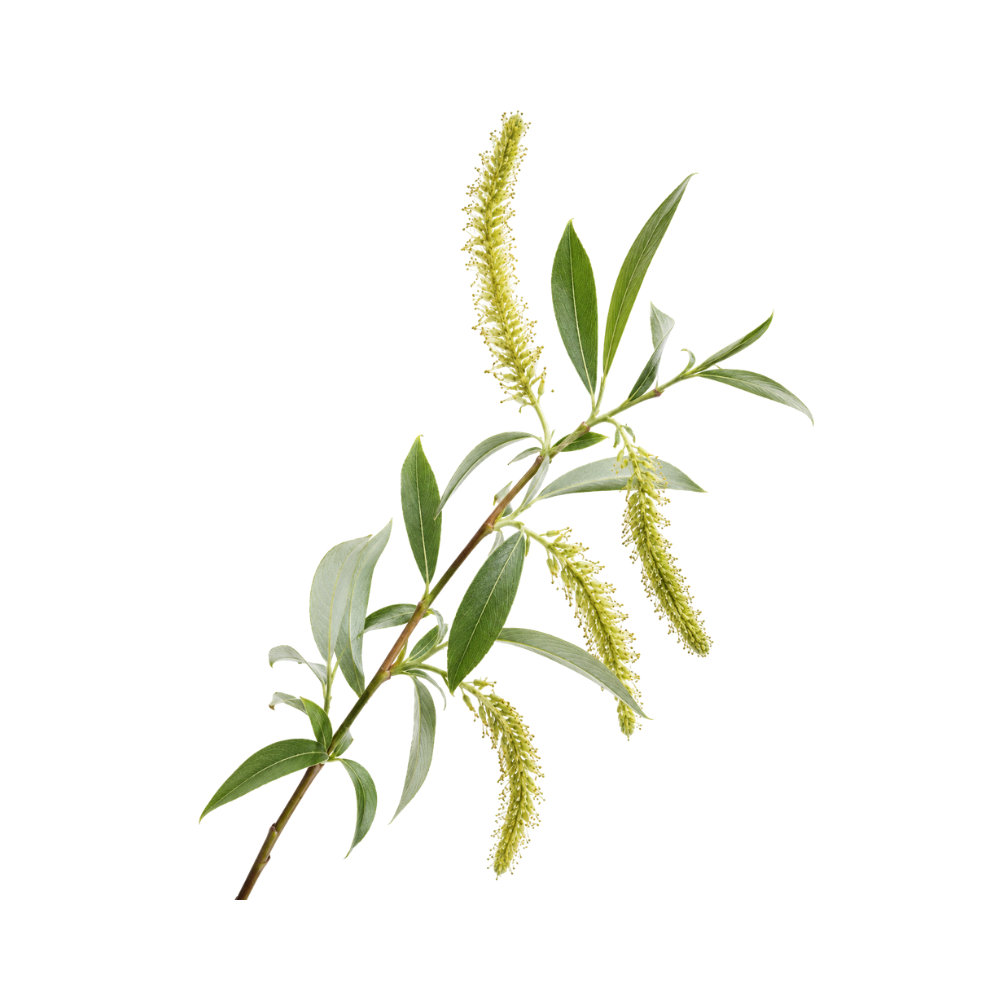
Pictured: Willow
Willow family
Fast-growing riparian trees and shrubs whose bark carries salicin, the phenolic glycoside that gave rise to aspirin and the entire NSAID class.
1 Herb // 10 Constituents // 6 Notable Members
Overview
Around 55 genera and 1,200 species, dominated by Salix (willows) and Populus (poplars and aspens) — fast-growing, dioecious, wind- or insect-pollinated trees and shrubs of riverbanks and wet ground across the northern temperate zone. They root from cuttings with almost no encouragement, which is why willow is a standard tool in erosion control and bank stabilisation.
Shared Traits
In Practice
This family’s contribution to medicine is arguably the single largest of any plant group: it gave us aspirin, and with it the entire non-steroidal anti-inflammatory class.
Willow bark has been used for pain and fever since antiquity — Hippocrates recommended it, and an Ebers papyrus reference predates that. In 1828 Johann Buchner isolated salicin from the bark; hydrolysis and oxidation yielded salicylic acid, effective but harshly irritating to the stomach. In 1897 Felix Hoffmann at Bayer acetylated it, producing acetylsalicylic acid — a compound gentler on the gut and, as Vane later showed, an irreversible inhibitor of cyclooxygenase. Aspirin remains one of the most consumed drugs on earth and the foundation of antiplatelet cardiology.
Willow bark as a herbal medicine is genuinely different from aspirin, and the difference cuts both ways. Salicin is a prodrug: it passes the stomach intact, is hydrolysed by gut flora to saligenin, and is oxidised in the liver to salicylic acid. That indirect route means slower onset, less direct gastric irritation, and — importantly — no irreversible platelet inhibition, since salicylic acid does not acetylate COX the way aspirin does. Clinical trials of standardised willow bark extract in low back pain and osteoarthritis report modest benefit, with the salicin content of typical doses being low relative to therapeutic aspirin. Willow bark’s effect is probably not attributable to salicin alone; polyphenols and flavonoids appear to contribute.
Safety follows the salicylate class: avoid in salicylate allergy and aspirin-exacerbated respiratory disease, avoid in children with viral illness (Reye’s syndrome), and use caution with anticoagulants and in peptic ulcer disease.
Poplar buds — balm of Gilead — are the other traditional material, used in salves for their resinous, antimicrobial and analgesic character.
Materia Medica
The monograph in the database whose Salicaceae membership is recorded on the herb itself — so this list keeps itself current as new herbs land.
Salix alba
Phytochemistry
Phenolic glycosides are the family marker — salicin, salicortin, tremulacin, populin — alongside tannins, flavonoids (particularly in the bark), and the aromatic resins of poplar buds.
The compounds recorded for this family's single member, grouped by class.
Beyond the Database
Notable members without a monograph yet.
Keep Exploring