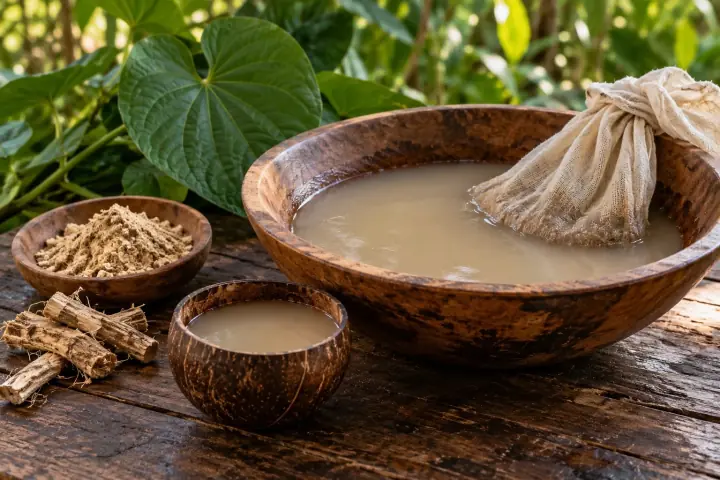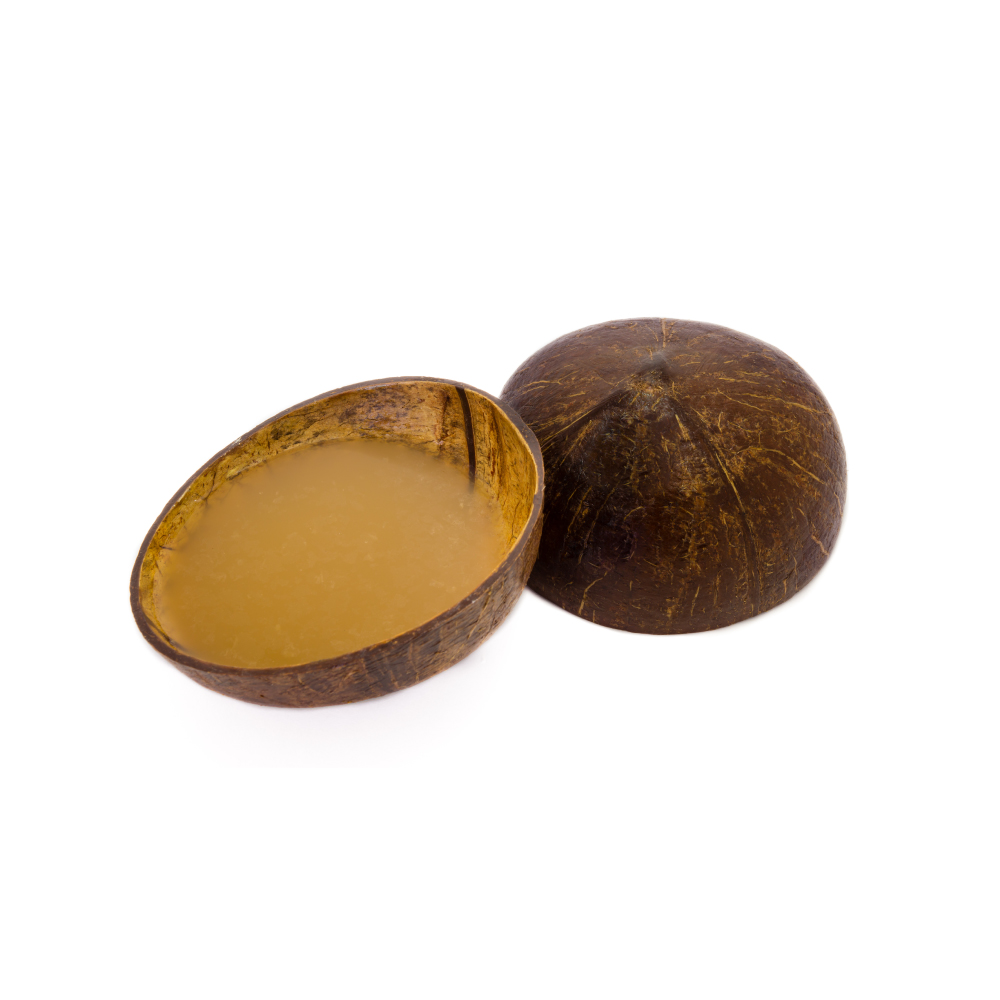
Kava comes as a grey-brown powder in a plain bag, and nearly every bag looks the same. What’s inside varies more than with almost any other herb.
Two bags of kava can hold different cultivars, different parts of the plant, and root from different countries. Those differences decide how strong the drink is, how it feels, and how well it agrees with you.
A good label answers all of it. So this guide does two things. First the five things to read off a bag and how to tell whether a batch has been tested, then eight kavas worth your money, sorted by where they were grown.
- Buy noble kava. Noble cultivars are the ones Pacific growers drink every day. Two-day (tudei) cultivars carry about four times as much flavokavain B for their kavalactone content 1Reference 1Detection of flavokavins (A, B, C) in cultivars of kava (Piper methysticum) using high performance thin layer chromatography (HPTLC) [analytical study]View study →.
- Peeled root and rootstock only. Expert proposals for a kava standard call for peeled, dried root and rhizome from a noble cultivar at least five years old 2Reference 2ReviewKava hepatotoxicity solution — a six-point plan for new kava standardization [review]View study →. Stem peelings and leaves hold an alkaloid that is toxic to liver cells in the lab 3Reference 3In vitroIn vitro toxicity of kava alkaloid, pipermethystine, in HepG2 cells compared to kavalactones [in vitro]View study →.
-
Ask for the batch test. A good seller shows the kavalactone content, the chemotype and a noble test for each lot. Vanuatu screens its export kava with a simple colour test 4,
5Reference 4Comparison of kava (Piper methysticum Forst.) varieties by UV absorbance of acetonic extracts and high-performance thin-layer chromatography [analytical study]View study →Reference 5Improved quality control and moisture determination in dry kava (Piper methysticum) from Vanuatu — a practical oven-drying approach [analytical study]View study → . - Start with a noble Vanuatu kava. Bula Kava House’s Nangol Noble or Kalm with Kava’s Borogu, in a traditional grind, are forgiving first bags. Go instant if you never want to strain.
- Water-based preparations are the traditional ones. Ground root, micronised root and instant kava are all made with water. Most of the liver reports that led to bans in 2002 involved ethanol and acetone extracts sold in Western countries 6Reference 6ReviewConstituents in kava extracts potentially involved in hepatotoxicity — a reviewView study →.
The Five Things That Decide What You’re Buying
Everything else in this guide follows from these five. A seller who answers all of them on the label is usually a seller worth buying from.
1. Noble or Two-Day
Kava is not one plant in the way most herbs are. It is a family of sterile cultivars, each one a clone propagated by people from stem cuttings 7Reference 7Kava consumption and the rise of sociopolitical complexity in OceaniaView study →.
Pacific growers sort those cultivars into two groups. Noble kavas are the everyday drinking kavas. Two-day (tudei) kavas are named for how long their effect is said to last, and they are stronger, longer-acting and harder on the drinker.
The chemistry matches the tradition. Across 172 samples, two-day cultivars carried about four times as much flavokavain B per unit of kavalactones as noble ones, a ratio of 0.39 against 0.09 1Reference 1Detection of flavokavins (A, B, C) in cultivars of kava (Piper methysticum) using high performance thin layer chromatography (HPTLC) [analytical study]View study →. Flavokavain B is one of the compounds suspected in kava’s rare liver injuries 6Reference 6ReviewConstituents in kava extracts potentially involved in hepatotoxicity — a reviewView study →.
That ratio held whether the sample came from the roots, the stump or the base of the stem. It is set by the cultivar, not by how the plant was harvested 1Reference 1Detection of flavokavins (A, B, C) in cultivars of kava (Piper methysticum) using high performance thin layer chromatography (HPTLC) [analytical study]View study →.
Vanuatu’s Kava Act of 2002 defines which cultivars count as noble. The leading proposal for a kava quality standard starts with a noble cultivar such as Borogu 2Reference 2ReviewKava hepatotoxicity solution — a six-point plan for new kava standardization [review]View study →.
The everyday kava of the Pacific, and the one to buy.
- Kavain-forward. Noble cultivars carry a high share of kavain among their kavalactones 4Reference 4Comparison of kava (Piper methysticum Forst.) varieties by UV absorbance of acetonic extracts and high-performance thin-layer chromatography [analytical study]View study →.
- Low in flavokavains for their kavalactone content 1Reference 1Detection of flavokavins (A, B, C) in cultivars of kava (Piper methysticum) using high performance thin layer chromatography (HPTLC) [analytical study]View study →.
- Made for daily drinking. That is what “noble” means in the islands.
Stronger, longer-lasting, and kept out of Vanuatu’s export lots.
- Higher in flavokavains for their kavalactone content 1Reference 1Detection of flavokavins (A, B, C) in cultivars of kava (Piper methysticum) using high performance thin layer chromatography (HPTLC) [analytical study]View study →.
- More dihydromethysticin, the kavalactone a quality study classed as undesirable 8Reference 8Colorimetric assessment of kava (Piper methysticum Forst.) quality [analytical study]View study →.
- Harder on the drinker, with effects that carry on well past the session.
- Rarely named on the bag. If a label doesn’t say noble, don’t assume it.
2. Which Part of the Plant
The drink is made from the underground parts: the lateral roots and the knobbly rootstock (rhizome) they grow from, peeled and dried 2Reference 2ReviewKava hepatotoxicity solution — a six-point plan for new kava standardization [review]View study →. Stems and leaves are not part of the tradition.
That matters for safety. Pipermethystine, an alkaloid found mostly in the leaves and stem peelings, killed 90% of cultured human liver-cancer cells within a day at the highest dose tested. The root’s kavalactones did no harm at the same strength 3Reference 3In vitroIn vitro toxicity of kava alkaloid, pipermethystine, in HepG2 cells compared to kavalactones [in vitro]View study →.
Some kava supplements of the late 1990s were suspected of containing stem peelings, and pipermethystine is one of the compounds proposed to explain the liver cases of that period 3Reference 3In vitroIn vitro toxicity of kava alkaloid, pipermethystine, in HepG2 cells compared to kavalactones [in vitro]View study →.
Among the roots themselves, the part changes the strength more than the safety. Kavalactone content and proportions vary with the plant part, the cultivar and the age of the plant 9Reference 9Kavalactone content and chemotype of kava beverages prepared from roots and rhizomes of Isa and Mahakea varieties and extraction efficiency of kavalactones using different solventsView study →.
Fijian kava is often sold by part. Waka is the lateral roots, the stronger cut. Lewena is the basal stump, which is milder.
On the label, look for: peeled root, lateral root, root and rhizome, waka or lewena. Avoid: whole plant, stems, peelings or aerial parts.
3. The Chemotype Code
Most of kava’s effect comes from six kavalactones, and every cultivar mixes them in its own proportions 9Reference 9Kavalactone content and chemotype of kava beverages prepared from roots and rhizomes of Isa and Mahakea varieties and extraction efficiency of kavalactones using different solventsView study →. Kava scientists number them 1 to 6 and write a cultivar’s profile as a six-digit code, listing them from most to least abundant.
| Number | Kavalactone |
|---|---|
| 1 | Desmethoxyyangonin |
| 2 | Dihydrokavain |
| 3 | Yangonin |
| 4 | Kavain |
| 5 | Dihydromethysticin |
| 6 | Methysticin |
So a kava labelled 423156 has kavain as its largest kavalactone, then dihydrokavain, then yangonin, with dihydromethysticin second from the bottom.
Two digits matter most. A high share of kavain (4) is the mark of a noble cultivar 4,
As a rule of thumb, a 4 near the front and a 5 near the back points to a noble profile. The code is a guide. The batch test is the stronger evidence.
Sellers also describe kavas as heady or heavy. Heady kavas are said to feel clear and sociable, and heavy ones to weigh on the body and suit the evening. These are drinkers’ descriptions rather than measured effects, but they are a useful way to compare two noble kavas once you know which you prefer.
4. Where It Was Grown
Kava was domesticated in northern Vanuatu about 3,000 years ago and spread from there across the Pacific 7Reference 7Kava consumption and the rise of sociopolitical complexity in OceaniaView study →. Each island group grows its own cultivars, so the country on the bag tells you which set it came from.
| Origin | What to expect |
|---|---|
| Vanuatu | Kava’s homeland and the widest range of cultivars, Borogu among them. Noble cultivars are defined in law, and export lots are colour-tested 2, |
| Fiji | Often sold by plant part, waka (lateral root) or lewena (stump), rather than by cultivar. |
| Tonga | Named cultivars such as Pouni Ono and Leka Huli. |
| Samoa | Ava cultivars such as Ava Lea and Ava Talo. |
| Hawaii | ʻAwa, grown from its own cultivars, including Mahakea, Hiwa and Moi. |
Vanuatu’s export quality has been improving. Between 2016 and 2024 the average reading on its national colour test fell from 0.72 to 0.48, well inside the noble threshold of about 0.84 5Reference 5Improved quality control and moisture determination in dry kava (Piper methysticum) from Vanuatu — a practical oven-drying approach [analytical study]View study →.
5. The Form
| Form | What it is | How you drink it |
|---|---|---|
| Traditional grind | Dried root milled to a medium powder | Kneaded in water through a strainer bag for 10–15 minutes. The cheapest per serving and the most traditional. |
| Micronised | Root milled to a fine flour, usually with the coarsest fibre sifted out | Stirred into water and drunk without straining. |
| Instant | Either fresh root with its fibre removed and milled ultra-fine, or the water extract of fresh root, dried (sold as “dehydrated kava juice”) | Mixed into water. No kneading and no straining. |
| Fresh or frozen root | Green root, shipped chilled | Pounded or blended and strained. The fullest flavour, and the most perishable. |
| Capsules, tinctures, pastes | Solvent extracts, often standardised to kavalactones | Taken as a measured dose. |
The first four are water preparations of the root, which is what expert guidance favours 2,
The last row is different. Germany banned ethanol and acetone kava extracts in 2002 after a run of liver reports 11Reference 11ReviewKava hepatotoxicity — a clinical review [review]View study →, and most of those reports involved extracts of that kind 6Reference 6ReviewConstituents in kava extracts potentially involved in hepatotoxicity — a reviewView study →. Two German courts later overturned the ban as inappropriate 12Reference 12ReviewGerman kava ban lifted by court — the alleged hepatotoxicity of kava (Piper methysticum) as a case of ill-defined herbal drug identity, lacking quality control, and misguided regulatory politics [review]View study →.
The anxiety trials used standardised extracts, so capsules have their place. If you buy one, choose a product that names the cultivar, the plant part and the solvent.
Reading the Label
A label that answers these is a seller doing the job properly.
How to Tell a Batch Has Been Tested
The noble test is simpler than it sounds. Flavokavains are yellow, so a solvent extract of two-day kava is visibly yellower than one of noble kava.
Read on a colorimeter at 400 nm, extracts of noble cultivars averaged 0.69 and two-day cultivars 0.94, and the reading tracked flavokavain content closely 4Reference 4Comparison of kava (Piper methysticum Forst.) varieties by UV absorbance of acetonic extracts and high-performance thin-layer chromatography [analytical study]View study →. A second colour method compares the kavain and dihydromethysticin peaks and separates noble kava from two-day kava and from wild kava (Piper wichmannii) 8Reference 8Colorimetric assessment of kava (Piper methysticum Forst.) quality [analytical study]View study →. Vanuatu uses the colour test across its export trade 5Reference 5Improved quality control and moisture determination in dry kava (Piper methysticum) from Vanuatu — a practical oven-drying approach [analytical study]View study →.
The lab version, thin-layer chromatography, measures the flavokavains directly and is cheap enough to run on every lot 1Reference 1Detection of flavokavins (A, B, C) in cultivars of kava (Piper methysticum) using high performance thin layer chromatography (HPTLC) [analytical study]View study →.
A good seller publishes the result for each batch, alongside the kavalactone percentage and a screen for mould and bacteria.
Dryness matters too. Damp kava is where mould grows. Mould toxins in poorly stored kava are one proposed explanation for its rare liver injuries, though that has not been proven 14Reference 14ReviewContaminant hepatotoxins as culprits for kava hepatotoxicity — fact or fiction? [review]View study →.
Well-dried kava is a dry, loose powder that smells earthy and peppery. A musty or sour smell, clumping, or visible spots are reasons to send it back. Store it sealed, dry and out of the light.
Quick Picks
If you’d rather not think about it, start here. Every kava below is a noble or named Pacific cultivar from a seller that says what is in the bag.
Vanuatu
Vanuatu is where kava began, and it is still where most of the world’s noble kava comes from. The country defines its noble cultivars in law and colour-tests the kava it exports 2,
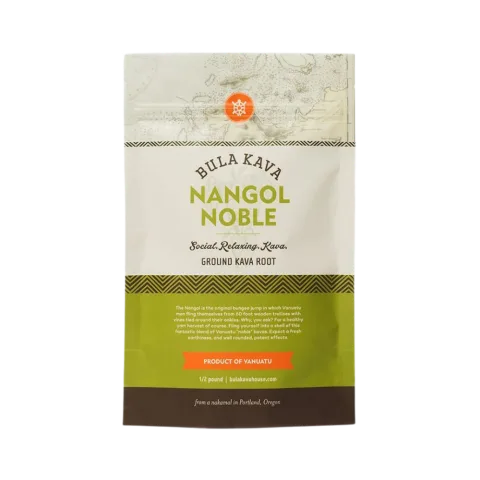
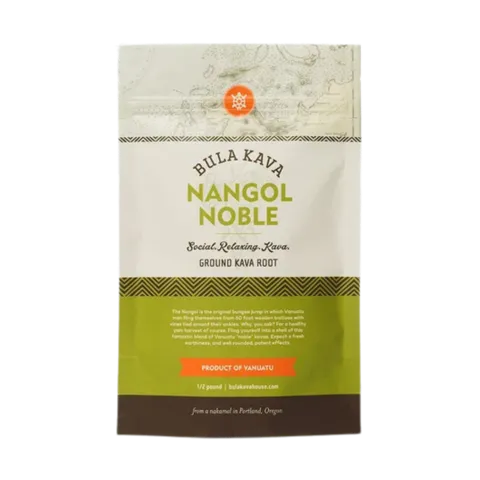
1. Bula Kava House — Nangol Noble
The one to buy first. A blend of noble kavas from several Vanuatu islands, and the seller’s own pick for first-time drinkers.
Find it onlineNangol Noble is the house kava of Bula Kava House, which runs a kava bar in Portland and sells the same powder online. The seller describes it as heady and “clean”, with a fresh taste and little aftertaste.
It is a blend rather than a single cultivar, so it carries no chemotype code. What it does carry is a published certificate of analysis for every current batch, which is the thing that matters most.
It comes in a 100 g sample bag as well as half and one pound sizes, which makes it an easy first purchase.
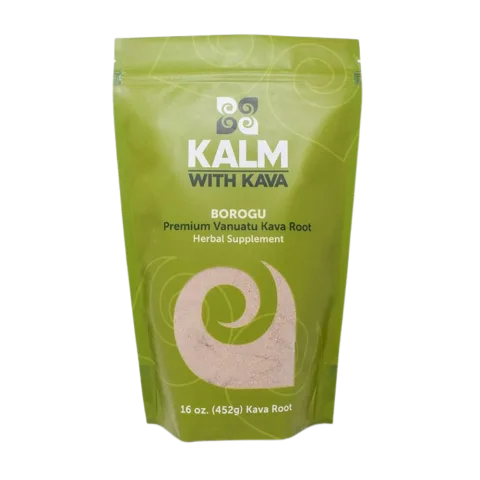
2. Kalm with Kava — Borogu
The classic noble cultivar. Borogu is the cultivar kava researchers name when they describe what a standard kava should be made from 2Reference 2ReviewKava hepatotoxicity solution — a six-point plan for new kava standardization [review]View study →.
Find it onlineKalm with Kava has sold kava since 2010, and its Borogu was the first pick in the original version of this guide. The seller states it is certified noble by Vanuatu’s Department of Agriculture and lab-tested, and prints its chemotype: 423615, kavain first.
The seller rates it as balanced. It describes a heady start that settles into gentle tiredness a few hours later, which suits an evening cup.
This is the medium grind, made to be kneaded and strained. Kalm sells a separate micronised Borogu if you would rather stir it in.
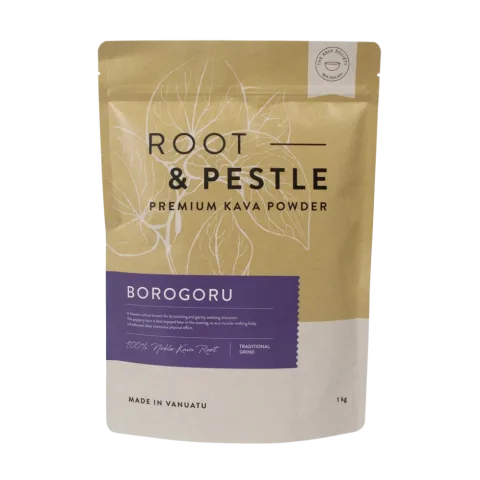
3. Kava Society — Borogoru
The most transparent label here. Island, chemotype, processing and kavalactone ratios are all on the product page.
Find it onlineThe Kava Society, based in New Zealand, packs its kava under the Root & Pestle label and publishes more about each batch than any other seller in this guide. Its Borogoru comes from Espiritu Santo, is fully washed, peeled and dried at a controlled temperature, and carries its natural share of lateral root to stump.
It also lists the batch’s kavalactone ratios. The kavain-to-dihydromethysticin figure, about 4.5 to 1, is the one the noble test looks at 8Reference 8Colorimetric assessment of kava (Piper methysticum Forst.) quality [analytical study]View study →.
The seller calls Borogoru balanced-heavy and slow to come on, a kava for the late afternoon or evening.
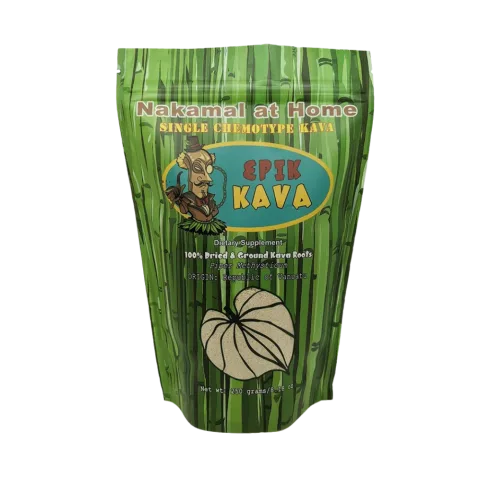
4. Nakamal at Home — Epik Melo Melo
A single cultivar with the lab work shown. Every bag carries a batch number, and the powder is tested by HPLC for identity and strength.
Find it onlineMelo Melo was one of the first single-cultivar kavas sold in the West. The seller describes it as peppery and creamy, with a balanced, euphoric effect.
Nakamal at Home’s Epik line is checked by HPLC to confirm the species and the kavalactone content, and by microscopy to confirm the bag holds nothing but root. The grind is finer than a traditional grind but is not micronised, so it still needs straining.
It is sold in 250 g bags, and in larger sizes for anyone running a kava bowl for a crowd.
Fiji
Fiji sells its kava by the part of the plant as much as by cultivar. Waka is the lateral root, the stronger cut. Lewena is the basal stump, which is milder.
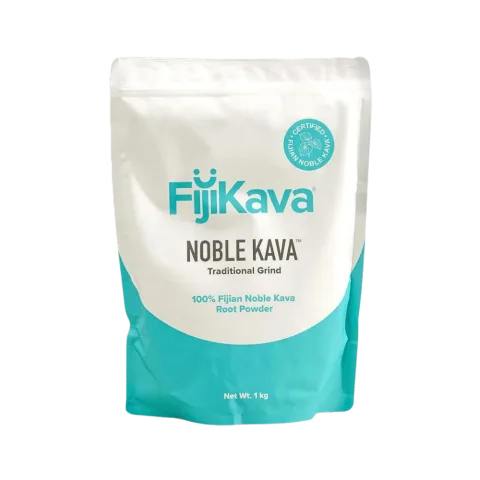
5. FijiKava — Traditional Grind
The easiest Fijian noble kava to find. Sourced from more than 200 partner farms and traceable back to them.
Find it onlineFijiKava sells only Fijian kava and states that all of it is certified noble. The seller says every product is traceable to the farm and third-party tested for purity.
Its label says less than the Vanuatu kavas above. No cultivar, plant part or chemotype is given, so it is a dependable everyday Fijian kava rather than one to study.
It comes in 250 g and 1 kg bags.
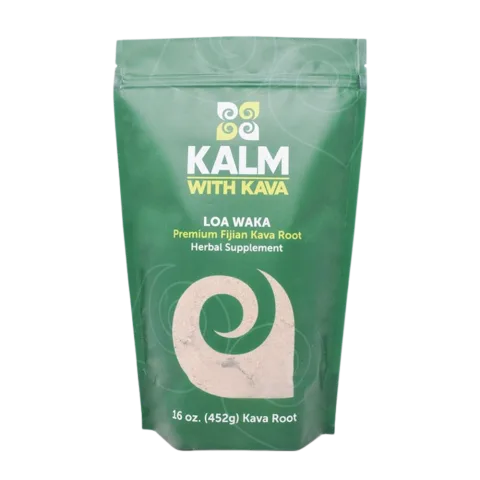
6. Kalm with Kava — Loa Waka
Fiji’s stronger cut. Made only from lateral roots, which the seller calls the strongest Fijian kava it carries.
Find it onlineLoa Waka is all waka, the lateral root, with none of the milder stump. The seller describes a strong mind-and-body relaxation, calming in a small cup and physically relaxing in a larger one.
Its chemotype, 463251, puts kavain first and dihydromethysticin near the end, the pattern a noble kava should show.
Micronised & Instant
These skip the kneading. They cost more per cup than a traditional grind, and the sellers themselves say the traditional grind has the fuller flavour. What you get in return is a cup of kava in under a minute.
7. Bula Kava House — Nangol Micronized
The first pick, made easy. The same Nangol Noble blend, milled fine enough to stir into a drink.
Find it onlineBula Kava House mills this version so finely that the least soluble parts of the root are removed. The seller’s instruction is one to two tablespoons stirred into any drink.
It is the natural next step for anyone who likes Nangol Noble but not the strainer bag.
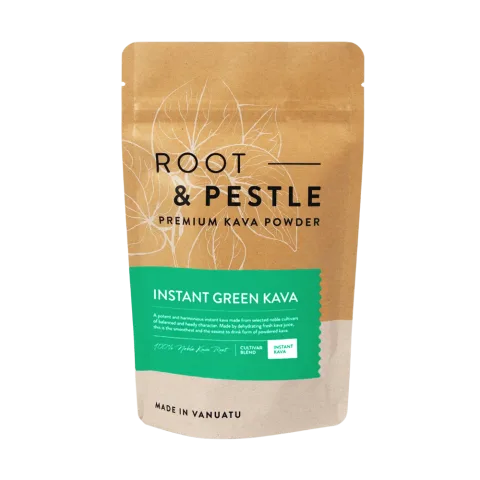
8. Kava Society — Instant Green
Mix and drink. Peeled root with its fibre removed before milling, so nothing is left to strain.
Find it onlineInstant Green is a blend of noble Vanuatu cultivars with more lateral root than the seller’s single cultivars, which gives it a brighter, heady lean. The fibre is removed from fresh root before it is dried and milled, rather than strained out afterwards.
It comes in 8 g sachets, one per cup, as well as 100 g and 500 g bags. The seller points new drinkers to it first.
Tonga, Samoa & Hawaii
These three grow distinctive kava of their own, but none was reliably for sale outside the islands when this guide was updated.
Pouni Ono — Out of Stock
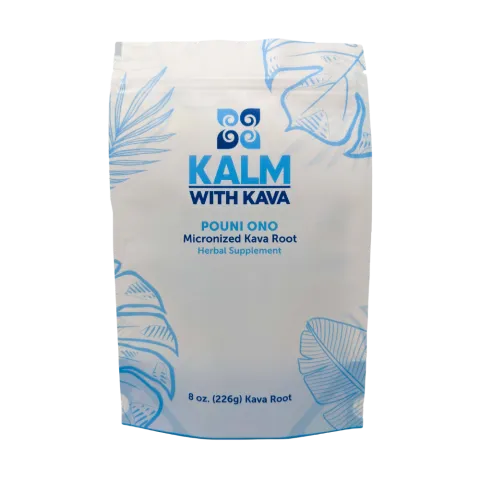
The original guide’s Tongan pick was Kalm with Kava’s Pouni Ono. In October 2026 it was out of stock in every form, and so was every other Tongan kava we checked. Samoan ava and Hawaiian ʻawa were the same. When they return, the same five checks apply.
What You Actually Need to Get Started
The kava is the recurring cost. The kit is bought once and lasts for years.
Everything you need for a traditional bowl. Buy it once, then just replace the kava.
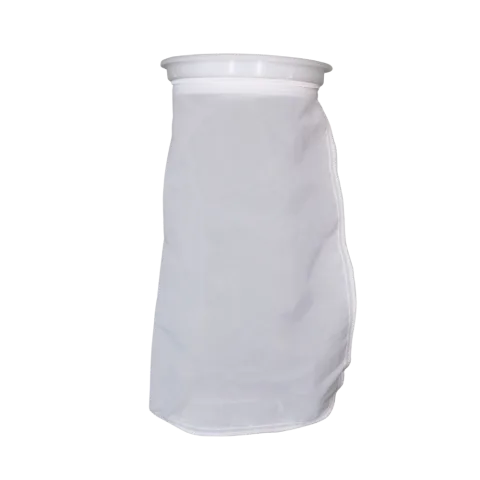
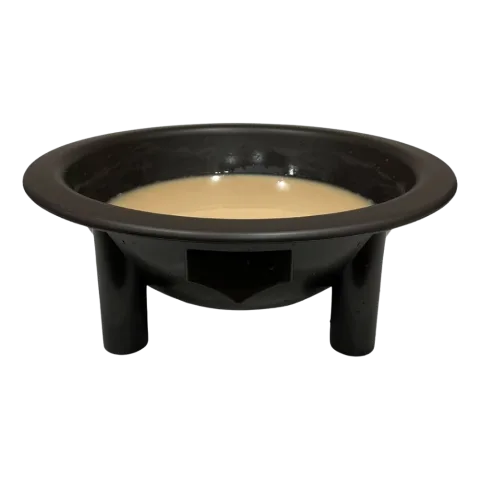
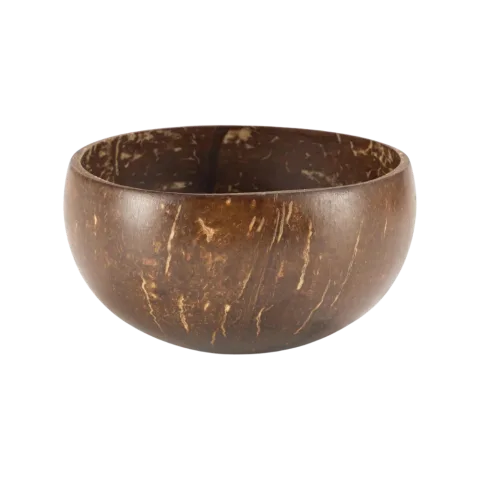
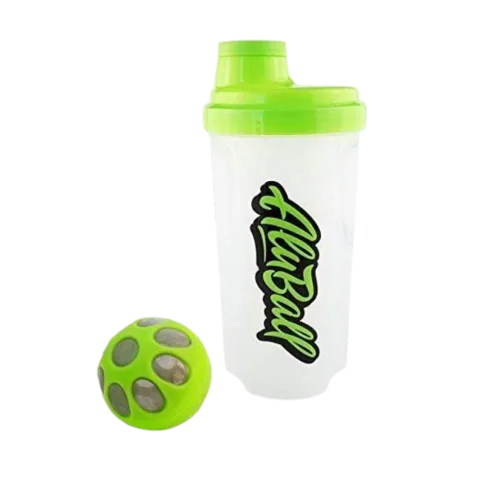
Only the strainer bag is essential. Any large bowl and any cup will do.
Full instructions for the traditional bowl, the AluBall, the blender, instant kava and concentrates are in the companion guide:
→ How to Prepare Kava: 5 Methods to Try Yourself
How Strong Is It, and How Much to Buy?
The kavalactone percentage is what lets you compare bags. A 10 g serving of a 5% kava holds 500 mg of kavalactones. The same serving of a 15% kava holds 1,500 mg.
Water draws out only part of that, because kavalactones dissolve poorly in water. That is why traditional preparation takes so much kneading.
For medicinal use, kava researchers propose no more than 250 mg of kavalactones a day 2,
Kava is sold by the quarter, half and whole pound, or by the 250 g bag. A traditional cup takes 10–16 g of ground root, so a 250 g bag is roughly 15–25 cups.
Kava keeps well sealed and dry, but there is no advantage to stockpiling. Buy a small bag of two or three noble kavas, find the one you like, then buy that one in bulk.
Safety
- Liver injury is rare but serious. Reports range from raised liver enzymes to liver failure. Avoid kava entirely with liver disease 11Reference 11ReviewKava hepatotoxicity — a clinical review [review]View study →.
- Not with alcohol. Don’t combine kava with alcohol, and take care with benzodiazepines and other sedatives 10Reference 10ReviewKava — a comprehensive review of efficacy, safety, and psychopharmacology [review]View study →.
- Buy the right kava. A noble cultivar, peeled root, and a water-based preparation 2,
10Reference 2ReviewKava hepatotoxicity solution — a six-point plan for new kava standardization [review]View study →Reference 10ReviewKava — a comprehensive review of efficacy, safety, and psychopharmacology [review]View study → . - Driving. Avoid high doses before driving or using machinery 10Reference 10ReviewKava — a comprehensive review of efficacy, safety, and psychopharmacology [review]View study →.
- Pregnancy and breastfeeding. Avoid. Kavalactones pass into breast milk.
- Skin. Heavy regular use can cause a dry, scaly rash known as kava dermopathy 6Reference 6ReviewConstituents in kava extracts potentially involved in hepatotoxicity — a reviewView study →.
The full safety review, including drug interactions, is in the kava monograph.
FAQ
Is kava legal?
What’s the difference between micronised and instant kava?
Can I tell noble kava by taste?
Is fresh kava better than dried?
Are kava capsules safe?
How much should I buy first?
The Bottom Line
Buy noble kava, made from peeled root, from a seller who names the cultivar and the country and shows a test for each batch. Everything else is preference: heady or heavy, Vanuatu or Fiji, ground root or instant.
Then prepare it with water, the way it has been made in the Pacific for some 3,000 years.
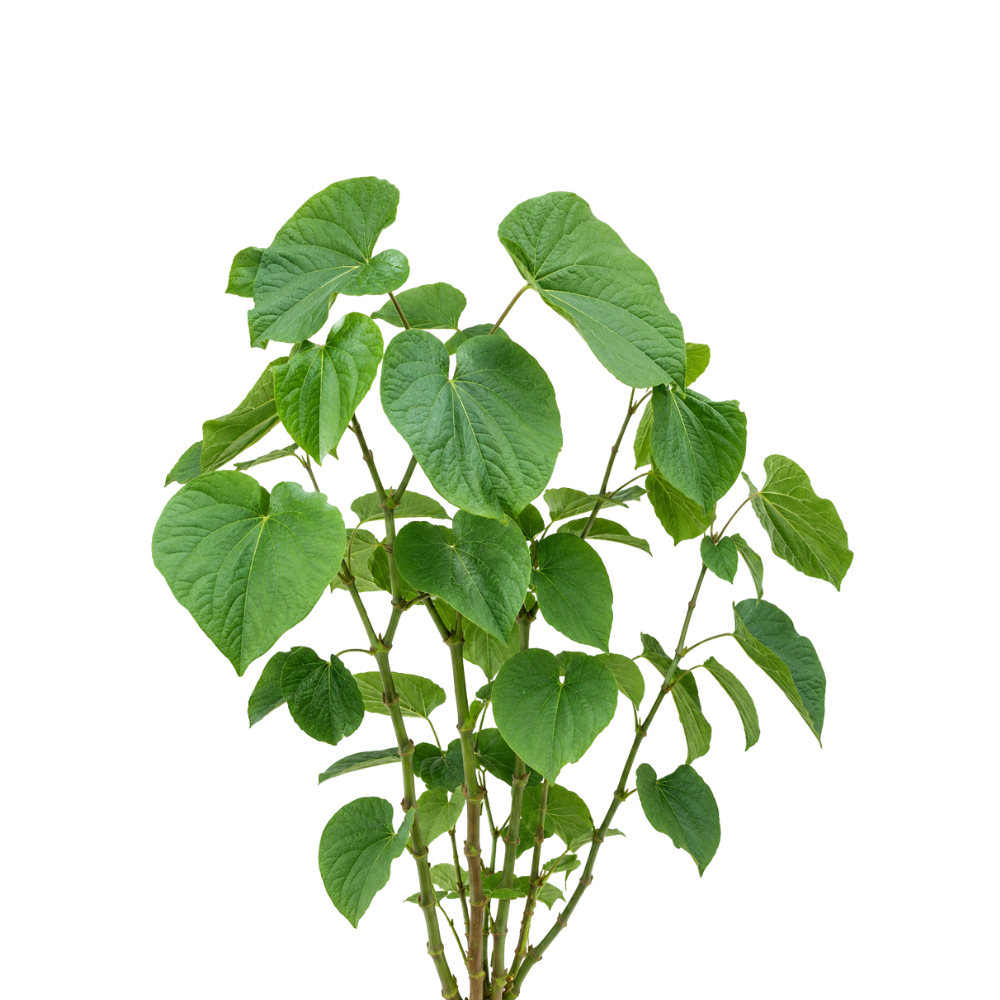 KavaPiper methysticumModerate
A Pacific Island shrub whose peeled root and rootstock make a relaxing ceremonial and social drink. Its kavalactones are studied for easing anxiety.
Full monographReferences
- Lebot, V., Do, T. K., & Legendre, L. (2014). Detection of flavokavins (A, B, C) in cultivars of kava (Piper methysticum) using high performance thin layer chromatography (HPTLC) [analytical study]. Food Chem. https://pubmed.ncbi.nlm.nih.gov/24423570/
- Teschke, R., Sarris, J., & Lebot, V. (2011). Kava hepatotoxicity solution — a six-point plan for new kava standardization [review]. Phytomedicine. https://pubmed.ncbi.nlm.nih.gov/21112196/
- Nerurkar, P. V., Dragull, K., & Tang, C. S. (2004). In vitro toxicity of kava alkaloid, pipermethystine, in HepG2 cells compared to kavalactones [in vitro]. Toxicol Sci. https://pubmed.ncbi.nlm.nih.gov/14737001/
- Lebot, V., & Legendre, L. (2016). Comparison of kava (Piper methysticum Forst.) varieties by UV absorbance of acetonic extracts and high-performance thin-layer chromatography [analytical study]. J Food Compos Anal. https://doi.org/10.1016/j.jfca.2016.01.009
- Tari, D., Tabi, H., Botleng, J., et al. (2026). Improved quality control and moisture determination in dry kava (Piper methysticum) from Vanuatu — a practical oven-drying approach [analytical study]. PeerJ. https://pubmed.ncbi.nlm.nih.gov/42433391/
- Olsen, L. R., Grillo, M. P., & Skonberg, C. (2011). Constituents in kava extracts potentially involved in hepatotoxicity — a review. Chem Res Toxicol. https://pubmed.ncbi.nlm.nih.gov/21506562/
- Hrnčíř, V., Sheehan, O., Claessens, S., & Gray, R. D. (2026). Kava consumption and the rise of sociopolitical complexity in Oceania. Proc Natl Acad Sci U S A. https://pubmed.ncbi.nlm.nih.gov/41730102/
- Lhuissier, T., Mercier, P. E., Michalet, S., Lebot, V., & Legendre, L. (2017). Colorimetric assessment of kava (Piper methysticum Forst.) quality [analytical study]. J Food Compos Anal. https://doi.org/10.1016/j.jfca.2017.02.005
- Wang, J., Qu, W., Bittenbender, H. C., & Li, Q. X. (2015). Kavalactone content and chemotype of kava beverages prepared from roots and rhizomes of Isa and Mahakea varieties and extraction efficiency of kavalactones using different solvents. J Food Sci Technol. https://pubmed.ncbi.nlm.nih.gov/25694734/
- Sarris, J., LaPorte, E., & Schweitzer, I. (2011). Kava — a comprehensive review of efficacy, safety, and psychopharmacology [review]. Aust N Z J Psychiatry. https://pubmed.ncbi.nlm.nih.gov/21073405/
- Teschke, R. (2010). Kava hepatotoxicity — a clinical review [review]. Ann Hepatol. https://pubmed.ncbi.nlm.nih.gov/20720265/
- Kuchta, K., Schmidt, M., & Nahrstedt, A. (2015). German kava ban lifted by court — the alleged hepatotoxicity of kava (Piper methysticum) as a case of ill-defined herbal drug identity, lacking quality control, and misguided regulatory politics [review]. Planta Med. https://pubmed.ncbi.nlm.nih.gov/26695707/
- Ulbricht, C. (2002). Kava monograph. Journal of Herbal Pharmacotherapy, 2(4), 65–91. https://doi.org/10.1300/J157v02n04_07
- Teschke, R., Sarris, J., & Lebot, V. (2013). Contaminant hepatotoxins as culprits for kava hepatotoxicity — fact or fiction? [review]. Phytother Res. https://pubmed.ncbi.nlm.nih.gov/22585547/
Clinical herbalist and the writer behind The Sunlight Experiment — an evidence-based pharmacopoeia of herbs, supplements, and the chemistry behind them.