
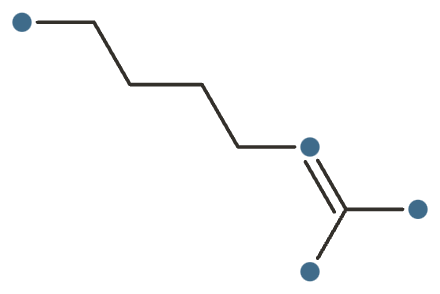
Agmatine (sulfate)
Agmatine is a decarboxylated-arginine metabolite studied mainly for neuropathic pain, with proposed roles in mood and neuroprotection.

Agmatine (sulfate) at a Glance
Agmatine is what arginine becomes when an enzyme removes its carboxyl group. That single change turns a common dietary amino acid into a biogenic amine with genuine neurotransmitter-like behaviour — it is synthesised in the brain, stored in vesicles, released on stimulation, and taken back up, which is the standard checklist for a signalling molecule rather than a metabolic intermediate.
What makes it unusual is how many things it touches. Agmatine blocks NMDA receptors, binds imidazoline receptors, inhibits several forms of nitric-oxide synthase, and modulates alpha-2 adrenergic signalling. Most supplements have one plausible mechanism and a stack of speculation on top; agmatine has four well-characterised ones. The difficulty is the reverse of the usual problem — plenty of pharmacology, very little human outcome data.
The honest state of play: the credible human evidence is in neuropathic pain, and even that rests on two small studies from a narrow research base. The mood, neuroprotection and exercise-”pump” claims that drive most sales are extrapolated from animal work and mechanism, not demonstrated in people.
What It’s Used For
- Neuropathic pain — the one use with human trial support, and the one where the mechanism looks earned rather than accidental.
- Depression — heavily promoted, resting on a large animal literature and a single uncontrolled 3-patient pilot.
- Neuroprotection — mechanistically the most plausible unproven use. Preclinical only.
- Exercise “pump” / ergogenic — sold on nitric oxide, when agmatine mostly inhibits nitric-oxide synthase. The marketing rationale runs backwards.
The right way to hold all of it: one narrow, real, small-scale finding surrounded by a lot of confident marketing that has not been tested.
How It Works
Arginine decarboxylase strips the carboxyl group from arginine to produce agmatine; agmatinase eventually breaks it down. Between those two points it acts on a spread of targets that happen to converge on pain and neuronal excitability — which is why the pain finding is the one that looks mechanistically earned rather than accidental.
The most relevant action for pain is NMDA-receptor antagonism. Chronic and neuropathic pain involve central sensitisation, in which repeated input makes spinal neurons progressively more responsive, and NMDA receptors are central to that process. Blocking them is an established analgesic strategy — ketamine works this way — and agmatine is a much weaker, better-tolerated version of the same idea.
Alongside that, agmatine inhibits nitric-oxide synthase, damping a pathway that contributes to inflammatory and neuropathic pain signalling. It also binds imidazoline receptors, the same family clonidine acts on, which is where its blood-pressure relevance comes from and why caution around cardiovascular medication is sensible. And it modulates alpha-2 adrenergic signalling, another established analgesic route.
Two practical notes. The nitric-oxide point cuts against the sports marketing: agmatine mostly inhibits NO production, so selling it as a vasodilating pump agent inverts its actual pharmacology. And the dose is large — 2.67 g/day in both human studies — which reflects modest potency, not an aggressive protocol.
The full trial record is in Pharmacology & Research below.
Pharmacology & Research
Agmatine is decarboxylated arginine — a biogenic amine that behaves like a neurotransmitter (synthesised in brain, stored in vesicles, released on stimulation, and taken back up) rather than a passive metabolic intermediate. What makes it unusual among supplements is that it has four well-characterised molecular actions — NMDA-receptor antagonism, imidazoline-receptor binding, nitric-oxide synthase inhibition and α2-adrenergic modulation — where most supplements have one plausible mechanism and a stack of speculation on top 4Reference 4ReviewThe therapeutic and nutraceutical potential of agmatine, and its enhanced production using Aspergillus oryzae — reviewView study →.
The problem is the reverse of the usual one: plenty of pharmacology, very little human outcome data. The credible human evidence is concentrated in neuropathic pain, and even that rests on one small RCT plus an uncontrolled case series 1,
Support is an experimental score I’m building — a composite weighted by study type (human > animal > in vitro > review) and study volume. It’s a beta: a fast way to rank strength of evidence at a glance, not a validated metric. Each application links down to its write-up.
The best human data are here. A study combining an open-label dose-escalation phase with a randomised, double-blind, placebo-controlled trial found that dietary agmatine sulfate (2.67 g/day for 14 days) improved pain and quality-of-life scores in herniated lumbar disc-associated radiculopathy versus placebo — average pain measures improved 26.7% of baseline in the agmatine group (analysed n=31) against 6.0% on placebo (n=30), with quality-of-life scores improving 70.8% against 20.0% (both P ≤ 0.05) 1Reference 1RCTSafety and efficacy of dietary agmatine sulfate in lumbar disc-associated radiculopathy: an open-label, dose-escalating study followed by a randomized, double-blind, placebo-controlled trial — randomised controlled trialView study →.
A later open-label pilot case series in painful small-fibre neuropathy reported roughly a 46% reduction in pain intensity on the same 2.67 g/day dose, but with no placebo control and only about a dozen patients 2Reference 2Case reportEvidence for dietary agmatine sulfate effectiveness in neuropathies associated with painful small fiber neuropathy: a pilot open-label consecutive case series study — open-label case seriesView study →.
The mechanism looks earned rather than accidental: NMDA-receptor antagonism — the same target ketamine hits, agmatine being a much weaker, better-tolerated version — plus NOS inhibition and α2-adrenergic modulation all converge on the central sensitisation that drives neuropathic pain 4,
Gap: two small studies from one narrow research base, only one of them controlled and only 14 days long; no dose-ranging trial, so the single 2.67 g/day figure is the entire evidence-based dose.
The antidepressant claim is heavily promoted and rests mostly on rodent work — agmatine reduces depression- and anxiety-like behaviour across models including diabetic insulin-resistant rats and progesterone withdrawal, a PMDD analogue 9,
There is one citable human datapoint: an open-label pilot in which three subjects with major depressive disorder took 2–3 mg/day (note: milligram, not gram) and reached full remission, with the effect surviving serotonin depletion — consistent with an NMDA/glutamatergic rather than serotonergic mechanism 8Reference 8The clinical antidepressant effect of exogenous agmatine is not reversed by parachlorophenylalanine: a pilot study — open-label human pilotView study →.
But n=3, no control, no blinding and a single author make this hypothesis-generating, not evidence of efficacy 3Reference 3ReviewAgmatine: clinical applications after 100 years in translation — reviewView study →.
Gap: no randomised or controlled human trial exists; the only human report is an uncontrolled 3-patient pilot, and the dose used there is a thousandfold below the pain dose — so even the target dose is unknown.
Mechanistically this is the most plausible unproven use: NMDA antagonism and nitric-oxide modulation are both established neuroprotective routes, and agmatine reduces tissue damage in animal injury models — for example a randomised, placebo-controlled rat study of experimental peripheral nerve injury reported reduced axonal damage with agmatine 12Reference 12RCTNeuroprotective effects of agmatine in experimental peripheral nerve injury in rats: a prospective randomized and placebo-controlled trial — animal randomised controlled trialView study →. All of it is preclinical. No human neuroprotection outcome has been measured.
Gap: entirely animal and in vitro; no human trial in stroke, injury or neurodegeneration, so the effect size and even the relevance in people are unknown.
Agmatine is sold to athletes on the premise that it boosts nitric oxide for a training “pump.” This inverts its actual pharmacology: agmatine is largely a nitric-oxide synthase inhibitor, so the vasodilation rationale runs backwards 4,
Gap: no supporting human data of any kind, and the proposed mechanism contradicts agmatine’s documented effect on NOS — this is the clearest marketing-outruns-evidence case on the page.
Mechanisms
| Target / pathway | Effect | Relevant to |
|---|---|---|
| NMDA receptor (GluN2B subunit) | Antagonist | Neuropathic paindepressionneuroprotection |
| Imidazoline receptors (I1/I2) | Ligand / binding | Blood-pressure effectsopioid-tolerance modulationcardiovascular caution |
| Nitric-oxide synthase (nNOS/iNOS) | Inhibition | Painneuroprotection — and contradicts the “pump” marketing |
| α2-adrenergic signalling | Modulation (the clonidine-like family) | Analgesiablood-pressure relevance |
| Polyamine metabolism | Regulates intracellular polyamine content | Proposed antidepressant and neuroprotective routes (preclinical) |
| Arginine decarboxylase → agmatinase | Synthesis from arginine, then breakdown | Endogenous turnover; no dietary requirement |
Agmatine’s four actions happen to converge on pain and neuronal excitability, which is why the pain
finding looks mechanistically earned. The imidazoline and NOS actions are also why cardiovascular
caution is sensible — and the NOS point is why the sports-supplement rationale is internally
inconsistent 4,
Pharmacokinetics
There are no human pharmacokinetic data — a real gap for a supplement people take daily. The quantitative picture comes from a validated rat study: oral bioavailability of 29–35%, a short plasma half-life (about 15 minutes intravenously, extended to 74–117 minutes orally, suggesting flip-flop kinetics), and demonstrable crossing of both the intestinal epithelium and the blood-brain barrier, with distinct kinetics in brain versus spinal cord 6Reference 6Biodistribution of agmatine to brain and spinal cord after systemic delivery — animal pharmacokinetic studyView study →.
The short half-life is consistent with the large 2.67 g/day dose used in the human pain trials — modest potency and rapid clearance, not an aggressive protocol. Because agmatine is a small amine given at gram scale, that also explains the mild gastrointestinal complaints seen in the dose-escalation work 1Reference 1RCTSafety and efficacy of dietary agmatine sulfate in lumbar disc-associated radiculopathy: an open-label, dose-escalating study followed by a randomized, double-blind, placebo-controlled trial — randomised controlled trialView study →.
Clinical trials
Agmatine is an off-patent dietary ingredient with essentially no industry trial pipeline. ClinicalTrials.gov lists only two interventional agmatine studies — the radiculopathy trial (completed, n=79) and the small-fibre-neuropathy case series (status listed as unknown) — with no active or planned registered trials. Preclinical work, by contrast, is extensive across pain, mood and neuroprotection models.
| Completed | Unknown / lapsed | Planned | Terminated | Preclinical |
|---|---|---|---|---|
| 1 | 1 | 0 | 0 | Many |
Last checked: August 2026.
Dietary Sources
Agmatine is produced endogenously from arginine by arginine decarboxylase, so there is no dietary
requirement and no deficiency state 3,
| Source | Rough agmatine content | Note |
|---|---|---|
| Supplemental agmatine sulfate | 250 mg–2.67 g per dose | Manufactured; the only way to reach studied doses |
| Fermented foods (beer, wine, aged cheese, soy sauce, fermented meats) | Trace to low milligram amounts per serving | Bacterial arginine decarboxylase; a biogenic-amine footnote |
| Gut microbiota | Endogenous, variable | Contributes to the body pool; not a controllable “intake” |
Food-level quantities are trivial against the 2.67 g/day used in the trials, so dietary agmatine is a footnote rather than a route to a supplemental effect. Supplemental agmatine is manufactured and sold as agmatine sulfate — the salt form, which matters when reading a label, since the stated weight may be the sulfate rather than the free base.
Dosage
These are doses studied in research, not a personal recommendation.
The studied dose is a single figure: 2.67 g/day of agmatine sulfate, used in both human studies
1,
| Context | Dose | Notes |
|---|---|---|
| Neuropathic-pain trials | 2.67 g/day agmatine sulfate | The only efficacy-tested dose; 14 days, controlled 1, |
| Depression pilot | 2–3 mg/day | Uncontrolled n=3 pilot, roughly 1,000× lower — treat as anecdote, not a protocol 8Reference 8The clinical antidepressant effect of exogenous agmatine is not reversed by parachlorophenylalanine: a pilot study — open-label human pilotView study → |
| Common supplement use | A few hundred mg/day | Substantially less studied; extrapolating down from 2.67 g is an assumption |
Duration studied is short — 14 days in the controlled trial — so long-term dosing is uncharacterised. Check whether a label means agmatine or agmatine sulfate, since the sulfate salt is what is sold and the free-base weight is lower.
Safety
Short-term tolerability looks fine. Almost everything else is unstudied, and the cardiovascular pharmacology deserves respect.
- Well tolerated in the short trials. No treatment-related adverse events over the two-week controlled study; toxicity appears low 1,
2Reference 1RCTSafety and efficacy of dietary agmatine sulfate in lumbar disc-associated radiculopathy: an open-label, dose-escalating study followed by a randomized, double-blind, placebo-controlled trial — randomised controlled trialView study →Reference 2Case reportEvidence for dietary agmatine sulfate effectiveness in neuropathies associated with painful small fiber neuropathy: a pilot open-label consecutive case series study — open-label case seriesView study → . - Acts on blood-pressure pathways. Imidazoline-receptor binding and nitric-oxide synthase inhibition both point at cardiovascular effects — caution alongside blood-pressure medication 4,
5, .7Reference 4ReviewThe therapeutic and nutraceutical potential of agmatine, and its enhanced production using Aspergillus oryzae — reviewView study →Reference 5ReviewSignificance of the imidazoline receptors in toxicology — reviewView study →Reference 7ReviewAgmatine and imidazoline receptors: their role in opioid analgesia, tolerance and dependence — reviewView study → - GI upset at gram-level doses. Nausea and loose stools, seen mainly at the higher escalation doses 1Reference 1RCTSafety and efficacy of dietary agmatine sulfate in lumbar disc-associated radiculopathy: an open-label, dose-escalating study followed by a randomized, double-blind, placebo-controlled trial — randomised controlled trialView study →.
- Long-term safety not established. The longest controlled human exposure is two weeks.
- Plausible but untested interactions with NMDA-active drugs and opioid analgesics 7Reference 7ReviewAgmatine and imidazoline receptors: their role in opioid analgesia, tolerance and dependence — reviewView study →.
- Do not use in pregnancy or lactation — see the box below.
Full Safety & Interactions Detail
Agmatine was reported as well tolerated over the short durations studied, and its toxicity appears
low 1,
- Cardiovascular caution is the meaningful one. Agmatine binds imidazoline receptors — the target
family clonidine acts through — and inhibits nitric-oxide synthase. Both are blood-pressure-relevant
pathways, so caution is reasonable for anyone on cardiovascular or antihypertensive medication
until interactions are properly characterised 4,
5, .7Reference 4ReviewThe therapeutic and nutraceutical potential of agmatine, and its enhanced production using Aspergillus oryzae — reviewView study →Reference 5ReviewSignificance of the imidazoline receptors in toxicology — reviewView study →Reference 7ReviewAgmatine and imidazoline receptors: their role in opioid analgesia, tolerance and dependence — reviewView study → - Other plausible interactions: additive effects with NMDA-active drugs and, on mechanistic grounds, with opioid analgesics — agmatine has been studied preclinically for its effect on opioid tolerance 7Reference 7ReviewAgmatine and imidazoline receptors: their role in opioid analgesia, tolerance and dependence — reviewView study →. None of this has been tested clinically.
- Long-term safety is not established. The controlled human exposure runs to two weeks, which is thin ground for a supplement people take continuously.
Scope disclosure. Interactions were assessed partially — cardiovascular and antihypertensive drugs (via the imidazoline and NOS pathways) and, on mechanistic grounds, NMDA-active drugs and opioids were flagged; none has been formally tested in humans, and no systematic drug-interaction study exists. Pregnancy and lactation were not assessed — no human data exist, and avoidance is advised on mechanistic grounds. No Upper Limit exists and there is no dose-ranging trial; absence of a UL does not mean higher doses are safe. Two weeks of good tolerability in roughly a hundred people does not establish that daily long-term use is safe.
Do not use. No human data exist for supplemental agmatine in pregnancy or lactation. It acts on NMDA and nitric-oxide signalling, both of which have roles in development, so this is an unstudied exposure with a mechanistically plausible route to relevance rather than an inert one. Pregnant or breastfeeding people should not use it without discussing it with a qualified practitioner.
References
- Keynan O, et al. (2010). Safety and efficacy of dietary agmatine sulfate in lumbar disc-associated radiculopathy: an open-label, dose-escalating study followed by a randomized, double-blind, placebo-controlled trial — randomised controlled trial. Pain Medicine. https://pubmed.ncbi.nlm.nih.gov/20447305/
- Rosenberg ML, et al. (2020). Evidence for dietary agmatine sulfate effectiveness in neuropathies associated with painful small fiber neuropathy: a pilot open-label consecutive case series study — open-label case series. Nutrients. https://pubmed.ncbi.nlm.nih.gov/32102167/
- Piletz JE, et al. (2013). Agmatine: clinical applications after 100 years in translation — review. Drug Discovery Today. https://pubmed.ncbi.nlm.nih.gov/23769988/
- Akasaka N, et al. (2020). The therapeutic and nutraceutical potential of agmatine, and its enhanced production using Aspergillus oryzae — review. Amino Acids. https://pubmed.ncbi.nlm.nih.gov/30915570/
- Lowry JA, et al. (2014). Significance of the imidazoline receptors in toxicology — review. Clinical Toxicology. https://pubmed.ncbi.nlm.nih.gov/24666288/
- Clements BM, et al. (2023). Biodistribution of agmatine to brain and spinal cord after systemic delivery — animal pharmacokinetic study. Journal of Pharmacology and Experimental Therapeutics. https://pubmed.ncbi.nlm.nih.gov/37770201/
- Wu N, et al. (2008). Agmatine and imidazoline receptors: their role in opioid analgesia, tolerance and dependence — review. Cellular and Molecular Neurobiology. https://pubmed.ncbi.nlm.nih.gov/17653850/
- Shopsin B (2013). The clinical antidepressant effect of exogenous agmatine is not reversed by parachlorophenylalanine: a pilot study — open-label human pilot. Acta Neuropsychiatrica. https://pubmed.ncbi.nlm.nih.gov/25287313/
- Kale M, et al. (2020). Agmatine modulates anxiety and depression-like behaviour in diabetic insulin-resistant rats — animal study. Brain Research. https://pubmed.ncbi.nlm.nih.gov/32758481/
- Vinchurney MD, et al. (2023). Agmatine prevents the manifestation of impulsive burying and depression-like behaviour in progesterone withdrawn female rats — animal study. Hormones and Behavior. https://pubmed.ncbi.nlm.nih.gov/37163843/
- Watts D, et al. (2019). Agmatine as a potential therapeutic intervention in bipolar depression: the preclinical landscape — review. Expert Opinion on Therapeutic Targets. https://pubmed.ncbi.nlm.nih.gov/30764678/
- Sezer A, et al. (2014). Neuroprotective effects of agmatine in experimental peripheral nerve injury in rats: a prospective randomized and placebo-controlled trial — animal randomised controlled trial. Turkish Neurosurgery. https://pubmed.ncbi.nlm.nih.gov/24831360/



