
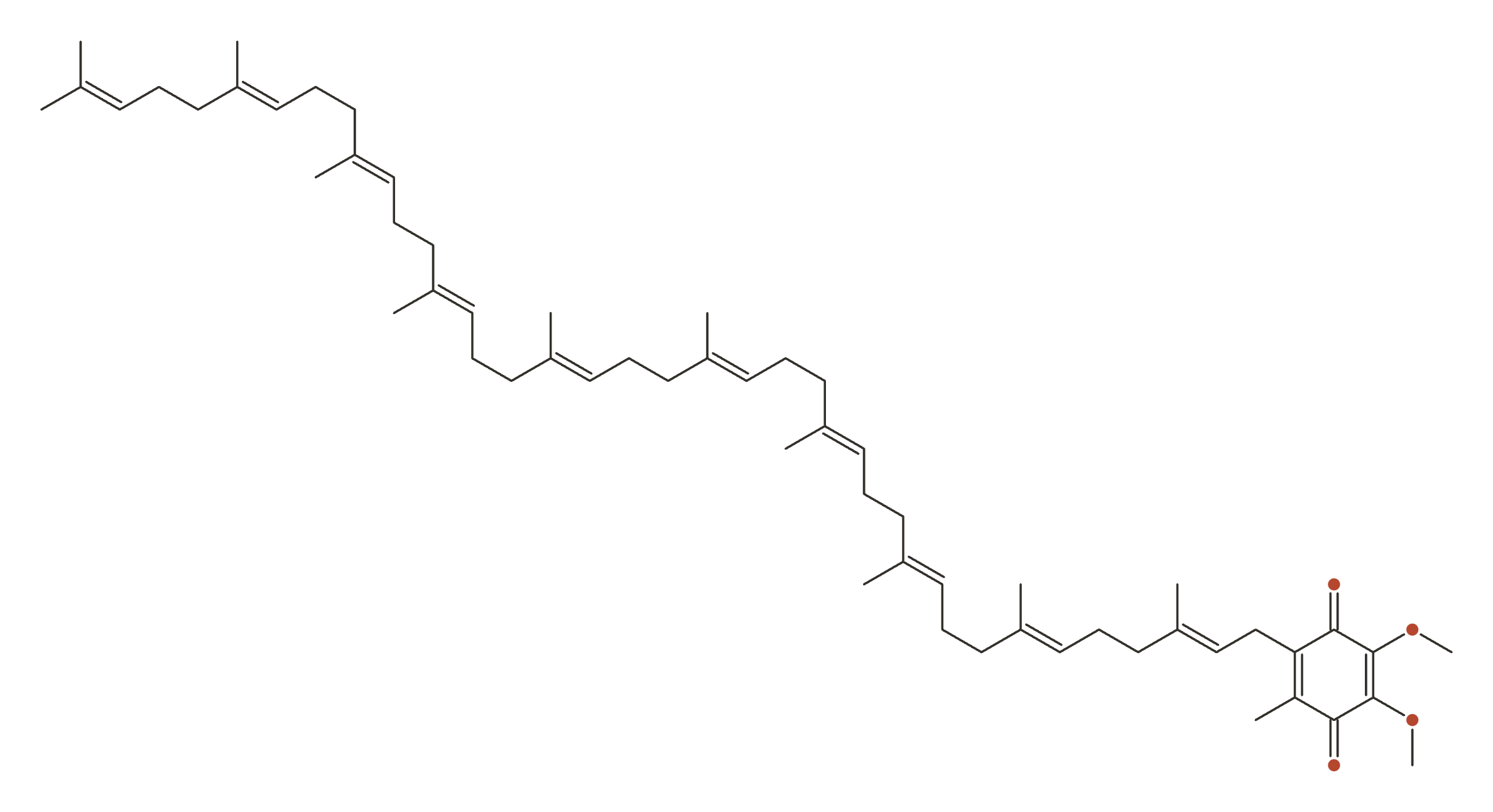
Coenzyme Q10 (Ubiquinone)
Coenzyme Q10 (ubiquinone) is a lipid-soluble cofactor in mitochondrial energy production, studied for heart failure and statin-related muscle symptoms.

Coenzyme Q10 (Ubiquinone) at a Glance
Coenzyme Q10 is a lipid-soluble, vitamin-like quinone the body synthesises for itself, doing two jobs at once: it is the mobile electron carrier of the mitochondrial respiratory chain, and the principal lipid-phase antioxidant of cell membranes.
The evidence is uneven, and the shape of it is worth knowing before reading any single claim. The clearest signal is in chronic heart failure, where endogenous CoQ10 falls as the disease worsens — which makes supplementation closer to correcting a functional deficiency than adding to adequacy. Most other applications show small, real-but-modest pooled effects. The “energy,” anti-ageing and general-wellness claims that dominate marketing rest on thin data.
One confound runs underneath all of it: absorption. CoQ10 is a large, extremely lipophilic molecule that is slowly and variably absorbed, and formulation matters more than form. Poorly dispersed crystalline powder can lose roughly 75% of its bioavailability — so trials using it may understate what a well-made product delivers. Meanwhile the headline “ubiquinol is superior” claim is largely unproven: about 95% of circulating CoQ10 ends up as ubiquinol regardless of which form you swallow.
What It’s Used For
- Chronic heart failure — the strongest application, with a mortality signal behind it.
- Blood pressure — a small, systolic-only effect.
- Statin-associated muscle symptoms — plausible, low-risk, and not settled.
- Male fertility / semen quality — improved sperm parameters, with pregnancy outcomes less clear.
- Endothelial function — a surrogate marker that moves reliably.
- Glycaemic control (type 2 diabetes) — small and clinically marginal.
- Migraine prophylaxis — genuinely contradictory.
- Exercise muscle damage — biomarkers improve; performance does not.
- Inflammatory markers — CRP and IL-6 fall in pooled trials; a biomarker result, not a clinical one.
- Parkinson’s disease — a flagship neuroprotection claim that a large high-dose trial stopped for futility.
The pattern worth noticing: the biochemistry moves more reliably than the outcomes. Ejection fraction does not improve even in the trials where mortality does, muscle-damage markers fall without performance rising, and creatine kinase stays put even when patients report less muscle pain.
How It Works
CoQ10 sits in the inner mitochondrial membrane and shuttles electrons from Complexes I and II to Complex III. Without it the respiratory chain cannot run — which is the entire basis of the “energy” framing, and also why the strongest evidence sits in the most mitochondria-dense tissue in the body, the heart.
Its second job is chemical rather than positional. In its reduced form (ubiquinol) it is the main antioxidant inside the lipid phase of membranes and LDL particles, where water-soluble antioxidants cannot reach — and it regenerates vitamin E after that molecule has been oxidised. This is the proposed route for the endothelial, fertility and statin-myopathy effects.
The statin connection is not a coincidence. CoQ10 and cholesterol share the HMG-CoA reductase pathway, so statins measurably lower circulating CoQ10 as a side effect of doing their job. That is the mechanistic rationale for repletion — a rationale that is sound even though the clinical trials remain mixed.
The full trial record is in Pharmacology & Research below.
Pharmacology & Research
Coenzyme Q10 (ubiquinone/ubiquinol) is a lipid-soluble, vitamin-like quinone the body synthesises itself, acting both as the mobile electron carrier of the mitochondrial respiratory chain and as the principal lipid-phase antioxidant of cell membranes. The evidence posture is uneven: the clearest signal is in chronic heart failure, where endogenous CoQ10 falls with disease severity, so supplementation is closer to correcting a functional deficiency than adding to adequacy. Most other applications — blood pressure, glycaemia, endothelial function, fertility — show small, real-but-modest pooled effects, while the “energy,” anti-ageing and general-wellness claims that dominate marketing rest on thin data. A recurring confound sits underneath all of it: CoQ10 is poorly and variably absorbed, so trials using un-solubilised crystalline powder may understate what a well-formulated product delivers, and headline “ubiquinol is superior” claims are largely unproven in head-to-head outcomes.
Support is an experimental score I’m building — a composite weighted by study type (human > animal > in vitro > review) and study volume. It’s a beta: a fast way to rank strength of evidence at a glance, not a validated metric. Each application links down to its write-up.
This is the strongest application and the one where a deficiency framing fits: myocardial CoQ10 falls with heart-failure severity. Pooled RCT data are consistent on hard outcomes — an early meta-analysis of 14 RCTs (~2,149 patients) found reduced mortality versus placebo (RR 0.69, 95% CI 0.50–0.95) and improved exercise capacity 1Reference 1Meta-analysisEfficacy of coenzyme Q10 in patients with cardiac failure: a meta-analysis of clinical trials — meta-analysisView study →, and a larger 2024 meta-analysis of 33 trials reported lower all-cause mortality (RR 0.64, 95% CI 0.48–0.85) and roughly halved heart-failure hospitalisation (RR 0.50, 95% CI 0.37–0.67), graded moderate quality 3Reference 3Meta-analysisEfficacy and safety of coenzyme Q10 in heart failure: a meta-analysis of randomized controlled trials — meta-analysisView study →.
The 2021 Cochrane review is more reserved, treating CoQ10 as a possibly-beneficial adjunct rather than primary therapy 2Reference 2Systematic reviewCoenzyme Q10 for heart failure — Cochrane systematic reviewView study →.
Typical dosing was 100–300 mg/day, often split; the Q-SYMBIO trial (100 mg three times daily) anchors the mortality signal.
Gap: left-ventricular ejection fraction is not consistently improved even where mortality is, and much of the pooled evidence comes from smaller or lower-quality trials — so the benefit is best read as adjunctive to guideline therapy.
Two large recent meta-analyses agree on a small systolic effect. A GRADE-assessed dose-response meta-analysis of 26 RCTs (1,831 subjects) in people with cardiometabolic disease found CoQ10 lowered blood pressure and raised circulating CoQ10 8Reference 8Meta-analysisDose-response effect of coenzyme Q10 supplementation on blood pressure among patients with cardiometabolic disorders: a GRADE-assessed systematic review and meta-analysis of RCTs — meta-analysisView study →, and a 2025 meta-analysis of 45 RCTs found a systolic reduction of about 3.4 mmHg (WMD −3.44, 95% CI −5.13 to −1.55) with no significant change in diastolic pressure or heart rate 9Reference 9Meta-analysisEffects of coenzyme Q10 administration on blood pressure and heart rate in adults: a systematic review and meta-analysis of randomized controlled trials — meta-analysisView study →.
The older Cochrane review is the dissenting voice: after re-analysis it did not confirm a reliable long-term blood-pressure effect 10Reference 10Systematic reviewBlood pressure lowering efficacy of coenzyme Q10 for primary hypertension — Cochrane systematic reviewView study →.
Doses were commonly 100–200 mg/day.
Gap: the effect is confined to systolic pressure and is modest (~3 mmHg); it is clearest in cardiometabolic populations rather than otherwise-healthy adults, and Cochrane’s caution about trial reliability still stands.
Statins measurably lower circulating CoQ10 (SMD −2.12 across 12 RCTs) 7Reference 7Meta-analysisThe effect of statin treatment on circulating coenzyme Q10 concentrations: an updated meta-analysis of randomized controlled trials — meta-analysisView study →, which is the mechanistic rationale for repletion. Meta-analyses are genuinely mixed: a 2018 meta-analysis of 12 RCTs found CoQ10 reduced subjective muscle symptoms — pain, weakness, cramp, tiredness — but did not lower creatine kinase 4Reference 4Meta-analysisEffects of coenzyme Q10 on statin-induced myopathy: an updated meta-analysis of randomised controlled trials — meta-analysisView study →, and a 2020 review of statin-myalgia patients reported symptom improvement with better statin adherence 5Reference 5Meta-analysisEffect of coenzyme Q10 on statin-associated myalgia and adherence to statin therapy: a systematic review and meta-analysis — meta-analysisView study →.
A 2025 meta-analysis of 7 RCTs (389 patients) reached similar cautious conclusions 6Reference 6Meta-analysisEffects of coenzyme Q10 supplementation on myopathy in statin-treated patients: a systematic review and meta-analysis — meta-analysisView study →, while a well-run 2015 trial in confirmed statin myopathy found no benefit over placebo. Doses ranged from 100 to 600 mg/day.
Gap: the signal is on patient-reported symptoms only, with no objective CK change and at least one clean null trial — a plausible, low-risk trial worth attempting, not a proven fix.
In idiopathic male infertility, a 2025 meta-analysis of 9 RCTs (781 men) found CoQ10 significantly improved sperm concentration, motility and morphology 16Reference 16Meta-analysisEfficacy and safety of coenzyme Q10 in idiopathic male infertility: a systematic review and meta-analysis of randomized trials — meta-analysisView study →, consistent with a seminal oxidative-stress mechanism. A 2024 meta-analysis likewise reported improved semen quality, though effects on circulating testosterone and gonadotrophins were less consistent 17Reference 17Meta-analysisDoes coenzyme Q10 improve semen quality and circulating testosterone level? A systematic review and meta-analysis of randomized controlled trials — meta-analysisView study →. Doses were typically 200–300 mg/day over 3–6 months.
Gap: the outcomes are surrogate semen parameters; live-birth and clinical-pregnancy data remain sparse and less convincing, so improved sperm metrics should not be read as proven fertility outcomes.
CoQ10 improves flow-mediated dilation, a marker of vascular endothelial health. An early meta-analysis of 5 RCTs (194 patients) found a large improvement in FMD (SMD 1.70, 95% CI 1.00–2.40) 11Reference 11Meta-analysisEffects of coenzyme Q10 on vascular endothelial function in humans: a meta-analysis of randomized controlled trials — meta-analysisView study →, and a 2024 meta-analysis of 12 RCTs (489 subjects) confirmed a beneficial effect on endothelial markers 12Reference 12Meta-analysisEffect of coenzyme Q10 supplementation on vascular endothelial function: a systematic review and meta-analysis of randomized controlled trials — meta-analysisView study →, with nitrate-mediated (endothelium-independent) dilation less affected.
Gap: trials are small and heterogeneous, FMD is a surrogate rather than a clinical endpoint, and the effect has not been shown to translate into fewer cardiovascular events.
Pooled data show small metabolic benefits. A 2018 meta-analysis of 13 RCTs (765 patients) found CoQ10 modestly lowered HbA1c (WMD −0.29%) and fasting glucose (WMD −11.2 mg/dL) without changing fasting insulin 13Reference 13Meta-analysisEffectiveness of coenzyme Q10 supplementation for type 2 diabetes mellitus: a systematic review and meta-analysis — meta-analysisView study →.
A 2026 meta-analysis of 39 RCTs and a 2026 umbrella review of eight meta-analyses broadly agreed that CoQ10 is associated with reduced fasting glucose, with HbA1c findings more inconsistent 14,
Doses were commonly 100–200 mg/day.
Gap: effect sizes are small and clinically marginal — an HbA1c drop of about 0.3% — heterogeneity is high, and results are inconsistent across meta-analyses. An adjunct at best.
Evidence is contradictory. A 2021 meta-analysis concluded CoQ10 reduced migraine frequency and headache duration 18Reference 18Meta-analysisCoenzyme Q10 supplementation for prophylaxis in adult patients with migraine — a meta-analysisView study →, but a 2019 systematic review of vitamins and minerals for migraine, pooling the more comparable trials, found CoQ10 did not significantly reduce attack frequency (MD −0.44, 95% CI −2.14 to 1.26; 2 trials, 97 participants) 19Reference 19Meta-analysisVitamins and minerals for migraine prophylaxis: a systematic review and meta-analysis — meta-analysisView study →. Doses were typically 300 mg/day, often 100 mg three times daily.
Gap: the positive pooled result rests on few small trials with high heterogeneity, and the most methodologically matched analysis found no frequency benefit — genuinely unsettled.
In athletes, a 2025 meta-analysis of 17 trials (440 participants) found CoQ10 reduced oxidative-stress and muscle-damage biomarkers — malondialdehyde (MD −0.61 µmol/L), lactate dehydrogenase (MD −70 IU/L) and creatine kinase (MD −72 IU/L) 20Reference 20Meta-analysisCan coenzyme Q10 supplementation reduce exercise-induced muscle damage and oxidative stress in athletes? A systematic review and meta-analysis — meta-analysisView study →.
Gap: these are biochemical markers, not performance. The same literature does not show reliable improvements in strength, endurance or time-trial output, so the practical benefit for healthy athletes is unproven.
A systematic review and meta-analysis of randomised trials found CoQ10 supplementation reduced circulating inflammatory markers, notably C-reactive protein and interleukin-6, across several patient populations 23Reference 23Meta-analysisEffects of coenzyme Q10 supplementation on inflammatory markers — systematic review and meta-analysis of randomised controlled trialsView study →. This is consistent with CoQ10’s antioxidant role and supports its mechanistic plausibility across the cardiometabolic conditions above.
Gap: these are biomarker changes, not clinical outcomes. Effect sizes vary by population and by baseline inflammation, and a reduced CRP has not been shown to translate into hard endpoints here.
Mitochondrial complex-I dysfunction is part of the pathology of Parkinson’s disease, which made CoQ10 one of the most plausible candidate neuroprotectants of the last two decades — and it is still marketed on that rationale. It was tested properly and it failed. The QE3 randomised trial gave 1,200 or 2,400 mg/day of CoQ10 with vitamin E to patients with early Parkinson’s disease and was stopped for futility: there was no evidence that CoQ10 slowed functional decline at either dose 24Reference 24RCTA randomized clinical trial of high-dosage coenzyme Q10 in early Parkinson disease: no evidence of benefit — randomised controlled trial (QE3)View study →.
Gap: none, in the usual sense — this is a clean, adequately powered negative at doses far above anything sold for general use. It is the strongest single argument against buying CoQ10 for neuroprotection.
Mechanisms
| Target / pathway | Effect | Relevant to |
|---|---|---|
| Mitochondrial electron transport (Complexes I/II → III) | Electron shuttle; supports ATP synthesis | Heart failureenergyexercise |
| Lipid-phase antioxidant (regenerates vitamin E) | Reduces membrane and LDL lipid peroxidation | Endothelial functionfertilitystatin myopathy |
| Endothelial nitric-oxide availability | Improves flow-mediated dilation | Blood pressureendothelial function |
| HMG-CoA reductase pathway (shared with cholesterol synthesis) | Statins deplete CoQ10 as a side effect | Statin-associated muscle symptoms |
| Seminal oxidative-stress reduction | Lowers reactive oxygen species in semen | Male fertility |
Pharmacokinetics
CoQ10’s pharmacokinetics are the decision-relevant weak point. It is a large, extremely lipophilic
molecule with slow, incomplete and highly variable oral absorption, and bioavailability depends
heavily on formulation: crystalline CoQ10 must be dispersed into single molecules to be absorbed,
and the absence of proper crystal dispersion can reduce bioavailability by roughly 75% 21Reference 21ReviewBioavailability of coenzyme Q10: an overview of the absorption process and subsequent metabolism — reviewView study →.
Solubilised formulations — both ubiquinone and ubiquinol — show superior plasma responses, and
absorption is markedly improved when taken with a fat-containing meal 21,
Fractional absorption falls as dose rises, so plasma levels plateau and dividing the daily dose two or three times is more effective than one large dose 22Reference 22Plasma coenzyme Q10 response to oral ingestion of coenzyme Q10 formulationsView study →. About 95% of circulating CoQ10 exists as ubiquinol regardless of whether ubiquinone or ubiquinol is ingested, which undercuts the marketing premise that ubiquinol supplements are categorically superior in outcomes 22Reference 22Plasma coenzyme Q10 response to oral ingestion of coenzyme Q10 formulationsView study →. Elimination half-life is roughly 33 hours.
Clinical trials
CoQ10 is an off-patent, widely sold supplement, so trial activity is substantial but fragmented across small academic and investigator-initiated studies rather than large industry programmes. Heart failure, statin myopathy, male fertility and metabolic endpoints dominate the registered and completed literature.
| Completed | Planned | Terminated | Preclinical |
|---|---|---|---|
| ~150+ | ~20 | ~10 | Extensive |
Last checked: August 2026.
Dietary Sources
Because the body synthesises CoQ10, diet is a secondary source and typical intakes are small — roughly 3–6 mg/day in a Western diet. It concentrates in organ meats and oily fish, the tissues with the highest mitochondrial density, with much lower amounts in plants. Cooking and processing, such as frying and refining, can degrade it.
| Food (approx.) | CoQ10 content |
|---|---|
| Beef or pork heart, other organ meats | Highest (tens of mg per 100 g) |
| Oily fish (sardine, mackerel, herring) | Moderate–high |
| Beef, chicken, pork (muscle) | Moderate |
| Soybean, canola, olive oils | Moderate (small per serving) |
| Nuts (peanuts, pistachios), seeds | Low–moderate |
| Vegetables (spinach, broccoli), fruit | Low |
Dietary CoQ10 is absorbed slowly and incompletely, and ordinary food intake sits far below the 100–300 mg used in trials — which is why clinical effects require supplementation rather than a change of diet.
Dosage
These are doses studied in research, not a personal recommendation.
CoQ10 is not an essential dietary nutrient — there is no RDA/AI and no Tolerable Upper Intake Level. Supplemental doses in research typically fall in the 100–300 mg/day range, with heart-failure trials often using 100 mg three times daily and some myopathy and fertility protocols reaching 600 mg/day. Neurodegeneration research went far higher — 1,200–2,400 mg/day in the Parkinson’s trials — without benefit 24Reference 24RCTA randomized clinical trial of high-dosage coenzyme Q10 in early Parkinson disease: no evidence of benefit — randomised controlled trial (QE3)View study →.
- Split the dose. Fractional absorption falls as dose rises and plasma levels plateau, so two or three divided doses absorb better than one large one 22Reference 22Plasma coenzyme Q10 response to oral ingestion of coenzyme Q10 formulationsView study →.
- Take it with a fat-containing meal. Absorption of this highly lipophilic molecule is markedly improved by dietary fat 21Reference 21ReviewBioavailability of coenzyme Q10: an overview of the absorption process and subsequent metabolism — reviewView study →.
- Formulation matters more than form. Solubilised, crystal-dispersed products — softgels in oil, emulsions — absorb far better than dry crystalline powder, and poor dispersion can cut bioavailability by around 75% 21Reference 21ReviewBioavailability of coenzyme Q10: an overview of the absorption process and subsequent metabolism — reviewView study →. The marketing claim that ubiquinol is categorically superior to ubiquinone is not well supported in outcome trials, since roughly 95% of circulating CoQ10 ends up as ubiquinol regardless of which is ingested 22Reference 22Plasma coenzyme Q10 response to oral ingestion of coenzyme Q10 formulationsView study →.
Safety
CoQ10 has an excellent safety record. Reported adverse effects are mild and mostly gastrointestinal, more likely at higher doses and mitigated by splitting the dose.
- Excellent tolerability. No serious toxicity has been established even well above the common dose range, and no Tolerable Upper Intake Level has been set.
- Warfarin. The most-cited interaction — CoQ10 may modestly reduce warfarin’s anticoagulant effect by speeding its breakdown. Monitor INR and involve a clinician.
- Antihypertensives. Possible additive blood-pressure lowering; monitor if combining.
- Mild GI upset — nausea, stomach upset, loose stools — more likely at higher doses, and mitigated by splitting the dose.
- Statins and beta-blockers are not a harmful interaction. These drugs lower endogenous CoQ10, which is the rationale for co-supplementation rather than a reason to avoid it.
- Not adequately established in pregnancy or lactation — see the box below.
Full Safety & Interactions Detail
Reported adverse effects are mild and mostly gastrointestinal — nausea, upset stomach, loose stools — more likely at higher doses and mitigated by splitting the dose. No serious toxicity has been established even at doses well above the common range, and no Tolerable Upper Intake Level has been set.
- Anticoagulants (warfarin): the most-cited interaction. CoQ10 may modestly reduce warfarin’s anticoagulant effect, so INR should be monitored and a clinician consulted. In rats it weakened warfarin’s effect and sped the clearance of both warfarin enantiomers 25Reference 25AnimalEffect of ubidecarenone on warfarin anticoagulation and pharmacokinetics of warfarin enantiomers in rats — animal (rat)View study →. In human liver microsomes it increased warfarin’s 7-hydroxylation, from which a moderate rise in clearance is predicted in people, though this has not been measured 26Reference 26In vitroEffect of coenzyme Q10 on warfarin hydroxylation in rat and human liver microsomes — in vitroView study →.
- Antihypertensives: possible additive blood-pressure lowering — monitor if combined with blood-pressure medication.
- Statins and beta-blockers: these drugs can lower endogenous CoQ10 7Reference 7Meta-analysisThe effect of statin treatment on circulating coenzyme Q10 concentrations: an updated meta-analysis of randomized controlled trials — meta-analysisView study →, which is the rationale for co-supplementation rather than a harmful interaction.
- Who should be cautious: anyone on anticoagulants; those on blood-pressure or diabetes medication, for additive effects; and — absent adequate data — anyone pregnant or breastfeeding, where use should be clinician-guided.
Scope disclosure. Interactions were assessed: anticoagulants (warfarin), antihypertensives, and statins/beta-blockers were reviewed. Pregnancy and lactation are not adequately characterised — CoQ10 has been studied in some pregnancy contexts, but comprehensive safety across pregnancy and lactation has not been established. No Upper Limit has been set, and absence of one does not imply unlimited intake is safe. Where something was not studied, it is marked “not assessed,” not “safe.”
Not adequately established — use only under clinician guidance. CoQ10 has been studied in some pregnancy contexts, including pre-eclampsia risk, but comprehensive safety across pregnancy and lactation is not well characterised. Routine supplementation is not recommended without medical advice.
References
- Lei L, Liu Y (2017). Efficacy of coenzyme Q10 in patients with cardiac failure: a meta-analysis of clinical trials — meta-analysis. BMC Cardiovascular Disorders. https://pubmed.ncbi.nlm.nih.gov/28738783/
- Al Saadi T, Assaf Y, Farwati M, et al. (2021). Coenzyme Q10 for heart failure — Cochrane systematic review. Cochrane Database of Systematic Reviews. https://pubmed.ncbi.nlm.nih.gov/35608922/
- Xu J, Xiang L, Yin X, et al. (2024). Efficacy and safety of coenzyme Q10 in heart failure: a meta-analysis of randomized controlled trials — meta-analysis. BMC Cardiovascular Disorders. https://pubmed.ncbi.nlm.nih.gov/39462324/
- Qu H, et al. (2018). Effects of coenzyme Q10 on statin-induced myopathy: an updated meta-analysis of randomised controlled trials — meta-analysis. Journal of the American Heart Association. https://pubmed.ncbi.nlm.nih.gov/30371340/
- Kennedy C, Köller Y, Surkova E (2020). Effect of coenzyme Q10 on statin-associated myalgia and adherence to statin therapy: a systematic review and meta-analysis — meta-analysis. Atherosclerosis. https://pubmed.ncbi.nlm.nih.gov/32179207/
- Kovacic S, Habicht SD, Eckert GP (2025). Effects of coenzyme Q10 supplementation on myopathy in statin-treated patients: a systematic review and meta-analysis — meta-analysis. Journal of Nutritional Science. https://pubmed.ncbi.nlm.nih.gov/41158831/
- Qu H, Meng YY, Chai H, et al. (2018). The effect of statin treatment on circulating coenzyme Q10 concentrations: an updated meta-analysis of randomized controlled trials — meta-analysis. European Journal of Medical Research. https://pubmed.ncbi.nlm.nih.gov/30414615/
- Zhao D, Liang Y, Dai S, et al. (2022). Dose-response effect of coenzyme Q10 supplementation on blood pressure among patients with cardiometabolic disorders: a GRADE-assessed systematic review and meta-analysis of RCTs — meta-analysis. Advances in Nutrition. https://pubmed.ncbi.nlm.nih.gov/36130103/
- Karimi M, Pirzad S, Hooshmand F, et al. (2025). Effects of coenzyme Q10 administration on blood pressure and heart rate in adults: a systematic review and meta-analysis of randomized controlled trials — meta-analysis. International Journal of Cardiology: Cardiovascular Risk and Prevention. https://pubmed.ncbi.nlm.nih.gov/40495903/
- Ho MJ, et al. (2016). Blood pressure lowering efficacy of coenzyme Q10 for primary hypertension — Cochrane systematic review. Cochrane Database of Systematic Reviews. https://pubmed.ncbi.nlm.nih.gov/26935713/
- Gao L, et al. (2012). Effects of coenzyme Q10 on vascular endothelial function in humans: a meta-analysis of randomized controlled trials — meta-analysis. Atherosclerosis. https://pubmed.ncbi.nlm.nih.gov/22088605/
- Daei S, Ildarabadi A, Goodarzi S, et al. (2024). Effect of coenzyme Q10 supplementation on vascular endothelial function: a systematic review and meta-analysis of randomized controlled trials — meta-analysis. High Blood Pressure & Cardiovascular Prevention. https://pubmed.ncbi.nlm.nih.gov/38630421/
- Zhang SY, Yang KL, Zeng LT, et al. (2018). Effectiveness of coenzyme Q10 supplementation for type 2 diabetes mellitus: a systematic review and meta-analysis — meta-analysis. International Journal of Endocrinology. https://pubmed.ncbi.nlm.nih.gov/30305810/
- Collares LDN, Peres Messenburger G, Nuñez FF, et al. (2026). The effects of coenzyme Q10 supplementation on glycemic control in diabetic and non-diabetic individuals: a systematic review and meta-analysis — meta-analysis. Critical Reviews in Food Science and Nutrition. https://pubmed.ncbi.nlm.nih.gov/41630501/
- Musazadeh V, Falahatzadeh M, Mahmoudinezhad M, et al. (2026). Effects of coenzyme Q10 supplementation on glycemic control biomarkers: an umbrella review of meta-analyses of randomised controlled trials — umbrella review. Endocrinology, Diabetes & Metabolism. https://pubmed.ncbi.nlm.nih.gov/41859772/
- Bakri S, Saleh R, Cayan S, et al. (2025). Efficacy and safety of coenzyme Q10 in idiopathic male infertility: a systematic review and meta-analysis of randomized trials — meta-analysis. The World Journal of Men’s Health. https://pubmed.ncbi.nlm.nih.gov/40878114/
- Akhigbe TM, Fidelis FB, Adekunle AO, et al. (2024). Does coenzyme Q10 improve semen quality and circulating testosterone level? A systematic review and meta-analysis of randomized controlled trials — meta-analysis. Frontiers in Pharmacology. https://pubmed.ncbi.nlm.nih.gov/39830337/
- Sazali S, Badrin S, Norhayati MN, et al. (2021). Coenzyme Q10 supplementation for prophylaxis in adult patients with migraine — a meta-analysis. BMJ Open. https://pubmed.ncbi.nlm.nih.gov/33402403/
- Okoli GN, Rabbani R, Kashani HH, et al. (2019). Vitamins and minerals for migraine prophylaxis: a systematic review and meta-analysis — meta-analysis. Canadian Journal of Neurological Sciences. https://pubmed.ncbi.nlm.nih.gov/30764890/
- Qu H, Qu Y (2025). Can coenzyme Q10 supplementation reduce exercise-induced muscle damage and oxidative stress in athletes? A systematic review and meta-analysis — meta-analysis. Complementary Therapies in Clinical Practice. https://pubmed.ncbi.nlm.nih.gov/40367843/
- Mantle D, Dybring A (2020). Bioavailability of coenzyme Q10: an overview of the absorption process and subsequent metabolism — review. Antioxidants (Basel). https://pubmed.ncbi.nlm.nih.gov/32380795/
- Bhagavan HN, Chopra RK (2007). Plasma coenzyme Q10 response to oral ingestion of coenzyme Q10 formulations. Mitochondrion. https://pubmed.ncbi.nlm.nih.gov/17482886/
- Fan, L., Feng, Y., Chen, G. C., et al. (2017). Effects of coenzyme Q10 supplementation on inflammatory markers — systematic review and meta-analysis of randomised controlled trials. Pharmacological Research. https://pubmed.ncbi.nlm.nih.gov/28179205/
- Beal MF, Oakes D, Shoulson I, et al. (2014). A randomized clinical trial of high-dosage coenzyme Q10 in early Parkinson disease: no evidence of benefit — randomised controlled trial (QE3). JAMA Neurology. https://pubmed.ncbi.nlm.nih.gov/24664227/
- Zhou S, Chan E (2001). Effect of ubidecarenone on warfarin anticoagulation and pharmacokinetics of warfarin enantiomers in rats — animal (rat). Drug Metabolism and Drug Interactions. https://pubmed.ncbi.nlm.nih.gov/11460879/
- Zhou Q, Zhou S, Chan E (2005). Effect of coenzyme Q10 on warfarin hydroxylation in rat and human liver microsomes — in vitro. Current Drug Metabolism. https://pubmed.ncbi.nlm.nih.gov/15853759/



