Vitamin E
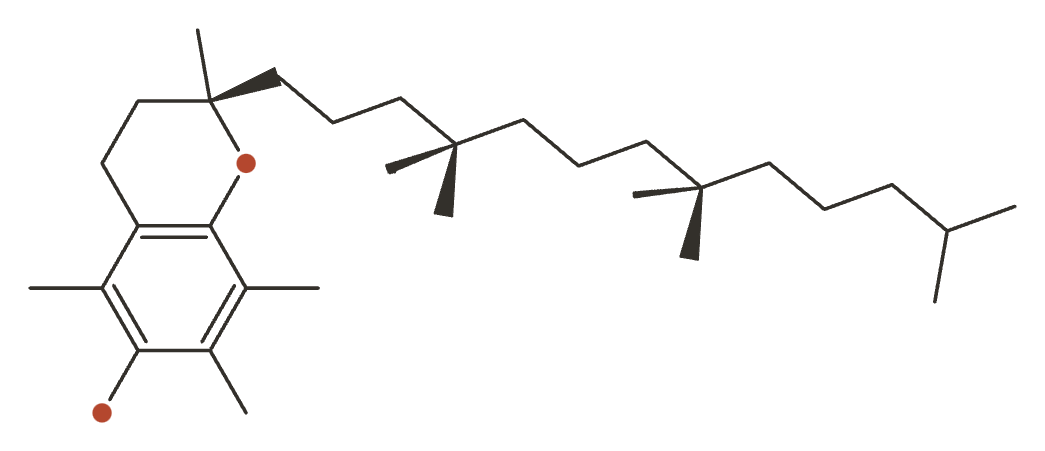
Vitamin E is a family of eight fat-soluble compounds, of which alpha-tocopherol is the form the body retains — the principal lipid-phase antioxidant of cell membranes, and a component of the AREDS eye formulations.

Vitamin E at a Glance
Vitamin E is not a single molecule but a family of eight fat-soluble compounds — four tocopherols and four tocotrienols. Of these, alpha-tocopherol is the form the body preferentially retains and the only one the dietary reference intake is based on. Its job is chemical: it is the principal antioxidant that lives inside cell membranes, stopping the self-propagating chain reactions of lipid peroxidation before they can damage the fatty layer of a cell.
It comes almost entirely from food — vegetable oils, nuts, seeds and green leafy vegetables — and the body cannot make it. Genuine deficiency is rare in healthy people eating an ordinary diet; it appears mainly in fat-malabsorption states such as cystic fibrosis, cholestatic liver disease and short-bowel syndrome, and in a rare inherited disorder of the transport protein that loads alpha-tocopherol into circulating lipoproteins.
That last point is the load-bearing framing. There is a real deficiency state, and correcting it clearly matters — but for the well-fed majority, supplemental vitamin E is an extra laid on top of an already-adequate system, not the repair of a shortfall. Replacing vitamin E when someone is genuinely deficient works, and 800 IU/day has a real, replicated effect on liver histology in non-diabetic NASH. Beyond those, the large outcome trials are a graveyard: no cardiovascular benefit, no cancer prevention, and at high doses a measurable increase in bleeding and prostate-cancer risk. This is a nutrient where more is not better.
What It’s Used For
- Correcting deficiency — in fat malabsorption or the inherited transport-protein disorder, supplementation prevents and reverses the neurological damage of deficiency. The one unambiguous, essential use.
- Non-alcoholic steatohepatitis — 800 IU/day improves liver histology in non-diabetic adults with biopsy-proven NASH, and is a guideline-recognised option for that specific group.
- Age-related macular degeneration — vitamin E is a component of the AREDS and AREDS2 formulations, but the benefit belongs to the combination; vitamin E alone does not prevent AMD.
- Slowing Alzheimer’s decline — high-dose vitamin E has slowed functional decline in two trials of established mild-to-moderate disease, though it does not prevent dementia or improve cognition.
Be sceptical of the big antioxidant promises. Vitamin E does not prevent heart attacks, strokes or cancer, does not slow ageing, and does not reliably help skin, immunity or exercise recovery in well-nourished people. High-dose supplements taken to “boost antioxidant status” are the part of the vitamin E story that the outcome trials most firmly contradict.
How It Works
Vitamin E works by being sacrificed. Cell membranes are built from polyunsaturated fats, which are chemically vulnerable: a single free radical can pull a hydrogen atom off one fatty acid, creating a new radical that attacks the next, and so on — a chain reaction called lipid peroxidation that, unchecked, degrades the membrane. Alpha-tocopherol sits within the membrane and intercepts these lipid peroxyl radicals, donating a hydrogen atom to quench them and breaking the chain. In doing so it becomes a relatively stable, unreactive radical itself, which is then recycled back to its active form largely by vitamin C — which is why the two are so often studied and taken together 17Reference 17ReviewVitamins C and E: beneficial effects from a mechanistic perspective — reviewView study →.
The reason alpha-tocopherol dominates is not chemistry but logistics. After absorption, all eight forms
arrive at the liver, but a specific carrier — alpha-tocopherol transfer protein — selectively picks
out alpha-tocopherol and loads it back into circulating lipoproteins for delivery to tissues. The other
tocopherols and the tocotrienols are largely metabolised and excreted, which is why blood and tissue
levels are dominated by alpha-tocopherol and why the reference intake is defined in those terms 1,
This mechanism also explains the page’s central tension. Antioxidant protection is only rate-limiting when antioxidant capacity is short. In a person with adequate vitamin E, adding more does not make membranes meaningfully harder to oxidise — the system is already saturated for its purpose, and excess alpha-tocopherol is capped by the liver’s own disposal machinery 2Reference 2ReviewMechanisms for the prevention of vitamin E excess — reviewView study →. That is the mechanistic reason a compelling antioxidant rationale has repeatedly failed in outcome trials: you cannot fix a problem that adequacy has already solved. The exception is a tissue under genuine, sustained oxidative stress — such as the inflamed, fat-laden liver of NASH — where the extra buffering appears to do real work 3Reference 3RCTPioglitazone, vitamin E, or placebo for nonalcoholic steatohepatitis (PIVENS) — randomised controlled trialView study →.
Pharmacology & Research
Vitamin E is an essential fat-soluble vitamin and the body’s principal lipid-phase antioxidant. The evidence posture is unusual: a strong, mechanistically clean rationale that has been tested more thoroughly than almost any other supplement — and has mostly failed. The single most important interpretive key is the deficiency-versus-repletion distinction: benefits are real where a deficit is being corrected or where a tissue is under sustained oxidative stress, and absent-to-harmful where high doses are added on top of adequacy. Form matters too: doses in trials are given as natural (d-, RRR-) or synthetic (dl-, all-rac-) alpha-tocopherol, which differ in potency — the natural form is roughly 1.36× more bioavailable — so IU and mg do not translate simply.
Support is an experimental score I’m building — a composite weighted by study type (human > animal > in vitro > review) and study volume. It’s a beta: a fast way to rank strength of evidence at a glance, not a validated metric. Each application links down to its write-up.
Symptomatic vitamin E deficiency is rare and almost always secondary to fat malabsorption — cystic fibrosis, cholestasis, short-bowel syndrome, abetalipoproteinaemia — or to the inherited disorder ataxia with vitamin E deficiency (AVED), caused by mutations in the α-TTP gene. Left uncorrected it produces a progressive peripheral neuropathy and spinocerebellar ataxia. Supplemental alpha-tocopherol, often at high oral doses in AVED to force tissue uptake, prevents and can partially reverse the neurological picture; this is standard clinical practice grounded in the vitamin’s established physiology 1,
The effect is entirely deficiency-dependent: it demonstrates that the vitamin is essential, not that extra intake benefits replete people.
Gap: a repletion benefit, not a general one — it says nothing about supplementation in people whose intake is already adequate.
The PIVENS randomised trial gave 800 IU/day of natural vitamin E, pioglitazone, or placebo to 247 non-diabetic adults with biopsy-proven NASH for 96 weeks. Vitamin E met the primary endpoint — a significant improvement in histological NASH features, 43% versus 19% for placebo — with reductions in steatosis, lobular inflammation and aminotransferases, though not in fibrosis 3Reference 3RCTPioglitazone, vitamin E, or placebo for nonalcoholic steatohepatitis (PIVENS) — randomised controlled trialView study →.
This is the strongest evidence for vitamin E as a stand-alone agent and is reflected in hepatology guidelines, which offer 800 IU/day to selected non-diabetic, non-cirrhotic adults with confirmed NASH. It is plausibly a case of a tissue under genuine, sustained oxidative stress where extra antioxidant capacity does real work.
Gap: studied only in non-diabetic, non-cirrhotic adults with biopsy-confirmed disease; the 800 IU/day dose sits near the level where high-dose safety signals emerge, and long-term outcome data, as opposed to histology, are limited.
Two randomised trials support high-dose vitamin E for slowing functional decline in established disease. The 1997 Alzheimer’s Disease Cooperative Study gave 2,000 IU/day and reported delayed progression to clinically important milestones — death, institutionalisation, loss of daily function — in moderate disease 6Reference 6RCTA controlled trial of selegiline, alpha-tocopherol, or both as treatment for Alzheimer’s disease — randomised controlled trialView study →.
The larger TEAM-AD trial (2014, n=613) gave 2,000 IU/day to veterans with mild-to-moderate Alzheimer’s and found a significant slowing of functional decline versus placebo over about two years, without increased mortality 7Reference 7RCTEffect of vitamin E and memantine on functional decline in Alzheimer disease: the TEAM-AD VA cooperative randomized trial — randomised controlled trialView study →.
Neither trial showed improvement in cognitive test scores, and vitamin E has not prevented dementia in prevention trials.
Gap: the benefit is on daily-function scales rather than cognition, is confined to established rather than preventive treatment, and requires a dose well above the tolerable upper limit — so it is a specialist clinical decision, not a general recommendation.
Mechanisms
| Target / pathway | Effect | Relevant to |
|---|---|---|
| Lipid peroxyl radicals (membrane) | Scavenged; chain-breaking | All applications; the core antioxidant role |
| Membrane phospholipids | Protected from peroxidation | DeficiencyNASH |
| Alpha-tocopherol transfer protein (α-TTP) | Selects and retains alpha-tocopherol | Explains form preference and pharmacokinetics |
| Vitamin C (ascorbate) | Recycles the tocopheroxyl radical back to the active form | Rationale for C + E co-supplementation |
| Platelet aggregation / vitamin K–dependent clotting | Inhibited at high doses | The bleeding-risk safety signal |
Pharmacokinetics
Vitamin E is absorbed with dietary fat via micelles and chylomicrons, so absorption is poor when taken without fat or in fat-malabsorption states — a decision-relevant point for both deficiency and supplementation. Fractional absorption is variable and falls at higher doses. All forms are absorbed, but the liver’s α-TTP selectively re-secretes alpha-tocopherol, so plasma and tissue levels are dominated by that form while other tocopherols and the tocotrienols are largely metabolised to carboxyethyl-hydroxychroman metabolites and excreted 2Reference 2ReviewMechanisms for the prevention of vitamin E excess — reviewView study →. Natural (RRR-, d-) alpha-tocopherol is roughly 1.36× as potent as synthetic (all-rac-, dl-) on a weight basis, which is the basis of the IU conversion. The body has no rapid excretion route for the retained form, but hepatic metabolism increases at high intake, which caps accumulation and underlies the tolerable upper limit 2Reference 2ReviewMechanisms for the prevention of vitamin E excess — reviewView study →. Because it is fat-soluble, it should be taken with a meal.
Clinical trials
Vitamin E has an unusually deep trial record for a supplement — dozens of large randomised outcome trials across cardiovascular disease, cancer, eye disease, liver disease and dementia, many government-funded because the compound is off-patent. Active industry-sponsored trials are now sparse; most recent work is investigator-initiated.
| Completed | Planned / recruiting | Terminated | Preclinical |
|---|---|---|---|
| >50large RCTs | Few | SELECT(stopped early) | Extensive |
Last checked: August 2026.
Dietary Sources
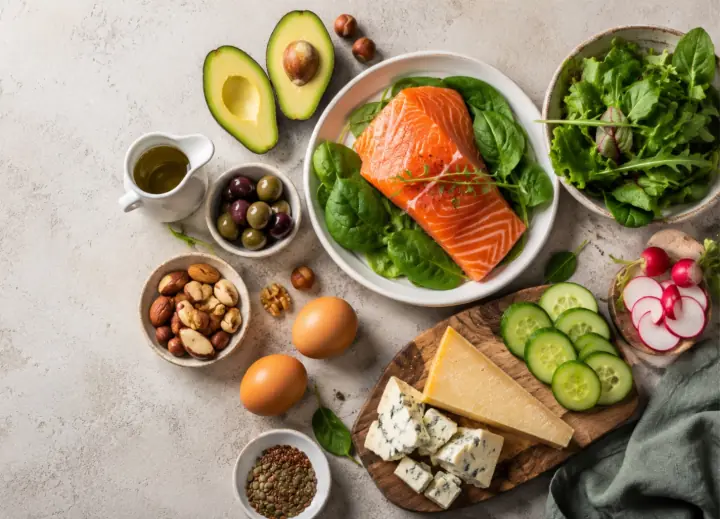
Vitamin E is widely distributed in fat-containing plant foods; the richest sources are vegetable oils, nuts and seeds, with smaller contributions from green leafy vegetables and fortified foods. Because it is concentrated in the oil fraction, refining and prolonged cooking reduce the content, and low-fat diets can be surprisingly low in vitamin E. Most people in developed countries fall somewhat short of the RDA from food alone, but frank deficiency is nonetheless rare — a reminder that “below the RDA” is not the same as “deficient.”
| Food | Serving | Alpha-tocopherol (approx.) |
|---|---|---|
| Wheat germ oil | 1 tbsp | ~20 mg |
| Sunflower seeds | 28 g | ~7 mg |
| Almonds | 28 g | ~7 mg |
| Sunflower / safflower oil | 1 tbsp | ~5–6 mg |
| Hazelnuts | 28 g | ~4 mg |
| Peanut butter | 2 tbsp | ~3 mg |
| Spinach, boiled | ½ cup | ~2 mg |
| Broccoli, boiled | ½ cup | ~1 mg |
Amounts are approximate; the full table is in the NIH Office of Dietary Supplements fact sheet 1Reference 1Vitamin E — Fact Sheet for Health ProfessionalsView study →.
Dosage
The figures below are reference intakes and doses studied in research, not a personal recommendation.
- RDA (adults): 15 mg/day of alpha-tocopherol, equivalent to about 22 IU natural or 33 IU synthetic 1Reference 1Vitamin E — Fact Sheet for Health ProfessionalsView study →.
- Lactation: 19 mg/day 1Reference 1Vitamin E — Fact Sheet for Health ProfessionalsView study →.
- Tolerable Upper Intake Level: 1,000 mg/day of supplemental alpha-tocopherol for adults — roughly 1,500 IU natural or 1,100 IU synthetic. The limit applies to supplements only, not to vitamin E from food 1Reference 1Vitamin E — Fact Sheet for Health ProfessionalsView study →.
- Studied supplemental doses: 400 IU/day in the AREDS eye formulation 4Reference 4RCTA randomized, placebo-controlled trial of high-dose supplementation with vitamins C and E, beta carotene, and zinc for age-related macular degeneration and vision loss (AREDS report noView study →; 800 IU/day for NASH 3Reference 3RCTPioglitazone, vitamin E, or placebo for nonalcoholic steatohepatitis (PIVENS) — randomised controlled trialView study →;
2,000 IU/day in the Alzheimer’s trials 6,
7Reference 6RCTA controlled trial of selegiline, alpha-tocopherol, or both as treatment for Alzheimer’s disease — randomised controlled trialView study →Reference 7RCTEffect of vitamin E and memantine on functional decline in Alzheimer disease: the TEAM-AD VA cooperative randomized trial — randomised controlled trialView study → . Note that the 2,000 IU/day dose exceeds the upper limit, and both the 800 IU and 2,000 IU doses were used under medical supervision for specific conditions.
Two practical points. First, units: labels may give IU or mg, and natural (d-) or synthetic (dl-) forms, which are not interchangeable — the 15 mg RDA is about 22 IU of the natural form or 33 IU of the synthetic. Second, take it with a meal containing some fat, since absorption depends on it. There is no benefit to high-dose supplementation in people who are not deficient, and clear reasons below to avoid it.
Safety
At reference intakes vitamin E is very well tolerated; the safety story is entirely about high-dose supplementation, where a plausible antioxidant rationale collided with real outcome data.
- Reference-intake and dietary vitamin E is safe. Deficiency is rare, and food sources carry no known risk of excess.
- High doses raise bleeding risk. At 400 IU/day and above, vitamin E has an antiplatelet effect and can interact with anticoagulants and antiplatelet drugs.
- Stop before surgery. Because of the bleeding effect, high-dose supplements should be discontinued well ahead of planned procedures.
- High-dose supplementation has been linked to harm. Trials associated it with increased prostate-cancer risk (SELECT), increased haemorrhagic-stroke risk, and — in a dose-response meta-analysis — increased all-cause mortality above about 400 IU/day.
- Not a preventive antioxidant. Large trials found no cardiovascular or cancer-prevention benefit; taking it “to be safe” is not supported.
Full Safety & Interactions Detail
For most people eating an ordinary diet, vitamin E requires no attention: intake is safe and deficiency uncommon. The concerns attach to supplements, and they scale with dose.
Bleeding. Vitamin E has an antiplatelet effect and interferes with vitamin K–dependent clotting factors, particularly above about 400 IU/day. This raises the risk of bleeding, especially in combination with anticoagulants (warfarin, direct oral anticoagulants), antiplatelet agents (aspirin, clopidogrel) and other supplements that thin the blood (fish oil, ginkgo, high-dose garlic). In a double-blind trial in 21 people on long-term warfarin, vitamin E caused no significant change in the INR 18Reference 18RCTEffect of vitamin E on the anticoagulant response to warfarin — randomised controlled trialView study →. High-dose vitamin E should be stopped well before elective surgery.
Cardiovascular and cancer outcomes. Multiple large randomised trials found no benefit for cardiovascular prevention — HOPE-TOO 8Reference 8RCTEffects of long-term vitamin E supplementation on cardiovascular events and cancer (HOPE-TOO) — randomised controlled trialView study →, the Women’s Health Study 9Reference 9RCTVitamin E in the primary prevention of cardiovascular disease and cancer: the Women’s Health Study — randomised controlled trialView study →, Physicians’ Health Study II 10Reference 10RCTVitamins E and C in the prevention of cardiovascular disease in men: the Physicians’ Health Study II — randomised controlled trialView study → and GISSI-Prevenzione 11Reference 11RCTDietary supplementation with n-3 polyunsaturated fatty acids and vitamin E after myocardial infarction — randomised controlled trialView study → were all null, and some meta-analyses noted a small increase in heart-failure or haemorrhagic-stroke events. For cancer, the SELECT trial found that 400 IU/day increased prostate-cancer incidence by about 17% 12,
Who should be cautious. Anyone on anticoagulant or antiplatelet therapy, anyone approaching surgery, people with a history of haemorrhagic stroke, and — given the SELECT signal — men considering high-dose supplementation for prostate health, for whom the evidence argues against it. Vitamin K deficiency amplifies the bleeding risk.
Scope disclosure. Interactions assessed? Yes — anticoagulants, antiplatelet agents, other antiplatelet supplements, and vitamin K. Pregnancy/lactation assessed? Yes. Upper limit established? Yes — 1,000 mg/day supplemental alpha-tocopherol for adults.
Caution. Vitamin E is required in pregnancy, and reference-intake levels from food and standard prenatal vitamins are safe and appropriate. High-dose supplementation is a different matter: trials of vitamin E combined with vitamin C to prevent pre-eclampsia found no benefit and some signals of harm, including more low-birth-weight infants and adverse events, so supraphysiological doses are not recommended. The same applies during lactation, where 19 mg/day is the reference intake and high-dose supplements are not advised.
References
- NIH Office of Dietary Supplements. Vitamin E — Fact Sheet for Health Professionals. https://ods.od.nih.gov/factsheets/VitaminE-HealthProfessional/
- Traber MG (2013). Mechanisms for the prevention of vitamin E excess — review. Journal of Lipid Research. https://pubmed.ncbi.nlm.nih.gov/23505319/
- Sanyal AJ, et al. (2010). Pioglitazone, vitamin E, or placebo for nonalcoholic steatohepatitis (PIVENS) — randomised controlled trial. New England Journal of Medicine. https://pubmed.ncbi.nlm.nih.gov/20427778/
- Age-Related Eye Disease Study Research Group (2001). A randomized, placebo-controlled trial of high-dose supplementation with vitamins C and E, beta carotene, and zinc for age-related macular degeneration and vision loss (AREDS report no. 8) — randomised controlled trial. Archives of Ophthalmology. https://pubmed.ncbi.nlm.nih.gov/11594942/
- Age-Related Eye Disease Study 2 Research Group (2013). Lutein + zeaxanthin and omega-3 fatty acids for age-related macular degeneration (AREDS2) — randomised controlled trial. JAMA. https://pubmed.ncbi.nlm.nih.gov/23644932/
- Sano M, et al. (1997). A controlled trial of selegiline, alpha-tocopherol, or both as treatment for Alzheimer’s disease — randomised controlled trial. New England Journal of Medicine. https://pubmed.ncbi.nlm.nih.gov/9110909/
- Dysken MW, et al. (2014). Effect of vitamin E and memantine on functional decline in Alzheimer disease: the TEAM-AD VA cooperative randomized trial — randomised controlled trial. JAMA. https://pubmed.ncbi.nlm.nih.gov/24381967/
- Lonn E, et al. (2005). Effects of long-term vitamin E supplementation on cardiovascular events and cancer (HOPE-TOO) — randomised controlled trial. JAMA. https://pubmed.ncbi.nlm.nih.gov/15769967/
- Lee IM, et al. (2005). Vitamin E in the primary prevention of cardiovascular disease and cancer: the Women’s Health Study — randomised controlled trial. JAMA. https://pubmed.ncbi.nlm.nih.gov/15998891/
- Sesso HD, et al. (2008). Vitamins E and C in the prevention of cardiovascular disease in men: the Physicians’ Health Study II — randomised controlled trial. JAMA. https://pubmed.ncbi.nlm.nih.gov/18997197/
- GISSI-Prevenzione Investigators (1999). Dietary supplementation with n-3 polyunsaturated fatty acids and vitamin E after myocardial infarction — randomised controlled trial. The Lancet. https://pubmed.ncbi.nlm.nih.gov/10465168/
- Klein EA, et al. (2011). Vitamin E and the risk of prostate cancer: the Selenium and Vitamin E Cancer Prevention Trial (SELECT) — randomised controlled trial. JAMA. https://pubmed.ncbi.nlm.nih.gov/21990298/
- Lippman SM, et al. (2009). Effect of selenium and vitamin E on risk of prostate cancer and other cancers: the SELECT trial — randomised controlled trial. JAMA. https://pubmed.ncbi.nlm.nih.gov/19066370/
- Alpha-Tocopherol, Beta Carotene Cancer Prevention Study Group (1994). The effect of vitamin E and beta carotene on the incidence of lung cancer and other cancers in male smokers (ATBC) — randomised controlled trial. New England Journal of Medicine. https://pubmed.ncbi.nlm.nih.gov/8127329/
- Miller ER, et al. (2005). Meta-analysis: high-dosage vitamin E supplementation may increase all-cause mortality — meta-analysis. Annals of Internal Medicine. https://pubmed.ncbi.nlm.nih.gov/15537682/
- Bjelakovic G, et al. (2012). Antioxidant supplements for prevention of mortality in healthy participants and patients with various diseases — systematic review. Cochrane Database of Systematic Reviews. https://pubmed.ncbi.nlm.nih.gov/22419320/
- Traber MG, Stevens JF (2011). Vitamins C and E: beneficial effects from a mechanistic perspective — review. Free Radical Biology and Medicine. https://pubmed.ncbi.nlm.nih.gov/21664268/
- Kim JM, White RH (1996). Effect of vitamin E on the anticoagulant response to warfarin — randomised controlled trial. The American Journal of Cardiology. https://pubmed.ncbi.nlm.nih.gov/8629604/