
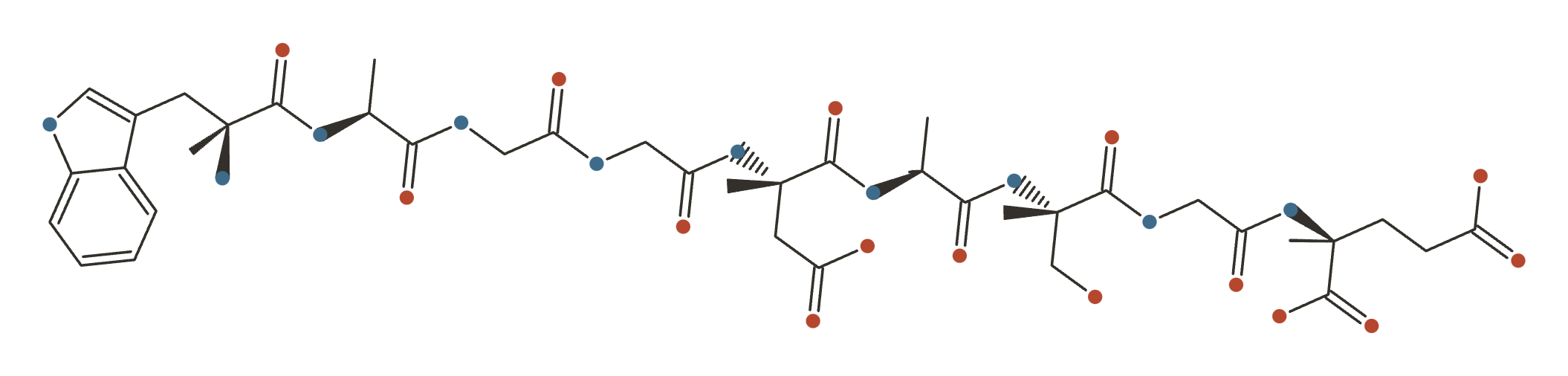
DSIP
A nonapeptide named for a sleep effect later research largely failed to confirm, now sold as an injectable sleep aid.

DSIP at a Glance
DSIP — delta sleep-inducing peptide — is a nonapeptide isolated in the 1970s from the blood of rabbits in induced sleep, and named for the effect it appeared to produce. Later research largely failed to confirm that sleep effect, which leaves the compound in an unusual position: still named for a property it may not have. It is sold as an injectable research chemical for sleep and stress, is unapproved everywhere, and its endogenous role remains poorly defined.
History & Development
DSIP stands for Delta Sleep-Inducing Peptide, and the name is the problem: the sleep effect it was named for was tested and largely not confirmed.
| First described | Not established in the sources consulted for this section |
| Discovered / synthesised by | Not established in the sources consulted for this section |
| Institution | Not established in the sources consulted for this section |
| Origin | Synthetic nonapeptide; no DSIP gene, precursor or receptor has been identified |
| Key patent | Not established in the sources consulted for this section |
| Assignee | Not established in the sources consulted for this section |
| Development status | Never approved anywhere; sold as a research chemical |
Discovery
DSIP was isolated on the basis of a functional observation - material associated with delta-wave sleep - and named for that observation before the underlying biology was established.
That biology was never established. There is no identified DSIP gene, no precursor protein and no receptor, which is an extraordinary gap for a molecule that has carried a functional name for decades. Most endogenous peptides can be traced to a gene and a receptor; DSIP cannot, and its status as a genuine endogenous signalling molecule remains unresolved.
Development & ownership
The sleep claim has been tested. The best-controlled human sleep trial ever run on DSIP was negative - this is a compound that was examined properly and not confirmed, rather than one that was never studied.
What replaced it is more interesting and much less marketed. The single most robustly demonstrated human effect of DSIP is suppression of pituitary ACTH secretion, shown in a randomized, double-blind, placebo-controlled crossover in 11 men and independently confirmed. That is a real, replicated endocrine finding - and it is a biomarker, not an indication. Lowering ACTH is not a therapeutic goal in itself, and nothing establishes that it produces a benefit anyone would notice.
How it reached the market
DSIP has never been approved anywhere. It is sold as an injectable sleep aid - for the one effect its best controlled trial failed to confirm, while the effect that is replicated goes unmentioned because it is not something anyone would buy.
What It's Used For
DSIP is a compound whose name is a hypothesis that its own literature never confirmed. In 1977 the Schoenenberger–Monnier group in Basel isolated a nonapeptide — Trp-Ala-Gly-Gly-Asp-Ala-Ser-Gly-Glu — from the cerebral venous blood of rabbits induced into slow-wave sleep by thalamic stimulation, reported that transferring it induced delta-wave sleep in recipient rabbits, and named it “delta sleep-inducing peptide.” Nearly fifty years later, the field’s own review is blunt about what followed: the link between DSIP and sleep “has never been further characterized,” no DSIP gene, precursor protein, or receptor has ever been isolated, and the hypothesis that DSIP is a sleep factor is “extremely poorly documented and still weak” 1Reference 1ReviewDelta sleep-inducing peptide (DSIP): a still unresolved riddle — reviewView study →.
That same review notes something the marketing never mentions — the significant slow-wave-sleep promotion seen in the authors’ early rabbit and rat work came from artificial structural analogues of DSIP, not from DSIP itself 1Reference 1ReviewDelta sleep-inducing peptide (DSIP): a still unresolved riddle — reviewView study →.
Everything below should be read through three facts. First, the best-controlled human sleep trial ever run on DSIP was negative 3Reference 3RCTEffects of delta sleep-inducing peptide on sleep of chronic insomniac patientsView study → — this is a compound that was tested and not confirmed, not one that was never tested. Second, the human evidence is old: a cluster of 1981–1998 European studies, mostly single-dose, mostly small, several with no control group at all, none pre-registered, and none replicated since. Third, route decides everything. Every human study of DSIP delivered it by intravenous infusion under observation — most at 25 nmol/kg, with FDA’s own 2026 tabulation spanning 25–150 nmol/kg across 209 subjects dosed for one to fifteen days. The gray market sells lyophilized powder for subcutaneous injection at bedtime — a route for which, as FDA states plainly, no pharmacokinetic, effectiveness or safety data exist at all. No DSIP-intervention trial is registered on ClinicalTrials.gov.
Support is an experimental score I’m building — a composite weighted by study type (human > animal > in vitro > review) and study volume. It’s a beta: a fast way to rank strength of evidence at a glance, not a validated metric. Each application links down to its write-up.
Read this table carefully for this compound. A low score usually means untested. For DSIP, sleep means something different and worse: tested repeatedly in humans, and not confirmed. Sleep sits mid-table not because nobody looked, but because the best-designed study that looked found no meaningful benefit 3Reference 3RCTEffects of delta sleep-inducing peptide on sleep of chronic insomniac patientsView study → and the endogenous-peptide data point the wrong way 6Reference 6ObservationalDiurnal rhythm of plasma delta-sleep-inducing peptide in humans: evidence for positive correlation with body temperature and negative correlation with rapid eye movement and slow wave sleep — human (observational, n=12)View study →. Note also what is at the top: the highest-quality human data here is an endocrine biomarker, not a sleep outcome — which is a direct contradiction of how DSIP is marketed.
This is the best human evidence on the page, and it is worth stating plainly because it is not what DSIP is sold for.
Eleven healthy men, aged 25–39, received a single intravenous dose of synthetic DSIP (25 nmol/kg) or saline in a randomized, double-blind, crossover design. Plasma ACTH-like immunoreactivity fell significantly for at least three hours after DSIP, against a slight rise in the control condition 14Reference 14RCTReduction of immunoreactive ACTH in plasma following intravenous injection of delta sleep-inducing peptide in man — human (randomised double-blind crossover, n=11)View study →.
This is, by design quality, the strongest human result DSIP has. An independent Italian group replicated the ACTH suppression in normal men while testing arginine-vasopressin: DSIP produced a significant decrease in ACTH, and no change at all in circulating AVP, either at baseline or in response to osmotic or orthostatic challenge 15Reference 15RCTDifferent effects of delta-sleep-inducing peptide on arginine-vasopressin and ACTH secretion in normal men — human (placebo-controlled crossover, n=15; AVP endpoint null)View study →.
The boundaries of the effect are as informative as the effect. Plasma cortisol was unaffected in the original study, following its normal diurnal decline, and urinary cortisol and monoamine metabolites were unchanged 14Reference 14RCTReduction of immunoreactive ACTH in plasma following intravenous injection of delta sleep-inducing peptide in man — human (randomised double-blind crossover, n=11)View study →.
DSIP did not influence growth hormone or prolactin secretion in normal women 16Reference 16Delta sleep-inducing peptide administration does not influence growth hormone and prolactin secretion in normal women — human (null)View study →, and did not affect CRH-stimulated or meal-induced ACTH and cortisol secretion 17Reference 17Delta-sleep-inducing peptide does not affect CRH and meal-induced ACTH and cortisol secretion — human (null)View study →.
So DSIP dampens basal pituitary ACTH output without moving the downstream steroid or the stimulated axis — a narrow, selective, and clinically unexploited pharmacology. Notably, it is the endocrine effect, not a sedative one: the 1981 sleep study’s own EEG and behavioral analysis found “no sedation in the classic pharmacologic way” 2Reference 2RCTAcute and delayed effects of DSIP (delta sleep-inducing peptide) on human sleep behavior — human (double-blind crossover, n=6)View study →.
Gap: every one of these studies is a single intravenous dose in a handful of healthy volunteers, measuring a biomarker. No study has ever asked whether ACTH suppression by DSIP produces any clinical benefit, in any condition, in anyone. Three of the five endocrine endpoints tested were null.
This application has more human subjects behind it than sleep does, and the compound is barely marketed for it — which is the ranking correction that matters mose. It is also the clearest illustration of why subject count is not evidence quality.
The hypothesis came from rodent work by Tissot showing that morphine, alcohol, pentobarbital and DSIP all induced spindled slow-wave sleep when injected into the bulbo-mesencephalo-thalamic recruiting system, and that all four effects were reversed by naloxone — suggesting DSIP had opiate-receptor agonist activity 9Reference 9DSIP in the treatment of withdrawal syndromes from alcohol and opiates — human (open, uncontrolled, n=107)View study →.
On that basis, a Geneva group gave intravenous DSIP (25 nmol/kg) as sole treatment to 67 patients in withdrawal (28 alcohol, 39 opiate); 18 were lost or unevaluable, and of the 49 evaluable, 48 were reported to benefit, with immediate onset and lasting suppression of somatic signs, anxiety resolving more slowly 8Reference 8Successful treatment of withdrawal symptoms with delta sleep-inducing peptide, a neuropeptide with potential agonistic activity on opiate receptors — human (open, uncontrolled, n=67)View study →.
A larger report from the same group covered 107 inpatients (47 alcohol, 60 opiate) and reported symptom disappearance or marked improvement in 87% and 97% respectively, with good tolerance apart from headache in a few patients 9Reference 9DSIP in the treatment of withdrawal syndromes from alcohol and opiates — human (open, uncontrolled, n=107)View study →.
A 1998 German group published an open clinical trial of DSIP in opioid detoxification 10Reference 10Clinical trialOpioid detoxification with delta sleep-inducing peptide: results of an open clinical trial — human (open clinical trial; abstract not indexed)View study →; its abstract is not indexed, and it carries a published comment in the same journal that I have not been able to retrieve — treat its conclusions as unverified here.
What none of these has: randomization, a placebo arm, blinded assessment, or a standardized withdrawal instrument. Assessment in the 107-patient series was “clinical evaluation by the physician and the nursing staff” 9Reference 9DSIP in the treatment of withdrawal syndromes from alcohol and opiates — human (open, uncontrolled, n=107)View study →.
Alcohol and opioid withdrawal are self-limiting syndromes with powerful expectancy effects, which is precisely why open-label response rates near 100% in this indication are not interpretable. The first two reports also share investigators (Dick, Grandjean, Tissot) and are best read as one clinical program, not two independent replications.
Gap: no randomized or placebo-controlled trial of DSIP for withdrawal has ever been conducted, in nearly forty years. The proposed opioid-receptor mechanism is inferred from rodent naloxone reversal and has never been demonstrated at a human receptor. This is a genuinely interesting unfinished question, not a basis for use.
The application the compound is named after, sold for, and least supported in.
The positive result. Six normal volunteers (four men, two women) received slow intravenous DSIP (25 nmol/kg) or placebo in the morning, double-blind and crossover. They reported immediate sleep pressure; median total sleep time rose 59% in the following 130 minutes, and the subsequent night showed shorter sleep onset, less stage 1, and better sleep efficiency — with, notably, no sedation on EEG or behavioral analysis 2Reference 2RCTAcute and delayed effects of DSIP (delta sleep-inducing peptide) on human sleep behavior — human (double-blind crossover, n=6)View study →. This is the study everything else is built on. It is n=6, single-dose, intravenous, and was run by the group that discovered and named the peptide.
The negative result. An independent group in Amsterdam studied 16 chronic insomniac patients in a double-blind, matched-pairs, parallel-group design across five laboratory nights, giving 25 nmol/kg intravenous DSIP or glucose placebo before each of the last three. Objective polysomnography showed higher sleep efficiency and shorter latency on DSIP — but the authors’ own analysis found these effects “were weak and in part could be due to an incidental change in the placebo group,” subjective sleep quality did not change at all, and they concluded that short-term DSIP treatment of chronic insomnia “is not likely to be of major therapeutic benefit” 3Reference 3RCTEffects of delta sleep-inducing peptide on sleep of chronic insomniac patientsView study →. This is the largest and best-controlled sleep trial DSIP has, and its verdict is negative. Any source citing it as supporting evidence has reversed its result.
And it is not the only negative. FDA’s 2026 briefing document (see Sourcing, Route & Legal Status) surfaces a second independent randomized, double-blind, placebo-controlled crossover the DSIP literature rarely mentions: Monti and colleagues (1987) gave intravenous DSIP 25 nmol/kg to six patients with severe chronic insomnia over nine laboratory nights. Sleep latency fell slightly, awakenings barely moved, total sleep time rose about 20 minutes — and none of it differed significantly from baseline or placebo, with subjective sleep quality also unchanged. The authors concluded the sleep improvements were of little clinical significance. FDA’s summary of the whole field is that the positive insomnia results all come from one author (Schneider-Helmert, in reports from 1981, 1983, 1986 and 1987 that variously lack any placebo arm and compare patients against external healthy controls), while the two properly placebo-controlled studies by other groups — Bes 1992 and Monti 1987 — “did not reach the same conclusion.” A 1986 review by Graf and Kastin had already concluded there was insufficient evidence that DSIP reliably induces or maintains sleep.
The supporting literature is thinner than it looks. A 1984 European Neurology paper often cited as a study is explicitly a narrative summary of the author’s own earlier investigations, not new primary data 4Reference 4DSIP in insomnia — narrative summary of the author’s earlier human investigations (not primary data)View study →; the companion paper in the same issue is an open, uncontrolled series of 7 patients with no placebo and no blinding 5Reference 5Clinical trialA clinical trial with DSIP — human (open, uncontrolled series, n=7)View study →. Both are from the original research circle.
The endogenous peptide does not behave like a sleep factor. Measuring plasma DSIP-like immunoreactivity every 30 minutes for 24 hours in 12 volunteers with simultaneous polysomnography, an NIH group found the maximum at 1500 h and minimum at 0100 h; levels were significantly lower in REM sleep and slow-wave sleep than awake, did not rise before, during or after slow-wave episodes, and tracked body temperature closely (r² = 0.66). Their conclusion was that circulating DSIP may be associated with the suppression of slow-wave and REM sleep 6Reference 6ObservationalDiurnal rhythm of plasma delta-sleep-inducing peptide in humans: evidence for positive correlation with body temperature and negative correlation with rapid eye movement and slow wave sleep — human (observational, n=12)View study →. And the field’s own review states that in the discoverers’ early animal work, significant slow-wave-sleep promotion came from artificial DSIP analogues “but not DSIP itself” 1Reference 1ReviewDelta sleep-inducing peptide (DSIP): a still unresolved riddle — reviewView study →.
A modern paper that is not about DSIP. The only post-2018 primary sleep publication tested DSIP-CBBBP, a yeast-expressed fusion peptide joining DSIP to a blood-brain-barrier-crossing sequence, in a chemically-induced (PCPA) mouse insomnia model. It reported neurotransmitter modulation — and explicitly that the fusion construct “shows a better restorative effect than DSIP” 7Reference 7AnimalPichia pastoris secreted peptides crossing the blood-brain barrier and DSIP fusion peptide efficacy in PCPA-induced insomnia mouse models — animal (mouse); tests the DSIP-CBBBP fusion peptide, not DSIPView study →. That is a mouse study of a different molecule, and its own comparator arm is a point against plain DSIP, not for it.
Gap: there has never been an adequately powered, modern, randomized sleep trial of DSIP; the one independent controlled trial was negative; the human endogenous data contradict the sleep-factor hypothesis; no human sleep study has ever used the subcutaneous bedtime route consumers use; and no receptor exists to explain a sleep effect if one were found.
The best-replicated animal effect, attached to the weakest kind of human study.
Centrally administered DSIP (intracerebroventricular and intracisternal, not systemic) produced dose-dependent antinociception in mice and rats in tail-pinch and hot-plate tests. The effect was blocked by naloxone and was absent in morphine-tolerant animals, implicating an endogenous opioid mechanism 12Reference 12AnimalPotent antinociceptive effect of centrally administered delta-sleep-inducing peptide (DSIP) — animal (mouse/rat, central administration)View study →.
The same group then showed the effect also requires the spinal descending noradrenergic system — reserpine and monoamine antagonists reduced it 13Reference 13AnimalInvolvement of spinal noradrenergic system in the mechanism of an antinociceptive effect of delta-sleep-inducing peptide — animal (mouse)View study →.
Two studies, one laboratory, central routes only.
The human evidence is a single 1984 pilot in 7 patients with migraine and vasomotor headache, chronic tinnitus, and psychogenic pain attacks. Intravenous DSIP on five consecutive days then every 48–72 hours significantly lowered pain levels in 6 of 7 patients, with a parallel reduction in depressive symptoms — but the comparison was the patients’ own recalled baseline (anamnestic) values against a follow-up period, with no control group and no blinding 11Reference 11Clinical trialTherapeutic effects of delta-sleep-inducing peptide (DSIP) in patients with chronic, pronounced pain episodesView study →.
A before-and-after study in seven people with heterogeneous chronic pain conditions and a concurrent mood effect is essentially uninterpretable for efficacy.
Gap: the mechanism is rodent-only and route-mismatched (intracerebroventricular, which no human study or consumer protocol uses). The sole human evidence is one uncontrolled 7-patient series from 1984, never replicated. No modern human analgesia trial exists.
A substantial rodent literature that is less independent than its volume suggests, and whose flagship result is partly negative.
In rats given subcutaneous DSIP (10 µg/100 g body weight, monthly 5-day courses from 2 to 24 months of age), lipid peroxidation was suppressed and the activity of endogenous antioxidant defenses — superoxide dismutase, catalase, ceruloplasmin, plus non-enzymatic antioxidants — rose, an effect described as most pronounced in later ontogenesis 19Reference 19AnimalMechanism of delta-sleep inducing peptide geroprotective activity — animal (rat)View study →. Intraperitoneal DSIP similarly shifted the prooxidant–antioxidant balance in rat tissues and erythrocytes and restored it after cold stress 20Reference 20AnimalRegulation of free radical processes by delta-sleep inducing peptide in rat tissues under cold stress — animal (rat)View study →, and subcutaneous DSIP (100 µg/kg) increased expression of the Sod1 and Gpx1 genes in rat brain and nucleated blood cells 21Reference 21AnimalEffect of delta sleep-inducing peptide on the expression of antioxidant enzyme genes in the brain and blood of rats during physiological aging — animal (rat)View study →.
The lifespan work used Deltaran, a DSIP-containing preparation rather than the bare peptide — and FDA’s 2026 review supplies the detail that makes this decisive: Deltaran is a lyophilized mixture of DSIP and glycine in a 1:10 ratio by weight, so the mice received ten times as much glycine as peptide. Glycine has independently reported antimutagenic and anti-tumor properties, and FDA therefore holds that neither the chromosome-aberration result nor the tumor-incidence result can be attributed to DSIP at all. Female SHR mice injected subcutaneously for five days each month from 3 months of age until natural death showed decreased body weight, slowed age-related loss of estrous function, 22.6% fewer bone-marrow chromosome aberrations, a 2.6-fold reduction in spontaneous tumor incidence, and a 17.1% increase in the lifespan of the last surviving 10% and 24.1% in maximum lifespan — but no effect on mean lifespan 22Reference 22AnimalEffect of delta-sleep inducing peptide-containing preparation Deltaran on biomarkers of aging, life span and spontaneous tumor incidence in female SHR mice — animal (mouse); mean lifespan unchangedView study →.
A later Russian-language report from an overlapping author group, in the same female SHR mouse model at a very different dose (5 µg/kg versus ~100 µg/kg), reported a closely similar 16% last-decile extension plus anxiolytic-type behavior 23Reference 23AnimalEffect of delta-sleep inducing peptide preparation Deltaran on longevity, physiological functions, and carcinogenesis in mice — animal (mouse); overlapping authors and model with [22]View study →.
Given the shared authors, model and result, these should be read as one research program — and possibly one dataset reported twice — not as independent replication.
A structural caution that applies across this whole cluster: the same Moscow peptide chemist (I.I. Mikhaleva) is a co-author on the antioxidant 19,
Gap: entirely rodent. There is no human antioxidant, longevity, or anticancer data of any kind. The mean-lifespan endpoint was null, the lifespan work used a preparation rather than pure DSIP, and the doses across “replications” differ twentyfold.
DSIP appears in Russian-school literature as an “adaptogenic” antistress peptide, largely through a program around the DSIP preparation Deltaran. The published work reports that DSIP and Deltaran modulate neuronal activity in emotiogenic brain structures in rats and blunt the impact of stress loading on subsequent cerebral ischemia 18Reference 18AnimalDelta sleep-inducing peptide and Deltaran: potential approaches to antistress protection — animal (rat); tests the Deltaran preparationView study →.
Mechanistically this sits reasonably alongside the one solid human finding here — that DSIP lowers pituitary ACTH output 14Reference 14RCTReduction of immunoreactive ACTH in plasma following intravenous injection of delta sleep-inducing peptide in man — human (randomised double-blind crossover, n=11)View study → — but “consistent with a mechanism” is not evidence of an outcome.
Gap: rat models from a single research program, using a formulated preparation rather than pure peptide. There is no human stress-outcome trial and no human neuroprotection data whatsoever. The human ACTH result is a biomarker and does not demonstrate stress protection in people.
DSIP and its analogue DSIP-12 (a nonapeptide with β-alanine substituted at position 2) were tested against metaphit-induced generalized reflex audiogenic seizures in adult male Wistar rats, reducing seizure incidence and severity on behavioral scoring and EEG power spectra 24Reference 24AnimalAntiepileptic activity of delta sleep-inducing peptide and its analogue in metaphit-provoked seizures in rats — animal (rat); tests DSIP and the analogue DSIP-12View study →. A follow-up from the same Belgrade laboratory reported that DSIP potentiated the anticonvulsant activity of a sub-protective valproate dose in the same model 25Reference 25AnimalDelta-sleep-inducing peptide potentiates anticonvulsive activity of valproate against metaphit-provoked audiogenic seizure — animal (rat)View study →.
Two caveats. The work is confined to a single seizure model in a single laboratory, and part of the effect is attributed to the analogue, not the parent peptide — the same distinction the field’s own review draws about the original sleep work 1Reference 1ReviewDelta sleep-inducing peptide (DSIP): a still unresolved riddle — reviewView study →.
Gap: one model, one species, one lab, with analogue and parent tested together. No human epilepsy data and no replication in any other seizure model.
Mechanisms
| Target / pathway | Effect | Relevant to |
|---|---|---|
| Pituitary ACTH secretion | ↓ plasma ACTH-like immunoreactivity for ≥3 h (human RCT crossover, replicated) 14, | The best-established human effect; neuroendocrine |
| Plasma / urinary cortisol | No effect — normal diurnal decline preserved (human, null) 14Reference 14RCTReduction of immunoreactive ACTH in plasma following intravenous injection of delta sleep-inducing peptide in man — human (randomised double-blind crossover, n=11)View study → | Bounds the ACTH finding |
| Arginine-vasopressin | No effect, basal or after osmotic/orthostatic challenge (human, null) 15Reference 15RCTDifferent effects of delta-sleep-inducing peptide on arginine-vasopressin and ACTH secretion in normal men — human (placebo-controlled crossover, n=15; AVP endpoint null)View study → | Neuroendocrine selectivity |
| Growth hormone & prolactin | No effect in normal women (human, null) 16Reference 16Delta sleep-inducing peptide administration does not influence growth hormone and prolactin secretion in normal women — human (null)View study → | Neuroendocrine selectivity |
| CRH- and meal-stimulated ACTH/cortisol | No effect (human, null) 17Reference 17Delta-sleep-inducing peptide does not affect CRH and meal-induced ACTH and cortisol secretion — human (null)View study → | Basal-onlynot stimulated-axisaction |
| Endogenous opioid system | Antinociception, naloxone-reversible and absent in morphine-tolerant animals (rodent, central routes) 12Reference 12AnimalPotent antinociceptive effect of centrally administered delta-sleep-inducing peptide (DSIP) — animal (mouse/rat, central administration)View study →. Per FDA’s 2026 review, DSIP does not bind opioid receptors directly — it fails to displace [³H]diprenorphine from rat brain or human placental membranes — but reportedly triggers calcium-dependent release of enkephalins from cortex, hypothalamus, hippocampus and thalamus, and naloxone also blocks its sleep effect in rats | Analgesia; the inferred basis for the withdrawal hypothesis ; and the basis of FDA’s abuse-liability concern |
| Spinal descending noradrenergic system | Required for DSIP antinociception (rodent) 13Reference 13AnimalInvolvement of spinal noradrenergic system in the mechanism of an antinociceptive effect of delta-sleep-inducing peptide — animal (mouse)View study → | Analgesia |
| Antioxidant enzymes (SOD, catalase, GPx, ceruloplasmin) | ↑ activity and ↑ Sod1/Gpx1 expression (rat) 19, | Antioxidantgeroprotection |
| Serotonin / melatonin signaling | ↑ in a mouse insomnia model — but for the DSIP-CBBBP fusion peptide, which outperformed plain DSIP 7Reference 7AnimalPichia pastoris secreted peptides crossing the blood-brain barrier and DSIP fusion peptide efficacy in PCPA-induced insomnia mouse models — animal (mouse); tests the DSIP-CBBBP fusion peptide, not DSIPView study → | Sleep (mousedifferent molecule) |
| DSIP gene, precursor protein, or dedicated receptor | None ever identified 1Reference 1ReviewDelta sleep-inducing peptide (DSIP): a still unresolved riddle — reviewView study → | There is no molecular mechanism of action to point at |
The last row is the important one. A compound with a demonstrated human endocrine effect but no known receptor, no gene, and no precursor is not a well-characterized drug — it is an unresolved observation. The review that surveys this literature goes further and hypothesizes that DSIP-like immunoreactivity in tissue may come from some other, still unidentified DSIP-like peptide, since it distributes in hypothalamic nuclei that are not particularly relevant to sleep regulation 1Reference 1ReviewDelta sleep-inducing peptide (DSIP): a still unresolved riddle — reviewView study →. On that reading, even DSIP’s status as an endogenous substance is unsettled.
Pharmacokinetics
Route is the practically decisive fact for anyone considering this compound, and there is a direct mismatch between what was studied and what is sold.
What was studied: every controlled human result here — the sleep crossover 2Reference 2RCTAcute and delayed effects of DSIP (delta sleep-inducing peptide) on human sleep behavior — human (double-blind crossover, n=6)View study →, the negative insomnia trial 3Reference 3RCTEffects of delta sleep-inducing peptide on sleep of chronic insomniac patientsView study →, the ACTH suppression 14,
What is sold: lyophilized powder for subcutaneous injection before bed. No human or animal pharmacokinetic study has characterized subcutaneous DSIP — not absorption, not peak time, not exposure, not CNS entry. FDA states this as a positive finding rather than a gap in its own search: it “did not identify pharmacokinetic or toxicokinetic studies of emideltide (free base) or emideltide acetate delivered via the nominated SC” route. That regimen is an extrapolation from intravenous single-dose data, not an application of it.
Oral is inert. In cultured human intestinal (Caco-2) monolayers, DSIP applied to the apical side was rapidly metabolized — only 8.2% remained after two hours — cleaved primarily to free tryptophan, with Trp-Ala as a minor product. Even with three peptidase inhibitors present raising survival to 95%, no intact DSIP was detected on the far side of the monolayer at all 26Reference 26In vitroTransport and metabolism of delta sleep-inducing peptide in cultured human intestinal epithelial cell monolayers — in vitro (Caco-2)View study →. An oral DSIP product delivers amino acids.
Half-life is minutes — and brain entry is better supported than previously credited. FDA’s 2026 review gives DSIP a human plasma half-life of about 8 minutes, with 3–6 minutes in dogs and 2–3 minutes in rats and a monkey after intravenous dosing, and 5–10 minutes in human serum in vitro. The short half-life is due to hydrolysis from the N-terminus by multiple blood peptidases, not to aggregation or protein binding. On blood-brain-barrier penetration, the claim was previously treated as unverified; that was too strict, and the correction matters. The paper it relied on 26Reference 26In vitroTransport and metabolism of delta sleep-inducing peptide in cultured human intestinal epithelial cell monolayers — in vitro (Caco-2)View study → concerns the intestinal epithelium, not the BBB, and its finding — that no intact DSIP crosses a Caco-2 monolayer — bears on oral bioavailability rather than CNS entry. FDA cites three separate transport studies for CNS entry: DSIP appeared in dog cerebrospinal fluid after intravenous injection, peaking at 30 minutes; radiolabeled DSIP crossed from blood to CSF by a saturable process in perfused sheep choroid plexus; and brain concentrations rose in rats after high intravenous doses. Systemically-dosed DSIP is also pharmacologically active on animal EEG, which is hard to explain if none of it reaches the brain. Endogenous plasma DSIP-like immunoreactivity follows a clear diurnal rhythm, peaking mid-afternoon and troughing after midnight, tightly coupled to body temperature 6Reference 6ObservationalDiurnal rhythm of plasma delta-sleep-inducing peptide in humans: evidence for positive correlation with body temperature and negative correlation with rapid eye movement and slow wave sleep — human (observational, n=12)View study →.
One concrete interaction mechanism. DSIP is metabolized in part by peptidyl dipeptidase A (ACE) in brain microvessel endothelium, so FDA notes that dipeptidase inhibitors such as captopril could raise its active concentrations. That is a mechanistically specific interaction hypothesis, not a tested one, but it is more than the page could previously say.
Put together: a peptide with an unmeasured half-life expected in minutes, no demonstrated CNS penetration, and no subcutaneous pharmacokinetics at all, injected under the skin at bedtime for an effect meant to last the night. That mismatch is the single most useful fact here for a reader deciding what to do.
Clinical & regulatory status
DSIP has never been approved as a drug or authorized as a dietary supplement in any jurisdiction — no FDA, EMA, MHRA, TGA or PMDA marketing authorization, no approved indication, no pharmacopoeial monograph for human therapeutic use. It is not a scheduled controlled substance in the United States. It reaches consumers exclusively through research-chemical vendors, typically labeled “for research use only / not for human consumption.”
That picture is now backed by a regulator. FDA evaluated DSIP — under its WHO international nonproprietary name, emideltide — for the section 503A compounding bulks list in a briefing document dated 11 May 2026, ahead of a Pharmacy Compounding Advisory Committee meeting on 23–24 July 2026. FDA’s published conclusion is that “a balancing of the criteria weighs against” listing either emideltide free base or emideltide acetate, and it proposes not to add them. The committee has not yet voted, and FDA states it will not issue a final determination until the advisory process concludes. The detail is set out under Sourcing, Route & Legal Status below; the short version is that a regulator ran the systematic search the argument depends on and reached the same verdict on the sleep claim.
The human literature entirely predates trial pre-registration: the sleep, withdrawal, pain and neuroendocrine studies run from 1981 to 1998. A ClinicalTrials.gov search for DSIP and for “delta sleep-inducing peptide” as an intervention returns no DSIP trial — not completed, ongoing, or terminated. EU-CTR and WHO ICTRP were not searched this pass. The plain summary is that after roughly fifty years of scientific interest, there has never been a registered clinical trial of this compound, and the last human study of any kind was published in 1998.
| Completed | Ongoing | Terminated | Preclinical |
|---|---|---|---|
| 0registered (a dozen-odd small unregistered human studies, 1981–1998, totalling 209 intravenously-dosed subjects on FDA’s count; both independently controlled insomnia trials were negative) | 0 | 0 | ~130+animal and in-vitro reports, concentrated in a few collaborating laboratories |
Last checked: 18 July 2026.
Sourcing, Route & Legal Status
Regulatory status. Unapproved everywhere, for everything. There is no country in which DSIP is a licensed medicine, and no regime under which it is a lawful dietary supplement — it fails the definition in the US, EU and UK alike as a synthetic peptide with no history of food use. Unlike semax or thymalin, it does not even hold a national approval in Russia to complicate the picture; the Deltaran preparation used in the Russian rodent literature is not a Western-approved product and its human regulatory status should not be inferred from its appearance in those studies. DSIP is not scheduled or controlled in the US, but “not scheduled” is not “permitted”: marketing it for human use is unlawful in most Western jurisdictions, and it is a prohibited-by-default substance for athletes under the WADA non-approved-substances category (S0), which captures any pharmacological agent with no current approval for human therapeutic use.
A regulator has now assessed this compound — and its verdict is pending, not final. In May 2026 FDA published a briefing document evaluating DSIP for the section 503A list of bulk drug substances that compounding pharmacies may lawfully use. FDA’s name for the molecule is “emideltide” — the WHO international nonproprietary name proposed in 1993 — and the document says so directly: “Emideltide is also referred to as Delta Sleeping Inducing Peptide (DSIP).” If you have been reading about emideltide and DSIP as if they were two substances, they are one. FDA evaluated two distinct bulk substances, emideltide (free base) and emideltide acetate, for subcutaneous injection at 1 mg/mL, in chronic insomnia, narcolepsy and opioid withdrawal. Its conclusion, published ahead of the Pharmacy Compounding Advisory Committee meeting of 23–24 July 2026, is that “a balancing of the criteria weighs against” adding either substance, and it proposes not to add them. The committee has not yet voted, and FDA states expressly that it will not issue a final determination until the advisory-committee process is complete and all reviews finalized. What follows is FDA’s evaluation, not a decision. (FDA briefing document, 23–24 July 2026 PCAC meeting.)
The findings that matter most:
- FDA reaches the same conclusion about the sleep claim, independently. It found “insufficient evidence to make a conclusion on the effectiveness” of intravenous DSIP for chronic insomnia, and that the results “appear inconclusive and at best preliminary.” Its reasoning is the same: the positive insomnia studies come from a single author and mostly have no placebo arm at all, comparing insomniac patients against externally matched healthy controls, while the two independently run placebo-controlled studies — Bes 1992 3Reference 3RCTEffects of delta sleep-inducing peptide on sleep of chronic insomniac patientsView study → and Monti 1987 — “did not reach the same conclusion.” FDA reads Bes 1992 the same way, as a study showing “at best some weak effects.”
- Nothing at all supports the route that is actually sold. FDA states flatly that it “did not identify any data to support the effectiveness of emideltide (free base) or emideltide acetate for the treatment of chronic insomnia, narcolepsy, and opioid withdrawal via the nominated SC” route, that “there are no safety data” for that route, and that it found no pharmacokinetic or toxicokinetic study by that route either. Every human datum FDA located was intravenous.
- The nominations were withdrawn; FDA carried on anyway. Two compounding businesses nominated the substance (Wells Pharmacy Network; LDT Health Solutions); both nominations were later withdrawn, and FDA elected to evaluate the substances “at its discretion.” A fourth proposed use, “paradoxical sleep disorder,” was not evaluated because the nominations gave FDA too little to work with.
- The nominators could not say what molecule they were nominating. One nomination named “emideltide” but attached a certificate of analysis for the acetate; the other attached a CoA whose stated molecular formula (C35H57N13O14S24S2) “does not correspond to any emideltide structure” — DSIP contains no sulfur. Free base and acetate are legally and chemically distinct substances with the same CAS number circulating between them, and the acetate has no UNII code and no CAS number of its own. FDA judged both forms “not well-characterized” physically and chemically. This is the same failure documented for KPV on the sibling KPV page — a buyer cannot establish which of two different substances is in the vial.
- The 1 mg/mL product may not be physically possible. Free-base DSIP dissolves in water at only ~0.5 mg/mL, and FDA says it is “unclear how it would be possible to formulate the proposed injectable dosage form with the concentration of 1 mg/mL” without a co-solvent. The acetate salt (~10 mg/mL) does not have this problem — which means free base and acetate are not interchangeable in practice, and no vendor label distinguishes them.
- The toxicology file is close to empty. No repeat-dose toxicity study, no genotoxicity study, no developmental or reproductive toxicity study, and no 2-year carcinogenicity study of DSIP in any species. The single acute-toxicity report FDA located is a 1988 rat study finding bradycardia and a shift in circadian body temperature. The Deltaran mouse work cannot fill the gap because Deltaran is nine parts glycine to one part peptide (see Antioxidant & geroprotection).
- Zero adverse-event reports — which is not reassurance. FDA’s search of the FAERS database for emideltide through 3 March 2024 retrieved zero reports, and it found no relevant case reports in the literature. No outsourcing facility has ever reported compounding a DSIP product to FDA. An empty file for a substance sold almost entirely outside any reporting system is a measure of surveillance, not of safety.
- A safety hypothesis not previously noted: abuse potential. FDA’s pharmacologists note that DSIP does not bind opioid receptors directly but is reported to trigger calcium-dependent endorphin and enkephalin release — and that stimulating endorphin release in reward circuitry is one of the proposed mechanisms of reinforcement for addictive drugs. FDA found no study of the abuse liability of DSIP at all. For a compound marketed to people managing sleep and withdrawal, that is a conspicuous unknown.
- Immunogenicity is unassessed. FDA holds that a nine-residue peptide injected subcutaneously “may pose a significant risk for immunogenicity,” amplified by aggregation and synthesis impurities, and that neither nominator provided — nor could FDA find — anything showing DSIP does not carry that risk. Subcutaneous dosing carries more immunogenic risk than intravenous.
- No monograph, no approval, anywhere. DSIP appears in no USP/NF, European, Japanese or International Pharmacopoeia, and FDA found it registered as a drug in no country. Compounding history is thin but real: FDA cites a US Attorney’s press release showing a Kentucky pharmacy compounded and distributed DSIP products between 25 October 2018 and 1 April 2020, and the resulting prosecution was for unlawful distribution.
- FDA also documents the marketing. Integrative neurology clinics, medical concierge services, medical spas and online retailers sell DSIP injection and nasal-spray products in the US for sleep, stress, pain, cancer, Alzheimer’s, Parkinson’s and detox — one as a “ready to use” kit with syringes and a “complementary telemed consult.” FDA notes that none of these sites states whether the product is the free base or a salt.
How it’s supplied & administered. Vendors sell DSIP as a lyophilized powder in 2–5 mg vials for reconstitution with bacteriostatic water and subcutaneous injection, usually promoted for use shortly before bed. Two things about that are worth stating flatly. First, the route has no supporting pharmacokinetic or efficacy data of any kind (see Pharmacokinetics) — the human studies were intravenous. Second, oral and sublingual DSIP products cannot work: the peptide is cleaved to tryptophan in the gut epithelium and no intact peptide crosses it 26Reference 26In vitroTransport and metabolism of delta sleep-inducing peptide in cultured human intestinal epithelial cell monolayers — in vitro (Caco-2)View study →. Reconstituted peptide is chemically unstable, generally requires refrigeration, and has no established shelf-life or stability standard in consumer material.
Sourcing reality (this is a safety issue, not a footnote). DSIP reaches buyers through unregulated research-chemical suppliers with no manufacturing oversight, no compendial identity or purity requirement, and no regulatory accountability. The documented risks of that supply chain are concrete: wrong, absent, or mis-stated active ingredient; synthesis impurities including truncated and scrambled sequences, which for a nine-residue peptide can be difficult to separate from the target; bacterial endotoxin and microbial contamination in a product intended for injection; and user reconstitution and sterility error. A genuine third-party Certificate of Analysis — mass-spec identity, HPLC purity, and a bacterial endotoxin result — is the minimum any buyer should demand, and COAs in this market are themselves frequently supplier-generated or falsified. No COA makes an unapproved injectable of unproven efficacy a sensible thing to inject. No vendors are recommended or linked here.
Safety
DSIP has never shown dramatic toxicity, but it has also never been studied well enough for that to mean much — the entire human safety record is single intravenous doses given four decades ago, and there is none at all for the subcutaneous route people actually use.
- Three serious adverse events in the only sizeable series. Two hypotensive episodes at the start of a first injection, and one case of progressive hypotension after a second.
- It suppresses pituitary ACTH secretion in humans. Nobody has studied what repeated dosing does to that axis — every human study was a single dose.
- Never assessed in pregnancy or breastfeeding. No human data and no reproductive-toxicity study in any species — see the box below.
- Zero adverse-event reports is not a safety signal. Almost nobody injecting DSIP is inside a system that would generate one, so the empty file measures missing surveillance.
- No dose ceiling is established. No tolerability or dose-escalation study has ever been performed at any dose, by any route.
- Dipeptidase inhibitors such as captopril. Expected to slow DSIP’s breakdown and raise active concentrations.
Full Safety & Interactions Detail
Overall posture. DSIP has never shown dramatic toxicity, and it has also never been studied well enough for that to carry much weight. The entire human safety record is single intravenous doses given to a few hundred people, four decades ago, with no systematic adverse-event collection and no follow-up. The 1981 crossover reported the compound “well-tolerated” with no psychological, physiological or biochemical side effects observed in six subjects 2Reference 2RCTAcute and delayed effects of DSIP (delta sleep-inducing peptide) on human sleep behavior — human (double-blind crossover, n=6)View study →; the 107-patient withdrawal series reported good tolerance apart from headaches in a few patients 9Reference 9DSIP in the treatment of withdrawal syndromes from alcohol and opiates — human (open, uncontrolled, n=107)View study →. FDA’s 2026 review reads that series more closely and finds more than the abstract implies: nine of the 107 had minor transient effects (perspiration, headache, nausea, vertigo) and three had serious ones — two hypotensive episodes at the start of a first injection, and one patient with “progressive hypotension” after a second. FDA also notes that in the withdrawal setting adverse effects cannot be separated from withdrawal itself. That is the whole of the human safety record. FDA’s own conclusion is that “safety for emideltide-related products is insufficiently characterized,” particularly for chronic intermittent use. No repeat-dose safety study, no dose-ranging study, no long-term exposure data, and no safety data at all for the subcutaneous route people actually use.
Zero reported adverse events, and that is not a safety signal. FDA’s search of FAERS through 3 March 2024 returned no reports for this substance, and no case reports exist in the medical literature. Almost nobody who injects DSIP is inside a system that would generate a FAERS report, so the empty file measures the absence of surveillance rather than the absence of harm.
Dose-limiting effect. Not established. No tolerability or dose-escalation study has ever been performed, so there is no known ceiling dose and no characterized toxicity at any dose.
Mechanism-plausible concerns (hypotheses, not findings). DSIP demonstrably suppresses pituitary ACTH secretion in humans 14,
Abuse liability — raised by FDA, and unstudied. FDA’s 2026 pharmacology review notes that DSIP is reported to trigger calcium-dependent endorphin and enkephalin release in reward-relevant brain regions, and that this is one of the proposed mechanisms by which stimulants become reinforcing. It then records that no nonclinical study of DSIP’s abuse potential exists. This is a hypothesis, not a finding — but it is a regulator’s hypothesis about a compound sold for nightly use, and nobody has tested it.
Interactions. Not assessed — with one specific mechanistic exception. No controlled human drug-interaction study of DSIP exists. FDA identifies one concrete candidate: DSIP is degraded by peptidyl dipeptidase A, so dipeptidase inhibitors such as captopril would be expected to slow its breakdown and raise active concentrations. Beyond that, mechanism-level cautions only, and they are speculative: opioids and opioid-dependence pharmacotherapy (the animal opioid link), corticosteroids and other agents acting on the HPA axis (the ACTH effect), and sedative-hypnotics (on the marketed indication, though DSIP notably did not produce classic pharmacologic sedation in the one study that looked 2Reference 2RCTAcute and delayed effects of DSIP (delta sleep-inducing peptide) on human sleep behavior — human (double-blind crossover, n=6)View study →).
Injection-specific risks. Because the sold route is self-administered subcutaneous injection of self-reconstituted, unregulated powder, the dominant practical risks are not the peptide’s pharmacology at all: injection-site reactions, infection from non-sterile technique, systemic reaction to bacterial endotoxin in untested material, and dosing error from home reconstitution of a milligram-scale vial.
Who should avoid it. Anyone pregnant, breastfeeding, or trying to conceive; anyone with an endocrine disorder, adrenal insufficiency, or on corticosteroid therapy, given the demonstrated ACTH effect; anyone on opioid therapy or in opioid-dependence treatment; anyone subject to anti-doping testing; and anyone who cannot verify the identity, purity and sterility of what is in the vial — which, in this market, is effectively everyone. As an unapproved injectable whose defining claim its own best trial failed to support, it is not appropriate for self-administration by anyone.
Scope disclosure (honesty, not a claim):
- Human data? Yes, unusually much for a gray-market peptide — and that is the point. A dozen-odd small studies between 1981 and 1998, all intravenous, totalling 209 dosed subjects on FDA’s count, several uncontrolled. Both independently run controlled trials of the marketed indication were negative 3Reference 3RCTEffects of delta sleep-inducing peptide on sleep of chronic insomniac patientsView study → (and Monti 1987). Nothing since 1998.
- Interactions assessed? No. Mechanism-level speculation only (opioid, HPA axis, sedatives).
- Pregnancy/lactation assessed? No — no human data and no animal reproductive-toxicity studies located.
- Long-term safety established? No. The longest documented human exposure is a short series of injections over days. No repeat-dose or chronic safety data exist for any route, and none at all for the subcutaneous route sold to consumers.
Never imply safety from silence. Where DSIP has not been studied — subcutaneous pharmacokinetics, repeat dosing, interactions, pregnancy, long-term use, gray-market purity — the correct statement is “not assessed,” not “safe.”
Not assessed / not established. No human pregnancy or lactation data exist, and no reproductive or developmental toxicity study of DSIP was located in any species — a gap FDA independently confirms, stating that it identified no nonclinical developmental or reproductive study of either emideltide form. There is no label, no monograph, and no regulator’s assessment to fall back on. Treat as contraindicated by default.
Dosage
There is no established human dose for DSIP, and none is recommended here. It is not an approved drug or supplement in any country, its defining indication is not supported by its own best-controlled trial, and every figure below is reported as data, not as a protocol.
The commonest dose in the controlled human literature is 25 nmol/kg by slow intravenous infusion in a clinical setting — the sleep crossover 2Reference 2RCTAcute and delayed effects of DSIP (delta sleep-inducing peptide) on human sleep behavior — human (double-blind crossover, n=6)View study →, the negative insomnia trial 3Reference 3RCTEffects of delta sleep-inducing peptide on sleep of chronic insomniac patientsView study →, the ACTH studies 14,
The subcutaneous bedtime regimen sold by vendors — commonly quoted in the range of 100–300 µg — has no controlled dose-finding study, no human pharmacokinetic data, no human efficacy data, and no human safety data by that route. It is a number that circulated in community protocols until it acquired the appearance of a standard. There is no dose known to reliably improve sleep in humans, so there is no dose to report for the use this compound is sold for. This entry is informational only.
References
- Kovalzon VM, Strekalova TV (2006). Delta sleep-inducing peptide (DSIP): a still unresolved riddle — review. Journal of Neurochemistry. https://pubmed.ncbi.nlm.nih.gov/16539679/
- Schneider-Helmert D, Gnirss F, Monnier M, Schenker J, Schoenenberger GA (1981). Acute and delayed effects of DSIP (delta sleep-inducing peptide) on human sleep behavior — human (double-blind crossover, n=6). International Journal of Clinical Pharmacology, Therapy and Toxicology. https://pubmed.ncbi.nlm.nih.gov/6895513/
- Bes F, Hofman W, Schuur J, Van Boxtel C (1992). Effects of delta sleep-inducing peptide on sleep of chronic insomniac patients. A double-blind study — human (double-blind matched-pairs trial, n=16; negative). Neuropsychobiology. https://pubmed.ncbi.nlm.nih.gov/1299794/
- Schneider-Helmert D (1984). DSIP in insomnia — narrative summary of the author’s earlier human investigations (not primary data). European Neurology. https://pubmed.ncbi.nlm.nih.gov/6391925/
- Kaeser HE (1984). A clinical trial with DSIP — human (open, uncontrolled series, n=7). European Neurology. https://pubmed.ncbi.nlm.nih.gov/6391926/
- Friedman TC, Garcia-Borreguero D, Hardwick D, et al. (1994). Diurnal rhythm of plasma delta-sleep-inducing peptide in humans: evidence for positive correlation with body temperature and negative correlation with rapid eye movement and slow wave sleep — human (observational, n=12). Journal of Clinical Endocrinology and Metabolism. https://pubmed.ncbi.nlm.nih.gov/8175965/
- Mu X, Qu L, Yin L, Wang L, Liu X, Liu D (2024). Pichia pastoris secreted peptides crossing the blood-brain barrier and DSIP fusion peptide efficacy in PCPA-induced insomnia mouse models — animal (mouse); tests the DSIP-CBBBP fusion peptide, not DSIP. Frontiers in Pharmacology. https://pubmed.ncbi.nlm.nih.gov/39444618/
- Dick P, Grandjean ME, Tissot R (1983). Successful treatment of withdrawal symptoms with delta sleep-inducing peptide, a neuropeptide with potential agonistic activity on opiate receptors — human (open, uncontrolled, n=67). Neuropsychobiology. https://pubmed.ncbi.nlm.nih.gov/6328354/
- Dick P, Costa C, Fayolle K, Grandjean ME, Khoshbeen A, Tissot R (1984). DSIP in the treatment of withdrawal syndromes from alcohol and opiates — human (open, uncontrolled, n=107). European Neurology. https://pubmed.ncbi.nlm.nih.gov/6548969/
- Backmund M, Meyer K, Rothenhaeusler HB, Soyka M (1998). Opioid detoxification with delta sleep-inducing peptide: results of an open clinical trial — human (open clinical trial; abstract not indexed). Journal of Clinical Psychopharmacology. https://pubmed.ncbi.nlm.nih.gov/9617990/
- Larbig W, Gerber WD, Kluck M, Schoenenberger GA (1984). Therapeutic effects of delta-sleep-inducing peptide (DSIP) in patients with chronic, pronounced pain episodes. A clinical pilot study — human (uncontrolled before-and-after pilot, n=7). European Neurology. https://pubmed.ncbi.nlm.nih.gov/6548970/
- Nakamura A, Nakashima M, Sugao T, Kanemoto H, Fukumura Y, Shiomi H (1988). Potent antinociceptive effect of centrally administered delta-sleep-inducing peptide (DSIP) — animal (mouse/rat, central administration). European Journal of Pharmacology. https://pubmed.ncbi.nlm.nih.gov/2853064/
- Nakamura A, et al. (1989). Involvement of spinal noradrenergic system in the mechanism of an antinociceptive effect of delta-sleep-inducing peptide — animal (mouse). Brain Research. https://pubmed.ncbi.nlm.nih.gov/2713670/
- Bjartell A, Ekman R, Bergquist S, Widerlöv E (1989). Reduction of immunoreactive ACTH in plasma following intravenous injection of delta sleep-inducing peptide in man — human (randomised double-blind crossover, n=11). Psychoneuroendocrinology. https://pubmed.ncbi.nlm.nih.gov/2554357/
- Chiodera P, Volpi R, Capretti L, et al. (1994). Different effects of delta-sleep-inducing peptide on arginine-vasopressin and ACTH secretion in normal men — human (placebo-controlled crossover, n=15; AVP endpoint null). Hormone Research. https://pubmed.ncbi.nlm.nih.gov/7698722/
- Giusti M, et al. (1993). Delta sleep-inducing peptide administration does not influence growth hormone and prolactin secretion in normal women — human (null). Psychoneuroendocrinology. https://pubmed.ncbi.nlm.nih.gov/8475226/
- Späth-Schwalbe E, et al. (1995). Delta-sleep-inducing peptide does not affect CRH and meal-induced ACTH and cortisol secretion — human (null). Psychoneuroendocrinology. https://pubmed.ncbi.nlm.nih.gov/7777652/
- Koplik EV, et al. (2008). Delta sleep-inducing peptide and Deltaran: potential approaches to antistress protection — animal (rat); tests the Deltaran preparation. Neuroscience and Behavioral Physiology. https://pubmed.ncbi.nlm.nih.gov/18975104/
- Bondarenko TI, Maĭboroda EA, Mikhaleva II, Prudchenko IA (2011). Mechanism of delta-sleep inducing peptide geroprotective activity — animal (rat). Advances in Gerontology. https://pubmed.ncbi.nlm.nih.gov/21809625/
- Shustanova TA, Bondarenko TI, Milyutina NP, Mikhaleva II (2001). Regulation of free radical processes by delta-sleep inducing peptide in rat tissues under cold stress — animal (rat). Biochemistry (Moscow). https://pubmed.ncbi.nlm.nih.gov/11421812/
- Kutilin DS, Bondarenko TI, Kornienko IV, Mikhaleva II (2014). Effect of delta sleep-inducing peptide on the expression of antioxidant enzyme genes in the brain and blood of rats during physiological aging — animal (rat). Bulletin of Experimental Biology and Medicine. https://pubmed.ncbi.nlm.nih.gov/25257425/
- Popovich IG, Voitenkov BO, Anisimov VN, et al. (2003). Effect of delta-sleep inducing peptide-containing preparation Deltaran on biomarkers of aging, life span and spontaneous tumor incidence in female SHR mice — animal (mouse); mean lifespan unchanged. Mechanisms of Ageing and Development. https://pubmed.ncbi.nlm.nih.gov/12782416/
- Voĭtenkov VB, Popovich IG, Zabezhinskiĭ MA, Iurova MA, Piskunova TA, Mikhaleva II (2009). Effect of delta-sleep inducing peptide preparation Deltaran on longevity, physiological functions, and carcinogenesis in mice — animal (mouse); overlapping authors and model with [22]. Advances in Gerontology. https://pubmed.ncbi.nlm.nih.gov/20405733/
- Stanojlović OP, Zivanović DP, Mirković SD, Mikhaleva II (2005). Antiepileptic activity of delta sleep-inducing peptide and its analogue in metaphit-provoked seizures in rats — animal (rat); tests DSIP and the analogue DSIP-12. Seizure. https://pubmed.ncbi.nlm.nih.gov/15911358/
- Hrnčić D, et al. (2006). Delta-sleep-inducing peptide potentiates anticonvulsive activity of valproate against metaphit-provoked audiogenic seizure — animal (rat). Pharmacology. https://pubmed.ncbi.nlm.nih.gov/16645330/
- Augustijns PF, Borchardt RT (1995). Transport and metabolism of delta sleep-inducing peptide in cultured human intestinal epithelial cell monolayers — in vitro (Caco-2). Drug Metabolism and Disposition. https://pubmed.ncbi.nlm.nih.gov/8689946/



