
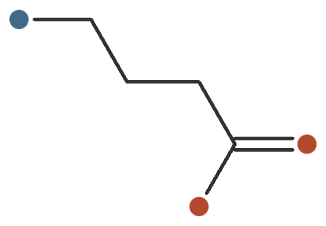
GABA
GABA is the brain's main inhibitory neurotransmitter, sold as a "calm" supplement despite uncertainty over whether oral doses reach the brain.

GABA at a Glance
GABA is the brain’s principal inhibitory neurotransmitter. Roughly a third of central synapses use it, and its job is to hold neuronal excitability down — the counterweight to glutamate’s excitation. Almost every drug that reliably produces calm or sedation works by amplifying GABA signalling: benzodiazepines, z-drugs, barbiturates, alcohol, most general anaesthetics.
So the pitch for GABA as a supplement writes itself, and it is one of the most intuitively appealing products on the shelf. Take the calm molecule, feel calm.
The problem is that the appeal is the whole argument. GABA is small, charged and hydrophilic, which is exactly the profile that does not cross the blood–brain barrier — a barrier that exists in significant part to keep circulating neurotransmitters out of the brain, since a brain at the mercy of blood chemistry would be a bad design. The drugs that work on GABA signalling are not GABA; they are lipophilic molecules that get in and then modulate the receptors from inside. Swallowing the neurotransmitter itself is a different proposition entirely, and the honest state of the evidence is that nobody has convincingly shown it works.
This page is unusual on the site in that its central finding is a negative one. That is worth stating plainly rather than burying under hedges.
What It’s Used For
- Stress and “instant calm” — the main reason it sells. A 2020 systematic review found only limited evidence for a stress benefit, with most positive signals coming from small acute studies measuring biomarkers rather than clinical outcomes 1Reference 1Systematic reviewEffects of oral gamma-aminobutyric acid (GABA) administration on stress and sleep in humans: a systematic review — systematic reviewView study →.
- Sleep — the same review rated the sleep evidence very limited 1Reference 1Systematic reviewEffects of oral gamma-aminobutyric acid (GABA) administration on stress and sleep in humans: a systematic review — systematic reviewView study →. Weaker again than the stress case.
- Blood pressure and relaxation — the most defensible human signal, built on peripheral effects, which is at least consistent with the pharmacology, though the positive trial used a fermented-milk matrix rather than pure GABA.
What to make of it: if something is happening, the most defensible explanations are peripheral rather than central — action on the enteric nervous system, vagal signalling from the gut, or effects on peripheral GABA receptors — plus the ordinary contribution of expectation. A strong central relaxation effect from an oral dose remains unproven. Anyone specifically wanting the “calm focus” experience has better-supported options in L-theanine and magnesium.
How It Works
In the brain, GABA binds two receptor families. GABA-A is an ion channel: activation opens a chloride conductance that hyperpolarises the neuron and makes it harder to fire. This is the fast inhibition, and the site benzodiazepines, barbiturates and alcohol all potentiate. GABA-B is a slower G-protein-coupled receptor that damps calcium entry and neurotransmitter release. Between them they set the brain’s overall excitability.
None of that is in dispute. The dispute is whether an oral dose ever reaches those receptors.
GABA is a zwitterion — carrying both a positive and a negative charge at physiological pH — and highly water-soluble. Molecules with that profile do not diffuse through the lipid membranes of the blood–brain barrier, and GABA has no dedicated high-capacity transporter to carry it across. Animal work has long suggested penetration is minimal. This is precisely why pharmacology took a different route: benzodiazepines and their relatives are lipophilic molecules that cross easily and then modulate GABA-A from within, rather than trying to deliver GABA itself.
There is a plausible alternative pathway, and it is the reason the question is not entirely closed. The gut has its own extensive GABA signalling — enteric neurons, gut bacteria that both produce and consume GABA, and vagal afferents running to the brain. An oral dose could in principle produce a central effect indirectly, by acting on that system rather than by crossing into the brain. The studies that report anything tend to measure exactly the sort of indirect markers this predicts: EEG alpha power, salivary stress markers, subjective ratings. Suggestive, not demonstrated.
Pharmacology & Research
GABA (gamma-aminobutyric acid) is a non-proteinogenic amino acid and the brain’s principal inhibitory neurotransmitter, sold as a “calm” nutraceutical on the strength of that identity. The central problem is pharmacokinetic, not pharmacodynamic: GABA is a small, charged, highly water-soluble zwitterion with no dedicated high-capacity transporter, exactly the profile that does not cross the blood–brain barrier — so the receptors that produce sedation are almost certainly not reached by an oral dose. There is no dietary requirement and no deficiency state, so the repletion-vs-extra distinction that rescues most supplements does not apply here: any benefit is an effect on top of an already-functioning endogenous system. The best-characterised human signal is peripheral — a blood-pressure drop — and even that rests on fermented-food matrices confounded by ACE-inhibitory peptides. Treat the central “instant calm” claim as unproven and the evidence base as small, acute, and biomarker-heavy.
Support is an experimental score I’m building — a composite weighted by study type (human > animal > in vitro > review) and study volume. It’s a beta: a fast way to rank strength of evidence at a glance, not a validated metric. Each application links down to its write-up.
The most defensible human result. In a randomised, single-blind, placebo-controlled trial, 39 mildly hypertensive adults drank a GABA-enriched fermented milk (form: fermented-milk matrix, not pure GABA) daily for 12 weeks; systolic BP fell by a mean of 17.4 ± 4.3 mmHg and diastolic by 7.2 ± 5.7 mmHg from baseline, with the systolic change separating from placebo (P < 0.05) 2Reference 2RCTBlood-pressure-lowering effect of a novel fermented milk containing gamma-aminobutyric acid (GABA) in mild hypertensives — randomised controlled trialView study →.
The USP safety review corroborates a transient, moderate BP drop (<10%) across studies 9Reference 9ReviewUnited States Pharmacopeia (USP) safety review of gamma-aminobutyric acid (GABA) — reviewView study →.
This is mechanistically plausible — peripheral GABA and vagal/enteric signalling can lower BP — and does not depend on any deficiency. The effect is deficiency-independent but the driver is uncertain.
Gap: the positive trial was single-blind and used a fermented-milk product rich in ACE-inhibitory peptides, so the BP effect cannot be cleanly attributed to GABA itself rather than the food matrix; pure-GABA head-to-head data are lacking.
The category the product is sold on, and the one the evidence most clearly under-delivers on. A 2020 PRISMA systematic review of placebo-controlled human trials found only limited evidence for a stress benefit, with positive signals coming from small acute studies measuring biomarkers rather than clinical outcomes 1Reference 1Systematic reviewEffects of oral gamma-aminobutyric acid (GABA) administration on stress and sleep in humans: a systematic review — systematic reviewView study →.
The underlying trials are the kind you’d expect: Abdou et al. reported increased EEG alpha and preserved salivary IgA under stress after a single dose (n=13 EEG arm; 8 acrophobic subjects on a bridge) 3Reference 3Clinical trialRelaxation and immunity enhancement effects of gamma-aminobutyric acid (GABA) administration in humans — clinical trialView study →, and Yoto et al. found 100 mg blunted stress-induced EEG and mood (POMS) changes in a 63-adult single-blind crossover 4Reference 4RCTOral intake of γ-aminobutyric acid affects mood and activities of central nervous system during stressed condition induced by mental tasks — randomised controlled trialView study →.
A 2025 preoperative RCT went further and put oral GABA head-to-head against L-theanine and alprazolam for sedation, anxiety and cognition in surgical patients 10Reference 10RCTComparison of the effects of GABA and L-theanine on sedation, anxiety, and cognition in preoperative surgical patients — randomised controlled trialView study → — a rare controlled human anxiety comparison for GABA, though in an acute peri-operative setting rather than chronic anxiety. All of this evidence is acute, small, and rests on indirect markers.
Gap: every positive study measures a peripheral or subjective proxy (EEG alpha, salivary markers, mood scales) rather than a replicated clinical anxiety endpoint, and the effects are consistent with expectation plus peripheral action — not demonstrated central anxiolysis.
An ergogenic niche built on a real acute endocrine effect. In a double-blind crossover RCT, 11 resistance-trained men taking 3 g of GABA showed ~400% higher peak growth-hormone (both immunoreactive and immunofunctional isoforms) and ~375% greater AUC versus placebo at rest 5Reference 5RCTGrowth hormone isoform responses to GABA ingestion at rest and after exercise — randomised controlled trialView study →. A 12-week trial then paired 100 mg GABA with 10 g whey in 21 men doing resistance training and found greater whole-body fat-free-mass gain than whey alone 6Reference 6Oral supplementation using gamma-aminobutyric acid and whey protein improves whole body fat-free mass in men after resistance trainingView study →.
Gap: the GH spike is transient and its translation into meaningful hypertrophy is untested at scale — the only body-composition trial is small (n=21), used a GABA+whey combination (so the increment attributable to GABA is unclear), and the doses differ 30-fold between the two studies.
The weakest of the marketed claims. The 2020 systematic review rated the sleep evidence very limited 1Reference 1Systematic reviewEffects of oral gamma-aminobutyric acid (GABA) administration on stress and sleep in humans: a systematic review — systematic reviewView study →.
What human data exist mostly test GABA in combination with L-theanine: a 2026 single-arm exploratory study (n=19) reported a PSQI improvement from 9.42 to 6.26 over 4 weeks on GABA 700 mg + L-theanine 200 mg, but with no placebo arm and no GABA-only comparator 7Reference 7Effects of combined GABA and L-theanine supplementation on sleep quality: an exploratory studyView study →.
The mechanistic sleep rationale comes largely from animal work — a GABA/L-theanine mixture shortened sleep latency and increased NREM in rodents 8Reference 8GABA and l-theanine mixture decreases sleep latency and improves NREM sleep — animal studyView study →.
Gap: no well-controlled trial isolates a sleep benefit of oral GABA alone in humans; the positive human study is uncontrolled and combined, and the supportive mechanism is animal. If the goal is sleep or “calm focus,” L-theanine has the better-controlled acute human data.
Mechanisms
| Target / pathway | Effect | Relevant to |
|---|---|---|
| GABA-A receptor (ligand-gated Cl⁻ channel) | Opens chloride conductance → hyperpolarisation, fast inhibition (the benzodiazepine/alcohol site) | Central calm/sedation — if the molecule reached it |
| GABA-B receptor (Gi/o GPCR) | Damps Ca²⁺ entry and neurotransmitter release, slow inhibition | Central excitability control (same access problem) |
| Blood–brain barrier | Poor passive diffusion (charged zwitterion), no high-capacity transporter → minimal central uptake | The core limiter on every central claim |
| Enteric nervous system / gut–vagal axis | Peripheral GABA receptors, gut microbial GABA turnover, vagal afferents to brain | Plausible indirect route for any real effect |
| Peripheral vasculature / autonomic tone | Peripheral GABA signalling can lower vascular tone | Blood-pressure reduction |
| Pituitary somatotropes | Acute rise in growth hormone (and prolactin) after oral dosing | GH/muscle-mass application; also an interaction caution |
Pharmacokinetics
This is the decision-relevant section. GABA is a zwitterion (positive and negative charge at physiological pH) and highly hydrophilic — the profile that does not diffuse across the lipid membranes of the blood–brain barrier, a barrier that exists partly to keep circulating neurotransmitters out of the brain. There is no dedicated high-capacity transporter to ferry it across, and animal work has long shown central penetration is minimal. Human oral pharmacokinetics — absorption fraction, plasma half-life, tissue distribution — are poorly characterised, which is itself telling for a molecule marketed this heavily. Because the plausible site of action is peripheral (enteric/vagal) rather than central, there is no reason to expect a conventional central dose–response relationship, and no effective oral dose has been established. “PharmaGABA” (bacterial-fermentation-derived) and synthetic GABA are sold as distinct but have no head-to-head evidence of a meaningful pharmacokinetic difference.
Clinical trials
Registered activity is modest and skewed toward food-science and cardiometabolic endpoints rather than the central “calm” claim; GABA is off-patent, so there is little industry incentive for large definitive trials, and many “GABA” trial records concern GABAergic drugs (baclofen, gabapentinoids) rather than the supplement.
| Completed | Planned | Terminated | Preclinical |
|---|---|---|---|
| ~20 | ~10 | ~1 | many(dominant) |
Last checked: August 2026.
Dietary Sources
GABA is not an essential nutrient — the body makes it from glutamate via glutamate decarboxylase, so there is no dietary requirement and no deficiency state 9Reference 9ReviewUnited States Pharmacopeia (USP) safety review of gamma-aminobutyric acid (GABA) — reviewView study →. It occurs naturally in foods, most notably where bacterial or plant decarboxylases have concentrated it:
| Source | Notes on GABA content |
|---|---|
| Fermented foods (kimchi, miso, tempeh, some cheeses, fermented teas) | Bacterial decarboxylases generate GABA during fermentation; amounts vary widely by strain and process |
| Germinated (“sprouted”) brown rice, germinated grains | Germination raises GABA severalfold vs the milled grain; a common functional-food target |
| Tomatoes, certain rice/vegetable cultivars bred or treated for high GABA | Selectively enriched; still food-level, not pharmacological, amounts |
| Green/oolong tea leaves (“Gabaron” tea, anaerobically processed) | Anaerobic treatment converts glutamate to GABA |
Refining and milling grains removes most of the GABA (it concentrates in the germ and bran). “PharmaGABA,” a common supplement ingredient, is produced by bacterial fermentation (typically Lactobacillus) rather than chemical synthesis. Practically, food-level amounts are far below the ~100 mg–3 g used in trials, and because even those trial doses have not demonstrated a central effect, dietary GABA content is best treated as a curiosity rather than a reason to choose a food.
Intake & Dosage
These are doses studied in research, not a personal recommendation.
- No RDA/AI and no effective oral dose are established. GABA is synthesised endogenously; there is no intake target to hit and no deficiency to correct.
- Acute study range: roughly 100 mg to ~3 g. Stress/EEG studies used ~100 mg 4Reference 4RCTOral intake of γ-aminobutyric acid affects mood and activities of central nervous system during stressed condition induced by mental tasks — randomised controlled trialView study →; the growth-hormone study used 3 g 5Reference 5RCTGrowth hormone isoform responses to GABA ingestion at rest and after exercise — randomised controlled trialView study →; combination sleep studies used ~700 mg GABA with L-theanine 7Reference 7Effects of combined GABA and L-theanine supplementation on sleep quality: an exploratory studyView study →.
- Because efficacy itself is unresolved and the plausible mechanism is peripheral, there is no established dose–response relationship — a higher dose is not demonstrably “more effective.”
- Unlike minerals, GABA is a single defined molecule, so there is no elemental-vs-compound-weight conversion; the labelled milligram figure is the GABA amount.
- No Tolerable Upper Intake Level (UL) has been set. Short trials reported no serious adverse events up to 18 g/day for 4 days and 120 mg/day for 12 weeks 9Reference 9ReviewUnited States Pharmacopeia (USP) safety review of gamma-aminobutyric acid (GABA) — reviewView study →, but absence of a UL is not licence for unlimited intake.
- “PharmaGABA” (fermentation-derived) and synthetic GABA are marketed as distinct; no head-to-head evidence supports a meaningful difference.
Safety
The short trials that exist report no notable problems, but “well tolerated in small studies of something that may not work” is a weak safety statement, and it will not be dress it up as more.
- Generally well tolerated in short trials, including at gram-level doses 1,
9Reference 1Systematic reviewEffects of oral gamma-aminobutyric acid (GABA) administration on stress and sleep in humans: a systematic review — systematic reviewView study →Reference 9ReviewUnited States Pharmacopeia (USP) safety review of gamma-aminobutyric acid (GABA) — reviewView study → . - Toxicity is not characterized. No serious adverse events up to 18 g/day for 4 days or 120 mg/day for 12 weeks 9Reference 9ReviewUnited States Pharmacopeia (USP) safety review of gamma-aminobutyric acid (GABA) — reviewView study →, but no upper limit and no long-term human data.
- Transient blood-pressure drop (<10%) is the practical dose-limiting effect 9Reference 9ReviewUnited States Pharmacopeia (USP) safety review of gamma-aminobutyric acid (GABA) — reviewView study → — caution with antihypertensives and in people with low baseline blood pressure.
- Theoretically additive with sedatives (alcohol, benzodiazepines, z-drugs, sedating antihistamines) — untested, but the pharmacology makes it worth separating.
- Efficacy itself is unresolved, which makes any risk–benefit judgement one-sided.
- Not assessed in pregnancy or lactation — see the box below.
Full Safety & Interactions Detail
Oral GABA appeared generally well tolerated in the short placebo-controlled trials that exist, including at gram-level doses 1,
- Interactions (pharmacological, not clinically tested):
- Sedatives — theoretically additive with alcohol, benzodiazepines, z-drugs and sedating antihistamines. Separate dosing or avoid combining.
- Antihypertensives — additive blood-pressure lowering; concurrent use could raise the risk of hypotension, per the USP review 9Reference 9ReviewUnited States Pharmacopeia (USP) safety review of gamma-aminobutyric acid (GABA) — reviewView study →.
- Endocrine — GABA acutely raises growth hormone and prolactin 5,
9Reference 5RCTGrowth hormone isoform responses to GABA ingestion at rest and after exercise — randomised controlled trialView study →Reference 9ReviewUnited States Pharmacopeia (USP) safety review of gamma-aminobutyric acid (GABA) — reviewView study → ; the relevance to people on hormone-sensitive therapies is unstudied.
- Toxicity envelope: chronic dosing in rats and dogs up to 1 g/kg/day showed no signs of toxicity 9Reference 9ReviewUnited States Pharmacopeia (USP) safety review of gamma-aminobutyric acid (GABA) — reviewView study →; formal human upper-limit and long-term data are absent. Trials are acute or short.
- The most useful thing to say about risk here is that it is unquantified in both directions: the benefit is unproven and the harm profile is unstudied beyond a few weeks.
Scope disclosure (honesty, not a claim): interactions were assessed on pharmacological grounds only — additive sedation and additive blood-pressure lowering are identified 9Reference 9ReviewUnited States Pharmacopeia (USP) safety review of gamma-aminobutyric acid (GABA) — reviewView study →, neither tested in a dedicated interaction trial; no dedicated human pregnancy/lactation studies exist; and no Tolerable Upper Intake Level has been set. Absence of reports is not evidence of safety.
Not assessed. No adequate human data exist for supplemental GABA in pregnancy or lactation, and its basic pharmacokinetics in adults are poorly characterised 9Reference 9ReviewUnited States Pharmacopeia (USP) safety review of gamma-aminobutyric acid (GABA) — reviewView study →. Given that GABA signalling has a role in fetal neurodevelopment, an unstudied supplement acting on that system is not a reasonable thing to self-select. Pregnant or breastfeeding people should not use it without discussing it with a qualified practitioner.
References
- Hepsomali P, Groeger JA, Nishihira J, Scholey A. (2020). Effects of oral gamma-aminobutyric acid (GABA) administration on stress and sleep in humans: a systematic review — systematic review. Front Neurosci. https://pubmed.ncbi.nlm.nih.gov/33041752/
- Inoue K, Shirai T, Ochiai H, Kasao M, et al. (2003). Blood-pressure-lowering effect of a novel fermented milk containing gamma-aminobutyric acid (GABA) in mild hypertensives — randomised controlled trial. Eur J Clin Nutr. https://pubmed.ncbi.nlm.nih.gov/12627188/
- Abdou AM, Higashiguchi S, Horie K, Kim M, et al. (2006). Relaxation and immunity enhancement effects of gamma-aminobutyric acid (GABA) administration in humans — clinical trial. Biofactors. https://pubmed.ncbi.nlm.nih.gov/16971751/
- Yoto A, Murao S, Motoki M, Yokoyama Y, et al. (2012). Oral intake of γ-aminobutyric acid affects mood and activities of central nervous system during stressed condition induced by mental tasks — randomised controlled trial. Amino Acids. https://pubmed.ncbi.nlm.nih.gov/22203366/
- Powers ME, Yarrow JF, McCoy SC, Borst SE. (2008). Growth hormone isoform responses to GABA ingestion at rest and after exercise — randomised controlled trial. Med Sci Sports Exerc. https://pubmed.ncbi.nlm.nih.gov/18091016/
- Sakashita M, Nakamura U, Horie N, Yokoyama Y, et al. (2019). Oral supplementation using gamma-aminobutyric acid and whey protein improves whole body fat-free mass in men after resistance training. J Clin Med Res. https://pubmed.ncbi.nlm.nih.gov/31143310/
- Konno H, Naganuma K, Kamada Y. (2026). Effects of combined GABA and L-theanine supplementation on sleep quality: an exploratory study. Eur Rev Med Pharmacol Sci. https://pubmed.ncbi.nlm.nih.gov/41636292/
- Kim S, Jo K, Hong KB, Han SH, et al. (2019). GABA and l-theanine mixture decreases sleep latency and improves NREM sleep — animal study. Pharm Biol. https://pubmed.ncbi.nlm.nih.gov/30707852/
- Oketch-Rabah HA, Madden EF, Roe AL, Betz JM. (2021). United States Pharmacopeia (USP) safety review of gamma-aminobutyric acid (GABA) — review. Nutrients. https://pubmed.ncbi.nlm.nih.gov/34444905/
- Deshpande SS, Kurdi M, Baiju A, Athira AS, et al. (2025). Comparison of the effects of GABA and L-theanine on sedation, anxiety, and cognition in preoperative surgical patients — randomised controlled trial. J Anaesthesiol Clin Pharmacol. https://pubmed.ncbi.nlm.nih.gov/40026748/



