
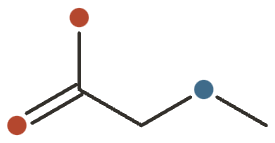
Sarcosine
Sarcosine (N-methylglycine) is a glycine-transporter inhibitor studied mainly as an add-on treatment for schizophrenia symptoms and cognition.

Sarcosine at a Glance
Sarcosine is glycine with a methyl group attached — N-methylglycine, a natural intermediate in the body’s methylation and glycine metabolism. It is a minor metabolite by any ordinary measure, and would be of no interest at all except for one specific pharmacological property: it blocks the transporter that clears glycine out of the synapse.
That matters because of what glycine does at the NMDA receptor. NMDA receptors need two things to open — glutamate at the main site, and glycine (or D-serine) at a separate co-agonist site. If the co-agonist site is not occupied, glutamate alone does nothing. Sarcosine inhibits GlyT-1, the transporter that pulls glycine back out of the synaptic cleft, so glycine accumulates and NMDA signalling is enhanced.
This is a targeted intervention aimed at a specific theory: the NMDA-hypofunction model of schizophrenia, which holds that under-active glutamate signalling drives the negative and cognitive symptoms that antipsychotics handle poorly. Sarcosine is one of the more credible tests of that idea, and it has produced some of the better results in a field with a long record of disappointment.
It should be said plainly that this is where the evidence sits. Sarcosine is also marketed as a general mood and cognition nootropic, but that use borrows its credibility from trials in people with a serious psychiatric illness. Enhancing NMDA signalling in a healthy brain is not the same intervention as correcting a hypothesised deficit in an ill one.
What It’s Used For
- Schizophrenia, as an adjunct to antipsychotics — the use with real support. Sarcosine outperformed both placebo and D-serine on symptom, negative-symptom, quality-of-life and functioning measures when added to antipsychotics 2Reference 2RCTSarcosine or D-serine add-on treatment for acute exacerbation of schizophrenia: a randomized, double-blind, placebo-controlled study — randomised controlled trialView study →, and a 2020 meta-analysis of double-blind randomised trials put the effect on overall symptoms at SMD ≈ 0.51 5Reference 5Meta-analysisEfficacy and cognitive effect of sarcosine (N-methylglycine) in patients with schizophrenia: a systematic review and meta-analysis of double-blind randomised controlled trials — meta-analysisView study →.
- Negative symptoms specifically — the domain antipsychotics handle worst, and where sarcosine looks most convincing 2Reference 2RCTSarcosine or D-serine add-on treatment for acute exacerbation of schizophrenia: a randomized, double-blind, placebo-controlled study — randomised controlled trialView study →.
- Schizophrenia monotherapy — a randomised, double-blind trial found 2 g/day produced greater symptom improvement particularly in antipsychotic-naïve patients, though with no overall between-group significance 4Reference 4RCTSarcosine (N-methylglycine) treatment for acute schizophrenia: a randomized, double-blind study — randomised controlled trialView study →.
- Depression — a single 40-patient citalopram-controlled RCT, unreplicated 7Reference 7RCTInhibition of glycine transporter-I as a novel mechanism for the treatment of depression — randomised controlled trialView study →.
- Cognition in schizophrenia — the claim most often overstated: the 2020 meta-analysis found no standalone cognitive effect, and the one positive signal required co-administering sodium benzoate 5,
8Reference 5Meta-analysisEfficacy and cognitive effect of sarcosine (N-methylglycine) in patients with schizophrenia: a systematic review and meta-analysis of double-blind randomised controlled trials — meta-analysisView study →Reference 8RCTAdjunctive sarcosine plus benzoate improved cognitive function in chronic schizophrenia patients with constant clinical symptoms: a randomised, double-blind, placebo-controlled trial — randomised controlled trialView study → . - Obsessive-compulsive disorder — one small open-label study, no placebo control 9Reference 9Sarcosine therapy for obsessive compulsive disorder: a prospective, open-label study — open-label trialView study →.
- General nootropic use — extrapolation. Claims that sarcosine reliably improves mood or cognition in healthy, non-clinical users were not backed by a citable trial in this pass.
The important framing: this is a clinical adjunct, not a casual supplement. People with, or at risk of, psychiatric illness should not self-treat, and the trials that support sarcosine were all run alongside proper psychiatric care rather than instead of it.
How It Works
The NMDA receptor is unusual in requiring two different molecules to open. Glutamate binds the primary site; glycine or D-serine must simultaneously occupy a separate co-agonist site on a different subunit. This dual requirement is a safety interlock — it means glutamate alone cannot excite a neuron, which matters given how damaging unchecked NMDA activation is.
Glycine concentration at the synapse is controlled by GlyT-1, a transporter on surrounding glial cells that continuously pumps glycine out of the cleft and keeps the co-agonist site only partially saturated. That partial saturation is the lever. Inhibit GlyT-1, glycine lingers, more receptors have their co-agonist site filled, and NMDA signalling increases — without adding any glutamate, and therefore without the excitotoxic risk of stimulating the primary site directly.
Sarcosine is that inhibitor. It is a weak, competitive GlyT-1 blocker, which is why doses are measured in grams rather than milligrams, and it is also a substrate for the transporter itself.
Why aim at NMDA in schizophrenia at all? Because drugs that block NMDA receptors — ketamine, PCP — reproduce not just the positive symptoms of psychosis but the negative and cognitive ones too, which dopamine-based models never explained well. That observation generated the NMDA-hypofunction hypothesis, and enhancing co-agonist-site occupancy is its most direct pharmacological test. Sarcosine has performed better in that test than D-serine, which supplies the co-agonist directly but did not separate from placebo in a head-to-head trial 2Reference 2RCTSarcosine or D-serine add-on treatment for acute exacerbation of schizophrenia: a randomized, double-blind, placebo-controlled study — randomised controlled trialView study → — a hint that raising synaptic glycine locally works better than flooding the system.
Pharmacology & Research
Sarcosine (N-methylglycine) is not a nutrient and has no deficiency state — it is a small-molecule drug that happens to be endogenous, and essentially all of its evidence comes from psychiatry. Its single relevant property is inhibition of the type-1 glycine transporter (GlyT-1), which raises glycine at the NMDA-receptor co-agonist site and enhances NMDA signalling. That places it inside one specific research programme — the NMDA-hypofunction model of schizophrenia — where it is one of the better-performing tests of the idea, with several small randomised trials and two meta-analyses behind it. Everything outside that programme (depression, OCD, and especially “nootropic” use in healthy people) is thinner, and the whole literature has a structural weakness: most of the positive trials come from a small number of Taiwanese research groups. Doses are measured in grams because sarcosine is a weak, competitive blocker, and its benefit has only ever been demonstrated in diagnosed patients under psychiatric care.
Support is an experimental score I’m building — a composite weighted by study type (human > animal > in vitro > review) and study volume, then tempered for consistency and for how much the effect depends on treating a diagnosed illness rather than a healthy user. It’s a beta: a fast way to rank strength of evidence at a glance, not a validated metric. Each application links down to its write-up.
This is the core of the evidence. Adding sarcosine (2 g/day) to a stable antipsychotic regimen improved positive, negative, cognitive and general symptoms versus placebo in a 6-week double-blind trial of 38 patients, including the risperidone-only subgroup 1Reference 1RCTGlycine transporter I inhibitor, N-methylglycine (sarcosine), added to antipsychotics for the treatment of schizophrenia — randomised controlled trialView study →.
In a 65-patient acute-exacerbation trial, sarcosine add-on reduced PANSS total scores more than placebo (P = .04) and more than D-serine (P < .001) 2Reference 2RCTSarcosine or D-serine add-on treatment for acute exacerbation of schizophrenia: a randomized, double-blind, placebo-controlled study — randomised controlled trialView study →.
A 2020 systematic review and meta-analysis of seven double-blind RCTs (326 participants) found a significant benefit on overall clinical symptoms (SMD = 0.51, 95% CI 0.26–0.76) 5Reference 5Meta-analysisEfficacy and cognitive effect of sarcosine (N-methylglycine) in patients with schizophrenia: a systematic review and meta-analysis of double-blind randomised controlled trials — meta-analysisView study →, and later syntheses reach the same direction 6,
All trials used the 2 g/day dose for six to eight weeks.
Gap: the trials are few, small, and come mostly from a small number of research groups, so the effect size is not yet anchored by large independent replication 5Reference 5Meta-analysisEfficacy and cognitive effect of sarcosine (N-methylglycine) in patients with schizophrenia: a systematic review and meta-analysis of double-blind randomised controlled trials — meta-analysisView study →.
Negative symptoms (blunted affect, alogia, social withdrawal) are the domain antipsychotics handle worst, and they are where sarcosine looks most convincing. In the acute-exacerbation add-on trial, sarcosine beat placebo on SANS-20 (P = .007) and SANS-17 (P = .003), and beat D-serine on the same scales, with specific improvement in alogia and blunted affect 2Reference 2RCTSarcosine or D-serine add-on treatment for acute exacerbation of schizophrenia: a randomized, double-blind, placebo-controlled study — randomised controlled trialView study →.
This is consistent with the mechanistic rationale (raising synaptic glycine locally rather than flooding the co-agonist site directly).
Gap: the negative-symptom signal comes from the same small Taiwanese trial programme and short (6-week) durations; whether it translates to sustained functional recovery is untested 2,
Sarcosine has been tested as a primary agent, not just an add-on. In a 6-week double-blind trial, 20 acutely symptomatic drug-free patients received 2 g or 1 g/day; the 2 g group was more likely to reach a ≥20% PANSS reduction, particularly among antipsychotic-naïve patients — but there was no significant between-group difference in the dose × time analysis 4Reference 4RCTSarcosine (N-methylglycine) treatment for acute schizophrenia: a randomized, double-blind study — randomised controlled trialView study →.
The authors themselves flagged that the effect may be limited to the drug-naïve subgroup and called for larger controlled trials.
Gap: a single small trial with the benefit riding on a subgroup and no overall significance — monotherapy is a hypothesis, not an established use, and replacing an antipsychotic with sarcosine has never been validated 4Reference 4RCTSarcosine (N-methylglycine) treatment for acute schizophrenia: a randomized, double-blind study — randomised controlled trialView study →.
One 6-week randomised, double-blind, citalopram-controlled trial in 40 patients with major depressive disorder found sarcosine improved Hamilton Depression Rating Scale, Clinical Global Impression and Global Assessment of Function scores more than citalopram, with faster and more frequent remission and fewer dropouts 7Reference 7RCTInhibition of glycine transporter-I as a novel mechanism for the treatment of depression — randomised controlled trialView study →. Supporting rodent data (forced-swim, tail-suspension, chronic unpredictable stress) accompanied the clinical arm.
Gap: a single 40-patient trial from the same research lineage, active-controlled rather than placebo-controlled, and never independently replicated — the authors explicitly framed it as preliminary and awaiting proof-of-principle confirmation 7Reference 7RCTInhibition of glycine transporter-I as a novel mechanism for the treatment of depression — randomised controlled trialView study →.
This is the claim most often overstated in nootropic marketing, and it is the weakest of the schizophrenia applications. The 2020 meta-analysis found sarcosine improved overall symptoms but had no significant effect on cognitive function 5Reference 5Meta-analysisEfficacy and cognitive effect of sarcosine (N-methylglycine) in patients with schizophrenia: a systematic review and meta-analysis of double-blind randomised controlled trials — meta-analysisView study →.
The one positive cognitive signal comes from a 12-week RCT where adding sodium benzoate (a D-amino acid oxidase inhibitor) to sarcosine improved cognition and global functioning, whereas sarcosine alone did not 8Reference 8RCTAdjunctive sarcosine plus benzoate improved cognitive function in chronic schizophrenia patients with constant clinical symptoms: a randomised, double-blind, placebo-controlled trial — randomised controlled trialView study → — i.e. the cognitive benefit required the combination, not sarcosine by itself.
Gap: the pooled data show no standalone cognitive effect; the lone positive result depends on a second drug (benzoate), so “sarcosine for cognition” is not supported as a monotherapy claim 5,
A 10-week open-label study enrolled 26 OCD outpatients on flexible sarcosine dosing (0.5–2 g/day), as monotherapy or add-on. Mean Yale-Brown Obsessive Compulsive Scale scores fell from 27.6 to 22.7 — a mean reduction of ~19.8% (P = 0.0035) — and 8 of 25 analysable subjects (32%) were responders (>35% reduction) 9Reference 9Sarcosine therapy for obsessive compulsive disorder: a prospective, open-label study — open-label trialView study →.
Gap: open-label, no placebo control and a modest average effect; open-label OCD trials are notoriously prone to expectation effects, so this is a signal to test, not evidence of efficacy 9Reference 9Sarcosine therapy for obsessive compulsive disorder: a prospective, open-label study — open-label trialView study →.
Mechanisms
| Target / pathway | Effect | Relevant to |
|---|---|---|
| Type-1 glycine transporter (GlyT-1) | Weak competitive inhibition; also a transporter substrate | All applications — the primary mechanism |
| Synaptic glycine at NMDA co-agonist site | ↑ (glycine lingers, co-agonist site more occupied) | SchizophreniadepressionOCD |
| NMDA-receptor signalling | ↑ (enhanced without adding glutamate, avoiding direct excitotoxic drive) | NMDA-hypofunction model of schizophrenia |
| Glutamatergic neuroplasticity (preclinical) | ↑ in rodent depression models | Depression (mechanistic support only) |
Pharmacokinetics
Sarcosine is dosed in grams (1–2 g/day) precisely because it is a weak, competitive GlyT-1 blocker rather than a high-affinity drug, and because it is itself a substrate for the transporter it inhibits. It is an endogenous metabolite of choline breakdown and the glycine–betaine methylation cycle, so baseline levels are non-zero and there is no deficiency state to correct. Detailed human absorption, half-life and food-effect data specific to supplemental sarcosine are not well characterised in the public literature — the trials report dosing and outcomes, not formal pharmacokinetics. Central effect is presumed to reflect raised synaptic glycine rather than a direct receptor action. Trial durations were six to twelve weeks; longer-term kinetics and steady-state behaviour are uncharacterised.
Clinical trials
Registered activity is concentrated in schizophrenia, with smaller efforts in depression, OCD and Parkinson’s-disease dementia; most listings trace back to the same Taiwanese investigators, and there is little industry-sponsored large-scale trial activity for this off-patent molecule.
| Completed | Planned / recruiting | Terminated / withdrawn | Preclinical |
|---|---|---|---|
| ~9(schizophrenia, depression, OCD, PDD) | ~1 | ~1(a schizophrenia-prevention trial in high-risk individuals was withdrawn) | Numerous rodent NMDA/depression models |
Last checked: August 2026.
Dietary Sources
Sarcosine is an endogenous metabolite, not a dietary essential — the body makes it during choline breakdown and in the glycine–betaine methylation cycle — so there is no requirement, no deficiency state, and no recommended intake. It occurs in trace amounts in ordinary foods and is a normal component of muscle tissue.
| Food | Sarcosine content | Notes |
|---|---|---|
| Egg yolk | Trace | Endogenous animal-tissue metabolite |
| Meat (incl. turkey) | Trace | Present in muscle tissue |
| Legumes | Trace | Small amounts |
The quantities in food are negligible — milligram-scale at most — against the gram-level doses used in research, so no realistic diet supplies a “sarcosine dose.” One point worth flagging because it surfaces in garbled form in supplement marketing: sarcosine has been studied as a urinary biomarker in prostate cancer research. Being measurable in a disease is not the same as causing or treating it, and the biomarker literature says nothing about supplementation.
Intake & Dosage
These are doses studied in research, not a personal recommendation.
- Studied range: roughly 1–2 g/day, with 2 g/day the dose used in nearly all schizophrenia trials 1,
2, . The OCD open-label study used a flexible 0.5–2 g/day schedule 9Reference 9Sarcosine therapy for obsessive compulsive disorder: a prospective, open-label study — open-label trialView study →.4Reference 1RCTGlycine transporter I inhibitor, N-methylglycine (sarcosine), added to antipsychotics for the treatment of schizophrenia — randomised controlled trialView study →Reference 2RCTSarcosine or D-serine add-on treatment for acute exacerbation of schizophrenia: a randomized, double-blind, placebo-controlled study — randomised controlled trialView study →Reference 4RCTSarcosine (N-methylglycine) treatment for acute schizophrenia: a randomized, double-blind study — randomised controlled trialView study → - No RDA/AI or UL exists — sarcosine is not a nutrient. The absence of an established upper limit does not mean high doses are safe; it means no authority has evaluated it.
- Duration: trials ran six to twelve weeks. Longer-term dosing is uncharacterised.
- Context: every efficacy trial was run within psychiatric care — as an adjunct to antipsychotics, or as monotherapy in drug-naïve patients under supervision. Neither is a self-directed protocol. The most important dosing note is not a number: anyone considering sarcosine for a psychiatric indication should do so with a clinician, and stopping or replacing antipsychotic medication with a supplement is dangerous.
Safety
The molecule itself looks benign in trials: adverse-event rates did not distinguish sarcosine from placebo, and reported complaints were mild and gastrointestinal 1,
- Good safety profile in the cited trials. Adverse-event rates did not distinguish sarcosine from placebo; complaints were mild and gastrointestinal 1,
2, .5Reference 1RCTGlycine transporter I inhibitor, N-methylglycine (sarcosine), added to antipsychotics for the treatment of schizophrenia — randomised controlled trialView study →Reference 2RCTSarcosine or D-serine add-on treatment for acute exacerbation of schizophrenia: a randomized, double-blind, placebo-controlled study — randomised controlled trialView study →Reference 5Meta-analysisEfficacy and cognitive effect of sarcosine (N-methylglycine) in patients with schizophrenia: a systematic review and meta-analysis of double-blind randomised controlled trials — meta-analysisView study → - A clinical adjunct, not a general nootropic. Its evidence comes from a serious psychiatric illness treated under supervision; over-the-counter mood/focus marketing extrapolates well beyond the data.
- Do not self-treat psychiatric symptoms. Sarcosine has never been tested as a replacement for prescribed treatment, and stopping antipsychotics is dangerous.
- The clozapine caveat. Sarcosine added no benefit over placebo when combined with clozapine 3Reference 3RCTGlycine transporter I inhibitor, N-methylglycine (sarcosine), added to clozapine for the treatment of schizophrenia — randomised controlled trialView study → — the effect is regimen-dependent, not universal.
- NMDA signalling in a healthy brain is not obviously benign — that use is untested.
- Interactions and pregnancy/lactation not formally assessed in this pass.
Full Safety & Interactions Detail
Sarcosine showed a good safety profile in the cited trials, with adverse-event rates that did not distinguish it from placebo, and its toxicity appears low 1,
- The framing matters more than the pharmacology. Sarcosine is a clinical adjunct studied in schizophrenia, not a casual over-the-counter mood booster. The trials were conducted alongside psychiatric care, with monitoring, in diagnosed patients — that is the context in which the benefit was observed.
- The clozapine null. Unlike other antipsychotics, sarcosine added no benefit over placebo when combined with clozapine 3Reference 3RCTGlycine transporter I inhibitor, N-methylglycine (sarcosine), added to clozapine for the treatment of schizophrenia — randomised controlled trialView study →, a reminder the effect is regimen-dependent rather than universal.
- Who should be cautious: anyone with a psychiatric diagnosis or family history, anyone taking psychiatric medication, and anyone considering it as a replacement for prescribed treatment — which it is not and has never been tested as.
Scope disclosure (honesty, not a claim): interactions were not formally assessed — no dedicated drug-interaction studies exist. On mechanistic grounds the interactions that would warrant attention are with other NMDA-active or glycine-site agents (D-serine, glycine, D-cycloserine, memantine, ketamine) and with antipsychotics, where the effect is both the point (add-on benefit) and the caveat (no benefit with clozapine). Pregnancy/lactation were not assessed (see below). No Upper Limit has been set — do not read the absence of a limit as licence for unlimited intake. Never imply safety from an absence of reports.
Not assessed. No human data exist for supplemental sarcosine in pregnancy or lactation. NMDA signalling has an established role in neurodevelopment, so a drug deliberately designed to enhance it is not a reasonable unstudied exposure during pregnancy. Pregnant or breastfeeding people should not use it without discussing it with a qualified practitioner.
Related compounds
- Glycine — the parent amino acid sarcosine is derived from and whose synaptic concentration it raises.
- D-serine — the other main NMDA co-agonist-site agent; it underperformed sarcosine head-to-head, failing to separate from placebo where sarcosine did 2Reference 2RCTSarcosine or D-serine add-on treatment for acute exacerbation of schizophrenia: a randomized, double-blind, placebo-controlled study — randomised controlled trialView study →.
- Sodium benzoate — a D-amino-acid-oxidase inhibitor studied in combination with sarcosine, where the pair improved cognition though sarcosine alone did not 8Reference 8RCTAdjunctive sarcosine plus benzoate improved cognitive function in chronic schizophrenia patients with constant clinical symptoms: a randomised, double-blind, placebo-controlled trial — randomised controlled trialView study →.
References
- Tsai G, Lane HY, Yang P, Chong MY, Lange N. (2004). Glycine transporter I inhibitor, N-methylglycine (sarcosine), added to antipsychotics for the treatment of schizophrenia — randomised controlled trial. Biol Psychiatry. https://pubmed.ncbi.nlm.nih.gov/15023571/
- Lane HY, Chang YC, Liu YC, Chiu CC, Tsai GE. (2005). Sarcosine or D-serine add-on treatment for acute exacerbation of schizophrenia: a randomized, double-blind, placebo-controlled study — randomised controlled trial. Arch Gen Psychiatry. https://pubmed.ncbi.nlm.nih.gov/16275807/
- Lane HY, Huang CL, Wu PL, et al. (2006). Glycine transporter I inhibitor, N-methylglycine (sarcosine), added to clozapine for the treatment of schizophrenia — randomised controlled trial. Biol Psychiatry. https://pubmed.ncbi.nlm.nih.gov/16780811/
- Lane HY, Liu YC, Huang CL, et al. (2008). Sarcosine (N-methylglycine) treatment for acute schizophrenia: a randomized, double-blind study — randomised controlled trial. Biol Psychiatry. https://pubmed.ncbi.nlm.nih.gov/17659263/
- Chang CH, Lin CH, Liu CY, et al. (2020). Efficacy and cognitive effect of sarcosine (N-methylglycine) in patients with schizophrenia: a systematic review and meta-analysis of double-blind randomised controlled trials — meta-analysis. J Psychopharmacol. https://pubmed.ncbi.nlm.nih.gov/32122256/
- Goh KK, Wu TH, Chen CH, Lu ML. (2021). Efficacy of NMDA receptor modulator augmentation in schizophrenia: a meta-analysis of randomised controlled trials — meta-analysis. J Psychopharmacol. https://pubmed.ncbi.nlm.nih.gov/33406959/
- Huang CC, Wei IH, Huang CL, et al. (2013). Inhibition of glycine transporter-I as a novel mechanism for the treatment of depression — randomised controlled trial. Biol Psychiatry. https://pubmed.ncbi.nlm.nih.gov/23562005/
- Lin CY, Liang SY, Chang YC, et al. (2017). Adjunctive sarcosine plus benzoate improved cognitive function in chronic schizophrenia patients with constant clinical symptoms: a randomised, double-blind, placebo-controlled trial — randomised controlled trial. World J Biol Psychiatry. https://pubmed.ncbi.nlm.nih.gov/26691576/
- Wu PL, Tang HS, Lane HY, Tsai CA, Tsai GE. (2011). Sarcosine therapy for obsessive compulsive disorder: a prospective, open-label study — open-label trial. J Clin Psychopharmacol. https://pubmed.ncbi.nlm.nih.gov/21508860/
- Marchi M, Galli G, Magarini FM, et al. (2021). Sarcosine as an add-on treatment to antipsychotic medication for people with schizophrenia: a systematic review and meta-analysis of randomized controlled trials — systematic review. Expert Opin Drug Metab Toxicol. https://pubmed.ncbi.nlm.nih.gov/33538213/
For half-lives, timing and stacking across the nootropics on this site, see the Nootropic Dosage Guide.



