
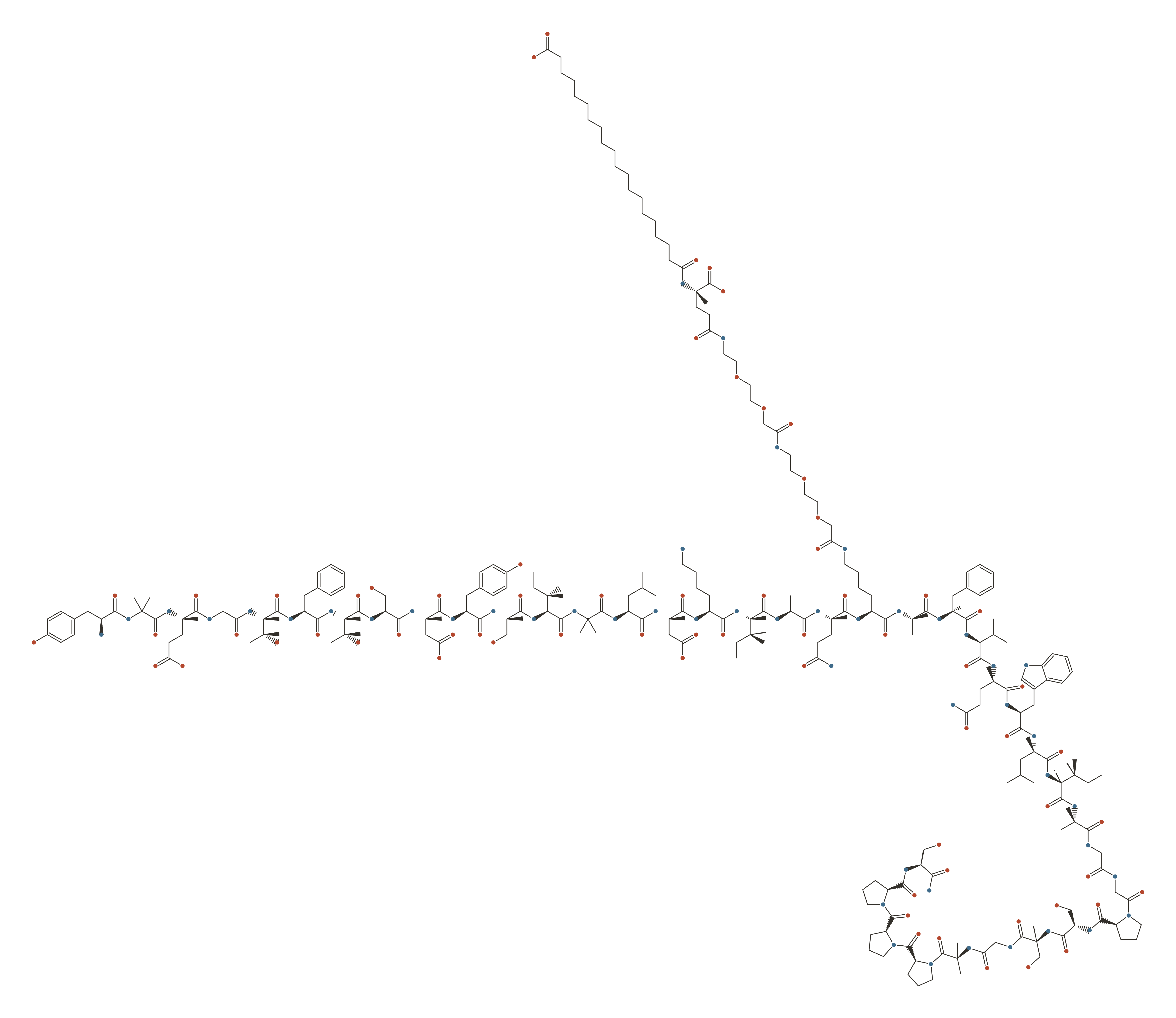

Tirzepatide (Mounjaro / Zepbound) at a Glance
Tirzepatide is a single molecule that activates two receptors at once: GLP-1 and GIP, the two main incretin hormones. Adding GIP produced larger weight and glucose effects than GLP-1 alone in head-to-head trials, which is why it displaced single-agonists as the benchmark. It is an approved prescription medicine for type 2 diabetes, chronic weight management and obstructive sleep apnea in obesity, dosed once weekly.
History & Development
Tirzepatide came from asking whether the incretin system had a second lever worth pulling. It did - and adding it produced the first drug to beat semaglutide head to head.
| First described | Phase 3 SURPASS programme began late 2018 25Reference 25FDA approves Lilly’s Zepbound (tirzepatide) for chronic weight management. https://investor.lilly.com/news-releases/news-release-details/fda-approves-lillys-zepboundtm-tirzepatide-chronic-weightView study → |
| Discovered / synthesised by | Eli Lilly and Company research programme 25, |
| Institution | Eli Lilly and Company |
| Origin | De-novo synthetic 39-amino-acid peptide; dual agonist at the GIP and GLP-1 receptors |
| Key patent | Not established in the sources consulted for this section |
| Assignee | Eli Lilly and Company |
| Development status | Approved - FDA, Mounjaro (type 2 diabetes) May 2022; Zepbound (chronic weight management) November 2023 25, |
Discovery
There are two incretin hormones, not one. GLP-1 attracted the drug development because its effects were clearer, while GIP - glucose-dependent insulinotropic polypeptide - was long considered a dead end, since GIP-based approaches had disappointed in type 2 diabetes.
Tirzepatide is a single 39-amino-acid peptide engineered to activate both receptors 25Reference 25FDA approves Lilly’s Zepbound (tirzepatide) for chronic weight management. https://investor.lilly.com/news-releases/news-release-details/fda-approves-lillys-zepboundtm-tirzepatide-chronic-weightView study →. That design decision is the whole compound: rather than combining two drugs, Lilly built one molecule with dual affinity, biased toward GIP. Why the combination outperforms GLP-1 alone is still not fully settled - GIP appears to contribute to both energy expenditure and the tolerability of high-level GLP-1 activation.
The result settled the question empirically. In head-to-head trials tirzepatide produced greater glucose and weight reductions than semaglutide, making it the first compound to displace a GLP-1 agonist on its own ground.
Development & ownership
Tirzepatide was developed entirely within Eli Lilly and has never been licensed out. The SURPASS phase 3 programme in type 2 diabetes began in late 2018, comprising five global registration trials and two regional trials in Japan, running 40-52 weeks across 5 mg, 10 mg and 15 mg doses 26Reference 26FDA approves Lilly’s Mounjaro (tirzepatide) injection, the first and only GIP and GLP-1 receptor agonist for the treatment of adults with type 2 diabetes. https://investor.lilly.com/news-releases/news-release-details/fda-approves-lillys-mounjarotm-tirzepatide-injection-first-andView study →.
The FDA approved Mounjaro in May 2022 as the first and only GIP and GLP-1 receptor agonist for adults with type 2 diabetes 26Reference 26FDA approves Lilly’s Mounjaro (tirzepatide) injection, the first and only GIP and GLP-1 receptor agonist for the treatment of adults with type 2 diabetes. https://investor.lilly.com/news-releases/news-release-details/fda-approves-lillys-mounjarotm-tirzepatide-injection-first-andView study →. A separate weight-management programme, SURMOUNT-1 and SURMOUNT-2, supported approval of the same molecule as Zepbound in November 2023 25Reference 25FDA approves Lilly’s Zepbound (tirzepatide) for chronic weight management. https://investor.lilly.com/news-releases/news-release-details/fda-approves-lillys-zepboundtm-tirzepatide-chronic-weightView study → - where participants on the 15 mg dose lost on average 48 pounds against 7 pounds on placebo. A further indication in obstructive sleep apnea with obesity followed.
How it reached the market
Tirzepatide is a prescription medicine, and like semaglutide its market history since approval has been shaped by demand outstripping supply. Periods on the FDA shortage list opened a window for compounding pharmacies to supply copies, a channel that has drawn regulatory attention over formulations and salt forms not present in the approved product. Unlike most compounds here, the grey market here is downstream of an approved drug rather than a substitute for one that never existed.
What It's Used For
Tirzepatide is a 39-amino-acid synthetic peptide built on the backbone of glucose-dependent insulinotropic polypeptide (GIP) and modified with a C20 fatty-diacid linker that binds albumin and stretches its half-life to about five days. Its defining feature — and the thing that separates it from semaglutide — is that a single molecule activates both the GIP and the GLP-1 receptors. That “twincretin” design is not a marketing distinction: in the two head-to-head trials that exist, tirzepatide outperformed semaglutide on HbA1c in type 2 diabetes 7Reference 7RCTTirzepatide versus Semaglutide Once Weekly in Patients with Type 2 Diabetes (SURPASS-2) — human (RCT, head-to-head)View study → and on body weight in obesity 5Reference 5RCTTirzepatide as Compared with Semaglutide for the Treatment of Obesity (SURMOUNT-5) — human (RCT, head-to-head)View study →, which is the only direct evidence anywhere that dual incretin agonism beats GLP-1 agonism alone in humans. Like semaglutide, it is the outlier on this hub — its evidence base is approval-grade human data, not preclinical hope. The SURPASS (diabetes), SURMOUNT (obesity), SURMOUNT-OSA (sleep apnea), SUMMIT (heart failure) and SURPASS-CVOT (cardiovascular outcomes) programs have converted, in sequence, into three licensed indications and two positive-but-unlicensed ones. Route is load-bearing: a 39-residue peptide has negligible oral bioavailability, so tirzepatide exists only as a once-weekly subcutaneous injection — there is no oral formulation of any kind, licensed or otherwise.
The peptide discipline still applies here, and for the same reason it applies to semaglutide: a large volume of “tirzepatide” reaches people outside the prescription channel, through compounded tirzepatide/B12 preparations, “research use only” vials and outright counterfeits. None of the evidence below speaks to that material — and tirzepatide’s compounding story is its own, on a timeline roughly four months ahead of semaglutide’s (see Sourcing).
Support is an experimental score I’m building — a composite weighted by study type (human > animal > in vitro > review) and study volume. It’s a beta: a fast way to rank strength of evidence at a glance, not a validated metric. Each application links down to its write-up.
This is human, approval-grade evidence, and it is the deepest weight-loss dataset for any single molecule. In the phase 3 SURMOUNT-1 RCT (n=2,539 adults with obesity, without diabetes), 72 weeks of once-weekly subcutaneous tirzepatide produced mean body-weight reductions of about −16% (5 mg), −21% (10 mg) and −22.5% (15 mg) versus −2.4% on placebo 1Reference 1RCTTirzepatide Once Weekly for the Treatment of Obesity (SURMOUNT-1) — human (RCT)View study →.
The effect replicates across the program: in people who also have type 2 diabetes (SURMOUNT-2, −12.8% to −14.7% vs −3.2%) 2Reference 2RCTTirzepatide once weekly for the treatment of obesity in people with type 2 diabetes (SURMOUNT-2) — human (RCT)View study →; on top of an intensive lifestyle lead-in (SURMOUNT-3, a further −18.4% vs +2.5%) 3Reference 3RCTTirzepatide after intensive lifestyle intervention in adults with overweight or obesity (SURMOUNT-3) — human (RCT)View study →; and as maintenance (SURMOUNT-4 — continuing tirzepatide gave a further −5.5% to a total of −25.3% over 88 weeks, while switching to placebo produced +14.0% regain) 4Reference 4RCTContinued Treatment With Tirzepatide for Maintenance of Weight Reduction in Adults With Obesity (SURMOUNT-4) — human (RCT)View study →.
The decisive comparison is SURMOUNT-5, an open-label phase 3b head-to-head (n=751, obesity without diabetes) in which maximum-tolerated tirzepatide beat maximum-tolerated semaglutide at 72 weeks: −20.2% versus −13.7% body weight, and −18.4 cm versus −13.0 cm waist circumference 5Reference 5RCTTirzepatide as Compared with Semaglutide for the Treatment of Obesity (SURMOUNT-5) — human (RCT, head-to-head)View study →.
Gap: the effect is treatment-dependent, not curative — SURMOUNT-4 quantifies exactly how fast weight returns after withdrawal 4Reference 4RCTContinued Treatment With Tirzepatide for Maintenance of Weight Reduction in Adults With Obesity (SURMOUNT-4) — human (RCT)View study →. SURMOUNT-5 was open-label (no blinding) and compared maximum tolerated doses rather than a fixed dose pair, which is a real, if minor, interpretive limit. Long-term morbidity and mortality benefit in obesity without diabetes is still being accrued in an ongoing outcomes trial and has not read out.
This is human, approval-grade evidence and the original indication (Mounjaro). In SURPASS-1 (n=478, monotherapy in adults inadequately controlled on diet and exercise), tirzepatide lowered HbA1c by 1.87–2.07 percentage points versus +0.04 on placebo, with 81–86% reaching HbA1c ≤6.5% versus 10% on placebo 6Reference 6RCTEfficacy and safety of a novel dual GIP and GLP-1 receptor agonist tirzepatide in patients with type 2 diabetes (SURPASS-1) — human (RCT)View study →.
In the head-to-head SURPASS-2 (n=1,879), tirzepatide was noninferior and superior to semaglutide 1 mg — up to −2.30 versus −1.86 percentage points of HbA1c, with treatment differences in weight of up to −5.5 kg 7Reference 7RCTTirzepatide versus Semaglutide Once Weekly in Patients with Type 2 Diabetes (SURPASS-2) — human (RCT, head-to-head)View study →.
SURPASS-4 extended the program to insulin-treated patients at high cardiovascular risk, comparing tirzepatide against insulin glargine 8Reference 8RCTTirzepatide versus insulin glargine in type 2 diabetes and increased cardiovascular risk (SURPASS-4) — human (RCT)View study →.
Network meta-analysis of the incretin class places tirzepatide at or near the top for combined glycemic and weight effect 9Reference 9Meta-analysisComparative effectiveness of GLP-1 receptor agonists on glycaemic control, body weight, and lipid profile — human (systematic review and network meta-analysis)View study →.
Gap: essentially none on efficacy for the approved indication — this is among the best-evidenced applications on the whole site. The caveat on SURPASS-2 is that the semaglutide comparator was capped at 1 mg, the licensed diabetes dose at the time, not the 2.4 mg used for weight management; the head-to-head margin is against that dose, not against semaglutide at its ceiling. The practical limits are gastrointestinal tolerability during escalation and the injection-only route, not efficacy.
This is human, approval-grade evidence and a genuine first: in December 2024 the FDA approved Zepbound for moderate-to-severe obstructive sleep apnea in adults with obesity, making tirzepatide the first drug ever licensed for OSA. The SURMOUNT-OSA program ran two phase 3 RCTs in parallel — one in participants not using positive airway pressure (PAP), one in participants on PAP. At 52 weeks the apnea-hypopnea index fell by roughly 20–25 more events per hour on tirzepatide than on placebo (−25.3 vs −5.3 events/h in the first trial), with parallel improvements in body weight, hypoxic burden, hsCRP and systolic blood pressure 10Reference 10RCTTirzepatide for the Treatment of Obstructive Sleep Apnea and Obesity (SURMOUNT-OSA) — human (RCT)View study →.
Gap: both trials enrolled people with obesity, so the benefit in non-obese OSA is untested and the indication does not extend there — mechanistically this looks like weight loss relieving upper-airway loading rather than a specific airway action. It is an adjunct to, not a replacement for, PAP. Hard endpoints that OSA treatment is ultimately meant to move — cardiovascular events, daytime-sleepiness-related accidents, mortality — were not measured.
This is a single large, positive human phase 3 RCT with a hard endpoint — a stronger design than the equivalent semaglutide trial, which used symptom scales. SUMMIT (n=731) randomized patients with heart failure, ejection fraction ≥50% and obesity to tirzepatide or placebo. Over a median 104 weeks the composite of cardiovascular death or a worsening heart-failure event occurred in 9.9% on tirzepatide versus 15.3% on placebo (HR 0.62), with a significant improvement in quality of life (KCCQ clinical summary score) as well 11Reference 11RCTTirzepatide for Heart Failure with Preserved Ejection Fraction and Obesity (SUMMIT) — human (RCT)View study →.
Gap: one trial, in the obesity phenotype of HFpEF specifically, and not an approved heart-failure indication anywhere. The composite was driven by fewer worsening-heart-failure events; the cardiovascular-death component alone was not reduced. Replication, and any evidence in HFpEF without obesity or in reduced-ejection-fraction heart failure, are outstanding.
This row exists to record a result that is routinely overstated. SURPASS-CVOT (n=13,299 randomized; 13,165 analyzed) was a double-blind, active-comparator trial in type 2 diabetes with established atherosclerotic cardiovascular disease, testing tirzepatide against dulaglutide — a GLP-1 agonist already shown to reduce cardiovascular events. The primary composite of cardiovascular death, myocardial infarction or stroke occurred in 12.2% on tirzepatide versus 13.1% on dulaglutide: noninferiority met (HR 0.92, 95.3% CI 0.83–1.01, P=0.003), superiority not met (P=0.09) 12Reference 12RCTCardiovascular Outcomes with Tirzepatide versus Dulaglutide in Type 2 Diabetes (SURPASS-CVOT) — human (RCT, active-comparator noninferiority)View study →.
Gap: there is no placebo-controlled MACE trial for tirzepatide, and for ethical reasons in this population there probably never will be — withholding a proven agent from high-risk patients is not defensible. “At least as cardioprotective as dulaglutide” is a reasonable inference; “reduces cardiovascular events versus placebo” is not a claim this trial supports. The score here is deliberately held below the approved indications for that reason.
This is a human phase 2 trial with biopsy endpoints — real evidence, but two development stages behind semaglutide’s position on the same disease. SYNERGY-NASH (n=190) enrolled patients with biopsy-confirmed metabolic dysfunction-associated steatohepatitis and moderate-to-advanced (F2–F3) fibrosis. At 52 weeks, resolution of MASH without worsening of fibrosis occurred in 44–62% across tirzepatide doses versus 10% on placebo 13Reference 13RCTTirzepatide for Metabolic Dysfunction-Associated Steatohepatitis with Liver Fibrosis (SYNERGY-NASH) — human (RCT, phase 2)View study →.
Gap: phase 2, modest n, dose-finding, and no phase 3 outcome trial has read out as of this check — the authors explicitly call for larger and longer studies. Fibrosis improvement was less consistent than steatohepatitis resolution, and MASH is not an approved indication for tirzepatide (it is for semaglutide, on accelerated approval — the two pages differ here for a real reason, not an editorial one).
This is a single small phase 3 human RCT. SURPASS-PEDS (n=99, ages 10 to under 18, youth-onset type 2 diabetes inadequately controlled on metformin and/or basal insulin) reported a mean HbA1c reduction of 2.23 percentage points in the pooled tirzepatide arms versus a 0.05-point rise on placebo at 30 weeks (treatment difference −2.28 points), with BMI reductions of 7.4% (5 mg) and 11.2% (10 mg) versus 0.4%, sustained to 52 weeks in an open-label extension 14Reference 14RCTEfficacy and safety of tirzepatide in children and adolescents with type 2 diabetes (SURPASS-PEDS) — human (RCT)View study →.
Adverse events were gastrointestinal, mild-to-moderate, and consistent with the adult profile.
Gap: n=99 is small, follow-up is short for a population that will be treated for decades, and there is no pediatric indication — tirzepatide is licensed for adults only. Growth, puberty and bone outcomes on long-term incretin therapy in children are unstudied. This row is included because the trial is real and positive, not because the use is established.
Mechanisms
| Target / pathway | Effect | Relevant to |
|---|---|---|
| GIP receptor (agonist) | ↑ insulin response; modulates adipose energy handling; may improve GLP-1 tolerability | Diabetesweight — the defining dual mechanism |
| GLP-1 receptor (pancreatic β-cell) | ↑ glucose-dependent insulin secretion | Diabetes |
| GLP-1 receptor (pancreatic α-cell) | ↓ glucagon secretion | Diabetes |
| GLP-1 receptor (hypothalamic / hindbrain appetite centers) | ↓ appetite, ↑ satiety | WeightOSAHFpEFMASH |
| Gastric motility | Slowed gastric emptying | Glycemic excursions; GI adverse effects; anesthesia aspiration risk |
| Adiposity → upper-airway and cardiac loading | ↓ via weight loss | Obstructive sleep apneaHFpEF |
| Hepatic fat & inflammation (largely weight-mediated) | ↓ steatosis, ↓ steatohepatitis | MASH |
| Albumin binding (C20 fatty-diacid linker) | Prolonged half-life (~5 days) | Weekly dosing (PK) |
The dual GIP + GLP-1 mechanism is the point of the molecule: engaging both incretin receptors is thought to produce a greater metabolic effect than GLP-1 agonism alone, and the pharmacology is well characterized 15Reference 15ReviewTirzepatide, a dual GIP/GLP-1 receptor co-agonist for the treatment of type 2 diabetes — reviewView study →. The head-to-head trials 5,
Pharmacokinetics
Route is load-bearing, and here it is absolute. Tirzepatide is available only as a once-weekly subcutaneous injection (abdomen, thigh or upper arm). A 39-residue peptide has negligible oral bioavailability — there is no absorption-enhancer tablet as there is for semaglutide, and no oral tirzepatide exists in any approved form. Anything sold as “oral tirzepatide”, including sublingual drops and troches, cannot deliver intact peptide and is pharmacologically inert at best.
Half-life is about 5 days, conferred by albumin binding through the C20 fatty-diacid moiety; steady state is reached in roughly 4 weeks. That is what makes weekly dosing possible, and it is also why titration is slow and deliberate — the label starts at 2.5 mg and escalates in 2.5 mg steps at intervals of at least 4 weeks, specifically to limit gastrointestinal effects. It is why washout before a planned pregnancy takes weeks rather than days, and why a missed dose does not produce an abrupt loss of effect. A dedicated clinical pharmacokinetic study found that hepatic impairment did not meaningfully alter tirzepatide exposure, and no dose adjustment is specified for hepatic or renal impairment 16Reference 16Effects of Hepatic Impairment on the Pharmacokinetics of the Dual GIP and GLP-1 Receptor Agonist Tirzepatide — human (clinical pharmacokinetic study)View study →.
Licensed product is supplied as a sterile refrigerated solution in single-dose pens or vials and must not be frozen. Cold chain and in-use stability are part of the product specification — which is exactly what a self-reconstituted lyophilized powder does not have.
Clinical & regulatory status
Tirzepatide is an approved prescription medicine (Eli Lilly), not a dietary supplement and not a research chemical. In the United States it is marketed as Mounjaro (approved May 2022, type 2 diabetes) and Zepbound (approved November 2023, chronic weight management; indication expanded December 2024 to moderate-to-severe obstructive sleep apnea with obesity — the first drug approval for OSA), with corresponding approvals in the EU, UK, Australia and elsewhere. It is prescription-only but not a scheduled/controlled substance. HFpEF and MASH are not approved indications despite positive trials, and there is no pediatric indication.
Registered trial activity is extensive: on the order of 260 interventional studies on ClinicalTrials.gov at the last check, spanning heart failure, MASH, chronic kidney disease, obesity morbidity/mortality outcomes and further cardiometabolic endpoints beyond the current labels. The headline readout of the last year was SURPASS-CVOT, which met noninferiority but not superiority against dulaglutide 12Reference 12RCTCardiovascular Outcomes with Tirzepatide versus Dulaglutide in Type 2 Diabetes (SURPASS-CVOT) — human (RCT, active-comparator noninferiority)View study →.
| Completed | Ongoing | Terminated | Preclinical |
|---|---|---|---|
| ~86(incl. SURPASS 1–5, SURMOUNT 1–5, SURMOUNT-OSA, SUMMIT, SURPASS-CVOT, SYNERGY-NASH) | ~117(recruiting + active; CKD, HF, MASH, outcomes) | ~1 | extensive(foundational incretin biology) |
Last checked: July 2026.
Sourcing, Route & Legal Status
Regulatory status. Tirzepatide is an approved prescription pharmaceutical, prescription-only and unscheduled, in the US, EU, UK, Australia and comparable jurisdictions. A valid prescription is legally required. Everything below concerns the substantial volume of “tirzepatide” that reaches people outside that channel.
How it’s supplied & administered. Licensed product is a sterile refrigerated solution in single-dose pre-filled pens or vials, injected subcutaneously once weekly and titrated by a clinician from 2.5 mg upward at intervals of at least four weeks. Gray-market and “research use only” tirzepatide is typically sold as lyophilized powder requiring reconstitution with bacteriostatic water, leaving the buyer to perform the sterile handling, the concentration arithmetic and the dose measurement that a single-dose pen is engineered to eliminate.
The compounding arc — and it is not semaglutide’s. The two drugs are often discussed together, but their timelines differ by months and the distinction matters. Tirzepatide was in FDA-declared shortage from late 2022, which permitted compounding pharmacies to prepare copies. The FDA declared the tirzepatide shortage resolved on 2 October 2024 — a determination it then reconsidered following litigation from a compounders’ trade body, and reaffirmed on 19 December 2024. With the shortage over, the compounding exemption ended: 503A pharmacies were required to stop by 18 February 2025 and 503B outsourcing facilities by 19 March 2025, since neither may produce what is “essentially a copy” of a commercially available approved drug. Semaglutide’s equivalent milestones came roughly four months later (shortage resolved February 2025; deadlines in April and May 2025). Enforcement and telehealth-market withdrawal followed for both. Compounded tirzepatide has accordingly moved from a widely available gray channel to a largely unlawful one — while demand did not fall with it, which pushes buyers toward worse sources rather than back into pharmacies.
Sourcing reality (a safety issue, not a footnote). Tirzepatide now circulates outside the licensed channel through “research chemical” vials labeled not for human consumption, through compounded preparations of contested legality — very commonly as fixed-dose tirzepatide + vitamin B12 combinations, a formulation that has never existed as an approved product — and through outright counterfeits. The documented failure modes are concrete. An analysis of compounded semaglutide and tirzepatide products found they use formulations differing from the licensed drugs, with efficacy and safety largely unstudied 23Reference 23Compounded Semaglutide and Tirzepatide Products Use Unique Formulations but Efficacy and Safety Largely Unknown — editorial / product analysisView study →. More specifically, analytical testing of US-market compounded tirzepatide/B12 products identified a widespread, previously unrecognized impurity generated by a chemical reaction between tirzepatide and certain B12 analogues 22Reference 22A novel, widespread impurity in mass-compounded tirzepatide/B12 products: potential patient safety implications — analytical / product testing (industry-authored)View study → — a genuinely novel finding, though it should be read knowing the study was conducted and authored by the originator company, which has a commercial interest in the conclusion; the clinical consequences of the impurity are unknown. Add to that mislabeling, sub- and super-potency, endotoxin and sterility failures, and absent cold chain. A third-party certificate of analysis is the minimum any buyer would want, and a COA from an unaccountable vendor is itself unverifiable.
This page does not recommend or link vendors. The efficacy and safety record above belongs to pharmaceutical-grade tirzepatide used under medical supervision, and it does not transfer to material of unknown provenance.
Safety
Tirzepatide has an approval-grade trial record, so its risks are stated rather than inferred: gastrointestinal effects are the dose-limiting toxicity and the main driver of discontinuation, while a boxed thyroid C-cell warning and a history of pancreatitis are what rule people out.
- Boxed warning for thyroid C-cell tumors. Contraindicated with a personal or family history of medullary thyroid carcinoma or MEN 2, and in prior serious hypersensitivity.
- Gallbladder disease and acute pancreatitis are label-carried risks. Pancreatitis was rare (0.22%) across 19 RCTs, but a history of it is a reason to avoid.
- Not recommended in pregnancy. Contraception planning is part of starting this drug — see the box below.
- Tell your anesthetist or endoscopist well before any procedure. Delayed gastric emptying is an aspiration concern, and one week of discontinuation may not be enough.
- Reduces oral contraceptive efficacy around initiation and each dose escalation; a barrier or non-oral method is advised for a defined period.
- Additive hypoglycemia with insulin and sulfonylureas. These commonly need dose reduction.
Full Safety & Interactions Detail
Adverse effects (from trials). The dominant, dose-limiting effects are gastrointestinal — nausea, diarrhea, vomiting, constipation — usually mild-to-moderate, concentrated during dose escalation, and the reason the titration schedule is slow. They are also the main driver of treatment discontinuation. A large comparative cohort analysis in type 2 diabetes ranks the gastrointestinal burden of tirzepatide against dulaglutide and semaglutide 18Reference 18ObservationalComparative Gastrointestinal Safety of Dulaglutide, Semaglutide, and Tirzepatide in Adults With Type 2 Diabetes — human (cohort)View study →, and SURPASS-CVOT recorded more gastrointestinal events on tirzepatide than on dulaglutide despite otherwise similar overall adverse-event rates 12Reference 12RCTCardiovascular Outcomes with Tirzepatide versus Dulaglutide in Type 2 Diabetes (SURPASS-CVOT) — human (RCT, active-comparator noninferiority)View study →. Gallbladder disease (cholelithiasis, cholecystitis) and acute pancreatitis are label-carried risks; a systematic review and meta-analysis of 19 RCTs (n=15,471) found acute pancreatitis to be rare (0.22%) with no demonstrable dose-response between 5 and 15 mg, while noting that all included trials were industry-funded with short-to-moderate follow-up and that precision remains limited 19Reference 19Meta-analysisDose-response analysis of tirzepatide and acute pancreatitis: an international systematic review and quantitative meta-analysis of randomised trials — human (meta-analysis)View study →. Hypoglycemia is largely a combination effect — see Interactions. Injection-site reactions occur.
Boxed warning. Tirzepatide carries a boxed warning for thyroid C-cell tumors (medullary thyroid carcinoma) observed in rodents, and is contraindicated in anyone with a personal or family history of medullary thyroid carcinoma or Multiple Endocrine Neoplasia syndrome type 2 (MEN 2). The rodent finding has not been established in humans and the human thyroid picture remains under active review 24Reference 24ReviewImpact of Tirzepatide Therapy on Thyroid Disease: Understanding Risks and Emerging Insights — reviewView study →, but the contraindication is treated as absolute in practice. It is also contraindicated in prior serious hypersensitivity to tirzepatide.
Delayed gastric emptying and anesthesia. Because tirzepatide slows gastric emptying by design, retained stomach contents at induction of anesthesia or during upper endoscopy are a documented aspiration concern, and peri-procedural guidance in several jurisdictions now addresses it 17Reference 17ReviewClinical Consequences of Delayed Gastric Emptying With GLP-1 Receptor Agonists and Tirzepatide — reviewView study →. How long to hold the drug is genuinely unsettled: a 2026 study asked directly whether one week of discontinuation is sufficient to clear residual gastric content and found reason to doubt it 20Reference 20Clinical trialResidual gastric content after tirzepatide discontinuation: is one week enough? — human (clinical study)View study → — a longer half-life than semaglutide’s weekly-dosing peers would predict exactly this problem. Anyone taking tirzepatide should tell the anesthetist, endoscopist or proceduralist well before any sedation or surgery.
Body composition. Weight lost on tirzepatide includes lean mass, not only fat — an unavoidable consequence of losing 20%+ of body weight rather than a drug-specific toxicity, though how to interpret the DXA numbers is contested 21Reference 21Interpreting Lean Mass Changes During Tirzepatide-Induced Weight Loss: Beyond Quantitative Metrics — human (commentary / analysis)View study →. The sensible response — adequate protein intake and resistance training throughout weight loss — is standard practice rather than a trial-proven mitigation for this drug. Pharmacological lean-mass preservation during tirzepatide therapy is an active area of trial work, not established care.
Interactions. The clinically important, mechanism-based interactions are: additive hypoglycemia with insulin and insulin secretagogues (sulfonylureas), which commonly require dose reduction of the companion drug; altered absorption and timing of oral medicines through delayed gastric emptying 17Reference 17ReviewClinical Consequences of Delayed Gastric Emptying With GLP-1 Receptor Agonists and Tirzepatide — reviewView study →; and reduced efficacy of oral contraceptives around initiation and each dose escalation, for which a barrier or non-oral method is advised for a defined period. A full interaction census belongs to the current label, not from here.
Who should avoid it. Anyone with a personal or family history of medullary thyroid carcinoma or MEN 2 (contraindicated); anyone with a history of pancreatitis; and — outside a supervised prescription — anyone who cannot guarantee product identity, sterility and correct dosing.
Scope disclosure (honesty, not a claim):
- Human data? Yes — extensive, approval-grade phase 3 RCTs across weight, diabetes, sleep apnea, heart failure and liver disease, plus a dedicated 13,000-patient cardiovascular outcomes trial. This is the opposite of most peptides on this hub.
- Interactions assessed? Partially. The mechanism-based ones (insulin/sulfonylurea hypoglycemia, delayed gastric emptying affecting oral drug absorption and oral contraceptives, peri-procedural aspiration) are established; a complete census belongs to the current FDA/EMA label.
- Pregnancy/lactation assessed? At label level only — not recommended in pregnancy; lactation not established. No human outcome dataset.
- Long-term safety established? Partially. Multi-year trial data exist (SURMOUNT-4 to 88 weeks, SUMMIT to a median 104 weeks, SURPASS-CVOT over several years), but decade-scale safety, the safety of indefinite use for weight maintenance, and the human relevance of the rodent thyroid C-cell signal are not established. Pediatric long-term safety is unstudied.
Never imply safety from silence — and never transfer this trial record to unlicensed product. Everything above describes pharmaceutical-grade tirzepatide used as prescribed.
Not recommended in pregnancy. The label advises against use, on the basis of animal reproductive-toxicity findings and the fact that weight loss confers no benefit during pregnancy; human pregnancy safety is not established and lactation data are absent. Discontinuation ahead of a planned pregnancy should allow for the ~5-day half-life and the time to full washout. Two practical points compound each other: the oral-contraceptive interaction above raises the chance of an unplanned pregnancy on treatment, and weight loss itself can restore fertility in people who did not expect it. Contraception planning is part of starting this drug, not an afterthought.
Dosage
Tirzepatide is a prescription medicine that is dosed and titrated by a clinician. Nothing here is a recommendation, and it must not be self-sourced or self-dosed. The figures below are reported as trial and label data for context.
Dosing begins at 2.5 mg once weekly by subcutaneous injection — a starting dose intended for tolerability, not for effect — and escalates in 2.5 mg steps at intervals of at least four weeks to a maintenance dose of 5, 10 or 15 mg once weekly, which is the range used across SURMOUNT and SURPASS 1,
The titration schedule is not a formality. Escalating faster than the label sequence is the main cause of severe gastrointestinal effects and of discontinuation. “Microdosing” — indefinite use of sub-therapeutic amounts, common in the compounded and gray markets — has no trial evidence at all; it extrapolates from a dose-response curve that was never studied at those doses, usually using product whose actual concentration is unverified. This entry is informational only.
References
- Jastreboff AM, et al. (2022). Tirzepatide Once Weekly for the Treatment of Obesity (SURMOUNT-1) — human (RCT). N Engl J Med. https://pubmed.ncbi.nlm.nih.gov/35658024/
- Garvey WT, et al. (2023). Tirzepatide once weekly for the treatment of obesity in people with type 2 diabetes (SURMOUNT-2) — human (RCT). Lancet. https://pubmed.ncbi.nlm.nih.gov/37385275/
- Wadden TA, et al. (2023). Tirzepatide after intensive lifestyle intervention in adults with overweight or obesity (SURMOUNT-3) — human (RCT). Nat Med. https://pubmed.ncbi.nlm.nih.gov/37840095/
- Aronne LJ, et al. (2024). Continued Treatment With Tirzepatide for Maintenance of Weight Reduction in Adults With Obesity (SURMOUNT-4) — human (RCT). JAMA. https://pubmed.ncbi.nlm.nih.gov/38078870/
- Aronne LJ, et al. (2025). Tirzepatide as Compared with Semaglutide for the Treatment of Obesity (SURMOUNT-5) — human (RCT, head-to-head). N Engl J Med. https://pubmed.ncbi.nlm.nih.gov/40353578/
- Rosenstock J, et al. (2021). Efficacy and safety of a novel dual GIP and GLP-1 receptor agonist tirzepatide in patients with type 2 diabetes (SURPASS-1) — human (RCT). Lancet. https://pubmed.ncbi.nlm.nih.gov/34186022/
- Frías JP, et al. (2021). Tirzepatide versus Semaglutide Once Weekly in Patients with Type 2 Diabetes (SURPASS-2) — human (RCT, head-to-head). N Engl J Med. https://pubmed.ncbi.nlm.nih.gov/34170647/
- Del Prato S, et al. (2021). Tirzepatide versus insulin glargine in type 2 diabetes and increased cardiovascular risk (SURPASS-4) — human (RCT). Lancet. https://pubmed.ncbi.nlm.nih.gov/34672967/
- Yao H, et al. (2024). Comparative effectiveness of GLP-1 receptor agonists on glycaemic control, body weight, and lipid profile — human (systematic review and network meta-analysis). BMJ. https://pubmed.ncbi.nlm.nih.gov/38286487/
- Malhotra A, et al. (2024). Tirzepatide for the Treatment of Obstructive Sleep Apnea and Obesity (SURMOUNT-OSA) — human (RCT). N Engl J Med. https://pubmed.ncbi.nlm.nih.gov/38912654/
- Packer M, et al. (2025). Tirzepatide for Heart Failure with Preserved Ejection Fraction and Obesity (SUMMIT) — human (RCT). N Engl J Med. https://pubmed.ncbi.nlm.nih.gov/39555826/
- Nicholls SJ, et al. (2025). Cardiovascular Outcomes with Tirzepatide versus Dulaglutide in Type 2 Diabetes (SURPASS-CVOT) — human (RCT, active-comparator noninferiority). N Engl J Med. https://pubmed.ncbi.nlm.nih.gov/41406444/
- Loomba R, et al. (2024). Tirzepatide for Metabolic Dysfunction-Associated Steatohepatitis with Liver Fibrosis (SYNERGY-NASH) — human (RCT, phase 2). N Engl J Med. https://pubmed.ncbi.nlm.nih.gov/38856224/
- Hannon TS, et al. (2025). Efficacy and safety of tirzepatide in children and adolescents with type 2 diabetes (SURPASS-PEDS) — human (RCT). Lancet. https://pubmed.ncbi.nlm.nih.gov/40975112/
- Nauck MA, et al. (2022). Tirzepatide, a dual GIP/GLP-1 receptor co-agonist for the treatment of type 2 diabetes — review. Cardiovasc Diabetol. https://pubmed.ncbi.nlm.nih.gov/36050763/
- Urva S, et al. (2022). Effects of Hepatic Impairment on the Pharmacokinetics of the Dual GIP and GLP-1 Receptor Agonist Tirzepatide — human (clinical pharmacokinetic study). Clin Pharmacokinet. https://pubmed.ncbi.nlm.nih.gov/35674880/
- Jalleh RJ, et al. (2024). Clinical Consequences of Delayed Gastric Emptying With GLP-1 Receptor Agonists and Tirzepatide — review. J Clin Endocrinol Metab. https://pubmed.ncbi.nlm.nih.gov/39418085/
- Crisafulli S, et al. (2026). Comparative Gastrointestinal Safety of Dulaglutide, Semaglutide, and Tirzepatide in Adults With Type 2 Diabetes — human (cohort). Ann Intern Med. https://pubmed.ncbi.nlm.nih.gov/41183330/
- Benny O, et al. (2026). Dose-response analysis of tirzepatide and acute pancreatitis: an international systematic review and quantitative meta-analysis of randomised trials — human (meta-analysis). Pancreatology. https://pubmed.ncbi.nlm.nih.gov/41927408/
- Hidiroglu EE, et al. (2026). Residual gastric content after tirzepatide discontinuation: is one week enough? — human (clinical study). Minerva Anestesiol. https://pubmed.ncbi.nlm.nih.gov/42329593/
- Uyanık T. (2026). Interpreting Lean Mass Changes During Tirzepatide-Induced Weight Loss: Beyond Quantitative Metrics — human (commentary / analysis). Diabetes Obes Metab. https://pubmed.ncbi.nlm.nih.gov/42115704/
- Jordan B, et al. (2026). A novel, widespread impurity in mass-compounded tirzepatide/B12 products: potential patient safety implications — analytical / product testing (industry-authored). Expert Opin Drug Saf. https://pubmed.ncbi.nlm.nih.gov/42010938/
- Belcourt J, et al. (2026). Compounded Semaglutide and Tirzepatide Products Use Unique Formulations but Efficacy and Safety Largely Unknown — editorial / product analysis. Ann Pharmacother. https://pubmed.ncbi.nlm.nih.gov/41689811/
- Manueli Laos EG, et al. (2026). Impact of Tirzepatide Therapy on Thyroid Disease: Understanding Risks and Emerging Insights — review. Clin Obes. https://pubmed.ncbi.nlm.nih.gov/42145153/
- Eli Lilly and Company (2023). FDA approves Lilly’s Zepbound (tirzepatide) for chronic weight management. https://investor.lilly.com/news-releases/news-release-details/fda-approves-lillys-zepboundtm-tirzepatide-chronic-weight
- Eli Lilly and Company (2022). FDA approves Lilly’s Mounjaro (tirzepatide) injection, the first and only GIP and GLP-1 receptor agonist for the treatment of adults with type 2 diabetes. https://investor.lilly.com/news-releases/news-release-details/fda-approves-lillys-mounjarotm-tirzepatide-injection-first-and



