
Fly Agaric
Amanita muscaria
Plant Family
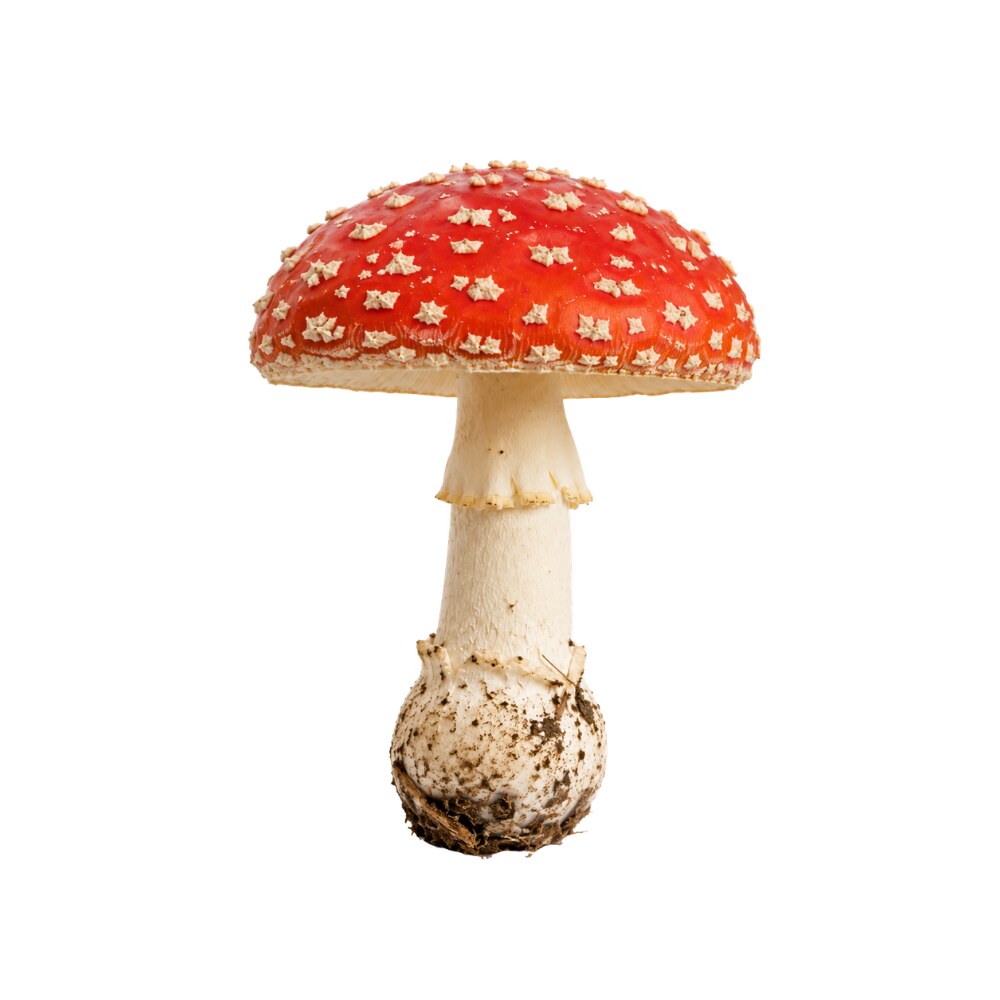
Pictured: Fly Agaric
Amanita family
A fungal family of extremes: the deadliest mushrooms known alongside the isoxazole-bearing fly agaric, whose psychoactivity works through GABA-A rather than the classic psychedelic pathway.
1 Herb // 4 Constituents // 5 Notable Members
Overview
A family of ectomycorrhizal mushrooms, dominated by the genus Amanita — several hundred species forming symbiotic root partnerships with trees. Structurally they are recognised by a universal veil that leaves a cup-like volva at the stem base and often warts or patches on the cap, plus a partial veil leaving a ring on the stem. Learning that combination is a survival skill rather than a taxonomic nicety.
Shared Traits
In Practice
This family is where the deadliest mushrooms on earth live. Amanita phalloides, the death cap, and the destroying angels account for the overwhelming majority of fatal mushroom poisonings worldwide. Their amatoxins inhibit RNA polymerase II, killing hepatocytes over a delayed course that fools both patient and clinician: symptoms subside after the initial gastrointestinal phase, then liver failure develops days later. There is no reliable antidote.
The entry here is a different animal. Fly agaric (Amanita muscaria) — the red-and-white mushroom of European folklore — contains ibotenic acid and its decarboxylation product muscimol. Muscimol is a potent GABA-A agonist, which places fly agaric outside the classic psychedelics entirely: its effects are sedative, dissociative and delirient rather than serotonergic. Ibotenic acid itself is an NMDA agonist and an excitotoxin, which is why traditional preparation — drying, heating, and in some Siberian practice passage through the body — matters: it converts ibotenate to the less neurotoxic muscimol.
The plant has a deep shamanic record in Siberia and a long folkloric one in Europe. Its contemporary use as a microdosed sedative is not supported by clinical evidence, and the dose– response is steep and variable between specimens. Despite the name, it is rarely lethal — but severe delirium, seizures and hospitalisation are well documented.
Nothing in this family should be approached on visual identification alone.
Materia Medica
The monograph in the database whose Amanitaceae membership is recorded on the herb itself — so this list keeps itself current as new herbs land.
Amanita muscaria
Phytochemistry
Two unrelated toxin systems define the family: amatoxins and phallotoxins (cyclic peptides) in the deadly species, and the isoxazoles ibotenic acid and muscimol in the muscaria group. Muscarine — despite being named for A. muscaria — is present only in trace amounts and is not responsible for its effects.
The compounds recorded for this family's single member, grouped by class.
Beyond the Database
Notable members without a monograph yet.
Keep Exploring